Anthropologist: CPAC displays how Trump’s base believes he is a savior

UPI – Opinion

Anthropologist: CPAC displays how Trump’s base believes he is a savior

Alexander Hinton, Rutgers University – February 26, 2024
UPI
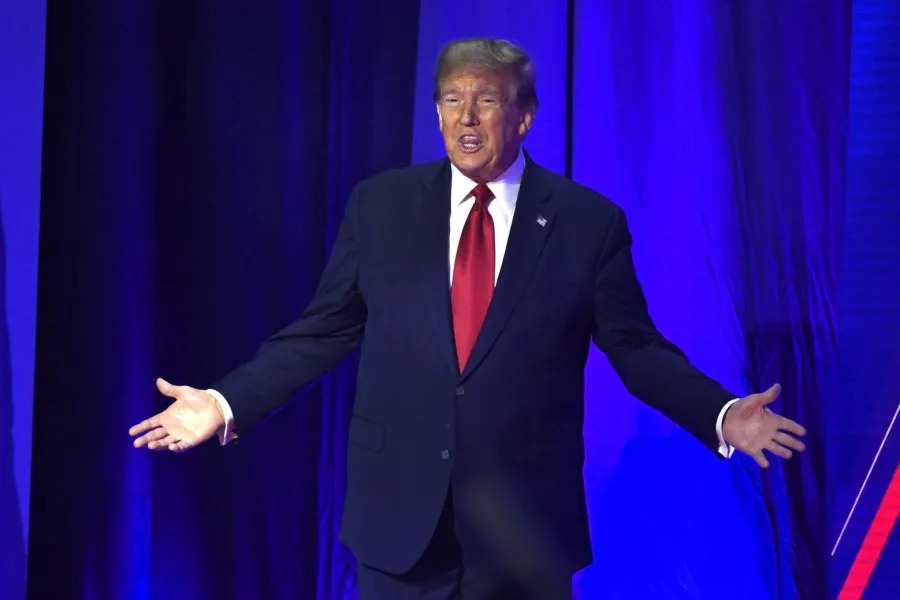
Former President Donald Trump acknowledges applause as he arrives at the Conservative Political Action Conference (CPAC) on Saturday. Thousands of conservative activists, elected officials and pundits gathered to hear speakers with this year’s theme “CPAC: Where Globalism Goes to Die.” Photo by Mike Theiler/UPI

Feb. 26 (UPI) — What is happening in the hearts of former President Donald Trump’s supporters?

As an anthropologist who studies peace and conflict, I went to the annual meeting of the Conservative Political Action Conference, or CPAC, to find out. I wanted to better understand the Make America Great Again faithful — and their die-hard support for Trump.

The event began on Feb. 21, in National Harbor, Maryland, with Steve Bannon’s routine, untrue banter about how President Joe Biden stole the 2020 election, and it peaked with an angry speech from Trump three days later. In between, I sat among the MAGA masses listening to speaker after speaker express outrage about American decline — and their hope for Trump’s reelection.

Everywhere I turned, people wore MAGA regalia — hats, pins, logos and patches, many with Trump’s likeness. I spent breaks in the exhibition hall, which featured a Jan. 6 insurrection-themed pinball machine featuring “Stop the Steal,” “Political Prisoners” and “Babbitt Murder” rally modes and a bus emblazoned with Trump’s face. Admirers scribbled messages on the bus such as, “We have your back” and “You are anointed and appointed by God to be the President.”

Those on the left who dismiss the CPAC as a gathering of MAGA crazies and racists who support a wannabe dictator do not understand that, from this far-right perspective, there are compelling and even urgent reasons to support Trump. Indeed, they believe, as conservative politician Tulsi Gabbard stated in her CPAC speech on Feb. 22, that the left’s claims about Trump’s authoritarianism are “laughable.” This is because CPAC attendees falsely perceive President Joe Biden as the one who is attacking democracy.

Here are my top three takeaways from CPAC about Trump supporters’ current priorities and thinking.

1. There’s a Reagan dinner – but CPAC is Trump’s party

Former President Ronald Reagan runs in CPAC’s DNA. Reagan spoke at the inaugural CPAC in 1974 and went on to speak there a dozen more times.

In 2019, the conservative advocacy group the American Political Union, which hosts CPAC, published a book of Reagan’s speeches with commentary by conservative luminaries. In the preface, Matt Schlapp, the head of the American Political Union, says he often asks himself, “What would Reagan do?”

CPAC’s pomp gala, held Friday, is still called the “Ronald Reagan Dinner.” But Reagan is otherwise hardly mentioned at the conference.

Reagan’s ideas of American exceptionalism have been supplanted by Trump’s populist story of apocalyptic decline. Reagan’s folksy tone, relative moderation and clear quips are long gone, replaced by fury, grievance and mean-spirited barbs.

2. There’s a method to the madness

Many commentators and critics, including groups like the Southern Poverty Law Center, view CPAC as a frightening or bizarre gathering of white nationalists who have a nativist agenda.

In 2021, commentators said the CPAC stage was shaped like a famous Nazi design called the Othala Rune, which is a hate symbol. Schlapp denied this claim and said that CPAC supports the Jewish community, but various commentators took note of the uncanny resemblance.

This year, CPAC refused to give press credentials to various media outlets, including The Washington Post, despite the organization’s emphasis on free speech.

Some speakers, including Trump, have been known to regularly voice support for white nationalism and right-wing extremism, including speakers who promote the false idea that there is a plot to replace the white population. I discuss this idea in my 2021 book, “It Can Happen Here: White Power and the Rising Threat of Genocide in the US.”

Indeed, the U.S.-Mexico border was a constant topic at this year’s CPAC, which included controversial anti-immigrant speakers such as the head of Spain’s far-right Vox party and a representative of Hungary, whose leader stated at the 2022 CPAC that Europeans should not become “mixed-race.” Hungary will also host a CPAC meeting in April 2024.

Many of the sessions have alarming titles like, “Burning Down the House,” “Does Government Even Matter” and “Going Full Hungarian.” There are right-wing, populist speakers like Bannon and U.S. Rep. Matt Gaetz.

Overall, the program is informed by a conservative logic that largely boils down to God, family, tradition, law and order, defense and freedom.

Of these, God looms largest. As a result, CPAC’s hardcore conservative Christian orientation is anti-abortion rights, homophobic and oriented toward traditional family structure and what it considers morality.

Schlapp co-wrote a book in 2022 that warns of the dangers of “evil forces” — what he considers to be progressives, the radical left and American Marxists. Schlapp’s book title even dubs these forces “the desecrators.” Such inflammatory language is frequently used at CPAC, including by Trump during his Saturday speech.

3. Trump believers think he is their savior

CPAC’s love of Trump is shocking to many on the left. But at CPAC, Trump is viewed as America’s savior.

According to his base, Trump delivered on abortion by appointing Supreme Court justices who overturned Roe v. Wade. They believe that, despite evidence of mixed results, Trump had wide successes at securing the border and creating jobs. For example, during Trump’s time as president, the U.S. economy lost nearly 3 million jobs, and apprehensions of undocumented migrants at the border rose.

Trump’s CPAC speech, like his campaign speeches, harped on such supposed achievements — as well as Biden’s alleged “destruction” of the country.

Conservatives roll their eyes at liberal fears of Trump the despot. Like all of us, they acknowledge, Trump has flaws. They say that some of his comments about women and minorities are cringeworthy, but not evidence of an underlying misogyny and hatefulness, as many critics contend.

Ultimately, CPAC conservatives believe Trump is their best bet to defeat the radical-left “desecrators” who seek to thwart him at every turn — including, as they constantly complained at CPAC, social media bans, “fake news” takedowns, rigged voting, bogus lawsuits, unfair justice, and lies about what they call the Jan. 6, 2021, “protest.

Despite these hurdles, Trump battles on toward the Republican nomination for presidential candidate — the hero who CPAC conservatives view as the last and best hope to save the USA.The Conversation

Alexander Hinton is a distinguished professor of anthropology and director of the Center for the Study of Genocide and Human Rights at Rutgers University – Newark.
From Frigid Cells to Mystery Injections, Prison Imperiled Navalny’s Health

The New York Times

From Frigid Cells to Mystery Injections, Prison Imperiled Navalny’s Health

Paul Sonne and Ivan Nechepurenko – February 18, 2024

FILE – Russian opposition leader Alexei Navalny appears via a video link from the Arctic penal colony where he is serving a 19-year sentence, provided by the Russian Federal Penitentiary Service during a hearing of Russia’s Supreme Court, in Moscow, Russia, Thursday, Jan. 11, 2024. Russia’s prison agency says that imprisoned opposition leader Alexei Navalny has died. He was 47. The Federal Prison Service said in a statement that Navalny felt unwell after a walk on Friday Feb. 16, 2024 and lost consciousness. (AP Photo/Alexander Zemlianichenko,)

Alexei Navalny portrayed himself as invincible, consistently using his hallmark humor to suggest that President Vladimir Putin couldn’t break him, no matter how dire his conditions became in prison.

But behind the brave face, the reality was plain to see. Since his incarceration in early 2021, Navalny, Russia’s most formidable opposition figure, and his staff regularly suggested his conditions were so grim that he was being put to death in slow motion.

Now his aides believe their fears have come true.

The cause of Navalny’s death in prison at 47 has not been established — in fact his family has not yet even been allowed to see his body — but Russia’s harshest penal colonies are known for hazardous conditions, and Navalny was singled out for particularly brutal treatment.

“Aleksei Navalny was subjected to torment and torture for three years,” Russian journalist and Nobel Peace Prize winner Dmitry Muratov wrote in a column after his death was announced Friday. “As Navalny’s doctor told me: the body cannot withstand this.”

More than a quarter of Navalny’s incarceration since 2021 was spent in freezing “punishment cells” and he was often denied access to medical care. He was transferred to ever crueler prisons. And at one point, he said he was being given injections but was prevented from finding out what was in the syringes. His team worried he was again being poisoned.

What specifically led to Navalny’s death Friday at a remote prison above the Arctic Circle may remain a mystery. The Russian prison service released a statement Friday afternoon saying that Navalny felt sick and suddenly lost consciousness after being outside.

Russian state media reported that he had suffered a blood clot. But the story changed Saturday, when Navalny’s mother and lawyer arrived at the prison. They were told he had suffered from “sudden death syndrome,” which appeared to indicate sudden cardiac arrest, according to Ivan Zhdanov, director of Navalny’s anti-corruption foundation.

Investigators told a lawyer for Navalny that a repeat examination was being conducted and the results would be released next week. Navalny’s staff called for the body to be released immediately so that his family could order an independent analysis, accusing Russian authorities of lying to conceal the body.

According to his aides, Navalny had been put in a punishment cell at the Arctic prison in the Yamalo-Nenets Autonomous Region on Wednesday, two days before Russian authorities announced his death.

His spokesperson, Kira Yarmysh, said that marked his 27th time in such an inhumane space, usually a roughly 7-by-10-foot concrete cell with unbearable conditions — cold, damp and poorly ventilated. His latest round of punishment, had he survived, would have taken his total period in such a cell to 308 days, more than a quarter of his time in incarceration, according to Yarmysh.

Once a day at 6:30 a.m., prisoners in the punishment cells at the Arctic facility are allowed into a coffin-like concrete enclosure open to the sky through a metal grate, Navalny said in a message from the facility this year. It appeared to be after such a session Friday that Navalny lost consciousness, according to the Russian prison service’s account. It was about minus 20 degrees Fahrenheit outside.

In a letter from prison last month, Navalny described how he could walk a total of 11 steps from one end of the open-air space to the other, noting that the coldest it had been so far on one of his walks was minus 26 degrees Fahrenheit.

“Even at this temperature, you can walk for more than half an hour, so long as you have time to grow a new nose, ears and fingers,” he wrote. “There are few things as invigorating as a walk in Yamal at 6:30 in the morning. And what a wonderful fresh breeze blows into the yard, despite the concrete enclosure, wow!”

While walking there on a recent day, he said he was freezing and thinking about how Leonardo DiCaprio climbed into a dead horse to escape the cold in the wilderness survival movie “The Revenant.” A dead horse would freeze in that part of Russia within 15 minutes, Navalny surmised.

“Here we need an elephant — a hot, fried elephant,” he said.

Navalny often employed such wit in the face of his inhumane treatment. But it had become increasingly clear, over his three years of incarceration, that he might not survive.

“The cumulative treatment of Navalny over several years in prison — in a way you could say it was driving him close to death,” Mariana Katzarova, the United Nations Human Rights Council special rapporteur on the human rights situation in Russia, said in an interview Saturday. “We don’t know yet. We need an investigation.”

For a time, Navalny did seem almost invincible.

In August 2020, he fell ill on a flight from the Siberian city of Tomsk to Moscow, after being poisoned with a nerve agent from the Russian-made Novichok family. He was put into a medically induced coma for two weeks during treatment in Germany — and survived.

The U.S. government later attributed the poisoning to Russia’s Federal Security Service, known as the FSB.

Despite the assassination attempt, Navalny returned to Russia in early 2021 to continue his fight against Putin, who denied Russia’s involvement in the poisoning, and quickly found himself imprisoned. His health began to deteriorate almost immediately.

In March 2021, he complained about severe back pain that later turned into a problem with his leg.

He demanded that prison authorities provide him with proper medical care and give him medication. Instead, they subjected him to sleep deprivation, he said. At the end of March 2021, he declared a hunger strike over his treatment, and Russian doctors and Hollywood stars took up his cause in open letters to Putin.

About three weeks later, Navalny was examined by an independent panel of doctors. The tests by the doctors found that, “soon enough, there won’t be anyone to treat,” Navalny said in a message posted to Instagram.

Last year, Navalny wrote from prison that his jokes about the punishment cell shouldn’t normalize the environment.

He lamented that a fellow political prisoner, who had spoken out against the war in Ukraine, had been put in a punishment cell, despite being disabled and missing part of a lung.

Navalny described dire health conditions in prison, where he said many inmates suffered from tuberculosis. He also complained early last year about the administration in his former prison placing a mentally unwell person in a cell opposite his, as a form of torment, and an ill prisoner in his small cell.

At the time, his lawyer, Vadim Kobzev, said the prison deliberately infected him with a respiratory illness, refused to give him medicine and then “treated” him with huge doses of contraindicated antibiotics. Navalny suffered severe stomach pain and lost more than 15 pounds as a result, Kobzev said.

“These actions can’t be regarded as anything other than an open strategy to destroy Navalny’s health by any and all means,” Kobzev said in a statement at the time. “Obviously, the prison wouldn’t risk engaging in this level of demonstrative unlawfulness without approval from Moscow.”

Kobzev has since been arrested on extremism charges for associating with Navalny — part of a broader roundup of the opposition leader’s attorneys late last year.

Navalny suffered a dizzy spell and was put on an IV drip in an unexplained medical episode in early December. But Russian authorities still transferred him later that month from a prison in the Vladimir region, about 130 miles east of Moscow, to the “special regime” penal colony in the Arctic where he died.

Several doctors contacted after his death, including one who was involved in his initial treatment in the Siberian city of Omsk, said his death was likely unrelated to his poisoning more than three years earlier, given his robust recovery.

But he faced many other health hazards since then.

“A Russian prison is a place where you have to be prepared to die every day,” Mikhail Khodorkovsky, a Russian tycoon who spent a decade in prison after challenging Putin, said Friday.

In the interview, Khodorkovsky, who was released in 2013, said a prisoner must find a way to treat the burden as a test in order to survive mentally, and Navalny had done that. But even then, he added, “this will not protect you from being killed.”

Putin feeling the pressure: Times Putin has referenced the UK as Russia ‘threatens London attack’

Yahoo! News

Times Putin has referenced the UK as Russia ‘threatens London attack’

Ellen Manning – February 18, 2024

Russian President Vladimir Putin delivers a video address to mark the 31st anniversary of the founding of the National Energy Giant Gazprom at the Novo-Ogaryovo state residence, outside Moscow, Russia, on Saturday, Feb. 17, 2024. (Alexander Kazakov, Sputnik, Kremlin Pool Photo via AP)
Putin has referenced the UK several times in recent years, with reports of threats against the west. (AP)

Russia has reportedly threatened to unleash its “entire arsenal” on London if it loses the war in Ukraine, also threatening to launch nuclear weapons at the US and Germany.

Former Russian president Dmitry Medvedev, who is a close ally of Vladimir Putin, reportedly warned of “total war” if Russia was forced to return to its 1991 borders established at the collapse of the Soviet Union.

He is said to have written on Telegram that attempts to return Russia to the “borders of 1991” would “only lead to one thing”, adding: “Towards a global war with Western countries using the entire strategic arsenal of our state. In Kyiv, Berlin, London, Washington.”

The latest threat is not the first time the UK has been referred to by Putin, or Russia, with several reports of threats against the west in recent years. The escalating situation involving Russia – which most recently saw the death of Russian opposition leader Alexei Navalny – saw the UK government last month warn of a more than one in four chance that Russia will attack another British ally within the next two years.

A National Risk Register, which analyses the biggest threats facing the UK over the next two years, ranked the likelihood of a Russian attack on a non-Nato ally, with which Britain has a mutual security pact, at more than 25%.

Yahoo News UK looks at some of the key times Russia has referenced the UK or suggested an attack on the west in recent years.

Recommended reading

February 2024

In a lengthy interview with Tucker Carlson, Putin blamed Boris Johnson for the war in Ukraine, accusing him of encouraging ongoing fighting.

The Russian president said: “It’s very sad to me… we could have stopped these hostilities with war a year and a half ago already.” During the interview, he said: “Prime Minister Johnson came to talk us out of it and we missed that chance. Well, you missed it”.

He added: “The fact that they obey the demand or persuasion of Mr Johnson, the former Prime Minister of Great Britain, seems ridiculous. Where is Mr Johnson now? And the war continues.”

January 2024

During a New Year’s Day visit to injured troops, Putin issued what appeared to be a warning to the UK and other Western countries, saying he will “deal with” them.

The Russian President said: “Ukraine itself is not our enemy” but appeared to take aim at the West, saying: “They are our enemy. They are solving their own problems with their hands. That is what it is all about. This has been the case for centuries, unfortunately, and continues to be the case today.”

Ukraine Army recruits take part in a training session called
Putin has hit out at the West for helping Ukraine. (Getty)
September 2023

Putin delivered a long rant over Western help to Ukraine, threatening Rishi Sunak as he accused the UK of being behind a failed plot on a Russian atomic facility.

Speaking at the Eastern Economic Forum in Vladivostok, he said his country’s forces had apprehended Ukrainian ‘saboteurs’ planning to damage power lines at the facility, adding that they were instructed by British secret services.

He said: “Do [the British] understand what they are playing with, or not? Are they provoking our response at Ukrainian nuclear sites, nuclear stations, or what? Does the British leadership, or the Prime Minister [of the United Kingdom. Rishi Sunak] know what their special services are engaged with in Ukraine?”

May 2023

The UK was threatened with a “military response” by Russia after pledging to send long-range missiles to Ukraine.

Following the announcement by defence secretary Ben Wallace that Storm Shadow missiles would be provided to Ukraine’s military, Moscow said the move would require an “adequate response from our military”.

British Prime Minister Boris Johnson speaks during a joint press conference with Prime Minister of Estonia and Secretary General of NATO at the Tapa Army Base on March 1, 2022 in Tallinn, Estonia. - British Prime Minister Boris Johnson said on a visit to Poland on March 1, that the West would keep up sanctions pressure on Russian President Vladimir Putin's regime indefinitely after it invaded Ukraine (Photo by Leon Neal / POOL / AFP) (Photo by LEON NEAL/POOL/AFP via Getty Images)
Boris Johnson said Putin threatened him in a phone call weeks before Russia’s invasion of Ukraine. (Getty)
January 2023

Boris Johnson said Putin threatened him with a missile strike in an “extraordinary” phone call in February 2022, just weeks before the start of Russia’s invasion of Ukraine, saying the Russian president told him it “would only take a minute”.

Johnson told the BBC that he warned Putin that invading Ukraine would lead to Western sanctions and more Nato troops on Russia’s borders, and also tried to deter him by saying Ukraine would not join Nato “for the foreseeable future”.

The former PM said: “He threatened me at one point, and he said, ‘Boris, I don’t want to hurt you but, with a missile, it would only take a minute’ or something like that. Jolly. But I think from the very relaxed tone that he was taking, the sort of air of detachment that he seemed to have, he was just playing along with my attempts to get him to negotiate.”

The Kremlin denied the comments, calling them either a “deliberate falsehood” or a misunderstanding by Johnson.

Putin feeling the pressure: Medvedev again threatens nuclear war amid more deaths in Ukraine

dpa international

Medvedev again threatens nuclear war amid more deaths in Ukraine

DPA – February 18, 2024

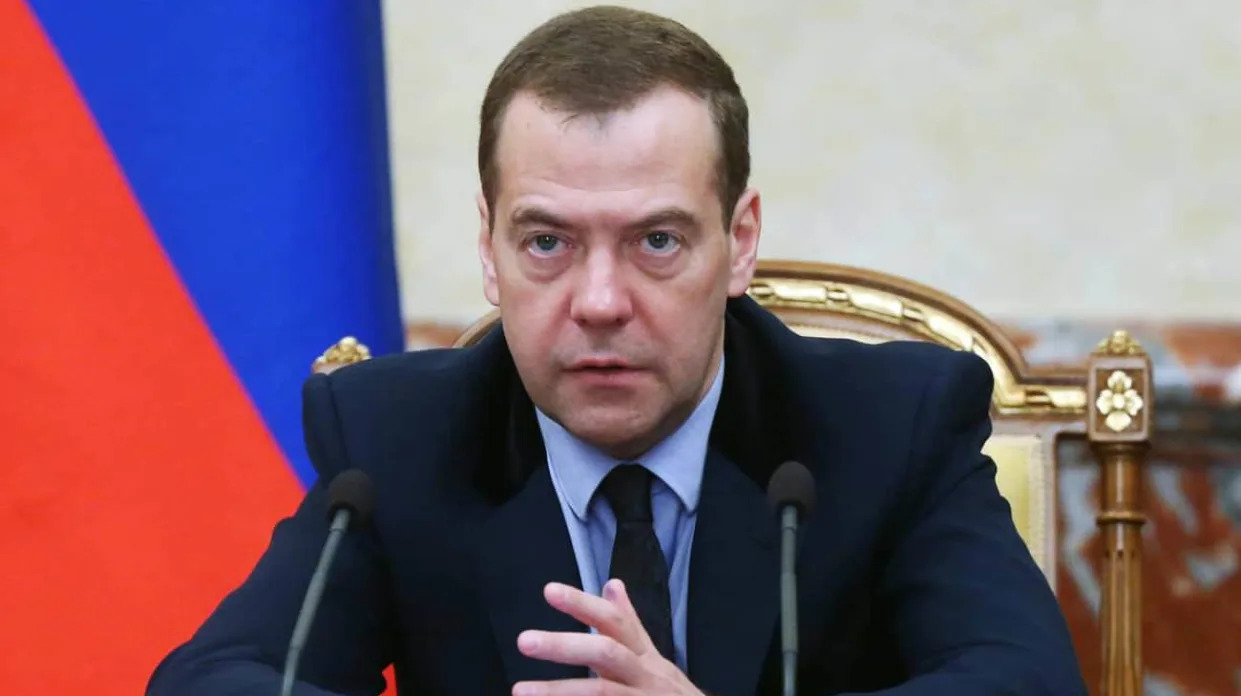
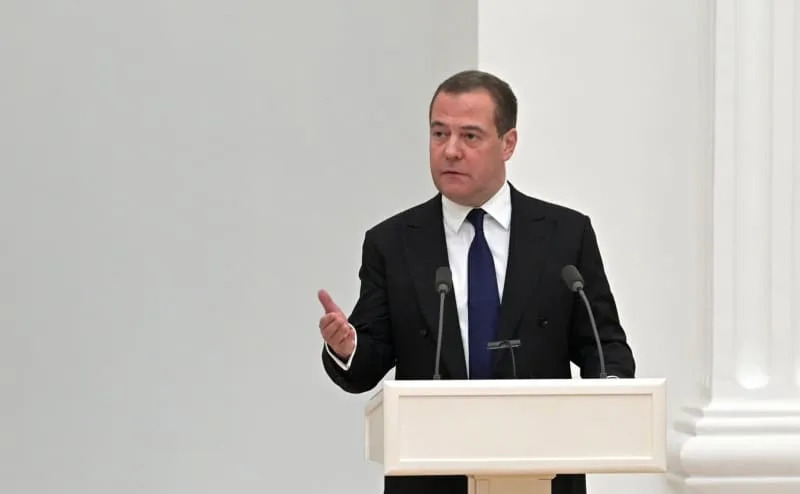
Dmitry Medvedev, Deputy Chairman of the Russian Security Council, speaks at a council meeting in Moscow. -/Kremlin/dpa

Former Russian president Dmitry Medvedev has once again threatened the West with an all-out nuclear war if Russia is pushed back to its internationally recognized 1991 borders after the war in Ukraine.

In a Telegram post on Sunday, the current deputy chairman of the Russian Security Council reiterated his well-known position that “nuclear powers never lose a war” as long as they defend their homeland.

In a short thought experiment, he discussed the case of Ukraine’s success in this war. In his opinion, the return of Ukraine to its old borders would contradict the Russian constitution, especially as the conquered territories in eastern Ukraine and Crimea had already been annexed as integral parts of Russia.

The 1991 borders are the common, internationally recognized border lines of Russia and Ukraine before the annexation of the Crimean Peninsula by Moscow in 2014 and before the full-scale Russian invasion of Ukraine in February 2022.

“And now to the main question: Do these idiots [in the West] really believe that the Russian people would accept such a disintegration of their country?” wrote Medvedev.

On the contrary, the Russian armed forces would deploy their entire arsenal and attack Washington, Berlin or London in addition to Kiev.

He said that these and other “beautiful historical places were entered long ago as targets of [Russia’s] nuclear triad,” referring to the configuration of land-based intercontinental missiles, submarine-launched missiles and strategic bombers with nuclear bombs.

During his time in office as president from 2008 to 2012, Medvedev was regarded as a liberal, moderate politician. Since the start of the Russian war against Ukraine almost two years ago, he has turned into an extremist and is now one of the West’s harshest critics.

There are no concrete indications that Russia’s leadership is actually planning to use nuclear weapons.

Despite several setbacks during the war ordered by President Vladimir Putin, Russia continues to occupy around a fifth of Ukraine, including the Crimean peninsula, and currently sees itself on the path to victory.

Putin on Sunday also commented on the war, Russia considers the situation in Ukraine to be “vital.”

For the West, on the other hand, it is just a question of tactics, Putin said on Sunday in an interview on state television, quoted by the state-run news agency TASS.

While the West was taking tactical positions on Ukraine, for his country it was “a matter of fate, a matter of life or death.” If the West had not intervened, “the war would have ended a year and a half ago.”

“We switched from initially peaceful measures to military instruments and tried to end this conflict peacefully,” Putin claimed. Further, Russia is still prepared to negotiate a peaceful solution.

Moscow’s and Kiev’s positions on a possible peace solution are far apart. While Kiev insists on the return of all occupied territories, including the Crimean peninsula, Russia wants to keep the conquered territories that it has already integrated into its national territory.

On the ground in Ukraine, at least three people have been killed in Russian drone and missile attacks in eastern Ukraine, local leaders said on Sunday.

Two bodies have been recovered so far from the rubble of a residential building in the city of Kramatorsk that was struck by a missile overnight, said Vadym Filashkin, the military governor of the Donetsk region, on Telegram.

The rescue operation is continuing and further victims are suspected to be under the debris, he said.

Oleh Syniehubov, the head of the military administration in the neighbouring Kharkiv region, reported one dead and five injured in an attack on a two-storey residential building in the front-line city of Kupiansk.

Russia attacked its neighbour overnight with six S-300 anti-aircraft missiles that were converted to strike land targets, three Ch-22 cruise missiles and a Ch-59 air-to-surface missile, according to the Ukrainian Air Force.

The Russian military launched 14 Shahed combat drones, 12 of which were destroyed before reaching their target. The air-to-surface missile was also intercepted and a Russian fighter jet was shot down, the air force said.

British intelligence officials believe that Russia could have replaced the head of its Black Sea Fleet, Admiral Viktor Sokolov, likely because of “Ukraine’s success in sinking various ships under his command.”

In its daily intelligence update on the war published by the Ministry of Defence (MoD) in London on Sunday, said various “Russian pro-war commentators” had reported on Sokolov’s removal from his post, which has so far not been confirmed by the Russian Defence Ministry.

One such report had been published on the Rybar Telegram channel, considered to be close to the ministry in Moscow.

According to the MoD update on X, “Sokolov has likely been replaced by his now former deputy, Vice Admiral Sergei Pinchuk as acting commander until an internal investigation of the 15 February 2024 sinking of the Ropucha-class Caesar Kunikov landing ship is concluded.”

The MoD in London has been publishing daily intelligence reports on the war since the beginning of Russia’s full-scale invasion of Ukraine.

Moscow accuses London of spreading misinformation.

Putin feeling the pressure: Russia’s Medvedev threatens to nuke US, UK, Germany, Ukraine if Russia loses occupied territories

The Kyiv Independent

Russia’s Medvedev threatens to nuke US, UK, Germany, Ukraine if Russia loses occupied territories

Alexander Khrebet – February 18, 2024

Dmitry Medvedev, the deputy chairman of Russia’s Security Council, on Feb. 18 threatened to use nuclear weapons against the U.S., the U.K., Germany, and Ukraine if Moscow loses all occupied Ukrainian territories.

Medvedev, who is also a former president of Russia, has repeatedly threatened to use nuclear weapons but the threats have so far failed to materialize. His critics say that his statements are bluff rather than Russia’s genuine plans and are intended to scare the West into making concessions.

Medvedev had previously portrayed himself as a liberal but has become one of Russia’s most aggressive pro-war hawks since the full-scale invasion of Ukraine began in 2022. He has increasingly played the role formerly filled by the late politician Vladmir Zhirinovsky, famous for his flamboyant and aggressive buffoonery.

“Attempts to restore Russia’s 1991 borders will lead only to one thing – a global war with Western countries with the use of our entire strategic (nuclear) arsenal against Kyiv, Berlin, London, and Washington. And against all other beautiful historic places that have long been included in the flight targets of our nuclear triad,” Medvedev said in a reference to the triad of intercontinental ballistic missiles, submarine-launched ballistic missiles, and strategic bombers with nuclear weapons.

In the fall of 2022, Russia annexed Ukraine’s four oblasts – Zaporizhzhia, Donetsk, Luhansk, and Kherson – after sham referendums in the occupied parts of these regions took place.

In his latest post, Medvedev said that a potential defeat of Russia in the war against Ukraine and the “disintegration of the country” may trigger a nuclear war.

Medvedev, a close ally of Putin, has regularly regularly threatened Ukraine and NATO with a nuclear attack. However, he has been ridiculed since his numerous nuclear threats have failed to result in any actions.

In May 2022, he said that by sending weapons and training Ukrainian soldiers, NATO “increases the likelihood of a direct and open conflict between NATO and Russia.”

Since then, thousands of Ukrainian troops have been trained in the NATO countries, and the allies have delivered different types of weapons, including long-range missiles, main battle tanks, and artillery systems.

Putin feeling the pressure: Medvedev threatens Berlin, London and Washington with nuclear retaliation if Russia is to return to 1991 borders

Ukrainska Pravda

Medvedev threatens Berlin, London and Washington with nuclear retaliation if Russia is to return to 1991 borders

Ukrainska Pravda – February 18, 2024

Dmitry Medvedev, Deputy Chairman of the Russian Federation's Security Council. Photo: TASS
Dmitry Medvedev, Deputy Chairman of the Russian Federation’s Security Council. Photo: TASS

Dmitry Medvedev, Deputy Chairman of the Russian Federation’s Security Council, has threatened the United States and Europe with nuclear war if Russia is returned to its recognized borders from 1991.

Details: Medvedev wondered what would happen if Russia lost the war against “neo-Nazis along with their Western sponsors” and returned to its 1991 borders.

He speaks to this outcome as “the irreversible collapse of present-day Russia, which under the Constitution includes new territories”. Medvedev believes that after that, a “civil war with tens of millions of victims” and “the death of the future of Russia” will begin.

Quote: “And now for the main question: do these idiots truly believe that the Russian people will simply swallow such a consequential partitioning of their country? That we will all think:

‘Unfortunately, it happened. They won. Russia as we know it today no longer exists. It is unfortunate, of course, but we must continue to live in a country that is collapsing and dying, because a nuclear war is far worse for us than the death of our loved ones, children, Russia…’?

And that the state’s leadership, led by the Supreme Commander-in-Chief of the Russian Armed Forces, would be hesitant to make difficult decisions in this case?

Hear me out. It will be totally different. The collapse of Russia will have far worse consequences than the outcome of a conventional, even long-term war. Because attempting to return Russia to its 1991 borders will only lead to one outcome. To a global war with Western countries, utilising our entire strategic arsenal. In Kyiv, Berlin, London, and Washington. For all other beautiful historical sites, which have long been included in our nuclear triad’s attack goals.

Will we have enough guts for this if a thousand-year-old country, our great homeland, is on the verge of extinction, and the sacrifices made by the Russian people over the centuries are in vain?

The answer is obvious.”

Tucker Carlson’s Lesson in the Perils of Giving Airtime to an Autocrat

The New York Times

Tucker Carlson’s Lesson in the Perils of Giving Airtime to an Autocrat

Jim Rutenberg and Michael M. Grynbaum – February 17, 2024

In this photo released by Sputnik news agency on Friday, Feb. 9, 2024, Russian President Vladimir Putin, right, gestures as he speaks during an interview with former Fox News host Tucker Carlson at the Kremlin in Moscow, Russia, Tuesday, Feb. 6, 2024. (Gavriil Grigorov, Sputnik, Kremlin Pool Photo via AP) (ASSOCIATED PRESS)

Tucker Carlson left Moscow more than a week ago, riding high from an interview with President Vladimir Putin of Russia that returned him to the spotlight after his abrupt cancellation by Fox News last spring.

But the interview with the wartime autocrat, mocked in various corners of the political media world for its soft touch, continues to have a long and tortured afterlife — becoming a trending topic all over again Friday after Putin’s most vocal domestic opponent, Alexei Navalny, turned up dead in a Russian prison.

“This is what Putin’s Russia is, @TuckerCarlson,” Liz Cheney, a former Republican congresswoman from Wyoming, wrote on X after the news of Navalny’s death broke Friday. “And you are Putin’s useful idiot.”

Naomi Biden, President Joe Biden’s granddaughter, also weighed in, pointing to a video that Carlson had recently posted in which he contrasted the supposed splendors of Russia under Putin’s leadership with the “filth and crime” of the United States. “Has anything aged so poorly, so quickly before?” Naomi Biden wrote on X, formerly known as Twitter.

In a statement to The New York Times on Friday, Carlson said: “It’s horrifying what happened to Navalny. The whole thing is barbaric and awful. No decent person would defend it.”

The comment represented a notable change in tone from earlier this week, when he appeared to offer a blase opinion regarding Russia’s treatment of Navalny, who was first imprisoned three years ago on charges of corruption and “extremism” that the United States called baseless.

Asked at a conference in Dubai, United Arab Emirates, on Monday why he had not questioned Putin about Russia’s free speech crackdown, Navalny’s jailing or suspected political assassinations, Carlson said those were “the things that every other American media outlet talks about.” (Carlson was, in fact, the first Western media figure to interview Putin in more than two years.)

But, Carlson said then, “leadership requires killing people — sorry, that’s why I wouldn’t want to be a leader” — comments that came under still more criticism after Navalny’s death.

Carlson said in a statement Friday that his remarks about leadership “had zero” to do with Navalny. “I wasn’t referring to him, which is obvious in context. I’m totally opposed to killing.”

Although Carlson did press Putin during the interview on Russia’s detention of Wall Street Journal correspondent Evan Gershkovich, he sat silent for long stretches as Putin conducted a history lecture that provided a one-sided and often false narrative about Ukraine.

Carlson’s fans and supporters on X portrayed criticism of his interview as sour grapes from mainstream journalists who did not get to interview Putin themselves.

But on Wednesday, a new pundit joined the chorus of those who said Carlson had gone too easily on Putin — Putin himself.

Speaking with a state television host, Putin said he was disappointed that Carlson had not asked “so-called sharp questions” because he wanted the opportunity to “respond sharply” in his own answers.

“He turned out to be patient and listened to my lengthy dialogues, especially those related to history, and didn’t give me reason to do what I was ready for,” Putin said. “So, frankly, I didn’t get complete satisfaction from this interview.”

Justin Wells, one of Carlson’s top producers, responded Friday that viewers should “judge for themselves.”

Putin’s mockery of Carlson came as the former Fox host was basking in the aftermath of his interview by offering a steady stream of praise for Russia and Putin, whose leadership he has extolled as superior to Biden’s.

On Wednesday, Carlson posted a short video recorded at a Russian grocery store, saying its selection and prices offered an example of Russia’s superiority over the United States, which he described as rife with “filth and crime and inflation.”

“Coming to a Russian grocery store, the heart of evil, and seeing what things cost and how people live, it will radicalize you against our leaders,” he said in the video. “That’s how I feel, anyway — radicalized.”

The video drew a bipartisan rebuke: from Naomi Biden and, before her, Sen. Thom Tillis, R-N.C.

As a polemicist who has long dabbled in pro-Russia narratives and now relies on subscriptions from those drawn to just such content, Carlson operates in a sphere where the criticism he has received this week could be a catalyst for still more support.

“He’s just measured by an entirely different yardstick,” said Nicole Hemmer, an associate professor of history at Vanderbilt University who studies conservative media. “Tucker under attack is great for Tucker.”

Trump has one trick up his sleeve to dodge crushing NY fraud judgment

Salon – Opinion

Trump has one trick up his sleeve to dodge crushing NY fraud judgment

Thomas G. Moukawsher – February 16, 2024

Donald Trump Spencer Platt/Getty Images

Donald Trump’s whole life has prepared him, not for the presidency, but for this moment—beset by lawsuits and criminal charges in court. Some calculations show he filed over 3,500 lawsuits over the years. He knows the vulnerabilities of our legal system and is having no trouble exploiting them.

He hasn’t needed much help in Florida. He appears to have a willing ally in Judge Aileen Cannon in the secret documents case who, so far, has either ruled in Trump’s favor or, in ruling against him, has left the door open to giving Trump what he wants later. What Trump wants is delay. Judge Cannon is likely to give it to him.

In Washington, Trump claims that he is so immune from criminal responsibility that he could have used Seal Team Six to assassinate his political opponents without consequences. Trump has bought himself time with this issue, including asking for more time to petition the Supreme Court. If he fails on this issue, you can expect a series of other claims—each one holding things up. 

In Georgia, Trump’s seedy collaboration with the National Enquirer has combined with his connoisseurship of the courtroom to deliver us a Jerry Springer Show moment with Trump and his allies examining the love life of District Attorney Fani Willis on live television. Once again, Trump has come out a winner, smothering the main event and making Willis, Judge Scott McAfee, and the judicial system look ridiculous. 

And most ridiculous of all, the first criminal case against Trump going to trial is the case about his payoff to a porn star. Manhattan District Attorney, Alvin Bragg claims Trump falsified business records and disguised a campaign contribution by paying hush money about an affair. More silliness, more salaciousness. More distraction from what matters: the allegation that Donald Trump, president of the United States, attempted by fraud, coercion, and a violent attack on the United States Capitol to overthrow the democratically elected government of our country.

And if you think Trump at least faced the music in his New York civil fraud case with Justice Arthur Engoron’s ruling ordering Trump to pay $355 million in penalties, think again. The case is far from over. Trump will stall the case, diddle the docket, drag out the appeal, appeal from the appeals court, and, if he becomes cornered resort to another trick he has considerable experience with—he will declare bankruptcy. 

It doesn’t have to be this way, but deeply engrained formalism in court plays right into Trump’s hands.  When in doubt, judges delay. When there is a claim, however frivolous and intentionally dilatory, it must receive the same slow service as every other claim at the courthouse window.  While the idea of due process is the constitutional promise of a meaningful hearing at a meaningful time, too many judges prefer the appearance of fairness that long delays promise but don’t deliver. Too many times, justice delayed is justice denied, but judges in our contemporary system simply aren’t set up to do it any other way, and Trump and other courthouse cognoscenti know how to exploit it. 

Instead of exalting form over substance, courts should recognize the humanism of legal dilemmas and focus on it. That is, every case in court has a human heart. A value against lying, cheating, stealing, violence or what have you is in play and the fate of real people are on the line. When the parties’ claims and not the process is the focus, courts can push aside obstacles and achieve substantial justice. Parties can be ordered to make all their legal challenges to a case at the same time to keep them from dribbling out and causing long delays. Judge McAfee should have ruled on whether a hypothetical relationship between prosecutors would have anything to do with Donald Trump before allowing a circus about it. The upper courts should see Donald Trump coming and rule fairly and quickly on his claims in New York. The courts should try Trump’s attempted takedown of democracy before they put on a show about a payoff to a porn star. 

American courts are in the spotlight. Trump’s opponents can be grateful that he may face justice someday, but not one of the cases against him will be over before the election.

New documents underscore why the Supreme Court must let Jack Smith’s Trump case move forward

Salon – Opinion

New documents underscore why the Supreme Court must let Jack Smith’s Trump case move forward

Amanda Marcotte – February 14, 2024

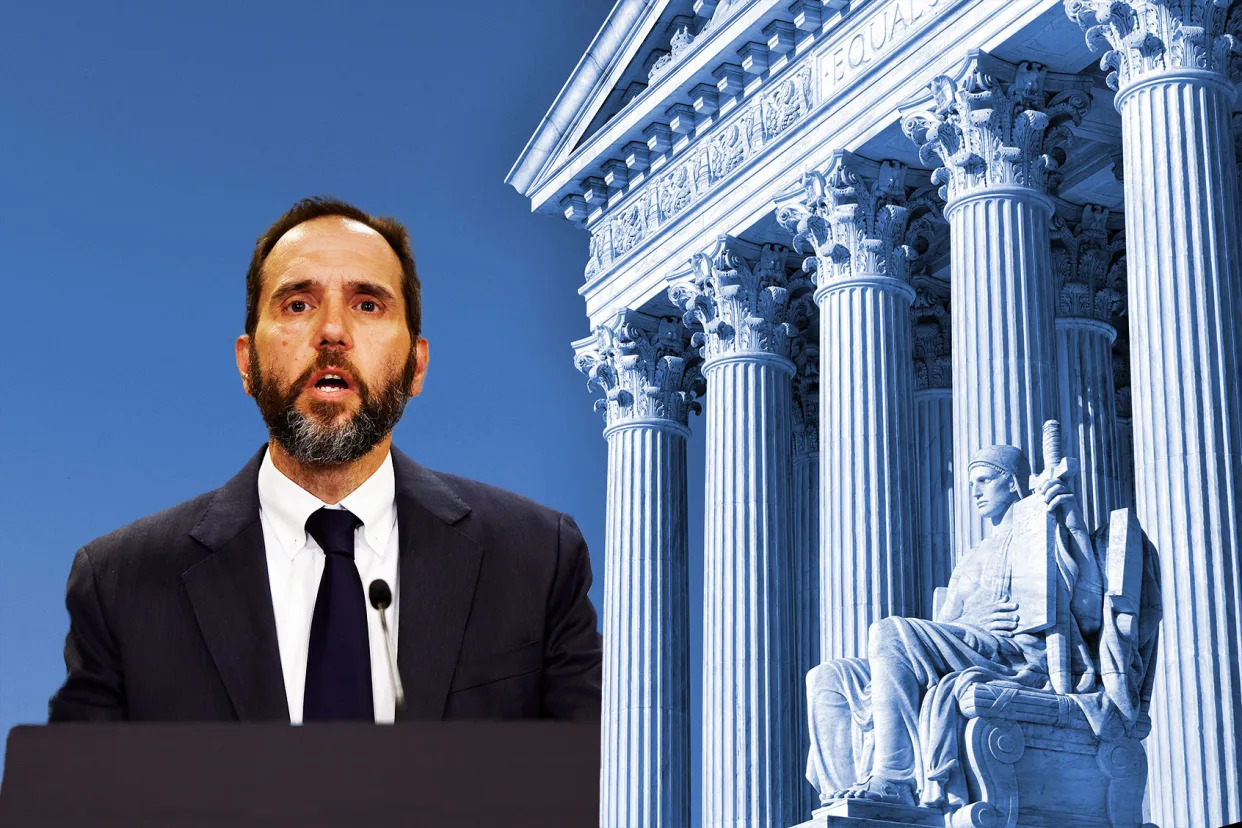
Jack Smith; US Supreme Court Photo illustration by Salon/Getty Images

Despite taking their own sweet time to render what should have been a five-minute decision ruling that Donald Trump is not immune from criminal prosecution, the D.C. Circuit Court of Appeals did do Americans one big favor: They removed most of Trump’s avenues to continue delaying what has become known as the “January 6” criminal case against him. I’ll spare readers the tedium of recounting the legal maneuvering that was avoided, and sum it up as this: The court gave Trump a Monday deadline to appeal to the Supreme Court. He, as usual, put it off until the last minute but did indeed make that appeal by the end of the day.

Now there is only one question: Will the six Republican justices on the court sabotage the case brought by special prosecutor Jack Smith?

Almost no legal experts think that the justices, despite being partisan hacks, will humiliate themselves by upholding Trump’s asinine claims of total license to commit as many crimes as he wishes. But, as Ian Millhiser at Vox explains, “the Court could simply sit on his request for a very long time without taking any action on it.” Doing so would destroy the chance that Trump’s criminal trial for his attempted coup would occur this year. If he wins the election, it would destroy the case completely. There is no doubt that Trump would appoint a corrupt crony to head the Justice Department, and that stooge would kill the case.

On the same day that Trump filed his appeal, Talking Points Memo released a blockbuster report that underscores what a devastating blow to democracy it would be if the Supreme Court derailed this criminal case against Trump. As Josh Kovensky writes, Kenneth Chesebro, one of the unindicted (so far) co-conspirators in Smith’s D.C. case, provided “a trove of documents” to Michigan prosecutors as part of a cooperation agreement to avoid charges of efforts to steal the election in that state. (Chesebro has already pled guilty in a similar case in Georgia.) The documents show how Trump and his conspirators hatched a plan to steal the election by interrupting, delaying, filibustering or otherwise blocking the congressional certification of electoral votes. The idea was to sow chaos for days, if not weeks, in hopes the Supreme Court would step in and simply nullify the election, declaring Trump president.

The full plan never came to fruition, in large part because the conspirators didn’t get enough buy-in from then-Vice President Mike Pence and other key Republican leaders to pull it off. But the documents are a chilling reminder that the violence of the Capitol insurrection was just a small part of what was a vast, sweeping conspiracy to steal the 2020 election from President Joe Biden and the voters who elected him. This matters, because “January 6” has become a shorthand for an attempted coup that, in actuality, lasted for two months and across multiple states. No doubt, the Capitol riot was the flashiest part of this effort. But there’s a real danger that the violence that day is eclipsing the public’s understanding of all the events — and crimes — that led up to QAnon idiots storming the Capitol.

Worse, focusing on the Capitol riot at the expense of talking about Trump’s larger attempted coup allows Republicans to gaslight voters about how serious Trump’s efforts to overthrow democracy really were. One of the favorite tactics of Republicans is to pretend the riot was just a protest that got “out of hand” and deny that Trump was deliberately instigating it with his “fight like hell” speech.

That lie is harder to pull off when one looks at the larger context. Trump and his conspirators had been plotting for months to derail the electoral vote count, creating what they hoped would be a pretext to nullify the election. The attack on the Capitol was part of this larger plan. That’s why it’s ridiculous to pretend Trump didn’t deliberately instigate the riot. Taken together with all his other actions to derail the electoral vote-counting, it’s clear that the riot was part of the larger scheme to keep the election from being certified.

It’s worth revisiting the indictments that Smith filed against Trump last summer. While journalists tend to call this the “January 6” case, the indicting document refers to a conspiracy that stretched from “November 14, 2020 through on or about January 20, 2021.” The evidence is extensive, but only a fraction of it involves the efforts to bring followers to the Capitol to be foot soldiers in the insurrection. Mostly it’s about the various efforts to persuade officials on all levels of government to certify fraudulent electors in the place of the real ones, or to fabricate enough votes for Trump to throw the election, or to get the Justice Department to declare the election fraudulent as a pretext to throw out the results. It’s only when all that failed that Trump turned to violence to create the chaos that Chesebro and his associates thought could be used as cover to declare Trump the victor.

It’s crucial that Smith get to present this evidence to a jury — and to the nation — before the election, and ideally, before the official party nominations are secured at the conventions this summer. Republican voters will probably pick Trump as their nominee anyway, but it’s only fair that they have a chance to be reminded of how central he was to his own coup before they decide to move forward. Trump is more than a guy who gave an ill-advised speech on a single day. He spent every day for weeks scheming to overthrow democracy. Voters really are owed a full accounting of the attempted coup, and not this reductive view that it was just one bad day at the Capitol on January 6.

The new Chesebro documents are a strong reminder that the plot to steal the election really hinged on whether the Supreme Court would, as Trump hoped, use the Trump-created chaos as an excuse to simply declare the election null and claim Trump can retain power indefinitely. There’s some reason to believe the justices, like Pence, wouldn’t have played along it if came to that, because they knocked down Trump’s other lawsuits asking for the courts to nullify the election.

But if they slow-walk this case so that Smith doesn’t get to try it before this year, the court has proved themselves just as corrupt as Trump believed them to be when he asked them to steal an election for him. The case presented to them is a lay-up. There’s no legitimate cause to argue that Trump gets forever immunity for his crimes. All they need to do is put out a one-sentence response upholding the D.C. opinion. That can be done this week. Frankly, that could have been done within minutes of Trump filing his appeal. It’s rare that matters of law are as black-and-white as this, but here we are. If the Supreme Court slow-walks this, the only reason would be to help a man who tried to overthrow the government get away with his crimes.

The Trauma of the Trump Years Is Being Rewritten

By Charles M. Blow – February 14, 2024

Donald Trump with his face partially obscured in a blur of colored light.
Credit…Haiyun Jiang for The New York Times

Americans rehabilitate ex-presidents all the time.

It was fascinating to see the rebranding of George W. Bush — the man who took us into the disastrous Iraq war and horribly bungled the response to Hurricane Katrina — into a charming amateur artist who played buddies with and passed candy to Michelle Obama.

And it didn’t just happen for him. The Monica Lewinsky scandal faded in our consideration of Bill Clinton. Barack Obama’s reliance on drone strikes and his moniker “deporter in chief” rarely receive mention now.

This is because our political memories aren’t fixed, but are constantly being adjusted. Politicians’ negatives are often diminished and their positives inflated. As Gallup noted in 2013, “Americans tend to be more charitable in their evaluations of past presidents than they are when the presidents are in office.”

Without a doubt, Donald Trump benefits from this phenomenon. The difference is that other presidents’ shortcomings pale in comparison with his and his benefit isn’t passive: He’s seeking the office again and, as part of that, working to rewrite the history of his presidency. His desperate attempts, first to cling to power, then to regain it, include denying the 2020 election result and embracing the Jan. 6, 2021, insurrection that his denials helped fuel.

His revisionism has worked remarkably well, particularly among Republicans. A Washington Post/University of Maryland poll conducted in December found that Republicans “are now less likely to believe that Jan. 6 participants were ‘mostly violent,’ less likely to believe Trump bears responsibility for the attack and are slightly less likely to view Joe Biden’s election as legitimate” than they were in 2021.

This is one of the truly remarkable aspects of the current presidential cycle: the degree to which our collective memory of Trump’s litany of transgressions has become less of a political problem for him than might otherwise be expected. Even the multiple legal charges he now faces are almost all about things that happened years ago and, to many citizens, involve things that the country should put in the rearview mirror.

Indeed, in the same poll, 43 percent of Americans and 80 percent of 2020 Trump voters said they believed that the Jan. 6 storming of the Capitol was an event that the country needed to move on from.

Many Americans experienced the Trump years as traumatic, and one of the most bewildering aspects of this year’s presidential race is the way that so many other Americans are disregarding or downgrading that trauma.

In 2021 a study was published about how we remember political events, specifically examining recollections about two watershed moments, one being Trump’s election in 2016. The study’s lead author, Linda J. Levine, a psychologist at the University of California, Irvine, wrote, “People exaggerated when remembering how angry they had felt about the political events but underestimated their feelings of happiness and fear.”

This is part of what she describes as “memory reconstruction,” the updating of our memories of the past to reflect our current feelings and beliefs. And what it says to me is that many of us have a clearer recollection of our indignation from 2016 but have developed a hazier recollection of the sense of foreboding that hung in the air during the years that followed.

I’m not sure that people — not just Republicans — are fully remembering what it felt like, just a few years ago, to wake up every morning having to brace themselves before checking the news because they didn’t know what fresh outrage awaited them.

I’m not sure that people are fully remembering the constant chaos or the disorienting feeling of the stream of lies flowing from the Trump White House.

I’m not sure that people are remembering the family separation policy, the “very fine people” refrain or the tossing of rolls of paper towels in Puerto Rico after a hurricane ravaged the island.

Too many people have settled into a hagiographic view of Trump’s presidency, even though you can make a solid case that today’s economy is stronger than the one Trump left behind and that Trump did — and still does — gush over the world’s dictators and agitate America’s allies.

D. Stephen Voss, a political scientist at the University of Kentucky, told me this week that “voters are usually only responding to fairly recent memories and fairly recent messaging.” As he put it, “Candidates can fairly easily put their past behind them.”

This electoral quirk is an outgrowth of human nature. Staying in moments of apprehension is so emotionally expensive and consumes so much energy that we often allow ourselves to grow numb to them or diminish them.

But the threat that Trump poses to our country hasn’t diminished. It has increased. He keeps saying things — he won’t be a dictator “except for Day 1” — that demonstrate he is not only a danger to the country but also to the world order.

And in the end, that is the most important issue in this election, not Biden’s memory or disagreements over his foreign policy or migrants at the border or economic anxiety. You can’t make the country better without saving it first.

Those fighting to save our democracy can never lose sight of that, particularly since many of those supporting Trump now see his multifarious sins through rose-tinted glasses.

Charles M. Blow is an Opinion columnist for The New York Times, writing about national politics, public opinion and social justice, with a focus on racial equality and L.G.B.T.Q. rights.