Ex-Trump Aide Says He’d Respond To Bankruptcy In 1 Whining Way: ‘I Can Hear It Now’
Lee Moran – March 21, 2024
Former Trump White House press secretary Stephanie Grisham on Wednesday said she could envision Donald Trump declaring bankruptcy in a bid to stall the seizure of his assets as the former president struggles to meet the bond to appeal the $464 million damages he owes following his civil fraud trial.
CNN’s “OutFront” anchor Erin Burnett noted how the presumptive GOP nominee had “built his entire candidacy, his political career about being this billionaire, successful businessman” and asked Grisham whether he’d be willing to declare bankruptcy so close to the 2024 election, given the negative message it may send to voters. Trump has done so on multiple previous occasions.
“I do,” replied Grisham.
New York Attorney General Letitia James, who brought the civil case agonist Trump and his business, can next week begin the process of seizing his assets.
Grisham suggested that “rather than lose Trump Tower, Mar-a-Lago or Bedminster, those top three for sure, he would declare bankruptcy.”
Trump will then “lean into it,” she predicted.
“Privately, will he like it? No, he’ll hate it,” Grisham said. “But he’ll lean into it and say ‘This is what I was forced to do,’ ‘This is because of the left wing,’ ‘This is because of the New York liberals, they’re doing this to me,’ ‘This is just a business move to protect myself.’”
“I can hear it now,” said Grisham. “He won’t like it personally, but I can absolutely see him doing that.”
Grisham later suggested Trump, if he wins the 2024 election, may be able to reverse the move. A bankruptcy now would be all about stalling the loss of those properties, she added.
Trump Told Pence Certifying Election Would Be ‘Career Killer,’ Valet Testified
President Donald J. Trump warned his vice president against failing to overturn the 2020 election results, according to an account by the White House valet by his side on Jan. 6.
By Luke Broadwater and Maggie Haberman – March 21, 2024
President Donald J. Trump speaking during the rally on the Ellipse that preceded the attack of Jan. 6, 2021.Credit…Pete Marovich for The New York Times
The threat from President Donald J. Trump to his vice president, Mike Pence, was clear and direct: If you defy my effort to overturn the 2020 election by certifying the results, your future in Republican politics is over.
“Mike, this is a political career killer if you do this,” Mr. Trump told Mr. Pence by phone on the morning of Jan. 6, 2021, according to the White House valet who was with the president for much of the day and told Congress he had overheard the conversation.
The testimony of Mr. Trump’s valet, provided to the now-defunct House Jan. 6 Committee in 2022 but not previously released publicly, offers a rare firsthand look into the former president’s behavior in the hours before, during and after a mob of his supporters stormed the Capitol seeking to halt the certification of President Biden’s victory.
In the valet’s account, laid out in a transcript obtained by The New York Times, an agitated Mr. Trump pressured Mr. Pence to overturn the election and stewed about Mr. Pence’s refusal for hours after violence engulfed Congress. Told that a civilian had been shot outside the House chamber amid the mob attack, he recalled, Mr. Trump appeared unconcerned.
“I just remember seeing it in front of him,” the valet said of a note card Mr. Trump was given bearing news of the casualty as he watched the riot unfold on television. “I don’t remember how it got there or whatever. But there was no, like, reaction.”
As unflattering as portions of the aide’s testimony were to Mr. Trump, he did not confirm some of the more graphic and damning claims made by witnesses in front of the Jan. 6 committee.
For instance, the valet said he did not remember hearing Mr. Trump use vulgar language in describing his view that Mr. Pence was a coward, or agree with rioters who were chanting for Mr. Pence to be hanged. And he did recall hearing the president ask about contacting top officials on the possibility of dispatching the National Guard to Capitol Hill — though there is no indication that he ever followed through.
Vice President Mike Pence officiating over the electoral vote confirmation on the night of Jan. 6, 2021. A White House valet testified that President Donald J. Trump had pressured Mr. Pence to overturn the election and stewed about his refusal to do so for hours after violence broke out.Credit…Erin Schaff/The New York Times
“Did you hear the president say that?” a staff investigator for the House Jan. 6 committee asked the valet, inquiring about reports that Mr. Trump had called Mr. Pence an expletive meant to refer to a wimp.
“I did not — no, sir,” the valet responded.
Mr. Trump himself has not disputed using that language, and Ivanka Trump’s chief of staff testified that Ms. Trump had told her that Mr. Trump had an “upsetting” conversation with Mr. Pence and that the president had accused him of cowardice, using “the ‘p’ word.” The valet also acknowledged that he wasn’t with the president at all times, and that he had left the Oval Office during a portion of Mr. Trump’s call with Mr. Pence.
At another point, the valet was asked whether he remembered “any comments that the president or anybody around him made with respect to those chants, ‘Hang Mike Pence.’ ”
He answered that he recalled the refrain, “but I don’t remember any comments from the president or anybody on staff.”
Mr. Trump has previously defended the rioters’ use of the chant, telling ABC News’ Jonathan Karl that “the people were very angry,” and calling that anger “common sense.”
House Republicans furnished the transcript to The Times after they obtained it from the White House, which was reviewing and redacting it along with a handful of others provided by the House Jan. 6 committee. The copy reviewed by The Times is heavily redacted, and the valet is referred to simply as “a White House employee.”
For more than a year since winning control of the House, Republicans have been investigating the work of the Jan. 6 committee, looking for signs of bias. They have suggested that the panel did not release certain transcripts because they contradict some of the testimony from a prominent witness, Cassidy Hutchinson, who served as an aide to Mark Meadows, the White House chief of staff at the time. While much of her testimony has been corroborated, Ms. Hutchinson acknowledged that in some cases she was relying on secondhand or thirdhand accounts of events in her testimony to the panel.
“It took a whole lot of work to get these,” Representative Barry Loudermilk, a Republican of Georgia who is leading the G.O.P.’s investigation, said of the transcript of the valet’s testimony and a batch of others he obtained from the White House and the Department of Homeland Security.
Mr. Loudermilk conceded there was “some testimony in it that may not be favorable to Trump,” but he added: “We’re putting it all out there, not doing what the select committee did, and putting things out there that will be favorable to our side.”
In court filings, though, federal prosecutors who have charged Mr. Trump with crimes for his role in the effort to overturn the 2020 election have said some of the committee’s transcripts were subject to confidentiality agreements, and those were sent to the White House and Secret Service for review and redactions before they could be released. Federal prosecutors said they had provided these “sensitive, nonpublic transcripts” to Mr. Trump and his legal team, according to a court filing last year.
Trump supporters fighting with security forces outside the Capitol on Jan. 6, 2021. Credit…Kenny Holston for The New York Times
Representative Bennie Thompson, the Mississippi Democrat who chaired the House Jan. 6 committee, said nothing in the valet’s account changes the essential facts of what his panel uncovered about Mr. Trump’s role in summoning supporters to Washington to challenge the election results and doing nothing to stop their attack at the Capitol.
“Despite Mr. Loudermilk’s attempts to rewrite the violent history of Jan. 6, the facts laid out in the select committee’s final report remain undisputed — and nothing substantive was left out nor hidden,” he said. “While the valet did not witness everything that happened in the White House that day, the testimony confirms Trump’s indifference to the violence and his anger at Vice President Pence for performing his duty under the Constitution.”
The valet also shed more light on how Mr. Trump’s White House had devolved into dysfunction during his final weeks in office. He said Mr. Trump was often “frustrated,” “upset” and “mad” at Pat A. Cipollone, the White House counsel who frequently served as a check on some of the former president’s more extreme impulses — so much so that the valet asked aides to keep the lawyer away from the president at lunchtime to avoid upsetting him.
The valet also confirmed Mr. Trump’s penchant for tearing up documents and other material given to him, which by the law governing presidential records are supposed to be preserved.
“That’s typically what he would do once he’s finished with a document,” the valet said of Mr. Trump. “But that was his sign of, like, he was done reading it, and he would just throw it on the floor. He would tear everything — tear newspapers, tear pictures.”
The valet also testified that Mr. Trump expressed an interest on Jan. 6 in speaking to General Mark A. Milley, then the chairman of the Joint Chiefs of Staff, and Speaker Nancy Pelosi about sending the National Guard to the Capitol — a step that has been a matter of much dispute given the hourslong delay in the troops’ eventual arrival.
Mr. Loudermilk said it was that aspect of the valet’s account that caught his eye.
“That stood out to me like, ‘OK, this is totally in contrast to what we’ve seen, and I’ve never seen this before.’ And so that’s when we started digging,” Mr. Loudermilk said.
Ultimately, though, Mr. Trump made no such call, General Milley told the House panel.
The valet also testified about the contrast between the reaction of White House staffers and Mr. Trump as the riot was underway.
After he returned from giving a speech to a raucous crowd at the Ellipse, Mr. Trump was informed that “they’re rioting down at the Capitol,” the valet recalled.
“And he was, like, ‘Oh, really?’ And then he was like, ‘All right, let’s go see,’” and went to watch the violence on television.
The valet spoke of a sense of “disbelief” and then panic that fell over the staff.
“It was like, ‘What are we going to do?’ ” He said officials were “running around pretty much — running from office to office and all over the place,” while Mr. Trump appeared calm.
Hours later, though, the president was still stewing about Mr. Pence.
“Me and him,I think close to the end of the day, he just mentioned that Mike let him down,” the valet said. “And that was it.”
Luke Broadwater covers Congress with a focus on congressional investigations.
Maggie Haberman is a senior political correspondent reporting on the 2024 presidential campaign, down ballot races across the country and the investigations into former President Donald J. Trump.
Takeaways From Trump’s Indictment in the 2020 Election Inquiry
Four charges for the former president. Former President Donald Trump was charged with four counts in connection with his widespread efforts to overturn the 2020 election. The indictment was filed by the special counsel Jack Smith in Federal District Court in Washington. Here are some key takeaways:
The indictment portrayed an attack on American democracy. Smith framed his case against Trump as one that cuts to a key function of democracy: the peaceful transfer of power. By underscoring this theme, Smith cast his effort as an effort not just to hold Trump accountable but also to defend the very core of democracy.
Trump was placed at the center of the conspiracy charges. Smith put Trump at the heart of three conspiracies that culminated on Jan. 6, 2021, in an attempt to obstruct Congress’s role in ratifying the Electoral College outcome. The special counsel argued that Trump knew that his claims about a stolen election were false, a point that, if proved, could be important to convincing a jury to convict him.
Trump didn’t do it alone. The indictment lists six co-conspirators without naming or indicting them. Based on the descriptions provided, they match the profiles of Trump lawyers and advisers who were willing to argue increasingly outlandish conspiracy and legal theories to keep him in power. It’s unclear whether these co-conspirators will be indicted.
Trump’s political power remains strong. Trump may be on trial in 2024 in three or four separate criminal cases, but so far the indictments appear not to have affected his standing with Republican voters. By a large margin, he remains his party’s front-runner in the presidential primaries.
Putin is ready to squeeze Russia’s outrageously wealthy elite to fund a future war with NATO, analysts say
Tom Porter – March 21, 2024
Putin is ready to squeeze Russia’s outrageously wealthy elite to fund a future war with NATO, analysts say
Vladimir Putin is moving to squeeze Russia’s wealthy elite, a think tank said.
He needs the money to boost military spending, analysts said, and is prepared to ruffle feathers.
Analysts said it’s a sign Putin’s readying for a war with NATO.
Russian President Vladimir Putin is preparing to squeeze Russia’s wealthy elite to fund a conflict with NATO, a think tank said.
The Institute for the Study of War, a US think tank, drew attention to two recent speeches in which Putin voiced rare criticism of the rich loyalists who’ve been the backbone of his power.
In a Tuesday meeting with leaders from Russia’s lower parliament, the Duma, Putin set out the priorities for his new term in office.
He urged officials to “act in the interest of the state instead of corporations or parties.”
The remarks could be seen as a thinly veiled swipe at the widespread corruption that characterizes modern Russia (and from which, Putin’s critics allege, he has also handsomely benefited).
In similar remarks given about a month before to Russia’s Federation Council, Putin said that “individuals who ‘lined their pockets’ in the 1990s” — who are among its crop of oligarchs — are not the real elite.
The actual elite, he said, “are workers and military servicemen who proved their loyalty to Russia.”
The ISW said the remarks indicated that Putin was sending a warning shot to the “siloviki,” the wealthy ex-security officials who form an important part of his power base.
Taken together, the remarks pick away at the long-standing implicit bargain analysts say Putin struck with the country’s wealthy, agreeing to leave their riches untouched in exchange for political support.
The ISW said Putin was changing tack, “signaling that Russia’s long-term financial stability will require imposing at least some pain on some wealthy industrialist siloviki,” it said.
Putin appears willing to risk his accord with his wealthy backers to boost preparations “for a potential future large-scale conflict with NATO,” the ISW said.
The report comes after a series of warnings from Western leaders that Putin might be preparing for a war with the West.
Denmark’s defense minister said it could come in as little as five years.
Analysts say that the Russian president has long harbored ambitions to seize back control of territory in northern and eastern Europe that was once part of the Soviet Union and that victory in Ukraine could embolden him.
But fulfilling that ambition would not come cheap.
Who are the siloviki?
When Putin came to power in 1999, he moved to punish some who had grown wealthy during the liberalization of Russia in the ’90s.
Specifically, he took on those who challenged him, such as the oil magnate Mikhail Khodorkovsky.
A new faction expanded its power under Putin, the siloviki.
Some were handed control over state energy companies and corporations in an apparent exchange for their loyalty, becoming vastly wealthy.
The US sought to undermine Putin’s power by targeting the assets of Russia’s wealthy loyalists in a series of sanctions in the wake of the Ukraine war’s start.
But the Russian economy has managed to withstand the worst effects of the fallout from the Ukraine war, and the loyalty of Putin’s wealthy backers has mostly held firm.
Some members of the Russian business elite were critical of the Ukraine war, fearing the effects on Russia’s economy and society. But, The Guardian reported, many have since resigned themselves to the war and Putin’s continued rule.
And it’s not just Putin’s willingness to shake up his relationship with his wealthy loyalists that indicates his readiness to rapidly expand Russia’s military.
Sergei Shoigu, Russia’s defense minister, announced plans Wednesday to massively expand Russia’s armed forces by creating two new armies.
“Several Russian financial, economic, and military indicators suggest that Russia is preparing for a large-scale conventional conflict with NATO,” the ISW said, “not imminently but likely on a shorter timeline than what some Western analysts have initially posited.”
Conservative House Republicans unveil plan to attack Biden admin policies. Here’s what they would target
Ken Tran, USA TODAY – March 20, 2024
WASHINGTON – The Republican Study Committee, the largest caucus made up of House Republicans, unveiled a course on Wednesday for dismantling many of President Joe Biden’s signature policies – though the proposal’s chances are slim for now.
As part of the RSC’s annual budget, first shared with USA TODAY, the group is pushing to roll back or loosen many of the Biden administration’s major federal rules and regulations.
Republicans in the group are taking aim at a wide range of policies, including initiates to combat climate change, a Defense Department policy reimbursing travel for service members who must cross state lines to receive abortions and Justice Department gun control regulations. In the budget, Republicans call for a return to former President Donald Trump’s approach during his term in office.
Rep. Kevin Hern, R-Okla., speaks to reporters after dropping out of the race for Speaker of the House, and endorsed Rep. Mike Johnson, R-La., as House lawmakers seek to elect a new speaker in Washington.
“The RSC Budget would take bold and necessary action to rein in the Biden Administration’s dangerous regulatory regime, returning to the example set by former President Donald Trump,” the proposal reads, accusing Biden of implementing “a radical” agenda.
The conservative group, led by Rep. Kevin Hern, R-Okla., released their plan after Biden announced a federal budget earlier this month with an eye toward new social programs for housing, health care and child care.
But the budget framework from the GOP group, which comprises almost 80% of the House Republican conference, offers a preview into what policy priorities Republicans are itching to advance should they reclaim the White House, the Senate and hold on to the House.
The budget doesn’t just endorse a slate of GOP-led legislation. It also includes pushes meant to curtail the Biden White House’s executive authority “to restore the appropriate balance of power” between Congress and the presidency.
Included is Rep. Kat Cammack’s Regulations from the Executive in Need of Scrutiny Act, or REINS ACT, that would require Congress to sign off on any rule from a presidential administration that has an economic impact of $100 million or more. The bill passed the House last year on a party-line vote, though it has little chance in the Democratic-controlled Senate.
The funds are typically centered around “socially responsible companies” that focus on addressing environmental and social problems. Republicans have derided the rule as too “woke,” but the rule does not require investment into ESG funds.
Today, the RSC’s proposal is simply a conservative wish list, actions that have little chance of becoming law while Democrats control the Senate and Biden remains in the White House.
But as the presidential election and congressional races across the country pick up steam, the plan could reflect how Republicans are seeking to rally voters in the fall.
“It’s on us to reign in the executive branch and rescind their authority to make decisions that belong to the legislature,” Hern said in a statement to USA TODAY. “Our constituents sent us here to provide a check on the White House. We can’t be passive about it, it’s time for results.”
Republicans — including the new Republican National Committee co-chair Lara Trump and Rep. Elise Stefanik (R-N.Y.) — have recently begun rhetorically asking voters if they believe they are better off now under President Joe Biden than they were four years ago, when Trump was still in the White House.
It’s an updated take on former President Ronald Reagan’s 1980 election question.
And former Secretary of State Clinton, who has been a persistent and vocal critic of presumptive GOP nominee Trump since her shock loss to him in the 2016 election, chimed in with this response to the conservative talking point:
“Multiple indictments and half a billion dollars in civil liability later, pretty much the only person who can say they were better off four years ago is Donald Trump.”
The World Happiness Report released its annual rankings of the happiest countries on Wednesday, with the majority of the top spots going to European nations.
The report, published by the United Nations Sustainable Development Solutions Network, relies on data from the Gallup World Poll, which is analyzed by some of the world’s leading well-being scientists.
The rankings represent the average view of life satisfaction in respective countries, known as “subjective well-being.”
Finland has managed to hold onto the top spot despite Denmark significantly closing the gap between first and second place.
On the flip side, Afghanistan, which was also ranked in last place in 2023, dropped even further for average happiness. America also saw a drop in perceived quality of life, dropping out of the top twenty countries for the first time since the report was published.
Here’s the full list of the top twenty happiest countries in the world, according to the report.
20. United Kingdom
The London tube.Tim Grist/Getty Images
According to the report, older people in the UK are significantly happier than younger age groups.
Despite the UK maintaining its ranking, a recent report from US nonprofit Sapien Labs’ Mental State of the World Report said that the UK is the second most miserable country in the world. It ranked below Ukraine, and the report indicated that factors like having a smartphone at a young age, eating highly processed foods, and decreased social relationships contributed.
19. Lithuania
A street in LithuaniaRicardo Sergio Schmitz
While it’s No. 19 overall, Lithuania ranked as the happiest country for you people, according to the Gallup report. The country’s capital city, Vilnius, is known for attracting young workers from across the globe because of better work opportunities.
18. Czechia
A square in Czechia.Courtesy of National Geographic
Czechia maintained its ranking as 18 for the second year in a row. The country is known for its strong work-life balance and low cost of living.
According to the report, growing happiness in Czechia and other transition countries of Eastern Europe, like Lithuania and Slovenia, is partially why the US and Germany have fallen below the top 20 mark.
17. Ireland
Dublin, Ireland.Getty Images
Ireland has a slower pace of life and is full of cultural traditions, with drinking being a big one. It also has affordable healthcare and a good work-life balance where weekend getaways are common and encouraged.
16. Belgium
Wavre, Belgium.boerescul/Getty Images
Despite a high tax rate, many companies in Belgium offer perks like company cars, meal stipends, and affordable healthcare.
Antwerp, the biggest city in the Flanders region of Belgium, has previously been named one of the happiest cities in the world.
15. Canada
A man wrapped in the Canadian flag.Dave Chan
Canada and the UK are the only countries with populations over 30 million that made the top 20 ranking in the report.
Older Canadians are significantly happier than younger age groups in the country. According to a breakdown of younger and older residents in each country, Canadians under 30 ranked 50 points lower than those 60 and older.
14. Austria
Vienna, Austria.Giannis Alexopoulos/NurPhoto via Getty Images
Many Americans have moved to Vienna and Linz for better work opportunities and overall quality of life. Shortages in engineering, nursing, and baking have opened up opportunities for people living in other countries.
One expat dad living in the country said his overall mental health improved in Austria and the move relieved some of his anxiety related to work. He also gets to travel more easily and spend more time with his family.
Austrians get 38 days of paid time off per year, with 25 days of paid vacation and an additional 13 public holidays off.
A waterfall in Nicoya, Costa Rica. underworld111/Getty Images
Costa Rica returned to the top 20 list after earning the same ranking in 2012, according to the Gallup report. Housing isn’t cheap, but some residents save money on utilities and transportation.
Others have reported improved mental health after moving there from the lifestyle and culture that centers around wildlife and nature.
11. New Zealand
Aerial View Of Auckland City’s skyline in New Zealand at sunrise.Jonathan Clark/Getty Images
According to some Americans who moved to New Zealand, housing costs are high, and buying options are limited. But work-life balance is better, and education and healthcare come at a lower cost.
Despite its high ranking, the report reveals that younger people living in New Zealand are significantly less happy than older residents. A separate list comparing young and older age groups in each country found that Kiwis 60 and older ranked in sixth place in happiness globally, while Kiwis under 30 ranked at 27.
10. Australia
The iconic Sydney Opera House in Australia. James D. Morgan/Getty Images
The Bernina Express train in Switzerland.Roberto Moiola/Getty Images
Switzerland was previously named the world’s best country by US News & World Report, and its business-friendly culture was a big part of the ranking.
Switzerland is a hub for raw materials like oil, and the country may also benefit from its historical stance of neutrality during international conflicts.
8. Luxembourg
The old town of Luxembourg City.Getty Images
Luxembourg is known for its rich history, tasty pastries, and fairytale aesthetic in some of its villages like Echternach.
According to an American student who moved there for grad school, the lower cost of tuition and cheaper healthcare necessities were a perk. Other notable factors included an efficient transportation system and a strong work-life balance that made a difference for her.
7. Norway
Oslo, Norway.Getty Images
Norway maintained a high ranking in the report, but it also experienced a drop in scores among younger age groups.
Amsterdam, the Netherlands.Mouneb Taim/Anadolu Agency via Getty Images
A large part of Dutch culture lies in the concept of “niksen,” or doing nothing. Dutch residents value relaxation and tend to be friendly and welcoming to others.
The country is also known for its transportation system and Dutch-style home mortgages that make it easier for some residents to buy property.
5. Israel
Israel.Nick Brundle Photography/Getty Images
Israel remained in the top five happiest countries in the world, moving down one ranking and 0.9 of a percentage point from last year. While the poll was taken before warfare in Gaza escalated, it was taken after the October 7 attack and hostage crisis.
With men and women joining the military at 18 years old, Israelis value living live in the present. The country also places high importance on community and family life, and less emphasis on work and status.
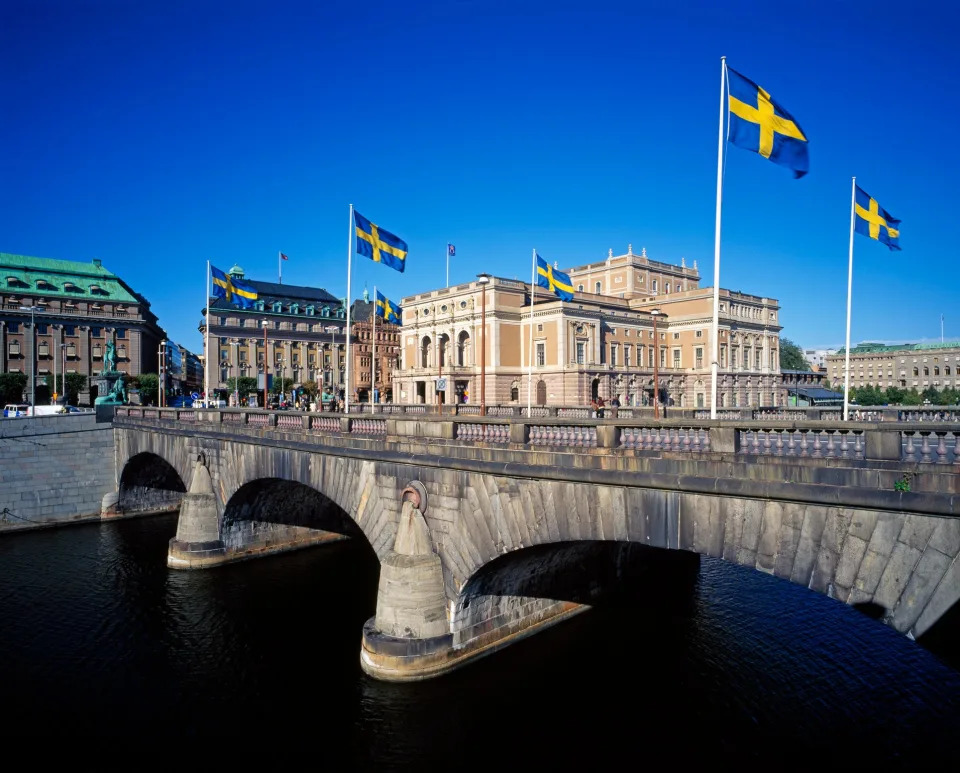
4. Sweden
Norrbro Bridge and the Royal Opera building in Stockholm, Sweden.Murat Taner/Getty Images
According to the Gallup report, older Swedish people are significantly happier than younger age groups in the country.
Seljalandsfoss waterfall in Iceland.Phillip Chow/Getty Images
Despite limited sunlight in the winters, Iceland managed to rank in the top three happiest countries for the second year in a row. While rent is rising in Iceland, it’s still cheaper than in other countries, and the cost of living is relatively low with healthcare heavily subsidized and nearly free.
2. Denmark
Copenhagen, Denmark. Alexander Spatari/Getty Images
Denmark is known for its “hygge” culture, which is the Danish concept of relaxing and enjoying simple comforts — the term is used in different settings to reinforce the idea of having fun.
The country is also known for its exceptional childcare, with Copenhagen ranked as one of the best places to raise children.
1. Finland
Market Square and Uspenski Orthodox Cathedral in Finland.Jon Hicks/Getty Images
Finland has a strong sense of democracy, and its public institutions and policies reinforce it.
Some attribute the high satisfaction of its residents to its welfare policy, which covers necessities for residents from “cradle to grave.” The policy offers free healthcare and free education from elementary school to college.
“I would be forced to mortgage”: Trump melts down on Truth Social as lawyers admit he can’t get bond
Trump fears he may have to “sell Great Assets, perhaps at Fire Sale prices”
By Igor Derysh – March 19, 2024
Former President Donald Trump speaks as the court takes a lunch break during his civil fraud trial at New York State Supreme Court on October 17, 2023 in New York City. (Michael M. Santiago/Getty Images)
Former President Donald Trump lashed out at the judge who imposed a $450+ million penalty in his New York fraud case after his lawyers admitted he was unable to secure a bond to appeal the case.
Trump’s lawyers on Monday asked a New York appeals court to stay the enforcement of the judgment in his fraud case, saying it has been impossible to secure a bond necessary to appeal the judgment after approaching 30 different underwriters.
The former president lashed out at the judge on Truth Social after the filing.
“Engoron wants me to put up the ridiculous fine (I DID NOTHING WRONG!) before I get a chance to Appeal his crazed ruling – A first!” Trump falsely wrote. New York law requires a defendant to put up the full judgment amount with interest in order to appeal a civil judgment.
“Judge Engoron actually wants me to put up Hundreds of Millions of Dollars for the Right to Appeal his ridiculous decision. In other words, he is trying to take my Appellate Rights away,” Trump falsely claimed again in another post. “Nobody has ever heard of anything like this before. I would be forced to mortgage or sell Great Assets, perhaps at Fire Sale prices, and if and when I win the Appeal, they would be gone. Does that make sense? WITCH HUNT. ELECTION INTERFERENCE!”
Trump continued to lash out at the judge in a series of more than a half-dozen posts on Monday night and Tuesday morning, claiming that his Mar-a-Lago property is worth “50 to 100 times” more than what Judge Arthur Engoron valued it at — even though the valuation was based on estimates by local officials.
Trump further lashed out at Engoron as a “Crazed, Trump Hating, Rogue Judge.”
“The Corrupt Political Hacks in New York, Judge and AG, are asking me to put up massive amounts of money before I am allowed to appeal the ridiculous decision. Never done before. No jury, no victim, full disclaimer clause, happy banks,” Trump repeated, falsely, about the New York law the requires him to put up the money to appeal.
“I shouldn’t have to put up any money, being forced by the Corrupt Judge and AG, until the end of the appeal,” he complained. “That’s the way system works!”
Bolton says Trump wants to be treated like North Korean leader: ‘Get ready’
Lauren Irwin – March 20, 2024
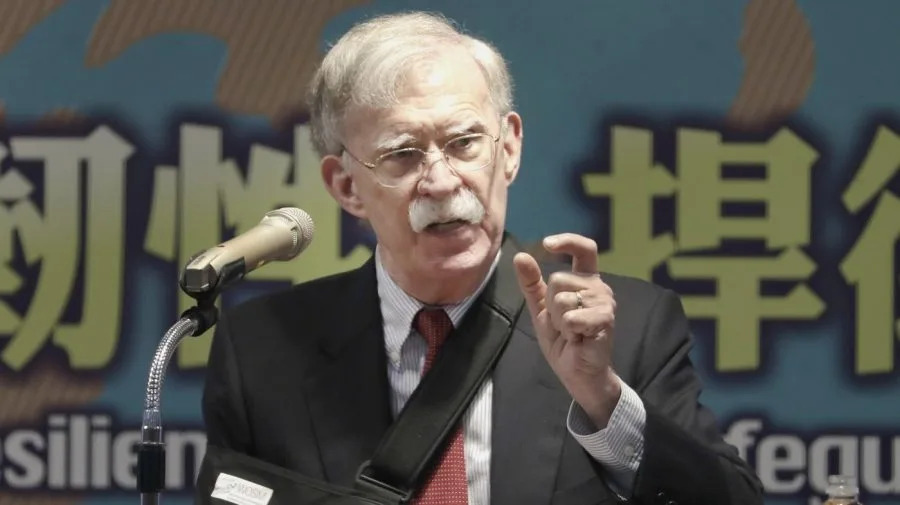
Former national security adviser John Bolton said Tuesday that former President Trump wants to be treated like North Korea’s Kim Jong Un, and people should “get ready.”
“Donald Trump wants Americans to treat him like North Koreans treat Kim Jung Un. Get ready…..” Bolton posted on X, the platform formerly known as Twitter.
Bolton, who served as the national security adviser under the Trump administration, posted a viral clip of Trump speaking with Fox News’s Steve Doocy in 2018, where the former president offered praise for the North Korean leader.
“He’s the head of a country, and I mean he’s the strong head. Don’t let anyone think anything different. He speaks and his people sit up at attention,” Trump said in the clip. “I want my people to do the same.”
Bolton joins a list of former Trump officials who are warning of his return to power, just after he clinched the Republican nomination for president and will face off against President Biden in the polls this fall.
The clip of Trump speaking highly of Kim follows a meeting between the former president and Hungarian Prime Minister Viktor Orbán at his Mar-a-Lago estate. Trump received sharp criticism for meeting with the Hungarian leader, who said he hopes to see Trump return to the White House.
After the meeting, Trump said Orbán is a “Great Leader” who is “respected all over the World.” The former president has also favorably commented about Adolf Hitler on multiple occasions.
In the past, Trump has said that he would not be a dictator if he were reelected, “Except for day one.”
The ruling rebuffed a call by Trump’s legal team to exclude the pair’s testimony. Both Daniels and Cohen have claimed that Daniels, whose real name is Stephanie Clifford, was paid ahead of the 2016 presidential election to keep quiet about a sexual encounter she had with Trump.
Manhattan District Attorney Alvin Bragg charged Trump with 34 felony counts of falsifying business records to cover up his reimbursing Cohen for the $130,000 hush money payment. Trump repaid Cohen in 2017 through monthly checks that were disguised as payments for legal services and falsely documented at the Trump Organization, according to prosecutors.
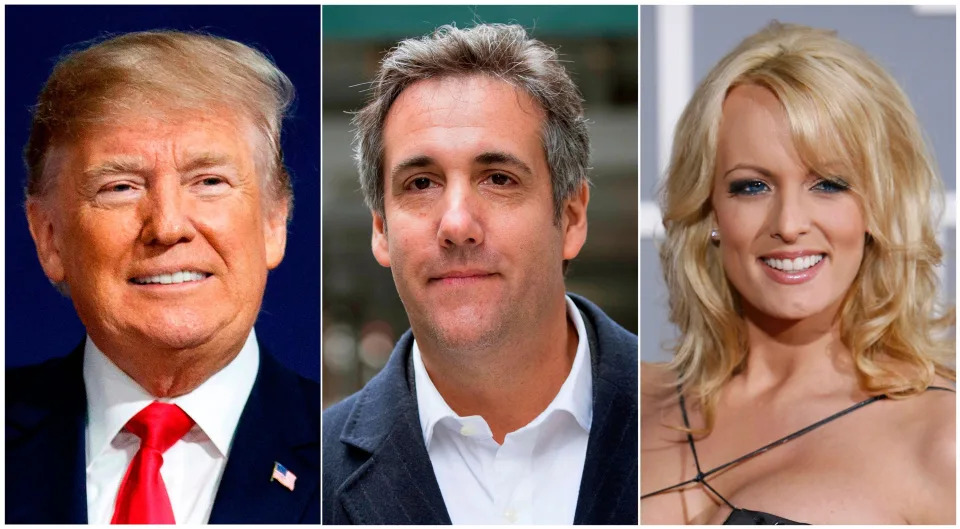
Former President Donald Trump, disbarred attorney Michael Cohen and adult film actress Stormy Daniels.
Judge Juan Merchan’s ruling on the testimony maps out the potential contours of the trial, which was previously slated to begin March 25 but has been delayed until at least mid-April after Trump’s legal team asked for more time to review new documents.
Merchan will instead hold a hearing March 25 to deal with what happened with the new documents and potentially set a new trial date. The trial is expected to last several weeks.
Why Trump said Cohen should be kept out
“Michael Cohen is a liar,” Trump’s legal team wrote in their request to exclude Cohen’s testimony. They said Cohen has a history of lying that ranged from minimizing his own criminal conduct to distorting his background.
The Trump team pointed specifically to Cohen’s statement at Trump’s New York civil fraud trial that he had previously lied to a federal judge when he pleaded guilty to tax evasion. Cohen said at the civil fraud trial that he engaged in “tax omission,” not tax evasion.
“The People’s desire to rush ahead with these proceedings rather than look into the ongoing criminal conduct of their star witness is troubling and violates the People’s ethical and constitutional obligations,” Trump’s team argued, referring to the DA’s office.
However, Merchan said he wasn’t aware of any perjured testimony from Cohen in the hush money case.
“Defendant provides examples of situations where Cohen’s credibility has been called into question. However, he offers no proof of perjury in the case at bar,” Merchan wrote.
Merchan said he wasn’t able to find any applicable law or court holding that blocked a prosecution witness because the witness’s credibility was previously called into question.
The 2024 Republican presumptive nominee’s hush money case will mark the first-ever criminal trial of a former president.
Why Trump said Daniels should be kept out
In trying to get Daniels’ testimony blocked, Trump’s legal team described her stories as “contrived” and “inflammatory,” and quoted her as having said, in the context of testifying, she has “been asked to kind of behave.”
Prosecutors “appear to have recognized the risks of presenting this irrelevant and untrue testimony by warning their witness,” Trump’s team said in their request to exclude her testimony.
In allowing Daniels’ testimony, Merchan said its value is “evident.”
“Locating and purchasing the information from Daniels not only completes the narrative of events that precipitated the falsification of business records but is also probative of the Defendant’s intent,” he wrote.
Merchan did grant Trump’s request to block the jury from hearing about the results of any polygraph test Daniels took.
Testimony but not video on Access Hollywood tape allowed
In a separate ruling Monday, Merchan also made several determinations about the government’s requests around evidence, including about the infamous Access Hollywood tape, in which Trump stated that he kisses women without consent.
“You know, I’m automatically attracted to beautiful (women) — I just start kissing them,” Trump said. “It’s like a magnet. Just kiss. I don’t even wait.” He added, “And when you’re a star, they let you do it. You can do anything … Grab them by the p—-y. You can do anything.”
Merchan said the tape “is relevant to the critical issues in this case,” noting the government’s argument that Trump and his campaign team were worried after the tape was released that it would hurt his candidacy.
“Thus, the tape helps establish Defendant’s intent and motive for making the payment to Daniels and then” trying to hide it, Merchan wrote.
Merchan said, however, that there should be a compromise to avoid undue prejudice against Trump.
“This Court rules that the proper balance lies in allowing the People to elicit testimony about a videotaped interview which surfaced on October 7, 2016, that contained comments of a sexual nature which Defendant feared could hurt his presidential aspirations,” Merchan wrote.
“However, it is not necessary that the tape itself be introduced into evidence or that it be played for the jury,” Merchan added.
Merchan said he may reconsider his ruling on the tape if Trump opens the door to more evidence about it at trial.
Merchan also said Trump won’t be allowed to offer any evidence that the Justice Department chose not to prosecute him for potential campaign finance law violations. The department’s decision didn’t prove anything for purposes of the hush money case, Merchan said.
MAGA Reps Suddenly Face an Existential Threat: Themselves
Sam Brodey, Reese Gorman – March 18, 2024
Photo Illustration by Thomas Levinson/The Daily Beast/Getty
It would be hard to argue that Rep. Mike Bost (R-IL) is guilty of the worst sin in today’s GOP—being a dreaded RINO, or “Republican In Name Only.”
The Illinois congressman endorsed Donald Trump for president and voted with him 93 percent of the time during his administration. Bost voted to throw out the electoral votes of states Joe Biden won in 2020. And Trump has even endorsed his 2024 re-election bid, saying Bost is doing a “fantastic job.”
None of it has been enough to stop a far-right challenger from casting Bost as the epitome of a RINO—forcing the incumbent into a brutal political dogfight ahead of Tuesday’s primary election.
Darren Bailey, a far-right state senator who was the GOP nominee for governor in 2022, is arguing that Illinois’ most conservative district needs the most MAGA possible representative.
On Steve Bannon’s War Room podcast last week, Bailey told the former Trump strategist that Bost “will not stick his neck out like you, and like Mike Lindell, because obviously these people are career politicians, they’re concerned about the next election cycle.” Bannon, for his part, hyped up his guest’s opponent as “one of the worst, as bad as they come,” calling Bost a “mini-McCarthy” and fixating on reports that he had threatened to punch “our own” Rep. Matt Gaetz (R-FL). (On top of regularly guest-hosting the War Room podcast, Gaetz has traveled to Bost’s district to campaign for Bailey.)
With his résumé, Bost would have been all but immune to a challenge from his right in years past. Since he was elected in 2014, in fact, he’s only faced one other primary challenge—in 2018, when he won by nearly 70 points.
But 2024 is poised to be a very different election year, one in which no House Republican is safe, no matter how MAGA they may be.
At least 21 House Republican incumbents are facing primary challenges from candidates who are seriously campaigning and raising at least some funds, according to a Daily Beast review of campaign filings and other materials.
Three lawmakers have already survived, but by slim margins. In March 5 primaries, Reps. Dan Crenshaw (R-TX), Steve Womack (R-AR), and Jake Ellzey (R-TX) defeated underfunded MAGA challengers, but with less than 60 percent of the vote. Womack, a critic of hardline conservatives, won by just 7 points.
In a brief interview with The Daily Beast last week, Bost lamented what he saw as the driving factors behind many of these challenger campaigns: attention and purity tests.
“What that is is all about your own ego, and that’s the problem,” Bost said. “And they find like people that think like they do, and then try to drag them up against somebody that doesn’t think like they do.”
Some of the incumbents are familiar primary targets, like Reps. Brian Fitzpatrick (R-PA) and Don Bacon (R-NE), considered among the most centrist members of the GOP conference. Some are being challenged simply because they aren’t loud or combative enough—or even if they cast a vote in favor of funding the government, which is now a punishable offense in the MAGA base.
But many are as conservative and Trump-supporting as Bost, if not more so. Rep. William Timmons (R-SC), who has a 95 percent lifetime score from the right-wing Heritage Foundation, is facing an aggressive primary challenge.
Some archconservatives are being targeted because they backed Ron DeSantis for president, like Reps. Bob Good (R-VA) and Thomas Massie (R-KY), while others are being challenged in part because they didn’t support Rep. Jim Jordan (R-OH) in his bid for the House speakership last fall.
1920481347House Freedom Caucus Chairman Rep. Bob Good (R-VA) speaks with reporters at the U.S. Capitol.Photo by Kent Nishimura/Getty Images
What nearly all of these incumbents have in common is that their opponents hail from the far-right fringes of the party. Where the incumbents are on Fox and Newsmax, the challengers are regulars on Bannon’s show, hoping to land endorsements from figures like Mike Lindell, Roger Stone and Michael Flynn.
One primary hopeful is a pro-gun YouTuber; another has based his campaign around having served prison time for participating in the Jan. 6 attack on the Capitol. Far-right troll Laura Loomer, who came within 7 points of defeating Rep. Daniel Webster (R-FL) in 2022, is running again. Often lost in the noise from these ultra-MAGA figures is that their beloved party leader has endorsed their opponent.
That’s what’s so different about this primary cycle, say Republicans and election analysts.
“The threshold of what it takes to offend Republican primary voters has fallen lower,” said Dave Wasserman, the election expert and senior editor for U.S. House races at the Cook Political Report.
At this point, GOP strategist Ken Spain said, “many of the Republicans in the House have taken on a Trump-like persona, where you either fight to the death, or you’re simply not committed to the cause—and that’s what we’re seeing play out.”
Like in every election year, at least one of these challenges will almost certainly be successful. It’s possible many could lose, or 2024 could be a better year for incumbents than 2022, when five lost primary challenges in non-redistricting related races.
But the more important upshot of any member having to worry about a primary threat, no matter how marginal, may not be who wins—it may be how members adjust their behavior to survive.
Pointing to weak incumbent performances on March 5, Wasserman said, “the combined impact of those three outcomes will be a chilling effect on other Republican members who have been willing to speak out against Trump or vote for things that Trump doesn’t like.”
While Trump often put Republicans in a difficult position when they had to defend his near-daily controversies, he offered many of them something they desperately desired: a cheat code to avoid primary challenges.
Republicans during the Trump era were largely measured by their support of Trump. Gone were the Heritage Action or Club for Growth scores to rank a Republican’s conservatism, or the need to collect endorsements from across the GOP spectrum, or even the need to spend considerable time in the district.
Republicans, by and large, only needed Trump’s endorsement to be considered sufficiently conservative and avoid a credible threat. That fealty of Republicans to Trump further reinforced his power in the party, and further exacerbated the transformation of the party into his image.
Even with Trump out of office for three years, his influence has been constant. What has changed, however, is just the number of anti-Trump—or, really, insufficiently pro-Trump—Republicans that are left in Congress.
With just about every Republican claiming the mantle of a ‘Trump Republican,’ being ‘pro-Trump’ might not be the same prophylactic that it once was against primary challengers. (If every Republican is pro-Trump, is anyone really pro-Trump?)
Combine it all with the dearth of successful challenges in recent years—which has just increased the internal tension in the party—and there’s a pressure cooker situation developing.
After a year that unleashed unprecedented internal animosity in the House GOP, members’ increased eagerness to campaign against their own colleagues is adding yet another layer of drama in a majority already ripped apart by it.
Gaetz, naturally, is a ringleader, having stumped for primary challengers to Bost and Rep. Tony Gonzalez (R-TX). Timmons’ challenger, meanwhile, has been endorsed by a remarkable seven colleagues.
Many Republicans, of course, would rather see these members using their campaign time and resources working to protect and expand the House GOP’s increasingly slim majority instead of trying to replace conservative colleagues with even more conservative colleagues.
On the Democratic side of the aisle, the primary fever that helped put the left-wing “Squad” into office in 2018 and 2020 has abated. The most high-profile challenges to incumbents this cycle are from the center, not the left, targeting Squad-aligned Reps. Jamaal Bowman (D-NY) and Cori Bush (D-MO). Meanwhile, just two members of the party’s center and center-left wing are facing viable primaries from progressives.
Occasionally, this frustration has emanated from the top of the House GOP. During House Republicans’ annual retreat last week, Speaker Mike Johnson (R-LA) privately—and showing real frustration—admonished members who were campaigning against each other, a source familiar with his remarks told The Daily Beast.
“I’ve asked them all to cool it,” Johnson told CNN on Sunday. “I am vehemently opposed to member-on-member action in primaries because it’s not productive… So I’m telling everyone who’s doing that to knock it off.”
In response to a question from The Daily Beast about primaries, Rep. Elise Stefanik (R-NY), the fourth-ranking House Republican, declared her support for all GOP incumbents and urged members to work as a team.
“It’s a slim majority, and we need to make sure that everyone feels the support from their colleagues,” she said. “Even if you vote differently based upon your district, it’s important to know that we’ve all heard the support of our constituents to be here.”
Perhaps more than any other primary fight, the one in West Virginia’s 1st District illustrates the singular dynamics at this fraught moment within the Republican Party.
The incumbent, Rep. Carol Miller, has represented this district since 2019. Trump won it by over 40 points in 2020. Miller voted to throw out Biden’s Electoral College votes on Jan. 6 and has been a Trump ally. But in general, she has quietly gone about her business in Congress, and has cast votes to keep the government open and avoid defaults on the national debt.
Miller’s opponent is Derrick Evans, a former West Virginia state lawmaker who might be the purest expression of the MAGA id and political incentive structure on display anywhere in the country.
Now, the candidate’s feed on X is full of daily outrage bait. “White liberal women are the greatest threat to the future of our constitutional republic,” he posted recently. He has called for “arresting the people who stole the 2020 election.” He has been endorsed by QAnon favorite Michael Flynn and Trump acolyte Roger Stone. For some reason, he traveled to Delaware last Friday to give a speech about Joe Biden.
While he has dinged her for such offenses as appearing in a photo with Bill Gates, Evans has occasionally made a succinct case for his primary campaign. “My opponent,” Evans once tweeted, “is a total RINO representing an Ultra MAGA District.”
Evans has also raised real money: over $290,000 in 2023, according to his Federal Election Commission filings. (Miller has raised just over $560,000.)
In a brief interview with The Daily Beast at the House GOP retreat last week, which took place in her district, Miller demonstrated how starkly different she is from her opponent.
“My mama told me not to say anything if I can’t say anything nice,” Miller said. “I welcome people challenging me. His lack of experience is a little different to me. I’ve worked very hard the last six years. I represent my district well. I’ve listened to them, I’ve voted conservatively, and it’s been my honor to serve.” (Evans did not respond to a request for comment from The Daily Beast.)
There is another potent GOP primary dynamic adding to the 2024 chaos: incumbents who may face challenges stemming from their votes to remove Kevin McCarthy as Speaker last year. The furious deposed leader has taken verbal potshots at the eight GOP lawmakers who ousted him, and he and his powerful allies are moving to hamper their re-election campaigns.
Rep. Nancy Mace (R-SC) is considered one of the top targets, along with Rep. Good in Virginia. One of the McCarthy Eight, Rep. Matt Rosendale (R-MT), is not even seeking re-election, citing a personal smear campaign against him.
In Good’s 5th Congressional District of Virginia, all the strains of GOP drama converge. The chairman of the hard-right House Freedom Caucus, it’s hard to get more conservative than Good. But he earned establishment enemies with his support for removing McCarthy—and earned enemies in the MAGA movement for his support of DeSantis for president.
His opponent is John McGuire, a Virginia state senator who has touted his support for Trump at every turn possible. Ahead of the June 18 primary, Good’s standing among primary voters is so poor that he was thrown out of a pro-Trump store in his district that had hosted an event for McGuire.
Massie, the Kentucky Republican, also was a prominent DeSantis backer, and his opponent has touted that as his No. 1 reason to dump the incumbent. But Massie has been here before; in 2020, Trump backed his primary challenger. He won easily anyway.
“This would be the third person who’s tried to run to the Trump of me, and that’s the only direction you can go where I might not be 100 percent in terms of the MAGA scorecard,” Massie told The Daily Beast.
But Massie acknowledged that not all of his colleagues have cultivated as strong a brand that lets them survive getting crosswise with Trump.
“If you’re not known in your district,” Massie said, a Trump endorsement could “cost you 10 points in your primary.”
“If somebody gets endorsed on the other side they can go up 10 points, and the other person could go down 10 points if they’re not very well defined in their district,” he said.
How Massie fares in his own state’s primary could show how acute the party’s MAGA angst really is. But he’s not sweating the challenge.
“People would rather I support the Constitution,” he said, “than any particular president.”























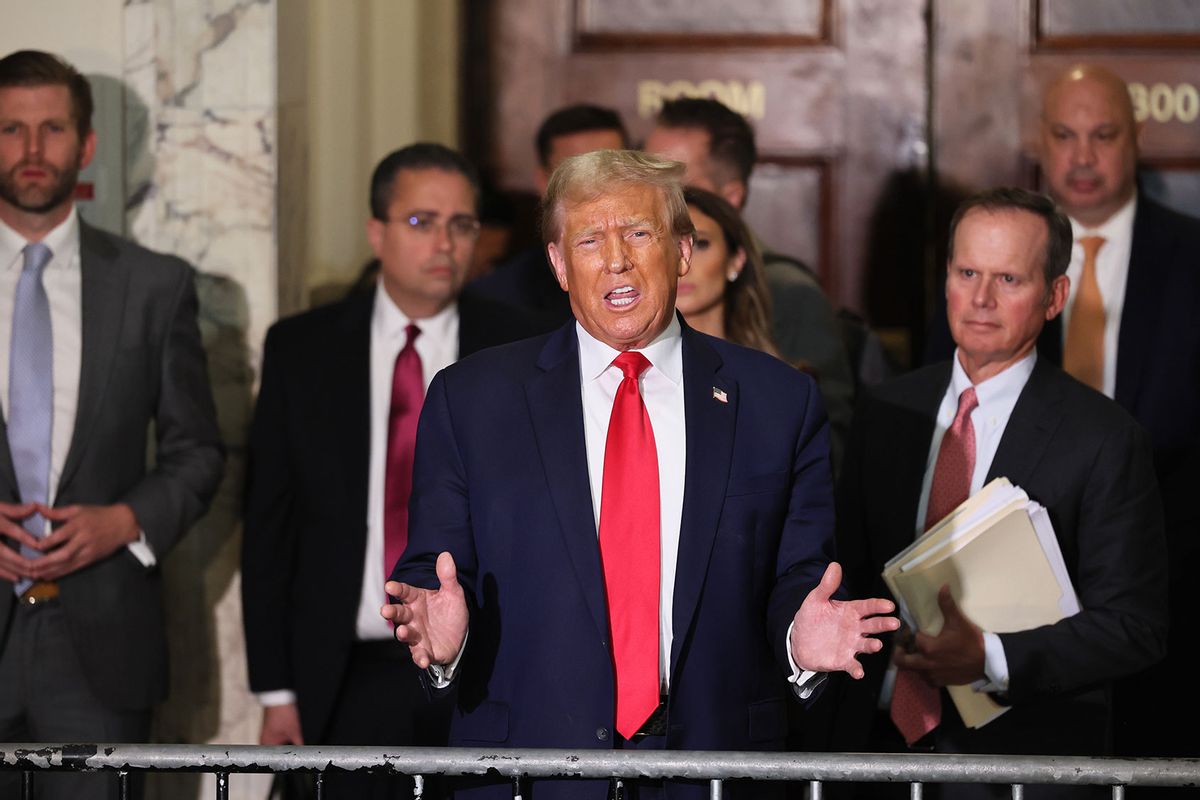 Former President Donald Trump speaks as the court takes a lunch break during his civil fraud trial at New York State Supreme Court on October 17, 2023 in New York City. (Michael M. Santiago/Getty Images)