‘A Very Large Earthquake’: How Trump Could Decimate the Civil Service

Politico

‘A Very Large Earthquake’: How Trump Could Decimate the Civil Service

Ian Ward – December 20, 2023

For the past two decades, Max Stier has distinguished himself as Washington’s foremost champion of the federal civil service, a quiet but influential voice in favor of practical reforms to make federal bureaucracy work better both for the people who serve in it and for the people that it serves. The Partnership for Public Service — the nonpartisan, nongovernmental organization that Stier helped found in 2001 and still runs today — works largely behind the scenes in Washington to grease the wheels of the bureaucracy, doing everything from crafting common sense proposals for modernizing government programs to hosting a much-beloved annual awards ceremony honoring the country’s top performing civil servants.

These days, though, Stier is increasingly preoccupied with what he sees as a fundamental threat to that work: former President Donald Trump’s sweeping proposal to convert thousands of career civil servants into political appointees if he wins a second term in the White House. That plan — which has won the support of powerful, Trump-aligned conservative think tanks such as the Heritage Foundation and the America First Policy Institute — is modeled on an executive order from Trump’s first term that redesignated 20,000 civil servants in policy-related positions as “Schedule F” employees, thereby allowing them to be fired unilaterally by the president.

The Biden administration reversed the Trump administration’s order upon assuming office in 2021, but Trump has vowed to reinstitute an expanded version of the Schedule F order if he is reelected in 2024, converting as many as 50,000 civil servants into political appointees and stripping them of the career protections that they currently enjoy.

For Stier, Trump’s proposal is as ironic as it is dangerous. Although Trump and his allies have argued that their plan is necessary to vanquish the “deep state” that allegedly undermined Republican policy initiatives during Trump’s first term, Stier argues that a revamped order on Schedule F would in fact go a long way toward creating the sort of “deep state” that conservatives now rail against.

“If you were to convert a significant segment of that professional workforce into one that is being chosen by political fiat, then you end up in a system that is responsive to the political desires of the individual rather than the larger responsibilities to the Constitution and to law,” Stier said when I spoke to him recently. “You wind up with a workforce that is not only going to deliver poor service, but also that is going to be a tool for retribution and actions that are contrary to our democratic system.”

Even so, Stier cautioned, Americans should not underestimate the damage that the reforms would do to the federal government’s ability to deliver basic services in a timely and efficient manner. “At the end of the day, it’s intuitive,” he said. “If you are selecting people on the basis of their political persuasion or their loyalty as opposed to their expertise and their commitment to the public good, you’re going to wind up with less good service and more risk for the American people.”

The following has been edited for concision and clarity.

How seismic would the changes wrought by Trump’s proposal be? Is there any precedent for it?

It would be a very large earthquake. There is precedent, but it’s precedent from the 19th century. In effect, when you talk about implementing Schedule F, you’re talking about turning the clock back to the late 19th century, when our government operated under the spoils system. That all changed, importantly, when President [James] Garfield was assassinated by a disgruntled job seeker [in 1881], resulting in the passage of the first piece of legislation that professionalized our government, the Pendleton Act.

Frankly, Schedule F is now used as a handle for a larger set of dramatic changes to our government, but they are entirely designed to — and will have the consequence of — making our government responsive to the will of the individual holder of the office of the president rather than the broader allegiance to our Constitution and the rule of law.

Is there evidence that a merit-based civil service — as opposed to a bureaucracy run according to the spoils system — actually makes the government more effective?

No question. One way to know that is to look at our peer countries across the world, and the reality is that every effective democracy on the planet today has a professionalized, merit-based civil service that is the core of their governmental function. If anything, we are an outlier in the numbers and the extent to which political appointees are [spread] throughout government institutions. We have 4,000 political appointments that are made by a president — and that is dramatically more than anybody else out there. So one direct piece of evidence is to look at our peers to see how capability and government performance are directly related to the professional capability of the other civil service. In our own country, the same is true. We have many instances in which organizations have foundered when they’ve had too many political appointees.

At the end of the day, it’s intuitive: If you are selecting people on the basis of their political persuasion or their loyalty as opposed to their expertise and their commitment to the public good, you’re going to wind up with less good service and more risk for the American people.

Do we know which career positions would likely be converted to appointed positions under a second Trump administration?

The best evidence we have so far is what was attempted at the back end of the last Trump administration. At that point, they were looking at converting effectively the entire Office of Management and Budget. For most people, that’s just another government acronym, but in fact, it’s the nerve center of the entire government and the office that really is responsible for coordinating and allocating all the resources of our government — and it’s one of the most capable and professionalized elements of our government.

If you converted just those positions alone, then all kinds of choices in government would be made not on the basis of what delivers the best service to the public, and not on the basis of choosing according to transparent criteria that match Congress’ objective desires. They would be entirely based on the political implications — and that is a worse world.

What about beyond OMB?

We don’t know what the full sweep would be, but it’s also true that you don’t have to convert all the positions to have a much larger impact. The chill that would exist for the larger workforce would be profound. For instance, we currently have a system that respects whistleblowers in order to make sure that if something illegal is occurring inside an agency, the individuals who raise them are actually protected. In a world with Schedule F, that would be incredibly hard to see that happening.

Which areas of the government stand to suffer the most under a return to the “spoils system,” as you called it? What would that look like in terms of the delivery of government services?

It depends a lot on how broad of a brush is ultimately wielded in making the changes. You can start from the most obvious, life-saving components of our government.

If you ask the public today if they want a professional government service, they say “yes” in very, very large majorities. So I think that the intuitive point is very strong. The challenge is that there’s a narrative that has been sold around this notion of a deep state, which is just wrong. Indeed, the proposals that are on the table would create a deep state, rather than the effective state that we all should be pursuing.

What do you mean?

I don’t think we have a deep state today. The vast bulk of career civil servants understand that their role is to execute the policy choices that our elected leaders make and that they have a responsibility to follow the law and to make sure their actions are consistent with the Constitution. But if you were to convert a significant segment of that professional workforce into one that is being chosen by political fiat, then you end up in a system that is responsive to the political desires of the individual rather than the larger responsibilities to the Constitution and to law.

You wind up with a workforce that is not only going to deliver poor service, but also that is going to be a tool for retribution and actions that are contrary to our democratic system.

The Biden administration has issued a rule that’s designed to limit the scope and efficacy of any subsequent Schedule F reforms by future administrations. How effective do you think that rule will be?

It’s an important effort and recognition that it would be wrong and damaging. At the end of the day, though, Congress speaking to this would be much more efficacious. I actually think that, even absent the rule or legislation, there would be real legal reasons to challenge the creation of something like Schedule F.

What would a legal challenge look like?

There are statutes that Congress passed that enshrined the merit principles, and one of the main principles is that employees should actually be hired on the basis of merit and not on the basis of politics. So I believe there would be credible and important legal questions that could be raised about those kinds of changes.

But again, I’m not suggesting that they necessarily win — and in the meantime, an awful lot of damage could happen. The very effort and attempt [to reimplement schedule F] would be incredibly damaging in and of itself, so people should not feel sanguine about the possibility that this couldn’t happen or could be delayed, because the harm is profound even in just attempting to do so.

Past administrations from both parties have struggled to fill the 4,000 appointed jobs that currently exist. Is it feasible for a future administration to fill somewhere in the ballpark of 50,000 appointed roles?

The biggest challenge in placing political appointees comes from the Senate confirmation process and all the delays and difficulties that are involved in actually nominating and getting the Senate to confirm them. That’s a deeply broken process. But none of these positions would require that. So I don’t believe that people should be heartened by the notion that they can convert them and it won’t matter because they won’t be able to fill those jobs. I don’t think that is either a true or adequate answer to the problem.

I imagine many people reading this will think, “Well, our government doesn’t work all that efficiently as it is, so what’s the problem with making it a little bit less efficient?” How do you answer that?

This is a difference in kind and not in degree. It’s not like, Yeah, we might just have a slightly less efficient government. No — we would actually have a government that fundamentally fails in its responsibilities to the American people. It would become an instrument of political achievement rather than an instrument of problem-solving and addressing critical issues for the public.

But I think the point is a very important one, because the American public should demand even better than they’re getting right now from our government. I believe that there actually are really good ways of improving the capability of the civil service that do not involve burning down our government. That’s fundamentally the choice that is here to be made. I don’t think it’s efficient to simply say that Schedule F is bad. You also have to offer a plan of attack on improving our government — and frankly, we have that. We have a whole roadmap of the changes that should take place. But the reality is that none of it should be viewed as an indictment of career public servants. It’s an indictment of the leadership over the years that has failed to modernize and invest in the systems of our government.

What does that roadmap look like?

To give one example, the pay system is based on a law from 1949 and it fundamentally hasn’t been modernized since then. That ought to be modernized, because it was built at an age in which our federal workforce was largely clerical, whereas today it’s largely professional. The system isn’t designed for market connectivity to get the technologists, the AI specialists and so on that are necessary to deliver the best services to the public.

There are changes that ought to take place in the way accountability is done in our government. You can actually fire federal employees — and many do leave because they’re threatened with being fired for performance issues — but the systems should be modernized and updated and simplified. There are lots of things that can be done that would actually improve the public service and that would result in better outcomes for the public, rather than blowing it up.

What happens to those reforms in a world with Schedule F? Is there a kind of dual-track future where you can do sensible civil service reform even with Schedule F in place, or are they completely crosswise with each other?

I think they’re crosswise because they come from different visions. One vision is a spoils system, and the other is a professional, capable and effective state. Those are very, very different visions, so I don’t think you can marry the two.

Ultimately, the Schedule F approach swamps the entire system. It cuts the legs out from the idea that we want people who are not only selected on the basis of their capabilities but also based on the fact that their loyalty is to the rule of law and our Constitution rather than to the individual [in power]. Again, we have way too many political appointees as it is, and it really is important for people to see that we are such an outlier in the world — in a bad way.

I suspect that some people on the right simply do not care if government efficiency suffers as a result of these reforms. In fact, that might be part of the goal. How do you think about appealing to people who might be thinking about it that way?

There’s an entirely legitimate and appropriate debate to be had about the role of our government. But there should be no debate about ensuring that, whatever the public actually desires the government to do, it’s done well and effectively. The vast majority of civil servants are focused on national security issues — on actually keeping us safe. I don’t think there are very many Americans who would dispute the value of that outcome or the need for an effective government to do it.

How aware are people in Washington of the potential consequences of these reforms? And how prepared do you think they are to deal with them?

I do not believe that the public has good insight into the nasty consequences that would come out of the proposals that are part of Project 2025. At the end of the day, if you look at the polling [about the public’s view of the civil service] it’s clear as can be: Americans actually want the people who are serving them to be chosen because they’re the most expert and capable — not because they’ve sworn loyalty to the person in the Oval Office.

Exactly Who is trying to destabilize Who?? Putin: There must be severe action against ‘foreign agents’ who help Ukraine, destabilize Russia

The Kyiv Independent

Putin: There must be severe action against ‘foreign agents’ who help Ukraine, destabilize Russia

Nate Ostiller – December 20, 2023

Editor’s note: A previous version of this article said that Sergei Skripal’s wife was injured in the poison attack. Skripal’s daughter Yuliia, not his wife, was injured.

Russian leader Vladimir Putin said that there must be a “severe” response against foreign intelligence services that “directly” support Ukraine and seek to “destabilize the socio-political situation in Russia” in a video address published on the Kremlin’s website on Dec. 20.

Putin has long accused Ukraine of being guided by foreign powers, especially the U.S., and has claimed that its actions are dictated by Washington.

While the U.S. openly supports Ukraine and provides the country with funding, weapons, and strategic military assistance, there is no evidence that U.S. intelligence services actively assist Ukraine on the ground, especially within Russia.

The comments came on Russia’s Security Officer’s Day. Putin congratulated them for their work, particularly in parts of Ukraine that Russia illegally annexed in 2022.

He also accused Ukraine of pursuing “state terrorism” by engaging in sabotage and targeted assassinations. He did not elaborate on the statement.

Ukraine occasionally acknowledges its involvement in various operations within Russia, although it does not take direct responsibility.

Ukraine’s military intelligence (HUR) published a video on Nov. 30 saying that trains in the region around Moscow were disrupted at the end of November “as a result of a special measure implemented together with the resistance movement.”

A pro-Russian former lawmaker, Illia Kyva, who was charged with treason in Ukraine, was assassinated in Moscow Oblast on Dec. 6. in a special operation conducted by the Security Service of Ukraine (SBU), according to the Kyiv Independent’s source in law enforcement.

Russian intelligence is widely believed to be behind a significant number of operations in foreign countries to sow chaos and destabilize society.

Russian operatives have also assassinated perceived opponents of Putin’s regime in foreign countries, such as the poisoning of Russian double agent Sergei Skripal in the U.K. Skripal and his daughter survived the attack, but an innocent passerby who found the poison was killed.

More Than Half of Children Losing Medicaid Coverage Live in Just 5 States

The Fiscal Times

More Than Half of Children Losing Medicaid Coverage Live in Just 5 States

Michael Rainey – December 19, 2023

Getty Images

As individual states continue to disenroll millions of people from Medicaid and the Children’s Health Insurance Program (CHIP) now that pandemic-era suspension of participation guidelines has come to an end, new data from the U.S. Department of Health and Human Services shows that more than 50% of the children who have lost health coverage this year come from just five states.

From March 2023, when the disenrollment process began, to the end of September, 2.2 million children were removed from Medicaid and CHIP, two programs that overlap and are typically lumped together. The five states with the largest total declines in enrollment – Texas, Florida, Georgia, Ohio and Arkansas – accounted for 54% of the reductions, or more than 1.2 million children.

All five states are led by Republicans, and the first three have refused to expand their Medicaid systems as allowed by the Affordable Care Act. In terms of total disenrollment, the 10 states that have refused Medicaid expansion – Texas, Florida, Georgia, Mississippi, Alabama, South Carolina, Tennessee, Kansas, Wisconsin and Wyoming – have removed more children from coverage than all of the expansion states combined, HHS said.

Echoing the worries of many healthcare experts, the Biden administration has expressed concerns that some states have been too aggressive in removing beneficiaries from their Medicaid and CHIP rolls, with many people losing coverage simply because they failed to complete various kinds of paperwork. HHS said Monday that Secretary Xavier Becerra has sent letters to the nine states with the highest disenrollment rates urging them to “adopt additional federal strategies and flexibilities to help prevent children and their families from losing coverage due to red tape.”

Among other things, Becerra called on governors to remove barriers to participation such as CHIP enrollment fees and premiums; to make it easier to automatically renew children for coverage; to expand efforts to contact families facing renewal; and to expand their Medicaid programs so that children do not fall into a coverage gap. “I urge you to ensure that no eligible child in your state loses their health insurance due to ‘red tape’ or other bureaucratic barriers during the Medicaid enrollment process,” he wrote.

Liz Cheney Tells Fox News Viewers Why They Should Not Vote For Donald Trump: “This Isn’t About Policy … It’s About The Republic. It’s About The Constitution”

Deadline

Liz Cheney Tells Fox News Viewers Why They Should Not Vote For Donald Trump: “This Isn’t About Policy … It’s About The Republic. It’s About The Constitution”

Ted Johnson – December 18, 2023

Liz Cheney, in a sometimes contentious interview with Fox News’ Bret Baier, at one point addressed the network’s viewers with a message: Don’t vote for Donald Trump.

“We can have conservative policies without having to torch the Constitution,” Cheney said. “And so what I would urge people watching today who are going to be voting in those caucuses and in those primaries, vote for somebody else. Do not vote for somebody who already tried to seize power.”

Now an outcast from the Republican party for her criticism of Trump and her warnings about giving him a second term, Cheney has made numerous appearances across other media outlets as she promotes her book, Oath and Honor. Her first big sitdown was with MSNBC’s Rachel Maddow, and there was some question as to whether she would appear on Fox News at all. On CNBC, Cheney criticized Fox News host Sean Hannity for “enabling” Trump.

On Special Report on Monday, Baier told her, “We have a policy here to hear from all sides, and we wanted to invite you to talk about your book.”

The interview, which ran just short of 10 minutes, did not start with Cheney’s book but with Baier’s question about how she views President Joe Biden’s response to the Israel-Hamas war. “I’m worried that they’re getting to abandon Israel, and I think we’re in a situation where Hamas must be destroyed,” Cheney said, offering some criticism of the administration.

But that fed into a point she made several times throughout the interview: Her opposition to Trump is not about policy, but of his efforts to remain in power after the 2020 election, including his conduct on January 6, 2021, along with what he has vowed to do in a second term.

“He tells us every day,” she said. “If you look at the steps he would have to take in terms of simply refusing to enforce court orders, or comply with court orders with which he disagrees, putting people in key positions …. unethical lawyers who would help him, frankly, blow through many of the guardrails in our Constitution. I think it is a very real concern.”

Then Baier read from a Wall Street Journal op ed from last week in which the writer, Allysia Finley, called the notion of “Trump as dictator” a “classic case of projection.” Finley went on to claim that it is Biden who has abused executive power, ignored the law and “run roughshod over individual liberties,” while Trump “would have to contend with a hostile media and a federal bureaucracy that would be throwing pots, pans and candlesticks at him at every step.”

“Well, I think they’re wrong,” Cheney told Baier. “We would not have to guess about what the next President Trump would do because he did it before. He would not have around him the people that were around him, frankly, the people that the country will hear from as his trial moves forward, who were all his appointees…people that told him on January 6th, as you and I were talking that day, actually, that he needed to tell the mob to go home.”

Baier, though, stuck with the op ed, contending that Cheney has not been vocal about Biden’s executive orders to cancel student loans, ban evictions and mandate Covid vaccines. For a time, he and Cheney talked over one another.

Cheney said that she didn’t think it was true that she had not weighed in on some of the topics, before making the point that Trump’s case was different. She even cited Baier’s own book on George Washington.

“The last chapter of your book is called “The Gift of a Peaceful Transition of Power.” That is what we are talking about,” she said.

“This is not about me,” Baier said.

“That’s right. But that’s a very important concept….Every single president, Republican and Democrat, since George Washington, has ensured the peaceful transition of power. Donald Trump tried to seize power.”

“This isn’t about policy. I voted with Donald Trump 93% of the time. This is about the nation. It’s about the republic. It’s about the Constitution.”

Cheney, who was once a Fox News contributor, also seemed to be making an appeal to the Fox News workforce, invoking one of its late conservative commentators. “I come here to Fox, and I sit in the Charles Krauthammer green room, and I know how much, how revered Charles was, by you, by me,” she said. “And Charles taught us a whole bunch of things. But one of them is that some things have to matter, and rising above politics, rising about partisanship, recognizing our duty to the Constitution, is the most conservative of all conservative principles.”

Trump would install loyalists to reshape U.S. foreign policy. Diplomats gird for “doomsday”

Reuters

Trump would install loyalists to reshape U.S. foreign policy. Diplomats gird for “doomsday”

Gram Slattery, Simon Lewis, Idrees Ali, Phil Stewart – December 18, 2023

Republican presidential candidate and former U.S. President Trump campaigns in Reno

WASHINGTON (Reuters) –Donald Trump in a second term would likely install loyalists in key positions in the Pentagon, State Department and CIA whose primary allegiance would be to him, allowing him more freedom than in his first presidency to enact isolationist policies and whims, nearly 20 current and former aides and diplomats said.

The result would enable Trump to make sweeping changes to the U.S. stance on issues ranging from the Ukraine war to trade with China, as well as to the federal institutions that implement – and sometimes constrain – foreign policy, the aides and diplomats said.

During his 2017-2021 term, Trump struggled to impose his sometimes impulsive and erratic vision on the U.S. national security establishment.

He often voiced frustration at top officials who slow-walked, shelved, or talked him out of some of his schemes. Former Defense Secretary Mark Esper said in his memoir that he twice raised objections to Trump’s suggestion of missile strikes on drug cartels in Mexico, the U.S.’s biggest trade partner. The former president has not commented.

“President Trump came to realize that personnel is policy,” said Robert O’Brien, Trump’s fourth and final national security adviser. “At the outset of his administration, there were a lot of people that were interested in implementing their own policies, not the president’s policies.”

Having more loyalists in place would allow Trump to advance his foreign policy priorities faster and more efficiently than he was able to when previously in office, the current and former aides said.

Among his proposals on the campaign trail this year, Trump has said he would deploy U.S. Special Forces against the Mexican cartels – something unlikely to get the blessing of the Mexican government.

If he returns to power again, Trump would waste little time cutting defense aid to Europe and further shrinking economic ties with China, the aides said.

O’Brien, who remains one of Trump’s top foreign policy advisers and speaks to him regularly, said imposing trade tariffs on NATO countries if they did not meet their commitments to spend at least 2% of their gross domestic product on defense would likely be among the policies on the table during a second Trump term.

The Trump campaign declined to comment for this article.

Unlike in the lead-up to his 2016 election, Trump has cultivated a stable of people with whom he speaks regularly, and who have significant foreign policy experience and his personal trust, according to four people who converse with him.

Those advisers include John Ratcliffe, Trump’s last Director of National Intelligence, former U.S. Ambassador to Germany Richard Grenell, and Kash Patel, a former Trump staffer who held several positions in the intelligence and defense communities.

None of those people responded to interview requests.

While the specific policies of these informal advisers vary to some degree, most have been vocal defenders of Trump since he left office and have expressed concerns that America is paying too much to support both NATO and Ukraine.

“DOOMSDAY OPTION”

Trump has a commanding lead in the Republican presidential nomination race. If he becomes the Republican nominee and then defeats Democratic President Joe Biden next November, the world will likely see a much more emboldened Trump, more knowledgeable about how to wield power, both at home and abroad, the current and former aides said.

That prospect has foreign capitals scrambling for information on how a second Trump term would look. Trump himself has offered few clues about what kind of foreign policy he would pursue next time around, beyond broad claims like ending the Ukraine war in 24 hours.

Eight European diplomats interviewed by Reuters said there were doubts about whether Trump would honor Washington’s commitment to defend NATO allies and acute fears he would cut off aid to Ukraine amid its war with Russia.

One Northern European diplomat in Washington, who spoke on condition of anonymity because of the sensitivity of the issue, said he and his colleagues had kept talking to Trump aides even after the former president left the White House in 2021.

“The story from there was, ‘We were not prepared (to govern), and next time it has to be different,'” the diplomat said. “When they got into the Oval Office in 2017, they didn’t have any idea what the hell to do with it. But this won’t happen again.”

The diplomat, whose country is a NATO member, and one other diplomat in Washington said their missions have outlined in diplomatic cables to their home capitals a possible “doomsday option.”

In that hypothetical scenario, one of multiple post-election hypotheses these diplomats say they have described in cables, Trump makes good on pledges to dismantle elements of the bureaucracy and pursue political enemies to such a degree that America’s system of checks and balances is weakened.

“You have to explain to your capital. ‘Things might go rather well: the US keeps on rehabilitating herself’ (if Biden is re-elected),” said the diplomat, describing his mission’s view of American politics. “Then you have Trump, a mild version: a repetition of his first term with some aggressive overtones. And then you have the doomsday option.”

RETREAT FROM GLOBALISM

Michael Mulroy, the Deputy Assistant Secretary of Defense for the Middle East under Trump, said the former president would likely appoint individuals who subscribed to his isolationist brand of foreign policy and were unlikely to confront him.

All U.S. presidents have the power to name political appointees to the most senior jobs in the federal bureaucracy, including the State Department, Pentagon and the CIA.

“I think it will be based primarily on loyalty to President Trump,” Mulroy said, “a firm belief in the kind of foreign policy that he believes in, which is much more focused on the United States, much less on a kind of globalist (policy).”

Trump clashed with his own appointees at the Pentagon on a number of issues in his first term, from a ban on transgender service members that he supported to his 2018 decision to pull U.S. troops from Syria.

When his first defense secretary, Jim Mattis, resigned in 2018, the former four-star general stated he had significant policy differences with Trump. While Mattis did not explicitly lay them out, he stressed in his resignation letter the need to maintain an ironclad bond with NATO and other allies, while keeping enemies, like Russia, at arms-length.

Ed McMullen, Trump’s former ambassador to Switzerland and now a campaign fund-raiser who is in contact with the former president, stressed that most foreign service personnel he knew served the president faithfully.

But, he said, Trump was aware of the need to avoid choosing disloyal or disobedient officials for top foreign policy posts in a second term.

“The president is very conscious that competency and loyalty are critical to the success of the (next) administration,” he said.

Outside of Trump’s top circle of advisers, a potential Trump administration plans to root out actors at lower levels of the national security community perceived to be “rogue,” according to Agenda47, his campaign’s official policy site.

Such a step would have little precedent in the United States, which has a non-partisan bureaucracy that serves whichever administration is in office.

Trump has said he plans to reinstate an executive order he issued in the final months of his first term, which was never fully implemented, that would allow him to more easily dismiss civil servants.

In a little-reported document published on Agenda47 earlier this year, Trump said he would establish a “Truth and Reconciliation Commission,” which would, among other functions, publish documents related to “Deep State” abuses of power. He would also create a separate “auditing” body meant to monitor intelligence gathering in real time.

“The State Department, Pentagon, and National Security Establishment will be a very different place by the end of my administration,” Trump said in a policy video earlier this year.

NATO PULLOUT? NEW TRADE WAR

During a second term, Trump has pledged to end China’s most favored trading nation status – a standing that generally lowers trade barriers between countries – and to push Europeans to increase their defense spending.

Whether Trump will continue vital U.S. support for Ukraine in its war with Russia is of particular importance to European diplomats in Washington trying to prepare, as is his continued commitment to NATO.

“There are rumors that he wants to take the US away from NATO or withdraw from Europe, of course it sounds worrying but … we are not in a panic,” said a diplomat from one Baltic state.

Despite worries about the future of NATO, several diplomats interviewed for this article said pressure from Trump during his first term did lead to increased defense spending.

John Bolton, Trump’s third national security adviser who has since become a vocal critic of the former president, told Reuters he believed Trump would withdraw from NATO.

Such a decision would be earth-shaking for European nations that have depended on the alliance’s collective security guarantee for nearly 75 years.

Three other former Trump administration officials, two of whom are still in contact with him, played down that possibility, with one saying it would likely not be worth the domestic political blowback.

At least one diplomat in Washington, Finnish Ambassador Mikko Hautala, has spoken to Trump directly more than once, according to two people with knowledge of the interactions, which were first reported by The New York Times.

Those discussions centered on the NATO accession process for Finland. Hautala wanted to make sure Trump had accurate information about what Finland brings to the alliance and how Finland joining benefits the U.S., one of the people said.

(Reporting by Gram Slattery, Simon Lewis, Idrees Ali and Phil Stewart; Additional reporting by Jonathan Landay, Arshad Mohammed and Steve Holland; editing by Ross Colvin, Don Durfee and Daniel Flynn)

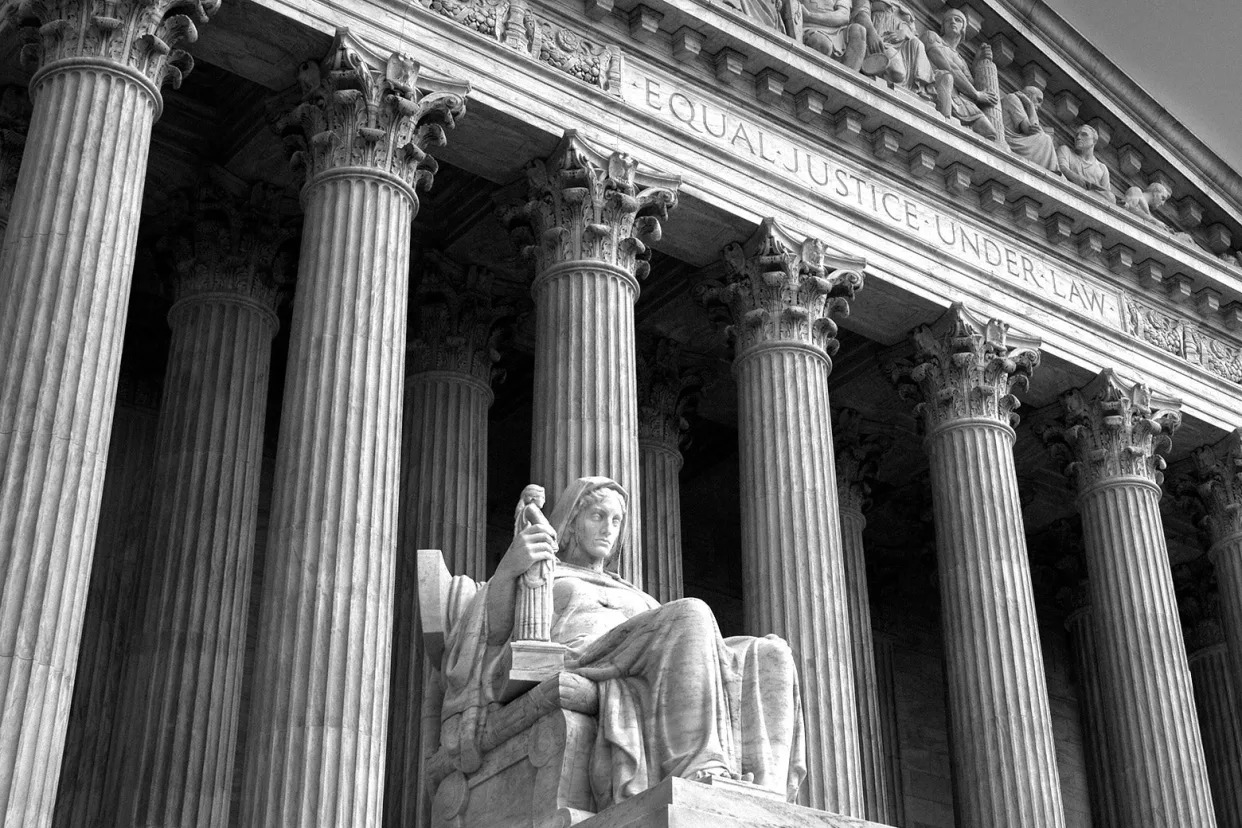
Justice Thomas complained about salary to GOP lawmaker, new ProPublica report says

Politico

Justice Thomas complained about salary to GOP lawmaker, new ProPublica report says

Matt Berg – December 18, 2023

J. Scott Applewhite/AP

Supreme Court Justice Clarence Thomas complained about his salary to a Republican lawmaker almost a decade into his tenure, telling him that at least one justice could resign if they didn’t get a raise, according to a ProPublica report published Monday.

On a flight home from a conservative conference in January 2000, Thomas spoke with a GOP lawmaker who left the conversation worried that Thomas might step down from his post, according to the report.

Thomas was hundreds of thousands of dollars in debt and becoming increasingly frustrated with his financial standing, according to ProPublica. While he made the equivalent of $300,000 today, other members of the court were much wealthier.

According to the report, Thomas told the lawmaker that if Congress didn’t bump salaries, “one or more justices will leave soon.” Thomas had also repeatedly talked with other people about removing a ban on justices giving paid speeches, per ProPublica.

Lawmakers never green-lighted significant raises for the justices or lifted the paid speech ban.

“But in the years that followed … Thomas accepted a stream of gifts from friends and acquaintances that appears to be unparalleled in the modern history of the Supreme Court,” ProPublica wrote.

It’s the latest development in a string of ProPublic reports this year that have unearthed Thomas’ controversial financial past and found that he accepted gifts and money from wealthy friends without disclosing them, including luxury vacations and tuition payments from GOP megadonor Harlan Crow.

In recent months, Democratic lawmakers have increasingly called for ethics reform for the Supreme Court and have made some progress. Conservatives lawmakers, as well as Justice Samuel Alito, have pushed back on the measure and have characterized the ProPublica reports as unfairly attacking Thomas.

One person who was on vacation with Thomas and Crow said the latter’s generosity wasn’t an attempt to influence the court, according to the report.

Crow views Thomas a “having a limited salary,” George Priest, a Yale Law School professor, told ProPublica. “So he provides benefits for him.”

Clarence Thomas’s salary complaints sparked rightwing fears he would resign

The Guardian

Clarence Thomas’s salary complaints sparked rightwing fears he would resign

Martin Pengelly in Washington – December 18, 2023

<span>Photograph: Drew Angerer/Getty Images</span>
Photograph: Drew Angerer/Getty Images

Clarence Thomas told a Republican congressman that US supreme court justices should get a pay raise or “one or more” would quit, prompting “a flurry of activity” among rightwingers because his “importance as a conservative was paramount”, ProPublica said in its latest hard-hitting report on questionable ethics at the high court.

Related: Justice Neil Gorsuch took 10 minutes to approve Dobbs abortion opinion – report

Cliff Stearns, the Florida Republican Thomas spoke to in 2000, told the non-profit newsroom: “We wanted to make sure he felt comfortable in his job and he was being paid properly.”

At the time, a Democratic president, Bill Clinton, would have nominated a replacement if any justice had resigned. Republicans held the Senate, which would have conducted the confirmation.

ProPublica said Thomas spoke to Stearns on a flight after giving a speech at Awakening, a “‘conservative thought weekend’ featuring golf, shooting lessons and aromatherapy along with panel discussions with businessmen and elected officials”, held in Sea Island, Georgia, in January 2000.

Thomas’s trip was paid for by event organisers, ProPublica said, adding that the justice’s reported 11 free trips on his annual disclosure form that year but not the trip to Awakening, “an apparent violation of federal disclosure law”.

Thomas’s finances have come under the spotlight this year, with ProPublica publishing a series of in-depth reports, stirring an ethics scandal.

He took and largely failed to declare gifts from Republican donors including luxury travel and resort stays, school fees and a property purchase.

An arch-conservative on a panel dominated 6-3 by the right, Thomas has been in place since a 1991 confirmation dominated by allegations of sexual harassment.

Responding to reports by ProPublica and other outlets, he has denied wrongdoing and pledged to conform to disclosure rules. Progressives have called for him to resign or be impeached and removed – vanishingly unlikely outcomes with the court in conservative hands and Republicans holding the House and contesting the Senate.

ProPublica said the justice was struggling financially at the time of his conversation with Stearns. The site published a letter dated 11 January 2000 in which the congressman told the justice: “Just a note to let you know how much I enjoyed visiting with you on the flight back from Jacksonville to Dulles.

“I intend to look into a bill to raise the salaries of members of the supreme court. As we agreed, it is worth a lot to Americans to have the constitution properly interpreted. We must have the proper incentives here, too.”

Stearns quoted the philosopher Immanuel Kant, telling Thomas to “have patience awhile; slanders are not long-lived”.

On Monday, responses to the ProPublica story included the former MSNBC host Keith Olbermann calling Thomas a “loyal judicial prostitute”.

Stearns sought help from a lobbying firm and spoke in the House. Thomas’s suggestion that resignations might be imminent reached judicial administrators. The then chief justice, William Rehnquist, said in his annual report: “The most pressing issue facing the judiciary: the need to increase judicial salaries”.

Mitch McConnell, a Republican senator from Kentucky (now minority leader), proposed removing a ban on paid speeches by justices. That effort failed, and supreme court salaries have not changed, bar keeping up with inflation.

But ProPublica also reported that “during his second decade on the court, Thomas’ financial situation appears to have markedly improved.” The justice received a $1.5m advance for his memoir and gifts from rich individuals.

In a public appearance in June 2019, Thomas was asked about court salaries.

“Oh goodness, I think it’s plenty,” Thomas said. “My wife [the rightwing activist Ginni Thomas] and I are doing fine. We don’t live extravagantly, but we are fine.”

ProPublica said: “A few weeks later, Thomas boarded [the mega-donor Harlan] Crow’s private jet to head to Indonesia. He and his wife were off on vacation, an island cruise on Crow’s 162ft yacht.”

In a statement, Caroline Ciccone, president of the watchdog Accountable.US, said the ProPublica report showed again how Thomas “has long seen his position on our nation’s highest court as a way to upgrade his own lifestyle”.

Ciccone said: “When the court itself wasn’t providing him with the luxury perks he wanted, his billionaire benefactor social circle stepped in to make it happen.

“Justice Thomas, Harlan Crow, Leonard Leo [of the Federalist Society, a key figure in rightwing activism around the US judiciary] and other key players in this corruption crisis may believe they exist above the law – but they don’t. With public trust at record lows, it’s far past time to restore credibility and integrity to our high court.”

Donald Trump echoes Vladimir Putin’s attack on ‘rottenness’ of America’s democracy

USA Today

Donald Trump echoes Vladimir Putin’s attack on ‘rottenness’ of America’s democracy

David Jackson, USA TODAY – December 18, 2023

Former President Donald Trump quoted Russian President Vladimir Putin during a campaign rally, after the Russian leader earlier this year alleged the former president’s criminal indictments show “the rottenness of the American political system.”

Trump during a Saturday campaign stop in New Hampshire alleged that President Joe Biden is a “threat to democracy” before adding “Even Vladimir Putin … says that Biden’s, and this is a quote, politically motivated persecution of his political rival is very good for Russia because it shows the rottenness of the American political system, which cannot pretend to teach others about democracy.”

Putin made the comments at an economic forum in Russia in September.

Trump has long alleged without evidence that the four sets of criminal charges he faces are campaign interference from Biden’s administration and other state and federal prosecutors.

The former president has been indicted in Washington and Georgia in connection with efforts to overturn his 2020 election loss to Biden. His two other criminal cases involve hush money payments in New York and the alleged mishandling of classified information in Florida.

Earlier this month, Trump set off alarms when he mocked questions about authoritarianism and said he would be a dictator only on “day one,” of a second term in office.

During a Sunday rally in Reno, Nevada, Trump mentioned Putin only in passing during a discussion of Russia’s invasion of Ukraine. Trump criticized his indictments and the Biden administration at length, but did not cite Putin’s criticism of those issues.

He spent most of his time on border security, pledging a mass deportation program. Nevada is holding both a primary on Feb 6 and a caucus on Feb. 8, but only the caucuses will be used to pick convention delegates.

Donald Trump and Vladimir Putin at a meeting in 2019
Chris Christie hits Donald Trump over Vladimir Putin quote

Former New Jersey Gov. Chris Christie, one of Trump’s opponents for the GOP presidential nomination in 2024, on Sunday called out Trump’s comments about Putin in an interview with CNN. He said Trump is now “citing Vladimir Putin as a character witness, a guy who is a murderous thug all around the world.”

Putin, who authorized Russia’s invasion of Ukraine, “is a guy who doesn’t even know what democracy is and, quite frankly, spent most of his life trying to undercut democracy all over the world,” Christie said on CNN’s “State of the Union.” “And Donald Trump citing him as his expert witness that he’s being persecuted.”

Christie and other opponents have also noted the escalation of Trump’s rhetoric in recent weeks.

While praising authoritarian leaders like Putin and Hungary’s Prime Minister Viktor Orban, Trump has proposed plans to increase political control of the civil service and threatened to prosecute his political opponents.

The former president has also employed rhetoric that echoes fascist dictators Adolf Hitler and Benito Mussolini, historians say. Trump has described political opponents as “vermin,” and, during his New Hampshire event this weekend, said immigrants are “poisoning the blood of our country.”

Trump has praised Putin throughout his political career. There is evidence that Russian intelligence officials and social media operations helped Trump during his election victory in 2016. Russian election interference was also the subject of an investigation during the former president’s term in office.

Barb McQuade, a former federal prosecutor and author of a forthcoming book on disinformation, alleged Trump was trying to make American citizens skeptical of Biden and his wider administration.

“The goal is to make people cynical, then numb, and finally indifferent to such claims,” she said.

Is SCOTUS Finally Losing Patience With the Far Right’s Bogus Cases?

Slate

Is SCOTUS Finally Losing Patience With the Far Right’s Bogus Cases?

Dahlia Lithwick and Mark Joseph Stern – December 17, 2023

Last week, the Supreme Court made two big moves in hot-button cases with major consequences for civil liberties in the United States. On Monday, the court refused to take up Tingley v. Ferguson, a First Amendment challenge to Washington state’s ban on LGBTQ+ conversion therapy for minors. Then, on Wednesday, the court agreed to hear a case that seeks to ban mifepristone, the “abortion pill,” in all 50 states—making the most common method of abortion inaccessible throughout the country.

On Saturday’s Slate Plus segment of AmicusDahlia Lithwick and Mark Joseph Stern discussed the court’s flurry of activity as the year draws to a close. Their conversation has been edited and condensed for clarity.

Dahlia Lithwick: The court’s decision not to take this case means Washington state’s restrictions on conversion therapy can stay in place. And I think the move was a bit of a surprise, right?

Mark Joseph Stern: Yes, absolutely. Twenty-one states and the District of Columbia have enacted some form of a ban on conversion therapy for minors. And while the court turned away these challenges in the past, the conservative majority has been dropping hints in recent years that it might be ready to abridge or abolish these laws. So when Tingley hit the docket, a lot of us thought it was time for a showdown. But that didn’t happen. Three justices—Clarence Thomas, Samuel Alito, and Brett Kavanaugh—would’ve taken up the case. And since it takes four votes to hear an appeal, that means John RobertsNeil Gorsuch, and Amy Coney Barrett voted against taking it up. That’s quite surprising, again, because those three justices are pretty far right when it comes to these First Amendment protections for religious speech and for laws that allegedly target conservative Christians. This case seemed to serve up those issues on a silver platter.

That, of course, leads to the question of why. Before I get into my theory, what’s yours?

I’m just going to keep saying, till the cows come home, that I just do not believe at any given moment that there are five, much less six, votes on the current Supreme Court to be justices in 2027 sitting on the smoldering dumpster fire of what’s left of all constitutional theory and history. I think they’re exercising caution. That’s my working theory.

It’s a decent one! But I have another. So, the first thing I want to flag is that this plaintiff, Brian Tingley, was represented by Alliance Defending Freedom. And our dear friends at ADF have concocted a number of other high-profile cases that turned out to be fake—including last year’s 303 Creative v. Elenis, where ADF falsely claimed that a same-sex couple asked this graphic designer to make a wedding website. It was all a lie. The court ruled for her anyway, but it drew a lot of ridicule and scorn in the process.

This case seems equally fake. Brian Tingley, the plaintiff challenging Washington state’s law, refuses to say whether he wants to perform conversion therapy and whether he intends to perform it. Yet, in their filings, ADF scrupulously avoids ever saying that Tingley actually wants to counsel a gay or transgender youth to change their orientation or gender identity. Instead, the complaint is all framed in these abstractions—that he just wants to be able to participate in the debate and speak about the realities of this ongoing controversy, yada, yada, yada. Well, none of that stuff is prohibited under this law. The only thing that’s prohibited is using your time and resources as a professional counselor to try to convert a child in exchange for money.

This particular issue was spotted by Jenner and Block’s Adam Unikowsky, who represented Equal Rights Washington, a group that intervened to defend the law. Adam pointed out the plaintiff, Tingley, does not have standing because he hasn’t said that he intends, or even wants, to violate this law. It’s still completely hypothetical. Adam also made the related point that the case isn’t ripe yet: There’s not an actual dispute here, since Tingley hasn’t said he wants to do a thing that Washington state prohibits. And on top of everything else, there’s no factual record. This was a problem that plagued 303 Creative, one that I think did come back to bite the justices: There was no factual record in that case, and the few “facts” that ADF put forward turned out to be lies or exaggerations.

Adam said, Look, these laws are in almost half the states. Why don’t you just wait until a real conflict comes up, and then you can hear the case with a real factual record that shows how the state applied the law? There will be a genuine controversy for you to resolve then. But there isn’t one here, so just deny this case. And on Monday, that’s what the court did. I think Adam’s argument was powerful for some of the justices who maybe felt like they had been taken in by ADF and decided, You know, we’re not going to play the suckers in this case. Even though Roberts and Gorsuch and Barrett probably want to tackle these conversion therapy bans, maybe they realized this was not the right case to do so because it would look to the public like they were reaching out and grabbing a controversy that does not actually exist for resolution in the courts yet.

That’s a flawless segue into another case where the totality of the injury is “I might have feelings someday”: The abortion pill case that SCOTUS took up on Wednesday, where the complete theory of standing is that a bunch of doctors might someday have sadness over the possibility of future abortion.

Right. The plaintiffs challenging mifepristone, the first drug in a medication abortion, are just doctors who hate abortion. Their theory of standing is as follows: Some woman somewhere is going to be prescribed mifepristone by a different doctor. She is going to have complications. She is going to come to our emergency room. We will have to treat her by completing her abortion. And doing that will make us extraordinarily sad.

We’ll have feelings. We’ll have standing because of our future feelings.

Exactly. Treating this hypothetical future patient will hurt our hearts too badly. The vibes will be off for the rest of the week, if not the month. The office Christmas party will be ruined. And that, they say, gives us standing to sue.

I don’t think that’s what this Supreme Court wants. I think this court is going to rule against the plaintiffs solely on standing grounds and by a lopsided vote. And if it does, I think that’s a point in favor of my theory about Tingley, right? Because guess who represents these anti-abortion doctors? Alliance Defending Freedom. The same lawyers who represent Tingley. ADF fabricated this case too. It seems like maybe ADF’s history of telling shameless lies to the courts, including SCOTUS, is starting to catch up to them. Maybe justices like Roberts and Barrett are getting a little pissed that ADF is creating so much extra work for them just to please donors and achieve victories that they couldn’t through the normal democratic process.

I think it’s worth saying here that if the Supreme Court does toss the mifepristone case on standing, it’ll get headlines that say “Supreme Court Preserves the Right to Medication Abortion,” and that will dampen an immense amount of political enthusiasm around reproductive rights. The conventional wisdom will be that the Supreme Court has taken itself out of the 2024 election, at least on this issue. Which won’t be true, because the court could still invoke the Comstock Act later to make abortion illegal in all 50 states.

But the larger point is that the Supreme Court could manage to deflate all the energy and enthusiasm among women and people who’ve been organizing after Dobbs. And that would be a really big indicator that the Supreme Court keeps gaming the press. It will make the court bottom of mind as we launch into a 2024 election where the court should be top of mind.

Trump’s rhetoric in final campaign sprint goes to new dark extremes

CNN

Trump’s rhetoric in final campaign sprint goes to new dark extremes

Zachary B. Wolf, CNN – December 17, 2023

Joseph Prezioso/AFP/Getty Images

Donald Trump’s rhetoric dropped to a spine-tingling new low this weekend with less than a month before the Iowa caucuses.

The GOP primary front-runner said migrants are “poisoning the blood” of the US and quoted Russian President Vladimir Putin about the “rottenness” of American democracy.

Whipping up thousands of supporters at a New Hampshire hockey rink on Saturday, the former president again drew comparisons to the language of Nazi Germany with the comments about migrants from mostly Africa, Asia and South America “poisoning the blood of our country.”

The language “parrots Adolf Hitler,” President Joe Biden’s reelection campaign alleged. Experts pointed to passages in Hitler’s manifesto “Mein Kampf” in which the future dictator called for racial purity and said German blood was being “poisoned” by Jews.

Trump has used the line previously, in an interview with a conservative news outlet, and bringing it out for a rally suggests he could be adding it to his routine.

He drew criticism last month for describing his political rivals as “vermin,” another term that has antisemitic connotations and was employed in Nazi rhetoric.

It’s the repetition of these lines, after their fascist roots are called out, that is more chilling than their first utterance. The former president — who leads Biden in some swing-state polling of a hypothetical rematch — has a long history with language that plays on racial prejudice and excites the right wing.

His recently repeated claim that he wants to be “dictator” for one day to build his border wall and stop immigration could be laughed off as a joke if he didn’t keep saying it.

On Sunday night, at rally in Reno, Nevada — the third GOP-nominating state — Trump claimed, without evidence, that migrants are largely coming from prisons and mental institutions. And he wondered, again without evidence, if Chinese migrants crossing the border are meant to be part of an invading army. Trump promised to reorient the US government to purge migrants. Claiming the US is now a “haven for bloodthirsty criminals,” he said he would invoke the Alien Enemies Act, a 1798 law, to remove migrants from the country. The former president also promised to divert the FBI and Drug Enforcement Administration to border actions.

Invoking authoritarian leaders is no longer a surprise

“He’s a populist, authoritarian narcissist,” the Republican former House Speaker Paul Ryan said last week, before Trump’s most recent comments. “So, historically speaking, all of his tendencies are basically where narcissism takes him, which is whatever makes him popular, makes him feel good at any given moment.”

Dictators erase freedoms, but Trump — who tried to overturn the 2020 election after he lost — needs an electoral victory to get there. On Saturday, he called his campaign a “righteous campaign to liberate this nation” and said, to cheers, “we are not a free nation.”

It is no longer even jarring when Trump speaks highly of authoritarian leaders, such as North Korea’s Kim Jong Un or Hungary’s Viktor Orban, as he did again Saturday in New Hampshire.

But Trump went a step further, twisting around the idea put forward by his rivals, including Biden and former Rep. Liz Cheney, that he is a threat to democracy for trying to overturn the last election.

Instead, Trump now argues, it is Biden who is a “threat to democracy.”

As a way of proving the claim, Trump cited Putin, who said in September that Trump’s legal problems are “politically motivated persecution” that is good for Russia. “‘It shows the rottenness of the American political system, which cannot pretend to teach others about democracy,’” Trump went on, quoting the Russian president.

The truth is that Putin knows about rotten systems and putting political enemies in jail; supporters of Putin’s chief rival, Alexey Navalny, can’t locate the dissident leader who is serving a 19-year prison sentence.

Trump is facing multiple criminal trials. But he will have to be convicted by unanimous juries, assuming he is tried at all. The US Supreme Court, on which three of his appointees sit, has been asked by prosecutors to weigh in on whether Trump, as a former president, is immune from prosecution.

One of Trump’s rivals for the Republican presidential nomination, former New Jersey Gov. Chris Christie, said the pending trials are contributing to Trump’s increasingly intense rhetoric.

“Donald Trump realizes the walls are closing in,” Christie told CNN’s Jake Tapper on “State of the Union” on Sunday. “He’s becoming crazier. And now he’s citing Vladimir Putin as a character witness, a guy who is a murderous thug all around the world.”

Trump-supporting Republicans like Sen. Lindsey Graham of South Carolina don’t seem to care much what the former president says.

“We’re talking about language. I could care less what language people use as long as we get it right,” Graham said on NBC’s “Meet the Press,” although he also made clear he doesn’t agree with the poisoned blood analogy. “I believe in legal immigration. I have no animosity toward people trying to come to our country. I have animosity against terrorists and against drug dealers.”

Trump uses warnings about him to attack opponents

Twisting a warning about him and turning it into a rallying cry for his supporters is a classic Trump tactic.

He didn’t use the term “Fake News” to describe the mainstream media until after Hillary Clinton warned about an epidemic of misinformation, which she called “fake news.” Trump first used the term in a tweet the next day, on December 10, 2016, according to The Washington Post. He’s repeated it so often, including at the New Hampshire event, that now he claims to have invented it.

Similarly, he has frequently and falsely referred to the idea that he lost the 2020 election as a “big lie,” coopting it from warnings — citing the strategy of Nazi propagandists — that his repeated claims that the election results were false would ultimately convince his followers. The term “big lie” also appears in “Mein Kampf.” Most Republicans and GOP-leaners — nearly 70% in a CNN poll in August — don’t think Biden’s win was legitimate.

Tapper also played for Christie video of Trump’s comments about migrants “poisoning the blood of the country.”

“He’s disgusting,” Christie said. “And what he’s doing is dog whistling to Americans who feel absolutely under stress and strain from the economy and from the conflicts around the world, and he’s dog whistling to blame it on people from areas that don’t look like us.”

Christie, however, argued Republicans might still vote for Trump despite the comments and not because of it.

Trump leads the Republican primary field in both New Hampshire and Iowa, according to two CBS News/YouGov polls of the race released Sunday.

In New Hampshire, Trump takes 44% support among likely GOP primary voters, with former South Carolina Gov. Nikki Haley moving into second place at 29%, followed by Florida Gov. Ron DeSantis (11%), Christie (10%), entrepreneur Vivek Ramaswamy (5%) and former Arkansas Gov. Asa Hutchinson (1%).

In Iowa, Trump has majority 58% support among likely Republican caucusgoers, followed by DeSantis (22%), Haley (13%), Ramaswamy (4%), Christie (3%) and Hutchinson (less than 1%).

As CBS notes, there are some major differences between the potential electorates in each state. In New Hampshire, 57% of likely GOP primary voters say abortion should generally be legal in their state, a view shared by just 26% of likely GOP caucusgoers in Iowa. Nearly half of likely GOP caucusgoers in Iowa (48%) say they consider themselves part of the MAGA movement, compared with 33% of likely New Hampshire primary voters.

Trump’s power in the party means that, unlike Christie, most Republican candidates are not calling him out.

In an interview with ABC News to publicize her endorsement by the anti-Trump Republican governor of New Hampshire, Haley said Trump was the right president at the right time, but he will have to answer in court for his actions on January 6, 2021. She said the country needs to move beyond that kind of chaos.

“My approach is different,” said Haley, who served as ambassador to the United Nations under Trump. “No drama, no vendettas, no whining.”

She has a month left to sell that approach before the first Republicans start making their voices heard in the American process that Trump quoted Putin as saying is rotten.

CNN’s Ariel Edwards-Levy contributed to this report.