Trump posts all-caps rant telling people they ‘JUST HAVE TO LIVE WITH’ presidents who ‘CROSS THE LINE’
Grace Eliza Goodwin – January 18, 2024
Donald Trump said people “JUST HAVE TO LIVE WITH” presidents who “CROSS THE LINE.”
He posted the lengthy all-caps rant on Truth Social early Thursday morning.
A DC appeals court is weighing whether Trump should have criminal immunity.
Donald Trump is once again claiming that presidents should have total immunity from any crimes they commit while in office — this time, with an all-caps rant posted to Truth Social.
And he says that people need to just accept it.
“A PRESIDENT OF THE UNITED STATES MUST HAVE FULL IMMUNITY, WITHOUT WHICH IT WOULD BE IMPOSSIBLE FOR HIM/HER TO PROPERLY FUNCTION,” Trump wrote on his social-media platform in the early hours of Thursday morning. “ANY MISTAKE, EVEN IF WELL INTENDED, WOULD BE MET WITH ALMOST CERTAIN INDICTMENT BY THE OPPOSING PARTY AT TERM END.
“EVEN EVENTS THAT ‘CROSS THE LINE’ MUST FALL UNDER TOTAL IMMUNITY, OR IT WILL BE YEARS OF TRAUMA TRYING TO DETERMINE GOOD FROM BAD,” he continued.
Trump’s lawyers argue that unless Congress had already impeached and convicted him of a crime, then he is immune.
Trump’s lawyers previously argued the opposite in his 2021 impeachment case, saying that a former president should answer to the courts, not to Congress.
“A president of the United States must have full immunity, without which it would be impossible for him/her to properly function,” Trump said in a lengthy post on Truth Social in all caps. “Any mistake, even if well intended, would be met with almost certain indictment by the opposing party at term end. Even events that ‘cross the line’ must fall under total immunity, or it will be years of trauma trying to determine good from bad.”
“Sometimes you just have to live with ‘great but slightly imperfect,'” Trump added. “All presidents must have complete & total presidential immunity, or the authority & decisiveness of a president of the United States will be stripped & gone forever. Hopefully this will be an easy decision. God bless the Supreme Court!”
A three-judge panel of the U.S. Court of Appeals for the District of Columbia Circuit is expected to soon issue a ruling in the case brought by Trump in his effort to dismiss the federal election interference case against him. He has claimed that he should be immune from prosecution because his efforts to overturn the 2020 election fell within his official duties as president.
The court could issue a ruling that decisively resolves the immunity question, thereby allowing the election interference trial, scheduled to begin March 4, to move forward.
The judges could also issue a narrower ruling that could leave some issues unresolved. The court could also simply rule that Trump had no right to bring an appeal at this stage of the litigation.
The former president has argued that his effort to overturn the 2020 presidential election results and his involvement with the Jan. 6, 2021, insurrection were part of his presidential responsibilities. He has said that he was investigating election fraud as president at the time even though there was no evidence of widespread fraud.
Trump’s Truth Social post came after he sat in a New York courtroom Wednesday in a trial to determine damages in E. Jean Carroll’s defamation case against him.
Taxes are the only way to get rid of excess money? “We ask you to tax us, the very richest in society,” reads an open letter to the world leaders assembled in Davos, Switzerland, penned by 250 millionaires and billionaires who seem to be gluttons for punishment.
“We’d be proud to pay more,” declares their website, which is thusly named. “This will not fundamentally alter our standard of living, nor deprive our children, nor harm our nations’ economic growth. But it will turn extreme and unproductive private wealth into an investment for our common democratic future.” Signatories include Disney and Rockefeller heiresses, as well as actor Brian Cox.
Currently, nobody is forcing them to keep their earnings. They have full freedom to do whatever they’d like with their money—including giving it away to charity or coordinating with other similarly rich people to pool money together to tackle specific issues that might be too large for just one billionaire to handle.
“Inequality has reached a tipping point, and its cost to our economic, societal and ecological stability risk is severe—and growing every day,” reads the letter, which in no way substantiates how “inequality” has reached this “tipping point” or what exactly happens if inequality continues to grow. (Absolute wealth is infrequently mentioned in these types of calls to action. It’s always relative wealth, which allows signatories to ignore the vast standard-of-living gains that have been made over the last century.)
“If our elected officials refuse to address this concentration of money and power, the consequences will be dire,” warned Cox.
Speaking of concentrations of power: The impetus for the open letter is the World Economic Forum’s meeting in Davos, which is happening now and drawing leaders from across the globe—frequently arriving on their private jets. (“Private jet emissions quadrupled during Davos 2022,” reads a Guardian headline from last year, which put the total number of private jet flights at 1,040. Fascinating that those who are so concerned with climate change still feel comfortable flying private.)
The bright spot, amid the calls for coercive wealth redistribution, was undoubtedly the speech given by newly elected Argentine President Javier Milei, who is so full of fiery takes that he might just singe your eyebrows off.
“Today I am here to tell you that the Western world is in danger, and it’s in danger because those who are supposed to defend the values of the West are co-opted by a vision of the world that inexorably leads to socialism, and thereby to poverty,” said Milei. “Unfortunately, in recent decades, motivated by some well-meaning individuals willing to help others, and others motivated by the desire to belong to a privileged class, the main leaders of the Western world have abandoned the model of freedom for different versions of what we call collectivism.”
But Argentina knows firsthand, he warned, just how bad of an economic situation can arise from state intervention: “We are here to tell you that collectivist experiments are never the solution to the problems that afflict the citizens of the world, rather they are the root cause.”
“Today’s states don’t need to directly control the means of production to control every aspect of the life of individuals,” he continued. “With tools like printing money, debt, subsidies, control of the interest rate, price controls, and regulations to correct the so-called market failures, they can control the lives and fates of millions of individuals.”
And, later on: “They say that capitalism is evil because it’s individualistic and that collectivism is good because it’s altruistic, of course with the money of others.”
You couldn’t engineer a better response to the taxation-hungry billionaires mentioned above if you tried. People are always free to give their own money away, but it takes a special breed to favor coercion.
“Do not be intimidated either by the political caste nor by parasites who live off the state. Do not surrender yourself to a political class that only wants to perpetuate itself in power and keep their privileges,” Milei added, closing with a forceful defense of value creators: “You [entrepreneurs] are social benefactors, you are heroes, you are the creators of the most extraordinary period of prosperity we have ever seen. Let no one tell you that your ambition is immoral.”
After all, “the state is not the solution, the state is the problem itself.”
It’s about time someone went into the lion’s den and forcefully defended free market capitalism.
Oh, and Milei? He flew commercial, saving taxpayers an estimated $392,000.
Hundreds of millionaires, billionaires urge politicians at Davos to tax their wealth
Darryl Coote – January 17, 2024
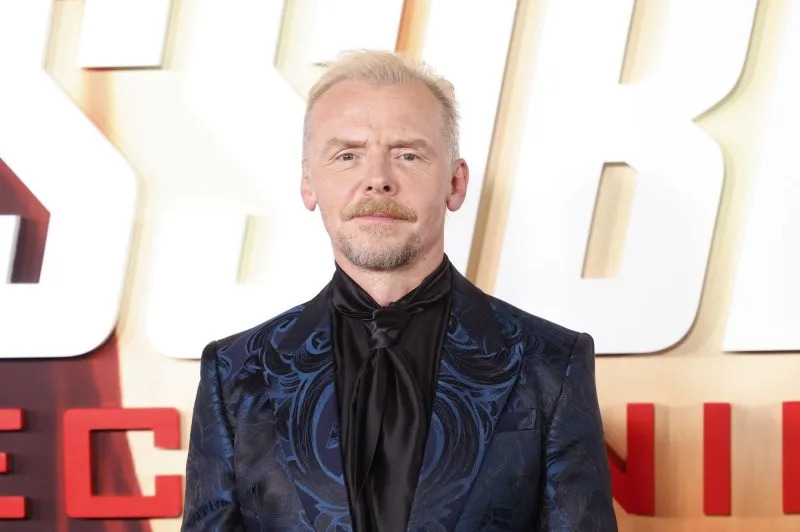
Actor Simon Pegg is among the millionaires urging world leaders congregating in Switzerland for The World Economic Forum to tax their wealth, warning of rising economic inequality. File Photo by John Angelillo/UPI
Jan. 17 (UPI) — Nearly 270 millionaires and billionaires urged world leaders congregating in Switzerland for The World Economic Forum on Wednesday to tax their wealth, warning that if their elected representatives don’t address the drastic rise in economic inequality, the consequences will be “catastrophic.”
“Our request is simple: we ask you to tax us, the very richest in society,” the letter signed by 268 millionaires and billionaires from 17 countries and published Wednesday.
“This will not fundamentally alter our standard of living, nor deprive our children, nor harm our nations’ economic growth. But it will turn extreme and unproductive private wealth into an investment for our common democratic future.”
The World Economic Forum is being held this week through Friday and will be attended by political leaders as well the world’s rich and powerful in the Swiss resort town of Davos where they will discuss global, regional and industry goals.
In their letter to the congregated world leaders, the hundreds of rich signatories said they are surprised their previous calls to be tax have yet to be heeded, stating they are not seeking drastic changes, only financial policies that will prevent society from further degradation.
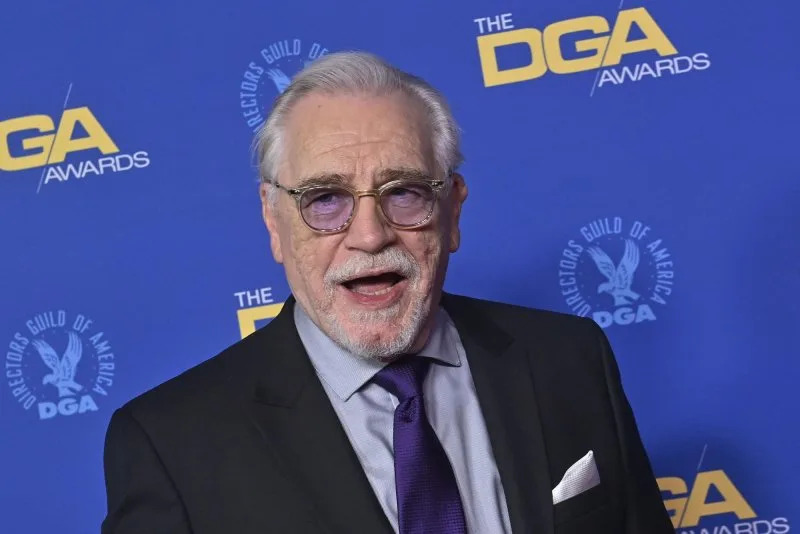
Actor Brian Cox, who famously plays a wealthy media mogul in “Succession,” is among the real-life millionaires urging world leaders congregating in Switzerland for The World Economic Forum to tax their wealth amid rising economic inequality. File Photo by Jim Ruymen/UPI
“Inequality has reached a tipping point, and its cost to our economic, societal and ecological stability risk is severe — and growing every day. In short, we need action now,” the letter states, adding that philanthropy and one-off donations will not fix the issue.
“Not only do we want to be taxed more but we believe we must be taxed more. We would be proud to live in countries where this is expected, and proud of elected leaders who build better futures.”
The letter’s signatories include filmmaker and Disney heir Abigail Disney, actors Simon Pegg and Brian Cox and Valerie Rockefeller of the U.S. Rockefeller family.
“We need our governments and our leaders to lead. And so we come to you again with the urgent request that you act — unilaterally at the national level, and together on the international stage,” they said.
The letter comes as a new poll published Wednesday shows that 74% of wealthy people support higher taxes on their fortunes, while 75% support the introduction of a 2% tax on billionaires, as proposed by the European Union Tax Observatory.
The poll by Survation on behalf of the nonpartisan Patriotic Millionaires surveyed more than 2,300 people from G20 countries who hold more than $1 million in investable assets, excluding their homes, making them the richest 5% of society.
A majority of respondents at 58% said they also supported the introduction of a 2% wealth tax for people with more than $10 million.
“Throughout history, pitchforks were the inevitable consequence of extreme discontent, but today, the masses are turning to populism, which is on the rise throughout the world,” Disney said in a statement.
“We already know the solution to protect our institutions and stabilize our country: it’s taxing extreme wealth. What we lack is the political fortitude to do it. Even millionaires and billionaires like me are saying it’s time. The elites gathering in Davos must take this crisis seriously.”
The World Economic Forum kicked off Monday, which is when Oxfam published its Inequality Inc. report that warned inequality has worsened since 2020, with the world’s richest five men seeing their fortunes double while the planet’s poorest 60% became poorer.
MSNBC’s decision not to air Trump’s Iowa victory speech live ignites right-wing firestorm
Christopher Wiggins – January 17, 2024
Crybaby Donald J Trump Sane Person Rachel Maddow
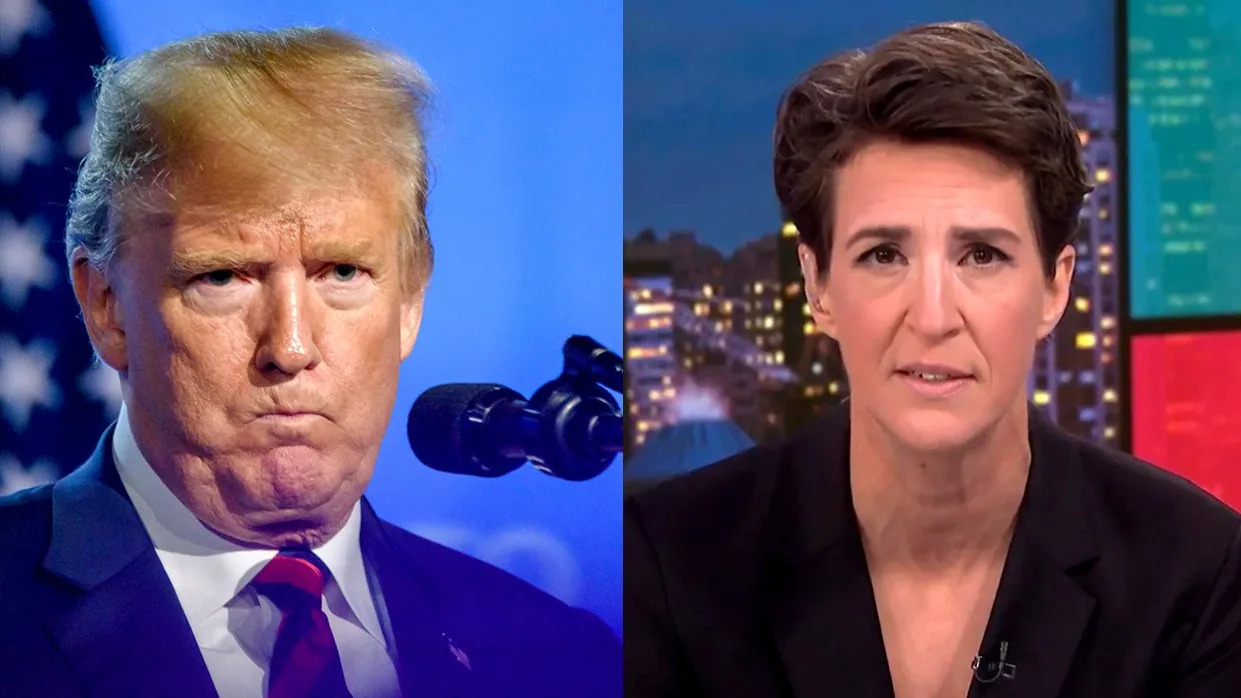
Conservatives are seething online after discovering that MSNBC chose to protect its viewers from former President Donald Trump’s penchant for lying in front of cameras when the network did not broadcast his victory speech after Trump won the Iowa caucuses on Monday. Rachel Maddow announced the decision during MSNBC’s special broadcast covering the vote results.
Maddow explained the rationale behind this editorial choice.
“We will let you know if there’s any news made in that speech if there’s anything noteworthy, something substantive and important,” Maddow said. “There is a reason that we and other news organizations have generally stopped giving an unfiltered live platform to remarks by former President Trump. It is not out of spite. It is not a decision that we relish. It is a decision that we regularly revisit, and honestly, earnestly, it is not an easy decision. But there is a cost to us as a news organization of knowingly broadcasting untrue things that is a fundamental truth of our business and who we are.”
MSNBC ‘s decision was met with sharp criticism from right-wing influencers and commentators. One conservative influencer expressed their displeasure on X, formerly Twitter, remarking, “WOW—Rachel Maddow admits on air that they’ve decided to censor the leading Republican candidate’s victory speech and will decide what they want the public to know later. This why no one trusts the media—their tactics are exactly like 1984.”
Mercedes Schlapp, a well-known figure in conservative circles, joined in the criticism. She accused Maddow of engaging in “Marxist propaganda” by choosing not to broadcast Trump’s speech live, accusing the anchor of censoring a political candidate.
The situation highlights the ongoing challenges media outlets face in maintaining journalistic standards while addressing the diverse expectations of a politically polarized audience at a time when one candidate has proven himself to be a serial liar.
According to the Washington Post, Trump told more than 30,000 lies while in office. He has told countless more since he left office in 2021.
In contrast to MSNBC’s decision, CNN did carry Trump’s speech live for a time but chose to cut the speech short and return to analysis.
Trump solidified his position as the GOP frontrunner for the 2024 Republican presidential nomination, with his rivals coming in far behind. The caucuses, which saw the lowest turnout in a quarter-century, delivered Trump a roughly 30-point win, surpassing the previous record for a contested Iowa Republican caucus, the Associated Press reports.
Florida Gov. Ron DeSantis finished a distant second ahead of former U.N. Ambassador Nikki Haley. While Trump’s victory strengthens his grip on the GOP nomination, DeSantis and Haley face an uphill battle to become his strongest challengers.
During the evening’s coverage, CNN anchor Jake Tapper highlighted a striking entrance poll in Iowa, which found that a majority of Republicans did not believe that President Biden had been legitimately elected, Forbesreports. Tapper noted that while this belief was false, it demonstrated the extent to which Trump had reshaped the Republican Party and convinced Republicans of his ideology, “even when empirically false.”
The Iowa results set the stage for the upcoming New Hampshire primary, where a shrinking field will compete to gain momentum in the race for the Republican nomination.
Credit…Illustration by Rebecca Chew/The New York Times
The editorial board is a group of opinion journalists whose views are informed by expertise, research, debate and certain longstandingvalues. It is separate from the newsroom.
Republicans who will gather to cast the first votes of the 2024 presidential primary season have one essential responsibility: to nominate a candidate who is fit to serve as president, one who will “preserve, protect and defend the Constitution of the United States.”
Donald Trump, who has proved himself unwilling to do so, is manifestly unworthy. He is facing criminal trials for his conduct as a candidate in 2016, as president and as a former president. In this, his third presidential bid, he has intensified his multiyear campaign to undermine the rule of law and the democratic process. He has said that if elected, he will behave like a dictator on “Day 1” and that he will direct the Justice Department to investigate his political rivals and his critics in the media, declaring that the greatest dangers to the nation come “not from abroad but from within.”
Mr. Trump has a clear path to the nomination; no polling to date suggests he is anything but the front-runner. Yet Republicans in these states still have their ballots to cast. At this critical moment, it is imperative to remind voters that they still have the opportunity to nominate a different standard-bearer for the Republican Party, and all Americans should hope that they do so. This is not a partisan concern. It is good for the country when both major parties have qualified presidential candidates to put forward their competing views on the role of government in American society. Voters deserve such a choice in 2024.
Mr. Trump’s construction of a cult of personality in which loyalty is the only real requirement has badly damaged the Republican Party and the health of American democracy. During the fight over the leadership of the House of Representatives in the fall, for example, Mr. Trump torpedoed the candidacy of Tom Emmer, a lawmaker who voted to certify the 2020 election results, to ensure the ascendancy of Mike Johnson, a loyalist who was an architect of the attempt to overturn that election. (Mr. Emmer has since endorsed Mr. Trump.) But some Republicans have set an example of integrity, demonstrating the courage to put their convictions and conservative principles above loyalty to Mr. Trump. Examples include people whom he once counted as allies, like former Attorney General Bill Barr, former Gov. Doug Ducey of Arizona, former Secretary of State Mike Pompeo and the evangelical leader Bob Vander Plaats.
Voters may agree with the former president’s plans for further tax cuts, restrictions on abortions or strict limits on immigration. That’s politics, and the divisions among Americans over these issues will persist regardless of the outcome of this election. But electing Mr. Trump to four more years in the White House is a unique danger. Because what remains, what still binds Americans together as a nation, is the commitment to a process, a constitutional system for making decisions and moving forward even when Americans do not agree about the destination. That system guarantees the freedoms Americans enjoy, the foundation of the nation’s prosperity and of its security.
Mr. Trump’s record of contempt for the Constitution — and his willingness to corrupt people, systems and processes to his advantage — puts all of it at risk.
Upholding the Constitution means accepting the results of elections. Unsuccessful presidential candidates have shouldered the burden of conceding because the integrity of the process is ultimately more important than the identity of the president. “The people have spoken, and we respect the majesty of the democratic system,” George H.W. Bush, the last president before Mr. Trump to lose a bid for re-election, said on the night of his defeat in 1992. When Mr. Trump lost the 2020 presidential election, he sought to retain power by fomenting a violent insurrection against the government of the United States.
It also means accepting that the power of the victors is limited. When the Supreme Court delivered a sharp setback to President George W. Bush in 2008, ruling that foreign terrorism suspects held at Guantánamo Bay had the right to challenge their detention in federal court, the Bush administration accepted the ruling. Senator John McCain, then the Republican Party’s presidential nominee, said he disagreed with the court, “but it is a decision the Supreme Court has made, and now we need to move forward.”
By contrast, as president, Mr. Trump repeatedly attacked the integrity of other government officials — including members of Congress, Federal Reserve governors, public health authorities and federal judges — and disregarded their authority. When the court ruled that the Trump administration could not add a citizenship question to the 2020 census, for example, Mr. Trump announced that he intended to ignore the court’s ruling. After leaving the White House, Mr. Trump refused repeated demands, including a grand jury subpoena, to return classified materials to the government. As the government investigated, he called on Congress to defund the F.B.I. and the Department of Justice “until they come to their senses.”
Voters inclined to support Mr. Trump as an instrument of certain policy goals might learn from his presidency that changes achieved by lawless machinations can prove ephemeral. Federal courts overturned his effort to deny federal funding to sanctuary cities. Campaign promises to roll back environmental regulations also came to naught: Courts repeatedly chastised the Trump administration for failing to follow regulatory procedures or to provide adequate justifications for its decisions. His ban on transgender individuals serving in the military, announced on Twitter in 2017, was challenged in court and reversed on the sixth day of the Biden administration.
In 2016, Mr. Trump appealed to many caucus and primary voters as an alternative to the Republican establishment. He campaigned on a platform that challenged the party’s orthodoxies, including promises to provide support for domestic manufacturing and pursue a foreign policy much more narrowly defined by self-interest.
Voters who favor Mr. Trump’s prescriptions now have other options. The Republican Party of 2024 has been reshaped by the former president’s populism. While there are some meaningful differences among the other Republican candidates — on foreign policy, in particular — for the most part, Mr. Trump’s “America First” agenda has become the new orthodoxy.
Mr. Trump is now distinguished from the rest of the Republican candidates primarily by his contempt for the rule of law. The sooner he is rejected, the sooner the Republican Party can return to the difficult but necessary task of working within the system to achieve its goals.
In the enemy camp. What the future holds for Russia
The New Voice of Ukraine – January 15, 2024
Putin claims that Russians are living better
Russia will become North Korea, and Putin will become Kim Jong-un
Regarding Russia and its near future, we must realize that the margin of economic and institutional stability of Russian statehood will remain strong. However, Russia will still undergo profound changes and transformations.
The political system in Russia will be in a state of latent turbulence. The ruling Kremlin elite will do its best to preserve the image of the collective Putin in the public mind. However, the Kremlin’s towers will be swaying in different directions as all participants prepare for the transition of power in post-Putin Russia. A step-by-step plan has been created on how and who to act.
In the Russian Federation, people’s trust in each other is low by world standards, which indicates tension in society, mass fears, and mutual alienation at the social level.
A similar situation will be observed in the regions, particularly in the national republics and autonomous districts. Centrifugal processes will accelerate, provoking a reaction from the central government. A striking example of a “watchdog” over certain national fringes is the head of Chechnya, Ramzan Kadyrov. This will provoke even greater confrontation.
The Kremlin’s towers will be swaying in different directions
These processes will be deepened and accelerated by the country’s difficult social and economic situation, which has wholly switched to war. Inflation, an increase in the discount rate, higher prices for food, fuel, housing, and utilities, significant import restrictions, and rising lending rates will also increase tensions. The social gap between large metropolitan areas and the regions will rapidly deepen. Forced mobilization and border closures will increase the shortage of skilled labor. At the same time, it is impossible not to note the steps the Russian Federation took to stabilize the financial and economic system, which resulted in a budget deficit of 0.7% of GDP.
Putting the economy on a war footing, coupled with the West’s toughened sanctions policy against exports to Russia, will undoubtedly lead to a deepening shortage of certain consumer goods, from imported cars and spare parts to gaskets and toothpaste. Gray imports, which the Russians use in their military-industrial complex, cannot cover the needs of a country of 110 million people for essential hygiene products or household appliances. This situation will undoubtedly strengthen China, which is already actively pursuing economic expansion in Russia. An example is the assembly of JAC cars under the Moskvich brand at the former Renaut plant. The well-known Russian Lada Kalina will suffer a similar fate of complete “Chineseization.”
The state of affairs in the Russian armed forces will also affect public sentiment. “Meat assaults” will remain a key tactic of Russian generals. This will affect the moral and psychological state of the personnel, and the growth of the death conveyor will further drive Russian society into alcoholic apathy. The return of demobilized soldiers from the front will lead to massive criminalization of the Russian hinterland, including yesterday’s convicts. Problems with army logistics will remain. Russian soldiers will continue to be massively underfunded and underprovisioned and will go into battle with outdated weapons.
Old and new special operations
Russia will not abandon the KGB’s usual practice of creating “sources of instability” in different parts of Europe and the world. The main areas of such work are the Balkans (Kosovo, Bosnia and Herzegovina), Kazakhstan (northern regions of the country), Armenia, Moldova, the Baltic States, Niger, and Sudan. In the Baltics, the Russians will only “shake” the socio-political situation through their agents, playing the old card of “protecting the rights of Russian speakers.” They will provoke a direct armed conflict in Kosovo, using historical differences between Serbia and the former autonomous province of the Socialist Federal Republic of Yugoslavia. In Kazakhstan, a scenario using proxy armed groups such as the “Donbas militia” of 2014 is possible. The main goal of such sabotage activities is to divert attention from Ukraine and create global chaos and the illusion that complete peace cannot be established without the participation of the Kremlin and Russia.
Putin’s Death and the Transition of Power
2024 is the year of the Russian presidential election. However, even Putin’s death or re-election for another term will not fundamentally change the strategic situation for Ukraine. But there are nuances.
Putin’s obvious re-election will show that the Kremlin’s policy remains unchanged. That is, the military and political leadership will continue to try to implement a strategy to restore the Russian Empire within the borders of the former Soviet Union.
At the same time, the order of the International Court of Justice in The Hague significantly restricts Putin’s international communications. It marginalizes not only him personally but the entire country. Consequently, Russia’s official representation in the international arena will primarily be purely formal. It will only be fully effective in some African and Asian countries. As a result, this factor will undoubtedly push Russia to the margins of the global political landscape, turning it into a third-world country. This status has already become a significant problem for Russian elites and those Russian citizens who are used to considering themselves “people of the world.” And now they will live in a new “North Korea” with a new “Kim Jong-un.”
Opinion: Abbott’s war on migration has led to another tragedy in Texas
Opinion by Alice Driver – January 16, 2024
Editor’s Note: Alice Driver is a writer who divides her time between Mexico and the US. Her latest book is “The Life and Death of the American Worker: The Immigrants Taking on America’s Largest Meatpacking Company.” Her writing has appeared in The New Yorker, The New York Review of Books and Oxford American. The views expressed in this commentary are her own. Read more opinion at CNN.
On Friday, a woman and her two young children struggled to cross the Rio Grande’s unpredictable waters to get from Mexico to Eagle Pass, Texas. US Border Patrol agents tried to enter Shelby Park, which runs along the US side of the Rio Grande, to save the woman and her children. The agents reportedly reached out to Texas state officials about the emergency by phone but received no response.
Alice Driver – Luis_Garvan
Democratic US Rep. Henry Cuellar said in a statement late Saturday that US Border Patrol agents went to the park and asked to be allowed to render aid to the migrants, whom he identified as a mother and her two young children according to Mexican sources, but were denied entry.
“Texas Military Department soldiers stated they would not grant (the Border Patrol) access to the migrants — even in the event of an emergency,” Cuellar said, adding that Mexican officials recovered three bodies on Saturday.
Texas officials deny mishandling the crisis. “TMD (Texas Military Department) was contacted by Border Patrol at approximately 9:00 pm on Friday in reference to a migrant distress situation. TMD had a unit in the vicinity of the boat ramp and actively searched the river with lights and night vision goggles. No migrants were observed,” the agency said in a statement to a local ABC affiliate.
But Joaquin Castro, a Democratic congressman from Texas, suggested Gov. Greg Abbott bears direct responsibility for the tragedy. “Texas officials blocked US Border Patrol agents from doing their job and allowed two children to drown in the Rio Grande,” Castro said, an account confirmed by the Department of Homeland Security. “Governor Abbott’s inhumanity has no limit. Everyone who enables his cruelty has blood on their hands.”
To know that a young family is struggling to navigate cold, swift waters and to do nothing to prevent their deaths is cruel and evil.
But for Abbott it is more of the same: His policies take an unduly harsh line on immigration, even if it means putting the lives of innocent people at risk. The state of Texas should be held responsible for these deaths.
I’ve been an immigration writer for years, including at the Eagle Pass crossing, and I’ve seen heartless policies against people trying to enter the United States. Abbott’s are among the worst I’ve covered.
I’ve interviewed countless migrants very much like the woman who perished this weekend. If this mother and her two children had been saved, they might be applying for asylum and imagining a future together far from the harm and privation they likely experienced in their home country.
As The Atlantic explained in recent reporting, the mother and her children would face a backlog of asylum cases that grew to 1,009,625 in 2023, and they would wait an average of four years to get a hearing. Had they survived, I might be interviewing them today, as I have solicited the personal stories of hundreds of migrants along the US-Mexico border over the past decade.
The two children might be taking photos with the Polaroid camera that I carry around, and writing messages with the rainbow-colored markers I also keep at hand.
“What do you want me to write?” children often ask me, wide-eyed, when I tell them they can write or draw anything they want on their photos. They sometimes share messages like “I hope God grants me asylum” or “I hope I don’t get separated from my mom.” There is so much to learn from the stories of people fleeing war, famine, drought and the effects of climate change.
These are lessons, however, that appear to have been lost on Abbott. During his time in office, he has been on a warpath to criminalize and dehumanize migrants, spending more than $4.5 billion on Operation Lone Star since 2021, his ramped up effort to prevent border crossings, including by deploying floating razor wire barricades in the Rio Grande. And he has spent more than $100 million to send asylum seekers legally in the US to Democratic-run cities, usually without notice and without providing sufficient — if any — food or warm clothing for the journey.
Abbott’s policies seem not too dissimilar to the family separation initiative put into place by former President Donald Trump in that inflicting cruelty, pain and trauma appear to be tools to deter migration. Nevertheless, Operation Lone Star — like Trump’s family separation policies — appears to have had little effect on stemming migration. It would appear that the misery migrants have been fleeing for years is worse than even the cruel anti-immigration program that Abbott has devised.
On December 18, he signed into law SB 4, a measure that attempts to wrest the power the Constitution gives the federal government over immigration and put it in state hands. SB 4 made entering Texas illegally a statecrime. Abbott’s efforts to criminalize migration have included stringingconcertina wire and erecting anti-climb barriers along the border and installing an $850,000 floating barrier made of buoys separated by saw blades along the Rio Grande in Eagle Pass.
Abbott has made Eagle Pass a focus of his immigration enforcement policies. But he has done so without the support of local authorities. Mayor Rolando Salinas questioned why Abbott closed Shelby Park, which is public, without his permission. “That is not a decision that we agreed to,” Salinas said. “This is not something that we wanted. This is not something that we asked for as a city.”
The confrontation between the US Border Patrol and the Texas National Guard troops and Texas Military Department represents a looming power struggle between Abbott and the Biden administration — one in which federal officials must assert their authority.
Even before the tragic deaths at Eagle Pass, the Biden administration appealed to the US Supreme Court about Texas blocking access to the border. Abbott’s power struggle with the Biden administration sets a dangerous precedent, one that shows wanton disregard for the lives of migrants.
By now, it should be clear to Abbott that ratcheting up cruelty is not a way to stem migration. Instead of militarizing the border, Texas and the federal government should instead invest in humane asylum policies that don’t heap tragedy upon people arriving to this country who have already experienced so much hardship and loss.
Pritzker, in an interview with MSNBC host Rachel Maddow, noted that “almost half” of the Republican Party’s base showed up to vote against the former president. Trump, as of early Tuesday morning, received 51% of the vote.
“I mean, this is the most famous Republican. He’s the guy who, you know, basically built the modern Republican Party, the MAGA Republican Party that the Democrats are running against, and half the people in that party didn’t vote for Donald Trump,” he said.
The Illinois governor added that the results, which show an overwhelming win by the GOP front-runner who faces 91 felony charges over four criminal cases, were “telling.”
“It tells you the weakness of Donald Trump and also the opportunity for Democrats, ’cause in the end, look, if the base doesn’t turn out for Donald Trump in the general election enthusiastically, and Democrats turn out its base, this is all about independents, and independents don’t like Donald Trump,” said Pritzker, a Biden campaign surrogate.
“So, I think we’re in a pretty good place tonight to see what’s happening on the Republican side,” he said.
Pritzker, who has knockedTrump on a number of occasions, added that the race could be “over” if the former president wins in Iowa, New Hampshire and South Carolina.
“But the truth is all of these candidates are running as sort of mini-me Trump Republicans,” he said of the 2024 GOP presidential field.
“They all have exactly the position that you mentioned earlier, six-week ban on abortion, they want a national abortion ban, the Republican Party is standing against working families and Donald Trump is representative of, I think, everything that is wrong with the current environment in politics.”
After Iowa, Trump Is Back to Command the National Psyche. He Never Actually Left.
Matt Flegenheimer and Maggie Haberman – January 16, 2024
Former President Donald Trump arrives in New York on Monday. Jan. 15, 2024, after winning the Iowa caucuses by 30 percentage points. (Doug Mills/The New York Times)
DES MOINES, Iowa — There was a time, not so long ago, when those wearied and horrified by the presidency of Donald Trump could almost convince themselves that the man was gone.
He was ostensibly a movement leader in exile, simmering in Florida, his flailing election lies confined to private monologues and modest platforms. He was no longer appearing on Fox News, the most powerful media organ of the right. His screeds on Truth Social did not land with the force of their tweeted predecessors. Even as a declared presidential candidate for the past 14 months, Trump often ceded the campaign trail to his rivals (who mostly fought one another, instead of him), skipping debates and appearing only episodically at public engagements that were not matters of the courts.
But with his landslide victory in Iowa, codifying his double-fisted hold on wide swaths of the Republican electorate, two conclusions were inescapable by Tuesday morning.
Trump is back as the dominant figure in American political life — destined again to be ubiquitous, his entwined legal and electoral dramas set to shadow the nation’s consequential year.
He also never actually left.
After a White House term that often consumed the national psyche hour by hour — stirring his supporters and panicking his critics with each wayward post and norm-busting impulse, culminating in the attack on the Capitol by a pro-Trump mob on Jan. 6, 2021 — some Trump-fatigued members of both parties and the political press seemed at times to be wishing him away, as if media oxygen alone had sustained him the last eight years.
Maybe he wouldn’t really run again, some imagined. Maybe, like a boxer, he’d punch himself out. Maybe the Republican Party, punished at the polls in several elections since his 2016 triumph, would find its way to someone else.
Instead, if Trump wins next week’s New Hampshire primary, a march to a third nomination is all but certain. His detractors own no earplugs effective enough to block that out.
“Very few Democrats — apart from the deeply paranoid or intuitive — would have told you in the immediate aftermath of the Jan. 6 insurrection that Trump would be the Republican nominee again in 2024,” said David Axelrod, who was a top adviser to President Barack Obama. “Once again, his feral genius for shaping a story of victimhood and commanding his base was underestimated.”
Trump, of course, did not have to speak much to keep his base with him. And as a candidate over the past year, the more he talked about the 91 criminal charges against him, the more Republicans returned to him.
Democrats are keenly aware that for all the attention paid to Trump’s indictments and his voluntary visits to some of his civil trials, his plans for a new term and his incendiary statements are far less visible to the general public. Some in the media were reluctant to direct their audiences to Trump, especially shortly after he left office, for fear that it would only amplify his lies about his election loss. Privately, some on the left lament that Twitter’s suspension of Trump’s account — after the Jan. 6 attack — served only to remove him from view.
Since 2016, both Republican and Democratic leaders have often agreed that it helps Democrats to have Trump at the political fore. His failed reelection in 2020 became, in large part, a referendum on his rampaging tenure. The 2022 midterms, a disappointment for Republicans, came after a drumbeat of congressional hearings about Trump’s conduct on and around Jan. 6, a kind of rolling television series — with videos produced by a former television executive — dedicated to what House members called his crimes against democracy.
Axelrod noted that Trump, after a primary season in which his top-polling rivals have tiptoed around him, is preparing to face President Joe Biden, “an opponent far less reticent about attacking.”
Democrats are plainly hoping that Trump’s abundant legal peril will remind voters once more of the chaos that has often trailed him. Biden has signaled his plans to highlight Trump’s efforts to subvert his loss in the 2020 election, invoking the attack on the Capitol and Trump’s revisionist history of what happened.
But it is unclear whether Trump’s trial on federal charges stemming from his efforts to remain in power, which is currently scheduled to take place in March, will occur before Election Day as he challenges the validity of the indictment. And absent a trial, the Biden team’s ability to focus public attention on the events of Jan. 6 is far from assured.
Polling has captured the degree to which Trump has been speaking mostly to Republicans to date — and shaping their thinking about the violence that followed his 2020 loss. A recent Washington Post-University of Maryland survey showed that far fewer Republicans blame Trump for the Jan. 6 attack than did in 2021. More than two-thirds of Republicans said it was “time to move on.”
“The overwhelming majority of Americans are aware of Trump’s legal troubles, and a significant number say that a conviction would have some bearing on their vote,” said Liam Donovan, a Republican strategist. “But absent the spectacle of a preelection trial and adjudication, it’s not clear that awareness is enough in an environment where the former president polls stronger than either of his previous elections.”
As a candidate in Iowa, Trump was often conspicuously outworked by his competitors. He showed little interest in changing or modulating. It did not come close to mattering, at least not in Iowa, and his court appearances often created their own sense of motion, despite having nothing to do with actual politicking.
And so Trump — who detests little more than being mocked, who delights in little more than doing the mocking — found on Monday an early-state validation that eluded him eight years ago, when he lost in Iowa (and insisted falsely that the caucuses were stolen from him).
But even back then, he seemed to grasp something that many others came to realize much later. In a 2016 speech in New Hampshire, just before his first primary win, he observed: “A lot of people have laughed at me over the years.
“Now,” he said, “they’re not laughing so much, I’ll tell you.”