Former GOP insider: Trump has “reprogrammed a generation” to fight against democracy

Salon

Former GOP insider: Trump has “reprogrammed a generation” to fight against democracy

Chauncey DeVega – April 16, 2024

Capitol Riot; Trump Supporters Nathan Howard/Getty Images

The first of Donald Trump’s four criminal trials is finally underway in Manhattan. This trial, on campaign-finance charges related to Trump’s alleged “hush money” payments to Stormy Daniels, is truly historic, marking the first time in American history that a current or former president has been tried for criminal offenses.

A guilty verdict in combination with the outcomes of his three other pending trials in Florida, Georgia and Washington, D.C., will clearly have an impact on how many Americans vote in the upcoming presidential election. The potential consequences should not be underestimated, given that current polls show a statistical dead heat between Trump and President Biden.

In an evocative preview published by the Economist, the “hush money” trial is described as a “meld of genres”:

The solemnity of the first prosecution of a former president, who also happens to be running again, will nod to tragedy. Really, though, this is a seedy burlesque, with a bit of farce. The case is about sex, money and blackmail. Mr. Trump’s former lawyer and fixer, who will testify against him, once described the conduct at issue as the “filth and muck of politics”…. Every trial is part theatre. This one, slated to run for six to eight weeks (beginning with jury selection), will be a sell-out.

Trump’s criminal trials are historic in other ways as well: They seem to echo the lessons of one of the most dreadful chapters in modern history. In 1923, Adolf Hitler was sentenced to five years in prison for an attempted coup (known as the Beer Hall Putsch) against the state government of Bavaria. He served less than one year, using the time to write the first volume of “Mein Kampf.” After his release, of course, Hitler continued his rise to power, becoming the de facto dictator of Germany less than 10 years later.

Donald Trump has already attempted one coup, and the American people were fortunate that it failed. He has never disavowed the Jan. 6 attack on the Capitol and, not unlike Hitler, continues to threaten violence (including imprisonment and execution for “treason”) against anyone and everyone who oppose him and the MAGA movement.

If Trump is actually sent to prison, the MAGA movement will likely be blunted, if not broken. American democracy and the might then be able to avoid the fate that befell Germany 90 or so years ago.

Miles Taylor served as chief of staff in the Department of Homeland Security during Trump’s first term. He spoke out early about Trump’s unfitness for office, as author of the 2018 New York Times “Anonymous” editorial. Since then, Taylor has written two books, “A Warning” and “Blowback: A Warning to Save Democracy from Trump’s Revenge.” His new paperback edition of “Blowback” has just been published, incorporating an argument that Trump’s second administration will be far more competent and formidable in its assault on American democracy and the rule of law than the first one was.

In the second half of our conversation, Taylor cautions that the existential danger to American democracy posed by Trump, the MAGA movement, and today’s Republican Party will continue well past Election Day 2024. The American people still have the power and agency to defeat those forces, Taylor says, but only if they shake off complacency and apathy and act to defend democracy and freedom — not just at the ballot box but throughout our society.

This is the second installment of a two-part conversation.

How do you assess Donald Trump and his MAGA movement’s danger to the safety and future of the country and our pluralistic democracy?

Look, I’m still a conservative. This isn’t about a Republican coming to the White House. I don’t even think Trump is a real Republican. It’s about a man who’s said he wants to use government as a tool of revenge — and to advance his own self-interest. That sort of intent — sitting atop the spy agencies and military apparatus of the government — writes its own horror story.

How do we locate Donald Trump and the American authoritarian movement as part of a larger global movement to end democracy, which also includes Vladimir Putin, Viktor Orbán, and other malign actors?

They are one and the same — reactions to populism. This is where I’ll say that the culprits here aren’t actually the autocrats themselves. It’s us. We’re choosing to empower these people. We can choose not to. The choice we make will define us.

Why do you think the news media and political elites haven’t made the global dimension of this threat to our democracy much clearer?

Attacks on Western democracy from within were not on my bingo card post-9/11. I fear the wayward ex-president will get his way eventually in trying to chip away at the community of democracies. He needn’t win back the White House to execute his vision. Trump has done something more insidious. By co-opting the Republican Party, he has reprogrammed a generation of devotees with his anti-constitutional and anti-democratic views. Copycats will try to fulfill his unfinished plans well beyond his lifespan, an undertaking made possible because GOP leaders have anesthetized their consciences and normalized Trump-like conduct for a decade.

If Trump is defeated this November, will the danger of right-wing political violence decrease? Many experts are concerned that a defeat on Election Day will only amplify the danger from Trump and his followers.

I’ll put it simply. Whether Trump wins or loses, the risk of political violence is high. If he loses, it will likely be far worse than Jan. 6. If he wins, I fear there will be a violent reaction around the country from the far left — a reaction that Trump will use to “justify” a crackdown. Thus, the spiral will begin. There’s no magic wand that can prevent this. We just need to show restraint, urge our neighbors to do the same and condemn political extremism.

Looking back, do you have any regrets about your time in the administration and how you chose to speak out? What do you know now that you wish you knew then?

Six years ago, I sounded an alarm that the sitting president was acting in a way that was “amoral” and “reckless” behind the scenes and that his own staff thought he posed a grave threat to the country. Many people dismissed me and believed Trump’s accusation that I was being disloyal.

Five years ago, I wrote a book about the deeper extent of instability inside the White House and why re-electing Trump could be catastrophic. Many people dismissed me and believed Trump’s claim that it was a “make-believe book” of “deep state” lies.

Four years ago, during the 2020 campaign, I said that if Trump lost, he would try to stay in office, a situation that could end “tragically.” Many people dismissed me and believed the claims of Trump’s acolytes that he’d do the right thing when the time came.

Three years ago, I assembled GOP dissenters to warn that Trumpism maintained a “viselike grip” on the party and that the anti-constitutional wing would overtake it completely if preventive action wasn’t taken. Many people dismissed me and said the GOP would move on from Trump.

Two years ago, I predicted that Trump would run again for the presidency and would likely lead the GOP field. Many people dismissed me and said Trump would be taken out by the courts first.

Last year, I released this book to explain in precise detail what would happen if Trump or another MAGA figure retook the White House, including the specific ways they would weaponize American government against their foes.

My goal here isn’t to prove that I’m prescient. Nor do I think I should be applauded because predictions about a dangerous man and his mob-like movement keep coming to fruition. What I’ve been saying for years about deeper threats to the American experiment should have been painfully obvious to almost anyone who’s paying attention. Yet far too many Americans are imperiling the future once more by ignoring the clanging and rattling truth that could cause the entire country to come undone.

What do you think will happen next? Where are we in the story of the Trumpocene?

First, I say in the book that America’s survival as the United States is not inevitable, but its demise will become a certainty if we continue down our current path. No free system of government can survive the willful ignorance of its people. But I’m not a fatalist; if I were, I wouldn’t have written this book or spent my life trying to protect our country. In fact, I am an optimist about the trajectory of free societies like our own. A democracy is a living thing. Like most living things, it will fight for its survival by exhausting all available possibilities for persistence, though a spirited effort might not be visible until it’s in mortal danger. That hour will be upon us soon.

Second, I note that America can survive the century if we renegotiate our social contract. By that I mean we should examine the underpinnings of our polity together — from the actual ways we vote and mechanisms for spurring political competition to the very Constitution that binds us. Although it may seem impracticable, a renegotiation will look more appealing in the decades ahead of us, more so, I suspect, in the face of genuine hardship. A people so divided cannot continue forward without addressing their divisions openly; otherwise, they should peaceably separate, or spiral toward a violent end.

Thankfully, we are blessed by nature with a say in the matter. Destiny is manifested by decision. So what happens next will depend on our collective willpower as a country and our resolve to eschew the dread of indecision. On that point I feel hopeful, because every guiding milestone we’ve placed on humankind’s trail has been put there by choice. And we can do so once again at a moment of our choosing.

What can the American people do to stop the bureaucrats, advisers and others who will try to orchestrate the Trump dictatorship if he wins this election?

The choice is ours, as it has always been. The founders saw America as an experiment, dependent entirely on our conscious efforts to sustain it and not on preordainment. Some readers will lament these grim forecasts while they loiter in the shadows, contorting logic to justify to themselves why their silence is an exception to the need for all Americans to admit the seriousness of our situation. To those readers I say: I don’t judge you. I’ve been you. I’ve made excuses for staying quiet. But companionship won’t save you from the consequences.

Fewer citizens will make the harder choice. Those who do will start defying their political tribes by calling for civility; they will resist intimidation and reject the moral equivalency crawling into our political discourse; they will put country over party by advocating for system-wide reforms to make our democracy more representative of all views and less prone to upheaval; and they will openly evangelize — through trial and error — the small rituals of civic faith that can restore a democracy. If this is you, then I believe you are America’s last, best hope.

Right-Wing Media Are in Trouble

The Atlantic

Right-Wing Media Are in Trouble

The flow of traffic to Donald Trump’s most loyal digital-media boosters isn’t just slowing; it’s utterly collapsing.

By Paul Farhi – April 13, 2024 

A browser window showing a pixelated image of Donald Trump
Illustration by The Atlantic. Source: Angela Weiss / AFP / Getty.

As you may have heard, mainstream news organizations are facing a financial crisis. Many liberal publications have taken an even more severe beating. But the most dramatic declines over the past few years belong to conservative and right-wing sites. The flow of traffic to Donald Trump’s most loyal digital-media boosters isn’t just slowing, as in the rest of the industry; it’s utterly collapsing.

This past February, readership of the 10 largest conservative websites was down 40 percent compared with the same month in 2020, according to The Righting, a newsletter that uses monthly data from Comscore—essentially the Nielsen ratings of the internet—to track right-wing media. (February is the most recent month with available Comscore data.) Some of the bigger names in the field have been pummeled the hardest: The Daily Caller lost 57 percent of its audience; Drudge Report, the granddaddy of conservative aggregation, was down 81 percent; and The Federalist, founded just over a decade ago, lost a staggering 91 percent. (The site’s CEO and co-founder, Sean Davis, called that figure “laughably inaccurate” in an email but offered no further explanation.) FoxNews.com, by far the most popular conservative-news site, has fared better, losing “only” 22 percent of traffic, which translates to 23 million fewer monthly site visitors compared with four years ago.

Some amount of the decline over that period was probably inevitable, given that 2020 was one of the most intense and newsiest years in decades, propping up publications across the political spectrum. But that doesn’t explain why the falloff has been especially steep on the right side of the media aisle.

What’s going on? The obvious culprit is Facebook. For years, Facebook’s mysterious algorithms served up links to news and commentary articles, sending droves of traffic to their publishers. But those days are gone. Amid criticism from elected officials and academics who said the social-media giant was spreading hate speech and harmful misinformation, including Russian propaganda, before the 2016 election, Facebook apparently came to question the value of featuring news on its platform. In early 2018, it began deemphasizing news content, giving greater priority to content posted by friends and family members. In 2021, it tightened the tap a little further. This past February, it announced that it would do the same on Instagram and Threads. All of this monkeying with the internet’s plumbing drastically reduced the referral traffic flowing to news and commentary sites. The changes have affected everyone involved in digital media, including some liberal-leaning sites—such as Slate (which saw a 42 percent traffic drop), the Daily Beast (41 percent), and Vox (62 percent, after losing its two most prominent writers)—but the impact appears to have been the worst, on average, for conservative media. (Referral traffic from Google has also declined over the past few years, but far less sharply.)

Unsurprisingly, the people who run conservative outlets see this as straightforward proof that Big Tech is trying to silence them. Neil Patel, a co-founder (with Tucker Carlson) of the Daily Caller, told me that the tech giants want “to crush any independent media that was perceived to have been helpful to Trump’s rise.” Patel calls this a form of “Big Tech–driven viewpoint discrimination” that “should scare any fair-minded individual.”

A simpler explanation is that conservative digital media are disproportionately dependent on social-media referrals in the first place. Many mainstream publications have long-established brand names, large newsrooms to churn out copy, and, in a few cases, large numbers of loyal subscribers. Sites like Breitbart and Ben Shapiro’s The Daily Wire, however, were essentially Facebook-virality machines, adept at injecting irresistibly outrageous, clickable nuggets into people’s feeds. So the drying-up of referrals hit these publications much harder.

And so far, unlike some publications that have pivoted away from relying on traffic and programmatic advertising, they’ve struggled to adapt. Rather than stabilizing amid Facebook’s new world order, traffic on the right has mostly continued south. Among the big losers over the past year are The Washington Free Beacon, whose traffic was down 58 percent, and Gateway Pundit, down 62 percent. Compare that with prominent mainstream and liberal sites, which, although still well below their 2020 heights, have at least stanched the bleeding. Traffic to The Washington Post and The New York Times from February 2023 to February 2024 was essentially flat. Slate’s was up 14 percent.

For conservative media publishers, the financial consequences of such a steep decline in readership are hard to know for certain. None of the best-known names publicly reports revenue figures, and many are supported by rich patrons who may not be in it for the money. But the situation can’t be good. Digital media still rely on advertising, and advertising still goes to places with more, not fewer, people paying attention. Traffic also drives subscriptions.

More broadly, the loss of readership can’t be helpful to the ideological cause. Top-drawing sites like the conspiratorial Gateway Pundit and Infowars help keep the MAGA faithful faithful by recirculating, amplifying, and sometimes creating the culture-war memes and talking points that dominate right and far-right opinion. Less traffic means less influence.

The Daily Caller’s Patel insisted that faltering traffic alone isn’t a death sentence for the onetime lords of the conservative web. With the addition of a subscription service and tighter financial management, the Daily Caller’s financial health is solid and improving, he said. Outlets like his own can still succeed with people who “have lost trust in the corporate media and are actively seeking alternatives.”

The trouble is that there are now alternatives to the alternatives. The Righting’s proprietor, Howard Polskin, pointed out to me that the websites that dominated the field in 2016—Fox News, Breitbart, The Washington Times, and so on—are no longer the only players in MAGA world. The marketplace has expanded and fragmented since then, splintering the audience seeking conservative or even extremist perspectives among podcasts, YouTube videos, Substack newsletters, and boutique platforms like Rumble. “There’s a lot of choice,” Polskin said. “Even if [the big] sites went out of business tomorrow, there are a lot of voices still out there.”

The DIY ethic is embodied by the likes of Megyn Kelly, Bill O’Reilly, Steve Bannon, and Carlson, who became conservative celebrities while working for established media organizations but have maintained their profiles after leaving them in disgrace. Since being fired by Fox News last year, Carlson has moved his contentious commentaries and interviews (including one with Vladimir Putin) to X. Kelly has come back from a messy divorce with NBC in 2019 (which followed an unhappy exit from Fox News in 2017) to host a massively popular podcast. O’Reilly, likewise forced out of Fox in 2017, has kept talking via newsletters, video streams, and weekly appearances on the NewsNation cable channel. And Bannon, the former Trump consigliere who left Breitbart, which he founded, after publicly criticizing the Trump family, has gone the podcaster route himself; his War Room podcast was ranked as the leading source of false and misleading information in a broad study of the medium by the Brookings Institution last year.

The precipitous decline in traffic to conservative publications raises a larger and possibly unanswerable question: Did these operations ever really hold the political and cultural clout that critics ascribed to them at their peak? Recall the liberal anger in 2020 when Ben Shapiro was routinely dominating Facebook’s most-engaged content list, generating accusations that Facebook’s algorithm was favoring right-wing posts and pushing voters toward Trump. Yet Joe Biden went on to win the election easily, and Democrats overperformed in the 2022 midterms. Now, as conservatives cry that Big Tech has crushed their traffic, Trump is running neck and neck with Biden in the polls, even with a legal cloud hanging over him and shortfalls of campaign cash. Maybe who wins the traffic contest doesn’t matter as much as it once appeared.

Support for this project was provided by the William and Flora Hewlett Foundation.

Paul Farhi recently left The Washington Post, where he reported on the news media for 13 years.

Trump Allies Have a Plan to Hurt Biden’s Chances: Elevate Outsider Candidates

The New York Times

Trump Allies Have a Plan to Hurt Biden’s Chances: Elevate Outsider Candidates

Jonathan Swan, Maggie Haberman, Shane Goldmacher and Rebecca Davis O’Brien – April 10, 2024

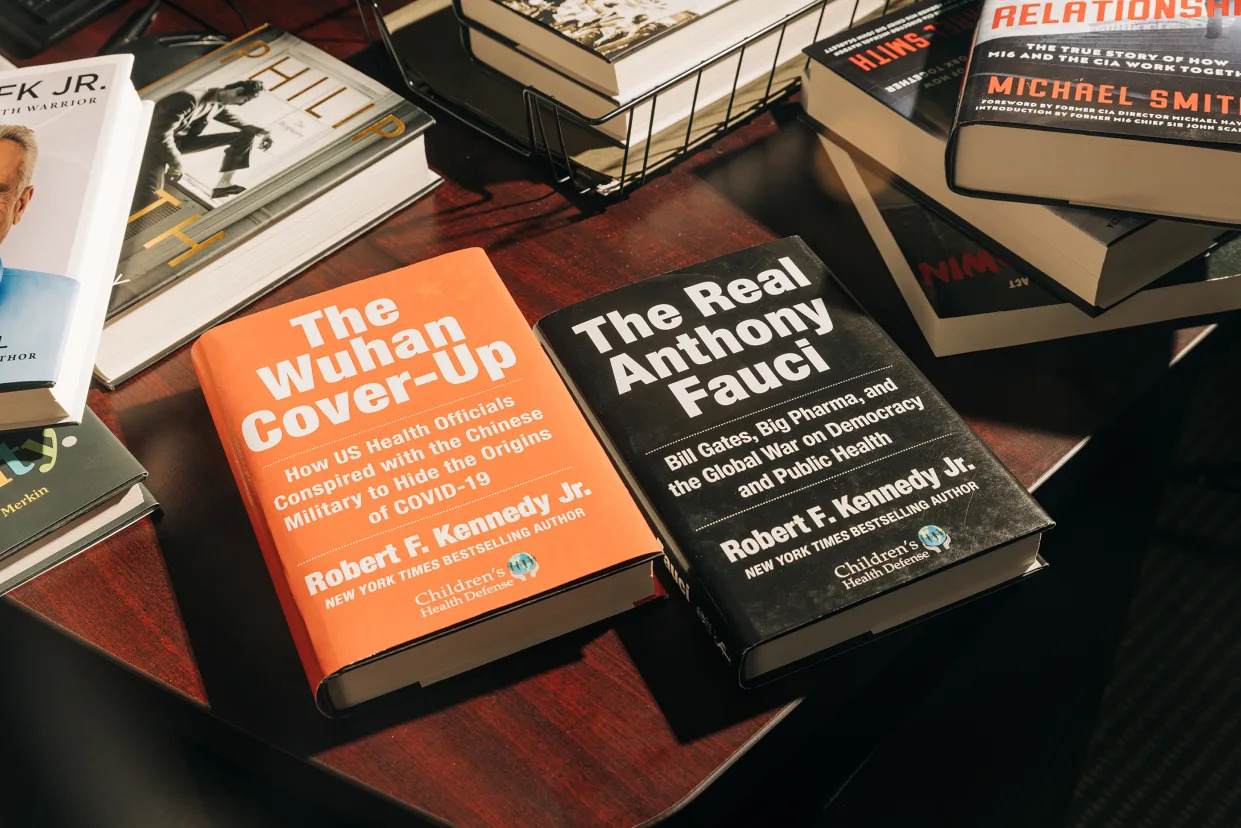
Two Skyhorse Publishing titles by Robert F. Kennedy Jr., a Democrat running for president, in the office of the company’s founder, Tony Lyons, in New York, Aug. 10, 2023. (Jeenah Moon/The New York Times)

Allies of former President Donald Trump are discussing ways to elevate third-party candidates in battleground states to divert votes away from President Joe Biden, along with other covert tactics to diminish Democratic votes.

They plan to promote independent candidate Robert F. Kennedy Jr. as a “champion for choice” to give voters for whom abortion is a top issue — and who also don’t like Biden — another option on the ballot, according to one person who is involved in the effort and who, like several others, spoke on the condition of anonymity to discuss the plans.

Trump allies also plan to amplify the progressive environmental records of Kennedy and expected Green Party candidate Jill Stein in key states — contrasting their policies against the record-high oil production under Biden that has disappointed some climate activists.

A third parallel effort in Michigan is meant to diminish Democratic turnout in November by amplifying Muslim voters’ concerns about Biden’s support for Israel’s war in the Gaza Strip. Trump allies are discussing running ads in Dearborn, Michigan, and other parts of the state with large Muslim populations that would thank Biden for standing with Israel, according to three people familiar with the effort, which is expected to be led by an outside group unaffiliated with the Trump campaign.

Many of these third-party-boosting efforts will probably be run out of dark-money entities that are loosely supportive of Trump. Both the Trump campaign and the main super political action committee supporting the former president, MAGA Inc., are already aggressively framing Kennedy as a far-left radical to draw potential Democratic voters away from Biden.

Whatever the mechanism, the Trump team’s view is simple and is backed by public and private polling: The more candidates in the race, the better for Trump. Biden’s team agrees. And in a race that could be decided by tens of thousands of votes — as the last two presidential elections have been — even small shifts in the share of votes could change the result.

“There is no question that in a close presidential race, independent or minor party candidates can have a disproportionately large impact,” said Roger Stone, who is Trump’s longest-serving political adviser and who has worked on third-party campaigns, including advising Gary Johnson, the Libertarian Party’s nominee in 2012.

Republican donors are pouring funds into Kennedy’s independent bid for the presidency. He has raised substantially more from donors who previously supported Trump than he has from those who backed Biden. Some are big names in Republican politics who have so far given relatively small amounts, including $3,300 last August from Elizabeth Uihlein, whose family is among the GOP’s biggest contributors.

Timothy Mellon, the largest single donor to Kennedy’s biggest super PAC, is also the largest backer of MAGA Inc. Mellon, a reclusive billionaire from one of America’s wealthiest families, has over the past year given the Kennedy super PAC $20 million and the Trump super PAC $15 million, as of the most recent disclosures that were filed in March. Another prominent Kennedy backer is Patrick Byrne, the former CEO of Overstock.com who worked with Trump on his effort to overturn the 2020 election.

Trump himself is intensely interested in the third-party candidates, according to aides. He is eager to know what their effect is expected to be on the race and how they are polling, although his engagement beyond asking questions of those around him is unclear.

Trump has been worried about the Libertarian Party pulling conservative voters away from him in November. But Richard Grenell, who is the former acting director of national intelligence and who is expected to play a big role in any second Trump administration, has been using his connections with Libertarian activists and donors to try to persuade them to attack Biden more than Trump, according to people familiar with his efforts.

Other Trump supporters are trying to help third-party and independent candidates with the expensive and arduous process of gathering the signatures needed to get on state ballots. Scott Presler, the conservative activist whom Lara Trump said she wanted as an early hire at the Republican National Committee, publicly reached out on social media to Stein and Cornel West, a left-wing academic who is running for president as an independent, to offer his help in collecting signatures to get them on the ballot.

Presler could not be reached for comment.

The moves by Trump allies come as the Democratic Party, alarmed by the potential for third-party candidates to swing the election, has mobilized a team of lawyers to scrutinize outsider candidates, including looking into whether they’ve followed the rules to get on state ballots.

For decades, third-party candidacies have loomed large in U.S. presidential elections. The best known in modern history is Ross Perot, whose run as a billionaire populist independent in 1992 garnered 19% of the vote and helped Bill Clinton win with only 43% of the popular vote. Ralph Nader, a Green Party candidate, siphoned votes away from Vice President Al Gore in the nail-biter 2000 presidential race against George W. Bush.

And in 2016, Stein, as the Green Party candidate, gave a meaningful — and arguably election-deciding — boost to Trump by drawing progressive voters away from former Secretary of State Hillary Clinton in Pennsylvania, Michigan and Wisconsin. That year, billionaire businessperson and Home Depot co-founder Bernie Marcus, a supporter of Trump, helped fund efforts to bolster Stein.

Polling shows that third-party candidates could play an especially large role in 2024. Most Americans are unhappy with the choice between Trump and Biden. Voters are increasingly disillusioned with the two major parties, and trust in American institutions has eroded over the past 30 years. Those trends provide an opening for candidates who style themselves as anti-establishment outsiders willing to blow up the system. Trump took advantage of similar conditions in 2016.

In a Quinnipiac University poll in late March, Biden and Trump both received less than 40% of the vote in a hypothetical five-way race, with Kennedy getting 13%, Stein receiving 4% and West capturing 3%.

In the multicandidate race, Trump led by a single percentage point; Biden led Trump by 3 percentage points in a hypothetical head-to-head race.

“The path to victory here is clearly maximizing the reach of these left-wing alternatives,” said Steve Bannon, the former White House chief strategist who also served as Trump’s campaign chair in 2016.

“No Republican knows that oil production under Biden is higher than ever. But Jill Stein’s people do,” Bannon added. “Stein is furious about the oil drilling. The college kids are furious about it. The more exposure these guys get, the better it is for us.”

Brian Hughes, a spokesperson for Trump, described Kennedy as a “leftist and liberal with a history of supporting an extreme environmental agenda.” He said more broadly of the Democratic push to challenge outsider candidates, “While Joe Biden and his allies claim to defend democracy, they are using financial and legal resources to prevent candidates access to the ballot.”

“President Trump believes any candidate who qualifies for the ballot should be allowed to make their case to America’s voters,” he added.

For months, the Trump team has been privately polling various iterations of third-party tickets in battleground states. It has concluded that candidates floated for the Green Party and No Labels, which recently abandoned its effort to field a presidential candidate, pulled substantially more votes from Biden than from Trump.

A person briefed on other polling by Trump allies said that while it varies by state, Kennedy also pulls more votes from Biden than from Trump. The person cited as an example the Trump team’s recent private polling of voters in Arizona. Trump loses Hispanic voters by a close margin in a head-to-head contest against Biden there, but he wins Hispanic voters on the full ballot in Arizona — an indication that third-party candidates draw more heavily from Biden’s core constituencies than from Trump’s.

Still, Kennedy is seen as more of a potential threat to Trump. He has spent the past few years appearing on conservative news media programs and talking about issues like his fierce opposition to the COVID-19 vaccine. Advisers to Trump say that many Republican voters don’t know anything about Kennedy’s liberal views on gun control and the environment, and the Trump team hopes to bring back some of those voters after framing Kennedy as a liberal Democrat.

Allies of Trump and Biden are in a tug of war to define Kennedy, who has far more support than any other third-party candidate.

Democratic lawyers and operatives, many of whom have privately said that neither Gore nor Hillary Clinton had teams that took third-party candidates seriously enough, are fighting hard to keep Kennedy off the ballot. The Democratic National Committee hired Lis Smith, a veteran communications operative, and tasked her with branding Kennedy as a pro-Trump spoiler candidate.

Kennedy’s campaign and the super PACs backing him have paid an array of lawyers and consultants to secure ballot access. One of the consultants, Rita Palma, was captured in a video detailing a strategy to encourage New York voters to support Kennedy: “The Kennedy voter and the Trump voter, our mutual enemy is Biden.” Palma outlined a hypothetical scenario in which Kennedy would win enough electoral votes to prevent either Trump or Biden from winning 270 electoral votes, pushing the decision to Congress in what is known as a contingent election.

On her account on the social platform X, Palma has expressed support over the years for both Kennedy and Trump. In posts first reported by CNN on Tuesday, she had endorsed Trump’s false claims that the 2020 election was stolen and described Sidney Powell, who has pleaded guilty to six misdemeanor counts related to Trump’s efforts to overturn his 2020 election loss in Georgia, as “my person of the decade.”

Stefanie Spear, a spokesperson for the Kennedy campaign, described Palma as “a ballot-access consultant” for upcoming signature collection efforts in New York. Of Palma’s remarks about the hypothetical scenario, Spear said Palma’s statements “in no way reflect the strategy of the Kennedy campaign.”

Spear did not respond to requests for comment about the Trump allies’ efforts to elevate Kennedy, or to inquiries about Palma’s support for Trump’s claims about the 2020 election.

Many conservative news media personalities and influencers recently turned against Kennedy after he decided to run as an independent instead of as a Democrat and it became apparent that he could pull votes from Trump.

Still, one complication with attacking Kennedy is that Trump has made clear that he likes him.

Trump put out a statement on Truth Social, his social media platform, that called Kennedy “a radical-left Democrat,” but he has mostly laid off him otherwise. Trump has called Kennedy a “very smart person” and has even privately floated him as a potential running mate, though his advisers view that prospect as extremely unlikely.

An outside group aligned with Trump asked a question about a Trump-Kennedy ticket in a poll several weeks ago, according to a person with knowledge of the survey. The results were not particularly striking. Trump had told an ally that he believed Kennedy could help him with voters who were upset with him for his support of the COVID-19 vaccine.

“I like Trump-Kennedy. I like the way that sounds,” Trump told another ally recently. “There’s something about that that I like.”

EPA’s New Rule Aims to Cut Toxic Emissions, But Cancer Alley Air Pollution Could Worsen

DeSmog

EPA’s New Rule Aims to Cut Toxic Emissions, But Cancer Alley Air Pollution Could Worsen

Legal challenges could delay the EPA’s ability to enact the measures, which coincide with Louisiana activists’ fight against projects poised to increase air pollution.

By Julie Dermansky – April 10, 2024

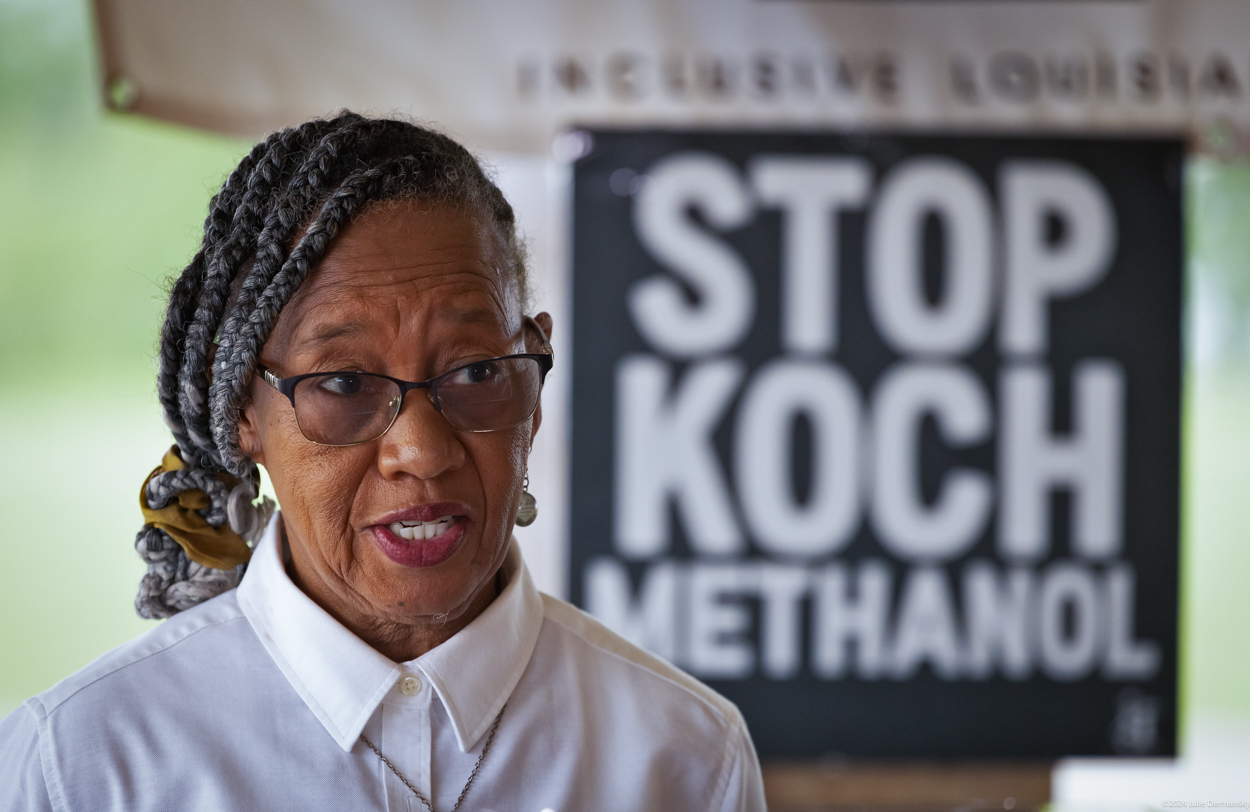
Barbara Washington with Inclusive Louisiana speaks out against the expansion of Koch Industries methanol plant, April 8, 2024.
Barbara Washington with Inclusive Louisiana speaks out against the expansion of Koch Industries’ methanol plant, April 8, 2024. Credit: Julie Dermansky

Leaders in the fight for clean air from Louisiana’s Cancer Alley joined the Environmental Protection Agency’s Administrator Michael Regan on April 9 in Washington, D.C., for the announcement of a new rule governing air toxics-spewing chemical plants. The rule is intended to prevent cancer in surrounding low-income and minority communities.

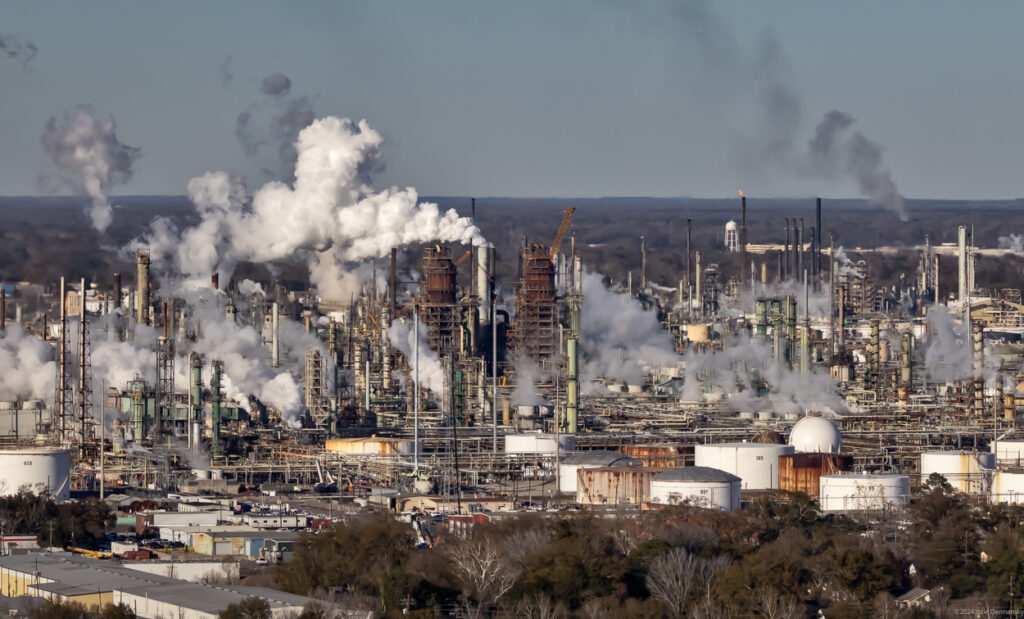
The announcement represents a milestone for environmental justice in communities historically overburdened by air-toxics pollution. But a growing number of proposed industrial projects threaten to further pollute the mostly low-income Black neighborhoods along the Mississippi River between Baton Rouge and New Orleans — already home to a large number of petrochemical plants and refineries. 

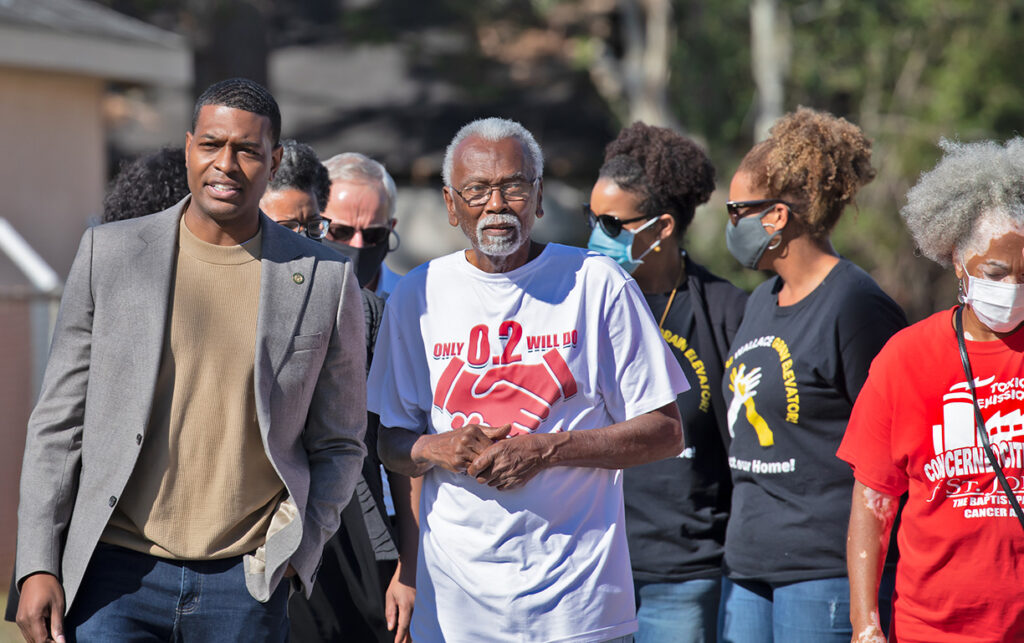
Robert Taylor, leader of the Concerned Citizens of St. John the Baptist Parish, and Sharon Lavigne, head of RISE St. James, expressed gratitude to Regan for setting the new rules. They praised him for following through with his promise to help their communities, though both activists are painfully aware that the fight for environmental justice is far from over. 

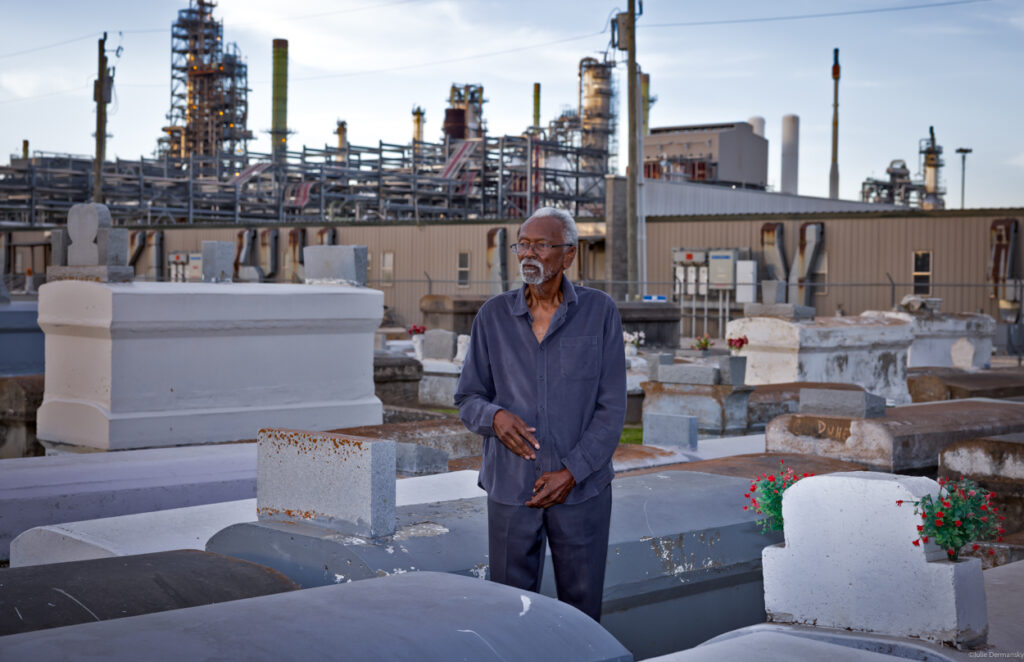
Robert Taylor with the Concerned Citizens of St. John the Baptist Parish in the Zion Travelers Cemetery next to the Marathon Refinery, April 6, 2024. Credit: Julie Dermansky

The EPA stressed that the regulations, which pertain to synthetic organic chemical plants and polymer- and resin-producing facilities, will dramatically reduce the risk of elevated air toxics-related cancer in communities surrounding plants that emit ethylene oxide (EtO), chloroprene, and other dangerous chemicals, officials said. Rules pertaining to EtO and chloroprene have been years in the making.

The new regulations for EtO, chloroprene, benzene, vinyl chloride, 1,3 butadiene, and ethylene dichloride emissions pertains to over 200 manufacturing facilities across the nation that emit one or more of the hazardous chemicals.  

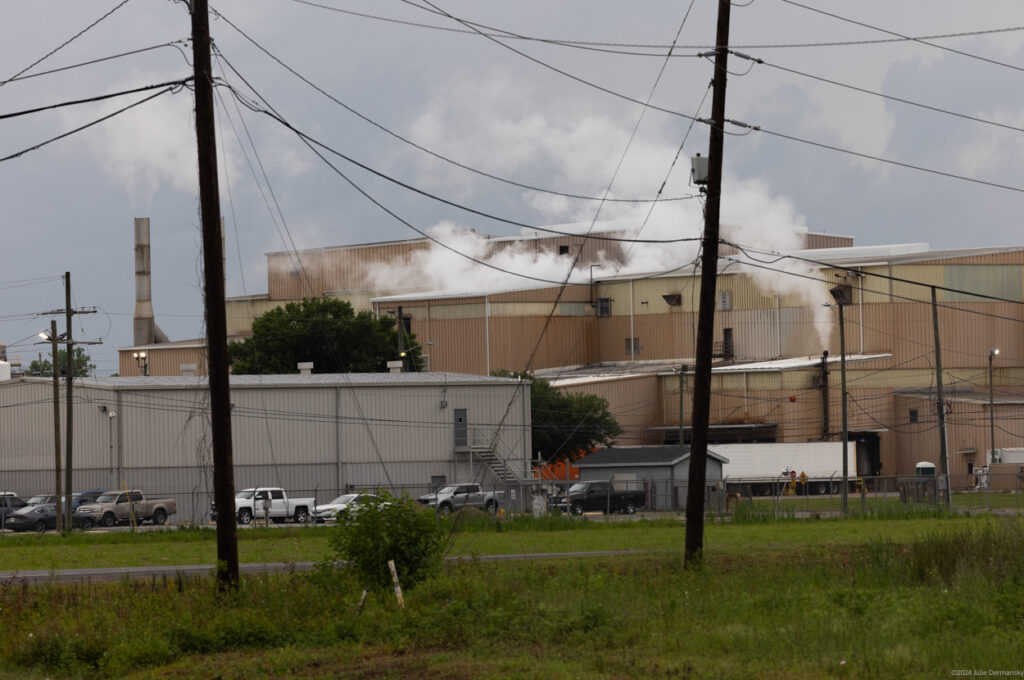
One of Evonik’s facilities in St. John the Baptist Parish, which is a source for EtO emissions, April 8, 2024. Credit: Julie Dermansky
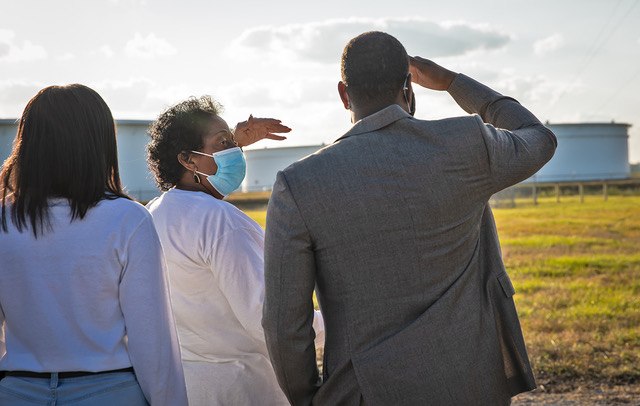
A Dow Chemical facility in Lake Charles Parish was identified by the EPA as being one of the largest emitters of Eto in the country, Jan. 12, 2024. Credit: Julie Dermansky

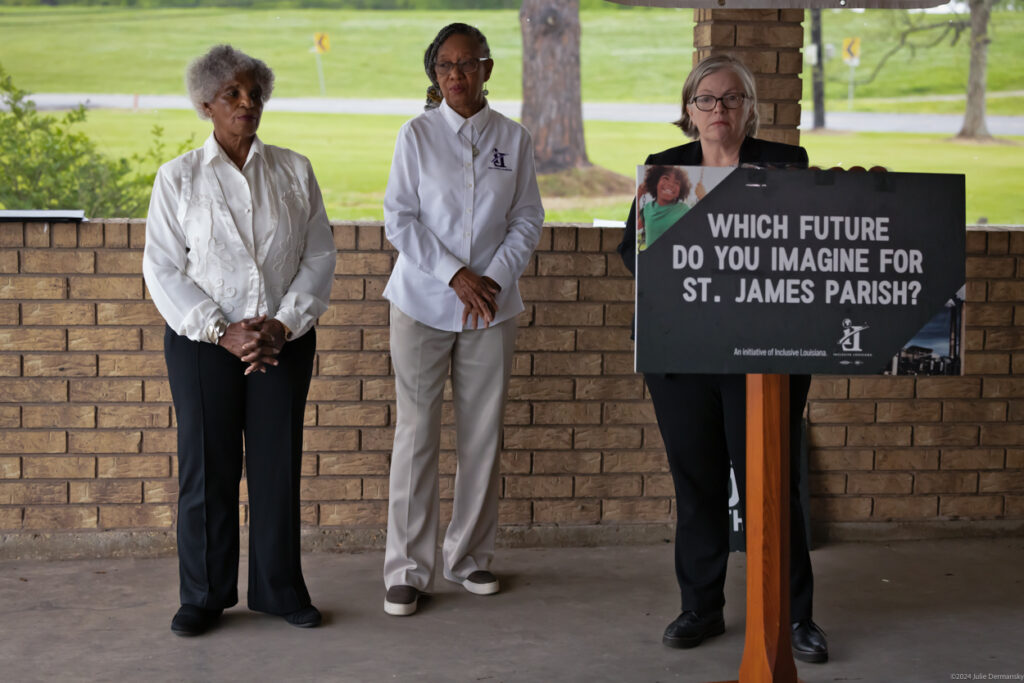
On April 8, RISE St. James and Inclusive Louisiana, another Cancer Alley community advocacy group in St. James, held back-to-back press conferences before meeting in court to challenge St. James Parish officials for permitting Koch Industries’ planned expansion of its looming methanol plant in St. James, which is already underway. 

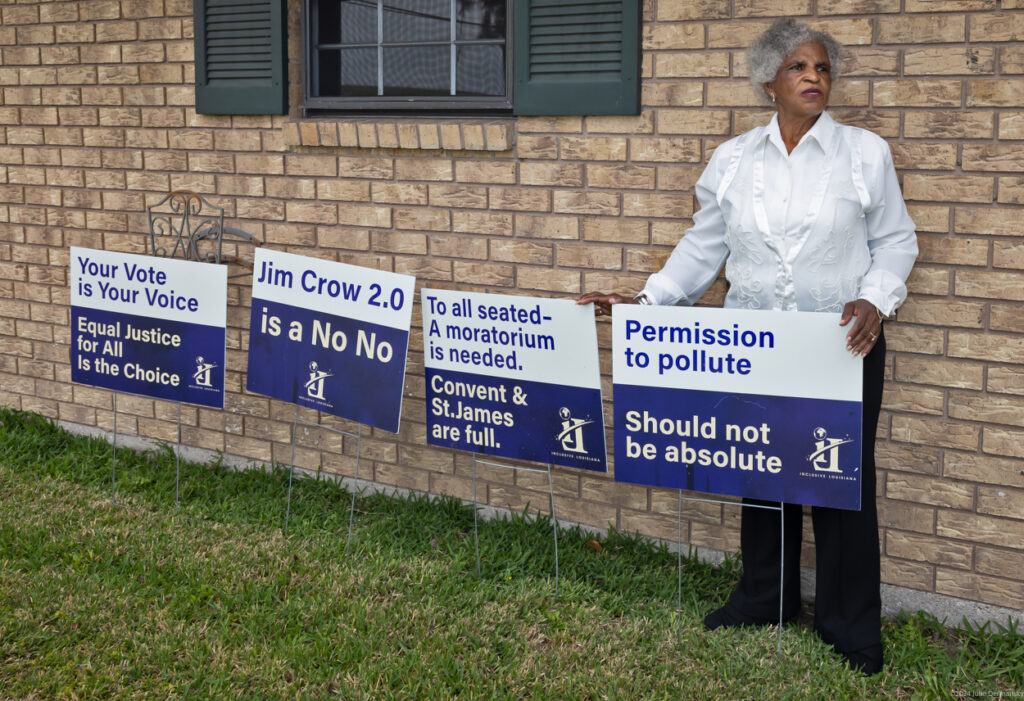
Gail LeBoeuf In front of Inclusive Louisiana’s new headquarters in St. James Parish, April 8, 2024. Credit: Julie Dermansky
Pam Spees, far right, an attorney representing the Cancer Alley plaintiffs speaks at Inclusive Louisiana’s press conference on April 8, 2024. Credit: Julie Dermansky

Community members argue that the parish council didn’t weigh the potential damage from the plant’s pollution against its economic benefits. “We have had enough of them telling us about jobs and the economy when our health is suffering,” Barbara Washington, one of the founders of Inclusive Louisiana, said before the hearing began. Gail LeBoeuf, another founding member of Inclusive Louisiana, concurred, adding that the economic gains to the community from the plant expansion are negligible. 

The “parish and Koch attorneys say the groups have misread and misapplied the parish’s land-use laws and engaged in ‘hyperbole’ over the expansion’s pollution levels and its possible health impacts on its neighbors,” according to the Advocate, a Louisiana newspaper.

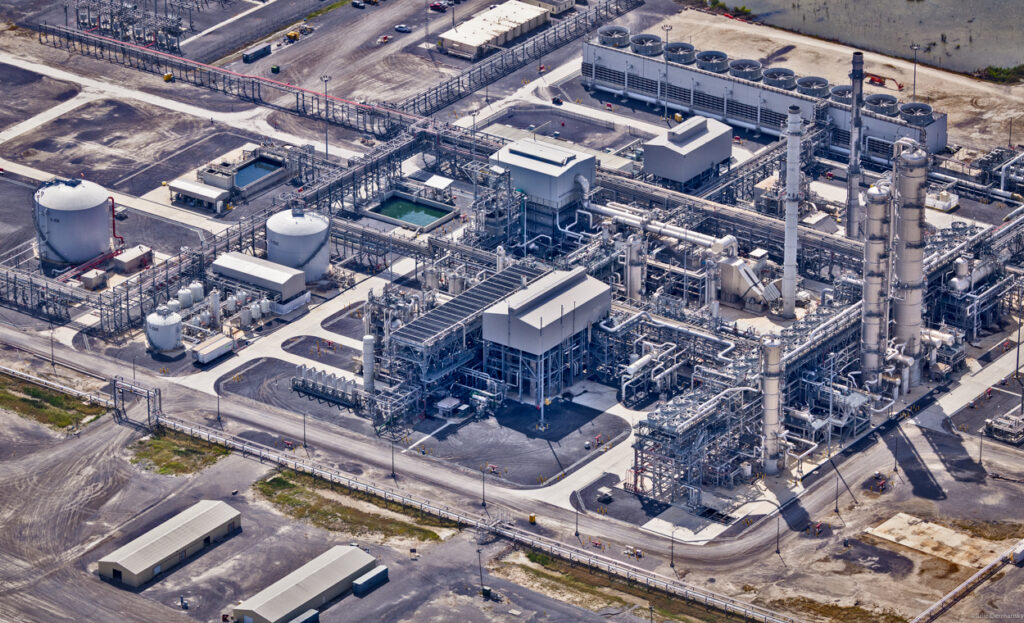
Koch Industries’ methanol facility in St. James, October 22, 2022. Credit: Julie Dermansky
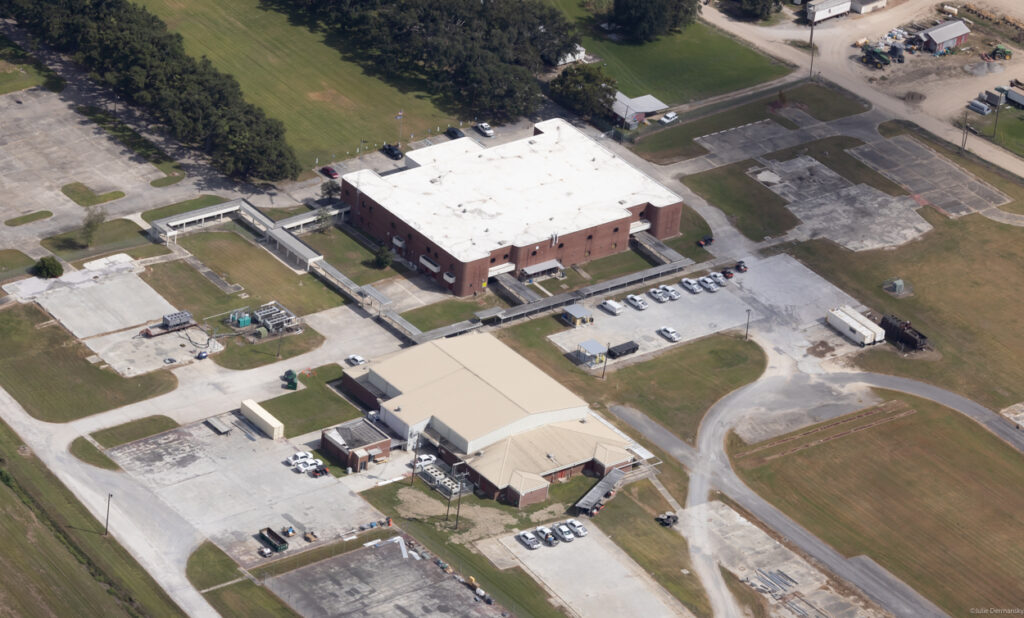
A former high school in St. James Parish is now an administrative office for Koch Industries’ methanol plant, Oct 22, 2022. Credit: Julie Dermansky

The fact that Koch Industries’ administrative office is located in a former high school, which Yuhuang Chemical Industries bought from the parish’s school board a few years ago before selling it to Koch, shows how the parish favors industry over community concerns, according to members of RISE St. James and Inclusive Louisiana. They allege that the sale of the facility, which had been renovated shortly before its sale to a chemical company, was part of the parish’s plan to depopulate the Fifth District, where Formosa Plastics plans to build its massive petrochemical complex. 

Members of the Descendants Project, another Cancer Alley community group, attended the St. John the Baptist Parish’s council meeting held on April 9, to voice opposition to a vote the council held to weaken environmental protections already in place. The council voted 7 to 2 to alter its zoning rules — which in turn granted a waiver to Greenfield LA to exempt them from a 2,000-foot setback, bringing the company one step closer to building a proposed grain elevator project. The controversial facility, if realized, will subject the community to additional air pollution. The Descendants Project asserts the grain elevator will destroy its community’s way of life by further industrializing the once pastoral region. Greenfield, like Koch, contends that its project will be an asset to the community and will not harm it.

EPA Administrator Michael Regan, left, Robert Taylor, middle, the founder of the Concerned Citizens of St. John the Baptist Parish, and Lydia Gerard, far right, walk to the Fifth Ward Elementary School during Regan’s “Journey for Justice Tour,” November 16, 2021. Credit: Julie Dermansky
Sharon Lavigne with EPA Administrator Michael Regan in St. James Parish, Nov. 16, 2021. Credit: Julie Dermansky

At the announcement of the new EPA rule, Regan reflected on his first visit to Robert Taylor’s community in November 2021 on his “Journey to Justice” tour. He said the Black students at the Fifth Ward Elementary School who were exposed to chloroprene emissions from the nearby Dupont/Denka manufacturing facility, reminded him of his son. Regan said that listening to Cancer Alley community members and others exposed to toxic chemicals across the Gulf south during that trip inspired him to use his “bully pulpit” to protect them as much as he could, and praised the Biden administration for directing him to do so. 

Before the new rule was announced, Taylor, whose community has the dubious distinction of being the only one in the U.S. exposed to EtO and chloroprene, expressed concern to me that despite the new EPA regulations, the children that go to the Fifth Ward Elementary School will continue to be bombarded with toxic emissions until the rule is enacted. He is outraged that students still attend the school, and he can not understand why, even after the EPA sent a highly critical letter to the Louisiana Department of Environmental Quality (LDEQ) and the state’s Board of Health that encouraged the state regulators to direct the St. John the Baptist School Board to relocate the children.

The EPA does arguably have the power to shut down the plant, though it would not give me a yes or a no when I asked the agency if it does. When the EPA had the Department of Justice file a complaint against Denka in 2023, it cited an emergency power granted in Section 303 of the Clean Air Act that not only empowers the agency to take legal action, but also to use its authority to address risks before they cause harm. This includes the ability to stop a facility from operating for at least 60 days while other measures are being considered if the EPA deems its emissions to be an imminent and substantial endangerment to the public health or welfare of the environment. 

Lavigne, who won the Goldman Environmental Prize for her efforts fighting against petrochemical plants in 2021, had to walk back her claims of victory against Formosa Plastic’s proposed multi-billion-dollar plastic manufacturing complex earlier this year. Louisiana’s First Circuit Court of Appeals affirmed the LDEQ’s decision to issue air pollution permits for the project, which a lower court had revoked in 2022. 

RISE St. James continues to call on the Biden administration to protect its community by directing the the U.S. Army Corps. of Engineers to deny Formosa Plastics a permit to build in designated wetlands. In November 2020, the Corp. revoked a permit it issued to the company after acknowledging errors in its original analysis. 

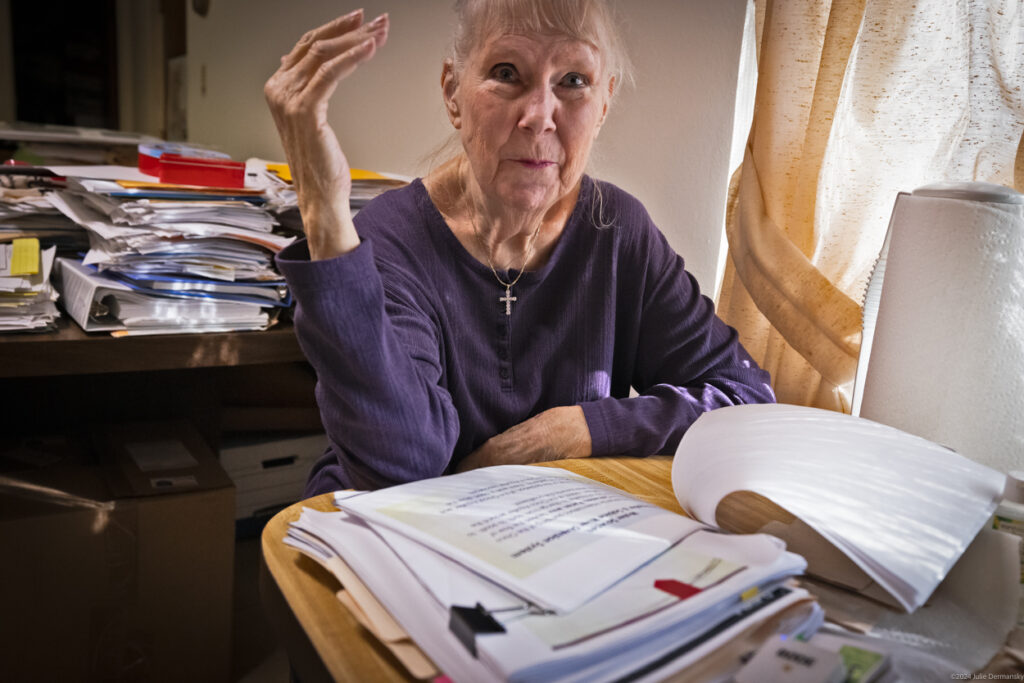
Wilma Subra in her office in Iberia Parish, March 3, 2024. Credit: Julie Dermansky

Environmental scientist and community advocate Wilma Subra, who was part of a team of environmental justice advocates that advised the EPA on the finalized rule on chemical plants, was hesitant to hail the new regulation as a major victory. “While there is a lot to cheer about,” she told me on a call after the rule was announced, “only time will tell if they will ever be enacted.” 

Subra noted that legal challenges and/or a change in who is running the White House could derail the rule from being enacted. And even if the new rule is put in place, the companies impacted by it have a grace period between 90 days and up to two years to comply with different requirements included in it. Meanwhile, Louisiana is poised to welcome more polluting facilities to Cancer Alley and to allow existing ones to expand. 

Like Taylor, Subra is dismayed that students still attend the Fifth Ward Elementary School.  She warned school board members in 2023 about the cumulative health impacts that exposure to nearby toxic emssions can have, especially on children.

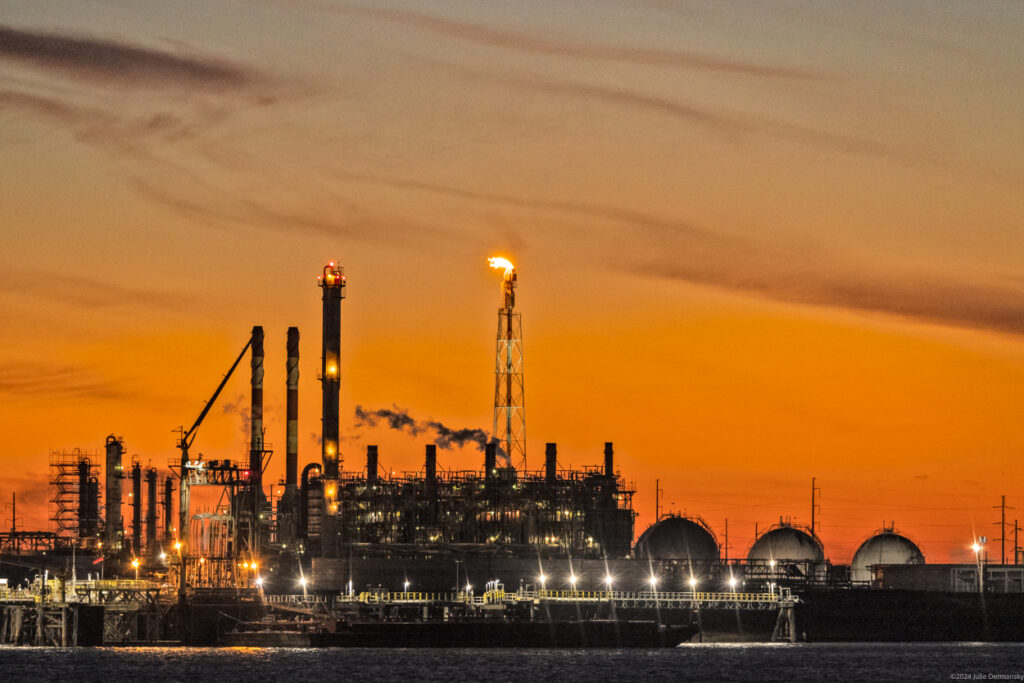
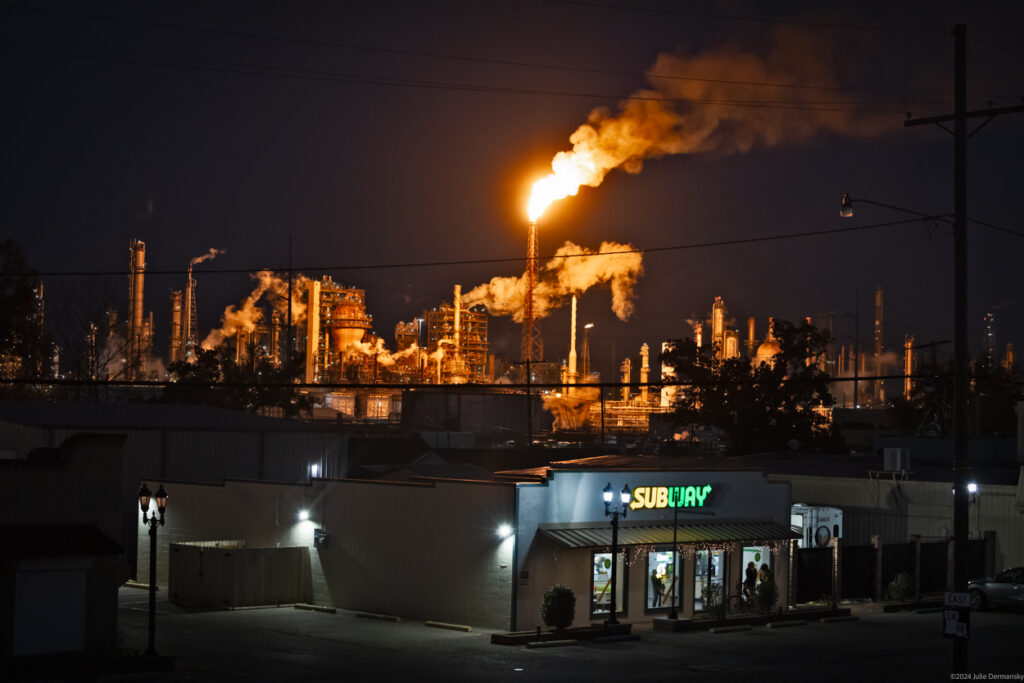
A flare at Shell’s Norco Manufacturing Complex in St. Charles Parish, Jan. 19, 2024. Credit: Julie Dermansky
Exxonmobil Baton Rouge Refinery and Chemical Complex, Jan. 17, 2024. Credit: Julie Dermansky

Subra also pointed out that with more extreme weather events predicted by climate scientists due to climate change, like the cold snaps in south Louisiana this winter when temperatures dipped below freezing for a few days in a row, chemical plants often release toxic emissions well beyond their permitted levels. While the new rule could lead to a decrease in some toxic emissions when these types of pollution incidents occur, it is unclear how much impact the new rule could have during these events.

Julie-Dermansky-022

Julie Dermansky is a multimedia reporter and artist based in New Orleans. She is an affiliate scholar at Rutgers University’s Center for the Study of Genocide and Human Rights. Visit her website at www.jsdart.com.

Six Things to Know About ‘Forever Chemicals’

The New York Times

Six Things to Know About ‘Forever Chemicals’

Lisa Friedman – April 10, 2024

PFAS is everywhere, including drinking water. A researcher pouring a water sample.

Almost half the tap water in the United States contains PFAS, a class of chemicals linked to serious health problems. On Wednesday, the Environmental Protection Agency announced that, for the first time, municipal utilities will have to detect and remove PFAS from drinking water.

Here’s what you need to know.

What are PFAS?

In 1938 a young chemist working on refrigerants for Dupont accidentally discovered a new compound that was remarkably resistant to water and grease, a finding that would lead to the creation of the Teflon brand of nonstick cookware.

Today there are nearly 15,000 per- and polyfluoroalkyl substances, which collectively go by the acronym PFAS, according to a database maintained by the EPA.

The common link is that they have a special bond of carbon and fluoride atoms, making them incredibly strong and resistant to heat, water, oil and dirt. For that reason, PFAS is used for everyday items as varied as microwave popcorn bags, water-repellent clothing and stain-resistant carpets. PFAS are also in firefighting foam, cosmetics, shampoos, toys and even dental floss.

Where are PFAS?

Everywhere, including drinking water. The indestructible nature that makes PFAS useful in some products also makes them harmful. The chemicals are virtually indestructible and do not fully degrade, accumulating in the environment and the human body.

The chemicals are so ubiquitous that they can be found in the blood of almost every person in the country. One recent government study detected PFAS chemicals in nearly half the nation’s tap water. A global study of more than 45,000 water samples around the world found that about 31% of tested groundwater samples that weren’t near any obvious source of contamination had PFAS levels considered harmful to human health.

What does PFAS do to the body?

According to the EPA, exposure to PFAS can cause damage to the liver and immune system and also has been linked to low birth weight, birth defects and developmental delays as well as increased risk of some prostate, kidney and testicular cancers. New research published in the past year found links between PFAS exposure and a delay in the onset of puberty in girls, leading to a higher incidence of breast cancer, renal disease and thyroid disease; a decrease in bone density in teenagers, potentially leading to osteoporosis; and an increased risk of Type 2 diabetes in women.

Why didn’t the EPA regulate PFAS in water sooner?

Many environmental advocates argue that PFAS contamination should have been dealt with long ago.

“For generations, PFAS chemicals slid off every federal environmental law like a fried egg off a Teflon pan,” said Ken Cook, president and co-founder of the Environmental Working Group, a nonprofit advocacy group.

Activists blame chemical companies, which for decades hid evidence of the dangers of PFAS, according to lawsuits and a peer-reviewed study, published in the Annals of Global Health, of previously secret industry documents.

The new EPA rule requires utilities to reduce PFAS in drinking water to near-zero levels.

How can I get rid of PFAS?

Not easily. In homes, filters attached to faucets or in pitchers generally do not remove PFAS substances. Under-sink reverse-osmosis systems have been shown to remove most but not all PFAS in studies performed by scientists at Duke University and North Carolina State University.

Municipal water systems can install one of several technologies including carbon filtration or a reverse-osmosis water filters that can reduce levels of the chemicals.

Now that limits have been set, when will PFAS disappear from tap water?

It could take years. Under the rule, a water system has three years to monitor and report its PFAS levels. Then, if the levels exceed the EPA’s new standard, the utility will have another two years to purchase and install filtration technology.

But trade groups and local governments are expected to mount legal challenges against the regulation, potentially delaying it even before a court makes a final ruling. And if former President Donald Trump were to retake the White House in November, his administration could also reverse or weaken the rule.

Trump is recreating his web of chaos at home and abroad in a preview of what a second term could look like

CNN

Trump is recreating his web of chaos at home and abroad in a preview of what a second term could look like

Analysis by Stephen Collinson, CNN – April 10, 2024

Marco Bello/Reuters

Some top Democrats worry that Americans have forgotten the chaos that raged every day Donald Trump was president, and that voters’ faded recall of the uproar will end up handing him a second term.

The presumptive GOP nominee is, however, doing a good job of jogging memories as he blazes a trail of disruption through Congress, immigration and national security policy, reproductive health care and the nation’s top courts.

After storming to the Republican nomination, Trump is again the epicenter of controversy. His volatile personality, loyalty tests, rampant falsehoods, thirst to serve his political self-interest and the aftershocks of his first term are compromising attempts to govern the country. And the election is still seven months away.

Many of today’s most intractable conflicts in US politics can be traced to Trump and the turmoil that is an essential ingredient of his political appeal to base voters who want Washington and its rules ripped down – no matter the consequences.

Events this week – and over the first three months of this year – illustrate how much Trump has shaped the political tumult:

— On Wednesday, House Speaker Mike Johnson suffered another stunning defeat, further gutting his authority, after hard right GOP members blocked a bill to reauthorize a critical surveillance spying program at Trump’s behest.

— Another measure critical to America’s capacity to wield its global power and its international reputation – a $60 billion arms package for Ukraine – is still going nowhere. Trump ally Rep. Marjorie Taylor Greene is threatening to topple Johnson if he dares to pass it.

— Nationwide chaos is, meanwhile, spreading in the wake of the Trump-built Supreme Court conservative majority overturning Roe v. Wade in 2022. In the latest stunning twist, Arizona is about to revert to a near total Civil War-era abortion ban.

— Bipartisan efforts to solve a border crisis are in tatters after Trump’s House followers in February killed the most sweeping and conservative bill in years. The ex-president appeared to want to deprive President Joe Biden of an election-year win and to continue his searing claims that America is being invaded by undocumented migrants he calls “animals.”

— Some of the nation’s top courts are being tied in knots by Trump’s incessant, and often frivolous, appeals as he desperately tries to postpone the shame of becoming the first ex-president to go on criminal trial. His unchained social media posts may be coming perilously close to infringing a gag order ahead of his hush money trial beginning Monday.

— The Supreme Court will later this month wrestle with Trump’s claims of almost unchecked presidential power – a constitutional conundrum that no other president in two-and-a-half centuries of American history ever raised. The suit is largely a ruse to delay his federal election interference trial – and it is working.

Trump’s entanglement in some of the most intense political storms rocking Washington, and reverberating even beyond US shores, offers fresh evidence of his power – expressed through his capacity to make key elements of the Republican Party bend to his will. It highlights his mercurial personality and a political style that relies on instinct rather than long-term strategy. And it is leaving no doubt that the mayhem that burst out of the Oval Office during his administration would return at an even more intense level if he gets back there in 2025.

Trump delivers a blow to Johnson – then invites him to Mar-a-Lago

Trump dispensed his orders to his acolytes in the House with the words “Kill FISA” on his Truth Social network.

The former president was referring to the Foreign Intelligence Surveillance Act, which national security officials say is critical to allowing espionage agencies to listen to communications of suspected terrorists and US adversaries. Some of those key powers need to be reauthorized by Congress by the middle of the month.

Critics of the law, including some civil liberties groups and some conservatives, argue that Section 702 of the act, which allows the surveillance of foreigners outside the US, is unconstitutional because sometimes Americans in contact with those targets get swept up in the net. But Trump is bent on vengeance against the FBI over its investigation into contacts between his 2016 campaign and Russia. He claimed in a social media post that FISA was “ILLEGALLY USED AGAINST ME, AND MANY OTHERS. THEY SPIED ON MY CAMPAIGN!!!”

On Wednesday, 19 Republicans – including some of Trump’s loudest backers in the House – bucked Johnson and voted with Democrats to block consideration of the bill, dealing yet another blow to the speaker’s fast-ebbing authority and provoking a potential national security crisis.

Bill Barr, Trump’s former attorney general, told CNN’s Annie Grayer on Wednesday that the actions of his former boss and allies were “a travesty and reckless.” Barr argued that the ex-president was being driven by “personal pique rather than rationality and sound policy.” He said Trump’s complaints about the investigation into his 2016 campaign had nothing to do with the FISA section that needs to be reauthorized. And in a chilling warning, Barr accused the ex-president of putting US national security at risk. “We’re faced with probably the greatest threat to the homeland from terrorist attack and our means of defending against that is FISA. And to take that tool away, I think, is going to result in successful terrorist attacks and the loss of life,” he said.

Johnson’s latest humiliation came as he’s fighting for his job on another front. He held tense crisis talks on Wednesday with Greene, who is threatening to call a vote to oust him. The speaker may be the most conservative person to ever hold his job, but the Georgia lawmaker is accusing him of becoming a Democrat in all but name. Johnson’s crime was to keep the government open by passing budget bills and his consideration of the delayed Ukraine funding, which is also opposed by the former president.

“If he funds the deep state and the warrantless spying on Americans, he’s telling Republican voters all over the country that the continued behavior will happen more, spying on President Trump and spying on hundreds of thousands of Americans,” Greene told CNN’s Manu Raju on Wednesday. She added: “The funding of Ukraine must end. We are not responsible for a war in Ukraine. We’re responsible for the war on our border, and I made that clear to Speaker Johnson.”

Trump’s role in these two issues that threaten to bring Johnson down make it all the more curious that the speaker plans to travel to Mar-a-Lago on Friday to hold a joint news conference with the Republican presumptive nominee.

Johnson badly needs Trump to wield his influence with the restive GOP majority if he is to survive. And his pilgrimage to the Florida resort will make a strong statement about who really runs the House majority. There is a clue to a potential quid pro quo in the announced topic of their press conference – “election integrity.” That’s the code in Trump’s world for false claims that the 2020 election was stolen from him.

Johnson was a prominent purveyor of falsehoods about a stolen election and his continued willingness to buy into them might be the price for securing Trump’s support now.

Ukraine’s future may depend on the speaker sacrificing his future

Trump’s transformation of the GOP from a party that used to laud President Ronald Reagan’s victory over the Kremlin in the Cold War to one that often seems to be fulfilling Russian President Vladimir Putin’s foreign policy goals is striking.

The GOP’s blockade of more funding for Ukraine threatens America’s global authority and reputation as a nation that supports democracies and opposes tyrants like a Russian leader who is accused of war crimes. Ukrainian President Volodymyr Zelensky has warned that the war will be lost if the US arms don’t arrive. He told CNN’s Frederik Pleitgen on Wednesday that “what we have now is not sufficient. If we want to truly prevail over Putin.”

A few hours later, Gen. Christopher Cavoli, commander of US European Command, backed up Zelensky’s warnings. “If one side can shoot and the other side can’t shoot back, the side that can’t shoot back loses. So the stakes are very high,” Cavoli told the House Armed Services Committee.

Yet Trump has vowed to end the war in 24 hours if he wins a second term. That can only happen one way – by Zelensky giving territorial concessions to Putin, who launched an illegal invasion and to whom the former US president has often genuflected.

News that Johnson is heading to Mar-a-Lago is yet another reason for US supporters of Ukraine to worry.

Abortion chaos

One of Biden’s goals is trying to remind suburban, moderate and independent voters who may be alienated by Trump’s constant chaos how disorientating life could be when he was president.

That’s one reason why the Biden campaign has seized on the fallout of the Supreme Court’s overturning of Roe v. Wade to highlight the pandemonium that can result from Trump’s leadership.

The overturning of the nationwide constitutional right to an abortion was based on the reasoning that state legislatures that are closer to the people than the judiciary are the appropriate place for such a divisive moral question. In an ideal world or a political vacuum, that might be the case. But the decision took little account of the corrosive polarization of America’s politics and the result has been a confusing patchwork of state laws and court decisions. Many patients are being deprived of vital health services – for instance after miscarriages. Some IVF fertility treatments have been stopped in Alabama, for example, and the Supreme Court has been forced to consider an attempt to halt nationwide access to a widely used abortion pill.

Anti-abortion campaigners are, meanwhile, pushing hard for total state and national bans on the procedure while abortion rights advocates are seeking to inject the issue into key election races — with significant recent success in even some red states.

Trump this week tried to defuse the growing threat to his campaign from his and the conservative Supreme Court majority’s handiwork, insisting he’d leave the issue to the states. His damage control effort didn’t even last 24 hours. The Arizona Supreme Court’s decision to reinstate a 160-year-old ban triggered a backlash that went right back to the former president.

Trump had another go on Wednesday, pledging that he wouldn’t sign a federal ban on abortion as president – as many conservatives are pushing him to. But given how many times he’s shifted his position on the issue, it’s hard to know what he really thinks.

For once, Trump could end up being the chief victim of the chaos he wreaks.

Arizona abortion ruling, which Democrats decry, splits Republicans and abortion opponents

ABC News

Arizona abortion ruling, which Democrats decry, splits Republicans and abortion opponents

Libby Cathey and Oren Oppenheim – April 9, 2024

The Arizona Supreme Court’s decision on Tuesday to uphold a near-total abortion ban predating Arizona’s statehood has drawn differing reactions from state Republicans who previously claimed to be “100% pro-life” while both local and national Democrats vowed to push to protect abortion access in one of the most politically important states on the 2024 map.

Vice President Kamala Harris is planning to travel to Tucson on Friday for her “Fight for Reproductive Freedoms,” where she’s expected to continue to squarely blame former President Donald Trump for appointing three of the justices who voted in 2022 to overrule Roe v. Wade’s national guarantees to abortion access.

Since then, efforts to either protect or expand abortion rights have succeeded in both red and blue states around the country when put up directly for a vote.

“Arizona just rolled back the clock to a time before women could vote – and, by his own admission, there’s one person responsible: Donald Trump,” Harris said in a statement on Tuesday.

She argued Trump would sign a federal abortion ban if elected again and “if he has the opportunity,” though Trump this week put out a new statement insisting that he wants to leave the choice to individual states — without specifying what he would do on a national ban.

President Joe Biden, in a statement through the White House, also blasted the Arizona ban, which only has exceptions to save the life of the pregnant woman. Biden called the restrictions “cruel” and the “result of the extreme agenda of Republican elected officials who are committed to ripping away women’s freedom.”

The ban is temporarily blocked pending a trial court decision. Anyone found guilty of violating the ban will face two to five years in state prison.

Republicans, meanwhile, appear to be walking a tightrope on the issue.

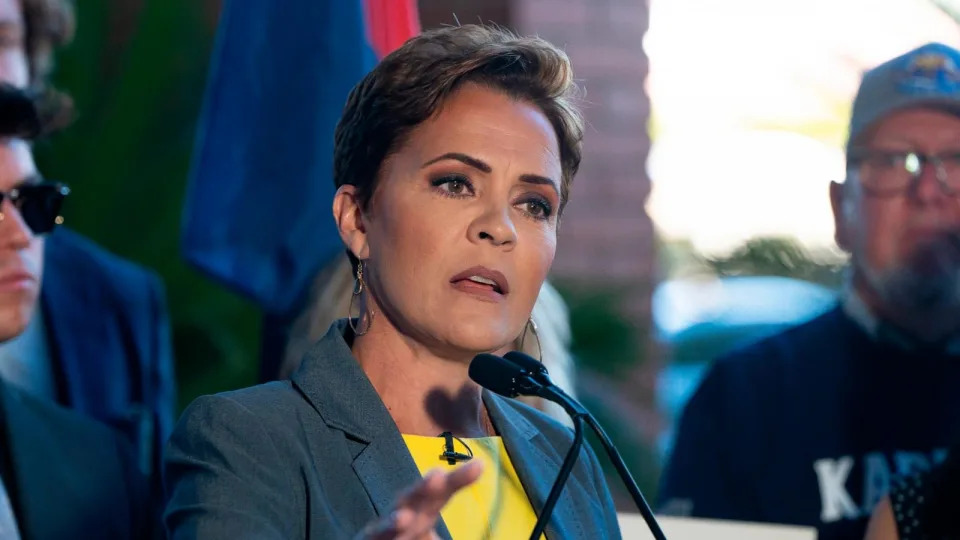
PHOTO: U.S. Senate candidate Kari Lake, R-Ariz., takes questions at a news conference, Feb. 29, 2024, in Phoenix. (Rebecca Noble/Getty Images, FILE)

Senate candidate Kari Lake, who narrowly lost the governor’s race in 2022, said she supports Trump’s stance on abortion, that he’d leave it up to states, and claimed she would oppose both “federal funding” and “federal ban[s]” on abortion in the Senate.

“I wholeheartedly agree with President Trump — this is a very personal issue that should be determined by each individual state and her people,” Lake said in a statement Tuesday. “I oppose today’s ruling, and I am calling on [Gov.] Katie Hobbs and the State Legislature to come up with an immediate common sense solution that Arizonans can support. Ultimately, Arizona voters will make the decision on the ballot come November.”

However, Lake also regularly says she’s “100% pro-life” and supports “saving as many babies as possible.”

Asked last month how she would vote on a pro-abortion access initiative if it made it on the ballot in Arizona, Lake dismissed the question to simply say, “I’m pro-life.”

MORE: Trump’s abortion position leaves key questions unanswered on major campaign issue

PHOTO: Rep. Juan Ciscomani, R-Ariz., questions Education Secretary Miguel Cardona on the 'FY2024 Request for the United States Department of Education,' in Rayburn Building on April 18, 2023. (Tom Williams/AP, FILE)
PHOTO: Rep. Juan Ciscomani, R-Ariz., questions Education Secretary Miguel Cardona on the ‘FY2024 Request for the United States Department of Education,’ in Rayburn Building on April 18, 2023. (Tom Williams/AP, FILE)

Freshman Rep. Juan Ciscomani, who represents a swing district, also called Tuesday’s ruling “a disaster for women and providers” — after having praised the U.S. Supreme Court decision against Roe two years ago and after having said he’ll support a preexisting 15-week ban in his state regarding abortion.

“In Arizona, our 15 week law protected the rights of women and new life. It respected women and the difficult decision of ending a pregnancy – one I will never personally experience and won’t pretend to understand,” Ciscomani wrote in a post on X, adding, “I oppose a national abortion ban. The territorial law is archaic. We must do better for women and I call on our state policymakers to immediately address this in a bipartisan manner.”

Former Republican Gov. Doug Ducey posted on social media that the decision was not his “preferred” outcome and urged elected leaders to find “a policy that is workable and reflective of our electorate.” However, Ducey also appointed the four justices who supported the court’s majority in the opinion.

“I signed the 15-week law as Governor because it is thoughtful policy, and an approach to this very sensitive issue that Arizonans can actually agree on,” Ducey wrote on X. “The ruling today is not the outcome I would have preferred, and I call on our elected leaders to heed the will of the people and address this issue with a policy that is workable and reflective of our electorate.”

Republican strategist Barrett Marson called the ruling “ground-shifting” for Arizona politics and argued the decision will reverberate through November’s elections, even if lawmakers do meet in the meantime for a special session to change the law amid public fallout.

“The Arizona Supreme Court ruling may be a huge victory for the pro-life movement in Arizona, it will be short term. The decision will only bring out more voters in 2024 to approve the abortion initiative and likely vote for Democratic candidates,” Marson said in a series of posts on X on Tuesday. “When [Gov. Katie] Hobbs calls a special session to open access to abortion and repeal the 1864 law, Republicans will be in a difficult spot.”

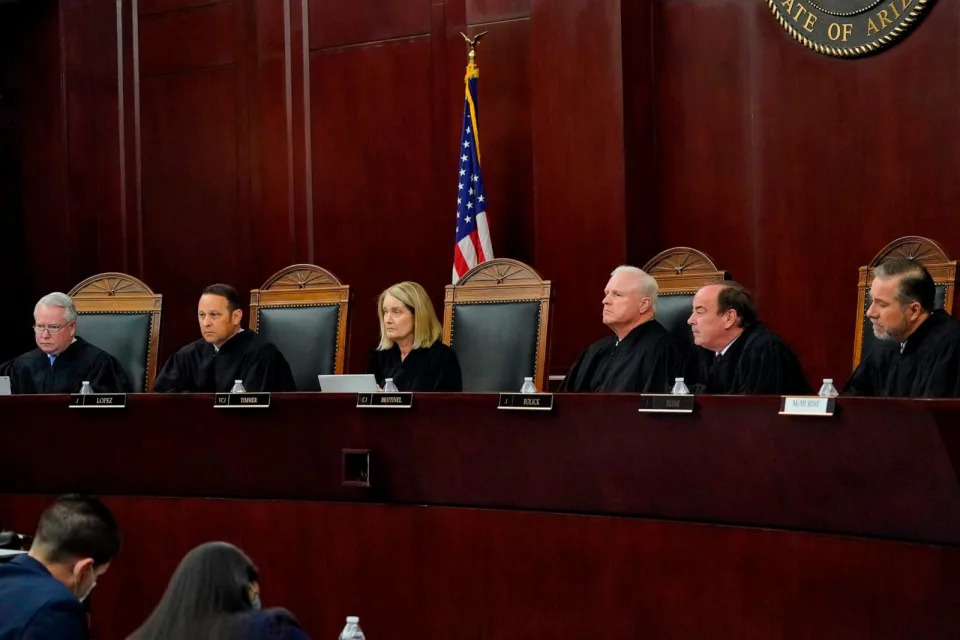
PHOTO: Arizona Supreme Court Justices from left; William G. Montgomery, John R Lopez IV, Vice Chief Justice Ann A. Scott Timmer, Chief Justice Robert M. Brutinel, Clint Bolick and James Beene listen to oral arguments on April 20, 2021, in Phoenix. (Matt York/AP, FILE)

Democratic Rep. Ruben Gallego, expected to face Lake in the Senate race in the fall, seized on her previously calling the pre-statehood ban a “great law” and sent a fundraising pitch to supporters reminding them that as a senator he would vote to end the filibuster rule as a means to protect abortion access nationwide, unlike Lake.

“This is not what Arizonans want, and women could die because of it,” Gallego said in a statement. “Yet again, extremist politicians like Kari Lake are forcing themselves into doctors’ offices and ripping away the right for women to make their own healthcare decisions,” adding he’s “committed to doing whatever it takes to protect abortion rights at the federal level.”

Potential ballot initiative gains momentum

Voters may have a chance to weigh in on abortion access directly in November.

Arizona for Abortion Access, which is working to get a constitutional amendment on the state’s ballot enshrining abortion access, attacked Tuesday’s ruling but said it would motivate more people to join their campaign ahead of the state’s July 3 deadline for signatures.

The proposed amendment would amend Arizona’s Constitution to prohibit the state from legislating against abortion up until fetal viability, around 24 weeks into pregnancy, and enshrines other abortion protections into law.

The group said earlier this month that they had gathered more than 500,000 signatures — surpassing the threshold to get an initiative on the Arizona general election ballot.

“This ruling will put the lives of untold Arizonans at risk and robs us of our most basic rights,” Arizona for Abortion Access campaign manager Cheryl Bruce said in a statement. “Implementing a near-total abortion ban from before women even had the right to vote only further demonstrates why we need politicians and judges out of our healthcare decisions. Now more than ever, our campaign is driven to succeed in passing this amendment and protecting access to abortion in Arizona once and for all.”

The president of Susan B. Anthony Pro-Life America, Marjorie Dannenfelser, who opposes abortion, called the decision an “enormous victory for unborn children and their mothers” and indicated abortion opponents in the state will now work to defeat the ballot initiative.

MORE: Fighting for their lives: Women and the impact of abortion restrictions in post-Roe America

“The compassion of the pro-life movement won in court today, but we must continue to fight,” Dannenfelser said in a statement.

“Governor Hobbs and her pro-abortion allies will pour millions into deceiving the voters about the upcoming amendment that permits abortion on demand when babies can feel pain and survive outside the womb,” she said. We must defeat this extreme measure that would force Arizonans to pay for abortions and eliminate health protections for women.”

Alongside Hobbs, Arizona Attorney General Kris Mayes, a Democrat, said she will not prosecute any abortion providers under the law she deemed “draconian.”

ABC News’ Olivia Osteen contributed to this report.

Arizona Supreme Court Revives Total Abortion Ban

Rolling Stone

Arizona Supreme Court Revives Total Abortion Ban

Tessa Stuart – April 9, 2024

The Arizona Supreme Court has revived an 1864 criminal ban on abortion.

The Civil War-era law, which predated Arizona statehood by almost a half a century, prohibits abortion at any stage of pregnancy, for any reason other than when “necessary” to save the pregnant person’s life. The ban carries a penalty of up to five years in prison for abortion providers.

“[P]hysicians are now on notice that all abortions, except those necessary to save a woman’s life, are illegal,” the court’s opinion read.

The ban — which is set to take effect 14 days after Tuesday’s ruling, on April 23 — will replace Arizona’s 2022 law which banned most abortions after 15 weeks gestation. (That law contained a single exception, for “medical emergencies”; providers who violated it could be charged with a felony and lose their medical licenses.)

The legal case, originally brought in the wake of the U.S. Supreme Court’s 2022 Dobbs decision, sought to determine which ban — 1864 or 2022 — would take precedence after the court struck down federal protections for abortion.

In December 2022, the Arizona Court of Appeals upheld the 15-week ban. But by that time, Arizona voters had replaced Mark Brnovich, the Republican attorney general who argued for restoring the 1864 ban, with a Democrat, Kris Mayes, who declined to appeal the court’s decision. In a statement Tuesday, Mayes called the court’s decision “unconscionable and an affront to freedom,” and said her office would not enforce the ban.

The case could have ended there, but Dr. Eric Hazelrigg, an anti-abortion OB-GYN from Gilbert, Arizona, who petitioned the court to be appointed as a “guardian ad litem” for the state’s “unborn” children, intervened to appeal the lower court decision. Alliance Defending Freedom, the conservative christian litigation shop known for its willingness to take on culture war cases, represented Hazelrigg.

The decision was four to two; all six of the Supreme Court’s justices — four men and two women — were appointed by Republican governors.

The decision could have major electoral consequences: advocates for reproductive rights are working to place a popular referendum on the November ballot that would protect the right to abortion in Arizona. The state is also seen as a critical battleground, one that could decide both the presidential contest and control of the Senate this November.

The Arizona Supreme Court’s decision comes as debate has raged over whether abortion laws should be determined at the state or federal level. Republicans, Including Donald Trump, have had a difficult time addressing the issue this election season, feeling the need to placate the party’s far-right base while not alienating the vast majority of Americans who believe in protecting reproductive rights.

Trump on Monday released a video statement insisting he believes that the issue should be up to the states — but the claim is dubious, to say the least. The former president has repeatedly taken credit for killing Roe v. Wade, and has on several recent occasions spoken about implementing a federal ban.

US foreign-born population grew 15 percent in 12 years

The Hill

US foreign-born population grew 15 percent in 12 years

Filip Timotija – April 9, 2024

The U.S. foreign-born population has grown by 15 percent in 12 years, per a new report from the U.S. Census Bureau released Tuesday.

The foreign-born population in the country was around 40 million in 2010, making up 12.9 percent of the total population. The number jumped to 46.2 million in 12 years, with now making up 13.9 percent of the total population.

People who are part of the foreign-born population are those living in the country who are not U.S. citizens at birth, lawful permanent residents, foreign students, refugees and unauthorized migrants.

The median age of the foreign-born population went up more than the native population from 2010 to 2022.

The foreign-born population went up by five years, going from a median age of 41.4 to 46.7 years old, while the native population increased slightly, from 35.9 to 36.9 years old.

North Dakota, South Dakota, West Virginia and Delaware saw their foreign-born populace increase by over 40 percent.

The percentage of foreign-born individuals went up by close to five points, going from 68.3 percent in 2010 to 75.1 percent in 2022, according to the report.

Half of the country’s foreign-born populace was from South America.

New Jersey, California, Florida and New York are four states where immigrants make up more than one-fifth of the state’s population. California led the way with 26.5 percent, New Jersey was second with 23.2 percent, New York had 22.6 percent and Florida was fourth with 21.1 percent.

Close to 50 percent of all immigrants came into the country before 2000.

The data was based on one-year estimates and came from The American Community Survey (ACS).

More than half of foreign-born people in US live in just 4 states and half are naturalized citizens

Associated Press

More than half of foreign-born people in US live in just 4 states and half are naturalized citizens

Mike Schneider – April 9, 2024

FILE – Women representing more than 20 countries take part in a Naturalization Ceremony, March 8, 2024, in San Antonio. More than half of the foreign-born population in the United States lives in just four states — California, Texas, Florida and New York — and their numbers grew older and more educated over the past dozen years, according to a new report released Tuesday, April 9, 2024, by the U.S. Census Bureau. (AP Photo/Eric Gay, File)More

ORLANDO, Fla. (AP) — More than half of the foreign-born population in the United States lives in just four states — California, Texas, Florida and New York — and their numbers grew older and more educated over the past dozen years, according to a new report released Tuesday by the U.S. Census Bureau.

In 2022, the foreign-born population was estimated to be 46.2 million people, or almost 14% of the U.S. population, with most states seeing double-digit percentage increases in the last dozen years, according to the figures from the bureau’s American Community Survey.

In California, New Jersey, New York and Florida, foreign-born individuals comprised more than 20% of each state’s population. They constituted 1.8% of West Virginia’s population, the smallest rate in the U.S.

Half of the foreign-born residents in the U.S. were from Latin America, although their composition has shifted in the past dozen years, with those from Mexico dropping by about 1 million people and those from South America and Central America increasing by 2.1 million people.

The share of the foreign population from Asia went from more than a quarter to under a third during that time, while the share of African-born went from 4% to 6%.

The report was released as immigration has become a top issue during the 2024 presidential race, with the Biden administration struggling to manage an unprecedented influx of migrants at the Southwest border. Immigration is shaping the elections in a way that could determine control of Congress as Democrats try to outflank Republicans and convince voters they can address problems at the U.S. border with Mexico.

The Census Bureau report didn’t provide estimates on the number of people in the U.S. illegally.

However, the figures show that more than half of the foreign-born are naturalized citizens, with European-born and Asian-born people leading the way with naturalization rates at around two-thirds of their numbers. Around two-thirds of the foreign-born population came to the U.S. before 2010.

The foreign-born population has grown older in the past dozen years, a reflection of some members’ longevity in the U.S., with the median age increasing five years to 46.7 years. They also became more educated from 2010 to 2022, with the rate of foreign-born people holding at least a high school degree going from more than two-thirds to three-quarters of the population.