Americans haven’t felt this good about the economy in almost two years

Yahoo! Finance

Americans haven’t felt this good about the economy in almost two years

Josh Schafer, Reporter – July 14, 2023

A commonly followed measure of consumer confidence in the US economy just increased to the highest level since September 2021.

The first July reading of the University of Michigan Consumer Sentiment Index showed a reading of 72.6 on Friday. The print came in significantly higher than the 65.5 economists had expected and reflected a 13% increase from the month prior. That marks the fastest pace since December 2005, when the economy was recovering from Hurricane Katrina.

“The sharp rise in sentiment was largely attributable to the continued slowdown in inflation along with stability in labor markets,” Surveys of Consumers director Joanne Hsu said in the release.

Consumers have had plenty to be bullish about recently, including a month of largely strong economic dataupbeat reports to kick off second quarter earnings, and waning fears of a second Federal Reserve rate hike in the back half of the year propelling the 2023 stock market rally higher.

A 19% surge in long-term business conditions and a 16% increase in short-run business conditions were the primary drivers behind Friday’s surprise print, according to the University of Michigan. The report did, however, include a slight uptick in consumers’ inflation expectations.

The expectations for inflation over the next year are now at 3.4%, up from 3.3% in June but down from the highs of 5.4% in April 2022. Analysts had anticipated one-year inflation expectations to tick down to 3.1%

“Easing concerns about a recession, which had been garnering a ton of headlines in the media for most of the year, may have helped push sentiment and expectation higher,” Oxford Economics chief US economist Ryan Sweet wrote on Friday.

Consumers have had plenty to be bullish about recently, including strong June jobs numbers and data showing that inflation eased during the month. (Photo by Allison Joyce/Getty Images)

The Friday release follows a week of upbeat economic data. On Wednesday, the Consumer Price Index for June came in cooler than projected, rising at its slowest pace since March 2021. On Thursday, the Producer Price Index painted a similar picture. The labor market, meanwhile, continued to show resilience with weekly jobless claims of 237,000 coming in lower than expectations for 250,000 claims and below the week prior’s 249,000 claims.

Last week’s June jobs report showed the labor market is cooling with nonfarm payroll additions coming in short of expectations for the first time in 15 months. But economists were quick to note that the economy still added 209,000 jobs, the unemployment ticked lower to 3.6%, and average hourly earnings grew 4.4% from the year prior.

At scale, that data paints a picture of a tight labor market where Americans have jobs while prices for goods continue to decrease.

The Energy Transition Is Underway. Fossil Fuel Workers Could Be Left Behind.

The New York Times

The Energy Transition Is Underway. Fossil Fuel Workers Could Be Left Behind.

Madeleine Ngo – July 14, 2023

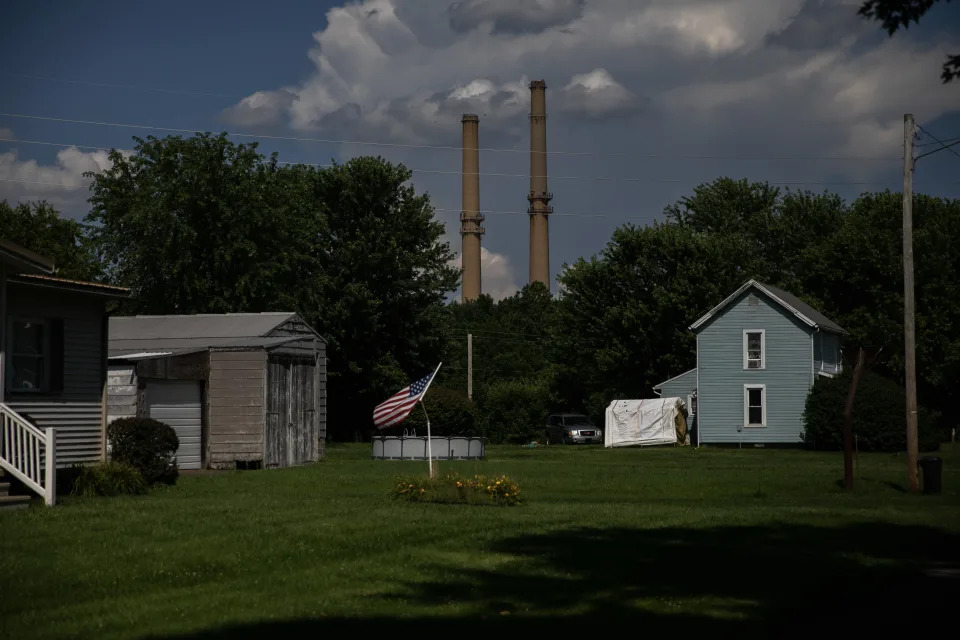
The decommissioned Conesville Power Plant in Conesville, Ohio, on July 5, 2023. (Maddie McGarvey/The New York Times)

WASHINGTON — Tiffany Berger spent more than a decade working at a coal-fired power plant in Coshocton County, Ohio, eventually becoming a unit operator making about $100,000 annually.

But in 2020, American Electric Power shut down the plant, and Berger struggled to find a job nearby that offered a comparable salary. She sold her house, moved in with her parents and decided to help run their farm in Newcomerstown, Ohio, about 30 minutes away.

They sell some of the corn, beans and beef they harvest, but it is only enough to keep the farm running. Berger, 39, started working part time at a local fertilizer and seed company last year, making just one-third of what she used to earn. She said she had “never dreamed” the plant would close.

“I thought I was set to retire from there,” Berger said. “It’s a power plant. I mean, everybody needs power.”

The United States is undergoing a rapid shift away from fossil fuels as new battery factories, wind and solar projects, and other clean energy investments crop up across the country. An expansive climate law that Democrats passed last year could be even more effective than Biden administration officials had estimated at reducing fossil fuel emissions.

While the transition is projected to create hundreds of thousands of clean energy jobs, it could be devastating for many workers and counties that have relied on coal, oil and gas for their economic stability.

Estimates of the potential job losses in the coming years vary, but roughly 900,000 workers were directly employed by fossil fuel industries in 2022, according to data from the Bureau of Labor Statistics.

The Biden administration is trying to mitigate the impact, mostly by providing additional tax advantages for renewable energy projects that are built in areas vulnerable to the energy transition.

But some economists, climate researchers and union leaders said they are skeptical the initiatives will be enough. Beyond construction, wind and solar farms typically require few workers to operate, and new clean energy jobs might not necessarily offer comparable wages or align with the skills of laid-off workers.

Coal plants have been shutting down for years, and the nation’s coal production has fallen from its peak in the late 2000s. U.S. coal-fired generation capacity is projected to decline sharply to about 50% of current levels by 2030, according to the Energy Information Administration. About 41,000 workers remain in the coal mining industry, down from about 177,000 in the mid-1980s.

The industry’s demise is a problem not just for its workers but also for the communities that have long relied on coal to power their tax revenue. The loss of revenue from mines, plants and workers can mean less money for schools, roads and law enforcement. A recent paper from the Aspen Institute found that from 1980 to 2019, regions exposed to the decline of coal saw long-run reductions in earnings and employment rates, greater uptake of Medicare and Medicaid benefits and substantial decreases in population, particularly among younger workers. That “leaves behind a population that is disproportionately old, sick and poor,” according to the paper.

The Biden administration has promised to help those communities weather the impact, for both economic and political reasons. Failure to adequately help displaced workers could translate into the kind of populist backlash that hurt Democrats in the wake of globalization as companies shifted factories to China. Promises to restore coal jobs also helped Donald Trump clinch the 2016 election, securing him crucial votes in states such as Pennsylvania.

Federal officials have vowed to create jobs in hard-hit communities and ensure that displaced workers “benefit from the new clean energy economy” by offering developers billions in bonus tax credits to put renewable energy projects in regions dependent on fossil fuels.

If new investments like solar farms or battery storage facilities are built in those regions, called “energy communities,” developers could get as much as 40% of a project’s cost covered. Businesses receiving credits for producing electricity from renewable sources could earn a 10% boost.

The Inflation Reduction Act also set aside at least $4 billion in tax credits that could be used to build clean energy manufacturing facilities, among other projects, in regions with closed coal mines or plants, and it created a program that could guarantee up to $250 billion in loans to repurpose facilities like a shuttered power plant for clean energy uses.

Brian Anderson, the executive director of the Biden administration’s interagency working group on energy communities, pointed to other federal initiatives, including increased funding for projects to reclaim abandoned mine lands and relief funds to revitalize coal communities.

Still, he said that the efforts would not be enough, and that officials had limited funding to directly assist more communities.

“We’re standing right at the cusp of potentially still leaving them behind again,” Anderson said.

Phil Smith, the chief of staff at the United Mine Workers of America, said that the tax credits for manufacturers could help create more jobs but that $4 billion likely would not be enough to attract facilities to every region. He said he also hoped for more direct assistance for laid-off workers, but Congress did not fund those initiatives.

“We think that’s still something that needs to be done,” Smith said.

Gordon Hanson, the author of the Aspen Institute paper and a professor of urban policy at the Harvard Kennedy School, said he worried the federal government was relying too heavily on the tax credits, in part because companies would likely be more inclined to invest in growing areas. He urged federal officials to increase unemployment benefits to distressed regions and funding for workforce development programs.

Even with the bonus credit, clean energy investments might not reach the hardest-hit areas because a broad swath of regions meets the federal definition of an energy community, said Daniel Raimi, a fellow at Resources for the Future.

“If the intention of that provision was to specifically provide an advantage to the hardest-hit fossil fuel communities, I don’t think it’s done that,” Raimi said.

Local officials have had mixed reactions to the federal efforts. Steve Henry, the judge-executive of Webster County, Kentucky, said he believed they could bring renewable energy investments and help attract other industries to the region. The county experienced a significant drop in tax revenue after its last mine shut down in 2019, and it now employs fewer 911 dispatchers and deputy sheriffs because officials cannot offer more competitive wages.

“I think we can recover,” he said. “But it’s going to be a long recovery.”

Adam O’Nan, the judge-executive of Union County, Kentucky, which has one coal mine left, said he thought renewable energy would bring few jobs to the area, and he doubted that a manufacturing plant would be built because of the county’s inadequate infrastructure.

“It’s kind of difficult to see how it reaches down into Union County at this point,” O’Nan said. “We’re best suited for coal at the moment.”

Federal and state efforts so far have done little to help workers like James Ault, 42, who was employed at an oil refinery in Contra Costa County, California, for 14 years before he was laid off in 2020. To keep his family afloat, he depleted his pension and withdrew most of the money from his 401(k) early.

In early 2022, he moved to Roseville, California, to work at a power plant, but he was laid off again after four months. He worked briefly as a meal delivery driver before landing a job in February at a nearby chemical manufacturer.

He now makes $17 an hour less than he did at the refinery and is barely able to cover his mortgage. Still, he said he would not return to the oil industry.

“With our push away from gasoline, I feel that I would be going into an industry that is kind of dying,” Ault said.

Florida orange harvest sees worst season since before World War II

Fox Weather

Florida orange harvest sees worst season since before World War II

Andrew Wulfeck – July 13, 2023

Florida orange harvest sees worst season since before World War II

MIAMI – Growers of the official fruit of the Sunshine State are continuing to struggle with orange production, which has reached its lowest levels since before World War II.

The U.S. Department of Agriculture held a teleconference on Wednesday when it announced the final 2022-23 season forecast of 15.85 million boxes of oranges, levels not seen since harvests in the 1930s.

The figure was in line with previous expectations and, like many other fruits, saw a significant drop in production from levels reported just one year ago.

During the 2021-22 season, over 41 million boxes were harvested, which was just a fraction of amounts produced during the late 1990s and early 2000s.

According to the USDA, orange production peaked in 1998 at 240 million boxes but saw a significant decline after the historic 2004 hurricane season.

ORANGE JUICE PRICES ON THE RISE: WHY WEATHER EXTREMES ARE TAKING A TOLL ON STRUGGLING FLORIDA CITRUS INDUSTRY

Harvesters have blamed weather disasters and citrus greening in recent years for the reduction in fruit production.

Citrus growers previously described the setbacks as “unprecedented” and told FOX Business that they were just trying to survive for a better day.

A report from the University of Florida’s Economic Impact Analysis Program estimated agriculture losses from 2022’s Hurricane Ian at around $1 billion.

The figure was on top of Hurricane Irma’s $2.5 billion in damage in 2017 and several billion dollars done by hurricanes in 2004.

FLORIDA SUFFERS $1 BILLION HIT TO AGRICULTURE INDUSTRY FROM HURRICANE IAN

In addition to weather disasters, citrus greening from an Asian bug discovered in the Lower 48 back in 1998 has been rampant.

According to university experts, once a tree becomes infected, its nutrient flow will slow and eventually impair its ability to produce fruit.

There is no known cure for citrus greening, meaning that a plant with the disease will deteriorate until it dies.

Trees producing grapefruits, lemons, tangerines, tangelos and other fruits are also susceptible to the disease.

According to USDA estimates, harvesters produced around 45% fewer boxes of grapefruit than last season and tangerines and tangelos saw a decline of around 36%.

Most major citrus operations have reached the end of the harvest season and won’t start up in earnest again until the fall and winter.

Another insurer is leaving Florida. How much is DeSantis to blame?

Tampa Bay Times, St. Petersburg, Fla.

Another insurer is leaving Florida. How much is DeSantis to blame?

Jay Cridlin, Tampa Bay Times – July 13, 2023

Gov. Ron DeSantis has signed more than 300 bills into law this year.

They include measures that touched on a broad swath of issues, including abortion, immigration, transgender care, space exploration, the death penalty, college diversity programs, phosphogypsum in road construction, alimony, a law enforcement registry for people with disabilities, drag shows, affordable housing and election reforms.

What wasn’t signed into law was a measure that might have prevented Farmers Insurance from announcing this week it was dropping tens of thousands of home, auto and umbrella policies in the state, following the lead earlier this year of insurers like United Property & Casualty.

In his bid for the Republican presidential nomination, DeSantis is promoting his record as governor, particularly how he’s led a reshaping of Florida’s education, diversity and investment policies.

But despite DeSantis signing multiple legislative packages since May 2022 designed to curtail skyrocketing rates, the state’s property insurance problem is still far from solved. More than a half-dozen insurers have withdrawn from Florida or faced insolvency in the past 18 months, all as record Atlantic Ocean temperatures have spurred hurricane forecasters to boost predictions for an above-average season this year.

DeSantis spokesperson Jeremy Redfern pointed to new laws targeting frivolous lawsuits against insurance companies and billions in funding to help insurers obtain backup reinsurance as evidence of the governor’s attention to the problem. The state is already seeing some progress in the form of new insurers entering the market, Redfern said.

“Even the most aggressive reforms will take time to affect the insurance industry,” Redfern said in an email. “The 2021, 2022, and 2023 legislative efforts will be effective.”

During a Wednesday radio appearance on the Howie Carr Show, DeSantis touted those legislative efforts, saying that, “because we did those reforms, it now is more economical for companies to come in. I think they’re going to wait through this hurricane season, and then I think they’re going to be willing to deploy more capital to Florida.”

”Knock on wood, we won’t have a big storm this summer,” DeSantis said. “Then I think you are going to start to see companies see an advantage.”

But Farmers’ abrupt exit Tuesday has opened DeSantis up to a fresh round of criticism that he and the Republican-led Legislature haven’t done enough to calm Florida’s insurance market.

“Knock on wood??? That’s not how this works,” Rep. Anna Eskamani, D-Orlando, said on Twitter. “Floridians need action on property insurance — not this.”

“It’s the No. 1 issue I hear about when I go talk to my constituents,” said Rep. Dan Daley, D-Coral Springs. “They’re not talking about drag shows. They don’t give a s—t about any of that. They care about being able to pay their property insurance bill and not being dropped by their insurer, and what we’ve done in this state is not really address that.”

Incremental change and patience

Property insurance reform was an issue in Florida long before DeSantis took office in 2019.

His first major action on the matter came that spring in the form of a bill limiting “assignment of benefits” claims, when contractors, not homeowners, seek reimbursement from insurers. DeSantis called it “meaningful” reform that “will protect Florida consumers from predatory insurance practices.” It was widely seen as a long-sought win for the insurance industry.

That more substantial changes weren’t an immediate priority reflects as much on the Legislature as it does on DeSantis, said former Republican state Sen. Jeff Brandes.

“This isn’t the battle he was taking on back then,” Brandes said. “He would tell you his statement was, ‘I will sign whatever the Legislature puts in front of me on property insurance.’ He said that comment multiple times. The Legislature chose not to send him anything.”

In May 2022, DeSantis convened a special legislative session designed to “stabilize the insurance market,” with an emphasis on targeting the “thousands of frivolous lawsuits” filed against insurance companies. The package that emerged included $2 billion in tax money to subsidize insurers’ reinsurance costs and $150 million to help hurricane-proof homes and tightened restrictions on suing insurers. DeSantis called it “the most significant reforms to Florida’s homeowners insurance market in a generation.”

After Hurricane Ian struck Southwest Florida, DeSantis called another session designed to “implement necessary reforms to the property insurance market.” In December, he signed a bill creating a $1 billion reinsurance fund and further tightening restrictions on lawsuits. Again, he called the reform “meaningful.”

“The issues in Florida’s property insurance market did not occur overnight, and they will not be solved overnight,” he said in a statement after signing. “The historic reforms signed today create an environment which realigns Florida to best practices across the nation, adding much-needed stability to Florida’s market, promoting competition, and increasing consumer choice.”

Then, during this year’s regular session, he signed a bill dubbed the Insurer Accountability Act, designed to impose transparency requirements on insurers and stiffen penalties on those that exhibited bad behavior. The law, he said, would “reinforce our commitment to Florida policyholders” and “protect consumers from predatory insurer practices.”

With each bill, supporters said it would take time to have a real impact.

“I do think that they were bold moves that will show positive changes for the homeowners’ industry over the coming years, but it is going to take two, three, four years for those changes to bear any fruit,” said Trevor Burgess, CEO of St. Petersburg flood insurer Neptune Flood. “And that’s because, for the past 10 years, there’s just been so much damage done. You’ve had all of these insurance companies fail. Those that haven’t failed have struggled, and so it’s been very difficult for anyone to make any money or build up any reserves.”

Brandes said that Farmers won’t be the last insurer to withdraw, and that he thinks rates will go up another 10% to 15% next year before stabilizing in 2025. But if DeSantis and the Legislature had done nothing, he said, “you wouldn’t have a market in Florida. You would have had 10 companies leaving instead of just one.”

Democrats say the changes under DeSantis represent positive steps; the bipartisan Insurer Accountability Act passed unanimously. But they’ve been too narrowly focused on tort reform, said House Minority Leader Fentrice Driskell, D-Tampa. In a statement explaining why it was leaving, Farmers didn’t even mention lawsuits.

In recent sessions, Democrats have proposed changes including a publicly elected insurance commissioner and blocking certain insurers from claiming insolvency. None gained traction.

“They don’t really know what to do,” Driskell said of Republican legislative leadership. “They keep trying to scramble and put together these piecemeal solutions that haven’t really stabilized the market or brought rates down. To me, it’s not so much a commitment of, ‘Oh, yes, we’re on top of this, there’s more to do, stay tuned.’ It’s more, ‘Eh, let’s try this. Oh, that didn’t work. Let’s see what we can try next.’”

That’s not all on DeSantis, she said; the House speaker and Senate president also have “so much power and authority in terms of shaping the policy agenda of this state.” But she also doesn’t see DeSantis pushing a more cohesive plan before a Legislature that rarely pushes back.

“I don’t even know what his plans and desires are with respect to property insurance, because he doesn’t articulate them,” she said. “He can articulate a blueprint for how to destroy DEI (diversity, equity and inclusion) in higher education. I have yet to see any blueprint for property insurance.”

“Distracted” by 2024

Since the Insurer Accountability Act was introduced in the Senate on March 31, DeSantis has spent at least 40 days out of state. He’s taken multiple campaign trips to the early-primary hotbeds of Iowa, New Hampshire and South Carolina; and he spent five days on an international trade trip to South Korea, Japan, Israel and the United Kingdom.

DeSantis hasn’t faced many questions about homeowners insurance on the presidential campaign trail. The most it became an issue was weeks before he officially entered the race, when former President Donald Trump took to social media, calling Florida’s latest insurance bill “the biggest insurance BAILOUT to Globalist Insurance Companies, in HISTORY.”

“He’s also crushed homeowners whose houses were destroyed in the Hurricane,” Trump wrote on his Truth Social platform. “They’re getting pennies on the dollar. His Insurance Commissioner does NOTHING, while Florida’s lives are ruined. This is the worst Insurance Scam in the entire COUNTRY!”

In stump speeches, DeSantis speaks about his legal battles with The Walt Disney Co., about his trips to the southern border with Mexico and about his campaign against corporate environmental, social and governance programs. He says little to nothing about Florida’s latest property insurance laws.

“He’s so ambitious and he’s so focused on that big goal that he’s let a lot of the everyday stuff go,” Driskell said. “You can’t just have a diet of red meat. You need some vegetables as well.”

One thing DeSantis does talk about is people moving to “the free state of Florida,” building and buying homes to escape “states governed by leftist politicians.”

“All I have to look at to see whether Chicago’s doing well, I just look at real estate values in Naples,” he said recently in New Hampshire. “When those are going up, I know Chicago’s done something stupid again, and people are fleeing.”

With pricier homes come pricier rates, though, which is keeping some residents from continuing to afford living here, said state Rep. Hillary Cassel, D-Dania Beach.

“If you can’t guarantee what your cost of insurance is going to be to insure that home, you can’t now become a homeowner,” Cassel said. “If your cost is going to increase 30% year after year after year, you can’t buy a house.”

In 2022, DeSantis called two special sessions on property insurance. Now that he’s running a national campaign, Driskell said he might be too “distracted” to do it again — although another catastrophic storm this season could change that.

Absent the right political motivation — whether it comes from a hurricane or from pressure on the campaign trail — Cassel isn’t sure lawmakers will swing back into action.

“Not with this leadership,” Cassel said. “Nope.”

More Clarence Thomas allegations stain the court: Lawyers with supreme court business paid Clarence Thomas aide via Venmo

The Guardian

Lawyers with supreme court business paid Clarence Thomas aide via Venmo

Stephanie Kirchgaessner in Washington – July 12, 2023

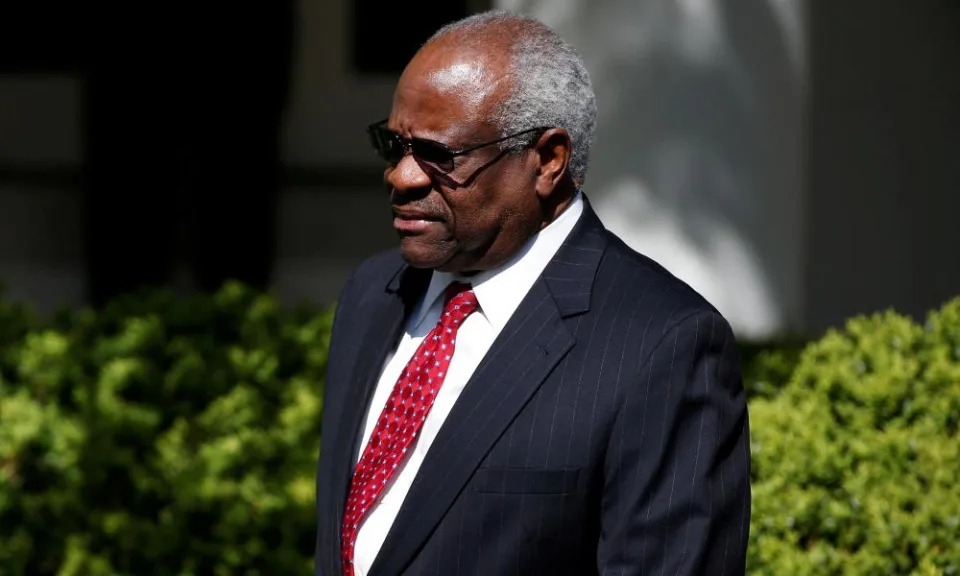
<span>Photograph: Joshua Roberts/Reuters</span>
Photograph: Joshua Roberts/Reuters

Several lawyers who have had business before the supreme court, including one who successfully argued to end race-conscious admissions at universities, paid money to a top aide to Justice Clarence Thomas, according to the aide’s Venmo transactions. The payments appear to have been made in connection to Thomas’s 2019 Christmas party.

The payments to Rajan Vasisht, who served as Thomas’s aide from July 2019 to July 2021, seem to underscore the close ties between Thomas, who is embroiled in ethics scandals following a series of revelations about his relationship with a wealthy billionaire donor, and certain senior Washington lawyers who argue cases and have other business in front of the justice.

Vasisht’s Venmo account – which was public prior to requesting comment for this article and is no longer – show that he received seven payments in November and December 2019 from lawyers who previously served as Thomas legal clerks. The amount of the payments is not disclosed, but the purpose of each payment is listed as either “Christmas party”, “Thomas Christmas Party”, “CT Christmas Party” or “CT Xmas party”, in an apparent reference to the justice’s initials.

However, it remains unclear what the funds were for.

The lawyers who made the Venmo transactions were: Patrick Strawbridge, a partner at Consovoy McCarthy who recently successfully argued that affirmative action violated the US constitution; Kate Todd, who served as White House deputy counsel under Donald Trump at the time of the payment and is now a managing party of Ellis George Cipollone’s law office; Elbert Lin, the former solicitor general of West Virginia who played a key role in a supreme court case that limited the Environmental Protection Agency’s ability to regulate greenhouse gas emissions; and Brian Schmalzbach, a partner at McGuire Woods who has argued multiple cases before the supreme court.

Other lawyers who made payments include Manuel Valle, a graduate of Hillsdale College and the University of Chicago Law School who clerked for Thomas last year and is currently working as a managing associate at Sidley, and Liam Hardy, who was working at the Department of Justice’s office of legal counsel at the time the payment was made and now serves as an appeals court judge for the armed forces.

Will Consovoy, who died earlier this year, also made a payment. Consovoy clerked for Thomas during the 2008-09 term and was considered a rising star in conservative legal circles. After his death, the New York Times reported that Consovoy had come away from his time working for Thomas “with the conviction that the court was poised to tilt further to the right – and that constitutional rulings that had once been considered out of reach by conservatives, on issues like voting rights, abortion and affirmative action, would suddenly be within grasp”.

None of the lawyers who made payments responded to emailed questions from the Guardian.

According to his résumé, Vasisht’s duties included assisting the justice with the administrative functioning of his chambers, including personal correspondence and his personal and office schedule.

Vasisht did not respond to an emailed list of questions from the Guardian, including questions about who solicited the payments, how much individuals paid, and what the purpose of the payments was. The Guardian also asked questions about the nature of Thomas’s Christmas party, how many guests were invited and where the event took place.

Reached via WhatsApp and asked if he would make a statement, Vasisht replied: “No thank you, I do not want to be contacted.”

Legal experts said the payments to Vasisht raised red flags.

Richard Painter, who served as the chief White House ethics lawyer in the George W Bush administration and has been a vocal critic of the role of dark money in politics, said it was “not appropriate” for former Thomas law clerks who were established in private practice to – in effect – send money to the supreme court via Venmo.

“There is no excuse for it. Thomas could invite them to his Christmas party and he could attend Christmas parties, as long as they are not discussing any cases. His Christmas party should not be paid for by lawyers,” Painter said. “A federal government employee collecting money from lawyers for any reason … I don’t see how that works.”

Painter said he would possibly make an exception if recent law clerks were paying their own way for a party. But almost all of the lawyers who made the payments are senior litigators at big law firms.

Kedric Payne, the general counsel and senior director of ethics at the Campaign Legal Center, said that – based on available information – it was possible that the former clerks were paying their own party expenses, and not expenses for Thomas, which he believed was different than random lawyers in effect paying admission to an exclusive event to influence the judge.

He added: “But the point remains that the public is owed an explanation so they don’t have to speculate.”

Thomas has been embroiled in ethics scandals for weeks following bombshell revelations by ProPublica, the investigative outlet which published new revelations about how the billionaire conservative donor Harlan Crow has paid for lavish holidays for the justice, bought Thomas’s mother’s home, and paid for the judge’s great-nephew’s private school education. The stories have prompted an outcry on Capitol Hill, where Democrats have called for the passage of new ethics rules.

Thomas is known for having close relationships with his former clerks. A 2019 article in the Atlantic noted that the rightwing justice has a “vast network” of former clerks and mentees who are now serving as federal judges and served in senior positions throughout the Trump administration. The large presence of former Thomas clerks, the Atlantic noted, meant that the “notoriously silent justice may end up with an outsize voice in the legal system for years to come”.

Thomas’s chamber did not respond to a request for comment.

Got a tip on this story? Please contact Stephanie.Kirchgaessner@theguardian.com

Harvard study: Why a record number of Americans are struggling to pay rent

Yahoo! Finance

Harvard study: Why a record number of Americans are struggling to pay rent

Rebecca Chen – Reporter – July 11, 2023

A record number of American renters are spending at least one-third of their income on rents, according to The State of the Nation’s Housing 2023, published by Harvard’s Joint Center for Housing Studies.

A total of 21.6 million households now spend more than 30% of pre-tax income on rent. Some households are even paying even up to 50% of earnings on apartments, per Harvard’s research. Housing experts often suggest tenants spend less than 30% of their income on rent.

“Housing costs remain well above pre-pandemic levels thanks to the substantial increases over the last few years,” Daniel McCue, senior research associate at the Joint Center, said in the 2023 report.

Why? In large part due to the growth of so-called “luxury” buildings that have replaced less expensive options. In the last two decades, the share of construction for high-priced apartments — known as Class A — grew faster than more affordable ones. In fact, over half (51%) of 2022 rental construction projects were luxury apartments, according to Moody’s Analytics data. Also, only 34% of the market consisted of high-cost rental units back in 2000; that number was 51% in Q1 2023, per Moody’s.

“The challenge is that the new supply… tends to be at the very top of the price spectrum,” said Carl Whitaker, director of research and analysis at RealPage.

Luxury home expansion has also been a growing trend in the last two decades. Only 34% of the market was high-cost homes back in 2000, but that number grew yearly to 51% as of Q1 2023.
Apartments are seen undergoing construction on February 28, 2023 in Austin, Texas. (Photo by Brandon Bell/Getty Images)

“If rent grows faster than your income every year, and your health care expenses grow faster than your income every year…that squeeze just makes it very difficult in normal life,” Katherine McKay, associate director at the Aspen Institute Financial Security Program, told Yahoo Finance.

Lack of choices

Historically low rental vacancies in recent years also reflect the lack of affordable options for households. Although the vacancy rate climbed to 6.4% at the beginning of 2023 — a welcome increase from the four-decade low of 5.2% in late 2021 — it is still far from a healthy rate of around 7% to 8%.

“What is often looked for is a level of vacancy that supports a renter’s ability to move and to have at least some pricing power,” Lu Chen, Moody’s Analytics senior economist, wrote in an email. “In theory, this would allow rent increases to remain marginally above the general rate of price increases in the economy.”

But “we expect the national average vacancy to linger around 5% until 2025,” Chen said. That number could be more bleak for lower-income households — the rate for lower-cost housing remains at a depressed level of 4.7%.

Vacancy rate climbed to 6.4% at the beginning of 2023 - a welcomed increase from the four-decade low of 5.2% in late 2021
Buddy, can you spare a studio? A ‘no vacancy’ sign for rentals is displayed outside an apartment building on September 22, 2022, in Los Angeles, California. (Photo by Allison Dinner/Getty Images)

“What [also] has happened in many places is that renters who might buy homes can’t buy homes, so they stay in their class A buildings, and then renters who want to live in Class A buildings can’t find spots, so they move a tier down,” McKay said. “It trickles down every income group having a greater competition for fewer new units that meet their needs.”

Apartments equipped with the latest and best amenities like heated pools and gyms are known as Class A buildings. Class A buildings then retire to become class B in 10-15 years, which then devolve into class C in another 5-10 years. Rents drop as buildings downgrade from A to B to C. But in the last decade, not enough buildings were built, which means not enough apartments progressed to the lower tiers.

The fancy boom

As Class A buildings saturate the rental market, the share for older and less expensive apartments, categorized as Class B and C, has shrunk dramatically. In the last two decades, those types of units fell to 49% in Q1 2023 from 66% in 2001, according to Moody’s.

The apartments equipped with the latest and best amenities that get premium rents are known as Class A buildings.
Live it up: Apartments equipped with the latest and best amenities that get premium rents are known as Class A buildings. (Getty Images)

But that might not change anytime soon because, many times, fancy apartments are the only profitable option for developers. The majority of construction costs go into purchasing land, building materials, and building permits. Adding nice finishes doesn’t drive costs at a high level but could demand more rent revenue.

“The thorny part is that for the middle-income renters,” McKay said. “The best option for them is class B where it is not super expensive but also not where then the quality might be a problem, the sweet spot. But there just isn’t enough, because we didn’t build enough for such a long time.”

The future? Not too cheery.

“Number of households continued to grow at around 1% annually,” Moody’s Chen said. “The rapid household formation requires inventory growth to keep up the pace. Further, while the population is aging, there is a large swath of Gen Z (the oldest are 24) and 25- to 40-year-old millennials that are ready to enter the rental market.”

Rebecca Chen is a reporter for Yahoo Finance and previously worked as an investment tax certified public accountant (CPA).

Sad Day for Golf and for Sports Integrity: Golf in shock at Saudi plan to hand Tiger Woods and Rory McIlroy LIV teams

The Telegraph

Golf in shock at Saudi plan to hand Tiger Woods and Rory McIlroy LIV teams

James Corrigan – July 11, 2023

Tiger Woods and Rory McIlroy at the 2023 Masters
During one phase of the peace proposals Tiger Woods and Rory McIlroy were to be offered ownership of LIV teams – Christian Petersen/Getty Images

Plans to hand Rory McIlroy and Tiger Woods their own LIV Golf franchises have been revealed as part of the initial discussions in the merger between the PGA and DP World Tours and the Saudi sovereign wealth fund.

In surreal scenes on Capitol Hill on Tuesday – that featured representatives of 9/11 victim groups sat behind PGA Tour executives as they were grilled in a Senate hearing – it also emerged that the Tour asked for Greg Norman to be sacked as LIV Golf chief executive after the framework agreement was completed.

As well as this ouster, there were bizarre proposals from the Public Investment Fund for Yasir Al-Rumayyan – the PIF governor who is chairman of Newcastle United as well as LIV – to be granted membership of Augusta National and the R&A.

It must be stressed that these were all merely suggestions proffered in the build-up to last month’s hastily-announced alliance that shook the sport to its core following two years of bitter infighting between the revel circuit and the traditional powers.

PGA Tour chief operating officer Ron Price, left, and PGA Tour board member Jimmy Dunne are sworn in
The PGA Tour’s Ron Price and Jimmy Dunne were sworn in before the Senate committee – AP Photo/Patrick Semansky

The PGA Tour told Telegraph Sport that it summarily rejected the McIlroy-Woods idea and refused to assist in Al-Rumayyan joining perhaps the two most august clubs in the game.

Yet at the very least the 276-page trove of documents released by the Senate sub-committee on Tuesday, highlight the extraordinary levels of horse-trading that could take place as the parties attempt to reach a solution that unifies the game and, just as pertinently, satisfies each of the two sides in terms of finance and power.

The proposals from Amanda Staveley – the English financier who oversaw PIF’s purchase of Newcastle – inevitably command the headlines, despite PGA Tour executive Jimmy Dunne’s admission to the politicians that “if LIV takes five players a year for five years, they can gut us”. Goodness knows what McIlroy and Woods will make of Staveley’s “Best of both worlds” presentation which was made in the first phase of the peace talks in late April.

It featured several bullet points, the first of which stated that Woods and McIlroy should have their own LIV teams and play “in at least 10 LIV events’’. Even if he agreed, the chances of Woods playing in that many LIV tournaments after a car crash two years ago that almost saw him lose his right leg are negligible to the point of being impossible.

It will be interesting to see if Woods was told anything about being named in the early negotiations, because a few weeks ago, he claims to have been completely in the dark about intentions that came to light of the Tour having him railing against LIV to his fellow pros in the midst of the civil war.

The same applies to McIlroy. The Northern Irishman was the most vocal opponent of LIV and expressed his anger at being used as “a sacrificial lamb” by the Tour after Sawgrass HQ’s remarkable about-turn. He was in a dark mood after discovering – at the same time as everyone else – about the amalgamation and reiterated that he still detested the breakaway league.

I still hate LIV – hate it,” he said.  “I hope it goes away”. McIlroy refused to play in Saudi Arabia when it became a venue on the DP World Tour, citing concerns about “the source” and although his attitude has since softened – “if they are going to invest money in golf it is better than it is on the PGA Tour” – it must be highly doubtful that, after he has said, that he would ever play under the LIv brand. Norman or no Norman.

The Australian’s future at the LIV helm was under speculation months before the merger was unveiled, with both McIlroy and Woods insisting that he had to leave the role before peace could break out.

It was known that Jay Monahan, the PGA Tour commissioner, wanted him out after so many criticisms and his desire is laid bare in emails between him and his negotiators. In a side letter to the agreement, the firing of Norman was billed as a necessity, although the PGA Tour revealed on Tuesday that it was never signed. Norman remains in the job. For now.

Whether he can trust his paymasters, however, is a moot point, regardless of  the chairman’s attendance at both the LIV events in the Costa del Sol and in Hertfordshire over the last two weeks. At Valderrama and the Centurion Club, Al-Rumayyan assured LIV players and staff that the league will continue, despite the fact the framework agreement states that Monahan will have the right to terminate the circuit if an agreement is finalised.

In the event of an ultimate deal, Staveley is seemingly determined to make sure that as well as being chairman of the new company, Al-Rumayyan is also installed as the president of the International Golf Federation and is welcomed as a member at Augusta and the Royal and Ancient. This proposal was also in her presentation, though she actually asked for him to be a member of the R&A, which is not a club.

An R&A insider revealed “this is the first we’ve heard of this”. On another jaw-dropping day in the LIV saga, uncertainty still reigns supreme.

‘It’s brutal’: As premiums continue to soar, another home insurer is leaving Florida

Miami Herald

‘It’s brutal’: As premiums continue to soar, another home insurer is leaving Florida

Alex Harris, Lawrence Mower – July 11, 2023

Pedro Portal/pportal@miamiherald.com

Another insurer is leaving Florida, where homeowners are paying more than ever for insurance, despite the state’s attempt to shore up the wobbling market.

Tuesday, Farmers Insurance informed the state it was dropping home, auto and umbrella policies across Florida, potentially affecting tens of thousands of people. It’s the fourth company to leave the Florida market in the last year — most citing rising risks from hurricanes. Farmers, a large company with a national presence, also has reduced new business in California, citing extreme weather and wild fire threats.

“This business decision was necessary to effectively manage risk exposure,” the company wrote in a statement.

Farmers said the decision to withdraw affects about 30% of its overall policies around the state, but not ones issued through its subsidiary companies. Those — including auto insurer Bristol West and home insurer Foremost — are unaffected.

The company declined to speak on the record about how many people would lose coverage. Figures from Florida’s Office of Insurance Regulation show that Farmers has about 93,000 current home and auto policies, but an industry source suggests that number is currently closer to 100,000.

The day before Farmers made the decision public, Florida’s Chief Financial Officer Jimmy Patronis tweeted that his office has “zero communication” with the company and vowed to “explore every avenue possible for holding them accountable” for leaving Florida.

Florida’s Office of Insurance Regulation said in a statement that the office was reviewing Farmers’ notice, which was sent to the office on Monday and marked a “trade secret,” limiting what regulators could say about it.

Under state law, insurers are required to give 120 days’ notice to customers before their policies are dropped. Customers who receive a notice are encouraged to contact their agent immediately to find alternative coverage, the office said in a statement.

Later Tuesday, the office also formally chastised Farmers for not giving the office a heads-up before deciding to pull out of the state. In a letter, Florida Insurance Commissioner Michael Yaworksy also noted that Farmers made the decision to leave Florida “independently” of the state’s insurance reforms.

“We are disappointed by the hastiness in this decision and troubled by how this decision may have cascading impacts to policyholders,” Yaworsky wrote. “Farmers has noted this decision only impacts about 26.6% percent of their Florida policyholders, but any impact which impacts policyholders should not be taken lightly.”

Leaving despite reforms

Tuesday’s announcement follows a mid-June decision from Farmers to stop writing new policies in Florida due to the skyrocketing costs of hurricane recovery and rebuilding.

“With catastrophe costs at historically high levels and reconstruction costs continuing to climb, we implemented a pause on writing new homeowners policies to more effectively manage our risk exposure,” Farmers said in a statement.

Notably, Farmers did not mention lawsuits, which has been the main culprit Florida insurers point to when asked why costs are rising so fast. However, financial autopsies of failed insurers in Florida regularly point to excessive payouts, high salaries and fees to affiliated companies as the main problem that leads to bankruptcy.

Florida program has $10,000 for you if you’re hardening your home against hurricanes

The decision by Farmers follows years of turmoil in the state’s property insurance market, triggered by a series of hurricanes starting in 2017. Floridians pay the highest property insurance premiums in the nation, and 13 companies have gone insolvent in recent years. Many others have stopped writing new policies or pulled out of Florida.

Gov. Ron DeSantis and state lawmakers have responded by making it harder to sue insurance companies and assigning $3 billion to help them withstand storm seasons. A report by the state’s Office of Insurance Regulation released last week indicated that the industry broke even during the first quarter of 2023, after years of heavy losses.

But the legislation has failed to reduce premiums for homeowners. Premiums continue to go up, according to the office’s report. Between November and March, rates increased 5% in Miami-Dade County, to an average of $5,665.

But the rate increases were higher in Hillsborough and Pinellas counties, rising 9.5% and 9.25%, respectively. Homeowners in Hillsborough County are paying an average of $2,752 and $3,210 in Pinellas County.

‘Premiums are through the roof’

Floridians top the nation in insurance costs, said Mark Friedlander, corporate communications director for the industry-funded Insurance Information Institute.

Friedlander said the average premium in Florida is 42% higher than last year’s and miles ahead of the average premium nationwide — $1,700.

“It’s brutal, said Vince Perri, head of Key Biscayne-based public adjuster firm Elite Resolutions. “The premiums are through the roof. It’s always been high here but it’s worse now.”

Perri, who’s been in the business for more than a decade, said he sees the back-to-back storms in recent years as a major factor in rising prices. Hurricane Ian last year was Florida’s most expensive storm, causing more than $109 billion in damages across the state.

If Florida can scrape by a few more years without a hurricane landfall, Perri said, he believes insurance costs will start to go down again.

“It’s going to take a couple of years for the market to level out again,” he said. “I think insurance premiums are going to be high for awhile.”

Mike Lindell’s extreme MAGA agenda flattens pillows. MyPillow auctions equipment after retailers pull its products

Star Tribune (Minneapolis)

MyPillow auctions equipment after retailers pull its products

Briana Bierschbach and Brooks Johnson – July 10, 2023

Glen Stubbe, Star Tribune file/Star Tribune/TNS

MyPillow is auctioning off hundreds of pieces of equipment and subleasing manufacturing space after several shopping networks and major retailers took the company’s products off shelves.

The Chaska-based manufacturer recently listed more than 850 “surplus equipment” items on the online auction site K-Bid. Sewing machines, industrial fabric spreaders, forklifts and even desks and chairs are up for auction.

Founder and CEO Mike Lindell said MyPillow has experienced a loss in revenue and the items are no longer needed as the company consolidates its operations.

Major retailers such as Walmart, Bed Bath & Beyond and Slumberland Furniture all said they will no longer sell MyPillow products as Lindell continues to falsely claim that the 2020 election was stolen from former President Donald Trump.

“It was a massive, massive cancellation,” Lindell said in a phone interview Monday. “We lost $100 million from attacks by the box stores, the shopping networks, the shopping channels, all of them did cancel culture on us.”

The auction does not appear related to the $1.3 billion defamation lawsuit targeting both Lindell and MyPillow, which is ongoing in federal court.

Dominion Voting Systems alleges Lindell defamed the company as part of his campaign to paint the 2020 presidential election as “rigged.” Dominion makes voting machines and election software.

Lindell has not backed down from his assertions that there was something wrong with the 2020 election and its results. He said he plans to host an event next month detailing a new way to hold elections.

But the ongoing controversy over his claims has forced major shifts in his business. After some shopping networks dropped his products, the company has moved to direct sales, shooting new television commercials and trying to boost its presence through email marketing, radio spots and direct mailing.

Lindell said the company is subleasing some of its manufacturing space in Shakopee because the packaging for direct sales is different than what they needed when working with big retailers.

“We kind of needed a building and a half, but now with these moves we’re making, we can get it down to our one building,” he said.

“If the box stores ever came back we could have it if we needed it, but we don’t need that,” he added. “It affected a lot of things when you lose that big of a chunk [of revenue].”

The same is true for the equipment he’s auctioning off. He said he will need to replace whatever he auctions off if the retailers “ever came back.”

There were several months after MyPillow was dropped by retailers when there was “hardly anything” for some workers to do, Lindell said. He shifted employees to work for MyStore, an online marketplace he created. Others moved over to his addiction resource organization, the Lindell Recovery Network.

Most hardware stores, such as Menards, Fleet Farm and Ace, continue to carry MyPillow products, he said. He hasn’t had to lay off any employees yet, but some may have left the company after being reassigned new roles, Lindell said.

When asked if the matter of the pending lawsuits has added to the challenges in his business, Lindell said “of course it has.”

In April, an arbitration panel ruled that Lindell needed to pay $5 million to a software forensics expert who disproved several of his election claims in a “Prove Mike Wrong” contest. Lindell has challenged that ruling, calling it “frivolous.”

“The $5 million is the lowest one,” he said. “I will be vindicated in every single one.”

The Future of the “Great Resignation”

The Atlantic Daily

The Future of the “Great Resignation”

The latest jobs data suggest that workers may be losing some of the leverage they gained during the pandemic.

By Lora Kelley – July 10, 2023 

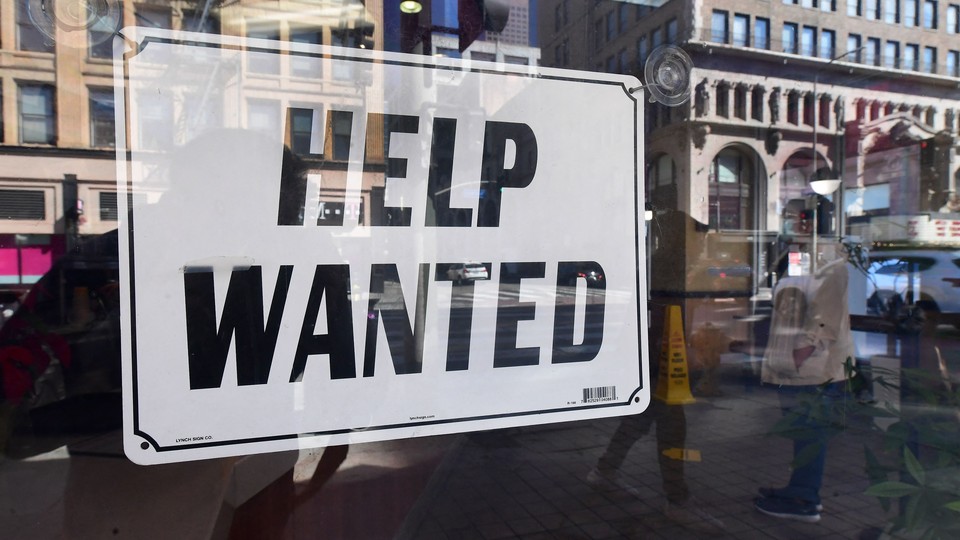
A "Help Wanted" sign
Frederic J. Brown / AFP via Getty

The latest jobs data give a mixed picture of the economy—and raise questions about how America’s workers will fare.


Losing Ground?

In the spring of 2021, I traveled to Pennsylvania to attend a graduation. Driving around the area, I was struck by all the signs in diner and fast-food storefronts seeking workers. As I recall, the signs had a desperate tone, advertising bonuses and high wages to anyone willing to work. I was witnessing in real time a fascinating economic moment: Low-wage workers were in high demand, and that meant they were gaining leverage.

The signs I saw in Pennsylvania were emblematic of what was happening across the economy. Restaurants are a “microcosm” of the Great Resignation, the pattern that took off in 2021 in which workers quit their jobs to seek higher wages and better benefits‚ Nick Bunker, an economist at Indeed’s Hiring Lab, told me. That spring, as freshly vaccinated Americans went out to spend their stimulus checks, they frequented restaurants. Demand for services soared, and so in turn did the demand for service workers. Businesses had to compete for staff. And when workers saw that they could find better wages and conditions elsewhere, many quit their jobs in favor of new ones.

The latest jobs data suggest that workers might be losing some of this power. The economy added about 209,000 jobs in June, according to data from the Bureau of Labor Statistics released last week. It was the 30th consecutive month of job gains, but gains were at their lowest rate since the streak began. “The picture that emerged was a mixed one,” Julia Pollak, the chief economist at ZipRecruiter, told me. “Workers are still in the driver’s seat in many industries, other than tech, but they are losing leverage.” However, she added, the job market is “still more favorable to workers than before the pandemic.”

What’s happening in hospitality, a sector that includes restaurants and bars, tells us a lot about the job market more broadly. That was true in 2021, Bunker told me, and it’s still true now. Looking at the behavior of the hospitality sector in last week’s report, Bunker noted, we can see that “the labor market is moderating but still strong.”

As the job market softens somewhat, workers may be losing some of the leverage they gained when the market was tighter. As Ben Casselman reported in The New York Times last week, “The rate at which workers voluntarily quit their jobs has fallen sharply in recent months—though it edged up in May—and is only modestly above where it was before the pandemic disrupted the U.S. labor market.” When workers quit jobs, it reflects their confidence that they can find another, better job. Casselman reported that hourly earnings for hotel and restaurant workers rose 28 percent from the end of 2020 to the end of 2022, which was faster than the rates of both inflation and overall wage growth. But now, after surging in late 2021 and early 2022, growth for low-wage workers has slowed, and fewer workers in the hospitality industry are separating from their jobs now compared with the same period last year.

This slowing wage growth could be seen as a sign that workers are losing ground. But another possible reason that wage growth has slowed, Bunker explained, is that many workers’ base pay has gone up compared with a couple of years ago. Employers are “giving raises off a wage rate that has risen a lot since the spring of 2021,” Bunker said.

The Fed will be happy to see the job market cooling off, Bunker told me, so we might see fewer interest-rate hikes in the months to come: “Reduced competition for workers is going to reduce wage growth, which is—in the Fed’s view—going to put less pressure on employers to raise prices, so that should bring inflation down.” But after pausing their hikes last month, following 10 consecutive rate hikes, the Fed is still widely expected to raise rates at its meeting at the end of this month.

The monthly job-openings report tells us more about the recent past than it does about our current reality. The patterns we saw in last week’s numbers contain new information about a moment that’s already slightly dated. And they raise fresh questions about whether the Great Resignation is over. Bunker, for his part, riffed on Mark Twain, saying that in his opinion, “rumors of the Great Resignation’s demise are greatly exaggerated.” But, he added, in a few months, we may be able to say more definitively whether the heyday of the Great Resignation really is behind us.