Far-right Arizona legislators just got rolled on Prop. 400 vote. More of this, please
Laurie Roberts, Arizona Republic – July 31, 2023
Cars drive along Piestewa Freeway, Arizona State Route 51, near the Ministack, as seen from the pedestrian bridge near Oak Street in Phoenix on May 18, 2023.
By rolling right over the hardest of hard-right crowd that has called the shots all year long.
It was a refreshing bit of bipartisanship in a record-long session that featured precious little of it.
The result is a ballot proposition that will let Maricopa County voters decide whether to continue taxing themselves to fund the Valley’s regional transportation plan for the next 20 years. Recent polls show sizable support for the plan.
“This is great for the taxpayers,” Rep. David Cook, R-Globe, who chairs the House Transportation Committee. “It’s good for the citizens.”
Freedom Caucus crew couldn’t stomach a compromise
Far-right Republicans, meanwhile, were furious.
“Democrats are over-the-moon on this Prop. 400 bill,” Rep. Justin Heap, R-Mesa, tweeted just before the vote. “If we pass this it will be a massive win for Hobbs and the Democrats. We will be giving Democrats a club to bludgeon us with in 2024.”
“Way to end the session with a win for Hobbs and the Democrats,” one of them, Rep. Rachel Jones, R-Tucson, harrumphed right after the vote, while, no doubt, stomping her foot.
You’ll have to excuse Heap, Jones and some of their fellow far righties for seeing this in politically opportunistic terms rather than in terms of what is best for Arizona.
With Republicans clinging to a one-vote majority in each chamber, the Arizona Freedom Caucus that seems to run the Legislature has taken a my-way-or-the-highway approach all year, never seeing any need to compromise.
Thankfully, the majority acted in Arizonans’ best interest
In the view of its members, a veto by Democratic Gov. Katie Hobbs (and she’s had a BUNCH of them) is simply another talking point in their favor with primary election voters – the only ones who matter in the vast majority of legislative districts – come election time.
Fortunately, many of the Legislature’s more traditional Republicans understood the necessity of compromise, especially on an issue so vital to the future growth and prosperity of the Valley and thus the state.
Not to mention to the future prospect of being stuck in horrendous traffic for hours on end if the tax isn’t extended before it expires in December 2025.
And so comes Senate Bill 1102, on Day 204 of this year’s 100-day legislative session.
Both sides scored wins on their priorities on Prop. 400 spending
The $20 billion tax extension, if approved by voters next year, calls for spending 63% of the proceeds on freeways and roads and 37% on transit over the next 20 years.
Among other things, it significantly boosts the amount spent on pavement, kills any future extension of light rail and dictates that “road diets” are a distinct no-no – all Republican priorities.
It also preserves a hefty percentage of the tax for public transit, a priority of Democrats.
And it allows for maintaining the existing light rail system, which should be a priority for everybody given that we spent billions to build the thing.
Overall, Monday’s passage was a welcome exercise in give-and-take by warring politicians who have spent most of the year at each other’s throats. Credit goes to both Republican legislative leaders and Hobbs for finally getting it done.
But the vote also spoke loudly and clearly about those hard right Republicans who spent much of the weekend and all of Monday pitching a fit.
Far-right obstructionists rendered irrelevant when it counted
“Never forget that the democrat goal is to remove private vehicles from the average person completely,” an overwrought Rep. Jacqueline Parker, R-Mesa, tweeted. “It’s already starting. The latest rendition of prop 400 will help with that car-free goal.”
That’s nonsense. Even Senate President Warren Petersen, no slouch when it comes to conservative credentials, praised the plan as a Republican triumph.
“This will be the most conservative transportation plan in the history of Arizona ever passed, ever implemented, ever adopted,” the Gilbert Republican said, ticking off the many concessions Republicans won.
The freedom folk are just mad that they were rendered irrelevant. In the end, seven Senate Republicans and 14 House Republicans voted no on the bill (along with one Democrat, who objected to the light rail cuts).
They wanted the ballot measure split into the two questions – one on freeways and one on public transportation.
They believed voters would have killed the transit portion of the tax given low ridership, thus resulting in a tax cut.
So because so few people – and certainly their own constituents – ride buses … we don’t need them?
We won’t need them in the future as the Valley’s continues to explode with newcomers? With new employers? With new job opportunities?
Yeah, that’s some forward thinking there.
SB 1102 passed 43-14 in the House and 19-7 in the Senate.
Senate Republicans who voted no: Shawnna Bolick of Phoenix, Jake Hoffman of Queen Creek, Anthony Kern of Glendale, J.D. Mesnard of Chandler, Wendy Rogers of Flagstaff and Justine Wadsack of Tucson.
Democrat Sally Ann Gonzales of Tucson also voted no.
House Republicans who voted no: Neal Carter of San Tan Valley, Joseph Chaplik of Scottsdale, Justin Heap of Mesa, Laurin Hendrix of Gilbert, Rachel Jones of Tucson, Alexander Kolodin of Scottsdale, David Marshall of Snowflake, Cory McGarr of Marana, Steve Montenegro of Goodyear, Barbara Parker of Mesa, Jacqueline Parker of Mesa, Michelle Pena of Yuma, Beverly Pingerelli of Peoria and Austin Smith of Wittman.
‘I’m not wanted’: Florida universities hit by brain drain as academics flee
Joseph Contreras – July 30, 2023
Photograph: The Washington Post/Getty Images
With the start of the 2023-24 academic year only six weeks away, senior officials at New College of Florida (NCF) made a startling announcement in mid-July: 36 of the small honors college’s approximately 100 full-time teaching positions were vacant. The provost, Bradley Thiessen, described the number of faculty openings as “ridiculously high”, and the disclosure was the latest evidence of a brain drain afflicting colleges and universities throughout the Sunshine state.
Governor Ron DeSantis opened 2023 with the appointment of six political allies to the college’s 13-member board of trustees who vowed to drastically alter the supposedly “woke”-friendly learning environment on its Sarasota campus. At its first meeting in late January, the revamped panel voted to fire the college president, Patricia Okker, without cause and appoint a former Republican state legislator and education commissioner in her place.
Over the ensuing weeks, board members have dismissed the college’s head librarian and director of diversity programs and denied tenure to five professors who had been recommended for approval.
In a statement given to 10 Tampa Bay about faculty vacancies that was issued earlier this month, NCF officials said that six of the openings were caused by staff resignations and one-quarter of the faculty member departures “followed the changes in the New College board of trustees”. One of those resignations was submitted by Liz Leininger, an associate professor of neurobiology who says she started looking for an exit strategy as soon as she learned about the DeSantis appointments in the first week of 2023.
The 40-year-old scientist joined the New College faculty in 2017, drawn by the opportunities of living near her ageing parents on Florida’s Gulf coast and working closely with undergraduates at a relatively small school where total student enrollment hovers around 700. But as the Republican-controlled Florida legislature passed a series of bills over the last two years that sought to curtail academic freedom and render a professor’s tenure subject to review at any time, Leininger witnessed first-hand the devastating effects of the new laws on her colleagues’ morale.
“All of the legislation surrounding higher education in Florida is chilling and terrifying,” said Leininger, who is rejoining the biology department at St Mary’s College in Maryland this fall where she had been teaching before moving to central Florida. “Imagine scientists who are studying climate change, imagine an executive branch that denies climate change – they could use these laws to intimidate or dismiss those scientists.”
The new laws have introduced a ban on the funding of diversity, equity and inclusion programs at Florida’s public colleges and universities, withdrawn a right to arbitration formerly guaranteed to faculty members who have been denied tenure or face dismissal, and prohibited the teaching of critical race theory, which contends that inherent racial bias pervades many laws and institutions in western society, among other changes.
In the face of that and other legislation backed by DeSantis and Republican lawmakers that has rolled back the rights of Florida’s LGBTQ+ community, many scholars across the state are taking early retirement, voting with their feet by accepting job offers outside Florida or simply throwing in the towel with a letter of resignation.
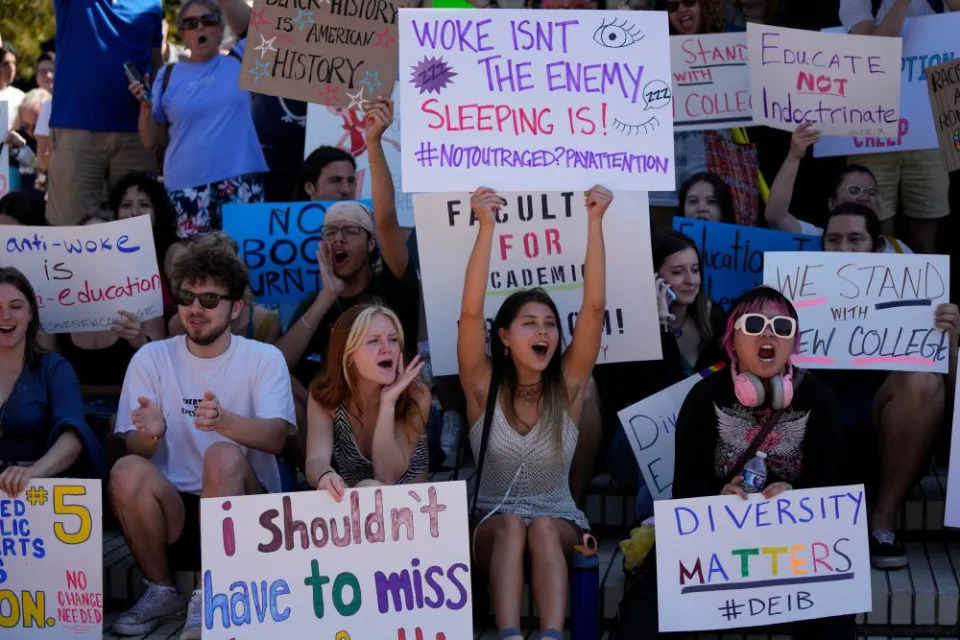
Students protest at New College of Florida, one of Ron DeSantis’s particular targets. Photograph: Rebecca Blackwell/AP
Hard figures for turnover rates will not be available until later this year, and none of the other 11 state-run universities are expected to match New College’s exceptionally high percentage of faculty vacancies.
A spokesperson for the office of State University System chancellor, Ray Rodrigues, issued a statement asserting that the “State University System of Florida has not received any concerns from our member institutions indicating turnover this year has been any higher than previous years. Turnover occurs every year.”
But Andrew Gothard, the state-level president of the United Faculty of Florida labor union, predicts a loss of between 20 and 30% of faculty members at some universities during the upcoming academic year in comparison with 2022-23, which would signify a marked increase in annual turnover rates that traditionally have stood at 10% or less.
James Pascoe moved to the Gainesville campus of the University of Florida in 2018, the same year that DeSantis was first elected governor. Three years later, the Dallas native started looking for jobs elsewhere when new disclosure requirements made it more difficult for Pascoe to apply for grants. An unsuccessful attempt by the DeSantis administration to prohibit three University of Florida colleagues from testifying as expert witnesses in a voting rights case raised more alarm bells in Pascoe’s mind.
Then came the passage of legislation in March 2022 that banned the discussion of gender identity and sexuality with elementary school students between kindergarten and the third grade. Pascoe and his male partner began to worry about their future eligibility for adopting children in an environment that was becoming increasingly hostile to gay couples in their judgment.
“It was becoming clear that the university was becoming politicized,” the 33-year-old assistant professor of mathematics said. “When I was waiting to hear back on job applications, they started passing all these vaguely anti-gay, anti-LGBTQ+ laws. The state didn’t seem to be a good place for us to live in any more.”
In the summer of 2022, Pascoe accepted a comparable position at Drexel University in Philadelphia. His partner followed suit by joining the biology department at Haverford College in a nearby suburb.
The prevailing political climate in Florida has complicated efforts to recruit qualified scholars from outside the state to fill some vacancies. Kenneth Nunn served on a number of appointment committees during the more than 30 years he spent on the faculty of the University of Florida’s law school. He said the task of persuading highly qualified applicants of color to move to Gainesville has never been more difficult under a governor who, earlier this year, prohibited a new advanced placement course in African American studies from being taught in high schools.
DeSantis came under renewed criticism this month when the state department of education issued guidelines recommending that middle school students be taught about the skills slaves acquired “for their personal benefit” during their lifetimes in bondage.
“Florida is toxic,” noted Nunn, one of the few Black members of the law school faculty who says he chose to retire last January in part because of the legislated ban on the teaching of critical race theory. “It has been many years since we last hired an entry-level African American faculty member. They’re just not interested in being in a place where something with the stature of critical race theory is being denigrated and attacked.”
The 65-year-old Nunn will be teaching law in the fall in Washington DC as a visiting professor at Howard University, one of the nation’s leading historically Black colleges and universities.
“I could have stayed in a place where I’m not wanted and tough it out,” he adds. “Or I could retire and look for work elsewhere.”
In the end, Nunn says, concerns about his professional career and even his own physical safety made that decision a relatively easy one.
Why Republicans can’t get out of their climate bind, even as extreme heat overwhelms the US
Analysis by Ella Nilsen, CNN – July 30, 2023
Deadly heatwaves are baking the US. Scientists just reported that July will be the hottest month on record. And now, after years of skepticism and denial in the GOP ranks, a small number of Republicans are urging their party to get proactive on the climate crisis.
But the GOP is stuck in a climate bind – and likely will be for the next four years, in large part because they’re still living in the shadow of former president and 2024 Republican frontrunner Donald Trump.
Even as more Republican politicians are joining the consensus that climate change is real and caused by humans, Trump’s inflammatory rhetoric has driven the party to the right on climate and extreme weather. Trump has called the extremely settled science of climate change a “hoax” and more recently suggested that the impacts of it “may affect us in 300 years.”
Scientists this week reported that this summer’s unrelenting heat wave would have been “virtually impossible” were it not for the planet-warming pollution from burning fossil fuels. They also confirmed that July will go down as the hottest month on record – and almost certainly that the planet’s temperature is hotter now than it has been in around 120,000 years.
Yet for being one of the most pressing issues of the 21st century, climate is rarely mentioned on the 2024 campaign trail.
“As Donald Trump is the near presumptive nominee of our party in 2024, it’s going to be very hard for a party to adopt a climate-sensitive policy,” Sen. Mitt Romney, a Republican from Utah, told CNN. “But Donald Trump’s not going to be around forever.”
When Republicans do weigh in on climate change – and what we should do about it – they tend to support the idea of capturing planet-warming pollution rather than cutting fossil fuels. But many are reticent to talk about how to solve the problem, and worry Trump is having a chilling effect on policies to combat climate within the party.
“We need to be talking about this,” Rep. John Curtis, a Republican from Utah and chair of the House’s Conservative Climate Caucus, told CNN. “And part of it for Republicans is when you don’t talk about it, you have no ideas at the table; all you’re doing is saying what you don’t like. We need to be saying what we like.”
Extreme weather changes GOP minds
With a few exceptions, Republicans largely are no longer the party of full-on climate change denial. But even as temperatures rise to deadly highs, the GOP is also not actively addressing it. There is still no “robust discussion about how to solve it” within the party, said former South Carolina Rep. Bob Inglis, who now runs the conservative climate group RepublicEn, save for criticism of Democrats’ clean-energy initiatives.
“The good news is Republicans are stopping arguing with thermometers,” Inglis told CNN. Still, he said, “when the experience is multiplied over and over of multiple days of three-digit temperatures in Arizona and record ocean temperatures, people start to say, ‘this is sort of goofy we’re not doing something about this.’”
Meanwhile, the impacts of a dramatically warming atmosphere are becoming more and more apparent each year. Romney and Curtis, two of the loudest climate voices in the party, both represent Utah – a state that’s no stranger to extreme heat and drought, which scientists say is being fueled by rising global temperatures.
“There are a number of states, like mine, that are concerned about wildfires and water,” Romney said, adding he believes Republican governors of impacted states have been vocal about these issues.
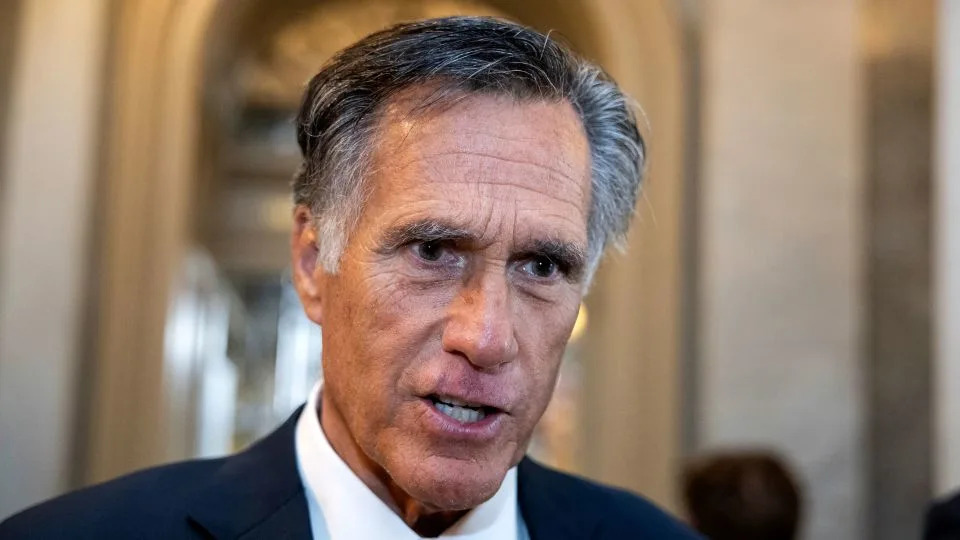
Sen. Mitt Romney is one of a handful of Republicans who wants the party to get proactive on climate solutions. – Francis Chung/POLITICO/AP
Utah and other Western states are looking for ways to cut water use to save the West’s shrinking two largest reservoirs, Lakes Powell and Mead. And even closer to home, Utah’s Great Salt Lake has already disappeared by two-thirds, and scientists are sounding alarms about a rapid continued decline that could kill delicate ecosystems and expose one of fastest-growing metropolitan areas in the nation to toxic dust.
“I think the evidence so far is that the West is getting drier and hotter,” Romney told CNN. “That means that we’re going to have more difficulty with our crops, we’re going to have a harder time keeping the rivers full of water. The Great Salt Lake is probably going to continue to shrink. And unfortunately, we’re going to see more catastrophic fires. If the trends continue, we need to act.”
An issue ‘held hostage’
While Republicans blast Democrats’ clean energy policies ahead of the 2024 elections, it’s less clear what the GOP itself would prefer to do about the climate crisis.
As Curtis tells it, there’s a lot that Republicans and Democrats in Congress agree on. They both want to further reform the permitting process for major energy projects, and they largely agree on the need for more renewable and nuclear energy.
As the head of the largest GOP climate caucus on the Hill, Curtis’ Utah home is “full solar,” he told CNN, and is heated using geothermal energy.
While at a recent event at a natural gas drilling site in Ohio, as smoke from Canada’s devastating wildfire season hung thick in the air, House Speaker Kevin McCarthy was asked how he would solve the climate crisis. He suggested planting a trillion trees to help offset the pollution created by burning fossil fuels – a bill House Republicans introduced in 2020. The measure has not yet passed the House and has an uncertain future in the Senate.
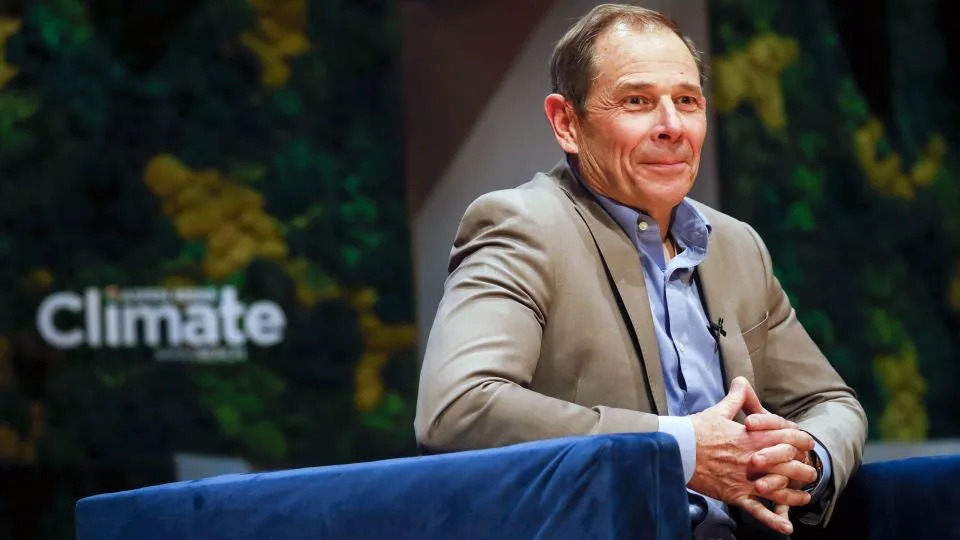
Rep. John Curtis, a Utah Republican, said his home is decked out in solar panels and geothermal energy. – Eva Marie Uzcategui/Bloomberg/Getty Images
But the biggest and most enduring difference between the two parties is that Republicans want fossil fuels – which are fueling climate change with their heat-trapping pollution – to be in the energy mix for years to come.
Democrats, meanwhile, have passed legislation to dramatically speed up the clean energy transition and prioritize the development of wind, solar and electrical transmission to get renewables sending electricity into homes faster.
On Wednesday, Senate Majority Leader Chuck Schumer of New York said Democrats want to pass more climate legislation if they take back a full majority in Congress. He later told CNN the GOP is “way behind” on climate and there’s been “too little” progress on the party’s stances.
“I think we’d get a lot more done with a Democratic House, a Democratic president and continuing to have a Democratic Senate,” Schumer told CNN. “Unfortunately, if you look at some of the Republican House and Senate Super PACs, huge amounts of money come from gas, oil and coal.”
Even though Curtis and Romney are aligned on the party needing to talk about climate change, they differ on how to fix it. While Curtis primarily supports carbon capture and increased research and development into new technologies, Romney is one of the few Republicans speaking in favor of a carbon tax – taxing companies for their pollution.
“It’s very unlikely that a price on carbon would be acceptable in the House of Representatives,” Romney said. “I think you might find a few Republican senators that would be supportive, but that’s not enough.”
The idea certainly doesn’t have the support of Trump, or other 2024 candidates for president, and experts predict climate policy will get little to no airtime during the upcoming presidential race.
“Regrettably, the issue of climate change is currently being held hostage to the culture wars in America,” Edward Maibach, a professor of climate communication at George Mason University and a co-founder of a nationwide climate polling project conducted with Yale University, told CNN in an email. “Donald Trump’s climate denial stance will have a chilling effect on the climate positions of his rivals on the right — even those who know better.”
Even if climate-conscious Republicans say Trump won’t be in the party forever, Inglis said even a few more years may not be enough time to counteract the rapid changes already happening.
“That’s still a long way away,” Inglis said. “The scientists are saying we can’t wait, get moving, get moving.”
Just what does home insurance cost in Florida? Estimates vary widely, and new state data might surprise you
Ron Hurtibise – July 30, 2023
Just what does the average Florida homeowner pay for property insurance? Good luck figuring that out based on wildly varying estimates quoted across the media.
About the only thing everyone agrees on is that the state’s insurance rates have been rising sharply. Insurers say they need higher premiums to offset mounting losses from hurricane claims, severe weather events, high rates of litigation, and resulting increases in the cost of reinsurance — insurance that insurers must buy to make sure they can pay all claims after a disaster.
Reforms enacted in 2022 to curtail costs from litigation are expected to eventually stabilize premium costs, but that hasn’t happened yet.
Meanwhile, online insurance aggregators publish estimates that are all over the map.
Policygenius says average Florida homeowners pay $2,442 for home insurance.
Bankrate says $1,981 — but that’s just to insure the dwelling and doesn’t include other vital elements like liability coverage, loss of use, or personal property.
Insurify crunched numbers from 10 Florida ZIP codes and estimated average homeowners are paying a whopping $7,788 this year.
For a report comparing insurance costs across the nation, USA Today estimated that Floridians pay an average of $2,389.
And Insurance Information Institute, an industry-funded nonprofit organization, estimated Florida’s average home insurance premium was $4,321 last October and $6,000 currently.
Which number is closest to what Florida homeowners are actually paying? It’s impossible to say because the estimates are calculated based on “proprietary methods,” said Mark Friedlander, corporate communications director for the Insurance Information Institute.
Insurance agents in South Florida say their clients are paying on the high side of the estimated range of average premiums.
Yet, recently released data by the Florida Office of Insurance Regulation include figures that some might find surprisingly low in comparison to the higher estimates.
The state’s most recent data comes from insurers themselves — sent to OIR each quarter under a law enacted in May 2022.
The data sent by insurers was used to create county-by-county estimates of premiums paid to insure single-family homes, Those estimates were included in the office’s twice-yearly Property Insurance Stability Report released in early July.
State data shows average rates are lower
The report found that on March 31:
Homeowners in 48 of Florida’s 67 counties paid estimated average premiums between $2,000 and $2,999. Averages were below $2,000 in four counties — Sumter, Marion, Baker and Hernando.
Average premiums were in the $3,000s in seven counties: Lee, Okeechobee, Escambia, Okaloosa, Gulf, Pinellas, and Indian River.
Residents of three counties — Walton, Franklin, and Collier — paid average premiums in the $4,000s.
And homeowners in the five southernmost counties — Martin, Palm Beach, Broward, Miami-Dade, and Monroe — paid average premiums of more than $5,000.
In fact, average premiums in Palm Beach, Broward and Miami-Dade exceeded $5,500 while homeowners in Monroe, which includes the Florida Keys, paid an average $7,584.
Premium amounts calculated by the Office of Insurance Regulation preceded rate hikes tied to higher reinsurance rates that insurers secured as hurricane season began on June 1. Renewal prices charged after companies secured their reinsurance rates will reflect the higher costs. That means the next six-month report will likely reflect significant rate increases.
Missing from the twice-yearly report is a statewide average premium.
The Sun Sentinel tallied data in a separate release by the office of company-level data that includes numbers of policyholders per coverage category and corresponding direct written premium totals. Direct written premiums are the total dollar amount of all premiums paid to the company by its policyholders. Dividing the number of policyholders into the direct written premium data reveals the average premium charged by the company.
Dividing the total number of policyholders into the total direct written premium total for all Florida-regulated insurance companies reveals Florida’s average homeowner insurance premium on March 31 was $3,134.
How many homeowners in Florida’s five southernmost counties would like to be paying that right now?
Probably all clients of Fort Lauderdale-based insurance agent Phil Portnoy, who works at Donna Carrara Insurance Agency.
“The average I’ve seen from private insurers is anywhere from $6,000 to $10,000 for, say, $350,000 in coverage,” Portnoy said last week. “I’ve seen renewals down in Pinecrest for as much as $17,000 for a million in coverage and as much as $27,000 for a Palm Beach County intracoastal renewal of $1 million in coverage.”
Al Mendez, partner in Mendez & Associates Insurance in Pembroke Pines, says his average policies range from $4,200 to $6,000 to insure homes in the tri-county region with replacement costs of $300,000 to $500,000.
Mendez calls the current state of the insurance market — with rate increases of 25% to 70% over each of the past three years — “the worst I’ve experienced” in 30 years in the industry.
Some of his clients have seen increases of 100% to 200%, he said. “Florida is now the most expensive state to live in,” he said.
South Florida insurance costs are higher
Mark Friedlander of the Insurance Information Institute said he stands by his organization’s estimates that statewide average premiums increased from $4,231 last fall to $6,000 this year as “verified as accurate by numerous third parties, including insurers and insurance agents.”
As Friedlander is a popular source of insurance information, the $6,000-a-year estimate has shown up in stories by numerous national publications about Florida’s insurance crisis.
Two weeks ago, Friedlander said, “a Barron’s reporter verified our premium data with numerous industry analysts and confirmed its accuracy.”
Insurify, Policygenius and USA Today each used insurance data from a single source — Quadrant Information Services — to produce different estimates.
Chase Gardner of Insurify, which calculated an average estimate of $7,788 for Florida, said the company developed its estimates by using average costs in 10 zip codes “representative of each state’s population distribution.” Zip codes with larger populations were weighted more heavily in calculating the average, he said, which may explain why his company’s estimates were so much higher that Insurify’s and Bankrate’s numbers.
“Even though we both collected Florida data from Quadrant Information Services, prices vary a lot depending on where you live in the state,” Gardner said. “For example, we found that average prices were closer to $2,000 to $3,000 per year or less in northern, inland parts of the state, whereas prices could skyrocket to more than $10,000 per year in southern coastal cities like Miami.”
Friedlander said that the Insurance Information Institute’s estimates looked only at private sector policies and excluded policies sold by the insurer of last resort, state-owned Citizens Property Insurance Corp.
Citizens insured 719,347 single-family homes for an average premium of $3,254 in the first quarter of 2023, the state data shows.
That’s high from a statewide perspective but low for South Florida.
In March 2022, Citizens produced a chart that showed its average premium in Broward, Palm Beach and Miami-Dade, where 52% of its policyholders are located, was $4,196 — 28% less than the $5,856 combined average of 13 competitors selected for the comparison.
Ultimately, the only home insurance cost estimates that matter are the ones offered to you to cover your home for the upcoming year. And at least for the near future, they’re continuing to increase, agents say.
Ron Hurtibise covers business and consumer issues for the South Florida Sun Sentinel.
Whitmer signs bills impacting Michigan teachers and potentially bringing more to the state
Clara Hendrickson, Detroit Free Press – July 26, 2023
Gov. Gretchen Whitmer signed a series of bills Wednesday that expand bargaining power for teachers’ unions, make it easier for out-of-state teachers and counselors to move to Michigan and eliminate a restriction on setting teacher pay that only applies to Detroit educators.
“This legislation will build on our efforts to recruit and retain the talented educators that provide Michigan students with a phenomenal education,” Whitmer said in a statement.
The bills aren’t the only changes to education policy the governor has made recently. Earlier this month, she overhauled the state’s education department, announcing the creation of a new one that will consolidate early childhood and higher education programs currently spread across multiple state agencies. Last week, she signed an education budget that will provide free breakfast and lunch to all PreK-12 public school students and expand eligibility to enroll in Michigan’s state-funded preschool program.
Here’s a look at the other changes the bills signed by Whitmer will bring to Michigan’s classrooms.
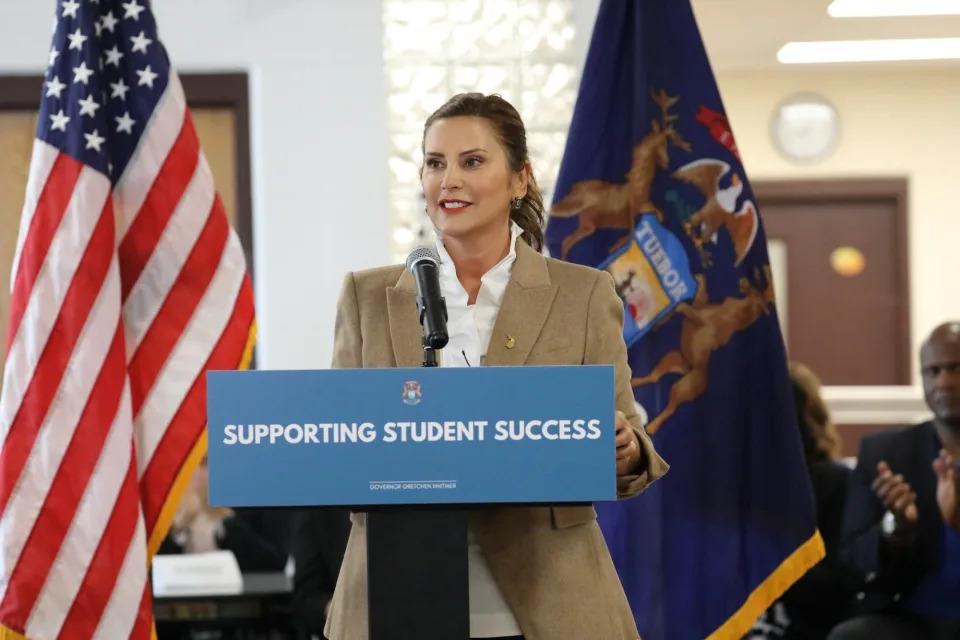
Gov. Gretchen Whitmer speaks at a bill signing ceremony in Suttons Bay on July 20, 2023 before signing the education budget.
Whitmer signed House Bill 4354, which eliminates restrictions on teacher’s unions from bargaining with public schools about performance evaluation systems and teacher placements. House Bill 4820 signed by Whitmer also changes how seniority is considered in public schools’ personnel decisions. Currently, length of service generally cannot be factored into those decisions.
Whitmer also signed House Bill 4044, which repeals a ban on public employers paying higher wages and providing more generous benefits after a collective bargaining agreement expires. And Whitmer approved House Bill 4233 which eliminates a prohibition against public school employers from using school resources to help unions collect dues or fees from public school employees. Bill sponsor state Rep. Jaime Churches, D-Wyandotte, touted the legislation for enabling teachers to automatically have their union dues withdrawn from their paychecks.
House Minority Leader Matt Hall, R-Richland Township, blasted the legislation. “As they hand out favors and power to their union boss allies, Michigan Democrats are continuing to undermine public education and put the needs of students last,” he said in a statement. With the exception of House Bill 4233 which garnered the support of one GOP lawmaker − state Sen. Ed McBroom, R-Waucedah Township − Republicans opposed the package bills.
Senate Bill 359 signed by Whitmer eliminates the requirement that compensation for Detroit teachers and administrators be determined primarily on the basis of job performance. Instead, it allows teacher and administrator pay to take into account the number of years spent on the job and advanced degrees held by Detroit Public Schools Community District employees.
The bill has its origins in a 2016 Republican effort aimed at addressing financial challenges facing Detroit’s public school system which created a different process for determining teacher and staff compensation from the rest of the state.
Bill sponsor state Sen. Stephanie Chang, D-Detroit, said in a June statement that the ban on considering longevity and advanced degrees to determine Detroit teachers’ compensation was an “unfair prohibition” that has caused teachers to leave the district.
Lure out-of-state teachers and counselors to Michigan
Finally, Whitmer signed Senate Bills 161 and 162 aimed at making it easier for school teachers and counselors to move to Michigan. The pair of bills reduce the barriers both out-of-state teachers and school counselors face to work in Michigan’s schools by easing the state’s teacher and school counselor certification requirements.
Sheryl Kennedy, the legislative liaison for the Michigan Department of Education, said about a quarter of Michigan teachers moved in from out of state and the bills could make Michigan a destination for educators. “Michigan’s kind of really becoming a place where teachers really want to go from other states,” she said during a hearing on the legislation.
A classroom sits empty at the Cesar Chavez Academy High School in Detroit last March after the pandemic hit.
Senate Bill 161 enables those with a teaching credential from a federally recognized Indian tribe or another country to apply to the state superintendent of public instruction to receive a teaching certificate without needing to take teacher certification exams in Michigan. The bill also eases the criteria for those eyeing a move from another state to Michigan to teach. For example, it allows those with a teaching certification from another state, federally recognized Indian tribe or country to be eligible for a Michigan professional education certificate if they have successfully taught for at least three years in their prior jurisdiction.
Senate Bill 162 creates similar pathways for out-of-state school counselors.
Nearly 28,000 Iowans have been disenrolled from Medicaid. Here’s why:
Michaela Ramm, Des Moines Register – July 26, 2023
Nearly 28,000 Iowans have been disenrolled from Medicaid this year as part of Iowa’s redetermination process — a consequence of continuous coverage no longer being guaranteed.
The latest data from the state’s Health and Human Services Department shows 27,744 Iowans were disenrolled from the safety net health insurance program since April, when Iowa began “unwinding” expanded eligibility.
About 30% of those Iowans — 8,401 — were disenrolled for procedural reasons, including failing to return paperwork.
The remaining 19,343 were deemed ineligible for further coverage, state data shows.
Since April, the state has been reviewing the eligibility of 900,000 Iowans who receive Medicaid and CHIP (the Children’s Health Insurance Program) benefits to determine if they still qualify under pre-pandemic regulations.
Federal health officials and other advocates have raised alarms about the number of people disenrolled for procedural reasons, which refers to those who did not return their paperwork or otherwise failed to complete the renewal process.
They say people may not be aware they’re up for renewal or recently changed addresses and didn’t receive the paperwork.
“What we’re seeing across the country from the first two months is that whilst people have done a lot to prepare, at the same time there are a lot of people losing their coverage,” said Dan Tsai, director of the Center for Medicaid and CHIP Services. “A really high number of folks are losing coverage for what we call procedural reasons.”
State officials managing the redetermination process, however, say the current rate of disenrollment, including procedural drop-offs, was expected. Iowa Medicaid Director Liz Matney said the department’s data show the majority of those kicked off the program have health insurance coverage elsewhere.
“It’s not surprising. If somebody gets renewal paperwork and they say they don’t need Medicaid anymore, why would they submit paperwork?” Matney told the Des Moines Register. “So when the team has been looking at the individuals who are disenrolled for any reason, but particularly for those who are disenrolled for not returning their paperwork, we can tell in our system who has other health insurance.”
That data has not been made publicly available on the state’s dashboard.
Still, officials with the Centers for Medicare and Medicaid Services have called on Iowa and other states to simplify the process. In addition to keeping individuals who qualify on Medicaid, states also need to connect low-income residents with other coverage options, Tsai said.
“We’re looking for states to also do everything in their power, way beyond what the federal minimums are, to try to make it easier for eligible people to keep their coverage,” Tsai told the Register. “If you’re not eligible for Medicaid, we want you on your employer-sponsored coverage. We want you on the ACA plans. We don’t want you uninsured, and that’s the bottom-line focus for us from a federal standpoint.”
Typically, Iowans on Medicaid undergo a redetermination process every year to check their eligibility to see whether they still qualify.
But as part of the federal government’s response to the coronavirus pandemic starting in March 2020, states were required to maintain coverage for individuals on Medicaid, even if they no longer qualified. In exchange, states received enhanced federal funding to manage the health insurance program.
In Iowa, more than 168,000 individuals maintained coverage during the three-year pause on Medicaid redeterminations, state data shows.
That requirement to maintain continuous coverage ended in March 2023, when federal officials ended the national public health emergency.
As a result, the state’s health and human services department is checking the eligibility of hundreds of thousands of Iowans on Medicaid and CHIP, a massive undertaking that must be completed by May of 2024. Matney said state employees are processing close to 70,000 new applications every month, a “huge increase” from the typical redetermination process pre-pandemic.
Early estimates showed about 136,000 Iowans would be disenrolled from Iowa Medicaid, the state’s $7 billion privatized program, by the end of the 12-month unwinding period.
The state agency has worked to automate as much as possible and has launched a public messaging campaign to spread the word to members to turn in their paperwork. The managed care organizations that administer Medicaid benefits also have engaged in direct outreach to members, including knocking on the doors of some members to help them fill out their application, Matney said.
How many Iowans have renewed their coverage?
As of June, 854,791 people were enrolled in Iowa Medicaid and CHIP. That’s 39,053 fewer than in April.https://flo.uri.sh/visualisation/14502335/embed
In the first three months of the “unwinding” process, 105,401 enrollees renewed their coverage under the Iowa Medicaid program, according to state data.
Of those, about half — 51,940 — were renewed on an “ex parte basis” or automatically renewed based on information the state has on the enrollee. The remaining 53,461 enrollees who renewed their coverage filled out and returned the redetermination paperwork sent by the state.
Federal officials call on states to do more. What is Iowa saying?
As the redetermination process continues for the next several months, Matney said she expects the number of individuals disenrolled, including for procedural reasons, will level off.
State officials had flagged enrollees who were likely ineligible for continued coverage, and frontloaded their reviews early in the redetermination process. As a result, Matney said, the rate of procedural dropoffs from April through July will be higher than the remaining months of the unwinding process.
Matney said enrollee data shows as much as 85% of individuals disenrolled from Medicaid have insurance elsewhere, such as an employer-sponsored plan. It also shows most of those who were disenrolled are adults.
The remaining portion is likely still eligible for Medicaid, which is why the state implemented a 90-day grace period to allow members to reapply for coverage, even if they missed the deadline, Matney said.
“If they get their paperwork in within that 90 days, we’ll backdate to the date that they last covered, so there’s no gap,” Matney said.
Members will most likely find out they no longer have Medicaid coverage when they pick up prescriptions. Matney said a possible solution could come in the form of partnerships with pharmacies, allowing those providers to complete presumptive eligibility determinations and help members get back on Medicaid quickly.
However, she said many states are finding pharmacies are not signing on to help with that work.
CMS has recently taken steps to address the number of Americans kicked off Medicaid coverage during this process, even pausing redetermination efforts in some states that have violated federal regulations, according to a press briefing from last week. Federal officials did not list the states involved.
Tsai said CMS officials are continuing to call on states, especially those with higher rates of procedural dropoffs, to utilize federal waivers offered by CMS for states’ redetermination efforts. These temporary policy changes are structured to help ease the process for members and ensure the nation’s uninsured rate doesn’t spike.
Among those waivers is extending postpartum coverage for Medicaid recipients to a year, a policy that has not been adopted in Iowa. Currently, the state provides members with 60 days of postpartum coverage.
“Under that, there definitely is more room for Iowa to be able to take up more of those,” Tsai said.
Matney said at this stage in the unwinding process, she doesn’t see any need to use additional policies offered by federal health officials to ease the process.
“We’ve gone through the list and really done the analysis of what we’re already doing versus what would be more administratively complicated,” Matney said. “The juice isn’t worth the squeeze in some such situations, and so right now, we’re still in the same spot. But we’ll be evaluating that, and if we feel additional waivers are important and necessary to help ease the process for ourselves and for Medicaid members and Iowans in general, we’ll certainly pursue that.”
Michaela Ramm covers health care for the Des Moines Register.
What frightens me about the climate crisis is we don’t know how bad things really are
Roger Harrabin – July 25, 2023
As the barrage of bad news from places like Greece continues, all we can be certain of is there are many surprises lying ahead.
‘What is the use of a net zero policy if it relies in part on planting trees that may crackle in wildfire?’ Firefighters tackle wildfires on the Greek island of Rhodes, 25 July 2023. Photograph: Graeme Robertson/The Guardian
Over the past few decades, climate scientists have made huge strides in understanding the future climate. But after recent weeks of extreme heat and devastating floods it’s clear that, although climate models have provided good information about overall rising temperatures, they can’t be sure what level of destruction each notch on the thermometer will bring.
Climate modelling is extremely complex, but its fundamentals rely on basic physics – X tonnes of emissions will bring Y increase in temperature, with some error bars. Supercomputers have been able to factor inshifts in land use that will change the reflectivity of the Earth’s surface. Improved temperature records helped verify their findings.
But lately,leading researchers have made a painful confession: even their most sophisticated models can’t yet foresee exactly how Earth systems will respond to those higher temperatures.
The influential Intergovernmental Panel on Climate Change (IPCC) says cranking up global temperature by half a degree will bring much more extreme weather, and it can be more often, more intense, or extended in duration – but exactly how much more, it can’t precisely say.
So, for instance, we’ve already had a global temperature rise of about 1.2C: that’s in line with IPCC projections. Yet the panel couldn’t warn us about the appalling heat dome that’s been searing North America. I can’t find heat domes mentioned in the bible of climate change, the IPCC report. This periodic report inevitably lags behind new science and – under pressure from some governments and industries, as well as a desire not to scaremonger – its pronouncements tend to be conservative.
The models also couldn’t warn us accurately about the emergence of the heat trapped deep in the ocean, which soaks up 90% of the world’s excess warmth. In the 35 years I covered the environment for the BBC, I recall speculation that the warmth could stay deep for decades, perhaps centuries – not that some of it would suddenly burst up to the surface off the coast of northern Britain.
Major uncertainties remain, too, over rainfall. Good information about the future of monsoon rain would be a godsend for farmers who rely upon it – not just in India but in southern China. Unfortunately, good information on precipitation is proving a bit tricky to find.
The macro models also failed to project the effect of current elevated temperatures on ice at both poles. The former IPCC chief, Prof Bob Watson, told me: “I am very concerned. None of the observed changes so far (with a 1.2C temperature rise) are surprising. But they are more severe than we predicted 20 years ago, and more severe than the predictions of five years ago. We probably underestimated the consequences.”
This is a massive admission. He added: “Scientists are only now starting to understand the response of large ice sheets in Greenland and Antarctica – and it is very disturbing.”
Prof Jane Francis, director of the British Antarctic Survey, told me a few months ago the latest science on ice melt was “truly scary”.
‘The US has considered itself less vulnerable. But tell that to people in Phoenix trapped under that heat dome.’ Photograph: Matt York/AP
Watson said at current rates the world would almost certainly exceed the agreed maximum temperature rise of 1.5-2C. We would be lucky to get away with 2.5C, he said. More likely, we’re heading towards 3C.
That number positively frightens many climate scientists. But, as India starts stockpiling rice with a temperature rise of 1.2C, what useful advice can scientists offer for a 3C world? Just how bad will things be by then?
Should holidaymakers avoid buying homes in Greece? China is vulnerable to extremes – how should its economy adapt? The US has considered itself less vulnerable. But tell that to New Yorkers choking on wildfire smoke, or people in Phoenix trapped under that heat dome.
While immediate harm to people grabs the headlines, what’seven more destructive could be the impact of heat and humidity on food production for an expanding population. A global shift towards a plant-based diet could halve the land and water used for agriculture – and halve the carbon emissions – but politicians fear angeringvoters by recommending a dietary shift.
Facing all this gloom means we need imagineers as well as climatologists. Watson said civilization will still exist in the future, but with much worse living conditions. But what sort of a degraded civilization might that be? By then we may even have triggered some natural tipping points that could result in a massive release of trapped methane in the tundra – let’s hope not.
What we do know is that so far, the effects of heating the climate are sooner and worse than many scientists projected (in public at least). This has policy implications. The world has agreed to cut emissions to net zero by 2050, but the UN secretary general, António Guterres, says rich countries should be aiming to squeeze the timetable to 2040. But what is the use of a net zero policy if it relies in part on planting trees that may shrivel in future drought or crackle in wildfire?
To make matters worse, climate heating is one thing on a list of huge environmental problems – including pollution of the air and water, destruction of wildlife habitats, overfishing, insect population declines, loss of birds, plastic pollution, nitrates, soil loss and more.
Watson says we don’t know how these phenomena will interact with each other, but he urges politicians to err on the side of caution, as the stakes are so very high. Every 0.1C warming matters, scientists say: 1.5C is better than 1.6C. That in turn is less bad than 1.7C.
As the barrage of bad news continues, all we can be certain of is that there are many climate surprises lying ahead of us. Governments, companies and individuals need to urgently squeeze down emissions to insulate ourselves as far as possible from what we may face.
Roger Harrabin is an energy and environment analyst and a former BBC correspondent
I hope you appreciated this article. Before you move on, I was hoping you would consider taking the step of supporting the Guardian’s journalism.
From Elon Musk to Rupert Murdoch, a small number of billionaire owners have a powerful hold on so much of the information that reaches the public about what’s happening in the world. The Guardian is different. We have no billionaire owner or shareholders to consider. Our journalism is produced to serve the public interest – not profit motives.
And we avoid the trap that befalls much US media – the tendency, born of a desire to please all sides, to engage in false equivalence in the name of neutrality. While fairness guides everything we do, we know there is a right and a wrong position in the fight against racism and for reproductive justice. When we report on issues like the climate crisis, we’re not afraid to name who is responsible. And as a global news organization, we’re able to provide a fresh, outsider perspective on US politics – one so often missing from the insular American media bubble.
Around the world, readers can access the Guardian’s paywall-free journalism because of our unique reader-supported model. That’s because of people like you. Our readers keep us independent, beholden to no outside influence and accessible to everyone – whether they can afford to pay for news, or not.
If you can, please consider supporting us just once from $1, or better yet, support us every month with a little more. Thank you.
How right-wing news powers the ‘gold IRA’ industry
Jeremy B. Merrill and Hanna Kozlowska – July 25, 2023
Dedicated viewers of Fox News are likely familiar with Lear Capital, a Los Angeles company that sells gold and silver coins. In recent years, the company’s ads have been a constant presence on Fox airwaves, warning viewers to protect their retirement savings from a looming “pension crisis” and “dollar collapse.”
One such ad caught the attention of Terry White, a disabled retiree from New York. In 2018, White invested $174,000 in the coins, according to a lawsuit by the New York attorney general – only to later learn that Lear charged a 33 percent commission.
Over several transactions, White, 70, lost nearly $80,000, putting an “enormous strain” on his finances, said his wife, Jeanne, who blames Fox for their predicament: “They’re negligent,” she said. A regretful White said he thought Fox “wouldn’t take a commercial like that unless it was legitimate.”
While the legitimacy of the gold retirement investment industry is the subject of numerous lawsuits – including allegations of fraud by federal and state regulators against Lear and other companies – its advertising has become a mainstay of right-wing media. The industry spends millions of dollars a year to reach viewers of Fox, Newsmax and other conservative outlets, according to a Washington Post analysis of ad data and financial records, as well as interviews with industry insiders. Former Fox News host Bill O’Reilly and former New York mayor Rudy Giuliani have promoted the coins, while ads for Lear’s competitors have appeared on a podcast hosted by Sen. Ted Cruz (R-Tex.) and Newsmax broadcasts of former president Donald Trump’s political rallies.
An analysis by The Post of political newsletters, social media, podcasts and a national database of television ads collected by the company AdImpact found that pitches to invest in gold coins are a daily presence in media that caters to a right-wing audience and often echo conservative talking points about looming economic and societal collapse. The Post found no similar ads for gold retirement investments in mainstream or left-wing media sources in the databases.
These so-called “gold IRA” companies are not publicly traded, so their revenue, profits and ad budgets largely cannot be determined. Court documents filed by Lear say the company has about $200 million in annual revenue; Dale Whitaker, the former chief financial officer at another company, Augusta Precious Metals, said overall industry revenue likely approaches $1 billion a year.
Over the past decade, more than 30 customers in 20 states have sued a dozen gold IRA companies, including Lear. Federal regulators have sued four companies – two in the past year alone – claiming investors were systematically charged as much as triple the coins’ value.
None of the cases have gone to trial; some are still pending. Of those that have been resolved, most have settled or been sent to arbitration, where outcomes are not made public. The companies have not admitted wrongdoing in any of the cases and say their customers have been adequately informed of the details of their purchases.
Joe Rotunda, enforcement director at the Texas State Securities Board, said the industry is extraordinarily difficult to police because selling gold, even as a retirement investment, is “extremely thinly regulated.”
Experts on commercial speech say Fox and other media outlets have no obligation to spurn advertising from gold IRA companies, despite the allegations. “Courts are very hesitant to impose liability on publishers,” said Harvard law professor Rebecca Tushnet, an expert in First Amendment and advertising law, who said the law is designed primarily to compel truthfulness by advertisers.
Tushnet added that “it might be reasonable, if you found out about the lawsuits, [to] contact the advertiser” and ask questions about the claims before running the ads. But if an advertiser blames their legal troubles on “the woke mob,” she said, “you’re often allowed to believe them.”
Fox News declined to comment. In a statement, Newsmax spokesman Bill Daddi said the network does not see allegations against the gold IRA companies as “a cause to block them from advertising.” Daddi compared them to some major financial firms that have been sued by customers or regulators, and whose ads continue to be accepted by mainstream outlets. For example, Wells Fargo paid $3 billion in 2020 to settle potential charges related to opening fake accounts in customers’ names.
In a statement, Lear Capital spokesperson Tracy Williams defended the company’s operations, saying most of Lear’s customers would have made a profit if they had sold at a recent market high. Williams said that White, the New York retiree, had acknowledged the company’s fee in a recorded call.
Last year, Lear settled New York’s 2021 lawsuit involving White without admitting wrongdoing. However, the company agreed to repay some customers and to disclose its fees more clearly. Lear now gives customers 24 hours to pull out of purchases, Williams said, putting the company at the “vanguard of disclosure … within its industry.”
Lear declined to say how much it spends to advertise on Fox News, but Williams said the network is not Lear’s primary source of customers. Nor is Lear likely to make up a significant share of Fox’s total ad revenue, which exceeds $1 billion a year, according to securities filings.
Fox is a logical place for Lear to advertise because “purchasing physical assets appeals to persons who have concerns regarding … topics often discussed on that platform,” Williams said. She added: “U.S. monetary policy is inseparable from U.S. political dynamics and themes.”
For years, gold IRA industry advertising has echoed accusations against Democratic politicians commonly found in news segments on conservative outlets. The ads tout the coins as a safe haven from economic uncertainty and social upheaval.
Most of the coins are manufactured by the Royal Canadian Mint, which says they’re bullion, a kind of coin whose value is determined by the underlying metal. As such, they meet IRS rules for retirement investments.
Unlike most bullion coins, however, the gold IRA industry’s coins are typically exclusive to the companies who sell them, usually with markups far higher than those charged by mainstream coin retailers, regulators and coin experts say. Alex Reeves, a spokesman for the Royal Canadian Mint, said the mint has no control “over sales practices further down the chain of distribution.”
“They are priced like collectibles, but collectible coins aren’t typically sold in bulk,” said Everett Millman, a precious metals specialist at coin dealer Gainesville Coins. “If a customer spent the same amount of money on products that are more standard, like [Canadian] Silver Maple Leafs, they would end up with a lot more ounces per dollar.”
With the exclusive coins, Millman said, “They’re simply torching money.”
“No one in their right mind would pay the premiums that these guys are charging,” added Ken Lewis, CEO of online coin dealer Apmex, who reviewed several customer invoices at The Post’s request.
The ads explain none of that. Instead, they focus on news events, such as a spate of recent bank failures and “everything that’s happening in the economy right now … with all the talk of inflation,” Rotunda said.
For example, an email ad for Augusta, sent to a Newsmax mailing list last July, warned that “The Biden administration’s economic policies are ‘declaring war’ on retirement savers.” In December, American Hartford Gold Group sent an email ad with the subject line: “Bill O’Reilly Warns: Retirement Funds at Risk From a Biden Recession.” The email is signed by O’Reilly, who did not respond to a request for comment.
Another ad for Hartford sent to the Newsmax mailing list in March warned of “Biden and Yellen’s Secret Plan to Steal your Hard-Earned Money and Bail Out Their Wall Street Buddies.”
Trump rallies are particularly big events for Hartford. On July 1, Newsmax aired a live broadcast of a Trump speech in Pickens, S.C., on a split screen with an ad for Hartford, which also sends “Trump Rally Special” email ads via Newsmax.
Since October 2020, email newsletters distributed by Newsmax have included more than 1,100 ads for gold IRA companies – nearly a quarter of all Newsmax email ads reviewed by The Post. At $1,000 to $5,000 each, according to Augusta financial records from 2016 reviewed by The Post, the ads likely generate more than $1 million a year in revenue.
Daddi, the Newsmax spokesman, said gold IRA companies represent “a small percentage of the total advertisers on Newsmax across all platforms.”
Some conservative figures offer explicit endorsements. Giuliani has called Hartford “the experts I trust most” on his podcast “Common Sense.” The “Verdict with Ted Cruz” podcast has featured ads for Hartford for at least a year, and a recent segment touted Augusta, urging listeners “to protect your dollars … with a gold IRA.” Neither Giuliani nor Cruz responded to requests for comment.
Two media dealmakers who have been involved in negotiations between conservative media figures and the gold IRA industry said revenue from the companies can amount to as much as 10 percent of total earnings for some personalities. The dealmakers spoke on the condition of anonymity to protect their business relationships; one said the biggest personalities stand to earn millions of dollars a year.
Hartford spokesman Steven Goldberg said it runs ads “where we believe it will create the most value.” Among the company’s chosen venues: a “prophetic” evangelical Christian email newsletter, two right-wing TV channels, and more than a dozen conservative radio shows and podcasts, including Giuliani’s and Cruz’s.
One of Hartford’s ads caught the attention of Ed DeSanto, 65, a semiretired Florida medical coder and an avid right-wing radio fan. He invested a $100,000 lump-sum payout from his pension in a Hartford IRA in 2019.
DeSanto said he doesn’t remember exactly where he heard the Hartford ad, but “if you listen to those radio shows, they play those commercials all the time.” He said he believed he was being careful: He picked Hartford because it scored well in a ranking of gold IRA companies he found online. (Such rankings often include disclosures noting that the authors are paid by the gold IRA companies.)
DeSanto’s $100,000 investment netted him just $53,000 worth of gold and silver, according to a Post analysis of his invoices – meaning the coins had been marked up 92 percent over the value of the metal. DeSanto blames himself.
“I did a little bit of research, but evidently not enough,” DeSanto said. “When I found the invoice, it was a big shock.”
In 2018 and 2019, another retiree, John Mathys of Illinois, claimed a Hartford salesman persuaded him to invest his $569,000 retirement savings by “bombarding him” with calls and emails for months, according to a federal lawsuit Mathys filed against Hartford in 2020. The lawsuit was sent to arbitration. Neither Mathys nor his lawyer responded to requests for comment.
Mathys, who was 83 at the time of the lawsuit, is one of three customers who sued Hartford in the past six years accusing the company of fraud. The other two lawsuits settled.
Hartford declined to comment on any of the cases. “We are fully transparent with our clients about the pricing of the products they purchase and the potential range of markup for those products,” Goldberg said in a statement, adding that the company operates “with a steadfast commitment to doing business legally and ethically.”
“We deny the allegation that we’ve misled or otherwise acted improperly,” Goldberg said.
In February and April, DeSanto sold back some of his gold coins to Hartford. Although gold prices had climbed an average of 32 percent since his 2019 purchase, he lost money on the sales, according to a Post analysis of his invoices.
The gold IRA industry’s ties to right-wing media date to the Great Recession, when the price of gold was rising rapidly and Fox commentator Glenn Beck was one of the most popular hosts on TV. Beck recorded ads for Goldline, a gold dealer that also offered IRAs, and interviewed its CEO on his show.
“We could be facing recession, depression or collapse. Nothing left!” Beck told viewers in 2009, urging them to rely on “God, Gold and Guns.” After segments promoting gold investments, Beck’s show would sometimes cut to commercials featuring gold sellers like Goldline, according to a 2010 congressional report.
The gold companies were loyal advertisers: After Beck claimed in 2009 that President Barack Obama was “racist” and had “a deep-seated hatred for White people or the White culture,” many big advertisers dropped his show. Gold sellers were among the few who stayed on, according to reporting at the time.
Goldline soon came under scrutiny, first in congressional hearings, then by Santa Monica, Calif., prosecutors, who charged the company with misdemeanor grand theft, elder theft and conspiracy in 2011. Though Goldline defended its business practices as fully transparent and never admitted wrongdoing, the company later agreed to pay up to $4.5 million to settle the charges.
Beck faded from prominence after departing Fox News in 2011 to start his own channel. He still endorses Goldline on the company’s website. Neither Beck nor Goldline executives responded to requests for comment.
The controversy sent Goldline employees scrambling for safer harbors. Some got jobs at Merit Financial, according to interviews and public records. Merit, whose offices were just a few blocks from Goldline’s in Santa Monica, also sold coins by phone and ran ads on Fox. (Merit’s former owner declined to comment publicly.)
In 2014, Santa Monica prosecutors accused Merit of “an aggressive, nationwide fraud scheme.” The company denied the allegations but went out of business and settled as the case approached trial.
Several Goldline and Merit salesmen then struck out on their own, founding many of the companies that exist today, according to staff lists and interviews with 21 current and former industry employees.
A former Merit salesman founded Augusta Precious Metals, which has been accused of defrauding its customers by Whitaker, its former CFO. Whitaker filed a whistleblower complaint to the Commodity Futures Trading Commission, which has not taken public action. Augusta has denied the allegations, and CEO Isaac Nuriani said in a statement that Whitaker “never had any visibility into Augusta’s business operations.”
Other former Goldline and Merit employees founded Metals.com, the founders said in depositions. That company recruited customers on Facebook, where it faked an endorsement from Fox News host Sean Hannity, a court filing by Georgia securities regulators alleged.
Facebook data reviewed by The Post shows that many Metals.com ads targeted people 59 or older. One 87-year-old customer received daily phone calls from a Metals.com broker who eventually flew to Alabama for a weekend to meet her, regulators alleged. She ultimately invested nearly $90,000, they said – most of which was lost.
The FBI raided Metals.com in 2020. A judge ordered the company shut down after 31 states and the CFTC filed suit, alleging a $185 million commodities fraud, as well as violations of rules about investment advice. Company founders have denied the allegations, saying their company “strived for transparency” and disclosed that it charged a premium. They have also said in court filings that they are under criminal investigation. Company executives did not respond to requests for comment submitted to their lawyer.
After Metals.com closed, some salesmen went to work at Safeguard Metals, according to one of the salesmen, who spoke on the condition of anonymity for fear of retaliation. In February 2022, the Securities and Exchange Commission, CFTC and 27 states sued that company, too. Safeguard recently settled the SEC’s case without admitting liability; the CFTC’s suit is still pending. Safeguard’s lawyers did not respond to a request for comment.
Lear Capital also hired several salesmen from Goldline’s ranks and bought Merit’s database of customers, according to court records and staff lists submitted to California regulators and obtained by The Post through public records requests. Williams, the Lear spokesperson, said “Merit’s liquidation was an opportunity to acquire a customer and prospect base to service and market to in the future” and that Lear performed background checks on everyone it hired.
Lear recently exited bankruptcy reorganization after resolving investigations from dozens of states. It remains in business.
Hartford’s CEO also worked at both Goldline and Merit before starting that company. Goldberg, the Hartford spokesman, declined to comment when asked whether the company was under investigation by state or federal regulators.
DeSanto said he has complained to both the Florida attorney general and the CFTC about his experience with Hartford. He said he spoke twice with CFTC investigators in 2020, but the agency has not taken public action.
In February, DeSanto also called Hartford to try to sell back his coins. He said he was flabbergasted to learn that the salesman who handled his purchase was still employed there. And he was shocked to find O’Reilly’s photo still featured on the company’s website.
“Everything is the same there,” DeSanto marveled. Of O’Reilly, he added: “I would think, for his reputation, he’d want to get away from a company like them.”
Kozlowska is a freelance writer based in New York. The Washington Post’s Sarah Ellison and Dan Morse contributed reporting. Raz Nakhlawi contributed research.
There’s enough blame to go around for Florida’s insurance crisis, but not where you think | Opinion
Robert Sanchez – July 24, 2023
There have been many good reasons to criticize Gov. Ron DeSantis, especially during his second term, but Florida’s property insurance crisis is not among them. It’s a problem that has festered for years and began long before DeSantis came along.
Even so, Florida’s increasingly desperate Democrats tried to blame him and his fellow Republicans last week after Farmers Insurance abruptly announced that it would be reducing its risks by scuttling thousands of policies.
The Farmers move occurred in a state where more than a dozen insurers have recently gone broke, and where others are selectively non-renewing some of their policies, especially for properties in high-risk areas such as barrier islands.
The burden of providing coverage has fallen upon Florida’s “insurer of last resort,” the state-owned Citizens Property Insurance. Now it’s being forced to raise its own rates lest it become insolvent after the next major natural disaster.
Seeing the insurance problems as a political opportunity, Democratic Party Chair Nikki Fried, noting the obvious that Florida’s insurance premiums are “through the roof,” declared that the situation is “totally unacceptable,” and complained that solutions proffered by legislative Democrats “have gone completely unheard.”
Meanwhile, one of Democrats’ legislative leaders had an especially far-fetched notion of what to do to fix the state’s otherwise intractable problems, which are contributing to premiums way above the national average: Her suggestion: Let the insurance commissioner be elected rather than appointed.
That was a solution suggested by House Minority Leader Fentrice Driskell, D-Tampa. She was a 19-year-old Harvard undergraduate back in 1998, when Florida voters resoundingly approved amending the state Constitution to shrink the elected Cabinet and, among other changes, have the insurance commissioner be appointed rather than elected.
It seems that voters had noticed that running a statewide political campaign in a state the size of Florida required tons of money. When candidates for insurance commissioner ran, lots of that money came from — surprise! — the insurance industry itself, including the companies, brokers and agents. Moreover, the successful candidates sometimes had more political skills than useful insights into insurance issues.
As for realistically addressing the underlying factors causing Florida’s property insurance crisis, some of them are — and will remain — beyond the capability of any governor, legislator or insurance commissioner to address.
For instance, to the extent that natural disasters are factors in Florida’s higher rates at a time when forecasters expect windstorms to be more frequent, intense and destructive, no public official — whether elected or appointed — can do much to change the geography of a peninsular state bounded by the warming (and rising) waters of the Atlantic and Gulf.
This has not escaped the attention of the global reinsurance companies, which provide insurance for insurance companies. As a result, they’re charging higher rates to the insurance companies, which pass them along to Florida’s property owners.
Another major factor contributing to the higher rates is inflation. The costs associated with repairing and/or replacing damaged properties have soared, arguably more so in Florida than in other states because Florida’s population surge has outpaced the housing supply, driving up property values.
This came atop generalized inflation throughout the economy as a factor in higher insurance rates. For that, President Biden and Gov. DeSantis could jointly take a bow.
Inflation surged worldwide in part because the Biden administration’s energy policies and profligate spending drove up prices, and Putin’s attack on Ukraine added to the problem.
DeSantis’ short-sighted stance on immigration is causing an exodus of some of the migrant workers who will be needed in the next rebuilding effort. The labor shortage will cause delays and inevitably increase costs after the next big storm.
So, if Florida can do little about the intractable insurance problems related to weather, the reinsurance market or inflation, is there anything left that the state could or should do?
Yes, and the 2023 Florida Legislature did it by enacting a law to end “assignment of benefits” and other kinds of abuses practiced by some of Florida’s politically powerful personal injury lawyers.
DeSantis signed the legislation into law, but just before it took effect the personal injury attorneys filed more than 70,000 lawsuits that will be handled under the former rules, which were favorable to the plaintiffs.
Therefore, this constructive step won’t have an immediate impact, and its long-term impact remains to be seen. Meanwhile, as Florida’s property owners and other residents warily monitor the approach of the busiest portion of the June 1-Nov. 30 hurricane season, they might try resorting to the tactics recommended after each mass shooting: thoughts and prayers.
Florida’s insurance crisis isn’t about ‘woke.’ It’s about state leaders in a stupor | Opinion
The Miami Herald Editorial Board – July 24, 2023
Pedro Portal/pportal@miamiherald.com
Upon Farmers Insurance’s announcement that it was pulling out of Florida, Jimmy Patronis, the state’s chief financial officer went right to the heart of the state’s continuing insurance crisis: “The more we learn about Farmers Insurance, the more it’s clear its leadership doesn’t know what they’re doing. While they’re bad at helping people, they’re good at virtue signaling.”
As reported in the Herald, Patronis criticized what he called Farmers’ “ ‘sustainable insurance’ and aligning investments with its social values, like avoiding investing in polluters or companies that sexually or racially discriminate against employees.” The concept is called environmental, social and governance investing — ESG, for short — a political target for Republicans lately.
Basically, Patronis blames Farmers for doing business while incorporating a “woke” ideology, the go-to scapegoat these days, the convenient and facile argument in Gov. Ron DeSantis’ Florida.
We beg to differ.
Whether Farmers Insurance rightly values the principles of ESG is irrelevant here. What’s important is that 100,000 policies in Florida — auto, property — are going belly up.
The wrong excuse
It’s not that the company might be woke; it’s that state lawmakers and the governor were asleep at the wheel as other insurance companies fled Florida long before Farmers.
It’s that lawmakers have been in a stupor as Floridians cried out for relief from soaring property insurance rates.
It’s that those same elected leaders were single-minded zombies who protected insurance companies, not homeowners, during two special sessions.
And yet these are the same legislators who were filled with boundless energy when it came to carrying out Gov. DeSantis’ culture wars in his now-lackluster drive toward to the White House.
Now Patronis, not to be left out, is skirmishing with Farmers. When the Editorial Board asked his office what specifically the insurance company had done in the offending area of ESG, Deputy Chief Financial Officer Frank Collins III doubled down: “While Farmers Insurance is keeping their commitment to the United Nations, they’re dumping 100,000 Florida policyholders; too bad their affection for ESG standards couldn’t stop these Floridians from being dropped.”
Know what else is too bad? That this is Patronis’ politically lame attempt to distract Floridians from the fact that 13 companies have gone insolvent in Florida. Others have stopped writing policies in the state, sending property owners’ premiums soaring into the stratosphere and leaving Citizens as the insurer of last resort for so many property owners. Tim Cerio, Citizens president and CEO, has predicted that the number of policies to reach 1.5 million by the end of the year.
Launch a probe?
And while he was denigrating Farmers, Patronis added he planned to look into complaints against the company, which could trigger a market investigation and — perhaps — fines and fees. This, of course, sounds like a retaliatory move in the same vein as our thin-skinned governor’s costly fight against Disney.
If there truly is something for Patronis to investigate, why did he wait until now to actually do his job? As CFO, the state’s so-called “business manager,” he oversees insurance and consumer services, responding to Floridians on finance-related queries, especially complaints about insurance fraud and related matters.
Interestingly, he found the time this month to tout the launch a new online site: “This morning, we deployed the Florida IRS Transparency Portal where Floridians can submit complaints about individual IRS agents,” Patronis announced on July 13. “We will take this information to look for patterns on how the IRS is targeting Floridians, which will help us craft laws to protect our businesses. We also want to provide the public with a tool where they can report harassment by the IRS.”
His curious use of the militaristic word “deploy” aside, we, too, don’t believe individuals and entities should be targeted by the IRS, especially for their political beliefs, and hope that Floridians across the political spectrum will have equal access to his concern.
But while Patronis is protecting Floridians from the tax collector, he’s among the many state leaders who have left us exposed and vulnerable to the state’s insurance crisis.