Forget Covid, Las Vegas Strip faces a new health issue
Since the covid pandemic, Las Vegas has struggled with RSV, bed bugs, and multiple other health issues.
Daniel Kline – August 26, 2023
Las Vegas collects the health problems of the world: If there’s an infectious disease, someone brings it to Sin City.
That’s partly why in the early days of the covid pandemic some of the first super-spreader events took place at Las Vegas-based conventions.
You can’t blame that on anything that the city has done, or not done. If you put a lot of people in close proximity and even one of them has a highly contagious disease, then it will spread quickly.
What happened in Las Vegas also happened at theme parks, on cruise ships, and anyplace else where people gathered in mass. Since covid, however, the Las Vegas Strip has been plagued with a number of other significant health issues.
RSV threatened to overwhelm area hospitals, a deadly fungus proved difficult for doctors to cure, and numerous Las Vegas Strip properties were plagued by bedbugs. People may say “what happens in Vegas stays in Vegas,” but in recent months a visit to the Strip increasingly might mean bringing home an unhealthy souvenir.
That bad luck is apparently continuing as Southern Nevada Health District is investigating multiple instances of a highly communicable disease on the Las Vegas Strip.
Caesars Palace is Caesars Entertainment’s premiere property. Image Source: Shutterstock.
Caesars Palace has a Legionnaires’ disease problem
“Legionnaires’ disease is a serious type of pneumonia (lung infection) caused by Legionella (LEE-juh-nell-a) bacteria,” according to the Centers for Disease Control and Prevention. “People can get sick when they breathe in small droplets of water or accidentally swallow water containing Legionella into the lungs.”
The Southern Nevada Health District is investigating two travel-associated cases of Legionnaires’ disease in guests who stayed at Caesars Palace Hotel and Casino.
“Two individuals who have been diagnosed with Legionnaires’ disease stayed at Caesars Palace Hotel and Casino within the last 12 months. Environmental samples taken from the property tested positive for Legionella,” according to a health-district news release.
Caesars Entertainment (CZR) – Get Free Report has been cooperating with the investigation. Subsequent tests of the Caesars Palace water system did not detect Legionellabacteria.
For those who might have contracted Legionnaires’ disease: The symptoms generally begin to appear between two and 10 days after you were infected.
“People should watch for symptoms such as cough, shortness of breath, fever, muscle aches, and headaches for up to two weeks after exposure,” according to the Southern Nevada Health District.
The Las Vegas Strip heads into a huge stretch
While Las Vegas has fully recovered from the covid pandemic, it remains vulnerable to health concerns that cause people to stay away. We saw that during the Consumer Electronics Show 2022, when the omicron variant of covid caused most major companies to pull out of the convention.
In that period vaccines already were common and Las Vegas’s hospitals had plenty of capacity. The issue was not the dangers covid presented but rather the optics of companies sending employees into a city where — despite testing, vaccine requirements, and mask protocols — the risks of infection persisted.
In the coming months, Las Vegas will host two of the biggest events in its history. November will bring Formula 1 to the Strip for an event that looks to be a boon for Caesars, MGM Resorts International, Wynn Resorts, and every hotel on the Strip.
That will be followed in February by an even bigger event: the Super Bowl. Both the F1 race, which will literally take place on the Strip, and the Super Bowl will bring record crowds and revenue to the Strip.
An outbreak of Legionnaires’ disease — or any other highly communicable health problem — may not cancel those events, but it could cause crowds to stay away.
That may seem unthinkable, but CES normally packs the city, and the 2022 event left hotels operating at roughly 30% occupancy.
Get investment guidance from trusted portfolio managers without the management fees. Sign up for Action Alerts PLUS now.
Arena Group Editor at Large Daniel Kline focuses on the travel industry while also writing about retail, pop culture, and technology.
Biden administration expected to unveil Tuesday first drugs subject to Medicare negotiations
Tami Luhby and Kayla Tausche – August 25, 2023
Kurt Wittman/Universal Images Group/Getty Images
The Biden administration is preparing to reveal Tuesday the first 10 drugs that will be subject to negotiation in Medicare, according to two sources briefed on the matter.
The controversial program was authorized by the Inflation Reduction Act that Democrats pushed through Congress last year. The drug industry and their supporters, however, are determined to quash the effort, filing at least eight lawsuits in recent weeks declaring it unconstitutional.
Undaunted, the Centers for Medicare and Medicaid Services has pushed ahead with its historic new power, which Democrats have long argued is a way to lower drug prices. The White House is planning public events to coincide with the announcement, which comes a few days ahead of the agency’s September 1 deadline to make the list public.
Multiple industry experts and the drugmakers themselves have predicted which medications are likely to be in the first round of negotiations. They include Eliquis, manufactured by Bristol Myers Squibb, which said in a lawsuit filed in June that it expects its blood thinner to be on the initial list, and Januvia, a diabetes drug made by Merck, which was the first to take legal action in early June. Other names floated include the blood thinner Xarelto, the cancer treatment Imbruvica and Ozempic, a blockbuster medication used for diabetes and weight loss.
The initial set of drugs will be chosen from the top 50 Part D drugs that are eligible for negotiation that have the highest total expenditures in Medicare. CMS will consider multiple factors when developing its initial offer, including the drugs’ clinical benefits, the price of alternatives, research and development costs and patent protection, among others.
What happens next
Drugmakers have a month to decide whether to participate. CMS and the manufacturers will then negotiate, and the agency will publish the agreed-upon maximum fair prices by September 1, 2024. The prices won’t take effect until 2026.
If drugmakers don’t comply with the process, they will have to pay an excise tax of up to 95% of the medications’ US sales or pull all their products from the Medicare and Medicaid markets. The pharmaceutical industry contends that the true penalty can be as high as 1,900% of sales.
After the initial round, the Health and Human Services secretary can negotiate another 15 drugs for 2027 and again for 2028. The number rises to 20 drugs a year for 2029 and beyond. Only medications that have been on the market for several years without competition are eligible.
In the first two years of negotiations, CMS will select only Part D drugs that are purchased at pharmacies. It will add Part B drugs, which are administered by doctors, to the mix for 2028.
The program is expected to save Medicare $98.5 billion over 10 years, according to the Congressional Budget Office.
Drugmakers’ court challenges
Manufacturers hope to halt the negotiation process, filing multiple lawsuits in federal courts across the US. They each argue the program is unconstitutional in various ways and also say that the negotiation provision will harm innovation and patients’ access to new drugs.
Among the arguments are that the program violates the Fifth Amendment’s “takings” clause because it allows Medicare to obtain manufacturers’ patented drugs, which are private property, without paying fair market value under the threat of serious penalties.
Plus, the negotiations process violates the First Amendment, the challengers say, because it coerces manufacturers into saying that they agree to the price that the government has dictated and that it’s fair.
Another argument is that the process violates the Eighth Amendment by levying an excessive fine if drugmakers refuse to negotiate and continue selling their products to the Medicare market.
The Biden administration, however, has said that nothing in the Constitution bars it from negotiating drug prices. Legal experts have generally agreed.
“The Biden-Harris Administration isn’t letting anything get in our way of delivering lower drug costs for Americans,” Secretary of Health and Human Services Xavier Becerra said in a statement in June. “Pharmaceutical companies have made record profits for decades. Now they’re lining up to block this Administration’s work to negotiate for better drug prices for our families. We won’t be deterred.”
The CDC just published new flu vaccine guidelines: What you need to know
There’s a notable change for people with egg allergies.
Korin Miller – August 25, 2023
Flu season is coming. Here’s what to know. (Getty Images)
Flu season typically runs from October to May, making the unofficial start just weeks away. The Centers for Disease Control and Prevention has issued new guidelines for this flu season — and there’s a surprising change in the mix.
Here’s everything you need to know about the new flu guidance, plus how to prepare for this tricky time of year.
What’s new about the guidelines?
This year’s guidelines are “pretty standard, with one big exception,” Dr. Thomas Russo, chief of infectious diseases at the University at Buffalo in New York, tells Yahoo Life. That’s the CDC’s position on which flu vaccines people with egg allergies can use.- ADVERTISEMENT -https://s.yimg.com/rq/darla/4-11-1/html/r-sf-flx.html
The CDC says people with egg allergies can now get any vaccine — egg-based or non-egg-based — that is “otherwise appropriate for their age and health status.” Previous recommendations had been that people with severe egg allergies should avoid egg-based vaccines.
“Data now shows that people who are egg-allergic really do not have a major contraindication to egg-based flu vaccines,” Dr. Amesh A. Adalja, a senior scholar at the Johns Hopkins Center for Health Security, tells Yahoo Life.
While this is new in the U.S., it isn’t in other parts of the world. “The U.S. has now caught up to the Canadians and Europeans, who for some time have looked at the data regarding rare but serious allergic reactions with the flu vaccine and have come to the conclusion that eggs have almost nothing to do with it,” Dr. William Schaffner, an infectious disease specialist and professor at the Vanderbilt University School of Medicine, says.
Schaffner says that “there will be a few people who are still twitchy” about getting an egg-based vaccine, noting that egg-free vaccines will continue to be available.
What’s in this year’s flu vaccine?
Flu vaccines for this season are designed to target these strains, per the CDC:
Worth noting: There is just one update to this year’s flu vaccine from last year’s.
As for how effective this year’s vaccine will be, Russo says we’ll have to wait and see. “Sometimes we hit, sometimes we miss,” he says. “It happens every single year.”
When will flu vaccines become available?
They’ll be available soon. Many major pharmacies, including CVS and Walgreens, are allowing people to schedule vaccine appointments for as early as Sept. 1. Some pharmacies may even offer them now, along with doctor’s offices — it really depends on when supplies arrive at any given location, Russo says.
When should I get my flu vaccine?
It’s best to hold off a little if you can. “Ideally, you want to get your flu vaccine at the end of September, in October or the very first week or so in November — that’s the ideal time,” Schaffner says. Timing your flu vaccine this way helps ensure you have adequate protection through the peak of flu season, he explains.
“If you get it too early, the protection begins to wane at the end of the flu season,” he adds.
There is an exception, though: Children under the age of 8 who have never received a flu vaccine will need two doses, separated by a month, Schaffner points out. If your child meets those criteria, he recommends contacting your pediatrician to get an appointment scheduled now.
When is flu season at its worst?
Flu season usually peaks between December and February, per the CDC, which is why the timing of your vaccine is important. “It doesn’t make sense to get vaccinated this early,” Adalja says.
How can I prepare for flu season?
Getting vaccinated is an important place to start, Russo says. “Vaccination is the pillar of protection,” he says.
But he also suggests that you keep high-quality masks handy in case flu activity rises in your area and that you remain aware of risk-benefit situations as flu cases increase. “If you’re high-risk, you may want to avoid scenarios that are indoors, with lots of people and poor ventilation,” Russo says.
Schaffner says this year’s flu activity is likely to increase in October, as opposed to last year, when it started early. “There will be flu. Will it be mild, moderate or severe this year? We just don’t know,” he says. “But there will be flu, and we should protect ourselves.”
Flooding overtakes Palm Springs, California, during Hilary as local emergency declared
Hillary Andrews – August 21, 2023
PALM SPRINGS, Calif. – A local emergency was declared in Palm Springs, California, Sunday afternoon as flash flooding from Hilary overwhelmed the city.
The desert resort city so far received more than a half-year’s worth of rain in less than a day. As of early evening, the NWS recorded 2.64 inches since early morning. The city only sees an average of 0.14 inches each August and 4.61 inches a year. No monthly average exceeds 1.15 inches.
“Due to unprecedented rainfall and flooding of local roadways and at least one swift water rescue, City Manager Scott Stiles has declared a local emergency due to the critically dangerous impacts,” announced the City of Palm Springs on X, the company formerly known as Twitter.
The city reported that 911 was down in the overnight hours.
Motorists deal with a flooded road and stuck vehicles during heavy rains from Tropical Storm Hilary in Palm Springs, California, on August 20, 2023. Heavy rain lashed California on August 20 as Tropical Storm Hilary approached from Mexico, bringing warnings of potentially life-threatening flooding in the typically arid southwestern United States.More
The Palm Springs Fire Department shared a video of the raging wash over major city roads. They closed at least five roads because they were underwater.
More cars in Palm Springs were trapped as well by floodwaters. Cars stalled, and drivers tossed off shoes and tried to help each other in the calf-deep water. This was the first-ever Tropical Storm Warning for Southern California.
Motorists deal with a flooded road and stuck in vehicles during heavy rains from Tropical Storm Hilary in Palm Springs, California, on August 20, 2023.
First responders coming to the aid of those stranded by the flooding had some issues themselves. This ambulance looked more like it was on a log flume instead of a city street.
PALM SPRINGS, CALIFORNIA – AUGUST 20: An ambulance drives through a flooded street as Tropical Storm Hilary approaches on August 20, 2023 in Palm Springs, California. Southern California is under a first-ever tropical storm warning as Hilary nears, with parts of California, Arizona and Nevada preparing for flooding and heavy rains. All California state beaches have been closed in San Diego and Orange counties in preparation for the impacts from the storm, which was downgraded from hurricane status.More
Roads became slick from the rain. A film of oil and the detergents in gasoline accumulates and coats the asphalt during the dry season. Before rain fell heavy enough to wash it away, the streets proved too slippery for this car.
First responders keep watch near a vehicle that flipped over during rainfall from approaching Tropical Storm Hilary on August 20, 2023 near Palm Springs, California.
Car parts floated down flooded streets in nearby Coachella.
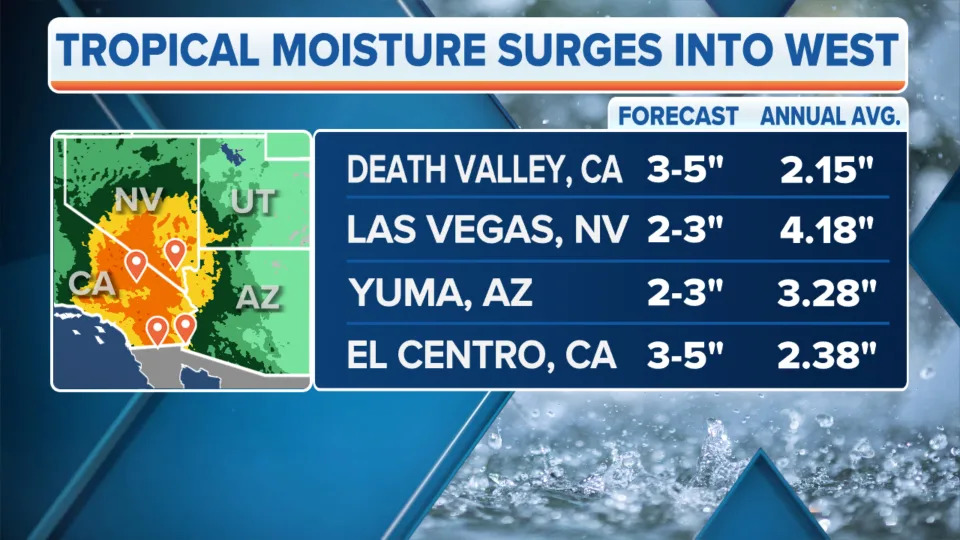
Sunday already set a record for the wettest August day in history for Palm Springs. The previous record has been held since 1930. And more rain is on the way. The FOX Forecast Center calls for 3 to 5 inches total for the city before Hilary departs.
The highest rainfall amounts are on the highest elevation of the mountains cradling Palm Springs and the entire Coachella Valley.
California’s unique mountainous geography, which tourists and residents flock to enjoy, is working against the helpless desert valley.
“That rain is going to be forced up along some of those mountains, especially east of San Diego,” explained Meteorologist Michael Estime. “And that’s going to create what we call orographic lift. And as moisture is lifted up the mountains, it’s it is then going to condense, and it’s going to get squeezed out like a wet washcloth over these areas again, east of the mountains.”
The extreme wind gusts with Hilary, already up to 84 mph on Big Black Mountain, blow south-southwesterly and lift the moisture and heavy rain on normally dry west slopes, explained the FOX Weather Forecast Center.
Palm Springs sits at the foot of 10,000-foot Mount Jacinto, according to the Bureau of Tourism. Gravity will force the water downhill, where it will overwhelm already taxed spillways, washes and gullies.
Water exploded through a low-lying road so fast that this truck in Thousand Palms, part of the Coachella Valley, couldn’t escape. The driver was trapped.
While Palm Springs braces for a year of rain from this one storm, some arid cities will see several years worth of rain in just a day before Hilary departs.
Proud purple to angry red: These Florida residents feel unwelcome in ‘new’ Florida
Tom McLaughlin, USA TODAY NETWORK – August 21, 2023
When Alexander Vargas was a senior at Port Orange’s Spruce Creek High School in 2021, he spoke at a school board meeting to fight for recognition of LGBTQ+ Health Awareness Week. The school board voted against the idea, but the superintendent later decided the week should be acknowledged.
Jean Siebenaler moved to Florida following her retirement to bask in the warmth of the Sunshine State.
“I finally thought I’d be sitting on the water with an umbrella drink in my hand,” she said.
The Milton resident, a military veteran and retired physician, now says she wonders if Florida was where she needed to relocate after all. Having been politically active in her home state of Ohio, she finds beach time consumed by “steaming and stewing” over the state of the state and local politics.
“It’s very upsetting, the direction we see Florida heading,” she said. “Every day I wonder why I am living here.”
For many, Florida has changed. What was once a proudly purple state has turned an angry red, they say. Gov. Ron DeSantis, with the dedicated backing of a Republican supermajority in the state legislature, is waging war on what he calls “wokeism” — a term he has loosely defined as “a form of cultural Marxism.” But many — people of color, the LGBTQ+ community, immigrants, non-Christians, teachers, union members, students — feel it is a war against themselves, as they face ridicule, discrimination, and, potentially, violence.
The NAACP, Equity Florida and the League of United Latin American Citizens each issued travel advisories for Florida. The NAACP advisory states, in part, “Florida is openly hostile toward African Americans, people of color and LGBTQ individuals.”
“Under the leadership of Gov. DeSantis, the state has become hostile to Black Americans and in direct conflict with the Democratic ideals that our union was founded upon,” the advisory states.
Democrats feel vilified because of affiliation
There exist widespread reports of people abandoning the state because they no longer feel welcome here. Following her family’s exodus to Pennsylvania in May, former Brevard County resident and Democratic Party activist Stacey Patel told FLORIDA TODAY, “It’s like breathing, you know? After holding your breath for a really long time.”
Nikki Fried, the state’s former commissioner of agriculture and current Florida Democratic Party chair, predicted 800,000 immigrants had left the state after DeSantis signed SB 1718 into law. It imposes strict restrictions and penalties to deter the employment of undocumented workers in the state.
Democrats also count themselves among the groups feeling persecuted. Patel’s family was vilified, she said, for its party affiliation.
Siebenaler, who has stepped into the position of legislative chair for the Democratic Women’s Club of Florida, attended an early June meeting of the Santa Rosa County Commission to call out Commissioner James Calkins for labeling the Democratic Party as evil.
“I took an oath to defend against all enemies, foreign and domestic,” she told the governing board. “And I must speak out against the hate speech that is emanating from the Santa Rosa County Commission dais.”
Calkins has been admonished on several occasions by the public and his peers for his incendiary rhetoric and disruptive behavior. But Siebenaler is not one to typically show up at county board meetings.
“It’s very, very upsetting. We’ve lost all sense of sanity, logic and civil discourse. It’s so difficult to sit in on meetings because it’s such a clown show,” Siebenaler said. “People are so dramatic, so theatrical. It makes me just so sad that we have gotten to the point where the average person doesn’t want to go to these meetings, where all people do is yell and scream.”
Teachers are heading for the exit
Similarly, according to Lisa Masserio, the president of the teacher’s union in Hernando County, a minority segment of that county’s school board attached to Moms For Liberty is creating chaos in that area.
The school district typically provides at its May 30 meeting an accounting of how many teachers will be leaving the school district that year. This year it was announced that of the 49 people not returning to Hernando County schools next year, 33 had voluntarily tendered their resignations.
Masserio estimated the number of resignations had approximately doubled those of the year before and would create “the highest number of vacancies we’ve had in a long time.”
“We’ve seen so many resignations of people who have made the decision ‘I don’t want to teach here,’ ” she said.
Eighty-three percent of the Hernando County teachers with three years or less experience were among those who resigned, said Dan Scott, a former World History teacher at Springstead High School.
Scott, who was in his third year of teaching, was one of “13 or 14” at Springstead alone who chose to pursue another occupation, in large part, “based on the overhead decisions in the government of Florida,” he said.
“There are a lot of limitations being placed on teachers in regards to how we can communicate with students and what kind of content we’re allowed to discuss within the curriculum,” he said. “Education has become a very hostile environment from top to bottom.”
Among the limitations, Scott said, were soon-to-be-imposed sanctions on what text he could use. Among the outrages, a school board member stalking school hallways searching for items that didn’t correlate with the curriculum. In other words, Pride flags, Scott said.
“Not everyone left for the same reasons I did. For me, I didn’t want to teach if I couldn’t teach the truth and if I couldn’t represent students the way I thought I should,” he said. “I let every student be exactly who they wanted to be, whatever religion, whatever they identify as. I tried to give everybody their space. Whenever I couldn’t do that any more I realized I didn’t need to be in this career.”
Scott has returned to school himself to embark on the study of technology and cybersecurity, and Siebenaler remains steadfast in her dedication to battle the state’s continuing rightward trek. “I’m hoping it’s a blip on the historical radar and that I live to see sanity come back,” she said.
Others around Florida are facing what they view as ostracization by their state government in different ways. These are their stories:
‘Fighting with one hand tied behind your back’
David Lucas, left, unwittingly became the poster child for urban renewal in the early 1960s when he was a small child. His father, Harold Lucas, at right, was shopping for fishing poles in Sears on Beach Street in Daytona Beach when a man asked if it was OK if he photographed his son. The elder Lucas said OK, not realizing the photographer was a government official involved in the urban renewal program that wound up leveling many homes and businesses in Midtown.More
David Lucas grew up listening to his 90-year-old father’s stories of how cruel the world was to Black people in decades past.
While the 60-year-old Lucas has been spared much of what his father’s generation endured, he’s been getting an unexpected reality check on how some things have yet to improve for minorities.
The flurry of bills passed in Tallahassee over the past two years that impact voting, immigration, education, guns and LGBTQ+ people has left his head spinning.
“I just don’t understand how they can make so many changes so fast,” Lucas said. “As a Black man it’s alarming because we have so many different fronts we have to fight.”
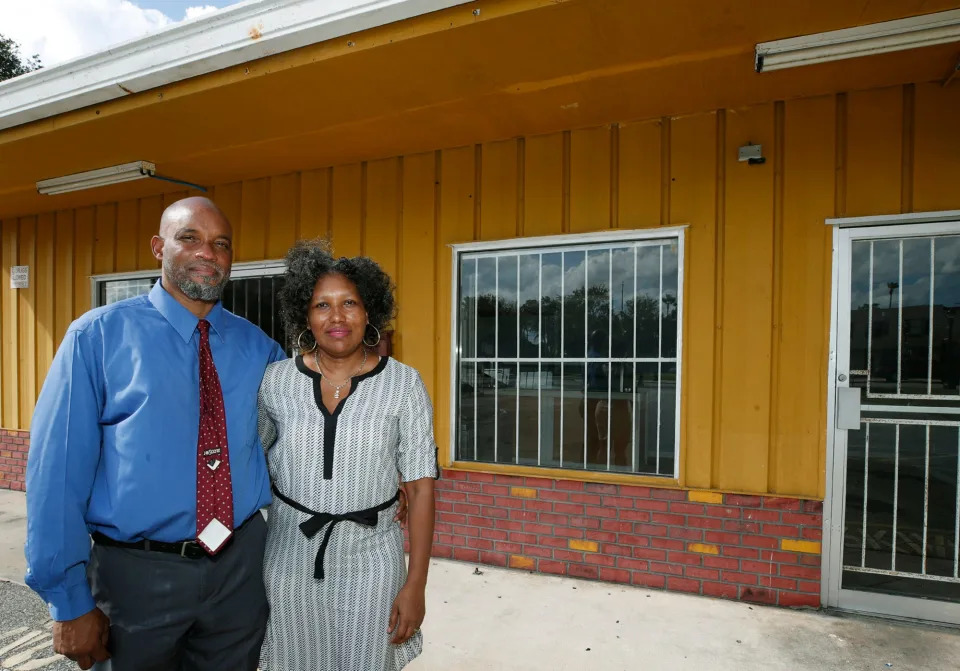
The new laws have already impacted Lucas and his wife, who works alongside him at their Jamaican food restaurant in Daytona Beach’s Midtown neighborhood.
She’s from Jamaica, and while she’s not a U.S. citizen yet, she’s in the United States legally and has a visa. Some of Lucas’ friends from Jamaica, other Caribbean islands, Russia and Poland also have visas, but others are undocumented.
Several of those friends cleared out of Florida and headed north more than a month ago after a new immigration law left them scared they could be sent back to the countries they chose to leave.
“They were people who had lives here,” Lucas said.
David Lucas and his wife Claudette are shown in front of their restaurant, A Golden Taste of Jamaican Food and Treats, on Mary McLeod Bethune Boulevard in Daytona Beach. Lucas is still trying to digest all the new laws passed in Florida the past two years that impact voting, education, immigration, guns and LGBTQ+ people.
The new law requires employers with 25 or more workers to use the U.S. Department of Homeland Security’s E-Verify system to confirm employees’ eligibility to work in the United States beginning July 1. E-Verify is an Internet-based system that compares information entered by an employer from an employee’s Form I-9, Employment Eligibility Verification, to records available to the U.S. Department of Homeland Security and the Social Security Administration to confirm employment eligibility.
The new Florida law imposes penalties for those employing undocumented immigrants, and enhances penalties for human smuggling.
The statute also prohibits local governments from issuing identification cards to undocumented immigrants, invalidates ID cards issued to undocumented immigrants in other states, and requires hospitals to collect and submit data on the costs of providing health care to undocumented immigrants.
Lucas is also bothered by a new law that will allow people to carry concealed weapons without securing a permit, taking a previously required class, or getting fingerprinted.
“You’ll have a lot of armed heroes,” Lucas predicted. “A lot of people don’t know how to use a handgun, but they’ll have their chest poked out waiting for a reason.”
Lucas said permitless carry has him personally worried.
“Now I don’t want to go anywhere there’ll be a lot of people,” he said.
A third of Black men in the United States have felony convictions, which prohibits them from purchasing or possessing a firearm. Lucas is afraid that’s going to mean many of them will be left vulnerable as more people than ever will be carrying concealed firearms without a permit.
Lucas is also bothered by recent changes in Florida laws that could make it more difficult for some people to vote.
“Voting is most important because that’s how things are changed,” he said. “That’s how jobs are created and taken away, laws are created and taken away. If you don’t have the strength of voting, then you’re basically fighting with one hand tied behind your back.”
New laws impacting what’s taught in Florida classrooms are also not sitting well with Lucas.
“I have children now that are in school not learning history the way it happened,” he said.
It appears to him to be an effort to erase pieces of history “like it doesn’t exist.”
Lucas said some people around his age aren’t pushing back on recent changes impacting minorities.
“They close their eyes and hope it’ll get better,” he said. “They say we’ll just have to live with it. Younger people aren’t going to have it. They have groups trying to fight it.”
‘Pretty damn depressed’
Erin Rothrock of Lakeland is a transgender man. He said the current political atmosphere in Florida makes him depressed and scared.
Until recently, Erin Rothrock felt relatively stable and content living in Florida.
Rothrock, a veterinarian and a married father of four (with another on the way), was considering buying into a clinic to become a business owner. His wife has a well-established law practice. Their children are enmeshed in their schools and have plenty of friends.
But Rothrock, a transgender man, no longer feels secure in Florida, his home since 2009.
“Emotionally, if I think about it, I get pretty damn depressed,” said Rothrock, 39, a Lakeland resident. “And I get scared.”
Rothrock said the climate of acceptance in Florida for LGBTQ+ people, and especially for transgender residents, has dramatically altered.
“It really feels like it’s really changed in the last six months,” he said. “Before that, it really felt like — OK, yeah, there are some conservative people around, but things aren’t bad. And now it’s just like — OK, now we have this environment where these conservative ideas and these conservative people are just making life miserable for people that are living here.”
He added: “I mean, it’s really uncomfortable. It’s off-putting. It’s unwelcoming, and it feels dangerous.”
Discussions with other transgender people have lately taken on a fraught quality, Rothrock said.
“So, conversations I’ve had with a lot of other trans people — besides just the usual, ‘Hey, how you doing? How’s life? How’s school? How’s work? How are the kids?’ — it’s ‘How are you doing? How are you feeling? Have you had any problems? Have you had any trouble getting your meds? Are you going to move? Where are you going? I’ve heard this place is safe,’ ” he said.
Rothrock and his family are considering a move out of Florida. He said he knows other transgender people who have already taken that step.
“I’ve got a friend in Canada that’s begging me to move up,” he said. “They’re offering to assist me. I’ve got a friend in New York begging me to move up. They’re offering to help me.”
Rothrock said that what’s happening in Florida seems to counter the prevailing overall trend in the country.
“I feel like nationally there’s a big push and pull because we know that the general consensus is that most people are OK with gay marriage, support gay marriage,” Rothrock said. “They support transgender people being able to transition and use the restroom that they fit into. But I feel like there’s this real pushback from that conservative base. At this point, I think they’ve outmaneuvered the progressive side.”
The push for new laws — in Florida and elsewhere — targeting medical care and other aspects of life for transgender residents seems a reaction against their increased visibility and acceptance, Rothrock said.
“I think it’s that backlash to the small gains in equality that we’ve made,” he said. “You know, we see it time and time again, historically, that whenever minorities get progress and make some advancements, there’s always a backlash. After the Civil War, there were these Jim Crow laws because Black people got too much power. Marriage equality (emerged), and now we have these new transgender restrictions and restrictions on what people can do.”
New guidelines on gender-affirming care are affecting adults and not only minors, Rothrock said. He recently had to scramble to find a new provider for his regular supply of hormone treatment and briefly ran out of medication.
“I don’t do well mentally, my mental state declines, when I’m not on my medication,” he said. “So I’ve got a therapist; I talk to her on a regular basis. I do everything I can to mitigate those things. But that’s extra mental baggage.”
‘Fear culture’ in the classroom
There is ‘no way’ retired educator Lillian De La Concepcion Martinez would step back into the classroom to do the work she once loved: teach Spanish and Art History to students in Manatee County.
Born to Cuban parents in Miami and raised in Fort Lauderdale, Martinez served as a hospital corpsman in the U.S. Coast Guard in the mid-1970s, and worked as an educator at Manatee County schools from 1989 until she retired in 2020.
“I’m of a different generation,” Martinez said. “When I showed up to boot camp, my staff sergeant looked at me, because I was this pretty girl, tan, nice clothes and I had this designer luggage with me. Nobody told me I couldn’t bring any clothes and I was carrying my suitcase.”
“He gets all us girls together and says, ‘well you girls are going to learn to cuff like a man or grow hair on your chest.’ Can you imagine that now? It’s almost like people are too sensitive nowadays, they take everything personally,” she said.
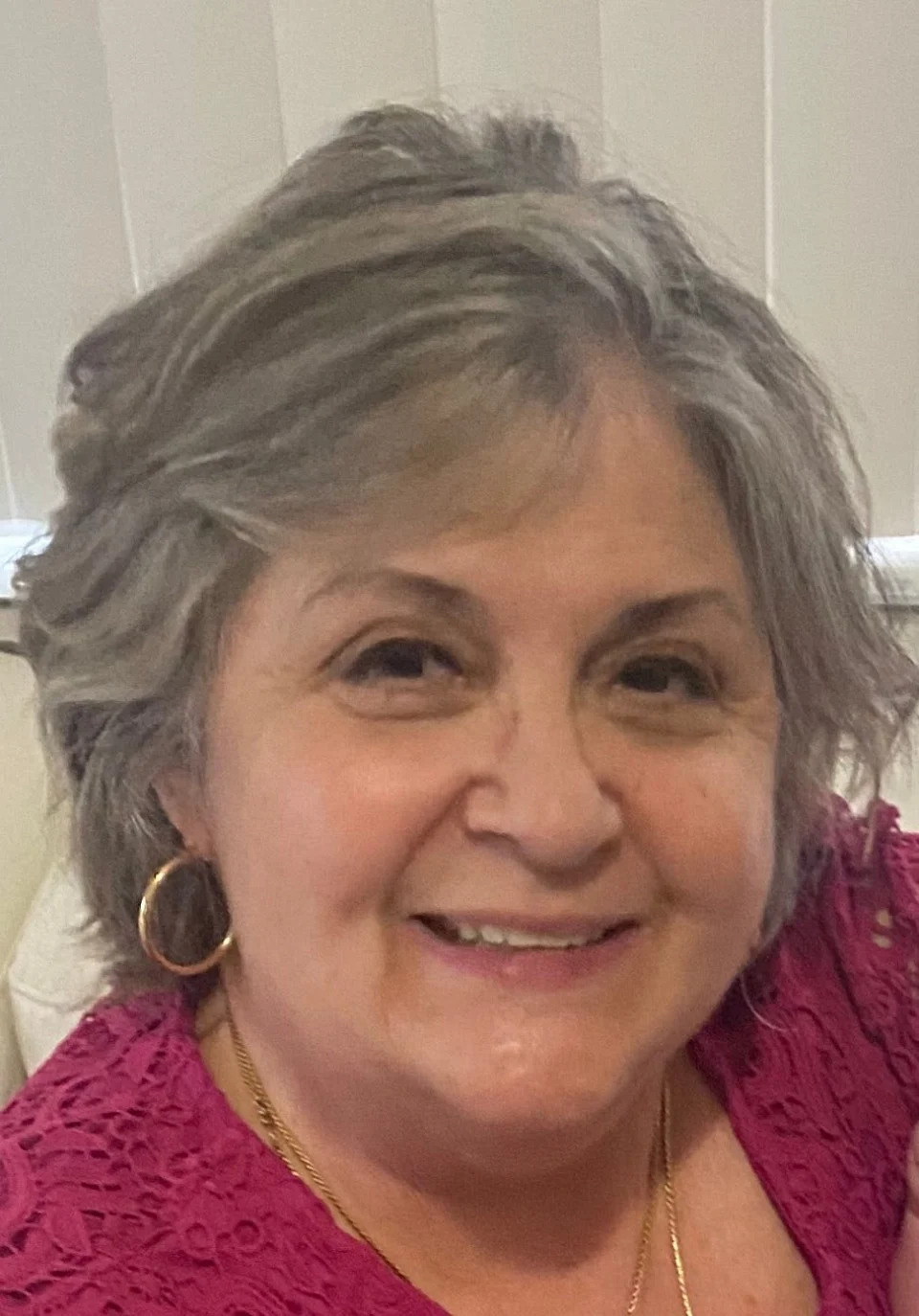
Lillian De La Concepcion Martinez
But he is glad she never had to experience the fear her former coworkers say they experience as educators today.
“There is a fear culture in the classroom now,” Martinez said. “I’m glad that I retired when I did, because I don’t know that I would want to teach under these circumstances. They did call me a few months back because they wanted to know if I wanted to come back and teach. I said, not ‘no,’ but ‘hell no.’ There is no way.”
Martinez began her career teaching English to migrant students as a tutor in Manatee County, then as a parent social educator. She attended the University of South Florida at night, and when she graduated in 1999 she became a teacher. Her last teaching job was at Lakewood Ranch High Schoo from 2003 until she retired.
She loves to teach, and always enjoyed using music and poetry and other outside-the-box strategies to teach her students.
“I just have a love for the language, for the culture, so I like to get them enthused,” Martinez said. “I love teaching Spanish 1 because they are fresh, but I really love teaching (Spanish) 4 because I could do so much with them culturally, and with poetry.”
“I think the last couple years (the song) “La Gozadera” was very popular,” she said. “I played that one for my level one kids like their second day. I gave them a sheet and said ‘write down how many countries that they say in Spanish that you recognize,’ just to see what they could hear, and they would surprise themselves when they were able to pick out a lot of words.”
“My kids had to memorize José Martí poems,” she said. “I said ‘guys, it will help with your language’ because of the flow. You can’t come up here and just say, ‘Yo soy un hombre sincero, de donde crece la palma.’ You have to have emotion. That’s what they had to work on and it helped with their fluency.”
But today, under the watchful eye of parents and politicians, Martinez said she doesn’t know how others would perceive many of the books she kept in her classrooms, or the historically accurate lessons she imparted to her students.
“I had a lot of books in my classroom by Spanish authors,” she said. “Books that I had read, and they were open and free for kids that wanted to take a book and read it. I did have a lot of multicultural-type books. Biographies on Hispanic people, artists. Frida. Dalí. Celia Cruz. Roberto Clemente.”
“And I’m hearing that a lot of those books are being pulled now, because they reflect a culture that’s different,” she said. “What is it, that it could ‘stress them out’ for whatever reason. Like with Celia Cruz, you have to talk about communism. She fled Cuba, and she said as long as Castro was alive she would never set foot in Cuba again. That’s very political. I don’t know if I could teach that now. You know? Because that’s a political statement. And Celia Cruz is Afro-Cuban, she identified as that. Could we even say that?”
Martinez questions the future of art history classes, especially after an incident in March when Hope Carrasquilla, a former principal at the Tallahassee Classical School, was forced to resign after teaching sixth-grade students about Michelangelo’s “David” and showing photos of the masterpiece sculpture.
“Somebody complained that it was pornographic,” Martinez said. “I just rolled my eyes and told a former colleague of mine that is also retired, I said, ‘you wait and see.’ This is after they banned the AP African Studies program. I said ‘pretty soon, they are going to drop AP art history,’ because there is nudity in AP art history.”
She wonders about her lessons about the casta paintings, and how lessons about their historic significance would be perceived today.
The paintings were drawn in the 18th century as a way to establish hierarchical scale of races after Spanish colonization of the Americas led to anxiety over racial mixing between Spanish colonizers, indigenous people and African slaves.
“The casta paintings, it’s treated like a work of art but it’s really an anthropological piece, because of what they documented in that artwork,” Martinez said. “I talked about one, but there were others. It’s really about the mixing of the races, and that white European is No. 1 on the hierarchy.
“I don’t know if that would fly right now,” she said.
“I like history, so I used art to teach something about the stuff that was going on,” she said. “It was never like ‘oh my god, Spaniards were bad, or anything.’ No. Those are just facts, it’s just the way it was. We can’t change history, all we can do is just not repeat it.”
“Gut punch after gut punch’
Andy Crossfield was in an airport in Lyon, France, last year when a fellow tourist from North Carolina learned that he and his wife, Emily, hailed from Florida.
“Don’t you just love your governor?” the woman asked.
Crossfield replied, “Are you kidding?”
Crossfield, a Lakeland resident and a self-described liberal Democrat, said the episode in France offered a reminder of his status as an undisputed political minority in Florida.
A Georgia native, Crossfield moved to Florida in 1978, during the tenure of Gov. Reubin Askew, the state’s third-to-last Democratic leader. Crossfield said that he didn’t become politically engaged until after his retirement in 1997 from a career as a mutual fund wholesaler.
He has since served as president of the Lakeland Democratic Club and an officer with the League of Women Voters of Polk County.
Crossfield, 70, said Democrats and Republicans seem to perceive virtually all occurrences through different lenses. He compared the phenomenon to the 2015 internet fad involving a photo of a dress that some perceived as blue and black and others as white and gold.
“We see instances of an event, and right away we try to figure out, ‘Is that good for my side, or is that bad for me?’ ” he said. “And this is politics taken to the extreme.”
Crossfield said the political divide has become personal for him and fellow Democrats. He said his relationship with his brother, who is conservative, has become strained.
“Everybody’s lost friends and neighbors over this,” he said. “You can’t have anything in common when you wish a completely different future for the country.”
Has Crossfield maintained friendships with any conservative Republicans?
“I try,” he said. “They make it difficult. I mean, they’re intelligent people, but they want to believe the most ridiculous things. I had a woman tell me — that I had a pretty good relationship with, I guess — that COVID was a fake. All these people that were dying, (it) was just a lie. And that (former President Donald) Trump had intercepted the virus and had his people manipulate it into something benign.”
Andy Crossfield, a self-described liberal Democrat living in Lakeland, holds a spark-spitting, windup u0022Trumpzillau0022 toy in his office.
Crossfield said it is “humbling” to be a Democrat in Florida at this point. He is highly critical of the policies promoted by DeSantis and the Legislature.
“We seem to have Jim Crow 2.0 now, because the attack on voting rights is very frightening,” he said, “The restrictions that Florida has put on people who just want to register people to vote is outrageous.”
Crossfield said he now avoids watching the news because he finds Florida’s politics so irksome.
“I think the electorate, the populace, is responsible for this,” he said. “Life is so hard that they’ll take somebody who wants to stick it to somebody they don’t like, rather than make my life better. I hate to say that, but that’s what it looks like to me.”
Crossfield lives in Polk County, which has not elected a Democrat to any partisan office in well over a decade. In recent cycles, some Republican legislators and county commissioners have been reelected without opposition.
“We have a catch-22 that I don’t know how to solve,” he said. “You can’t get quality candidates unless you have support from the grassroots. And you can’t get grassroots support after gut punch after gut punch results from elections without a quality candidate. I don’t know what breaks first.”
Crossfield empathized with liberal friends who yearn to flee the state.
“Yeah, there’s a lot of people who say, ‘Well, I’m going to leave,’ ” he said. “Somebody on Facebook posted this thing, saying, ‘Don’t leave Florida. Fix it’. And I think I responded, ‘Florida is not an old car that would shine with a little TLC. In fact, every time we take it in for repairs, the mechanic is stealing parts off of it.’ That’s where we are.”
When asked if he has become depressed about Florida’s politics, Crossfield found optimism in the performance of Lakeland Mayor Bill Mutz, an evangelical Christian and a Republican who has defied some expectations by supporting the removal of a Confederate statue from a downtown park and by not blocking the city’s issuance of LGBTQ Pride proclamations.
Crossfield said he now concentrates on small, concrete measures to improve the lives of his fellow citizens. For example, he and others in the local chapter of the League of Women Voters are promoting the distribution of gun locks.
“All we’re trying to do is just pick these areas that we can make some good, some change,” he said. “And yeah, that gives me hope.”
‘To hell and back because of who they are’
Transgender Stetson University student Alexander Vargas wants the same things other people his age do: To finish college, find a career he enjoys, and share his life with friends and family. Some new state laws are making his day-to-day life harder, including one measure that’s making it more difficult for him to find a bathroom he can legally use.More
Alexander Vargas is a 19-year-old college student. His biggest worries should revolve around getting good grades, figuring out what kind of a career he wants after college, and deciding what he wants to do for fun every weekend.
Instead the Stetson University psychology major is always reminding himself to steer clear of public men’s restrooms so he won’t get fined for using bathrooms that align with his gender identity, but not the gender he was assigned at birth. Stetson officials have set him up with a one-person restroom he can use on campus, but once he leaves school property, bathroom access becomes a problem again.
He’s also adjusting to new state government rules that have made it more complicated for him to get the testosterone his doctor prescribes so he can more fully live as a male.
The young transgender man is trying to figure out if he should move to another state where basic day-to-day living wouldn’t be such a struggle, and he could escape the worsening anti-LGBTQ+ climate in Florida.
“Moving out of Florida is a last resort if things get worse, like if I can’t receive my gender-affirming care,” Vargas said. “I could move to another state and switch schools. It would be the easiest way to do it.”
He has both a “Plan B” and a “Plan C,” but he hopes he never feels compelled to use either one. Vargas would prefer to stay right where he is.
Vargas has a very supportive family he still lives with in eastern Volusia County. His partner and job are in the area.
He would love to finish his last two years of college at Stetson as he progresses toward his goal of working with autistic children and using art therapy as a form of communication for the kids when they become nonverbal.
“My life is here, and the thought of uprooting it is terrifying,” he said.
Vargas has been called a freak and he’s had slurs hurled his way.
He’s seen others in Florida subjected to the same things.
“I have trans friends who’ve been to hell and back because of who they are,” Vargas said.
Two years ago, when he was a senior at Spruce Creek High School, he found the courage to speak out.
Vargas attended a school board meeting to advocate for the LGBTQ+ community in the wake of a board vote that shot down recognition of LGBTQ+ Health Awareness Week. The school superintendent eventually decided the week should be acknowledged.
Vargas knows his family and friends have his back, and that empowers him to advocate for LGBTQ+ rights. But if things ever do get bad enough for him in Florida, he’ll start a new chapter somewhere else.
“I’m just waiting for that last straw,” he said.
Fighting against misinformation and fear
Grace Resendez McCaffery, the publisher of the Pensacola-based La Costa Latina Newspaper, a Spanish-language newspaper that covers Northwest Florida and South Alabama, has lived in Florida for 30 years after moving from her hometown of El Paso, Texas.
She founded La Costa Latina Newspaper a year after Hurricane Ivan hit in 2004. She saw the need in the region for a Spanish-language publication, and her newspaper has become a hub of information for the Hispanic community in the Panhandle.
Since DeSantis signed SB 1718, which targets immigrants who lack a permanent legal status, Resendez McCaffery has worked to fight against misinformation about the new law as well as make the broader community aware of its impact on the Hispanic community.
She said it’s discouraging to see a law like SB 1718, but is more worried about the state’s actions being adopted at the national level.
“I don’t have plans to leave,” Resendez McCaffery said. “I have imagined what would happen if our governor became the president.”
“If these types of policies became national policies, I think that would be pretty unpleasant,” she said. “And I have toyed with the idea that I might have to somewhere (out of country).”
Grace Resendez McCaffery, right, and Jessica Rangel, 21, hug as they and other protestors in support of DACA gathered at the corner of Palafox and Garden Streets in Pensacola on Sept. 5, 2017. United States attorney general Jeff Sessions announced the end of the DACA program.
In the meantime, Resendez McCaffery sees her mission as getting accurate information out to her community.
“My concern is an individual’s need right now,” she said. “They’re hungry, or they need housing, or they need just some support to know that not everybody hates them. Sometimes that’s all they want to know. And so, I know that my purpose here is to kind of relay that.”
Heartbreak and anger
In March, Jason DeShazo spoke to a Florida Senate committee while dressed as Momma Ashley Rose, his drag character, in a demure yet colorfully checkered dress with a fluffy blond wig.
“Do I look like a stripper?” the Lakeland resident asked members of the House Judiciary Committee, as they considered a bill intended to curtail drag performances.
With the legislative session over and the law taking effect July 1, DeShazo said it is a bleak time for Florida’s drag performers and the LGBTQ+ population in general.
“It’s kind of a mix between heartbreaking and anger, right?” said DeShazo, 44. “You just want to kind of shout it from the rooftops, like, we’ve got more important things to worry about. We worry about a drag queen reading stories to children when children are having to learn how to do active-shooter training and how to get away from active shooters in schools. And you’re telling me that I’m the issue?”
DeShazo, a gay man, has been performing in drag for more than 20 years. He created Momma Rose Dynasty, a nonprofit that he says has raised hundreds of thousands of dollars to support LGBTQ-oriented charities.
DeShazo specializes in “family friendly” shows and readings, at which his matronly character serves up affirmation and acceptance for youngsters who are LGBTQ or unsure about their sexuality or gender.
Last December, about a dozen men wearing Nazi attire showed up to protest a Lakeland event DeShazo had organized. The demonstrators projected lights onto the venue’s exterior bearing such messages as “Warning: Child grooming in process” — a claim DeShazo vehemently rejects.
An Orlando high school canceled DeShazo’s appearance in March as Momma Ashley Rose at a long-planned “Drag and Donuts” after-school event, under pressure from the Florida Department of Education.
And then the Legislature passed and DeSantis signed the bill officially titled “Protection of Children.”
“It’s just something that we never thought we would have to go through again,” DeShazo said. “This is stuff that our community went through in the ‘50s, ’60s and ’70s. It’s just kind of a shocker that drag has become such a target — not only just drag, but the trans(gender) community, too, is a huge target with what’s happening politically right now.”
Jason DeShazo of Lakeland performs as the drag queen Momma Ashley Rose. He said he is shocked that drag performers have become such a political target in Florida.
Since the Nazi incident, DeShazo said he has been forced to spend hundreds of dollars at every event for extra security. He has also bolstered protections at his house in response to death threats.
In May, the group Fathers for Freedom urged supporters to “accost” parents who took children to a tea party brunch in Lakeland staged by DeShazo’s organization. He said he was relieved that no protesters actually showed up.
“So, it is a daily fear,” he said. “I mean, I can honestly tell you that there are times I’m walking through a grocery store and I’m having to look over my shoulder because you never know, right? Especially now that my face as a boy and in drag is out there.”
DeShazo said he sought legal help to review the new law, and he is confident that his performances do not violate it. His costumes do not feature prosthetic breasts, one of the elements identified in the law as potentially lewd when used in “adult live performances.”
DeShazo said he knows of two drag queens who have already fled Florida and another who is making plans to leave. But he is determined to stay.
“I have no judgment for anyone that wants to leave because I think everyone has their own reasons — and valid reasons,” he said. “But for me, of course I want to pack up and leave. I don’t want to have to sit here and worry about my life and worry about what laws are going to be passed next to dehumanize me. But who’s going to stay and fight if we all leave? If everyone who is different, that they’re trying to drive out of here, leaves, who’s going to be here to stay and fight for the ones that can’t leave?”
Does DeShazo feel that as a gay man and a drag queen he is no longer welcome in Florida?
“Politically, 100%,” he said. “It’s been known that we’re not welcome here. It’s been known that we’re not wanted here. But it definitely seems like the people don’t necessarily agree; the majority don’t agree.”
The publicity surrounding the taunts by neo-Nazis in December produced an outpouring of solidarity, DeShazo said.
“I think people are starting to see other people’s true colors, like, other people’s true discriminations and hate,” he said. “At the same time, we’ve had a huge influx of support, right? I would say 90% of the contacts we get are support, are love, are ‘We thank you for what you’re doing. Keep fighting; we stand with you.’ But that 5% to 10% is a lot to weigh you down because that could make a huge difference.”
Torrential rain from Hilary causes dangerous mudslides, rockslides in Southern California
Angeli Gabriel – August 20, 2023
Floodwater surges in Southern California ahead of Hilary
Video shows floodwater rushing through the Sheep Canyon Wash in Wrightwood, California on August 20, 2023. (Courtesy: @TransverseDream / Twitter)
PALMDALE, Calif. – Mud poured onto a roadway near Los Angeles, creating hazardous conditions for drivers hours before Tropical Storm Hilary brought potentially life-threatening floods to the area.
Mudslide in Palmdale in Southern California. August 20, 2023.
Down south in the town of Mountain Spring, a road was closed due to a rockslide, according to the National Weather Service. In nearby Calexico, another rockslide led boulders larger than a truck to fall onto the road.
California Department of Transportation crews addressing a rockslide on SR-98 near Calexico. August 20, 2023.
Rain from Tropical Storm Hilary also flooded some roads. In the video below, floodwaters rushed over EB Route 118 near the town of Llano in Southern California.
Floodwater from Hilary near Llano, California. August 20, 2023.
Tropical Storm Hilary has already pummeled the northern Baja California Peninsula of Mexico, where it dropped torrential rain and caused catastrophic flooding. The storm has already claimed at least one life in Mexico after a family of five was swept into the sea while crossing a stream in the Baja California Sur state, according to local officials.
Catastrophic flooding is also expected for parts of Southern California, which is experiencing its first-ever Tropical Storm Warning. In fact, some areas may receive up to 8 inches of rain through Tuesday evening.
Protest broke out at a 55+ Florida community over skyrocketing home insurance premiums: ‘We have no choice, we have to sell’
Alena Botros – August 19, 2023
This week, hundreds of homeowners in a 55+ living community, known as Century Village, in Pembroke Pines, Fla., gathered together to protest an increase in their monthly housing fees due to skyrocketing insurance costs, as several insurers flee the state.
Homeowners were sent an email from Century Village that they’d have to pay an additional $100 to $200 a month due to “skyrocketing insurance premiums,” adding a potential special assessment for some units, according to NBC6, a local TV news outlet in South Florida that was first to report the incident. Footage shown in the TV segment shows several residents crowded together, visibly upset and shouting (although it’s unclear what exactly they’re saying). However, it seems that the protest escalated and police were called. Still, one resident told NBC6 reporter Laura Rodriguez that the increase in costs is forcing him to sell his home.
“So now we are over $700 a month that we are paying just in HOA fees, and they’re going to kick it up to $1,000 a month,” the resident told the reporter. “We have no choice, we have to sell. As a matter of fact, I just put my house on the market 10 minutes ago.”
Century Village did not immediately respond to Fortune’s request for comment.
Housing markets in Florida saw substantial increases in home prices during the pandemic, and in most cases are still seeing increases. That coupled with mortgage rates that have more than doubled, with the average 30-year fixed rate recently hitting a 20-year high, has deteriorated affordability. But now there’s a new force putting a strain on housing affordability, and that’s rising insurance costs.
Homeowners in Florida are paying the highest insurance premiums in the nation, with an average premium of $6,000 per year, according to Mark Friedlander, the Florida-based director of corporate communications for the Insurance Information Institute. To compare, the U.S. average $1,700 per year. And recently, several home insurers have either pulled out of the state, like Farmers Insurance, or have chosen to renew fewer policies, like AAA—and that’s making it more difficult for homeowners to find coverage, or even afford it, as Fortune’spreviously reported.
“Just in the last 18 months, 15 companies have stopped writing business in Florida. Three have voluntarily withdrawn—Farmers being the most recent—and seven companies have been declared insolvent,” Friedlander recently explained to Fortune, before AAA said it would reduce its presence in Florida, rather than pull out completely as Farmers Insurance announced its plan to do so.
There are several factors behind the state’s insurance exodus that range from claim fraud, to an increase in claims following recent hurricanes, to an increase in reinsurance rates. All of which, essentially raise costs for insurance companies, which in turn raises costs for policyholders. However, we’re seeing that some insurers are simply choosing to leave the state, and that only makes it harder for homeowners to find coverage, and makes that coverage more expensive.
Insurance concerns are already having an impact on Florida’s housing market, with a recent homebuilder survey showing that buyers’ concerns over the availability and affordability of insurance are somewhat slowing sales, which could potentially get worse.
Brita water filter company accused of false advertising
Dorany Pineda – August 19, 2023
Water filters on an assembly line at Brita’s factory in Taunusstein, Germany. (AFP via Getty Images)
A lawsuit filed against the maker of some of the nation’s most popular water filtration systems has accused the Brita company of falsely advertising that its products remove or reduce hazardous contaminants from tap water.
The proposed class-action lawsuit, which was filed Wednesday in Los Angeles County Superior Court, claims that deceptive advertising has led customers to falsely believe that Brita products filter such contaminants as arsenic, nitrate, hexavalent chromium and certain PFAS, or “forever chemicals,” from tap water.
Brita is owned by Clorox Co., which is headquartered in Oakland. Clorox released a statement Wednesday saying it was still reviewing the complaint, but looked forward to “defending ourselves vigorously.”
“Brita takes the transparency of the variety of water filtration options we offer seriously,” the statement said. “Our products include a standard filtration option that improves taste and odor of tap water and is certified to reduce identified contaminants as communicated. For those consumers looking for water filters certified to reduce PFOS or PFOA, the Brita Elite pour-through and Brita Hub are both certified to reduce PFOS/PFOA, as well as lead and other identified contaminants.”
The lawsuit was filed by Los Angeles County resident Nicholas Brown, who is currently the sole plaintiff. Brown purchased a Brita water pitcher and standard filter for about $15 in 2022 after reading the product label and believing the device would filter contaminants to below lab detectable limits, the lawsuit said.
“Unfortunately, the Products are not nearly as effective as defendant deliberately leads people to believe, causing consumers to overpay millions and forego more effective alternatives,” the lawsuit said. “In this way, defendant has not only bilked millions of dollars from consumers in ill-gotten gains, but Defendant has put the health and welfare of millions of consumers and their families at risk.”
At the heart of the lawsuit is the basic and fundamental human right to clean and safe drinking water, said the plaintiff’s lawyers. They argue that Brita products, which are widely available and affordable, are a staple in the homes of students, renters, working families and others who can’t spare the price of high-quality filters for their taps.
The company’s marketing “creates the illusion of safety and protection for people and their families,” said Ryan Clarkson, managing partner of the Clarkson Law Firm in Malibu. “And that’s really the big problem that we need to solve here. When people are running their tap water with PFAS through these Brita water filters, it’s just a superfluous act. It does nothing whatsoever as it relates to chemicals like PFAS.”
PFAS, or per- and polyfluorinated substances, are a group of thousands of manufactured chemicals that have been widely used for decades in products that resist heat, oil and water. They can be found in such everyday items as nonstick cookware, dental floss, period underwear, fast food boxes, water-repellent clothing and firefighting foam.
Known as forever chemicals because they don’t degrade naturally in the environment, PFAS have made their way into rivers, lakes, aquifers and people’s blood streams. Exposure to high levels of some PFAS has been linked to adverse health effects such as decreased fertility, increased risk of high cholesterol, obesity, high blood pressure, certain cancers, and liver and immune-system damage.
The lawsuit accuses the company of violating California laws concerning unfair competition, false advertising, breach of contract and others. It seeks damages and other remedies.
Depending on the type of filter, Brita products are certified to reduce or remove contaminants such as chlorine, lead, mercury, asbestos, some particulates, zinc, copper and select pesticides, herbicides and pharmaceuticals, according to its website.
The lawsuit comes at a time of increasing concern over drinking water contamination.
Researchers recently estimated that at least 45% of the nation’s tap water is contaminated with one or more PFAS chemicals, and that drinking-water exposures may be more common in urban areas across Central and Southern California than in other regions.
The Environmental Protection Agency plans to begin regulating several types of PFAS in drinking water and has proposed strict limits on two common ones — PFOA and PFOS — and L.A. County supervisors supported a proposal last month to investigate PFAS levels in drinking water.
Arsenic and nitrate, which are linked to certain cancers and other health issues, are also widespread in parts of California. According to state data, 22% of primary maximum contaminant level (MCL) violations in public water systems last year were for arsenic, and 22% were for nitrate, the highest of any contaminants. MCLs are health-protective drinking-water standards.
The lawsuit argues that claims on the labels and packages of certain Brita water filters, pitchers and dispensers — such as “Cleaner, Great-Tasting Water for Over [20, 25, or 30] Years,” “The #1 FILTER” and “Reduces 3X Contaminants” — are false and misleading. Other claims like “Better water for you. Better water for the planet” and “Fresh filter = Fresh water” reinforce consumer beliefs that the products remove or reduce to below lab detection limits common hazardous contaminants, the lawsuit says.
The lawsuit also claims that numerous Brita products have not been registered with the California State Water Resources Control Board since they’ve been marketed and sold, and that none of their products have been certified to remove or reduce health-hazardous contaminants, making it unlawful to market and sell them in the Golden State.
“What the case seeks is really two things,” Clarkson said. “First, greater transparency for consumers so they understand what these water filters are capable of filtering out and what they are not capable of filtering out. We don’t believe that the advertising and labeling of these products communicate in a transparent and effective way to consumers what the products can and can’t do.
“And secondly, we’re looking for compensation to all purchasers of these products who have relied upon the products to fulfill a promise that they simply haven’t fulfilled,” he added. The class period will go back to Aug. 16, 2019.
What home buyers need to know about soaring mortgage rates
Aaron Gregg, The Washington Post – August 18, 2023
A for sale sign stands outside a single-family residence on the market Sunday, June 18, 2023, in Denver. On Thursday, the National Association of Realtors reports on sales of existing homes in May. (AP Photo/David Zalubowski) (ASSOCIATED PRESS)
It’s getting even harder to buy a home.
The average mortgage rate recently hit a 21-year record of 7.09 percent, according to Freddie Mac, significantly increasing the cost of acquiring a home for all but the most cash-rich buyers. That’s more than double the rate of a few years ago.
Here’s what to know about rising mortgage rates and the effect on home buyers.
Why are mortgage rates so high?
Mortgages have become more expensive because of the Federal Reserve’s campaign to get inflation under control.
The U.S. central bank has repeatedly raised the federal funds rate – the interest rate at which banks lend each other money – to increase borrowing costs for everyday people and businesses. More expensive debt, the reasoning goes, means less spending and that should gradually slow the rise in prices.
To a large extent, it has worked: The annual rate of inflation stood at 3.2 percent in July, far lower than last summer’s peak of 9.1 percent.
Mortgage rates tend to move in the same direction as the federal funds rate, although lenders’ efforts to manage risk and expectations for future inflation also play a role.
How does this impact affordability?
Individuals buying houses typically get mortgages, which are loans for the purchase of a home. Home mortgages usually have terms that last 10 to 30 years.
Because mortgages cover such a massively expensive purchase over a loan period that can span a generation, even small differences in the interest rate can make a huge difference in what the homeowner has to pay every month.
Let’s say a home is being bought for $250,000 with a 20 percent down payment. Holding all else equal, the difference in monthly payment from a 3 percent interest rate and a 7 percent rate comes out to more than $500 a month, according to a Washington Post mortgage calculator.
Has this happened before?
Joe Gyourko, who studies the housing market at University of Pennsylvania’s Wharton School of Business, recalls when he and his wife bought a house in the early 1990s. Then, as today, the typical mortgage rate was close to 7 percent.
But housing prices have risen precipitously since then, and most people’s incomes have not kept up.
“It’s easy for an old-timer like me to say, ‘Ah, I remember rates like these,'” Gyourko said. “But prices were lower relative to income than they are today, particularly in the coastal markets.”
Rates could be even worse, one analyst said. Mortgage rates climbed throughout the 1970s and reached more than 18 percent in the early ’80s before declining.
“High rates are challenging for home buyers, but it’s worth noting that Americans bought homes before the recent era of super-low rates,” said Jeff Ostrowski, analyst at Bankrate.
How long will rates stay high?
“That is the million-dollar question,” said Jessica Lautz, deputy chief economist at the National Association of Realtors.
Experts say it’s hard to predict what path mortgage rates will take moving forward, but they will depend to a large extent on what happens with inflation and how the Fed responds.
Inflation has cooled significantly but still hasn’t reached the Fed’s goal of 2 percent. Fed chairman Jerome H. Powell has made clear that there is more work ahead to snuff out inflation altogether, even after last month’s 0.25 percent rate hike. Fed officials don’t know precisely when they will raise rates again, or how long they will hold at the current level.
Does it make sense to buy now and refinance later?
Some real estate professionals have been using the phrase “marry the house, date the rate,” to describe one possible homebuying strategy for today’s market.
The strategy entails buying a house at an unfavorable rate with the hope of refinancing at a later date, allowing the home buyer to capitalize on rising home prices while pivoting to the best mortgage deal available at a given point in time. It can also benefit lenders – they collect fees with each refinancing.
Experts caution that no one knows when rates will fall. Buyers could be stuck with an unfavorable mortgage for years, warns Wharton’s Gyourko.
“The problem is you need to at least be prepared to also marry the rate,” Gyourko said.
How can I keep my rate as low as possible?
There are a number of strategies home buyers can employ to lower their interest rate, although buyers will always be constrained by what lenders are willing to offer.
One way is to watch your credit score and diligently improve it over time. Credit reporting bureaus track things like the amount of debt you have, missed or late payments on credit card bills, and the length of your credit history. Your credit score can also take a hit from a “hard inquiry” that typically accompanies a loan application.
Pay off as much debt as possible before seeking a mortgage, says Lautz of the National Association of Realtors. Mortgage brokers closely examine the debt-to-income ratio on applications they receive. They tend to view debt-laden households as more risky and thus deserving of a higher rate.
Do these things, Lautz says, “and the bank will look at you as a more favorable consumer, and your mortgage will be better.”
AI tech jobs are popping up and the salaries are huge
Diane King Hall, Anchor – August 18, 2023
Are AI job wages of up to $900,000 justified?
Streaming platform Netflix (NFLX) is sharing artificial intelligence job postings offering salaries of up to $900,000. NYU Professor Vasant Dhar sits down with Yahoo Finance Live’s Diane King Hall to discuss whether these AI jobs wages are wholly justified amid widespread artificial intelligence adoption and current labor market conditions. “Assuming [these companies] get some clarity around what AI really means for their business, these numbers are justified,” Dhar states. “Now, the trouble is that there’s a high variance in people’s abilities and skills to actually translate something into real sort of money, business profits.” Inversely, companies have sought value and efficiency through the adoption of AI models this year, resulting in layoffs and projected downsizing. “We should not conflate the ability of the computer to speak well with knowledge,” Dhar says, adding: “The thing to keep in mind is that these pre-trained models make it easy to build applications really quickly, but they’ll inherit the limitations of these models.”
The AI boom is trickling into the job market, and the pay is good, if you can get it.
Netflix recently posted a position paying as much as $900,000 for someone with extensive experience working with machine learning platforms. (The posting appeared to be taken down after a little too much press, but one with a similarly high range is still visible if you search AI.)
It’s not the only high-paying job in generative AI. Nvidia has postings paying in the $400,000 range. Meta, Microsoft, and Alphabet’s Google also have positions with lucrative salaries advertised.
“AI is the new Wall Street,” NYU Professor Vasant Dhar says. “Now it is Big Tech that is making big money, these are the new cash machines. It is all about intelligence, the future is all about intelligence. There isn’t enough supply of really good people.”
With the six-figure jobs piling up, AI might not be the jobs destroyer that some thought, at least for certain skilled professions.
And as Netflix hires AI positions paying nearly a million dollars, its writers remain on strike — in part due to issues surrounding generative AI.
SAG-AFTRA actors and Writers Guild of America (WGA) writers walk the picket line during their ongoing strike outside Sunset Bronson studios and Netflix offices in Los Angeles, California, U.S., Aug. 11, 2023. (Mario Anzuoni/REUTERS)
The challenge, Dhar says, is that “there is a very high variance of ability out there. Some people are worth every penny, you can’t pay them enough, and there are people who aren’t worth it. The question is, can you tell the difference?”
If AI isn’t at the core of a company’s business, that distinction becomes even harder and more important, which gives companies already in the AI game — think Google, Nvidia, and Microsoft — a leg up.
Job market disruption
While these new lucrative jobs are popping up, AI is displacing others. A new study by Technalysis Research, “Generative AI in Enterprise,” shows that 10% of companies polled have replaced humans in roles with AI. The study also showed that another 36% of companies are expecting an impact of AI on staffing.
“The reality is, just as we have seen with any major technological innovation, there are shifts in the workplace and some roles get displaced,” said Bob O’Donnell, the president of Technalysis and analyst who conducted that research.
So why are people shaking in their boots about the impact of AI on the labor market?
O’Donnell says that the key difference now is who it’s happening to.
“It has happened in the past, but it was blue collar and now people are more concerned because of the potential impact to white collar,” he said.
The OpenAI logo in front of a computer screen displaying output from ChatGPT, Tuesday, March 21, 2023, in Boston. (Michael Dwyer/AP Photo)
Man versus machine
AI’s impact on the labor market ultimately depends on how good it is, since the early developmental jobs at Netflix and Nvidia are unlikely to move the needle for anyone but the lucky few.
Arthur AI researchers conducted a Hallucination Experiment to see just how good generative AI is at answering a slew of questions ranging from math facts and US presidents to Moroccan political leaders.
There were several cases where the bots devolved into hallucinations, instances where generative artificial intelligence delivers misinformation. GPT-4 performed the worst on the test of US presidents, but it did the best on math. Anthropic’s Claude 2 performed the best on US presidents. Meta’s Llama 2 needs work overall; researchers noted more hallucinations with its large language model compared to GPT and Claude 2.
At least for now in the battle of man versus machine, generative AI has shown itself to be imperfect, capping the pace of structural changes, at least somewhat.