If There Is a ‘Male Malaise’ With Work, Could One Answer Be at Sea?

The New York Times

If There Is a ‘Male Malaise’ With Work, Could One Answer Be at Sea?

Talmon Joseph Smith – December 6, 2022

A crew member of the tugboat Millennium Falcon boards the tank barge Dale Frank Jr. in Seattle's Elliott Bay, Oct. 5, 2022. (Lindsey Wasson/The New York Times)
A crew member of the tugboat Millennium Falcon boards the tank barge Dale Frank Jr. in Seattle’s Elliott Bay, Oct. 5, 2022. (Lindsey Wasson/The New York Times)

SEATTLE — Before dawn on a recent day in the port of Seattle, dense autumn fog hugged Puget Sound and ship-to-shore container cranes hovered over the docks like industrial sentinels. Under the dim glimmer of orange floodlights, the crew of the tugboat Millennium Falcon fired up the engines for a long day of towing oil barges and refueling a variety of large vessels, like container ships.

The first thing to know about barges is that they don’t move themselves. They are propelled and guided by tugs like the Falcon, which is owned by Centerline Logistics, one of the largest U.S. transporters of marine petroleum. Such companies may not be household names, but the nation’s energy supply chain would have broken under the pandemic’s pressure without the steady presence of their fleets — and their crews.

“We’re a floating gas station,” said Bowman Harvey, a director of operations at Centerline, as he stood aboard the Falcon, his neck tattoo of the Statue of Liberty pivoting from the base of his flannel whenever he gestured at a machine or busy colleague nearby. Demand is solid, he said, and the enterprise is profitable. The company’s client list, which includes Exxon Mobil and Maersk, the global shipping giant, is robust. But manning the fleet has become a struggle.

Multiyear charter contracts for key lines of business — refueling ships, transporting fuel for refineries and general towing jobs — are locked in across all three coasts, plus Hawaii, Alaska and Puerto Rico, Harvey said. Yet as pandemic-related staffing shortages have eased in other industries, Centerline is still short on staff.

“Hands down,” Harvey said, “our biggest challenge right now is finding crew.”

Safely moving, loading and unloading oil at sea requires both simple and highly skilled jobs that cannot be automated. And the labor supply issues in merchant marine transportation are emblematic of the conundrum seen in a variety of decently paying, male-heavy jobs in the trades.

Over the past 50 years, male labor force participation, the share of men working or actively looking for work, has steadily fallen as female participation has climbed.

Some scholars have a grim explanation for the trend. Nicholas Eberstadt, the conservative-leaning author of “Men Without Work,” argues that there has been a swell in men who are “inert, written off or discounted by society and, perhaps, all too often, even by themselves.” Others, like Brookings Institution senior fellow Richard V. Reeves, put less emphasis on potential social pathologies but say a “male malaise” is hampering households and the economy.

Centerline employees are among about 75,000 categorized by the Department of Labor as water transportation workers, a group in which men outnumber women 5-to-1.

Though the gender split in the industry is more even for onshore office roles, workers and applicants for jobs on the water are predominantly male. Centerline says it has roughly 220 offshore crew members and about 35 openings.

Captains and company managers agree that changing attitudes toward work among young men play a part in the labor shortage. But the strongest consensus opinion is that structural demographic shifts are against them.

“We’re seeing a gray wave of retirement,” Harvey, 38, said.

Even though replacements are needed and, on the whole, lacking, there are new young recruits who are thriving, such as Noah Herrera Johnson, 19, who has joined Centerline as a cadet deckhand, an entry-level role.

On a Thursday morning out in the harbor, Herrera Johnson deftly unknotted, flipped and refastened a series of sailing knots as the crew unmoored from a sister boat that was aiding the refueling of a Norwegian Cruise Line ship. A small crowd of curious cruise passengers peeked down as he bopped through the sequences and the sun’s glare began to pierce the fog, bouncing off the undulating waves.

“I enjoy it a lot,” Herrera Johnson said of his work as he sliced some meat in the galley later on. (Some kitchen work and cleaning are part of the gig and the fraternal ritual of paying dues.)

“I get along with everyone — everyone has stories to tell,” he said. “And I was never good at school.”

Herrera Johnson, who is Mexican American and whose mother is from Seattle, spent most of his life in Cabo San Lucas, in Baja California, until he moved back to the United States shortly after turning 18.

Though entry-level roles aboard don’t require college credentials, new regulations have made at least briefly attending a vocational maritime academy a necessity for those who want to rise quickly up the crew ladder.

Because he is interested in becoming a captain by his late 20s, he began a two-year program at the nearby Pacific Maritime Institute in March, and he earns course credits for work at Centerline between classes.

He got his “first tug” in May: an escapade from New Orleans through the Panama Canal to San Francisco, patched with some bad weather.

“Two months, two long months. It was fun,” he said. “We had a few things going on. We lost steering a few times. But it was cool.”

In short, the industry needs far more Noahs. Many Centerline employees have informally become part-time recruiters — handing out cards, encouraging seemingly capable young men who may be between jobs, undecided about college or disillusioned with the standard 9-to-5 existence to consider being a mariner instead.

“When I’m trying to get friends or family members to come into the business,” Harvey said, “I make sure to remind them: Don’t think of this as a job, think of it as a lifestyle.”

Internet connections aboard are common these days, and there is plenty of downtime for movies, TV, reading, cooking and joking around with sea mates. (On slow days, captains will sometimes do doughnuts in the water like victorious race car drivers, turning the whole vessel into a Tilt-a-Whirl ride for the crew: Sea legs required.)

Of course, those leisurely moments punctuate days and nights of heaving lines, tying knots, making repairs, executing multiple refueling jobs and helping to navigate the tugboat: rain or shine, heat or heavy seas.

It’s “an adventurous life,” Harvey said, one that he and others acknowledge has its pros and cons. Mariners in this sector — whether they are entry-level deckhands, midtier mates and engineers, or crew-leading tankermen and captains — are usually on duty at sea in tight quarters and bunk beds for a month or more.

On the bright side, however, because of an “equal time” policy, full-time crew members are given roughly just as much time off for the same annual pay.

“When I go home, you know, I’m taking essentially 35 days off,” said Capt. Ryan Buckhalter, 48, who’s been a mariner for 20 years. For many, it’s a refreshing work-life balance, he said: none of the nettlesome emails or nagging office politics in between shifts often faced by the average modern office worker trying to get ahead.

Still, Buckhalter, who has a wife and a young daughter, echoed other crew members when he admitted that the setup could also be “tough at times” for families, including his own.

Crew members say they value knowing that their work, unlike more abstract service jobs, is essential to world trade. Average starting salaries for deckhand jobs are $55,000 a year (or about $26 an hour) and as high as $75,000 in places like the San Francisco area, with higher living costs.

The company also offers low-cost health, vision and dental care for employees, and a 401(k) plan with a company match. So CEO Matt Godden said in an interview that he didn’t think wages or benefits were a central reason that his company and competitors with similar offerings had struggled to hire.

“Right now a lot of companies are really hurting,” Buckhalter said. “You kind of got a little gap here with the younger generation not really showing up.”

If the labor market, like any other, operates by supply and demand, managers in the maritime industry say the supply side of the nation’s education and training system is also at fault: It has given priority to the digital over the physical economy, putting what are often called “the jobs of the future” over those society still needs.

Harvey adds that his industry is also grappling with increased Coast Guard licensing requirements for skilled roles, like boat engineers and tankermen, who lead the loading and discharging of oil barges. The regulations help ensure physical and environmental safety standards, Harvey said, but reduce the already limited pool of adequately credentialed candidates.

Women remain a rare sight aboard. Some captains make the case that this stems from hesitance toward a life of bunking and sharing a bathroom with a crop of guys at sea — a self-reinforcing dynamic that company officials say they are working to alleviate.

“We actually do have women that work on the vessels!” said Kimberly Cartagena, senior manager for marketing and public relations at Centerline. “Definitely not as much as men, but we do have a handful.”

Several economists and industry analysts suggested in interviews that another way for companies like Centerline to add crew members would be to expand their digital presence and do social media outreach. Godden said he remained wary.

“If you did something very simple, like you set up a TikTok account, and you sent somebody out every day to create varied little snippets, and you get viral videos of strong men pulling lines and big waves and big pieces of machinery,” Godden said, then a company would risk introducing an inefficient churn of young recruits who would “like the idea of being on a boat” but not be a fan of the unsexy “calluses” that come with the job.

But in the long term, he said, there is reason for optimism. He pointed to the recent establishment of the Maritime High School, which opened a year ago just south of the Seattle-Tacoma airport with its first ninth grade class.

“I think their first class is looking to graduate a hundred people, and then they got goals of getting up to 300, 400 graduates a year,” Godden said. He has been meeting with the school’s leaders this fall and is convinced they will help create the next pipeline in the profession.

“Yes, labor shortages may increase or decrease depending upon how the market works, but I always have this sense that there’s always going to be this sort of built-in group of folks who cannot — just cannot — stand seeing themselves sitting at a desk for 30, 40, 50 years,” Godden said.

“It’s this hands-on business almost like, you know, when you’re a kid and you’re playing with trucks or toys, and then you get to do it in the life-size version.”
270,000 homebuyers who bought in 2022 are underwater on their mortgage

Yahoo! Money

270,000 homebuyers who bought in 2022 are underwater on their mortgage

Gabriella Cruz Martinez, Personal finance writer – December 6, 2022

About 270,000 homebuyers who bought during the red-hot housing market this year already owe more than their house is worth, a new analysis found.

Among the 450,000 underwater borrowers in the third quarter, nearly 60% had mortgages originated in the first nine months of 2022, Black Knight found. That’s about 1 in 12 homes purchased in 2022 with a mortgage, or 8%. Nearly 40% of homes bought this year have less than 10% of equity left to tap.

The figures reflect yet another fallout from rapidly rising mortgage rates this year, which have put pressure on housing values as home price growth cools at a record pace month over month.

“Though the home price correction has slowed, it has still exposed a meaningful pocket of equity risk,” Ben Graboske, president of Black Knight data and analytics, said in a news statement. “Make no mistake: negative equity rates continue to run far below historical averages, but a clear bifurcation of risk has emerged between mortgaged homes purchased relatively recently versus those bought early in or before the pandemic.”

(Credit: Black Knight)
Lower-income households hurt the most

Borrowers with purchase loans backed by the Federal Housing Administration (FHA) or Veterans Affairs (VA) were most likely to have slipped underwater, the report found. These are more popular among first-time and lower-income buyers.

Those with FHA loans faced the largest equity challenges, Black Knight found, with more than 25% of folks with FHA loans falling underwater. Additionally, some 80% had less than a 10% equity stake in their homes.

Early-payment defaults (EDP) — loans delinquent within six months of origination — were also rising across product types in recent months with the largest increases among FHA borrowers over the past year. As of October, EDP rates for FHA loans were 150% above 2013-2018 levels, and 25% above their early 2000 averages, the report found.

By contrast, early-payment default among those with conforming loans were more than 70% below early 2000 levels, and VA loans were less than half that same threshold.

“Such loans [FHA] rely on rising home values and principal pay-downs over time to gradually improve their equity position,” Graboske said. “This is … unfortunately, potentially vulnerable cohort that we will continue to keep a close eye on in the months ahead.”

 A 'Just Sold' sign hangs in front of a home in Miami, Florida.  (Credit: Joe Raedle/Getty Images)
A ‘Just Sold’ sign hangs in front of a home in Miami, Florida. (Credit: Joe Raedle/Getty Images)
Recent buyers at greater risk

Most of the folks at risk of having their loans slip underwater were those who purchased when home prices were at their highest, Black Knight found. At least 10% of June purchase originations – when home prices peaked at $438,000 – were underwater, with more than 30% having less than 10% equity.

Although home prices have cooled for the last seven months, with prices now 3.2% down from June’s high, the pricing adjustment hasn’t been enough to ease homebuyers’ affordability concerns.

“In a world of interest rates 6.5% and higher, affordability remains perilously close to a 35-year low,” Graboske said. “Risk among earlier purchases is essentially nonexistent given the large equity cushions these mortgage holders are sitting on. More recent homebuyers don’t fare as well.”

Higher mortgage rates may also be limiting the pace of price corrections, Graboske said, due to its damping effect on inventory inflow and subsequent gridlock on home sales activity. The volume of new homes for sale was 19% below the 2017-2019 average, the largest deficit in six years with the exception of March and April 2020 during pandemic-induced lockdowns.

According to the report, the current market is short by more than a half-million listings of what is considered normal by historical measures.

“Add in the effects of typical seasonality and one might expect a far steeper correction in prices than we have endured so far,” Graboske said. “But the never-ending inventory shortage has served to counterbalance these other factors.”

A new drug appears to slow Alzheimer’s. Here’s what to know

Tampa Bay Times, St. Petersburg, Fla

A new drug appears to slow Alzheimer’s. Here’s what to know

Hannah Critchfield, Tampa Bay Times – December 5, 2022

An experimental drug appears to slow cognitive decline in people with early onset Alzheimer’s.

New data on lecanemab, which is manufactured by Biogen and Esai, was published last week in the New England Journal of Medicine that showed people who took the drug experienced “moderately less decline on measures of cognition and function.”

However, some patients also experienced negative side effects like brain swelling and bleeding — meaning people with early Alzheimer’s disease should be aware of the risks before seeking treatment.

How does it work?

Lecanemab decreases the amount of amyloid plaque in the brain. The protein deposits have long been hypothesized to be linked to the progression of Alzheimer’s.

The theory goes like this: Decrease the plaque and you’ll slow the effects of the memory disease.

The new data on lecanemab provides the strongest support for that theory to date.

“That is huge because it gives the person living with the disease an opportunity to be able to live at a higher level of functioning in their life,” said Keith Gibson, director of diversity, equity and inclusion at the Florida Alzheimer’s Association. “It gives them a greater chance to be as normal as possible before the disease really runs its full course. We’re very, very excited about that.”

The 18-month study, which was funded by its manufacturers and involved people aged 50 to 90 with early Alzheimer’s, nevertheless concluded by noting that “longer trials are warranted to determine the efficacy and safety of lecanemab in early Alzheimer’s disease.”

Who can take it?

The drug is intended for people with early-onset Alzheimer’s or mild cognitive impairment.

People who have more advanced stages of Alzheimer’s will likely not be eligible for the treatment.

Given the negative side effects experienced by some patients involved in the study, patients should speak with their doctors when considering whether to seek out lecanemab.

Can I get it now?

People interested in the drug might not have to wait long.

The Food and Drug Administration is considering lecanemab for accelerated approval, and will make its decision on Jan. 6.

How much will it cost?

Esai has said lecanemab could cost between $9,249 and $35,605 a year, a broad estimate that has yet to be narrowed down.

It’s unclear if the drug will be covered by the Centers for Medicare & Medicaid Services should it receive accelerated approval.

Currently, based on an agency decision made in April, Medicare and Medicaid has said it generally will not pay for Alzheimer’s treatments aimed at attacking amyloid plaque until they receive full approval by the Food and Drug Administration, except in clinical trial settings.

A spokesperson for Medicare and Medicaid said it is reviewing the publication in the New England Journal of Medicine and “has met with manufacturers to learn about their efforts” since the April criteria decision.

What if I’m already on another drug that attempts to slow Alzheimer’s?

There’s currently only one drug on the market that attempts to slow progression of Alzheimer’s by reducing the level of plaque in the brain.

Known as Aduhelm or aducanamab, the controversial treatment received federal approval last year, despite limited results that the drug helped patients.

It’s currently unclear how doctors will advise the limited number of patients who are already receiving Aduhelm treatments and want to switch over to lecanemab, which appears to have more conclusive data about its efficacy.

People who are currently taking Aduhelm and are interested in lecanemab should speak to their physicians about next steps.

Anavex’s (AVXL) Lead Alzheimer’s Drug Meets Study Goal

Zacks

Anavex’s (AVXL) Lead Alzheimer’s Drug Meets Study Goal

Zacks Equity Research – December 5, 2022

Shares of Anavex Life Sciences AVXL were up 35.9% on Dec 2 after management reported positive topline data from a phase IIb/III study which evaluated its lead pipeline candidate ANAVEX 2-73 (blarcamesine) in Alzheimer’s disease (AD) indication.

The phase IIb/III study, or the ANANVEX 2-73-AD-004 study, evaluated ANAVEX 2-73 for the treatment of mild cognitive impairment (MCI) due to AD and mild AD (collectively known as early AD)

The ANAVEX 2-73-AD-004 study achieved its primary and key secondary endpoints. Treatment with ANAVEX 2-73 showed robust, statistically significant and clinically meaningful absolute improvement in cognitive functions as measured by ADAS-Cog and ADCS-ADL that were the study’s primary endpoints over a 48-week treatment period in the analysis of the intent-to-treat (ITT) population.

Data from the study showed that study participants who received ANAVEX 2-73 were 84% more likely to have improved cognition than those who were administered placebo. Patients treated with ANAVEX 2-73 were 167% more likely to improve function than those participants who were receiving a placebo. The treatment also showed a statistically significant reduction in cognitive decline at the end of treatment by 45%, when compared with placebo.

The study also met its secondary endpoint of reduction in clinical decline of cognition and function, as measured by CDR-SB score. Data from the study showed a 27% reduction in the ITT population when compared to placebo-administered participants.

The ANAVEX 2-73-AD-004 study randomized AD participants into three equal groups – one group which received a mid-dose of ANAVEX 2-73, a second group, which received a high-dose of the drug and a third group which received placebo.

Anavex continues to conduct a further analysis the above data and intends to submit the same for publication in a peer-reviewed medical journal. Management is also conducting an open-label extension study ATTENTION-AD to follow study participants over a 96-week treatment period.

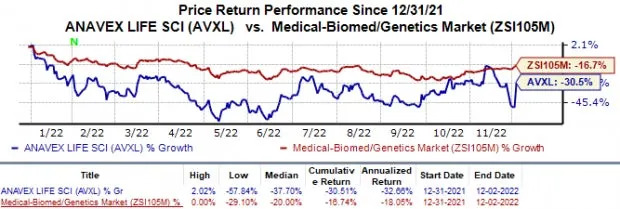
Shares of Anavex have declined 30.5% this year compared with the industry’s 16.7% fall.

Zacks Investment Research


Image Source: Zacks Investment Research

The results of the ANAVEX 2-73-AD-004 study are also consistent with the phase IIa ANAVEX 2-73 study previously conducted by the company. Data from the phase IIa study had demonstrated a therapeutic effect on cognition and function.

Per management, AD is one of the leading causes of deaths in older adults aged above 65 years and is also the most common cause of dementia in this age group. Treatment with ANAVEX 2-73 demonstrated a reversal of cognitive decline.

Apart from AD, Anavex has also successfully completed clinical studies evaluating ANAVEX 2-73 in other indications. These include a phase II proof-of-concept study on Parkinson’s disease dementia and a phase III study in adult patients with Rett syndrome.

Anaex’s target market is highly competitive as several other pharma companies like Biogen BIIB and Eli Lilly LLY are also developing their candidates targeting the AD indication. The Alzheimer’s candidates of these companies — anti-amyloid beta antibodies — are in late-stage development or review and are expected to be launched in a few months.

Last week, Biogen along with partner Eisai presented detailed data from the phase III confirmatory study CLARITY AD, which evaluated its AD candidate lecanemab (BAN2401) to treat early AD. The data showed that Biogen’s candidate did reduce markers of amyloid in early Alzheimer’s disease and led to moderately less decline in measures of cognition and function than placebo at 18 months. However, treatment with lecanemab was associated with adverse events.

Biogen/Eisai have already filed their biologics license application (BLA) seeking accelerated approval for lecanemab with the FDA, supported by data from a phase II study (Study 201). A final BLA decision is expected by Jan 6, 2023.

Eli Lilly has developed donanemab, an investigational antibody therapy, for AD. Eli Lilly initiated a rolling submission with the FDA last year, seeking approval for donanemab under the accelerated pathway based on data from the phase II TRAILBLAZER-ALZ study. A final decision on the BLA is expected in early 2023. Eli Lilly also expects a data readout from the pivotal phase III TRAILBLAZER-ALZ 2 by mid-2023. If positive, the data will form the basis of its application for traditional regulatory approval for donanemab.

Last month, Roche RHHBY announced the failure of the GRADUATE I and II studies, evaluating its monoclonal antibody gantenerumab in early AD. The studies failed to meet their primary endpoint of slowing clinical decline. Patients treated with Roche’s gantenerumab showed a slowdown of clinical decline in GRADUATE I and GRADUATE II, which was not statistically significant. Per Roche, the level of beta-amyloid removal was lower than expected.

Anavex Life Sciences Corp. Price

Anavex Life Sciences Corp. Price

Anavex Life Sciences Corp. price | Anavex Life Sciences Corp. Quote

Corporate landlords are gobbling up mobile home parks and rapidly driving up rents

MoneyWise

Corporate landlords are gobbling up mobile home parks and rapidly driving up rents — here’s why the space is so attractive to them

Vishesh Raisinghani – December 5, 2022

Corporate landlords are gobbling up mobile home parks and rapidly driving up rents — here’s why the space is so attractive to them

The hunt for yield has pushed private equity firms and professional investors into new segments of the real estate market.

In recent years, sophisticated investors have snapped up multi-family units and single-family homes. Now, corporate landlords are targeting the most cost-effective segment of the real estate market: mobile home parks

The most affordable U.S. housing option

Manufactured homes or mobile homes are considered the most affordable non-subsidized housing option in America. That’s because the owners own only the prefabricated unit and not the land under the home. The land is usually leased from the landlord of a trailer park.

The average monthly rent for a mobile home in 2021 was $593. That’s significantly lower than the average one-bedroom condo rental rate of $1,450. The mobile park rental also often includes utilities and insurance.

Rents typically rise 4% to 6% annually and renters have the flexibility to move their housing unit to another park. These factors make the manufactured home highly attractive to low-income households.

As of 2020, nearly 22 million Americans lived in mobile homes. That’s 6.7% of the total population or about one in 15 people across the country. However, the economic inefficiencies that make these manufactured homes affordable also make them attractive to professional investors.

Investing in mobile home parks

Factors such as below-market rents and disrepair make mobile home parks attractive for investors seeking to add value. The typical mobile home park lot costs $10,000, which means 80 lots would be worth $800,000 on average.

Put simply, the entry price for these parks is much lower than multi-family apartments and condo buildings across the country.

Professional investors can also raise rents significantly to improve the valuation of the property. Attracting tenants with higher incomes or improving the park’s amenities and infrastructure are other value-add strategies that make this asset class appealing.

The fact that moving a typical mobile home costs between $3,000 to $10,000 also means that most tenants are unable to afford the move. This gives landlords immense pricing power.

Meanwhile, the yield is much higher. The capitalization rate (the ratio of net operating income to market price) could be as high as 9%, according to real estate partners Dave Reynolds and Frank Rolfe, who together are the fifth-largest owner of mobile home parks in the U.S.

The largest mobile park landlord is real estate veteran Sam Zell. Zell’s Equity LifeStyle Properties (ELS) owns 165,000 units across the country and the asset is a key element of his $5.4 billion fortune.

In recent years, larger investors such as Singapore’s sovereign wealth fund GIC and private equity firms such as The Carlyle Group, Brookfield, Blackstone, and Apollo have also added exposure to this asset class.

Even Warren Buffett is involved. His firm’s subsidiary, Clayton Homes, is the largest manufacturer of mobile homes in the U.S., and also operates two of the biggest mobile home lenders, 21st Mortgage Corp. and Vanderbilt Mortgage.

You can invest too

Retail investors looking for exposure to mobile home parks have plenty of options. Acquiring a park is, perhaps, the most straightforward way to access this asset class. However, publicly-listed stocks and real estate investment trusts offer exposure too.

Sam Zell’s Equity LifeStyle Properties is listed on the New York Stock Exchange under the ticker ELS. Sun Communities Inc. (SUI) owns 146,000 units across the U.S. and some in Canada, while Legacy Housing Corp. (LEGH) builds, sells, and finances manufactured homes.

Retail and institutional investors could see more upside from this segment as the economic inefficiencies are ironed out.

How much do you need to earn annually to afford a house in Los Angeles?

Los Angeles Times

How much do you need to earn annually to afford a house in Los Angeles?

Salvador Hernandez – December 1, 2022

MISSION HILLS, CA - October 11, 2022 - A home for sale in the Mission Hills area of Los Angeles Tuesday, Oct. 11, 2022 in Mission Hills, CA.(Brian van der Brug / Los Angeles Times)
A home for sale in the Mission Hills area of Los Angeles on Oct. 11. (Brian van der Brug / Los Angeles Times)

The annual income needed to buy a home in Los Angeles skyrocketed past $220,000, a recent study found, with higher mortgage rates and inflation cutting deeper into household incomes.

That means the ability to own a home is a goal inching further and further away from more families and households in Los Angeles, where the median annual household income in 2020 was just over $65,000.

According to the residential real estate firm Redfin, the yearly salary needed now to buy a median-priced home in the city and comfortably make the mortgage payment is now $221,592, up nearly 41% from last year.

In Los Angeles, the high cost of housing has also played a role in making it the most overcrowded large U.S. county.

Across the U.S., home buyers need to earn $107,281 a year, or 45.6% more, in 2022 compared with the previous year to buy a typical home, the study conducted by Redfin found.

Rising mortgage rates are the leading factor for the higher housing cost, according to the study, which found that from February 2020 to October 2022, the monthly payment for a family buying a median-priced home increased about 70%.

Home prices have also remained relatively steady, meaning that those who can still afford a home need to readjust their budgets, while others have been priced out.

“High rates are making buyers rethink their priorities, as many of them can no longer afford the home they want in the location they want,” said Chelsea Traylor, a Redfin agent.

The biggest spike has been in Florida, where the average mortgage payment increased more than 73% in North Port, where an annual salary of $131,535 is now needed to afford a home. The salary needed to buy a median home increased to $128,892 in Miami as well, a rise of more than 63% in a single year.

In 93 metro areas analyzed by Redfin, the agency found all of them needed at least a 30% salary increase to buy a median-priced home. Prospective home buyers in at least half those areas needed to make a minimum of $100,000 a year.

Redfin’s study compared median monthly mortgage payments in October 2022 and October 2021, and considered an affordable monthly payment to be no more than 30% of the home buyer’s income.

The study also found that although some areas in California — like the Bay Area — had “smaller-than-average” increases in income requirements, the state is still home to five of the most expensive places to own a home.

In San Francisco, the salary needed to buy a median-priced home soared to more than $402,000 and, in San Jose, a salary of more than $363,000 was needed to make the monthly mortgage payments. In Anaheim, home buyers needed about $254,000 a year, followed by Oakland, with a required salary of $247,559, and Los Angeles.

Europe embarks on solar power ‘revolution’ to solve its energy crisis — and fight climate change

Yahoo! News

Europe embarks on solar power ‘revolution’ to solve its energy crisis — and fight climate change

Melissa Rossi, Contributor – November 30, 2022

The Núñez de Balboa photovoltaic plant in Badajoz, Spain, is one of the largest in Europe.
The Núñez de Balboa photovoltaic plant in Badajoz, Spain, is one of the largest in Europe. With an installed capacity of 500 megawatts, this facility can supply clean energy to 250,000 homes. (Iberdrola)

Spurred by Russia’s war in Ukraine and its own pledge to cut greenhouse gas emissions in half by 2030, the European Union is aggressively ramping up its use of solar power, installing panels on everything from city rooftops to farmland.

In 2021, solar accounted for just 6% of electricity in the 27-country EU bloc, according to Ember, a climate and energy think tank. However, since Russia cut gas supplies in response to European sanctions over its war in Ukraine, solar has become the fastest-growing source of renewable energy on the continent this year. According to SolarPower Europe, a nonprofit association, new solar projects are “set to overshoot even our highest deployment projections for 2022.”

“The EU generated a record 12% of its electricity from solar this summer, helping to avoid a potential €29 billion in fossil gas imports,” Hannah Broadbent, head of communications for Ember, told Yahoo News. And solar’s remarkable growth shows no signs of stopping in the EU, where SolarPower Europe estimates at least 40 gigawatts of capacity will be installed this year, enough to potentially power upwards of 30 million homes.

By comparison, solar contributed less than 3% of U.S. electricity supplies in 2021, although new incentives are prompting more American utilities to follow in European footsteps.

“There’s a massive solar boom in Europe,” said Matthew Berwind, agrivoltaics project manager at Germany’s Fraunhofer Institute for Solar Energy Systems, the largest applied research institute for solar energy in Europe. “It’s huge.”

Wind turbines spin behind a vast array of solar energy panels.
Wind turbines at a solar energy park near Prenzlau, Germany. (Sean Gallup/Getty Images)

From Portugal to Poland, the Netherlands to Greece, mammoth photovoltaic plants are spreading across fields and gliding across lakes, each facility providing enough electricity for hundreds of thousands of homes. Buildings are being constructed with solar-powered water heaters, photovoltaic windows and photovoltaic roof tiles. Solar panels are appearing atop government buildings, grocery stores and schools, and even farms are embracing novel sun-powered technologies to shield crops from hail and scorching sun while producing energy.

Mario Sánchez-Herrero, founder of the nonprofit solar cooperative Ecooo Energía Ciudadana, who is based in Madrid, told Yahoo News that small-scale generation is also making a big difference. “We’re seeing a real revolution of solar in Spain,” he said, adding that small-scale energy production from panels installed at homes or from nearby buildings is generating “the extraordinary amount of two gigawatts per year.” And the numbers, he said, are shooting up.

Russia and China have everything to do with the explosion of solar. Russia’s invasion of Ukraine provided impetus to cut dependence on Russian gas for electricity, while China’s manufacturing of photovoltaic panels has dramatically brought down the price. “The cost of solar-powered electricity dropped 90% in a decade, making it one of the cheapest sources of electricity today,” Dries Acke, policy director at SolarPower Europe, told Yahoo News.

In fact, a new study conducted by the Oslo-based energy research firm Rystad Energy concluded that, since prices have fallen so low, it would be 10 times cheaper to build new solar capacity in Europe than to continue operating gas-fired power plants.

An old woman in a scarf carrying shopping bags looks disconsolately down a rutted dirt road lined with a dilapidated apartment building. A pickup drives away in the distance.
A woman walks through the village of Arkhanhelske on Nov. 3 in the Kherson region, which was formerly occupied by Russian forces. (Bulent Kilic/AFP via Getty Images)

But Europe’s dependence on China for solar equipment is a potential vulnerability. “China controls a lot of the minerals needed for solar installations and a lot of the manufacturing, which shifted to China over the last 10 years,” said Thorfinn Stainforth, a policy analyst at the Institute for European Environmental Policy. “The price has gone down — it’s very cheap now to get Chinese solar panels. But it’s also not without some risks, as we’ve seen in terms of global supply chain disruption this year following COVID, and in terms of overreliance on individual countries for energy supplies.”

What’s more, solar has its limitations. “Solar on its own cannot be the solution,” Stainforth said, adding that it needs to be coupled with other renewable energies, like wind or hydropower, as part of an integrated electricity system. “When it’s very dark, when it’s winter and when it’s night, solar is much less usable,” he noted. Even though solar installations are skyrocketing, some EU countries, including Italy, are lagging behind in building enough renewable generation to meet the EU’s goal of slashing greenhouse gases 55% by 2030, according to Ember.

Meanwhile, not everybody is a fan of “solar farms,” with millions of panels spread over thousands of acres, such as the new Francisco Pizarro solar plant in western Spain, which is currently Europe’s biggest. Ecooo’s Sánchez-Herrero, for one, thinks massive installations defeat the purpose of solar — which can be used by individual homes and communities to give them some energy independence from utilities. At the rate small-scale production is growing in Spain, he believes that his country can meet its renewable energy goals without another large solar plant.

An array of photovoltaic power panels at Abaste's El Bonillo Solar Plant stretches into the distance.
Photovoltaic power panels at Abaste’s El Bonillo Solar Plant in El Bonillo, Spain, in 2015. (Pablo Blazquez Dominguez/Getty Images)

“The big installations are owned by big companies, and they use investment funds,” often from foreign countries, he said. “People come in from other countries to make money in Spain, and we don’t want this. We want to see energy communities that want cheaper energy and clean energy, and want to be the owners of the way they obtain the energy.”

Some, including former U.K. Prime Minister Liz Truss, are concerned about solar installations on land that could be farmed. This fall the government of the United Kingdom even briefly flirted with an effective ban on solar farms, based on concerns about arable lands and food security. However, the environment secretary who put the idea forward was fired after Truss’s fall from grace, and the initial signs from the new government suggest it will be more favorably disposed toward solar.

However, others are pleased about new megaplants, like the Pizarro solar field, which is capable of providing 590 megawatts of electricity to power 334,000 homes.

New plants are aiming to address biodiversity issues, said Acke of SolarPower Europe. He points to the planned Rezolv Energy solar plant in Romania — the first utility-scale solar project in Europe over one gigawatt. “What’s crucial, and what we see more and more, are the biodiversity and dual-land use benefits that this kind of project can support,” he said, adding that the Rezolv plant is planned to return poor-quality agricultural land to pasture, hosting sheep grazing and even beekeeping.

Traian Voineagu, on a ladder in front of a window under the eaves of a house, gets ready to install a solar panel.
A technician installs a solar panel in a home in Glod, Romania, that is not connected to the electrical grid. (Andreea Campeanu/Getty Images)

But the biggest buzz in Europe concerns solar’s newest applications in agriculture — namely agri-solar. In pilot projects, solar panels cover crops such as berries and grapes, generating electricity to help meet a farm’s energy needs. They also shield crops from the scorching sun, hailstorms and torrential rains, and ultimately help farmers generate two sources of income from one tract of land.

“Instead of looking at a single parcel of land as having only a single usage, agri-solar combines the agricultural usage with power production,” said Berwind of the Fraunhofer Institute, noting that this can nearly double the land use efficiency.

“In the face of global climate change, as we start to see more extreme weather events that impact agricultural yield — droughts, storms, hail — the photovoltaic side gives these farmers a more diverse income source,” he noted. “So if their agricultural product falls through one year because a tornado blew through or hail damaged their crops, then they still have a safe financial baseline from one year to the next.”

Currently being tried out in Spanish, French and German vineyards as well as Dutch fruit farms, agri-solar projects provided an installed capacity of two gigawatts of electricity, Berwind estimates, a figure he expects will double in the next year because projects are getting bigger. “Standard photovoltaic developers are taking it seriously and starting to install multiple megawatts of systems,” he said.

Slanting photovoltaic panels slope toward a row of vines.
The photovoltaic panels recently installed in a vineyard in Toledo, Spain, in a pilot agrivoltaic project can can shield grapes from scorching summer sun, helping to reduce evaporation and optimize use of rainwater. (Iberdrola)

Despite all the enthusiasm about solar’s big surge in the EU, outstanding challenges remain, among them Europe’s ability to bring more solar manufacturing back to the continent. Another is a shortage of workers able to install panels on roofs. Ecooo has had so many requests to add them to homes in Madrid that it has to turn away new customers. “We are telling everyone, ‘If you have kids who are unemployed, have them take a three-month course so they can make solar installations,’” said Sánchez-Herrero.

“In Spain, or Greece, in these countries where there’s a lot of sun and a lot of youth unemployment, that could be a really good match,” Stainforth added.

7 Florida Cities That Could Be Headed for a Housing Crisis

Go Banking Rates

7 Florida Cities That Could Be Headed for a Housing Crisis

Jordan Rosenfeld – November 30, 2022

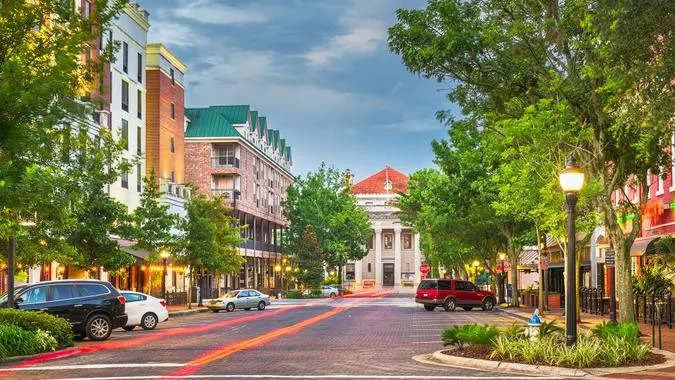
TraceRouda / Getty Images/iStockphoto

Florida seems to be a state that people are always flocking to and never leaving, with its temperate weather, great beaches and lots of excellent attractions. However, even Florida is feeling the results of market forces, which are increasing mortgage rates, driving up home prices, and thus driving out people. In fact, the Florida cities on this list are showing alarming signs that could be pointing toward a housing crisis.

In order to find the Florida cities showing cause for concern, GOBankingRates looked at the largest 200 cities in terms of total housing units and some crucial factors such as percentage of mortgages that are between 30 and 90+ days delinquent and homeowner and renter vacancy rates. Data was drawn from the Consumer Financial Protection Bureau, the Consumer Protection Bureau, and RealtyTrac. Here are seven most likely to end up with a housing crisis.

Shutterstock.com
Shutterstock.com

7. Pembroke Pines, Florida

  • Homeowner vacancy rate: 0.9%
  • % of mortgages delinquent 90 days: 0.7%

Take Our Poll: How Has Inflation Impacted Your Holiday Shopping Plans?

Shutterstock.com
Shutterstock.com

6. Hollywood, Florida

  • Homeowner vacancy rate: 1.6%
  • % of mortgages delinquent 90 days: 0.6%
virsuziglis / Getty Images/iStockphoto

5. Jacksonville, Florida

  • Homeowner vacancy rate: 2.0%
  • % of mortgages delinquent 90 days: 0.6%
Mercuri / Getty Images/iStockphoto

4. Miami, Florida

  • Homeowner vacancy rate: 2.2%
  • % of mortgages delinquent 90 days: 0.6%
Sean Pavone / Shutterstock.com

3. Gainesville, Florida

  • Homeowner vacancy rate: 3.6%
  • % of mortgages delinquent 90 days: 0.6%
Shutterstock.com
Shutterstock.com

2. Fort Lauderdale, Florida

  • Homeowner vacancy rate: 4.1%
  • % of mortgages delinquent 90 days: 0.6%
Arrangements-Photography / Getty Images/iStockphoto

1. Orlando, Florida

  • Homeowner vacancy rate: 5%
  • % of mortgages delinquent 90 days: 0.5%

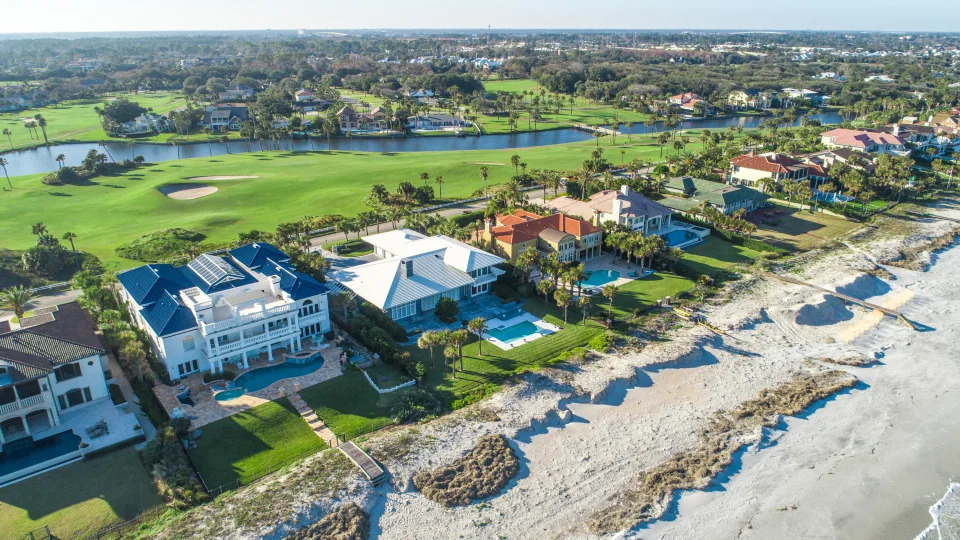
Dreaming of beachfront real estate? Much of Florida’s coast is at risk of storm erosion that can cause homes to collapse, as Daytona just saw

The Conversation

Dreaming of beachfront real estate? Much of Florida’s coast is at risk of storm erosion that can cause homes to collapse, as Daytona just saw

Zhong-Ren Peng, Professor of Urban and Regional Planning,

University of Florida November 23, 2022

Dozens of homes were left unstable in the Daytona Beach area after Hurricane Nicole's erosion. <a href=
Dozens of homes were left unstable in the Daytona Beach area after Hurricane Nicole’s erosion. Joe Raedle/Getty Images

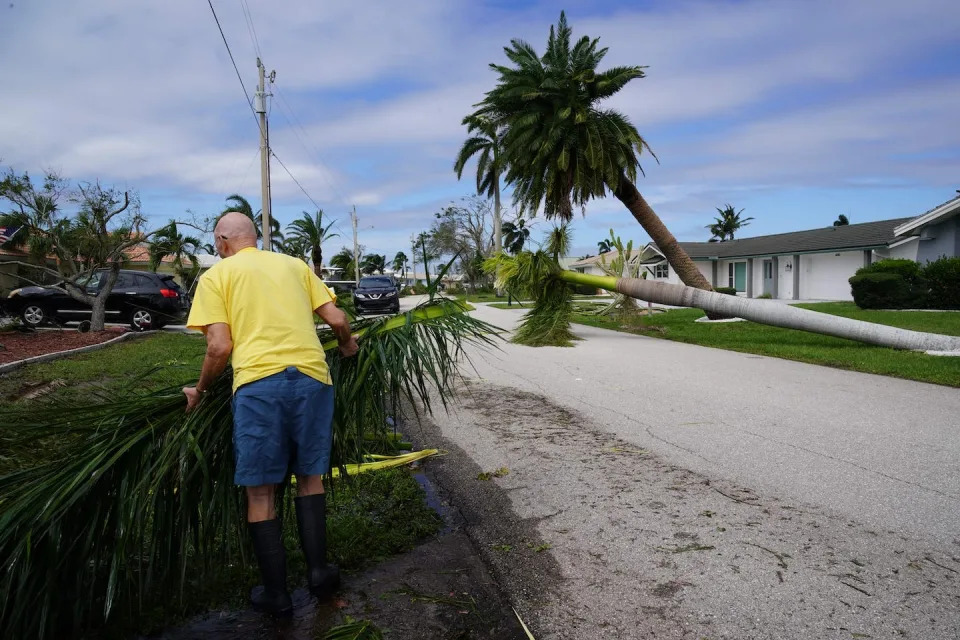
Back-to-back hurricanes left an unnerving scene on the Florida coast in November 2022: Several houses, and even swimming pools, were left dangling over the ocean as waves eroded the earth beneath them. Dozens of homes and condo buildings in the Daytona Beach area were deemed unsafe.

The destruction has raised a disturbing question: How much property along the rest of the Florida coast is at risk of collapse, and can it be saved?

As the director of iAdapt, the International Center for Adaptation Planning and Design at the University of Florida, I have been studying climate adaptation issues for the last two decades to help answer these questions.

Rising seas, aging buildings

Living by the sea has a strong appeal in Florida – beautiful beaches, ocean views, and often pleasant breezes. However, there are also risks, and they are exacerbated by climate change.

Sea level is forecast to rise on average 10 to 14 inches (25-35 cm) on the U.S. East Coast over the next 30 years, and 14 to 18 inches (35-45 cm) on the Gulf Coast, as the planet warms. Rising temperatures are also increasing the intensity of hurricanes.

With higher seas and larger storm surges, ocean waves more easily erode beaches, weaken sea walls, and submerge cement foundations in corrosive salt water. Together with subsidence, or sinking land, they make coastal living riskier.

Florida’s erosion risk map shows most of the state’s coastline at critical risk. <a href=
Florida’s erosion risk map shows most of the state’s coastline at critical risk. Florida Department of Environmental ProtectionCC BY-SA

The risk of erosion varies depending on the soil, geology and natural shoreline changes. But it is widespread in U.S. coastal areas, particularly Florida. Maps produced by engineers at the Florida Department of Environmental Protection show most of Florida’s coast faces critical erosion risk.

Aging or poorly maintained buildings and sea walls, and older or poor construction methods and materials, can dramatically aggravate the risk.

Designing better building codes

So, what can be done to minimize the damage?

The first step is to build sturdier buildings and fortify existing ones according to advanced building codes.

Building codes change over time as risks rise and construction techniques and materials improve. For example, design criteria in the Florida Building Code for South Florida changed from requiring some new buildings to be able to withstand 146 mph sustained winds in 2002 to 195 mph winds in 2021, meaning a powerful Category 5 hurricane.

The town of Punta Gorda, near where Hurricane Ian made landfall in October 2022, showed how homes constructed to the latest building codes have a much better chance of survival.

Many of Punta Gorda’s buildings has been rebuilt after Hurricane Charley in 2004, shortly after the state updated the Florida Building Code. When Ian hit, they survived with less damage than those in neighboring towns. The updated code had required new construction to be able to withstand hurricane-force winds, including having shutters or impact-resistant window glass.

Many homes in Punta Gorda fared better in Hurricane Ian’s winds because they had been rebuilt to higher standards after Hurricane Charley in 2002. <a href=
Many homes in Punta Gorda fared better in Hurricane Ian’s winds because they had been rebuilt to higher standards after Hurricane Charley in 2002. Bryan R. Smith / AFP

However, even homes built to the latest codes can be vulnerable, because the codes don’t adequately address the environment that buildings sit on. A modern building in a low-lying coastal area could face damage in the future as sea level rises and the shoreline erodes, even if it meets the current flood zone elevation standards.

This is the problem coastal residents faced during Hurricanes Nicole and Ian. Flooding and erosion, exacerbated by sea-level rise, caused the most damage – not wind.

The dozens of beach houses and condo buildings that became unstable or collapsed in Volusia County during Hurricane Nicole might have seemed fine originally. But as the climate changes, the coastal environment changes, too, and one hurricane could render the building vulnerable. Hurricane Ian damaged sea walls in Volusia County, and some couldn’t be repaired before Nicole struck.

How to minimize the risk

The damage in the Daytona area in 2022 and the deadly collapse a year earlier of a condo tower in Surfside should be a wake-up call for all coastal communities.

Data and tools can show where coastal areas are most vulnerable. What is lacking are policies and enforcement.

Florida recently began requiring that state-financed constructors conduct a sea-level impact study before starting construction of a coastal structure. I believe it’s time to apply this new rule to any new construction, regardless of the funding source.

With Hurricane Nicole’s storm surge coinciding with high tide, the waves breached a condo tower’s sea walls in Daytona Beach in November 2022. <a href=
With Hurricane Nicole’s storm surge coinciding with high tide, the waves breached a condo tower’s sea walls in Daytona Beach in November 2022. Joe Raedle/Getty Images

A comprehensive sea-level impact study requirement should also allow for risk-based enforcement, including barring construction in high-risk areas.

Similarly, vulnerability audits – particularly for multistory buildings built before 2002 – can check the integrity of an existing structure and help spot new environmental risks from sea-level rise and beach erosion. Before 2002, the building standard was low and enforcement was lacking, so many of the materials and the structures used in those buildings aren’t up to the standards of today.

What property owners can do

There is a range of techniques homeowners can use to fortify homes from flood risks.

In some places, that may mean elevating the house or improving the lot grading so surface water runs away from the building. Installing a sump pump and remodeling with storm-resistant building materials can help.

FEMA suggests other measures to protect against coastal erosion, such as replenishing beach sand, strengthening sea walls and anchoring the home. Engineering can help communities, temporarily at least, through sea walls, ponds and increased drainage. But in the long term, communities will have to assess the vulnerability of coastal areas. Sometimes the answer is to relocate.

However, there’s a disturbing trend after hurricanes, and we’re seeing it with Ian: Many damaged areas see lots of money pouring in to rebuild in the same vulnerable locations. An important question communities should be asking is, if these are already in high-risk areas, why rebuild in the same place?

This article is republished from The Conversation, an independent nonprofit news site dedicated to sharing ideas from academic experts. It was written by: Zhong-Ren PengUniversity of Florida. Like this article? subscribe to our weekly newsletter.

Read more:

Zhong-Ren Peng receives funding from National Science Foundation, Florida Sea Grant, and Florida Department of Transportation.

Accountant testifies Trump claimed decade of huge tax losses

Associated Press

Accountant testifies Trump claimed decade of huge tax losses

Michael R. Sisak – November 22, 2022

Donald Bender, left, a former accountant for Donald Trump, arrives at Manhattan criminal court, Monday, Nov. 21, 2022, in New York. Prosecutors in the Trump Organization's criminal tax fraud trial rested their case Monday earlier than expected, pinning hopes for convicting Donald Trump's company largely on the word of two top executives who cut deals before testifying they schemed to avoid taxes on company-paid perks. (AP Photo/Michael Sisak)
Donald Bender, left, a former accountant for Donald Trump, arrives at Manhattan criminal court, Monday, Nov. 21, 2022, in New York. Prosecutors in the Trump Organization’s criminal tax fraud trial rested their case Monday earlier than expected, pinning hopes for convicting Donald Trump’s company largely on the word of two top executives who cut deals before testifying they schemed to avoid taxes on company-paid perks. (AP Photo/Michael Sisak)
FILE - Former President Donald Trump announces he is running for president for the third time at Mar-a-Lago in Palm Beach, Fla., Nov. 15, 2022. The Supreme Court has cleared the way for the handover of former President Donald Trump's tax returns to a congressional committee after a three-year legal fight. The Democratic-controlled House Ways and Means Committee had asked for six years of tax returns for Trump and some of his businesses, from 2015 to 2020. The court's order Tuesday, Nov. 22 leaves no legal obstacle in the way. (AP Photo/Andrew Harnik, File)
 Former President Donald Trump announces he is running for president for the third time at Mar-a-Lago in Palm Beach, Fla., Nov. 15, 2022. The Supreme Court has cleared the way for the handover of former President Donald Trump’s tax returns to a congressional committee after a three-year legal fight. The Democratic-controlled House Ways and Means Committee had asked for six years of tax returns for Trump and some of his businesses, from 2015 to 2020. The court’s order Tuesday, Nov. 22 leaves no legal obstacle in the way. (AP Photo/Andrew Harnik, File)
Trump Legal Troubles

NEW YORK (AP) — Donald Trump reported losses on his tax returns every year for a decade, including nearly $700 million in 2009 and $200 million in 2010, his longtime accountant testified Tuesday, confirming long-held suspicions about the former president’s tax practices.

Donald Bender, a partner at Mazars USA LLP who spent years preparing Trump’s personal tax returns, said Trump’s reported losses from 2009 to 2018 included net operating losses from some of the many businesses he owns through his Trump Organization.

“There are losses for all these years,” said Bender, who was granted immunity to testify at the company’s criminal tax fraud trial in Manhattan.

The short exchange amounted to a rare public discussion of Trump’s taxes — which the Republican has fought to keep secret — even if there was no obvious connection to the case at hand.

A prosecutor, Susan Hoffinger, questioned Bender briefly about Trump’s taxes on cross examination, at one point showing him copies of Trump tax paperwork that the Manhattan district attorney’s office fought for three years to obtain, before moving on to other topics.

The Trump Organization, the holding company for Trump’s buildings, golf courses and other assets, is charged with helping some top executives avoid income taxes on compensation they got in addition to their salaries, including rent-free apartments and luxury cars. If convicted, the company could be fined more than $1 million.

Trump is not charged in the case and is not expected to testify or attend the trial. The company’s former finance chief testified that he came up with the scheme on his own, without Trump or the Trump family knowing. Allen Weisselberg, testifying as part of a plea deal, said the company also benefited because it didn’t have to pay him as much in salary.

Bender’s testimony came on a day full of Trump-related legal drama, including the U.S. Supreme Court clearing the way for Congress to get six years worth of tax returns for Trump and some of his businesses.

Also Tuesday, the judge in New York Attorney General Letitia James’ civil fraud lawsuit against Trump and his company set an October 2023 trial date; a federal appeals court heard arguments in the FBI’s Mar-a-Lago documents investigation; and Sen. Lindsey Graham, a Trump ally, testified before a Georgia grand jury probing alleged 2020 election interference.

Bender’s tax loss testimony echoed what The New York Times reported in 2020, when it obtained a trove of Trump’s tax returns. Many of the records reflected massive losses and little or no taxes paid, the newspaper reported at the time.

The Times reported Trump paid no income tax in 11 of the 18 years whose records it reviewed, and that he paid just $750 in federal income tax in 2017, the year he became president. Citing other Trump tax records, The Times previously reported that in 1995 he claimed $915.7 million in losses, which he could have used to avoid future taxes under the law at the time.

Manhattan prosecutors subpoenaed Bender’s firm in 2019, seeking access to eight years of Trump’s tax returns and related documents, finally getting them after a protracted legal fight that included two trips to the U.S. Supreme Court.

Bender handled tax returns and other financial matters for Trump, the Trump Organization and hundreds of Trump entities starting in the 1980s. He also prepared taxes for members of Trump’s family and other company executives, including Weisselberg and Weisselberg’s son, who managed a company-run ice rink in Central Park.

Weisselberg, who pleaded guilty in August to dodging taxes on $1.7 million in extras in exchange for a five-month jail sentence, testified that he hid company-paid extras such as Manhattan apartments and Mercedes-Benz cars from his taxable income by having the company’s comptroller, Jeffrey McConney, reduce his salary by the cost of those perks.

Bender testified that Weisselberg kept him the dark on that arrangement — and that he only found out about it from prosecutors last year.

But emails shown in court Tuesday suggested that McConney tried to loop him in as early as 2013, with attached spreadsheets listing Weisselberg’s pay and reductions for extras, including Trump-paid tuition for his grandchildren’s private schooling.

Bender, who testified that he got numerous emails from Trump executives daily, said he didn’t recall seeing those messages. If he had, he said: “We would have had a serious conversation about continuing with the client.”

Mazars USA LLP has since dropped Trump as a client. In February, the firm said annual financial statements it prepared for him “should no longer be relied upon” after James’ office said the statements regularly misstated the value of assets — an allegation at the heart of her lawsuit.

Trump blamed Bender and Mazars for the company’s troubles, writing on his Truth Social platform last week: “The highly paid accounting firm should have routinely picked these things up – we relied on them. VERY UNFAIR!”

Bender testified that he put the onus on Weisselberg to fix any problems as scrutiny of the Trump Organization intensified after Trump’s election in 2016 and advised him to stop one dubious practice: the company’s longstanding, tax-saving habit of paying executive bonuses as freelance income.

The accountant said he told Weisselberg: “If there is anything bothering you, even if there’s the slightest chance, we have to set the highest standards so the company should be, effectively, squeaky clean.”