Another insurer is leaving Florida. How much is DeSantis to blame?

Tampa Bay Times, St. Petersburg, Fla.

Another insurer is leaving Florida. How much is DeSantis to blame?

Jay Cridlin, Tampa Bay Times – July 13, 2023

Gov. Ron DeSantis has signed more than 300 bills into law this year.

They include measures that touched on a broad swath of issues, including abortion, immigration, transgender care, space exploration, the death penalty, college diversity programs, phosphogypsum in road construction, alimony, a law enforcement registry for people with disabilities, drag shows, affordable housing and election reforms.

What wasn’t signed into law was a measure that might have prevented Farmers Insurance from announcing this week it was dropping tens of thousands of home, auto and umbrella policies in the state, following the lead earlier this year of insurers like United Property & Casualty.

In his bid for the Republican presidential nomination, DeSantis is promoting his record as governor, particularly how he’s led a reshaping of Florida’s education, diversity and investment policies.

But despite DeSantis signing multiple legislative packages since May 2022 designed to curtail skyrocketing rates, the state’s property insurance problem is still far from solved. More than a half-dozen insurers have withdrawn from Florida or faced insolvency in the past 18 months, all as record Atlantic Ocean temperatures have spurred hurricane forecasters to boost predictions for an above-average season this year.

DeSantis spokesperson Jeremy Redfern pointed to new laws targeting frivolous lawsuits against insurance companies and billions in funding to help insurers obtain backup reinsurance as evidence of the governor’s attention to the problem. The state is already seeing some progress in the form of new insurers entering the market, Redfern said.

“Even the most aggressive reforms will take time to affect the insurance industry,” Redfern said in an email. “The 2021, 2022, and 2023 legislative efforts will be effective.”

During a Wednesday radio appearance on the Howie Carr Show, DeSantis touted those legislative efforts, saying that, “because we did those reforms, it now is more economical for companies to come in. I think they’re going to wait through this hurricane season, and then I think they’re going to be willing to deploy more capital to Florida.”

”Knock on wood, we won’t have a big storm this summer,” DeSantis said. “Then I think you are going to start to see companies see an advantage.”

But Farmers’ abrupt exit Tuesday has opened DeSantis up to a fresh round of criticism that he and the Republican-led Legislature haven’t done enough to calm Florida’s insurance market.

“Knock on wood??? That’s not how this works,” Rep. Anna Eskamani, D-Orlando, said on Twitter. “Floridians need action on property insurance — not this.”

“It’s the No. 1 issue I hear about when I go talk to my constituents,” said Rep. Dan Daley, D-Coral Springs. “They’re not talking about drag shows. They don’t give a s—t about any of that. They care about being able to pay their property insurance bill and not being dropped by their insurer, and what we’ve done in this state is not really address that.”

Incremental change and patience

Property insurance reform was an issue in Florida long before DeSantis took office in 2019.

His first major action on the matter came that spring in the form of a bill limiting “assignment of benefits” claims, when contractors, not homeowners, seek reimbursement from insurers. DeSantis called it “meaningful” reform that “will protect Florida consumers from predatory insurance practices.” It was widely seen as a long-sought win for the insurance industry.

That more substantial changes weren’t an immediate priority reflects as much on the Legislature as it does on DeSantis, said former Republican state Sen. Jeff Brandes.

“This isn’t the battle he was taking on back then,” Brandes said. “He would tell you his statement was, ‘I will sign whatever the Legislature puts in front of me on property insurance.’ He said that comment multiple times. The Legislature chose not to send him anything.”

In May 2022, DeSantis convened a special legislative session designed to “stabilize the insurance market,” with an emphasis on targeting the “thousands of frivolous lawsuits” filed against insurance companies. The package that emerged included $2 billion in tax money to subsidize insurers’ reinsurance costs and $150 million to help hurricane-proof homes and tightened restrictions on suing insurers. DeSantis called it “the most significant reforms to Florida’s homeowners insurance market in a generation.”

After Hurricane Ian struck Southwest Florida, DeSantis called another session designed to “implement necessary reforms to the property insurance market.” In December, he signed a bill creating a $1 billion reinsurance fund and further tightening restrictions on lawsuits. Again, he called the reform “meaningful.”

“The issues in Florida’s property insurance market did not occur overnight, and they will not be solved overnight,” he said in a statement after signing. “The historic reforms signed today create an environment which realigns Florida to best practices across the nation, adding much-needed stability to Florida’s market, promoting competition, and increasing consumer choice.”

Then, during this year’s regular session, he signed a bill dubbed the Insurer Accountability Act, designed to impose transparency requirements on insurers and stiffen penalties on those that exhibited bad behavior. The law, he said, would “reinforce our commitment to Florida policyholders” and “protect consumers from predatory insurer practices.”

With each bill, supporters said it would take time to have a real impact.

“I do think that they were bold moves that will show positive changes for the homeowners’ industry over the coming years, but it is going to take two, three, four years for those changes to bear any fruit,” said Trevor Burgess, CEO of St. Petersburg flood insurer Neptune Flood. “And that’s because, for the past 10 years, there’s just been so much damage done. You’ve had all of these insurance companies fail. Those that haven’t failed have struggled, and so it’s been very difficult for anyone to make any money or build up any reserves.”

Brandes said that Farmers won’t be the last insurer to withdraw, and that he thinks rates will go up another 10% to 15% next year before stabilizing in 2025. But if DeSantis and the Legislature had done nothing, he said, “you wouldn’t have a market in Florida. You would have had 10 companies leaving instead of just one.”

Democrats say the changes under DeSantis represent positive steps; the bipartisan Insurer Accountability Act passed unanimously. But they’ve been too narrowly focused on tort reform, said House Minority Leader Fentrice Driskell, D-Tampa. In a statement explaining why it was leaving, Farmers didn’t even mention lawsuits.

In recent sessions, Democrats have proposed changes including a publicly elected insurance commissioner and blocking certain insurers from claiming insolvency. None gained traction.

“They don’t really know what to do,” Driskell said of Republican legislative leadership. “They keep trying to scramble and put together these piecemeal solutions that haven’t really stabilized the market or brought rates down. To me, it’s not so much a commitment of, ‘Oh, yes, we’re on top of this, there’s more to do, stay tuned.’ It’s more, ‘Eh, let’s try this. Oh, that didn’t work. Let’s see what we can try next.’”

That’s not all on DeSantis, she said; the House speaker and Senate president also have “so much power and authority in terms of shaping the policy agenda of this state.” But she also doesn’t see DeSantis pushing a more cohesive plan before a Legislature that rarely pushes back.

“I don’t even know what his plans and desires are with respect to property insurance, because he doesn’t articulate them,” she said. “He can articulate a blueprint for how to destroy DEI (diversity, equity and inclusion) in higher education. I have yet to see any blueprint for property insurance.”

“Distracted” by 2024

Since the Insurer Accountability Act was introduced in the Senate on March 31, DeSantis has spent at least 40 days out of state. He’s taken multiple campaign trips to the early-primary hotbeds of Iowa, New Hampshire and South Carolina; and he spent five days on an international trade trip to South Korea, Japan, Israel and the United Kingdom.

DeSantis hasn’t faced many questions about homeowners insurance on the presidential campaign trail. The most it became an issue was weeks before he officially entered the race, when former President Donald Trump took to social media, calling Florida’s latest insurance bill “the biggest insurance BAILOUT to Globalist Insurance Companies, in HISTORY.”

“He’s also crushed homeowners whose houses were destroyed in the Hurricane,” Trump wrote on his Truth Social platform. “They’re getting pennies on the dollar. His Insurance Commissioner does NOTHING, while Florida’s lives are ruined. This is the worst Insurance Scam in the entire COUNTRY!”

In stump speeches, DeSantis speaks about his legal battles with The Walt Disney Co., about his trips to the southern border with Mexico and about his campaign against corporate environmental, social and governance programs. He says little to nothing about Florida’s latest property insurance laws.

“He’s so ambitious and he’s so focused on that big goal that he’s let a lot of the everyday stuff go,” Driskell said. “You can’t just have a diet of red meat. You need some vegetables as well.”

One thing DeSantis does talk about is people moving to “the free state of Florida,” building and buying homes to escape “states governed by leftist politicians.”

“All I have to look at to see whether Chicago’s doing well, I just look at real estate values in Naples,” he said recently in New Hampshire. “When those are going up, I know Chicago’s done something stupid again, and people are fleeing.”

With pricier homes come pricier rates, though, which is keeping some residents from continuing to afford living here, said state Rep. Hillary Cassel, D-Dania Beach.

“If you can’t guarantee what your cost of insurance is going to be to insure that home, you can’t now become a homeowner,” Cassel said. “If your cost is going to increase 30% year after year after year, you can’t buy a house.”

In 2022, DeSantis called two special sessions on property insurance. Now that he’s running a national campaign, Driskell said he might be too “distracted” to do it again — although another catastrophic storm this season could change that.

Absent the right political motivation — whether it comes from a hurricane or from pressure on the campaign trail — Cassel isn’t sure lawmakers will swing back into action.

“Not with this leadership,” Cassel said. “Nope.”
More Clarence Thomas allegations stain the court: Lawyers with supreme court business paid Clarence Thomas aide via Venmo

The Guardian

Lawyers with supreme court business paid Clarence Thomas aide via Venmo

Stephanie Kirchgaessner in Washington – July 12, 2023

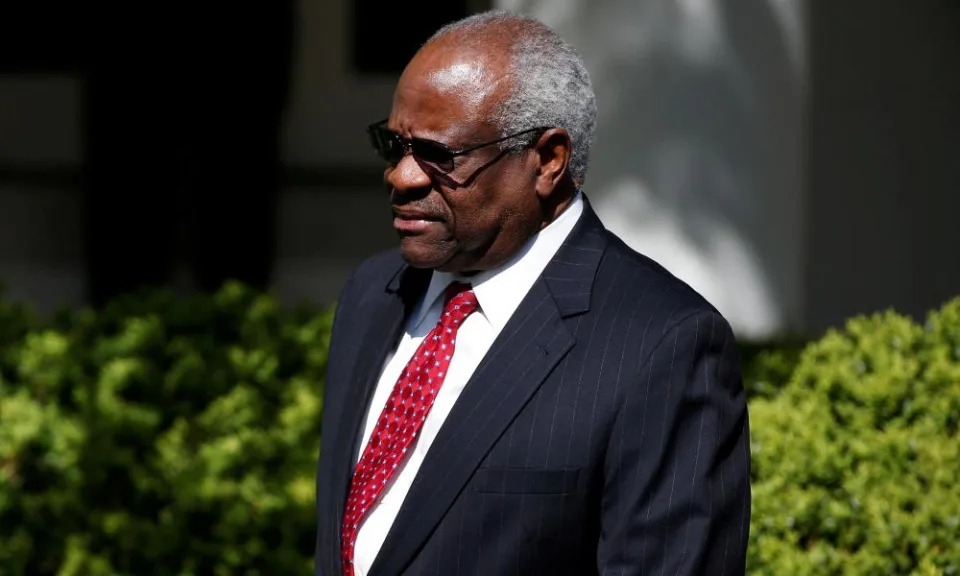
<span>Photograph: Joshua Roberts/Reuters</span>
Photograph: Joshua Roberts/Reuters

Several lawyers who have had business before the supreme court, including one who successfully argued to end race-conscious admissions at universities, paid money to a top aide to Justice Clarence Thomas, according to the aide’s Venmo transactions. The payments appear to have been made in connection to Thomas’s 2019 Christmas party.

The payments to Rajan Vasisht, who served as Thomas’s aide from July 2019 to July 2021, seem to underscore the close ties between Thomas, who is embroiled in ethics scandals following a series of revelations about his relationship with a wealthy billionaire donor, and certain senior Washington lawyers who argue cases and have other business in front of the justice.

Vasisht’s Venmo account – which was public prior to requesting comment for this article and is no longer – show that he received seven payments in November and December 2019 from lawyers who previously served as Thomas legal clerks. The amount of the payments is not disclosed, but the purpose of each payment is listed as either “Christmas party”, “Thomas Christmas Party”, “CT Christmas Party” or “CT Xmas party”, in an apparent reference to the justice’s initials.

However, it remains unclear what the funds were for.

The lawyers who made the Venmo transactions were: Patrick Strawbridge, a partner at Consovoy McCarthy who recently successfully argued that affirmative action violated the US constitution; Kate Todd, who served as White House deputy counsel under Donald Trump at the time of the payment and is now a managing party of Ellis George Cipollone’s law office; Elbert Lin, the former solicitor general of West Virginia who played a key role in a supreme court case that limited the Environmental Protection Agency’s ability to regulate greenhouse gas emissions; and Brian Schmalzbach, a partner at McGuire Woods who has argued multiple cases before the supreme court.

Other lawyers who made payments include Manuel Valle, a graduate of Hillsdale College and the University of Chicago Law School who clerked for Thomas last year and is currently working as a managing associate at Sidley, and Liam Hardy, who was working at the Department of Justice’s office of legal counsel at the time the payment was made and now serves as an appeals court judge for the armed forces.

Will Consovoy, who died earlier this year, also made a payment. Consovoy clerked for Thomas during the 2008-09 term and was considered a rising star in conservative legal circles. After his death, the New York Times reported that Consovoy had come away from his time working for Thomas “with the conviction that the court was poised to tilt further to the right – and that constitutional rulings that had once been considered out of reach by conservatives, on issues like voting rights, abortion and affirmative action, would suddenly be within grasp”.

None of the lawyers who made payments responded to emailed questions from the Guardian.

According to his résumé, Vasisht’s duties included assisting the justice with the administrative functioning of his chambers, including personal correspondence and his personal and office schedule.

Vasisht did not respond to an emailed list of questions from the Guardian, including questions about who solicited the payments, how much individuals paid, and what the purpose of the payments was. The Guardian also asked questions about the nature of Thomas’s Christmas party, how many guests were invited and where the event took place.

Reached via WhatsApp and asked if he would make a statement, Vasisht replied: “No thank you, I do not want to be contacted.”

Legal experts said the payments to Vasisht raised red flags.

Richard Painter, who served as the chief White House ethics lawyer in the George W Bush administration and has been a vocal critic of the role of dark money in politics, said it was “not appropriate” for former Thomas law clerks who were established in private practice to – in effect – send money to the supreme court via Venmo.

“There is no excuse for it. Thomas could invite them to his Christmas party and he could attend Christmas parties, as long as they are not discussing any cases. His Christmas party should not be paid for by lawyers,” Painter said. “A federal government employee collecting money from lawyers for any reason … I don’t see how that works.”

Painter said he would possibly make an exception if recent law clerks were paying their own way for a party. But almost all of the lawyers who made the payments are senior litigators at big law firms.

Kedric Payne, the general counsel and senior director of ethics at the Campaign Legal Center, said that – based on available information – it was possible that the former clerks were paying their own party expenses, and not expenses for Thomas, which he believed was different than random lawyers in effect paying admission to an exclusive event to influence the judge.

He added: “But the point remains that the public is owed an explanation so they don’t have to speculate.”

Thomas has been embroiled in ethics scandals for weeks following bombshell revelations by ProPublica, the investigative outlet which published new revelations about how the billionaire conservative donor Harlan Crow has paid for lavish holidays for the justice, bought Thomas’s mother’s home, and paid for the judge’s great-nephew’s private school education. The stories have prompted an outcry on Capitol Hill, where Democrats have called for the passage of new ethics rules.

Thomas is known for having close relationships with his former clerks. A 2019 article in the Atlantic noted that the rightwing justice has a “vast network” of former clerks and mentees who are now serving as federal judges and served in senior positions throughout the Trump administration. The large presence of former Thomas clerks, the Atlantic noted, meant that the “notoriously silent justice may end up with an outsize voice in the legal system for years to come”.

Thomas’s chamber did not respond to a request for comment.

Got a tip on this story? Please contact Stephanie.Kirchgaessner@theguardian.com

How Hot Is the Sea Off Florida Right Now? Think 90s Fahrenheit.

The New York Times

How Hot Is the Sea Off Florida Right Now? Think 90s Fahrenheit.

Catrin Einhorn and Elena Shao – July 12, 2023

Beach goers take a dip in the Atlantic Ocean at Hollywood Beach, Monday, July 10, 2023, in Hollywood, Fla. The world’s oceans are already record hot, especially the Atlantic, water surrounding much of Florida is in the 90s, hitting 96 degrees Fahrenheit around the keys. (AP Photo/Wilfredo Lee) (ASSOCIATED PRESS)

Florida’s coral reefs are facing what could be an unprecedented threat from a marine heat wave that is warming the Gulf of Mexico, pushing water temperatures into the 90s.

The biggest concern for coral isn’t just the current sea surface temperatures in the Florida Keys, even though they are the hottest on record. The daily average surface temperature off the Keys on Monday was just over 90 degrees Fahrenheit (32.4 Celsius), according to the National Oceanic and Atmospheric Administration.

The real worry, scientists say, is that it’s only July. Corals typically experience the most heat stress in August and September.

“We’re entering uncharted territories,” said Derek Manzello, an ecologist and the coordinator of NOAA’s Coral Reef Watch program.

Coral reefs are natural wonders that support myriad species and blunt damage from storms. In the United States, reefs generate economic benefits to the tune of $3.4 billion annually for fisheries, tourism and coastal protection, according to NOAA.

But oceans have absorbed some 90% of the additional heat caused by humans as we burn fossil fuels and destroy forests. When sea temperatures rise too high, corals bleach, expelling the algae they need for sustenance. If waters don’t cool quickly enough, or if bleaching events happen in close succession, the corals die. For decades, scientists have been warning that climate change is an existential threat to coral reefs. Already, the world has lost a huge proportion of its coral reefs, perhaps half since 1950.

“To be blunt, it can be very depressing,” Manzello said. “Unfortunately, I’m a scientist watching it happen.”

Marine heat isn’t just affecting the Gulf of Mexico. Globally, about 40% of the planet is experiencing a marine heat wave, according to Dillon Amaya, a physical scientist at NOAA who studies them.

“Florida is one patch in a terrible quilt right now,” Amaya said.

In part, that’s because the planet is entering a natural climate phenomenon known as El Niño, which typically brings warmer oceans. But now, El Niño is coming on top of long-term warming caused by greenhouse gas emissions.

While coral is especially vulnerable, heat waves harm untold species, and the effects are different around the world, as species are adapted to different temperature ranges.

In general, fish need more oxygen when the water is warmer. That’s a problem, because warmer water holds less oxygen.

“Large-scale fish kills are becoming more frequent as our climate changes,” said Martin Grosell, a professor of ichthyology at the University of Miami.

Coral reefs are particularly important because so many species rely on them. About 25% of all marine life, including more than 4,000 kinds of fish, depend on reefs at some point in their lives, according to NOAA.

While there aren’t yet reports of bleaching in Florida, it has already begun on reefs to the south, Manzello said, off Belize, Mexico, El Salvador, Costa Rica and Colombia.

Florida’s coral reef system stretches about 350 miles, from the St. Lucie inlet on the mainland south and west past the end of the Keys, and is frequented by sea turtles, manta rays, flounder and lobster.

What happens in Florida will depend on conditions over the next few weeks. Storms, which churn up deeper, cooler water and reduce sunshine, could provide relief, scientists say. El Niño periods are typically associated with below-average Atlantic hurricane seasons, but that might not hold true this year.

Researchers who care about coral are deeply troubled.

“I do lose sleep over it,” said Andrew Baker, a professor of marine biology at the University of Miami, where he directs the Coral Reef Futures Lab. “But I don’t want to write the eulogy just yet.”

Scientists like Baker are racing to come up with ways to help coral become more resilient to higher temperatures, for example by crossing Florida’s corals with varieties that seem to withstand more heat. But ultimately, the survival of corals and countless other species relies on the ability of humans to rein in climate change.

“You have to go to the root causes,” said Lizzie McLeod, the global oceans director at The Nature Conservancy. “We have to be reducing emissions, we have to move to clean energy, we have to reduce subsidies to the fossil fuel industry.”

In Key West, beachgoers expressed surprise at the warmth of the ocean, comparing it to bath water. Lynsi Wavra, a captain and ecotour guide, said her mother had lived there for 20 years and had witnessed the coral declining.

“She’d come home crying,” Wavra said.

Russian Military Hit by Uncertainty as One General Is Killed and Another Remains Absent

The New York Times

Russian Military Hit by Uncertainty as One General Is Killed and Another Remains Absent

Paul Sonne – July 12, 2023

Russian President Vladimir Putin and Gen. Sergei Surovikin. (Reuters)

One top commander has disappeared since a mutiny. Another was killed in an airstrike in Ukraine. Another accused his leadership of treachery after being fired. And a fourth former commander was gunned down while out on a jog in what may have been an organized hit.

The ranks of the Russian military have continued to be roiled by instability in the days since a short-lived insurrection by Wagner mercenaries three weeks ago, as pressures from Moscow’s nearly 17-month war reverberate across the armed forces.

On Wednesday, mystery deepened over the fate of Gen. Sergei Surovikin, the country’s former top commander in Ukraine, who has been dubbed “General Armageddon” for his ruthless tactics, and who has not been seen since the Wagner rebellion.

One of the country’s top lawmakers said, when pressed by a reporter, that the general was “taking a rest.”

“He is unavailable right now,” the lawmaker, Andrei Kartapolov, the head of the Russian Duma’s defense committee, added in a video posted on the Telegram messaging app before hurrying away from the reporter.

Surovikin was considered to be an ally of Yevgeny Prigozhin, the leader of the Wagner mercenary company, whose forces mounted the brief insurrection in late June aimed at toppling Russia’s military leadership before standing down in a deal with the Kremlin.

The New York Times reported that U.S. officials believe Surovikin had advance knowledge of the mutiny but do not know whether he participated. In the hours after the rebellion began, Russian authorities quickly released a video of the general calling on the Wagner fighters to stand down.

The lawmaker’s enigmatic comment about Surovikin came two days after Russian authorities released the first footage of the country’s top military officer, Gen. Valery Gerasimov, since the insurrection.

In the video, Gerasimov was receiving a report from the Russian Aerospace Forces, which are run by Surovikin. But the person giving the update in the footage was Surovikin’s deputy, Col. Gen. Viktor Afzalov.

Surovikin’s location is just one of the many mysteries that have arisen since the mutiny. Despite a deal announced by the Kremlin, under which Prigozhin would depart Russia for Belarus and avoid prosecution, the mercenary tycoon appears to have remained in Russia.

The Kremlin disclosed this week that Prigozhin and his top commanders met with President Vladimir Putin five days after the mutiny, raising many questions about what sort of deal had been struck with the former insurrectionists. On Wednesday, the Ministry of Defense said that Russian armed forces had been collecting Wagner’s weapons, ammunition, and military equipment.

The matériel is expected to be restored for further use. So far, the mercenary group has handed over thousands of small arms and heavy weapons, the ministry said, including rocket launch and mortar systems, anti-tank guns and multipurpose armored tractors.

Russia, meanwhile, received another blow to its top military ranks. Lt. Gen. Oleg Tsokov, the deputy commander of Russia’s Southern Military District, was killed in Ukraine during a Monday night missile strike on the occupied city of Berdiansk, one of the highest-level losses for Russia during the course of the war, Ukrainian authorities announced.

A Russian lawmaker and retired general, Andrei Gurulyov, confirmed Tsokov’s death in an appearance on state television Wednesday, saying he “died heroically.” The death recalled the early days of the war, when Ukrainian officials said they had killed about 12 generals on the front lines.

Gurulyov also released a recording late Wednesday of the commander of Russia’s 58th Combined Arms Army, Maj. Gen. Ivan Popov, explaining to his troops why he was relieved from commanding the unit, which is fighting on the front in Ukraine near Zaporizhzhia.

Popov described a “difficult situation with the senior leadership,” which led to him being relieved after he brought up problems on the battlefield, including the lack of counter battery fire and artillery reconnaissance stations, as well as deaths and injuries the force is suffering from enemy artillery fire.

Popov appeared to take aim at Gerasimov without naming him, saying that while Ukrainian forces couldn’t break through his army unit from the front, “our senior commander hit us from the rear, treacherously and vilely decapitating” the army unit “at the most difficult and tense moment.”

Russian authorities also arrested a Ukrainian man Wednesday on suspicion of gunning down a former Russian submarine commander, Capt. 2nd Rank Stanislav Rzhitsky, this week in the southern city of Krasnodar, where he had been serving as the deputy director of the city’s mobilization office.

Russian news outlets reported that Rzhitsky, who posted his running routes publicly on the exercise service Strava, was shot to death while jogging in a Krasnodar park.

On Tuesday, the day after the body was found, Ukrainian military intelligence said on its official Telegram account that Rzhitsky had commanded a submarine that was involved in missile attacks on Ukraine. Friends and relatives, however, told Russian news outlets that he had left active-duty military service before the February 2022 invasion.

The state news agency RIA Novosti, citing an anonymous source in Russian law enforcement, reported that the man arrested Wednesday had admitted under questioning to being recruited by Ukrainian intelligence to carry out the killing.

Rzhitsky’s name had been entered in the online database Myrotvorets, which posts photographs, social media accounts and telephone numbers of people considered to have committed crimes against Ukraine.

A red stamp was added over his photograph on the database reading, “Liquidated.”

‘Insane’: FBI Director Christopher Wray tangles with House GOP in tense hearing. What you missed

USA Today

‘Insane’: FBI Director Christopher Wray tangles with House GOP in tense hearing. What you missed

Bart Jansen, USA TODAY – July 12, 2023

WASHINGTON – FBI Director Christopher Wray defended the agency Wednesday against House Republicans who argued it suppressed conservative posts on social media and for running what they called illegal searches about U.S. citizens under a foreign surveillance law.

The hearing became the latest flashpoint for the FBI, which Republicans criticized for investigating participants at school board meetings or censoring social media posts. Democrats accused Republicans of trying to protect former President Donald Trump, who faces federal charges related to possession of national security documents after an FBI search of Mar-a-Lago 18 months after he left the White House. A White House spokesman said Republicans are attacking law enforcement.

In his opening salvo, House Judiciary Committee Chairman Jim Jordan, R-Ohio, cited a federal court decision in Louisiana eight days earlier that found the government suppressed First Amendment rights of people posting on social media posts about the COVID-19 pandemic vaccines and mask requirements, under a policy the ruling compared to an “Orwellian ministry of truth.”

The ruling found the FBI failed to alert social media companies that a story about Hunter Biden’s laptop was real rather than Russian disinformation days before the 2020 presidential election. Jordan and Rep. Mike Johnson, R-La., said that deprived millions of voters of information before the election.

“When the court said the FBI misled, that’s a nice way of saying they lied,” Jordan said.

Wray said he has reviewed the decision and the FBI would comply with the court’s prohibition against influencing social media companies. But he declined to comment further because the case is subject to further litigation.

“Our focus is on malign, foreign disinformation – that is, foreign malign information, that is foreign hostile actors who engage in covert actions to confuse our social media platforms,” Wray said. “The FBI is not in the business of moderating content or causing any social media company to suppress or censor.”

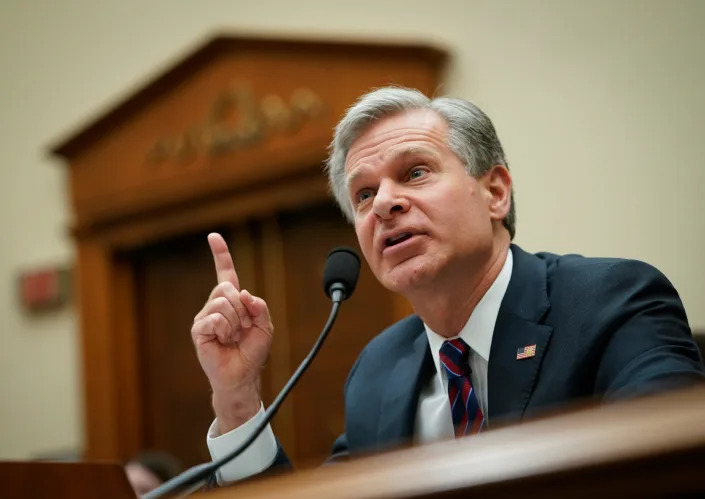
Christopher Wray, Director of the FBI, testifies in front of the House Judiciary Committee in Washington on July 12, 2023.
GOP vows to oppose extension of intelligence surveillance policy

Jordan said Republicans and potentially Democrats would oppose the reauthorization of the Foreign Intelligence Surveillance Act, which is scheduled to expire at the end of the year, because of 204,000 episodes of “illegal scrutiny” of U.S. citizens.

Rep. Matt Gaetz, R-Fla., said a court found that the illegitimate queries included several people linked to the Capitol attack on Jan. 6, 2021.

“The FBI has broken so bad that people can go and engage in queries that when you come before the Congress to answer questions, you’re blissfully ignorant,” Gaetz said. “The court has smacked you down, ruling FBI personnel apparently conducted queries for improper personal reasons.”

Wray said staffers had been disciplined for improper queries, but he couldn’t go into details.

Wray’s prepared statement said he is concerned about “profound risks” with proposals to require either a search warrant or court order before conducting a “U.S. person query” under Section 702 of the act. Wray said such a change would become a ban because applications either wouldn’t meet court standards or would take too long.

“That would be a body blow to the FBI, which relies on this longstanding, lawful capability to rapidly uncover previously hidden threats and connections, and to take swift steps to protect the homeland when needed,” Wray said.

Democrats have also questioned extending Section 702 without changes. Rep. Zoe Lofgren, D-Calif., said

“The committee will need to look into warrant requirements,” Lofgren said.

“We have bipartisan support around the concerns we have about FISA reauthorization and unless we really understand what measures the FBI is taking to ensure that people’s privacy is protected, I think it’s going to be a very difficult reauthorization process,” added Rep. Pramila Jayapal, D-Wash.

Wray agrees with Durham report on FBI missteps in Russia investigation
Christopher Wray, Director of the FBI, testifies in front of the House Judiciary Committee in Washington on Wednesday, July 12, 2023.

A rare point of agreement arose in a discussion of former special counsel John Durham’s report on the origins of the investigation into Russian interference in the 2016 election, which was called Crossfire Hurricane.

Rep. Ben Cline, R-Va., questioned why the FBI failed to consider information beneficial to suspects during Crossfire Hurricane. Cline also questioned whether the FBI abused its authority under the Foreign Surveillance Intelligence Act.

“The American people are outraged” about agents who undermined the FBI’s reputation, Cline said.

The FBI adopted dozens of changes after a scathing inspector general’s report about Crossfire Hurricane, which occurred before Wray became director in August 2017. Durham didn’t recommend additional wholesale changes.

“Certainly there were violations that were totally unacceptable and in my view cannot be allowed to happen again,” Wray said.

Cline also criticized the FBI’s warrantless queries on 3.4 million Americans in 2021 and 200,000 last year.

“It looks like a framework that enables the FBI to spy on countless Americans,” Cline said.

Wray: accusation he’s against conservatives ‘insane’

Rep. Harriet Hageman, R-Wyo., called the Durham report and Russia investigation evidence of an unfair justice system and asked Wray how he would reform law enforcement.

“The American people fully understand that there is a two-tiered justice system that has been weaponized to persecute people based on their political beliefs and that you have personally worked to weaponize the FBI against conservatives,” Hageman said.

Wray disagreed with her description, but said the FBI already adopted changes such as a new leadership team and by removing people from the chain of command.

“The idea that I am biased against conservatives seems somewhat insane to me given my own personal background,” Wray said.

Jordan proposes to reduce FBI funding
Christopher Wray, Director of the FBI, testifies in front of the House Judiciary Committee in Washington on Wednesday, July 12, 2023.

On Tuesday, Jordan recommended slashing the agency’s funding, including money for a proposed new headquarters building in the D.C. region. He also proposed to thwart Biden administration immigration policies, gun regulations and what he termed abusive law enforcement. Any spending changes will eventually be negotiated with Senate Democrats.

“The Committee and Select Subcommittee have received startling testimony about egregious abuses, misallocation of federal law-enforcement resources, and misconduct within the leadership ranks of the FBI,” Jordan said in a letter to Appropriations Committee Chairwoman Kay Granger, R-Texas.

Rep. Ted Lieu, D-Calif., noted that some Republican House members have called for defunding and dismantling the FBI. Lieu asked Wray what that would mean.

“We would have hundreds more violent criminals out on the street, dozens more violent gangs terrorizing communities, hundreds more child predators on the loose, hundreds more kids left at those predators’ mercy instead of being rescued, scores of threats from the Chinese community party being left unaddressed,” Wray said.

White House: House GOP attacking law enforcement

White House spokesman Ian Sams said “extreme House Republicans” have decided to attack law enforcement rather than support the FBI.

“Instead of attacking federal law enforcement for political purposes, House Republicans should join President Biden to stand up for law enforcement and put the rule of law and the safety and security of the American people ahead of themselves.”

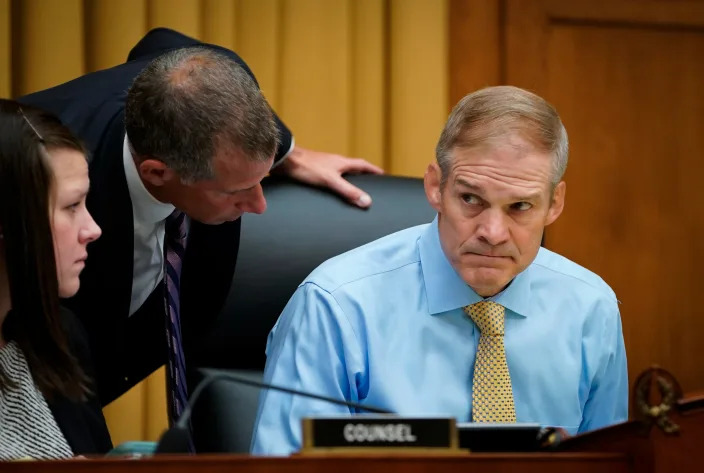
Congressman Jim Jordan (R-OH) prepares to gavel in the committee before Christopher Wray, Director of the FBI, testifies in front of the House Judiciary Committee in Washington on Wednesday, July 12, 2023

The top Democrat on the committee, Rep. Jerrold Nadler of New York, accused Republicans of trying to protect Trump for his campaign in 2024 and called the hearing “little more than performance art.”

House Republicans questioned Wray’s priorities in investigating the Biden administration.

Gaetz asked Wray point blank whether he was protecting the Bidens, which Wray denied. “Absolutely not,” said Wray, who was appointed by Trump.

Gone in 60 seconds: At FBI director hearing, Republican conspiracies about Biden go ‘POOF!’

USA Today – Opinion

Gone in 60 seconds: At FBI director hearing, Republican conspiracies about Biden go ‘POOF!’

Rex Huppke, USA TODAY – July 12, 2023

House Republicans are convinced the FBI and the Department of Justice and basically any law enforcement agency that hasn’t found President Joe Biden guilty of being a global criminal mastermind is corrupt – CORRUPT, I TELL YOU! – and in cahoots with Democrats.

But the steaming hot conspiracy bubbles belching up from the right-wing fever swamps are occasionally pierced by facts, and a rather thunderous bubble-popping took place Wednesday during a House Judiciary Committee hearing featuring FBI Director Christopher Wray.

The overall tenor of questioning from Republican lawmakers during the hearing was: “YOU GUYS TOTALLY FOMENTED THE JAN. 6 ATTACK ON THE U.S. CAPITOL, DIDNYA? AND YOU ALL HATE DONALD TRUMP TOO, DONTCHA?? AND YOU ALL LOVE JOE BIDEN TOO, RIGHT?!?”

‘Are you protecting the Bidens?’ and other really dumb questions

Rep. Matt Gaetz railed at Wray and the FBI for not finding greater criminality in the actions of the president’s son, Hunter Biden, and for not linking Joe Biden in with the hysterical, evidence-free allegations Republicans have cooked up.

“You seem deeply uncurious about it don’t you? Almost suspiciously uncurious?” asked Gaetz, R-Fla., sounding like a cartoon villain, only dumber. “Are you protecting the Bidens?”

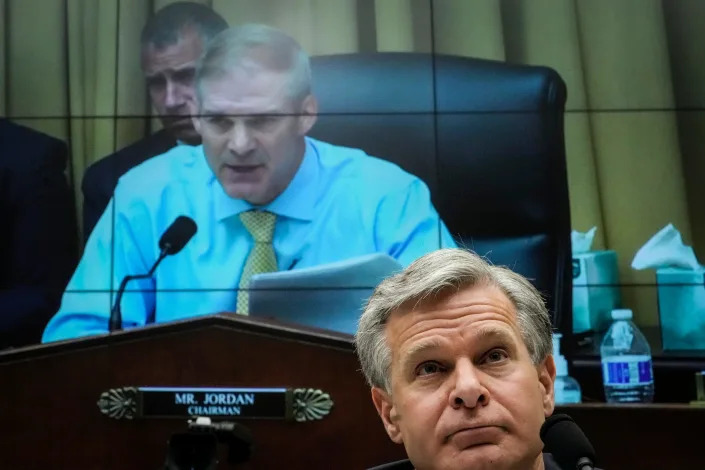
FBI Director Christopher Wray listens to House Judiciary Committee Chairman Jim Jordan, R-Ohio, during a hearing on July 12, 2023.

It was all just a giant load of nonsense, which makes sense, as the House Republicans’ current motto is: “A giant load of nonsense.”

OK, who let a Republican ask a smart and relevant question? THAT’S NOT HOW THIS WORKS!!

But then, in less than a minute, one line of questioning made the GOP’s entire line of hooey about the FBI having it in for Republicans and being in the bag for Biden go poof.

Rep. Ken Buck, R-Colo. – yes, a Republican – began asking Wray about his career.

Buck said: “You were nominated by Republican President (George. W.) Bush for the position of assistant attorney general in the criminal division at the Department of Justice and you were confirmed by a Republican Senate?”

Wray replied: “Yes, by unanimous voice vote.”

Buck continued: “And you were then nominated by Republican President Donald Trump to be the FBI director and again confirmed by a Republican Senate for that position?”

“Yes,” Wray said. “I think there were only five votes against me and they were all from Democrats.”

Buck concluded: “According to Wikipedia, you’re still a registered Republican, and I hope you don’t change your party affiliation after this hearing is over.”

So the Republicans who want to defund and discredit the FBI, the ones who eagerly dragged the FBI director through the mud Wednesday with absurd allegations grounded in zero facts, want you, the American people, to believe this: The nation’s premier law enforcement agency has been weaponized against Republicans under a director who is a lifelong Republican and who reached his current post by being selected and confirmed to positions by two Republican presidents and two Republican-led Senate bodies.

DeSantis losing to Trump in Florida? Time to label the former president ‘woke’!

Even as a conspiracy theory the GOP’s anti-FBI theory doesn’t make sense

Forget that all this is in defense of former President Donald Trump, a one-term, twice-impeached lifelong con artist who now faces more than 70 felony charges in two cases, with more indictments on the horizon.

Forget that Hunter Biden was actually charged with two misdemeanor tax offenses and a felony firearm offense.

Just a quick heads up: AI-powered robots will kill us. K, bye.

Forget that, despite relentless investigation, Republicans have produced nothing linking President Biden to his son’s activity, or the fact that the person they touted as a key whistleblower was just charged with arms trafficking and acting as an unregistered agent for China.

Before you even get into details of the conspiracies, you have to believe the FBI director at the center of it all is corrupt. And he was appointed first by President Bush and then again by President Trump! This conspiracy is now an unusually large footprint shy of Bigfoot.

Poof!

Tick Bite Symptoms

Outdoor Life

Tick Bite Symptoms

Katie Hill – July 12, 2023

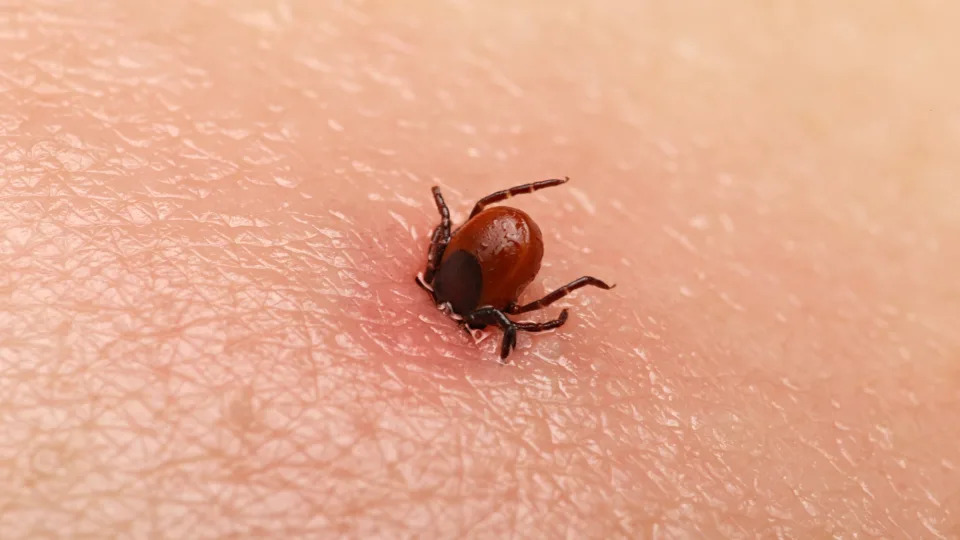
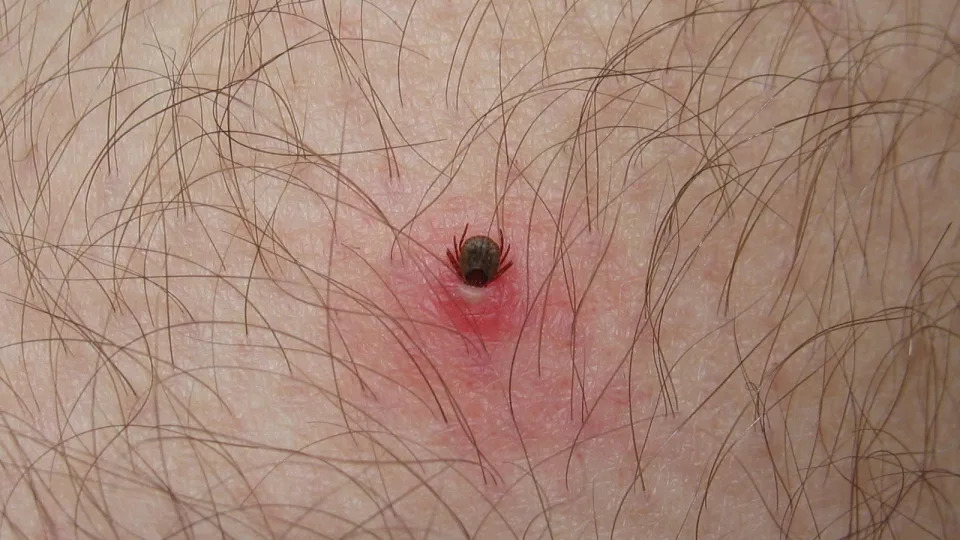
tick embedded in skin
Ticks take multiple hours, sometimes up to two days, to transmit any diseases to their hosts.

Everything we know about tick bite symptoms seems to have been watered down to a single telltale warning sign: the bullseye rash. If no red rings show up around the site of your tick bite, then you’re fine, right? Not necessarily, according to the experts.

There are plenty of tick bite symptoms that warrant a visit to your doctor’s office. While increasingly common (and now of concern year-round in some parts of the country), tick bites are not something to take lightly. The health consequences can range from an irritated bite mark that lasts a few weeks to a serious illness that lands you in the hospital or with chronic complaints.

We spoke with public health entomology expert Phurchhoki Sherpa, coordinator for the Purdue University Public Health Entomology Program. Medical entomology is a fancy term for the area of medicine concerning insect-borne diseases like Lyme and malaria. Sherpa has spent countless hours in the field collecting ticks for research purposes, and she knows more than her fair share about what can happen when a tick bites you.

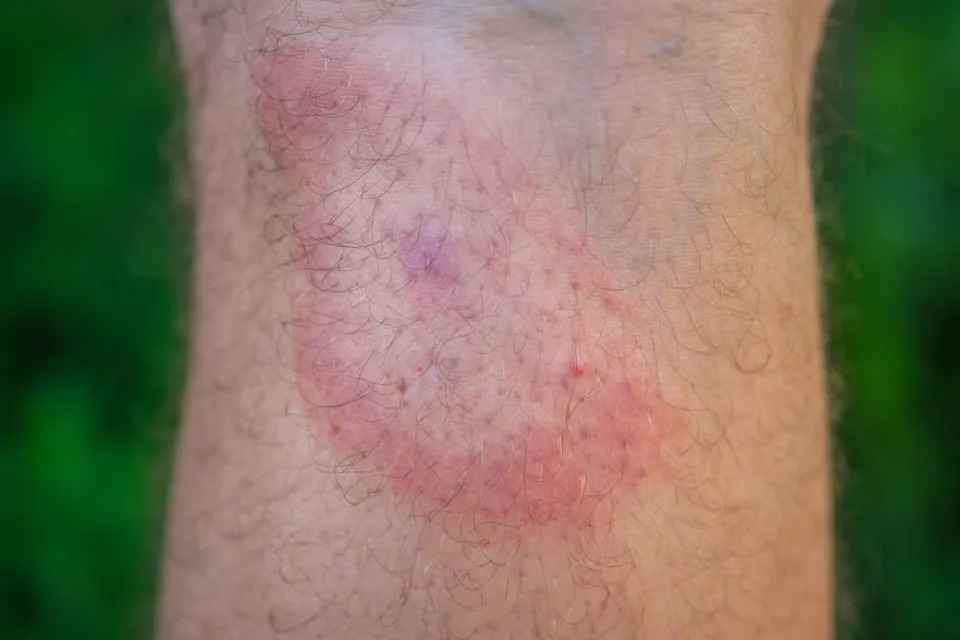
tick bite symptoms bullseye rash
A bullseye rash might emerge around a tick bite. It could also show up on other parts of the body where the bite didn’t occur.
What to Do When a Tick Bites You

If you find a tick latched onto your skin, first you should review how to remove a tick and follow that procedure. (Quick refresher: grab your tweezers or tick removal tool, grasp the tick as close to your skin as possible, and pull until it releases.) The best immediate tick bite treatment options involve cleaning the bite with some sort of disinfectant—hydrogen peroxide or rubbing alcohol are good options—and applying an antibiotic ointment of your choosing. Your tick bite may look and feel like any other bug bite in the days that follow, or you may find that an angry, itchy bump persists for weeks as it heals.

“It can look as benign as a mosquito bite, like a little itchy welt, especially if the tick has fallen off without you realizing you had it,” Sherpa tells Outdoor Life. She notes that such circumstances are common with tiny, immature ticks that are hard to see. “It can also look kind of scary, with a scab on the bite mark. It varies.”

tick embedded in skin
A tick bite might start out looking and feeling like any average bug bite.
Common Tick Bite Symptoms

Sherpa is referring to the rashes, scabs, and swelling that can accompany a tick bite. Always keep an eye out for a bullseye rash (the traditional symptom that is present in some, though not all, Lyme disease cases). A bullseye rash can appear not just around the bite mark, but anywhere on the body. Small, hard scabs might form around the bite. If they’re dark and crusty, this might be an early sign of a type of tick-borne disease known as spotted fever (more on this in a minute). If the bite mark exhibits other signs of infection, like extreme swelling, pustules, blistering, or anything else abnormal, seek medical treatment immediately.

Beyond the early, visible symptoms of a tick bite, be on the lookout for these more systemic symptoms that most or all tick-borne illnesses share. These symptoms might pop up anywhere from a day to a few weeks after the bite:

  • Fever
  • Chills
  • Headache
  • Muscle ache
  • Fatigue
  • Nausea/vomiting
  • Joint aches/arthritic pain
Tick-Borne Illnesses You Should Know About

Most tick bites will not cause you any further trauma than a mosquito bite would. After all, half or fewer of all ticks are infected with transmissible diseases. If the tick wasn’t latched deep into your skin or wasn’t engorged with blood yet, it probably didn’t get the chance to transmit anything. For example, it usually takes at least 36 hours for an attached tick to transmit Lyme disease to its human host.

But if your tick bite does transform into something of concern, it’s good to know about the various tick-borne illnesses you could develop. The risk of each tick-borne illness changes depending on where in North America you picked up the tick, Sherpa says. This is because different types of ticks carry different diseases.

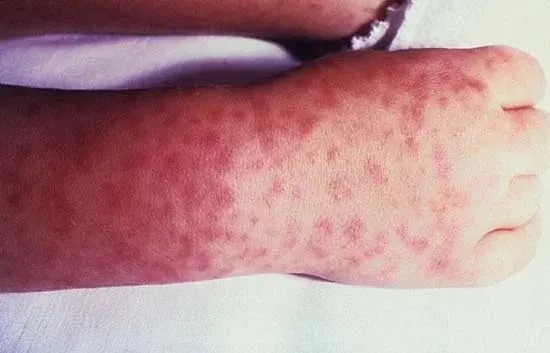
tick bite symptoms rocky mountain spotted fever
Rocky Mountain spotted fever can cause a dotted, patchy rash once the disease has progressed. The rash is especially common in children.

This is not an exhaustive list of all possible tick-borne illnesses. But here are eight tick-borne diseases that you should absolutely know about.

Anaplasmosis

Regions: Most common in East and Upper Midwest, some cases along Pacific Coast and portions of Southwest
Ticks that carry it: Black-legged ticks, Eastern and Western
Symptoms:

  • Chills
  • Headache/muscle aches
  • Nausea/vomiting/diarrhea
  • Respiratory issues
  • Bleeding issues
  • Organ failure

Type of disease: Bacterial
Treatment: Antibiotics, commonly Doxycycline

Babesiosis

Regions: Northeast and Upper Midwest
Ticks that carry it: Black-legged ticks, especially nymphs (tiny, immature ticks that are hard to see)
Symptoms:

  • Fever
  • Chills/sweats
  • Headache/body aches
  • Nausea/loss of appetite
  • Fatigue

Type of disease: Parasitic
Treatment: Unnecessary if asymptomatic. For symptomatic patients, a combination of anti-parasitic/antifungal drugs and antibiotics.

Colorado tick fever

Regions: Mountain West, Pacific Northwest, Southwest
Ticks that carry it: Rocky Mountain wood tick
Symptoms: 

  • Headache/body aches
  • Fever (sometimes “biphasic,” or two stages of fever interrupted by short period of relief)
  • Chills
  • Fatigue
  • Occasional nausea/diarrhea/vomiting
  • Occasional sore throat and rash

Type of disease: Viral
Treatment: Fluids, pain meds, severe cases should seek hospitalization for IV fluids and medication

Ehrlichiosis

Regions: Southeastern and South-central U.S., from East Coast to West Texas
Ticks that carry it: Lone Star tick, some Eastern black-legged ticks
Symptoms: 

  • Fever
  • Chills
  • Severe headache/muscle aches
  • Splotchy or dotted rash (especially in children)
  • Confusion
  • Nausea/diarrhea/loss of appetite
  • Brain swelling and damage to nervous system
  • Respiratory failure
  • Uncontrolled bleeding
  • Organ failure
  • Death

Type of disease: Bacterial
Treatment: Antibiotics, commonly Doxycycline

Lyme disease

Regions: Eastern half of U.S., Pacific coast 
Ticks that carry it: Black-legged ticks, Eastern and Western
Symptoms: 

  • Fever
  • Chills
  • Headache
  • Fatigue
  • Muscle/joint aches
  • Swollen lymph nodes, joints
  • Rash (particularly bullseye) that grows
  • Facial palsy/drooping

Type of disease: Bacterial
Treatment: Oral or IV antibiotics, depending on severity. Severe cases might require chronic lyme disease treatment.

Powassan virus

Regions: Northeast, Great Lakes region
Ticks that carry it: Black-legged tick, Groundhog tick, Squirrel tick
Symptoms: 

  • Often asymptomatic
  • Fever
  • Headache
  • Vomiting
  • Weakness
  • Encephalitis (Brain infection)
  • Meningitis (Swelling of brain and spinal cord)

Type of disease: Viral
Treatment: Fluids and pain medication, severe cases should seek hospitalization for IV fluids, meds, and support with any brain/spinal cord swelling or respiratory issues

Rocky Mountain spotted fever

Regions: Nationwide, most common in Mid-Atlantic and lower Appalachia 
Ticks that carry it: American dog tick, Rocky Mountain wood tick, Brown dog tick
Symptoms: 

  • Fever
  • Headache
  • Rash (splotchy or dotted)
  • Nausea/vomiting
  • Stomach pain
  • Muscle pain
  • RMSF develops quickly and can cause moderate to severe damage to tissues and extremities if left untreated. Amputations might be necessary. Hearing loss, paralysis, and loss of mental function are also possible.

Type of disease: Bacterial
Treatment: Antibiotics, commonly Doxycycline

Tick Bite Prevention

Fortunately, with proper tick bite prevention, there’s no reason to avoid the outdoors—especially not during the most enjoyable months of the year.

Dress, Treat, and Check

Tick bite prevention goes beyond simply drowning yourself in the best tick repellent. It also involves wearing the right clothes, treating your gear with permethrin, and doing multiple tick checks in the field and after the day is over.

“I tell [hikers] to wear light-colored clothing so they can detect ticks earlier and faster, especially the ones that would go unnoticed if we wore patterns or dark clothing,” Sherpa says. “Tuck your shirt into your pants, tuck your pant legs into your socks, always wear close-toed shoes with long socks when you’re outdoors.”

Sherpa also acknowledges that hunters have to do things a little differently if they want to avoid tick bites and the scary symptoms that can come with them. We spend more time bushwhacking than we do on trails, we wear dark and patterned clothing (hello camouflage), and we’re outside for a long time.

“When you’re hunting, you’re in the field for a while. You’re waiting, walking around. So do a tick check every few hours. The faster you can find the tick and get rid of it, the better,” she says. “When you get home, check yourself and your camo clothing. If you have a dryer, put your clothes in the dryer on high heat for about 20 minutes. The heat will decimate the ticks. And the sooner you can take a shower, the better.”

If showers and dryers are unavailable back at camp, or you refuse to put your expensive merino wool or rain gear in a dryer, treating your clothes with permethrin is the best line of defense. Make sure to follow the instructions on the bottle and wear gloves to avoid getting any on your skin.

Parts of the Body Likely to Get Tick Bites

When it comes to tick checks, close attention to detail makes all the difference. Check under your armpits, behind your ears, along your hairline, in your groin area, between your toes, behind your knees, and even in your belly button. Sherpa highlights all these spots as dark, easy-to-overlook hiding holes for ticks of all sizes.

If your legs and arms are bare, not only is there a chance they bite your ankles or inside your elbows, but they could also crawl under your shirt or shorts. By wearing long sleeves and pants and tucking in all your layers, you limit a tick’s chances of accessing any skin, let alone skin in a hard-to-reach place.

Tick Bite FAQs

What happens to a tick after it bites you?

Once a tick latches on and starts feeding, it will suck blood for several days before eventually becoming fully engorged and falling off. This “blood meal” gives the tick the nutrition it needs to develop into its next life phase.

What kills ticks on humans?

The only way to kill a tick on a human is by removing it properly and disposing of it by crushing it between tweezers and throwing it away. Don’t listen to any advice that involves burning the tick, dousing it in nail polish remover, or squirting hand sanitizer all over it. None of these tricks will get the tick to detach.

How do you treat a tick bite?

The best immediate tick bite treatment involves disinfecting the small wound and putting an antibiotic ointment on it. Hydrogen peroxide, antiseptic wipes, and rubbing alcohol are all great options for quick disinfecting. If you’re in a serious pinch, you can use an alcohol-based mouthwash or even a few drops from your flask of campfire whiskey. After that, apply an antibiotic ointment. To treat underlying symptoms of a tick-borne disease, see your doctor.

hikers in tall grass
If your hike or hunt will take you through tall grass, take the necessary preventative measures to avoid tick bites.
Final Thoughts

Tick bite symptoms can range from a small, itchy welt to a series of flu-like ailments that could land you in the hospital if left untreated. That’s why it’s crucial to know what types of ticks live in your area and what diseases they might carry.

Read Next: How to Remove a Tick From a Dog

The good news is that these scary tick-borne diseases with their array of side effects are all avoidable, thanks to the time-tested prevention strategies outdoorswomen and men now swear by. The age-old adage about an ounce of prevention being worth a pound of cure holds true, Sherpa says.

“We as humans are lazy. We don’t like dealing with that extra work. But prevention goes a long way when it comes to tick bites and tick-borne diseases. It is really important to take preventative measures when you go out,” Sherpa says. “If people aren’t sure about the worthiness of prevention measures, they should talk to someone who has had a tick-borne disease before.”

DeSantis doubles down on a more toxic climate: DeSantis Says No Thanks to $377 Million in Federal Energy Funds

Bloomberg

DeSantis Says No Thanks to $377 Million in Federal Energy Funds

Ari Natter – July 11, 2023

DeSantis says no to federal energy funds

(Bloomberg) — Florida Republican Governor and 2024 presidential contender Ron DeSantis quietly rejected hundreds of millions of dollars in federal energy funding, as the Biden administration touts the benefits of its marquee climate law on the campaign trail in battleground states.

The funding, totaling about $377 million, included hundreds of millions of dollars for energy-efficiency rebates and electrification as part of the Inflation Reduction Act, as well as money from the bipartisan infrastructure legislation that became law in 2021.

The Florida Department of Agriculture and Consumer Services’s Office of Energy notified the Energy Department last month it was “respectfully” withdrawing applications for the funds after DeSantis issued a line-item veto for a $5 million federal grant for the state to set up programs to distribute the rebates.

The move comes as US President Joe Biden and others have taken to the road to show how funding from the Inflation Reduction Act and other administration policies are helping Republican states, even as every single Republican voted against approving his signature climate law – which included some $374 billion in funding for clean-energy programs and tax credits.

It also comes amid Republican backlash against “woke” energy-efficiency standards, including from DeSantis himself who has proposed spending millions of dollars to enact tax credits for gas stoves.

A Florida government official, speaking on background, said the $5 million in funding was earmarked to hire people to administer the money for the energy efficiency home-rebate program, including a website and other necessary planning to distribute the funds. The official, who wasn’t authorized to speak on the record about the matter, characterized the decision as surprising.

DeSantis also rejected a $24 million federal grant from the bipartisan Infrastructure Investment and Jobs Act that would have been used to upgrade rural waste-water systems. These grant funds were among some $511 million in line-item vetoes made by DeSantis before signing the state’s $116.5 million budget into law last month.

Following the governor’s move, applications for grant funding totaling some $377 million were withdrawn, according to the Florida Department of Agriculture and Consumer Services. That included nearly $174 million set aside for rebates for energy-efficiency improvements and another $173 million for a rebate program for the purchase of energy-efficient home appliances. Another $7 million was poised for a training program for electrification contractors.

“These programs directly benefit home owners and renters and these rebates mean that people in Florida would get lower utility bills and healthier and more comfortable homes as well as lower greenhouse gas emissions,” said Lowell Ungar, director of federal policy for the American Council for an Energy-Efficient Economy. “The federal money will help pay for that so it will be a real loss if they don’t implement these programs.”

A DeSantis spokesman declined to comment.

An administration official said Florida still has the option of applying for the funding at a later time.

DeSantis’ rejection of the funds was first reported by The Capitolist, a blog with ties to NextEra Energy Inc.’s Florida Power & Light Co., a state utility.

Harvard study: Why a record number of Americans are struggling to pay rent

Yahoo! Finance

Harvard study: Why a record number of Americans are struggling to pay rent

Rebecca Chen – Reporter – July 11, 2023

A record number of American renters are spending at least one-third of their income on rents, according to The State of the Nation’s Housing 2023, published by Harvard’s Joint Center for Housing Studies.

A total of 21.6 million households now spend more than 30% of pre-tax income on rent. Some households are even paying even up to 50% of earnings on apartments, per Harvard’s research. Housing experts often suggest tenants spend less than 30% of their income on rent.

“Housing costs remain well above pre-pandemic levels thanks to the substantial increases over the last few years,” Daniel McCue, senior research associate at the Joint Center, said in the 2023 report.

Why? In large part due to the growth of so-called “luxury” buildings that have replaced less expensive options. In the last two decades, the share of construction for high-priced apartments — known as Class A — grew faster than more affordable ones. In fact, over half (51%) of 2022 rental construction projects were luxury apartments, according to Moody’s Analytics data. Also, only 34% of the market consisted of high-cost rental units back in 2000; that number was 51% in Q1 2023, per Moody’s.

“The challenge is that the new supply… tends to be at the very top of the price spectrum,” said Carl Whitaker, director of research and analysis at RealPage.

Luxury home expansion has also been a growing trend in the last two decades. Only 34% of the market was high-cost homes back in 2000, but that number grew yearly to 51% as of Q1 2023.
Apartments are seen undergoing construction on February 28, 2023 in Austin, Texas. (Photo by Brandon Bell/Getty Images)

“If rent grows faster than your income every year, and your health care expenses grow faster than your income every year…that squeeze just makes it very difficult in normal life,” Katherine McKay, associate director at the Aspen Institute Financial Security Program, told Yahoo Finance.

Lack of choices

Historically low rental vacancies in recent years also reflect the lack of affordable options for households. Although the vacancy rate climbed to 6.4% at the beginning of 2023 — a welcome increase from the four-decade low of 5.2% in late 2021 — it is still far from a healthy rate of around 7% to 8%.

“What is often looked for is a level of vacancy that supports a renter’s ability to move and to have at least some pricing power,” Lu Chen, Moody’s Analytics senior economist, wrote in an email. “In theory, this would allow rent increases to remain marginally above the general rate of price increases in the economy.”

But “we expect the national average vacancy to linger around 5% until 2025,” Chen said. That number could be more bleak for lower-income households — the rate for lower-cost housing remains at a depressed level of 4.7%.

Vacancy rate climbed to 6.4% at the beginning of 2023 - a welcomed increase from the four-decade low of 5.2% in late 2021
Buddy, can you spare a studio? A ‘no vacancy’ sign for rentals is displayed outside an apartment building on September 22, 2022, in Los Angeles, California. (Photo by Allison Dinner/Getty Images)

“What [also] has happened in many places is that renters who might buy homes can’t buy homes, so they stay in their class A buildings, and then renters who want to live in Class A buildings can’t find spots, so they move a tier down,” McKay said. “It trickles down every income group having a greater competition for fewer new units that meet their needs.”

Apartments equipped with the latest and best amenities like heated pools and gyms are known as Class A buildings. Class A buildings then retire to become class B in 10-15 years, which then devolve into class C in another 5-10 years. Rents drop as buildings downgrade from A to B to C. But in the last decade, not enough buildings were built, which means not enough apartments progressed to the lower tiers.

The fancy boom

As Class A buildings saturate the rental market, the share for older and less expensive apartments, categorized as Class B and C, has shrunk dramatically. In the last two decades, those types of units fell to 49% in Q1 2023 from 66% in 2001, according to Moody’s.

The apartments equipped with the latest and best amenities that get premium rents are known as Class A buildings.
Live it up: Apartments equipped with the latest and best amenities that get premium rents are known as Class A buildings. (Getty Images)

But that might not change anytime soon because, many times, fancy apartments are the only profitable option for developers. The majority of construction costs go into purchasing land, building materials, and building permits. Adding nice finishes doesn’t drive costs at a high level but could demand more rent revenue.

“The thorny part is that for the middle-income renters,” McKay said. “The best option for them is class B where it is not super expensive but also not where then the quality might be a problem, the sweet spot. But there just isn’t enough, because we didn’t build enough for such a long time.”

The future? Not too cheery.

“Number of households continued to grow at around 1% annually,” Moody’s Chen said. “The rapid household formation requires inventory growth to keep up the pace. Further, while the population is aging, there is a large swath of Gen Z (the oldest are 24) and 25- to 40-year-old millennials that are ready to enter the rental market.”

Rebecca Chen is a reporter for Yahoo Finance and previously worked as an investment tax certified public accountant (CPA).

Sad Day for Golf and for Sports Integrity: Golf in shock at Saudi plan to hand Tiger Woods and Rory McIlroy LIV teams

The Telegraph

Golf in shock at Saudi plan to hand Tiger Woods and Rory McIlroy LIV teams

James Corrigan – July 11, 2023

Tiger Woods and Rory McIlroy at the 2023 Masters
During one phase of the peace proposals Tiger Woods and Rory McIlroy were to be offered ownership of LIV teams – Christian Petersen/Getty Images

Plans to hand Rory McIlroy and Tiger Woods their own LIV Golf franchises have been revealed as part of the initial discussions in the merger between the PGA and DP World Tours and the Saudi sovereign wealth fund.

In surreal scenes on Capitol Hill on Tuesday – that featured representatives of 9/11 victim groups sat behind PGA Tour executives as they were grilled in a Senate hearing – it also emerged that the Tour asked for Greg Norman to be sacked as LIV Golf chief executive after the framework agreement was completed.

As well as this ouster, there were bizarre proposals from the Public Investment Fund for Yasir Al-Rumayyan – the PIF governor who is chairman of Newcastle United as well as LIV – to be granted membership of Augusta National and the R&A.

It must be stressed that these were all merely suggestions proffered in the build-up to last month’s hastily-announced alliance that shook the sport to its core following two years of bitter infighting between the revel circuit and the traditional powers.

PGA Tour chief operating officer Ron Price, left, and PGA Tour board member Jimmy Dunne are sworn in
The PGA Tour’s Ron Price and Jimmy Dunne were sworn in before the Senate committee – AP Photo/Patrick Semansky

The PGA Tour told Telegraph Sport that it summarily rejected the McIlroy-Woods idea and refused to assist in Al-Rumayyan joining perhaps the two most august clubs in the game.

Yet at the very least the 276-page trove of documents released by the Senate sub-committee on Tuesday, highlight the extraordinary levels of horse-trading that could take place as the parties attempt to reach a solution that unifies the game and, just as pertinently, satisfies each of the two sides in terms of finance and power.

The proposals from Amanda Staveley – the English financier who oversaw PIF’s purchase of Newcastle – inevitably command the headlines, despite PGA Tour executive Jimmy Dunne’s admission to the politicians that “if LIV takes five players a year for five years, they can gut us”. Goodness knows what McIlroy and Woods will make of Staveley’s “Best of both worlds” presentation which was made in the first phase of the peace talks in late April.

It featured several bullet points, the first of which stated that Woods and McIlroy should have their own LIV teams and play “in at least 10 LIV events’’. Even if he agreed, the chances of Woods playing in that many LIV tournaments after a car crash two years ago that almost saw him lose his right leg are negligible to the point of being impossible.

It will be interesting to see if Woods was told anything about being named in the early negotiations, because a few weeks ago, he claims to have been completely in the dark about intentions that came to light of the Tour having him railing against LIV to his fellow pros in the midst of the civil war.

The same applies to McIlroy. The Northern Irishman was the most vocal opponent of LIV and expressed his anger at being used as “a sacrificial lamb” by the Tour after Sawgrass HQ’s remarkable about-turn. He was in a dark mood after discovering – at the same time as everyone else – about the amalgamation and reiterated that he still detested the breakaway league.

I still hate LIV – hate it,” he said.  “I hope it goes away”. McIlroy refused to play in Saudi Arabia when it became a venue on the DP World Tour, citing concerns about “the source” and although his attitude has since softened – “if they are going to invest money in golf it is better than it is on the PGA Tour” – it must be highly doubtful that, after he has said, that he would ever play under the LIv brand. Norman or no Norman.

The Australian’s future at the LIV helm was under speculation months before the merger was unveiled, with both McIlroy and Woods insisting that he had to leave the role before peace could break out.

It was known that Jay Monahan, the PGA Tour commissioner, wanted him out after so many criticisms and his desire is laid bare in emails between him and his negotiators. In a side letter to the agreement, the firing of Norman was billed as a necessity, although the PGA Tour revealed on Tuesday that it was never signed. Norman remains in the job. For now.

Whether he can trust his paymasters, however, is a moot point, regardless of  the chairman’s attendance at both the LIV events in the Costa del Sol and in Hertfordshire over the last two weeks. At Valderrama and the Centurion Club, Al-Rumayyan assured LIV players and staff that the league will continue, despite the fact the framework agreement states that Monahan will have the right to terminate the circuit if an agreement is finalised.

In the event of an ultimate deal, Staveley is seemingly determined to make sure that as well as being chairman of the new company, Al-Rumayyan is also installed as the president of the International Golf Federation and is welcomed as a member at Augusta and the Royal and Ancient. This proposal was also in her presentation, though she actually asked for him to be a member of the R&A, which is not a club.

An R&A insider revealed “this is the first we’ve heard of this”. On another jaw-dropping day in the LIV saga, uncertainty still reigns supreme.