The U.S. is no longer one of the 20 happiest countries. If you’re young, you probably know why.

NBC News

The U.S. is no longer one of the 20 happiest countries. If you’re young, you probably know why.

Yuliya Talmazan – March 20, 2024

Happiness is a relative concept, but an annual index that tracks it in countries around the world has found that the United States and some Western European countries are falling in overall well-being because younger people are feeling less and less happy.

The U.S., in particular, dropped out of the top 20 for the first time, falling to 23rd place from 15th last year, driven by a large drop in the well-being of Americans under 30. The age disparity is stark: The U.S. ranks in the top 10 for those over 60, but for those under 30, it ranks 62nd, pulling down the overall score.

The report tracks trends in well-being rather than causes, but one of the editors of the report told NBC News that a myriad of factors, including economic inequality between generations in the U.S., are likely to blame for the low levels of happiness in American youth.

This makes the U.S., along with a handful of other countries, such as Canada, Germany and France, the global outliers — the report found that in many regions of the world, the young are still happier than the old.

The findings, announced Wednesday to mark the United Nations’ International Day of Happiness, are part of the World Happiness Report, which has been tracking well-being ratings around the world for more than a decade. It’s based on data collected by the research company Gallup and analysis by well-being academics led by the University of Oxford in the U.K.

Tuska 2023 (Vesa Moilanen / Sipa USA via Reuters file)

For the first time this year, the report gave separate rankings by age group, which in many cases vary widely from the overall happiness rankings for different nations. The report found that Lithuania topped the list for people under 30, while Denmark is the world’s happiest country for those aged 60 and older.

“We had picked up in recent years from scattered sources of data that child and youth well-being, particularly so in the United States, had seen a drop,” said Jan-Emmanuel De Neve, professor of economics and behavioral science at Oxford, who is one of the editors of the report. “That has pushed us for the first time to really slice and dice the data by these age categories, which we normally don’t do.”

The finding that in many but not all regions of the world, the young are still happier than the old, is consistent with the long-standing paradigm that people are the happiest in their younger years.

“To my surprise, youth well-being going off a cliff in the United States and North America, and to a lesser extent in Western Europe and Great Britain, is really explaining why the United States, Canada and the U.K. are getting lower and lower in the general population rankings,” De Neve said. “So that’s really explaining it because it’s not the case that the middle-aged or the people that are above 60 are dropping. If anything, the above 60s in the U.S. would be No. 10.”

Well-being for people under 30 in the U.S. ranks below the Dominican Republic, and is in line with countries such as Malaysia and Russia. Canada’s unhappy youth rank 58, four spots above the U.S.

When it comes to the tanking youth happiness in the U.S., De Neve said there is not a single smoking gun, but it is likely due to a combination of many factors ranging from political polarization to overuse of social media to uncertainty about the future and growing economic inequality between generations, with people under 30 struggling to get onto the real estate ladder.

“It’s a very complex time for youth, with lots of pressures and a lot of demands for their attention,” he added.

Meanwhile, the report also found that in countries of central and Eastern Europe, younger people are much happier than the old. But these countries have also seen the largest increases in happiness, for all ages. It was one of the biggest insights, De Neve said, that could be a big learning point.

“I think we can try and dig into why the U.S. is coming down in terms of wellbeing and mental health, but we should also try and learn from what, say, Lithuania is doing well,” he said.

The rankings are based on self-assessments by people in more than 140 countries, in which they rate their life on a scale from zero to 10, with the best possible life for them as a 10. Among the predictors of people’s happiness are not just economic well-being, the report says, but also other factors including freedom, life expectancy and social support.

This year, Finland remained on top of the list, and was followed by Denmark, Iceland and Sweden. The lowest happiness scores were registered in war-ravaged Afghanistan.

The consistently high performance of Scandinavian nations is likely down to “a high sense of contentment” and high levels of trust in the society, De Neve said.

“They are obviously wealthy nations,” he added. But more than the high gross domestic product per capita, he said, wealth is also equally distributed, “they are amongst the most equal societies, so everybody benefits from the wealth that also underpins a welfare state, which provides psychological stability.”
US falls out of world’s top 20 happiest countries list for the first time ever

The Guardian

US falls out of world’s top 20 happiest countries list for the first time ever

Maya Yang – March 20, 2024

<span>Among people below the age of 30 from 2021 to 2023, the US ranks 62nd place in the World Happiness Report.</span><span>Photograph: Saul Loeb/AFP/Getty Images</span>
Among people below the age of 30 from 2021 to 2023, the US ranks 62nd place in the World Happiness Report.Photograph: Saul Loeb/AFP/Getty Images

The US has fallen out of the top 20 happiest countries to live in for the first time ever, according to a new report.

In findings released on Wednesday, the World Happiness Report revealed that the US has slid from its 15th place last year to 23rd place this year.

Related: Young people becoming less happy than older generations, research shows

The report, created via a partnership involving Gallup, the Oxford Wellbeing Research Centre, the UN Sustainable Development Solutions Network, and the World Happiness Report’s editorial board, pointed to happiness decreasing in all age groups for the US. It also found a significant decline among young people, who are now the least happy age group.

“This is a big change from 2006-10, when the young were happier than those in the midlife groups, and about as happy as those aged 60 and over. For the young, the happiness drop was about three-quarters of a point, and greater for females than males,” the report said.

Among people below the age of 30 from 2021 to 2023, the US ranks 62nd in happiness. Meanwhile, among those who are 60 and above, the US ranks 10th.

“In comparing generations, those born before 1965 are, on average, happier than those born since 1980. Among millennials, evaluation of one’s own life drops with each year of age, while among boomers life satisfaction increases with age,” according to a summary of the report.

Finland, for the seventh straight year, has been ranked the world’s happiest country. It is followed by Denmark, Iceland, Sweden and Israel. The least happy country is Afghanistan, the report said, followed by Lebanon, Lesotho, Sierra Leone and the Democratic Republic of the Congo.

The report’s rankings are not based on any index of factors including GDP per capita, social support, healthy life expectancy, freedom, generosity and corruption. Instead, the scores are based on individuals’ own assessments of their lives, according to researchers.

U.S. Falls Out of Top 20 Happiest Countries for the First Time Ever

Time

U.S. Falls Out of Top 20 Happiest Countries for the First Time Ever

Solcyré Burga – March 19, 2024

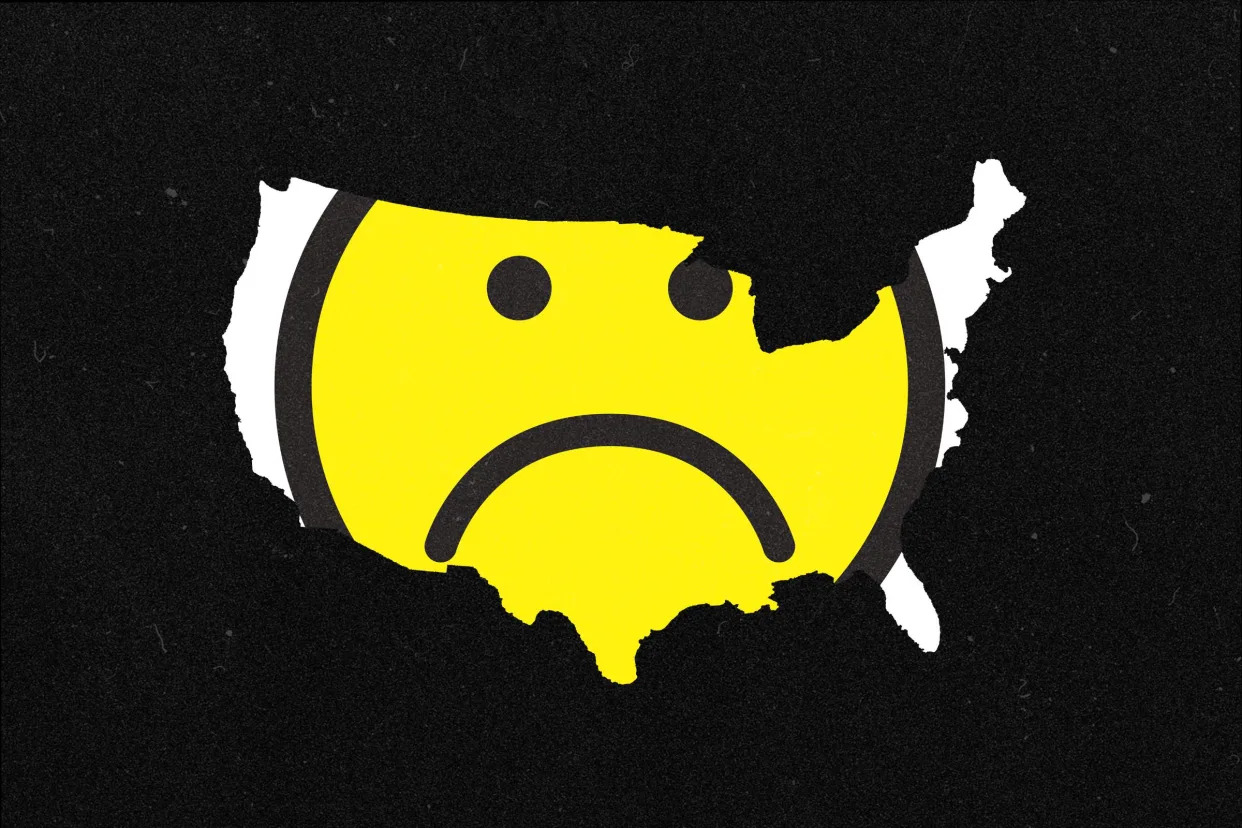
Credit – Illustration by TIME; Getty Images (2)

For the first time in the World Happiness Report’s dozen-year history, the U.S. did not rank in the top 20 of the world’s happiest countries.

Out of the more than 140 nations surveyed, the U.S. landed in 23rd place, compared to 15th place in 2023. While the U.S. is still in the top 10 happiest countries for those 60 years old and above, its overall ranking fell due to a significant decline in the reported well-being of Americans under 30.

Finland ranked at the top of the list for the seventh year in a row. Lithuania is the happiest country in the world if you only look at those under the age of 30, while Denmark is the happiest country for people who are 60 and older.

This was the first year the report, released March 20 to mark the UN’s International Day of Happiness, analyzed rates of happiness by age group. “We found some pretty striking results,” said John F. Helliwell, professor at the Vancouver School of Economics and founding editor of the World Happiness Report. “There is a great variety among countries in the relative happiness of the younger, older, and in-between populations. Hence the global happiness rankings are quite different for the young and the old, to an extent that has changed a lot over the last dozen years.”

The findings were developed through a partnership between Gallup, the Oxford Wellbeing Research Centre, the World Happiness Report’s editorial board, and the United Nations’ Sustainable Development Solutions Network. Countries are ranked based on a “three-year average of each population’s average assessment of their quality of life,” the press release said.

The most recent report relies on data that was collected after the start of the COVID-19 pandemic, with survey respondents answering questions from 2021-2023.

According to the report, people born before 1965 are, on average, happier than people born after 1980. Millennials report drops in their life satisfaction with every year they grow older, while boomers’ happiness increases the older they get.

Globally, people between the ages of 15 and 24 typically report greater life satisfaction than older adults. But the 2024 report finds that the gap is shrinking in Europe, and has reversed in North America. The data contrasts with reports of life satisfaction between 2006 and 2010, when the younger generation in North America were just as happy as older folks.

“Social connections could be one factor explaining the generational happiness differences,” says Ilana Ron Levey, Gallup Managing Director. “Different generations have different levels of social connections and we know social support and loneliness affect happiness. The quality of interpersonal relationships may affect the young and the old differently.”

In Central and Eastern Europe, Ron Levey notes, younger people tended to report higher levels of happiness than older people, in part because of social connection. But the data differs elsewhere in the world, including in the U.S. Last May, the U.S. Surgeon General brought attention to the public health crisis of loneliness and isolation, calling it an epidemic. A previous report by the American Psychological Association found that Gen Z adults reported higher stress levels than older generations, with health and finances cited as top concerns.

Across the Middle East, North Africa and South Asia, the wellbeing of 15-to-24-year-olds has also fallen since 2019.

“Piecing together the available data on the wellbeing of children and adolescents around the world, we documented disconcerting drops especially in North America and Western Europe,” said Jan-Emmanuel De Neve, the director of Oxford’s Wellbeing Research Centre and an editor of the report. “To think that, in some parts of the world, children are already experiencing the equivalent of a mid-life crisis demands immediate policy action.”

“Bizarre”: Legal expert says Judge Cannon’s “outlandish” order is “sign of her extreme partisanship”

Salon

“Bizarre”: Legal expert says Judge Cannon’s “outlandish” order is “sign of her extreme partisanship”

Tatyana Tandanpolie – March 19, 2024

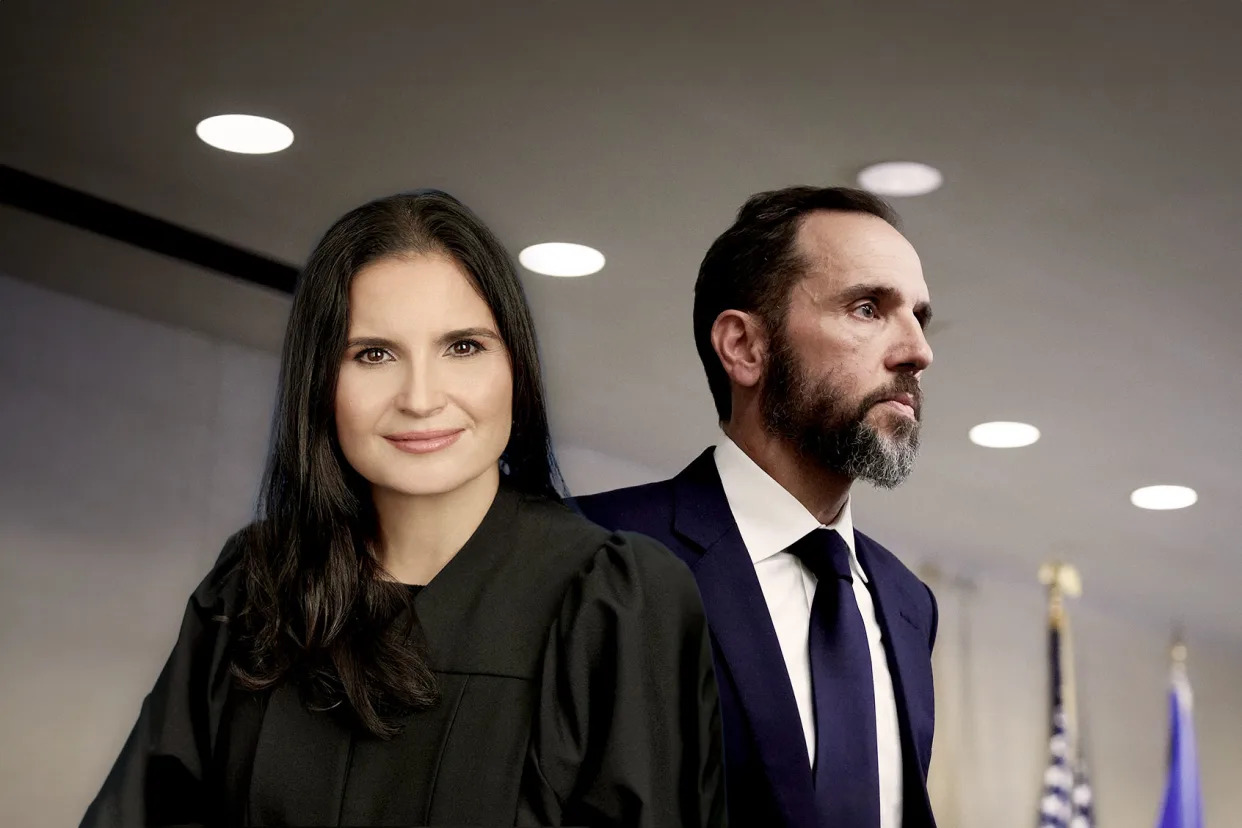
Judge Aileen Cannon and Special Counsel Jack Smith Photo illustration by Salon/Getty Images/US District Court for the Southern District of Florida

U.S. District Judge Aileen Cannon, who is overseeing Donald Trump‘s classified documents case in Florida, issued an order late Monday pertaining to jury instructions for the end of the trial — even though she has not ruled yet on when the trial, which is likely to be pushed from its May start date, will begin.

Cannon requested federal prosecutors and the former president’s attorneys submit by April 2 proposed jury instructions concerning national security and presidential record laws connected to two defense motions to dismiss the trial altogether. Her order signaled that the question of whether Trump had legal authority to retain national security documents will still be a key question of the case, which could give Trump a boost at trial, according to CNN.

It also confounded legal experts, in some cases, because of its considerations of the Presidential Records Act, a law that declares records created or received by the president as part of his duties as government property.

“Some commentators have described Cannon’s order as ‘unusual.’ I would use words like wacko, crazy, loony, nutty, ridiculous, and outlandish, and my terms are probably understatements,” Bennett Gershman, a Pace University law professor and former New York prosecutor, told Salon.

The Presidential Records Act (PRA) “makes a clear distinction” between a president’s personal records, like diaries and journals, and the official, “non-personal” classified documents Trump is alleged to have willfully retained, Gershman added.

Cannon’s exercise is a continuation of last week’s hearing in the case, in which the relatively inexperienced, Trump-appointed judge heard Trump’s attorneys’ argument that the PRA gave him unlimited power to determine which documents he needed to return to the National Archives.

The Justice Department has maintained that Trump’s 32 charges under the Espionage Act are unrelated to the PRA and, instead, take up the issue of his retention of U.S. and foreign military secrets without federal protections at his Mar-a-Lago beach club and alleged efforts to thwart government officials’ retrieval efforts.

During last Thursday’s hearing, Cannon seemed skeptical that Trump’s “attack on the Espionage Act,” which criminalizes unauthorized possession of national security documents, or embrace of the PRA would offer strong enough arguments to rescue him from a criminal trial, according to The Washington Post. Cannon, however, did suggest that some parts of the GOP frontrunner’s arguments could later impact jury instructions.

Jury instructions tell jurors how to weigh the evidence presented in a case ahead of deliberations. Cannon’s focus on the matter at this point “suggests she is not only thinking ahead to a trial of the former president, but already zeroing in on the end, rather than the beginning, of such a proceeding,” according to The Washington Post.

Cannon’s order also suggests she is receptive to some of Trump’s claims that the Presidential Records Act allows presidents to lay personal claims to highly classified documents. National security experts, however, have countered that notion, saying that Trump’s interpretation is neither what the law states nor how courts have previously interpreted it.

“If the court is so inclined to adopt former President Trump’s arguments under the Presidential Records Act, that there is literally wiggle room to debate the question of application, then Judge Cannon might as well grant the pending motion as a matter of law,” Mark Zaid, a D.C.-based national security attorney, told Salon.

In formulating their instructions, the judge asked the prosecution and defense team to consider, through two hypothetical scenarios, how a jury could be instructed to weigh criminal law around national security documents if Trump could say the Presidential Records Act empowered him to retain them after leaving office. The order also asked the attorneys to define the terms of the Espionage Act.

“The parties must engage with the following competing scenarios and offer alternative draft text that assumes each scenario to be a correct formulation of the law,” Cannon wrote.

Instructions for the first scenario she presented would task the jury with deciding whether prosecutors showed that Trump lacked the authority to keep the classified documents found at Mar-a-Lago, even if they qualified as personal or presidential records. Cannon, according to the Washington Post, included a footnote in the hypothetical permitting discussion of “separation of powers or immunity concerns” if deemed relevant.

Instructions for the second scenario would take the perspective that, as president, Trump had total power through the PRA to take any records he chose from the White House. The second hypothetical appears to offer a circumstance where Trump could not be convicted under “almost any set of facts of improperly possessing classified documents,” the Post notes.

The order, Zaid said, is “somewhat mystifying” because Cannon appears to be seeking jury instructions from both parties on issues that “should, and normally would, be determined as a matter of law by the court.”

“These issues are not within the purview of a jury to decide,” he added.

A trial typically asks opposing counsel to draft proposed instructions for a jury, Gershman explained, but a judge’s instructions to the group require the judge to explain to the jurors the relevant legal principles and ask them to then apply those principles to the facts and evidence of the case.

Cannon’s first hypothetical instead asks the jury to “determine the law” surrounding the question of Trump’s authority to retain classified records, while the second “in effect advises the jury that if the president believed he was not violating the law, then the jury should find him not guilty,” Gershman said.

Why Cannon would issue an order pertaining to end-of-trial jury instruction before solidifying the start date for the trial, which is widely expected to be pushed from May 20 due to pre-trial delays, remains unclear.

Zaid expects the Justice Department will object to the exercise because of the power it could afford the jury to “decide what is or is not a personal record under the PRA.”

“How does one read a bizarre order like this except to realize that Judge Cannon lacks experience, is out of touch with the law and criminal trials, lacks an understanding of the proper function of a judge, and lacks an appreciation of the proper role of a judge in our legal system,” Gershman added, echoing widespread criticism from legal experts of Cannon’s limited experience as a judge and decisions in the case perceived to be favoring Trump thus far.

The order, he said, goes beyond being a simple “sign of her extreme partisanship.”

“It portends that if the case ever comes to trial, she will make every effort through her rulings on evidence, controlling lawyer arguments to the jury, and jury instructions, to ensure that Trump is found not guilty,” Gershman said. “The government can’t appeal an acquittal.”

Judge in Trump classified documents case proposes ‘insane’ jury instructions, experts say

USA Today

Judge in Trump classified documents case proposes ‘insane’ jury instructions, experts say

Bart Jansen, USA TODAY – March 19, 2024

The judge presiding over charges against former President Donald Trump for allegedly hoarding classified documents after leaving the White House proposed on Monday jury instructions for the eventual trial that favor his claim that he declassified the records.

U.S. District Judge Aileen Cannon’s proposal tips the scales so far in Trump’s direction that legal experts say the prosecutor, Justice Department special counsel Jack Smith, might ask an appeals court to remove her from the case.

Joyce White Vance, a former U.S. attorney, said the Presidential Records Act isn’t a way around rules for handling classified documents because the records are still government property, not Trump’s personal possessions.

“Expect their response to be hard-hitting,” Vance said of prosecutors in a post on Substack. “The bottom line is that the Presidential Records Act doesn’t forgive Trump for violating criminal laws regarding handling of national secrets.”

Former President Donald Trump motorcade leaves the Alto Lee Adams, Sr. United States Courthouse after a classified documents court hearing Thursday, March 14, 2024, in Fort Pierce.
Cannon proposed jury instructions for Trump’s lawyers, prosecutors to ‘engage’

Cannon gave lawyers for Trump and Smith until April 2 to submit proposed jury instructions for the eventual trial. The order on Monday came after a hearing in which she didn’t resolve the dispute over whether the documents fell under the Presidential Records Act.

But her order called for lawyers on both sides to “engage” with two possible instructions she proposed.

In one, Cannon said jurors should “make a factual finding as to whether the government had proven beyond a reasonable doubt” the records are personal or presidential.

In the other, Cannon proposed telling jurors “a president has sole authority under the PRA to categorize records as personal or presidential during his/her presidency. Neither a court nor a jury is permitted to make or review such as categorization decision.”

Cannon’s proposed jury instructions ‘insane’ and ‘crazy’: legal experts

Legal experts blasted the order as “insane” and “nuts.”

“This second scenario is legally insane,” and under it Cannon could simply dismiss the charges, said Bradley Moss, a national-security lawyer.

George Conway, another lawyer and frequent critic of Trump, argued Cannon shouldn’t be hearing the case and shouldn’t even be a federal judge. Cannon was appointed by Trump and has been widely criticized for decisions that have delayed the trial, including two overturned by the 11th U.S. Circuit Court of Appeals.

“This is utterly nuts,” Conway said.

Vance said both proposals from Cannon “virtually direct the jury to find Trump not guilty.”

“It turns out it’s two pages of crazy stemming from the Judge’s apparent inability to tell Trump no when it comes to his argument that he turned the nation’s secrets into his personal records by designating them as such under the Presidential Records Act,” Vance said.

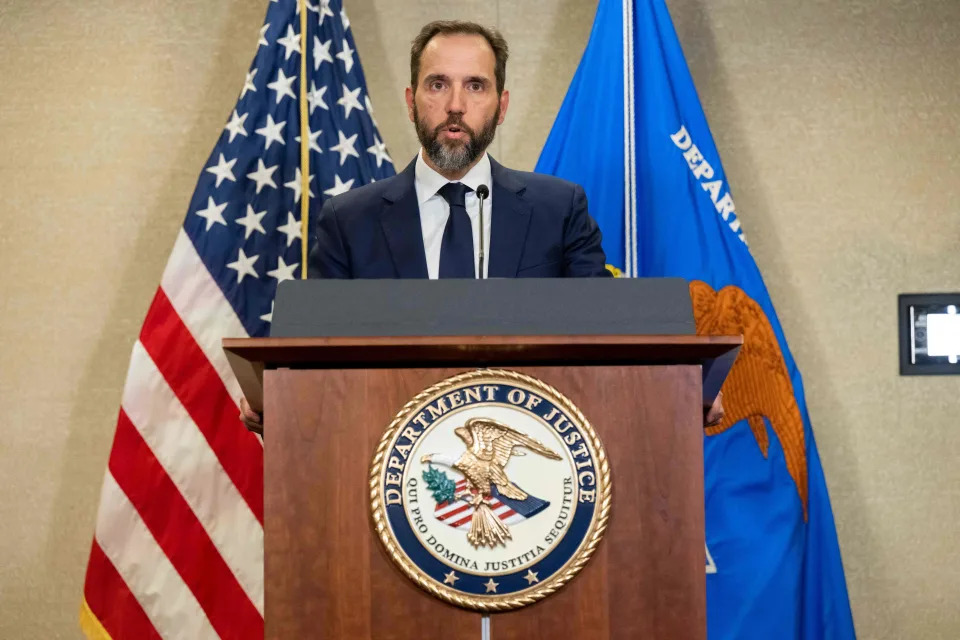
Special counsel Jack Smith speaks on Aug. 1, 2023, about the indictment against former President Donald Trump on conspiring to steal the 2020 election from President Joe Biden, including the insurrection at the U.S. Capitol on Jan. 6, 2021.
What is the Presidential Records Act?

The Presidential Records Act designates all presidential records public property to be stored at the National Archives. Exceptions are made for personal documents such as birthday cards a president receives while in office.

Trump is charged with retaining about 100 national defense documents dealing with secrets such as defense and weapons capabilities of U.S. and foreign countries, and U.S. nuclear programs, and then conspiring to hide them at his club Mar-a-Lago in Florida. The FBI seized them among thousands of other records during a search in August 2022.

Trump has argued repeatedly that he could take records with him after leaving the White House, despite the Presidential Records Act giving ownership to the National Archives and Records Administration.

In arguing the case should be dismissed, Trump contends he designated the classified records personal before leaving the White House. Trump contends that courts can’t review his decisions over what records were personal, which he could keep, and which were official, which he would have to give the National Archives. The Presidential Records Act makes disputes about the records subject to civil litigation rather than through criminal charges

Trump also argued he declassified them, despite producing no documentation for his assertion. In fact, Trump was recorded in a 2021 meeting saying he kept “secret” military information that he had not declassified.

“As president, I could have declassified, but now I can’t,” Trump said, according to the transcript obtained by CNN.

People gather to greet former President Trump's SUV as he pulls in to the underground garage of the federal courthouse in Fort Pierce, Florida, on March 14, 2024.
People gather to greet former President Trump’s SUV as he pulls in to the underground garage of the federal courthouse in Fort Pierce, Florida, on March 14, 2024.
Appeals court called Trump’s declassification argument a ‘red herring’

Legal experts expect Smith to appeal the jury instructions to the 11th U.S. Circuit Court of Appeals if Cannon adopts what she has proposed. Her order seems to convey the same misunderstanding of the Presidential Records Act as when the 11th Circuit overturned her order for a third-party review of the records.

Cannon had ordered a special master, a retired federal judge, to review the records seized at Mar-a-Lago to determine whether they fell under the Presidential Records Act. Prosecutors had to halt their investigation awaiting the results.

But a three-judge panel of the 11th Circuit unanimously halted the review by calling Trump’s argument that he declassified the documents so that they fell under the Presidential Records Act a “red herring” because the change wouldn’t have made the government records personal.

“The declassification argument is a red herring because declassifying an official document would not change its content or render it personal,” the appeals panel wrote. “So even if we assumed that Plaintiff did declassify some or all of the documents, that would not explain why he has a personal interest in them.”

Moss said if Cannon adopts the jury instructions as she proposed them, Smith could appeal to the 11th Circuit “for a quick reversal.”

Aileen Cannon’s handling of Trump’s classified records case just went from bad to horrible

Los Angeles Times – Opinion

Column: Aileen Cannon’s handling of Trump’s classified records case just went from bad to horrible

Harry Litman – March 20, 2024

A photo of classified documents seized during a search of Mar-a-Lago strews about on the floor
Classified documents seized during a search of former President Trump’s Florida estate. (Associated Press)

As the judge presiding over the federal prosecution of Donald Trump for hoarding classified records at his Florida estate, Aileen Cannon has been a dubious influence from the start. She has consistently indulged Trump’s far-fetched legal arguments and overall strategy of delay.

But her latest order confirmed that Cannon has truly crossed the line into running interference for the former president who put her on the bench.

The order, issued by Cannon Monday evening, concerns one of Trump’s recurrent and baseless arguments for dismissal of the charges. His lawyers claim that the Presidential Records Act gave him the power to reclassify any and all records as “personal” and that he did so through the mere act of putting them in the bankers boxes he had spirited away to Mar-a-Lago.

Read more: Litman: Five ways Judge Aileen Cannon could protect Trump from the classified documents prosecution

This frivolous argument wouldn’t get anywhere in most federal courts. It’s a nonsensical reading of the act, which was designed to clarify that apart from a small set of personal possessions such as diaries, presidential records belong to the people rather than an outgoing president.

Moreover, the argument is beside the point. However the records Trump purloined are characterized, it remains a crime under the Espionage Act to willfully retain national defense information, which the documents at the center of this case clearly are.

Cannon’s order doesn’t address Trump’s arguments on the merits, though. Rather, it instructs each side to submit two sets of proposed jury instructions that “engage with” different legal conclusions about the records act. The problem is that both of the conclusions are directly contrary to the law.

Read more: Litman: Fani Willis’ prosecution of Donald Trump may be alive, but it isn’t well

Cannon’s first scenario supposes that a jury has to make a factual finding as to whether the government proved beyond a reasonable doubt that the records Trump absconded with are presidential rather than personal. In other words, what if Trump’s contention that he magically transmogrified the classified documents into his personal property were a valid factual defense rather than a meritless legal claim?

The second scenario is even wackier in that it assumes a president has unreviewable authority to categorize records as personal. If the jury were so instructed, it would be tantamount to ensuring Trump’s acquittal.

Cannon’s order isn’t just legally nonsensical. It’s also bizarre and pernicious.

It’s a completely loony way to address Trump’s motion to dismiss the case on the basis of the records law. Asking the parties to frame jury instructions based on a legal fiction — indeed, a legal fantasy — months before a jury has been selected is perfectly surreal. I have never seen a remotely similar order.

Cannon started her rocky handling of the case with a similarly inexplicable ruling permitting Trump to challenge the search warrant served at Mar-a-Lago. The 11th Circuit Court of Appeals reversed that ruling in terms sharp enough to raise the prospect that another such lawless misadventure could lead to the judge’s removal from the case.

That would dramatically change the legal and political course of events. The classified records charges against Trump are so cut and dried that another judge could easily speed the case toward a likely and serious criminal conviction well before the November election.

That is where the pernicious aspect of Cannon’s order comes in. Even as the judge has entertained Trump’s quarter-baked theories and helped him eat up the clock, she has studiously avoided issuing an order that could give special counsel Jack Smith’s team an opening to appeal and seek her recusal.

Her latest order is a case in point: It floats legal conclusions that could lead to a swift reversal and force her recusal, but it requires the parties only to “engage with” these lawless suppositions, which doesn’t give an appellate court much to grab onto. In short, Cannon is making mischief in Trump’s favor while dodging appellate oversight.

The judge appeared to employ a similar gambit in her ruling last week. While she denied Trump’s meritless motion to dismiss the case on the basis that the Espionage Act is unconstitutionally vague, she left open the prospect that his lawyers could raise the issue again after a trial has commenced.

Cannon’s latest order likewise appears to set the stage for a recognition of Trump’s ridiculous legal claims down the line in jury instructions. That’s a particularly ominous prospect because at that point, a jury would have been impaneled and the double jeopardy clause would preclude retrial.

Cannon may have hit upon a strategy that gives Trump the delay he wants and then dismisses the case once a jury has been sworn in — while never exposing herself to being reined in or forced off the case by the 11th Circuit.

All of which leaves Smith facing a tricky choice. He can adhere to the letter of the judge’s order and acquiesce in potentially laying the groundwork to dismiss the case at an irremediable point. Or he can refuse to go along, risk Cannon’s ire and try to position the prosecution to appeal if she actually does something reviewable.

It’s not an easy call — especially when the umpire seems to be playing for the other team.

“I would be forced to mortgage”: Trump melts down on Truth Social as lawyers admit he can’t get bond

Salon

“I would be forced to mortgage”: Trump melts down on Truth Social as lawyers admit he can’t get bond

Trump fears he may have to “sell Great Assets, perhaps at Fire Sale prices”

By Igor Derysh – March 19, 2024

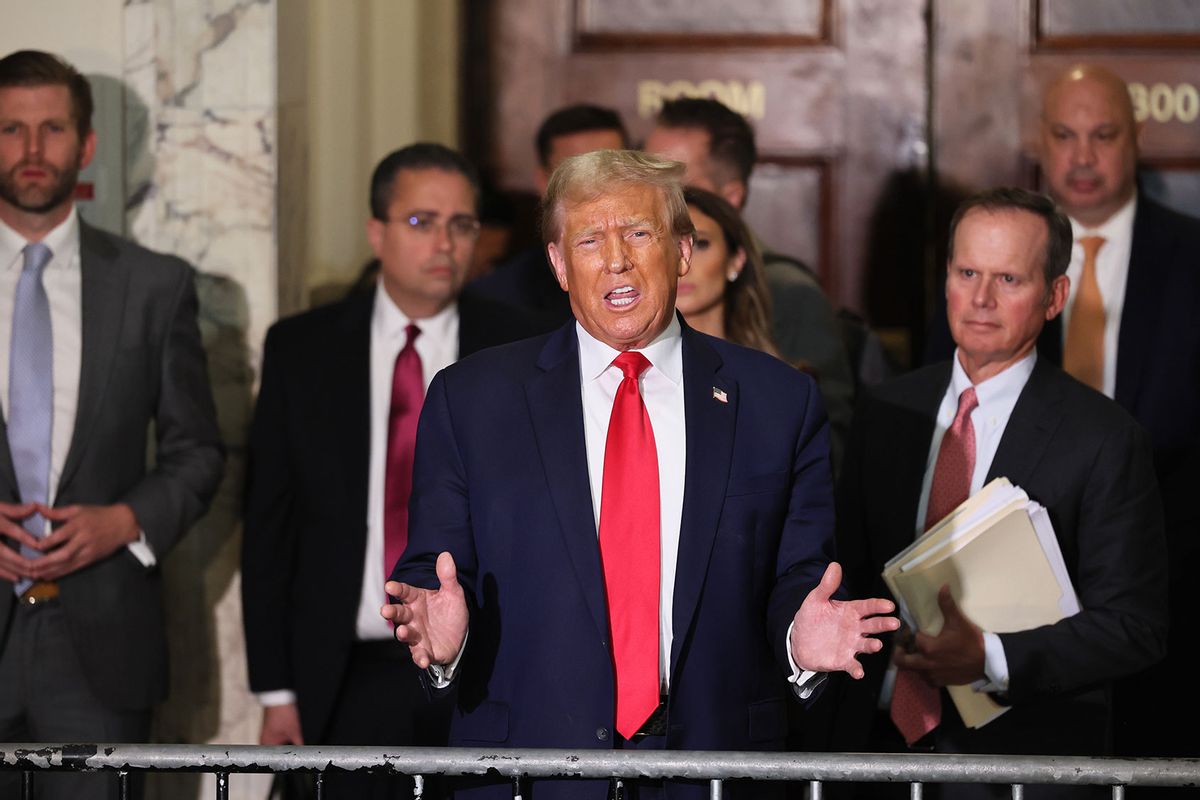
Former President Donald Trump speaks as the court takes a lunch break during his civil fraud trial at New York State Supreme Court on October 17, 2023 in New York City. (Michael M. Santiago/Getty Images)Former President Donald Trump speaks as the court takes a lunch break during his civil fraud trial at New York State Supreme Court on October 17, 2023 in New York City. (Michael M. Santiago/Getty Images)


Former President Donald Trump lashed out at the judge who imposed a $450+ million penalty in his New York fraud case after his lawyers admitted he was unable to secure a bond to appeal the case.

Trump’s lawyers on Monday asked a New York appeals court to stay the enforcement of the judgment in his fraud case, saying it has been impossible to secure a bond necessary to appeal the judgment after approaching 30 different underwriters.

The former president lashed out at the judge on Truth Social after the filing.

“Engoron wants me to put up the ridiculous fine (I DID NOTHING WRONG!) before I get a chance to Appeal his crazed ruling – A first!” Trump falsely wrote. New York law requires a defendant to put up the full judgment amount with interest in order to appeal a civil judgment.

“Judge Engoron actually wants me to put up Hundreds of Millions of Dollars for the Right to Appeal his ridiculous decision. In other words, he is trying to take my Appellate Rights away,” Trump falsely claimed again in another post. “Nobody has ever heard of anything like this before. I would be forced to mortgage or sell Great Assets, perhaps at Fire Sale prices, and if and when I win the Appeal, they would be gone. Does that make sense? WITCH HUNT. ELECTION INTERFERENCE!”

Trump continued to lash out at the judge in a series of more than a half-dozen posts on Monday night and Tuesday morning, claiming that his Mar-a-Lago property is worth “50 to 100 times” more than what Judge Arthur Engoron valued it at — even though the valuation was based on estimates by local officials.

Trump further lashed out at Engoron as a “Crazed, Trump Hating, Rogue Judge.”

“The Corrupt Political Hacks in New York, Judge and AG, are asking me to put up massive amounts of money before I am allowed to appeal the ridiculous decision. Never done before. No jury, no victim, full disclaimer clause, happy banks,” Trump repeated, falsely, about the New York law the requires him to put up the money to appeal.

“I shouldn’t have to put up any money, being forced by the Corrupt Judge and AG, until the end of the appeal,” he complained. “That’s the way system works!”

Bolton says Trump wants to be treated like North Korean leader: ‘Get ready’

The Hill

Bolton says Trump wants to be treated like North Korean leader: ‘Get ready’

Lauren Irwin – March 20, 2024

Former national security adviser John Bolton said Tuesday that former President Trump wants to be treated like North Korea’s Kim Jong Un, and people should “get ready.”

“Donald Trump wants Americans to treat him like North Koreans treat Kim Jung Un. Get ready…..” Bolton posted on X, the platform formerly known as Twitter.

Bolton, who served as the national security adviser under the Trump administration, posted a viral clip of Trump speaking with Fox News’s Steve Doocy in 2018, where the former president offered praise for the North Korean leader.

“He’s the head of a country, and I mean he’s the strong head. Don’t let anyone think anything different. He speaks and his people sit up at attention,” Trump said in the clip. “I want my people to do the same.”

Bolton joins a list of former Trump officials who are warning of his return to power, just after he clinched the Republican nomination for president and will face off against President Biden in the polls this fall.

The clip of Trump speaking highly of Kim follows a meeting between the former president and Hungarian Prime Minister Viktor Orbán at his Mar-a-Lago estate. Trump received sharp criticism for meeting with the Hungarian leader, who said he hopes to see Trump return to the White House.

After the meeting, Trump said Orbán is a “Great Leader” who is “respected all over the World.” The former president has also favorably commented about Adolf Hitler on multiple occasions.

In the past, Trump has said that he would not be a dictator if he were reelected, “Except for day one.”

Meet the wealthy boomer Americans fleeing to Portugal, Spain, and Italy out of fear of a Donald Trump presidency: ‘This country of mine has become intolerant’

Fortune

Meet the wealthy boomer Americans fleeing to Portugal, Spain, and Italy out of fear of a Donald Trump presidency: ‘This country of mine has become intolerant’

Ryan Hogg – March 20, 2024

Fortune· Gabriel Mello—Getty Images

For years, aging Americans have looked south to Florida for their ideal retirement home to escape into retirement from their four-decade grinds in the U.S. workforce.

But wealthy citizens are increasingly considering a life across the Atlantic, with an unappealing showdown between Joe Biden and Donald Trump being labeled as the reason.

‘This country of mine has become intolerant’

David, a 65-year-old lawyer from Chicago, is going to Portugal on a scouting trip next month with a $500,000 budget in the hopes of finding a new second home on the Silver Coast, between Lisbon and Porto.

The lawyer, who asked to remain anonymous, citing concerns he might be harassed, said the political climate had turned so toxic that he was driven to seek peace across the Atlantic.

As the grandson of four immigrants who landed on Ellis Island, David has become particularly perturbed by debate in the U.S. around immigration.

“This country of mine has become intolerant,” David says.

“This country has always vilified people who are not like them. So we see these pictures of people on the south of the border, and they’re just people, but both sides use them for political reasons, and that’s just one example of the absolute intolerance, and it’s sad.”

The lawyer is also moving to escape the looming threat of gun violence.

“I told my wife about 15 years ago that I had made peace with the fact that I could be shot dead at any moment in time in this country,” David said.

David is hoping to close a deal before the U.S. elections in November, because he believes that if Trump secures a second term as President, demand for homes abroad could skyrocket.

Americans rushing abroad

The lawyer isn’t just going on a scouting trip for himself next month. He and his wife intend to earmark locations and properties for five of their other friends.

David’s and his friend’s politically motivated decision to start uncoupling themselves from their home country isn’t uncommon, according to Kylie Adamec, a real estate consultant for Casa Azul who is advising David and other Americans on their moves.

“People are not caring so much about the tax situation, they’re more concerned with what’s going to happen in the United States in the next couple of months. Come November with the election, people just want to have options set up,” Adamec told Fortune.

Last week, Donald Trump and Joe Biden were confirmed as the respective Republican and Democrat nominees for the U.S. presidency in a rematch of 2020.

If this year’s battle is anything like the last one, voters can expect an incredibly toxic election battle, something Adamec’s clients are well aware of.

“From what I can see, it’s, this is a first-time thing in terms of the decision of an election really being a determining factor in whether or not someone moves abroad, be it full-time or part-time.”

Adamec says it’s a mix of American buyers looking at property options in Portugal, but they are more left-leaning.

According to Marco Permunian, you can get a good sense of political instability in the U.S. simply by observing the number of people applying for Italian passports through his company, Italian Citizenship Assistance (ICA), at any given time.

Inquiries began to spike in 2016 following Trump’s election to the White House. They did so again in 2020 following the COVID-19 pandemic and instability stoked by protests and riots following the murder of George Floyd, as well as after the Supreme Court overturned Roe v Wade.

As the U.S. gears up for a second gruesome showdown between Trump and Biden, it’s no surprise that ICA has seen inquiries triple since the end of last year.

The latest spike, though, is attributable to exhaustion on both sides of the political spectrum, Permunian says.

The majority of his clients are from the East Coast areas of New York, Pennsylvania, and Boston, but there are more dotted across the country in places like California and Texas.

He says demand for passports is often the first move for many in a long-term plan to seek a new home in Italy or elsewhere in the European Union, rather than a sign of imminent emigration.

“The majority is still not ready to move but is getting ready, just in case,” Permunian told Fortune.

The company mainly works with people between the ages of 35 and 65 who are looking for extra citizenship options.

That chimes with the latest data. The latest USA Wealth Report found a record number of Americans were looking abroad for residency and citizenship options as the political environment frayed.

Christopher Willis, managing director of citizenship and residency advisor Latitude Consultancy, is experiencing a 300% increase in client inquiries.

It means the smart money is going toward getting exit plans in place now before demand jumps further later in the year. Portugal and Spain are proving to be particularly popular European locations for Willis’s clients.

“People are not waiting for November. They’re getting their affairs in order now,” Willis says.

“So if things go sideways, they’ve already got the option to act on it as opposed to scrambling once the election is completed.”

Steven, who is also is also using a pseudonym as he is awaiting visa approval, is a New Yorker making the move to Portugal through Casa Azul. Having grown sick of New York City, he and his Brazilian wife are giving up their $3,500 rent in the Big Apple for a $2,100 per month three-bedroom home in Lisbon.

“It’s a great city if you have to still have ambition and drive,” Steven says of New York. “But if you want to downshift a little, it will just steamroll you.”

While the political climate isn’t the main reason for his move, Steven acknowledged that the U.S. political system had become “crazy.”

“Being back here is horrifying,” Steven said.

Europe’s own political toxicity

Americans escaping the U.S. in the event of a Trump presidency may find the grass isn’t necessarily greener across the pond.

Europe may appear a haven for U.S. expats tired of their polarized climate and growing threats of violence, but the continent is no longer the safe or mild-mannered haven it has been for so much of the post-World War Two era.

Trump has threatened to pull out of NATO if he is re-elected if “delinquent” European nations don’t pay an agreed 2% of their GDP towards membership in the bloc.

That leaves Europe strategically exposed, as leading figures from the Airbus CEO to European Commission chief Christine Lagarde have warned.

It is also more complicated than it once was for Americans to buy their place on the continent.

Portugal scrapped its golden visa program last year, which allowed foreigners to acquire residency and eventually citizenship in the country through the purchase of property. This set off a scramble to secure visas in the country before the scheme closed.

A higher level of investment, crucially not in real estate, is now the best option for wealthy foreigners.

There are fears that the elevation of right-wing parties into the country’s parliament could further intensify harmful rhetoric against immigrants, aping the kind of polarization that has become commonplace in the U.S.

In Italy, the ruling far-right party has made sweeping changes to the country’s cultural landscape and clamped down on immigration.

Casa Azul’s Adamec, though, said despite expecting inquiries about residency in Portugal to nosedive following the closure of the golden visa program, applications have remained steady, probably fueled by the U.S. election.

As for Europe’s own political toxicity, David isn’t feeling anywhere near as anxious as events in the U.S. have made him.

“They’re all kind of like baby Trumps, so I’m not going to worry about it,” David says of Europe’s intensifying political cauldron.

“Portugal’s always been a pretty liberal place. I’m not overly concerned.”

Ukraine’s Zelenskiy says world must make global rule of law ‘work again’

Reuters

Ukraine’s Zelenskiy says world must make global rule of law ‘work again’

Josh Smith – March 20, 2024

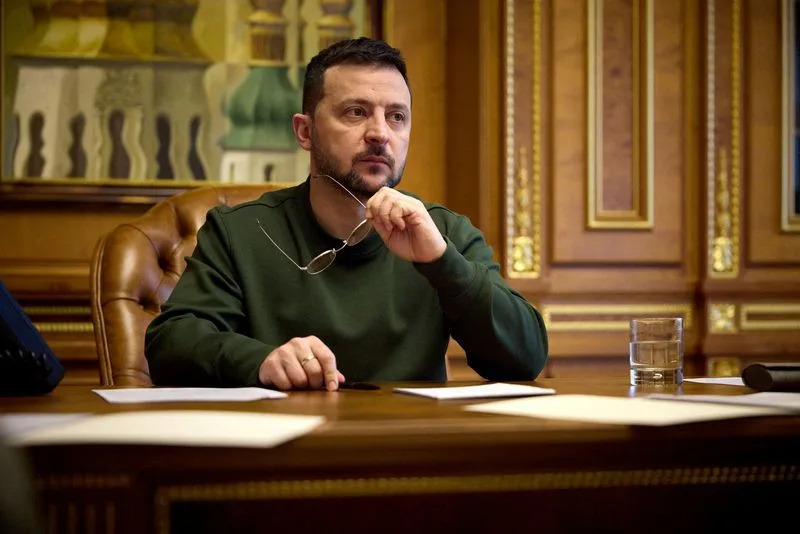
Ukraine’s President Zelenskiy speaks with India’s PM Modi via phone line in Kyiv

SEOUL (Reuters) – Ukrainian President Volodymyr Zelenskiy urged world leaders on Wednesday to make a rules-based international order “work again” by standing up to Russian use of force.

In a video address to a global conference hosted by South Korea, Zelenskiy – whose country was invaded by Russia in 2022 – said many nations and regions of the world would benefit from the restoration of the international rule of law.

“Together we have to make the force that has gone mad come back to the rules, and make the rules work again,” he told the Summit for Democracy, an initiative of U.S. President Joe Biden aimed at discussing ways to stop democratic backsliding and erosion of rights and freedoms.

Zelenskiy said that for peace to prevail, the U.S. Congress – where political wrangling has held up passage of a bill that would provide $60 billion more in aid for Ukraine – must join the world in being the “co-authors of solid reliability.”

Kyiv and its Western partners have accused Russia of using false pretexts to wage an unjustified war of colonial conquest in Ukraine. Russia says it sent troops to Ukraine two years ago in a “special military operation” to ensure its own security.

Biden, a Democrat, has backed military aid to Ukraine since Russia’s invasion. Some members of Congress and former President Donald Trump, the likely Republican candidate in the U.S. presidential election in November, have opposed it.

This year’s Summit for Democracy largely focused on digital threats to elections and democracy, including AI-powered misinformation, spyware, and other technology.

Russia’s defence minister said on Wednesday that Russian troops were pushing Ukrainian forces back, and that Moscow would bolster its military by adding two new armies and 30 new formations by the end of this year.

Russia said last month its goals in Ukraine remain unchanged, including the demilitarisation and “denazification” of occupied regions, and preserving the broader security of Russia in the face of NATO encroachment.

(Reporting by Josh Smith, Editing by Timothy Heritage)