After 20,000 Dead Troops Putin Suddenly Claims to Care About Their Lives
Allison Quinn – April 21, 2022
via Twitter
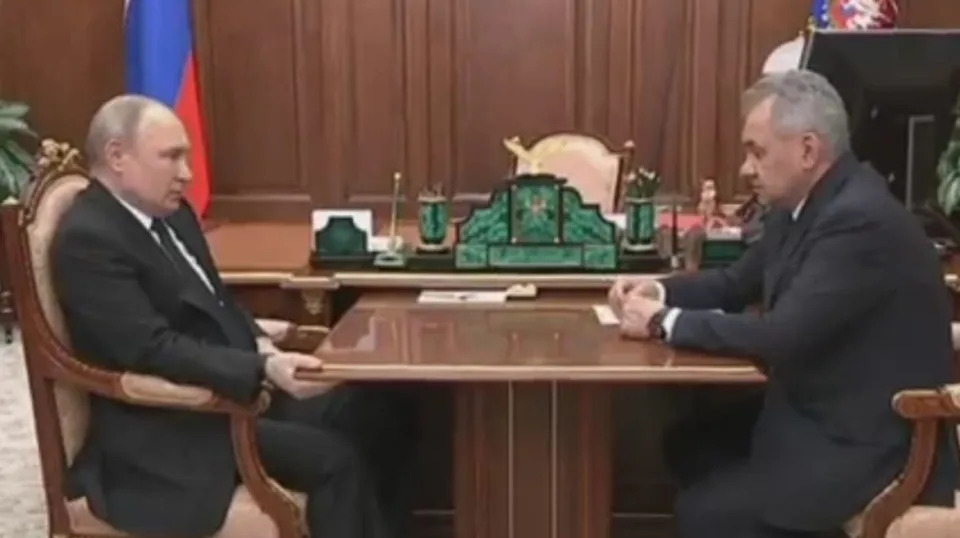
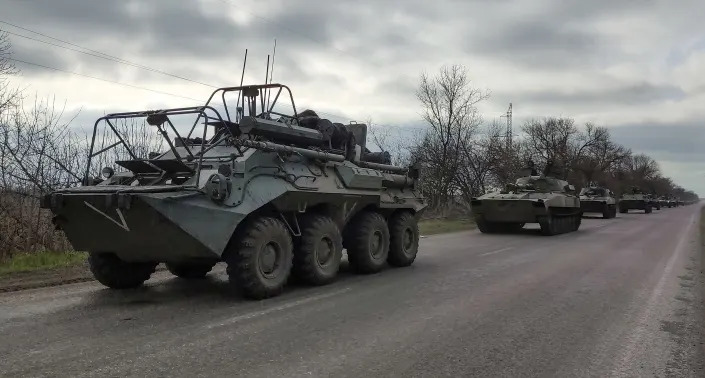
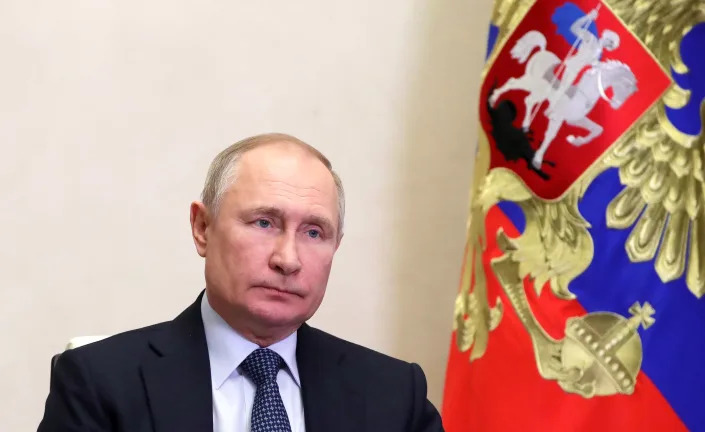
For the first time since Russia launched its all-out war against Ukraine on Feb. 24, Vladimir Putin on Thursday publicly flaunted his role as commander-in-chief, ordering his defense minister to halt plans to storm the last bastion of Ukrainian military resistance in Mariupol.
“I consider the proposed storming of the industrial zone unnecessary. I order you to cancel it,” he told Defense Minister Sergei Shoigu in a televised meeting, referring to Russian troops’ bid to storm the Azovstal plant where the last remaining Ukrainian troops in the city have been fending off a full Russian invasion for weeks. Ukraine has warned that many civilians remain trapped inside the plant as well.
In remarks bound to raise eyebrows after Moscow has spent nearly two months trying to cover up its own devastating losses in Ukraine—during which time they lost some 20,000 troops, according to Ukrainian estimates—Putin went on to claim his decision stemmed from a desire to protect human lives.
“This is an instance when we must think… I mean we must always think, but in the given situation even more so… about the preservation of the lives and health of our soldiers and officers,” he said.
“There’s no need to climb into these catacombs and crawl underground through these industrial facilities,” he said. “Block off this industrial area so that not even a fly can get through.”
Putin has ordered Defence Minister Sergei Shoigu to call off the storm of Mariupol's Azovstal steel plant in order to "protect the lives of Russian soldiers and officers"
His remarks come after a Ukrainian commander holed up in the plant issued a desperate appeal to the international community earlier this week, warning that “hundreds of civilians” were trapped there and there were “only a few days, or even hours” left for them amid heavy bombardment by Russian troops. On the eve of Putin’s announcement, the Ukrainian presidential administration had also called for negotiations in the city “without any conditions” to “save” Ukrainian soldiers and civilians.
Bizarrely, Putin went on to congratulate Shoigu on what he described as the successful “liberation” of Mariupol, despite the fact that the city has essentially been wiped off the face of the Earth after nearly two months of Russian attacks. (A 91-year-old Jewish survivor of the Nazi occupation of Mariupol in 1941 was among those killed during Russia’s siege, making Putin’s claims of the Kremlin acting to “de-Nazify” Ukraine all the more laughable.)
For many Russia observers, the unexpected announcement was seen as a veiled admission that the Kremlin is becoming aware of its need to save face in light of mounting reports of disillusionment among Russian troops, major losses, and perhaps even the sinking of the country’s most powerful battleship, the Moskva, which sparked outrage even among some of Putin’s most loyal propaganda figures. (Moscow’s repeated claim that all of the 500 or so sailors on board were rescued, and that the ship was not downed by Ukrainian missiles, has been torn to shreds by family members of those on board who disputed those claims in interviews with independent media outlets.)
And even as Putin lauded what he described as a successful operation to take control of Mariupol on Thursday, the city’s mayor said there was new evidence of Russian troops going to great lengths to mask civilian deaths and possibly their own military losses.
“The locals have told us that near Manhush [outside Mariupol] they have dug a 30-meter mass grave and are transporting bodies there in trucks that they are trying to hide,” Vadym Boychenko said in televised comments.
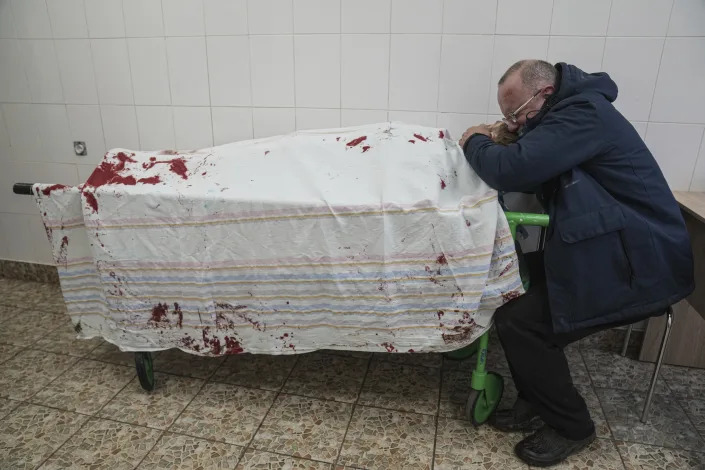
Ukrainian authorities have said that up to 22,000 civilians have been killed in the city since Russia’s takeover on March 1.
His statement reflected the importance of the city on the Sea of Azov and appeared to be an attempt to declare victory without storming the last pocket of Ukrainian resistance there: the massive Azovstal plant.
WHY IS MARIUPOL IMPORTANT?
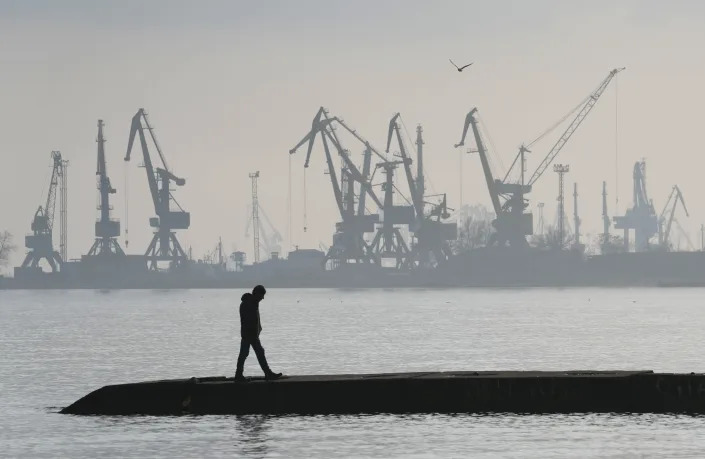
Mariupol, which is part of the industrial region in eastern Ukraine known as the Donbas, has been a key Russian objective since the Feb. 24 invasion began. Capturing the city would allow the establishment of a land corridor from Russia’s border to Ukraine’s Crimean Peninsula that Moscow annexed in 2014. It also would deprive Ukraine of a major port and prized industrial assets.- ADVERTISEMENT -https://s.yimg.com/rq/darla/4-10-1/html/r-sf-flx.html
The seven-week siege has tied up significant numbers of Russian forces, which are badly needed for an offensive elsewhere in the Donbas. The region is where Moscow-backed separatists have been fighting Ukrainian government forces since 2014, after the Crimea annexation.
HOW HAS THE RUSSIAN SIEGE GONE?
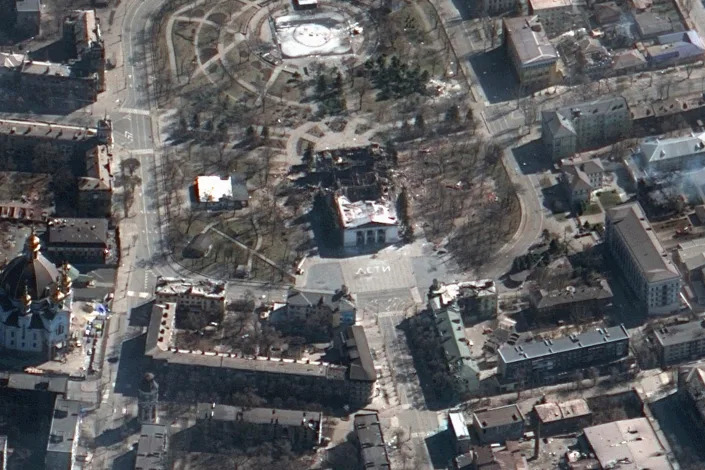
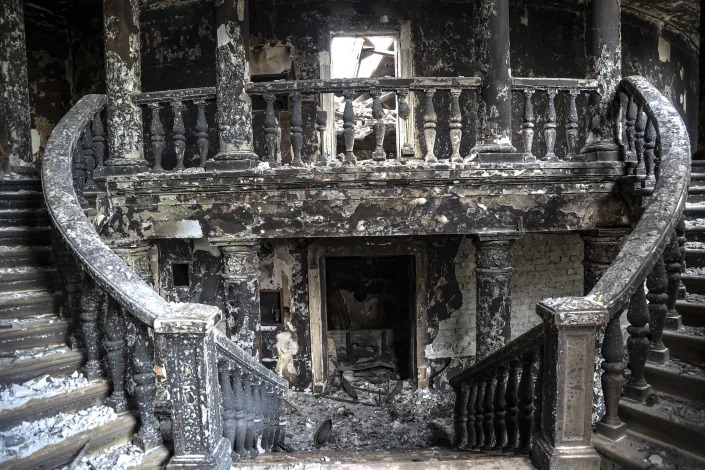
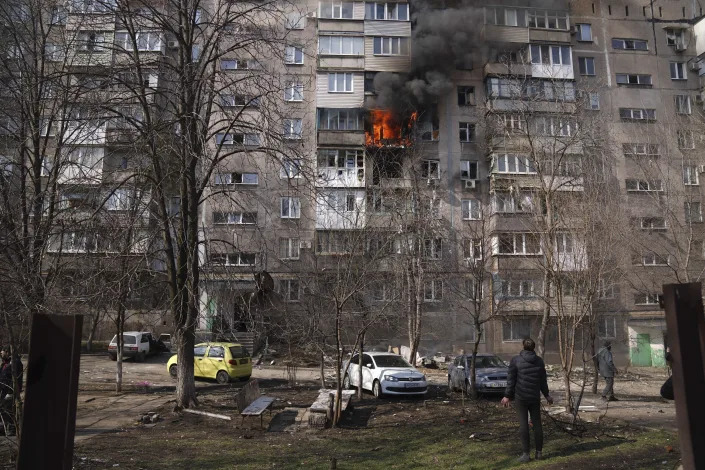
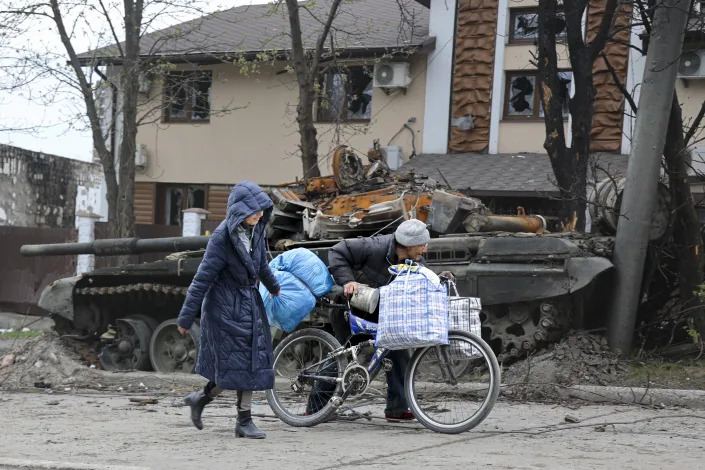
Since it began March 1, the Russian military has pummeled Mariupol relentlessly with artillery barrages and air raids, flattening most of the once-bustling city. The indiscriminate bombardment has hit homes, hospitals and other public buildings, killing thousands. That includes about 300 people killed in an airstrike on the Mariupol Drama Theater that was being used as a shelter, with officials inscribing the Russian word for “CHILDREN” in huge white letters on the pavement outside.
Mayor Vadym Boychenko told The Associated Press that at least 21,000 people were killed in Mariupol, with bodies “carpeted through the streets.” He said Russia deployed mobile cremation equipment to methodically dispose of the remains in order to destroy evidence of the massacre and prevent international organizations from documenting “the horror the Russian army is responsible for.” He alleged bodies also were dumped into mass graves outside the city.
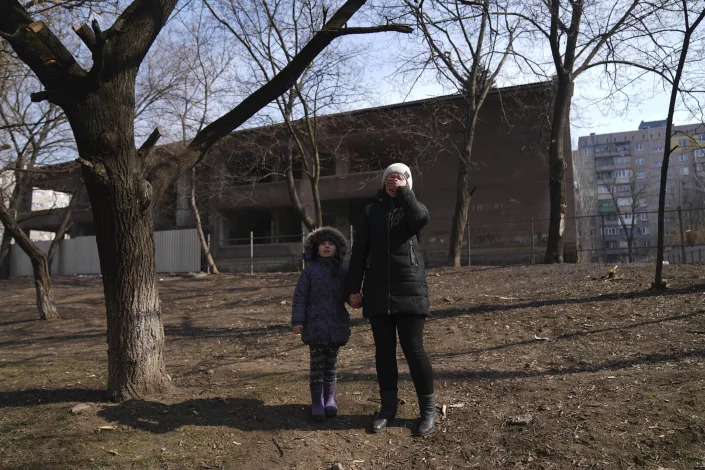
He estimated that 120,000 people remain in Mariupol out of a prewar population of about 450,000.
HOW HAS UKRAINE RESPONDED?
Ukraine sent some of its best troops to defend Mariupol. They included the 36th Marine Brigade, Interior Ministry troops, border guards and the national guard’s Azov Regiment. The regiment is a seasoned volunteer force that is widely considered one of Ukraine’s most capable units and has been singled out by Russia as a particular villain because of its far-right ideology.
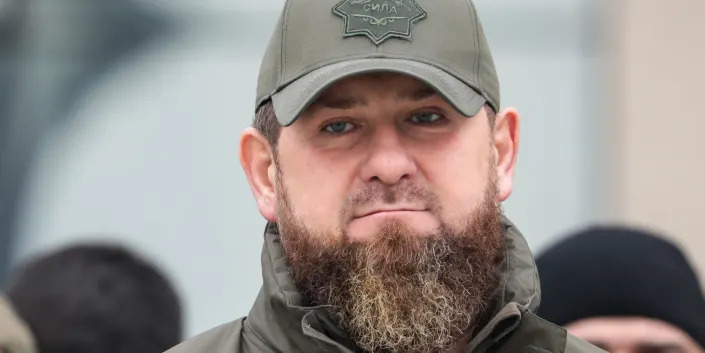
Moscow has deployed fighters from Chechnya, known for their ferocity, to wage street battles in Mariupol. Chechnya’s Moscow-backed leader, Ramzan Kadyrov, has repeatedly boasted on social media about defeating Ukrainians in Mariupol, but the fight has continued.
After weeks of house-to-house battles in which Russia has incurred massive losses, including several senior officers, Mariupol’s defenders holed up at the last remaining pocket of resistance — the mammoth Azovstal plant that employed 10,000 workers before the war.
WHY HAS THE BATTLE FOR THE STEEL MILL TAKEN SO LONG?
A few thousand Ukrainian troops, by Moscow’s estimate, remained in the plant, which covers an area of nearly 11 square kilometers (over 4.2 square miles). Ukrainian President Volodymyr Zelenskyy has said about 1,000 civilians were also trapped in the plant.
Azovstal has a 24-kilometer (15-mile) labyrinth of underground tunnels and passages, which allowed its defenders to maneuver freely to repel the Russian attacks.
Before the war, Ukrainian authorities prepared for the Russian offensive by building up stockpiles of food and water at Azovstal.
“The plant covers a huge area, and the Ukrainians can move through underground tunnels to quickly change location,” said Ukrainian military expert Oleh Zhdanov.
“Azovstal is very hard to storm, and the Russians risk losing many troops, resources and, most importantly, time there,” Zhdanov said. “It’s a city within a city, and fighting there could take months.”
He added that “as long as Mariupol holds, the Russians can’t redeploy 10-12 of their elite units to other areas in eastern Ukraine.”
The city “keeps distracting the Russian army forces and thwarting the Kremlin plans for an offensive in the Donbas.”
HOW IS PUTIN PORTRAYING THE BATTLE FOR MARIUPOL?
Putin met Thursday with Defense Minister Sergei Shoigu, who said the entire city except Azovstal is now under Russian control. It would take three to four days to flush the Ukrainian troops out of the steel mill, he added.
In a tightly choreographed televised meeting, Putin congratulated the military, saying that “putting such an important center in the south as Mariupol under control is a success.”
At the same time, he ordered Shoigu not to send troops into Azovstal to finish off the resistance, so as to avoid losses. Instead, the plant would be sealed tightly “so that not even a fly comes through.”
The remarks appeared to reflect Putin’s attempt to claim victory without a bloody, all-out assault of the plant in hopes that its defenders will surrender after running out of food and ammunition. Putin said nothing about halting a bombardment of the plant, which will probably continue.
HOW IS UKRAINE RESPONDING?
Oleksiy Arestovich, an adviser to Ukrainian President Volodymyr Zelenskyy, mocked Putin’s claim of victory, saying it reflects the fact the Russian military “cannot physically capture Azovstal.”
Retired British Rear Adm. Chris Parry described Putin’s remarks as a sign of a shift in approach, observing that “the Russian agenda now is not to capture these really difficult places where the Ukrainians can hold out in the urban centers, but to try and capture territory and also to encircle the Ukrainian forces and declare a huge victory.”
Parry likened the Ukrainian resistance in Mariupol to the battle of Stalingrad, in which the Red Army routed the Nazis blockading the city in a key turning point in World War II.
“I think there’s a great totemic value in the Ukrainians holding on to Mariupol,” Parry said. “If the Ukrainians can hang on to it … elevated to the level of Stalingrad, then I think it’s going to be a major lever for them both in the propaganda war, but also on the ground campaign as well.”
Commanders of Ukrainian units at the plant made a series of desperate video appeals in recent days, saying they are clinging by a thread and begging for help.
Maj. Serhiy Volynskyy of the 36th Marine Brigade said in a video Wednesday that “we are probably facing our last days, if not hours,” adding that “the enemy outnumbers us 10-1.”
“We appeal and plead to all world leaders to help us,” he said, asking world leaders to help safely evacuate the plant’s defenders and civilians holed up there.
Zelenskyy said about 1,000 civilians could be taking shelter in the plant and that “we are open to different formats of exchange of our people for Russian people, Russian military that they have left behind.”
But he added that Russia has stonewalled Ukraine’s attempts for a negotiated exit.
Yuras Karmanau in Lviv, Ukraine, and Danica Kirka in London contributed.
Who will pay to rebuild Ukraine? Economists have a plan for Russia to foot what could be a $1 trillion bill
Vivienne Walt – April 21, 2022
Yuriy GorodnichenkoEconomist (University of California-Berkeley; National Bureau of Economic Research (NBER); Institute of Labor Economics (IZA))
Even as Russian artillery pummels eastern Ukraine and reduces the southern port of Mariupol to rubble, economists are already calculating how much it will cost to rebuild the country.
The short answer: dizzying amounts of money, and rising all the time.
“Every day of war makes the costs higher and higher,” Yuriy Gorodnichenko, a Ukrainian economist and professor at the University of California Berkeley, told a Zoom meeting of experts this week, on rebuilding the country; he and other economists in the U.S., Europe, and Ukraine drafted a blueprint for Ukraine’s reconstruction, published this month by the Centre for Economic Policy Research in London.
“In the fog of war it’s hard to have any precise estimates,” Gorodnichenko told the meeting. “But we’re talking about hundreds and hundreds of billions of euros.” By comparison, the U.S. spent about $12.5 billion (about $450 billion in today’s dollars) on the Marshall Plan in the 1940s, to help rebuild Europe after the Second World War—which lasted six years. In Ukraine, between €500 billion and €1 trillion (about $545 billion and $1.08 trillion) of capital stock has been destroyed, after just eight weeks of combat.
Tapping frozen Russian assets
The question is, who will pay to rebuild Ukraine?
The economists suggest suing the Russian government for damages, and then using Russian assets that were seized or frozen by the U.S. and European Union after President Vladimir Putin sent his military into Ukraine on Feb. 24. Revenues from Russian oil imports could also be levied with reparations fees—much the same way that Iraq’s oil revenues were used for nearly 30 years to pay reparations to Kuwait, which it invaded in 1990.
Added together, Ukraine could cover much of its losses.
“The gross foreign assets if we include the oligarchs would be roughly around $1 trillion,” says Simon Johnson, a senior fellow at the Peterson Institute for International Economics in Washington. “If you damage somebody’s property, if you run someone over with your car, you pay compensations. That’s exactly the legal position you find yourself in.”
The footage of shattered buildings and devastated cities has stunned the world. But economists say there that is not the costliest impact of the war. More serious is the huge loss to Ukraine’s industry, especially in cities that have seen heavy bombardment, like Kharkiv.
“We have lost half of all Ukraine’s metals industry,” Andrii Dligach, founder of the Center for Economic Recovery and an advisor to the Ukraine government, told Fortune on Thursday from Kyiv. “We were one of the top 10 metals producers in the world before the war,” he said, adding that logistics is one of the biggest problems facing the economy.
“There is no sea route anymore because Russia has blocked the ports,” he said. “That was our main direction for exports.”
Half the industrial machinery too
In addition, about half the industrial machinery in the country has been lost, Dligach says. And more than 10% of Ukraine’s businesses have relocated to EU countries since the war broke out. “They probably will not come back in the near future,” he said. “It is a major loss for Ukraine’s GDP.”
About one-quarter of Ukraine’s harvest has also been lost, since Russia has bombed food warehouses, and some agricultural areas are in the combat zones; Ukraine supplies about 9% of the world’s wheat, some of which now have no way to be exported. “About 5 million tons of wheat is held up in Ukraine, and about 10 to 16 tons of corn is still in Ukraine from the previous harvest,” Tymofiy Mylovanov, head of the Kyiv School of Economics, told the Zoom meeting on reconstruction.
The World Bank predicted this month that Ukraine’s GDP could shrink about 45% this year, and that Russia’s economy could contract more than 11%. The bank loaned Ukraine about $723 million during the first weeks of the war to cover emergencies such as paying hospital salaries and pensions.
Economists say Ukraine should use the devastating war as an opportunity to modernize its economy, spending the money not on replacing what was there, but improving on it.
“Ukraine’s industry and infrastructure were built more than 30 years ago,” Dligach, the economic advisor to Ukraine’s government, told Fortune. “We need to use these dramatic days to build a new, modern infrastructure.”
Ukraine war recasts ‘Navalny’ as a prequel to Putin’s aims
Jake Coyle – April 19, 2022
Film Review Navalny
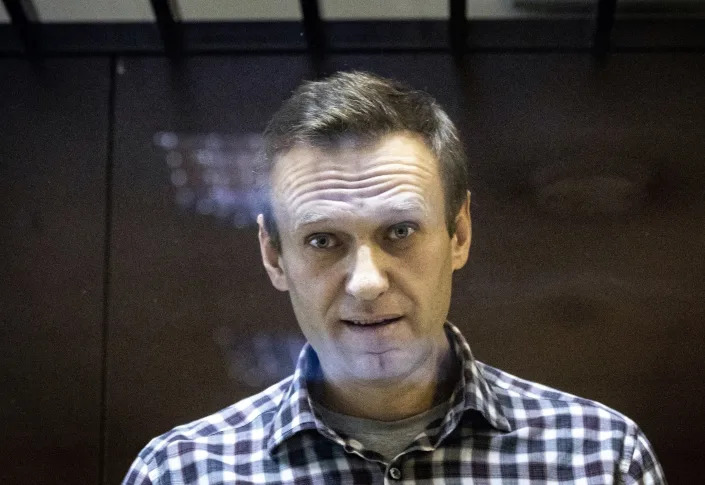
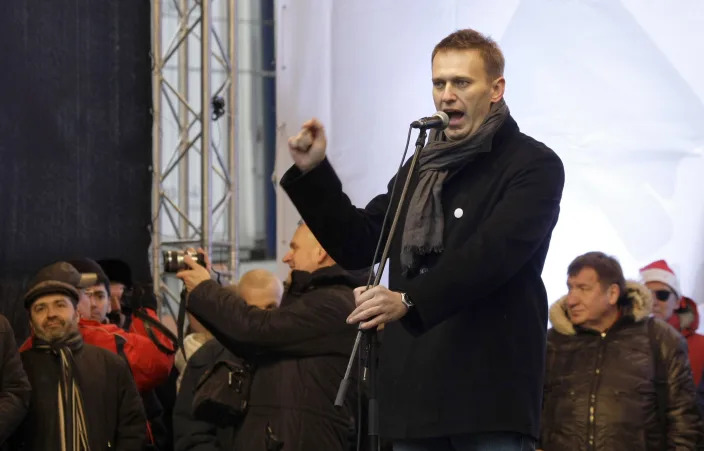
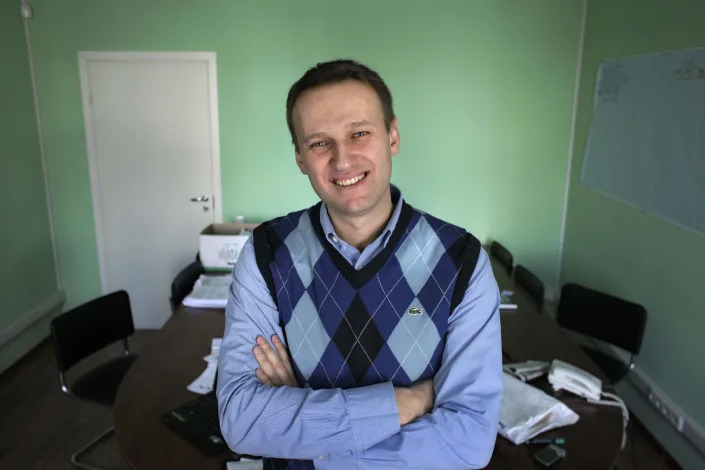
Alexei Navalny appears in a scene from the documentary “Navalny.” (Warner Bros. Pictures via AP)FILE – Russian opposition leader Alexei Navalny looks at photographers standing in the Babuskinsky District Court in Moscow, Russia, Saturday, Feb. 20, 2021. A documentary film, “Navalny,” about one of Vladimir Putin’s fiercest and most vocal political foes, premieres on CNN and CNN+ on Sunday. (AP Photo/Alexander Zemlianichenko, File)FILE – Opposition leader Alexei Navalny speaks during a rally to protest against alleged vote rigging in Russia’s parliamentary elections in Moscow, Russia, on Dec. 24, 2011. A documentary film, “Navalny,” about one of Vladimir Putin’s fiercest and most vocal political foes, premieres on CNN and CNN+ on Sunday. (AP Photo/Misha Japaridze, File)FILE – Police officers detain Russian opposition leader Alexei Navalny, center, in Moscow, Russia on July 10, 2013. A documentary film, “Navalny,” about one of Vladimir Putin’s fiercest and most vocal political foes, premieres on CNN and CNN+ on Sunday. (AP Photo/Evgeny Feldman, File)FILE – Russian anti-corruption campaigner and Kremlin critic Alexei Navalny poses in his office in Moscow, Russia on March 17, 2010. A documentary film, “Navalny,” about one of Vladimir Putin’s fiercest and most vocal political foes, premieres on CNN and CNN+ on Sunday. (AP Photo/Alexander Zemlianichenko, File)FILe – In this image made from video provided by the Babuskinsky District Court, Russian opposition leader Alexei Navalny stands in a cage during a hearing on his charges for defamation, in Moscow, Russia, on Feb. 5, 2021. A documentary film, “Navalny,” about one of Vladimir Putin’s fiercest and most vocal political foes, premieres on CNN and CNN+ on Sunday. (Babuskinsky District Court via AP)Local civilians walk past a tank destroyed during heavy fighting in an area controlled by Russian-backed separatist forces in Mariupol, Ukraine, Tuesday, April 19, 2022. Taking Mariupol would deprive Ukraine of a vital port and complete a land bridge between Russia and the Crimean Peninsula, seized from Ukraine from 2014. (AP Photo/Alexei Alexandrov)Russian President Vladimir Putin chairs a meeting on economic issues via videoconference at the Novo-Ogaryovo residence outside Moscow, Russia, Monday, April 18, 2022. (Mikhail Klimentyev, Sputnik, Kremlin Pool Photo via AP)
NEW YORK (AP) — When Christo Grozev, executive director of the investigative collective Bellingcat, recently re-watched the new documentary “Navalny,” about the imprisoned Russian opposition leader Alexei Navalny, he was struck by how much the film affected him differently since Vladimir Putin launched Russia’s war in Ukraine.
“Navalny,” directed by Daniel Roher, is a gripping portrait of the Russian dissident beginning with the 2020 poisoning that nearly killed him, and which Grozev traced directly to the Kremlin. Grozev uncovered that Navalny had been attacked with the nerve agent Novichok and that the alleged assassination attempt was the work of a Kremlin spy unit. (The Kremlin has denied it.) At the time, Grozev wondered if it would seem too far fetched that Putin would go to such Bond villain extremes.
“When we did the investigation in 2020, I struggled with: How am I going to convince Russian audiences and the world that what I’m saying is true — that the president of a large country that wants to be a moral leader in the world has been assassinating people?” Grozev said in a recent interview. “Now, it doesn’t seem like it’s such a big leap of faith.”
“Navalny” now plays like a prequel to Maria Pevchikh, head of the investigative unit for Navalny’s Anti-Corruption Foundation and an executive producer on the film. “It gives so much context to what’s happening now in Ukraine.
“The world could have and should have understood earlier. Putin could have been stopped in many points in history: after Crimea, after using chemical weapons, after running this assassination squad,” she said. “There have been so many awfully wrong things that we didn’t react strongly enough to.
“Navalny,” which will stream on HBO Max at a later date, was intimately filmed with the Russian opposition leader as he recuperated from the Novichok attack in Germany with his family, and resolved to return to Moscow despite the clear risks. In between, Navalny makes his case for an alternative to Putin while often comically sifting through the details of his near death. In one unbelievable scene — perhaps the first to ever fuse John le Carré and the Jerky Boys — Navalny calls Kremlin agents behind the attack while posing as a Russian bureaucrat filing a report, getting one to divulge plenty of details. With Roher’s fly-on-the-wall cameras, a real-life political thriller unspools starring a very charismatic Putin foe.
“Getting this film out in the world will help the world understand that Vladimir Putin is not Russia and Russia is not Vladimir Putin,” says Roher, the Canadian filmmaker of “Once Were Brothers: Robbie Robertson and the Band.” “What Alexei Navalny is an alternate vision of what the country could be.”
When Navalny landed in Moscow in early 2021, he was greeted by throngs of supporters — and quickly detained. After a year in jail, he was sentenced last month to nine more years for fraud in a case that the State Department condemned as a “sham ruling.” On Twitter, Navalny was characteristically undeterred.
“9 years. Well, as the characters of my favorite TV series ‘The Wire’ used to say: ‘You only do two days. That’s the day you go in and the day you come out.'”
As the war in Ukraine has dragged on and war crimes have been widely alleged against Russia, Navalny has spoken bluntly against the assault. On Tuesday, he claimed a distant relative of his, Ilya Ivanovich Navalny, had been killed in a Ukrainian village. Navalny suggested he had been targeted for his last name by Russia forces.
“It is now everyone’s duty to make at least some, even the smallest contribution to stop this war and remove Putin from power,” said Navalny on Twitter. “Protest wherever and however you can. Agitate however you can and whomever you can. Inaction is the worst possible thing. And now its consequence is death.”
With such stakes, the role of “Navalny” has only intensified, the filmmakers say.
“People are fighting. Navalny is fighting,” says Pevchikh. “We are convinced that it’s never too late to try to stop Putin. To stop him today would be better than stopping him tomorrow or the day after tomorrow.”
In a crackdown on opposition activists and independent journalists, Navalny’s Anti-Corruption Foundation was last year labeled an extremist organization by the Kremlin. Now operating outside Russia, the group has continued running investigations into government corruption, even with its leader behind bars. (In March, its researchers linked a superyacht docked in Italy to Putin.)
Pevchikh hasn’t seen Navalny, himself, in more than a year. At every festival premiere and screening event, she happily stays to watch the documentary again.
“It’s nice to see Alexei out of prison, looking and behaving like he usually does,” says Pevchikh. “It’s always nice to spend an hour and half with your friend, even if it’s just in a movie.”
To help avoid potential sabotage from Russian operatives, the companies behind “Navalny” have kept release plans quiet until the last minute. The film was added to Sundance days before the festival began; its CNN broadcast was announced about a week beforehand. After the film first began screening Roher says he’s been depicted as CIA in Russian state media. He calls getting the film seen in Russia his number one prerogative.
“I wouldn’t want Russians to go on bit torrent sites and try to find it and download it and share it with their friends and families, and maybe set up screenings in their communities and their homes,” says Roher. “I would never suggest that.”
But as much has changed in the three months since “Navalny” first premiered, Roher says that Navalny’s unflinching confidence remains undimmed.
“When you work with Alexei and you spend enough time with the man, you can’t help but be optimistic,” says Roher. “This war that Putin is waging, the war crimes he’s committing, are perhaps the greatest political blunder ever. I would look to history. I would remind readers how quickly the Soviet Union fell. Things change overnight.”
A prominent Russian TV presenter said that Russia’s invasion of Ukraine is approaching a “new stage” in which Moscow will find itself at war with the North Atlantic Treaty Organization — and by extension, the entire world.
“I believe the special military operation is entering a new stage. Ukrainians alone are no longer enough,” said Vladimir Solovyov, according to the translation of a video clip tweeted on Thursday by The Daily Beast’s Julia Davis.
In the widely shared clip, Solovyov noted that NATO countries have been supplying weapons to Ukraine. “We’ll see not only NATO weapons being drawn into this, but also their operators,” he warned while speaking on his show “Evening with Vladimir Solovyov.”
In the clip, he noted that Russia was “starting to wage war against NATO countries.”
Meanwhile on Russian state TV: host Vladimir Solovyov threatens Europe and all NATO countries, asking whether they will have enough weapons and people to defend themselves once Russia's "special operation" in Ukraine comes to an end. Solovyov adds: "There will be no mercy." pic.twitter.com/fCN3vfZy4N
We’ll be grinding up NATO’s war machine as well as citizens of NATO countries,” Solovyov said. “When this operation concludes, NATO will have to ask itself: ‘Do we have what we need to defend ourselves? Do we have the people to defend ourselves?’
“And there will be no mercy. There will be no mercy,” he added.
Echoing Putin’s call for the “de-Nazification” of Ukraine, Solovyov said: “Not only will Ukraine have to be denazified, the war against Europe and the world is developing a more specific outline, which means we’ll have to act differently, and to act much more harshly.”
His comments come as several NATO member states announced they would provide Ukrainian troops with advanced weapons and heavy artillery and training on how to use the equipment.
For instance, the US is now sending hundreds of tank-busting “Switchblade” drones designed to crash into targets and explode and dozens of long-range artillery systems called howitzers. The UK has also said it would provide 120 armored vehicles and anti-ship missile systems.
“We must understand that, in his head, Putin is at war not with Ukraine,” exiled Russian oligarch Mikhail Khodorkovsky told CNN on April 4. “He’s at war with the United States and NATO. He said this more than once.”
Ukraine claims Ramzan Kadyrov’s troops killed 3 Russian troops who no longer wanted to fight
Mia Jankowicz – April 21, 2022
Ramzan Kadyrov, head of the Chechen Republic, on February 25, 2022.Yelena Afonina/TASS via Getty Images
A Ukrainian military official said Putin ally Ramzan Kadyrov’s troops killed three Russian soldiers who rioted.
Kadyrov’s militia has a reputation for brutality and is reported to be fighting in Ukraine.
Insider was unable to verify the claim, though it is one of numerous similar reports on low Russian morale.
A Ukrainian official said that troops working for Ramzan Kadyrov, the Chechen Republic leader and ally of Russian President Vladimir Putin, killed three Russian soldiers who did not want to fight in the Ukraine war.
A number of Russian soldiers had rioted over a lack of promised pay in Polohy, a district in the southeastern Ukrainian region of Zaporizhzhia, according to an official statement attributed to regional military spokesperson Col. Ivan Arefyev.
The statement, posted to Telegram on Wednesday, said that Ukrainian intelligence found that the soldiers in question “were ready to surrender their weapons and go home.”
But fighters answering to Kadyrov “brutally killed” three of the Russian soldiers, Arefyev’s statement said.
Insider has been unable to verify the incident, and did not immediately receive a response to enquiries to the Russian embassy in London and Chechnya’s parliament.
Kadyrov is a Putin loyalist who runs the quasi-autonomous region of Chechnya with an iron fist. His private militia — “Kadyrovites” as per the statement — are widely reported to have been fighting in support of Russia’s invasion of Ukraine.
Arefyev’s report, if verified, would give a rare insight into the relationship between Kadyrov’s forces and the Russian rank and file in this conflict.
Arefyev’s statement follows a string of reports that a proportion of Russian soldiers are suffering low morale and reluctant to carry out Putin’s military objectives in Ukraine.
Some such reports originate with Ukrainian officials and are amplified as part of the country’s war effort, and not all have been independently verified.
In the audio, the voices suggest shooting a former colonel. They said they were left in a precarious situation with no weapons or supplies, and that they had been ordered to fire on civilians.
“We were like what the fuck, you know?” says one voice.
“Fucking bastards … shoot that wanker first, right now, motherfucker,” said another, in apparent reference to the colonel. The other can be heard agreeing, saying he would write “a massive report” when he got home.
As with the report from Arefyev, Insider was unable to verify the authenticity of the recording.
But others have emerged from independent sources.
On March 23, the Ukrainian journalist Roman Tsymbaliuk reported that frustrated members of a Russian battalion ran over their colonel’s legs in a tank, hospitalizing them. A senior Western official later told The Washington Post that they believed the colonel had been killed “as a consequence of the scale of the losses taken by his own brigade.”
The Russian newspaper Pskovskaya Gubernia also reported on April 7 that 60 Russian paratroopers had refused to join the invasion. The paper has a reputation for independence within Russia’s repressive media environment.
Ukraine gets Norwegian Mistral VSHORAD – 800 m/s, 6 km range
By TOC – April 21, 2022
KYIV, ($1=29.46 Ukrainian Hryvnias) — Assistance to Ukraine from Norway in the form of the Mistral SAM may seem a little strange, but it is a gift that can really help the armed forces. Hundreds of Mistral anti-aircraft missile systems will arrive in Ukraine as free aid from Norway, learned BulgarianMilitary.com, citing a statement by Norwegian Defense Minister Bjorn Arild Gram.
He also stressed that the Mistral SAM is “an effective weapon used in the Navy and will be very useful for Ukraine.” And according to Norwegian media, Mistral, which is installed on Norwegian Alta and Oksoy minesweepers, is still planning to replace it with a newer one, so the transfer of these weapons will not affect Norway’s defense capabilities.
Therefore, when it comes to Mistral, it should be understood that this is not a portable complex, but an installation. In the case of Norwegian weapons – a paired installation of Sibmad in the first version. The most correct classification is VSHORAD [Very Short Range Air Defense] – air defense with a very short range.
Note that the characteristics of the Mistral rocket, which was created in the 80s, do not differ from the characteristics of the breakthrough. And in the version from the ’90s, Mistral has the following technical data: it weighs 19.7 kg, has an effective operating range of 6 km, the warhead weighs 2.95 kg, and the missile flies at a maximum speed of 800 m / sec.
Mistral VSHORAD
Of course, the current version of this missile from MDBA has a range of up to 7.5 km, but Norway is unlikely to renew the stocks purchased in the 90s. Therefore, to understand the effectiveness of these weapons, it would be right to focus on the indicators for older versions.
As with many other missiles in this class, an infrared targeting head is used for guidance. The detonation of the missile is possible with a remote laser detonator or contact. Combined with a powerful warhead, this can be a decisive factor in complete destruction, not damage to the target.
At the same time, the question of a “place inline” Mistral arises. First of all, he needs a machine to start. The missiles may be transferred with Sibmad launchers, which will be removed from the ships. Or the armed forces will receive ground launchers separately.
Photo credit: Regjeringen.no
Second, to ensure mobility, the starter must be installed on a mobile platform. At the same time, such an installation will not be effective in the foreground, because the range of Mistral launches is similar to the much less noticeable portable anti-aircraft missile system.
Therefore, according to experts, one of the few effective scenarios for the use of SAM Mistral in Ukraine is the protection against cruise missiles. The fact is that one of the main tasks of Sibmad with Mistral is the destruction of anti-ship missiles, which do not differ much in-flight parameters from cruise missiles.
A growing number of Kremlin insiders are questioning Putin’s war in Ukraine, and believe it will set Russia back decades: report
Tom Porter – April 20, 2022
Russian President Vladimir Putin chairs a meeting on the development of the Russian Arctic zone at the Novo-Ogaryovo state residence outside Moscow, Russia, on April 13, 2022.MIKHAIL KLIMENTYEV/SPUTNIK/AFP via Getty Images
A number of high ranking Kremlin insiders have growing concerns about Putin’s war in Ukraine.
10 insiders told Bloomberg of their concerns about the economic and political impact of the invasion.
They also share fears of US intelligence that the Russian president could turn to nuclear weapons.
A small but growing number of Kremlin insiders are questioning President Vladimir Putin’s war in Ukraine and have serious concerns about its potentially devastating economic and political impact, Bloomberg reported.
Bloomberg cited ten sources with direct knowledge knowledge of the situation in its report, and described the critics as being spread across senior positions in government and state run businesses.
According to the report, the Kremlin insiders regard the invasion as a catastrophic mistake that will set the country back decades.
They told the outlet that Putin is surrounded by a group of hardline advisors, and has dismissed attempts to warn him of the steep economic and political costs of the conflict.
But the report says that while Putin has acknowledged the damage Western sanctions will do, he claims the conflict was pushed on him by Western powers.
Putin regards himself as being on an historic mission, Bloomberg reported the sources as saying, and believes he has the support of the Russian people. They see no prospect of a serious challenge to his power domestically.
Russia initially expected to seize Ukrainian capital Kyiv in a matter of days, analysts say. After nearly two months of fighting, its forces have pulled back from the city, and efforts are instead being focused on seizing territory in the eastern Donbas region.
Putin has publicly claimed that Western sanctions have failed to undermine Russia’s economy, with the value of the ruble having recovered in recent weeks after a 40% collapse in value in the wake of sanctions.
New U.S. sanctions for Russian bank, oligarchs, crypto miner BitRiver
Daphne Psaledakis and David Brunnstrom – April 20, 2022
FILE PHOTO: The U.S. Treasury building is seen in Washington
WASHINGTON (Reuters) -The United States on Wednesday imposed sanctions on dozens of people and entities, including a Russian commercial bank and a virtual currency mining company, hoping to target Moscow’s evasion of existing sanctions over Russia’s invasion of Ukraine.
The U.S. Treasury Department said it designated a virtual currency mining company for the first time, alongside more than 40 people and entities led by U.S.-designated Russian oligarch Konstantin Malofeyev.
“Treasury can and will target those who evade, attempt to evade, or aid the evasion of U.S. sanctions against Russia, as they are helping support Putin’s brutal war of choice,” Treasury under secretary for terrorism and financial intelligence, Brian Nelson, said in a statement.
The Russian Embassy in Washington did not immediately respond to a request for comment.
The United States and its allies have imposed several rounds of sanctions on Moscow since its Feb. 24 invasion of Ukraine, including targeting the country’s largest lenders and Putin himself.
Wednesday’s move targets Russia’s virtual currency mining industry, reportedly the third largest in the world, sanctioning the holding company of Moscow-based bitcoin miner BitRiver, which operates data center in Siberia, and 10 of the holding company’s Russia-based subsidiaries.
The Treasury also put sanctions on Russian commercial bank Transkapitalbank, whose representatives it said serve several banks in Asia, including in China, and the Middle East, and have suggested options to evade international sanctions.
Its subsidiary, Investtradebank, was also designated.
Wednesday’s action freezes any U.S. assets of those designated and generally bars Americans from dealing with them.
But Washington issued two general licenses related to Transkapitalbank alongside the sanctions, authorizing the wind down of dealings with the bank until May 20 and certain transactions destined for or originating from Afghanistan until Oct. 20 “in support of efforts to address the humanitarian crisis.”
The United States also imposed additional sanctions on Russian oligarch Malofeyev, whom U.S. authorities have long accused of being one of the main sources of financing for Russians promoting separatism in Crimea. He was first designated under the Obama administration in 2014 when Russia annexed Crimea.
Earlier this month, the U.S. Justice Department charged Malofeyev with violating sanctions imposed on Russia after its invasion of Ukraine.
“The United States will work to ensure that the sanctions we have imposed, in close coordination with our international partners, degrade the Kremlin’s ability to project power and fund its invasion,” Nelson said.
The U.S. State Department is also imposing visa restrictions on over 600 people in a bid to promote accountability for human rights abuses and violations, U.S. Secretary of State Antony Blinken said in a statement, barring them from traveling to the United States.
Three Russian officials were also hit with visa restrictions over “gross violations of human rights” alongside 17 others hit with restrictions over accusations of undermining democracy in Belarus.
“We will use every tool to promote accountability for human rights abuses and violations of international humanitarian law in Ukraine,” Blinken said.
(Reporting by Daphne Psaledakis, Chris Gallagher, Doina Chiacu, David Brunnstrom, Andrea Shalal and Alexandra Alper; Editing and Heather Timmons and Alistair Bell)
The Treasury Department on Wednesday designated a number of entities and individuals involved in attempting to evade sanctions imposed by the United States and international partners on Russia, maintaining that economic costs will be imposed to “degrade the Kremlin’s ability to project power and fund” its invasion of Ukraine.
The Treasury Department’s Office of Foreign Assets Control (OFAC) designated Russian commercial bank Transkapitalbank and a global network of more than 40 individuals and entities led by U.S.-designated Russian oligarch Konstantin Malofeyev, including organizations whose primary mission is to facilitate sanctions evasion for Russian entities.
OFAC also designated companies operating in Russia’s virtual currency mining industry, reportedly the third largest in the world. The Treasury Department said this is the first time they have designated a virtual currency mining company.
“Treasury can and will target those who evade, attempt to evade, or aid the evasion of U.S. sanctions against Russia, as they are helping support Putin’s brutal war of choice,” Brian E. Nelson, undersecretary for terrorism and financial intelligence, said Wednesday. “The United States will work to ensure that the sanctions we have imposed, in close coordination with our international partners, degrade the Kremlin’s ability to project power and fund its invasion.”
President Vladimir Putin has shut down independent media inside Russia. Getty Images
Transkapitalbank is a privately owned Russian commercial bank that has operated since 1992. Treasury says TKB representatives have offered services to banks in Asia, including within China the Middle East, and “suggested options to evade international sanctions.”
The Treasury Department said that, for example, in order to “avoid detection and sanctions-derived restrictions,” the bank had offered its clients the ability to conduct transactions through its proprietary internet-based banking system known as TKB Business, which they describe as an alternative communication channel to the Society for Worldwide Interbank Financial Telecommunication (SWIFT) network.
Treasury said the move is for the purpose of “processing U.S. dollar payments for sanctioned clients.”
Treasury also noted that TKB is seeking to create a settlement hub in Asia “without involving U.S. or European banks in the clearing process.”
On Wednesday, OFAC also targeted a worldwide sanctions evasion and “malign influence network” led by Russian oligarch Konstantin Malofeyev. Malofeyev was first designated in 2015 for being “responsible for or complicit in, or for having engaged in, actions or polices that threaten the peace, security, stability, sovereignty or territorial integrity of Ukraine; and for having materially assisted, sponsored or provided financial, material or technological support for, or goods or services to or in support of, the so-called Donetsk People’s Republic.”
Malofeyev has also been sanctioned by Australia, Canada, the European Union (EU), Japan, New Zealand and the United Kingdom (UK).
According to the Treasury Department, at the time of his 2014 designation, Malofeyev “funded separatist activities in Eastern Ukraine and was one of the main sources of financing for Russians promoting separatism in Crimea.”
“In recent years, Malofeyev, covertly or through intermediaries, supported pro-Russian activities that undermine democracy, interfere in elections, and degrade security and stability in a host of countries,” the Treasury Department said. “Malofeyev served as an intermediary between the Government of the Russian Federation (GoR) and pro-Russia politicians abroad, facilitated funding for or directly financed pro-Russia politicians and opinion makers, and worked to create institutions that could advance Russia’s interests in the European Union from within.”
Meanwhile, the sanctions are also coordinated with additional action taken by the State Department.
The State Department is moving to impose visa restrictions on 635 Russian nationals who are “involved in suppressing dissent in Russia and abroad, who have been involved in activities that threaten the territorial integrity of Ukraine, and who have been involved in human rights abuses in prison facilities and places of unofficial detention in Russia-controlled areas of the Donbas region of Ukraine.”
The State Department is also imposing visa restrictions on three Russian Federation officials for involvement in “gross violations of human rights, and on 17 individuals responsible for undermining democracy in Belarus.”
“As a result of today’s action, all property and interests in property of the persons above that are in the United States or in the possession or control of U.S. persons are blocked and must be reported to OFAC,” the Treasury Department said Wednesday. “In addition, any entities that are owned, directly or indirectly, 50% or more by one or more blocked persons are also blocked.”
Treasury said “all transactions by U.S. persons or within (or transiting) the United States that involve any property or interests in property of designated or otherwise blocked persons are prohibited unless authorized by a general or specific license issued by OFAC, or exempt.”
“These prohibitions include the making of any contribution or provision of funds, goods, or services by, to, or for the benefit of any blocked person and the receipt of any contribution or provision of funds, goods, or services from any such person,” Treasury said.
In February, the United States, Canada and other European allies imposed sanctions on Russia, and removed Russian banks from the SWIFT messaging system. The U.S. and allies said the move would “ensure that these banks are disconnected from the international financial system and harm their ability to operate globally.”
The move came from leaders of the European Commission, France, Germany, Italy, United Kingdom, Canada, and the United States.
SWIFT provides messaging services to banks in over 200 countries, and is controlled by the central banks of the G-10, including Belgium, Canada, France, Germany, Italy, Japan, the Netherlands, the United Kingdom, the United States, Switzerland and Sweden.