CNN
March 5, 2022
Read About The Tarbaby Story under the Category: About the Tarbaby Blog

March 5, 2022
March 6, 2022
March 4, 2022
March 5, 2022
March 5, 2022
March 4, 2022
Putin’s violence may still get worse. But Americans shouldn’t root for a dangerous escalation of hostilities.
By Tom Nichols – March 3, 2022
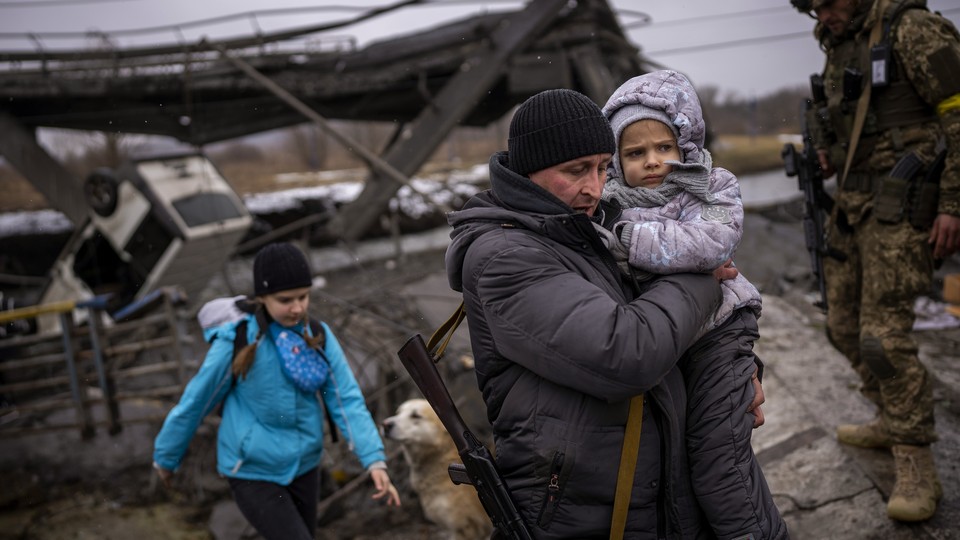
A few days ago, I was watching footage of Ukrainian mothers, panicked and crying, trying to evacuate their children from a beautiful city that a paranoid dictator has now turned into a war zone. I looked over at my wife, sitting a few feet away from me, and saw the tears welling in her eyes. I felt helpless. And for once, I was at a loss for words.
Night after night I find myself staring at the television, almost paralyzed with anger and grief. Russian President Vladimir Putin, after a catastrophic strategic miscalculation, is now embroiled in perhaps the greatest military blunder in modern European history. In his desperation, he is resorting to the classic Russian military playbook of indiscriminate and massive violence. His unprovoked war of aggression is rapidly escalating into war crimes.
It’s going to get worse. The images and sounds from these first few days are a mere prologue to what will come once Putin realizes that he is on track to lose this war, even if he somehow “wins” by flattening entire cities.
In my rage, I want someone somewhere to do something. I have taught military and national-security affairs for more than a quarter century, and I know what will happen when a 40-mile column of men and weapons encircles a city of outgunned defenders. I want all the might of the civilized world—a world of which Putin is no longer a part—to obliterate the invading forces and save the people of Ukraine.
Others share these impulses. In recent days, I’ve heard various proposals for Western intervention, including support for a no-fly zone over Ukraine from former NATO Supreme Allied Commander General Philip Breedlove and the Russian dissident Garry Kasparov, among others. Social media is aflame with calls to send in American troops against the invading Russians.
And yet, I still counsel caution and restraint, a position I know many Americans find impossible to understand. Every measure of our outrage is natural, as are the calls for action. But emotions should never dictate policy. As President Joe Biden emphasized in his State of the Union address, we must do all we can to aid the Ukrainian resistance and to fortify NATO, but we cannot become involved in military operations in Ukraine.
I realize that this is easy for me to say. I am not in Kyiv, trying to spirit my child to safety. I am not watching the Russians approach my town. When I finish writing this, I will reassure my wife and sit down to share dinner with her in a quiet home on a peaceful street.
But public figures and ordinary voters who are advocating for intervention also do so from the comfort of offices and homes where they can sound resolute by employing clinical euphemisms such as no-fly zone when what they mean is “war.” For now, fidelity to history requires us to remember that this isn’t the first time we’ve had little choice but to stand by and watch a dictator murder innocents.
In some cases we were unwilling to bear the costs of intervention. In others, we were deterred by the immense risks of a nuclear confrontation. During the Cold War, we did not face down the Soviets in Hungary in 1956 or Czechoslovakia in 1968. We did not send troops to drive them from Afghanistan after their 1979 invasion. (In Afghanistan, we provided material assistance to raise the cost of occupation, and we succeeded in helping the local population inflict serious wounds on the Soviet war machine, but hundreds of thousands of Afghans were dead and millions had fled as refugees by the time the Soviets threw in the towel.)
In the 1990s, we allowed war crimes and ethnic cleansing to reach horrific levels in Rwanda and the former Yugoslavia. More recently, America chose to stand aside as the Syrian regime used chemical weapons against civilians in a war that has taken well over half a million lives (a disaster that I have argued, repeatedly, justifies global military intervention). We pointedly avoided too much criticism of the Russian war in Chechnya and now do the same with regard to Chinese crimes against the Uyghurs.
I am recounting this litany of shame not as a device for consigning the Ukrainians to oblivion, but to remind us all that this is not the first humanitarian outrage we’ve seen. The day may come, and sooner than we expect, when we have to fight in Europe, with all the risks that entails. If we are to plunge into a global war between the Russians and the West, however, it needs to be based on a better calculus than pure rage. (It also will require a vote of assent from all 30 NATO nations, something that is not currently even a remote possibility.)
Also, let’s remember that America is, in fact, taking action to help Ukraine and oppose Russia. Western sanctions will not save Kyiv or other Ukrainian cities tomorrow, but they are crippling the Russian economy and undermining Putin’s ability both politically and materially to seek a larger war. We are working with the rest of the world to get military assistance to the Ukrainians, who will be fighting a resistance for as long as the Russians are in their country.
More important, we are sending more forces to our allies around Ukraine. If Putin reckoned on a quick victory and a dash to the West, that dream is over. He’ll win on the ground in the short run, but in the end he’ll be lucky to get out of Ukraine with his military intact—if he’s even still in power.
Indeed, one more reason not to let our emotions get the better of us is that the only way Putin can save himself from his own fiasco is to bait the West into an attack. Nothing would help him more, at home or abroad, than if the United States or any other NATO country were to enter direct hostilities with Russian forces. Putin would then use the conflict to rally his people and threaten conventional and nuclear attacks against NATO. He would become a hero at home, and Ukraine would be forgotten.
In thinking about all of this, I have been reliving a moment from 1991, when I was working on Capitol Hill as personal staff for foreign and defense affairs to the late Senator John Heinz of Pennsylvania. Saddam Hussein had invaded Kuwait and we were at war. The Iraqi dictator was launching Scud missiles into neighboring states, including Israel. One night, Heinz and I were walking along North Capitol Street on our way back to the office. It was a lovely evening, but we had just been told—erroneously—that Saddam had struck Tel Aviv with chemical weapons.
I was barely 30 years old. I had never been near a war. I had recently visited Israel, and I was practically shaking with rage. “Ever been to Tel Aviv, Senator? Nice city.” It was an utterly inane comment; of course the senator had been to Tel Aviv. I was just trying to make conversation, because I didn’t know what else to say while thinking about Israelis dying in the street.
Heinz paused. In a fatherly manner, he said: “Tom, I know that right now you’d like to rip Saddam Hussein apart with your bare hands. But this is when I need you to be calm and rational and helpful so that we can figure this thing out.”
It was a reproach, but a gentle one. I never forgot it, and now I always try to keep in mind that in moments of crisis, we must reflect deeply and dispassionately before daring to act.
I am as enraged today as I was on North Capitol Street more than 30 years ago. But I am trying to be calm and rational, and yes, helpful, as much as I can be. So should we all.
Tom Nichols is a contributing writer at The Atlantic and the author of its newsletter Peacefield.
By Anne Applebaum – March 1, 2022
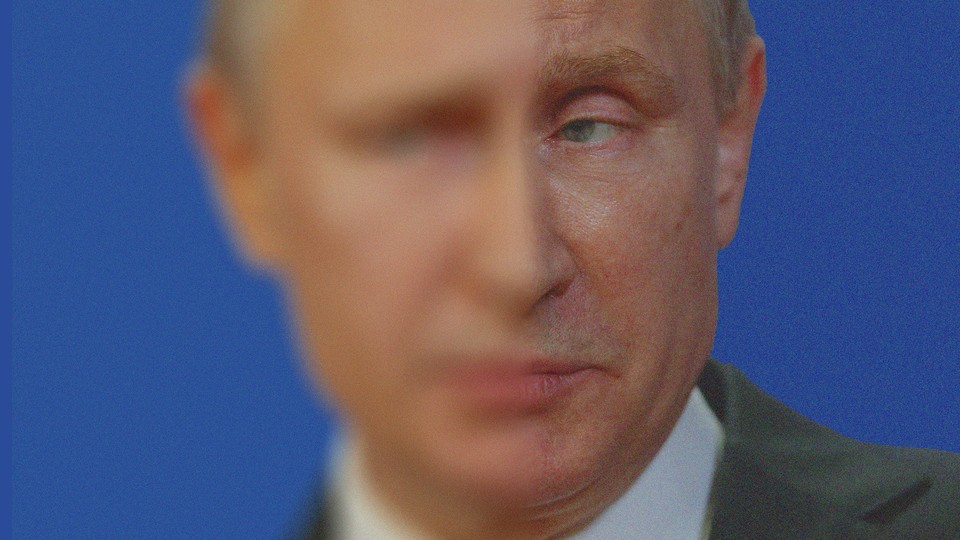
History has accelerated; the impossible has become possible. Shifts that no one imagined two weeks ago are unfolding with incredible speed.
As it turns out, nations are not pieces in a game of Risk. They do not, as some academics have long imagined, have eternal interests or permanent geopolitical orientations, fixed motivations or predictable goals. Nor do human beings always react the way they are supposed to react. Last week, nobody who was analyzing the coming war in Ukraine imagined that the personal bravery of the Ukrainian president and his emotive calls for sovereignty and democracy could alter the calculations of foreign ministers, bank directors, business executives, and thousands of ordinary people. Few imagined that the Russian president’s sinister television appearances and brutal orders could alter, in just a few days, international perceptions of Russia.
And yet all of that has happened. Volodymyr Zelensky’s courage has moved people, even the hard-bitten CEOs of oil companies, even dull diplomats accustomed to rote pronouncements. Vladimir Putin’s paranoid ranting, meanwhile, has frightened even people who were lauding his “savvy” just a few days ago. He is not, in fact, someone you can do business with, as so many in Berlin, Paris, London, and Washington falsely believed; he is a cold-blooded dictator happy to murder hundreds of thousands of neighbors and impoverish his nation, if that’s what it takes to remain in power. However the war ends—and many scenarios are still imaginable—we already live in a world with fewer illusions.
Look at germany, a nation that has spent nearly 80 years defining its national self-interest in purely economic terms. If the government of some distant place where Germans buy and sell things was repressive, that was never the Germans’ fault. If military aggression was reshaping the outer borders of Europe, that was peripheral to Germany, too. Former Chancellor Angela Merkel, although she talked a lot about liberal and democratic values, in practice worried far more about creating good conditions for German business, wherever it was operating. That economy-first attitude infected her nation. Not long after the Russian annexation of Crimea in 2014, I joined a panel discussion in Germany about “the greatest threats to Europe.” Because of the timing, I talked about Russia and assumed the others would too. I was wrong. One of the other panelists called me a warmonger. Another argued vociferously that the greatest threat was a proposed trade agreement that would have allowed Americans to sell chicken washed in chlorine to German supermarkets.
I remember that detail because I hadn’t known about the great chlorinated-chicken discussion that was then engulfing Germany, and I had to go home and look it up. But I’ve had some version of that experience many times since. I was on a German television program two weeks ago, along with three German politicians who were, even then, arguing that—despite the thousands of troops and armored vehicles gathering on the borders of Ukraine—the only conceivable solution was dialogue.
On Saturday, in a 30-minute speech, the current German chancellor, Olaf Scholz, threw all of that out the window. Germany, he said, needs “planes that fly, ships that sail, and soldiers who are optimally equipped for their missions”: Germany’s military should reflect its “size and importance.” The German government has done an about-face and will even send weapons to Ukraine: 1,000 anti-tank weapons and 500 Stinger missiles. More incredibly, this 180-degree turn has the support of an astonishing 78 percent of the German public, who now say they approve of much higher military spending and will gladly pay for it. This is a fundamental change in Germany’s definition of itself, in its understanding of its past: Finally, Germans have understood that the lesson of their history is not that Germany must remain forever pacifist. The lesson is that Germany must defend democracy and fight the modern version of fascism in Europe when it emerges.
But the germans are not the only ones who have changed. Across Europe people are realizing that they live on a continent where war, in their own time, in their own countries, is no longer impossible. Platitudes about European “unity” and “solidarity” are beginning to have some meaning, along with “common foreign policy,” a phrase that, in the European Union, has until now been largely fiction. In theory the EU has a single spokesperson for foreign policy, but in practice European leaders have given that job to people who know little about Russia, and whose fallback position when Russia misbehaves is always the expression of “deep concern.” The previous European high representative for foreign policy, Federica Mogherini, was more interested in EU relations with Cuba than with Kyiv. The current holder of that office, Josep Borrell, stumbled through a meeting with his Russian counterpart last year, and seemed surprised to be treated with disdain.
But now everything is suddenly different. “Deep concern” has been exchanged for real action. Less than a week into the invasion, the EU has not only announced harsh sanctions on Russian banks, companies, and individuals—sanctions that will also affect Europeans—but has also offered $500 million of military aid to Ukraine. Individual European states, such as France and Finland, are sending weapons as well, and applying their own sanctions. The French say they are drawing up a list of Russian oligarchs’ assets, including luxury cars and yachts, in order to seize them.
Europeans have also dropped, abruptly, some of their doubts about Ukraine’s membership in their institutions. On Monday, the European Parliament not only asked Zelensky to speak, by video, but gave him a standing ovation. Earlier today the parliamentarians, from all across the continent, voted to accept his application for EU membership for Ukraine. Accession to the EU is a long process, and it won’t happen immediately, even if Ukraine emerges intact from this conflict. But the idea has been broached. It is now part of the continent’s collective imagination. From being a distant place, badly understood, it is now part of what people mean when they say Europe.
Ukraine itself will never be the same again either. Events are happening so rapidly, with moods and emotions changing every hour of every day, that I can’t guess what will happen next, or predict how people will feel about it. But I am certain that the events of this week have changed not only the world’s perceptions of Ukraine, but Ukrainians’ perceptions of themselves. In the long run-up to this war, the conversation in Washington and Berlin was always focused on Putin and Joe Biden, Sergey Lavrov and Antony Blinken, NATO and Russia. This was the kind of talk that academics and pundits liked: big topics, big countries. In this conversation Ukraine was, as the political scientist John Mearsheimer put it in 2014, nothing more than “a buffer state of enormous strategic importance to Russia.” But the Ukrainians have now put themselves at the heart of the story, and they know it.
As a result, thousands of people are making choices that they too could not have imagined two weeks ago. Ukrainian sociologists, baristas, rappers, and bakers are joining the territorial army. Villagers are standing in front of Russian tanks, shouting “occupiers” and “murderers” at Russia soldiers firing into the air. Construction workers on lucrative contracts in Poland are dropping their tools and taking the train back home to join the resistance. A decade’s worth of experience fighting Russian propaganda is finally paying off, as Ukrainians create their own counternarrative on social media. They post videos telling Russian soldiers to go home to their mothers. They interview captured teenage Russian conscripts, and put the video clips online. Electronic highway signs leading into Kyiv have been reconfigured to tell the Russian army to “fuck off.” Even if this ends badly, even if there is more bloodshed, every Ukrainian who lived through this moment will always remember what it felt like to resist—and that too will matter, for decades to come.
And what about Russia? Is Russia condemned always to be a revanchist state, a backward-looking former empire, forever scheming to regain its old role? Must this enormous, complicated, paradoxical nation always be ruled badly, with cruelty, by elites who want to steal its wealth or oppress its people? Will Russian rulers always dream of conquest instead of prosperity?
Right now many Russians don’t even realize what is happening in Ukraine. State television has not yet admitted that the Russian military has attacked Kyiv with rockets, bombed a Holocaust memorial, or destroyed parts of central Kharkiv and Mariupol. Instead, the official propagandists are telling Russians that they are carrying out a police action in Ukraine’s far-eastern provinces. The audience gets no information about casualties, or war damage, or costs. The extent of the sanctions has not been reported. Pictures seen around the world—the bombing of the Kyiv television tower today, for example—can’t be seen on the Russian evening news.
And yet, there is a strong, consistent drumbeat of alternative information. Yury Dud, a celebrity blogger with 5 million Instagram followers, has posted a photograph of a bombed-out building in Ukraine. The YouTube channel of Alexei Navalny, the jailed Russian dissident leader, has been equally clear to its 6.4 million subscribers. Members of his team are denouncing the war alongside the extension of his prison sentence, both part of the same story of internal and external repression. Millions of Russians know, because they have friends and relatives in Ukraine, that Putin has invaded a neighbor whom they don’t consider their enemy. Some have called those friends, weeping over the telephone, to apologize.
What could happen in Russia if the story became better known, the details clearer? What if Russians are eventually able to see the same graphic images that we see? What if the price of this pointless violence becomes tangible to them too? The unpopularity of this war is going to grow, and as it gets bigger, the other Russia—the different Russia that has always been there—will grow larger, too. The Russians who flooded the streets in 1991 to cheer the fall of the Soviet Union, the Russians who protested fake elections in 2011, the Russians who turned out in large numbers all across the country to protest the arrest of Navalny in 2021, the Russians, rich and poor, urban and rural, who don’t want their country to be an evil empire—maybe their numbers will expand enough to matter. Maybe, someday, they will change the nature of their state too.
Anne Applebaum is a staff writer at The Atlantic, a fellow at the SNF Agora Institute at Johns Hopkins University, and the author of Twilight of Democracy: The Seductive Lure of Authoritarianism.
With the war in Ukraine continuing to push many of its citizens out of the country amid Vladimir Putin’s invasion, protests continue in Russia.
Thousands have taken to the streets to denounce the war, including the daughters of some of Russia’s most elite figures with ties to the Kremlin.
One of Russia’s most outspoken opponents of the invasion on social media has been Sofia Abramovich, who publicly called out Putin in her Instagram Story with a post that said, “Putin wants a war with Ukraine. The biggest and most successful lie out of the Kremlin propaganda is that most Russians are with Putin.”
A LOOK AT UKRAINIAN STARS WHO’VE VOWED TO DEFEND THEIR COUNTRY AGAINST RUSSIA’S INVASION
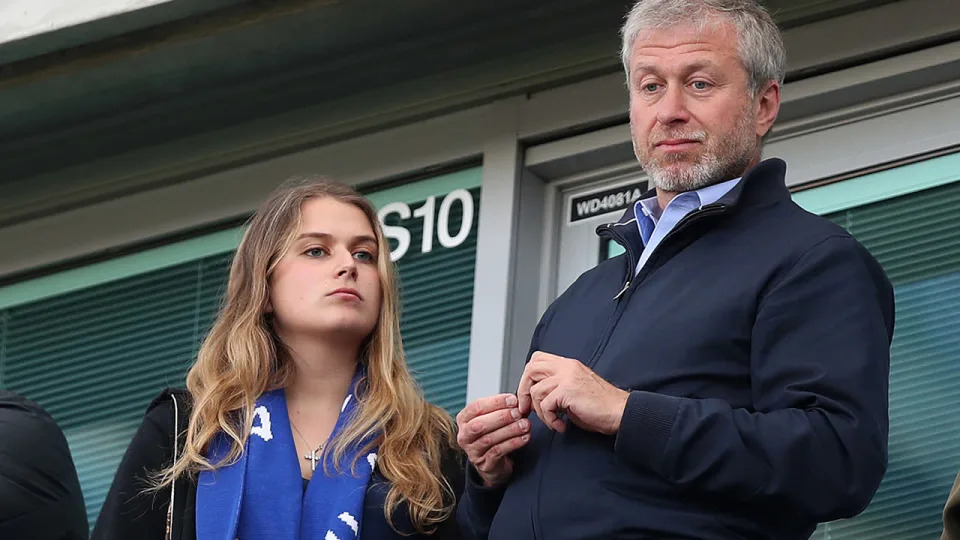
The equestrian is the daughter of Roman Abramovich, 55, the owner of the Chelsea Premier League Football Club who has a reported net worth of $12 billion. The club owner has said he will sell the team after mounting pressure brought on by the invasion and his ties to the Kremlin.
MAKSIM CHMERKOVSKIY ON LEAVING UKRAINE: ‘I FEEL GUILTY’
Abramovich also announced that he has instructed the popular football club to set up a foundation that will use all net proceeds from the sale of Chelsea to “benefit all victims of the war in Ukraine.” Abramovich has yet to be sanctioned over his relationship with Russia.

With nearly 240,000 followers on Instagram, 24-year-old Elizaveta Peskova, the outspoken daughter of Kremlin spokesman Dmitry Peskov, posted “No to the war” on her now-private social media profile.
The post was later deleted.

SEAN PENN ARRIVES IN UKRAINE TO FILM DOCUMENTARY ON RUSSIAN INVASION
Also detesting the invasion is Maria Yumasheva, the 19-year-old daughter of Russian real estate developer Valentin Yumashev and his wife Tatyana Borisovna. Borisovna is the daughter of former Russian President Boris Yeltsin.
On Feb.24, Yumasheva made her feelings known when she shared a picture of a Ukrainian flag to Instagram, captioning the post with a simple broken heart emoji.
While comments on the post are disabled, the image has garnered more than 4,000 likes from her 12,000-plus followers.
Russia launched a full-scale attack on Ukraine Feb. 24, with Vladimir Putin labeling it a “special military operation.”
The Associated Press contributed to this report
March 4, 2022

OSLO (Reuters) -Shipping and logistics group Maersk will sharply curtail its transport of goods to Belarus to comply with sanctions over Russia’s invasion of Ukraine, it said on Friday.
“Only bookings for foodstuff, medicines and humanitarian supplies (except dual use) will be accepted after extensive screening,” Maersk said in a statement.
Denmark-based Maersk added that it would be unable to receive payments from or make payments to any bank that is under sanctions imposed on Russia.
Belarus is a close ally of Russia and some Russian forces that entered Ukraine came from Belarusian territory for what Russia has called a “special military operation”.
Maersk and other major container lines this week suspended almost all cargo shipments to and from Russia, and have warned that foodstuffs and medical supplies risk being damaged or spoiled due to significant delays at ports and customs.
The European Union on Wednesday approved new sanctions against Belarus for its role in the invasion, effectively banning about 70% of all imports from that country, and on Friday suspended cooperation and research programmes.
Sweden’s IKEA and Swiss engineering and automation group ABB have also halted their Belarus operations.
Maersk said it had also temporarily suspended new intercontinental rail bookings between Asia and Europe until further notice.
“If you have cargo currently in transit or have completed a booking before this suspension was announced, we will do our utmost to get it delivered to its intended destination across the normal routes,” the company said.
All new air bookings to and from Russia and Ukraine have also been suspended, Maersk added.
(Reporting by Terje Solsvik; editing by Mark Heinrich and David Goodman)