March 16, 2022

Read About The Tarbaby Story under the Category: About the Tarbaby Blog

March 16, 2022
By Charles Riley, CNN Business – March 16, 2022
London (CNN Business)Russia could soon be forced to curtail crude oil production by 30%, subjecting the global economy to the biggest supply crisis in decades — that is, unless Saudi Arabia and other major energy exporters start pumping more.
The world’s second-largest crude oil exporter could be forced to limit output by 3 million barrels per day in April, the International Energy Agency warned on Wednesday, as major oil companies, trading houses and shipping companies shun its exports and demand in Russia slumps. Russia was pumping about 10 million barrels of crude per day, and exporting about half of that, before it invaded Ukraine.
“The implications of a potential loss of Russian oil exports to global markets cannot be understated,” the IEA said in its monthly report. The crisis could bring lasting changes to energy markets, it added.
Canada, the United States, the United Kingdom and Australia have banned imports of Russian oil, affecting roughly 13% of Russia’s exports. But moves by major oil companies and global banks to stop dealing with Moscow following the invasion are forcing Russia to offer its crude at a huge discount.
Big Western oil companies have abandoned joint ventures and partnerships in Russia, and halted new projects. The European Union on Tuesday announced a ban on investment in Russia’s energy industry.
The IEA, which monitors energy market trends for the world’s richest nations, said that refiners are now scrambling to find alternative supply sources. They could be forced to reduce their activity just as global consumers are hit with higher gasoline prices.
So far, there’s little sign of relief. Saudi Arabia and the United Arab Emirates are the only producers with significant spare capacity. Both countries are part of the 23-member OPEC+ coalition, which also includes Russia. OPEC+ has been increasing its collective output by a modest 400,000 barrels per day in recent months, but often fails to meet its own targets.
The UAE’s ambassador to the United States said last week that his country supported pumping more, but other officials have since said it is committed to the OPEC+ agreement. Neither the UAE nor Saudi Arabia has so far shown a “willingness to tap into their reserves,” according to the IEA.”
The long-running inability of the bloc to meet its agreed quotas, mostly due to technical issues and other capacity constraints, has already led to sharp draws in global inventories,” the IEA said. If major producers do not change course and open the taps wider, global markets will be under supplied in the second and third quarters of 2022, the agency warned.
The West is trying to persuade Saudi Arabia and the UAE to change course. British Prime Minister Boris Johnson was visiting the Gulf Wednesday to discuss ways of increasing diplomatic and economic pressure on Russia with the leaders of both countries.
The UK government said in a statement that the leaders are expected to discuss “efforts to improve energy security and reduce volatility in energy and food prices.”
Global energy markets have been extremely volatile in the wake of Russia’s invasion.Just over a week ago, Brent crude leaped above $139 per barrel. Analysts warned prices could touch $185, then $200 as traders shunned Russian oil, pushing inflation even higher and adding huge strain to the global economy.But there’s been a rapid reversal since then. Brent crude futures, the global benchmark, have cratered almost 30% from their peak. They settled below $100 per barrel for the first time this month after shedding another 6.5% on Tuesday.
The crisis could help drive huge changes in global energy markets.
Additional supply could eventually come online from Iran and Venezuela if the United States and its allies ease sanctions on the two countries. Talks over a nuclear deal with Iran appear to have stalled, but an agreement could still be reached.
Last week, the European Union outlined plans to slash gas imports from Russia this year by finding alternative suppliers, speeding up the shift to renewable energy, reducing consumption through energy efficiency improvements and extending the life of coal and nuclear power plants.
Saudi Arabia, meanwhile, is in talks with Beijing to price some of its oil sales in yuan, the Wall Street Journal reported on Tuesday. That would erode the US dollar’s dominance in global energy markets and deepen Riyadh’s ties in the east.— Mark Thompson and Julia Horowitz contributed reporting.
Luis Martinez and Matt Seyler – March 16, 2022
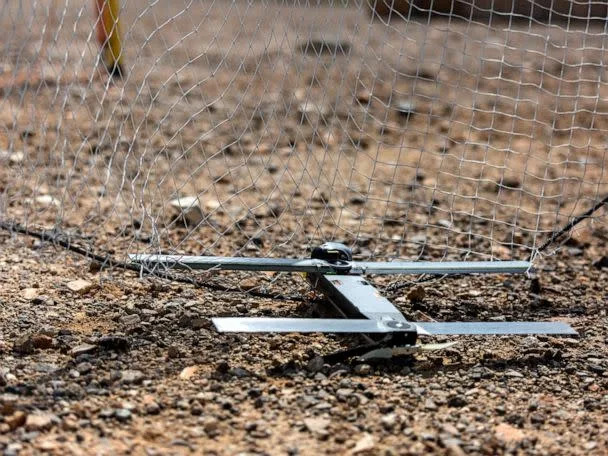
In a White House list of weapons being sent to Ukraine as part of a new $800 million military support package announced by President Joe Biden Wednesday — among nearly 10,000 anti-armor weapons, 800 anti-aircraft Stinger systems, and thousands of rifles — appeared 100 “tactical unmanned aerial systems.”
But these aren’t the large U.S. drones you’re used to seeing.
MORE: Message to Moscow: Biden boosts military aid to Ukraine in public display
The 100 unmanned systems heading to Ukraine are actually small “Switchblade” drones, a U.S. official told ABC News.
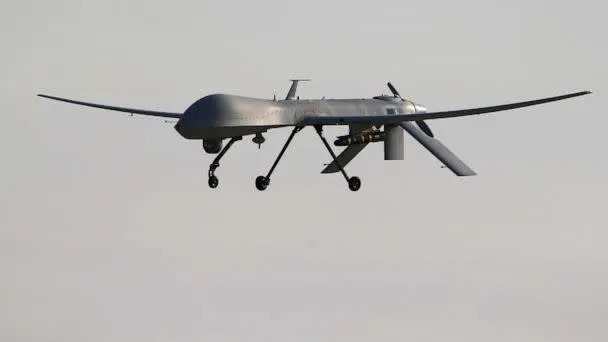
Unlike long-range Predator drones, which look similar to small planes and fire missiles at targets, the smallest Switchblade model fits in a rucksack and flies directly into targets to detonate its small warhead.
MORE: Russia ramps up missile strikes on Kyiv as ground forces stall: Pentagon Day 20 update
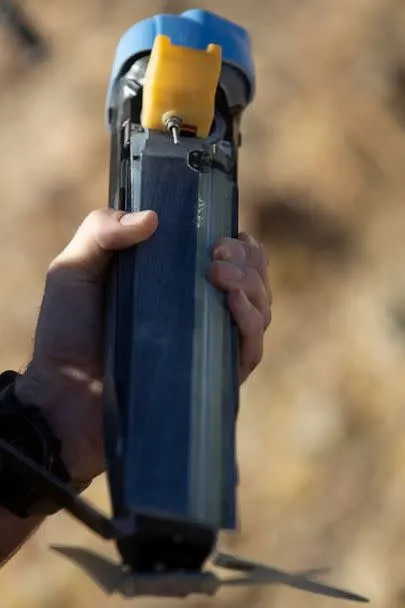
Less than 2-feet long and weighing only 5.5 pounds, the Switchblade 300 can be launched from a small tube that resembles a mortar, after which it can fly for up to 15 minutes. The larger Switchblade 600 is effective against armored targets and can fly for more than 40 minutes, but weighs 50 pounds, according to the manufacturer.
MORE: Biden details US military aid for Ukraine following Zelenskyy’s appeal to Congress

The U.S. official could not say whether one or both of the systems would be included in the 100 units destined for Ukraine.
Both Switchblades use onboard sensors and GPS to guide them to their targets. Both also have a “wave-off” feature so that human operators can abort an attack if civilians appear near the target or if the enemy withdraws.

“These were designed for U.S. Special Operations Command and are exactly the type of weapons systems that can have an immediate impact on the battlefield,” said Mick Mulroy, former deputy assistant secretary of defense and an ABC News national security and defense analyst.
Paul McLeary and Alexander Ward – March 16, 2022

The U.S. will send 100 Switchblade drones to Ukraine as part of the Biden administration’s new $800 million weapons package, Texas Rep. Mike McCaul, the top Republican on the House Foreign Affairs Committee, told POLITICO.
The inclusion of the “tactical” drones, which crash into their targets, represents a new phase of weaponry being sent to Ukraine by the U.S., which so far has shipped mostly anti-tank and anti-aircraft weapons. An administration official confirmed McCaul’s account that the U.S. is sending the Switchblade.
The Switchblade is a small, light drone that can loiter in the air for up to 30 minutes before being directed to its target by an operator on the ground, dozens of miles away. The drone is launched from a tube, like a mortar shell. Its real-time GPS guidance allows a service member in the field to fly it until the moment it crashes and explodes into whatever the target might be.
The weapon was first fielded in Afghanistan by U.S. special operations forces, but quickly was picked up by the Army and Marine Corps, who saw value in the light, accurate munition that can help thwart ambushes or take out vehicles.
McCaul also said that the U.S. was “working with allies” to send more S-300 surface-to-air missile systems to Ukraine. The country has had the S-300 for years, so troops should require little-to-no training on how to operate the Soviet-era anti-aircraft equipment. CNN reported that Slovakia had preliminarily agreed to transfer their S-300s to Ukraine.
The revelations come shortly after President Joe Biden announced the new $800 million in military assistance to Ukraine, which also includes 800 more Stinger anti-aircraft systems, 2,000 anti-armor Javelins, 1,000 light anti-armor weapons and 6,000 AT-4 anti-armor systems. The AT-4 is a lightweight recoilless rifle already used by American special operations forces.
“The United States and our allies and partners are fully committed to surging weapons of assistance to the Ukrainians, and more will be coming as we source additional stocks of equipment that we’re ready to transfer,” Biden said.
Hours earlier, Ukrainian President Volodymyr Zelenskyy delivered a virtual speech to members of Congress, imploring the president and lawmakers to implement a no-fly zone over Ukraine and provide his country with more materiel.
A Western diplomat familiar with Ukraine’s requests said Kyiv specifically has asked the U.S. and allies for more Stingers and Starstreak man-portable air-defense systems, Javelins and other anti-tank weapons, ground-based mobile air-defense systems, armed drones, long-range anti-ship missiles, “off-the-shelf” electronic warfare capabilities, and satellite navigation and communications jamming equipment.
“I have a dream. These words are known to each of you today,” Zelenskyy said. “I can say, I have a need. I need to protect our sky. I need your help.”
“We need to give him more defense mechanisms. He kept saying no-fly zone. I think that’s probably still a non-starter,” Sen. Shelley Moore Capito (R-W.Va.) told POLITICO. “That doesn’t mean we can’t up the amount, do more with equipment and drones and other things that would be just as helpful.”
Ukraine has succeeded in defending Kyiv, the capital, and stalling Russia’s advances three weeks after the invasion started. The U.S.-led Western push to put advanced, lethal weaponry in Ukrainian hands boosted the resistance, which to date has met a shambolic Russian advance lacking in strategy and logistics.
To further help, there is a push to get Eastern European allies to send new air defense systems to Ukraine that the U.S. doesn’t have. At the top of the list are mobile, Russian-made missile systems such as the SA-8 and S-300. Like the S-300, Ukraine also possesses SA-8s.
The SA-8 is a mobile, short-range air defense system still in the warehouses of Romania, Bulgaria and Poland. The larger, long-range S-300 is still in use by Bulgaria, Greece and Slovakia.
Defense Secretary Lloyd Austin’s trip to Europe this week will include not only NATO headquarters in Brussels, but also stops in Bulgaria and Slovakia — countries that own S-300s and SA-8s — before heading back to Washington, D.C.
Stephanie van den Berg – March 16, 2022


THE HAGUE (Reuters) -The United Nations’ top court for disputes between states ordered Russia on Wednesday to immediately halt its military operations in Ukraine, saying it was “profoundly concerned” by Moscow’s use of force.
Although the rulings of the International Court of Justice (ICJ) are binding, it has no direct means of enforcing them, and in rare cases in the past countries have ignored them.
“The Russian Federation shall immediately suspend the military operations that it commenced on Feb 24, 2022 on the territory of Ukraine,” the ICJ judges said in a 13-2 decision.
They added that Russia must also ensure that other forces under its control or supported by Moscow should not continue the military operation.
Ukraine filed its case at the ICJ shortly after Russia’s invasion began on Feb. 24, saying that Moscow’s stated justification, that it was acting to prevent a genocide in eastern Ukraine, was unfounded.
In addition to disputing the grounds for the invasion, Kyiv also asked for emergency “provisional” measures against Russia to halt the violence before the case was heard in full. Those measures were granted on Wednesday.
GENOCIDE
During hearings earlier this month, Ukraine said there was no threat of genocide in eastern Ukraine, and that the U.N.’s 1948 Genocide Convention, which both countries have signed, does not allow an invasion to prevent one.
Ukrainian government forces have been battling Russia-backed separatists in the Donbass region of eastern Ukraine since 2014. Kyiv and its Western allies reject Moscow’s claims of any genocide being perpetrated against Russian speakers there.
Russia said it had skipped the hearings at the ICJ, also known as the World Court, “in light of the apparent absurdity of the lawsuit”. It later filed a written document arguing that the court should not impose any measures.
Ukrainian President Volodymyr Zelenskiy on Wednesday welcomed the ruling by the ICJ on emergency mesaures as “a complete victory” in its case against Russia.
“The (ICJ) order is binding under international law. Russia must comply immediately. Ignoring the order will isolate Russia even further,” Zelenskiy said on Twitter.
Reading out Wednesday’s ruling, presiding judge Joan Donoghue said the court was “profoundly concerned about the use of force by the Russian Federation in Ukraine which raises very serious issues of international law”.
(Reporting by Stephanie van den Berg, Marine Strauss, Natalia Zinets and Max Hunder; Writing by Anthony Deutsch; Editing by Michael Perry, Jonathan Oatis and Gareth Jones)
March 16, 2022

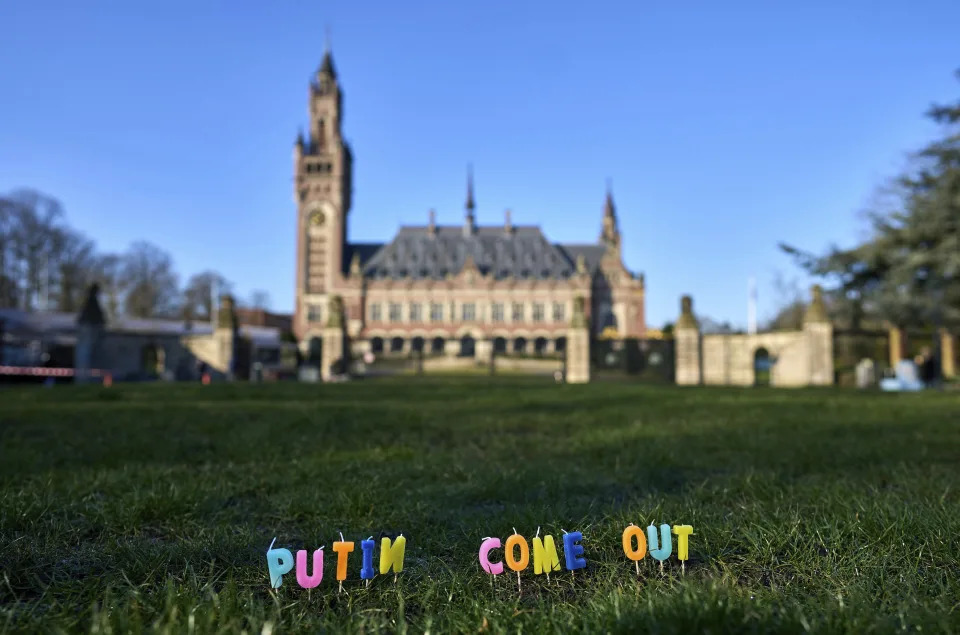
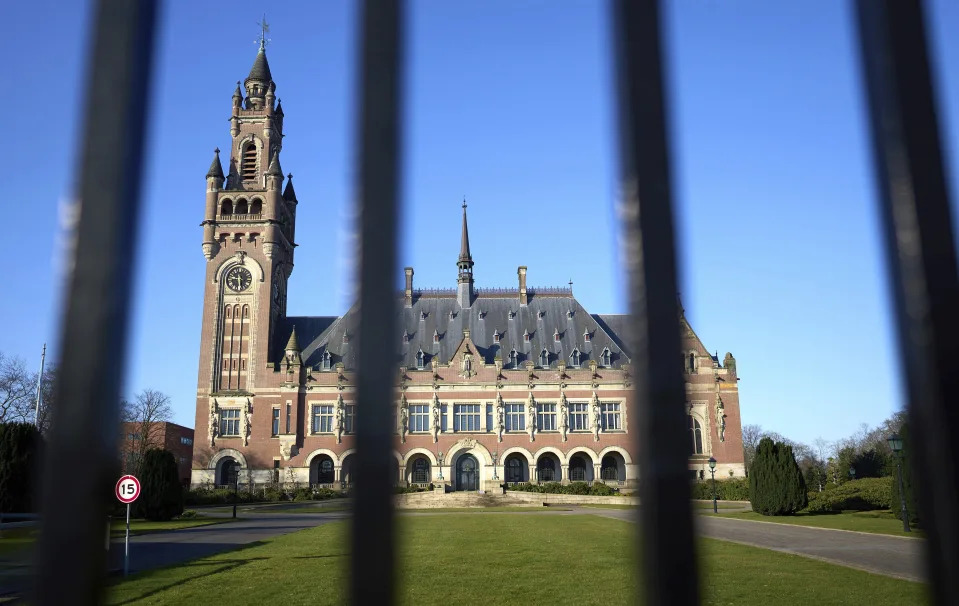
THE HAGUE, Netherlands (AP) — The United Nations’ top court on Wednesday ordered Russia to stop hostilities in Ukraine granting measures requested by Kyiv, although many remain skeptical that Russia would comply.
Ukraine had two weeks ago asked the International Court of Justice, also known as the World Court, to intervene, arguing Russia violated the 1948 Genocide Convention by falsely accusing Ukraine of committing genocide and using that as a pretext for the ongoing invasion.
The court’s president, U.S. judge Joan E. Donoghue, demanded that “the Russian Federation shall immediately suspend the special military operations it commenced on Feb. 24.”
THIS IS A BREAKING NEWS UPDATE. AP’s earlier story follows below.
THE HAGUE, Netherlands (AP) — The United Nations’ top court is set to rule Wednesday on a request by Ukraine for its judges to order Russia to halt its devastating invasion.
But it remains to be seen if Moscow would comply with any order made by the International Court of Justice, or ICJ, which is sometimes known as the World Court.
Russia snubbed a hearing last week at which lawyers for Ukraine accused their powerful neighbor of “resorting to tactics reminiscent of medieval siege warfare” in its brutal assault.
If a nation doesn’t abide by an order made by the court, judges could seek action from the U.N. Security Council, where Russia holds veto power.
In the days since the March 7 hearing, Russia has intensified its military strikes on towns and cities across Ukraine hitting civilian infrastructure across the country, including a deadly strike on a maternity hospital in Mariupol, and sending more than 3 million refugees fleeing across borders.
As part of a wider case that could take years to complete at the Hague-based ICJ, Ukraine asked judges to order Russia to “immediately suspend the military operations” launched Feb. 24 “that have as their stated purpose and objective the prevention and punishment of a claimed genocide” in the separatist eastern regions of Luhansk and Donetsk.
David Zionts, a lawyer in Ukraine’s legal team, called that Russian claim “a grotesque lie.”
The request for an order to halt Russia’s attack is linked to a case Ukraine has filed based on the Genocide Convention, which has a clause allowing nations to take disputes based on its provisions to the World Court.
The success of Ukraine’s request will depend on whether the court accepts it has “prima facie jurisdiction” in the case.
Before last week’s hearing, the court’s president, U.S. judge Joan E. Donoghue, sent a message to Russian Foreign Minister Sergey Lavrov on March 1 pressing home the necessity to act “ in such a way as will enable any order the Court may make on the request for provisional measures to have its appropriate effects.”
Ivana Saric – March 16, 2022

The United Nations’ International Court of Justice ruled on Wednesday that Russia should immediately suspend its military operations in Ukraine.
Why it matters: This constitutes the first decision by an international court regarding Russia’s unprovoked invasion of Ukraine. But while rulings by the ICJ are considered binding, the court doesn’t have the means to enforce them, per Deutsche Welle.
The big picture: Ukraine’s complaint to the ICJ, filed on Feb. 26, accused Russia of illegally attempting to justify the war in Ukraine through false claims of genocide being perpetrated in eastern Ukraine.
What they’re saying: “Ukraine gained a complete victory in its case against Russia at the International Court of Justice. The ICJ ordered to immediately stop the invasion,” Ukrainian President Volodymyr Zelensky tweeted in response to the ruling.
Dobrina Zhekova – March 17, 2022
Every year for the past decade, the World Happiness Report ranks how people in more than 150 countries evaluate the quality of their lives to find the world’s happiest countries. And for the past four years, the top spot has been claimed by Finland. Today, the Sustainable Development Solutions Network, which publishes the report together with Gallup World Poll, announced that the Nordic country is yet again leading the list.
Generosity, perception of compassion, freedom to make life choices, social support, and life expectancy are some of the factors evaluated when determining the rankings, with each country scoring on a 10-point scale.
Finland was named the happiest country in the world with a score of 7.821 out of 10 ahead of Denmark (7.636) and Iceland (7.557), which came in second and third, respectively. The United States came in 16th place, up three spots from last year.

Gonzalo Azumendi/Getty Images
This year, the most significant gains were by three Eastern European countries — Bulgaria, Romania, and Serbia — while the biggest losses were by Lebanon, Venezuela, and Afghanistan.
While 2021 was again marked by the COVID-19 pandemic, which has upended people’s lives globally, including in Finland (the country faced an economic slump like many nations around the world), there is a silver lining.

Andreas Gillner/EyeEm/Getty Images
“We found during 2021 remarkable worldwide growth in all three acts of kindness monitored in the Gallup World Poll,” John Helliwell, professor at the University of British Columbia and editor of the report, said in a statement released to Travel + Leisure. “Helping strangers, volunteering, and donations in 2021 were strongly up in every part of the world, reaching levels almost 25 percent above their pre-pandemic prevalence. This surge of benevolence, which was especially great for the helping of strangers, provides powerful evidence that people respond to help others in need, creating in the process more happiness for the beneficiaries, good examples for others to follow, and better lives for themselves.”
Key findings in this year’s report include that “positive emotions are more than twice as frequent as negative emotions” and that despite the challenges presented by COVID-19, self-perceived individual wellbeing continues to be resilient with no significant changes compared to pre-pandemic levels. Unfortunately, about 3 percent more of the global population experienced worry and sadness compared to data collected from 2017-2020.

Ilari Nackel/Getty Images
“At the very bottom of the ranking, we find societies that suffer from conflict and extreme poverty,” Jan-Emmanuel De Neve, director of the Wellbeing Research Centre at the University of Oxford, said. “This presents a stark reminder of the material and immaterial damage that war does to its many victims and the fundamental importance of peace and stability for human wellbeing.”
Drew Harwell – March 17, 2022
An international resistance of computer programmers and volunteer “information warriors” is racing to pierce Kremlin propaganda and expose ordinary Russians to the uncensored truth of a brutal war.
They’ve built tools that allow anyone to surprise Russian citizens with text messages detailing the war’s civilian death toll. They’ve published antiwar videos and news sites built to evade Russian government bans. They’ve even cobbled together databases with the personal details of Russian military personnel – all in the hopes of fomenting rebellion across the new Iron Curtain.
Since the days of the Cold War, when U.S.-government-funded stations such as Radio Free Europe broadcast anti-communist messaging across the airwaves of Soviet states, the West has tried, often futilely, to pierce the propaganda bubble that surrounds and isolates the Russian populace.
But the Internet has sent those information-war efforts into overdrive, allowing everyday people to pitch in on imaginative efforts designed to reach strangers thousands of miles away.
The volunteers behind today’s efforts say they hope to help overcome the Russian government’s suppression of the war’s devastated cities, bombed hospitals and humanitarian catastrophes. The human rights group OVD-Info says thousands of Russians have been arrested in antiwar protests since the invasion began.
But some of the initiatives also could backfire due to their reliance on the personal data of Russians, many of whom are disconnected from the war effort and face grave risks for public protest. They could also prove ineffective due to the force and speed with which the Kremlin has worked to sever millions of Russians from the open Internet.
The Russian government, decrying Western censorship, has blocked or restricted access to the social networks Facebook, Twitter and Instagram; the websites of publicly funded broadcasters such as the United Kingdom’s BBC, Germany’s Deutsche Welle and the United States’ Radio Free Europe/Radio Liberty and Voice of America; and independent news sites appealing to Russian audiences.
A new “fake news” law signed by Russian President Vladimir Putin has threatened 15 years in prison for journalists who contradict state propaganda, including by calling the war a war, leading The Washington Post and other news organizations to pause reporting inside the country. Popular independent TV and radio outlets in Russia have been shut down or banned.
But the Internet has helped reveal how porous such traditional blockades can be – and how quickly political messages can spread. After a Russian state TV producer named Marina Ovsyannikova burst onto a government news broadcast with a “No War” sign, the moment went viral almost immediately on the Russian Internet, and her Facebook page exploded with thousands of celebratory comments, some of which were in Russian.
In a video message posted to Telegram before her arrest – which has since been widely copied and shared – she said, “I am ashamed that I’ve allowed the lies to be said on the TV screens . . . that I let the Russian people be zombified.” Meduza, an independent Russian-language news site recently banned by Russia, reported on Tuesday that employees at Ovsyannikova’s state-run network routinely watch Western news to understand the war.
Ukrainian President Volodymyr Zelensky has recorded videos appealing directly to citizens of the country invading his own, saying in Russian, “As long as your country has not completely closed itself off from the whole world, turning into a very large North Korea, you must fight.”
Ukrainian officials have promoted highly produced videos attempting to drive home the visceral shock of war. They also run a Telegram channel showing videos of killed or captured Russian soldiers as a way to alert their family members and stoke anti-military anger back home.
Social media companies and media outlets in the West have also started helping Russians circumvent that censorship by using the special software Tor, which routes Internet traffic through a scattered network of servers, effectively neutralizing the website blockade.
The BBC, Deutsche Welle and Twitter have published links to their Tor sites – accessible with a free browser – as well as Russian-language guides on how to view them. Some were first launched on the “dark web” years ago but were used only sparingly before the war.
“Our mission is to maintain a dialogue with the people of Russia,” Peter Limbourg, a director at Deutsche Welle, wrote in one reader guide. “A dialogue sometimes also includes unpleasant truths.”
VPN – or virtual private network – apps, which allow Russians to access otherwise-banned sites, have been downloaded millions of times in recent weeks on the Apple and Google app stores, market research data shows.
And internal data from Tor, which began as a U.S. government project but now operates as a nonprofit, shows that use of the system inside Russia has soared, with thousands more computers connecting to its network since the invasion began.
The U.S. government has also sought to protect the continued presence of companies such as Cloudflare, a cybersecurity company used by much of the Internet to keep their websites online. The company has faced calls to drop sites that echo Kremlin propaganda, but it has resisted due to concerns that could lead to its other clients – including independent media reaching Russians – falling offline, too.
The State Department has supported them in that balancing act, with a spokesperson telling The Washington Post, “It is critical to maintain the flow of information to the people of Russia to the fullest extent possible.”
The New York Times and The Post have launched channels on Telegram, the uncensored group-chat service popular in Russia, and made some war coverage free to access in Russia and Ukraine.
The BBC, which also uses Telegram, says traffic to its Russian-language digital platforms has exploded, including breaking a record of nearly 17 million people in the first week of the war. But the British news giant has also turned to one of media’s earliest marvels, shortwave radio, to reach Russian listeners, saying this month it would start broadcasting on new frequencies that “can be received clearly in Kyiv and parts of Russia.”
Four hours of daily news reports are now broadcast in the early evening and just before midnight Ukraine time on the frequencies of 15735 kHz and 5875 kHz, the BBC said. In one of the BBC World Service’s first shortwave broadcasts, in 1932, King George V said it would connect those throughout the British Empire “so cut off by the snow, the desert or the sea that only voices out of the air can reach them.” Its last shortwave broadcast before the Ukraine war was in 2008.
The U.S. Agency for Global Media, which runs Voice of America and Radio Free Europe/Radio Liberty, is not transmitting over shortwave. But the owners of a shortwave station in Okeechobee, Fla., whose radio antennas tower over a cow pasture, told reporters that they have started beaming Voice of America broadcasts over the airwaves to Russia. (An online fundraiser for the operation has raised more than $12,000.)
Thomas Kent, a former president of Radio Free Europe/Radio Liberty, wrote in an essay last week that Western strategists should consider more imaginative options for fomenting internal dissent in Russia, including organizing campaigns to email audio files, holding closed discussions on small social networks and smuggling flash drives.
“Kremlin leaders cannot eternally ignore public discontent, even if they are willing for now to brutalize anyone who dares protest in the streets,” Kent wrote. “The Western world must demonstrate it respects Russia’s population, even if the regime doesn’t. That means showing commitment to the principle that Russians deserve to be informed.”
Radio Free Europe/Radio Liberty and the BBC say they’ve seen audiences for their Russian-language offerings grow dramatically since Russia’s invasion and crackdown on independent media.
The RFE/RL website saw its number of unique visitors from Russia spike by 86% in the first two weeks of the war; on YouTube, many of its latest videos have surpassed 1 million views. People are also evading Russian censors by sending the stories over Telegram and email newsletters, said Jamie Fly, president and chief executive of RFE/RL.
“Certainly it is becoming more difficult if you are Russian sitting inside Russia to get independent news and information, but people are still looking to that content, whether they’re using VPNs or mirror sites,” Fly said. “As we saw throughout the Cold War, in a variety of countries, people always find a way no matter what the jamming tactics are.”
Beyond the official efforts, teams of computer programmers have also begun striking out to stir up Russian rage. One group, squad303, named for an air squadron that tore through Nazi warplanes during World War II, has built a website that shows a randomly selected Russian citizen’s email address, phone or WhatsApp number – as well as a pre-written message a visitor can send to strike up a conversation from their own accounts.
“Hello, my Russian friend,” one text says, roughly translated. “We don’t know each other. I live abroad. I know that Russia invaded Ukraine and many soldiers and civilians died there. How do you live in Russia? How is it going?”
One of the group’s programmers in Poland – using the name of Jan Zumbach, one of the squadron’s ace fighter pilots – said he now works alongside more than 100 volunteers from Estonia, France, Germany, the United States and other countries, broken into teams devoted to software development, cyberdefense, social media and a “help desk” to get new messengers onboard.
Millions of messages, some of which have showed photos of the war or tallies of civilian deaths, have been sent in less than two weeks to the Russian numbers, according to the programmer, who said their database includes tens of millions of phone numbers and email addresses taken from hacked Russian databases. The team has raced to expand its infrastructure, growing from one server earlier this month to 16 servers today. Other mass-distribution operations are currently in the works, he said.
The project is all-consuming, he said, and he’s getting about three hours of sleep a night. But he said he remembers how important outside information from Radio Free Europe was to his parents during the 1980s, when they took part in the Solidarity labor movement that shook the Soviet Union. He hopes his work today will have a similar impact.
“We do not expect instant rewards or instant replies. It’s a process,” he said. “Every single text message sent to a person in Russia is a tiny bridge between two people.”
Dey Correa, a volunteer messenger in Panama, said she has sent hundreds of messages to Russians with help from the site, including 50 while she was at home breastfeeding her infant son.
She shared screenshots with The Washington Post showing dozens of messages and conversations, including one in which a respondent said Russians were shocked by the war but afraid to protest due to police crackdowns.
Correa doesn’t know if it will have any impact, and she has worried about retaliation. But she said she felt motivated to do something when she saw photos of a devastated maternity ward in Mariupol, Ukraine.
“When I saw the hospital, it became personal,” she said. “I think how horrible the nights are for those mothers – the cold. Not all of them have the opportunity to hold their babies, like I do.”
Another group has created a search engine, called Rusleaks, that aggregates more than a dozen databases purported to feature the personal information of Russian military personnel, including tens of thousands of people’s names, addresses, phone numbers and passport details.
The data have not been fully verified and some of the records have been released by the Ukrainian government, raising the risks of false information.
But one of the group’s members, a software developer formerly in Kyiv, said the data could be used to alert the Russian public to what their government is doing or help investigate war crimes.
“I don’t know how soon it will happen. I don’t know that it will happen at all. But I am doing what I’ve been training for,” he said. “We are fighting on too many frontiers now. And this is clearly one of them. . . . Whatever it takes to make our voice louder.”
The Washington Post’s Paul Sonne contributed to this report.
Sinéad Baker – March 17, 2022

A satellite image shows destroyed Russian helicopters at a Ukrainian airport after an overnight attack.
The image, taken on Wednesday by a Maxar Technologies satellite, shows the aftermath of a Tuesday strike by Ukrainian forces at Kherson International Airport in the south of the country.
Ukraine’s military said it hit the airport on Tuesday. It is not clear what kind of weaponry was used in the attack, or how many helicopters were destroyed.
CNN reported on Tuesday that at least three Russian military helicopters were destroyed.
There is no indication of whether there were any casualties in the attack.
Ukraine previously said that it destroyed 30 Russian helicopters on a Kherson airfield on March 7.
Russia captured the city of Kherson on March 2. It was the first major Ukrainian city to be seized by Russia in its invasion, which it started on February 24.
Ed Mazza – March 17, 2022
British screen icon Stephen Fry says there may be only one way to stop Russian President Vladimir Putin. And it’s not necessarily what many people want.
In a new video for Pindex, Fry explained why Russia couldn’t win a conventional war, especially if Western powers stepped in. The danger now is that Putin will turn to “unconventional” means.
Fry, who was once voted the most intelligent person on British television, said Putin was “being pushed in a corner with nuclear weapons.” That makes ending the war even more urgent.
While direct talks between Russia and Ukraine have gone nowhere, Fry said there may be another option.
“A study of hundreds of conflicts found that mediation increased the chances of resolution,” he said. “And with deaths mounting on both sides, talks may only become more difficult.”
Fry suggested former German Chancellor Angela Merkel, who speaks Russian and maintained close ties with Russia while she was in office, or Chinese leader Xi Jinping, who has offered to play a role, as potential mediators.
Vladimir Potanin stepped down from the Guggenheim and CFR cut ties with him as billionaires with links to Russia have their donations scrutinized.
Blake Schmidt – March 16, 2022
A month ago, Vladimir Potanin sat alongside the world’s financial and business elite on the advisory board of the New York-based Council on Foreign Relations and among the trustees of the Guggenheim Museum in Manhattan.
Those power circles, which included Tom Hill, the former Blackstone Inc. executive, and billionaires from Brazil and India, were cultivated over decades. Now, they’re closed off to Potanin, Russia’s richest man. Over the past two weeks, he’s dropped off both boards.
The nickel and palladium magnate, who is among the few original oligarchs who remain active in business in Russia, hasn’t been sanctioned. Potanin, with a net worth of $24.5 billion, is referred to as the mastermind behind the controversial loans-for-shares program that led to the privatization of natural resource companies after the Soviet Union’s collapse.
For much of the past two decades, U.S. cultural institutions in the arts, non-profits and education were willing to look past the history of how billionaires with ties to Russia amassed their fortunes. In Potanin’s case, he was seen publicly years ago with Vladimir Putin, including in an exhibition hockey game with the Russian leader in Sochi.
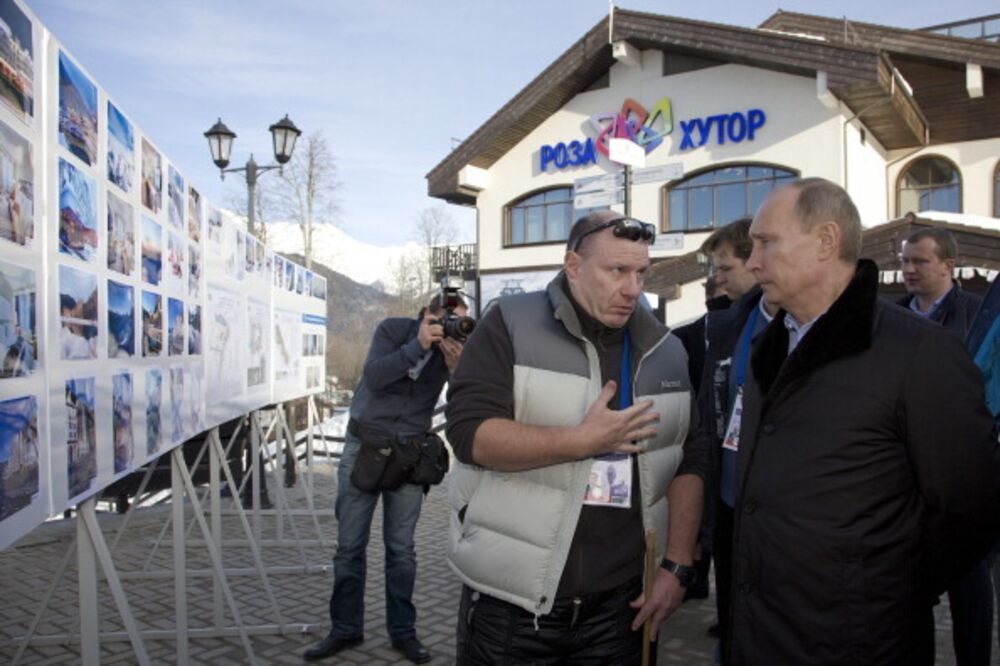
Potanin, 61, now stands out as an example of how quickly Western bastions of social capital are turning amid a pressure campaign on Putin to end the Ukraine war. While Russia’s elite have a number of ways to reshape their fortunes in response to the fallout, regaining their place in these institutions will likely prove a tougher task.
“The reputational risk right now of keeping an oligarch on an institutional board such as CFR is just too great,” said David Szakonyi, co-founder of the Anti-Corruption Data Collective, which has researched the philanthropy of billionaires whose fortunes are tied to Russia. “It’s going to be very difficult for Potanin to win back his former positions.”
Potanin, president of MMC Norilsk Nickel PJSC, which accounts for about 40% of global palladium output and 10% of refined nickel, did not reply to interview requests.
The former first deputy prime minister of energy and economy under Boris Yeltsin spoke publicly last week for the first time since the Ukraine invasion, criticizing Russia’s retaliation against international penalties.
“We have to look respectable and composed, and our efforts should be directed not at ‘slamming the door’ but at maintaining Russia’s economic position in markets that we’ve been mastering for so long,” Potanin said on Norilsk Nickel’s Telegram channel on March 11.
Some NYC-linked charities supported by Russian billionaires.
https://www.bloomberg.com/toaster/v2/charts/91f00b2329824562a6334d35845f98ab.html?brand=wealth&webTheme=wealth&web=true&hideTitles=true
Source: Official statements, Anti-Corruption Data Collective; includes donations since 2010 made directly or by their foundations or corporations.
*Moguls listed have not been personally sanctioned except for Fridman, Aven and Khan, by the European Union and United Kingdom in 2022; Vekselberg, by the United States starting in 2018. Donations listed were prior to those sanctions.
Potanin, along with oligarchs Petr Aven and Mikhail Fridman, are among the billionaires with links to Russia who have given more than $300 million to hundreds of the most prestigious U.S. non-profit institutions in the two decades ending in 2020, according to the Anti-Corruption Data Collective. At least $100 million went to more than 100 organizations in New York, data provided to Bloomberg show.
At the Guggenheim, trustees of the board were required to donate at least $100,000 a year, according to Thomas Krens, director emeritus at the Solomon R. Guggenheim Foundation, who said he had contact with Potanin for more than a decade. He recalled the Russian billionaire as steadily supporting exhibitions of Russian art and being “quiet, not outspoken” at meetings.
“Many oligarchs saw an opportunity and moved on that” to bolster their reputations with philanthropy in the West, Krens said in a telephone interview. “The response to this war and to Putin’s strategy has been one of trying to ostracize or shine a spotlight on the money and where it came from.”
Scant Sanctions
Many of the New York donors haven’t been sanctioned. That doesn’t prevent the questions.
Yancey Spruill, chief executive officer of New York-based DigitalOcean Holdings Inc., was asked at a conference last week about Len Blavatnik, a British-American billionaire whose Access Industries is the technology company’s largest investor.
“Educated in American universities, Columbia, Harvard Business School, made his money as an American,” Spruill said in response on March 8. “I know there’s a lot of speculation,” he said, adding that Blavatnik “has been knighted by the Queen of England.
Blavatnik was born in Soviet Ukraine and grew his fortune in the Putin era when Russia’s state-owned Rosneft bought out his energy firm. At $36.9 billion, his net worth exceeds that of Potanin, according to the Bloomberg Billionaires Index.
“What is happening in Ukraine is unimaginable and we, along with all fellow Americans, hope and pray that the conflict ends quickly and that all Ukrainian citizens are once again able to live their lives in peace and freedom,” Access Industries said in a statement.
Blavatnik has donated across the political and philanthropic spectrum, including to the Central Park Conservancy, Carnegie Hall, the Mount Sinai Health System and New York Governor Kathy Hochul.
Tough Tracking
It’s hard to track the full extent of charitable giving as institutions often don’t disclose their donors out of concern they’ll receive backlash over the politics of benefactors, Szakonyi said. Disclosures of specific donations may be in broad ranges or as even vaguer minimum amounts, and in some cases there may be no values disclosed at all, he said.
And even though some institutions are asking billionaire donors to step off their boards, they aren’t returning funds or closing exhibits. For example, the Guggenheim still carries an ongoing exhibition by Moscow-born artist Wassily Kandinsky that was sponsored by benefactors including Potanin — though his name has since been removed on the museum’s website.

The display was a reminder of the complexity in undoing philanthropic support from billionaires who were welcomed in the heyday of a globalized gilded age.
“It is more difficult to unwind decades of generous oligarchic donations, which, after all, have served to advance public interest in the West, than it is to seize flagrant symbols of oligarchic wealth, which many people resent,” said Stanislav Markus, a business professor at University of South Carolina who has studied Russian wealth.
A CFR spokeswoman said in an email last week that “it would no longer be appropriate” for Potanin to remain a member of its global advisory board “in light of Russia’s continuing aggression against Ukraine.” The Guggenheim Museum said he resigned from the board.
Potanin has sprawling interests that include a Russian pharmaceutical firm, a ski resort, a copper project and at least two superyachts.
Potanin becomes the wealthiest man in Russia
https://www.bloomberg.com/toaster/v2/charts/bc37a1e311bb443c8d6f6cf285d14eb2.html?brand=wealth&webTheme=wealth&web=true&hideTitles=true
Source: Bloomberg Billionaires Index
After building his fortune, Potanin began reinventing himself as philanthropist — becoming the first Russian to join Bill Gates’s and Warren Buffett’s Giving Pledge in 2013. He chairs the Hermitage Development Foundation, an endowment for the state museum in Saint Petersburg that was founded in 1764 with a collection of paintings acquired by Catherine the Great.
On his foundation’s website, Potanin said he wants philanthropy to be “more systemic, more business-like,” calling it a “vast, endless space that will never diminish.”
— With assistance by Amanda L Gordon, and Devon Pendleton
Up NextUkraine War News: Putin Says Russia Beat Economic Blitzkreig, Warns of Hardship
March 17, 2022
LONDON (Reuters) -The Kremlin said on Thursday that many people in Russia were showing themselves to be “traitors” and pointed to those who were resigning from their jobs and leaving the country.
Kremlin spokesperson Dmitry Peskov made the comments a day after President Vladimir Putin delivered a stark warning to Russian “traitors” who he said the West wanted to use as a “fifth column” to destroy the country.
“In such difficult times…many people show their true colours. Very many people are showing themselves, as we say in Russian, to be traitors,” Peskov told reporters on a conference call.
He was asked about Putin’s remark that Russia would undergo a natural and necessary “self-cleansing” as people were able to “distinguish the true patriots from the scum and the traitors”.
Peskov said: “They vanish from our lives themselves. Some people are leaving their posts, some are leaving their active work life, some leave the country and move to other countries. That is how this cleansing happens.”
The Kremlin leader’s comments were welcomed in parliament by Gennady Zyuganov, the head of the nominally opposition Communist party that often backs Putin on important matters of policy.
“We need to defeat the fifth column that is entrenched inside and is ready to stab us in the back any minute,” he said. “All these troubles started in 1991 when (modern Russia’s first president Boris) Yeltsin with his clique sold and betrayed the country.”
(Reporting by Reuters)