The Villages is a retirement ‘paradise’ — so why is that a problem?
Paul Irving October 2, 2021
More older adults realize that intergenerational connections are not just valuable for them but for their communities and country.
Residents watch presidential election returns at an Election Night party organized by a group called Villagers for Trump. AFP/GETTY IMAGES
The Villages, a master-planned retirement community in central Florida, is the fastest-growing metropolitan area in the U.S., we learned from the 2020 Census. In a demographically changing and urbanizing America, this predominantly white, politically conservative stronghold bucked the trend as retirees lured by warm winters and pastel-hued homes surrounded by golf carts and pickleball courts, flocked in.
We are all free to choose how and where we want to live, of course, and new housing solutions for the rapidly growing population of older Americans are needed. But, to be honest, if communities like the Villages represent the future of aging, please count me, and many of us, out.
We want to live in diverse, multigenerational communities, remain engaged and contribute to a better future for the generations ahead.
Florida’s “friendliest hometown,” in the words of real-estate agents, the Villages features extremely popular 55-and-older residential offerings and was the subject of the award-winning 2020 film, “Some Kind of Heaven.” Reports indicate that Disney DIS, -0.67% may soon create a similar age-restricted community in Florida. It is not surprising that the creative minds behind a “fantasyland” for kids might be eyeing a lifestyle development for older adults as its next frontier.
Concerns about this retirement community
So, what’s my concern about the Villages, and why do others feel as I do?
At our Center for the Future of Aging at the Milken Institute, we have promoted the benefits of diverse cities and the case for intergenerational living, which are very different from the Villages.
It is understandable that so many people in their sixth, seventh and eighth decades find Villages-type developments a logical next step for their lives. These places can seem safe choices in a youth-focused America that stigmatizes aging, regularly pushes older adults to the sidelines and sees getting older as defined by dependency and decline. In the past year alone, the COVID-19 pandemic highlighted ageist attitudes, as “OK, boomer,” “boomer remover” and similar memes spread across social media.
So why wouldn’t older adults want to live in communities where they can feel comfortable and accepted — in age-restricted places focused on their needs and wants?
From the beginning, shrewd developers recognized the opportunity to provide an antidote to the challenges of aging.
Del Webb of Sun City fame recognized that, rather than rocking away their “golden years” in the northern cold, older adults could be convinced to pull up roots, leave empty nests and move to communities of similar people and lives of leisure. A radio jingle promoting this new model of living sang out: “Don’t let retirement get you down! Be happy in Sun City, it’s a paradise town.”
But is a town without the sounds of children and a diversity of races and styles really a paradise?
A growing number of older adults say no, recognizing that living with neighbors of all ages and from all walks of life just makes sense. They realize that intergenerational connections are not just valuable for them but for their communities and country.
They recognize that ageism will not be defeated by a retreat to age-segregated corners, but only by engagement, collaboration and dialogue across age, race and class divides. They believe that there is more to graying than playing.
Ed McGinty, a 71-year-old Villages retiree from Philadelphia, made headlines last year by staging a daily, one-man protest against Donald Trump in the Trump stronghold retirement community. McGinty endured multiple assaults and threats throughout his protest. AFP/GETTY IMAGES
A fast-growing number of university-oriented retirement communities and co-housing arrangements are improving the lives of all residents. At Lasell Village on the campus of Lasell University in Newton, Mass., for example, older residents commit to studying with students in their teens and 20s. The new Mirabella community at Arizona State University promotes physical, emotional, spiritual, social and vocational wellness, offering what it calls “a retirement experience sure to be unlike any other.”
Studies confirm that the intergenerational connections and sense of purpose associated with these types of living and learning arrangements foster health, positive attitudes and well-being. The benefits for both brains and bodies are increasingly clear.
College towns across America provide advantages for residents of all ages. From larger cities such as Boston; Madison, Wis.; and Austin, Texas, to smaller places like Ann Arbor, Mich.; Iowa City, Iowa; and Boulder, Colo., young people and retirees share spaces and learning opportunities.
There are benefits to intergenerational connections. ISTOCK
Beyond the campus, the Modern Elder Academy launched by Chip Conley (a Next Avenue Influencer in Aging) is employing the lessons of its Baja California pilot as it plans a network of regenerative communities, with a goal of cultivating purpose and intergenerational bonds. The first one will be in Santa Fe, N.M.
What the success of the Villages makes clear
Opportunities for retirees to employ both experience and empathy are emerging in places such as Bridge Meadows in Portland, Ore., which offers affordable living arrangements for older adults and foster families designed to promote interaction, connection and mutual support.
For those committed to sustainable living, Eco Village in Ithaca, N.Y., offers a multigenerational platform for engaged action and education. Agrihood in Santa Clara, Calif., plans mixed-use housing and a working farm, enriching the lives of its older residents through intergenerational gardening activities and access to healthy organic foods and produce.
Clearly, Villages residents must find meaning and joy in their lives. But many of us feel a need for more — sharing a thirst for new ways to learn, work, serve and transform our later years. We want to live in diverse, multigenerational communities, remain engaged and contribute to a better future for the generations ahead.
The Census and the Villages success makes it clear: There is a demand for new living options for older Americans. For those of us who want something different from age-restricted, nondiverse places, however, now is the time for community leaders and business innovators to design, develop, spread and scale models that enable us to realize our goals.
Paul Irving, a Next Avenue Influencer in Aging, is chairman of the Center for the Future of Aging at the Milken Institute, chairman of Encore.org and distinguished scholar in residence at the University of Southern California Davis School of Gerontology.
‘A Total Clusterf—‘: Oval Office Speech That Sparked Covid Airport Panic All Ivanka’s Idea, New Book Claims
Tessa Stuart – October 1, 2021
Donald Trump – Credit: Seth Wenig/AP Images
On March 11th, 2020, as new cases of coronavirus were popping up around the United States at an alarming rate, the president, seeking to reassure Americans that everything was under control, delivered a primetime address from the Oval Office. “To keep new cases from entering our shores, we will be suspending all travel from Europe to the United States for the next 30 days,” Donald Trump said.
His words instantly sparked a panic around the world. Americans in Europe rushed to airports, worried they would be shut out if they didn’t return home immediately. And that rush would later fuel the outbreak stateside: epidemiologists would later assert that the U.S. outbreak was driven, overwhelmingly, by the European strain — not the Chinese
A new memoir from the Trump White House’s communications director offers a backstory to that disastrous presidential address. The whole thing was Ivanka Trump’s idea, Stephanie Grisham writes in I’ll Take Your Questions Now. An excerpt of the book, which goes on sale next week, was published by Politico on Friday morning.
Grisham, who describes the Trump White House as “a clown car on fire running at full speed into a warehouse full of fireworks,” served as Melania Trump’s press secretary and later her chief of staff. In between, she worked as the White House’s communications director, a position she likened to “sitting in a beautiful office while a sprinkler system pours water down on you every second and ruins everything on your desk.”
The Oval Office address, Grisham writes, was “a total clusterf— from start to finish because Ivanka and her crew wanted her father to be on TV.”
She recounts that the morning of March 11th started with a Coronavirus Task Force meeting, featuring Covid experts like Robert Redfield, Deborah Birx and Anthony Fauci, and administration figures like Vice President Mike Pence and Treasury Secretary Steven Mnuchin arguing over whether or not to close the border to Europe.
“After about an hour of going around in circles,” Grisham says, “The president told us all to go to the Cabinet Room and ‘figure out what to do.’”
There, Grisham writes, “Ivanka was also doing her ‘my father’ wants this and ‘my father’ thinks that routine, making it impossible for staff members to argue a contrary view. At some point I think Birx decided she’d ridden on the crazy train long enough and excused herself to get back to work. I used that opportunity to leave as well.
“I instructed one of my deputies to call the networks to reserve airtime for that evening — which no one else had even thought to do. Katie Miller, an aide to the vice president, was married to speechwriter Stephen Miller. So she went into Stephen’s office and sat there while Jared Kushner frantically dictated the address to Stephen, who wrote something out. Katie did her best to keep us looped in, sending me updates as she knew them.”
It’s worth noting that, as White House communications director during Trump’s disastrous Oval Office speech, Grisham has obvious motivations for publicly placing the blame for one of the biggest communications blunders of her tenure on someone else. (She writes, “One of my other biggest personal regrets is that I didn’t have the courage to speak out against Jared, Ivanka and Hope [Hicks] about the potential dangers of addressing the nation without any Covid response strategy in place, and what a disservice it could be to the country and the president.”)
But Grisham’s account is still entertaining, if only for the metaphors she uses to describe her time in Trump’s inner circle (like “living in a house that was always on fire, or in an insane asylum where you couldn’t tell the difference between the patients and the attendants, or on a roller coaster that never stopped”) and for the brief glimpses into the former president’s inner world.
She writes, for example, that once when she and Trump were sitting on Air Force One, he turned to her, and commented, seemingly unprompted: “Trudeau’s mom. She fucked all of the Rolling Stones.’ (In fact, Margaret Trudeau denied having affairs with any members of the Rolling Stones, but later said, ‘I should have slept with every single one of them.’)”
Grisham also shared that, during her time as communications director, a teenager challenged the president to go vegan for one month in exchange for a $1 million donation to veterans groups. Trump refused, she said, explaining “It messes with your body chemistry, your brain.” Before adding: “And if I lose even one brain cell, we’re fucked.”
The drought will remain the worst from California to the Northern Plains, according to the report.
PHOTO: A car passes forest closure signage along the Angeles Crest Highway in the Angeles National Forest which, along with all national forests in California, is closed due to dangerous wildfire conditions, Sept. 2, 2021 near La Canada Flintridge, Calif. (David McNew/Getty Images)
Precipitation totals in the Southwest over the 20 months from January 2020 and August 2021 are the lowest on record since at least 1895, according to the report. The 2021 to 2022 winter season is forecast to be drier than average.
The new NOAA report did not outright blame warming temperatures across the globe for the regional drought, but stated the drought is occurring due to “successive seasons of below average precipitation that appear to have come from natural, but unfavorable, variables in the atmosphere.”
PHOTO: A graphic shows the fall forecast for temperature and precipitation in the U.S. (Tribune News Service via Newscom)
NOAA scientists did concede that continued greenhouse gas emissions will exacerbate drought conditions in the Southwest and that “increasing atmospheric demand for water” will only end if human-caused greenhouse gas emissions are reduced.
“Continued warming of the U.S Southwest due to greenhouse gas emissions will make even randomly occurring seasons of average- to below-average precipitation a potential drought trigger and intensify droughts beyond what would be expected from rainfall or snowpack deficits alone,” the report stated.
PHOTO: A buoy rests on the ground at a closed boat ramp on Lake Mead, Aug. 13, 2021, at the Lake Mead National Recreation Area near Boulder City, Nev. (John Locher/AP)
La Nina is expected to develop in the coming months will bring some relief to the drought in the Pacific Northwest, NOAA’s Climate Prediction Center has announced.
While the impacts from La Nina can vary and be hard to predict, it typically brings drier than average conditions across the southern U.S., including parts of the Southwest, and above average rain conditions in the Pacific Northwest, especially along the coast, which could help to alleviate drought conditions there.
ABC News’ Julia Jacobo contributed to this report.
Texas Oil Regulators Profit from the Companies They Oversee
The permissive operating environment for oil drillers in Texas is well-known. But a new report sheds light on the personal financial ties between the Texas Railroad Commission and the oil industry.
The top oil and gas regulators in Texas are not only too cozy with the industry, but they personally profit from the companies they are supposed to oversee, according to a new report.
Vague ethics laws, lack of enforcement, and a campaign finance system soaked in fossil fuel cash all combine to make the Texas Railroad Commission a “captive agency,” argue Commission Shift and Texans for Public Justice, two watchdog groups, in their new report.
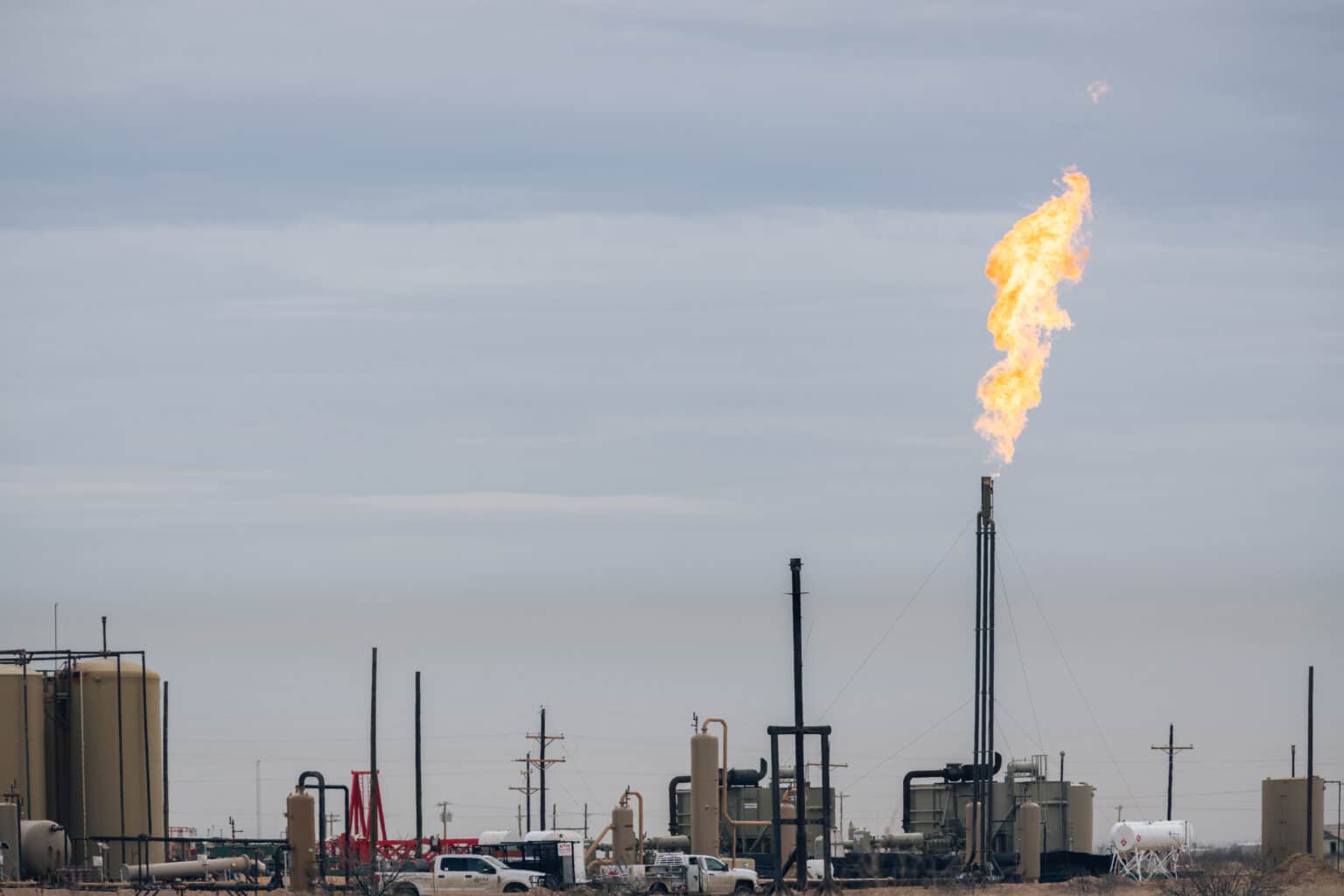
The Railroad Commission (RRC) is in charge of regulating the oil and gas industry in the state, and a permissive approach to oversight, particularly when it comes to rampant flaring of methane from oil and gas wells, is well-known. But the new report looks at the extensive personal financial ties between the agency’s top officials and the companies they are supposed to regulate, which creates a business climate with few restraints.
“Too often, the commission has focused on accelerated oil and gas development at the expense of safety, economic vitality, natural resources and the environment,” the report said.
Many of the problems are systemic. For example, the three-member commission of the RRC is elected in statewide races, and campaigns on average can cost more than $1.5 million each. There are no limits on campaign contributions, and the oil and gas industry — the industry that is regulated by the RRC — consistently accounts for 60 to 70 percent of the campaign funds for the candidates. Because the agency and its mission are rather obscure to voters, the oil and gas industry exercises incredible influence over electoral outcomes.
Once elected, the commissioners do not have to recuse themselves from matters affecting the companies that donated to them. “These factors create the conditions for a ‘captured regulatory agency,’ meaning that the industry oversees the agency rather than the other way around,” the authors wrote.
“There is a system set up where the policies on recusal are so vague and the enforcement bar is so high that it’s difficult to really hold the commissioners to account on separating their financial interests from their decision-making,” Virginia Palacios, executive director of Commission Shift and a coauthor of the report, told DeSmog. “The laws are vaguely defined and that is being exploited.”
The report took a close look at Commissioner Christi Craddick, who has deep financial interest in the Texas oil and gas industry. She is a former oil and gas lobbyist, and personal financial disclosures suggest she owns oil and gas assets valued at between $1.5 million and $1.9 million. Some of those assets are in companies in which Craddick owns more than a 5 percent interest, the report found.
“She has stock in oil and gas companies. She personally owns mineral interests in about six counties throughout Texas,” Palacios said. “There are some family companies that she’s part owner or member of, and those family companies also own mineral interests throughout the state of Texas.”
The report looked at five heavy oil-producing counties in Texas and found that Craddick’s family companies owned at least 123 mineral properties as of 2019, valued at more than $1.2 million. Craddick is not required to disclose the extent of her personal share in those family assets.
These financial ties raise questions about her regulatory decisions. For example, in 2018, Craddick cast the deciding vote blocking a modest fine of $10,000 on a company called DCP Midstream for alleged groundwater contamination from a leaky pipe in Fayette County east of Austin. Craddick had personally owned shares in DCP Midstream valued at between $17,520 and $35,874, according to the findings of Commission Shift and Texans for Public Justice. DCP also had contributed $46,500 to the campaigns of all three RRC commissioners over the span of eight years, with Craddick taking in $22,500.
In a statement to DeSmog, Commissioner Craddick said: “In accordance with the Texas Ethics Commission, my personal financial statements are fully disclosed to the letter of the law and publicly accessible. Texas Ethics Commission laws ensure transparency of our public officials and maintain the public’s trust in our ability to appropriately govern, and I take these laws seriously.”
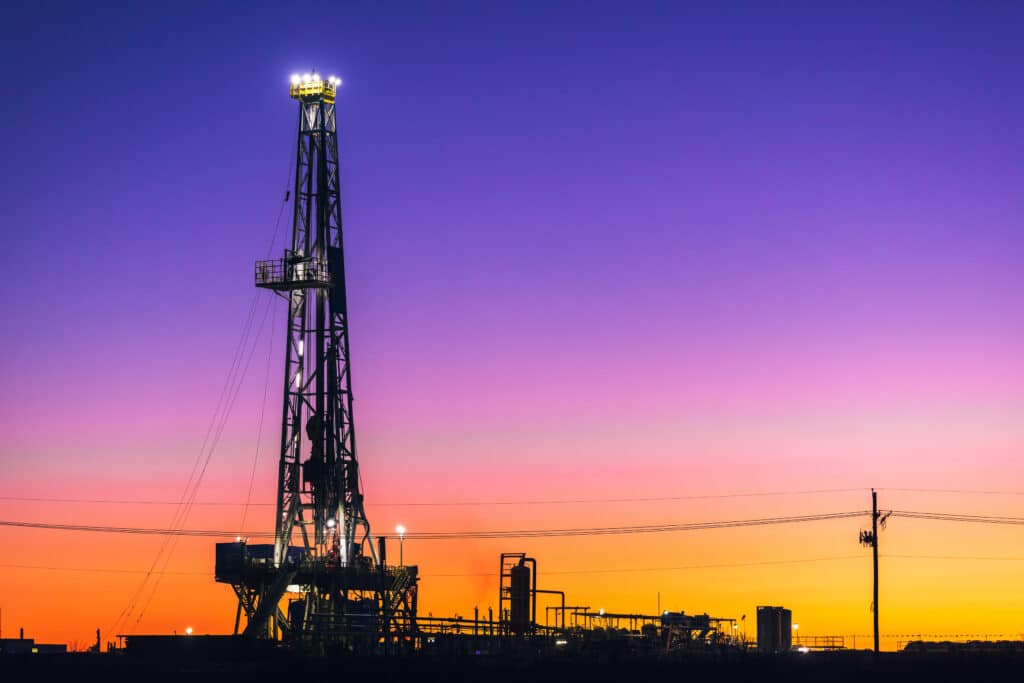
Sunset over an oil rig in Reeves County, Texas. Credit: Justin Hamel
However, the report’s authors and other critics feel current disclosures don’t go far enough to create an appropriate distance between regulators and the regulated. “It’s no surprise Craddick has deep financial ties to the oil industry. From spreading misinformation about the cause of the winter storm power outages to rubber stamping flaring permits, Commissioners have done a better job cheerleading than regulating operators,” Kelly Mitchell, a senior analyst at the corporate watchdog Documented, commented on the report in an email to DeSmog.
The report offers several recommendations to reform the RRC to address the structural problems that inevitably lead to personal financial conflicts of interest and regulatory capture.
For example, before the commissioners take office, they should be required to divest their assets from the industries they regulate, something that is required in neighboring Oklahoma.
“The simplest, most elegant reform would be to adopt the ‘Okie solution,’” Andrew Wheat, research director at Texans for Public Justice and a coauthor of the report, told DeSmog in an email. “Oklahoma imposes reasonable limits on campaign contributions, while requiring its oil and gas regulators to divest from the industry that they regulate. Texas can and should do better.”
Another idea would be to limit campaign contributions. The commissioners are allowed to raise funds throughout their six-year terms. The Commission Shift and Texans for Public Justice report says that fundraising should be limited to only an 18-month period before their election, and also place limits of $5,000 per company per election cycle. Commissioners should also be forced to recuse themselves from matters related to companies that have donated more than $1,000.
Other ideas for reform include improving financial disclosure requirements; currently commissioners check a box when they have an interest in a company valued at “$44,630 or more,” leaving open the possibility that they have a much higher stake in a specific entity than the public realizes. The Texas state legislature should also clarify and strengthen recusal standards, the report says.
Texas has long hosted a large and powerful oil and gas industry. Not only is proper regulation necessary for upholding safety, environmental, and health standards, but the rise of renewables and the climate crisis mean that reform is urgent, argues Palacios. “The energy landscape is shifting in Texas. We’re in an energy transition. We need the Railroad Commission to be acknowledging that, managing it, and fighting for it,” Palacios said. Reforming the commission is “integral to that,” she said, adding, “We can’t get fair and impartial oversight if we have these obvious problems in the structure.”
Climate change is ‘a freight train’ making some places too dangerous to live in, experts say
Elizabeth Weise, USA TODAY September 29, 2021
Joshua Schreiber and his family have never been city people. When they moved from Sacramento, California, to the Sierra Nevada foothills, they were thrilled to exchange cramped urban lots for a “jaw-dropping” vista and 5 acres that backed onto public land.
“It was insanely gorgeous and very affordable,” the social worker said.
But after four years, they sold and moved 27 miles west to the far edges of the state capital’s suburbs. As much as they loved their home, it was no longer tenable. Wildfires became more frequent, torching nearby ridgelines and inspiring dread.
“Every year it got drier and drier. We just didn’t feel safe living there anymore,” Schreiber said of the home in Pollock Pines they left. “We got tired of being on standby in the summer to evacuate.”
This month, the 221,000-acre Caldor fire came within a mile from their former town, so close it singed two friends’ houses and melted the vinyl windows of another, but sparing the one they used to live in. Still, only 76% contained, it has burned for 43 days across three counties, destroying 1,003 structures.
Climate change – and the ever more extreme weather it brings – is changing real estate equations. American dreams are increasingly running into weather nightmares, raising pressing questions about where it makes sense to live.
“There are just some places that are too dangerous to occupy,” said Chad Berginnis, executive director for the Association of State Floodplain Managers. “It’s like a freight train coming at us but politicians and citizens aren’t ready to hear that yet.”
Wild weather events, such as stronger storms, flooding, droughts and fires, are expected to worsen and become more frequent in the coming years, according to last month’s report by the United Nations’ Intergovernmental Panel on Climate Change.
The United Nations’ Intergovernmental Panel on Climate Change releases a new and devastating report on the danger climate change has on the world.
Last year equaled 2016 as the hottest year on record. And this year will likely be one of the coldest of the coming century. The heating up of the Earth’s atmosphere and accompanying dramatic climate swings are having an impact on life on its surface and the homes of people who live there.
Nearly 6 million more homes and commercial properties are at risk than identified on the Federal Emergency Management Agency’s floodplain maps, according to a recent analysis by the nonprofit First Street Foundation. That’s by 2050, within the 30-year mortgage window. Similarly, more homes face extreme risk of wildfires than current projections by the USDA Forest Service, the First Street Foundation said.
The Monument Fire burns in Northern California on Aug. 2, 2021, near forests set aside to offset industrial carbon pollution. Healthy forests store carbon naturally, but when they burn, the carbon literally goes up in smoke, adding to global climate change instead of helping to slow it.
So far this year, wildfires have burned more than 5.7 million acres nationally across 10 states, according to the National Interagency Fire Center. Sixty-three large fires were active as of Saturday.
On Aug. 31, Hurricane Ida, one of the strongest storms to ever hit the mainland U.S., ripped ashore in Louisiana before slamming into the Northeast. It killed more than 60 people. Insured property losses could range from $17 billion to $25 billion, according to AIR Worldwide, a catastrophe modeling company.
Torrential rains in Tennessee last month killed 20 people and left dozens missing. Global warming is causing more of these kinds of extreme rain events, with the amount of precipitation in the southeastern United States increasing by a third between 1958 and 2016, according to the U.S. National Climate Assessment.
On Sept. 7, President Joe Biden declared a “code red” on climate change, saying “we’re living through it now. We don’t have any more time.” He hopes that Congress will approve his $1 trillion infrastructure plan, which includes several items to tackle global warming.
Many people are dead or missing after catastrophic flash floods struck all across Tennessee, and President Joe Biden offers full federal support.
No adult in the room
Federal infrastructure programs take time. For now, despite the increasing number of Americans living in danger zones, federal, state, or local governments do little to stand in their way.
“The ball is essentially in homebuyers hands, said Zhong-Ren Peng, director of the International Center for Adaptation Planning at Design at the University of Florida.
Zoning is a local matter, and politicians are mostly interested in keeping property values high and increasing the tax base with more building, he said. Mortgage companies continue to sell in risky areas. Insurers raise rates or cease offering insurance at all, which prompts cries for federal programs.
There are solutions, say experts, but they require political and economic backbone to stop building in danger zones or at least insist on expensive adaptations.
“And adaptation means some places should not be developed at all,” said Peng.
Asking individuals to make those decisions when they seldom have access to all the facts is unfair, said Jesse Keenan, a professor of real estate who researches climate change adaptation, economics and regulation at Tulane University in New Orleans.
“There’s a climate intelligence arms race,” he said. “The private sector is moving quietly to uncover these emergent risks but as a general proposition we just don’t have good disclosure.”
Thomas Ruppert, a coastal planning specialist at Florida Sea Grant and the University of Florida Extension, isn’t confident anyone’s going to be “the adult in the room” when it comes to making decisions about where is safe to build.
“There’s no one at this point who has sufficient political or economic reason to stand up and say these things loud enough,” he said.
The money’s coming out of everyone’s pocket
Not only those who live in harm’s way pay. The costs end up on everyone’s shoulders.
The National Flood Insurance Program is a federally subsidized insurance program that provides more than 95% of flood insurance in the United States. It’s $20 billion in debt, which falls on taxpayers.
There’s no national fire insurance program, though some are calling for one. California has the California Fair Access to Insurance Requirements Plan, a state-mandated insurance pool that sells basic fire insurance for high-risk properties where traditional insurance will not.
In California, the cost of fire insurance has begun to go up as more fires hit every summer. No standard insurance companies would sell fire insurance to the Schreibers in the area they used to live. “We had to go through Lloyds of London. It was almost like another mortgage payment,” Schreiber said. It was one reason they moved.
So far in 2021, almost 2 million acres of the state have burned and 3,050 structures have been damaged or destroyed according to CalFire. Last year it was 4.2 million acres burned and 10,488 structures. Such events result in higher insurance premiums for everyone.
The California Department of Insurance last Monday issued a temporary moratorium on insurance companies dropping customers in 22 counties who live next to or in the perimeter of a declared wildfire disaster. It was the third time such a moratorium had been declared since the law was first passed in 2018.
Property insurance, especially when it’s federally subsidized, can create what experts call a moral hazard, encouraging continuing risky behavior because there’s less downside.
Homeowners benefit from an implicit subsidy, Keenan said. “They aren’t taking the risk, the government and the taxpayers are.”
Insurance companies walk a fine line between being affordable and being rational. Consumers want cheaper insurance but that can result in bad choices.
Insurers are working to collect the data they need to properly price policies in risk-prone areas, said Karen Collins, assistant vice president for policy, research and international with the American Property Casualty Insurance Association. “We’re starting to see a tipping point in California,” she said. “There’s discussion of putting the brakes on new development.”
Any changes will need to be gradual, said Cooper Martin, director of sustainability and solutions at the National League of Cities.
“It’s not to say you can’t price risk, but you can’t go from the system that we set up in the 1970s, fast-forward 40 years and just make those changes all at once,” he said.
It might seem that lenders wouldn’t want to buy a mortgage on a home that might not survive for 30 years. But there’s no incentive for them to stop providing mortgages in high-risk areas when they can easily unload them, said Keenan.
Banks are disproportionately selling such home loans to the secondary market and not keeping them on their books, his research found.
“It’s like musical chairs,” said Lee Reiners, executive director of the Global Financial Markets Center at Duke University law school. “Lenders are still willing to knowingly make loans in areas that are at risk of climate change-related losses because they’re just going to sell it on.”
This could change. In January, the Federal Housing Finance Agency put out a request for comment on a plan to have Fannie Mae and Freddie Mac’s pricing reflect climate change risk.
Or it could not. There’s powerful political pressure not to do so “because there are a lot of hands in this cookie jar,” Reiners said. “If you say people are going to have to pay higher interest rates or higher insurance premiums, their congressmen are going to hear from them.”
An equity issue
Some areas have instituted buyout programs for homes hit with repetitive losses, usually due to flooding. Louisiana has a state Watershed Initiative which includes a buyout program for flood-prone areas aimed especially at low- to moderate-income residents.
But most buyout programs favor the wealthy and all do nothing for the 36% of American households who rent, said A.R. Siders, a professor of climate change adaptation policies at the University of Delaware.
No matter how many homes are bought out, the amount of land being developed in danger zones and the size of those zones continue to grow. In many areas, far from pulling back from vulnerable lots development is expanding – and not just on the sandy Florida coast.
A 2019 Zillow and Climate Central analysis found that Connecticut is developing in flood risk zones three times faster than safer locations. In Delaware, Mississippi, New Jersey and Rhode Island, building is twice as fast than in areas less prone to flooding. New Jersey, Florida, and North Carolina have allowed the most homes built in risky zones.
The risk all too often ends up transferred to those who can least afford it when owners move out after floods or fires because the risk is too great and lower-income renters move in.
“This is a huge problem,” said Tulane’s Keenan. “What do you do about the people who come in and fill the void in these transitions?”
The adaptation paradox
An alternative to leaving danger zones is adapting to the coming changes. If sea levels are rising, build a sea wall. If wildfires loom, create buffer areas and fire harden buildings. If increasing rains cause flooding, raise houses and beef up sewer systems.
But sometimes protection can backfire. It’s called “the safe development paradox.”
“When people see a seawall, they have the false conception that they’re living somewhere safe, so they don’t even want to buy insurance,” said Peng.
Making better land-use choices now would be cheaper in the long run, but there’s little incentive for towns to do that because it doesn’t add to the tax base.
Sometimes, even adaptation is impossible, as climate scientist Klaus Hans Jacob discovered when his wife fell in love with a house in Piermont, New York, in the Hudson River’s tidal estuary. From decades of research, he knew rising sea levels would make the neighborhood even more prone to storm surges and flooding.
Jacob struck a deal with her. They’d buy it, but only if he could lift the foundation six feet.
“So we handed in the plans to our local government and they said, ‘That’s all good and forward-looking, but you can’t raise it more than two and a half feet because you’ll exceed the zoning height limitation,’” said Jacob, a professor of climate risk at Columbia University’s Lamont Observatory.
They asked for a variance and were told no “because it would set a precedent.”
When Hurricane Sandy hit in 2012, the couple had two and a half feet of mud in their living room. “A week after Sandy, I get a letter in the mail. It said, ‘Now you can raise it up.’”
A house put up on stilts in Louisiana to protect against flooding. May 22, 2019.
If you tell them, maybe they won’t come
It might seem no one would buy or rent a house in an area experts say is likely to flood or burn, but that’s only true if the potential residents know.
Organizations like the First Street Foundation and ClimateCheck have created detailed maps to show the climate-related risks of specific properties. A Flood Factor tool already exists and has been incorporated into the Redfin and Realtor.com sites, and a wildfire tool is coming this year.
“Our mission is to democratize the information,” said First Street’s Michael Lopes. “Banks have this information, insurance companies have it, the government has it. Often (the buyer) is the last person to know.”
In 21 states there’s no requirement for full disclosure of threats when properties are sold. Out of the 10 states with the highest risk of severe floods over the next 100 years, only two have strong flood risk disclosure laws – California, and Louisiana, according to data from the Natural Resources Defense Council.
In New York state, for example, there is a requirement that sellers disclose whether a property is located in a designated floodplain and whether there have been previous flooding problems. But sellers can opt out of the requirement by paying a $500 fine.
The argument by homeowners, real estate agents and some cities has been that making risk information available could cause some houses to lose value.
“But think about the alternative,” Siders said. “We’re tricking buyers by not giving them information in order to get them to pay more in order to live in a risk-prone area.”
Hard choices
Solutions won’t be easy.
According to experts, zoning must be tightened to stop building in highly vulnerable areas. Building codes must be strengthened so what’s built can withstand what’s coming. Sellers and landlords must be required to reveal known threats to would-be buyers and renters. Insurance premiums need to be more in line with known and anticipated risks. Government buyout programs must expand so homeowners and renters have an out.
Not everyone can move, so some kind of adaptation will be necessary, said Cooper Martin, director of Sustainability and Solutions for the National League of Cities.
“We can’t just pick up and move thousands and thousands of people, whether it’s supported by the government or not,” he said.
Broadly, it will take rethinking the way housing and development have been structured since the Second World War. Take Florida, which was built on a culture of urban sprawl development, said Florida’s Ruppert.
“In order to pay for today we need new development to inject more money into the economy to pay the bills to support areas that we’ve already built,” he said.
Making existing towns denser and easier to protect from rising waters would save money because the tax base would increase with the existing infrastructure. Density can be cheaper to maintain and can produce the highest value per acre, said the National League of Cities’ Martin.
“Cities are starting to talk about a combination of climate, housing and transportation planning all in one, instead of keeping those things separate,” he said.
Breaking the cycle is difficult but to survive economically communities much change, Ruppert said.
“The way we live is not inevitable, it’s the product of the choices we’ve made,” he said. “If we learn that, we can start to rethink those choices and create the world we want to live in.”
Americans’ concern about climate hits all-time highs
Andrew Freedman September 28, 2021
After a disaster-filled summer, a record number of Americans are concerned about global warming, according to a new poll from the Yale Program on Climate Change Communication.
Driving the news: The number of Americans who said they are “very” or “somewhat worried” about global warming has reached an all-time high of 70%, the Yale group found as part of a survey it has been conducting since 2008.
Why it matters: The polling suggests that the extreme weather seen this summer may be shifting minds. It comes the same week that Congress is debating pivotal infrastructure bills that would boost federal support for electric vehicles and move the electricity sector toward renewables.
Details: The percentage of respondents in the nationally representative survey who said they are “very worried” about global warming increased by 10 points between March and September, the center stated in a report.
In addition, Americans’ belief that global warming is happening has increased 6 percentage points since March, with those who think it is occurring outnumbering those who don’t by more than 6 to 1, the report states.
And in another significant swing, a majority of Americans — 55% —now say people in this country are being harmed “right now” by global warming. Previous surveys had never found that question to garner 50% support or greater.
Background: The poll conducted Sept. 10-20 has a sample size of 1,006 and a margin of error of plus or minus 3%.
We’ve Been Fighting Fire for a Century. It’s Not Working—and There’s a Better Way.
William Deverell, Elizabeth A. Logan, TheConversation
September 28, 2021
JOSH EDELSON
Over two days in the summer of 1910, wildfires roared across the bone-dry forests of the inland Northwestern U.S., the Rockies, and parts of British Columbia. Whole towns burned. The blazes scorched 3 million acres of forest, an area the size of Connecticut, and left behind a legacy that profoundly changed how the U.S. managed wildfires—and ultimately how fires behave today.
The Big Burn shook firefighting agencies and officials, most notably the newly formed U.S. Forest Service and its leaders. As those who had witnessed The Big Burn rose through the pre-World War II Forest Service ranks, a firm and unyielding policy rose with them:
Forest fires were to be put out. All of them. By 10 a.m. the morning after they had been discovered.
While not widely known outside the Forest Service, the “10 a.m. policy” is one of the most consequential environmental actions in American history. This absolutist fire suppression ideology, later publicized by Smokey Bear, has as its origin the Big Burn complex of forest fires in 1910 and its roots in 19th-century settler colonialism.
The aftermath of 1910 led to bold decision-making in forest and fire management techniques and directives. Fire suppression, at least in the way the Forest Service and allied agencies went about it—militarized, technologically impressive, expensive—led the U.S. down a forest management path that neglected other, more nuanced approaches to fire. The dismissal of Indigenous ecological knowledge about fire and land stewardship undoubtedly contributed to the rise of suppressing all fires.
Now, more than a century later, the 21st century’s big burns are a signal that things have gone terribly wrong.
Smokey Bear became the messenger for America’s absolutist fire suppression ideology.Justin Sullivan/Getty
In 2020, fires in California alone burned more than 4 million acres and spawned a new term: the gigafire, a wildfire that burns more than 1 million acres. The August Complex was the first known modern gigafire. The Dixie Fire, which swept through the town of Greenville in northern California in August 2021, will likely be another gigafire before it is finally put out.
Huge swaths of California and the West are on fire again this year, and wildfires are behaving in ways firefighters haven’t experienced before.
Officials say that this year, for the first time on record, a wildfire crossed the Sierra Nevada from West to East—the Dixie Fire did it first, and then the Caldor Fire did the same thing a few weeks later. The Caldor Fire was so hard to control, fire officials in late August talked about trying to steer it into another fire’s burn scar as their best chance to stop its race toward communities around Lake Tahoe. Some fires have become so extreme, they created their own weather.
The Dixie Fire burned 1 million acres.Josh Edelson/Getty
Part of the problem is climate change. Drought and higher temperatures are fueling bigger, hotter and more dangerous fires than at any time in recorded memory. Summer wildfire seasons are lasting longer, droughts are leaving more fuel ready to burn, and fire weather is becoming more common.
Adding to the risk is the number of people living in wildland areas and all those years of fighting every fire.
The U.S. routinely put out about 98 percent of all fires before they reached a half-square mile in size. That means areas that normally burned every few decades instead built up fuel that can make fires more extreme when they do start.
In an unprecedented move this year, the U.S. Forest Service closed all national forests in California to hikers, campers and others through at least mid-September to lower fire risk and keep people out of harm’s way. Several national forests in Arizona were closed earlier in the summer.
Closing the forests is not a sustainable solution. That it happened drove home the nature of the emergency in the West.
The response to the Big Burn was not only wrongheaded, in our view, but also crude in its single-mindedness. “Put all forest fires out” had a clarity to it, but a 21st-century fire paradigm shift will have to be connected to broader conversations about environmental knowledge and how it can best be shared.
The U.S. has learned that it cannot suppress its way to a healthy relationship with fire in the West. That strategy failed even before climate change proved it to be no strategy at all.
University of California, Davis students and professors learn about living with fire during a cultural burn with members of the Native American community at the Cache Creek Nature Preserve in Woodland.Alysha Beck/UC Davis/The Conversation
Building a more successful coexistence with fire includes figuring out how to work cooperatively. This includes broader conversations about environmental knowledge, what constitutes it and how best it can be shared. Indigenous communities have long lived with fire and used it to cultivate healthy ecosystems. Prescribed and cultural burning are important tools in mitigating catastrophic fire and simultaneously aiding forest health.
Living with fire also requires teaching everyone about fire. Schools at all levels and grades can teach fire knowledge, including the science of fire and its consequences for communities, economies and lives; the history and cultural practices of fire; and the plants, landscapes and materials that can help prevent fires.
Finally, communities and landowners will have to reconsider how and where development takes place in high-risk areas. The idea that people can build wherever they want isn’t realistic, and landowners will have to seriously rethink the reflex to rebuild once burned areas have cooled.
In our view, living with fire demands greater attention to learn from and care for each other and our common home. Collaboration, respect, resources and new ideas are keys to the path forward.
William Deverell is a professor of history at USC Dornsife College of Letters, Arts and Sciences and Elizabeth A. Logan is associate director of the Huntington-USC Institute on California and The West, USC Dornsife College of Letters, Arts and Sciences
Illinois becomes 1st Midwestern state to pass a law to phase out fossil fuels
Ben Adler, Senior Climate Editor September 27, 2021
At a time when the Midwest is being battered by more severe storms due to climate change, Illinois Gov. J.B. Pritzker signed a landmark law this month that will transition the state to 100 percent clean energy by 2045, with benchmarks along the way.
While the effort has largely escaped national media attention, it is especially noteworthy for three reasons: Illinois is the first state in the coal-heavy Midwest to commit to eliminating carbon emissions; the plan received some Republican support; and it includes programs to ensure economic and racial equity.
“What we’ve now done is made it clear that [fossil fuels] are not in Illinois’s future,” Jack Darin, director of the Illinois chapter of the Sierra Club, told Yahoo News.
Although the Climate and Equitable Jobs Act stood a chance of passage only because Democrats control both houses of the state Legislature and the governor’s mansion, the Republican response offers hints of a potential partisan thaw on global warming.
“We had some very, I would say, out-of-step rhetoric opposing the bill, but we no longer hear anyone doubting the science of climate change,” Darin said. “So even the most conservative objections to the bill did not question the science and the urgency of acting on climate. And, in fact, most Republican objections were couched in statements of support for renewable energy. Things that we used to hear Democrats say 15 years ago about an all-of-the-above strategy that includes fossils and renewables is kind of where the Republicans seem to be now.”
Perhaps that’s because the local effects of climate change are becoming impossible to ignore. Over the last 100 years, Illinois’s average temperatures have increased by 1 to 2 degrees Celsius, and annual rainfall has gone up by 12 to 15 percent, according to the state climatologist’s office, with the number of 2-inch rain days up by 40 percent.
“This summer in Chicago was among the hottest on record, with record heat and severe drought across Northern Illinois harming farmers and echoing costly droughts in 2012 that were ‘almost certainly’ driven by climate change,” noted the Natural Resources Defense Council in a recent blog post.
Kids escaping the heat in downtown Chicago in June. (Daniel Slim/AFP via Getty Images)
While progressive coastal states such as California and Oregon have already set similar clean energy requirements, Illinois’s neighbors have more modest ambitions. Indiana, for example, aims for 10 percent of its energy to come from renewable sources such as solar and wind.
One of the reasons that Illinois can afford to be so much more aggressive is that it has the largest nuclear energy fleet in the nation, so it can stop burning coal and natural gas for power even if renewables aren’t ready to meet 100 percent of demand.
The reliance on nuclear power is what brought some Republicans on board. A number of the state’s nuclear reactors, among the oldest in the country, need substantial maintenance and upgrades in order to keep from being decommissioned. When a nuclear power plant shuts down, reliance on fossil fuels typically rises.
So Illinois is investing $700 million in its nuclear reactors over the next five years, winning the backing of the energy utility Exelon and lawmakers from districts where those plants provide jobs and local tax revenue.
But Illinois isn’t just going to boost nuclear: The law will double the subsidies for renewable sources of energy, to around $580 million per year.
An Exelon Corp. nuclear plant in Byron, Ill. (Robert Ray/AP)
And as climate change’s effects fall disproportionately on poorer neighborhoods, the state set out to make the transition to clean energy economically equitable. The Illinois Solar for All program, which helps get rooftop solar power to low-income households, public buildings and nonprofits, will have its annual funding quintupled, to $50 million. There will also be low-interest loans to clean energy projects in low-income communities, and programs to assist people of color in getting clean energy jobs and construction contracts. Workers displaced by the closures of coal mines or power plants will get assistance with job retraining and placement and college scholarships for their children.
“We’re not the only faith-based organization in our coalition,” said the Rev. Mike Atty, executive director of United Congregations of Metro East, an interfaith organization that advocates for racial and economic justice in downstate Illinois. “One of the things we all agreed on is we’ve got to make sure that the least of these — the people who can’t take off work to go to Springfield for a rally day or a lobby day because they have to work, they don’t have that choice, they have to have childcare — that those folks will have to be a part of any legislation. So there would have to be a piece about equity, not only about job training for new jobs in solar installation, for example, but also for minority contractors, because we know that minority contractors have historically been left out when it comes to new construction.”
Climate policy expert David Roberts praised the law as “one of the most environmentally ambitious, worker-friendly, justice-focused energy bills of any state in the country” and “a model for how diverse stakeholders can reach consensus.”
Whether this model can be replicated in other states is a difficult political question. Only 12 of the 45 Republicans in the Illinois House voted for it, and they were clear they were doing so to protect their districts’ economic interests. (Some in the GOP argued that the bill would increase electricity costs for consumers.)
Power-generating windmills near Dwight, Ill. (Scott Olson/Getty Images)
And while environmentalists are singing the law’s praises, there are a few key components of climate action that it does not fully address, including emissions from transportation and coal mining. Still, it is considered a first step in a process that begins with cleaning up the power sector, then moves on to electrifying other major sources of emissions, like home heating and industrial processes.
The law includes provisions for statewide building codes to improve efficiency and begin electrification of heating. Illinois drivers can get a $4,000 rebate if they buy an electric car, with the state goal of reaching a million electric vehicles on Illinois roads by 2030. Still, that’s a long way from being carbon-neutral in a state with close to 13 million residents, but the bill’s backers say Illinois will take more action on other aspects of the climate fight, such as transportation, in the near future.
“Cars cause the majority of pollution in our area, so these are things we’re going to be addressing over the next three to four years,” said Democratic state Sen. Michael Hastings, a sponsor of the bill.
Illinois is also a major source of coal, most of which is shipped elsewhere to be burned. That will continue for the time being, as the law does not contain any new restrictions on coal mining.
The tension between greening one’s own home and exporting fossil fuels is a growing concern for environmentalists, but Illinoisans say the sources of climate pollution not included in the Climate and Equitable Jobs Act will be taken on eventually.
“Every piece of legislation is going to get criticized for what’s not in it, but I will say that the amount of time it took to get to this solution is progress,” Hastings said. “Over the next few years, I think you’re going to see a lot of these other issues addressed.”
Letters to the Editor: Of course there’s a water crisis for farmers near Trona. They’re in a desert
September 28, 2021
Old, rusty pipes owned by Searles Valley Minerals carry water to Trona, Calif. (Irfan Khan/Los Angeles Times)
To the editor: The idea pushed by farmers near the Mojave Desert town of Trona that there is much more groundwater underneath the Indian Wells Valley is nonsense, plain and simple. There is indeed plenty of water, but it is unfit for drinking, watering lawns, growing crops or even filling swimming pools. (“A 7.1 earthquake couldn’t kill this Mojave Desert town. But a water war just might,” Sept. 23)
With continued business as usual, nearly all wells will be unable to produce potable water.
Furthermore, commercial agriculture brings in far less money to the Indian Wells Valley and creates far fewer jobs than the nearby Naval Air Weapons Station China Lake and the Trona chemical plants. The only reason the basin is in overdraft is commercial agriculture. China Lake and the Trona plants can function with water that can safely be pumped.
Finally, China Lake and the Trona chemical plants are essential, whereas the alfalfa and pistachios produced at local farms can be grown in many other places. Anyone who started farming in the Indian Wells Valley during the past 40 years did so despite the widely known looming water crisis.
Frank Grober, Oakland
..
To the editor: From 2006-11, I was the conservation director at the Indian Wells Valley Water District, which serves Trona, the Mojave Desert town whose existence is threatened by a water dispute. When I was named to the position, California had recently passed legislation requiring water authorities to cut usage by 20% by 2020.
In the Indian Wells Valley at that time, there was an ongoing, longstanding argument about whether our aquifer was an open or closed system. In other words, were we getting water solely from mountain runoff, or were we receiving replenishment from outside our basin? If the former was true, our usage had created a huge water deficit.
We instigated a carrot-and-stick, multi-pronged conservation program that helped cut usage by 17% over four years. I convinced our constituents that xeriscape was the landscape of the 21st century and that water was more precious than gold.
Unfortunately, the water district’s revenue was also cut by 17%, and my position was the first one cut. Still, I’d do it all again — because without clean, affordable water, we cannot exist.
Lucinda Sue Crosby, Palm Desert
..
To the editor: If people don’t want to pay to create alternative water sources, the answer is simple — just keep pumping until the wells run dry, then pack up and leave.
California has many ghost towns, and Trona and nearby Ridgecrest could easily be next. The same goes for much of the San Joaquin Valley.
Paraguay on the brink as historic drought depletes river, its life-giving artery
William Costa in Paraguay September 27, 2021
Photograph: Jorge Sáenz/AP
In the shadow of towering grain silos that line the bank of the River Paraná, South America’s second-longest waterway, Lucas Krivenchuk stands watching workers rush to load a barge with soybeans.
“Twelve barges had to leave today, but only six will make it out: there’s no time, the water’s dropping too fast,” said Krivenchuk, general manager of the Trociuk private port in southern Paraguay. “It’s the first time that any have left in two months.”
The Paraná River, which winds through Brazil, Paraguay and Argentina, has dropped to its lowest levels in 77 years as a severe drought that began in late 2019 continues to punish the region. Experts say the climate crisis and deforestation may be intensifying the phenomenon.
The drought has threatened water supplies in Argentina, driven up energy prices in Brazil, and helped drive rampant wildfires across the region. Paraguay, which has no coast and relies on its rivers for countless social, environmental, and commercial services, faces dire strain.
“Paraguay is a landlocked country, and the river is an artery in its body that it depends on to live,” said Krivenchuk.
People walk next to boats along the exposed bed of a branch of the Paraguay river that has gone dry, in Lambare, Paraguay, on 17 September. Photograph: Norberto Duarte/AFP/Getty Images
Juan Carlos Muñoz, director of Paraguay’s National Shipping and Ports Administration Body (ANNP) said river transport is central to an economy primarily based on genetically modified soy exports.
“We export commodities with zero added value: totally raw materials. River transport is by far the cheapest way of reaching international markets,” he said.
The world’s third-largest river fleet moves 96% of Paraguay’s international imports and exports along two great waterways, the Paraná and the Paraguay, to and from ports in Argentina and Uruguay.
The Paraguay River, which flows past Muñoz’s office in the capital Asunción, has dropped to its lowest ever level, further than the previous all-time low reached in 2020. With costs escalating, Muñoz said the shipping sector faces a loss of 20% of revenue – $100 million – for the second year running despite dredging initiatives.
Roger Monte Domecq, hydrology professor at the National University of Asunción, said that while cyclical droughts are normal in the Paraná Basin, there is increasing evidence that human-driven factors intensify the crisis.
“I don’t think there’s any doubt that there’s an impact on the climate, which affects conditions all across the region,” he said.
Monte Domecq said more studies were required to ascertain the exact impacts of global heating and extremely high levels of deforestation and land-use change seen across the region, especially in the Amazon where the water cycle which feeds precipitation in the Paraná Basin is being disrupted.
Deforestation has principally been caused by state-propelled soybean and cattle ranching booms; both sectors that are now struggling to export their products downriver.
Barges lay stranded next to one of the branches of the Paraguay river that has gone dry, in Lambare, Paraguay, on 14 September. Photograph: Jorge Sáenz/AP
And there is no end to the drought in sight, said Monte Domecq: no significant rains are forecast for coming months and the weather phenomenon known as La Niña – which brings dry weather to the Paraná Basin – is looming.
Downriver from Port Trociuk in the fishing town of Ayolas, fisherman Claudio Domínguez described excruciating economic difficulties for ordinary families as he gathered bait in the shallows.
“There are barely any fish … really nothing. It’s been like this for four months,” he said.
Fishers are making ever-longer journeys – involving escalating fuel costs – in the hope of a catch.
Just upriver from Ayolas, production of electricity at the mighty Yacyretá dam, which Paraguay shares with Argentina, is also affected. Yacyretá and Itaipú – an even larger dam on the Paraná shared with Brazil – produce almost all Paraguayan electricity and according to the government, Itaipú has come close to shutting down due to the low waters.
Mercedes Canese, energy consultant and former deputy energy minister, said that, while Paraguay is not suffering energy shortages – it uses only a small portion of its energy from the two giant dams – it is losing an important part of $1.57bn in yearly exports of excess energy to its giant neighbours.
A family stands in the bay connected to the Paraguay River in Asuncion, Paraguay, in August. Photograph: Jorge Sáenz/AP
And as the water shortages cause Brazilian energy prices to soar, many Paraguayans say that a historical injustice is being deepened. Paraguay is obliged by treaty to sell excess energy from the Itaipú dam to Brazil at cost price, a condition that economist Miguel Carter calculates cost Paraguay $75.4bn from 1985 to 2018.
“Prices in Brazil are sky-high, but Paraguay can’t sell its energy at market prices,” Canese said. “We’re talking about a loss of hundreds of millions of dollars.”
On Ayolas’s beach, Claudio Domínguez points to a wet line in the sand indicating the Paraná’s level just hours before. He cleans his bait and hurriedly prepares for an all-night fishing trip that he hopes will not be unrewarded – as so many others have been.
In the town square, a singer serenades the crowd with Oración del Remanso, a folk song about Paraná fishers, during a festival that evening: “Christ of the fishing nets, don’t abandon us.”
“Everything depends on the river. We all depend on it,” Domínguez said.