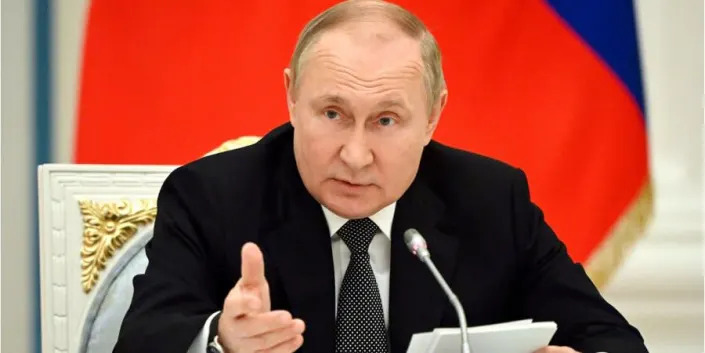
Security Service of Ukraine: contract soldiers in the Russian army are waiting for the end of May to escape from Ukraine
Valentina Romanenko – May 29, 2022
At the end of May, the 90-day deadline set by the Putin regime for conducting the so-called “special operation” expires. Contract soldiers who came to fight in Ukraine in February are “legally” entitled to leave the service.
Source: phone conversations of occupiers intercepted by the Security Service of Ukraine
Quote from occupier: “F*cking sh*t. In short, they said, there will be no replacement. No one wants to relieve us, everyone refuses to come here. I think, sh*t, I’ll probably sit it out now, but as soon as the three months are over, damn, I need to get out somehow. I’ll look for something in civilian life. After all, there is life beyond the army, isn’t there?”
Details: At the same time, the Security Service of Ukraine noted that it is not easy for the Russian command to find new people willing to fight, and it is also difficult to keep its soldiers on the front line.
The above-mentioned Russian soldier told his friend that people have come to unnerve them, intimidating them with a negative note on their personal file, but this is not stopping many people.
Quote from the Security Service of Ukraine: “We hope that the [size of the] invading army will decrease by the summer. If not, our defenders will help them return home. As we have already helped the more than 30 thousand invaders who have died in the war”.
What can Australia teach us about guns and gun control?
CBSNews – May 29, 2022
Carolyn Loughton flung herself on top of her daughter when a gunman with a high-powered rifle opened fire on a group of tourists in Australia, but it was not enough to save Sarah’s life. The shooting, in a café in the Tasmanian town of Port Arthur in April 1996, resulted in 35 people killed, and another 23 wounded.
Although it happened 26 years ago, telling the story decades later still makes Loughton shake.
Correspondent Seth Doane asked Loughton, “What’s it like being in a mass shooting?”
“It’s beyond frightening; it’s haunting,” she replied. “And for every bullet that’s fired, that’s a life gone. And bang! There’s another life gone. And bang! There’s another life gone. And bang! And when is it gonna be my turn?”
Loughton was shot, and did not know for hours her daughter had died. Sarah had just turned 15.
“It’s said that when you lose your parents, you lose your past,” Loughton said. “When you lose your child, you lose your future.”
Carolyn Loughton was wounded in the mass shooting at Port Arthur, Tasmania in 1996. Her daughter, Sarah, died. / Credit: CBS News
The massacre rocked Australia. It came just six weeks after a new prime minister had been elected.
“I thought to myself, if I don’t use the authority of this newly-acquired office to do something, then the Australian people are entitled to think, ‘Well, this bloke’s not up to much,'” said John Howard. So, the then-prime minister, a conservative politician and close friend of George W. Bush, pushed through sweeping gun control legislation just 12 days after the shooting.
“The hardest things to do in politics often involve taking away rights and privileges from your own supporters,” Howard said.
The tough new laws banned the sale and importation of all automatic and semi-automatic rifles and shotguns; forced people to present a legitimate reason, and wait 28 days, to buy a firearm; and – perhaps most significantly – called for a massive, mandatory gun-buyback. Australia’s government confiscated and destroyed nearly 700,000 firearms, reducing the number of gun-owning households by half.
Howard told Doane, “People used to say to me, ‘You violated my human rights by taking away my gun.’ And I’d tell them, ‘I understand that. Will you please understand the argument, the greatest human right of all is to live a safe life without fear of random murder?'”
Australia’s National Firearms Agreement banned certain types of weapons, and instituted a gun buyback program for automatic and semi-automatic rifles and shotguns; nearly 700,000 guns were taken and destroyed. The law also created a nationwide firearms registry, and required a 28-day waiting period for gun sales. / Credit: CBS News
If we tally mass shootings that have killed four or more people, in the United States there have been well over 100 since the Port Arthur tragedy. But in Australia, there has been just one in the 26 years since their gun laws were passed. Plus, gun homicides have decreased by 60%.
Howard said, “It is incontestable that gun-related homicides have fallen quite significantly in Australia, incontestable.”
Senator David Leyonhjelm left Howard’s political party in protest over the strict gun laws. He insists they’ve had little effect. “It’s clutching at straws,” he said of the reasoning behind the gun laws. “John Howard just simply didn’t like guns.
“There could’ve been something done about keeping firearms out of the hands of people with a definite violent potential. But instead, all firearm owners were made to pay the price,” Leyonhjelm said. “I don’t think there’s any relationship between the availability of guns and the level of violence.”
Doane asked Howard to respond to critics who say changes in gun deaths did not happen because of the legislation.
“Well, I can say that, because all the surveys indicate it,” he replied. “The number of deaths from mass shootings, gun-related homicide has fallen, gun related suicide has fallen. Isn’t that evidence? Or are we expected to believe that that was all magically going to happen? Come on!”
Locking up guns and ammunition in separate safes is another regulation, as are surprise inspections by police. Lawyer and winemaker Greg Melick showed Doane where he keeps his weapons and ammunition. Melick had to part with some of his prized guns in the buyback.
Doane asked, “How many firearms do you still own?”
“I knew you were gonna ask me that question. I should’ve checked. I don’t know!”
The answer? About two-dozen, which he uses for sport, hunting and shooting pests on his vineyard. Melick sees gun ownership not as a right but a privilege. “I’d be very uncomfortable going back to the way it was before, when anybody could go in and buy a firearm,” he said.
“Really? Why?”
“Quite frankly, I find it surprising that you, as an American, ask me a question like that. It’s just bizarre – the number of people getting killed in the United States. And you have these ridiculous arguments: ‘Well, people carry guns so they can defend themselves.'”
“But this is being said by a gun owner, you, someone who shoots for sport?”
“Yeah, I have a genuine reason to be using firearms.”
From Tasmania to Sydney to Carolyn Laughton’s living room, “Sunday Morning” kept asking if there were lessons for the U.S. in all of this.
Loughton said, “I am loath to comment. But my question is, ‘How is it going for you over there?’ But I can’t answer that for you. My heart goes out to all of you over there in America. Life is so short. And all and every one of us is somebody’s child. And when we see what’s happening, your heart bleeds.”
This story was originally broadcast on March 13, 2016.
General Staff: Russian operation on Sloviansk front fails, Russian units withdraw from Lyman
Kateryna Tyshchenko – May 29, 2022
Russia continues to mount an offensive in eastern Ukraine in order to establish full control over Donetsk and Luhansk oblasts.
Source: General Staff of the Armed Forces of Ukraine on Facebook, information as of 18:00 on 29 May
Quote: “The enemy continues to mount an offensive in the Skhid [East] Operational Zone in order to establish full control over the territories of Donetsk and Luhansk oblasts and to cut off Ukraine’s naval connections in the northeastern part of the Black Sea.”
Details: On the Sloviansk front, Russian troops conducted an artillery-supported assault on the Pasika – Bohorodychne front, but they were unsuccessful and retreated to their earlier positions. Several times throughout the day, Russian troops opened fire from mortars and artillery on the villages of Velyka Komyshuvakha, Dovhenke, and Virnopillia.
Russian occupation forces conducted active hostilities on the Sievierodonetsk, Bakhmut, and Kurakhove fronts. Their main goal is to encircle Ukrainian troops in Lysychansk and Sievierodonetsk, and to block their main supply routes.
Russia is deploying its aircraft, missile forces, artillery, and electronic warfare methods. Russian troops are replenishing their ammunition and fuel supplies in order to facilitate another attempt to force a crossing over the Siverskyi Donets river near the above-mentioned fronts.
On the Kurakhove front, Russian forces continue to fire on Ukrainian troops from mortars, artillery, multiple rocket launchers, and combat and operational-tactical aircraft along the entire line of contact in order to deplete the personnel of the Ukrainian Armed Forces and destroy their fortifications.
On the Lyman front, Russia has withdrawn some of its units from the city of Lyman.
On the Sievierodonetsk front, Russian troops continue to fire on Ukrainian troops from barrel and jet artillery in order to support ground forces. Russian operational-tactical aircraft conducted an air strike near the town of Ustynivka. Russia is attempting to gain a foothold in Sievierodonetsk’s northeastern outskirts and has conducted assault operations in an attempt to advance to the city’s central neighbourhoods.
On the Bakhmut front, Russia undertook measures to prepare for assault operations; Russian troops deployed mortars, artillery, and multiple rocket launchers to fire on Komyshuvakha, Dolomitne, and New-York. Russian operational-tactical aircraft conducted an air strike on Berestove and Pokrovske. Russian troops also launched four missile strikes on Verkhnokamianske, Vrubkivka, and Soledar.
On the Avdiivka and Kurakhove fronts, Russian forces actively fired on the positions of Ukrainian troops and deployed operational-tactical aircraft and helicopters to conduct air strikes.
On the Pivdennyi Buh front, Russia focused its efforts on maintaining its current positions and performing combat engineering tasks to reinforce those positions.
On the Kryvyi Rih front, Russian forces deployed mortars, artillery, and rockets to attack Ukrainian troops in and around Trudoliubivka, Male Shesternia, Dobrianka, Kniazivka, Tokareve, Shyroke, Pervomaiske, Novomykolaivka, Kotliarevo, Novohryhorivka, Tavriiske, and Posad-Pokrovske.
On the Slobozhansk front, Russia’s main efforts were focused on maintaining its previously occupied positions.
On the Kharkiv front, Russian occupation forces bombarded the area using artillery and rockets, conducted aerial reconnaissance, and launched an air strike on the town of Prudianka.
On the Mykolaiv front, Russian reserve troops are being transferred to Andriivka, Bilohirka, and Bila Krynytsia in order to replenish losses. Russian troops deployed a combat UAV near the village of Stara Bohdanivka.
On the Siversk front, units of the 1st Guards Tank Army and of Airborne Troops of the Russian Federation are still covering the Russian-Ukrainian border in Bryansk and Kursk oblasts in Russia in order to prevent Ukrainian troops from being transferred to other fronts.
Russian forces continued to shell border-adjacent areas in Chernihiv and Sumy oblasts, in particular in Senkivka, Hirsk, Khrinivka, and Hasychivka in Chernihiv Oblast, and Bachivsk, Seredyna Buda, Boiaro-Lezhachi, and Manukhivka in Sumy Oblast.
Russia conducted aerial reconnaissance using unmanned aerial vehicles in order to determine the positions of Ukrainian troops.
There were no significant changes on the Volyn and Polissia fronts.
The Black Sea Fleet of the Russian Federation continues to carry out missions to facilitate the isolation of the area of active hostilities in the waters of the Black and Azov seas. Russia continues to obstruct all civilian shipping in the northeastern part of the Black Sea.
‘It Destroys Bunkers’: Russia Systematically Uses Thermobaric Warheads in Ukraine
Andrew E. Kramer – May 29, 2022
A Donetsk People’s Republic militia serviceman gets ready to fire with a man-portable air defense system at a position not far from Panteleimonivka, in territory under the government of the Donetsk People’s Republic, eastern Ukraine, Saturday, May 28, 2022. (AP Photo/Alexei Alexandrov) (ASSOCIATED PRESS)
KRAMATORSK, Ukraine — Russia has made liberal use of one of its most fearsome conventional weapons in the fighting in eastern Ukraine, according to Ukrainian military commanders, medics, British officials and videos from the battlefields.
The weapon, a track-mounted rocket artillery system nicknamed Solntsepek, or the Heatwave, fires thermobaric warheads that explode with tremendous force, sending potentially lethal shock waves into bunkers or trenches where soldiers would otherwise be safe.
“You feel the ground shake,” said Col. Yevhen Shamataliuk, commander of Ukraine’s 95th Brigade, whose soldiers came under fire from Russia’s Heatwave weapon in fighting this month near the town of Izyum.
“It’s very destructive,” Shamataliuk said. “It destroys bunkers. They just collapse over those who are inside.”
The United States and other militaries also deploy thermobaric warheads in missiles and rocket-propelled grenades. And Ukraine’s army said April 5 that it had fired Heatwave thermobaric rockets from a captured system back at Russian troops, intending to burn them with their own weapon, in fighting near Izyum.
Thermobaric weapons are not banned, and they are not addressed in the Geneva Conventions, a series of international agreements that govern warfare. Russia’s military has deployed the Heatwave weapon in the war in Syria, but its use in Ukraine has become systematic, according to the Ukrainian military and video footage of strikes on towns in eastern Ukraine.
Such explosives, also called fuel-air bombs or vacuum bombs, scatter a flammable mist or powder that is then ignited and burns in the air. The result is a powerful blast followed by a partial vacuum as oxygen is sucked from the air as the fuel burns.
Ukrainian soldiers who have been caught in the explosions and survived suffered a mix of burns and concussions, said Sgt. Anna Federchuk, an ambulance medic based in Kramatorsk, in eastern Ukraine, who has treated casualties from Heatwave strikes.
“It’s a mixed diagnosis,” she said of the typical casualty from a Heatwave explosion. “The burns are deep and severe.”
The Russian weapon carries a box of rockets atop a tanklike tracked vehicle. It can fire single rockets or a terrifying volley. Still, like many Russian weapons deployed in the Ukraine war, the Heatwave system may not be as effective or decisive in combat as Russian military propaganda suggested it would be.
Developed in the 1980s and once viewed as an awesome and feared invention of late-Soviet military prowess, the Heatwave, formally known as a Tos-1 heavy flamethrower, has drawbacks.
With a range of only 6 miles, it must be driven close to the front to fire. There, it has been vulnerable to Ukrainian ambushes. In March, a drone video showed Ukrainian soldiers blowing up a Heatwave weapon during an ambush outside the Kyiv suburb of Brovary.
The strike on the vehicle sent its rockets sailing out into the Russians’ own column of armored vehicles, although it was unclear whether any were destroyed.
Their use near the front has also allowed Ukraine to capture some of the weapons. Videos have appeared online purporting to show Ukrainian tractor drivers towing captured Heatwave weapons away from the front. Ukrainian soldiers have claimed on social media to have seized five of the weapons systems as trophies.
Ukraine’s military has also said that the Russians have suffered friendly fire incidents with the Heatwave as it sprayed out highly destructive but unguided rockets.
“The leadership of the 97th Infantry Battalion expresses its satisfaction with the actions of the Russian occupiers,” the Ukrainian military said in a sarcastic statement May 8 after what it said was a friendly fire strike in the Zaporizhzhia region that killed Russian soldiers. “Such actions are positively perceived and supported in every way by the Ukrainian military. We understand there is a tradition of cooking shish kebabs in May.”
States Rush Toward New Gun Restrictions as Congress Remains Gridlocked
Shawn Hubler and Luis Ferré-Sadurní – May 29, 2022
A vigil in solidarity with the people of Uvalde, Texas, held at Trinity Episcopal Church in Newtown, Conn., May 26, 2022. (Christopher Capozziello/The New York Times)
SACRAMENTO, Calif. — Congress failed to impose gun restrictions after the school massacres in Newtown, Connecticut, and Parkland, Florida, and there’s little confidence that 21 deaths at an elementary school in Uvalde, Texas, will change matters now.
But states aren’t waiting.
In New Jersey, Gov. Phil Murphy urged lawmakers to advance firearms safety measures, including raising the age to 21 for purchases of long guns and exposing gun-makers to lawsuits.
In New York — where an 18-year-old in Buffalo was charged two weeks ago with committing a racist mass shooting — Gov. Kathy Hochul said she would seek to ban people under 21 from purchasing AR-15-style rifles.
And in California — where a politically motivated mass shooting erupted at a luncheon of older churchgoers this month — legislative leaders and Gov. Gavin Newsom fast-tracked tougher controls on firearms.
“We are getting a lot of inquiries even though a lot of state legislatures are out of session,” Nico Bocour, director of government affairs for anti-gun-violence group Giffords, said after the Uvalde shooting. “In the wake of a lot of inaction by Congress, states want to step up and keep people safe.”
In Republican-controlled statehouses, however, the moves evoked an equal and opposite reaction. A day after Uvalde, rural conservatives in Pennsylvania and Michigan beat back Democratic attempts to force votes on long-blocked gun safety legislation.
And in Texas, Gov. Greg Abbott and other Republican officials blamed the school massacre on a gunman with mental health problems, not gun laws. They accused Democrats of politicizing the situation with calls for gun control.
“Anybody who shoots somebody else has a mental health challenge, period,” Abbott said a day after the Uvalde shooting.
The state actions come as hope for congressional consensus has waned to a flicker, not only on gun violence, but also on an array of American social issues. As polarized politics repeatedly trump compromise in a narrowly divided Congress, liberal and conservative states have enacted disparate and often opposing agendas, erecting a patchwork of policies on a range of issues, including abortion and civil rights.
Since 2019, federal legislation to expand criminal background checks for gun purchases has twice passed the House only to languish amid Senate Republican opposition. On Thursday, a small, bipartisan group of senators said they would work through the weekend in a search for common ground.
“We beg you,” a group of school principals who survived past campus shootings wrote in a letter that was expected to appear as a full-page ad in The Washington Post on Sunday. “Do something. Do anything.”
But as they publicly mourned the tragedy in Uvalde, Republican senators showed scant signs that they had budged. And few believe that gridlocked Washington will accomplish much after seeing the same script play out before. The one modest proposal that seemed to show promise would kick decisions to statehouses: It would offer incentives for states to pass “red flag” laws aimed at keeping guns out of the hands of people who are mentally ill.
Roughly 3 in 5 state legislatures are Republican-controlled, but calls for action on gun violence have run high in the aftermath of Uvalde’s devastation. In Texas, where the National Rifle Association went ahead with a scheduled convention three days after the school shooting, the issue surfaced almost immediately in the governor’s race.
As authorities were still processing the crime scene, former Democratic Rep. Beto O’Rourke — who is challenging Abbott — interrupted the governor’s news conference to charge that the Republican had “done nothing” to protect Texans from gun violence.
“Somebody needs to stand up for the children of this state,” O’Rourke called to audience members as he was escorted from the gathering, “or they will continue to be killed.”
Last year, Texas passed a law allowing virtually anyone over the age of 21 to carry a handgun without a permit, making it the most populous among nearly a dozen states that have shunned most restrictions on the ability to carry handguns.
Abbott was scheduled to appear at the NRA convention in Houston before deciding instead to send a video address and travel to Uvalde. But the state’s Republican officials seemed disinclined to tighten gun laws.
Lt. Gov. Dan Patrick suggested that, instead of restricting guns, school security and mental health care should be improved. But there remain serious questions about whether popular school-based security measures work against mass shootings, particularly when the attacker uses high-powered weapons. And in the Uvalde shooting, the school district had its own police force and school shooting plan, while the gunman was apparently never flagged for mental illness.
Nationally, a majority of Americans have supported stricter gun laws for decades, polls show. A Politico/Morning Consult poll conducted this past week showed overwhelming support among Americans for background checks, a ban on assault-style weapons and other gun restrictions.
But spikes in demand for gun control that occur after mass shootings also tend to revert to the partisan mean as time passes. The same poll also reported that a slim majority of Americans support arming teachers — a solution touted this past week by the Gun Owners of America.
America’s long, bitter fight over guns has hardened lines to the point that refusing to compromise on the Second Amendment has become part of the identity of the Republican Party. The U.S. Supreme Court’s rightward shift on hot-button cultural issues has further emboldened Republican legislatures to pass conservative social policies once viewed as too extreme by courts and Congress — and prompted Democratic-led states to respond in kind.
After the Supreme Court in December preserved a Texas law encouraging private lawsuits against anyone who helps terminate a pregnancy after six weeks, California’s governor proposed parallel legislation to incentivize lawsuits against anyone who traffics in banned firearms.
At the time, Newsom’s social media call was seen as an impulsive retort that lawmakers weren’t sure whether to take seriously, as it came on a Saturday evening and ran counter to his previous view of the Constitution. It is now the foundation for the California bill that has drawn the most attention this past week.
Also this past week, a federal court upheld a New York law — the first of its kind in the nation — allowing lawsuits to be filed against firearm manufacturers and dealers. Passed last year, it is aimed at circumventing the broad immunity long enjoyed by gun companies. Other states have expressed interest, including New Jersey, where Murphy called for a similar law last month.
But Republicans may look to other courts, particularly the Supreme Court, to block state laws on gun control after former President Donald Trump appointed a wave of conservative federal judges. This month, a panel of the 9th U.S. Circuit Court of Appeals ruled that a state ban on sales of semi-automatic rifles to adults under 21 was unconstitutional.
Despite that decision, Hochul announced Wednesday that she would seek to prevent people “not old enough to buy a legal drink” from purchasing AR-15-style rifles.
“We are not only leaning heavily on state legislatures now, but we have been for the past 10 years, particularly since the Sandy Hook massacre,” said Rebecca Fischer, executive director of New Yorkers Against Gun Violence, referring to the 2012 elementary school shooting in Newtown that killed 26 people. “Strategically, we understood as advocates that we needed to be working with our state legislators to see real change, and that is where there has been most meaningful change.”
Research indicates that California’s approach has constrained gun deaths.
The state’s rate of firearm mortality is among the nation’s lowest, with 8.5 gun deaths per 100,000 people in 2020, compared to 14.2 per 100,000 in Texas, according to the Centers for Disease Control and Prevention. A more recent analysis by the Public Policy Institute of California found that Californians were about 25% less likely to die in mass shootings, compared to citizens of other states.
Even so, New York and other states pursuing strict gun laws are, in many ways, hampered by the lack of a coherent gun policy from Congress and the flow of illegal firearms from states with looser laws. Research shows that gun crimes in states with tough restrictions are often committed with firearms from more permissive states.
“California leads this national conversation,” Newsom said in the state Capitol alongside Democratic state lawmakers. “When California moves, other states move in the same direction.”
Debate Over Guns Unfolds in Uvalde, a Rural Texas Town in Grief
Jack Healy and Natalie Kitroeff – May 29, 2022
Victor M. Cabrales holds a portrait of his granddaughter, Eliahana Torres, one of the children slain in the mass shooting, in Uvalde, Texas, May 27, 2022. (Meridith Kohut/The New York Times)
UVALDE, Texas — Living in a rural Texas town renowned for white-tailed deer hunting, where rifles are a regular prize at school raffles, Desirae Garza never thought much about gun laws. That changed after her 10-year-old niece, Amerie Jo, was fatally shot inside Robb Elementary School.
“You can’t purchase a beer, and yet you can buy an AR-15,” Garza said of the 18-year-old gunman who authorities say legally bought two semi-automatic rifles and hundreds of rounds of ammunition days before killing 19 children and two teachers. “It’s too easy.”
But inside another Uvalde home, Amerie Jo’s father, Alfred Garza III, had a sharply different view. In the wake of his daughter’s killing, he said he was considering buying a holster to strap on the handgun he now leaves in his home or truck.
“Carrying it on my person is not a bad idea after all this,” he said.
An anguished soul-searching over Texas’ gun culture and permissive gun laws is unfolding across the latest community to be shattered by a shooter’s rampage.
Uvalde, a largely Mexican American city of 15,200 near the southern border, is a far different place from Parkland, Florida, or Newtown, Connecticut, which became centers of grassroots gun control activism in the aftermath of the school shootings there.
Gun ownership is threaded into life here in a county that has elected conservative Democrats and twice supported former President Donald Trump. Several relatives of victims count themselves among Texas’ more than 1 million gun owners. Some grew up hunting and shooting. Others say they own multiple guns for protection.
In Uvalde, the debate has unfolded not through protests and marches, as it did after Parkland, but in quieter discussions inside people’s living rooms and at vigils, in some cases exposing rifts within grieving families. The grandfather of one boy killed Tuesday said he always keeps a gun under the seat of his truck to protect his family; the boy’s grandmother now wants to limit gun access.
Gov. Greg Abbott, who signed a law last year making Texas a “Second Amendment sanctuary” from federal gun laws, and other Republicans have dismissed calls for tightening access to guns in the wake of the Uvalde shooting. They have instead called for improving school security and mental health counseling.
But public opinion surveys and interviews with victims’ families and Uvalde residents suggest that many Texans are more open to gun control measures than their Republican leaders and would support expanding background checks and raising the age requirement to buy assault-style rifles to 21 from 18.
Trey Laborde, a local rancher, brought his gun to a fundraiser for relatives of victims of the shooting, where he was helping to smoke meat. Laborde said he despises President Joe Biden, thinks the 2020 election was stolen and recoils at calls to take away people’s guns. He believes “all these teachers should be armed.”
But he also wants more limits on gun access.
“I don’t think that anybody should be able to buy a gun unless they’re 25,” Laborde said. He was recently given an assault rifle as a gift by his father-in-law but said, “I don’t think they should be sold.” He added, “Nobody hunts with those types of rifles.”
Public support for some gun control measures has held steady throughout recent years of opinion polls as Texas was rocked by deadly mass shootings at a Walmart in El Paso and in the streets of Odessa.
In a February poll by the University of Texas/Texas Politics Project, 43% of Texans said they supported stricter gun laws, while just 16% wanted looser rules. In earlier polls, majorities supported universal background checks and were against allowing gun owners to carry handguns in public without a license or training; 71% of Texans supported background checks on all gun purchases, according to a poll from the University of Texas/Texas Politics Project in 2021.
Three hundred miles away from Uvalde, raw divisions over gun rights in Texas were on vivid display Friday as hundreds of gun control supporters protested outside an annual National Rifle Association convention in Houston. Inside, Trump and others blamed “evil” and an array of social ills for the attacks, but not easy access to guns.
Abbott withdrew from speaking in person at the convention and instead traveled to Uvalde amid mounting anger over revelations that the police response was delayed in confronting and killing the gunman.
The Roman Catholic archbishop of San Antonio, whose territory includes Uvalde, said the NRA should have canceled its meeting in Houston. “The country is in mourning, but they are not,” Gustavo García-Siller, the archbishop, said in an interview, calling the embrace of guns “a culture of death in our midst.”
Vincent Salazar, 66, whose granddaughter Layla was killed in the Uvalde attack, said he had kept guns in his house for 30 years for protection. But as he grieved the girl who won three blue ribbons at Robb Elementary’s field day, he said he wanted lawmakers to at least raise the age for selling long guns such as the black AR-15-style rifle used in his granddaughter’s killing.
“This freedom to carry, what did it do?” Salazar asked. “It killed.”
Several parents and relatives of Uvalde’s victims said they wanted politicians in Texas to follow the lead of six states that have raised the age for buying semi-automatic rifles to 21 from 18. But gun rights supporters are challenging those laws in court and recently won a legal victory after an appeals court struck down California’s ban on selling semi-automatic guns to young adults.
Javier Cazares, whose daughter Jacklyn was killed inside Robb Elementary, carries a gun and fully supports the Second Amendment, having learned how to fire semi-automatic rifles at 18 when he enlisted in the U.S. Army. But he said the killing of Jacklyn and so many of her fourth-grade friends should force politicians into tightening gun measures.
“There should be a lot stricter laws,” he said. “To buy a weapon at 18 — it’s kind of ridiculous.”
Even as many in Uvalde have said they want to focus their attention on the victims, the conversation about guns has been reverberating through town. Kendall White, who guides groups on hunting trips, helped cook at Friday’s barbecue fundraiser for relatives of victims of the attack.
White said he would never give up the right to “legally go out and harvest an animal and bring it home to my kids.” He crowed over the fact that his daughter shot her first white-tailed deer at the age of 3.
“She was sitting on my lap,” he said.
White believes people are the problem — not guns. “Guns don’t kill nobody, period,” he said. “You’ve got to have somebody pull the trigger.”
But the recent mass shootings have weighed on White, 45, and this one, in his hometown, left him gutted.
He said he wants some things to change.
“He should never have been able to get that gun,” White said, referring to the gunman. “We should raise the age limit. We should do stronger background checks.” There is room, he said, “for some compromises” on gun laws.
Ricardo García was working a shift as a groundskeeper at Uvalde Memorial Hospital on Tuesday when the first students from Robb Elementary were hustled inside the emergency room, followed by a group of parents. As the hours wore on, he said, the hospital began informing families that their children had died.
Mothers screamed the word “no” over and over. Fathers banged on the walls of the hospital.
García said he has never owned a gun and now believes the only way to solve gun violence in America is to ban them for everyone other than law enforcement.
“They’ve got to stop selling the guns,” he said. “The governor’s got to do something about it.”
One child, who came in with blood on his shirt, told his parents that he was right next to the gunman as he was shooting, and now the boy could not hear out of one ear.
“He had an AR-15, man, inside a classroom,” García said. “It’s going to make a lot of noise for those kids.”
The grief swirling through the little green house where Eliahana Torres once cared for her goldfish and practiced her softball swing into the night was still raw as relatives gathered to grapple with her killing.
An uncle, Leo Flores, said that someday, some other gunman would attack another school. He said the best hope for preventing more bloodshed was to arm and prepare teachers — a view shared by many conservative politicians and residents across Texas.
But inside the house, Eliahana’s grandfather, Victor Cabrales, said the seeming inevitability of another mass shooting was a clarion call for stronger gun restrictions.
“It’s because we don’t do nothing,” he said. “We need a change. A real change. Not just words.”
Russians hauling corpses washed from graves to Mariupol supermarket – the mayors adviser
Roman Petrenko – May 29, 2022
The Russian occupiers in Mariupol have hauled corpses washed out of graves during the restoration of water supply to a supermarket, said the mayor’s adviser Petro Andryushchenko.
Attention, this story contains distressing images!
Quote from Andryushchenko: ” In the premises of the “Shchyryi kum” supermarket in the Livoberezhny district on Svoboda Avenue, the Russians have set up a corpse dump. Literally.
The Russians are bringing the bodies of the dead here, bodies which were washed out of graves and partially exhumed in an attempt to restore water supply. They are just dumping them like garbage.
There is a catastrophic shortage of people to bury the corpses and of power for even makeshift mortuaries. To such an extent that a separate recruitment campaign for pathologists has been launched in Moscow. “-
Details: Andryushchenko emphasises that this photo is recent and demonstrates the threat of an epidemic.
Reminder:
Mariupol Mayor Vadym Boychenko warns of the risk of outbreaks of infectious diseases in Mariupol this summer.
Invaders begin loading rolled metal products in port of Mariupol mayor’s adviser
Kateryna Tyshchenko – May 28, 2022
PHOTO FROM ANDRIUSHCHENKO’s TELEGRAM
The invaders have begun loading rolled metal products from the Port of Mariupol.
Source: adviser to the mayor of Mariupol, Petro Andriushchenko, on Telegram
Quote: “The invaders have started loading the first shipment of rolled metal products from the Port of Mariupol. Since there has been no confirmation of the ‘new gate’ having been unlocked, the metal will be exported in small batches.”
Details: According to Andriushchenko, on Friday evening information was received that a large group of Kadyrovites [Russian units subordinate to the head of the Chechen Republic, Ramzan Kadyrov -ed.] entered Mariupol. And on Saturday, major attempts to load rolled metal products in the Port of Mariupol resumed.
In Andriushchenko’s opinion, this indicates that the invaders gave Mariupol “to the Kadyrovites to loot and there will be no ‘restoration’, only looting and terror,” and also that “not without the help of the Kadyrovites, the invaders found specialists in Mariupol who can do the impossible.”
Background: On 24 May, the Russian Defence Ministry announced that mine clearance had been completed at the port of occupied Mariupol and that a humanitarian corridor had been opened up to allow foreign vessels in port to depart.
On 27 May, the Metinvest Group declared that the seizure and reopening of the port of Mariupol indicate that the invaders can export metallurgical products to [Russian] ports in Rostov, Taganrog, Novorossiysk and Tuapse and to occupied Sevastopol.
“We realize that unless our country halts the special military operation, there will be even more orphans in our country,” said Vasyukevich.
However, the four communist councilmen did not find broader support among their colleagues, while regional governor Oleg Kozhemyako told them to leave the chamber.
“These acts disgrace the Russian army and our defenders…; traitor!” Kozhemyako told Vasyukevich.
Anatoly Dolgachev, the leader of the regional communist party, said that the appeal to Putin was not properly cleared with the party, and called it “a stunt.”
Video shows huge explosions Ukraine says are Russian thermobaric bomb strikes on its positions
Sophia Ankel – May 27, 2022
A Russian TOS-1 multiple rocket launcher at a 2013 military display.REUTERS/Sergei Karpukhin
Ukraine accused Russia of using thermobaric weapons on their forces in the eastern region of Donbas.
A video posted by the Ukrainian Ministry of Defense Thursday shows huge explosions in the area.
Thermobaric weapons are so destructive they can vaporize human bodies.
A video published by the Ukrainian Ministry of Defence on Thursday shows huge explosions, which its officials said were Russian thermobaric bomb strikes on their troops’ positions in eastern Ukraine.
Ukraine said the explosives — also known as vacuum bombs — landed on Ukrainian troops near the town of Novomykhailivka in the Donetsk region, currently the focus of Russia’s offensive in Ukraine.
The video, which has not been independently verified by Insider, shows intense back-to-back blasts in a small area.
russian TOS-1A shelling Ukrainian positions near Novomykhailivka, Donetsk region. This is what the the largest and most horrific war of the 21st century looks like. Ukraine is ready to strike back. To do this, we need NATO-style MLRS. Immediately. pic.twitter.com/XwdBfAfEq8
“This is what the largest and most horrific war of the 21st century looks like. Ukraine is ready to strike back,” the Ministry of Defense wrote alongside the video. It also appealed to NATO to supply its forces with similar weapons.
The thermobaric rocket is a type of explosive that uses oxygen in the surrounding area to generate a high-temperature blast. It is so destructive it can vaporize human bodies and crush internal organs, according to Insider’s Abbie schull and Allan Akhtar.
The weapon was first used during the Soviet Union’s invasion of Afghanistan and was also deployed in Chechnya and the Syrian civil war, per The Guardian.
A senior US defense official said in March that while Russia has launchers for this type of capability in Ukraine, it was unclear if such weapons had been used.