Think those bags are recyclable? California says think again
Don Thompson – December 29, 2022
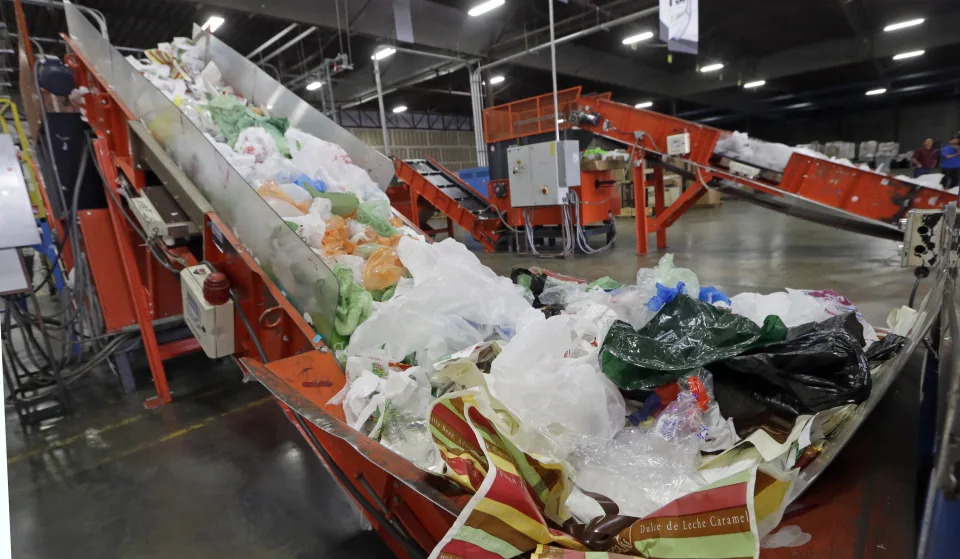
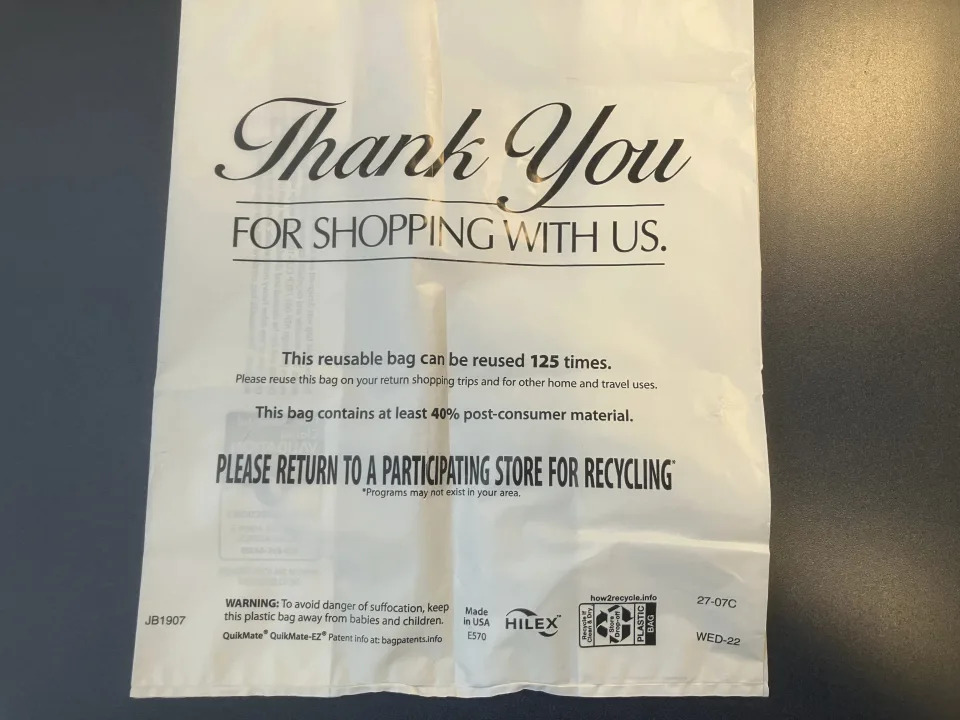
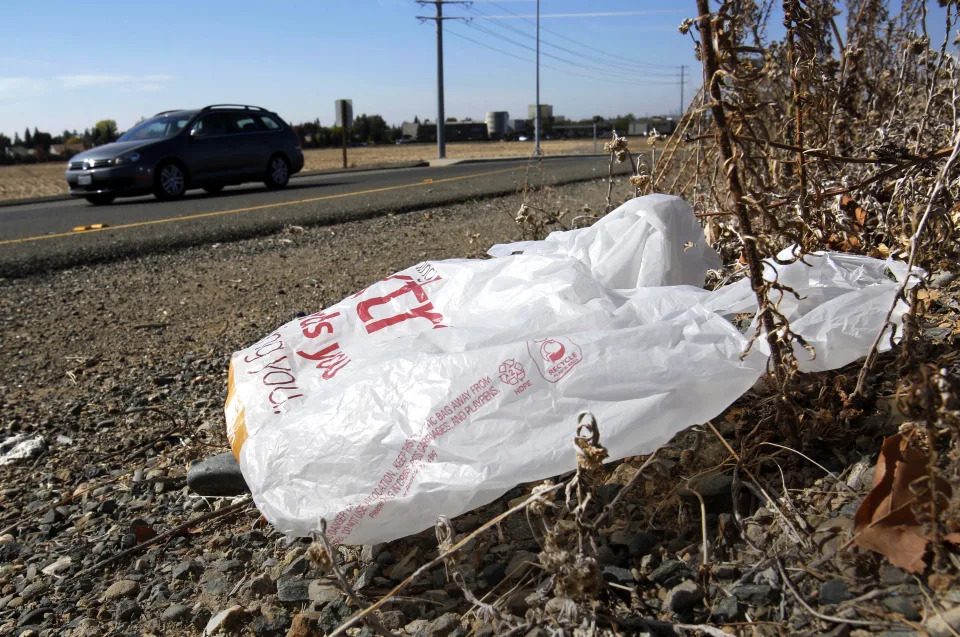
FILE-This Friday, Jan. 24, 2014 file photo conveyors carry mixed plastic into a device that will shred recycle them at a plastics recycling plant in Vernon, Calif. California in 2014 enacted the nation’s first ban on single-use plastic shopping bags. But in 2022, state Attorney General Rob Bonta says consumers who think they’re helping the environment with reusable plastic bags had better think again. He says manufacturers can’t back up their claim that the thicker, more durable bags are recyclable in California. (AP Photo/Reed Saxon, File)This undated photo shows a plastic bag, in Los Angeles. California in 2014 enacted the nation’s first ban on single-use plastic shopping bags. But state Attorney General Rob Bonta says the thicker, reusable plastic bags that many retailers now use may not be recyclable as required by law. (AP Photo/John Antczak)In this Oct. 25, 2013, file photo, a plastic bag sits along a roadside in Sacramento, Calif. California in 2014 enacted the nation’s first ban on single-use plastic shopping bags. But in 2022, state Attorney General Rob Bonta says consumers who think they’re helping the environment with reusable plastic bags had better think again. He says manufacturers can’t back up their claim that the thicker, more durable bags are recyclable in California. (AP Photo/Rich Pedroncelli, File)
SACRAMENTO, Calif. (AP) — Since California adopted the nation’s first ban on single-use plastic shopping bags tin 2014, most grocery stores have turned to thicker, reusable plastic bags that are supposed to be recyclable.
But Attorney General Rob Bonta is now investigating whether the bags are truly recyclable as required by law.
“We’ve all been to the store and forgotten to bring our reusable bags,” Bonta said recently. “At least the plastic bags we buy at the register for 10 cents have those ‘chasing arrows’ that say they are 100% recyclable, right? Perhaps wrong.”
He asked six bag manufacturers to back up their claims that the bags can be recycled and threatened legal action that could include banning the bags temporarily or issuing multimillion-dollar fines.
His office declined to say last week how many of the companies responded, citing an ongoing investigation. The American Chemistry Council, a plastics industry group, said that manufacturers disagree with Bonta’s characterization.
Other states, including New York, New Jersey and Oregon, have followed California in banning single-use plastic bags. Beyond California, only a handful of states require that stores take back plastic bags for recycling, with Maine first adopting such a law in 1991, according to the National Conference of State Legislatures.
Policy experts and advocates estimate that just 6% of plastics are recycled in the United States, with the remaining burned, trashed or littered. More plastic bags ended up in California landfills in 2021 compared with 2018, according to data from the state’s recycling department.
Californians Against Waste Executive Director Mark Murray in part blames pandemic policies.
Consumers are supposed to be able to return their plastic bags to grocery stores and other retailers. But many removed their bag recycling bins during the early days of the pandemic, fearing contamination.
For the system to work, retailers must collect the bags and sell them back to manufacturers for use in making new bags that must include 40% recycled content and be reusable at least 125 times. Murray suspects that most are reused once.
“That’s not meeting the standard and it may be time to phase these bags out,” he said.
The California Retailers Association declined comment because it said each retailer has its own policy, and the California Grocers Association did not respond to a request for comment.
As of now, makers of the bags get to self-certify to the state that their bags can be recycled. But Bonta said that requires a comprehensive system to collect, process and sell the used bags, none of which exist. Putting the bags in most curbside recycling bins interferes with recycling other products by clogging equipment and increasing the risk of worker injury, he said.
Plastic bags and similar products are “a top form of contamination in curbside recycling bins,” California’s Statewide Commission on Recycling Markets and Curbside Recycling wrote in a 2021 report.
Bonta asked six manufacturers — Novolex, Revolution, Inteplast, Advance Polybag, Metro Polybag and Papier-Mettler — to prove their bags can be recycled in California. His office hasn’t said if they all responded, citing an “active and ongoing investigation.”
Revolution Chief Executive Sean Whiteley said the company has been recycling more than 300 million pounds of plastic material annually for decades and is “confident in our own sustainability and compliance record.”
He noted lawmakers publicly introduced the single-use bag ban legislation in 2014 at one of the company’s Southern California subsidiaries.
“At our core, we are an environmental recycling company that also makes sustainable plastic solutions,” he said in a statement.
Novolex said it is “committed to complying with all state laws and regulations.” The company responded to Bonta’s request but declined to share its full response with The Associated Press, a spokesman said.
Novolex’s bags have been certified as eligible for recycling by an independent laboratory and, therefore, must be marked that way, the company said in a statement.
The other four companies did not respond to multiple emailed requests.
Manufacturers are “aggressively working so that all plastic packaging that is manufactured is remade into new plastics,” said Joshua Baca, vice president of plastics at the American Chemistry Council.
It’s not Bonta’s first plastics-related clash with industry. Earlier this year he subpoenaed ExxonMobil as part of what he called a first-of-its-kind broader investigation into the petroleum industry and the proliferation of plastic waste.
Thompson recently retired from The Associated Press.
Russia fires dozens of missiles across several Ukrainian cities
Niamh Cavanagh, Reporter – December 29, 2022
Local resident Yana embraces a friend as they stand next to her mother’s house, which was damaged during a Russian missile strike in Kyiv on Thursday. (Valentyn Ogirenko/Reuters)
LONDON — Ukraine faced a barrage of missiles on Thursday morning in one of the biggest bombardments the country has faced since Russia invaded earlier this year.
According to Oleksii Gromov, a Ukrainian general, Russia launched more than 69 missiles “aimed at critical and energy infrastructure.” Of the dozens launched, 54 were shot down by Ukraine’s air defenses, he said.
Yasin Demirci/Anadolu Agency via Getty Images
Three people in the capital, Kyiv, were hospitalized following the explosions, including a 14-year-old girl. Mayor Vitali Klitschko said that 40% of the city was left without power due to the strikes. “Charge your phones and other devices,” he wrote on Telegram via translation. “Stock up on water.” He added that engineers were working on restoring power back to the capital.
In the south, missiles were shot down in the regions of Mykolaiv and Odesa. Meanwhile, several explosions were reported in the western city of Lviv. No casualties were immediately reported.
Rescuers clear debris of homes destroyed by a missile attack in the outskirts of Kyiv. (Genya Savilov/AFP via Getty Images)
Ukraine’s foreign minister hit out at Russia for launching missiles during the holidays, describing it as “senseless barbarism.” Earlier Thursday, presidential adviser Mykhailo Podolyak said that more than 120 missiles had been launched.
Neighboring Belarus’s Defense Ministry said it had downed a Ukrainian missile on Thursday morning. The S-300 Soviet-era air defense missile was shot down near the village of Harbacha, just 9 miles from the border with Ukraine. Oleg Konovalov, a military official, played down the strike, stating that it was “absolutely nothing to worry about. Unfortunately, these things happen.”
People take shelter inside a metro station during massive Russian missile attacks in Kyiv on Thursday. (Viacheslav Ratynskyi/Reuters)
Similarly in November, an S-300 that accidentally landed in NATO member Poland, leaving two people dead, was likely fired by Ukrainian air defense. The missile sparked fear that there had been an escalation in tensions.
Russia has upped its airstrikes on Ukraine since October when the Kerch Strait Bridge, which connects the peninsula of Crimea to mainland Russia, was targeted. The bridge was partially damaged after a truck exploded. Russia blamed Ukrainian intelligence for the attacks and has made several arrests since the explosion.
A search and rescue worker is seen sitting amid debris following the missile attacks across Ukraine. (Mustafa Ciftci/Anadolu Agency via Getty Images)
What’s going on with the Greenland ice sheet? It’s losing ice faster than forecast and now irreversibly committed to at least 10 inches of sea level rise
Alun Hubbard, Arctic Five Chair, University of Tromsø – December 28, 2022
A turbulent melt-river pours a million tons of water a day into a moulin, where it flows down through the ice to ultimately reach the ocean. Ted Giffords
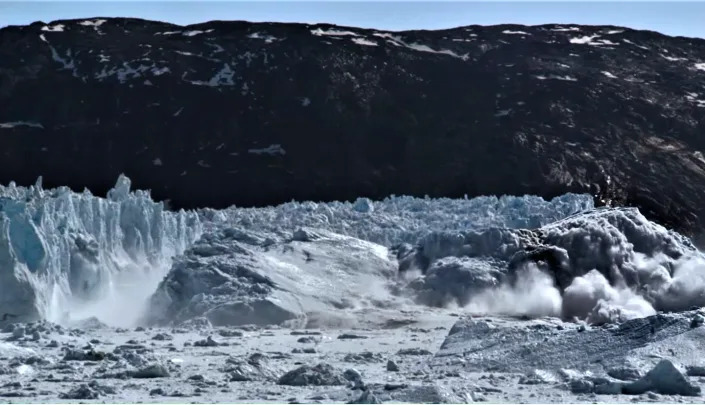
I’m standing at the edge of the Greenland ice sheet, mesmerized by a mind-blowing scene of natural destruction. A milewide section of glacier front has fractured and is collapsing into the ocean, calving an immense iceberg.
Seracs, giant columns of ice the height of three-story houses, are being tossed around like dice. And the previously submerged portion of this immense block of glacier ice just breached the ocean – a frothing maelstrom flinging ice cubes of several tons high into the air. The resulting tsunami inundates all in its path as it radiates from the glacier’s calving front.
A fast-flowing outlet glacier calves a ‘megaberg’ into Greenland’s Uummannaq Fjord. Alun Hubbard
Despite the spectacle, I’m keenly aware that this spells yet more unwelcome news for the world’s low-lying coastlines.
As a field glaciologist, I’ve worked on ice sheets for more than 30 years. In that time, I have witnessed some gobsmacking changes. The past few years in particular have been unnerving for the sheer rate and magnitude of change underway. My revered textbooks taught me that ice sheets respond over millennial time scales, but that’s not what we’re seeing today.
A study published Aug. 29, 2022, demonstrates – for the first time – that Greenland’s ice sheet is now so out of balance with prevailing Arctic climate that it no longer can sustain its current size. It is irreversibly committed to retreat by at least 59,000 square kilometers (22,780 square miles), an area considerably larger than Denmark, Greenland’s protectorate state.
Even if all the greenhouse gas emissions driving global warming ceased today, we find that Greenland’s ice loss under current temperatures will raise global sea level by at least 10.8 inches (27.4 centimeters). That’s more than current models forecast, and it’s a highly conservative estimate. If every year were like 2012, when Greenland experienced a heat wave, that irreversible commitment to sea level rise would triple. That’s an ominous portent given that these are climate conditions we have already seen, not a hypothetical future scenario.
Our study takes a completely new approach – it is based on observations and glaciological theory rather than sophisticated numerical models. The current generation of coupled climate and ice sheet models used to forecast future sea level rise fail to capture the emerging processes that we see amplifying Greenland’s ice loss.
How Greenland got to this point
The Greenland ice sheet is a massive, frozen reservoir that resembles an inverted pudding bowl. The ice is in constant flux, flowing from the interior – where it is over 1.9 miles (3 kilometers) thick, cold and snowy – to its edges, where the ice melts or calves bergs.
In all, the ice sheet locks up enough fresh water to raise global sea level by 24 feet (7.4 meters).
We are currently enjoying an interglacial period – the Holocene. For the past 6,000 years Greenland, like the rest of the planet, has benefited from a mild and stable climate with an ice sheet in equilibrium – until recently. Since 1990, as the atmosphere and ocean have warmed under rapidly increasing greenhouse gas emissions, Greenland’s mass balance has gone into the red. Ice losses due to enhanced melt, rain, ice flow and calving now far exceed the net gain from snow accumulation.
What does the future hold?
The critical questions are, how fast is Greenland losing its ice, and what does it mean for future sea level rise?
This net loss is split between surface melt and dynamic processes that accelerate outlet glacier flow and are greatly exacerbated by atmospheric and oceanic warming, respectively. Though complex in its manifestation, the concept is simple: Ice sheets don’t like warm weather or baths, and the heat is on.
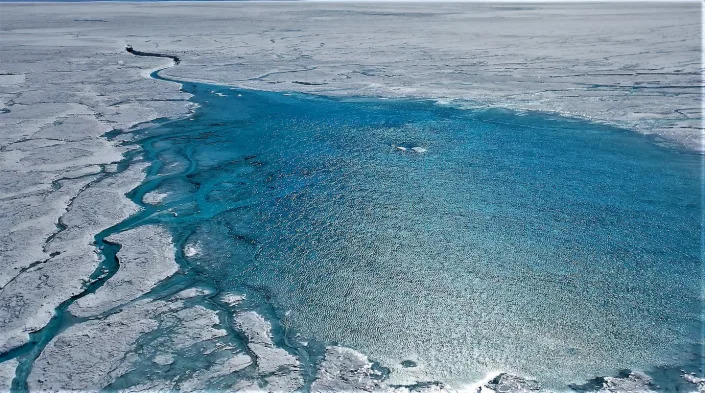
Meltwater lakes feed rivers that snake across the ice sheet – until they encounter a moulin. Alun Hubbard
According to our findings, Greenland will lose at least 3.3% of its ice, over 100 trillion metric tons. This loss is already committed – ice that must melt and calve icebergs to reestablish Greenland’s balance with prevailing climate.
We’re observing many emerging processes that the models don’t account for that increase the ice sheet’s vulnerability. For example:
In August 2021, rain fell at the Greenland ice sheet summit for the first time on record. Weather stations across Greenland captured rapid ice melt. European Space Agency
Part of the problem is that the models used for forecasting are mathematical abstractions that include only processes that are fully understood, quantifiable and deemed important.
Models reduce reality to a set of equations that are solved repeatedly on banks of very fast computers. Anyone into cutting-edge engineering – including me – knows the intrinsic value of models for experimentation and testing of ideas. But they are no substitute for reality and observation. It is apparent that current model forecasts of global sea level rise underestimate its actual threat over the 21st century. Developers are making constant improvements, but it’s tricky, and there’s a dawning realization that the complex models used for long-term sea level forecasting are not fit for purpose.
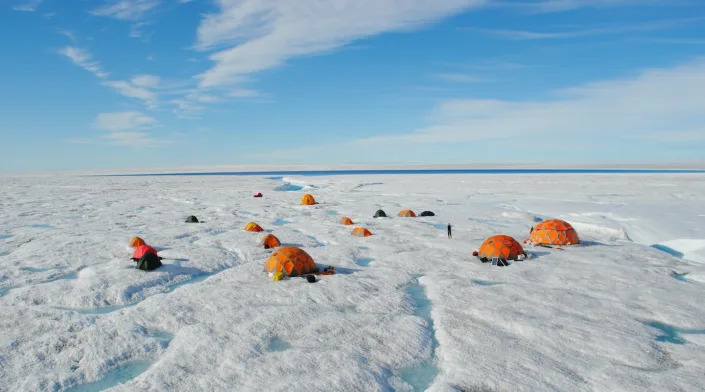
Author Alun Hubbard’s science camp in the melt zone of the Greenland ice sheet. Alun Hubbard
There are also “unknown unknowns” – those processes and feedbacks that we don’t yet realize and that models can never anticipate. They can be understood only by direct observations and literally drilling into the ice.
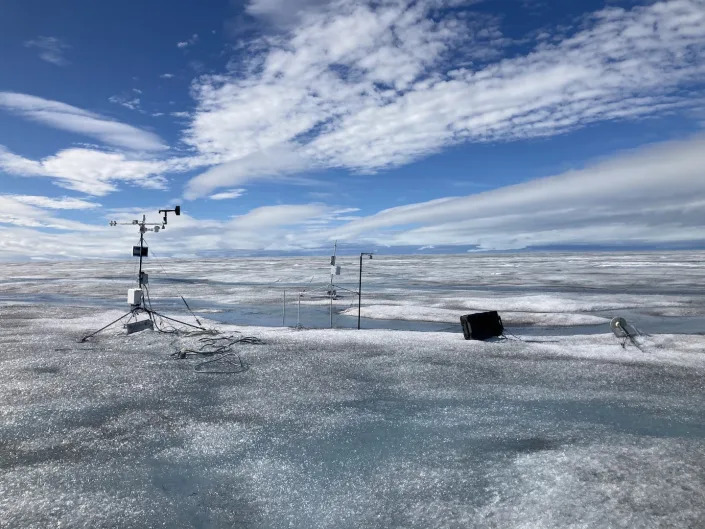
That’s why, rather than using models, we base our study on proven glaciological theory constrained by two decades of actual measurements from weather stations, satellites and ice geophysics.
It’s not too late
It’s an understatement that the societal stakes are high, and the risk is tragically real going forward. The consequences of catastrophic coastal flooding as sea level rises are still unimaginable to the majority of the billion or so people who live in low-lying coastal zones of the planet.
A large tabular iceberg that calved off Store Glacier within Uummannaq Fjord. Alun Hubbard
Personally, I remain hopeful that we can get on track. I don’t believe we’ve passed any doom-laden tipping point that irreversibly floods the planet’s coastlines. Of what I understand of the ice sheet and the insight our new study brings, it’s not too late to act.
But fossil fuels and emissions must be curtailed now, because time is short and the water rises – faster than forecast.
Southwest Airlines grew to become the US’s largest domestic carrier by offering free checked baggage, easy-to-change tickets — and still sticks to unassigned seats
Taylor Rains – December 28, 2022
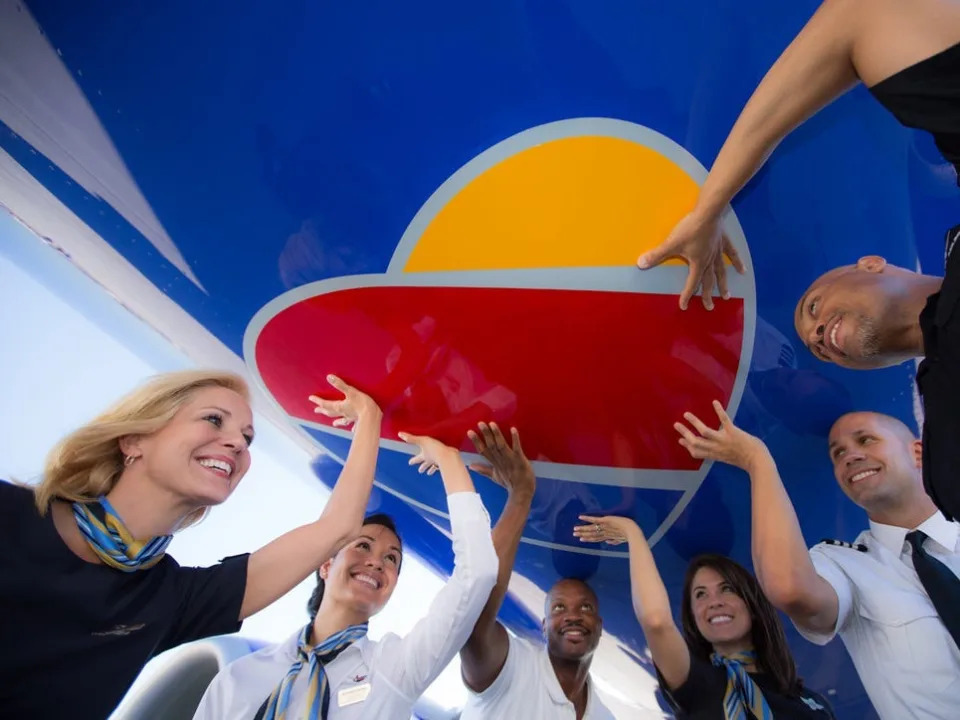
Southwest Airlines flight attendants in an undated historic picture.Southwest Airlines
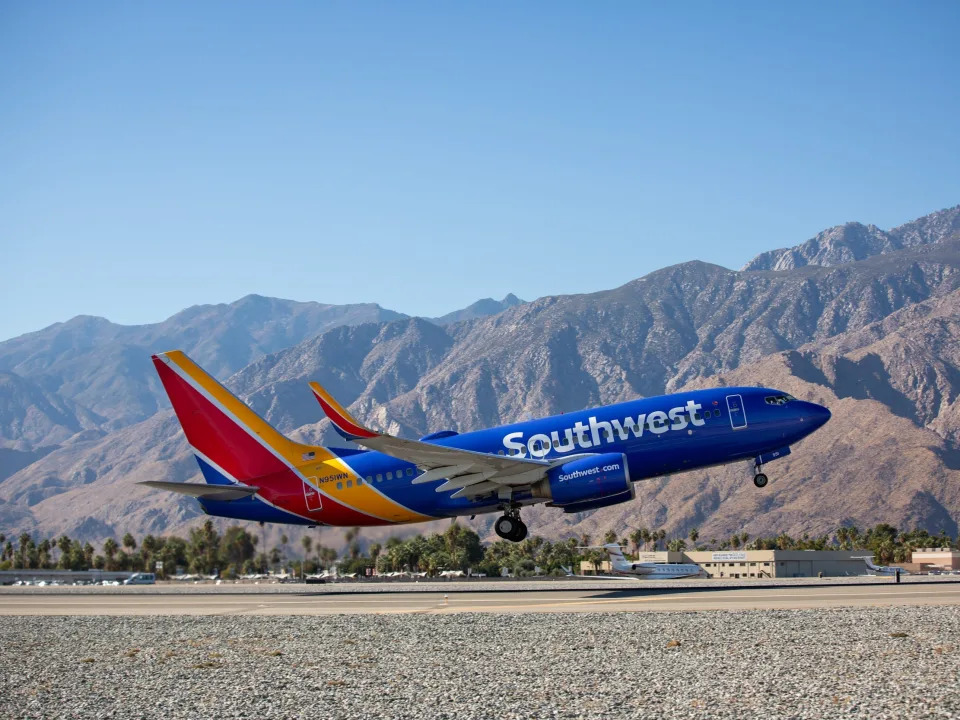
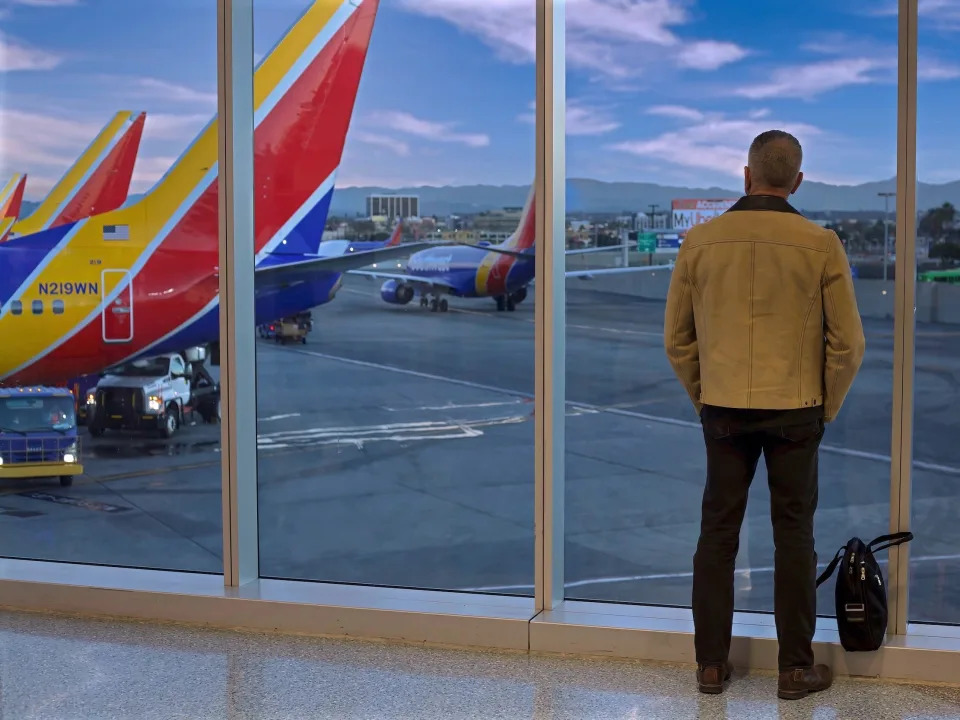
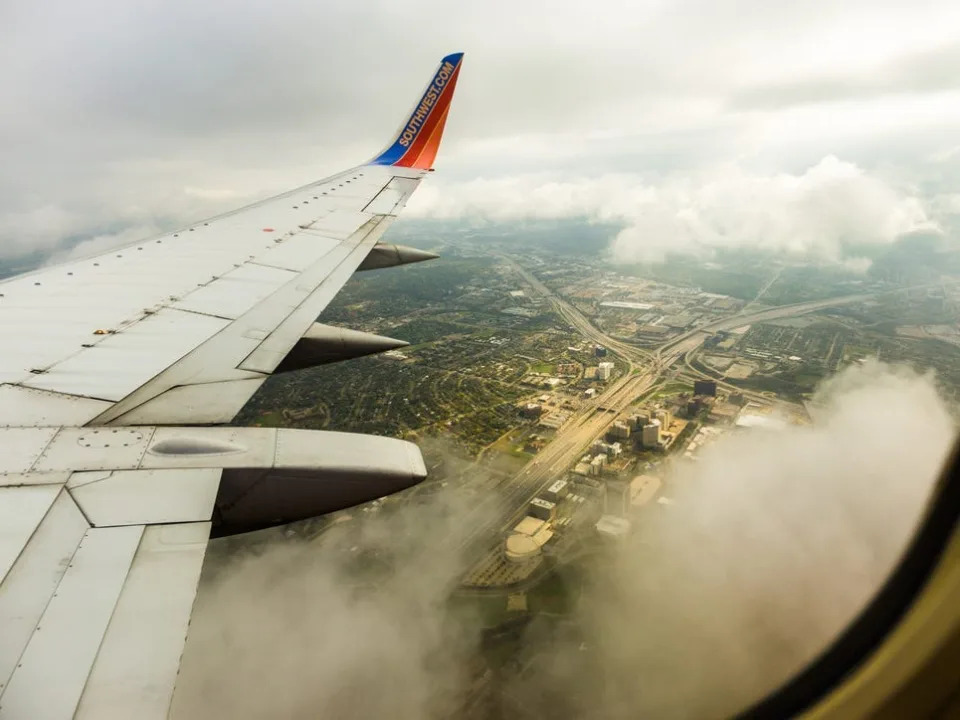
Southwest Airlines, the US’s largest domestic carrier, experienced an operations meltdown in this holiday season.
Despite its problems, Southwest celebrates its customer- and employee-focused mission.
The airline found success using unconventional marketing strategies focused on humor, booze, arm wrestling, and go-go boots.
Southwest Airlines is the US’s largest domestic carrier, serving over 100 destinations across the country. The carrier has been in operation since 1971 and just celebrated its 51st anniversary in June.
Stephen M. Keller/Southwest Airlines
With Southwest’s immense size, it has a lot of systems at play to keep it running efficiently and on time. But, sometimes a nasty winter storm can derail even the best carrier’s operations.
Elliott Cowand Jr/Shutterstock
But, Southwest suffered from more than just the weather in the holiday season of 2022.
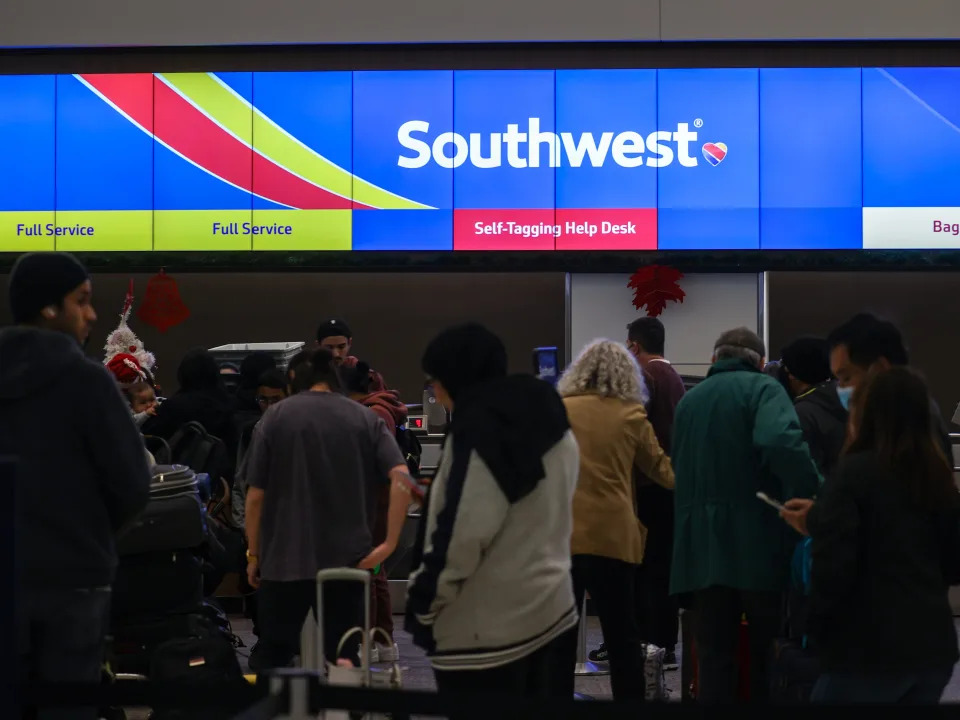
Canceled flight travelers line up in front of Southwest Airlines sign at Denver International Airport.Hyoung Chang/Getty Images
Captain Mike Santoro, vice president of the Southwest Airlines Pilots Association, told Insider the storm was the catalyst of the meltdown, but “outdated” scheduling software created the snowball.
Southwest confirmed to Insider that its systems were unable to handle the “magnitude” of disruptions, which amounted to over 7,000 from Christmas to December 28 alone.
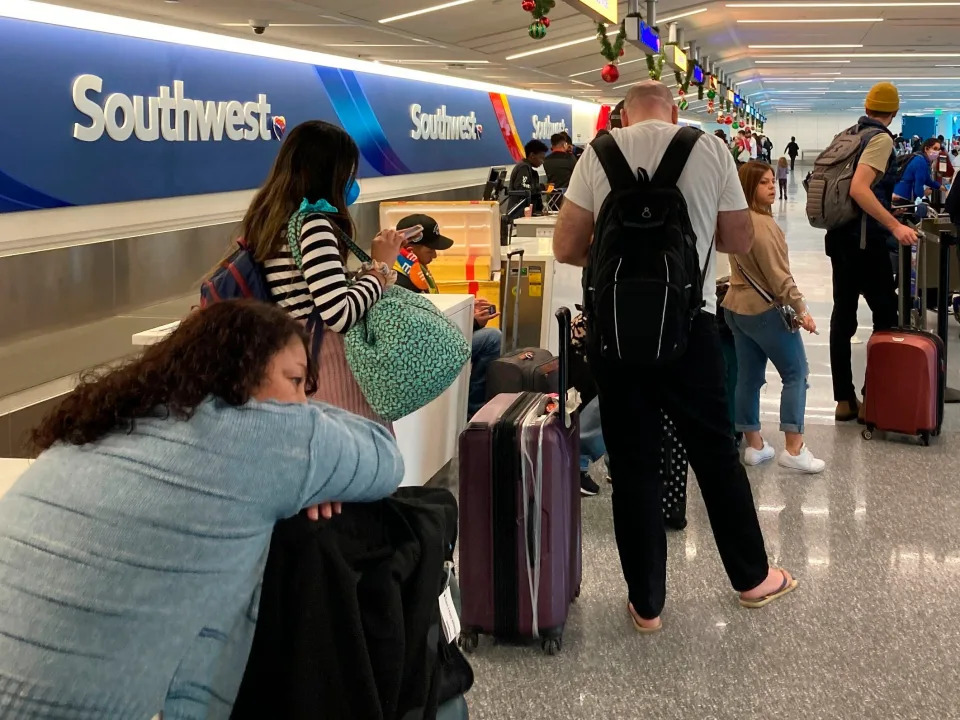
Travelers wait at a Southwest Airlines baggage counter to retrieve their bags after canceled flights at Los Angeles International Airport on December 26, 2022.Eugene Garcia/AP Photo
The company acknowledged its software needs an update, with a spokesperson saying, “we are focused on making investments in technology upgrades to work toward that solution.”
Passengers line up at the Southwest ticket desk at San Francisco International Airport on December 26, amid widespread delays and cancellations for the airline.Tayfun Coskun/Anadolu Agency via Getty Images
Despite its operations issues in the holiday season of 2022, Southwest prides itself on being a customer- and employee-focused airline, bringing “LUV” to its operation, and keeping safety, hospitality, and customer service at the forefront of its mission. (LUV is its stock symbol.)
Southwest Airlines
According to financial information company BrightScope, Southwest has one of the highest-rated employee 401k plans. Meanwhile, J.D. Power reported in May that customers ranked Southwest as having the best economy product in North America.
The grieving owner is planning to sue the airline.MARK RALSTON/AFP via Getty Images
Haley Woods, founder of Girls LOVE Travel — a Facebook group with over one million members — told Insider that when her flight was canceled over the holiday week, she encountered the most “professional” and “upbeat” Southwest employees.
V_E/Shutterstock
“While this disruption might derail others from using SWA in the future — their customer kindness has reminded me that I will absolutely be looking past this and onward for future adventures,” she said.
Passengers wait in line to check in for their flights at Southwest Airlines service desk at LaGuardia Airport, Tuesday, Dec. 27, 2022, in New York.Yuki Iwamura/AP
While it’s could still lose some trust from customers, Southwest is likely to eventually bounce back. See how the airline has grown over the years to be the powerhouse it is today.
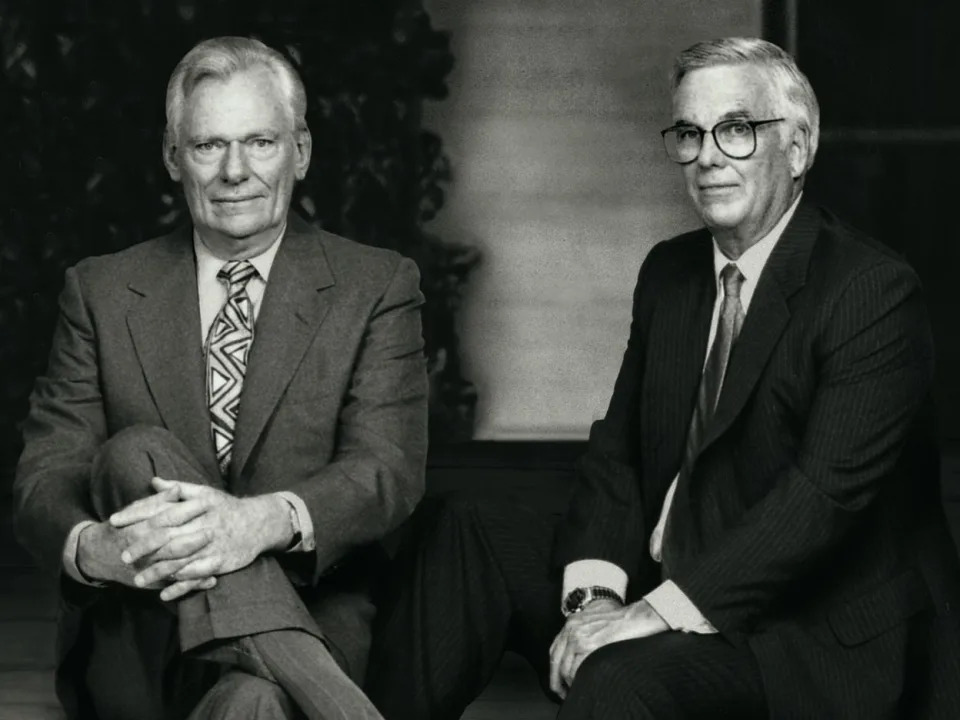
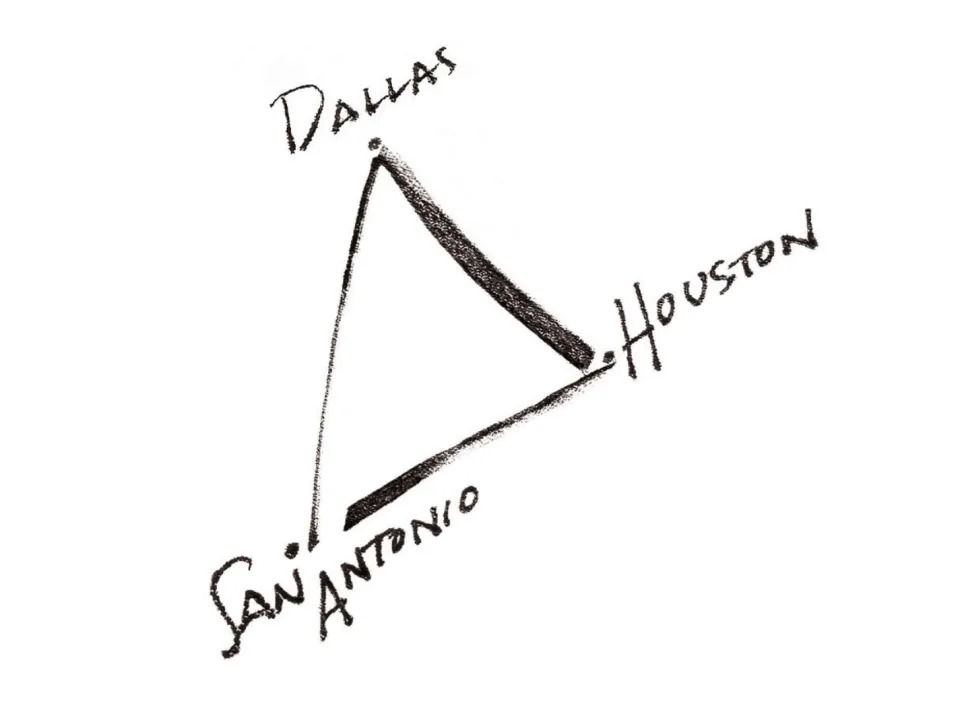
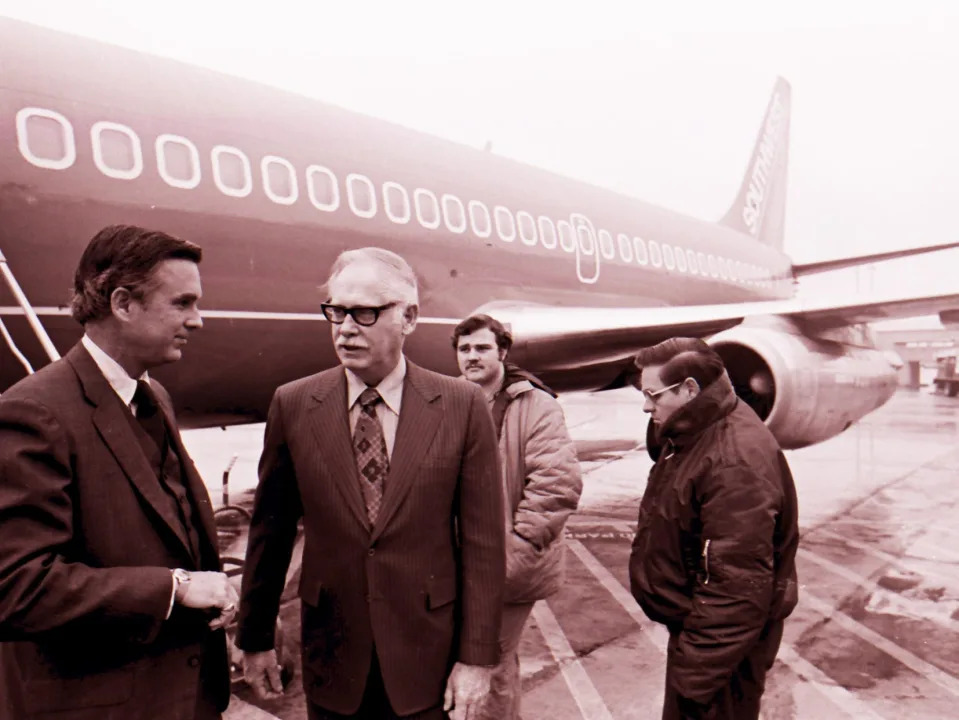
Southwest started as a small carrier based in Texas and only operated intra-state routes between three cities, San Antonio, Houston, and Dallas. The airline, which was originally called Air Southwest, was dreamt up by Rollin King and Herb Kelleher on a cocktail napkin in 1966.
Herb Kelleher (left) and Rollin King (right)Southwest Airlines
King mapped the network he envisioned, making a triangle between the three key cities. He explained to Kelleher that operating solely in Texas would make the company exempt from the Civil Aeronautics Board’s federal regulations, which controlled fares, routes, and schedules.
Rollin King’s “Texas Triangle”Southwest Airlines
From 1938 to 1978, the airline industry was federally regulated under the CAB as means to ensure major carriers like United and Pan Am were profitable. Fares were sky-high and only business travelers and deep-pocket leisure customers could afford the luxury of flight. The downside was that a lot of the time, planes flew half-empty.
Because Air Southwest was certified under the state’s aviation regulator, the Texas Aeronautics Commission, it was not bound to federal rules — a clever loophole King unapologetically copied from California carrier Pacific Southwest Airlines.
Rollin KingSouthwest Airlines
The loophole allowed Air Southwest to fly freely in Texas and undercut competitors’ fares, offering more customers the option to fly instead of drive in the large state. The business model was game-changing and a threat to legacy airlines.
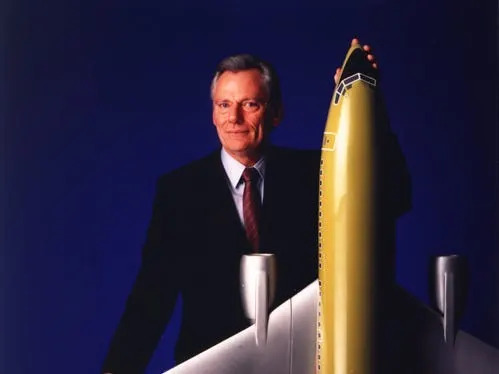
Herb Kelleher with model of Southwest aircraftSouthwest Airlines
In 1967, three airlines operating under federal rules, Braniff, Trans-Texas Airways, and Continental Airlines, took legal action against Air Southwest, saying it does not have the right to fly in Texas.
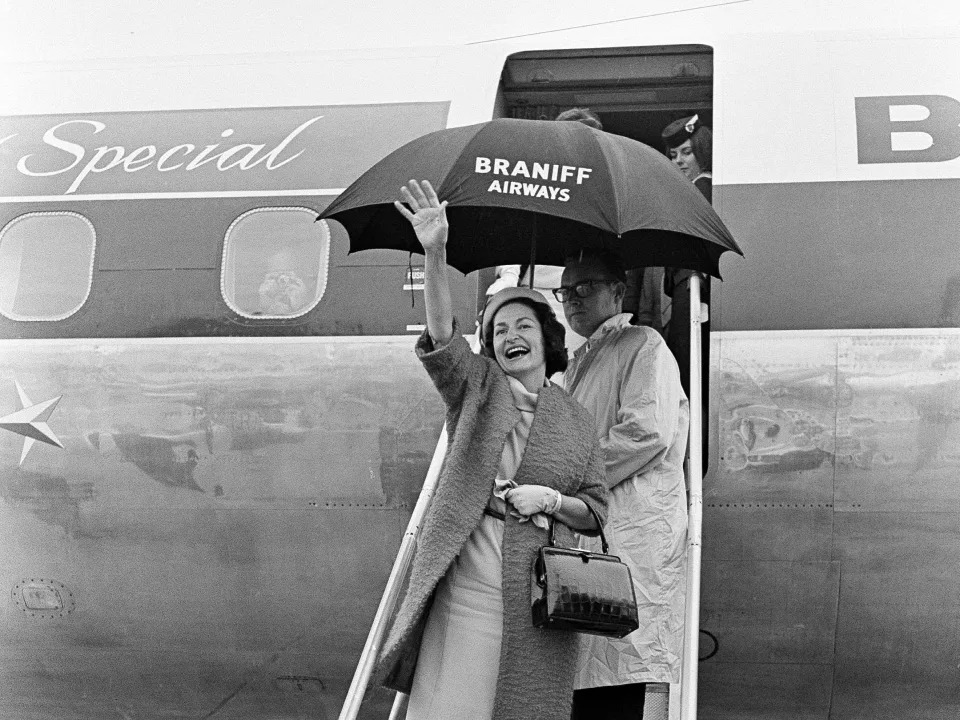
Lady Bird Johnson, wife of President Lyndon Johnson, steps off Braniff Airways jetHarvey Georges/Associated Press
The lawsuit took three years to resolve, and in 1970, the Texas Supreme Court ruled Air Southwest could fly in the state. The three airlines then took the case to the US Supreme Court, which declined to review it.
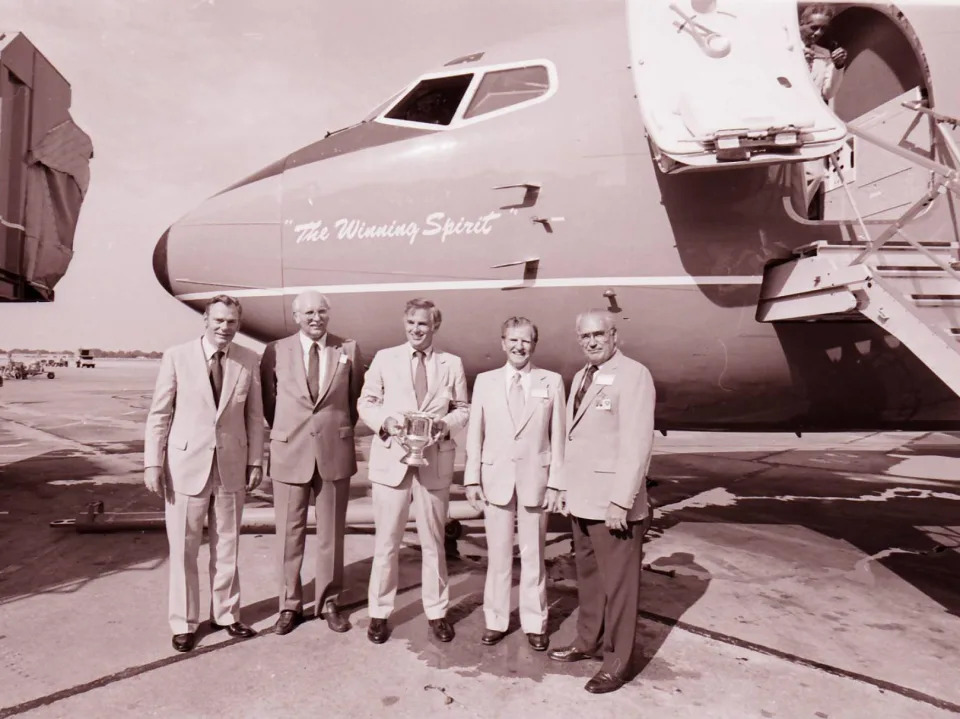
Herb Kelleher (left) Lamar Muse (second from left) and Rollin King (center)Southwest Airlines
Air Southwest’s right to fly in Texas was finalized in December of 1970. The carrier officially changed its name to Southwest Airlines in 1971 and commenced operations on June 18 of the same year.
Southwest flight attendant points to schedule Southwest Airlines
The carrier launched with two routes from Dallas Love Field to Houston and San Antonio using three new Boeing 737-200 aircraft. Flights between Houston and San Antonio commenced in November 1971.
Southwest Airlines Boeing 737-2T4 at Los Angeles International Airport in 1991.Torsten Maiwald/Airliners.net
Part of Southwest’s immense success was due to Kelleher’s focus on unconventional marketing and unique corporate culture.
Herb Kelleher on Southwest tail Southwest Airlines
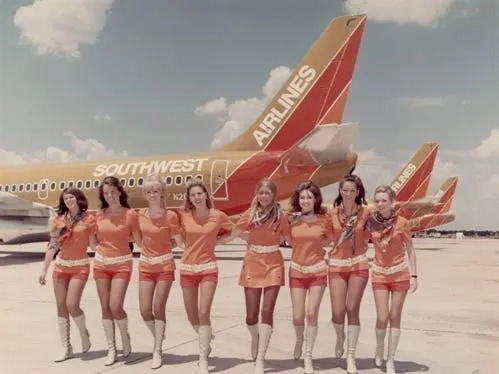
Kelleher used Pacific Southwest Airways’ idea of “Long Legs And Short Nights” for hostesses, as they were called at the time, keeping with the theme of hiring attractive women to work Southwest flights.
Southwest Airlines flight attendants in an undated historic picture.Southwest Airlines
The airline’s first flight attendants were described as long-legged dancers and were handpicked by a committee that included the same individual who picked the hostess on Hugh Hefner’s Playboy jet.
Southwest Airlines first flight attendant uniformsSouthwest Airlines
Kelleher dressed the flight attendants in a bright orange top, orange hot pants, a white belt around the hips, and white side-laced go-go boots. He also pushed for a laid-back, casual inflight experience and only hired female hostesses who were fun, engaging, and had a sense of humor.
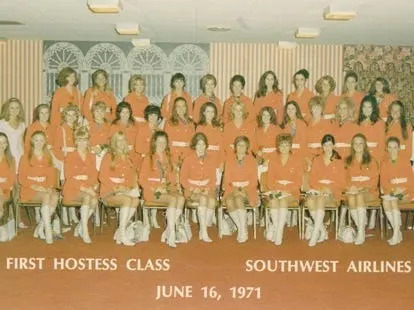
First Southwest Airlines hostess classSouthwest Airlines
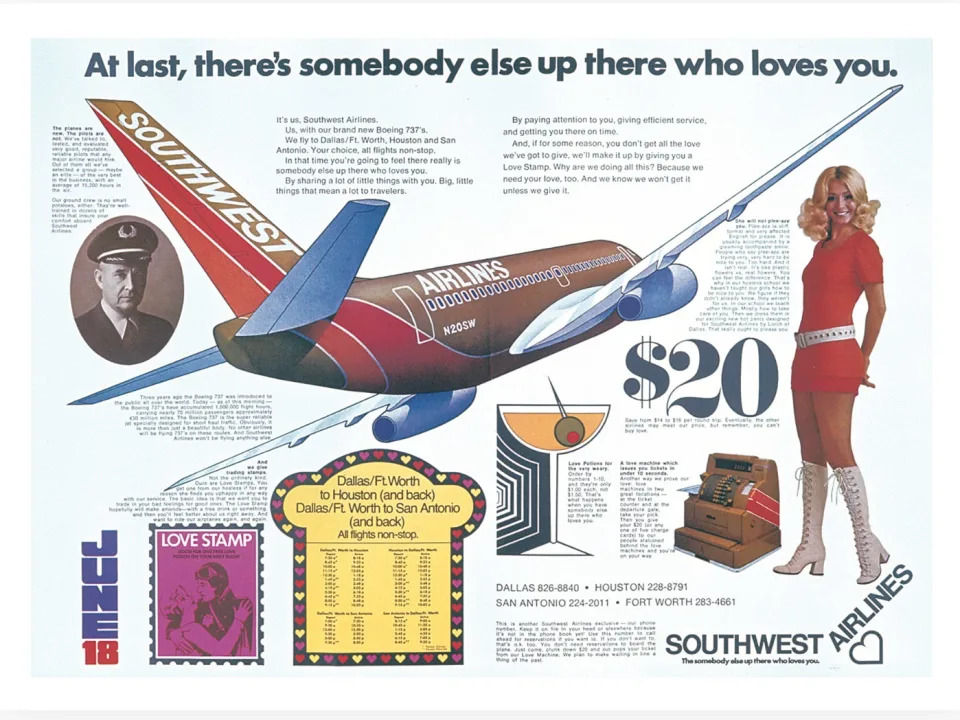
Kelleher continued the playboy theme by creating a “love” culture at Southwest. The carrier was called the “love airline,” automatic ticket dispensers were “love machines,” inflight snacks were “love bites,” and drinks were “love potions.”
The airline also crafted its own special inflight cocktails, which were free for passengers. A few were appropriately named Kentucky Matchmaker, the Pucker Potion, and the Lucky Lindsay.
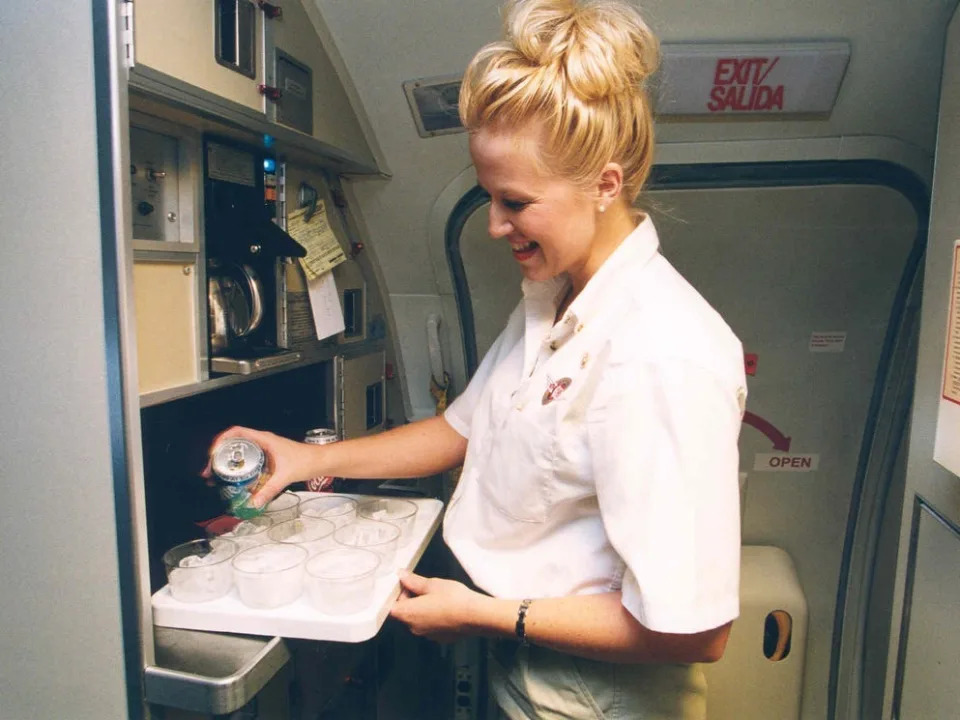
Southwest Airlines flight attendant preparing beverage orders in the galleySouthwest Airlines
He even went on to create ads centered around humor and attractive women. In the context of the 1970s, using attractive female flight attendants to gain customers was an industry norm.
A 1968 photo of three flight attendants for Southwest AirlinesAlan Band/Keystone/Getty Images
In 1972, Southwest made a game-changing, innovative marketing move. The company introduced the “two-tier” fare system, which established two separate price points aimed at different types of travelers.
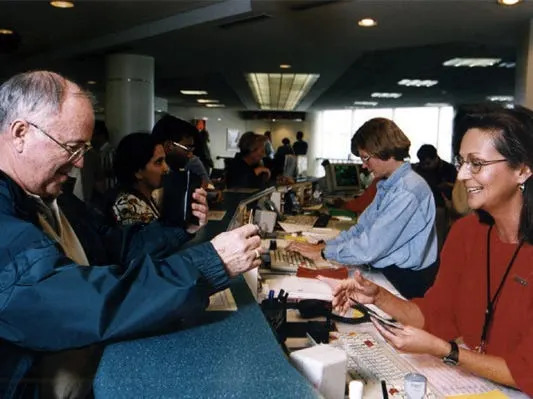
A Southwest Airlines Customer Service Agent checks in a Customer at the gateDavid Woo/Southwest Airlines
The fares were the regularly priced “Executive Class Service” at $26 one-way and the “Pleasure Class” at $13 one-way or $25 roundtrip. “Pleasure Class” fares were available after 6:59 p.m. on weekdays and all day Saturday and Sunday.
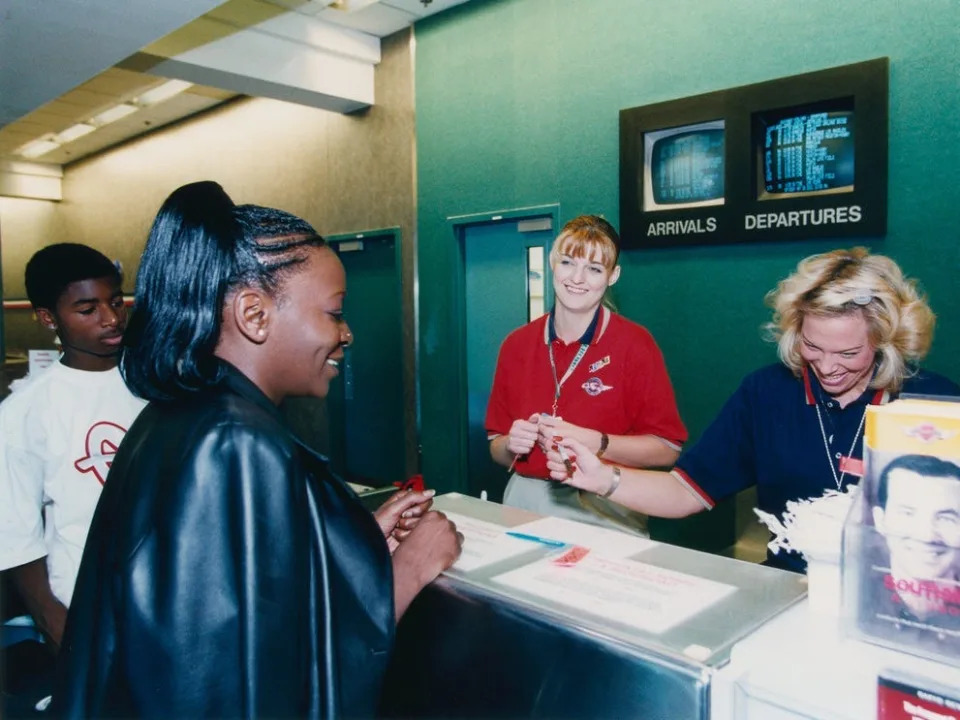
Southwest airlines customer service agents with customers at the ticket counterSouthwest Airlines
The two-tier structure was a wild success, with Southwest increasing its average passenger load from 17 before the move to 75 after.
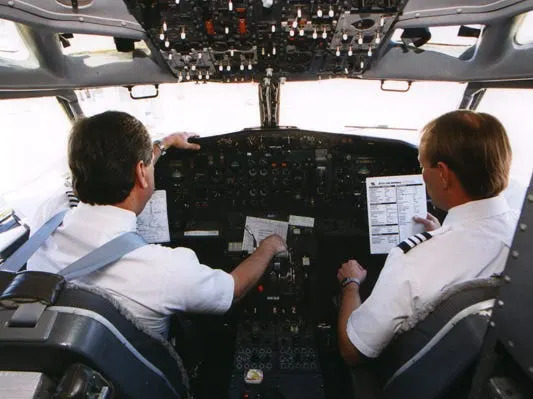
Southwest pilots Southwest Airlines
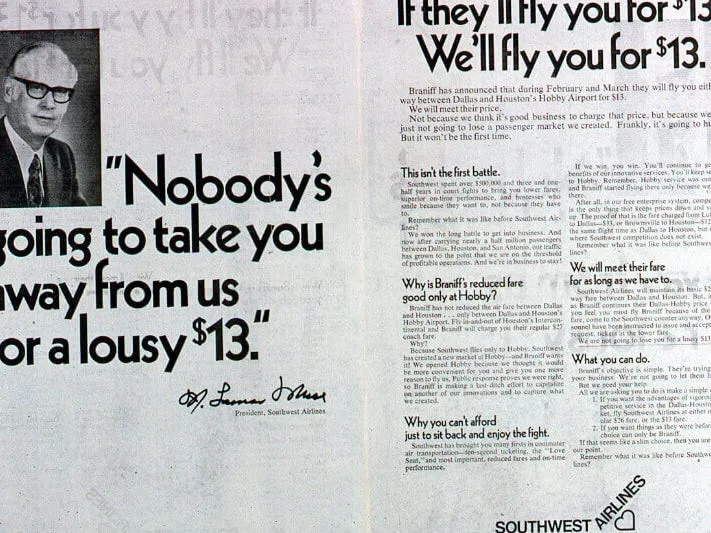
In 1973, the company launched a $13 one-way “half-fare” sale on all flights to San Antonio. Southwest’s rival, Braniff, responded with its own “get acquainted sale” with $13 fares between Dallas and Houston. This was the start of the $13 Fare War.
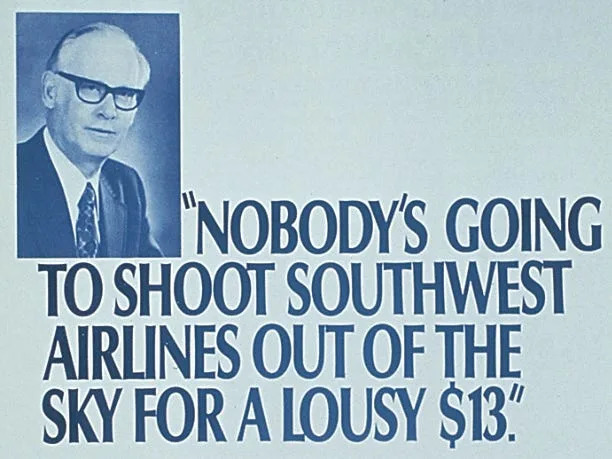
Southwest’s ad declaring war against Braniff’s fare cut Southwest Airlines
Southwest knew $13 fares on its only profitable route would run it straight into bankruptcy, so King quickly came up with a marketing campaign that would put Southwest on top. “Nobody’s going to shoot Southwest out of the sky for a lousy $13,” read the bold ad.
Southwest ad against Braniff’s $13 fare war Southwest Airlines
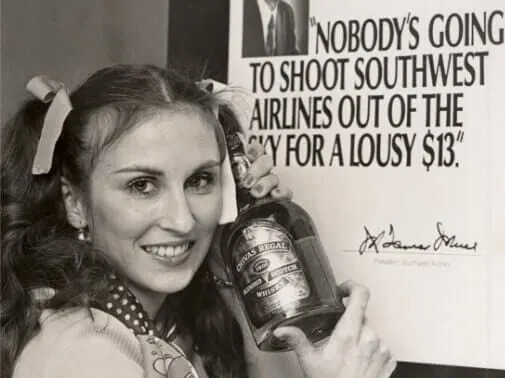
Southwest matched Braniff’s fare between Dallas and Houston, which was met with praise and respect from customers. As part of the campaign, the airline also offered a free fifth of liquor for passengers who paid the full $26 fare.
Ticket agent poses with a bottle of Chivas Regal in front of adSouthwest Airlines
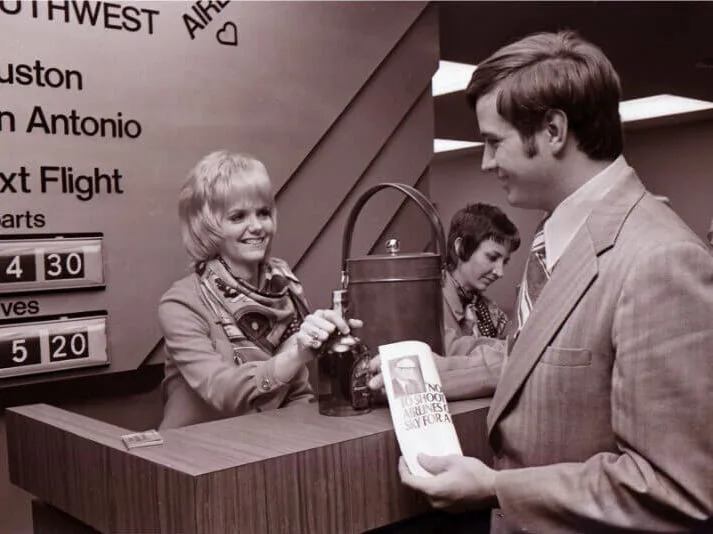
Business travelers loved the promotion, and lucky for Southwest, three-fourths of its customers opted to pay full price and pocket the free booze. The airline soon became a fan favorite among many Texas business communities, and Braniff was fuming.
Southwest customer holding advertisement and receiving free liquor Southwest Airlines
By the end of 1973, Southwest finally turned its first profit and would continue to profit for 47 years until the coronavirus pandemic ended the streak. Meanwhile, Braniff lost the battle and the war, ceasing operations in 1982.
Braniff Airways aircraft in PeruCarl & Ann Purcell/Getty Images
Southwest’s early challenges did not end with Braniff. In 1964, the Civil Aeronautics Board demanded the city of Dallas build an airport to serve the entire Dallas/Fort Worth area. In 1968, every air carrier operating out of Love Field agreed to move to DFW when it opened in 1974.
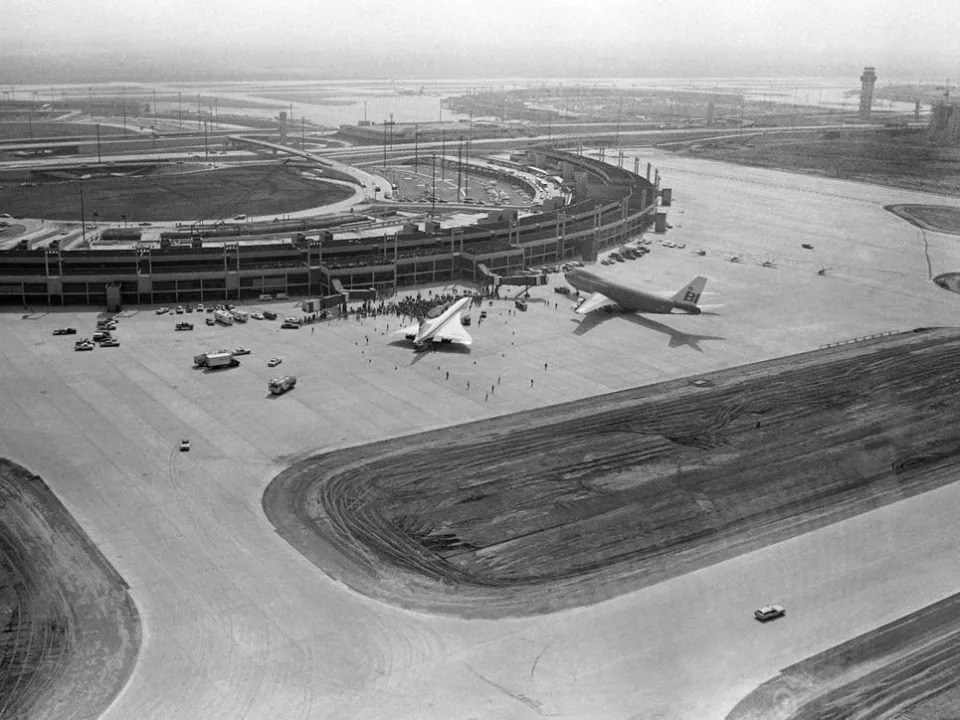
British Airways Concord at DFW in 1973 after the airport was finished-/AFP via Getty Images
However, Southwest was not a part of that agreement and filed suit that it would not move from Love Field when the new airport opened. The airline claimed there was no legal reason to end commercial traffic at Love Field and that the company made no written agreement to move its operations.
Concord and Boeing 747 at DFW after the airport’s completion in 1973-/AFP via Getty Images
The city and the DFW Airport Board sued Southwest, saying the CAB rule applied to the airline even if it was made before Southwest was officially founded. However, Southwest argued that its intra-state flights fell outside the jurisdiction of the CAB, so it did not have to leave Love Field.
Opening day of new Love Field terminal in 2013Southwest Airlines
A federal district court agreed with Southwest and ruled that it could operate out of the airport as long as it remained open. When DFW opened in 1974, every airline except Southwest left Love Field.
Southwest aircraft takes off from Love Fieldstock_photo_world/Shutterstock
Southwest continued to grow through the 70s, acquiring 10 aircraft and carrying its five-millionth customer by the end of 1977.
Southwest’s 3 millionth passenger Bob Pianta in 1976 (middle)Southwest Airlines
By 1976, Southwest Airlines had been profitable for three years and proven that government regulation was not necessary for airlines to be successful. Deregulation was a top priority for Jimmy Carter’s administration, and it passed the Airline Deregulation Act in 1978, effectively abolishing the Civil Aeronautics Board.
President Carter signs the airline deregulation bill at the White HouseBettmann/Getty Images
Finally, Southwest Airlines was free to operate interstate flights and the airline began to thrive. Meanwhile, major carriers like Eastern Airlines, Trans World Airlines, and Pan Am spread themselves too thin as they tried to rapidly expand.
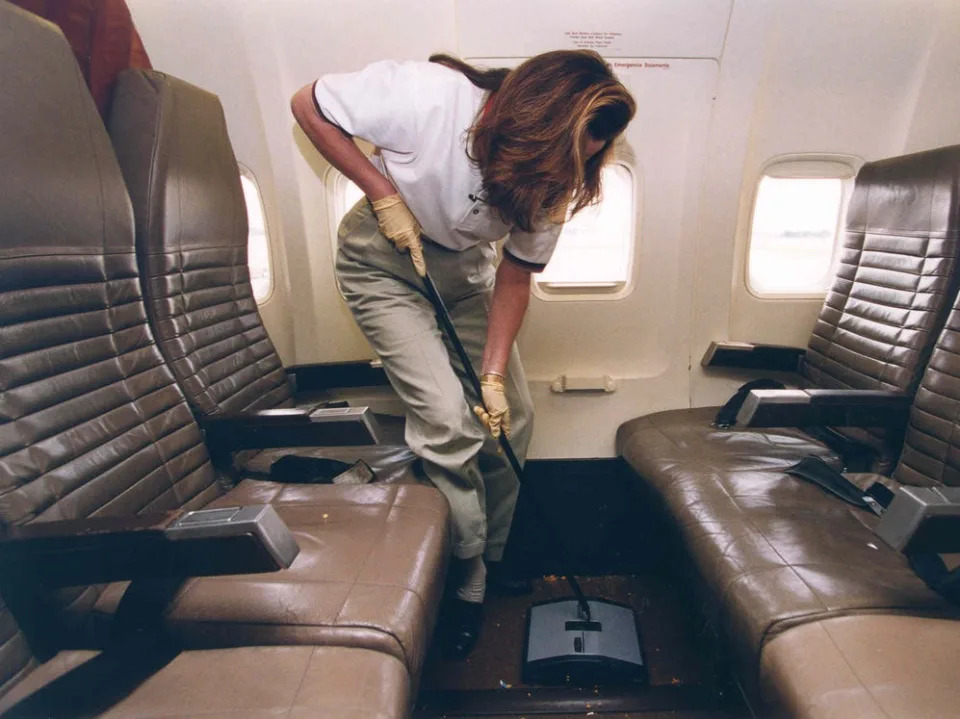
Unlike major carriers, Southwest maintained a simple strategy for success after deregulation, like only operating one aircraft type, cleaning the aircraft before landing to allow for a quicker turn, and focusing on humor in marketing.
Southwest flight attendant cleans the aircraftSouthwest Airlines
And its strategy worked. Southwest was prospering while other airlines like Pan Am and TWA collapsed. However, it was not long before the Wright Amendment put another wrench in the company’s plans.
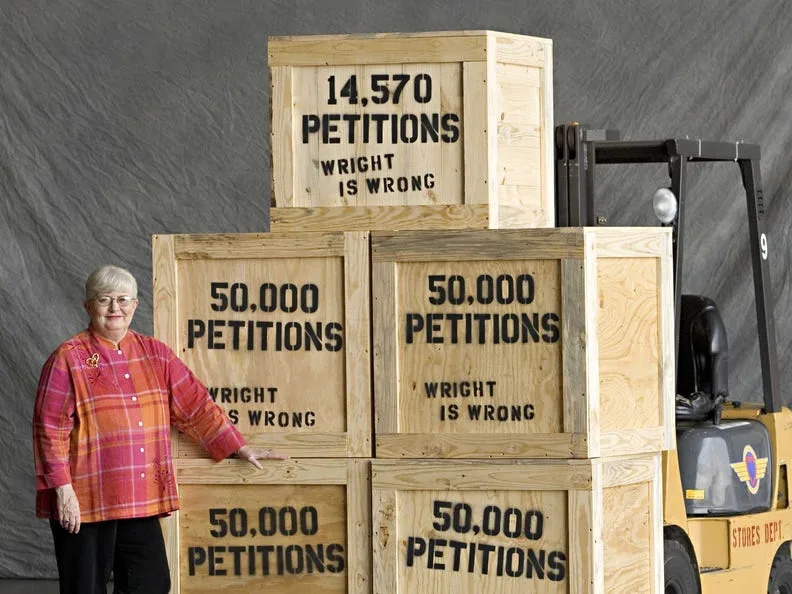
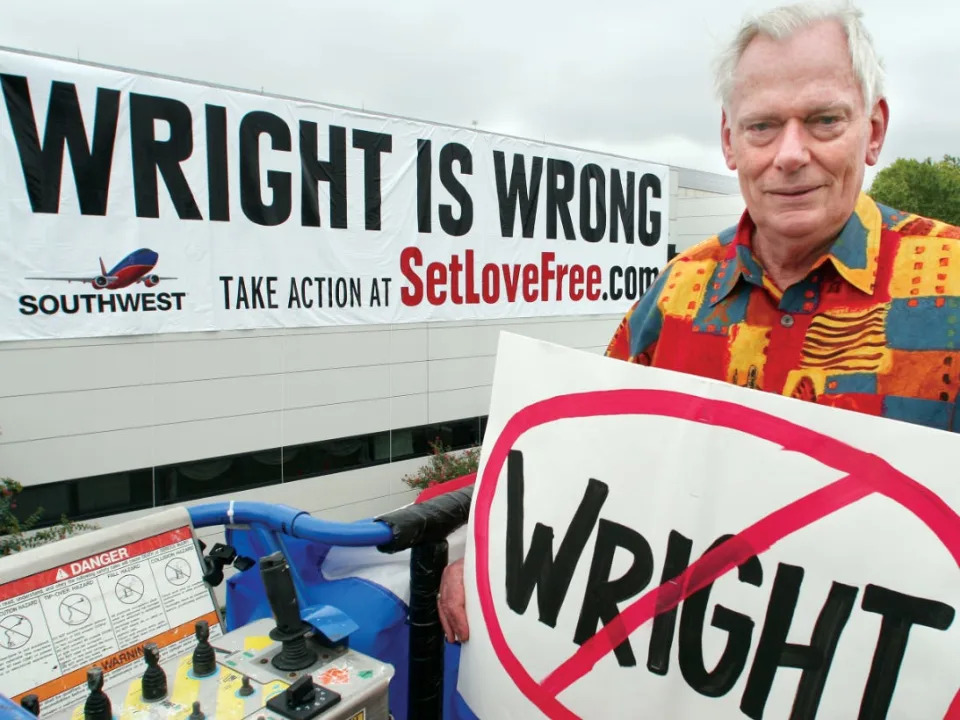
Colleen Barrett with Wright is Wrong petitionsSouthwest Airlines
After deregulation, Southwest wanted to commence interstate flights from Love Field to New Orleans in 1979, but officials at DFW airport feared the increased traffic would hurt the airport financially. So, US Congressman Jim Wright drafted, sponsored, and helped pass a bill restricting passenger traffic at Love Field.
Wright is Wrong sign Southwest Airlines
The law, known as the Wright Amendment, was signed in early 1980 and amended the International Air Transportation Act of 1979. It restricted flying out of Love Field to cities in Texas and the surrounding states of Louisiana, Oklahoma, Arkansas, and New Mexico. The law was meant to keep Southwest from expanding operations out of Dallas.
It only applied to carriers that operated aircraft with more than 56 seats, which Southwest did. So, the airline had to rely on short-haul flights in the five-state area to bolster Love Field operations.
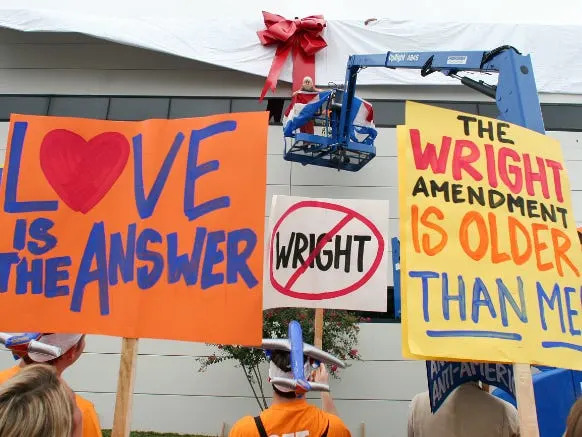
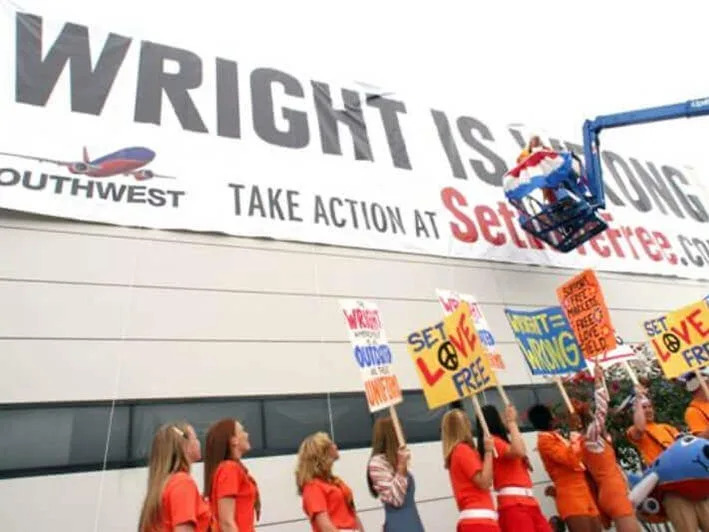
Southwest employees protest the Wright AmendmentSouthwest Airlines
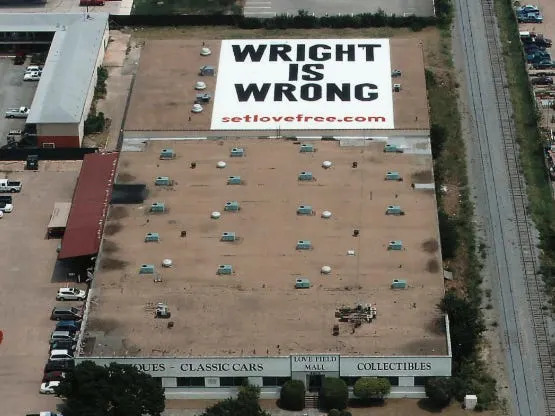
However, in 2004, Southwest CEO Gary Kelly launched efforts to repeal the Wright Amendment, using the slogans “Set Love Free” and “Wright is Wrong” in the campaign.
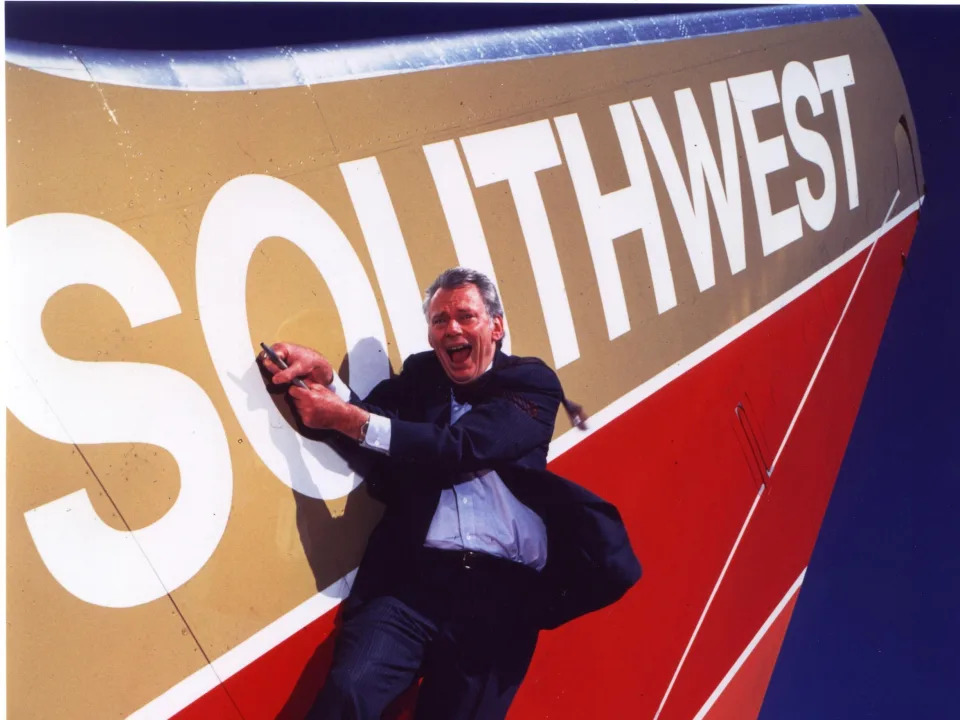
Herb Kelleher with “Wright is Wrong” slogan Southwest Airlines
In 2006, an agreement was made between Southwest, American Airlines, Dallas, and Forth Worth to phase out the law. They agreed that in eight years, the amendment would be gone, but until then, carriers could fly to any US destination out of Love Field as long as at least one stop was made in any of the nine states under the Wright Amendment.
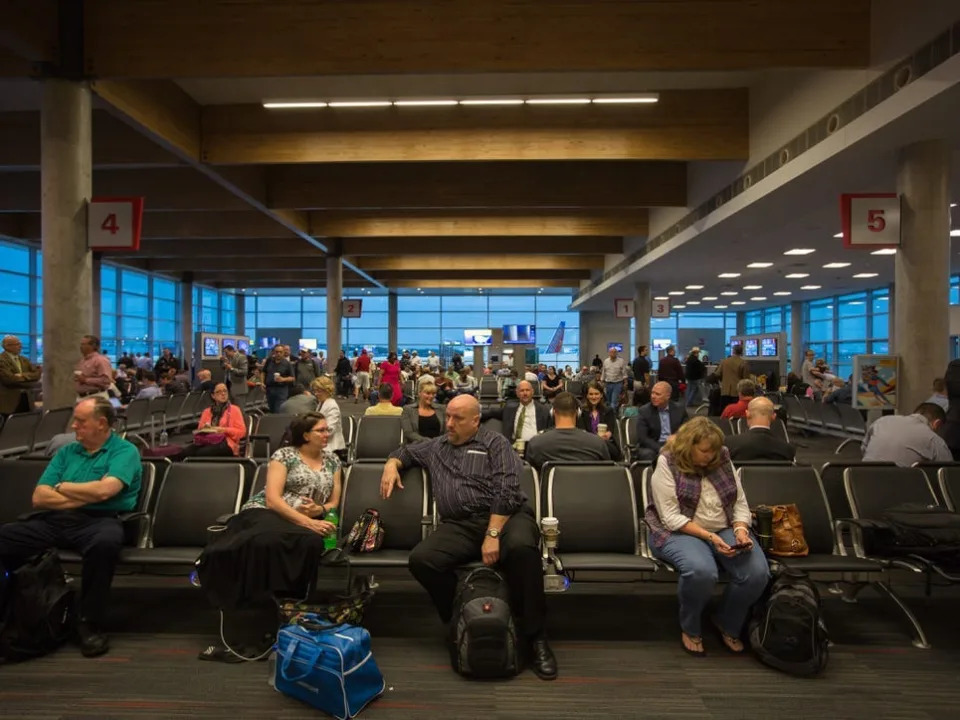
Passengers sit in new Love Field terminalSouthwest Airlines
On October 13, 2014, at exactly 12:01 a.m., a countdown clock at Southwest’s Headquarters in Dallas hit zero, officially ending the Wright Amendment. A few minutes after, the airline’s first scheduled flight outside of the nine Wright states took off from Love Field to Denver.
Wright Amendment ends Southwest Airlines
The deal also capped the number of gates at Love Field to 20, and the airport still only has 20 to this day.
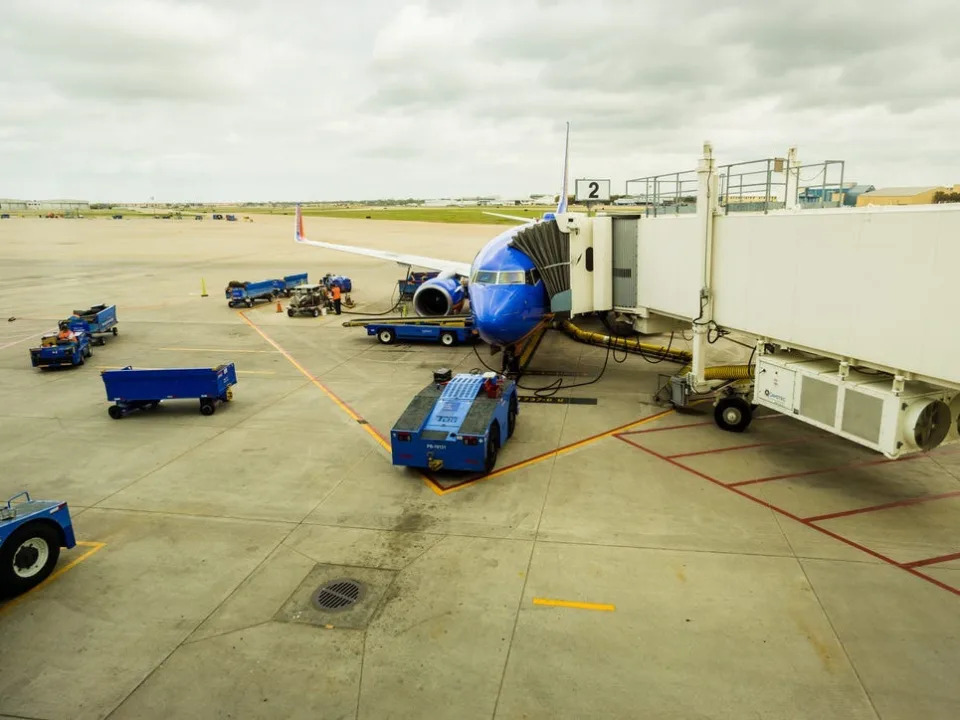
Southwest aircraft at gate 2 at Love Fieldstock_photo_world/Shutterstock
While the Wright Amendment restricted expansion out of Love Field, Southwest was still able to bolster its network out of other Texas cities in the 1980s, 1990s, and 2000s.
Customer service employee at Houston HobbySouthwest Airlines
Throughout the 1980s, the airline expanded north into cities like Tulsa, Oklahoma City, and Kansas City, and west to Phoenix, Las Vegas, Albuquerque, and California. The airline moved east in the late 1980s with flights to Nashville and into the Midwest with flights to Chicago Midway and Detroit.
Southwest flight takes off from Vegas Southwest Airlines
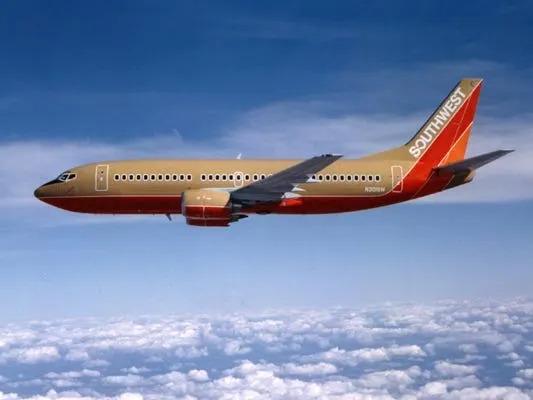
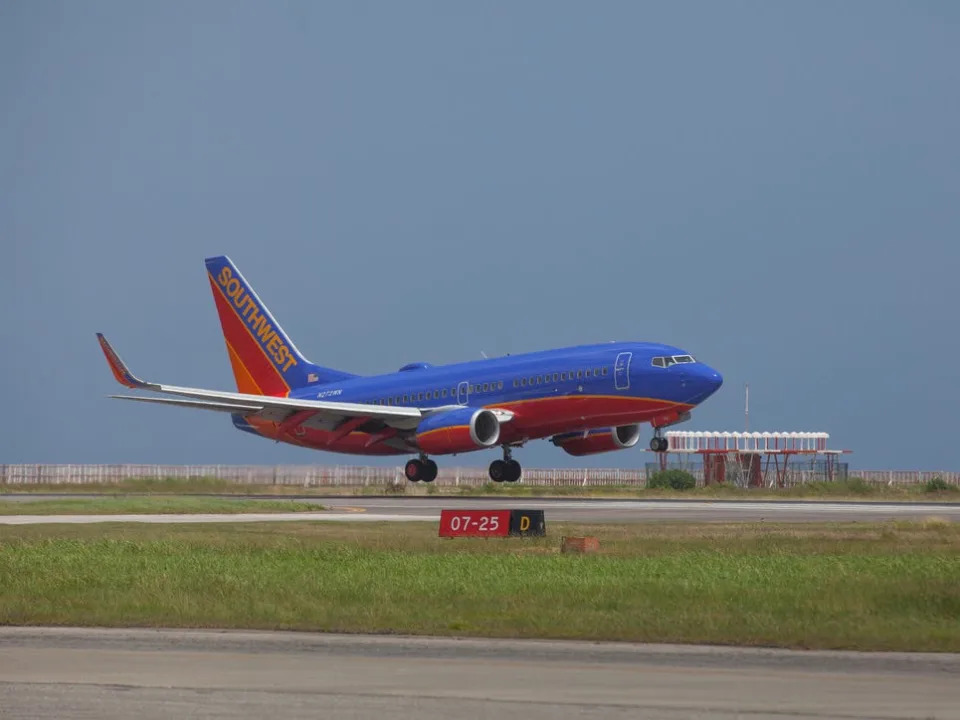
The airline also updated its livery in the 1980s. Southwest wanted to stand out in the skies and make its brand easily recognizable, so it wrapped its fuselage in desert gold and other warm colors. It received its first 737-300 jet in 1984, dubbed Spirit of Kitty Hawk.
Herb Kelleher with Spirit of Kitty Hawk aircraft Southwest Airlines
Southwest’s flight attendant uniform was also updated by the 80s. Instead of hot pants and go-go boots, the airline allowed employees to wear real pants and skirts.
In the 1990s, the network expanded further east to cities like Baltimore, Cleveland, Columbus, Tampa, Fort Lauderdale, Providence, Islip, and Raleigh-Durham. The airline also began its Pacific Northwest expansion with the acquisition of Morris Air in 1994.
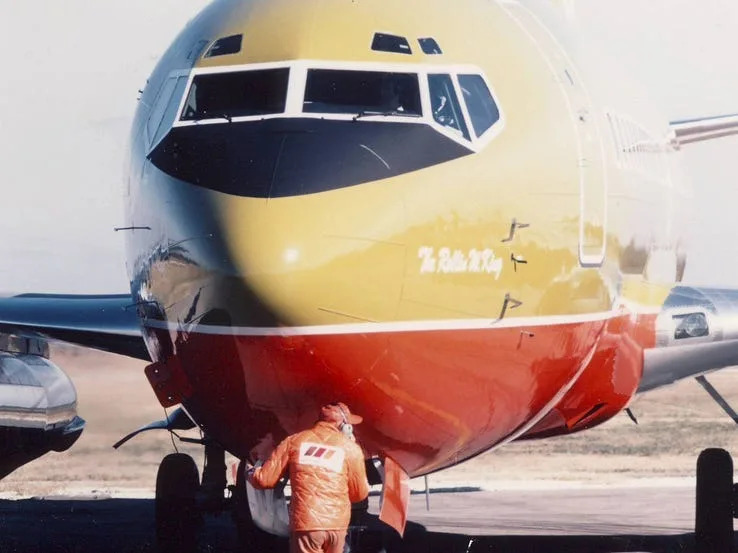
Southwest aircraft dedicated to Rollin King Southwest Airlines
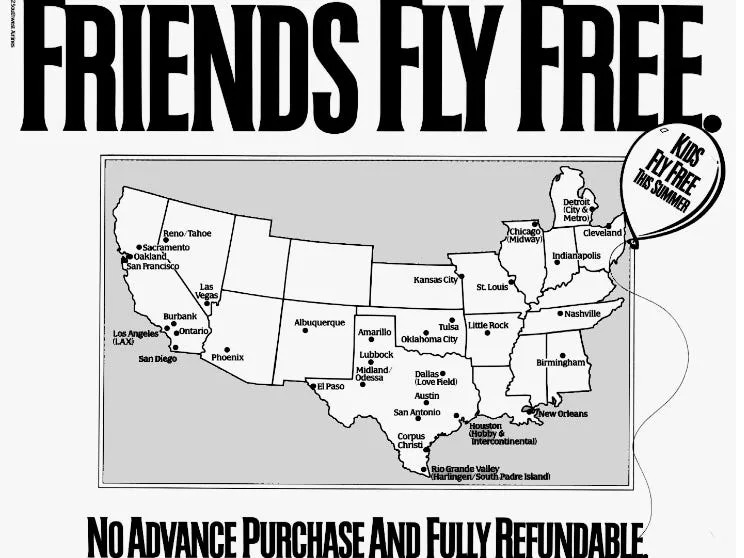
In 1991, the “Friends Fly Free” campaign was launched to battle the recession. The promotion allowed anyone 18 or older to bring a friend of any age free on their flight. It was so popular that Southwest offered the promotion for the next five years.
Southwest’s Friend Fly Free ad Southwest Airlines
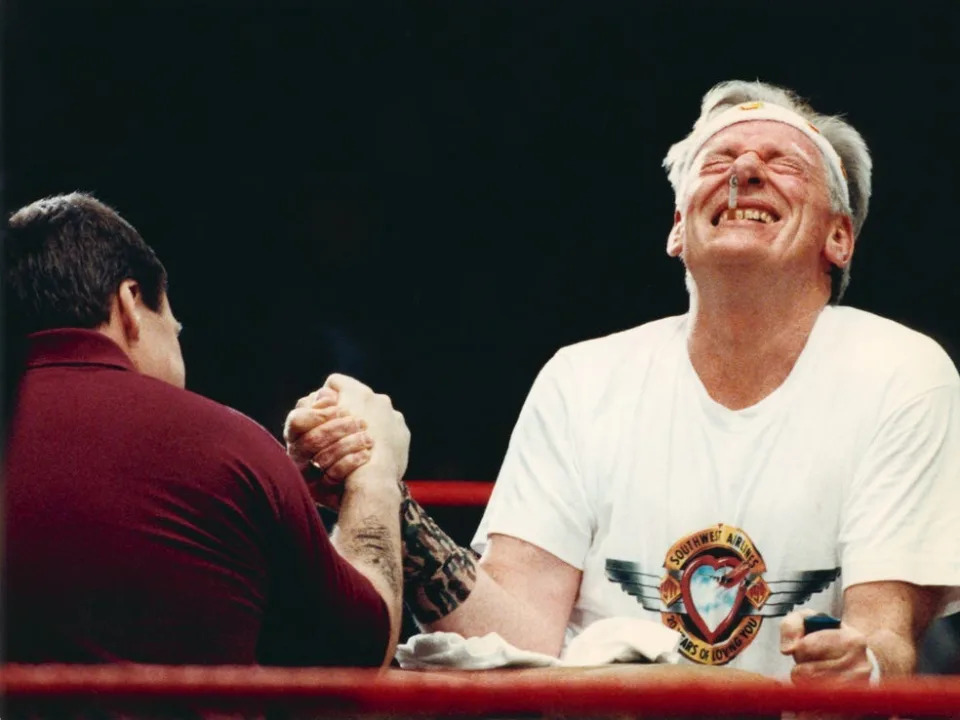
In 1992, Southwest’s most infamous marketing stunt occurred between Herb Kelleher and Kurt Herwald, chairman of Stevens Aviation.
Kelleher and Herwald at the Malice in Dallas Southwest Airlines
Southwest had been using the slogan “Just Plane Smart” in its ads, but Stevens Aviation sent a letter to Kelleher noting its similarity to its “Plane Smart” slogan.
Instead of entering a legal battle over the phrase, a Steven Aviation executive suggested an arm-wrestling competition between Herwald and Kelleher. The victor would have full rights to the slogan.
Herb and Herwald arm wrestle at the Malice in Dallas Southwest Airlines
Kelleher marketed the event, dubbed the “Malice in Dallas,” which received worldwide press coverage. “Smokin” Herb Kelleher and “Curtsy” Kurt Herwald put on a full show at the arena, which even earned a congratulatory note from President George Bush.
Malice in Dallas artwork in Southwest HQ Southwest Airlines
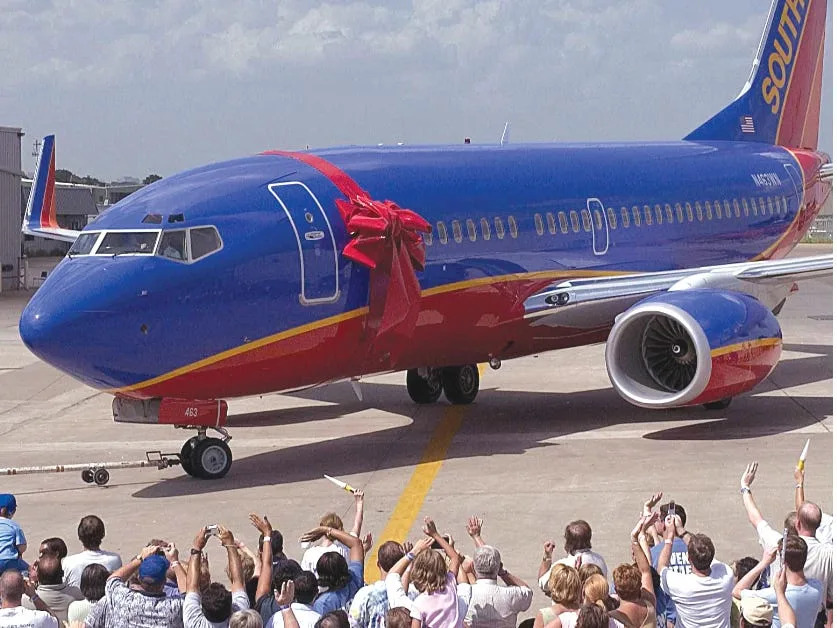
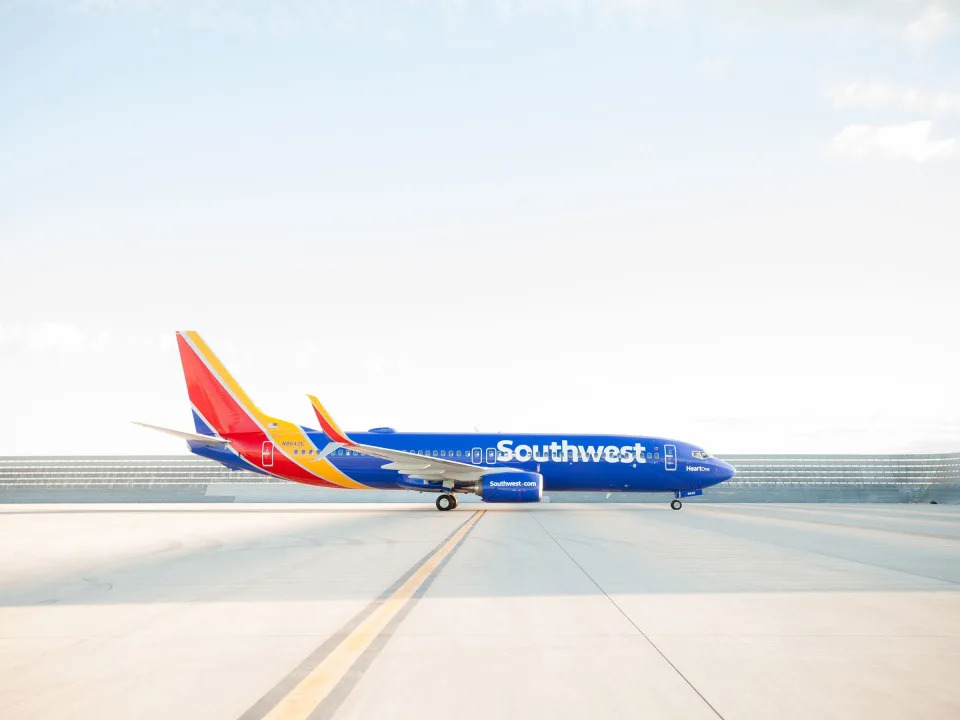
At the turn of the century, Southwest revealed the livery that most people know today. The Canyon Blue color scheme debuted in January 2001.
Debut of Southwest’s Canyon Blue livery in 2001 Southwest Airlines
While many airlines opted to introduce fees for things like checked bags and flight changes to recuperate funds, Southwest refused. Instead, the airline launched its “bags fly free” campaign which allows customers two complimentary checked bags. Southwest has not gone back on the offer to this day.
Throughout the 2000s, Southwest continued to focus on humor in its marketing. Its Wanna Get Away commercials proved successful, which promoted $49 one-way fares.
Southwest Boeing 737-800Steven M. Keller
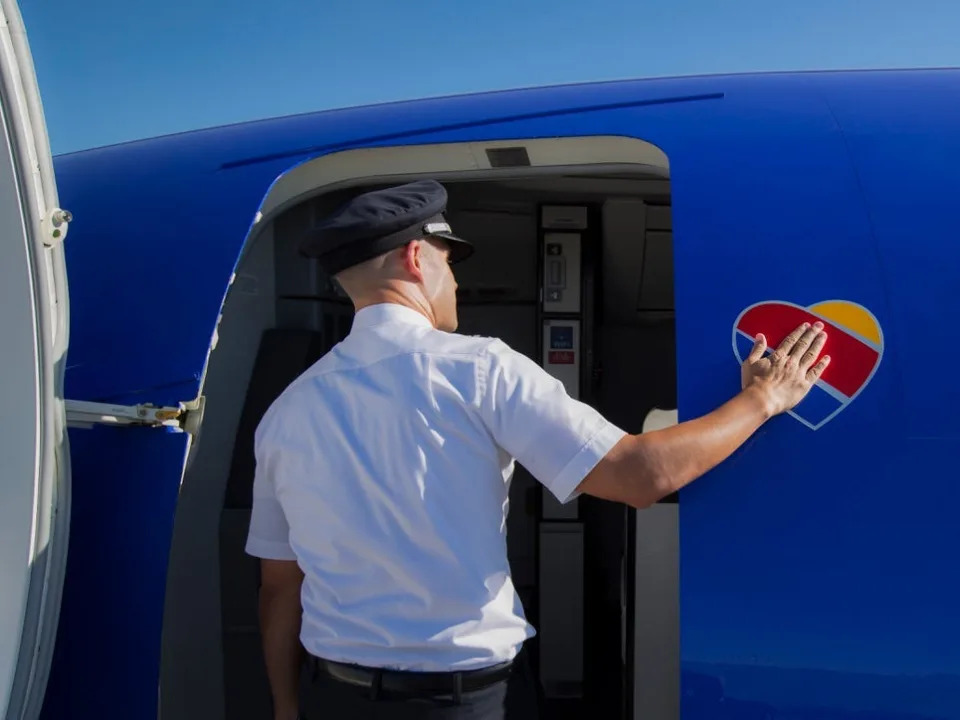
By 2010, Southwest added “Transfarency” to its brand. The airline would not have any hidden fees and would remain customer-focused with an emphasis on Hospitality and Heart. The recognizable tri-color heart was added to its airplanes and workplace.
Heart One Southwest Airlines
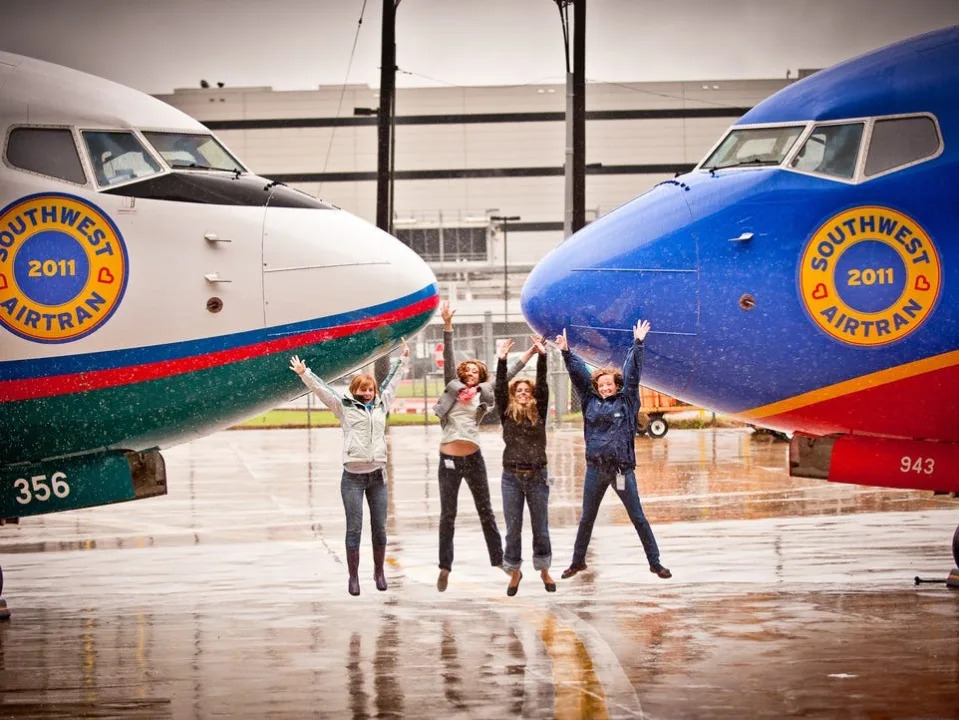
In 2011, Southwest acquired AirTran Airways, which opened slots up out of Atlanta and gave it more network expansion opportunities in Mexico and the Caribbean. The two were fully integrated by 2014.
Southwest acquires AirTran Southwest Airlines
Also in 2014, the company’s livery got another new look, with a harder focus on the heart, a new logo, and a sleek new color scheme.
In July 2014, the airline officially became international with its first flight to Oranjestad, Aruba. In the same month, Southwest also started service to Nassau, Bahamas, and Jamaica.
First international Southwest flight lands in Montego Bay, Jamaica Stephen M. Keller
The company’s flight attendant uniform got an update in 2017, marking the first time in 20 years the airline changed the look. Womenswear included two dresses, one black with blue and red stripes and the other gray with red and black stripes. Menswear included a black blazer, a gray shirt and pants, and a red tie.
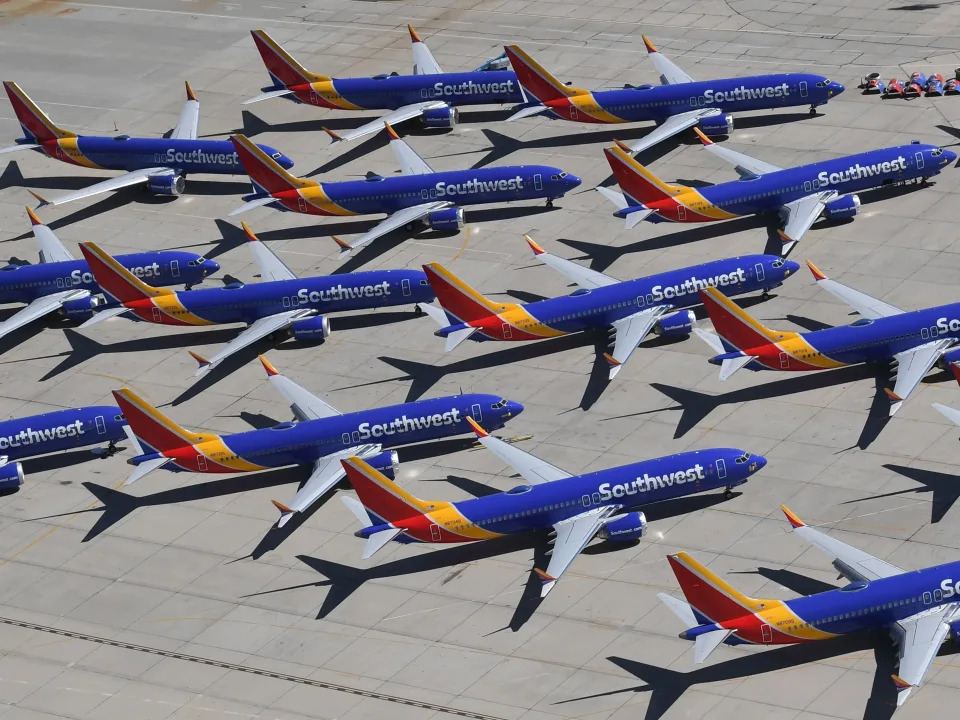
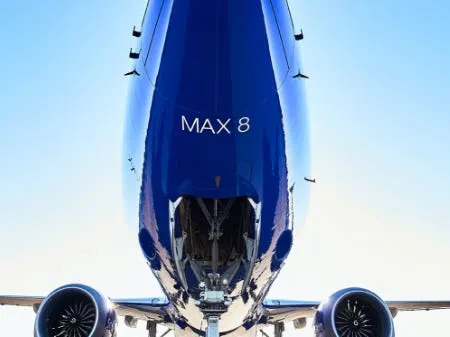
In October 2017, Southwest became the launch customer for the Boeing 737 MAX 8 jet, with its first revenue flight occurring on October 1. However, the aircraft was grounded in 2019 after two fatal accidents involved the MAX. The airline did not fly the plane again until March 2021.
Southwest Airlines Boeing 737 MAX 8 Southwest Airlines
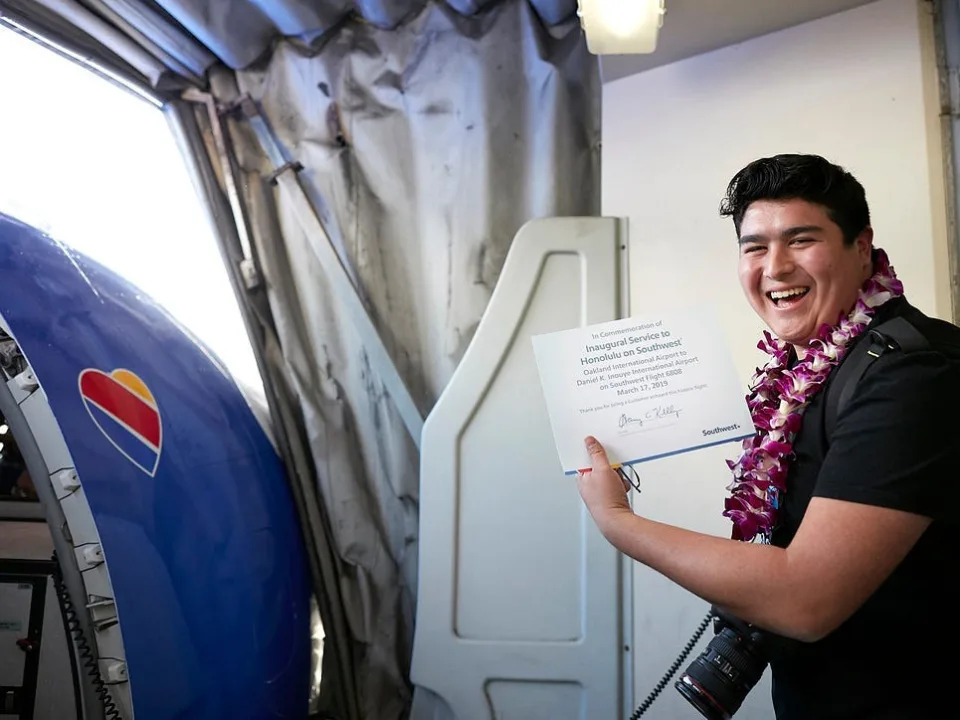
In 2019, Southwest reached its goal of operating flights to Hawaii with its inaugural service from Oakland to Honolulu.
Passenger boards first Southwest flight to Hawaii Southwest Airlines
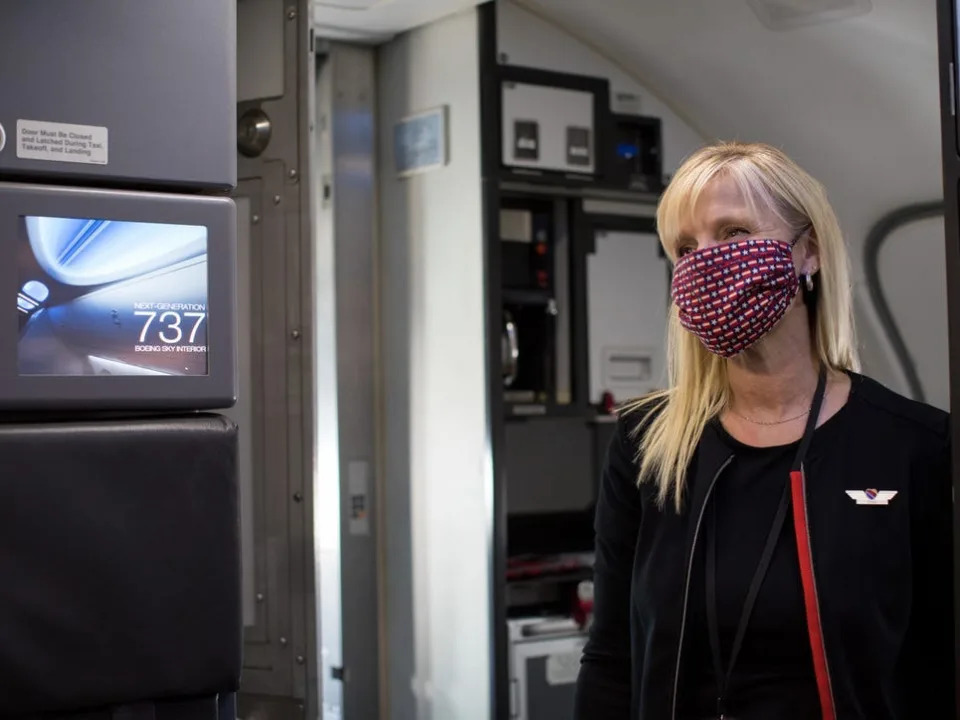
In 2020, Southwest ended its 47-year profit streak when the coronavirus pandemic hit. Since last March, the airline has remained focused on the health and safety of its customers and employees.
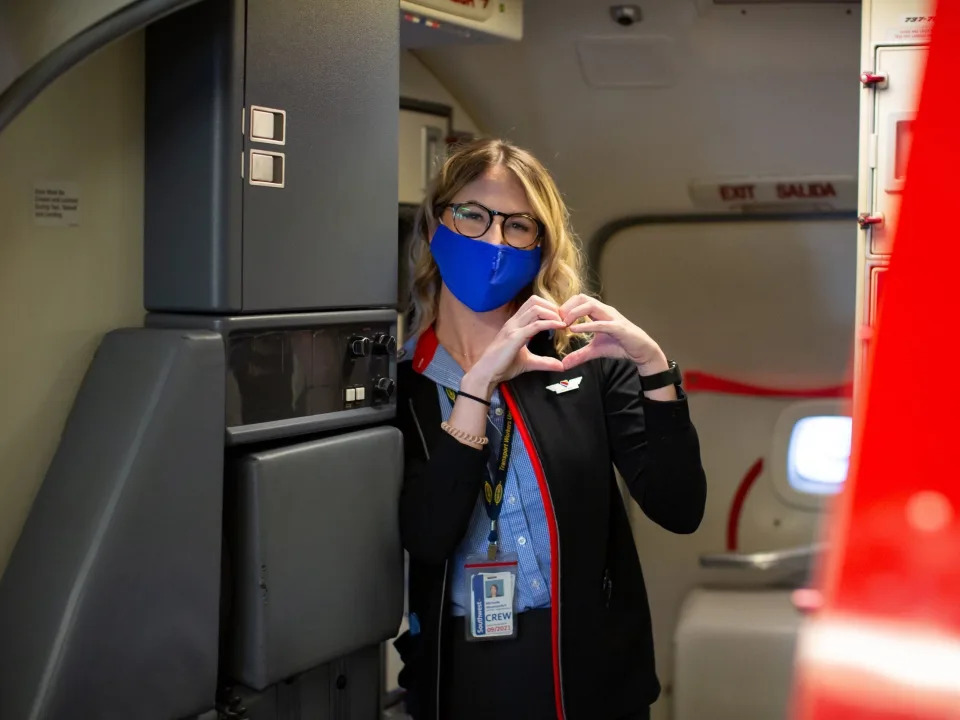
Southwest flight attendant greets passengers during the pandemicStephen M. Keller/Southwest Airlines
Since the pandemic, Southwest has become profitable again and, like other carriers, is trying to keep up with the surge in air travel.
Southwest Heart One Southwest Airlines
Despite its operations meltdown over the holiday of 2022, the carrier has vowed to get its operation back on track, compensate passengers for their time and added expenses, and continue to bring low fares to customers.
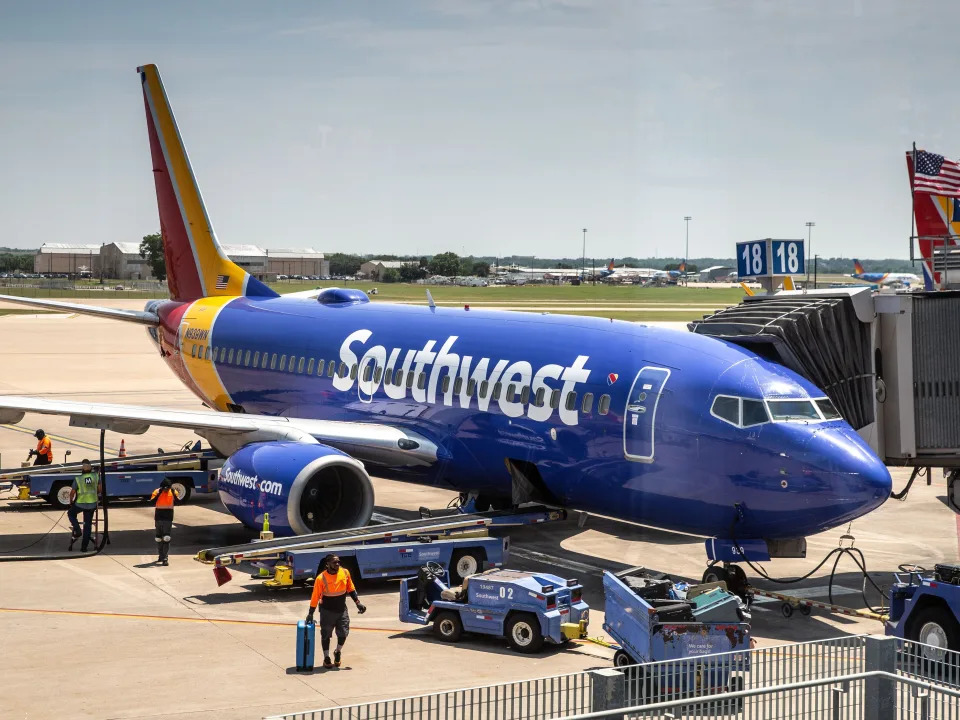
A Southwest Airlines Boeing 737 at a gate in Austin, TexasGeorge Rose/Getty Images
Southwest Airlines pilots union official describes how problems snowballed
The Biden administration is getting involved after a major meltdown causing delays and cancellations of thousands of Southwest Airlines flights across the U.S. Captain Michael Santoro, vice president of the Southwest Airlines Pilots Association, joins CBS News to discuss the problems what what it will take to fix things.
What about my right to live without violence? Supreme Court decisions on guns harm survivors.
Richard Alba – December 27, 2022
I have lived since the age of 2 with the damage inflicted by a gun death.
My father was killed while serving in the U.S. military in late 1945 by another soldier test firing his souvenir Luger in a barracks. I can still feel the powerful reverberations of that shot. It immediately threw the life of what remained of my family onto a much more difficult trajectory – less upwardly mobile, much less happy – than it had been on before.
My mother, though she remarried for a time and bore additional children, never knew sustained contentment and took her own life at the age of 60, three decades later. I struggled through an emotionally fraught childhood into a prickly young adulthood. Only years of psychological therapy and finally finding love in my 30s made it possible for me to break with my anger and melancholy.
The 1939 wedding photo of Richard and Mary Alba. Sgt. Alba died in 1945. He was shot by a soldier test firing a gun in the barracks.
This personal background gives me an unusually intense interest in the current rash of American mass shootings and its relation to our Constitution, as interpreted by a conservative Supreme Court. According to the Gun Violence Archive, there were 609 mass shootings (those with four or more victims) by Thanksgiving this year, though last year’s record of 690 looks safe.
There’s a simple explanation for this level of violence: The American rate of gun ownership is exceptional because of the Second Amendment. That part of the Bill of Rights has made it difficult for government to limit gun ownership and even now to restrict concealed arms in public places.
Right to guns vs. right to live free of gun violence
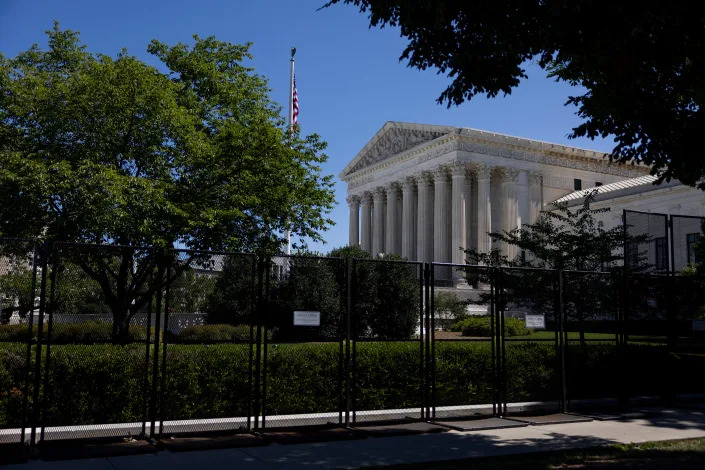
Recent Supreme Court decisions have torqued that difficulty. The District of Columbia v. Heller decision of 2008 established for the first time an individual right to gun ownership and invalidated a widespread previous understanding that the Second Amendment referred to a collective “right of the people,” organized in a “well regulated Militia.”
Justice Antonin Scalia’s majority opinion offers a tutorial on the conservative doctrine of originalism, as he strove to demonstrate the general acceptance in the 18th and 19th centuries of the principle that guns are necessary for individual self-defense.
But there is a glaring lack of balance in the opinion because Scalia, while admitting limits on Second Amendment rights in the abstract, provides no systematic reasoning or principles that might help us establish where the individual’s right to gun ownership ends and the right of the community to live without the constant threat of gun violence begins.
Recent Supreme Court decisions have hampered government efforts to limit gun ownership and restrict concealed arms in public places.
It then opines, “The exercise of other constitutional rights does not require individuals to demonstrate to government officers some special need (as the New York law did).” Ergo, Second Amendment rights should not require it, either.
One would hope that the average law student could spot the flaw in this reasoning: For when the right of speech is abused, an injured party can seek redress in the courts. But what redress is open to the person shot dead or grievously wounded by a gunman?
This distinction makes evident why government and the public have compelling interests in the exercise of Second Amendment rights that they do not for other rights.
It matters that guns are more deadly
Gun rights pose a severe test for the idea of originalism because of the enormous technological advance of weapons since the 18th century. Today’s semi-automatic firearms bear almost no resemblance to the muskets and rifles of the 18th century, which had to be reloaded after a single shot. Can originalism logically justify the right to own a weapon that could not be conceived when the Constitution was written?
In a recent speech, Justice Samuel Alito declared that the court’s decision extending the anti-discrimination provision in civil rights legislation to sexual orientation and gender was wrongly decided. His originalist reasoning: “It is inconceivable that either Congress or voters in 1964 understood discrimination because of sex to mean discrimination because of sexual orientation, much less gender identity.”
It seems highly doubtful that the Second Amendment as now understood can survive the Alito test. Can anyone seriously maintain that the Founders, whose knowledge of guns was limited to single-shot weapons, would have sanctioned constitutionally the widespread keeping and bearing of modern arms of war, which can tear the human body apart in seconds? Can anyone really believe that they would have intended such sanction for these weapons if given the knowledge that they are being used regularly to massacre American schoolchildren?
When is a society civilized?
The damage of gun violence is a spreading blight on American society. It affects not only the victims themselves but also their survivors, who must live with emotional loss and psychic trauma indefinitely.
In refusing to consider how to balance the Second Amendment’s right to gun ownership with the right of other citizens to live without the constant threat posed by ubiquitous weaponry, the court is contributing to the deterioration of the United States as a civilized society.
In common understanding, a society is civilized when citizens can go unarmed about their daily business without fear of violence. Today, pedestrians in many parts of the United States have to fear that the person walking by may be armed, and that the police can do nothing to protect them until he or she pulls out the weapon and starts shooting.
And then it is too late, as so many recent mass shootings instruct us.
Richard Alba is a distinguished professor of sociology at The Graduate Center at the City University of New York.
Richard Alba is a distinguished professor of sociology emeritus at The Graduate Center, CUNY.
George Santos deleted his campaign biography and blamed ‘elitist’ New York Times for his lies about his employment history
Bryan Metzger – December 27, 2022
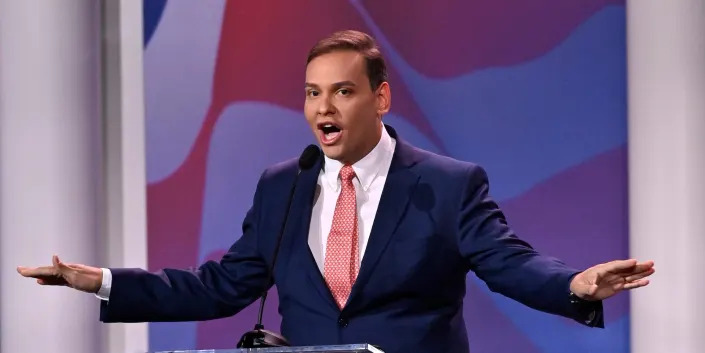
Rep-elect George Santos removed his biography from his campaign website on Tuesday.David Becker/Washington Post via Getty Images
GOP Rep-elect George Santos admitted he fabricated much of his background before he was elected.
On Tuesday, he removed his biography from his campaign website.
In one interview, he blamed the “elitist” New York Times for his lies about his employment history.
As he faced numerous questions over a series of apparent falsehoods in his resume last week, Republican Rep-elect George Santos said he had a “story to tell and it will be told next week.”
On Monday, he began to do just that via a series of largely friendly interviews — and admitted that whole sections of his biography were fake.
The biography included the lie that he had graduated from Baruch College and that his grandparents had “fled Jewish persecution in Ukraine.” The Forward found that his grandparents were born in Brazil.
In an interview with the New York Post on Monday, he came clean about lying about his employment and education history, as well as the fact that he isn’t Jewish.
“I never claimed to be Jewish,” he told The Post. “I am Catholic. Because I learned my maternal family had a Jewish background I said I was ‘Jew-ish.'”
“I worked as a customer service agent for six, seven months of my life or so — eight, maybe, in some — at some point in 2011, 2012,” he said. “The moment I put that on a resume, and I put it out there, elitists like the New York Times like to call blue-collar jobs like that ‘odd jobs.’ “
Santos was apparently referencing a story from the Times that noted that the congressman-elect worked at a Dish Network call center around the same time he purportedly worked on Wall Street.
“It’s those expectations, and those negative connotations, from elitist organizations, such as the New York Times that lead people — like me,” he said before abruptly changing course mid-sentence, saying he was “very comfortable in saying, I come from poverty, I come from a family of absolute nothing.”
“The reality is, yes, I omitted, like, past employment history that was irrelevant to the role,” he added.https://www.youtube.com/embed/E20WpTB4ZgA
During his interview with City & State NY, Santos also addressed his prior marriage to a woman; Santos is the first non-incumbent gay Republican ever elected to Congress.
He said he initiated a divorce after deciding to come out as gay.
“At least I had the courage to do it,” he said. “So many people… live in denial for their entire life, or are frustrated, and then eventually become a trans woman in their 60s.”
Santos Blames ‘Bourgeois’ Media for Pointing Out His Many, Many Campaign Lies
Nikki McCann Ramirez – December 27, 2022
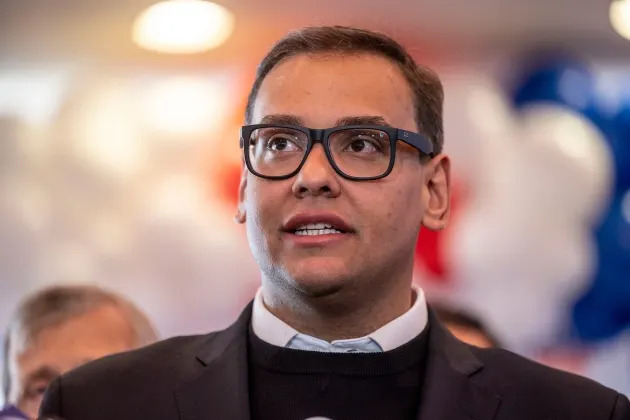
george-santos-admission.jpg U.S. Congressman-elect George Santos – Credit: Alejandra Villa Loarca/Newsday RM/Getty Images
“Did I embellish my resume? Yes I did. And I’m sorry … but I’m still the same guy, I’m not a fraud.”
New York congressman-elect George Santos admitted on Monday to having engaged in “résumé embellishment” and lying about his education and work history. Santos has been embroiled in controversy following a New York Timesreport that raised discrepancies in the incoming congressman’s background. In various interviews responding to the controversy, Santos has now admitted to misrepresenting his job history, lying about his educational background, and exaggerating his financial position.
Despite repeatedly apologizing for misleading the public, Santos still attempted to deflect blame for his lies onto other entities. Santos pointed the finger at elitism in the media as the motivation behind the exaggeration of his credentials. “I worked as a customer service agent for 6-7 months of my life…elitists like the New York Times like to call blue-collar jobs like that ‘odd jobs’ because it just doesn’t fit their bourgeois-style lifestyle.”
And that, Santos says, is what’s to blame for him making a litany of false statements to voters while seeking office. “It’s those expectations and those connotations from elitist organizations such as the New York Times that lead people like me” to embellish their history.
The investigation by the Times was unable to verify claims by Santos regarding his self-reported work for major financial groups Goldman Sachs and Citigroup, as well as his assertion that he had graduated from Baruch College in New York and New York University. In an interview with the New York Post, Santos admitted that he had “never worked directly” with Goldman Sachs or Citigroup. He explained that a financial firm he had worked for, Link Bridge, had done work with the companies and blamed the discrepancy on his “poor choice of words.” “If I was trying to really defraud the people, like everybody keeps saying, I could have just listed bigger — just as big names,” Santos said in an interview with City & State New York.
“I didn’t graduate from any institution of higher learning,” Santos admitted to the Post. “ I’m embarrassed and sorry for having embellished my resume,” he stated. “I own up to that … We do stupid things in life.”
Santos further denied accusations that he had lied about having Jewish heritage, telling the Post that he “never claimed to be Jewish.” “I am Catholic,” Santos said, “because I learned my maternal family had a Jewish background I said I was ‘Jew-ish.’” Santos had previously claimed that his grandparents were Holocaust survivors who escaped persecution in WWII.
Regarding questions on discrepancies in his finances, Santos admitted to little besides a history of bad tenancy and never actually having owned property. Addressing claims that he owned more than 13 properties to City & State Santos said he “never claimed to” have owned property himself. “No I do not own property,” he said, “I’ve never purchased property under my name.” Santos clarified that while his family members owned various properties he helped manage, none outright belonged to him.
The revelations have prompted calls from Democrats for Santos’ resignation, including accusations from his future colleagues that Santos “[defrauded] the voters of Long Island about his ENTIRE resume.” However, the incoming congressman plans to see his term through. ”I will be sworn in. I will take office.” Santos told New York’s WABC.
Column: Closing out 2022, Trump has supplanted Nixon as the saddest figure in post-presidential politics
Jonah Goldberg – December 27, 2022
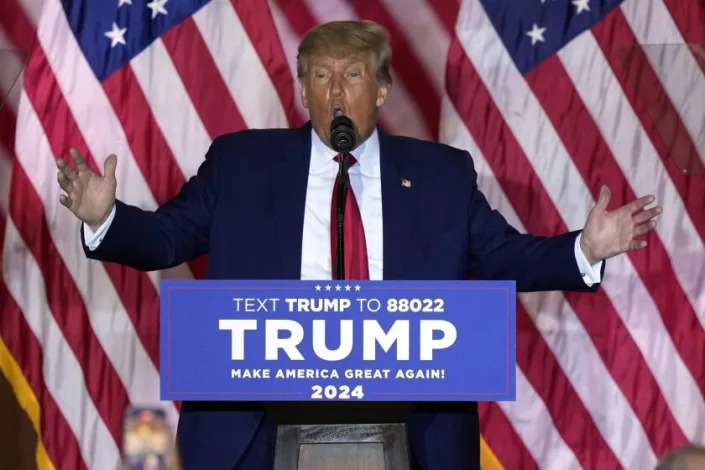
Former President Trump announces a third run for president on Nov. 15 at Mar-a-Lago in Palm Beach, Fla. (Rebecca Blackwell / Associated Press)
“The tapes are the real man — mean, vindictive, panicky, striking first in anticipation of being struck, trying to lift his own friable self-esteem by shoving others down,” Gary Wills wrote of Richard Nixon in the 2017 preface to his book, “Nixon Agonistes.” Wills added, perhaps unfairly, that “Nixon’s real tragedy is that he never had the stature to be a tragic hero. He is the stuff of sad (almost heartbreaking) comedy.”
The passage comes to mind as we close out Donald Trump’s annus horribilis, during which he supplanted Nixon as the saddest figure in post-presidential politics. The Jan. 6 committee, despite its flaws, succeeded in establishing a damning official record (largely told by his own aides) of his attempt to steal the presidency. A special prosecutor is on his case(s). His tax returns are out for all to see.
A week after a disastrous midterm election for his party and his power, he announced he’s running for president again. The party and public shrugged.
Then, he teased a “major announcement” which turned out to be a line of digital trading cards, some of which appear to be little more than Photoshopped images from Google searches with his face pasted on. What Trump described as “amazing ART of my Life & Career!” show him as, among other things, an astronaut, a sheriff and a superhero with laser beams shooting out of his eyes (causing even Russian state TV to snicker).
I can report that Trump was neither an astronaut nor sheriff. If he had heat vision, Mike Pence would now be a pile of ash.
The contrast with Nixon’s post-presidency is poignant. Nixon in exile wrote 10 books, all quite serious, including his memoirs. He clawed back a reputation as a wise man who dispensed advicetopresidents.
But that’s not the poignant part. Nixon was surrounded with a loving family, lifelong friends and loyal aides who gave him the sort of succor that politics couldn’t. His first — and only — wife was the love of his life. Long after Nixon’s death, they cherished his memory. Nixon in exile still enjoyed the respect not just of his friends but of his enemies.
The famouslyfriendless Trump has admitted that he never had much use for real friends. Trump prefers to be surrounded by people who will tell him what he wants to hear, and what he wants to hear is: You’re awesome. Reportedly, this is why he hit it off so well with a neo-Nazi toady who heaped praise on him at that now notorious dinner with the artist formerly known as Kanye West.
This is what makes Trump such a pathetic figure. Wills titled his book “Nixon Agonistes” — a reference to the Milton poem “Samson Agonistes” — because Nixon was a man of struggle, both internal and external, hungry for respect.
Trump isn’t merely hungry for respect; he’s, as the kids say, “thirsty” for respect — respect for his strength, his “very stable genius,” his masculinity and, of course, his money. When Trump read a 2015 column of mine in the New York Post mocking his potential run, he turned to his aide Sam Nunberg and muttered, “Why don’t they respect me, Sam?”
Of course, there are people who respect Trump, but most of them aren’t friends, they’re fans, the sorts of people who don’t get the joke of his trading cards. In 2016, he told a New Hampshire audience: “I have no friends, as far as I’m concerned,” he said. “You know who my friends are? You’re my friends.”
Fans are generally the last people to tell you hard truths. Worse for Trump: His definition of fans are people who think he can do no wrong.
The key difference is that Nixon’s hunger for respect was tempered by a reciprocal respect, admittedly flawed, for the presidency, his party, the country and for those closest to him. Nixon spared them all the ordeal of impeachment; Trump was impeached twice, then ran again, lost, and then tried to steal the presidency. He recently called for the suspension of the Constitution to reinstall him, because no impediment to his self-glorification deserves respect.
Nixon’s struggle was complicated because he was complicated. Trump’s struggle is simple because he is simple: All he is is appetite — for fame, power, sex, admiration — shorn of any interior life and unencumbered by exterior attachments.
Wills may have been right that the secret tapes displayed the “real” Nixon. We don’t need secret tapes to know Trump, because the real Trump is always on display for those with eyes to see him. And, finally, the sight is becoming wearying, even for his fans.
Fears of extremist campaign after attack on US power substations
December 27, 2022
Vandalism at four power substations in the western US state of Washington over the weekend added to concerns of a possible nationwide campaign by right-wing extremists to stir fears and spark civil conflict.
Local police on Tuesday gave no information on who they suspected was behind the vandalism, which knocked out power on Christmas Day for some 14,000 in Tacoma, a port city area south of Seattle.
Tacoma Public Utilities, which owned two of the facilities targeted on Sunday, said in a statement that it was alerted by federal law enforcement in early December about threats to their grid.
The Pierce County Sheriff’s office said Sunday it was investigating but had made no arrests and did not know if it was a coordinated attack.
They said in a statement that they were aware of similar incidents elsewhere in Washington, in Oregon, and in North Carolina.
“It could be any number of reasons at this point… We have to investigate and not just jump to conclusions,” they said.
But it follows warnings by US officials that neo-Nazis who say they want to spark a race war are targeting electricity infrastructure.
Violent extremists “have developed credible, specific plans to attack electricity infrastructure since at least 2020, identifying the electric grid as a particularly attractive target given its interdependency with other infrastructure sectors,” the Department of Homeland Security said in a January intelligence memo, according to US media.
In early December, 45,000 homes and businesses in Moore County, North Carolina were out of power after someone used a high-powered rifle to damage two electricity substations.
In February three men with neo-Nazi ties pleaded guilty in Columbus, Ohio to plotting to use rifles and explosives to damage power infrastructure in various locations.
They pursued “a disturbing plot, in furtherance of white supremacist ideology, to attack energy facilities in order to damage the economy and stoke division in our country,” said Assistant Attorney General Matthew Olsen at the time.
And last year five men who allegedly belonged to white supremacist and neo-Nazi online discussion groups were charged in North Carolina with planning attacks on power infrastructure.
They planned the attack to create “general chaos” as part of their “goal of creating a white ethno-state,” the indictment said.
Jon Wellinghoff, the former chairman of the Federal Energy Regulatory Commission, said on CNN in early December that the Moore County attack resembled one on an electricity network substation near San Jose, California in 2013.
In that case, which has never been solved, one or more people fired close to 100 rounds at the substation, damaging 17 high voltage transformers at a cost of $15 million.
The Washington Post said after the Moore County incident that law enforcement was investigating eight incidents in four states.
An earlier version of this story referred to the objects vandalized as power stations. They are in fact power substations.
“It is virtually certain that human activities have increased atmospheric levels of carbon dioxide and other greenhouse gases,” a national panel of experts concluded in a draft of the 5th National Climate Assessment released in November. They see high confidence in forecasts for longer droughts, higher temperatures and increased flooding.
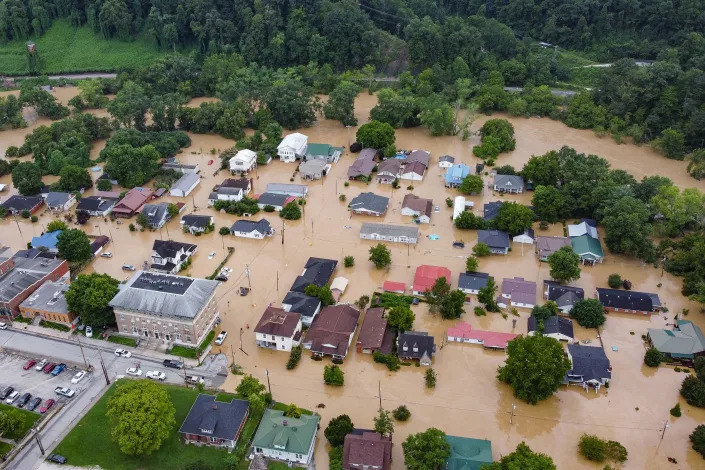
JULY 28, 2022: Aerial view of homes submerged under flood waters from the North Fork of the Kentucky River in Jackson, Kentucky. Flash flooding caused by torrential rains has killed at least eight people in eastern Kentucky and left some residents stranded on rooftops and in trees, the governor of the south-central US state said.
Warming sea surface temperatures around the globe provide more fuel for tropical storms and exacerbate the melting of glaciers and ice sheets.
Why is climate change important?
“Every part of the U.S. is feeling the effects of climate change in some way,” said Allison Crimmins, director of that 5th National Climate Assessment. Representing the latest in climate research by a broad array of scientists, the final version of the assessment is expected in late 2023.
Disaster costs are rising, and scientists warn the window to further curtail fossil fuel emissions and put a lid on rising temperatures is closing rapidly.
Many scientists and officials worldwide agree: Yes. By the end of this century, projections show global average surface temperatures compared to pre-industrial times could increase by as much as 5.4 degrees.
Merriam-Webster defines “crisis” as a time of intense difficulty, trouble, or danger. A mix of warmer temperatures, extreme rainfall and rising sea levels often make naturally occurring disasters worse, while droughts become more intense and heat waves occur more often.
“The climate crisis is not a future threat, but something we must address today,” Richard Spinrad, administrator of National Oceanic and Atmospheric Administration, said in August 2022.
The term “climate crisis” has been used to describe these worsening impacts since at least 1986. Since the United Nations’ Intergovernmental Panel on Climate Change was organized in 1988, its reports steadily have grown more dire.
The Fourth National Climate Assessment, released during the Trump administration, warned natural, built and social systems were “increasingly vulnerable to cascading impacts that are often difficult to predict, threatening essential services.”
“Every increased amount of warming will increase the risk of severe impacts, and so the more (rapidly) we can take strong action to reduce greenhouse gas emissions, the less severe the impacts will be,” Cornell University professor Rachel Bezner Kerr said after the release of one recent IPCC report.
Warmer climates put animals on the move and increases the risk they’ll spread pathogens to other animals and to humans. A group of University of Hawaii researchers looked at how 376 human diseases and allergens such as malaria and asthma are affected by climate-related weather hazards and found nearly 60% have been aggravated by hazards, such as heat and floods.
The Summer 2024 Olympics are scheduled to kick off in July in France, where the country’s meteorological officials expect 2022 to be its hottest year since records began in 1900. Meanwhile, the International Olympic Committee has delayed choosing the location for the 2030 winter games, in part over climate concerns.
Even fly fisherman see changes all around them. “Everyone knows if this keeps up, the places we can fish for trout are going to be limited,” said Tom Rosenbauer of Vermont, whose job title at sporting goods retailer Orvis is chief enthusiast.
How does climate change affect animals?
Warmer temperatures are forcing some animal species to move beyond their typical home ranges, increasing the risk that infectious viruses they carry could be transmitted to other species they haven’t encountered before. That poses a threat to human and animal health around the world.
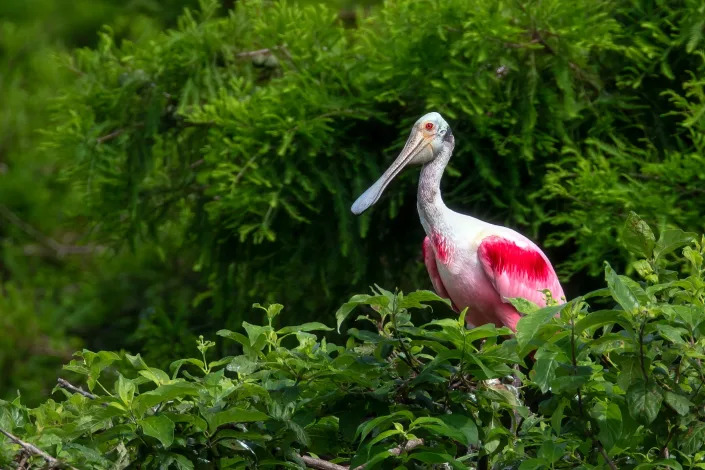
A roseate spoonbill stands bright against the green of a southeast Arkansas swamp. Jami Linder, an Arkansas photographer, documented the first spoonbill nest in the state in 2020.
In the U.S., roseate spoonbills, a brilliant pink wading bird, are moving north as temperatures warm and they’re pushed out of native coastal habitats by rising sea levels.