Why are mass shootings rare in other countries despite high levels of gun ownership?

The Week

Why are mass shootings rare in other countries despite high levels of gun ownership?

Justin Klawans, Staff writer – May 9, 2023
Guns.
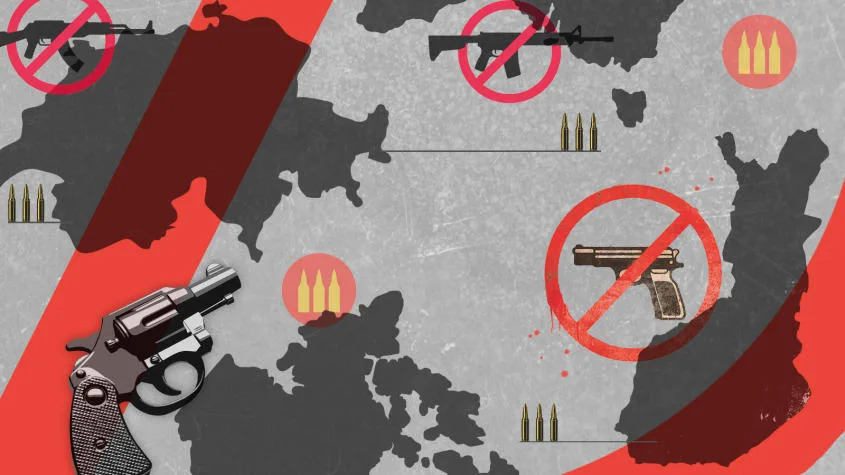
Guns. Illustrated | Gettyimages

There is no question the United States has a ton of guns — more than anywhere else in the world by far. There are an estimated 352 million guns in private circulation in the U.S., according to data collected by The Trace, and some other studies cited by the outlet suggest the number is even higher.

It comes as no surprise, then, that the U.S. leads the world in mass shootings. There have already been over 180 of these incidents in 2023 alone, The New York Times reports. Many mass shootings occur in schools; since the Columbine High School shooting in 1999, more than 352,000 students have experienced gun violence in the classroom, according to The Washington Post.

While the United States leads the world in number of firearms, it’s hardly the only country where gun ownership is high. Yet in most other countries, mass shootings are rare, if not unheard of, mainly due to gun laws being significantly stricter than they are in the U.S. Between 2009 and 2015, there were just 19 mass shootings in all of Europe, research shows. School shootings are even rarer, and World Population Review reports that every country besides the U.S. has had less than 10 of them in 2023. These are five nations that have high numbers of firearms but little trouble with shootings.

Finland

There are an estimated 1.5 million licensed firearms in Finland, the country’s interior ministry reports, in a nation of just 5.6 million. This high rate of gun ownership is due to an activity widely seen in Finland (and many other nations): hunting. Finns “have hunted and fished for food for thousands of years,” Slate reports, and “hunting remains a popular weekend, or even after-work, activity.” Finland’s large area provides ample space for the hunting industry to flourish.

Despite this, Finland has had less than five documented cases of mass shootings. This is because, like most of the Nordic countries, Finland has highly regulated gun control laws. Following a school shooting in 2007, Finnish Parliament raised the minimum age to purchase a gun from 15 to 18, and the prospective buyer must fill out a detailed application to receive a handling license. The interior ministry has also implemented “changes to the provisions on the storage of firearms, component parts of firearms, and cartridges,” as well as additional legislation to ensure guns remain safely locked away when not in use.

Switzerland

Like Finland, hunting is a part of life in Switzerland, which may be why the Alpine country has approximately 2 million privately owned guns, Insider reports, in a country of just 8.7 million people. Despite this staggeringly high rate of gun ownership, though, there has not been a mass shooting in Switzerland in more than 20 years.

Insider notes that the U.S.’ National Rifle Association often points to Switzerland as an example of gun laws not being necessary, because they claim the Swiss have limited legislation on firearms. But this is simply not true. Firearms in Switzerland are highly controlled and regulated, according to the official Swiss Confederacy portal. Semi-automatic rifles with large magazines are banned, and people who want to purchase handguns or smaller magazine semi-automatic rifles must undergo a permitting process and send their weapon’s information to the government.

Canada

Canada’s vast northern lands make it another ample country for hunting, which contributes to the 7.1 million firearms in private hands, according to the Canadian government, in a nation of 39 million people. This statistic lies in a similar range with comparable Western nations, the government notes, except the United States.

The country has had a few recent mass shootings, including one in 2020. Despite this, instances of mass violence remain very rare, Reutersreports. This is because Canada has some of the harshest regulations against assault rifles in the world, and the nation’s public safety arm notes Canada “has prohibited over 1,500 models of assault-style firearms and certain components of some newly prohibited firearms.” Many of these weapons became newly prohibited following the 2020 mass shooting, and there are also limits in the Canadian criminal code placing restrictions on the number of rounds in rifles, handguns and shotguns.

New Zealand

New Zealand also has a lot of guns — 1.5 million in a country of just 5.1 million people — but unlike the United States, New Zealand took legislative action after a tragedy.

Following a 2019 mass shooting in Christchurch that killed 51 people, then-Prime Minister Jacinda Ardern implemented a series of sweeping reforms to the country’s already strict gun laws. Ardern announced these reforms just one week after the shooting, Time reports, and the new laws were pushed through parliament almost immediately. The laws included creating a firearms registry and placing a complete ban on AR-15s and other assault rifles. New Zealand also created a gun buyback program to try and get weapons off the streets. By the end of the program, Kiwis had turned in more than 50,000 guns, NPR reports, greatly slashing the number of firearms on the streets of New Zealand.

Australia

Like their neighbors to the southeast, Australia also has a high rate of gun ownership, and the University of Syndey notes there are about 3.5 million registered firearms in the nation of 26.4 million. However, the university also reports that the “proportion of Australian households with a firearm has fallen by 75% in recent decades.”

This drop was similarly spurned by just a single tragedy: the 1996 Port Arthur massacre in Tasmania. Thirty-five people died in the worst mass shooting in Australian history, and the country’s conservative government enacted similar new restrictions on guns. This includes a national gun registry, and Time notes that firearm license applications must prove the prospective owner has “a ‘genuine need’ to own weapons.” The Aussies also implemented a gun buyback program after Port Arthur, and Vox reports the country confiscated 650,000 weapons. There have been almost no mass shootings in Australia since then.


Putin may not outrun the warrant for his arrest – history shows that several leaders on the run eventually face charges in court

The Conversation

Putin may not outrun the warrant for his arrest – history shows that several leaders on the run eventually face charges in court

Aaron Fichtelberg, Associate Professor of Sociology and Criminal Justice, University of Delaware – May 9, 2023

Russian President Vladimir Putin is shown in Moscow in March 2022, shortly after Russia invaded Ukraine. <a href=
Russian President Vladimir Putin is shown in Moscow in March 2022, shortly after Russia invaded Ukraine. Mikhaul Klimentyev/Sputnik/AFP via Getty Images

The Russian government, U.S. President Joe Biden and mainstream Western media are among the observers who all responded to Russian President Vladimir Putin’s arrest warrant for war crimes with a shrug.

In March 2023, the International Criminal Court announced the warrant for Putin and his commissioner for children’s rights, Maria Lvova-Belova, because they allegedly directed the abduction of Ukrainian children. The court says that these charges amount to war crimes.

While Biden said the arrest warrant was “justified,” he also noted that the International Criminal Court “is not recognized by us either.”

The skeptics have a point – the ICC, based in the Hague, Netherlands, does not have its own police force to execute its orders and must rely on other countries’ police to arrest the people it indicts.

Indeed, there are a number of barriers potentially preventing Putin’s arrest.

One is that Russia, like the United States, is not a member of the court – so as long as Putin does not set foot in a country that is a member of the court, he is safe from arrest. Putin also remains popular within Russia and is unlikely to soon be overthrown and turned over by his successor.

But it still would be rash to assume that Putin is safe from the court’s grasp.

am a scholar of criminal justice who specializes in international courts and the creativity that prosecutors show in catching their targets, often under very difficult political circumstances.

History shows that it would require a little bit of good luck for prosecutors – and a few bad decisions by Putin – for the Russian autocrat to end up in handcuffs. But it’s far from impossible.

The ICC’s arrest warrant for Vladimir Putin is seen in a news release in March 2023. <a href=
The ICC’s arrest warrant for Vladimir Putin is seen in a news release in March 2023. Jonathan Raa/NurPhoto via Getty Images
How international courts work

A group of 60 countries established the International Criminal Court in 2002 to prosecute people who commit the worst crimes, including genocide and wartime sexual violence, that violate international law. The court is part of a long line of international criminal tribunals going back to the military tribunal the U.S. and allies set up to prosecute Nazis at the end of World War II, as part of the Nuremberg Trials.

There are other international criminal courts that prosecute war crimes, but the ICC is the largest and arguably most influential, since 123 member countries fund the court and abide by its rulings.

Since its inception, the ICC has issued 38 arrest warrants, arrested 21 people, convicted 10 and acquitted four. Other suspects, like Putin, remain at large or have had their charges dropped.

Yet there are a number of options for prosecuting war crimes outside of the ICC that have been used in the past.

There are also other, smaller tribunals similar to the ICC that countries have helped set up to focus on specific conflicts. In other cases, individual countries can use their own courts to prosecute international criminals who have evaded arrest abroad.

In the case of the Ukraine war, Ukrainian President Volodymyr Zelenskyy has called for a new international tribunal to prosecute war crimes committed by Russia during the conflict. Others have argued that Putin could be prosecuted in a Ukrainian court specifically designed for this purpose.

Former Liberian President Charles Taylor appears in court in July 2006 in the Netherlands. <a href=
Former Liberian President Charles Taylor appears in court in July 2006 in the Netherlands. Rob Keeris/AFP via Getty Images
Lessons for Putin

There have been several long but ultimately successful efforts to arrest fallen political leaders and mass murderers.

For example, Charles Taylor, the former president of Liberia who helped instigate a civil war in neighboring Sierra Leone in the 1990s, is now serving a 50-year prison sentence in the United Kingdom.

Prosecutors from an international tribunal set up in Sierra Leone announced Taylor’s indictment when he was in Ghana in 2002, forcing him to quickly flee a political conference and head home for safety. But Taylor then fell from power in 2003, in the midst of a rebel insurgency. He then fled to Nigeria.

Eventually, Nigerian authorities arrested Taylor and handed him back to Liberia, which quickly passed him off to Sierra Leone for trial in 2006. He was then convicted in 2012.

Slobodan Milošević, the late president of Yugoslavia, was indicted by an international tribunal that addressed the Balkans wars – along with two of his cronies, Ratko Mladić and Radovan Karadžić –- for crimes committed against civilians during the wars in the 1990s.

They, too, initially evaded jurisdiction – Milošević initially remained in power, while Mladić and Karadžić went into hiding. Serbian authorities ultimately handed Milošević over to the International Criminal Court in 2001, months after he stepped down from his post in 2000. Serbian police arrested Mladić and Karadžić about a decade later.

All three faced trial in the Hague. Milošević died while on trial in 2006. Mladić and Karadžić are now serving life sentences.

And in Finland, former Sierra Leone rebel group leader Gibril Massaquoi is facing trial for war crimes he committed during Sierra Leone’s civil war from 1991 to 2002.

Prosecutors at a Sierra Leone tribunal granted Massaquoi immunity in 2009 in exchange for his testimony against other rebels. He then relocated to Finland under a witness protection program.

But that did not stop Finnish prosecutors, who arrested Massaquoi in March 2020. His trial is currently under appeal in Finnish court system following Massaquoi’s acquittal by a lower Finish court in 2022.

Even without prosecution, life won’t be good

There are people such as Omar Al-Bashir, the former president of Sudan, who have so far avoided extradition to an international court. The ICC issued an arrest warrant for Al-Bashir in 2009 for allegedly committing genocide in the Darfur region of Sudan. Al-Bashir remains in Sudan and has continued to avoid the ICC’s arrest warrant. But with the current civil war in Sudan, the warring powers may yet conclude that they’re better off with Al-Bashir in the Hague and away from Sudan.

But even if Putin isn’t prosecuted, his life will probably get much more difficult as a result of the arrest warrant.

When the late Chilean dictator Augusto Pinochet left office in 1998, he declared himself “Senator for Life,” ensuring under Chilean law that he would never be prosecuted for the tortures, killings and disappearances of leftist political opponents that took place on his watch.

But while Pinochet was receiving care for a back injury in London, a Spanish judge requested his extradition to Spain, and he was arrested by British police in 1998.

After over a year of legal limbo, the British government declared that Pinochet was mentally unfit for extradition and returned him to Chile. By then, he was a very diminished man and the target of many lawsuits before his death in 2006.

Putin may ultimately elude prosecution, but not the effects of the charges against him.

History shows that prosecutors are willing to wait for years for their targets to either fall from power or make that crucial mistake that exposes them to arrest, such as a medical emergency abroad or a visit to a country that is willing to cooperate with international prosecutors.

Read more:

Aaron Fichtelberg does not work for, consult, own shares in or receive funding from any company or organization that would benefit from this article, and has disclosed no relevant affiliations beyond their academic appointment.

Walking is a great form of exercise, but will it actually build muscle?

USA Today

Walking is a great form of exercise, but will it actually build muscle?

Daryl Austin, USA TODAY – May 9, 2023

Because walking is an aerobic exercise, many think of its health benefits as being cardiovascular alone. While that’s certainly one of the top advantages of walking, the exercise offers a host of other proven benefits as well. These include arthritis relief, improved sleep, reduced stress, a boosted immune system and improved glucose control. “There is emerging evidence that walking also lowers the risk of depression and the development and progression of Alzheimer’s disease and other related dementias,” says Roger Fielding, PhD, leader of the nutrition, exercise physiology and sarcopenia team at the Jean Mayer USDA Human Nutrition Research Center on Aging at Tufts University.

Another lesser-known benefit of frequent walks is that the movement can help with toning and muscle growth.

How does walking build muscle?

While walking builds some muscle, it isn’t the big, bulky muscle mass that comes from spending a lot of time in the gym. Rather, walking creates a leaner muscle tone throughout one’s body, particularly in lower muscle groups.- ADVERTISEMENT -https://s.yimg.com/rq/darla/4-11-1/html/r-sf-flx.html

Muscles grow after being stressed enough to break down in the first place. This requires the body to repair the microtears by strengthening and reinforcing the area around them. While walking won’t break down muscles the same way weight training does, it can break down muscles in some muscle groups, causing them to tone and grow over time. This is especially true for people who may not exercise as frequently, for those who walk for longer periods of time, and for people who work to target muscle groups through more demanding walking practices.

Beyond strengthening muscles, walking can also help maintain the muscle mass one already has. “Muscle loss, called sarcopenia, happens with age,” explains Michael Fredericson, MD, director of the Physical Medicine and Rehabilitation division of Stanford University. “But regular exercise, including walking, can help reduce its effects.”

Which muscle groups does walking build?

“Walking primarily works the muscles in your lower body,” says Austin “Ozzie” Gontang, PhD, a licensed psychotherapist and the director of the San Diego Marathon Clinic. Such muscles include one’s quadriceps, hamstrings, calves, and glutes. “Walking also works the muscles in your core abdominals and back muscles,” adds Gontang.

The degree to which these muscles grow will depend on several factors including one’s gender, age, and body mass, existing muscle strength, and whether one is walking on an inclined path or not. “Walking uphill increases the intensity of your workout and is a way to put more stress on your muscles, which is the best way to build them,” explains Gontang.

How often should you walk?

The Centers for Disease Control and Preventions recommends a “moderate-intensity aerobic activity (such as brisk walking) for 150 minutes every week.” That’s the equivalent of about 30 minutes each weekday.

One’s walking workout can be improved by carrying weights, interval training or increasing one’s speed. “Walking is a great place to start,” says Gontang, “but you could also try carrying a backpack with some weight in it to increase the intensity of your workout and make it more challenging.”

It may also be helpful to combine walking with other forms of exercise. “In one small study, older adults participated in a 10-week exercise program of either walking or walking plus resistance training,” explains Fredericson. “Both groups showed improved muscle mass in thigh muscles. However, participants who also did resistance training showed greater improvement.”

Breast cancer screening should start at age 40 – 10 years earlier than previous advice, group says

USA Today

Breast cancer screening should start at age 40 – 10 years earlier than previous advice, group says

Nada Hassanein, USA TODAY – May 9, 2023

Women should be screened for breast cancer every other year starting at age 40 instead of 50, according to draft guidelines released Tuesday by the United States Preventive Services Task Force, the independent national body of experts that sets standards for tests and screenings.

The previous recommendations, last updated in 2016, said women younger than 50 who are concerned could discuss screening with their doctors. Now, the task force says screening at 40 could save 19% more lives.

Experts say the guidelines are a leap in the right direction but should go further to advise women to be screened annually. Several other leading groups have long recommended yearly mammograms starting at age 40.

“Cancers do grow between mammograms,” said Dr. Maxine Jochelson, a radiologist at Memorial Sloan Kettering Cancer Center. She agreed that beginning screenings at 40 is the “right answer for average risk women.”

Breast cancer makes up nearly 30% of new cancers in U.S. women each year, and it’s estimated that 1 in 8 women will develop breast cancer in the course of their lives. The median age for diagnosis across all women is 62, but that can vary by racial group.

Breast cancer clinicians have long called for lowering the recommended age for a woman’s first mammogram, especially for Black women, who are more likely to be diagnosed at earlier ages or with aggressive subtypes and are 40% more likely than white women to die of breast cancer.

Black women should be screened for breast cancer earlier than others, study finds

Nearly 1 in 5 Black women with breast cancer are diagnosed with triple-negative breast cancer, a type that grows and spreads more quickly, is difficult to treat and lacks three receptors commonly found in breast cancers that doctors target for treatment.

The task force is “also calling for more research on how best to address health disparities across screening and treatment,” task force member and internist Dr. John Wong, chief of the division of clinical decision making at Tufts Medical Center, told USA TODAY.

Breast cancer is also the second-leading cause of cancer-related death for white, Asian, Pacific Islander, American Indian and Alaska Native women, though Asian and Pacific Islander women have the lowest breast cancer death rate of all groups.

The guidelines will become official after the task force reviews feedback during the public comment period that ends June 5. The recommendations apply to women, including those assigned female at birth, transgender men and nonbinary people.

Why experts say the new guidelines still fall short

Most organizations recommend annual mammograms starting at age 40, including the American College of Radiology, the American Society of Breast Surgeons, and the American College of Obstetricians and Gynecologists.

But the task force is the official body that many primary care doctors follow for preventive testing. Its recommendations are based on review of existing evidence and is supported by the federal Agency for Healthcare Research and Quality.

Private insurance plans generally base coverage off the task force’s recommendations, though the Centers for Disease Control and Prevention says most insurance plans are required to cover mammograms starting at age 40.

In announcing the new draft guidelines, the task force said it chose to keep the recommendation at every other year because of an increased risk of false positives diagnosis. It said callbacks can cause patients to worry or lead to unnecessary biopsies.

But experts say the harms of missed cancers outweigh that worry, and advanced imaging and biopsies can address false positives.

“The guidelines are worrisome,” said Dr. Michele Blackwood, chief of breast surgery at Rutgers Cancer Institute of New Jersey and member of the American Society of Breast Surgeons. “Most of us in this realm still vociferously support yearly mammograms for women over age 40.”

Women diagnosed under age 50 are more likely to be diagnosed with aggressive cancers, and many women skipped mammograms during the COVID-19 pandemic and are seeing later-stage diagnoses, Blackwood said. It’s time, she said, “to focus on harms of not screening.”

The American College of Radiology also recommends high-risk groups such as Black women and Ashkenazi Jewish women get risk assessments by age 25 to determine whether a mammogram before age 40 is needed.

Unified guidance is needed, said Dr. Vivian Bea, section chief of breast surgical oncology at NewYork-Presbyterian Brooklyn Methodist Hospital and a breast surgeon at Weill Cornell Medicine.

“It’s confusing for physicians and providers who are then counseling patients,” she said. “It’s also confusing for patients.”

Dr. Ryland Gore, a breast surgical oncologist in Atlanta, said the Preventative Services Task Force could benefit from having an oncologist − a cancer doctor − on the task force.

“It’s estimated that about 300,000 new cases will be diagnosed this year, but breast cancer numbers are not going down,” Gore said. Imagine how many you potentially miss by saying, ‘Oh, you can just do this every other year.’ That is not good enough.”

‘A national emergency’: Black women still 40% more likely to die of breast cancer than white women

What about breast density?

Cancer can go under the radar in people with dense breasts, which means they have more fibrous tissue than fatty tissue. Nearly half of all women have dense breasts, which increases the risk for breast cancer.

Experts say mammograms may miss tumors in people with dense breasts and that they may be better detected by ultrasound or MRI. But in its draft guidelines, the task force concluded “that the evidence is insufficient to determine the balance of benefits and harms of supplemental screening for breast cancer with breast ultrasound or MRI, regardless of breast density.”

“Dense breasts make it harder to find the cancer on the mammogram,” Jochelson said. “And so, what happens is you miss it on the mammogram, and then you might find it on the next mammogram. But it’s going to have a year to grow.”

MRI was the best supplemental imaging in women with dense breasts who had average to intermediate risk for breast cancer and whose mammographies were negative for cancer, according to a meta-analysis of 22 studies published in the journal Radiology in January. Of more than 132,000 patients with dense breasts, 541 cancers missed by mammography were detected with alternative imaging.

As of 2019, at least 38 states had laws mandating clinicians inform patients that they have dense breasts. In March the U.S. Food and Drug Administration, which is responsible for regulating mammography standards, updated regulations to require mammography facilities to inform patients if they have dense breasts.

“We can save more lives by doing yearly and doing supplemental imaging,” Jochelson said. “I don’t doubt it for a second.”

Black women are missing from breast cancer tumor data. And that may be killing them.

Long drives and limited options: Indigenous women with breast cancer face harsh reality

Risk factors for breast cancer

According to the CDC, risk factors include:

  • Dense breast tissue. This increases the risk of breast cancer and can make it harder to see a tumor by mammogram. Ask your mammographer to let you know if you have dense breast tissue, and if you do, discuss with your clinician whether they recommend additional imaging like ultrasound or MRI.
  • Family history. Risk is higher for people with a first-degree relative – mother, sister or daughter – or multiple relatives on either the maternal or paternal side who have had breast or ovarian cancers.
  • Age. Breast cancer risk increases as a person ages.
  • Genetic mutations. People with inherited changes in genes, such as BRCA1 and BRCA2, are at higher risk for breast and ovarian cancers.
  • Previous history. Prior diagnoses of breast cancer increases the risk for a second diagnosis.

The CDC says there are also risk factors that can be reduced. These include not exercising, being overweight or obese, taking certain forms of hormone replacement therapy during menopause and certain oral contraceptives, and drinking alcohol.

‘Raise the age’ gun bill passes Texas committee after months of advocacy by Uvalde families

USA Today

‘Raise the age’ gun bill passes Texas committee after months of advocacy by Uvalde families

 Niki Griswold, USA TODAY NETWORK – May 9, 2023

In a shocking and last-minute turn of events in Texas, a bill that would raise the minimum age to purchase AR-15 style semiautomatic rifles from 18 to 21 passed out of a House committee Monday, advancing the measure hours before a key deadline.

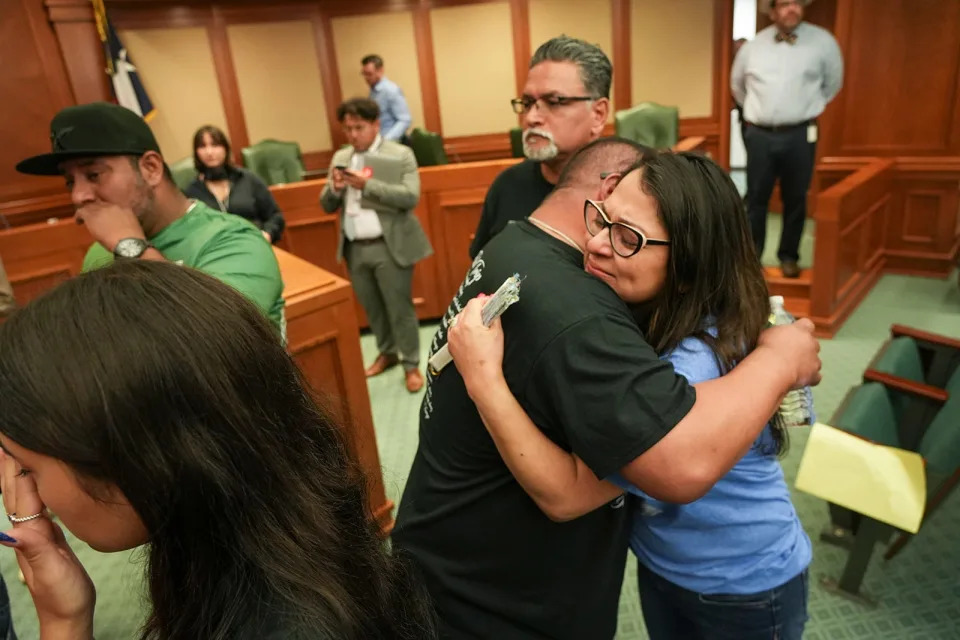
Several Uvalde victims’ relatives burst into sobs and cheers in the Capitol hearing room when two Republicans joined all the Democrats on the committee to advance the bill by an 8-5 vote.

“I’m feeling very overwhelmed, very emotional,” Kimberly Garcia said through tears after the committee vote. Her 10-year-old daughter, Amerie Jo Garza, was one of the 19 fourth graders and two teachers killed at Robb Elementary School in Uvalde on May 24, 2022.

“I was super worried, but I feel like my daughter did this, and I feel like she’s making a difference, and I’m proud of her. I hate that it’s come down to this, but I know that she’s always with me, and I know that I’m not going to let anyone ever forget her,” Garcia said.

Uvalde victims’ relatives have been advocating for lawmakers to pass House Bill 2744 for months, coming to the Capitol nearly every week during the legislative session to demand its passage and even waiting more than 13 hours to testify in support of the bill in a committee hearing in April.

Their unrelenting push for lawmakers to pass gun control legislation has been an uphill battle in a Republican-dominated Legislature that has loosened gun restrictions in recent sessions. Monday’s vote, however, was a significant victory for the families.

As recently as 10 a.m. Monday, Rio Grande City Republican Rep. Ryan Guillen, who chairs the committee where the bill was pending, had said he was not planning to bring the bill up for a vote because he didn’t believe it had the votes to pass in the full House.

But by 11 a.m., after an emotional protest and news conference by the Uvalde families and gun control activists Monday, Guillen changed course.

The Uvalde gunman purchased his AR-15 style semi-automatic rifle legally just days after his 18th birthday, having unsuccessfully tried to acquire one before he was legally old enough to do so under state law.

While Monday’s progress was a major, and unexpected, step forward, the future of the bill remains uncertain. Texas House Speaker Dade Phelan previously said he would be willing to let a debate on the bill play out on the House floor but cautioned that he doesn’t believe it has the votes to pass the House.

Gov. Greg Abbott has said he believes the measure to be unconstitutional. A spokesperson for the speaker’s office declined to comment on the bill’s progress Monday, and a representative for the governor did not immediately return a request for comment.

Family members of Uvalde victims Julissa Rizo and Javier Cazarez hug after the House Select Committee on Community Safety votes HB2744 out of committee at the Texas Capitol Monday, May 8, 2023. HB2744 would raise the age to purchase assault weapons.

Putin’s scaled-down Victory Day celebration not much to cheer. Putin tells WWII event West is waging a ‘real war’ on Russia

Associated Press

Putin tells WWII event West is waging a ‘real war’ on Russia

The Associated Press – May 9, 2023

Military vehicles move toward Red Square to attend a Victory Day military parade in Moscow, Russia, Tuesday, May 9, 2023, marking the 78th anniversary of the end of World War II. (AP Photo/Alexander Zemlianichenko)
Iskander, mobile short-range ballistic missile system launchers, drive past during the Victory Day military parade at Dvortsovaya (Palace) Square to celebrate 78 years after the victory in World War II in St. Petersburg, Russia, Tuesday, May 9, 2023. (AP Photo/Dmitri Lovetsky)
APTOPIX Russia Victory Day Parade
Iskander, mobile short-range ballistic missile system launchers, drive past during the Victory Day military parade at Dvortsovaya (Palace) Square to celebrate 78 years after the victory in World War II in St. Petersburg, Russia, Tuesday, May 9, 2023. (AP Photo/Dmitri Lovetsky)

President Vladimir Putin declared Tuesday that the West has unleashed “a real war” against Russia, reprising a familiar refrain at scaled-down Victory Day celebrations that may reflect the toll the Ukraine conflict is taking on his forces.

Putin’s remarks came just hours after Moscow fired its latest barrage of cruise missiles at targets in Ukraine, which Russia invaded more than 14 months ago. Ukrainian authorities said air defenses destroyed 23 of 25 missiles launched.

The Russian leader has repeatedly sought to paint his invasion of Ukraine as necessary to defend against a Western threat. Kyiv and its Western allies say they pose no such threat and that Moscow’s war is meant to deter Western influence in a country that Russia considers part of its sphere of influence.

“Today civilization is once again at a decisive turning point,” Putin said at the annual commemorations celebrating the defeat of Nazi Germany in World War II. “A real war has been unleashed against our motherland.”

Putin has often used patriotic rhetoric that harkens back to the earlier war in an effort to rally his citizens and forces — and May 9 is one of the most important dates in the Russian political calendar. But this year’s celebrations were markedly smaller, at least partially because of security concerns after several drone attacks have been reported inside Russia.

Some 8,000 troops took part in the parade in Moscow’s Red Square on Tuesday — the lowest number since 2008. Even the procession in 2020, the year of the COVID-19 pandemic, featured some 13,000 soldiers, and last year, 11,000 troops took part. There was no fly-over of military jets, and the event lasted less than the usual hour.

“This is weak. There are no tanks,” said Yelena Orlova, watching the vehicles rumble down Moscow’s Novy Arbat avenue after leaving Red Square. “We’re upset, but that’s all right; it will be better in the future.”

The Kremlin’s forces deployed in Ukraine are defending a front line stretching more than 1,000 kilometers (600 miles), presumably thinning the ranks of troops available for such displays.

“This is supposed to be a showpiece for Russian military might. But so much of that military might has already been mauled in Ukraine that Russia has very little to show on its parade in Red Square,” said Keir Giles, a Russia expert at London’s Chatham House think tank.

Meanwhile, the traditional Immortal Regiment processions, in which crowds take to the streets holding portraits of relatives who died or served in World War II — a pillar of the holiday — were canceled in multiple cities.

“That seems to be for fear that those people who have lost their relatives in this current war on Ukraine might actually join the processions and show just the scale of the casualties that Russia has suffered in its current war,” Giles said.

Russian media counted 24 cities that also scrapped military parades — another staple of the celebrations — for the first time in years. Regional officials blamed unspecified “security concerns” or vaguely referred to “the current situation” for the restrictions and cancelations. It wasn’t clear whether their decisions were taken in coordination with the Kremlin.

Last week, Russia claimed it foiled an attack by Ukrainian drones on the Kremlin that it called an unsuccessful assassination attempt against Putin. Ukrainian President Volodymyr Zelenskyy denied involvement.

There was no independent verification of the purported attack, which Russia authorities said occurred overnight but presented no evidence to support it.

On a tribune in Red Square, Putin praised soldiers taking part in the war in Ukraine and urged Russians to stand together.

“Our heroic ancestors proved that there is nothing stronger, more powerful and more reliable than our unity. There is nothing in the world stronger than our love for the motherland,” Putin said.

The guest list was also light amid Putin’s broad diplomatic isolation over the war. Initially, only one foreign leader was expected to attend this year’s parade — Kyrgyz President Sadyr Zhaparov. That was one more foreign guest than last year, when no leaders went.

At the last minute on Monday, officials announced that the leaders of Armenia, Belarus, Kazakhstan, Tajikistan, Turkmenistan and Uzbekistan would head to Moscow as well.

Meanwhile, the Ukrainian air force said in a Telegram post that eight Kalibr cruise missiles were fired from carriers in the Black Sea toward the east and 17 from strategic aircraft.

The missiles came hours before European Commission President Ursula von der Leyen, the head of the European Union’s executive branch, arrived in Kyiv.

Von der Leyen urged EU member nations to take measures to prevent countries from helping Russia to circumvent the bloc’s sanctions. The EU has noticed that certain products that have been banned to undermine Russia’s war effort are still getting through, she said.

Von der Leyen did not name the countries, but unusual trade flows through China and Turkey have been on the EU’s radar for some time.

Ukraine is keen to join the EU, but membership has many requirements and is still a long way off. Ukraine is also hoping to join NATO, after moving close to the Western military alliance during the war.

In the latest help from a NATO member, the U.S. was expected to announce Tuesday that it will provide $1.2 billion more in long-term military aid to Ukraine to further bolster its air defenses.

A Colorado school board was taken over by Trump-loving conservatives. Now nearly half its high-school teachers are bailing.

Insider

A Colorado school board was taken over by Trump-loving conservatives. Now nearly half its high-school teachers are bailing.

Grace Eliza Goodwin – May 9, 2023

Desks and chairs arranged in classroom at high school
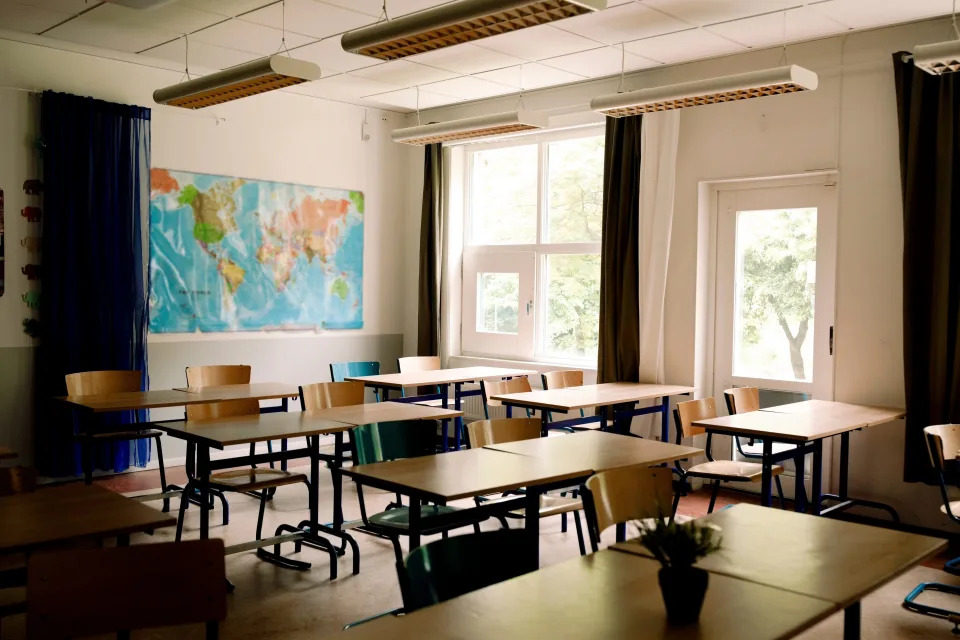
Desks and chairs arranged in classroom at high schoolMaskot / Getty Images
  • A newly elected conservative school board in Colorado is enraging many residents and teachers.
  • About 40% of the district’s high-school teachers have said they’re leaving next year, NBC News said.
  • The board has adopted a conservative teaching standard and argued against mental-health resources.

A Colorado school district’s board was taken over by conservatives aiming to emulate former President Donald Trump — and its new policies are set to drive off nearly half the district’s high-school teachers, NBC News reported.

At the end of 2021, a group of conservatives won control of the school district in Woodland Park, Colorado.

Since then, it has enacted a number of conservative policies that have infuriated many teachers, residents, and even staunch Republicans in the town of just 8,000 people, NBC News reported.

Nearly 40% of the district’s high-school teachers have decided to leave at the end of this school year, a district administrator told NBC News.

At least four higher-ups in the district have quit over the new board’s policies, according to interviews and emails viewed by NBC News.

“This is the flood the zone tactic, and the idea is if you advance on many fronts at the same time, then the enemy cannot fortify, defend, effectively counter-attack at any one front,” David Illingworth, a new member of the school board, wrote to another member shortly after being elected, NBC News reported.

“Divide, scatter, conquer,” he wrote. “Trump was great at this in his first 100 days.”

Among its most controversial new policies is the board’s decision to adopt the American Birthright social-studies standard. The curriculum standard, created by a conservative advocacy group, emphasizes patriotism, discourages civic engagement, and criticizes the federal government’s control of public schools, NBC News said.

The board also pushed against mental-health resources for students, with the superintendent musing how a school social worker didn’t help stop a student’s killing off campus, the NBC News report said.

Russia’s losses are worse than anyone thinks

The Telegraph

Russia’s losses are worse than anyone thinks

Hamish de Bretton-Gordon – May 9, 2023

Ukrainian sappers explode anti-tank mines and other explosive materials found near the town of Bucha, on a military range outside Kyiv (Kiev), Ukraine, 13 April 2023, amid Russia's invasion
Ukrainian sappers explode anti-tank mines and other explosive materials found near the town of Bucha, on a military range outside Kyiv (Kiev), Ukraine, 13 April 2023, amid Russia’s invasion

It was a curious sight. Russia’s annual Victory Day parade, a display of military might and a celebration of its role in defeating Nazi Germany, could only muster a solitary T-34. The serried ranks of tanks seen in recent years were absent; many of them will be lying burned out in the Donbas. Putin’s speech, meanwhile, was desperate, even delusional. He claimed civilisation was “at a decisive turning point”; that a “real war has been unleashed against Russia”; that the West seeks the “disintegration and destruction” of Russia. The only person driving towards that goal is Putin himself.

His army is in a shambolic condition, with multiple reports indicating that troops are fighting without adequate body armour. Young men are conscripted and thrown into the meat grinder of the Donbas, backed by antiquated tanks. They face forces combining modern Western equipment with significant new tactical innovations. And they are being slaughtered.

Over the last century, battlefield casualties for Western forces have seen a steady decline. Modern medical techniques, antibiotics and military developments have all played their role. But assumptions based on this experience may not work when estimating the losses suffered by Putin’s poorly-equipped conscripts.

Ukrainian reports of Russian casualties resemble something from the fronts of the First World War, with hundreds killed and injured each day. Western analysts have tended to be more conservative in their estimates.

But this conflict is not like those we have seen previously. Kyiv’s forces are innovating new ways of conducting warfare, with drones at their heart. Tech savvy young men and women are repurposing and re-engineering for the battlefield off-the-shelf and inexpensive equipment developed for peace.

This is a game changing moment. Russia’s armed forces are centred around the use of artillery; various sources list Moscow’s expenditure of shells as multiples of Ukraine’s. And yet even pessimistic assessments show a casualty ratio skewed heavily in Ukraine’s favour, despite being theoretically outgunned.

The key to this appears to be innovation. What is unique to the Ukraine conflict is the use of both drones as striking weapons and as platforms for observation. Some analysts suggest that using the standard ratios of deaths/wounded will be very far from reflecting the lethality of this new mode of warfare. Some have gone so far as to suggest that the vast majority of artillery rounds and mortar shells fired by Kyiv’s forces will be watched by drone, allowing for – in artillery terms, at least – pinpoint accuracy.

And the pace of change is set to continue. The Ukrainians have trained 10,000 drone operators, who will add to Kyiv’s capability to observe and guide indirect fire. This type of attack was called precision targeting when I first went to Afghanistan in 2008. In those days we would have a huge Nimrod aircraft with 20 or so operators on board, flying at 20,000ft with a single camera. There would be five or six of us on the ground monitoring the live feed; if the right target was identified we called in a precision air strike from a fighter jet. We conducted a few of these strikes per week. Later, we moved on to Reaper drones with hellfire missiles. But these strikes were rare; what Kyiv is doing is new.

Fighting a battle for national survival, every tank or enemy combatant is a fair target. the Ukrainians are developing techniques not only focused on precision attack but also on directing artillery fire. Battlefield footage may look like the First World War – trenches, shells and casualties abound – but we have moved on from rare balloon spotters sending messages to guns. Now, there are hundreds of tiny drones with amazingly capable cameras, giving detailed pictures and highly accurate meta data back to the guns. This is a type of warfare which few in Nato have ever experienced; when Russian casualty rates as estimated by the West appear to be half what the Ukrainians are claiming, it is surely possible that the Ukrainians are right.

This is backed up by the scramble in Russia to find soldiers. Both sides might lack ammunition, but the Kremlin appears to be running out of soldiers to fire that ammunition. The long-term costs for Russia are likely to be devastating.

Col Hamish de Bretton-Gordon is a former commander of the 1st Royal Tank Regiment

A Refugee From Another Time Gets an Eviction Notice

The New York Times

A Refugee From Another Time Gets an Eviction Notice

Dan Barry – May 8, 2023

William Mackiw
William Mackiw

NEW YORK — The travails of many can be lucrative for a few. Take the old Stewart Hotel in Manhattan, which is being used as temporary housing for some of the tens of thousands of migrants who have come north to New York in search of sanctuary.

The city is paying a $200 nightly rate for 611 rooms in the nearly century-old hotel. This comes to roughly $6,000 a month for each room, or about $3.66 million a month for the hotel’s owners.

While they collect favorable rates for their fully booked hotel, the owners are also suing to evict the wisp of a man paying $865 a month for Room 1810: William Mackiw, who has lived there for so long that no one knows when he first appeared. It has been decades.

At some point, he moved in with the rent-stabilized room’s tenant, his aunt Louise. At some point, she died. Again, it has been decades.

And he just kept paying the modest rent with what he earned as a waiter in restaurants of casual fare. Your Howard Johnson’s. Your Beefsteak Charlie’s. Month after month, year after year.

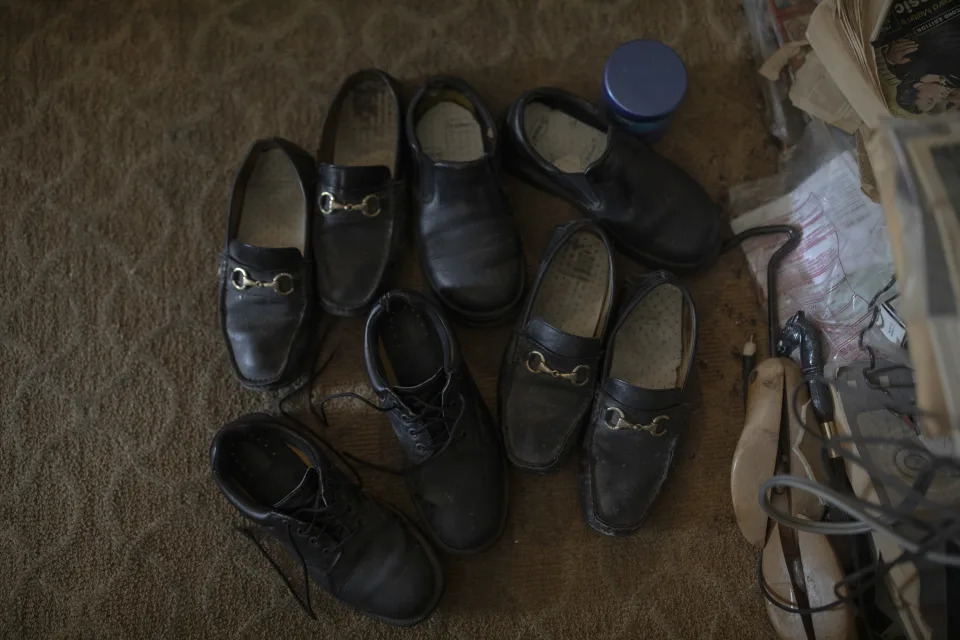
Mackiw, 82 and retired, lives among the relics of a solitary life rooted in the past. Piles of old movies on VHS and DVD. Threadbare shirts hanging above the discolored bathtub. A broken TV. A dust-covered rotary phone. Four pairs of black shoes gathered on the floor like a flock of crows.

Within his confined world, the tight boundaries of which include a church and a market, he lived mostly unseen. Until a few months ago, that is, when someone knocked on his door and handed him a document. Its message:

“Time for you to leave,” Mackiw recalled.

In 10 days.

With that, the economic, societal and geopolitical pressures of the larger world combined to upend his tiny speck of it, and not for the first time. Mackiw was also an immigrant refugee, once. He needed sanctuary then, and may soon need it again.

In November 1949, the General C.C. Ballou, a reconfigured Army transport ship whose amenities included a children’s playroom, departed the German port of Bremerhaven. Aboard were 1,265 of the many millions of Europeans displaced by the upheaval of World War II.

According to records kept by the Center for Migration Studies of New York, the passengers included Celestyn and Sofia Mackiw and their two sons, Zygfryd, 12, and Wilhelm, 9. The Ukrainian family had most recently been living in a displacement camp in Aschaffenburg, Germany, where the uprooted, persecuted and traumatized received food, clothing and medical care.

Asked why his family left Europe, Mackiw said, simply, “Because of the war.” His failing memory recalls only flashes of his disrupted boyhood: being terrified by the bombs; bringing food to Jews harbored by his mother; living in camps.

Once in the United States, the Mackiws settled into a walk-up building in an East Village neighborhood sometimes called Little Ukraine. He remembers his mother as “an incredible woman” and his father as a daring window cleaner who “didn’t bother with the belts.”

The family later moved to Orchard Street on the Lower East Side. Mackiw attended the city’s Machine and Metal Trades High School, became an American citizen in 1959 and held a series of blue-collar jobs before waiting on tables full time.

“I worked in the restaurants,” he said.

Among them was Joe Franklin’s Memory Lane, a Theater District hangout for entertainers either well known or yet to be discovered. They all gravitated toward Franklin, a longtime radio and television host known for his command of entertainment history.

“The King of Nostalgia,” proclaimed his business cards, one of which sits amid the Room 1810 clutter. He died in 2015.

As Franklin held court with the likes of Soupy Sales and “Professor” Irwin Corey — you should look them up — his waiter of choice was Mackiw.

“Joe specifically sat in the section where William would be serving,” recalled Arnold Wachtel, a Joe Franklin’s customer who once ran Times Square gift and novelty shops such as the Fun Emporium and the Funny Store. “They used to reminisce about old movies and swap copies of movies on videos and DVDs.”

At shift’s end, the diminutive waiter would place a hat on his bald head and go back to the Stewart at Seventh Avenue and 31st Street, back to Room 1810.

The 31-story hotel opened in 1929 as the Hotel Governor Clinton — a lesser version of its grand neighbor, the Hotel Pennsylvania — and experienced the typical ups, downs and changes of the hospitality industry. But some aspects seemed permanent, from the art deco touches in the lobby to a few tenants in the rooms above.

Specifics are murky, but a few decades ago, perhaps as early as the 1970s, a retired seamstress named Louise Hirschfeld moved into 1810, a one-room apartment with a bathroom and kitchenette. She was a sister of Mackiw’s mother, Sofia.

The date of Mackiw’s arrival has been lost in the Manhattan blur of time. He slept on the couch while his aunt slept in the bed. Then she left for France, where her son and grandchildren lived and where she died at 81. In 1995.

Mackiw continued to pay the monthly rent with cash or a money order, and to collect receipts bearing the name of his dead aunt. When he wasn’t lingering in the lobby, shopping for food on Ninth Avenue or praying at St. Francis of Assisi Church around the corner, he was in his room, watching movies from the extensive Mackiw collection.

These portals of escape are scattered by the dozens on the floor. “King Kong.” “Broken Arrow.” “It Came From Outer Space.” “To Have and Have Not.” And his favorite: “Gone With the Wind.”

His routine did not change as time passed, as the city evolved, as the hotel came under new ownership. In 2016, the building was bought by a limited liability corporation whose partners declined through their lawyer last week to identify themselves. City records identify two of them as Isaac Chetrit, who with his brother, Eli, owns the AB & Sons investment group, and Ray Yadidi, who with his brother, Jack, owns the Sioni Group real estate firm.

The first threat to Mackiw’s insular world came early last year, when the owners informed the half-dozen permanent residents that they would be providing relocation assistance while the building underwent extensive renovations. The plan was to close the hotel and spend up to three years converting it into a 625-unit apartment building.

This, apparently, was when the owners discovered that Mackiw, not the late Louise Hirschfeld, was occupying Room 1810. Even though he had personally handed over the rent every month for years.

After this revelation, Mackiw said, hotel representatives came to his door more than once to tell him in a forceful and threatening manner that he had to vacate the room. The hotel denies ever harassing him.

At the same time, a humanitarian crisis was unfolding in New York, as thousands of migrants from Central and South America came to escape crime and economic uncertainty. Many arrived by bus, courtesy of the Republican governors of Arizona and Texas, who wanted to give the Northeast a taste of everyday life along the southern border.

The hotel’s owners set aside their conversion plans and, in mid-September, agreed to allow the city to rent half the building, including 300 rooms, for use as an intake center and refuge for asylum-seekers.

It wasn’t enough. In mid-December, the city signed a new contract to take effective control of the entire hotel, including the lobby, the ballroom and 611 rooms (at $200 a night). The agreement, which gave temporary housing to about 2,000 migrants, did not include the several units occupied by permanent residents.

The same week in September that the hotel began renting rooms to the city at market rates, a process server handed a 10-day eviction notice to the man who answered a knock on the door of Room 1810. The server described Mackiw this way:

Height: 5-foot-5.

Weight: 110 pounds.

Approximate age: 83.

Hair: Hat.

By this point, a distressed Mackiw had reached out to Wachtel, his old Joe Franklin’s customer, who had not heard from him in more than a dozen years. But as the son of a Holocaust survivor, Wachtel was moved by the older man’s ordeal — “The man is terrified” — and family memories of harboring Jews during the war.

“He’s a nice guy,” Wachtel said. “He prays for me and my family.”

Wachtel made phone calls, sent emails and arranged to become Mackiw’s power of attorney. He also contacted the Goddard Riverside Law Project, which specializes in the rights of single-room-occupancy (SRO) tenants. It agreed to take the Housing Court case of CYH Manhattan LLC against William Mackiw aka Bill Mackiw.

Daniel Evans, a lawyer with Goddard Riverside, said that under the city’s rent-stabilization codes, Mackiw acquired the rights and protections of a permanent SRO resident once he had spent six months in the apartment. There is no dispute that his stay has been much longer than six months — much, much longer.

“It’s outrageous that they would bring this type of case after 40 years of Mr. Mackiw living there,” Evans said. “Especially when he’s paying the rent himself at the front desk. They know he’s there.”

In a telephone interview, Lisa Faham-Selzer, a lawyer representing the owners, declined to answer a series of questions, including how long Mackiw had lived in the hotel and why the hotel had accepted payment from him for decades.

“This is a strong case with very, very clear allegations,” she said.

A hint of those allegations is contained in a recent court filing, in which the owners contend that Mackiw “has been posing as Louise Hirschfeld for decades.” By doing so, they argue, he “has been perpetrating a fraud.”

The case is pending. Court records do not indicate eviction proceedings brought against any of the hotel’s other permanent tenants, although one moved out after receiving a $10,000 buyout.

For now, Mackiw, a refugee from another time, continues to live among the refugees of today, fretting to the point of tears about his future.

He stays mostly in Room 1810, his longtime home. There, during a recent visit, the only food seemed to be milk, some cheese slices, peanut butter, a box of Cheerios, a pack of vanilla Oreos and a few Hershey chocolate bars.

“You want a Hershey?” asked the old waiter.

DOJ charges ‘Pink Beret’ Jan. 6 rioter IDed after an ex spotted her in a viral FBI tweet

NBC News

DOJ charges ‘Pink Beret’ Jan. 6 rioter IDed after an ex spotted her in a viral FBI tweet

Ryan J. Reilly – May 8, 2023

WASHINGTON — A woman who stormed the Capitol on Jan. 6 while wearing a pink beret and was recently identified to the FBI by an ex-romantic partner was charged with four federal counts Monday.

As NBC News first reported, an ex identified Jennifer Inzunza Vargas Geller of California and reported her to the FBI after the bureau featured her in a viral tweet last month. She faces four misdemeanor counts: entering or remaining in a restricted building or grounds, disorderly and disruptive conduct in a restricted building, disorderly conduct in the Capitol grounds or buildings and unlawfully parading, demonstrating or picketing in a Capitol building. She was not in custody Monday, a law enforcement source said, but there is now a warrant out for her arrest.

For more than two years, online sleuths who identified hundreds of participants in connection with the attack on Jan. 6, 2021, had been unable to determine Vargas Geller’s identity, and the woman they dubbed #PinkBeret had been the subject of online conspiracy theories. An attorney for another Jan. 6 defendant suggested she was working at the behest of the government.

But the last weekend of April, a clothing designer Vargas Geller used to date was standing in the checkout line at a Joann Fabric and Crafts store when his buddy showed him a funny tweet from the FBI’s Washington field office on his phone.

Jennifer Vargas outside the Capitol on Jan. 6, 2021. (U.S. District Court for Washington, D.C.)

“He’s always on Twitter, and he said something like, ‘Yo, check out this chick,'” the designer said.“I stopped dead in my tracks,” he said. “I’m like, ‘That’s Jenny.’”

While most recent tweets from the Washington field office account had received a few thousand views, the tweet featuring Vargas Geller racked up millions. Twitter users dubbed her “Insurrection Eva Braun” and “fascist Matilda” and compared her to April Ludgate, the character played by Aubrey Plaza in NBC’s “Parks and Recreation.” Several users joked that she seemed straight out of a Wes Anderson movie, and one user tweeted “Emily in-carceration,” referring to the show “Emily in Paris.”

Vargas Geller was charged 11 days after the viral tweet, which is an extremely quick turnaround compared to other Jan. 6 cases. Online sleuths have identified hundreds of additional Capitol riot participants who have not been charged, some of whom were first IDed more than two years ago, in 2021.

Jennifer Vargas outside the Capitol on Jan. 6, 2021. (U.S. District Court for Washington, D.C.)

Vargas Geller was from Sacramento, the clothing designer said, and she went to meet him in Los Angeles in early 2019, when they were in their early 20s. “We weren’t, like, trying to get married or anything,” he said. “We were hooking up for a few months.”

But there was a red flag that sparked a breakup: Vargas Geller, he said, wrote on Discord that she was reading Adolf Hitler’s 1925 manifesto.

“I was just instantly turned off, like, ‘Yo, I don’t think this is going to work out,’” he said. “You’re, like, reading ‘Mein Kampf.’ You think immigrants don’t deserve X, Y, Z.” (A social media account linked to Vargas Geller, viewed by NBC News, also referred to Hitler.)

Vargas Geller could not be reached for comment.

Kira West, the defense attorney for Jan. 6 defendant Darrell Neely, who suggested “Pink Beret” was working as a government agent, said after Vargas Geller was identified that the government should have tried to ID her sooner.

“Our question is why they weren’t looking sooner when we brought it to their attention long ago? Especially with Mr. Neely’s liberty on the line,” West said.

Jennifer Vargas outside the Capitol on Jan. 6, 2021. (U.S. District Court for Washington, D.C.)

Vargas Geller’s ex knew she had traveled to Washington and asked her whether she was on the “no fly” list in a message he wrote to her a few days after the attack.

“Nope, cause I didn’t go into the [Capitol],” she wrote, despite extensive video evidence later viewed by NBC News and cited in Monday’s affidavit that the FBI says shows her inside the building.

“But you still crossed state lines to riot,” he replied.

“I was there to support the president. Not to partake in that riot. I support the police,” Vargas Geller responded on Jan. 10, 2021, in a conservation shared with NBC News.

Jennifer Vargas inside the Capitol on Jan. 6, 2021. (U.S. District Court for Washington, D.C.)

Federal prosecutors have charged more than 1,000 people in connection with the Capitol attack, and hundreds of additional participants who have been identified have not yet been arrested.

Most defendants who face charges similar to Vargas Geller’s have received either probation or short sentences of incarceration. The longest sentence — more than 14 years in federal prison — went to a violent rioter with an extensive criminal record.