The housing market correction has already caused homeowners to lose $2.3 trillion
Lance Lambert – February 22, 2023
For 124 consecutive months, spanning the bottom of the housing crash in February 2012 through the top of the Pandemic Housing Boom in June 2022, U.S. home prices posted positive month-over-month growth. That streak, of course, came to an abrupt end last year as the Fed’s inflation fight set off a correction in home prices.
On one hand, since their peak, national home prices have only fallen by a few percentage points through November, according to the seasonally adjusted Case-Shiller National Home Price Index. On the other hand, the ongoing housing correction is already starting to have a financial, and psychological, impact on homeowners.
On Wednesday, Redfin published a report finding that the total value of U.S. homes has fallen $2.3 trillion since the start of the home price correction.
“The total value of U.S. homes was $45.3 trillion at the end of 2022, down 4.9% ($2.3 trillion) from a record high of $47.7 trillion in June. That’s the largest June-to-December drop in percentage terms since 2008,” writes Redfin researchers.
Let’s be clear: While there’s certainly a home price correction rolling through many markets nationwide, most homeowners are still up big-time since the pandemic’s onset.
“The housing market has shed some of its value, but most homeowners will still reap big rewards from the Pandemic Housing Boom,” Redfin researchers said in the report. “The total value of U.S. homes remains roughly $13 trillion higher than it was in February 2020, the month before the coronavirus was declared a pandemic.”
Is this home price correction almost over? It depends on who you ask.
Among the 29 major real estate forecasters, six firms think national home prices will either rise or remain flat in 2023. Meanwhile, 23 major real estate forecasters think national home prices will fall further this year.
On Wednesday, minutes released from the recent FOMC meeting showed that Federal Reserve officials believe “valuations in both residential and commercial property markets remained high” and “that the potential for large declines in property prices remained greater than usual.”
Whenever a group like Redfin says “U.S. home prices,” it means a national aggregate. On a regional level, this home price correction (or lack thereof) continues to vary.
Among the country’s 400 largest housing markets tracked by Zillow, 276 have seen local home prices fall from their seasonally adjusted 2022 peak. Another 124 markets remain at their 2022 peak price.
The markets with the biggest declines, including places like Bend, Ore. (down 9.2%) and Phoenix (down 6.3%), are disproportionately located across the Pacific Coast and Southwest.
“On a regional basis, we project larger declines across the Pacific Coast and Southwest regions—which have seen the largest increases in inventory on average—and more modest declines across the Mid-Atlantic and Midwest—which have maintained greater affordability over the past couple years,” wrote Goldman Sachs in a recent report.
Dems consider break with tradition to get Biden more judges
Kevin Freking – February 22, 2023
FILE – Sen. Dick Durbin, D-Ill., chairman of the Senate Judiciary Committee, leads a hearing about the rise in threats toward elected leaders and election workers, at the Capitol in Washington, Aug. 3, 2022. Democrats recently celebrated the 100th judicial confirmation of Joe Biden’s presidency and are clamoring for more. To make it happen, some are flirting with ending a century-long Senate practice that a “blue slip” from a senator could make or break a nomination.(AP Photo/J. Scott Applewhite, File) (ASSOCIATED PRESS)
WASHINGTON (AP) — Even as Democrats celebrated the 100th judicial confirmation of Joe Biden’s presidency, they are clamoring for more — and some are flirting with ending a century-long Senate practice to help make it happen.
The rising friction over what in Washington parlance is known as the “blue slip” is creating tensions on the Senate panel that handles judicial nominations and prompting stern warnings from Republicans about a dangerous escalation in the partisanship that already dominates the judicial confirmation process.
The clash over Senate procedure could have major ramifications for Biden as he seeks to fill as many court vacancies as possible during the final two years of his term. Aghast at the speed with which Republicans approved judges during the Trump era, Democrats have made the confirmation to the courts a top priority, vowing to fill every seat possible. Their focus on the nominations is even greater now that Republicans control the House and can stall much of Biden’s broader legislative agenda.
Since at least 1917, the chairman of the Senate Judiciary Committee has sent a blue-colored form, or “blue slip,” to the senators representing the home state of a judicial nominee. A blue slip returned with a positive response signals the senator’s approval of moving forward with a nomination hearing. But if the blue slip is not returned or comes back with a negative response, that means the home state senator objects, which can doom the nomination.
Republicans during Donald Trump’s presidency determined the lack of a positive blue slip would not stop them from moving forward with considering appellate court nominees — and they did so 17 times. Democrats were livid, pointing out that Republicans blocked several of President Barack Obama’s appellate nominees by declining to return a positive blue slip.
Now, Democrats are being encouraged to follow suit and do away with the blue slip when it comes to the district judges whose courts serve as the starting point for federal civil and criminal cases.
”In many respects, it is an archaic holdover from a different era,” said Sen. Richard Blumenthal, D-Conn. “I think we’re maybe reaching the point of deciding whether it will be continued.”
Advocates for doing away with the blue slip say fast action is critical if Democrats want to have the kind of success Trump had in year three of his presidency, when he secured more than 100 judicial confirmations out of 231. They believe Democrats can’t afford to wait months on Republican senators to give their go-ahead for a nominee.
Besides, they argue, if Democrats don’t do away with the blue slip now, Republicans will abolish it when they return to the majority.
“Democrats would be chumps to say, ‘Oh well, we’re not going to do this because it’s a tradition,'” said Russ Feingold, the former three-term Democratic senator from Wisconsin who now serves as president of the American Constitution Society. The group is a liberal counter to the conservative Federalist Society.
The New York Times editorial board also weighed in recently, saying it was “far past time” for the chairman of the Senate Judiciary Committee to end the blue slip practice.
The chairman, Sen. Dick Durbin, D-Ill., has clearly heard some of the concerns voiced by progressives. He has made it a point recently to emphasize how Democrats submitted 130 positive blue slips for district court nominees during the Trump presidency, but so far, Republicans have only done so about a dozen times.
That’s essentially because Biden has been filling judicial vacancies of predominately Democratic-appointed judges in blue states. Soon, it will get harder. There are about 40 district court vacancies that will require a blue slip from at least one Republican senator. Many of those vacancies don’t have a nominee yet, and Durbin is clearly sending a signal to GOP senators to work expeditiously with the White House on submitting prospective nominees.
Durbin said he wants to continue with the blue slip tradition, but he’s adding a caveat: that they aren’t used for “discriminatory purposes” to block consideration of nominees based on race, gender or sexual orientation.
His comments have alarmed Republican senators. Sen. Lindsey Graham, R-S.C., said the blue slip courtesy is “very much at stake and at risk here.” He also questioned how Durbin is going to discern the motivations of Republicans senators if they object to a nominee.
“The last thing left in this body that makes the Senate the Senate, in my view, and gives a senator a say about a consequential decision in their state that will last a lifetime is the blue slip process,” Graham said. “So I would just hope we could agree, if possible, that no matter how frustrated we get, we’re going to honor this system.”
So far, only one Biden nominee for a district court has had their nomination derailed because a senator withheld a blue slip, William Pocan, nominated to the Eastern District of Wisconsin. Republican Sen. Ron Johnson withheld his blue slip, saying he had heard concerns from the Green Bay legal community that they needed a judge locally based and active in their community.
Sen. John Cornyn, R-Texas, said complaints about the blue slip are “orchestrated and contrived.” He said that he and Sen. Ted Cruz, R-Texas, were asked by the White House to submit names for an appellate court vacancy within three weeks, which they did.
“And eight months later, the administration finally gets around to nominating somebody,” Cornyn said. “We’ve got two district court vacancies where we have not been contacted at all by the White House counsel. So, most of the delay is because the administration has been slow in filling these nominees, these vacancies.”
Cornyn likened the efforts to ending the blue slip to Democratic calls for ending the filibuster so that legislation would only need a simple majority to advance rather than 60 votes.
“They want to fully dismantle the Senate as an institution,” he said.
Proponents of the blue slip say its most important feature is to encourage collaboration and compromise. Durbin said he provided eight positive blue slips after negotiating on nominees with the Trump White House. “I had to give a little. They did, too,” he said.
But Feingold, who served 16 years on the Judiciary panel and 18 years in the Senate, said he believes presidents will continue to consult with senators on judicial openings even without the blue slip, because they need a lawmaker’s votes on other priorities.
“You need to consult them anyway because if you try to jam somebody really bad down their throat, they are going to remember it,” Feingold said.
Blumenthal said he will bring lessons learned from the Obama years to the debate, and he’s determined not to let Republicans block district judges through the blue slip process the way they did appellate court judges.
“The history is undeniable that Republicans succeeded in blocking many of the Obama nominees, and therefore held open judgeships, which they then filled with alacrity,” Blumenthal said. “We’re not going to let that happen again.”
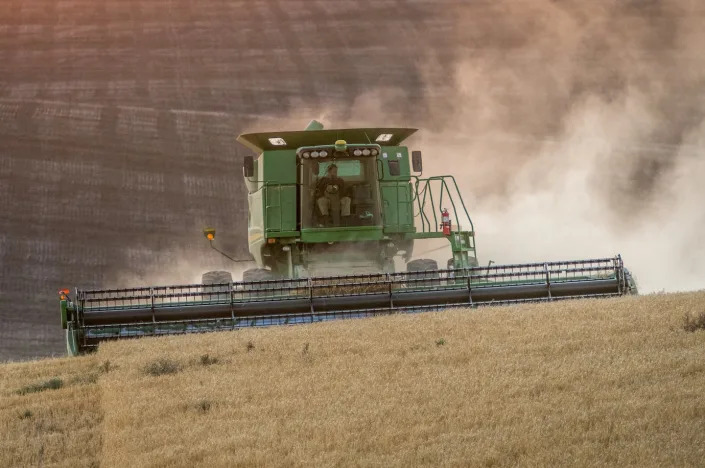
As tractors became more sophisticated over the past two decades, the big manufacturers allowed farmers fewer options for repairs. Rather than hiring independent repair shops, farmers have increasingly had to wait for company-authorized dealers to arrive. Getting repairs could take days, often leading to lost time and high costs.
A new memorandum of understanding between the country’s largest farm equipment maker, John Deere Corp., and the American Farm Bureau Federation is now raising hopes that U.S. farmers will finally regain the right to repair more of their own equipment.
However, supporters of right-to-repair laws suspect a more sinister purpose: to slow the momentum of efforts to secure right-to-repair laws around the country.
Under the agreement, John Deere promises to give farmers and independent repair shops access to manuals, diagnostics and parts. But there’s a catch – the agreement isn’t legally binding, and, as part of the deal, the influential Farm Bureau promised not to support any federal or state right-to-repair legislation.
You can listen to more articles from The Conversation narrated by Noa.
The right-to-repair movement has become the leading edge of a pushback against growing corporate power. Intellectual property protections, whether patents on farm equipment, crops, computers or cellphones, have become more intense in recent decades and cover more territory, giving companies more control over what farmers and other consumers can do with the products they buy.
For farmers, few examples of those corporate constraints are more frustrating than repair restrictions and patent rights that prevent them from saving seeds from their own crops for future planting.
How a few companies became so powerful
The United States’ market economy requires competition to function properly, which is why U.S. antitrust policies were strictly enforced in the post-World War II era.
During the 1970s and 1980s, however, political leaders began following the advice of a group of economists at the University of Chicago and relaxed enforcement of federal antitrust policies. That led to a concentration of economic power in many sectors.
This concentration has become especially pronounced in agriculture, with a few companies consolidating market share in numerous areas, including seeds, pesticides and machinery, as well as commodity processing and meatpacking. One study in 2014 estimated that Monsanto, now owned by Bayer, was responsible for approximately 80% of the corn and 90% of the soybeans grown in the U.S. In farm machinery, John Deere and Kubota account for about a third of the market.
Market power often translates into political power, which means that those large companies can influence regulatory oversight, legal decisions, and legislation that furthers their economic interests – including securing more expansive and stricter intellectual property policies.
Whether the product is an automobile, smartphone or seed, companies can extract more profits if they can force consumers to purchase the company’s replacement parts or use the company’s exclusive dealership to repair the product.
One of the first cases that challenged the right to repair equipment was in 1939, when a company that was reselling refurbished spark plugs was sued by the Champion Spark Plug Co. for violating its patent rights. The Supreme Court agreed that Champion’s trademark had been violated, but it allowed resale of the refurbished spark plugs if “used” or “repaired” was stamped on the product.
Although courts have often sided with the end users in right-to-repair cases, large companies have vast legal and lobbying resources to argue for stricter patent protections. Consumer advocates contend that these protections prevent people from repairing and modifying the products they rightfully purchased.
The ostensible justification for patents, whether for equipment or seeds, is that they provide an incentive for companies to invest time and money in developing products because they know that they will have exclusive rights to sell their inventions once patented.
However, some scholars claim that recent legal and legislative changes to patents are instead limiting innovation and social benefits.
The problem with seed patents
The extension of utility patents to agricultural seeds illustrates how intellectual property policies have expanded and become more restrictive.
Patents have been around since the founding of the U.S., but agricultural crops were initially considered natural processes that couldn’t be patented. That changed in 1980 with the U.S. Supreme Court decision Diamond v. Chakrabarty. The case involved genetically engineered bacteria that could break down crude oil. The court’s ruling allowed inventors to secure patents on living organisms.
Half a decade later, the U.S. Patent Office extended patents to agricultural crops generated through transgenic breeding techniques, which inserts a gene from one species into the genome of another. One prominent example is the insertion of a gene into corn and cotton that enables the plant to produce its own pesticide. In 2001, the Supreme Court included conventionally bred crops in the category eligible for patenting.
Genetically modified seeds, and even conventionally bred crops, can be patented. Sean Gallup/Getty Images
Historically, farmers would save seeds that their crops generated and replant them the following season. They could also sell those seeds to other farmers. They lost the right to sell their seeds in 1970, when Congress passed the Plant Variety Protection Act. Utility patents, which grant an inventor exclusive right to produce a new or improved product, are even more restrictive.
Under a utility patent, farmers can no longer save seed for replanting on their own farms. University scientists even face restrictions on the kind of research they can perform on patented crops.
Because of the clear changes in intellectual property protections on agricultural crops over the years, researchers are able to evaluate whether those changes correlate with crop innovations – the primary justification used for patents. The short answer is that they do not.
One study revealed that companies have used intellectual property to enhance their market power more than to enhance innovations. In fact, some vegetable crops with few patent protections had more varietal innovations than crops with more patent protections.
How much does this cost farmers?
It can be difficult to estimate how much patented crops cost farmers. For example, farmers might pay more for the seeds but save money on pesticides or labor, and they might have higher yields. If market prices for the crop are high one year, the farmer might come out ahead, but if prices are low, the farmer might lose money. Crop breeders, meanwhile, envision substantial profits.
Similarly, it is difficult to calculate the costs farmers face from not having a right to repair their machinery. A machine breakdown that takes weeks to repair during harvest time could be catastrophic.
The nonprofit U.S. Public Interest Research Group calculated that U.S. consumers could save US$40 billion per year if they could repair electronics and appliances – about $330 per family.
The memorandum of understanding between John Deere and the Farm Bureau may be a step in the right direction, but it is not a substitute for right-to-repair legislation or the enforcement of antitrust policies.
Leland Glenna does not work for, consult, own shares in or receive funding from any company or organization that would benefit from this article, and has disclosed no relevant affiliations beyond their academic appointment.
Climate change is making disasters like hurricanes more devastating and frequent, and Floridians are already being forced to flee.Getty; Marianne Ayala/Insider
The state’s climate exodus has already begun
As many residents will be proud to tell you, the thousand-odd islands that make up the Florida Keys are one of a kind: there is no other place in the world that boasts the same combination of geological, ecological, and sociological characteristics. The islands have a special, addictive quality about it, an air of freedom that leads people to turn their backs on mainland life.
The Keys are also the first flock of canaries in the coal mine of climate change. Over the past few years, the residents of these islands have been forced to confront a phenomenon that will affect millions of Americans before the end of the century. Their present calamity offers a glimpse of our national future.
Nature is changing. Today’s hurricanes tend to be stronger, wetter, and less predictable than those of the last century. They hold more moisture, speed up more quickly, and stay together longer. It’s difficult to tell for certain what role climate change plays in any individual storm, but in the case of Hurricane Irma — which slammed the Keys in September 2017 — there is little doubt that the warmth of the Caribbean Sea made the storm more powerful, allowing the vortex to regain strength overnight as it barreled toward the islands. As global warming continues to ratchet up the temperature of our oceans, we can expect more storms like Irma. The danger to the Keys doesn’t end with hurricane season, either: a slow but definite rise in average sea levels over the past decade has contributed to an increase in tidal flooding, leaving some roads and neighborhoods inundated with salt water for months at a time.
In the five years since Irma, the bill has come due. The hurricane made undeniable what previous floods had only suggested: that climate change will someday make life in the archipelago impossible to sustain. The storm was the first episode in a long and turbulent process of collapse, one that will expand over time to include market contraction, government disinvestment, and eventually a wholesale retreat toward the mainland. Irma may not have destroyed the Keys in one stroke, but the storm ran down the clock on life on the islands, pushing conches (the Keys’ unique name for residents) into a future that once seemed remote. The impulse to stay, which once bespoke a conch’s devotion to his or her adopted home, now looks a little more like denial. The decision to leave, on the other hand, which once signified surrender, now looks more like acceptance of the inevitable.
Florida’s Great Displacement
The term “climate migration” is an attempt to explain why people leave one place in favor of another; it assigns motivation to movements that may be voluntary or involuntary, temporary or permanent. Yet even if the primary cause for migration is clear, there are still countless other factors that influence when, where, and how someone moves in response to a disaster. It’s this messiness that is reflected in the word “displacement”: the migratory shifts caused by climate change are as chaotic as the weather events that cause them.
For some families the decision to depart the Keys was easy. The storm was a traumatic event, more than enough to convince many people that life on the islands was too dangerous to accept. They came back home, fixed up their houses, and got out. That was the case for Connie and Glenn Faast, who left the island city of Marathon for the mountains of North Carolina after spending almost 50 years in the Keys. “It was pretty much immediate,” Connie told me. “It’s just too hard to start over when you get older. We couldn’t risk it.”
The Faasts had lived the kind of life you can only live in the Keys: Connie worked on commercial fishing boats and in a local aquarium, while Glenn owned a boat maintenance company and raced Jet Skis in his spare time. They had stuck it out in the Keys through several major storms, including 2005’s Hurricane Wilma, which brought five feet of water to their little island and totaled three of their cars; Connie still shudders when she remembers the image of her husband wading through the water around their house with snakes climbing all over him, clinging to him for shelter from the flood. The Faasts had second thoughts after that storm, but the Keys were paradise, and besides, they didn’t know where else they would go.
When Irma came 12 years later, though, the choice was much easier. During the evacuation, it took the Faasts a week to find a decaying hotel in Orlando where they could wait out the storm. As the hurricane passed over the center of the state, it knocked out their power, leaving them and their pets to spend the night in 100-degree heat without air conditioning. “That was it for us,” she said. They had to get out — not just out of the Keys, but out of Florida altogether.
When they returned to Marathon, they discovered that their home was the only one in the neighborhood with an intact roof. They put the house on the market as soon as they could, but it took a year for the place to sell, in part because property values had risen so steeply that most people in the area couldn’t afford to buy.
The storm had scared many people off, but it had also destroyed a quarter of the Keys’s housing stock, which drove up prices for the homes that survived. In the meantime, the Faasts saw their friends start to leave as well: one moved to Sarasota, another to Orlando, and a third friend, who had been the first-ever mayor of Marathon, talked about moving to central Florida.
“We thought it would be devastating when we left,” Connie said, “because we love the Keys. But when we pulled out of there, we were so, so relieved.”
No more housing
Hundreds of people like the Faasts left the Keys of their own volition in the years after Irma, deciding one way or another that the risks of staying there outweighed the benefits. But perhaps the more turbulent phenomenon after the storm was the involuntary displacement caused by the shortage of affordable housing on the islands. The storm destroyed not only the massive mobile home parks on islands like Big Pine, but also hundreds of so-called downstairs enclosures, small apartment-style units that sat beneath elevated homes.
It also wiped out dozens if not hundreds of liveaboard boats and older apartment complexes in island cities like Marathon. These trailer parks and apartment complexes had been havens for resort waiters, boat buffers, and bartenders, allowing them to get a foothold in an archipelago that had long ago become unaffordable for anyone who wasn’t rich. Now all that housing was gone, and FEMA’s 50% rule — which prohibits improvements to structures that cost more than 50% of its market value — prohibited most trailers and downstairs enclosures from being rebuilt.
Many of those who had been lucky enough to own small homes or campers hadn’t been able to afford insurance, which meant they missed out on the payouts that went to wealthy homeowners and part-time vacationers. To make matters worse, the government of the Keys couldn’t build enough new homes to fill the gap created by the storm: the state had long ago imposed a de facto cap on the number of building permits Monroe county — which encompasses the islands — could issue, an attempt to make sure the population did not grow too large to evacuate the islands in a single day. Thus it was impossible for most residents either to rebuild their old homes or to buy new ones.
Some of those who lost their homes were able to crash with friends and family, and others got by living in tents or trailers, but others resorted to a forest homeless encampment. The lack of housing made the storm survivors feel as though they were stuck in a permanent limbo: life on the islands became a game of musical chairs, in which only the highest bidders could end up with a seat.
Delaying the inevitable
Debra Maconaughey, the rector at St. Columba Episcopal Church in Marathon, spent the years after Irma trying to forestall this involuntary displacement. When the storm hit, Maconaughey and much of her congregation were in Ireland, retracing the steps of the original St. Columba, and by the time they returned to the Keys it was clear that housing would be the defining challenge of the next few years. “Everybody’s house was destroyed. That’s what people would need the most.”
We were speaking in the church’s open-air pavilion, where Maconaughey had been delivering outdoor sermons even before the coronavirus pandemic. Irma had weakened the timbers that supported the roof of the central chapel, forcing the church to move worship outside.
The Great Displacement: Climate Change and the Next American Migration by Jake BittleSimon & Schuster
In the first week Maconaughey was back, she helped transform St. Columba’s campus into a massive shelter for boaters who had lost their homes in the storm, cramming two dozen air mattresses into a loft that had previously been used for an after-school program. The next week, Maconaughey and her congregation installed approximately two dozen trailers around Marathon, giving the boaters a long-term place to stay.
Maconaughey knew there was no chance the county government would restore all the housing that had been lost in the storm, but after a year went by, she found herself shocked at how little had been rebuilt. A nonprofit land trust had erected only a handful of new cottages and a $50 million state program called Rebuild Florida had repaired only two homes, a pittance compared to the thousands of dwellings that had been swept away.
So Maconaughey called up the nonprofits who were funding St. Columba’s relief efforts and made an unconventional proposal: the church, she proposed, would buy some derelict housing and fix it up. She had her eyes set on a leaky, mold-filled apartment complex in Marathon that had been condemned for sewage issues a few years earlier. The apartment complex finally opened in the summer of 2020, providing cut-rate housing to 16 families who had been staying on couches or in trailers since the day the storm hit.
Never coming back
But for every person who found permanent shelter, there were more who could not afford to wait for the islands to recover. This wasn’t only because people didn’t want to return, but also because there were no homes to which they could return. Maconaughey told me with distaste that in several places along Marathon’s beachfront, developers have built single large mansions on lots that once contained three or four small homes each.
The lack of affordable housing in turn created a labor shortage: fire and police departments couldn’t find enough officers to fill their shifts, boat maintenance companies struggled to locate buffers and repairmen, and many hotels went shorthanded through the on-season rush. When employers exhausted their hiring options on the islands, Maconaughey said, they started to hire workers from the mainland towns of Homestead and Florida City, who take a two-hour bus ride in either direction to work for minimum wage.
“I think people are really struggling, and it’s just below the surface,” she said. “We’re a tourist area, so it’s in our best interests to make it look nice from the highway, but there’s hidden pain.”
Maconaughey told me about the church sexton, Mike, who was driven out of the Keys by Irma. Mike showed up after the recession in a homeless shelter in Marathon. He was blind, and when he first arrived at the shelter he couldn’t take a shower or put on clothes without assistance. After a year in the shelter, Mike started attending services at St. Columba, and soon displayed a great talent for weaving wooden canes and chairs, a craft he often practiced on the church pavilion after sermons. He also taught the kids in the after-school program how to play chess.
Mike was on the Keys as the storm approached, not with the congregation in Ireland. He first sought refuge in the massive Miami hurricane shelter, but by the time he got there, that shelter was full. As shelters in Florida all reached capacity, emergency officials herded evacuees from the Keys up toward Georgia, North Carolina, and Virginia, offering them bus transportation as far as they were willing to go. Mike was unsure when he would be able to return to the Keys, so he asked for a ticket to Minnesota, where he grew up. He was never able to get back.
“We kind of lost him,” Maconaughey said. “He got on a bus to evacuate and now he’s gone. He was a huge part of our community … You have to ask yourself, do you ever recover from something like this?”
Jake Bittle is a climate reporter and staff writer for Grist.
How the Russian economy self-immolated in the year since Putin invaded Ukraine
Jeffrey Sonnenfeld, Steven Tian – February 20, 2023
OLGA MALTSEVA – AFP – Getty Images
A year after Putin’s invasion of Ukraine, some cynics lament that the unprecedented economic pressure campaign against Russia has not yet ended the Putin regime. What they’re missing is the transformation that has happened right before our eyes: Russia has become an economic afterthought and a deflated world power.
Coupled with Putin’s own misfires, economic pressure has eroded Russia’s economic might as brave Ukrainian fighters, HIMARS, Leopard tanks, and PATRIOT missiles held off Russian troops on the battlefield. This past year, the Russian economic machine has been impaired as our original research compendium shows. Here are Russia’s most notable economic defeats:
Russia’s permanent loss of 1,000+ global multinational businesses coupled with escalating economic sanctions
The 1,000+ global companies who voluntarily chose to exit Russia in an unprecedented, historic mass exodus in the weeks after February 2022, as we’ve faithfully chronicled and updated to this day, have largely held true to their pledges and have either fully divested or are in the process of fully separating from Russia with no plans to return.
These voluntary business exits of companies with in-country revenues equivalent to 35% of Russia’s GDP that employ 12% of the country’s workforce were coupled with the imposition of enduring international government sanctions unparalleled in their scale and scope, including export controls on sensitive technologies, restrictions on Russian elites and asset seizures, financial sanctions, immobilizing Russia’s central bank assets, and removing key Russian banks from SWIFT, with even more sanctions planned.
Plummeting energy revenues thanks to the G7 oil price cap and Putin’s punctured natural gas gambit
The Russian economy has long been dominated by oil and gas, which accounts for over 50% of the government’s revenue, over 50% of export earnings, and nearly 20% of GDP every year.
In the initial months following the invasion, Putin’s energy earnings soared. Now, according to Deutsche Bank economists, Putin has lost $500 million a day of oil and gas export earnings relative to last year’s highs, rapidly spiraling downward.
The precipitous decline was accelerated by Putin’s own missteps. Putin coldly withheld natural gas shipments from Europe–which previously received 86% of Russian gas sales–in the hopes freezing Europeans would get angry and replace their elected leaders. However, a warmer-than-usual winter and increased global LNG supply mean Putin has now permanently forfeited Russia’s relevance as a key supplier to Europe, with reliance on Russian energy down to 7%–and soon to zero. With limited pipeline infrastructure to pivot to Asia, Putin now makes barely 20% of his previous gas earnings.
However, Russia’s energy collapse is also triggered by savvy international diplomacy. The G7 oil price cap has achieved the once unimaginable balance of keeping Russian oil flowing into global markets while simultaneously cutting into Putin’s profits. Russian oil exports have held amazingly consistent at pre-war levels of ~7 million barrels a day, ensuring global oil market stability, but the value of Russian oil exports has gone from $600 million a day down to $200 million a day as the Urals benchmark crashed to ~$45 a barrel, barely above Russia’s breakeven price of ~$42 per barrel.
Even countries on the sidelines of the price cap scheme, such as India and China, ride the coattails of the G7 buyers cartel to secure Russian supply at deep discounts of up to 30%.
Talent and capital flight
Since last February, millions of Russians have fled the country. The initial exodus of some 500,000 skilled workers in March was compounded by the exodus of at least 700,000 Russians, mostly working-age men fleeing the possibility of conscription, after Putin’s September partial mobilization order. Kazakhstan and Georgia alone each registered at least 200,000 newly fleeing Russians desperate not to fight in Ukraine.
Moreover, the fleeing Russians are desperate to stuff their pockets with cash as they escape Putin’s rule. Remittances to neighboring countries have soared more than tenfold and they rapidly attracted ex-Russian businesses. For example, in Uzbekistan, the Tashkent IT Park has seen year-over-year growth of 223% in revenue and 440% growth in total technology exports.
Meanwhile, offshore havens for wealthy Russians such as the UAE are booming, with one estimate claiming 30% of Russia’s high-net-worth individuals have fled.
Russia will only become increasingly irrelevant as supply chains continue to adapt
Russia has historically been a top commodities supplier to the world economy, with a leading market share across the energy, agriculture, and metals complex. Putin is fast making Russia irrelevant to the world economy as it is always much easier for consumers to replace unreliable commodity suppliers than it is for suppliers to find new markets.
Supply chains are already adapting by developing alternative sourcing that is not subject to Putin’s whims. We have shown how in several crucial metals and energy markets, the combined output of new supply developments to be opened in the next two years can fully and permanently replace Russian output within global supply chains.
Even Russia’s remaining trade partners apparently prefer short-term, opportunistic spot-market purchases of Russian commodities to capitalize on depressed prices rather than investing in long-term contracts or developing new Russian supply.
It appears Russia is well on its way toward its long-held worst fear: becoming a weak economic dependent of China–its source of cheap raw materials.
The Russian economy is being propped up by the Kremlin
The Kremlin has had to prop up the economy with escalating measures, and Kremlin control is increasingly creeping into every corner of the economy with less and less space left for private sector innovation.
These measures have proven costly. Government expenditures rose 30% year-over-year. Russia’s 2022 federal budget has a deficit of 2.3%–unexpectedly exceeding all estimates despite initially high energy profits, drawdowns and transfers of 2.4 trillion rubles from Russia’s dwindling sovereign wealth fund in December, and asset fire sales of 55 billion yuan this month.
Even these measures of last resort have been insufficient. Putin has been forced to raid the coffers of Russian companies in what he calls “revenue mobilization” as energy profits decline, extracting a hefty 1.25 trillion ruble windfall tax from Gazprom’s corporate treasury with more raids scheduled–and forcing a massive 3.1 trillion ruble issuance of local debt down the throats of Russian citizens in the autumn.
More can be done
Although 2023 will exacerbate each of these trends and further batter the Russian economy, there is even more that can be done to grease the skids.
A crackdown on sanctions evasion and smugglers, perhaps through secondary sanctions in the case of Turkey and other chronic offenders, will ensure that bad actors do not feed Putin’s war machine.
Sanctions provisions across technology, financial institutions, and commodity exports can be escalated. Pressure on companies remaining in Russia to fully and immediately exit the country must be maintained. Some $300 billion in frozen foreign exchange reserves could be seized and committed to the reconstruction of Ukraine
Tightening these screws will help improve the chances that before this time next year, Russia will realize it does not need Putin, just as the world has already realized it does not need Russia.
Only then will the Russian economy and people stand a chance of returning to prosperity.
Jeffrey Sonnenfeld is the Lester Crown Professor in Management Practice and Senior Associate Dean at Yale School of Management. Steven Tian is the director of research at the Yale Chief Executive Leadership Institute.
The opinions expressed in Fortune.com commentary pieces are solely the views of their authors and do not necessarily reflect the opinions and beliefs of Fortune.
Greater Idaho is a pipe dream, a symptom of a deeper problem: the urban-rural divide | Opinion
Bryan Clark – February 20, 2023
Courtesy Greater Idaho
The Idaho House last week voted to advance a resolution in support of so-called Greater Idaho, which would redraw the border between Oregon and Idaho to somewhere in the vicinity of Bend, chopping off most of the red portions of the Beaver State and tacking them onto the Gem State.
Doing so, proponents say, would free the vast rural areas of eastern Oregon from the oppressive rule of Portland and other urban population centers, and join it to rural, culturally similar Idaho.
The easy thing to say about Greater Idaho is that it’s ridiculous — and that’s true. The interstate compact required would need to get through Congress, as well as both the Oregon and Idaho legislatures.
Getting Congress to do much of anything has been virtually impossible for about a quarter-century or so, absent full one-party control. And Oregon would have to agree to cede more than half of its landmass, an unthinkable proposition.
So it’s a joke. But there is a serious problem contained within this persistent idea.
Greater Idaho is an embodiment of the pipe dream that we can all retire to our corners, where everyone agrees with us and nobody proposes anything we don’t like. It is a kind of political childishness. It’s the idea that you don’t need to build bridges across political divisions; you just need a new map.
It’s dangerous not as a policy, but as a political effect. And it’s spreading.
Rising calls for secession
The interesting question isn’t: Will Greater Idaho happen? It won’t.
The interesting question is: Why has such an effort arisen now?
Each of these proposals is as unserious as Greater Idaho. But there are common threads among them. They’re led by conservatives. They draw their support from rural areas. They promote the notion that they are preserving traditional values and a rural way of life against encroaching urban cosmopolitanism.
In 2020, researchers from the University of Maryland and the University of Washington in St. Louis did a detailed study of how where you live — and specifically how many people you live near — influences your political positions.
As the researchers noted, it was obvious for a long time that there was an urban/rural political division in America, but the general assumption was that this had to do with the differing racial, economic and cultural composition of rural and urban voters. But they found that even after controlling for race, income and a host of other factors, whether you live in a city or the country still has an independent effect on your political views.
And the converse is true, too: Your political views do a lot to determine where you live. The median Democrat lives 12 miles from a city center, the median independent 17 miles and the median Republican 20 miles, according to their findings. The median Republican lives in an area with fewer than 600 people per square mile, while the median Democrat lives in an area with about 1,200 people per square mile.
A 2021 paper by researchers from the London School of Economics and the Arctic University of Norway found that this urban/rural political divide is present in countries throughout the world, though it is much stronger in wealthier countries like the United States than in poorer ones.
In a guest essay last month in the New York Times reviewing a host of recent research, Thomas Edsall warned the cementation of polarized ideological divisions into patterns of living raised serious risks.
“Urban-rural ‘apartheid’ further reinforces ideological and affective polarization,” he wrote. “The geographic separation of Republicans and Democrats makes partisan crosscutting experiences at work, in friendships, in community gatherings, at school or in local government — all key to reducing polarization — increasingly unlikely to occur.
“Geographic barriers between Republicans and Democrats — of those holding traditional values and those choosing to reject or reinterpret those values — reinforce what scholars now call the calcification of difference. As conflict and hostility become embedded in the structure of where people live, the likelihood increases of seeing adversaries as less than fully human.”
We’ve seen plenty of that in Idaho.
From polarization to enmity
One supporter of Greater Idaho said during a committee hearing that he felt liberals in Oregon were taking delight in attacking conservatives and their way of life. He felt there were efforts to make guns impossible to own and to make it impossible to raise livestock.
Liberals in Idaho understand that feeling.
The Idaho Freedom Foundation used to take basically libertarian positions on most issues. It advocated smaller government, for example, but its big fight of 2016 was to make CBD oil, a derivative of hemp, legal. It was a fight against the culturally conservative Republican establishment on behalf of criminalized families.
Now its main enemy seems to be not big government but “wokeness” — not policy but culture. The enemy no longer seems to be state power, but the political minority’s way of life.
Ammon Bundy, known for leading protests outside officials’ homes and leading the armed takeover of the Malheur National Wildlife Refuge — and the Freedom Foundation’s pick for governor — made his biggest splash during campaign season by selling exactly this message. If elected governor, he promised, he’d pay liberals to move out of the state.
The increasing fixation of the Republican supermajority in the Idaho Legislature on the state’s tiny transgender community fits this mold, as well. The raft of yearly policies — trans kids can’t play sports or get gender-affirming medical care, trans people can’t get new birth certificates, books that mention gay people are pornography — comes with the constant rhetorical insistence that there are only two biological sexes, and that they are immutable (a strictly irrelevant point). The aim of the attack seems to be not mainly legal (most of the bills get halted in federal court) but cultural: delegitimizing the very existence of transgender people.
So you could understand why some parts of Idaho might want to be part a majority-Democratic Greater Montana (a proposal jokingly floated by Rep. Colin Nash, D-Boise). But the truth is, these problems can’t be solved by moving borders.
Moving borders solves nothing
The fundamental reason polarization can’t be solved with a new map is that today’s political divisions aren’t like those ahead of the Civil War. You can’t divide people neatly with a line. It isn’t North versus South or East versus West.
The modern American political division is overwhelmingly between urban and rural areas. But there is no conceivable way to collect the rural areas into one set of political divisions and the urban areas into another.
And even if you could, that wouldn’t get rid of the problem.
According to 2018 research by Pew, the average urban county in America had something like a 30-point Democratic lean, while the average rural county had around a 20-point Republican lean. That’s a massive gap. It means no election there will be competitive in a winner-take-all system.
But it still means about one in three urban residents lean Republican, and about two in five rural residents lean Democratic. Polarization extends only so far. More than a quarter of Kootenai and Bonneville counties voted for Joe Biden. One in five people in Custer and Lemhi counties voted for Biden.
No matter where you draw the state’s boundaries, there will remain major divisions within it — which puts you right back where you started. There’s always a very large group of people in the political minority. This isn’t a problem you can solve with a new map.
What the Greater Idaho movement represents is a mix of incredible naïveté and bottomless pessimism. It is the notion that we can all come together to agree that our political differences have become completely irreconcilable.
That is a doomed project, but more than that, it’s a childish urge that needs to be driven out of our political imagination.
Here are the unavoidable facts: We have to live with one another. There’s no way around it. Our coexistence may be peaceful or bitter — that is up to us — but we will coexist. Anyone who tells you something different is lying, either to themselves or to you.
Column: Shrinking water supply will mean more fallow fields in the San Joaquin Valley
George Skelton – February 20, 2023
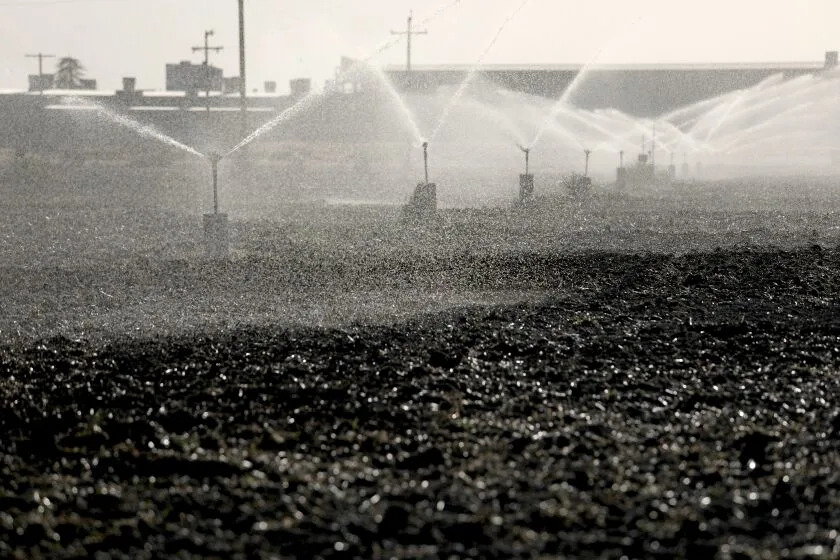
Irrigation in Kingsburg, Calif., in 2021. A deepening drought and new regulations are causing serious challenges for some California growers. (Gary Coronado / Los Angeles Times)
Downpours or drought, California’s farm belt will need to tighten up in the next two decades and grow fewer crops.
There simply won’t be enough water to sustain present irrigation in the San Joaquin Valley.
Groundwater is dangerously depleted. Wells are drying up and the land is sinking in many places, cracking canals. Surface water supplies have been cut back because of drought, and future deliveries are uncertain due to climate change and environmental regulations.
We’ve known all this for years, but long-term projections have become even more grim, according to a new study by the Public Policy Institute of California.
“We found that annual water supplies could decline by 20% by 2040,” PPIC experts wrote. That would mean around 3.2 million acre-feet — almost the amount giant Oroville Dam can hold in California’ second-largest reservoir.
For many generations, Californians have taken pride in the state’s bountiful harvests of fruits, vegetables, nuts and wine grapes. We’re envied by the nation for our production of varied foods — from avocados to almonds, from peaches to pistachios, from okra to oranges.
But by the end of this century, will agriculture still be robust?
Agriculture is water intensive. And water is becoming increasingly worrisome in the West, particularly with overuse of the Colorado River. There’s plenty of water off our coast, but we’ve only begun to dip our toe into desalination.
PPIC researchers offered a glimmer of hope for the San Joaquin Valley. With government teamwork — local, state and federal — and agriculture itself, the financial blow could be lightened, they said.
That would mean loosening the rules on farmers selling their entitled water to other growers. There’d also need to be investments in infrastructure to import additional water supplies.
But realistically all that seems iffy given California’s historic water wars. Selling water means taking it from one crop and pouring it on another. And most new supplies would come from other interests — such as farmers to the north or the coastal salmon fishing industry.
Compromising probably would require money — perhaps tax money — to pay farmers to fallow their land and governments to build new canals and repair old ones.
Growers and local irrigation districts would need to write checks.
“Locals need to have skin in the game. Everybody’s always happy to have someone else pay for their crops,” says Ellen Hanak, vice president and director of the PPIC Water Policy Center.
The PPIC found that at least 500,000 acres of San Joaquin Valley cropland will need to be fallowed in the next 20 years. The institute initially calculated that figure four years ago. But now it’s considered a best-case scenario, requiring an additional 1 million acre-feet of water.
“Needless to say, this would be a very heavy lift,” the researchers wrote.
A more likely scenario, the PPIC says, would be to expand water supplies by 500,000 acre-feet annually and wind up being forced to fallow about 650,000 acres.
But even half a million more acre-feet of water seems wishful.
The worst-case scenario would be losing 3.2 million acre-feet of water and fallowing nearly 900,000 acres, one-fifth of currently irrigated land.
Plan on it. Prepare to plant solar panels.
The biggest reason farmers face a severe water shortage is that for decades they’ve over-pumped aquifers. And government didn’t have the guts to stop them.
Finally in 2014, California became the last Western state to begin regulating groundwater use — but very slowly. By law, groundwater usage doesn’t have to become sustainable for 20 years.
Meanwhile, farmers have been drilling deeper and faster to extract water — not necessarily even their own — before they’re restricted by law.
“The real promise of the groundwater act is making sure people are not using groundwater they shouldn’t,” Hanak says. “If you use someone else’s surface water you’re going to court. But with groundwater, no one has been minding the shop.”
Gov. Gavin Newsom and water officials everywhere talk optimistically about recharging aquifers. Great idea. But first you need to find the water for recharging.
That can come from rare mega-storms, as we had in January. But there need to be facilities for moving the rampaging water and rules that permit it.
The water can be pumped onto barren land — storm or not — and allowed to sink into the ground. But a landowner must agree.
Here’s an idea: Turn barren, fallowed cropland into wetlands that recharge aquifers. Nurture wildlife. California lost 95% of its wetlands in the last century.
Climate change may also reduce available surface water.
Hotter, drier air may cause snowpacks to evaporate or soak into the mountaintops before the water can flow down into reservoirs. Or Sierra snow may melt quickly and descend in torrents so fast it can’t be captured in the Sacramento-San Joaquin River Delta.
It’s all guesswork now.
PPIC researchers also predicted increased environmental restrictions on water in an effort to protect salmon and other fish.
I wouldn’t bet on that. Farm interests tend to outmuscle fish interests.
Newsom, for example, is trying to waive environmental rules aimed at keeping juvenile salmon alive in the delta. He wants more water to be stored for farmers.
Some footnotes:
The San Joaquin Valley produces more than half of California’s agriculture. The wetter Sacramento Valley produces nearly one-fourth. Together they make up the Central Valley.
Agriculture uses 80% of California’s developed water. The rest goes to domestic use — business and residential.
But agriculture generates only about 2% of the state’s gross product, down from 5% 60 years ago. It’s 14% of the San Joaquin Valley’s gross domestic product.
Three of my solutions:
Plant fewer thirsty crops, such as almonds that have proliferated.
Expedite groundwater regulations and aquifer recharging.
In its extreme, obesity reduces life expectancy by an average of three to 10 years, depending on severity, according to the NHS. It is also estimated that obesity and being overweight contribute to at least one in every 13 deaths in Europe.
So, with many of us feeling that we have put on a little weight here and there, and with stubborn tummy fat hard to shift – how can you get back in shape in 2023?
How to get rid of fat in 10 easy steps
1. Drink less alcohol
how to lose weight diet fitness health issues 2022 uk men women struggling to get rid of belly fat new year resolution fit alcohol – iStockphoto
Yes, it can be very tempting to reach for the Merlot at the end of a particularly taxing day, but studies show that alcohol is one of the main offenders when it comes to storing belly fat. Consider this: if you consume just two glasses of wine an evening, that’s an extra 72,000 calories a year, which equates to 20 pounds of fat.
Alcohol contains a very high amount of “empty” calories which don’t have any nutritional value. Women are more likely to store the fat created by these surplus calories on their hips, thighs and arms, whereas men store it on their tummy, hence the “beer belly”.
If you’re keen on reducing your tummy fat quickly, it’s advised that you cut out alcohol from your diet completely. If that sounds too severe, try to at least stay under the NHS-recommended 14 units (spread across three days or more). Aim to cut down your intake by capping your nightly intake to two glasses, and always having several alcohol-free days each week.
2. Eat a high protein diet
protein steak how to lose weight diet fitness health issues 2022 uk men women struggling to get rid of belly fat new year resolution fit – iStockphoto
There’s a good amount of evidence to suggest that protein is key to losing tummy fat. Firstly, it releases the hormone PYY, which helps to send a message to your brain that you’re full. A good portion of protein in a meal should help you avoid overeating.
Many observational studies prove that people with a higher protein intake have lower levels of belly fat. It also raises your metabolic rate, making you more likely to build muscle during and after exercise. Try to get a serving with every meal: breakfast, lunch and dinner.
3. Reduce your stress levels
Stress causes your body to gain fat because it triggers the release of the stress hormone cortisol, which in turn increases your appetite.
How do you relieve stress? To an extent, the answer is entirely personal – we’re all different – but studies consistently show that getting out in nature and regular bouts of meditation work to reduce our anxiety.
4. Don’t eat a lot of sugary foods
Calorie for calorie, sugar is different to other food groups such as protein, complex carbohydrates, and fat, because it confuses your normal appetite controls and causes your body to produce fat.
Refined sugars are often hidden in a plethora of different products that you wouldn’t expect such as fruit juices. Make sure to check the labels before eating the products.
5. Address food sensitivities
People often have food sensitivities that go unaddressed for years. If you think you may be suffering from an allergy, it’s important that you report it to your doctor who may refer you to a dietitian.
Common food sensitivities include dairy and gluten, both of which can result in an inflammation of the gut, making it even more prone to developing more sensitivities. Addressing these allergies can have dramatic impacts on weight loss, and even mood and behaviour.
6. Build up your strength
resistance training how to lose weight diet fitness health issues 2022 uk men women struggling to get rid of belly fat new year resolution fit – MBI / Alamy Stock Photo
Everyone knows that regular exercise is necessary in order to lose weight; however, not everyone knows that resistance training is one of the best ways to do so.
Resistance training, also known as weight lifting or strength training, is important for improving and maintaining muscle mass. It also helps to spike our metabolisms, which means your body burns fat even after you’ve put the weights down.
However, it’s worth saying that the best possible training plan probably combines a variety of exercises.
7. Get plenty of sleep
sleep how to lose weight diet fitness health issues 2022 uk men women struggling to get rid of belly fat new year resolution fit
Sleep is one of the most important aspects of your overall health and wellbeing, especially when it comes to managing your weight. A 2013 study by the University of Colorado found that one week of sleeping about five hours a night led participants to gain an average of two pounds.
Easy ways to improve the quality of your sleep are by making sure you don’t look at screens late at night and by doing some gentle yoga before bed.
8. Eat fatty fish every week
Omega-3 fatty acids are lauded with such attractive qualities as delaying ageing and fighting degenerative diseases. However, it’s less well known that eating fatty fish is also excellent for weight loss (when accompanied by a balanced diet and regular exercise, of course).
Foods such as mackerel and herring are high in protein and “good fats” that help to break down some of the more dangerous fats in your body. Try to eat fish two or three times a week.
9. Replace some of your cooking fats with coconut oil
low fat cooking oils coconut how to lose weight diet fitness health issues 2022 uk men women struggling to get rid of belly fat new year resolution fit
Put aside the butter and olive oil and try coconut oil instead.
According to Web MD – and other medically-led sites – the medium-chain fats in coconut oil boost metabolism and decrease the amount of fat you store in response to high calorie intake.
10. Eat plenty of soluble fiber
Soluble fibre is ideal for aiding weight loss because it forms a gel with the food in your digestive tract, slowing it down as it passes through. This type of fibre promotes gut bacteria diversity, which has been frequently linked to a lower risk of belly fat.
Excellent foods to eat to increase your soluble fibre intake include avocados, legumes (try lentils, peas or chickpeas) and blackberries. In a 2021 study, volunteers ate one meal provided by researchers each day – one group ate an avocado, while a control group ate a meal similar in calories, but with the Instagrammer favourite left out.
“Female participants who consumed an avocado a day as part of their meal had a reduction in visceral abdominal fat,” says study leader Naiman Khan, the Illinois professor of kinesiology and community health. “However, fat distribution in males did not change, and neither males nor females had improvements in glucose tolerance.”
Easy exercises to burn belly fat
The best way to burn belly fat is to add around 30 minutes of cardio or aerobic exercise into your daily exercise routine.
Researchers from the Mayo Clinic in Minnesota ranked a variety common exercises based on information obtained from the US National Institutes of Health. The research calculated the number of calories burned during an hour of each exercise, with surprising results. With this in mind, these are some of the best work-outs to try:
Walking
Picking up the pace of your walk can work wonders for burning fat. When it comes to enjoying a brisk walk (3.5mph), you can burn between 314 and 391 calories.
A 2013 study by the University of Michigan also found that walking on uneven terrain while hiking increases the amount of energy your body uses by 28 per cent compared to walking on flat ground.
Skipping
Similarly to the above, skipping can help burn between 861-1,074 calories per hour, and thus burns fat. It is also a weight-bearing exercise so can help to improve bone density, which helps stave off osteoporosis.
Running
It goes without saying that running is a great way to burn calories. Running at 8mph will burn around 861-1,074 per hour (depending on your weight); you can burn 606-755 calories even running at 5mph, and 657-819 by simply running up the stairs.
Additionally, a 2005 study by the British Journal of Sports Medicine found that sedentary women who incorporated stair climbing into their daily activities increased their VO2 max, or maximum aerobic capacity, by 17.1 per cent and reduced “bad” LDL cholesterol by 7.7 per cent. (Read our guide to the best fitness trackers to learn how to track your workouts.)
Swimming
Experts agree that “vigorous swimming” is a full-body workout that is great for your joints. (By vigorous we’re sure they don’t mean splashing about in the shallow end.) It will help burn between 715-892 calories per hour of activity.
Breaststroke is the least beneficial stroke for burning calories, but a much better cardiovascular workout than the other strokes.
This guide is kept updated with the latest advice.
What Happens When You Die? Hospice Workers Share Conversations With Patients as They Near the End of Their Life
Lyssa Goldberg – February 19, 2023
Hospice workers share some of their impactful conversations with patients.
Talking about mortality can definitely be a frightening subject. But for some people, like those who work in hospice, discussing what happens when you die may feel like a more natural conversation to have.
So, what does it feel like to be days from death? And what happens to you when you die? While some of these questions may never be answered, we spoke to several hospice care professionals across the U.S. to find out what they’ve learned from their patients in their final days as they prepared to make a transition from life to death.
“Very few people are afraid of death. They’re afraid of dying, the process leading to death,” says Travis Overbeck, National Director of Patient Experience for Seasons Hospice.
Of course, no one truly knows what comes next, but some patients have a very clear idea of what they believe should happen once they die, says Overbeck. Hospice workers like himself get to explore their patients’ belief systems and ask them what they’d like their death to look like.
For instance, in the Buddhist tradition, there’s an expectation of silence at the time of death, according to Overbeck, and there should not be any wailing or grieving at the individual’s bedside so they can make their way peacefully into the next life.
“I’ve seen so many patients at the time of death. Most often, there’s this sense of peace and calm, and it’s really beautiful,” Overbeck says. “That’s why I do what I do. It’s all about bringing that peace and comfort to our patients at end of life.”
Here are some of the most common themes that have emerged from end-of-life conversations with hospice workers.
“Would you mind praying for me?”
Overbeck, a chaplain who sees patients of all faiths and backgrounds but practices Christianity himself, remembers his final conversations with a Jewish patient in her last days of life. She said, “I know you’re Christian, and I know I’m Jewish, but would you mind praying for me?”
“What would you like me to pray for?” Overbeck replied.
“I pray that when I die, it will be peaceful, and I will be comforted,” was the patient’s request.
After some conversation, they prayed together and the two hit it off. When Overbeck returned to the hospital the next day, the patient’s friend found him in the hallway. She told Overbeck that the patient had become unresponsive—but before she stopped speaking, the patient asked her friend to have Overbeck pray for her again if he returned.
Overbeck entered the patient’s room and, knowing that hearing is typically the last sense to go, he reintroduced himself and said, “I’m going to go ahead and pray for you.” He prayed again for peace and a comfortable transition. And at the end of his prayers, suddenly the patient began to talk.
“I’m going on a journey to a place I’ve never been before,” she started, “and everybody is sparkling, and everybody is smiling at me.” The patient died about 45 minutes later.
“I don’t care what belief system you are or aren’t. At the end of the day, that’s real. That was her experience,” Overbeck says.
Much of Overbeck’s work is dedicated to tying up loose ends and bringing his patients’ life to closure, whether that’s reuniting family members that have become estranged or ensuring the patient’s legacy is preserved. “There’s a process in dying,” Overbeck says. “It’s the opportunities to say, ‘I love you,’ opportunities to say, ‘I forgive you,’ opportunities to ask for forgiveness, opportunities to say, ‘Goodbye.’”
Overbeck recalls another conversation with a patient who was the CEO of a very large, well-known company. “Travis, I had it all,” the CEO told Overbeck. “I had the vacation homes. I was able to send my kids to the finest schools. We traveled the world. But at some point, I lost my focus. I began to value my job and my money more than anything else.”
Along the way, it cost him not only his marriage but his relationship with his kids. In fact, the patient had a grandchild he’d never even meet. Overbeck asked the patient for permission to reach out to his family. A few phone calls later, they were flying into town to visit the hospital.
Overbeck helped facilitate conversations between the patient and his family members, and while he acknowledges it wasn’t easy, he was ultimately able to bring them a feeling of closure. Most importantly, the patient was able to meet his grandchild for the first time. The patient died later that day.
“The biggest realization that I’ve had is that we all have a finite amount of time—it’s about how you’re going to live with that time,” Overbeck says.
Cultivating gratitude
Carolyn Gartner, licensed clinical social worker with Visiting Nurse Service of New York Hospice and Palliative Care, began practicing meditation and studying Buddhism around the same time she started pursuing social work.
Working in hospice care, she’s found her patients hold a perspective of gratitude and acceptance that parallels what she’s been taught through her meditation practice. “I feel my older patients really understand the idea of letting go, and not letting small things bother you,” Gartner says. “We get so caught up in the day-to-day, and I see my older patients are a good role model for how those things pass.”
Gartner works with a diverse array of patients throughout Brooklyn, from celebrities to patients in public housing. Recently, she and a chaplain from VNSNY Hospice went to visit a Jamaican patient who loves Bob Marleymusic.
The patient’s daughter told them that her mother had experienced a severe explosion of pain the day before, so Gartner prepared to handle the situation sensitively, thinking perhaps the patient wouldn’t want to listen to music that day.
When they walked in the door, however, the patient was wearing a big smile on her face and said: “Okay, ladies, when are you starting the Bob Marley?’”
“I do think that this work, almost every day, reinforces to me: We are energy. We are light. There is a spirit,” Gartner says.
At end-of-life, people like to reflect on their life story, Gartner says. Patients will take out old photos and share stories of joy and pain all in one session. Having studied screenwriting as an undergrad at New York University, Gartner uses these same storytelling techniques with her patients to learn and listen to their stories.
“My observation is that people will often die the way they live, so it’s really interesting to see how people process what they’ve gone through,” she says.
While the patients may seem ready to accept what comes next, Gartner says it’s the families who often need help coming to terms with it. VNSNY Hospice assists with the pre-bereavement process for family caregivers so they can see beyond the grief and enjoy the time they have left with the patient.
“Patients almost always know what’s going on in their body. It’s the family who doesn’t,” she says.
Over the years, Kalah Walker, patient care administrator for VITAS Healthcare, has seen numerous hospice cases where the patients will call out to their loved ones who’ve passed, as if they’re seeing someone that everyone else cannot.
Often, they look out into the distance, and the hospice worker knows it’s the name of a family member who’s no longer with us. Generally, this happens within the last days of their life, Walker notes.
“You know what they’re seeing when they’re looking off into the distance…,” she said. “Once they do that, they’re able to let go.”
Sometimes, the patients will ask their hospice worker if they can see the family member too. Walker says it’s important to be there in the moment with them, agree, and allow the moment to happen as the patient is experiencing it. “There’s a nurse who gets to be there to bring life into this world, and we get to stand there and hold a patient’s hands or their family’s hands as a life leaves this world,” she says.
Walker says the real work with end-of-life care comes after the patient passes, however. “Hospice isn’t just about death and dying. It’s about learning about what’s really important in life and keeping those memories alive,” Walker said.
VITAS’ staff supports families who’ve experienced loss with programs like gifting them memory bears as reminders of their loved ones or butterfly release ceremonies. At the butterfly release ceremony, families will open a package and release butterflies into the sky, giving them a chance to reflect and experience a feeling of release themselves. “I’ve seen the butterflies sit there in the moment. You notice they kind of hover around, and it’s almost as if that butterfly is the loved one,” Walker says.
50-year-old muscles just can’t grow big like they used to – the biology of how muscles change with age
Roger Fielding, Senior Scientist Team Lead Nutrition Exercise Physiology and Sarcopenia Team Jean Mayer USDA Human Nutrition Research Center on Aging, Professor of Medicine, Tufts University – February 19, 2023
There is perhaps no better way to see the absolute pinnacle of human athletic abilities than by watching the Olympics. But at the Olympics – and at almost all professional sporting events – you rarely see a competitor over 40 years old and almost never see a single athlete over 50. This is because with every additional year spent on Earth, bodies age and muscles don’t respond to exercise the same as they used to.
I lead a team of scientists who study the health benefits of exercise, strength training and diet in older people. We investigate how older people respond to exercise and try to understand the underlying biological mechanisms that cause muscles to increase in size and strength after resistance or strength training.
Old and young people build muscle in the same way. But as you age, many of the biological processes that turn exercise into muscle become less effective. This makes it harder for older people to build strength but also makes it that much more important for everyone to continue exercising as they age.
The exercise I study is the type that makes you stronger. Strength training includes exercises like pushups and situps, but also weightlifting and resistance training using bands or workout machines.
When you do strength training, over time, exercises that at first felt difficult become easier as your muscles increase in strength and size – a process called hypertrophy. Bigger muscles simply have larger muscle fibers and cells, and this allows you to lift heavier weights. As you keep working out, you can continue to increase the difficulty or weight of the exercises as your muscles get bigger and stronger.
It is easy to see that working out makes muscles bigger, but what is actually happening to the cells as muscles increase in strength and size in response to resistance training?
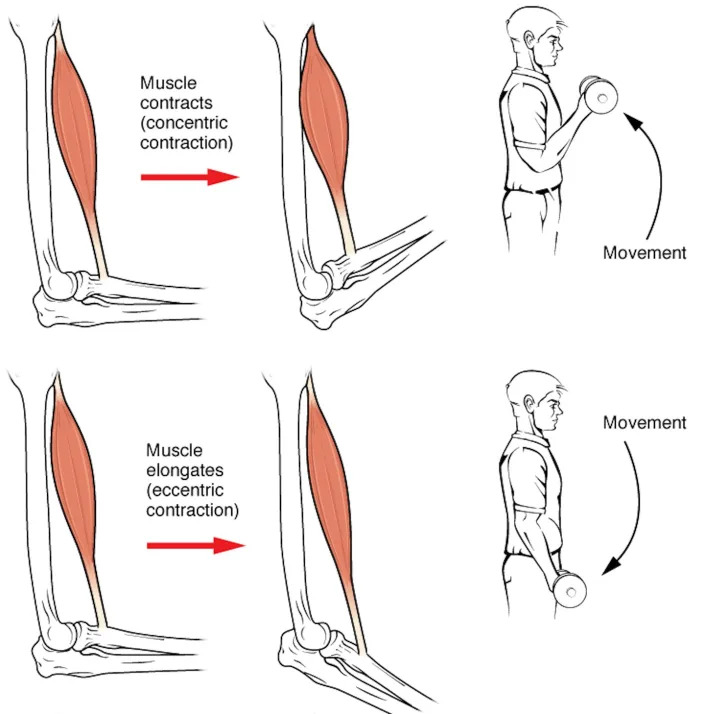
Any time you move your body, you are doing so by shortening and pulling with your muscles – a process called contraction. This is how muscles spend energy to generate force and produce movement. Every time you contract a muscle – especially when you have to work hard to do the contraction, like when lifting weights – the action causes changes to the levels of various chemicals in your muscles. In addition to the chemical changes, there are also specialized receptors on the surface of muscle cells that detect when you move a muscle, generate force or otherwise alter the biochemical machinery within a muscle.
In a healthy young person, when these chemical and mechanical sensory systems detect muscle movement, they turn on a number of specialized chemical pathways within the muscle. These pathways in turn trigger the production of more proteins that get incorporated into the muscle fibers and cause the muscle to increase in size.
These cellular pathways also turn on genes that code for specific proteins in cells that make up the muscles contracting machinery. This activation of gene expression is a longer-term process, with genes being turned on or off for several hours after a single session of resistance exercise.
The overall effect of these many exercise-induced changes is to cause your muscles to get bigger.
How older muscles change
While the basic biology of all people, young or old, is more or less the same, something is behind the lack of senior citizens in professional sports. So what changes in a person’s muscles as they age?
What my colleagues and I have found in our research is that in young muscle, a little bit of exercise produces a strong signal for the many processes that trigger muscle growth. In older people’s muscles, by comparison, the signal telling muscles to grow is much weaker for a given amount of exercise. These changes begin to occur when a person reaches around 50 years old and become more pronounced as time goes on.
In a recent study, we wanted to see if the changes in signaling were accompanied by any changes in which genes – and how many of them – respond to exercise. Using a technique that allowed us to measure changes in thousands of genes in response to resistance exercise, we found that when younger men exercise, there are changes in the expression of more than 150 genes. When we looked at older men, we found changes in the expression of only 42 genes. This difference in gene expression seems to explain, at least partly, the more visible variation between how young and old people respond to strength training.
Strength training can help maintain overall fitness and allow you to keep doing other things you love as you age. Peathegee Inc via Getty Images
While younger people may get stronger and build bigger muscles much faster than their older counterparts, older people still get incredibly valuable health benefits from exercise, including improved strength, physical function and reduced disability. So the next time you are sweating during a workout session, remember that you are building muscle strength that is vital to maintaining mobility and good health throughout a long life.
This article is republished from The Conversation, a nonprofit news site dedicated to sharing ideas from academic experts.