UN report: Afghanistan “on the brink” of universal poverty
Noah Garfinkel
Afghanistan is close to universal poverty, according to a United Nations Development Programme (UNDP) report released Thursday.
Why it matters: The U.S. withdrawal from Afghanistan along with the COVID-19 pandemic and severe drought have set up the poverty rate to balloon. As much as 97 percent of Afghans could be below the poverty line by mid-2022, according to the UNDP.
Stay on top of the latest market trends and economic insights with Axios Markets. Subscribe for free
The myriad of challenges facing the country “form a crisis that demands urgent action,” UNDP Director of the Regional Bureau for Asia and the Pacific Kanni Wignaraja said.
By the numbers: UNDP analyzed four possible scenarios that could cause the country’s GDP to plummet as much as 13.2%. In the worst-case scenario, the report estimates that poverty could increase by about 25%.
72% of the population currently live in poverty, UNDP reports.
What they’re saying: “We are facing a full-on development collapse on top of humanitarian and economic crises,” Wignaraja said.
“Half of the population is already in need of humanitarian support. This analysis suggests that we are on course for rapid, catastrophic deterioration in the lives of Afghanistan’s most vulnerable people,” Wignaraja added.
What’s next: The UNDP is proposing an aid package aimed at helping the most vulnerable people and communities in Afghanistan.
The 24-month community development program would support “close to nine million vulnerable people” and would prioritize women and girls’ rights.
It would also include a cash-for-work plan, grants for small and medium enterprises and temporary basic income through monthly cash transfers for children, elderly citizens and the disabled.
“I owe the Afghan people an explanation”: Ashraf Ghani apologizes for fleeing Kabul
Zachary Basu
Former Afghan President Ashraf Ghani issued a statement Wednesday apologizing to Afghans for fleeing Kabul on the day the Taliban entered the capital city, calling it “the most difficult decision” of his life.
Why it matters: Ghani’s decision to flee Kabul and seek asylum in the United Arab Emirates on Aug. 15 precipitated the collapse of the Afghan government.
In a White House address the day after the Taliban took control of Afghanistan, President Biden criticized Ghani and the Afghan security forces for choosing not to “fight for their country.”
Ghani was also accused of stealing millions of dollars worth of public money as he fled Kabul, allegations he has vigorously denied. He said Wednesday that he and his top aides would submit to an independent investigation or audit to prove his innocence.
The big picture: Ghani’s statement — his most extensive public remarks since the fall of Kabul — comes one day after the Taliban announced the formation of an acting government that features top loyalists and several internationally sanctioned terrorists.
What they’re saying: “I owe the Afghan people an explanation for leaving Kabul abruptly on August 15th after Taliban unexpectedly entered the city. I left at the urging of the palace security who advised me that to remain risked setting off the same horrific street-to-street fighting the city had suffered during the Civil War of the 1990s,” Ghani said.
“Leaving Kabul was the most difficult decision of my life, but I believed it was the only way to keep the guns silent and save Kabul and her 6 million citizens,” he added.
“Now is not the moment for a long assessment of the events leading up to my departure — I will address them in detail in the near future. But I must now address baseless allegations that as I left Kabul I took with my millions of dollars belonging to the Afghan people. These charges are completely and categorically false.”
“Corruption is a plague that has crippled our country for decades and fighting corruption has been a central focus of my efforts as president. I inherited a monster that could not easily or quickly be defeated.”
The bottom line: “It is with deep and profound regret that my own chapter ended in similar tragedy to my predecessors — without ensuring stability and prosperity. I apologize to the Afghan people that I could not make it end differently,” Ghani concluded. “My commitment to the Afghan people has never wavered and will guide me for the rest of my life.”
Hurricane Ida power outages, misery persist 9 days later
Kevin McGill and Melinda Deslatte
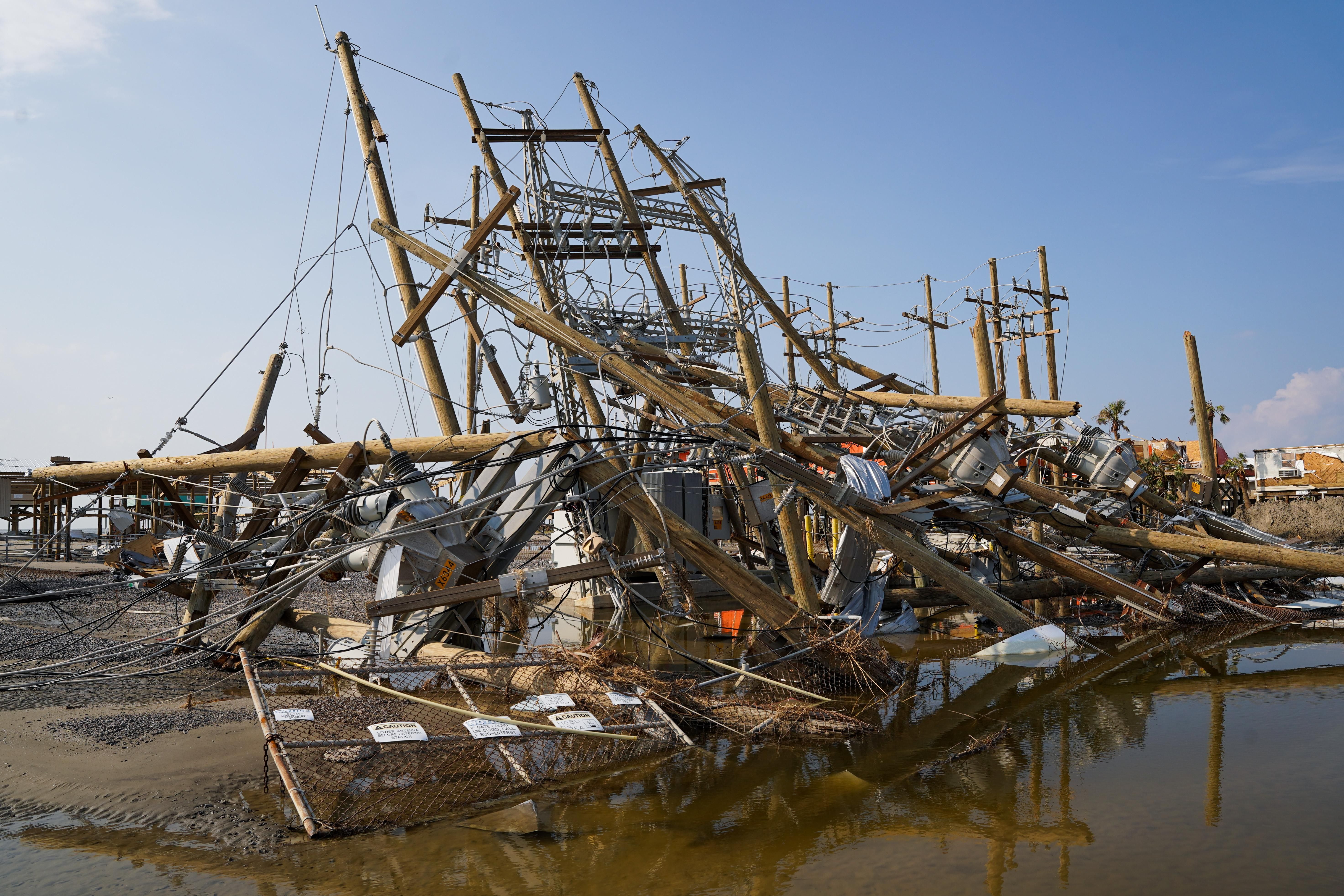
LaPlace, La. (AP) — Hundreds of thousands of homes and businesses in Louisiana, most of them outside New Orleans, still didn’t have power Tuesday and more than half the gas stations in two major cities were without fuel nine days after Hurricane Ida slammed into the state, splintering homes and toppling electric lines.
There were also continuing signs of recovery, however, as the total number of people without electricity has fallen from more than a million at its peak, while hundreds of thousands of people have had their water restored.
State health officials, meanwhile, announced that they are revoking the licenses of seven nursing homes that evacuated to a warehouse where seven residents died amid deteriorating conditions after the hurricane.
The disparity in power restoration between New Orleans, where nearly 3/4 of the city had electricity again, and other communities where almost all residents were still in the dark prompted frustration and finger-pointing.
State Rep. Tanner Magee, the House’s second-ranking Republican who lives in the devastated city of Houma in Terrebonne Parish, said he’s convinced his region is being shortchanged in favor of New Orleans.
“It’s very infuriating to me,” Magee said.
Though water was running again in his area, most hospitals in the region remained shuttered and the parish was in desperate need of temporary shelter for first responders and others vital to the rebuilding effort, he said.
Warner Thomas, president and CEO of the state’s largest hospital system Ochsner Health warned that it would be “some time” before two Ochsner hospitals — one in Terrebonne Parish and the other in Lafourche Parish — fully reopen. Emergency rooms at the two hospitals, however, were operating.
Carnival Cruise Line announced Tuesday that it will keep one of its ships, Carnival Glory, docked in New Orleans through Sept. 18 to serve as housing for first responders.
Louisiana Gov. John Bel Edwards said while there had been much progress in restoring water and power, “there’s an awful lot of work to be done.”
Without power, the Louisiana heat is the hardest thing to cope with, said Kim Bass, who lives in St. John the Baptist Parish. She and her husband are using a generator to keep food refrigerated but have no air conditioning. Water service is intermittent.
“So you may have water one minute, then you may not have water for the next two days,” Bass said.
In many neighborhoods, homes were uninhabitable. State and federal officials said about 3,200 people are in mass shelters around Louisiana while another 25,000 people whose houses have been damaged are staying in hotel rooms through the Federal Emergency Management Agency’s transitional sheltering program. FEMA already has approved more than 159,000 household applications for disaster assistance, according to Louisiana’s emergency preparedness office.
Shontrece and Michael Lathers looked on despondently as workers wrestled a billowing blue tarp into place over what was left of the roof of their home in the St. John the Baptist Parish town of LaPlace. Ida’s floodwaters had risen to about 3 feet (1 meter) inside their home and rain that had poured in through the wind-damaged roof obliterated most of the drywall ceilings.
The house will have to be gutted floor to ceiling, Michael Lathers said, adding that he had no idea how much the repairs will cost.
Fuel shortages also persisted across hard-hit areas of the state. More than 50% of gas stations in New Orleans and Baton Rouge remained without gasoline Tuesday afternoon, according to GasBuddy.com.
The power situation has improved greatly since Ida first hit. In the first hours after the storm, nearly 1.1 million customers were in the dark, but that number was down to about 430,000 on Tuesday. With the help of tens of thousands of workers from power companies in numerous states, the state’s biggest energy provider, Entergy, has been able to slowly bring electricity back, leaving only 19% of its customers in the region without power as of Tuesday.
For residents in the state’s five hardest-hit parishes in southeastern Louisiana, however, that number is little comfort. Fully 98% of those residents are still without power more than a week after Ida slammed onshore with 150 mph winds (240 kph) on Aug. 29.
Power probably won’t be widely restored to St. John the Baptist and St. James parishes until Sept. 17 and until Sept. 29 to Lafourche, St. Charles and Terrebonne parishes, Entergy said Tuesday. The parishes are home to about 325,000 people.
In contrast, nearly all power has been restored in the capital of Baton Rouge, and only 25% of homes and businesses are still suffering outages in New Orleans. Entergy said it expected to have the vast majority of New Orleans brought online by Wednesday. Once areas such as New Orleans have their power restored, Entergy is moving its crews into communities south and west of the city that saw more widespread damage, said Entergy Louisiana President and CEO Phillip May.
As Entergy worked to get the lights turned on everywhere, the Louisiana Department of Health reported that the number of people without water had fallen from a peak of 850,000 to 62,000, though about 580,000 people were being advised to boil their water for safety. And grocery stores reopened in some places.
Ida’s death toll in Louisiana rose to 15 people Tuesday after the state Department of Health reported two additional storm-related fatalities: a 68-year-old man who fell off of a roof while making repairs to damage caused by Hurricane Ida and a 71-year-old man who died of a lack of oxygen during an extended power outage. The storm’s remnants also brought historic flooding, record rains and tornados from Virginia to Massachusetts, killing at least 50 more people.
Deslatte reported from Baton Rouge, Louisiana. Associated Press writers Rebecca Santana in New Orleans; Jeff Martin in Marietta, Georgia; Sudhin Thanawala in Atlanta; and Lisa J. Adams Wagner in Evans, Georgia, contributed to this report.
The Afghanistan Meltdown Proves Vietnam Taught Us Nothing
James A. Warren
Joe Raedle/Getty Images
The American war in Afghanistan came to a long-overdue end on the evening of Aug. 30, when the last U.S. military plane, a C-17 transport, lumbered into the skies above the Hamid Karzai International Airport in Kabul. Among its passengers was the last American soldier to depart this hard, mountainous, war-ravaged country, Maj. Gen. Chris Donahue, the commander of the 82nd Airborne Division. Shortly thereafter, the Taliban’s senior spokesman, Zabihullah Mujahid, announced to the Afghan people: “This victory belongs to us all.”
The harried American withdrawal, replete with scenes of desperate Afghans clinging to the rear of a giant U.S. Air Force transport as began its takeoff, parents passing a baby to Marine guards on the tense perimeter of the airport, and horrific mayhem following two massive suicide bombings by Islamic State of Khorasan terrorists, succeeded in evacuating about 123,000 people—an astonishing feat, carried out with great skill and courage by the American military.
Nonetheless, the evacuation will be seen by historians for generations for what it was: the sobering last act in yet another lost American war.
Inevitably the exhausting saga of the final U.S military operation in Afghanistan evokes memories of another grim evacuation: Operation Frequent Wind, the dramatic, last-ditch effort to evacuate the last Americans remaining in Saigon, along with their South Vietnamese allies on April 29-30, 1975. That operation, also carried out with extraordinary cool-headedness by U.S. Marines under intense pressure, succeeded in bringing out every American, but thousands of South Vietnamese who had worked for the United States as faithful servants of the cause were left to fend for themselves. Many ended up serving multiple-year tours in communist re-education camps, or drowning in rickety boats in the South China Sea as they tried to make their escape.
The Marines who took the last chopper off the embassy roof around 7:50 a.m. on April 30, 1975, were blinded for a few minutes by tear gas they had fired to keep desperate Vietnamese from trying to jump into their overloaded aircraft. It was somehow fitting that the last Americans who left Vietnam did so when they were for all intents and purposes blind.
Any soldier or Marine can tell you that orchestrating a “retrograde movement” is among the trickiest and most delicate of military maneuvers. In Kabul, this extremely difficult operation was unnecessarily complicated and compromised by the failure of senior decision-makers in the White House and State Department to anticipate the rapid collapse of the Kabul government’s armed forces and government in the face of a determined and well-organized adversary, the Taliban. Their failure is all the more inexplicable in light of the fact that both the CIA and the State Department provided the president with sound intelligence estimates during the last weeks of the Taliban’s stunning advance.
The same thing happened in 1975, more or less, as the ambassador to South Vietnam, Graham Martin, mysteriously refused to give the order to evacuate when the writing was on the wall, and CIA operatives had already begun evacuating their Vietnamese allies surreptitiously.
The forced withdrawal from Afghanistan ranks among the most humiliating episodes in all of America’s 400-year history, for it symbolizes in dramatic fashion the end of a horrendously destructive failed crusade to export American-style democracy by arrogant policymakers transfixed by their own country’s raw military power.
It is depressing, to say the least, but we failed in Afghanistan for many of the same reasons we stumbled in Vietnam, almost 50 years ago.
At the outset of each conflict, U.S. policymakers were woefully ignorant of the political and cultural dynamics of the nation they aimed to transform. And so, to a greater degree than is usually realized, the United States went into both conflicts half-blind, convinced that the righteousness of the cause would compensate for ignorance, and ensure success.
The Johnson administration made the absurd assumption that deep in the heart of every Vietnamese there was an American yearning to be born. George W. Bush and his advisers made the same assumption about the Afghan people. Time proved the utter bankruptcy of this assumption in both cases, as well several others, including the idea that the United States possessed the wisdom and wherewithal to crush a well-organized insurgency while it simultaneously built an entirely new government apparatus.
Like Vietnam, Afghanistan was an “irregular war,” a brutal counterinsurgency struggle in which the United States failed to find a way to counter the ingenious protracted war strategy adopted by its adversary. The Taliban’s way of war, much like the Vietcong’s, pivoted largely on hanging on and outlasting the Americans and their vast array of war machines. They were willing to suffer innumerable tactical setbacks—including being driven out of Afghanistan entirely back in 2002—sure in the knowledge that eventually the United States would weary of supporting a corrupt and dysfunctional government, pack up, and go home. Like the Vietcong, the Taliban drew comfort and sustenance from its possession of a sanctuary, in this case Pakistan, and from the inability of the United States or its allies to seal off the flow of enemy fighters into Afghanistan.
Once America grew tired of the fighting, the Taliban high command reckoned, it would be a relatively simple matter to conquer the broken and illegitimate administration that the United States had tried to create and support. So it was.
The strategy worked brilliantly, just as it had in Vietnam.
In both wars, the United States had enormous military power at its disposal, but very little political power, and even less understanding of how politics actually functioned locally. But as the history of irregular war tells us again and again, in conflicts between powerful conventional armies and local insurgencies, politics, political organization, and mobilization are invariably more important factors in determining the outcome than battles.
In irregular warfare, coercive politics—assassination, terrorism, subversion, propaganda, the methodical construction of a shadow government—figure prominently, and cannot be countered by strictly military means alone. Human relationships and political mobilization are more important than military technology, and restraint in the use of armed force, rather than sheer firepower, is often critical to success. In these kinds of conflicts, said a prominent recent U.S. Army Special Forces officer, “You can’t kill your way to victory.”
When Major Harry Summers told his North Vietnamese counterpart on a small team of officers who were negotiating the terms for the American evacuation of Saigon that the communists had never defeated the Americans in a major battle, the officer, a Colonel Tu, replied, “That may be so, but it is also irrelevant.” How right he was!
The United States never lost a multi-battalion battle in Afghanistan, but in light of the failure to build a legitimate, functional government, the Americans’ tactical victories were essentially “irrelevant.”
In both of these tragic counterinsurgency conflicts, the lion’s share of the nation-building work fell by default on the U.S. military, which is neither properly trained to undertake such work, nor temperamentally suited for it. The efforts of the State Department, USAID, and other civilian agencies and NGOs were notoriously disjointed and ineffective. In both Afghanistan and Vietnam, billions were spent each year on ambitious social engineering projects, but the host governments remained dysfunctional, corrupt and utterly unresponsive to the needs of the population.
As both conflicts morphed from stalemate to quagmire to looming disaster, the American public was fed a steady, unremitting diet of upbeat assessments of progress being made on the ground, served up by presidents, their advisers, and commanding generals. These assessments, it is now all too clear, were fairy tales, born of a lethal amalgam of wishful thinking, obtuseness, and outright dissembling.
As the futility of the fighting became more and more apparent in both these conflicts, American ground forces were ultimately withdrawn, and the American people were assured by the White House that the cause was not lost, that the good fight would be carried on by our local allies.
But this, too, was dissembling.
Only the most naïve observers of the scene in Vietnam in 1973 on the eve of the withdrawal of U.S. combat forces believed the South Vietnamese Army could stand up to the combined forces of the North Vietnamese army and the Vietcong on its own. They had invariably been bested by the enemy during the war with the Americans. How could they be expected to survive against such powerful, well-motivated forces as the Vietnamese communists without them?
Even granting that, the South Vietnamese managed to hang on for more than two years after the last Americans departed Vietnam in March 1973, and they were defeated by a powerful conventional army force of more than 20 divisions, several of them amply supplied with tanks. So corrupt and hollow was the regime in Kabul that it folded just four months after President Biden announced the final American withdrawal.
This precipitous collapse of the Kabul government certainly has no upside for the long-suffering Afghan people, who seemingly cannot escape the curse of devastating civil war. Indeed, it may not be long before the country’s warlords resume the fight against the Taliban. But the failure of the government or the army to put up much a fight, I think, go a long way toward confirming the wisdom of President Biden’s decision to withdraw. The Kabul government was fatally, irrevocably shaky, and had been kept on life support by the United States troops and dollars. Yet the very presence of the world’s largest, most powerful foreign army only served to erode the government’s sliver of legitimacy in the eyes of its own people.
Where these two failed wars differ fundamentally is on the question of their impact on American society. Vietnam was at the heart of a tumultuous social revolution in America in the late 1960s and early 1970s. The war pervaded every aspect of American life, and came perilously close to tearing the social fabric of the country irrevocably. “Nothing did more than the conflict in Vietnam to alter the course of post–World War II society and politics, or unleash the emotions that polarized the nation after 1965” than Vietnam, writes Brown historian James T. Patterson. Few historians would disagree. More than any single event of this time, the war broke the trust between the government and the people. It was the first war the United States had ever lost.
Afghanistan has aroused no such passions, nor has it altered significantly the lives of many Americans outside the relatively small universe of the American military and their families. The conflict went on and on, and Americans in general seemed to care less and less about it. In truth, the major reason the war lasted so long is that the American people didn’t care enough about it to demand that it end.
The collective weight of three lost wars—Vietnam, Iraq, and Afghanistan—surely demands a searching re-examination of how the United States goes about making the decision to go to war, and how it develops strategies for achieving its objectives. It would also seem to call for a less activist foreign policy—a foreign policy of military restraint that would focus on the use of the United States’ economic and political power rather than the military to shape the world.
But don’t count on any of this happening soon. As Mary L. Dudziak, a law professor at Duke who has written extensively about war, told TheNew York Times, “In our toxic political environment, Republicans are likely to use this moment to undermine President Biden, and partisanship may foreclose the deeper re-examination of American war politics that is sorely needed now, and was also needed after the war in Vietnam.”
‘I don’t have a choice’: Hurricane Ida leaves devastated Louisiana communities struggling with new reality
Oliver Laughland in Mount Airy and Reserve, Louisiana
As they sifted through the wreckage of their childhood home in Mount Airy, members of the Robinson family were hunting for memories.
They came in the form of a dozen family photo albums, somehow preserved amid the rubble. There was nothing much else to salvage as most of the house was destroyed. It had been in the family for generations, built and preserved with toil and hard work.
Judy Robinson, 70, had raised her two children here, working as a plant operator at a nearby Marathon Oil refinery and then living on income support as a retiree.
Her daughter, Gayle Robinson, struggled as she watched Judy’s reaction to seeing home for the first time since Hurricane Ida struck seven days ago.
“I have never seen her look how she looked,” she said, outside in the oppressive heat. “Confused. Lost for words. It’s like someone threw a grenade into the house.”
As cable news channels pivoted away from Ida’s destruction in south-east Louisiana over the weekend, the storm only a week into history, thousands of people, including the Robinson family, were still coming to terms with a new reality. Power is gradually returning to New Orleans, with hopes for full restoration by the middle of this week, but residents here in St John the Baptist parish, just 35 miles (56km) away and which took a harder hit than New Orleans, look set for at least another two weeks waiting.
The Robinson family had evacuated during the storm, fanning out across Louisiana and Texas and now returning for the first time on Sunday. Their family home is just a few miles from where president Joe Biden visited on Friday, promising: “We’re not going to leave any community behind.”
But for Gayle Robinson, the words were beginning to feel a little hollow. She had tried and failed to reach the Federal Emergency Management Agency (Fema), the US government agency tasked with managing the aftermath of disasters, to request a tarp for her mother’s decimated roof in order to protect the remains inside. It left her questioning what resources were available to assist.
I have no telephone service, so I have no way of knowing a thing
Sterling Bazilet
“You’ve got to do more than just show up. We need support,” she said, clutching a family photo album. “It’s not about a show and tell. People’s lives are at stake right now. They have lost everything, when they have worked so hard to provide for their families. And right now, Fema are not trying to help.”
With limited funds available and faltering federal government assistance, the family worried they would be forced to live out of their car in a matter of days.
Down the street, Sterling Bazilet, 63, sat out on the half of his front porch that remained. The rest was strewn as rubble over the roadside. A retired pipe fitter, who has lived here all his life, Bazilet was unable to evacuate as his truck was broken down. He had been living without power and no generator for the past seven days, finding comfortable sleep nearly impossible in the still, stifling late summer air.
“With no electricity there’s no way to keep cool,” he said, sitting topless.
Fema had not reached his home yet either, but a group of church volunteers had begun to tarp his roof and the left side of his home, almost completely destroyed.
Without power or connectivity, Bazilet was not even aware Biden had visited on Friday.
“I have no telephone service, so I have no way of knowing a thing,” he said.
Officials in St John the Baptist parish have issued an area-wide water boil advisory and told residents to limit “all non-essential sewer services”. There are three food, ice and water handouts throughout the parish, which is comprised of 42,000 residents, 58% of whom are Black.
The roadway between Mount Airy and the neighboring town of Reserve gives a small taste of the continuing catastrophe here. In the heart of the region’s “Cancer Alley”, a heavily industrialized region between New Orleans and Baton Rouge with some of the most polluted air in America, petrochemical plants with flaring stacks frame the felled trees and shattered homes. One main road remains blocked after a grain export elevator, owned by the agricultural giant Cargill, collapsed during the storm.
In Reserve, many families and residents have left amid widespread destruction. But of the handful still present on Sunday, some were attempting to keep their spirits up.
Brian Millet, a 59-year-old drummer and DJ, had bought a generator, allowing him to blast big band jazz onto the empty streets through a loudspeaker. He had cobbled together some coals and cuts of meat and was barbequing by his home, battered by Ida and sustaining significant roof damage.
The six sausages, two steaks and handful of chicken wings were supposed to last the next three days, he said. “I’m thankful for what I have.”
Millet lost his home over a decade ago when Hurricane Gustav hit Louisiana in 2008. As Ida’s floodwaters crept into his new home , he thought about that experience all over again.
Millet had been handed a roof tarp by local volunteers, but he had no means to put it in place. He has splints in both his legs and suffers with diabetes, high blood pressure and carpal tunnel syndrome.
But as grey skies loomed on the horizon and rain began to fall, Millet’s spirits took a turn. He worried his roof would leak again, and the water put out the fire on his barbeque.
“I don’t know how much more of this I can take,” he said. “But I don’t have a choice.”
For Louisiana’s coastal tribes, ‘being at the end of the earth is a dangerous place’
After Hurricane Ida, Native Americans confront loss of homes, income, sacred sites
By Halle Parker, Staff Writer September 6, 2021
1 of 13
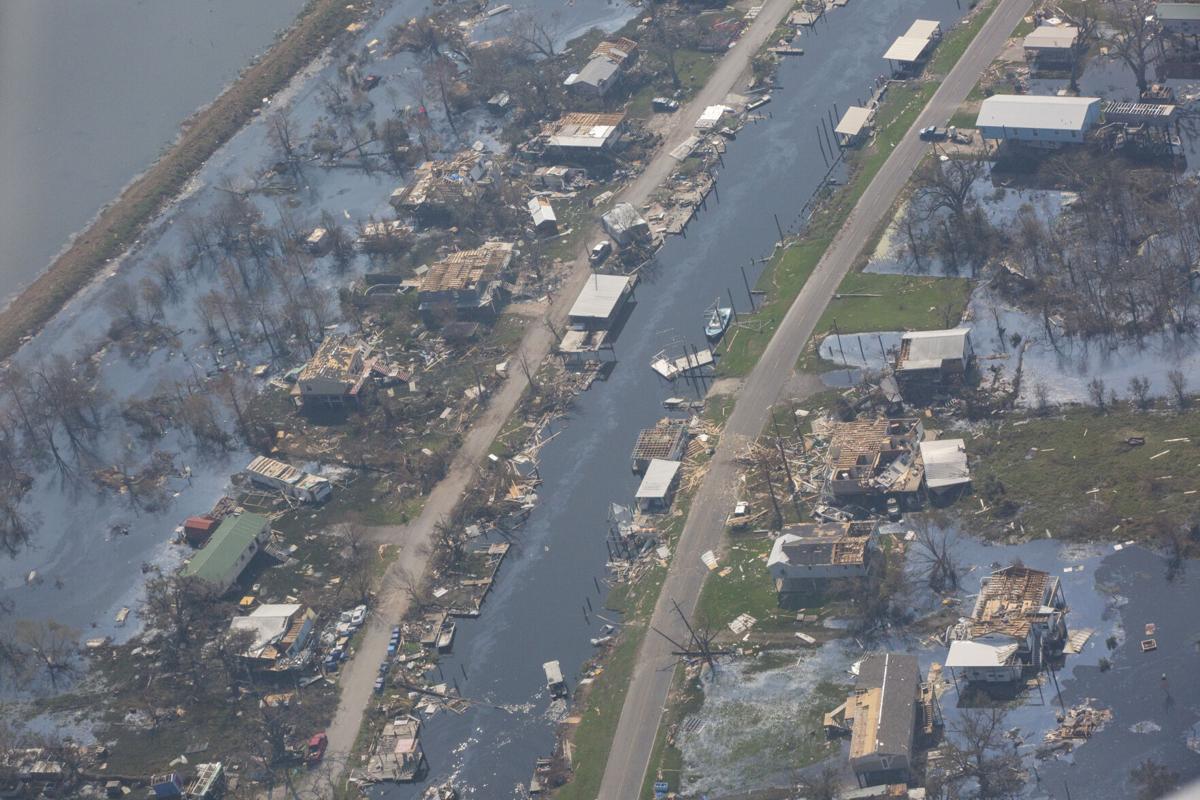
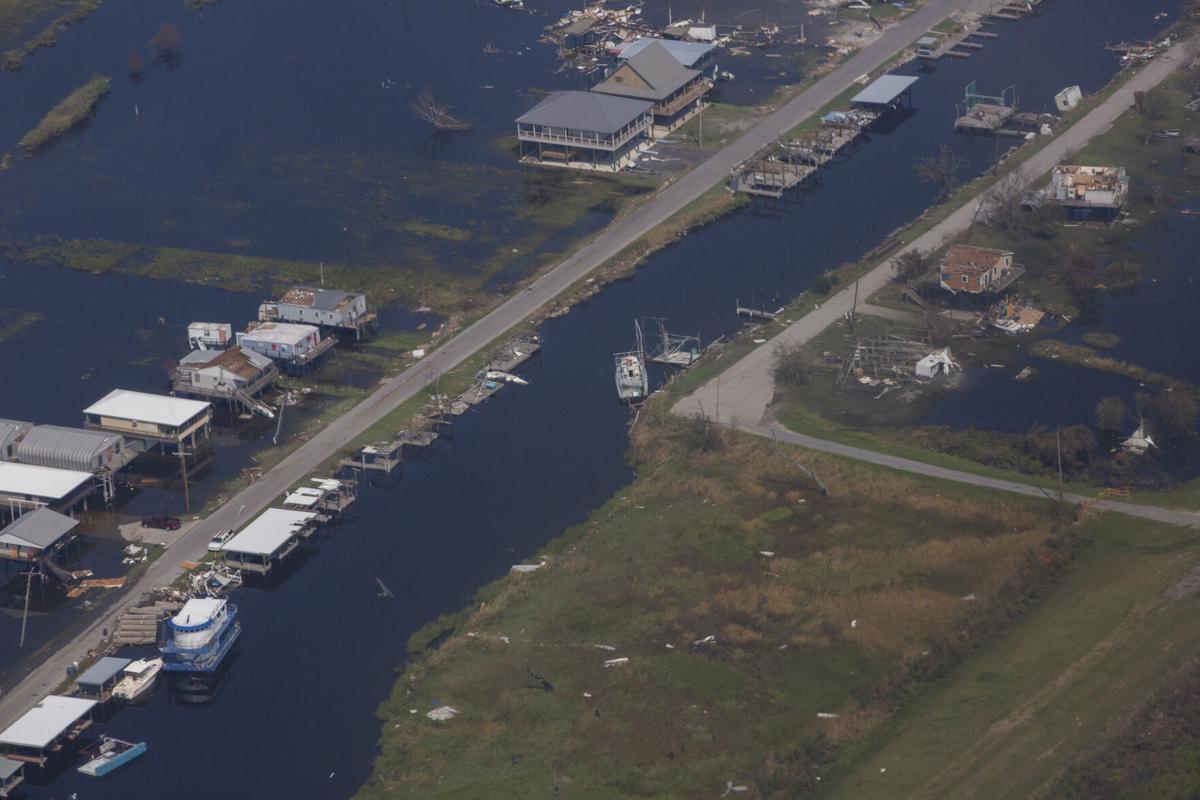
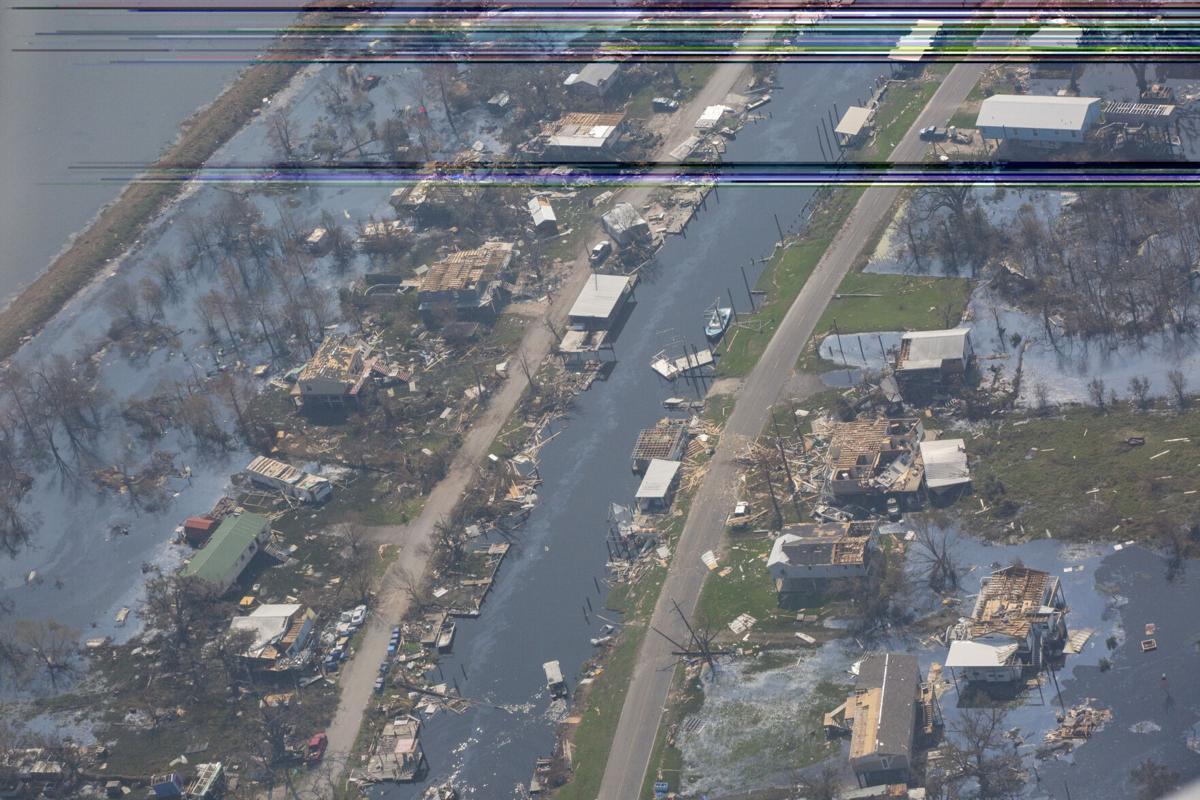
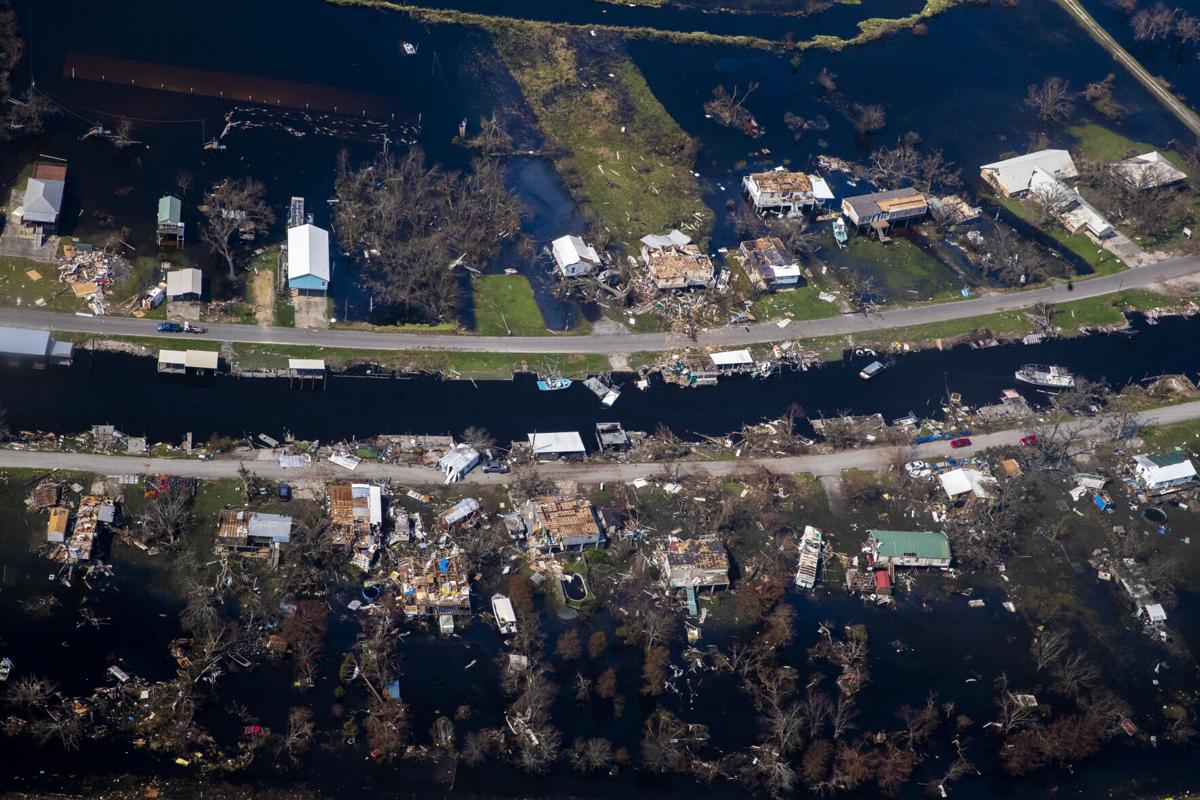
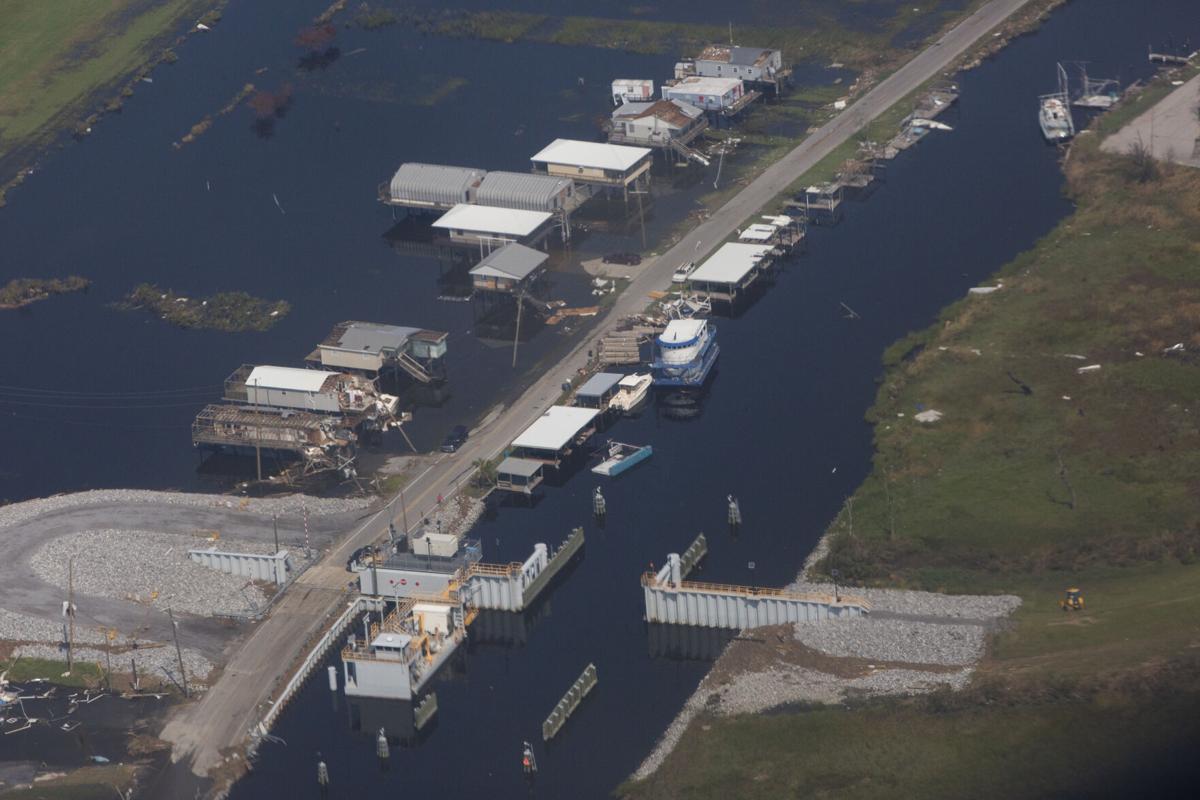
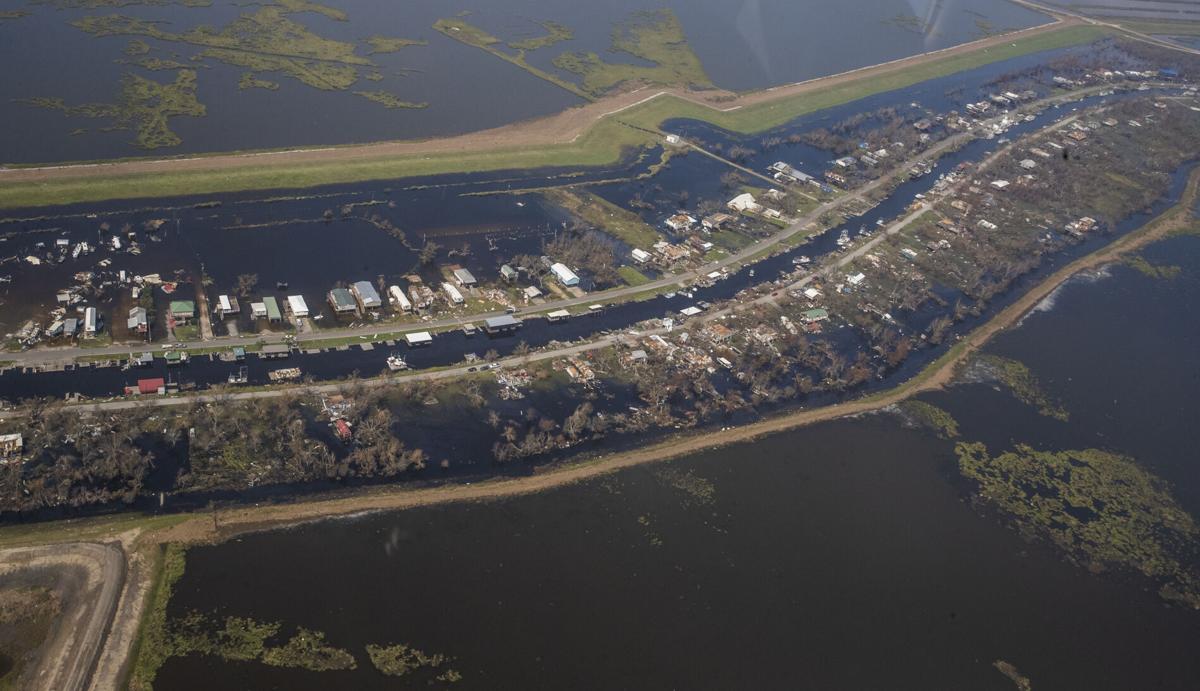
Damaged houses are surrounded by oily water after Hurricane Ida in Pointe-aux-Chênes on Friday, Sept. 3, 2021. (Flight courtesy of SouthWings). STAFF PHOTO BY SOPHIA GERMER
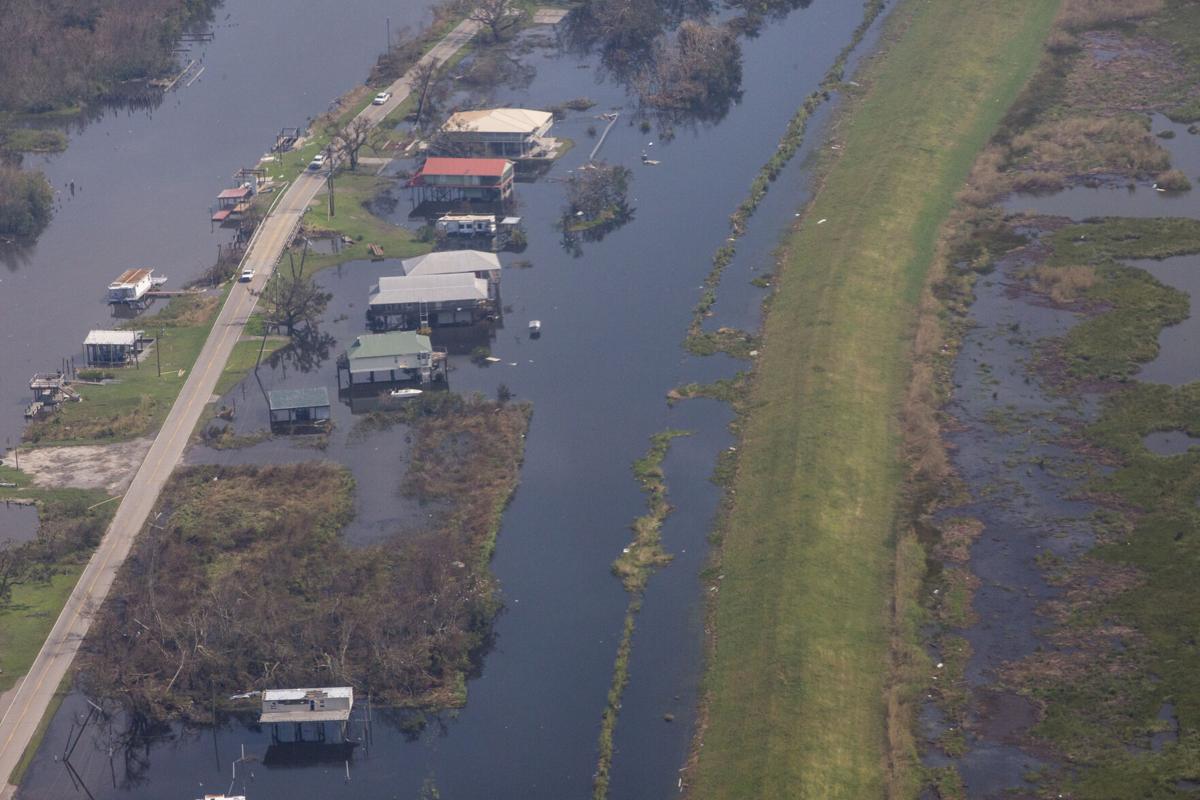
Houses within the levee system are nonetheless surrounded by water after Hurricane Ida in Pointe-aux-Chênes on Friday, Sept. 3, 2021. (Flight courtesy of SouthWings). STAFF PHOTO BY SOPHIA GERMER
Houses are surrounded by oily water after Hurricane Ida in Pointe-aux-Chênes on Friday, Sept. 3, 2021. (Flight courtesy of SouthWings). STAFF PHOTO BY SOPHIA GERMER
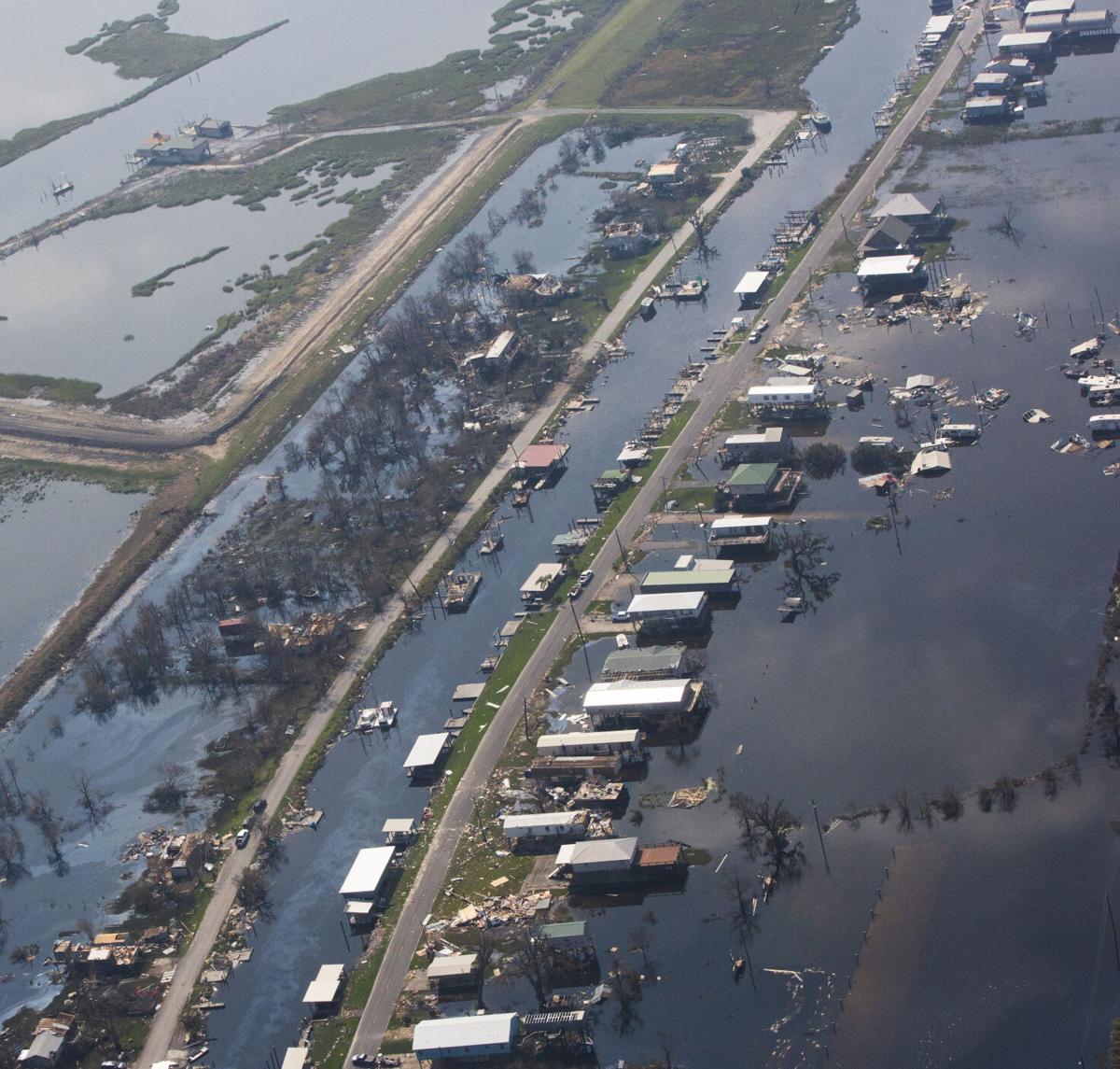
Damaged houses stand in water after Hurricane Ida in Pointe-aux-Chênes on Friday, Sept. 3, 2021. (Flight courtesy of SouthWings). STAFF PHOTO BY SOPHIA GERMER
Houses are surrounded by oily water after Hurricane Ida in Pointe-aux-Chênes on Friday, Sept. 3, 2021. (Flight courtesy of SouthWings). STAFF PHOTO BY SOPHIA GERMER
Houses lay damaged after Hurricane Ida in Pointe-aux-Chênes on Friday, Sept. 3, 2021. (Flight courtesy of SouthWings). STAFF PHOTO BY SOPHIA GERMER
Houses within the levee system stand in water after Hurricane Ida in Pointe-aux-Chênes on Friday, Sept. 3, 2021. (Flight courtesy of SouthWings). STAFF PHOTO BY SOPHIA GERMER
Houses are almost surrounded by water after Hurricane Ida in Pointe-aux-Chênes on Friday, Sept. 3, 2021. (Flight courtesy of SouthWings). STAFF PHOTO BY SOPHIA GERMER
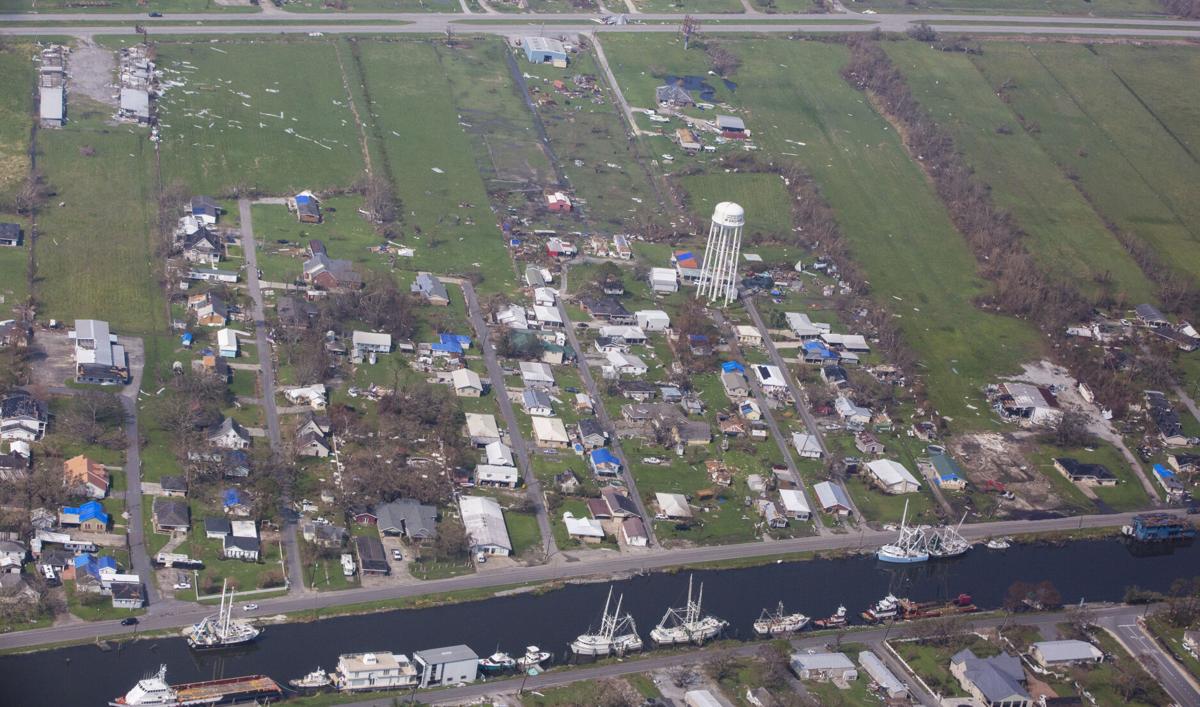
Homes stand damaged after Hurricane Ida in Galliano on Friday, Sept. 3, 2021. (Flight courtesy of SouthWings). STAFF PHOTO BY SOPHIA GERMER
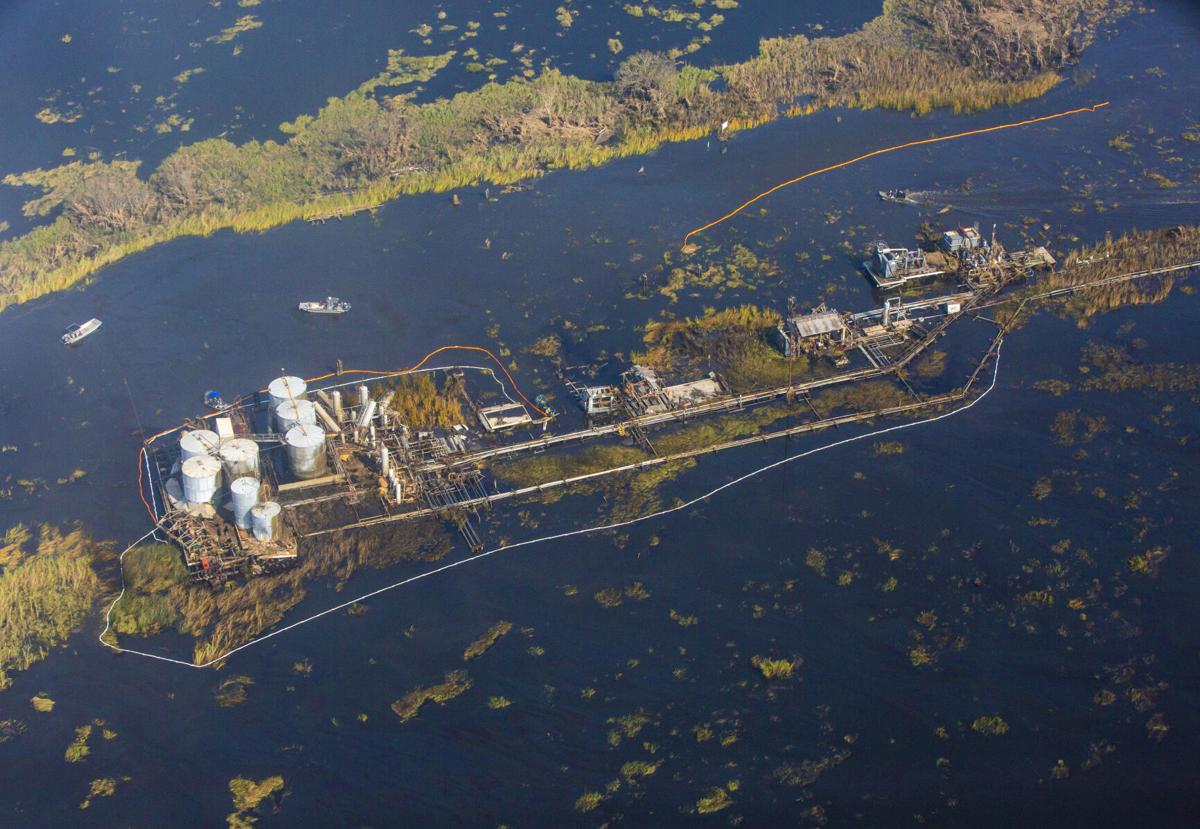
Boats try to contain an oil spill after Hurricane Ida in the Lafitte area on Friday, Sept. 3, 2021. (Flight courtesy of SouthWings). STAFF PHOTO BY SOPHIA GERMER
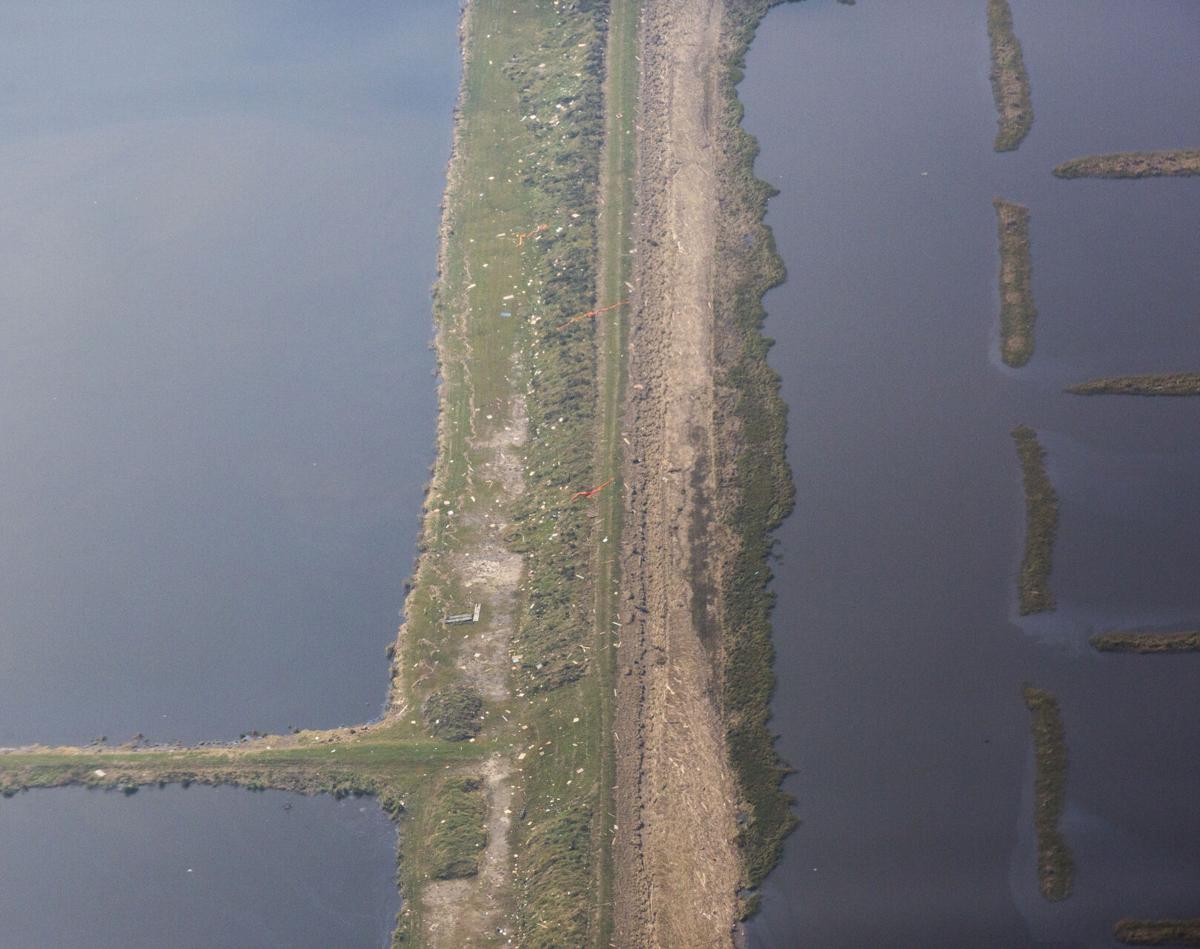
Water stands on both sides of a levee after Hurricane Ida in Montegut on Friday, Sept. 3, 2021. (Flight courtesy of SouthWings). STAFF PHOTO BY SOPHIA GERMER
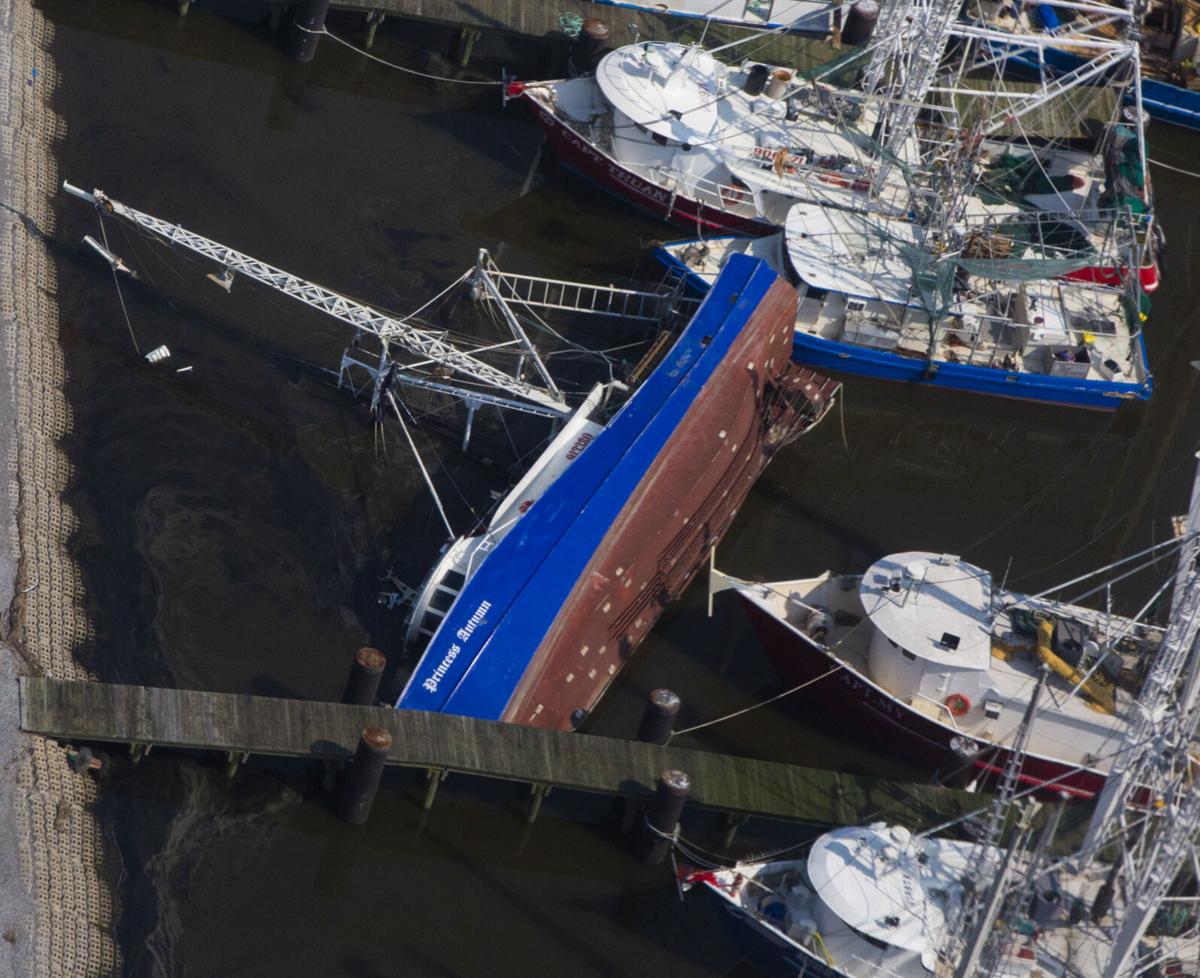
A commercial shrimp boat lies on its side after Hurricane Ida in Golden Meadow on Friday, Sept. 3, 2021. (Flight courtesy of SouthWings). STAFF PHOTO BY SOPHIA GERMER
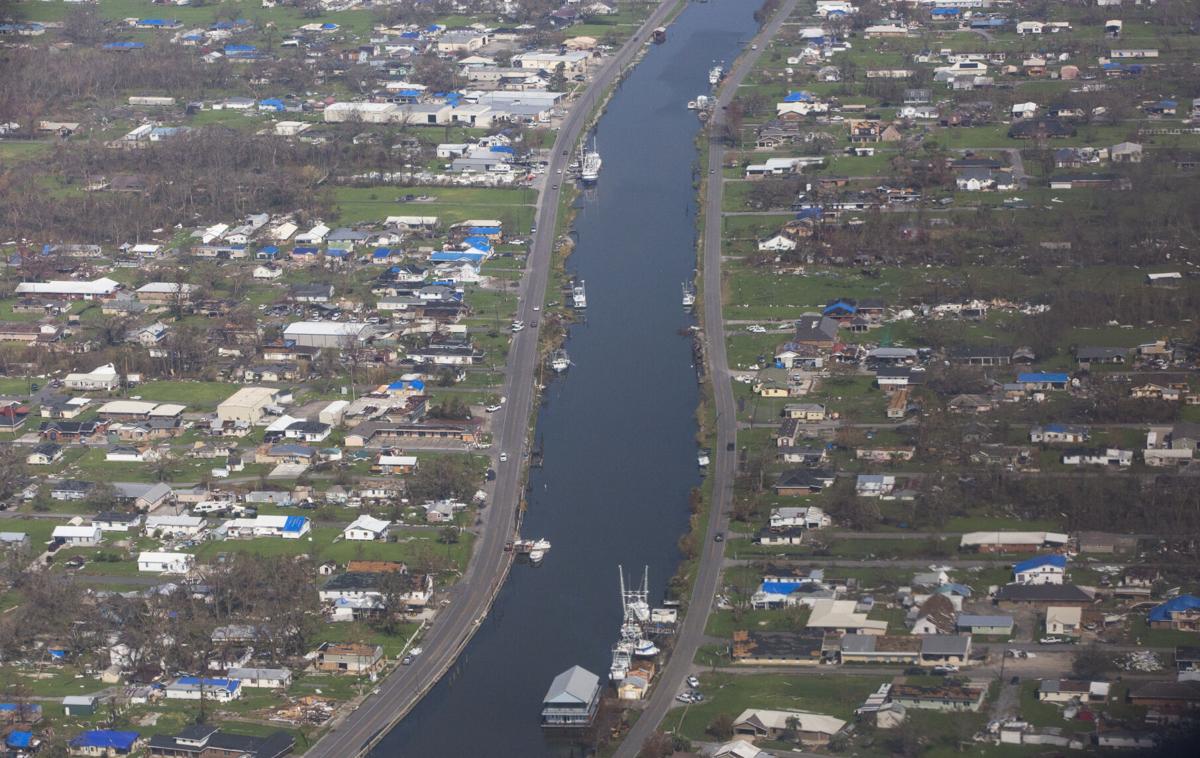
Blue tarpaulins mark houses with Hurricane Ida roof damage in in Golden Meadow on Friday, Sept. 3, 2021. (Flight courtesy of SouthWings). STAFF PHOTO BY SOPHIA GERMER
When Shirell Parfait-Dardar returned to her home in Dulac, she found that Hurricane Ida’s unforgiving winds had ripped the roof off and blown the walls in. A dressmaker by trade, she discovered her sewing shop seemed to have been lifted off the ground, flipped upside down and smashed.
“Every building on my property was destroyed,” said the chief of the Grand Caillou/Dulac Band of Biloxi-Chitimacha-Choctaw, now staying with her mother in Thibodaux. Almost every member of her Native American tribe suffered the same fate. Those who lived in mobile homes saw their trailers blown up or “thrown to the ground and beaten up to the point where it’s unlivable,” she said.
“If they haven’t lost their home, they’re on the verge of losing their home because there’s so much damage to it,” she said. And for those residents, the clock’s ticking a week after the Category 4 storm struck: They must salvage what they can and secure their property before mold sets in.
From the air, tribal communities across Louisiana’s coast appear to have been decimated by Hurricane Ida:
In Pointe-aux-Chênes, home of the Pointe-au-Chien tribe, the storm leveled the elevated houses near the bayou’s end. Left behind were piles of splintered wood surrounded by a pool of water five days after the storm. Just 15 homes remained livable, said Theresa Dardar, a Pointe-au-Chien tribal member.
The United Houma Nation, a tribe of 19,000 spread across several communities from Houma to Golden Meadow and the Lafitte area, saw more than three quarters of its residents’ houses destroyed or rendered uninhabitable, said Thomas Dardar, the tribe’s hurricane relief manager. “The storm was pretty much as if a bomb went off,” he said, speaking from the tribal center where more than a dozen people and several pets were still sheltering Friday. Recovery will take years, he added.
All four of the state-recognized tribes suffered tremendous loss from Ida, as well as several other tribes without any formal status such as the Grand Bayou Indian Village in Plaquemines Parish. Surveying the coast by airplane, Tammy Greer, a United Houma Nation citizen with family in other tribes, was astounded by the scope of the damage.
“This one was so spread out,” she said. “Usually it’s one or two communities affected, and we can help each other out. This time, everybody else is just as bad as you are.”
Without federal recognition, recovery will be slower. None of the coastal tribes has met the criteria put in place for Washington, D.C., to recognize their tribal governments as sovereign powers.
Adam Crepelle, an assistant law professor at George Mason University and a United Houma Nation citizen, said federal recognition would allow tribes to negotiate directly with the U.S. government and open up more aid money and relief programs.
“As far as the federal government is concerned, they’re not a tribe,” Crepelle said, who specializes in federal law concerning Native Americans. “It’s definitely a barrier because, historically, the tribe was denied access to education and things like that, so they’re already starting from lower opportunities to begin with.”
Boaters try to contain an oil spill after Hurricane Ida in the Lafitte area on Friday, Sept. 3, 2021. (Flight courtesy of SouthWings). STAFF PHOTO BY SOPHIA GERMER
Instead, unrecognized tribes are treated as nonprofits. That lets them apply for some grants, but their citizens are treated the same as any other U.S. citizen: Each must file an individual claim if aid is wanted. And the lack of federal recognition precludes some relief money for the tribes, Crepelle said.
“I’m definitely Indian, but I’m not Indian enough,” said Parfait-Dardar, who views the recognition process as discriminatory.
Without direct help from the federal government, each tribe leans on its own networks to obtain supplies and donations and shares with other tribes. They also try to secure help from the parish and state governments. So far, however, Parfait-Dardar and Theresa Dardar said they’ve yet to hear from Terrebonne and Lafourche parish officials as of Sunday.
A levee in Dulac is flanked by water on both sides on after Hurricane Ida on Friday, Sept. 3, 2021. (Flight courtesy of SouthWings). STAFF PHOTO BY SOPHIA GERMER
Louisiana tribes outside of the disaster zone, and ones out of state, also send help. Thomas Dardar said the United Houma Nation had already begun distributing supplies and was working alongside Terrebonne and Lafourche parishes to erect communications towers in some of the hardest-hit areas.
“We’re operating in a disaster, but we’re not in disaster mode,” he said.
Greer and Parfait-Dardar expect many of their tribes’ citizens to return and rebuild. Still, each storm can make their citizens anxious over a loss of culture and identity should members choose to migrate inland.
A house that was ripped to its foundation by Hurricane Ida on Sunday, Aug. 29, 2021, is shown in Pointe-aux-Chênes. PHOTO BY MÉLANIE AKOKA
Thinking of her tribe’s elders, Greer said the constant rebuilding process can take a physical toll. And for those who make money off traditional wood carving or basket weaving, losing a home means losing inventory and income.
Plus, as storms grow more intense and Louisiana’s coast continues to recede, tribes have less protection from the sea and cultural sites such as sacred mounds or cemeteries are at risk of washing away, taking history with them.
“We’re not protecting them, and that’s the history of this land and this place,” Greer said. “Being at the end of the Earth is a dangerous place to be.”
A workboat blocks Bayou Lafourche after Hurricane Ida in Golden Meadow on Friday, Sept. 3, 2021. (Flight courtesy of SouthWings). STAFF PHOTO BY SOPHIA GERMER
Outsiders forget, she said, that the tribes didn’t choose to settle in the swamp but were forced there as others moved onto their land to the north. Yet they made it work and adapted over centuries.
As Ida relief donations trickled in, Parfait-Dardar hoped her community will manage to build back stronger, using more innovative techniques to live with water.
“I can’t live anywhere else. I love my home, I love our people, and I love the environment that I’m in,” the Dulac chief said. “We need to respect the environment we’re in if we’re going to live here safely.”
Drought has farmworkers dreaming of escape from California’s breadbasket
Priscella Vega
A truck rolls through nut trees almost ready for harvest near Cantua Creek, Calif. The drought in the Central Valley is taking its toll on farmworkers, with reduced hours and jobs evaporating like the limited water resources. (Tomas Ovalle / For The Times)
Rosario Rodríguez never wanted to leave her hometown of Trigomil, Nayarit. She was surrounded by family and could quickly get to the nearest grocery store or clinic.
But love called, and she followed her then-boyfriend to Three Rocks — a speck in Fresno County where he worked in the fields.
At first life there reminded her of home in central Mexico — the enticing small-town feel, the lushness all around. The charm wore off as the reality of living in a rural town in Central California set in. Then the drought broke the spell.
“It was never my intention to come to this country,” Rodríguez said. “I was happy in Nayarit, but we got married and he brought me here. And so here I am.”
Rosario Rodríguez hold a picture of her parents, Herminia and Martin Rodriguez, in her garage in Three Rocks, Calif. “It was never my intention to come to this country,” she said. “I was happy in Nayarit, but we got married and he brought me here. And so here I am.” (Tomas Ovalle / For The Times)
For decades, farm labor has kept unincorporated communities alive throughout the Central Valley. But the drought is making it hard to stay. The dearth of essential resources — clean water, adequate housing and fair employment wages — has crippled towns that are easily overlooked and triggered a slow exodus to bigger places.
It can be seen in the dwindling number of people attending nonprofit-led workshops and meetings on agricultural worker rights, said Chucho Mendoza, an environmental and public health advocate who has worked with migrants and small farming families in the Central Valley for 25 years. The pandemic further hollowed out rural life.
In the Cantua Creek area, where pistachio and almond crops reign, some families are grappling with what’s next. Faced with a confluence of challenges, some are leaving; others are arguing over whether they should. Still others are determined to make it work here.
“They don’t know what to pinpoint but they’ll say, ‘We know something is wrong, but we don’t know what it is,'” Mendoza said. “Those who leave move to the next town but don’t realize hell is a lot bigger.”
The California Aqueduct brings water through Cantua Creek. In this area, where pistachio and almond crops reign, some families are grappling with what’s next. (Tomas Ovalle / For The Times)
As the drought worsened, Rodríguez’s husband traveled farther and farther for work. She considered joining him in the field, but leaving her two teenager daughters alone at 3 a.m. felt dangerous. So she began baby-sitting for $25 a day.
Wishing a better future for her daughters, Rodríguez proposed moving to a “bigger” town like Kerman, population 15,000, where there were schools, churches, a fire station and doctors’ offices. But her husband didn’t want to leave. Why push their luck if they were making ends meet?
“It’s a decision we have to make together,” Rodríguez said reluctantly.
For most families in small Central Valley communities, where the residents are overwhelmingly Latino, the emotional toll of staying or fleeing to a new place is exacerbated by scarce finances, immigration status and the lack of a family safety net to fall back on.
Moments before Victor Avila watched his eldest daughter celebrate her quinceañera, he told his wife, Maria, about an idea. A visit to his brother-in-law in Bakersfield inspired him to imagine a life outside of the valley, away from the field work he’d known his whole life.
Maria Avila sits in her kitchen in Three Rocks. She said her husband has floated the idea of moving. “I’m not leaving,” she told him. But despite her reluctance, deep down she feels as though the drought is making leaving an inevitability. (Tomas Ovalle / For The Times)
Since he arrived here from Durango, Mexico, in the 1990s, Victor did everything he could on a farm. For 12 hours, six days a week, he exhausted his body harvesting tomatoes and cotton. He tried his hand at welding metals with a blowtorch. He even tested out new agricultural machines.
His dedication paid off. He no longer spends shifts in the blistering sun. Instead he sits inside a giant, crab-like harvesting machine he steers down rows of almond trees. It helps keep his respiratory problems at bay after years of inhaling dust.
But he knows fellow laborers have it worse. Some struggle finding steady work, with the rise of agricultural machines that no longer require as many bodies to work the harvest. A bill that requires employers to gradually increase minimum wage and pay employees time and a half by 2022 has prompted some to slash overtime.
Maria knew her husband was worried. To help with finances, she thought about applying at the local Carl’s Jr. about 30 minutes away, but it would mainly be night and weekend shifts. They both agreed she couldn’t leave their four children alone that long.
Amid a worsening drought, Victor knew he needed a backup plan. But when he told Maria about moving, she shot it down.
Nut trees adjacent to Cantua Creek. Faced with a confluence of challenges, some families are leaving; others are arguing over whether they should. Still others are determined to make it work here. (Tomas Ovalle / For The Times)
Their eldest daughter, a rising senior at Tranquillity High School, didn’t want to spend her final year adapting to a new campus. Moving away from the fields would also exclude her from a college scholarship, she said.
Maria said her husband has floated the idea about three more times. “I’m not leaving,” she told him.
But despite her reluctance, deep down Maria feels as though the drought is making leaving an inevitability. The dusty, discolored jungle gym at a run-down park across from her house is a daily reminder.
“In the end, I’ll go wherever,” she said.
About two miles from Rodríguez and Avila’s neighborhood, Lucia Salmeron Torres wishes her husband would agree to return one day to their beloved Jalisco, Mexico.
“This is the worst place to live in,” said Torres, 57.
Her home is situated on the edge of a rancher’s property where her husband works. She keeps the house tidy, even though there isn’t much inside. Portraits of Jesus next to artificial roses decorate the living room and hallway walls. She gardens for fun, but only when there aren’t workers nearby because she doesn’t like to feel under surveillance.
Lucia Salmeron Torres, 57, sits in her living room on the outskirts of Fresno County. She wishes her husband would agree to return one day to their beloved Jalisco, Mexico. “This is the worst place to live in,” she said. (Tomas Ovalle / For The Times)
Her 5-year-old granddaughter and son’s pit bull are her only companions when her husband and five sons are at work. In years past, she could count on seeing them more during the rainy season. The drought changed that.
“Now they rarely come home” during the day, she said. “And they struggle with work because there aren’t enough hours.”
Torres first tried persuading her husband to move to the city when one of her sons began attending college. Then she wanted to join her son, Sergio, when he started working as a truck driver for an agricultural company and talked about moving. He had worked in the fields since he was 14, but he saw how the drought was choking the valley.
He knew it wasn’t as simple as packing up and leaving, however. He needed a better income to help provide for his daughter and help his parents.
“I always thought of a better future,” Sergio said. He used to get paid $11 an hour but now makes twice as much, he said.
With few community activities, Torres looks forward to the days when school administrators call for parent-teacher meetings. Or when nonprofit organizations host community workshops on healthful eating and how to be better parents.
On those days, she, Avila and Rodríguez organize a potluck among themselves. They stay as long as possible until they have to return to their routines. Torres and Rodríguez each pay about $5 for a ride from the county’s rural transit agency; Avila drives home in her car.
Irrigation pipes lay unused in Cantua Creek. For decades, farm labor has kept unincorporated communities alive throughout the Central Valley. But the drought is making it hard to stay. (Tomas Ovalle / For The Times)
Still, Rodríguez hasn’t lost hope.
She believes they will move when her daughters are older and ready for college. Fresno City College and Fresno State are both about an hour away, and the commute can be dangerous in the winter when tule fog blankets the area.
Her daughters are looking to the future too. Her eldest, Bianca, is eager to explore places where she isn’t told to be cautious of the water and mindful of the drought.
“The only good thing about this place is that it’s pretty peaceful,” she said. “But it gets lonely and there’s not much to do out here, so it gets really boring.”
For now, Rodríguez is thinking of ways to remain busy. If she isn’t baby-sitting, she’ll take orders for homemade piñatas and make mosaic gelatin for parties. So far she’s had only a handful of orders.
“It’s not that we can’t be successful here,” she said. “But we have to fight for better.”
If you feel that the world’s environment is doomed after the raging summer of hurricanes, floods, and wildfires, you could be suffering from ‘eco-anxiety’
Sophia Ankel
A young man watches as flames rise and smoke billows from a forest during a wildfire near Gonfaron, France, on August 17, 2021. Nicolas Tucat/AFP via Getty Images
Eco-anxiety is on the rise as more people become aware of how climate change will impact them.
Younger people are feeling particularly anxious about the world they’re inheriting, research shows.
Insider spoke to experts and people with eco-anxiety to find out more about their worries.
Jennie Ferrara’s husband brought home the newspaper one day because he thought the front-page story would interest his wife. Instead, it almost made her faint.
The year was 2008, and some of the leading oil companies in the world were announcing plans to extract more oil from Canada’s tar sands – a move that would prove detrimental to the environment.
Ferrara, who is originally from Texas but lives in Denmark, had felt pessimistic about the environment for many years, but the headline that day tipped her over the edge.
“When I looked, just looked, at the front page, I practically went comatose,” Ferrara recalled to Insider.
“It feels like you’re suddenly zooming in on something, your body goes a bit numb and everything around you goes quiet … You lose all energy and question your will to live,” she said.
She is among a growing number of people who have found that the rapidly declining state of the planet is impacting their mental health.
New York City historic flooding Reuters
According to the latest research, “eco-anxiety” is more present than ever.
A recent survey published by Yale University found that more than 40% of Americans felt “helpless” about the state of the planet. And according to a 2020 poll by the APA, more than half of Americans said they were somewhat or extremely anxious about the impact of climate change on their own mental health.
The world is waking up to climate change
“We’ve seen a growing number of people who are feeling an emotional response to what’s happening by living in such a changing world,” Leslie Davenport, a climate psychology consultant and therapist based in Tacoma, Washington, told Insider.
Davenport said that part of the reason behind the rise of “eco-dread” is that more people are realizing “how much climate change is impacting us on a personal level.”
“It was easier in the past to keep climate change as somewhere off in the future, something happening somewhere else to somebody else … But now, as the effects are on the rise, our responses are on the rise too,” Davenport added.
As a climate psychology consultant, Davenport works with clients who experience a whole spectrum of reactions to climate change.
Some – like Ferrara – experience very strong physical sensations. They have difficulties breathing or feel like they’re having a heart attack, she said.
Others have more subtle symptoms – they cry randomly, can’t sleep at night, or often feel irritable and on edge.
Fred Heldreth covers his face for protection from the holy fire smoke burning through Orange and Riverside county in Lake Elsinore, CA. Maria Alejandra Cardona/Contributor/Los Angeles Times
Her clients vary in age, although research shows that specifically younger generations feel distraught about the planet they’re inheriting.
A Washington Post-Kaiser Family Foundation poll from 2019 found that 57 percent of American teenagers said that climate change made them feel scared, while 52 percent said it made them angry.
In 2019, climate activist Clover Hogan set up Force of Nature, which aims to tackle this. Her team teaches students aged 11-24 about the climate crisis to help them navigate their anxiety and realize their potential to get involved.
“At the end of the day, none of us are responsible or capable of solving the climate crisis alone. We’re not capable of changing it overnight. Yet what we are capable of changing overnight, is our mindset,” Hogan told Insider.
“If we can change the way that we think about the issues, if we can change the way that we respond to those emotions and rather than running away from them, hold space for them and think about the power of them to create change, the more empowered and agency we are going to feel.”
Protesters are seen during a climate change demonstration shouting slogans while holding placards in Los Angeles, CA. Ronen Tivony/SOPA Images/LightRocket via Getty Images
Ferrara has dealt with her climate-induced fears by channeling them into her own forms of activism.
In 2011, she started a blog called “Climate Worrier, made numerous podcasts about eco-anxiety, and is now teaching school children in Denmark about the climate and saving urban trees.
Apart from a few exceptions, she has stopped flying and said she hasn’t gotten a physical reaction from reading news headlines in years.
“We need to be careful and open and kind when we are talking about the climate crisis and climate anxiety because we’re often made to think that the problem lies with the individual, which makes it seem as though it’s the individual’s problem to fix,” she said. “It is not.”
Oil boom remakes N. Dakota county with fastest growth in US
Matthew Brown
2020 Census Boomtown 1-15
A flare burns natural gas at an oil well Aug. 26, 2021, in Watford City, N.D., part of McKenzie County, the fastest-growing county in the U.S. That’s according to new figures from the Census Bureau. (AP Photo/Matthew Brown)
A housing development sits in Aug. 24, 2021, in Watford City, N.D., part of McKenzie County, the fastest-growing county in the U.S. That’s according to new figures from the Census Bureau. (AP Photo/Matthew Brown)
Dana Amon speaks about trucks hauling crude oil through McKenzie County as she sits in front of the McKenzie Inn, Aug. 26, 2021, in Watford City, N.D. Amon, who grew up in a double-wide trailer on a farm on the edge of the county seat, Watford City, remembers riding her horse across fields now dotted with tracts of modest housing lit up at night by the flares from nearby oil wells. “Our little town just blew up at the seams,” she said. (AP Photo/Matthew Brown)
Casandra Lugo, right, and Josefina Ornelas work in the Mexican restaurant Los Saguaros, Aug. 26, 2021, in Watford City, N.D., part of McKenzie County. A drilling boom made McKenzie the fastest growing county in the U.S over the past decade, according to the 2020 census. (AP Photo/Matthew Brown)
Principal Brad Foss holds the door for students returning from recess at Fox Hills Elementary School, Aug. 26, 2021, in Watford City, N.D., part of McKenzie County, the fastest-growing county in the U.S. School enrollment tripled over the past decade and is expected to double again by 2030, as McKenzie County became the fastest growing county in the U.S. (AP Photo/Matthew Brown)
Students in the first grade run through a gymnasium at Fox Hills Elementary School, Aug. 26, 2021, in Watford City, N.D., part of McKenzie County. School enrollment tripled over the past decade and is expected to double again by 2030, as McKenzie County became the fastest growing county in the U.S. (AP Photo/Matthew Brown)
Yolanda Rojas talks in Los Saguaros, the restaurant she owns with her husband, Aug. 26, 2021, in Watford City, N.D. The couple saved enough money to open the restaurant in March 2020 — just as the pandemic arrived. The business was teetering on failure when Rojas reached out to the community on social media. People in Watford City rallied to help, regularly ordering takeout to keep the family afloat. (AP Photo/Matthew Brown)
Pump jacks stand with apartments in the background Aug. 26, 2021, on the outskirts of Watford City, N.D., part of McKenzie County, the fastest-growing county in the U.S. That’s according to new figures from the Census Bureau. (AP Photo/Matthew Brown)
Howdy Lawlar, right holds a steel post as Charlie Lewis, left prepares to use a Bobcat to push it into the ground as they repair a barbed wire fence on Lawlar’s farm, Aug. 25, 2021, in McKenzie County, N.D. Lewis came to the county to work in the booming oil fields but now works as Lawlar’s farmhand. (AP Photo/Matthew Brown)
Howdy Lawlar repairs a barbed wire fence on his farm, Aug. 25, 2021, in McKenzie County, N.D. Lawlar says a rush of newcomers who more than doubled the county’s population over the past decade have become part of McKenzie’s “extended family.” (AP Photo/Matthew Brown)
Cars move down Main Street in Watford City, N.D., Aug. 25, 2021, part of McKenzie County. A drilling boom made McKenzie the fastest growing county in the U.S over the past decade, according to the 2020 census. (AP Photo/Matthew Brown)
Dana Amon finds the name of her stepfather who fought in World War II on a monument at Veterans Memorial Park, Aug. 25, 2021, in Watford City, N.D. Amon, who grew up in a double-wide trailer on a farm on the edge of the county seat, Watford City, remembers riding her horse across fields now dotted with tracts of modest housing lit up at night by the flares from nearby oil wells. “Our little town just blew up at the seams,” she said. (AP Photo/Matthew Brown)
J.T. Smith, back left, and Virginia Smith talk with their children James, front left, and Crystal, right, at the Watford City Assembly of God church, Aug. 25, 2021, in Watford City, N.D. The family moved to McKenzie County from Texas after J.T. Smith got a job in the North Dakota’s booming oil fields. (AP Photo/Matthew Brown)
An oil well works at sunrise Aug. 25, 2021, in Watford City, N.D., part of McKenzie County. A drilling boom made McKenzie the fastest growing county in the U.S over the past decade, according to the 2020 census. (AP Photo/Matthew Brown)
WATFORD CITY, N.D. (AP) — First came the roughnecks and other oil field workers, almost all men.
Lured by steady wages as the nation climbed out of the Great Recession, they filled McKenzie County’s few motel rooms, then began sleeping in cars, tents, trailers — anything to hide from the cold wind cutting across the North Dakota prairie. Once empty dirt roads suddenly were clogged with tanker trucks. Crime rates spiked.
Soon everything shifted yet again: The workers’ spouses and children arrived. Classrooms swelled. Apartment buildings cropped up beside oil rigs. And the newcomers made this Northern Plains community their own.
The growth made McKenzie the nation’s fastest-growing county during the past decade, according to the Census Bureau. It swept through like a twisting dust devil, shattering the rural innocence of a region known for inhospitable winters and long summer days perfect for growing crops. But it also brought youth, diversity and better wages — breathing new life into somnolent towns that had been losing population since the 1930s.
Dana Amon, who grew up in a double-wide trailer on a farm on the edge of the county seat, Watford City, remembers riding her horse across fields now dotted with tracts of modest housing lit up at night by flares from nearby oil wells.
“Our little town just blew up at the seams,” she said.
FIGHTS AND FRENZY
Since the boom began in 2010, jobs in McKenzie County have come and gone with oil’s changing fortunes. Crude prices peaked last decade at more than $130 a barrel, fell below $40, then rebounded before falling again when the COVID-19 pandemic hit.
McKenzie just kept growing.
Watford City — perched on a bluff, its skyline defined by a pair of grain elevators — spilled out onto surrounding farmland. The flat, largely barren landscape of Amon’s childhood now features mile after mile of worker camps, shopping centers, subdivisions, hotels, truck yards and warehouses.
When fights became frequent in bars along Main Street and fatal wrecks commonplace on the highways, people like Amon started to lock their doors at night.
Ten years on, the frenzy has settled. The wariness locals and newcomers held for one another eased. Along the way, lives got stitched together through school events, church services and along the sidelines of youth football games.
“I tell the locals, ‘If you guys kick me out, I’m not leaving. It’s my town,’” said Yolanda Rojas, a Tucson, Arizona, native who followed her husband to McKenzie County with their five children a year after he got a job in the oil fields.
From 2010 to 2014, the amount of crude produced in the county grew 1,800%. By the end of the decade, census figures show, its population more than doubled, to 14,704 residents.
Rojas and her husband, Ruben Vega, saved enough money to open a Mexican restaurant in March 2020 — just as the pandemic arrived. The business was teetering on failure when Rojas reached out to the community on social media. People in Watford City rallied to help, regularly ordering takeout to keep the family afloat.
Many of the customers were Hispanic and unknown to Rojas. Only when the census data came out did she learn that the number of Hispanics increased tenfold over the decade, a stark cultural shift for a community long dominated by farmers of northern European descent.
Hispanics now make up about 10% of the population — a share roughly equal to American Indians in the county, which includes part of the Fort Berthold Reservation. The reservation’s three tribes — the Mandan, Hidatsa and Arikara — trace their roots in the area to long before the first European settlers.
‘A BIG, EXTENDED FAMILY’
Oil was first discovered in McKenzie County in the 1950s, but it was the industry’s fracking revolution that opened once inaccessible crude reserves and transformed North Dakota into a global energy player. Tens of billions of barrels of oil have yet to be tapped, according to government estimates, and new wells keep getting drilled.
County officials say the growth is far from over. School enrollment tripled over the past decade and is expected to double again by 2030.
Pump jacks pulling oil from the ground dot the landscape across the county’s 2,860 square miles (7,400 square kilometers). Bordered by the Yellowstone River to the north, Lake Sakakawea to the east and Montana to the west, McKenzie is larger in land mass than Delaware.
Howdy Lawlar, who chairs the McKenzie County Commission and whose family has grown wheat and raised cattle northwest of Watford City for five generations, recalled widespread frustration among farmers as thousands of oil trucks clogged roads not designed for such traffic.
Leaving his farm and trying to turn left into Watford City, Lawlar could wait for an hour for a gap in traffic.
Bypasses were built to ease congestion. Pipelines went in to replace tanker trucks. At the height of the boom, almost 4,000 trucks daily crawled through Watford City. Recent counts tallied just over 320 trucks a day.
More police officers were hired to keep order and new schools built to get students out of temporary trailers.
“I feel like we’re becoming a big, extended family,” Lawlar said. “It’s a good thing.”
But while most families age, this one has become younger, with a median age of 30 compared to 39 in 2010. It’s also more prosperous, with median household income increasing 61% to almost $78,000, according to census data.
The money lured J.T. Smith, a 31-year-old native of the Fort Worth, Texas, area who took an oil field job in McKenzie County six years ago. His parents had moved to North Dakota for oil work several years before. At first he found the region bleak and uninviting.
Smith went back to Texas, where his wife and two children had remained, swearing he’d never come back.
STAYING FOR COMMUNITY
A few years later, another job offer in North Dakota came his way, so he decided to try again. This time he brought his family, and the rhythms of their lives have grown comfortable.
J.T. Smith leaves before dark for his job as an oil field safety adviser, climbing into a white company pickup and joining throngs of near-identical pickups that fan out every morning to drilling rigs, gas processing plants and pipeline construction projects across western North Dakota.
An hour later, the Smiths’ 10-year-old son climbs onto a school bus that falls in with dozens of others funneling students to a gleaming new elementary and high school complex at the edge of town.
Smith and his wife, Virginia, have become deeply involved with the Assembly of God church, which doubled in size in recent years to about 400 members. Their children have made friends through a mixed martial arts gym.
Now when the Smiths go to the grocery store, they’re bound to run into a half-dozen friends. It’s one of many glimpses of lingering small-town charm.
“You’re here for a month and everybody knows you,” Virginia Smith said.
Despite the drastic changes over the last decade, the open landscape around Watford City retains a feeling of remoteness.
As Lawlar, the county commission chairman, worked recently to replace a barbed-wire fence bordering wheat fields that stretched to the horizon, the only sign of industry was the occasional truck rumbling on a distant road.
Grasshoppers sprung up ahead of Lawlar as he silently walked the fence line. His farmhand, Charlie Lewis, lumbered along in a Bobcat they used to push steel fenceposts into the dry dirt.
Lewis came for oil field work, then took a job with Lawlar during a downturn in crude prices. He plans to make this place his home and start a family.
“People come for the work and stay for the community,” Lewis said. “The only time I think of going back is when it’s 40 below.”
Taliban stop planes of evacuees from leaving but unclear why
Kathy Gannon
APTOPIX Afghanistan 1/8
Pilots of Ariana Afghan Airlines walk on the tarmac after landing at Hamid Karzai International Airport in Kabul, Afghanistan, Sunday, Sept. 5, 2021. Some domestic flights have resumed at Kabul’s airport, with the state-run Ariana Afghan Airlines operating flights to three provinces. (AP Photo/Wali Sabawoon)
A Taliban soldier stands guard at the gate of Hamid Karzai International Airport in Kabul, Afghanistan, Sunday, Sept. 5, 2021. Some domestic flights have resumed at Kabul’s airport, with the state-run Ariana Afghan Airlines operating flights to three provinces. (AP Photo/Wali Sabawoon)
A Taliban soldier patrols at Hamid Karzai International Airport in Kabul, Afghanistan, Sunday, Sept. 5, 2021. Some domestic flights have resumed at Kabul’s airport, with the state-run Ariana Afghan Airlines operating flights to three provinces. (AP Photo/Wali Sabawoon)
A Taliban soldier stands guard at the gate of Hamid Karzai International Airport in Kabul, Afghanistan, Sunday, Sept. 5, 2021. Some domestic flights have resumed at Kabul’s airport, with the state-run Ariana Afghan Airlines operating flights to three provinces. (AP Photo/Wali Sabawoon)
A Taliban soldier walks on the tarmac at Hamid Karzai International Airport in Kabul, Afghanistan, Sunday, Sept. 5, 2021. Some domestic flights have resumed at Kabul’s airport, with the state-run Ariana Afghan Airline operating flights to three provinces. (AP Photo/Wali Sabawoon)
Passengers disembark as they arrive from Kandahar, at Hamid Karzai International Airport in Kabul, Afghanistan, Sunday, Sept. 5, 2021. Some domestic flights have resumed at Kabul’s airport, with the state-run Ariana Afghan Airlines operating flights to three provinces. (AP Photo/Wali Sabawoon)
A Taliban soldier walks on the tarmac near parked planes at Hamid Karzai International Airport in Kabul, Afghanistan, Sunday, Sept. 5, 2021. Some domestic flights have resumed at Kabul’s airport, with the state-run Ariana Afghan Airlines operating flights to three provinces. (AP Photo/Wali Sabawoon)
A plane is parked at Hamid Karzai International Airport in Kabul, Afghanistan, Sunday, Sept. 5, 2021. Some domestic flights have resumed at Kabul’s airport, with the state-run Ariana Afghan Airlines operating flights to three provinces. (AP Photo/Wali Sabawoon)
KABUL, Afghanistan (AP) — At least four planes chartered to evacuate several hundred people seeking to escape the Taliban’s takeover of Afghanistan have been unable to leave the country for days, officials said Sunday, with conflicting accounts emerging about why the flights weren’t able to take off as pressure ramps up on the United States to help those left behind to flee.
An Afghan official at the airport in the northern city of Mazar-e-Sharif said that the would-be passengers were Afghans, many of whom did not have passports or visas, and thus were unable to leave the country. He said they had left the airport while the situation was sorted out.
The top Republican on the U.S. House Foreign Affairs Committee, however, said that the group included Americans and they were sitting on the planes, but the Taliban were not letting them take off, effectively “holding them hostage.” He did not say where that information came from. It was not immediately possible to reconcile the accounts.
The final days of America’s 20-year war in Afghanistan were marked by a harrowing airlift at Kabul’s airport to evacuate tens of thousands of people — Americans and their allies — who feared what the future would hold, given the Taliban’s history of repression, particularly of women. When the last troops pulled out on Aug. 30, though, many were left behind.
The U.S. promised to continue working with the new Taliban rulers to get those who want to leave out, and the militants pledged to allow anyone with the proper legal documents to leave. But Rep. Michael McCaul of Texas told “Fox News Sunday” that American citizens and Afghan interpreters were being kept on six planes.
“The Taliban will not let them leave the airport,” he said, adding that he’s worried “they’re going to demand more and more, whether it be cash or legitimacy as the government of Afghanistan.” He did not offer more details.
The Afghan official, who spoke on condition of anonymity because of the sensitivity of the subject, said it was four planes, and their intended passengers were staying at hotels while authorities worked out whether they might be able to leave the country. The sticking point, he indicated, is that many did not have the right travel papers.
Residents of Mazar-e-Sharif also said the passengers were no longer at the airport. At least 10 families were seen at a local hotel waiting, they said, for a decision on their fates. None of them had passports or visas but said they had worked for companies allied with the U.S. or German military. Others were seen at restaurants.
The State Department has no reliable way to confirm information about such charter flights, including how many American citizens might be on them, since it no longer has people on the ground, according to a U.S. official. But the department will hold the Taliban to their pledges to let people travel freely, said the official, who spoke on condition of anonymity because they were not authorized to speak publicly on the matter.
The small airport at Mazar-e-Sharif only recently began to handle international flights and so far only to Turkey. The planes in question were bound for Doha, Qatar, the Afghan official said. It was not clear who chartered them or why they were waiting in the northern city. The massive airlift happened at Kabul’s international airport, which initially closed after the U.S. withdrawal but where domestic flights have now resumed.
Searing images of that chaotic evacuation — including people clinging to an airplane as it took off — came to define the final days of America’s longest war, just weeks after Taliban fighters retook the country in a lightning offensive.
Since their takeover, the Taliban have sought to recast themselves as different from their 1990s incarnation, when they last ruled the country and imposed repressive restrictions across society. Women and girls were denied work and education, men were forced to grow beards, and television and music were banned.
Now, the world is waiting to see the face of the new government, and many Afghans remain skeptical. In the weeks since they took power, signals have been mixed: Government employees including women have been asked to return to work, but some women were later ordered home by lower-ranking Taliban. Universities and schools have been ordered open, but fear has kept both students and teachers away.
Women have demonstrated peacefully, some even having conversations about their rights with Taliban leaders. But some have been dispersed by Taliban special forces firing in the air.
Among the promises the Taliban have made is that once the country’s airports are up and running, Afghans with passports and visas would be allowed to travel. More than 100 countries issued a statement saying they would be watching to see that the new rulers held to their commitment.
Technical teams from Qatar and Turkey arrived in recent days and are working to get the civilian airport operational.
On Saturday, state-run Ariana Airlines made its first domestic flights, which continued on Sunday. The airport is without radar facilities, so flights are restricted to daylight hours to allow for visual landing, said official Shershah Stor.
Several countries have also been bringing in humanitarian supplies. The Gulf state of Qatar, where the Taliban maintained a political office since 2013, is making daily flights into Kabul, delivering humanitarian aid for the war-weary nation. Bahrain also announced humanitarian assistance deliveries.
Meanwhile, the Taliban stepped up an assault on the last remaining pocket of resistance being led by fighters opposed to their rule.
The anti-Taliban fighters in Panjshir province, north of the Afghan capital, are being led by former vice president Amrullah Saleh, who has appealed for humanitarian aid to help the thousands of people displaced by the fighting.
A senior Taliban spokesman tweeted Sunday that Taliban troops had overrun Rokha district, one of largest of eight districts in Panjshir. Several Taliban delegations have attempted negotiations with the holdouts there, but talks have failed to gain traction.
Fahim Dashti, the spokesman for the group that is fighting the Taliban, was killed in a battle on Sunday, according to the group’s Twitter account. Dashti was the voice of the group and a prominent media personality during previous governments.
He was also the nephew of Abdullah Abdullah, a senior official of the former government who is involved in negotiations with the Taliban on the future of Afghanistan.
Saleh fled to Panjshir after Afghan President Ashraf Ghani quit Afghanistan as the Taliban marched on the capital. The fighters’ lightning blitz across the country took less than a week to overrun some 300,000 government troops, most of whom surrendered or fled.
Associated Press writers Rahim Faiez and Tameem Akhgar in Istanbul and Ellen Knickmeyer in Oklahoma City contributed to this report.