Hurricane Danielle becomes first hurricane of 2022 Atlantic season. Category 2 storm in forecast

Palm Beach Daily News

Hurricane Danielle becomes first hurricane of 2022 Atlantic season. Category 2 storm in forecast

Cheryl McCloud, Palm Beach Post – September 2, 2022

Hurricane Danielle has become the first hurricane of the 2022 Atlantic season.

Maximum sustained winds have increased to 75 mph, according to the National Hurricane Center.

Danielle is forecast to continue strengthening, with winds expected to hit 100 mph over the next 48 hours, making it a Category 2 storm.

There is no threat to the U.S. from the storm.

► Your guide to preparing for the 2022 hurricane season in Florida

 Track all active storms

 Excessive rainfall forecast

Danielle’s path will be an untraditional one, with the hurricane forecast to trace a small loop over the waters of the North Atlantic through the weekend, according to AccuWeather.
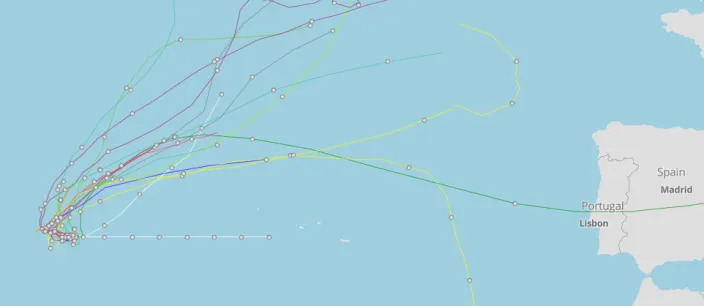
Spaghetti models for Hurricane Danielle as of 11 a.m. Sept. 2, 2022.

The Hurricane Center also is monitoring two other tropical waves in the Atlantic, Invest 91L and Invest 94L.

Chances have dropped overnight for the development of 91L, the closest disturbance to the U.S.

What’s happening in tropics: August hasn’t been this devoid of tropical storms since 1997. Is hurricane season over?

WeatherTiger: Baffling scot-free hurricane season thus far, but stormless streak ends with Danielle

The next named storm of the season will be Earl.

Here’s the latest update from the NHC as of 11 a.m. Sept. 2:

  • Location: 885 miles west of the Azores; 2,238 east of Daytona Beach
  • Maximum wind speed: 75 mph
  • Direction:  west at 1 mph

Maximum sustained winds have increased to near 75 mph, with higher gusts.

Some additional strengthening is forecast during the next couple of days. Winds are expected to reach 100 mph within 48 hours.

Hurricane-force winds extend outward up to 15 miles from the center and tropical-storm-force winds extend outward up to 115 miles.

What else is out there and where are they?
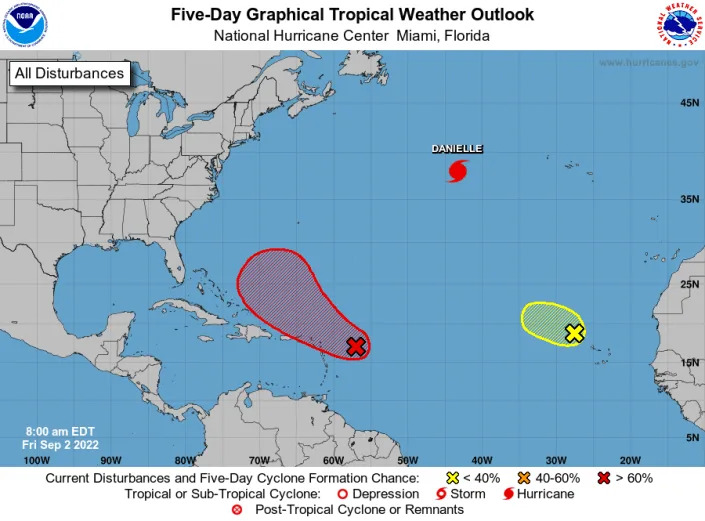
Hurricane Danielle becomes the first hurricane of the 2022 Atlantic hurricane season.

Invest 91L: Shower and thunderstorm activity has slightly increased since yesterday in association with an area of low pressure located several hundred miles east of the Leeward Islands.

Invest 94L: Shower activity associated with a broad area of low pressure located northwest of the Cabo Verde Islands has slightly increased since yesterday.

How likely are they to strengthen?
Tropical conditions 5 a.m. Sept. 2, 2022.

Invest 91L: Overnight satellite-derived wind data indicate the circulation remains broad. Although environmental conditions are only marginally conducive, any additional development of the system over the next few days would lead to the formation of a tropical depression.

The disturbance is expected to move slowly west-northwest, toward the adjacent waters of the northern Leeward Islands.

An Air Force Reserve Hurricane Hunter aircraft is scheduled to investigate the system this afternoon, if necessary.

  • Formation chance through 48 hours: medium, 50 percent.
  • Formation chance through 5 days: medium, 70 percent.

Invest 94L: This system is moving into an area of less favorable environmental conditions, and significant development is not expected.

  • Formation chance through 48 hours: low, 10 percent.
  • Formation chance through 5 days: low, 10 percent.
Who is likely to be impacted?

Invest 91L: Regardless of development, locally heavy rains may occur over portions of the Leeward Islands during the next couple of days, and residents in that area should monitor the progress of the system.

Invest 94L: It’s too early at this time to determine if there will be any impact to the U.S. from Invest 94L.

Forecasters urge all residents to continue monitoring the tropics and to always be prepared during what’s expected to be an active hurricane season.

Colorado State University’s two-week hurricane forecast for Sept. 1-14 calls for a 70% chance of near-normal activity, a 25% chance of above-normal activity and a 5% chance of below-normal activity.

When is the Atlantic hurricane season?

The Atlantic hurricane season runs from June 1 through Nov. 30.

When is the peak of hurricane season?
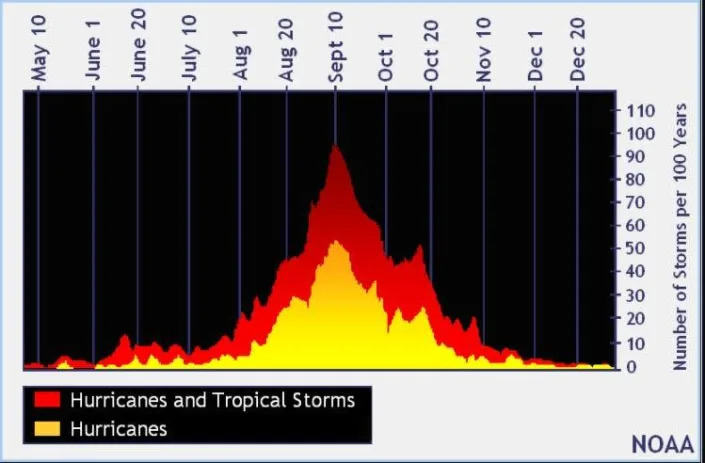
Hurricane season's ultimate peak is Sept. 10 but the season goes through Nov. 30. Credit: NOAA
Hurricane season’s ultimate peak is Sept. 10 but the season goes through Nov. 30. Credit: NOAA

Although the season has gotten off to a quiet start, the peak of the season is Sept. 10, with the most activity happening between mid-August and mid-October, according to the Hurricane Center.

Weather watches and warnings issued for your area

If you can’t see any local weather warnings here, you’ll need to open this story in a web browser.

The next five days

See the National Hurricane Center’s five-day graphical tropical weather outlook below.

Excessive rainfall forecast
What’s out there?

Systems currently being monitored by the National Hurricane Center.

As dangerous heat wave scorches California, Death Valley could hit a whopping 125 degrees

USA Today

As dangerous heat wave scorches California, Death Valley could hit a whopping 125 degrees

Doyle Rice, USA TODAY – September 2, 2022

A dangerous and sweltering heat wave will continue to consume much of the western U.S., especially California on Friday through the Labor Day weekend, the National Weather Service said.

The intense heat is exacerbating wildfire concerns and putting a strain on the electrical grid.

Temperatures in the mid- to upper 90s and lower 100s will result in widespread daily records each day for much of the region, the Weather Service said.

Notorious hot spot Death Valley could soar as high as 125 degrees on Saturday, AccuWeather said, which would come close to the hottest September temperature ever recorded on Earth of 126 degrees. The hellish location already holds the record for the world’s hottest temperature of 134 degrees, set in 1913.

Other temperature records likely to be broken

Elsewhere, many monthly temperature records are likely to be broken in inland areas of California, according to UCLA climate scientist Daniel Swain.

Nearly 50 million people from Arizona to Idaho were under excessive heat warnings and watches along with heat advisories, which probably will continue for the next several days. That includes major metropolitan areas such as Los Angeles, Sacramento and San Diego.

“Little to no relief from the heat overnight will only increase the heat stress and create a potentially dangerous situation for sensitive individuals,” the Weather Service warned.

HIGH HEAT: What is the hottest temperature ever recorded? Where on Earth was it?

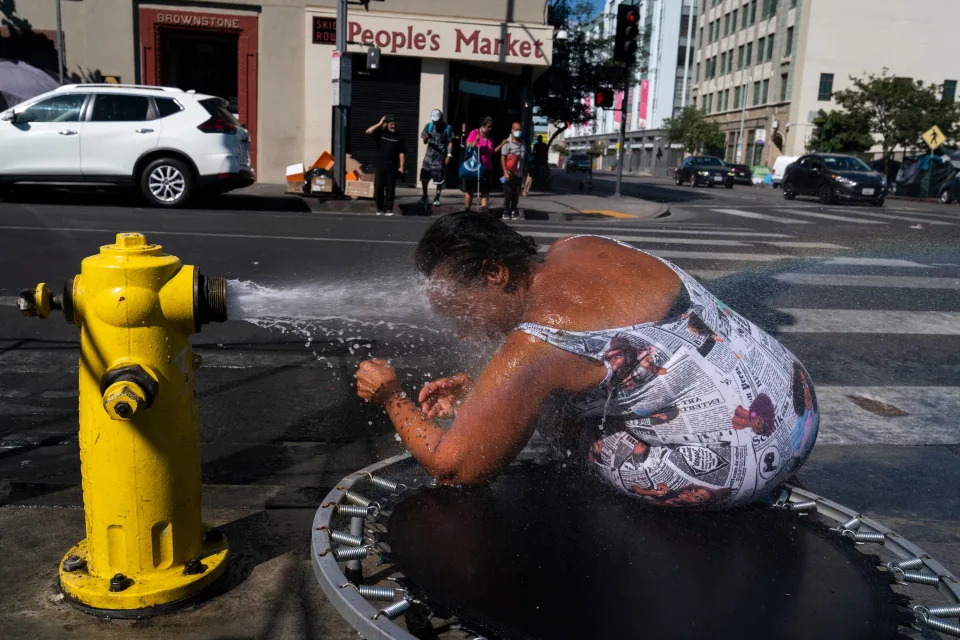
Stephanie Williams, 60, cools off with water from a hydrant in the Skid Row area of Los Angeles, Wednesday. Excessive-heat warnings expanded to all of Southern California and northward into the Central Valley on Wednesday, and were predicted to spread into Northern California later in the week.

“This heat may produce a very high risk of heat illness,” the Weather Service in Los Angeles said.

The Capital Weather Gang said, “Close to 38 million people, the vast majority of them in California and Arizona, are predicted to experience highs hitting the century mark in the coming week.”

IS FALL REALLY HERE?: Today is the first day of fall, meteorologists say. But it won’t feel like it in the West.

AccuWeather chief meteorologist Jonathan Porter said: “The risks associated with this heat wave are even more concerning than other heat waves because this will be happening through the Labor Day weekend, a holiday weekend when many people are spending additional time outdoors and may be less aware of the heat risks.

“The heat wave will be notable due to its persistence – day after day of extreme heat with temperatures, in some locations such as California’s capital of Sacramento, near or exceeding 110 degrees for three or more days in a row,” Porter said.

“Extreme caution” is advised for people who go outdoors, the Weather Service in Sacramento said.

Wildfire, power concerns

Wildfires and power outages were high on the list of concerns among California officials on Friday.

In California, wildfires chewed through rural areas north of Los Angeles and east of San Diego, racing through bone-dry brush and prompting evacuations.

POWER PROBLEMS?: California hopes to avoid blackouts amid heat wave by asking millions of people to use less electricity

In northwestern Los Angeles County, the intense Route Fire near Castaic raged through more than 8 square miles of hills containing scattered houses late Wednesday. Traffic was snarled on Interstate 5, a major north-south route running through the fire area. Containment was estimated at 12% Thursday morning.

One structure had been destroyed and 550 remained threatened, the Los Angeles Times said, adding that “no civilian casualties were reported, but seven firefighters were injured.”

State officials hope to avoid rolling blackouts by asking residents to voluntarily use less power, even as the heat tempts Californians to crank up their air conditioners.

“One of the big unknowns in this (whether blackouts will happen) is that we also expect wildfires,” said Daniel Kammen, an energy professor at the University of California, Berkeley: “And wildfires will cause us to have to shut down certain transmission lines, de-energizing them to prevent wildfires.

“Then we could get into a situation where those rolling brownouts, we call them, when they’re scheduled, we tell people in advance. But right now, none of them are anticipated,” Kammen told USA TODAY.

CLIMATE CONNECTION: Extreme heat waves may be our new normal, thanks to climate change. Is the globe prepared?

Contributing: Celina Tebor, USA TODAY; the Associated Press

Death Valley sets record for hottest Sept. day — and California’s heat wave isn’t over

Yahoo! News

Death Valley sets record for hottest Sept. day — and California’s heat wave isn’t over

David Knowles, Senior Editor – September 2, 2022

Death Valley, Calif., set a record Thursday for the highest recorded temperature for the month of September, hitting 127 degrees Fahrenheit.

The new record comes as California bakes in the latest heat wave of a punishing summer in a year when climate change has continued apace, resulting in a wide variety of extreme weather events around the globe.

“I wish it were cooler already,” Abby Wines, spokesperson for Death Valley National Park, told Reuters. “This is abnormally hot for September.”

The hottest temperatures of the current extended heat wave are not expected to peak until Monday or Tuesday, however, leaving open the possibility that Thursday’s record for a September day will be short-lived.

Temperature records in many parts of the state are forecast to fall in the coming days, but it’s the duration of extremely hot weather that bears the hallmarks of climate change rather than a single record being broken. Studies have linked increasing heat wave duration and frequency with rising global temperatures due to the greenhouse effect caused by the burning of fossil fuels by humans.

In Sacramento, the state capital, the city has never recorded 10 consecutive days of triple-digit temperatures. It is now in its ninth straight day, and that record is almost certain to fall, meteorologist Tamara Berg said Friday.

A temperature gauge in Death Valley, Calif., shows a reading of 127 degrees Fahrenheit.
Death Valley, Calif., recorded a temperature of 127 degrees Fahrenheit on Thursday. (Reuters video)

Public high schools in the San Fernando Valley have altered schedules due to the heat and canceled football games. On Wednesday it was 106 degrees Fahrenheit in the valley, on Thursday it reached 107 degrees Fahrenheit and on Friday it is forecast to hit 103 degrees Fahrenheit before temperatures edge back up for the remainder of the holiday weekend.

In Death Valley, tourists have flocked to the national park to experience temperatures that will become more commonplace over the coming decades thanks to climate change. Even walking relatively short distances in the extreme heat can prove hazardous to one’s health.

“The ground heats up. We’ve measured temperatures of 201 [degrees Fahrenheit] as far as ground temperatures. The ground is then radiating heat back up into the air,” Wines said.

The National Weather Service has been issuing alerts across the state warning of the dangers that exposure to the heat can have to human and animal health.

“Dry heat means that your sweat will evaporate almost instantly, to the point where you don’t even realize you’re sweating,” Wines said. “Your shirt doesn’t get soaked and so people — their body is cooling them down through sweating and may not realize how overheated they actually are and how dehydrated they’re getting.”

California under warnings for extreme heat, fire threats

ABC News

California under warnings for extreme heat, fire threats

Meredith Deliso – September 2, 2022

Excessive heat and red flag warnings are in effect for much of California this weekend, as the state battles several blazes amid scorching temperatures.

Record-high temperatures could be set this Labor Day weekend, from San Diego to Los Angeles and up into Sacramento.

PHOTO: A vendor wheels around an ice cream cart in MacArthur Park in Los Angeles, Sept. 1, 2022. (Caroline Brehman/EPA via Shutterstock)

Residents in the state are urged to continue to conserve energy amid a heatwave that has tested the state’s energy grid, with temperatures across the state 10 to 20 degrees hotter than is typical this time of year.

MORE: Extreme heat safety tips: What to know about heat stroke vs. heat exhaustion

“This kind of weather drives up energy demand, straining power generation equipment as people run their air conditioning,” California Gov. Gavin Newsom’s office said in a statement Thursday.

Since Wednesday, “two new fires have started that threaten transmission lines that supply power to millions of homes,” his office said.

Newsom declared a state of emergency on Wednesday due to the high temperatures, to temporarily increase energy production and reduce demand. For the third day in a row, the California Independent System Operator, which operates the state’s power grid, issued an alert on Friday asking residents to reduce their electricity consumption during the late afternoon and evening hours.

PHOTO: High temperatures map (ABC News)

California ISO President Elliot Mainzer said the grid experienced no “serious problems” on Thursday due to energy conservation efforts, as the prolonged heatwave pushed demand to the highest levels since September 2017.

“The hottest weather in this extended heatwave is still ahead of us,” Mainzer said in a video statement Friday. “Much of California will see record triple-digit temperatures with only moderate cooling at night, right through the Labor Day holiday weekend and into the middle of next week. So electricity conservation is going to be essential in keeping the power flowing to California without interruption.”

MORE: States take charge to protect people from extreme heat

Amid the soaring temperatures, firefighters are also battling several blazes in California.

One of the newest threats is the Mill Fire in northern California’s Siskiyou County, which has quickly burned nearly 900 acres since starting Friday afternoon amid a red flag warning for the area and poses a danger to structures, powerlines and transmission lines.

Multiple evacuation orders and warnings are in place as Cal Fire warns of a “dangerous rate of spread” for the wildfire.

Among the largest active blazes in the state, the Route Fire has burned more than 5,000 acres in Castaic in Los Angeles County since igniting on Wednesday. It was nearly 40% contained as of Friday morning.

MORE: Raging Route Fire injures 7 firefighters, prompts evacuation orders in southern California

The Border 32 Fire in San Diego County has also burned more than 4,400 acres since Wednesday. It was 20% contained as of Friday morning.

ABC News’ Jennifer Harrison, Daniel Amarante and Max Golembo contributed to this report.

Barbara Ehrenreich, activist and groundbreaking ‘Nickel and Dimed’ author, dies at 81

Los Angeles Times

Barbara Ehrenreich, activist and groundbreaking ‘Nickel and Dimed’ author, dies at 81

Nardine Saad, Dorany Pineda – September 2, 2022

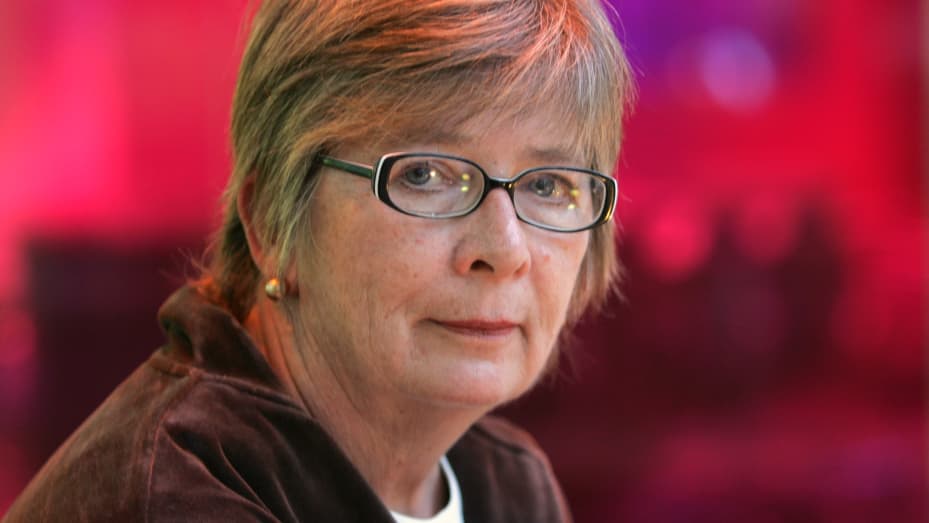
Author Barbara Ehrenreich poses at her home in Charlottesville, Va., on Aug. 25, 2005.
Author Barbara Ehrenreich at her home in Charlottesville, Va., in August 2005. (Andrew Shurtleff / Associated Press)

Barbara Ehrenreich, the author, journalist and political activist whose groundbreaking work of immersive journalism, “Nickel and Dimed,” presaged and arguably helped spark the resurgence of the American labor movement, has died. She was 81.

Ehrenreich died Thursday in Alexandria, Va., after recently suffering a stroke, the Associated Press reported Friday.

“Sad news. Barbara Ehrenreich, my one and only mother, died on September 1, a few days after her 81st birthday,” her son, author and journalist Ben Ehrenreich, tweeted Friday.

“She was, she made clear, ready to go. She was never much for thoughts and prayers, but you can honor her memory by loving one another, and by fighting like hell,” he wrote.

Following news of her death, writers, journalists and activists took to social media to pay their respects.

“Heartland” author Sarah Smarsh called Ehrenreich’s contributions to U.S. discourse around class and injustice “immeasurable. … May she rest in peace, & may we include class in every conversation about justice.”

Robert Reich, former U.S. secretary of Labor, called her “inimitable. … Our abiding thanks to her for her contributions to the labor, progressive and women’s movements, her brilliant literary journalism, and her tenacious appeals to common sense. She will be sorely missed.”

“Barbara Ehrenreich changed my life in many ways,” tweeted New York state Rep. Emily Gallagher. “Not only was I forever inspired by ‘Nickel and Dimed,’ I recently took a deeper dive into her earlier feminist pamphlets and felt kinship by her relentless pursuit of socialist feminism. Thank you Barbara [heart emoji] we continue your work.”

The Montana-born writer, also known for “Bait and Switch: The (Futile) Pursuit of the American Dream” and “Natural Causes: An Epidemic of Wellness, the Certainty of Dying and Killing Ourselves to Live Longer,” rallied for higher minimum wage, pushed against white privilege and challenged conventional thinking about race, religion, class, American exceptionalism, gender politics, the mechanics of joy and the gap between rich and poor.

A proponent of liberal causes such as economic equality and abortion rights, Ehrenreich wrote 20 books and was also the founding editor of the Economic Hardship Reporting Project. She frequently contributed to the Los Angeles Times and other publications such as Mother Jones and the Nation.

Her 1989 book, “Fear of Falling: The Inner Life of the Middle Class,” was nominated for a National Book Critics Circle Award. Her 2001 bestseller, “Nickel and Dimed: On (Not) Getting By in America,” traced her own journey as a waitress and hotel housekeeper, among other low-income jobs, and became one of her best-known works.

In that book, she wrote “to be a member of the working poor is to be an anonymous donor, a nameless benefactor, to everyone.” She learned — and wrote — that living on $7 an hour was not a way to live at all.

In a 2001 review for The Times, Stephen Metcalf called the book “thoroughly enjoyable, written with an affable, up-your-nose brio throughout. Ehrenreich is a superb and relaxed stylist, and she has a tremendous sense of rueful humor. … Social critics often sting but just as often lack real antiseptic power. Not so Ehrenreich, an old-time southpaw, a leftie without a trace of the apologetic squeak that’s recently crept into the voice of the left — and crept in while conservatives have stertorously monopolized phrases like ‘civilized society.'”

In 2009, Ehrenreich asked in The Times if feminism had “been replaced by the pink-ribbon breast cancer cult,” hoping to ignite a new women’s health movement. In 2014, she asked “how do we reconcile the mystical experience with daily life” for a memoir that she never set out to write, thinking the form was too self-involved.

Nonetheless, she crafted “Living With a Wild God: A Nonbeliever’s Search for the Truth About Everything,” a personal history and spiritual inquiry that pulled from journals she wrote between the ages of 14 and 24.

In a 2014 review of the book, David L. Ulin, a former Times books editor and critic, emphasized that the memoir was “not a book of faith. Educated as a scientist, trained as a reporter, Ehrenreich does not believe in what she cannot see. As such, she turns to philosophy, chemistry and physics; she traces the influence of her home life, which was dysfunctional (both parents were alcoholics) but encouraged asking questions and thinking for oneself.”

Barbara Alexander was born in Butte, Mont., in 1941, to a mother who was a homemaker and a father who was a copper miner before earning a PhD from Carnegie Mellon University and becoming the director of research at Gillette.

According to the Associated Press, she was raised in a union household where family rules included “never cross a picket line and never vote Republican.”

She also said she was born and raised into atheism “by people who had derived their own atheism from a proud tradition of working-class rejection of authority in all its forms, whether vested in bosses or priests, gods or demons.” She was a student activist, was educated as a scientist — she studied physics at Reed College and earned a PhD in cellular biology from Rockefeller University in 1968 — but trained as a teacher and reporter.

After getting her doctorate, she joined a group of activists trying to improve healthcare for poor New Yorkers, which cemented her love of reporting and writing. “Health seemed related to biology,” she told the Washington Post in 2005.

Her 1983 book, “The Hearts of Men: American Dreams and the Flight From Commitment,” helped her get assignments at the New York Times and launched her journalism career. She wrote a regular column for Time from 1990 to 1997. Her most notable books from that period include “Fear of Falling” and “Blood Rites: Origins and History of the Passions of War.”

Barbara Ehrenreich in New York in 2007.
Barbara Ehrenreich in New York in 2007. (Andrew Harrer / Bloomberg via Getty Images)

In 2019, after the release of “Natural Causes,” she explored “Silicon Valley syndrome,” or “towering hubris,” the pursuit of not just extending the quality of life but living forever.

The prolific author told The Times that once she realized she was old enough to die, she decided she would put up with no more “suffering, annoyance and boredom” in pursuit of a longer life. Instead, she opted to choose the foods she liked, the exercise that sufficed and the doctor visits that addressed the pains she actually felt. At the time, she had just released “Natural Causes.”

Ehrenreich was motivated by a desire to shed light on ordinary people as well as the “overlooked and the forgotten,” her editor, Sara Bershtel, told the New York Times.

She is survived by her son and her daughter, Rosa Brooks.

Barbara Ehrenreich, muckraking writer and activist, dies

CNBC – U.S. News

Barbara Ehrenreich, muckraking writer and activist, dies

Associated Press – September 2, 2022

  • Barbara Ehrenreich, the muckraking author, activist and journalist who in such notable works as “Nickel and Dimed” and “Bait and Switch” challenged conventional thinking about class, religion and the very idea of an American dream, has died at age 81.
  • Ehrenreich died Thursday morning in Alexandria, Virginia, according to her son, the author and journalist Ben Ehrenreich. She had recently suffered a stroke.
Barbara Ehrenreich, author of Dancing in the Streets, poses in New York on Wednesday, January 10, 2007.

Barbara Ehrenreich, author of Dancing in the Streets, poses in New York on Wednesday, January 10, 2007.Andrew Harrer | Bloomberg | Getty Images

Barbara Ehrenreich, the muckraking author, activist and journalist who in such notable works as “Nickel and Dimed” and “Bait and Switch” challenged conventional thinking about class, religion and the very idea of an American dream, has died at age 81.

Ehrenreich died Thursday morning in Alexandria, Virginia, according to her son, the author and journalist Ben Ehrenreich. She had recently suffered a stroke.

“She was, she made clear, ready to go,” Ben Ehrenreich tweeted Friday. “She was never much for thoughts and prayers, but you can honor her memory by loving one another, and by fighting like hell.”

Barbara Ehrenreich was a Montana native, raised in a union household where family rules included “never cross a picket line and never vote Republican.” A prolific author who regularly turned out books and newspaper and magazine articles, she was a longtime proponent of liberal causes from economic equality to abortion rights. For “Nickel and Dimed,” one of her best known books, she worked in minimum wage jobs so she could learn firsthand the struggles of the working poor, whom she called “the major philanthropists of our society.”

“They neglect their own children so that the children of others will be cared for; they live in substandard housing so that other homes will be shiny and perfect; they endure privation so that inflation will be low and stock prices high,” she wrote. “To be a member of the working poor is to be an anonymous donor, a nameless benefactor, to everyone.”

Barbara Ehrenreich, author who resisted injustice, dies aged 81

The Guardian

Barbara Ehrenreich, author who resisted injustice, dies aged 81

Ed Pilkington – September 2, 2022

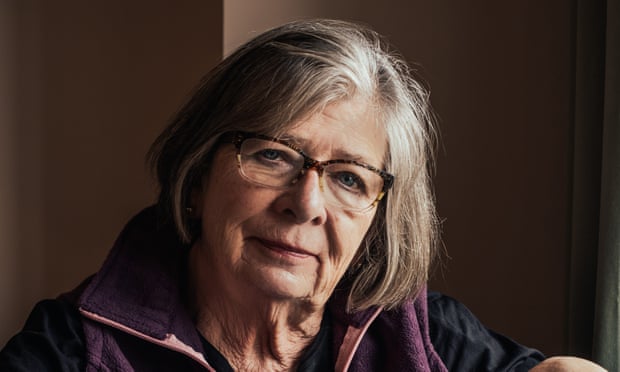
Barbara Ehrenreich in 2018.
Barbara Ehrenreich in 2018. Photograph: Stephen Voss/The Guardian
Writer of the 2001 bestseller Nickel and Dimed died on 1 September, her son announced

Barbara Ehrenreich, the author of more than 20 books on social justice themes ranging from women’s rights to inequality and the inequities of the American healthcare system, has died at the age of 81.

The news that Ehrenreich had died on 1 September was released by her son, Ben Ehrenreich, on Friday. He accompanied the announcement with a comment redolent of his mother’s spirit: “She was never much for thoughts and prayers, but you can honor her memory by loving one another, and by fighting like hell.”

Ehrenreich battled over a half a century as a writer committed to resisting injustice and giving a voice to those who were typically unheard.

Her first book, published in 1969, Long March, Short Song, was an account of the student uprising against the Vietnam war.

In Nickel and Dimed: On (Not) Getting By in America, her 2001 bestseller, she wrote an immersive experience of living as a low-waged worker in Key West, Florida.

The book helped spread awareness of an economy in which it was necessary to work two or three jobs to survive, and acted as a catalyst of the minimum wage movement.

Later, she used her name and energy to try to give low-income and other disadvantaged groups a direct voice to tell their own stories.

She founded the Economic Hardship Reporting Project which supports independent journalists to write about their lives including in poor rural areas of the US.

Ehrenreich, who acquired a doctorate in cell biology before she turned to social activism and writing, was diagnosed in 2000 with breast cancer. She wrote an award-winning essay Welcome to Cancerland about the experience.

She brought her trademark clear-eyed reporting to the subject of her own mortality. In 2018 she published Natural Causes: An Epidemic of Wellness, the Certainty of Dying, and Killing Ourselves to Live Longer, in which she described coming to the realization that she had lived long enough to die.

“That thought had been forming in my mind for some time,” she told the Guardian at the time. “I really have no hard evidence about when exactly one gets old enough to die, but I notice in obituaries if the person is over 70 there’s not a big mystery, there’s no investigation called for. It’s usually not called tragic because we do die at some age. I found that rather refreshing.”

Announcing his mother’s death on Twitter, Ben Ehrenreich echoed that point. “She was, she made clear, ready to go,” he said.

9 signs you’re having a heart attack that you probably don’t know, including those more likely to affect women

Insider

9 signs you’re having a heart attack that you probably don’t know, including those more likely to affect women

Rachel Hosie – September 2, 2022

A woman lying on a sofa.
Fatigue, lightheadedness, and nausea can be symptoms of a heart attack.Getty
  • The most common symptom of a heart attack for both men and women is chest pain.
  • However, women are more likely to experience additional symptoms, a new report states.
  • These include nausea, indigestion, shortness of breath, and palpitations, a cardiologist said.

Common and lesser-known heart attack symptoms, including those more likely to affect women, have been highlighted in a report by the American Heart Association (AHA).

The review, published in the journal Circulation, outlines the latest knowledge on the symptoms of cardiovascular diseases, including strokes and heart failure, as Insider’s Catherine Schuster-Bruce reported.

A heart attack is when the supply of blood to the heart is suddenly blocked, usually by a blood clot, and can be life-threatening.

In the US, about 805,000 people have a heart attack every year, with one happening every 40 seconds, according to the CDC. One in five people are unaware they’re having a heart attack, the organization states. However, knowing the signs can help people get treatment faster.

Chest pain is the most common symptom of a heart attack

Chest pain is the most common and recognizable symptom of a heart attack, according to the review, and is often felt as pressure or discomfort behind or below the sternum (breastbone), and may radiate to the jaw, shoulder, arm, or upper back.

Other co-occuring symptoms include shortness of breath, fatigue, unusual sweating, nausea, and lightheadedness.

Some people have muscle aches during a heart attack

Although chest pain is “the most common presenting sign,” some people experience other pain, Dr. Stacey Rosen, cardiologist and senior vice president for the Katz Institute for Women’s Health at Northwell Health, told Insider.

Less common symptoms of a heart attack include muscle aches around the back and shoulders, indigestion or heartburn, fainting spells, and confusion, Rosen said.

According to a review of seven studies cited in the report on the early stages of acute coronary syndrome — which is a group of conditions that heart attacks fall under — early symptoms also include disturbed sleep, headaches, anxiety, and gastrointestinal problems.

Women are more likely to experience symptoms other than chest pain, such as nausea

There are differences in how men and women experience heart attacks.

“Historically, it was believed that women do not experience chest pain in the setting of a heart attack but we now know that this is the most common symptom for men and women, but that women are more likely to have additional symptoms,” Rosen said.

Symptoms more common to women include nausea, back and shoulder pain, indigestion, shortness of breath, fatigue, and palpitations, she said.

One study cited in the review found that younger women who had heart attacks were more likely to have three or more symptoms including pain below the ribs, palpitations, and pain or discomfort in the jaw, neck, arms or shoulders when compared with men.

Fires Rage In California As Heat Wave Brings Record-Breaking Temperatures

HuffPost

Fires Rage In California As Heat Wave Brings Record-Breaking Temperatures

Lydia O’Connor – September 1, 2022

California is facing multiple heat-related woes this week that have become all too familiar in the state: record-breaking temperatures, out-of-control wildfires and widespread power outages.

The intense heat wave began engulfing the Golden State ahead of Labor Day Weekend, prompting warnings from the National Weather Service on Wednesday and a state of emergency declaration from Gov. Gavin Newsom (D).

Temperatures may soon reach into the mid-110s inland and low 100s on the coast, posing “a high to very high threat not only to more heat-sensitive populations such as the elderly and those without air-conditioning, but to the general population as well due to the prolonged duration of excessively hot temperatures,” the NWS warned, adding that people should expect “little relief from the heat overnight.”

Several places in Southern California have already seen the heat wave break daily temperature records, including a staggering 112 degrees in Los Angeles County’s Burbank and Woodland Hills. Orange County’s Anaheim, home to Disneyland, hit 106 degrees, clocking its hottest-ever August day on record.

People should prepare for the heat to get worse and last into next week, NWS officials said.

A mother stands with her 5-year-old son, whose school was evacuated during the Route Fire, on Wednesday. (Photo: Mario Tama via Getty Images)

A mother stands with her 5-year-old son, whose school was evacuated during the Route Fire, on Wednesday.  (Photo: Mario Tama via Getty Images)

With heat in bone-dry, drought-stricken California comes wildfires. Castaic’s Route fire north of Los Angeles has burned more than 5,000 acres since erupting a day earlier, forcing evacuations and shutting down lanes on a major freeway. It remained only 12% contained as of Thursday morning.

“As you know, the weather conditions are extreme, and excessive heat, low humidity and steep terrain are going to be some of the most challenging conditions that our firefighters are facing today,” Los Angeles County Fire Department spokesperson Sheila Kelliher Berkoh said in a Thursday morning update to reporters.

“Yesterday we had seven individuals that were treated for heat-related injuries,” said the department’s deputy chief, Tom Ewald, noting that they’ve all recovered enough to be released from the hospital.

On Wednesday, news crews spotted a phenomenon known as “fire tornadoes” or “fire whirls,” which are spinning columns of rising hot air. KTLA estimated those in the Route fire were around 20 feet tall.

Another blaze that broke out Wednesday along the California-Mexico border has surpassed 4,000 acres and remains just 5% contained.

The demand for air conditioning and other electricity needs in the coming days is expected to put immense strain on California’s already-overloaded power grid, which could mean rolling blackouts across the state if people don’t conserve.

“This is just the latest reminder of how real the climate crisis is, and how it is impacting the everyday lives of Californians,” Newsom said in a statement. “While we are taking steps to get us through the immediate crisis, this reinforces the need for urgent action to end our dependence on fossil fuels that are destroying our climate and making these heat waves hotter and more common.”

This article originally appeared on HuffPost and has been updated.

Related…

Positive Views of the Supreme Court Drop Sharply After Abortion Ruling

Time

Positive Views of the Supreme Court Drop Sharply After Abortion Ruling

Madeleine Carlisle – September 1, 2022

Texas Challenges Elecetion Results at Supreme Court

The U.S. Supreme Court stands on December 11, 2020 in Washington, DC. Credit – Getty Images—Stefani Reynolds/Getty Images

Favorable views of the Supreme Court have dropped since the ruling overturning Roe v. Wade, a new Pew Research Center survey found, driven largely by a steep drop in approval among Democrats.

In its 35 years of polling on the court, Pew has never documented a wider partisan gap in views of the institution. In August, just 28% of Democrats and Democratic-leaning independents said they view the Supreme Court favorably. That’s the lowest rating Democrats have ever given the court in the poll’s history—18 percentage points lower than in January before the court gutted abortion rights, and almost 40 points lower than in 2020.

Favorable opinions of the court among Republicans, on the other hand, have moderately increased. In January, 65% of Republicans and Republican-leaning independents viewed the court favorably, while 73% said the same in August.

Overall, Pew found the American public is split over the Supreme Court: 48% of the public views the court favorably, while 49% holds an unfavorable view. Jocelyn Kiley, associate director of research at Pew Research Center, says this is the highest percentage of Americans sharing unfavorable views of the Supreme Court that Pew has documented in more than three decades. In August 2020, for example, Pew found that 70% of Americans held favorable views of the high court.

The survey released Thursday was conducted among 7,647 U.S. adults, including 5,681 registered voters, between August 1 and 14. Nonpartisan Pew Research Center said the intention of the survey was to understand the public view of the high court after its term concluded in June with several high-profile rulings along largely ideological lines, including the overturning of the constitutional right to an abortion in Dobbs v. Jackson Women’s Health Organization.

The portion of Democrats who believe the U.S. Supreme Court has too much power has almost tripled since 2020, and increased by more than 20 points this year alone: 64% percent of Democrats said the court has too much power, compared to 40% in January. The survey found that 45% of U.S. adults overall said the court has too much power, which is 15 points higher than in January. 48% of the public said the court has the “right amount of power” and only 5% said the court does not have enough power.

“We are seeing a shift in a lot of different components of how Americans view the court,” says Kiley. “We see a growing share of Americans saying that the court has too much power. A growing share of Americans also say that they see the court as conservative.”

Pew found Americans’ favorability ratings of the Supreme Court is similar to what it was in 2015, when the high court issued another controversial landmark decision: Obergefell v. Hodges, which extended same-sex couples the right to marriage. In July 2015 after the ruling, Pew found that 48% of Americans had a favorable opinion of the court, while 43% viewed it unfavorably, and 61% of Republicans viewed the court unfavorably. The partisan divide over the Supreme Court is even starker today.