More than half of foreign-born people in US live in just 4 states and half are naturalized citizens
Mike Schneider – April 9, 2024
FILE – Women representing more than 20 countries take part in a Naturalization Ceremony, March 8, 2024, in San Antonio. More than half of the foreign-born population in the United States lives in just four states — California, Texas, Florida and New York — and their numbers grew older and more educated over the past dozen years, according to a new report released Tuesday, April 9, 2024, by the U.S. Census Bureau. (AP Photo/Eric Gay, File)More
ORLANDO, Fla. (AP) — More than half of the foreign-born population in the United States lives in just four states — California, Texas, Florida and New York — and their numbers grew older and more educated over the past dozen years, according to a new report released Tuesday by the U.S. Census Bureau.
In 2022, the foreign-born population was estimated to be 46.2 million people, or almost 14% of the U.S. population, with most states seeing double-digit percentage increases in the last dozen years, according to the figures from the bureau’s American Community Survey.
In California, New Jersey, New York and Florida, foreign-born individuals comprised more than 20% of each state’s population. They constituted 1.8% of West Virginia’s population, the smallest rate in the U.S.
Half of the foreign-born residents in the U.S. were from Latin America, although their composition has shifted in the past dozen years, with those from Mexico dropping by about 1 million people and those from South America and Central America increasing by 2.1 million people.
The share of the foreign population from Asia went from more than a quarter to under a third during that time, while the share of African-born went from 4% to 6%.
The report was released as immigration has become a top issue during the 2024 presidential race, with the Biden administration struggling to manage an unprecedented influx of migrants at the Southwest border. Immigration is shaping the elections in a way that could determine control of Congress as Democrats try to outflank Republicans and convince voters they can address problems at the U.S. border with Mexico.
The Census Bureau report didn’t provide estimates on the number of people in the U.S. illegally.
However, the figures show that more than half of the foreign-born are naturalized citizens, with European-born and Asian-born people leading the way with naturalization rates at around two-thirds of their numbers. Around two-thirds of the foreign-born population came to the U.S. before 2010.
The foreign-born population has grown older in the past dozen years, a reflection of some members’ longevity in the U.S., with the median age increasing five years to 46.7 years. They also became more educated from 2010 to 2022, with the rate of foreign-born people holding at least a high school degree going from more than two-thirds to three-quarters of the population.
Trump’s $175 Million Bond Is Even Shadier Than It Looks
Jose Pagliery – April 8, 2024
Photo Illustration by Thomas Levinson/The Daily Beast/Getty
The little-known insurance company that rescued Donald Trump by providing a last-minute $175 million bank fraud bond isn’t just unlicensed in New York; it hasn’t even been vetted by a voluntary state entity that would verify it meets minimum “eligibility standards” to prove financial stability.
Perhaps even more troubling, the legal document from Knight Specialty Insurance Company doesn’t actually promise it will pay the money if the former president loses his $464 million bank fraud case on appeal. Instead, it says Trump will pay, negating the whole point of an insurance company guarantee, according to three legal and bond experts who reviewed the contract for The Daily Beast.
“This is not common… the only reason this would be done is to limit the liability to the surety,” said N. Alex Hanley, an expert in how companies appeal enormous judgments.
These two points, noted here for the first time, validate the New York attorney general’s concerns that Trump is trying to avoid a financial punishment that could be catastrophic to his riches and reputation.
“There are many questions here, and that short piece of paper gives very little comfort,” said Maria T. Vullo, who was formerly New York’s top financial regulator.
“I believe this paper isn’t worth much and there are more shenanigans behind it,” said one former regulator, who’s intimately familiar with industry norms but spoke only on condition of anonymity.
After a three-month trial ended with a state judge concluding that Trump committed bank fraud for a decade by lying about his wealth and property values, the real estate tycoon and his top executives were ordered to pay $464 million—a massive sum that increases every day with interest that dates back years. But unable to find a large and trusted surety company to provide the half-billion-dollar bond that would legally halt AG Letitia James from seizing his properties, Trump convinced an appellate court to lower that sum to $175 million.
He then opted for an insurance company in California that’s tied to Don Hankey Jr., a billionaire MAGA supporter who’s built a nasty reputation by dealing in subprime auto loans that have resulted in numerous complaints about predatory business practices—like illegally repossessing the cars of American soldiers.
On Thursday, The Daily Beast noted how the Knight Specialty Insurance Company isn’t licensed by New York’s Department of Financial Services, a detail that has caught the attention of bond experts. What’s more, the firm’s financial statements show that it doesn’t have the “surplus” to meet the capital requirements for posting the bond.
Just like federal regulators require financial institutions to have sufficient reserves in case of a run on the banks, New York law limits how much money state-regulated surety companies can post on a single bond to 10 percent of a firm’s total “capital and surplus.” However, a court filing by the company on Thursday showed that Knight Specialty only has $138 million in “surplus,” vastly exceeding the government-set cap because the Trump bond alone makes up 127 percent of the company’s reserves.
“Based on the financial statement provided, Knight Specialty is providing a bond that is one-third of its total assets and greater than its surplus, which is incomprehensible for a carrier to underwrite,” said Vullo, who was previously the superintendent of New York’s DFS.
In subsequent court filings, the AG’s office immediately questioned whether Knight Specialty was even good for the money. The law enforcement agency said it “takes exception to the sufficiency of the surety,” noting that Knight Specialty is trying to operate “without a certificate of qualification.”
Former president Donald Trump looks on at the 18th green during day three of the LIV Golf Invitational – Miami at Trump National Doral Miami.Megan Briggs/Getty Images
In normal circumstances, defendants like Trump would tap a surety company overseen by state regulators at DFS, which verifies that an insurer is “solvent, responsible and otherwise qualified to make policies or contracts of the kind required.” But Knight Specialty appears to be helping Trump with an alternate option: operating through what’s called the “excess and surplus lines insurance” market.
In the industry, this secondary exchange is typically reserved for high-risk business ventures, or those that have a severe loss history that makes them untouchable in the primary market, forcing them to find a willing insurer that isn’t licensed in their home state.
Indeed, the insurance company’s president, Amit Shah, made that very point when defending his firm’s ability to strike this deal, telling CBS that Knight “is not a New York domestic insurer, and New York surplus lines insurance laws do not regulate the solvency of non-New York excess lines insurers.”
That’s why Knight Specialty’s recent finances—which showed that its “capital and surplus” were even smaller in recent years—were registered with the Surplus Lines Stamping Office of Texas, a government-created nonprofit that tracks these types of figures.
New York has a nonprofit like that too, called the Excess Line Association of New York. ELANY states that its role is to “facilitate compliance,” by verifying that these secondary-market insurers “meet eligibility standards in order to underwrite risks presented by excess line brokers.” The group’s communications manager, John Rosenblatt, explained that ELANY “conducts a thorough financial examination of every foreign insurer listed.”
It’s a voluntary process, but one that’s meant to actually prove that a company is trustworthy and stable.
“The ELANY list is composed of insurers that request to be listed and are approved by ELANY following a thorough analysis of the insurer’s financial security,” Rosenblatt told The Daily Beast.
“Knight Specialty Insurance Company is not on the ELANY voluntary list,” Rosenblatt said.
While any company filing these types of transactions to the New York quasi-governmental private sector regulator must use a licensed broker within 45 days, ELANY said it has “no knowledge of the specific transaction at this time.”
Furthering the point of just how anomalous this Trump deal is, ELANY recorded $76 million and $74 million in “surety and fidelity” transactions in 2022 and 2023, respectively. That means Trump’s bond alone would represent double what ELANY typically monitors over hundreds of transactions in a given year—and that includes premiums that aren’t only tied to court judgments like this one.
In his interview with CBS last week, Knight Specialty’s president asserted that the company has more than $1 billion in “equity.” The bond it posted on Thursday also included a financial snapshot of a second corporate entity, the similarly named Knight Insurance Company LTD, which lists $1 billion in “surplus to policy holders.”
The document seems to suggest that the smaller company is somehow strengthened by the existence of the larger one. But only the smaller company is actually listed on the bond agreement.
In reality, though, a strict reading of “Bond No. 350588” shows that even the smaller company isn’t technically on the hook for paying out the $175 million if higher courts ultimately cement his loss to the AG.
Buried in the typical legalese of the contract is the phrase: “Knight Specialty Insurance Company… does hereby… undertake that if the judgment… is dismissed… Donald J. Trump… shall pay… the sum directed.”
In other words: If Trump loses the case, Trump will pay. But that’s no different than Trump’s obligation before the bond was issued.
“Getting into the weeds, the company undertakes that Trump will pay,” said one bond industry source who declined to be publicly identified for this story.
This is Trump’s second big-figure bond in recent weeks, making the earlier bond apt for comparison. In that other case, Trump is appealing an $83 million federal jury verdict for defaming the journalist E. Jean Carroll by denying that he raped her. He managed to score a deal with a subsidiary of the insurance megagiant Chubb that would force it to pay $92 million if the cash-strapped politician couldn’t cough up the money.
Unlike the bank fraud bond, the Carroll bond agreement specifically states “such payment shall be made” “by the surety to the obligee” if Trump fails to pay. Hanley said a proper contract would name Trump and the insurance company “jointly and severally,” which would mean they’re both on the hook for the total.
This wouldn’t be the first time that Trump has been caught trying to slip questionable clauses in a bond contract. In the Carroll case, Trump almost got away with an underhanded 60-day delay to pay her—that is, until her lawyers brought it to the judge’s attention.
As if that’s not enough, there’s a third gem buried in this contract that has industry experts and lawyers scratching their heads. The standard practice would be to promise that the loser would pay the judgment, “plus interests and costs.” However, Trump’s bank fraud bond doesn’t list that either.
Instead, it says “the liability of this bond shall not exceed the sum” of $175 million.
Clifford Robert, the lawyer who filed the bond with the court and also represents Trump’s sons Don Jr. and Eric in this case, did not respond to questions. Neither did Knight Speciality Insurance Company.
Hanley, the bond expert, said the lawyers who drew up this latest Trump bond could try to assert that Knight Specialty doesn’t owe anybody anything—without much success. But it bears all the hallmarks of Trump’s overarching legal strategy: pushing off the inevitable as long as possible.
“That could be set up for that argument, but this would fall under a common-law statute. My best guess is that this is all set up to delay again,” he said.
The Shady Company Backing Trump’s Bond Somehow Just Got Even Shadier
Ben Metzner – April 8, 2024
It’s conventional wisdom that the right wing is dominated, defined, even, by “grifters all the way down.” No big surprise, then, that the insurance company footing the bill for Donald Trump’s fraud case bond is itself unscrupulous.
An investigation by The Daily Beast revealed that Knight Specialty Insurance, the company backing Trump’s $175 million civil fraud penalty payment, is not licensed as a solvent surety firm by the New York Department of Financial Services, and has not been vetted by the state’s Excess Line Association, a board of insurers that provides voluntary audits of other insurer’s finances. The reason for that: The California-based Knight does not appear to have enough money in its coffers to post Trump’s bonds.
According to the Beast, Trump’s bond accounts for a third of the company’s assets and more than its total surplus funds. Maria T. Vullo, a former New York financial regulator, has called the move to post Trump’s bond “incomprehensible for a carrier to underwrite.”
The company, for its part, seems aware of its predicament: The Beast reports that Knight has not legally promised to pay Trump’s penalty if the former president’s appeal is unsuccessful. Instead, the document Knight produced indicates, Trump would still be responsible for paying.
Knight Specialty Insurance is owned by the “king of the subprime car loan,” right-wing billionaire Don Hankey. Hankey appeared to come to Trump’s rescue after the former president loudly struggled to post in his real estate fraud case.
But now, what appeared to be a stroke of luck for Trump may actually be a case of two grifters looking to get one over on one another. If Hankey’s company in fact has not legally agreed to pay the penalty, Trump may ultimately be forced to forfeit assets if he cannot cover the disgorgement himself. New York Attorney General Letitia James has promised to seize Trump properties if he cannot pay.
In dealing with a shady businessman like Hankey, Trump, whose Department of Justice sued Hankey for illegally repossessing the cars of military veterans, might have heeded the words of one of his favorite poems: “You knew damn well I was a snake before you took me in.”
“Incomprehensible”: Experts say Trump’s $175 million bond makes no sense
Charles R. Davis – April 8, 2024
Donald Trump Spencer Platt/Getty Images
Former President Donald Trump’s effort to challenge his massive civil fraud conviction itself appears to rely on deception, The Daily Beast reported Monday.
Last week, Trump posted a $175 million bond to appeal his $454 million fraud conviction in New York — this, after his lawyers claimed he was unable to find anyone willing to guarantee he would actually pay the full amount. In order to post that bond, the former president turned to Knight Speciality Insurance Company, led by billionaire Don Hankey, described by MSNBC legal analyst Lisa Rubin as the “king of subprime car loans.”
But according to former regulators and other legal experts, the bond is highly irregular. Per a legal filing, it amounts to little more than a promise that Trump himself could pay the full cost of the bond if he ultimately loses his appeal, The Daily Beast reported, noting that such an arrangement effectively negates “the whole point of an insurance company guarantee.”
It does not appear that Knight Specialty Insurance Co. could even cover the bond if it wanted: according to a court filing, the company has financial reserves of just $138 million. And while a related corporate entity claims a financial surplus of $1 billion, the court filing does not explicitly state that it would be liable.
“Based on the financial statement provided, Knight Specialty is providing a bond that is one-third of its total assets and greater than its surplus, which is incomprehensible for a carrier to underwrite,” Maria T. Vullo, a law professor at Fordham University who previously served as New York’s top financial regulator, told the publication.
Indeed, experts who reviewed the bond filing said it appears to state that it is “Donald J. Trump” who “shall pay” any bond, an arrangement that is far from normal.
“This is not common,” N. Alex Hanley, CEO of the civil bond company Jurisco, told the outlet.
New York Attorney General Letitia James also has questions about the bond and its issuer’s ability to pay it, stating in a legal filing last week that she “takes exception to the sufficiency of the surety to the undertaking.” A hearing on Trump’s bond and the potential issues with it is scheduled for April 22.
Hankey, for his part, in a recent interview with Reuters insisted that he had accepted collateral for the $175 million bond. But he added that he was not sure exactly what the source of it was.
“I don’t know if it came from Donald Trump or from Donald Trump and supporters,” he said, adding that he now regrets only charging a Trump a “low fee” for his services.
Businessman behind Trump’s NY bond says he charged him a ‘low fee’
Koh Gui Qing – April 5, 2024
New York Attorney General Letitia James holds a press conference following a ruling against former U.S. President Donald Trump, in New York CityFormer U.S. President Trump holds presser after criminal case hearing on porn star hush money charges in New York
NEW YORK (Reuters) – Don Hankey, the billionaire businessman whose company Knight Specialty Insurance provided the $175 million bond that Donald Trump posted in his New York civil fraud case, told Reuters that the fee his firm charged the former U.S. President was low.
Hankey, who backed Trump as a presidential candidate in 2016 and has said he supports his re-election, has maintained that providing the bond was a business decision. He declined to disclose the fee, but said it was low because Knight did not think there was much risk involved.
Lawyers say surety companies typically charge a fee of between 1% and 2% of the face value of the bond.
Hankey said he now feels Knight did not charge Trump enough because of New York Attorney General Letitia James‘ subsequent scrutiny of the bond, as well as the media attention around it.
“We thought it would be an easy procedure that wouldn’t involve other legal problems and it’s not turning out that way. We probably didn’t charge enough,” Hankey said in an interview.
“We have been getting a lot of emails, a lot of phone calls. Maybe that’s part of the reason he had trouble with other insurance companies,” Hankey said, adding that despite the issues, he did not regret providing the bond.
Trump posted the $175 million bond on April 1, as he appeals a $454 million fraud judgement against him for overstating his net worth and the value of his real estate to dupe banks and insurers, in a case brought by James.
On Thursday, James’ office questioned the $175 million bond, asking that Knight provide proof that it has enough assets to pay if Trump’s appeal fails. A New York judge will hold a hearing on the matter on April 22.
Hankey, whose net worth is pegged by Forbes at $7.4 billion, said he was taken aback by James’ questioning the bond. “I’m surprised they’re coming down harder on our bond or looking for reasons to cause issues with our instrument,” he said.
Hankey, who runs a group of businesses including a provider of subprime automotive loans that has been reprimanded by regulators for predatory behaviour involving customers, said Trump offered collateral for the $175 million in cash.
He said the cash is held at a brokerage firm and pledged to Knight, and that Knight can access it if needed.
“I don’t know if it came from Donald Trump or from Donald Trump and supporters,” Hankey said of the cash Trump provided for collateral.
Hankey said he first approached Trump’s representatives to discuss how he could help Trump with the bond, before the former president managed to get it reduced on appeal from $454 million to $175 million. Trump would have had to “come up with a lot of collateral or somebody else would,” Hankey said.
Hankey said he understood from Trump’s representatives that Trump did not have $454 million in cash.
Trump last month said in a post on his social media platform Truth Social that he had “almost five hundred million dollars in cash.” In an April 2023 deposition with James, he said he had “substantially in excess of $400 million in cash.”
A spokesperson for Trump did not respond to a request for comment.
(Reporting by Koh Gui Qing in New York; Editing by Greg Roumeliotis and Bill Berkrot)
The real price tag for Trump’s billionaires’ banquet
Opinion by Dean Obeidallah – April 7, 2024
Editor’s Note: Dean Obeidallah, a former attorney, is the host of SiriusXM radio’s daily program “The Dean Obeidallah Show.”
This weekend, some 100 wealthy people were on the guest list for an exclusive fundraising event at the ritzy Palm Beach, Florida, home of billionaire investor John Paulson.
Dean Obeidallah – CNN
The soirée reportedly raised more than $50 million for former President Donald Trump’s 2024 White House campaign. Trump’s well-heeled backers paid $250,000 per person for those serving on the “host committee” to $824,600 per person to serve as a “chairman.” Those contributing at the top level were allowed to be seated at Trump’s table during dinner.
In more normal times, there would be nothing particularly remarkable about this kind of high-priced fundraiser. Trump, however, is anything but a conventional Republican candidate. After all, he attempted a coup to remain in power despite losing the 2020 election for which he now faces numerous felony charges.
Trump’s deep-pocketed and highly credentialed donors, including Paulson, doubtless are fully aware of his record, but nevertheless see fit to donate massive sums of money to a man who attempted to destroy the peaceful transfer of power that stands at the heart of our democracy.
Paulson and the other wealthy donors who attended Saturday night’s event must surely be aware that Trump sat idly by, watching on television as the January 6 attacks unfolded — ignoring requests that he call off his supporters for more than three hours and even turning a deaf ear to his aides and one of his family members.
They may also know that since leaving the White House, Trump has celebrated the January 6 attackers, even starting many of his campaign rallies by playing a recording sung by the “J6 Prison Choir.” They might have heard that he has vowed to pardon those convicted of crimes related to the siege of the Capitol, which in some cases included assaulting police officers.
The effort to upend our democracy also involved violent groups like the right-wing, extremist Proud Boys, the leader of which has been convicted of seditious conspiracy in connection with his role in seeking to interfere with the peaceful handover of power on January 6.
None of that seems to have troubled these rich people — at least not enough to get them to forgo making massive donations to Trump’s presidential campaign. Their fundraiser came a little over a week after Democrats, including former Presidents Barack Obama and Bill Clinton, held a star-studded fundraising event for incumbent President Joe Biden that raked in some $25 million.
If they’ve been paying attention, the wealthy donors at Saturday night’s fundraiser for Trump — who included hedge fund billionaire Robert Mercer and his daughter Rebekah, oil tycoon Harold Hamm and casino mogul Steve Wynn — might also be aware that in December, the Colorado Supreme Court ruled that Trump had been “engaged in an insurrection.” And even though the US Supreme Court ultimately determined that Trump could remain on the 2024 ballot in Colorado, it did not overrule the state’s high court on the issue of Trump having taken part in an “insurrection.”
Trump’s donors might even have heard reports about the former president channeling Adolf Hitler by declaring that immigrants are “poisoning the blood” of our nation, his vow to be a “dictator” on the first day of his presidency and his repeated praise of autocrats. Presumably, if they found any of this alarming, they would not have donated at least a quarter of a million dollars per person to help Trump take back the White House.
To put it bluntly, I don’t put the sophisticated, ultra-wealthy people who attended this weekend’s campaign fundraiser in the same category as average Americans who have been conned time and again by Trump’s repeated lies that the 2020 election was “rigged.” I suspect that this elite group of backers knows exactly what is going on with the former president.
It seems more than plausible that Paulson had at least some second thoughts about Trump in 2024. In fact, earlier in the 2024 campaign, Paulson raised funds for Trump’s GOP primary opponent Ron DeSantis despite having made big donations to Trump in 2016 and 2020.
But all of that changed once it became clear that Trump would become the GOP’s presidential nominee. A few weeks ago, Paulson told CNN, during a discussion ahead of Saturday’s fundraiser, that he was “pleased to support President Trump in his re-election efforts.” He added, “His policies on the economy, energy, immigration and foreign policy will be very beneficial for the country.”
Paulson left out any mention of the Trump tax cut enacted in 2017, which greatly helped the very wealthy set, which Paulson and the others at Saturday’s dinner are privileged to be part of.
Is that why these very rich people are now turning a blind eye to the threat that Trump poses to the rule of law in our country? Are they hoping he’ll enact more policies that could fatten their wallets? Perhaps they have fully grasped the danger Trump poses to our republic, but have decided they are on board with him all the same.
Or perhaps they believe they can benefit as wealthy friends of an autocratic leader. After all, in Hungary led by Trump’s ally Viktor Orban, his inner circle has profited under his leadership with the funneling of contracts. Of course, the same can be said of Russia under Vladimir Putin, where the oligarchs who gave him their support became even wealthier — until running afoul of him, when some were “forced into exile or died in suspicious circumstances.”
A short time after the January 6 attack, Chuck Collins, director of the Project on Inequality and the Common Good at the Institute for Policy Studies, was unstinting in his criticism of Trump’s uber-wealthy backers. “They enabled Donald Trump. They bankrolled his campaigns,” he told the progressive news site Common Dreams. “And they cheered as Trump cut their taxes, swept away regulations that pinched their profits, and packed the courts with judges eager to wink at their transgressions.”
Liz Cheney — the conservative former US Representative from Wyoming and onetime Republican member of the House GOP leadership — warned Americans recently that with Trump’s second rise to power we are “sleepwalking into dictatorship.” If he in fact regains power, we can blame, among others, these short-sighted, wealthy enablers who helped underwrite Trump’s campaign. They undoubtedly know better, but appear to care more about helping their bottom line than protecting our democracy.
Acquisition of Budapest Airport may conclude within days, says PM Orban
Reuters – April 8, 2024
European leaders and EU’s Michel meet in Bucharest
BUDAPEST (Reuters) – The acquisition of Budapest Airport could conclude “within days”, Prime Minister Viktor Orban said in parliament on Monday, signalling an end to months of negotiations with majority owner AviAlliance.
Since Orban took power in 2010, his government has boosted Hungarian ownership in energy, banking, telecoms and the media, and has been planning to buy the airport for years.
“We hope that within days, the airport… will be owned in majority by the state”, he said. Hungary’s government submitted its binding offer in September 2023.
In 2021, Orban’s government submitted a non-binding offer to buy the airport, but the process was later halted amid high inflation and volatility in global financial markets.
Economy minister Marton Nagy said earlier in 2023 the financing of the package could include budget funds and development bank money. He did not say which assets the government might sell.
(Reporting by Boldizsar Gyori; Editing by Emelia Sithole-Matarise)
Rising opposition leads rally against Hungary’s Orban
Reuters Videos – April 7, 2024
STORY: Many protesters carried the national flag, shouting slogans such as, “We are not scared” and “Orban resign!”
“I believe in him and trust that he will lead this country out of this corrupt situation, which is heading in the direction of North Korea,” demonstrator Eva Hazenberger said.
The protesters marched to the parliament building in Budapest, where Magyar told his supporters he would help them get rid of the Orban administration.
“I did not start this whole thing to bring down the whole power elite alone,” Magyar said in his speech. “I began this to launch a completely new era. I am a spark that will ignite the engine.”
The 43-year-old, who says he plans to launch his own party, stated that the upcoming European parliamentary election would be the “first nail in the coffin” of the present government.
Magyar became widely known in February when he unleashed incendiary comments about the inner workings of the government and published a recording of a conversation with his ex-wife, where she detailed an attempt by a senior aide to Orban’s cabinet chief to interfere in a graft case. Prosecutors are now investigating the statements.
The probe comes at a politically sensitive time for Orban, ahead of European parliamentary elections in June and also follows a sex abuse scandal that brought down two of his key political allies – Hungary’s former president and Varga – in February.
Amid explosive demand, America is running out of power
Evan Halper – April 6, 2024
Amid explosive demand, America is running out of power
Correction: A previous version of this article incorrectly said the revised forecast for power needs in Georgia showed power use in the state increasing 17 times. New demand, not total demand, is projected to increase 17 times. The article also misspelled the name of the agency that advocates for Maryland ratepayers. It is the Maryland Office of People’s Counsel. The article has been corrected.
Vast swaths of the United States are at risk of running short of power as electricity-hungry data centers and clean-technology factories proliferate around the country, leaving utilities and regulators grasping for credible plans to expand the nation’s creaking power grid.
In Georgia, demand for industrial power is surging to record highs, with the projection of new electricity use for the next decade now 17 times what it was only recently. Arizona Public Service, the largest utility in that state, is also struggling to keep up, projecting it will be out of transmission capacity before the end of the decade absent major upgrades.
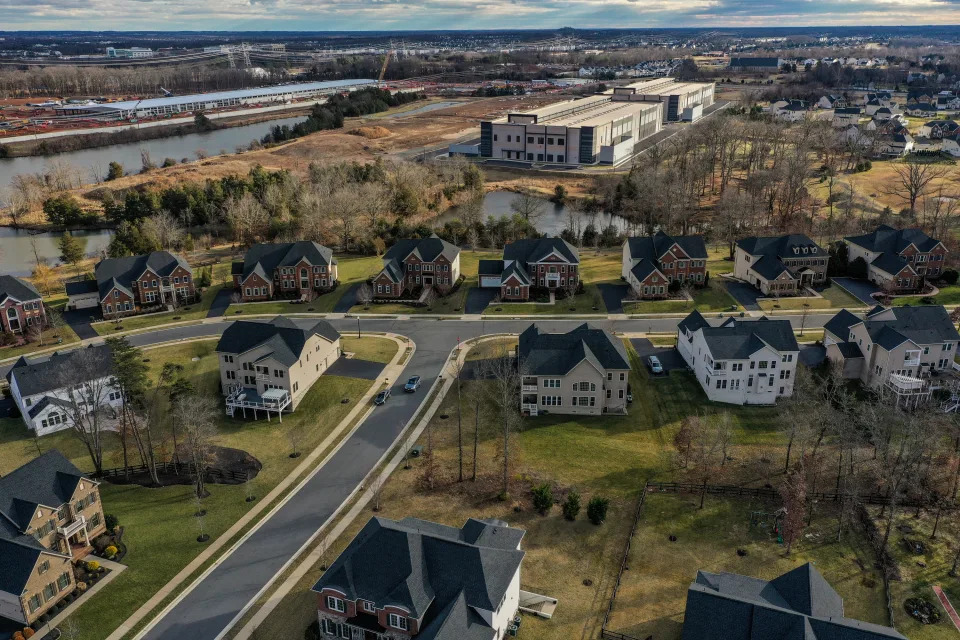
Northern Virginia needs the equivalent of several large nuclear power plants to serve all the new data centers planned and under construction. Texas, where electricity shortages are already routine on hot summer days, faces the same dilemma.
The soaring demand is touching off a scramble to try to squeeze more juice out of an aging power grid while pushing commercial customers to go to extraordinary lengths to lock down energy sources, such as building their own power plants.
“When you look at the numbers, it is staggering,” said Jason Shaw, chairman of the Georgia Public Service Commission, which regulates electricity. “It makes you scratch your head and wonder how we ended up in this situation. How were the projections that far off? This has created a challenge like we have never seen before.”
A major factor behind the skyrocketing demand is the rapid innovation in artificial intelligence, which is driving the construction of large warehouses of computing infrastructure that require exponentially more power than traditional data centers. AI is also part of a huge scale-up of cloud computing. Tech firms like Amazon, Apple, Google, Meta and Microsoft are scouring the nation for sites for new data centers, and many lesser-known firms are also on the hunt.
The proliferation of crypto-mining, in which currencies like bitcoin are transacted and minted, is also driving data center growth. It is all putting new pressures on an overtaxed grid – the network of transmission lines and power stations that move electricity around the country. Bottlenecks are mounting, leaving both new generators of energy, particularly clean energy, and large consumers facing growing wait times for hookups.
The situation is sparking battles across the nation over who will pay for new power supplies, with regulators worrying that residential ratepayers could be stuck with the bill for costly upgrades. It also threatens to stifle the transition to cleaner energy, as utility executives lobby to delay the retirement of fossil fuel plants and bring more online. The power crunch imperils their ability to supply the energy that will be needed to charge the millions of electric cars and household appliances required to meet state and federal climate goals.
The nation’s 2,700 data centers sapped more than 4 percent of the country’s total electricity in 2022, according to the International Energy Agency. Its projections show that by 2026, they will consume 6 percent. Industry forecasts show the centers eating up a larger share of U.S. electricity in the years that follow, as demand from residential and smaller commercial facilities stays relatively flat thanks to steadily increasing efficiencies in appliances and heating and cooling systems.
Data center operators are clamoring to hook up to regional electricity grids at the same time the Biden administration’s industrial policy is luring companies to build factories in the United States at a pace not seen in decades. That includes manufacturers of “clean tech,” such as solar panels andelectric car batteries, which are being enticed by lucrative federal incentives. Companies announced plans to build or expand more than 155 factories in this country during the first half of the Biden administration, according to the Electric Power Research Institute, a research and development organization. Not since the early 1990s has factory-buildingaccounted for such a large share of U.S. construction spending, according to the group.
Utility projections for the amount of power they will need over the next five years have nearly doubled and are expected to grow,according to a review of regulatory filings by the research firm Grid Strategies.
Chasing power
In the past, companies tried to site their data centers in areas with major internet infrastructure, a large pool of tech talent, and attractive government incentives. But these locations aregetting tapped out.
Communities that had little connection to the computing industry now find themselves in the middle of a land rush, with data center developers flooding their markets with requests for grid hookups. Officials in Columbus, Ohio; Altoona, Iowa; and Fort Wayne, Ind. are being aggressively courted by data center developers. But power supply in some of these second-choice markets is already running low, pushing developers ever farther out, in some cases into cornfields, according to JLL, a commercial real estate firm that serves the tech industry.
Grid Strategies warns in its report that “there are real risks some regions may miss out on economic development opportunities because the grid can’t keep up.”
“Across the board, we are seeing power companies say, ‘We don’t know if we can handle this; we have to audit our system; we’ve never dealt with this kind of influx before,’” said Andy Cvengros, managing director of data center markets at JLL. “Everyone is now chasing power. They are willing to look everywhere for it.”
“We saw a quadrupling of land values in some parts of Columbus, and a tripling in areas of Chicago,” he said. “It’s not about the land. It is about access to power.” Some developers, he said, have had to sell the property they bought at inflated prices at a loss, after utilities became overwhelmed by the rush for grid hookups.
Rethinking incentives
It is all happening at the same time the energy transition is steering large numbers of Americans to rely on the power grid to fuel vehicles, heat pumps, induction stoves and all manner of other household appliances that previously ran on fossil fuels. A huge amount of clean energy is also needed to create the green hydrogen championed by the White House, as developers rush to build plants that can produce the powerful zero-emissions fuel, lured by generous federal subsidies.
Planners are increasingly concerned that the grid won’t be green enough or powerful enough to meet these demands.
Already, soaring power consumption is delaying coal plant closures in Kansas, Nebraska, Wisconsin and South Carolina.
In Georgia, the state’s major power company, Georgia Power, stunned regulators when it revealed recently how wildly off its projections were, pointing to data centers as the main culprit.
The demand has Georgia officials rethinking the state’s policy of offering incentives to lure computing operations, which generate few jobs but can boost community budgets through the hefty property taxes they pay. The top leaders of Georgia’s House and Senate, both Republicans, are championing a pause in data center incentives.
Georgia regulators, meanwhile, are exploring how to protect ratepayers while ensuring there is enough power to meet the needs of the state’s most-prized new tenants: clean-technology companies. Factories supplying the electric vehicle and green-energy markets have been rushing to locate in Georgia in large part on promises of cheap, reliable electricity.
When the data center industry began looking for new hubs, “Atlanta was like, ‘Bring it on,’” said Pat Lynch, who leads the Data Center Solutions team at real estate giant CBRE. “Now Georgia Power is warning of limitations. … Utility shortages in the face of these data center demands are happening in almost every market.”
A similar dynamic is playing out in a very different region: the Pacific Northwest. In Oregon, Portland General Electric recently doubled its forecast for new electricity demand over the next five years, citing data centers and “rapid industrial growth” as the drivers.
That power crunch threw a wrench into the plans of Michael Halaburda and Arman Khalili, longtime data center developers whose latest project involves converting a mothballed tile factory in the Portland area. The two were under the impression only a couple of months ago that they would have no problem getting the electricity they needed to run the place. Then the power company alerted them that it would need to do a “line and load study” to assess whether it could supply the facility with 60 megawatts of electricity – roughly the amount needed to power 45,000 homes.
Going off the grid
The Portland project Halaburda and Khalili are developing will now be powered in large part by off-the-grid, high-tech fuel cells that convert natural gas into low-emissions electricity. The technology will be supplemented by whatever power can be secured from the grid. The partners decided that on their next project, in South Texas, they’re not going to take their chances with the grid at all. Instead, they will drill thousands of feet into the ground to draw geothermal energy.
Halaburda sees the growth as good for the country and the economy. “But no one took into consideration where this is all going,” he said. “In the next couple of years, unless there is a real focus on expanding the grid and making it more robust, we are going to see opportunities fall by the wayside because we can’t get power to where it is needed.”
Companies are increasingly turning to such off-the-grid experiments as their frustration with the logjam in the nation’s traditional electricity network mounts. Microsoft and Google are among the firmshoping that energy-intensive industrial operations can ultimately be powered by small nuclear plants on-site, with Microsoft even putting AI to work trying to streamline the burdensome process of getting plants approved. Microsoft has also inked a deal to buy power from a company trying to develop zero-emissions fusion power. But going off the grid brings its own big regulatory and land acquisition challenges. The type of nuclear plants envisioned, for example, are not yet even operational in the United States. Fusion power does not yet exist.
The big tech companies are also exploring ways AI can help make the grid operate more efficiently. And they are developing platforms that during times of peak power demand “can shift compute tasks and their associated energy consumption to the times and places where carbon-free energy is available on the grid,” according to Google. But meeting both their zero-emissions pledges and their AI innovation ambitions is becoming increasingly complicated as the energy needs of their data centers grow.
“These problems are not going to go away,” said Michael Ortiz, CEO of Layer 9 Data Centers, a U.S. company that is looking to avoid the logjam here by building in Mexico. “Data centers are going to have to become more efficient, and we need to be using more clean sources of efficient energy, like nuclear.”
Officials at Equinix, one of the world’s largest data center companies, said they have been experimenting with fuel cells as backup power, but they remain hopeful they can keep the power grid as their main source of electricity for new projects.
The logjam is already pushing officials overseeing the clean-energy transition at some of the nation’s largest airports to look beyond the grid. The amount of energy they will need to charge fleets of electric rental vehicles and ground maintenance trucks alone is immense. An analysis shows electricity demand doubling by 2030 at both the Denver and Minneapolis airports. By 2040, they will need more than triple the electricity they are using now, according to the study, commissioned by car rental giant Enterprise, Xcel Energy and Jacobs, a consulting firm.
“Utilities are not going to be able to move quickly enough to provide all this capacity,” said Christine Weydig, vice president of transportation at AlphaStruxure, which designs and operates clean-energy projects. “The infrastructure is not there. Different solutions will be needed.” Airports, she said, are looking into dramatically expanding the use of clean-power “microgrids” they can build on-site.
The Biden administration has made easing the grid bottleneck a priority, but it is a politically fraught process, and federal powers are limited. Building the transmission lines and transfer stations needed involves huge land acquisitions, exhaustive environmental reviews and negotiations to determine who should pay what costs.
The process runs through state regulatory agencies, and fights between states over who gets stuck with the bill and where power lines should go routinely sink and delay proposed projects. The amount of new transmission line installed in the United States has dropped sharply since 2013, when 4,000 miles were added. Now, the nation struggles to bring online even 1,000 new miles a year. The slowdown has real consequences not just for companies but for the climate. A group of scientists led by Princeton University professor Jesse Jenkins warned in a report that by 2030 the United States risks losing out on 80 percent of the potential emission reductions from President Biden’s signature climate law, the Inflation Reduction Act, if the pace of transmission construction does not pick up dramatically now.
While the proliferation of data centers puts more pressure on states to approve new transmission lines, it also complicates the task. Officials in Maryland, for example, are protesting a plan for $5.2 billion in infrastructure that would transmit power to huge data centers in Loudoun County, Va. The Maryland Office of People’s Counsel, a government agency that advocates for ratepayers, called grid operator PJM’s plan “fundamentally unfair,” arguing it could leave Maryland utility customers paying for power transmission to data centers that Virginia aggressively courted and is leveraging for a windfall in tax revenue.
Tensions over who gets power from the grid and how it gets to them are only going to intensify as the supply becomes scarcer.
In Texas, a dramatic increase in data centers for crypto mining is touching off a debate over whether they are a costly drain on an overtaxed grid. An analysis by the consulting firm Wood Mackenzie found that the energy needed by crypto operations aiming to link to the grid would equal a quarter of the electricity used in the state at peak demand. Unlike data centers operated by big tech companies such as Google and Meta, crypto miners generally don’t build renewable-energy projects with the aim of supplying enough zero-emissions energy to the grid to cover their operations.
The result, said Ben Hertz-Shargel, who authored the Wood Mackenzie analysis, is that crypto’s drain on the grid threatens to inhibit the ability of Texas to power other energy-hungry operations that could drive innovation and economic growth, such as factories that produce zero-emissions green hydrogen fuel or industrial charging depots that enable electrification of truck and bus fleets.
But after decades in which power was readily available, regulators and utility executives across the country generally are not empowered to prioritize which projects get connected. It is first come, first served. And the line is growing longer. To answer the call, some states have passed laws to protect crypto mining’s access to huge amounts of power.
“Lawmakers need to think about this,” Hertz-Shargel said of allocating an increasingly limited supply of power. “There is a risk that strategic industries they want in their states are going to have a challenging time setting up in those places.
Abortion Might Be a Winning Issue — Even in Florida
Ryan Lizza – April 6, 2024
Chasity Maynard/Tallahassee Democrat via AP
Abortion rights supporters have been on a hot winning streak in state ballot initiatives since the Supreme Court struck down Roe v. Wade. Now here comes Florida.
The Florida Supreme Court issued a pair of decisions earlier this week that upheld a strict abortion ban in the state and also cleared the way for Amendment 4, a November referendum on whether to enshrine the right to abortion in the Florida Constitution.
Anna Hochkammer did much of the heavy lifting to get Amendment 4 on the ballot as executive director of the Florida Women’s Freedom Coalition, but the job is getting only trickier amid the swirl of 2024 politics. Changing the Florida Constitution via referendum requires a 60 percent majority, which means Amendment 4 will need support from a lot of Floridians who would never back Joe Biden.
Still, Hochkammer is optimistic about winning a bipartisan coalition of support after studying the 11 post-Dobbs elections that have centered on abortion rights; she found that a message promoting freedom succeeds.
“Floridians are interested in freedom — personal freedom — and that became one of the North Stars of the entire petition,” she said in this week’s episode of Playbook Deep Dive.
I sat down with Hochkammer for POLITICO Magazine to discuss the delicate relationship between abortion rights activists and the Biden campaign, why she thinks politicians need to use the “a” word when talking about abortion and whether she would want Donald Trump to endorse Amendment 4 and be an ally for her cause.
This transcript has been condensed and edited for length and clarity.
Florida’s law on constitutional amendments is that they require 60 percent support. If I’m not mistaken, the abortion issue hasn’t hit 60 percent in any red state so far. How do you get to 60 percent in Florida?
You get to 60 percent in Florida by being really focused about who you’re talking to, how you’re talking about abortion access and getting people to understand that it’s an issue that transcends politics.
You basically have to give people who are independents and Republicans permission to agree with you on this thing, to disagree with their individual candidate or their party, and to split that ticket if that’s what they feel they need to do. Yes, 60 percent can be an intimidating threshold. Florida has passed referenda at the 60 percent threshold over and over again over the last decade.
The Biden campaign this week argued after the Supreme Court’s decisions that Florida was suddenly “winnable.” You just said that voters need to split the ticket. Julie Chávez Rodríguez, Biden’s campaign manager, doesn’t want people to split the ticket. She wants people to support your amendment and vote for Joe Biden. How does that complicate things?
My election is to pass Amendment 4.
I do not live in a hole in the ground. We’re going to be on the November 2024 ballot in Florida, and all sorts of people and candidates in all kinds of races are looking at this as an opportunity for synergy. But I’m not trying to be naive when I say that more people support abortion access than probably support Santa Claus. It would be a crazy thing in 2024 in Florida to not support Amendment 4.
I don’t look at it as threatening. I look at it as smart people who are reading the room and realizing that 75 percent of Floridians reject the six-week abortion ban. I would never look at any candidate who agrees with me on this issue and say, “Please don’t talk about Amendment 4 because you’re running in a partisan race.” I say: “The more the merrier.” Just make the tent as big as possible on this particular issue, and let individual candidates and campaigns find their own way.
Would it help your campaign if Donald Trump came out and supported your amendment?
I hope everyone who supports our amendment comes out and says so on the record, no matter who they are.
We’re in this situation because the Florida Legislature passed a 15-week ban, and then went back a year later and passed a six-week ban. We are just closing up another session of the Florida Legislature. If they had wanted to take this off the table, they could have simply undone it during the legislative session. In fact, Gov. Ron DeSantis could call a special session tomorrow on this issue, repeal the six-week ban, announce they got it wrong and take it off the table if they wanted to. That’s in their power to do.
It seems to me that it would be good for your campaign if Trump came out in favor of Amendment 4.
I want everybody who supports Amendment 4 to come out and say so — whoever you are, whatever your name, whatever your party affiliation, whatever your religious background, if you support Amendment 4, I would hope that people would have the courage to say so and say so on the record.
I’m trying to tease this out of you because the politics are so tricky. This isn’t an easy one for you, right?
I think the politics are really straightforward on this because I’m lucky enough that I’m working on an issue. I’m not working on a campaign, per se. I’m not working for a political party. It’s one of the reasons why the Florida Women’s Freedom Coalition has been doing such good work as part of the coalition to get Amendment 4 on the ballot and to get it to pass is that we are a single-issue PAC. We are a bipartisan PAC. We have advisers on board like our former [state] House Rep. Carlos Lacasa, who’s come out very strongly in favor of Amendment 4. He can make very persuasive political arguments from his perspective as a conservative, Cuban, Catholic Republican, former elected official in Florida about why he thinks Amendment 4 is the right thing to do and why he’s going to be voting for it. And keeping my arms wide open has done nothing except help this initiative.
What is the relationship between voters who are enthusiastic about going to the polls and supporting Amendment 4, but who may not like Joe Biden? What does your polling say about this? Is the Biden campaign’s enthusiasm warranted?
It’s really complicated. I would say that there are some elements of the moment here that are unique to November 2024. So it’s hard to draw conclusions about what Florida voters will do and what the voter universe will do inside the ballot box, because this is the first time that we’ve had the confluence of a statewide referendum on an issue in Florida that has coincided with a statewide or nationwide campaign that has chosen to focus on that exact issue. And I think that is probably the thing that makes this situation so hard to get a handle on.
I think abortion access is the most compelling domestic political issue in America right now. Everyone in America is talking about it. I think that through a bunch of different actions at the local, state and national level, the presidential election has become a proxy election about abortion. That is really the thing that makes it different.
I think you’re going to have candidates, whatever their position on abortion, telling their voters, whether they’re in California, New York state, Texas or Florida, “A vote for your presidential candidate is a vote on access to abortion.” It’s either banning abortion at the state level or wanting abortion access protected at a national level. And that’s a pretty stark political choice to give people at the top of the ticket while simultaneously asking them to vote about an abortion amendment at the bottom.
I don’t know whether the bottom is going to push the top, or the top is going to push the bottom, but I certainly think that more people feel positively about access to abortion than they do about any particular political candidate.
Let’s talk about the amendment language. There’s an art to writing these things.
Here’s the language: “No law shall prohibit, penalize, delay, or restrict abortion before viability or when necessary to protect the patient’s health, as determined by the patient’s healthcare provider. This amendment does not change the Legislature’s constitutional authority to require notification to a parent or guardian before a minor has an abortion.” How did you come up with those two sentences?
The first thing I have to acknowledge is that a lot of the heavy lifting was done on writing that language by working groups. Most of them were people that were associated with Planned Parenthood and the ACLU or had worked on other statewide referenda at other times in Florida.
Every state is its own universe when it comes to this sort of thing — what’s the law in the state where we are? What’s the process for getting something on the ballot? What’s the process for getting something to amend the constitution? What’s the legal history of the issue in our state?
Then you have to figure out what you want to say, what you want to do. And then you have to poll it. When you have a disagreement between one noun and another noun, one verb and another verb, you really do have to spend the time and money polling these things to see whether moving a comma or changing an adverb changes what voters perceive of this language. And so you really do have a data-informed process.
We didn’t officially launch this petition drive until June 1. And the first half of 2023 was really spent circling the horses, organizing and figuring out what we wanted to do so that we could avoid some of the problems that other referenda have had across the country. We had the great advantage in Florida of being able to learn from other states.
Tell us about that. What did you learn from the other post-Dobbs referenda?
I looked at that Wisconsin Supreme Court race that got a ton of national attention and a huge amount of money was put into it. That was basically a proxy election about abortion access in Wisconsin. I think anybody who reads that election differently is choosing not to see what’s right in front of them.
So, I went through these 11 different elections that I considered either direct or proxy elections about abortion, and I tried to look for some common themes. I looked at the data — not only in what their polling told them about their messaging and about the voter universe that they expected, but we were lucky enough to be able to do an autopsy afterward.
My hypothesis about Florida is that as much as we like to underscore, you know, #FloridaMan, all the crazy stories out of Florida, Floridians do tend to follow some national trends. We’re not so far off the median American voter’s point of view that that data isn’t useful to us. One thing that became clear from the get-go was Floridians are interested in freedom — personal freedom — and that became one of the North Stars of the entire petition.
The top takeaway from those 11 campaigns is that abortion access is really popular with Americans. A lot of us had been trained in the political world, even in the reproductive rights and human rights world, to kind of dance around the word “abortion.”
Joe Biden recently did that.
Yeah. For a long time in politics, “reproductive health care” and “women’s health care” and “women’s rights” sort of became synonymous with access to abortion. I think the evidence shows, at least in the way that voters behave across America, that “abortion” is not a dirty word. And that holds true everywhere — whether it’s Kentucky, Ohio or California. And that holds true in Florida as well.
The other thing we learned is that people find abortion somewhat ethically fraught. The idea that if you support abortion access, you are hardened to the human stories — to the complicated feelings that people have about abortion — does not bear out. And in fact, I would say most Americans acknowledge that abortion is complicated. Not just medical abortion, but elective abortion. The circumstances around each and every one of these abortions can be something that gives people pause. And interestingly, it seems to me that what we need to do in politics around abortion is lean into that by saying, “It is complicated. It is fraught.”
We’re not having a referendum about pap smears. We’re not having a referendum about breast examinations. Nobody goes to a women’s clinic and says, “I need ‘care.’” You walk in, and you ask for something very specific because you need it — and that’s an abortion. And so we need to be able to say the word, and have conversations with voters assuming that they are functional grown-ups. Because when we do that on this issue, we find that time and time again across America, they vote “yes.”
Did it bother you that Joe Biden didn’t use the word “abortion” in the State of the Union?
One part of me says, “Yes, I wish he’d used the word ‘abortion’ in the State of the Union.” And the other part of me, the grown-up, who’s not selfish and is able to see the bigger picture, is amazed that about a minute-and-a-half of the State of the Union was about abortion access. Whatever euphemisms he chose to use, he talked about my issue in ways that I have not heard a president talk about abortion, ever.
You know, the president of the United States is saying the issue that’s my No. 1 priority is a No. 1 priority for him. I can’t complain too much about that, frankly, even if it wasn’t exactly the way I would want it to happen.
Let’s go back to the language. Help us understand the two sentences. Why this language?
It’s 49 words. It’s two sentences. It’s plain language. You know, “viability” has been defined under Florida statute since 1979. It’s the Roe standard. So it is the most straightforward way, at least from a Floridian perspective, to talk about abortion access.
And interestingly, it’s also the way that polls the best. People who find themselves in these circumstances with their doctors talk about the issue of viability, which is a very straightforward thing. It’s the point at which you understand that the fetus will survive outside the womb without extraordinary medical intervention. And that is a fungible place. It depends on what’s wrong with the fetus, what’s wrong with a woman, and what sort of medical care is available.
The opponents like to underscore that is a weakness in the issue. I actually think it’s a strength. I think it’s all the more reason why it’s a decision that should be made by a doctor, made by a medical team, made by a patient and her family with their health care provider and not arbitrarily defined somewhere far, far away by people who don’t understand the context of any particular situation or case.
So the first part of the sentence is about viability. And then the second part of the sentence is to protect the patient’s health as determined by a health care provider.
Correct. And the second sentence is a very straightforward sentence. Under the Florida standard, a constitutional amendment has to be single-subject. There is language in the Florida Constitution that grants the authority to the Legislature to require parental notification before a minor receives abortion services. And so we included that second line to make sure that it was clear to the Florida Supreme Court and to voters that this was a single issue, and it didn’t affect that authority.
Ironically, it also makes it poll better, because it makes it very clear to people that we’re not asking them to throw up their hands and give up any sort of parental oversight over the lives of their children, and people in their families. And it’s a fabulous thing to be able to tell people so clearly what we want for them in such a succinct language.
I want to ask you about the opponents and what they are seizing on in the language. The Florida Conference of Catholic Bishops is making two arguments. First, that abortions would be allowed at a point when a fetus can feel pain. And second, that it would legalize full-term abortions. How do you respond to that?
There’s a lot of misinformation that we’re going to have to make sure that people understand. And once people understand the biology and the sociology behind pregnancy and childbirth, most people end up supporting our amendment. I don’t want to go too far down the gynecological-obstetric route here. But I can say that those are not concerns that we have. We don’t think that there’s science to support those positions.
And then the abortion “up to birth” thing is really just a misrepresentation of exactly what happens during pregnancy and childbirth. Third trimester abortions are just exceedingly rare. They’re well under 1 percent of abortions that are conducted in this country. They are always the result of truly tragic circumstances. So the only response I can have to anybody faced with the issue of a possible third trimester termination is that we all need to mind our businesses and have tremendous compassion for those people because they are dealing with an outrageous human tragedy, and they should have the privacy to do so with their medical team and their family and their faith leader. And I hope it never happens to me or anyone that I love.
Explain the other decision that the Florida Supreme Court issued on Monday, and what that means on a practical level for people in Florida.
So, interestingly, the same day that they published the ruling on our abortion access referendum, the Florida Supreme Court published its ruling on the constitutionality of the 15-week abortion ban that was passed by the Florida Legislature about 18 months ago. It does not include any exceptions for rape or incest. It was challenged immediately on the grounds that it violates the state of Florida’s right to privacy.
Not content with the 15-week abortion ban, the Florida Legislature reconvened for the following session, and passed a six-week abortion ban. Now, a six-week abortion ban is, for all intents and purposes, a total abortion ban. The vast majority of women have no idea that they’re even pregnant at six weeks. And so in the middle of this statewide referendum, we are given the opportunity to paint a pretty clear political picture about what the choice is. The choice is either total abortion ban or access to abortion before viability and when necessary to protect the patient’s health. And I think it’s a winner for us.
It’s a human tragedy. I would imagine over the next eight to 10 months, we’re going to start hearing horror stories like those we’ve been hearing out of Tennessee and out of Texas, where they have similarly banned abortion at these very, very early stages. And you’re going to hear stories of people bleeding out on the bathroom floors. You’re going to hear stories of women having to flee the state in order to get medical care.
I have no particular desire to see the women of Florida suffer from these barbaric circumstances. But I do have to acknowledge that it does help my movement show people in no uncertain terms exactly what the options are in front of them. It is a tremendous political opportunity on top of a horrifying human crisis.
When the six-week ban kicks in, what will the availability of medical abortions be in Florida?
That’s still very to-be-determined. Of course, we have this entire group out there now that wants to revive the Comstock Act back from 1873 and make the mailing of anything it considers “pornographic” — which, traditionally, includes birth control — illegal. The six-week abortion ban contains language in it that is somewhat vague, but does make anybody who facilitates an abortion an accessory to a crime.
So the question then becomes, who’s facilitating? How are they facilitating? What counts as facilitating? One of the consistent strategies that I’m seeing come out of this very extreme Florida branch of politics is writing these laws in ways that are quite broad and quite vague in order to intimidate people into not acting. Of course health care providers don’t want to be arrested for serving their patients; husbands don’t want to be arrested for driving their wives to a clinic or to a doctor’s appointment; and anybody who really cares about not ending up inside a courtroom and being accused of a terrible crime while providing healthcare to somebody is, I think, necessarily going to be stumped here. They want to make it as confusing, as frightening and as intimidating as possible.
I think it’s entirely likely that we’re going to see people arrested, we’re going to see people accused of and defending themselves for simply helping their family members.