Wisconsin Republicans ask voters to take away governor’s power to spend federal money

Associated Press

Wisconsin Republicans ask voters to take away governor’s power to spend federal money

Scott Bauer – July 28, 2024
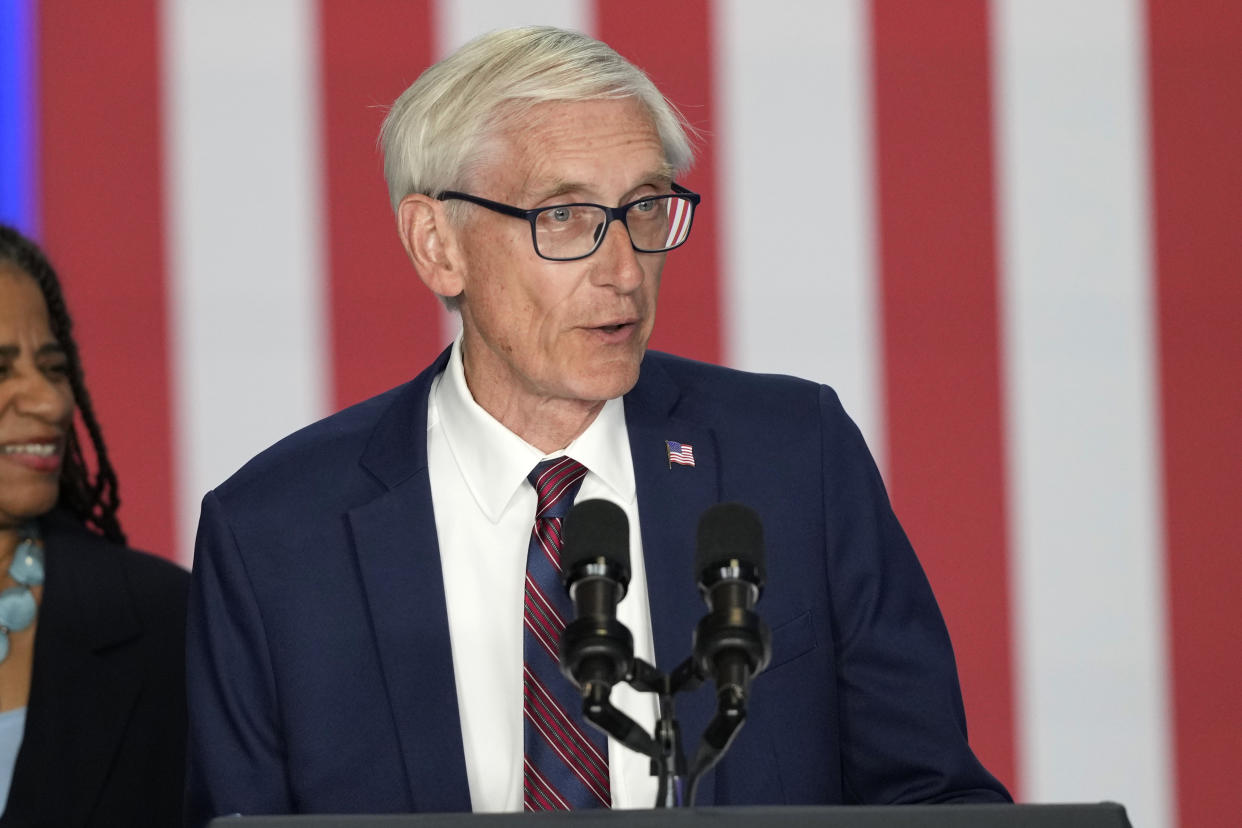
Wisconsin Gov. Tony Evers speaks before President Joe Biden at a campaign rally at Sherman Middle School in Madison, Wis., Friday, July 5, 2024. (AP Photo/Morry Gash)

Wisconsin Republicans are asking voters to take away the governor’s power to unilaterally spend federal money, a reaction to the billions of dollars that flowed into the state during the COVID-19 pandemic.

Democratic Gov. Tony Evers was free to spend most of that money as he pleased, directing most of it toward small businesses and economic development, angering Republicans who argued the Legislature should have oversight.

That’s what would happen under a pair of related constitutional amendments up for voter approval in the Aug. 13 primary election. The changes would apply to Evers and all future governors and cover any federal money to the state that comes without specific spending requirements, often in response to disasters or other emergencies.

Democrats and other opponents are mobilizing against the amendments, calling them a legislative power grab that would hamstring governors’ ability to quickly respond to a future natural disaster, economic crisis or health emergency.

If the amendments pass, Wisconsin’s government “will become even more dysfunctional,” said Julie Keown-Bomar, executive director of Wisconsin Farmers Union.

“Wisconsinites are so weary of riding the partisan crazy train, but it is crucial that we show up at the polls and vote ‘no’ on these changes as they will only make us go further off the rails,” she said in a statement.

But Republicans and other backers say it’s a necessary check on the governor’s current power, which they say is too broad.

The changes increase “accountability, efficiency, and transparency,” Republican state Sen. Howard Marklein, a co-sponsor of the initiative, said at a legislative hearing.

The two questions, which were proposed as a single amendment and then separated on the ballot, passed the GOP-controlled Legislature twice as required by law. Voter approval is needed before they would be added to the state constitution. The governor has no veto power over constitutional amendments.

Early, in-person absentee voting for the Aug. 13 election begins Tuesday across the state and goes through Aug. 11. Locations and times for early voting vary.

Wisconsin Republicans have increasingly turned to voters to approve constitutional amendments as a way to get around Evers’ vetoes. Midway through his second term, Evers has vetoed more bills than any governor in Wisconsin history.

In April, voters approved amendments to bar the use of private money to run elections and reaffirm that only election officials can work the polls. In November, an amendment on the ballot seeks to clarify that only U.S. citizens can vote in local elections.

Republicans put this question on the August primary ballot, the first time a constitutional amendment has been placed in that election where turnout is much lower than in November.

The effort to curb the governor’s spending power also comes amid ongoing fights between Republicans and Evers over the extent of legislative authority. Evers in July won a case in the Wisconsin Supreme Court that challenged the power the GOP-controlled Legislature’s budget committee had over conservation program spending.

Wisconsin governors were given the power to decide how to spend federal money by the Legislature in 1931, during the Great Depression, according to a report from the Legislative Reference Bureau.

“Times have changed and the influx of federal dollars calls for a different approach,” Republican Rep. Robert Wittke, who sponsored the amendment, said at a public hearing.

It was a power that was questioned during the Great Recession in 2008, another time when the state received a large influx of federal aid.

But calls for change intensified during the COVID-19 pandemic when the federal government handed Wisconsin $5.7 billion in aid between March 2020 and June 2022 in federal coronavirus relief. Only $1.1 billion came with restrictions on how it could be spent.

Most of the money was used for small business and local government recovery grants, buying emergency health supplies and paying health care providers to offset the costs of the pandemic.

Republicans pushed for more oversight, but Evers vetoed a GOP bill in 2021 that would have required the governor to submit a plan to the Legislature’s budget committee for approval.

Republican increased the pressure for change following the release of a nonpartisan audit in 2022 that found Evers wasn’t transparent about how he decided where to direct the money.

One amendment specifies the Legislature can’t delegate its power to decide how money is spent. The second prohibits the governor from spending federal money without legislative approval.

If approved, the Legislature could pass rules governing how federal money would be handled. That would give them the ability to change the rules based on who is serving as governor or the purpose of the federal money.

For example, the Legislature could allow governors to spend disaster relief money with no approval, but require that other money go before lawmakers first.

Opposing the measures are voting rights groups, the Wisconsin Democratic Party and a host of other liberal organizations, including those who fought to overturn Republican-drawn legislative maps, the League of Women Voters of Wisconsin and Wisconsin Faith Voices for Justice.

Wisconsin Manufacturers and Commerce, the state’s largest business lobbying group, and the Badger Institute, a conservative think tank, were the only groups that registered in support in the Legislature.
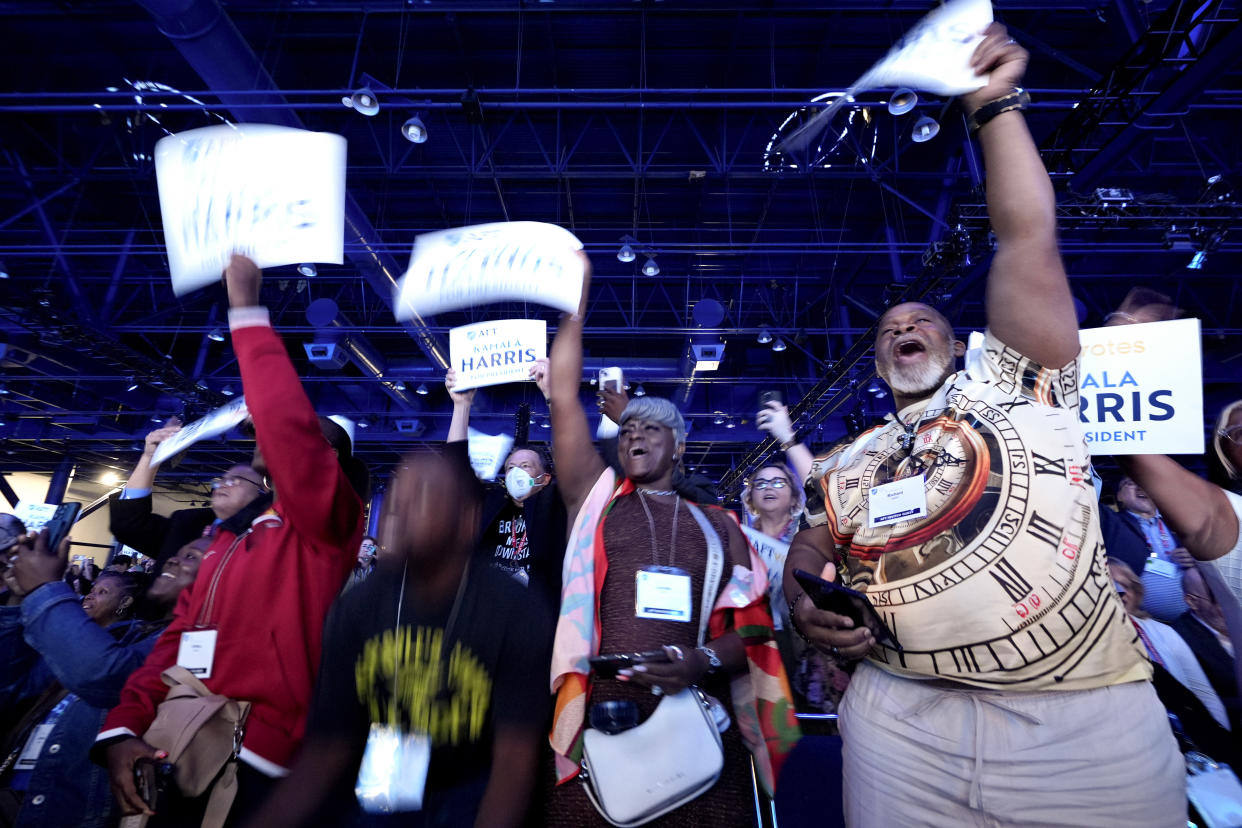
The election has been totally upended. Here’s what the polls show.

Politico

The election has been totally upended. Here’s what the polls show.

Steven Shepard – July 27, 2024

The polls are in after a chaotic few weeks in the 2024 presidential election, and they point to a newly hyper-competitive race.

Vice President Kamala Harris’ elevation has jolted the race and blunted the momentum former President Donald Trump could have seen coming out of the Republican convention and the assassination attempt that preceded it. Though polling showed Trump building a lead over President Joe Biden following their debate last month, that advantage has mostly evaporated against Harris in the fresh round of surveys conducted since she became the all-but-certain Democratic nominee.

The new polling shows just how much the landscape has shifted since Biden dropped out last Sunday. For months, the contest appeared set, and Biden’s modest deficit going into the debate threatened to decline further. That’s now changed.

Trump still maintains a slim edge over Harris — but the race is now close, which was not the case for the Biden-vs.-Trump contest after the debate. Just this week, new polls from The New York Times/Siena College (Trump +1 over Harris), The Wall Street Journal (Trump +2) and CNN (Trump +3) all represent tightening from 6-point Trump leads in all three polls following the debate.

Looking only at the horserace, it’s difficult to evaluate whether opinions of Trump shifted after the assassination attempt, or whether he received a bounce out of the GOP convention and his selection of Sen. JD Vance (R-Ohio) as his running mate

But look deeper, and one can see some signs that Trump is viewed differently now than he was before the assassination attempt. Similarly, the crosstabs show how Harris has closed the gap with the Republican nominee, performing stronger with traditionally Democratic groups among whom Biden had lagged badly.

Here are five takeaways from the latest numbers:

Harris has started to rebuild a more traditional Democratic coalition

A switch in the Democratic candidate has rippled through the electorate and, at least initially, restored traditional demographic patterns.

Even before his debate debacle, Biden had struggled to keep key elements of the Democratic base in the fold: Support had eroded significantly among young voters, Black voters, Latino voters and other reliable supporters of Democratic candidates in the past, including Biden in 2020.

Harris has brought some of those voters back into the fold. In the New York Times/Siena poll, for example, she is running stronger than Biden has all year among young voters and voters of color while mostly keeping pace with Biden among older and white voters, where his numbers had been more durable.

That doesn’t mean Trump’s gains have entirely disappeared in a matter of days now that he’s running against a 59-year-old woman of color instead of an 81-year-old white man. Harris is still short of Biden’s 2020 numbers among young voters and voters of color, and the former president is still running well ahead of his 2016 and 2020 numbers among those groups.

Harris has more paths to 270 electoral votes than Biden did

As she shifts the electorate, Harris is creating more potential pathways to the White House.

For Biden, the election was looking like Rust Belt or bust. But Harris’ stronger numbers among Black and Latino voters could translate to better prospects in some of the Sun Belt states where he had fallen well behind Trump: Arizona, Georgia, Nevada and North Carolina.

Biden’s campaign was still actively contesting those states, but his deficits in public polling had been significant even before the debate. There’s very little polling so far in the Sun Belt swing states, but the changes taking place in the national polling suggest Harris could put those states back into play.

Biden was still in the ballgame, at least before the debate, in the “Blue Wall” states that were competitive and decisive in both 2016 and 2020. And a set of new Fox News polls out Friday show Harris and Trump neck-and-neck in MichiganPennsylvania and Wisconsin.

And polls in states with similar demographic profiles also suggest Harris is inching closer to Biden’s winning 2020 numbers — and not toward the devastating, landslide loss that some Democrats had feared if Biden had stayed in the race after the debate. A Fox News poll in Minnesota showed Harris 6 points ahead of Trump, similar to Biden’s 7-point win. Two polls in New Hampshire this week gave the vice president leads that essentially matched Biden four years ago. Trump allies had argued in recent weeks that those states were among a slew of blue-leaning states that had been put in play.

Harris seems to be shutting that down. She has work to do to catch up to Trump, but she already has more options than Biden did.

Trump is more popular than at any point in the last four years

While Harris’ takeover of the news cycle may have blunted any Trump bump in the horserace polling after the assassination attempt and last week’s convention, there’s still evidence of one in the former president’s favorability ratings.

In poll after poll, Trump has notched favorable ratings at or near his highest ever recorded.

It’s not a terribly high bar: Even when he won the 2016 election, more voters have consistently said they view Trump unfavorably than view him favorably — he’s had some electoral success despite his image. Trump’s still underwater, but his image rating is a lot closer to 50-50 than it has been at virtually any time in his political career.

In the Wall Street Journal poll, his favorable/unfavorable rating was 47 percent/50 percent. That’s a significant shift: In nine previous polls dating back to November 2021, the percentage of voters with an unfavorable opinion of Trump had always been at least 10 points higher than the percentage who viewed him favorably.

Some of Trump’s numbers in the early weeks of the pandemic rival his current standing. But by this time four years ago, his image had declined. And in all that’s happened since then, it hadn’t recovered — until now.

Biden’s retirement is wildly popular

In this era of polarization, it’s hard to imagine that Biden and his 39-percent approval rating could do anything that would be almost unanimously popular.

But his decision to pull the plug on his moribund campaign is well received across the political spectrum.

More than three-in-four likely voters in the New York Times/Siena poll said they were enthusiastic or satisfied that Biden had dropped out. The numbers were similar in the Fox News state polls, including in Pennsylvania, where 78 percent of voters said they approved of Biden dropping out.

Biden’s decision is earning bipartisan praise: Large majorities of Democrats, Republicans and independents support him stepping aside. But, ironically, it’s Democratic voters who are more enthusiastic about it. Significantly more Democratic voters than GOP voters in the Fox News Pennsylvania poll, 86 percent versus 69 percent, approve of Biden dropping out, despite Republicans’ general antipathy toward the president.

RFK Jr. is in freefall

With Trump’s post-convention bounce, Democrats’ candidate switch and his own missteps, independent candidate Robert F. Kennedy Jr.’s numbers are dropping like a rock.

In the New York Times/Siena poll, Kennedy was at 5 percent, down from 8 percent right after the Biden-Trump debate. He’s at 4 percent in the Wall Street Journal poll, down from 7 percent in the previous poll.

Kennedy cried foul last month when he fell short of CNN’s criteria for a debate invitation: He earned 15 percent in three polls (needing four) and was well shy of the cable network’s threshold for ballot access (Kennedy argued it was unfair, since many states don’t certify independent candidates until later in the year).

And now, even as he’s gotten on the ballot in more states, it appears that the polling threshold for the next debate will be his undoing. He needs to earn 15 percent in four qualifying polls from Aug. 1-Sept. 3 to be able to compete in the ABC News debate on Sept. 10, and he’s nowhere near that right now.

Kennedy and various third-party candidates have been courting the significant share of voters who viewed both Biden and Trump unfavorably. But these so-called double haters are increasingly rare now, thanks to improved views of Trump and Harris’ stronger image than Biden.

Those developments might not last: Trump could fall back to his consistently poor image, and Harris’ honeymoon with the public could be short-lived, especially in the face of nascent Republican attacks.

But, for now, more voters like at least one of the candidates, and fewer say they’ll be holding their noses in November. After months of careening toward a dismal rematch of 2020, the election has been abruptly upended, and there is a lot more uncertainty about its trajectory from here. Right now, at the outset of the Harris-Trump contest, it looks like a close race.

Russia’s Putin vows ‘mirror measures’ in response to U.S. missiles in Germany

Associated Press

Russia’s Putin vows ‘mirror measures’ in response to U.S. missiles in Germany

The Associated Press – July 28, 2024

Russian President Vladimir Putin greets sailors prior to the main naval parade marking Russian Navy Day in St. Petersburg, Russia, on Sunday, July 28, 2024. (Vyacheslav Prokofyev, Sputnik, Kremlin Pool Photo via AP)
Russian President Vladimir Putin, center, Russian Defense Minister Andrei Belousov, second left, and Russian Navy Commander-in-Chief Admiral Alexander Moiseyev, left, arrive to watch the main naval parade marking Russian Navy Day in St. Petersburg, Russia, on Sunday, July 28, 2024. (AP Photo/Dmitri Lovetsky, Pool)
Russian President Vladimir Putin, center, Russian Defense Minister Andrei Belousov, second right, and Russian Navy Commander-in-Chief Admiral Alexander Moiseyev, right, greet sailors prior to the main naval parade marking Russian Navy Day in St. Petersburg, Russia, on Sunday, July 28, 2024. (Vyacheslav Prokofyev, Sputnik, Kremlin Pool Photo via AP)

Russia may deploy new strike weapons in response to the planned U.S. stationing of longer-range and hypersonic missiles in Germany, Russian President Vladimir Putin said on Sunday.

Speaking at a naval parade in St Petersburg, Putin vowed “mirror measures” after the U.S. earlier this month announced that it will start deploying the weapons in 2026, to affirm its commitment to NATO and European defense following Moscow’s all-out invasion of Ukraine in February 2022.

“If the U.S. implements such plans, we will consider ourselves free from the previously imposed unilateral moratorium on the deployment of intermediate and shorter-range strike weapons, including increasing the capability of the coastal forces of our navy,” Putin said. He added that Moscow’s development of suitable systems is “in its final stage.”

Both Washington and Moscow have in recent weeks signaled readiness to deploy intermediate-range ground-based weapons that were banned for decades under a 1987 U.S.-Soviet treaty. The U.S. pulled out of the agreement in 2019, accusing Moscow of conducting missile tests that violated it.

The allegations, which Russia denied, came as tensions mounted between Moscow and the West in the wake of the downing of a Malaysian airliner carrying 298 people over war-torn eastern Ukraine. Two Russians and a pro-Moscow Ukrainian were ultimately convicted over their role in the attack.

Washington and Berlin said in a joint statement this month that the U.S. weapons to be placed in Germany would ultimately include SM-6 missiles, Tomahawk cruise missiles, and “developmental hypersonic weapons”, including those with a significantly longer range than the ones currently deployed across Europe.

Most of Russia’s missile systems are capable of carrying either conventional or nuclear warheads. Russia’s deputy foreign minister, Sergei Ryabkov, said last week that the Kremlin did not rule out new deployments of nuclear missiles in response to the U.S. move.

Ryabkov added that defending Kaliningrad, Russia’s heavily militarized exclave wedged between NATO members Poland and Lithuania, was of particular concern.

Putin warns the United States of Cold War-style missile crisis

Reuters

Putin warns the United States of Cold War-style missile crisis

Guy Faulconbridge and Dmitry Antonov – July 28, 2024

Russian President Putin chairs a meeting in Moscow

MOSCOW (Reuters) -Russian President Vladimir Putin on Sunday warned the United States that if Washington deployed long-range missiles in Germany then Russia would station similar missiles in striking distance of the West.

The United States said on July 10 that it would start deploying long-range missiles in Germany from 2026 in preparation for a longer-term deployment that will include SM-6, Tomahawk cruise missiles and developmental hypersonic weapons.

In a speech to sailors from Russia, China, Algeria and India to mark Russian navy day in the former imperial capital of St Petersburg, Putin warned the United States that it risked triggering a Cold War-style missile crisis with the move.

“The flight time to targets on our territory of such missiles, which in the future may be equipped with nuclear warheads, will be about 10 minutes,” Putin said.

“We will take mirror measures to deploy, taking into account the actions of the United States, its satellites in Europe and in other regions of the world.”

Putin, who sent his army into Ukraine in 2022, casts the war as part of a historic struggle with the West, which he says humiliated Russia after Soviet Union fell in 1991 by encroaching on what he considers Moscow’s sphere of influence.

Ukraine and the West say Putin is engaged in an imperial-style land grab. They have vowed to defeat Russia, which currently controls about 18% of Ukraine, including Crimea, and parts of four regions in eastern Ukraine.

Russia says the lands, once part of the Russian empire, are now again part of Russia and that they will never be given back.

COLD WAR?

Russian and U.S. diplomats say their diplomatic relations are worse even that during the 1962 Cuban Missile Crisis, and both Moscow and Washington have urged de-escalation while both have made steps towards escalation.

Putin said that the United States was stoking tensions and had transferred Typhon missile systems to Denmark and the Philippines, and compared the U.S. plans to the NATO decision to deploy Pershing II launchers in Western Europe in 1979.

The Soviet leadership, including General Secretary Yuri Andropov, feared Pershing II deployments were part of an elaborate U.S.-led plan to decapitate the Soviet Union by taking out its political and military leadership.

“This situation is reminiscent of the events of the Cold War related to the deployment of American medium–range Pershing missiles in Europe,” Putin said.

The Pershing II, designed to deliver a variable yield nuclear warhead, was deployed to West Germany in 1983.

In 1983, the ailing Andropov and the KGB interpreted a series of U.S. moves including the Pershing II deployment and a major NATO exercise as signs the West was about to launch a pre-emptive strike on the Soviet Union.

Putin repeated an earlier warning that Russia could resume production of intermediate and shorter range nuclear-capable missiles and then consider where to deploy them after the United States brought similar missiles to Europe and Asia.

(Writing by Guy Faulconbridge; editing by David Evans)

Donald Trump Tells Christians They ‘Won’t Have to Vote Anymore’ if He’s Elected to Another Term

People

Donald Trump Tells Christians They ‘Won’t Have to Vote Anymore’ if He’s Elected to Another Term

Charlotte Phillipp – July 27, 2024

Kamala Harris’ campaign team later called the former president’s comments a “vow to end democracy”

<p>Joe Raedle/Getty</p> Donald Trump speaks during a Turning Point USA Believers Summit conference at the Palm Beach Convention Center on July 26, 2024.
Joe Raedle/GettyDonald Trump speaks during a Turning Point USA Believers Summit conference at the Palm Beach Convention Center on July 26, 2024.

Former President Donald Trump made waves after urging his Christian followers to vote for him in the upcoming presidential election “just this time” — and saying that they “won’t have to do it anymore” if he wins.

During an event on Friday, July 26, hosted by the conservative Christian organization Turning Point Action, Trump, 78, addressed the crowd and implied that if he were to be voted in, “everything” would be “fixed,” according to multiple sources, including Rolling Stone and The Hill.

“Christians, get out and vote, just this time,” Trump said as the crowd in West Palm Beach, Fla., cheered, per the outlets.

Related: Donald Trump Didn’t Always Oppose Kamala Harris. He Helped Get Her Reelected as Calif. Attorney General in 2014

“You won’t have to do it anymore,” he said. “Four more years, you know what, it will be fixed, it will be fine. You won’t have to vote anymore, my beautiful Christians.”

<p>Brandon Bell/Getty</p> President Donald Trump speaks to attendees during his campaign rally on July 24, 2024 in Charlotte, N.C.
Brandon Bell/GettyPresident Donald Trump speaks to attendees during his campaign rally on July 24, 2024 in Charlotte, N.C.

“I love you Christians. I’m a Christian. I love you, get out, you gotta get out and vote. In four years, you don’t have to vote again, we’ll have it fixed so good you’re not going to have to vote,” Trump continued.

At the same event, Trump also claimed that he would “once again appoint rock-solid conservative judges who will protect religious liberty,” per Rolling Stone.

Related: What Is Project 2025? Inside the Far-Right Plan Threatening Everything from the Word ‘Gender’ to Public Education

In a statement shared by Vice President Kamala Harris‘ campaign team on Saturday concerning what they called “Trump’s vow to end democracy,” Harris for President spokesperson James Singer said: “When Vice President Harris says this election is about freedom, she means it.”

“Our democracy is under assault by criminal Donald Trump: After the last election Trump lost, he sent a mob to overturn the results,” Singer continued.

“This campaign, he has promised violence if he loses, the end of our elections if he wins, and the termination of the Constitution to empower him to be a dictator to enact his dangerous Project 2025 agenda on America,” he added.

<p>Ting Shen/Bloomberg via Getty</p> Kamala Harris
Ting Shen/Bloomberg via GettyKamala Harris

Many Democrats have criticized Trump’s rhetoric around the 2020 election, and specifically his claims of voter fraud, after he was defeated by President Joe Biden, as well as the recent Supreme Court decision allowing for presidential immunity for any official acts taken during their time in the White House.

Biden, 81, previously cited the Jan. 6, 2021 Capitol riot as one reason that the ruling set a “dangerous” precedent because the power of the presidential office “will no longer be constrained by the law.”

Want to earn extra money through a side hustle? Here’s why 1 in 3 Americans do it.

USA Today

Want to earn extra money through a side hustle? Here’s why 1 in 3 Americans do it.

Betty Lin-Fisher, USA TODAY – July 27, 2024

The gig economy is still big in the U.S. and growing.

More than a third (36%) of U.S. adults are working a side hustle – earning money in addition to their main source of income – according to a new Bankrate survey. They are earning more than they did last year, with the average side hustler making $891 a month, up from $810 last year.

Though the number of respondents who said they had a side hustle was down slightly from last year’s 39%, it is way up from 2019 when Bankrate first started surveying respondents about their extra gigs, Ted Rossman, Bankrate senior industry analyst, told USA TODAY. By comparison, in 2019, 19% of respondents said they had a side hustle.

“More people are side hustling because of inflation and because of high interest rates,” Rossman said. “Technology has made it easier as well. A lot of people are doing work from home and things online and via various mobile apps.”

Updated numbers are not widely available, but in 2018, Marketdata estimated the gig and side hustle market at $2.58 trillion. That year, analysts thought 36% of the U.S. workforce of 160 million already had an extra gig job. That number was forecasted to grow by more than 50% by 2027 to 83 million Americans working a side hustle.

And then Covid happened.

More than a third of Americans, or 36%, are working a side hustle, such as dog walking, according to a new Bankrate survey.

The number of people who picked up a side hustle spiked during the pandemic, said Bryce Colburn, lead editor covering small businesses for USA TODAY/Blueprint, a personal finance content partner to USA TODAY.

Colburn, whose journalists have written several stories about side hustles, said that while he can’t say the side hustle industry grew directly because of COVID-19, the spike in the number of people who had side hustles during and after the pandemic is pretty clear.

“Remote work has definitely been a huge factor in the growing of side hustles,” Colburn said. “We now have technology to do remote work, which then means that now if you’re home, you also can work on other things.”

Who is doing side hustles?

All ages are taking on side hustles, but more millennials and Gen Zers seem to have side hustles, Colburn said.

Colburn’s observation matches results from Bankrate’s study: Gen Zers (ages 18-27) had the highest number of people with a side hustle (48%) compared with millennials (ages 28-43with 44%. Among Gen Xers (ages 44-59), 33% had an extra job, while 23% of baby boomers (ages 60-78) said they had a side gig.

Parents of children under 18 are more likely to have a side hustle (45%) than adults without children (36%) or those with adult children (28%), according to the survey.

Some workers may even be doing their side hustle during their remote full-time job, Colbun said.

Here’s some more highlights from Bankrate’s study:

  • More people started side hustles after 2022: More than half or 52% of side hustlers started less than two years ago.
  • Side hustlers spend their money differently: 37% use some of their money from gigs on discretionary spending; 36% use the extra cash for day-to-day expenses; 31% put some money into savings; and 20% use the income to pay down debt.
  • Side hustling isn’t temporary: 32% of respondents think they’ll always need an extra job to pay the bills.
How much are people making from side hustles?

Nearly two-thirds of side hustlers, or 63% in the Bankrate survey, said they are making more than $100 a month, and more than 1 in 4 respondents, or 28%, are making more than $500 a month.

Younger generations and men are more likely to have a side hustle, and make more. Millennial side hustlers report making an average $1,129 a month, and Gen Zers make $958. Gen Xers make $751 and baby boomers make $561 a month.

The gender pay gap is also alive in the gig economy: Only a slightly higher percentage of men (38%) have side hustles compared with women (33%), but men make an average of $1,034 a month, while women average $735 a month.

A food delivery worker looks at his mobile phone while carrying items to be delivered at a mall in Beijing on July 10, 2024.
Why are people taking side hustle jobs?

High inflation and rising housing costs, in addition to regular monthly bills and the desire to travel and save money, are causing more people to look to side hustles, Rossman said. “Americans are still finding that one job isn’t enough. The cost of living has risen sharply in recent years,” he said.

But Rossman said he also takes with a grain of salt the study statistic saying 32% of people with a side hustle felt they’d always need it to make ends meet.

“Most of these people are relatively new to it, and yet they’re saying they think they need to do it forever,” he said, since more than half have had a side hustle for two years or less. “Maybe things won’t be as bad as people fear.”

Still, “it’s very much a spending story,” he said. “Last year, it was all about day-to-day expense … “This year, it’s more fun spending and ‘I’m going to side hustle to take a nice vacation or splurge on some electronics’ or something like that.”

Colburn said his reporters were surprised to find that while many side hustlers said they were doing the extra job because they needed the money, “50% of people say that they’re doing it for fun and not for money.”

Side hustles: Why do women look for freelance, gig jobs? Avoiding the ‘old boys network’ at the office.

What are some of the best side or most popular gigs?

Side jobs that involve e-commerce, such as eBay or Etsy or using social media to funnel people to an e-commerce platform are popular, Colburn said.

Meanwhile, some of the easiest side hustles, according to Blueprint, are house sitting, dog walking, freelance work and grocery delivery. Blueprint also suggested some side jobs to avoid, such as online survey taker, ride-share driver and mystery shopper, saying they may not pay enough for the time invested.

Colburn also said it’s important for side hustlers to understand how their taxes are affected by their extra gigs.

A lot of people don’t realize that they have to pay taxes on anything more than $400 earned from a second job or that a successful side gig could push you into a higher tax bracket, he said.

Rossman said he believes the number of people doing side hustles will continue to grow, especially as the workforce continues to change and people either choose to job-hop or can’t maintain job stability.

Some people may also turn their side hustle into a passion project or even their next full-time job, he said.

Rossman gave a final bit of advice: if you are going to do a side hustle, walk before you run.

“I think a side hustle is a great way to drum up some extra money, maybe pay off credit card debt,” he said. “But be wary of things that require a big upfront investment. Sometimes they can be an outright scam … other times it’s maybe a multilevel marketing thing where you have to stock up on a bunch of inventory.

“Explore it first, take it for a test drive … prove out the concept before you dive headlong into it.”

Betty Lin-Fisher is a consumer reporter for USA TODAY. 

Firefighters get some help from cooler temperatures after California’s largest wildfire explodes

Associated Press

Firefighters get some help from cooler temperatures after California’s largest wildfire explodes

Nic Coury and Olga R. Rodriguez – July 27, 2024

Flames leap above fire vehicles as the Park Fire jumps Highway 36 near Paynes Creek in Tehama County, Calif., Friday, July 26, 2024. (AP Photo/Noah Berger)ASSOCIATED PRESS
Grant Douglas pauses to drink water while evacuating as the Park Fire jumps Highway 36 near Paynes Creek in Tehama County, Calif., Friday, July 26, 2024. (AP Photo/Noah Berger)ASSOCIATED PRESS
Grant Douglas pauses to drink water while evacuating as the Park Fire jumps Highway 36 near Paynes Creek in Tehama County, Calif., on Friday, July 26, 2024. (AP Photo/Noah Berger)ASSOCIATED PRESS
Damage is seen after a wildfire in Jasper, Alberta, Friday July 26, 2024. (Amber Bracken/The Canadian Press via AP)
A vehicle drives past the spreading River Fire Thursday, July 25, 2024, near Myrtle, Idaho, before U.S. Highway 12 was closed. Lightning strikes have sparked fast-moving wildfires in Idaho, prompting the evacuation of multiple communities. (August Frank/Lewiston Tribune via AP)
Flames consume a vehicle as the Park Fire jburns in Tehama County, Calif., on Friday, July 26, 2024. (AP Photo/Noah Berger)
Flames burn as the Park Fire jumps Highway 36 near Paynes Creek in Tehama County, Calif., on Friday, July 26, 2024. (AP Photo/Noah Berger)
Flames consume structures as the Park Fire burns in Tehama County, Calif., on Friday, July 26, 2024. (AP Photo/Noah Berger)
A resident turns around while trying to evacuate as the Park Fire jumps Highway 36 near Paynes Creek in Tehama County, Calif., on Friday, July 26, 2024. (AP Photo/Noah Berger)
Flames leap above fire vehicles as the Park Fire jumps Highway 36 near Paynes Creek in Tehama County, Calif., Friday, July 26, 2024. (AP Photo/Noah Berger)

FOREST RANCH, Calif. (AP) — Thousands of firefighters battling a wildfire in northern California received some help from the weather Saturday, just hours after the blaze exploded in size, scorching an area greater than the size of Los Angeles. The blaze was one of several tearing through the western United States and Canada, fueled by wind and heat.

Cooler temperatures and an increase in humidity on Saturday could help slow the Park Fire, the largest blaze so far this year in California. The blaze’s intensity and dramatic spread led fire officials to make unwelcome comparisons to the monstrous Camp Fire. That fire burned out of control in nearby Paradise in 2018, killing 85 people and torching 11,000 homes.

And Paradise again was near the danger zone. The entire town was under an evacuation warning Saturday, one of several communities in Butte County. Evacuation orders were also issued in Plumas, Tehama and Shasta counties. An evacuation warning calls for people to prepare to evacuate and await instructions. An evacuation order means to leave immediately.

Temperatures are expected to be cooler than average through the middle of next week, but “that doesn’t mean that fires that are existing will go away,” said Marc Chenard, a meteorologist at the National Weather Service Weather Prediction Center in College Park, Maryland.

The blaze has scorched 540 square miles (1,409 square kilometers) as of Saturday with no containment. Los Angeles covers roughly 503 square miles (1,320 square kilometers). The blaze was moving north and east after igniting Wednesday, when authorities said a man pushed a burning car into a gully in Chico and then calmly blended in with others fleeing the scene.

Ronnie Dean Stout, 42, of Chico, was arrested early Thursday in connection with the blaze and held without bail pending a Monday arraignment, officials said. There was no reply to an email to the district attorney asking whether the suspect had legal representation or someone who could comment on his behalf.

Cal Fire incident commander Billy See said at a briefing on Saturday that the blaze had been advancing 8 square miles (21 square kilometers) per hour since its inception. But there was cautious optimism as weather conditions slowed the fire’s advance in some areas, and firefighters were able to plan and deploy additional personnel. Nearly 2,500 firefighters were battling the blaze, aided by 16 helicopters and numerous air tankers.

“Today we’ve got almost three times the personnel we had yesterday morning,” he said. “We still don’t have enough.”

He advised his crews to be aggressive, stay safe and take advantage of what likely are the best conditions they will experience in coming days.

Communities elsewhere in the U.S. West and Canada also were under siege Saturday from fast-moving flames.

More than 110 active fires covering 2,800 square miles (7,250 square kilometers) were burning in the U.S. on Friday, according to the National Interagency Fire Center. Some were caused by the weather, with climate change increasing the frequency of lightning strikes as the region endures record heat and bone-dry conditions.

In Chico, California, Carli Parker is one of hundreds who fled their homes as the Park Fire pushed close. Parker decided to leave her Forest Ranch residence with her family when the fire began burning across the street. She has previously been forced out of two homes by fire, and she said she had little hope that her residence would remain unscathed.

“I think I felt like I was in danger because the police had come to our house because we had signed up for early evacuation warnings, and they were running to their vehicle after telling us that we need to self-evacuate and they wouldn’t come back,” said Parker, a mother of five.

Amanda Brown, who lives in the same community where Stout was arrested, said she was stunned that someone would set a fire in a region where the memories of the devastation in Paradise are still fresh.

“That anyone could deliberately put our community through that again is incredibly cruel. I don’t understand it,” said the 61-year-old Brown, who’s about a mile (1.6 kilometers) from the fire but had not been ordered to evacuate.

Elsewhere, fire crews were making progress on another complex of fires burning in the Plumas National Forest near the California-Nevada line, said Forest Service spokesperson Adrienne Freeman. Traffic was backed up for miles near the border on a portion of the main highway linking Los Angeles and Las Vegas, as crews continued Saturday to battle a fire that started a day before when a truck carrying lithium-ion batteries crashed and turned onto its side.

The most damage so far has been to the Canadian Rockies’ Jasper National Park, where a fast-moving wildfire forced 25,000 people to flee and devastated the park’s namesake town, a World Heritage site. Authorities there said cool and wet weather was helping crews battle the wildfires. This comes after Parks Canada said 358 of the 1113 structures in the town of Jasper had been destroyed.

In eastern Washington state, crews late Friday stopped the forward progress of a fire near the community of Tyler that had destroyed three homes and five outbuildings, the Washington Department of Natural Resources said Saturday. The South Columbia Basin fire burned timber and grasses, and crews continued work on containment lines along the fire perimeter.

Two fires in eastern Oregon, including the Durkee and Cow Valley blazes, had burned about 660 square miles (1,709 square kilometers). Oregon Gov. Tina Kotek late Friday expressed condolences to the family of a pilot of a single-engine air tanker that had gone down in forested terrain while fighting a separate fire near the town of Seneca and the Malheur National Forest.

In Idaho, lightning strikes sparked fast-moving wildfires and the evacuation of multiple communities. The fires were burning on about 31 square miles (80 square kilometers) Friday afternoon. Juliaetta, about 27 miles (43 kilometers) southeast of the University of Idaho’s campus in Moscow, was evacuated Thursday just ahead of roaring fires, as were several other communities.

Rodriguez reported from San Francisco. Associated Press writers Rebecca Boone, John Antczak, Rio Yamat, David Sharp, Holly Ramer, Sarah Brumfield, Claire Rush, Terry Chea, Scott Sonner, Martha Bellisle and Amy Hanson contributed to this report.

Wildfires break out across California: Latest fire and smoke maps

ABC News

Wildfires break out across California: Latest fire and smoke maps

Mark Osborne – July 27, 2024

https://s.yimg.com/rx/ev/builds/1.7.4/pframe.htmlhttps://s.yimg.com/rx/ev/builds/1.7.4/pframe.html

Wildfires are exploding across the West, especially in California, where the Park Fire has now grown to be the biggest in the state this year.

The largest of several wildfires in the state is the Park Fire, burning in Butte and Tehama counties, just north of Chico, which grew to over 348,370 acres on Saturday with 0% containment. At least 134 structures have been destroyed by the blaze, which has grown to be the 7th largest fire recorded in California history in only a few days.

California Gov. Gavin Newsom declared a State of Emergency for Butte and Tehama counties due to the Park Fire, as well as Plumas County, due to the Gold Complex Fire, which combined have burned more than 424,000 acres.

“We are using every available tool to protect lives and property as our fire and emergency response teams work around the clock to combat these challenging fires. Stay safe and remain alert for instructions from local authorities as dangerous fire weather conditions continue,” Newsom said in his statement.

Ronnie Dean Stout II, 42, has been arrested on suspicion of arson for starting the Park Fire after he allegedly pushed a burning car into a gully in Bidwell Park, near Chico, according to Butte County District Attorney Mike Ramsey.

There are more than over 2,400 personnel, six helicopters and 153 fire engines assigned just to the Park Fire.

MORE: Man arrested in connection with California wildfire that has burned more than 160,000 acres

The Lake Fire, in Santa Barbara County, is the second-largest burning in the state at the moment at over 38,000 acres, though it is 90% contained after sparking July 5.

Meanwhile, farther north, the Durkee Fire in Oregon had grown to over 288,000 acres on Friday morning with 20% containment, according to the Oregon/Washington Bureau of Land Management. It was sparked on July 17 by a lightning strike and has grown to the largest fire in the country this year.

More than 500 people fighting the fire, as rain fell overnight in the area, providing some relief for firefighters.

The pilot of a single-engine fire tanker carrying retardant was found dead on Friday in Grant County in eastern Oregon after the aircraft was reported missing, according to the Bureau of Land Management.

Smoke spreads across several western states
PHOTO: Wildfires burning in the West are creating unhealthy smoke conditions across several states. (ABC News)

The smoke from fires in Northern California and Oregon is spreading across several states, including Idaho, Montana and North Dakota, which will all see regions under “very heavy” smoke conditions — the second-worst level.

California’s Park Fire now among largest in state history as evacuation orders spread

Fox Weather

California’s Park Fire now among largest in state history as evacuation orders spread

Scott Sistek – July 27, 2024

https://s.yimg.com/rx/ev/builds/1.7.4/pframe.htmlPark Fire burning in Northern California now reaches over 300,000 acresScroll back up to restore default view.

CHICO, Calif. — The Park Fire burning in Northern California near Chico has now become one of the largest wildfires in state history as flames continue to grow, causing additional evacuations to now spread across four counties and taking aim at a community that is still reeling from a deadly wildfire just six years ago.

But some good news emerged for firefighters with the weather forecast as the weekend began without the triple-digit heat and Fire Weather Warnings of the past few days.

CAL Fire now estimates the Park Fire has burned nearly 350,000 acres as of midday Saturday, which ranks the fire as No. 7 on California’s list of most acreage burned by a fire.  At least 134 homes and structures have been damaged or destroyed and another 4,200 are threatened, fire officials said. Over 50 community zones are now under evacuation warnings across 4 counties, spanning more than 4,400 people.

Top 10 Largest California Fires

WILDFIRE SMOKE TRACKER: SMOKE PLUME FORECAST MAPS, AIR QUALITY READINGS AND MORE

“Extreme fire behavior has occurred due to the slope and winds aligning, causing significant growth,” CAL Fire officials wrote in their Saturday morning update. “Damage inspection teams are working to identify structures that have been damaged or destroyed.”

So far, there are no reports of any deaths, but two people have been treated for minor injuries.

Vanessa Starling, who lives near the heavily damaged town of Cohasset, told FOX 2 Bay Area they could hear the sound as they evacuated their home.

“It was pretty crazy, there is one spot that had a little fire tornado going on. We could hear it, just this roaring sound, you can hear the fire roaring as we were leaving,” Starling said, worried about her family home. “We have property that’s been in our family since 1905.”

WATCH: ‘FIRENADO’ FORMS ALONG CALIFORNIA’S PARK FIRE. HERE’S HOW IT FORMED:

Late Friday night, the entire town of Paradise, California was placed under an evacuation warning, which means all residents should get ready to run if the fire gets closer.

“Fire behavior and predicted winds require all residents in Paradise to prepare to evacuate and await further information,” CAL Fire officials said.

It’s a particularly daunting reminder of wildfire dangers for this community that was devastated by the fast-moving Camp Fire in 2018 that left dozens dead as flames raced through town.

Additional evacuation shelters have opened in Red Bluff, Los Molinos, and the Butte County Fairgrounds in Gridley in addition to shelters in Chico.

Nearly 2,500 firefighters are dedicated to fighting the blaze as of Friday night, and California Gov. Gavin Newsome declared an emergency, allowing additional state resources to flow toward the fire.

The Park Fire began Wednesday as a bizarre care of arson, investigators said.

Witnesses spotted a man next to a car where a fire had started under the left wheel of what turned out to be the suspect’s mother’s vehicle, and watched it burn, according to Butte County District Attorney Mike Ramsey.

The man climbed into the vehicle for a few moments, then got out and pushed the flaming car down a 60-foot embankment into a gully, investigators said.  The burning car eventually became engulfed, spreading flames into the nearby brush and eventually tearing through nearby neighborhoods.

The suspect was identified later that evening and arrested early Thursday morning. He’s being held in the Butte County Jail without bail, awaiting arraignment on Monday.

After days of fighting triple-digit heat and blustery winds that have triggered Fire Weather Warnings across much of Northern California, the weather pattern has finally shifted to give firefighters a temporary reprieve.

Cooler, ocean breezes have pushed inland, not only knocking temperatures down into the upper 80s and low 90s but increasing the humidity.

No weather alerts were in effect for Saturday and the pattern was expected to hold through the middle of the week. However, hotter weather and perhaps a return to triple digit heat was looming for later in the week.

Oregon wildfire explodes to half the size of Rhode Island

Reuters

Oregon wildfire explodes to half the size of Rhode Island

Rich McKay – July 26, 2024

Wildfire in Forest Ranch, California
Wildfire northeast of Chico, California
Wildfire in Forest Ranch, California

(Reuters) -Winds and lightning strikes have sparked and fanned wildfires across the Pacific Northwest this week, including the largest fire currently burning in the U.S., which was rapidly expanding near the Oregon-Idaho border on Friday.

The Durkee Fire near Huntington, Oregon, has scorched 600 square miles (1,600 square km), an area more than half the size of Rhode Island’s land mass, authorities said. It is threatening several towns.

The blaze was set off by lightning on July 17, and wind gusts up to 60 mph (100 kph) drove the flames across brush, timberland and ranches, killing hundreds of cattle. The fire was only 20% contained on Friday, officials said.

While there is zero chance of rain through next week, winds have dropped and cooler air is in store, said meteorologist Marc Chenard of the National Weather Service.

“Hopefully it gives firefighters a break,” he said.

As of Thursday, wildfires this year have burned almost 1 million acres (400,000 hectares) in Oregon and 125,900 acres in Washington, according to the Northwest Interagency Coordination Center in Portland, Oregon.

In 2020, the worst year in recent memory, Oregon wildfires scorched more than 1.14 million acres, according to a tally by CBS TV affiliate KOIN.

In California, the Park Fire, believed to have been started by an arsonist, has forced the evacuation of more than 4,000 residents in Butte County, about 100 miles northeast of Sacramento.

A suspect was arrested on Thursday, accused of pushing a burning car down a bone-dry gully.

The fire grew uncontrolled overnight from 125,000 acres on Thursday to 178,090 acres on Friday afternoon, according to the California Department of Forestry and Fire Protection. More than a hundred buildings had been damaged or destroyed.

“The biggest challenge with this fire is getting to it,” said Fire Captain Dan Collins. “It’s steep land with almost no roads. It’s hard to get our people and equipment to the fire lines.”

More than 1,600 firefighters were deployed to contain the blaze, CalFire said.

Forecasters warned that winds would reach 30 miles mph (50 kph) on Friday and through the weekend. Combined with low humidity, it is a recipe for rapid growth, officials said.

Smoke from fires in western Canada and the Pacific Northwest have brought hazy skies and unhealthy air from the Rocky Mountains to Minneapolis and as far east as Detroit, weather reports said.

Denver had the worst air quality in the U.S. on Friday and ranked the 30th worst in the world, according to IQAir, a group that tracks air pollution across the globe.

Much of the smoke coming into the Central and Eastern U.S. comes from a raging wildfire in the mountainous Jasper National Park in the Canadian province of Alberta.

The park and the town of Jasper, which draws more than 2 million tourists a year, were evacuated on Monday, displacing 10,000 residents and 15,000 park visitors. As much as half of the structures in the town could be damaged or destroyed, officials said, as the blaze burned more than 89,000 acres as of late Thursday.

Videos posted on social media show entire streets leveled by the blazes in the Alberta province, with scorched trees, charred metal skeletons of cars, and nothing but rubble where homes and businesses had stood.

(Reporting by Rich McKay in Atlanta; Additional reporting by Jonathan Allen; Editing by Rod Nickel, Sandra Maler and William Mallard)