Climate change and Florida’s home insurance crisis: Here’s what homeowners should know

Palm Beach Daily News

Climate change and Florida’s home insurance crisis: Here’s what homeowners should know

Lianna Norman, Palm Beach Post – July 19, 2023

There are many contributors to Florida’s insurance crisis. One of the biggest contributors are huge insurance payouts attached to yearly storm damage following hurricane season, exacerbated by climate change.

Over 100,000 Floridians are scrambling for homeowners insurance after a wave of insurers have stopped writing policies in the disaster-prone state.

Last week, Farmers Insurance became the most recent insurer to drop coverage of Florida, announcing that the “decision was necessary to effectively manage risk exposure.”

Here are four reasons why insurance rates are rising in Florida

Florida’s insurance crisis: Farmers Insurance is the 4th major insurer to leave Florida

How has climate change affected the insurance industry?

Hurricane Ian, the last major hurricane to seriously impact Florida homeowners in the fall of 2022, cost the National Flood Insurance Program more than $1.2 billion in payouts to policyholders recovering from damage.

“FEMA estimates Hurricane Ian could potentially result in NFIP claims losses between $3.7-$5.2 billion,” FEMA’s website says. “The losses include flood insurance claims received from five states, with the majority of claims coming from Florida.”

study led by researchers from the Pacific Northwest National Laboratory and published in a peer-reviewed journal found that Hurricanes impacting the U.S. could rise by one-third compared to what hurricane season looks like now, at the rate that the climate is currently changing.

Florida isn’t the only state affected. Some insurance policy providers have also hiked prices or dropped out of states like California, Colorado and Louisiana due to rising risk of insuring homes in flooding or wildfire-prone areas.

The cost of the insurance crisis: Homeowners’ insurance costs are going up amid climate change. Here’s how to lower yours.

Which insurance companies are dropping customers in Florida?

This month, Farmers Insurance joined Bankers Insurance and Lexington Insurance, a subsidiary of AIG, in dropping out of Florida’s insurance market.

AAA is still writing policies, but the company said this week they will not renew its package policies that combine home, automobile and optional umbrella coverage. AAA says a “small number” of customers will be affected.

The Florida Department of Financial Services has a list of 14 companies that are in liquidation. This means that the Office of Insurance Regulation determined that there are grounds for the Department of Financial Services to proceed with charging these companies for delinquency.

Here are the insurers from that list that offered property insurance:

  • American Capital Assurance Corp.
  • Avatar Property and Casualty Insurance Co.
  • FedNat Insurance Co.
  • Florida Specialty Insurance Co.
  • Gulfstream Property and Casualty Insurance Co.
  • Southern Fidelity Insurance Co.
  • St. Johns Insurance Co.
  • United Property and Casualty Insurance Co.
  • Weston Property & Casualty Insurance Co.

Insurance costs are rising in Florida: Does your Florida county rank in the state’s most expensive home insurance premiums?

What’s the average cost of homeowners insurance in Florida?

Floridians pay some of the highest prices for home insurance in the nation. Most are paying about $6,000 for their yearly home insurance premium, an increase of 42% compared with last year, a spokesperson for the Insurance Information Institute told USA TODAY.

With each year and each hurricane season, the cost for homeowners insurance in Florida increases exponentially faster than the national rate.

Lianna Norman covers trending news in Palm Beach County for The Palm Beach Post. 

Seniors are migrating to states that face America’s most extreme heat

The Washington Post

Seniors are migrating to states that face America’s most extreme heat

Joshua Partlow, Greg Morton, Scott Dance, Brianna Sacks – July 19, 2023

SUN CITY, Ariz. – It was 6:15 p.m., 110 degrees, the speakers were playing “Hot Blooded” by Foreigner and the seniors of suburban Phoenix were blissfully arm-pumping their way around the walking pool.

“Quite honestly, I’m good up to 110 now, you do acclimate,” said Bob Hirst, who decamped from northern Virginia two years ago with his wife, Vicky, to this 55-and-over community.

Despite the blistering evening, Ira Schneider was happily submerged in the hot tub, which was a relief of sorts at around 100 degrees. He’d lived in Phoenix for 22 years. To get him to return to his native New York, he said, “you’d have to scrape me off a cactus.”

Phoenix saw a record-breaking 19th consecutive day above 110 degrees on Tuesday. The extraordinary run of punishing heat poses a particular risk to the elderly, who are more likely to suffer from heart disease, diabetes and other health problems that make it harder to tolerate extreme heat. And while some retirees have the resources to cope with scorching temperatures, others remain much more vulnerable – even as demographic data shows that this group continues to gravitate to sunny and warm parts of the country that are in the crosshairs for extreme heat.

Phoenix first responders and medical personnel say they are worried about seniors who may be isolated and living without air-conditioning, or those who fall and can’t get up on days when the concrete and pavement can be so hot it’s deadly.

Many of the places that, in recent years, have become attractive destinations for seniors are among those most affected by the historic heat wave camped out over the southern United States, according to an analysis by The Washington Post of forecast data from the National Weather Service and migration data from the U.S. Census Bureau.

Between 2008 and 2021, Maricopa County, which includes Phoenix, has received more than 68,000 people age 65 or older – more elderly migrants than any county in the country, according to census data. For the past several weeks, Maricopa has also been one of the hottest counties in the United States. This weekend, its heat index – a measure of how hot it feels outside that includes temperature and humidity – averaged over 110 and is expected to climb as high as 117 this week.

Those trends converged in a particularly dangerous way on Sunday at an RV park for the elderly in Mesa, east of Phoenix. The power went out for dozens of homes at the Viewpoint RV and Golf Resort, according to residents, and stayed out for nearly 24 hours – a period when temperatures in the area reached 118 degrees.

Many who lost power moved to hotels or stayed with relatives as the temperatures inside their homes soared, residents said. Robert Steffen and his wife, Gretchen, took refuge at his son’s house in Chandler for the night. When they returned Monday morning, they said the temperature inside their home was in the mid-90s.

Some residents, including people in wheelchairs and with other health problems, spent the night in sweltering conditions, said Kathleen Noble, a homeowner in the community who is also a board member of the Arizona Association of Manufactured Home, RV & Park Model Owners.

“Park managers, especially for the elderly, need to have some kind of an emergency plan set up during these times of high heat,” she said.

The power came back on midday Monday, residents said. The park’s management office did not answer the phone and Equity LifeStyle Properties, which owns the RV park, did not respond to a request for comment.

The combination of rising electricity demand and surging heat could be disastrous. Recent research found that in a city such as Phoenix, blackouts during a heat wave could kill thousands of people.

Nationwide, extreme heat exposure among people age 69 and older could more than double by 2050, according to a study published in March. The research looked at the number of people who will experience heat waves as well as their frequency and intensity. It attributed the surge in exposure to a convergence of three factors: the population at large is aging; the population of older people is growing in the swath of southern states known as the Sun Belt; and average temperatures are increasing everywhere as Earth’s climate warms.

Those trends also mean many older people underestimate the threat of extreme heat, whether because they are new to a hotter region, or because heat is becoming more intense in parts of the country that have been traditionally cooler, said Deborah Carr, a sociology professor at Boston University and the study’s lead author.

Moreover, older people are more likely to have preexisting health conditions that make extreme heat harder to tolerate. Common medications for heart disease and high blood pressure are dehydrating and reduce the body’s ability to cool itself by sweating, something many people don’t take into account when considering their ability to withstand heat, Carr said.

“If someone has underlying conditions, it’s going to be worse,” she said.

Florida, another haven for snowbirds and seniors, is also broiling in the recent heat wave. Lee County, which includes Fort Myers, is home to more than 200,000 Americans 65 and older and is one of the most popular places for elderly migrants, recent census data shows. The heat index is expected to surpass 100 degrees this week in the county, driven in large part by extreme humidity.

Sitting barefoot in a chair with the front door of his motel room open on Saturday, Joseph Sull couldn’t ever remember being this hot. The 76-year-old has lived in southwest Florida for nearly 20 years, and is used to sweltering summers, but this year’s historic stretch of heavy humidity has been “brutal” and has prevented him from spending time outside, like he usually loves to do.

After Hurricane Ian totaled his mobile home last September, Sull has been living in a motel, along with a handful of other victims, most of whom are also elderly. For days on end, Sull has sat in his small, air-conditioned room, watching “nothing happening,” as he says.

This kind of oppressive heat has made his world much smaller, having made the few routines he has, like taking a walk, very uncomfortable to do.

“I can’t sit in here all day with the door closed. It drives me crazy,” he said. “I need the fresh air and want to look at something else besides these four walls. It’s hard.”

In Phoenix, doctors say they regularly see elderly patients who suffer from heat stroke and burns once temperatures surpass 100 degrees. Diabetic patients who suffer from neuropathy and can’t feel their feet sometimes walk out onto hot surfaces, suffering serious burns, they said. Nearly two-thirds of the 425 heat-associated deaths in Maricopa County last year were individuals age 50 or older.

Frank LoVecchio, an emergency medicine physician at Valleywise Health Medical Center in Phoenix, said he saw an elderly woman last week who had fallen from her wheelchair at her nursing home and couldn’t get off the hot patio.

“She was there for like five minutes maybe,” he said. “And she had third-degree burns.”

Phoenix firefighters who respond to heat distress cases say the elderly and the immunocompromised tend to be among the most vulnerable. They have responded to help elderly people whose homes get too hot because they won’t turn on air conditioning or don’t have any.

The health impacts of extreme heat are easier to discount than, say, the dangers of a tornado or hurricane because they aren’t as readily apparent, said Peter Howe, a professor at Utah State University. Authorities usually know soon after a storm how many injuries or deaths it caused, but it often takes much longer to determine the toll of a heat wave, he said.

“We can do retrospective studies several months to years later, but we don’t really have good real-time data,” Howe said.

Migration to the Sun Belt, which air conditioning helped enable over the past half century, is still increasing as people seek out milder winter weather, said Albert Saiz, director of MIT’s Urban Economics Lab. At the same time, high costs and housing scarcity are driving people away from the Northeast and other regions, he said.

“It’s both a pull and a push,” he said.

Scott Dudlicek, a claims manager for a technology company, left Chicago after 54 years and moved to Sun City outside Phoenix in the summer of 2019.

“I came down on a visit for a work conference and said, ‘I’m tired. I’m done with the snow and the cold,'” Dudlicek recalled. “It was 113 when we were down here. I loved it.”

When he returned to Chicago it was 90 percent humidity, he said, and he was soon drenched through his shirt.

He told his wife: “That’s it. We’re moving.”

“And we were down here a year later.”

Morton and Dance reported from Washington. Sacks reported from Iona, Fla. Caitlin O’Hara in Sun City contributed to this report.

Texas ranked worst state to live in the US, see where other states stand

USA Today

Texas ranked worst state to live in the US, see where other states stand

Amethyst Martinez and Isabelle Butera – July 19, 2023

How does life in your state compare to the rest of America?

CNBC released its rankings of the best and worst states to live in the United States last week.

Its rankings come from the network’s yearly research on the best states for business in 2023. One of the 10 criteria for the list is Life, Health & Inclusion, from which CNBC determines the best and worst states to live.

CNBC allots 350 possible points to each state, measuring categories such as per capita crime rates, environmental quality, health care and worker protections.

The research also examines anti-discrimination laws, voting rights and access to childcare. Surveys indicate a large percentage of women consider reproductive rights in deciding where they are willing to live and work, so CNBC includes abortion laws in this category.

In an aerial vies, buildings in the Dallas skyline are illuminated in blue Thursday, April 9, 2020. Cities and buildings across the nation were lighted in blue to show support for those fighting COVID-19. (Smiley N. Pool/The Dallas Morning News via AP) ORG XMIT: TXDAM321
Texas ranked the worst state to live in the US

Texas has received the number one spot on a not-so-pleasant list: The top 10 worst places in America to live and work in 2023.

While Texas landed at number six on CNBC’s yearly America’s Top States for Business study, the state scored significantly low in one category: Life, Health & Inclusion. Factors in this category include:

  • crime rates
  • environmental quality
  • health care
  • quality and availability of childcare
  • inclusiveness in state laws such as reproductive rights, protections against discrimination and voting rights.

Texas received 53 out of 350 points for its 2023 Life, Health & Inclusion score, giving it an F in its Top States grade and the lowest nationwide, securing its number one spot on the list.

CNBC did mention the boom in economic opportunity across the state. In the overall Top States for Business study, Texas received sixth place, with North Carolina taking the number one spot.

Top 10 worst states to live and work

The rest of the states that landed on the top 10 worst states to live and work for 2023 were:

  1. Texas
  2. Oklahoma
  3. Louisiana
  4. South Carolina and Alabama (tie)
  5. Missouri
  6. Indiana
  7. Tennessee
  8. Arkansas
  9. Florida
Vermont ranked the best state to live in the US

By contrast, Vermont won the acclaimed spot of the best place to live. Residents are statistically more stress-free and healthy. With the beautiful Green Mountains, Vermont offers the best air quality in the United States. The state provides the most accessible childcare, broad anti-discrimination protections and easy access to voting.

CNBC gave Vermont an A+ in Life, Health and Inclusion. The state’s largest weakness is worker protections, which are less stringent compared to some other states.

Top 10 best states to live and work
  1. Vermont
  2. Maine
  3. New Jersey
  4. Minnesota
  5. Hawaii
  6. Oregon
  7. Washington
  8. Massachusetts and  Colorado (tie)
  9. Connecticut
America’s top states for Business

CNBC examines on 86 metrics in 10 broad categories of business competitiveness when assigning its rankings. The research examines the workforce, infrastructure, cost of doing business, state laws and education, among other criteria.

Here is CNBC’s ranking for 2023.

  1. North Carolina
  2. Virginia
  3. Tennessee
  4. Georgia
  5. Minnesota
  6. Texas
  7. Washington
  8. Florida
  9. Utah
  10. Michigan

Heat wave hack: Cool your body in seconds using your pulse points

USA Today

Heat wave hack: Cool your body in seconds using your pulse points

 Maryal Miller Carter, USA TODAY – July 19, 2023

Hydration is essential for avoiding heat stress, but when summer fun hits, it can be easy to overheat despite our best efforts. Luckily, there’s a handy trick that can help quickly cool your body when the heat gets the best of you. The secret is applying something cold to pulse points. This simple technique can do wonders to lower body temperature quickly when you’re feeling overheated, have a fever, or experiencing a heat-related illness. These pulse points are your body’s “cooling spots” and they’re like little built-in air conditioners. In these areas, blood vessels are close to the surface of the skin. When cold is applied, the blood vessels constrict, reducing blood flow and providing instant relief from heat-related discomfort. Here’s a rundown of where to find those cooling spots and how to quickly cool down your body using pulse points.

Watch the video above to learn how to quickly cool down your body using pulse points.

How to cool body down using pulse points
  • Find a pulse point on your body. Your body’s pulse points include:
    • The carotid artery in the neck.
    • The radial artery on the thumb side of the wrist.
    • The popliteal artery behind the knee.
    • The femoral artery in the groin, just above the crease where the thigh meets the abdomen.
    • The brachial artery, inside the elbow where the bicep meets the forearm.
    • The temporal artery on the side of the head, just above the temple.
    • The dorsalis pedis artery on the top of the foot.
    • The posterior tibial artery on the inner ankle.
  • Apply a cold compress or ice pack to one or all of the pulse points for 10-15 minutes. For best results, apply the cold compress or ice pack directly to the skin. If applying directly to the skin is uncomfortably cold, wrap the cold compress or ice pack in a towel to protect the skin.
  • You can also run cool water over the pulse points or take a cool shower. If taking a cold shower, start with your feet and work your way up to your head. This allows you to gradually acclimate your body to the cold water, which can help to prevent a sudden drop in blood pressure.
    • Avoid taking a cold shower if you have a heart condition or high blood pressure. The cold water can constrict the blood vessels, which can lead to a decrease in blood flow to the heart.
  • If feeling lightheaded or dizzy, simply stop and rest.
Heat stroke prevention tips

To prevent heat-related illnesses like heat stroke, it’s important to know how to prepare your body for hot weather. Here are some additional tips to stay cool and avoid heat stroke when the weather’s hot.

  • Stay cool from the inside out and drink plenty of fluids, which could include electrolyte-rich beverages.
  • Make a DIY cooling mist by filling a spray bottle with water and a few drops of refreshing essential oil like peppermint or eucalyptus. Spritz it on your face or body for an instant cooling sensation.
  • Wear loose-fitting clothing.
  • Practice deep breathing exercises, like inhaling slowly through your nose and exhaling through your mouth, to activate your body’s natural cooling response.
  • When the weather’s hot, choose a cool, shaded, well-ventilated environment.
  • Limit physical activity.

DeSantis has boasted about people flocking to Florida, but the transplants have helped the state reach inflation levels that are twice as high as the national average

Insider

DeSantis has boasted about people flocking to Florida, but the transplants have helped the state reach inflation levels that are twice as high as the national average

Kelsey Vlamis – July 18, 2023

An aerial view of Coconut Grove, Florida.
Coconut Grove, a neighborhood in Miami, Florida.Demetrius Theune/Getty Images
  • Florida was the fastest-growing state in 2022, but inflation is also booming there.
  • Miami-Ft. Lauderdale-West Palm Beach had the highest inflation of any large metro area in April.
  • High inflation and home insurance prices are among the costs that transplants may not anticipate.

Florida is hot.

It’s currently experiencing the scorching heat impacting many US states and for years it’s been among the hottest places to move.

But it’s also become a hotspot for inflation.

Some areas of the Sunshine State face the highest inflation rates in the US, even more than twice as high as the national average, which hit 3% in June, the lowest since early 2021.

The Miami-Ft. Lauderdale-West Palm Beach metro area had a rate of 9% for the year that ended in April, according to the Consumer Price Index. It was the highest rate of any metro area with more than 2.5 million residents. The area’s inflation rate was also high for the year that ended in June, at 6.9%. Another Florida metro area, Tampa-St. Petersburg-Clearwater, had an inflation rate of 7.3% for the year that ended in May.

Florida Gov. Ron DeSantis has blasted President Joe Biden over inflation.

He has also bragged that leftist ideologies in other states have pushed people away and driven them to Florida, but the state in part has its recent transplants to thank for the rising prices.

Amanda Phalin, an economist at the University of Florida, told CBS Miami that the state’s growing population and increased demand for housing have driven up prices. “A lot of people are still coming to Florida because the economy is really strong, and many like the fact that we don’t have an income tax like in New York, for example,” she said.

Florida was the fastest-growing state in 2022, but residents moving for perceived economic benefits may not realize the impact of higher prices. There’s also another cost of moving to Florida that transplants may not anticipate: steep homeowners insurance.

The Guardian reported the state is facing a crisis thanks to skyrocketing premiums for hurricane coverage. A 68-year-old resident who has lived in Florida for 30 years told the outlet if her homeowner insurance premium rises any more she “may have to sell up and move to another state.”

Another Insurance Company Halts Florida Home Policies Amid Worsening Storms

HuffPost

Another Insurance Company Halts Florida Home Policies Amid Worsening Storms

Nina Golgowski – July 18, 2023

AAA has announced that it’s scaling back some of its homeowner’s insurance coverage in Florida, with the decision aligning with several other major insurance providers amid a rise in natural disasters.

“Unfortunately, Florida’s insurance market has become challenging in recent years,” the company said in a statement Tuesday.

“Last year’s catastrophic hurricane season contributed to an unprecedented rise in reinsurance rates, making it more costly for insurance companies to operate. Prior to that, the market was already strained by increased claims costs due to inflation and excessive litigation,” the statement continued.

Only “a very small percentage” of higher exposure homeowner’s policies are affected by the change, and those policyholders have been notified that their plan will not renew, the company said. A spokesperson declined to specify the number of policies or where in the state they are located.

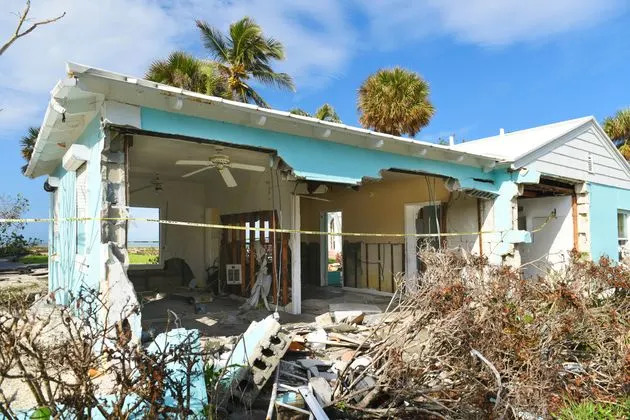
A collapsed home is seen in Naples, Florida, following Hurricane Ian in 2022. The Category 5 Atlantic hurricane was the third-costliest weather disaster on record.

A collapsed home is seen in Naples, Florida, following Hurricane Ian in 2022. The Category 5 Atlantic hurricane was the third-costliest weather disaster on record.

The announcement came a week after Farmers Insurance Group announced that it would no longer write any new policies or renew existing homeowner, auto and umbrella policies for people in Florida. Last year Bankers Insurance and Lexington Insurance, a subsidiary of AIG, also pulled out of the Florida homeowners market.

“This business decision was necessary to effectively manage risk exposure,” Farmers said in a statement released to the Tampa Bay Times.

Farmers in May similarly said it would no longer offer new home insurance policies in California due to more frequent and intense wildfires. The insurance company blamed its decision, in a previously released statement, on “historic increases in construction costs outpacing inflation, rapidly growing catastrophe exposure, and a challenging reinsurance market.”

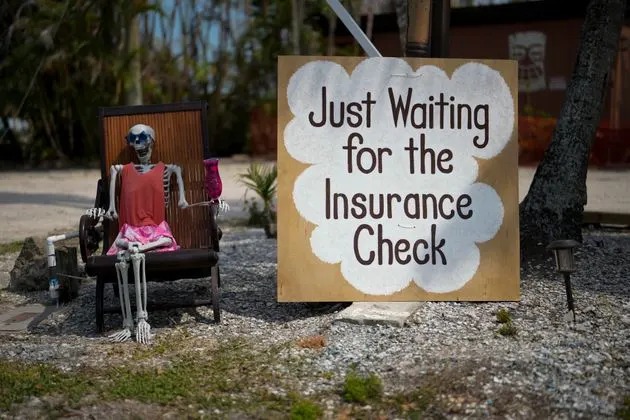
A skeleton in sunglasses sits beside a sign reading

A skeleton in sunglasses sits beside a sign reading “Just waiting for the insurance check,” on Florida’s Sanibel Island in May. The area was hit by Hurricane Ian in 2022.

It’s getting harder to live in the Sunshine State, with Floridians paying on average about $6,000 for their yearly home insurance premium, a 42% increase compared to last year, Mark Friedlander, spokesperson for the Insurance Information Institute, recently told USA Today. The average annual premium in the U.S., in comparison, costs $1,700.

Floridians have also had to deal with exceptionally high inflation rates and housing costs amid an ongoing flood of new residents from other parts of the country.

Forecasters have meanwhile given mixed predictions on this year’s hurricane season in the Atlantic, which started last month and will last through November.

The National Oceanic and Atmospheric Administration has predicted a near-normal hurricane activity season with 12 to 17 total named storms — one to four of which it said could become major hurricanes.

Colorado State University has meanwhile predicted that the season will be “above average, with 18 named storms — four of which they predict will become major hurricanes. CSU previously estimated that the season would be “near average” but updated its prediction due to record warm sea surface temperatures in most of the tropical and subtropical Atlantic.

Florida homeowners insurance prices are skyrocketing. Is self-insuring the answer?

Pensacola News Journal

Florida homeowners insurance prices are skyrocketing. Is self-insuring the answer?

Brandon Girod, Pensacola News Journal – July 18, 2023

Florida home insurance prices have skyrocketed over the years, outpacing the national average by nearly four times as homeowners still in the private market pay about $6,000 per year, which is quite a bit higher than the national average of $1,700.

Some homeowners have been able to find some reprieve through state-backed Citizens Property Insurance Corp., which was originally meant to serve as an insurer of last resort for homeowners unable to find insurance coverage in the private market. But it, too, is seeking to raise its rates by about 13.% to “depopulate” and shed some of the policies it has gained over the past three years.

Rising prices have led many Florida homeowners to question if purchasing home insurance is required and whether it’s cheaper to forego it completely — assuming their lender doesn’t require it.

SmartFinancial, a technology company that partners with some of the country’s top insurance companies to compare prices, recently laid out how much those out-of-pocket costs would run for the average homeowner.

Citizens eyes rate hike: Citizens Insurance seeks 13% rate hike as Florida reinsurance renewals see 30%+ increase

Do I need a home insurance policy in Florida?

There is technically no requirement that homeowners must carry property insurance that covers fire, flood, theft or storms. The caveat is that most mortgage lenders will require homeowners to carry home insurance, windstorm coverage and even flood insurance if the property is located in a designated flood zone.

Those who purchased their home outright or have paid their mortgage off may choose to “self-insure,” which is an informal way to describe the act of foregoing home insurance and opting to pay for potential repairs completely out of pocket.

Farmers Insurance pulls out of Florida: Farmers Insurance is the 4th major insurer to leave Florida, underlining insurance crisis

How much does self-insurance cost?

Out-of-pocket expenses for home repairs will always vary based on where you live, supply and demand, the nature of the repairs and the quality of materials needed to make the repairs. In a press release, SmartFinancial provided a rough estimate of how much those costs would be for the average homeowner.

  • Roof replacement cost: $5,000-$10,000
  • Roof repair cost: $40-$1,800
  • Sinking or settling foundation: $4,000-$10,000
  • Water damage: $1,000-$5,000
  • Mold removal: $1,000-$4,000
  • HVAC replacement: $7,000-$10,000
  • Electrical rewiring: $4,000-$12,000
  • Termite damage: $3,000
  • Repair or replace a water heater: $600-$1,700
  • New pipes: $600–$1,600 per fixture; $5,000 for a new sewer line
  • Septic system repair: $1,750-$6,000

My Safe Florida Home grant: DeSantis extends My Safe Florida Home hardening grant. How it can slash insurance premiums

Homeowners insurance claim statistics

In addition to those costs, SmartFinancial also included information about how likely it is for homeowners to file claims involving wind and hail, fire and lightning, water damage and more.

  • Wind and hail account for 45.5% of claims. This amounts to about 1 in 35 homes.
    • The average cost to insurers for claims related to wind and hail was $11,695.
  • Fire and lightning account for 23.8% of home insurance claims.
    • The average cost to insurers was $77,340 per claim
  • Water Damage and Freezing account for 19.9% of home insurance claims
    • The average cost to insurers was $11,650 per claim
  • Bodily injury and property damage claims for injuries or damage to others.
    • The average cost to insurers was $30,324 per claim
  • 1 in 525 homes file a theft-related claim each year. These incidents account for 0.6% of home claims.
    • The average cost to insurers was $4,415 per claim
How many Florida homeowners go without insurance?

More than in most places. According to the Miami Herald, the Insurance Information Institute estimated that 13% of all Florida homeowners are going without property insurance, almost double the national average of 7%.

What record warm ocean temperatures could mean for hurricane season

CNN

What record warm ocean temperatures could mean for hurricane season

Jennifer Gray – July 17, 2023

Editor’s Note: A version of this article originally appeared in the weekly weather newsletter, the CNN Weather Brief, which is released every Monday. You can sign up here to receive them every week and during significant storms.

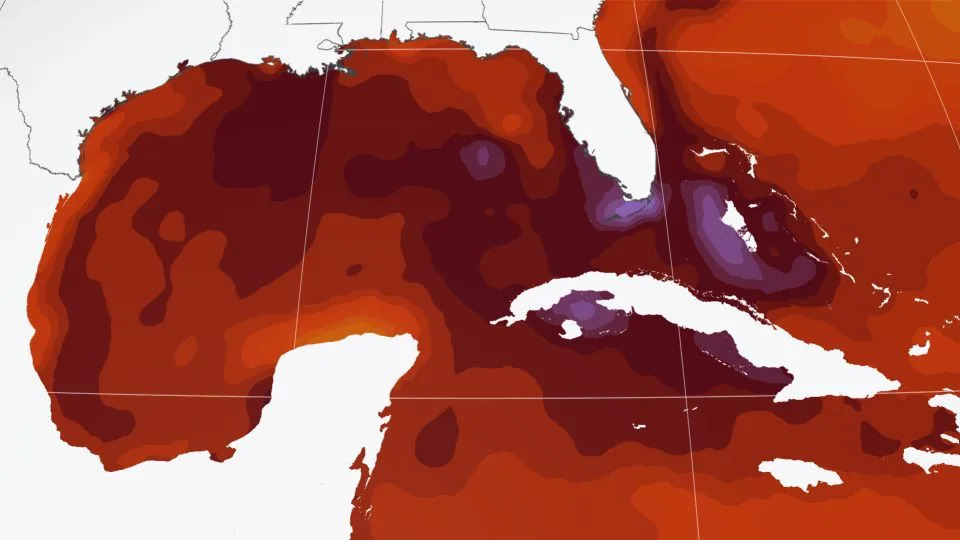
The Atlantic hurricane season is headed into uncharted territory with water temperatures in the Atlantic Ocean and the Gulf of Mexico warmer than they have ever been on record.

Seasonal forecasters are warning it means you need to prepare for a more uncertain forecast for the rest of the season with the potential for more storms and stronger ones.

Sea surface temperatures around parts of Florida and the Bahamas are warmer than 90 degrees Fahrenheit, shown here in shades of purple. - CNN Weather
Sea surface temperatures around parts of Florida and the Bahamas are warmer than 90 degrees Fahrenheit, shown here in shades of purple. – CNN Weather

Warm ocean water is one of the key ingredients for fueling hurricanes and it’s been in abundance so far this year. Scientists first sounded the alarm in April and the ocean warmth has only escalated since. Water in the Gulf of Mexico and the Atlantic has been record warm, especially for this early in the year. It includes off the coast of Florida, where water temperatures in the Florida Keys were close to 97 degrees in some spots last week.

It is important because warm ocean water breeds stronger, bigger and wetter storms. It gives hurricanes the energy they need to grow and sometimes rapidly intensify, something hurricane forecasters told CNN we could see more of this season. Warm oceans can also lead to more evaporation and wring out more rainfall falling from any storms.

But hurricane season predictions involve more than just warm water. It’s just one factor in the birth and survival of tropical cyclones, and it is creating more uncertainty than usual in what could happen the rest of the hurricane season.

“Uncertainty, uncertainty, uncertainty! That’s really the story going forward with this season,” Dr. Phil Klotzbach, a research scientist in the Department of Atmospheric Science at Colorado State University told me.

Klotzbach and the team at CSU are some of the pioneers of long-term hurricane season outlooks, and just increased the number of expected hurricanes and major hurricanes in their prediction for this season due to the warmer water in the Atlantic.

What makes this year even more uncertain is we are now under the influence of El Niño which typically suppresses activity in the Atlantic with increased wind shear, the changing of wind direction and speed with height which can blow budding storms to pieces and shred existing storms to death.

Klotzbach said the confluence of these record warm temperatures at the same time as a moderate to strong El Niño hasn’t been “observed historically.”

The million-dollar question right now is which will win out: warm ocean temperatures or El Niño. Early season predictions called for a near-average season, but Klotzbach and team seem to think the warm water will win out and are now calling for “an above-normal Atlantic hurricane season.”

Warm water won in June. According to Klotzbach, June had the lowest wind shear in the southern Atlantic Basin since 1988. Arlene, Bret and Cindy formed as a result.

Wind shear and dry air from Saharan dust picked up in the month of July, suppressing hurricane activity for the most part, but August through October could be different.

“Most climate models are forecasting slightly to somewhat-below normal shear in August, September and even into October,” Klotzbach said. “If that were the case, we would likely have an extremely busy season given how warm the Atlantic is.”

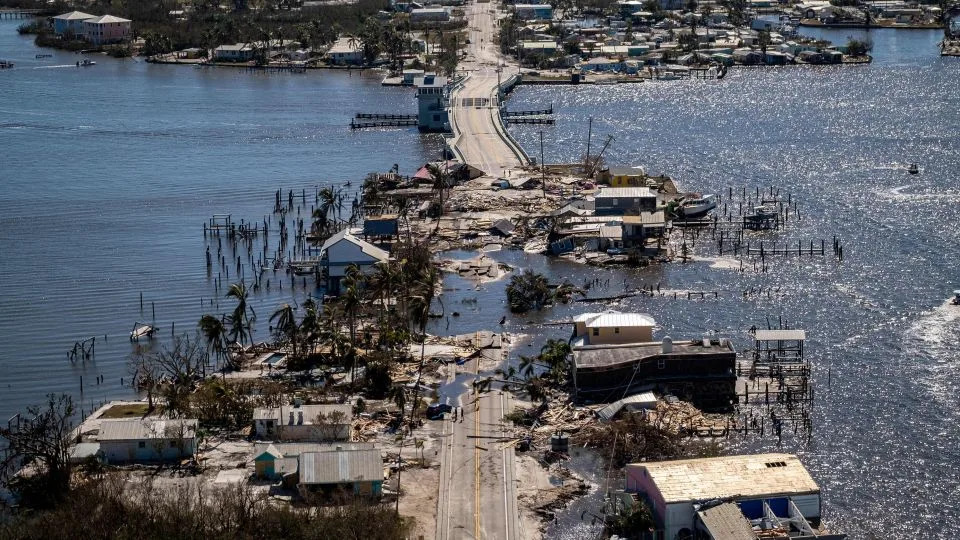
An aerial picture taken on September 30, 2022, shows the only access to the Matlacha neighborhood destroyed in the aftermath of Hurricane Ian in Fort Myers, Florida. - Ricardo Arduengo/AFP/Getty Images
An aerial picture taken on September 30, 2022, shows the only access to the Matlacha neighborhood destroyed in the aftermath of Hurricane Ian in Fort Myers, Florida. – Ricardo Arduengo/AFP/Getty Images

As of now, there’s not much noteworthy on the horizon as far as tropical development goes. Subtropical Storm Don is meandering around the north-central Atlantic but poses no threat to land. Forecast models aren’t picking up any development this week. Forecasts for next week are hinting at some tropical development, but it’s far too early to have confidence in how, if or when this could materialize.

What we do know is hurricane season typically starts ramping up as we head into August. The first hurricane usually forms in early to mid-August. The eight-week span from mid-August through mid-October is when ocean temperatures are nearing their highest levels in the Atlantic, wind shear lessens considerably and when nearly 90% of all hurricane activity in the Atlantic happens.

The bottom line is this season is already unprecedented given the hot ocean temperatures, so forecasting the season in the uncharted territory we’ve entered is a challenge. We’ve got a lot of hurricane season left to go, which means you should prepare for the worst and hope for the best.

5 stats show how Russia’s economy is withering

Business Insider

5 stats show how Russia’s economy is withering

Phil Rosen – July 16, 2023

Vladimir Putin
Russian President Vladimir Putin gives a speech during the Victory Day military parade at Red Square in central Moscow on May 9, 2023.GAVRIIL GRIGOROV/SPUTNIK/AFP via Getty Images
  • Russia’s economy has deteriorated since Vladimir Putin ordered the invasion of Ukraine in February 2022.
  • Its current-account balance has crashed, the ruble is weakening, and it’s status as an energy superpower has crumbled.
  • At the same time, Russia’s domestic consumption and production are low.

Russia’s economy is a shadow of what it was 16 months ago.

Before Vladimir Putin ordered the invasion of Ukraine in February 2022 and prior to the onset of historic sanctions, Moscow commanded the world’s 11th largest economy and played a key role as a reliable, wide-reaching energy exporter.

Now however, from a weakening currency to tepid trade, all signs point to a sharp deterioration with no end in sight.

“Russia might collapse into multiple pieces, like the Soviet Union, and that might not be a bad thing for the world,” Volodymyr Lugovskyy, an economics professor at Indiana University, told Insider this week. “It’s resembling an empire right now, with a central power. Extreme events are highly possible.”

These five statistics illustrate how war has reshaped the Russian economy for the worse.

A weakening ruble

The ruble has been one of the worst-performing currencies this year, and geopolitical uncertainty in Russia has made it volatile.

During the failed mutiny in June by the Wagner Group, the currency tumbled to a 15-month low against the dollar as panicked citizens swapped for alternative currencies.

Over the last month, the ruble has weakened more than 6.8%, and it’s down more than 35% in the last year.

Current-account balance drops 93%

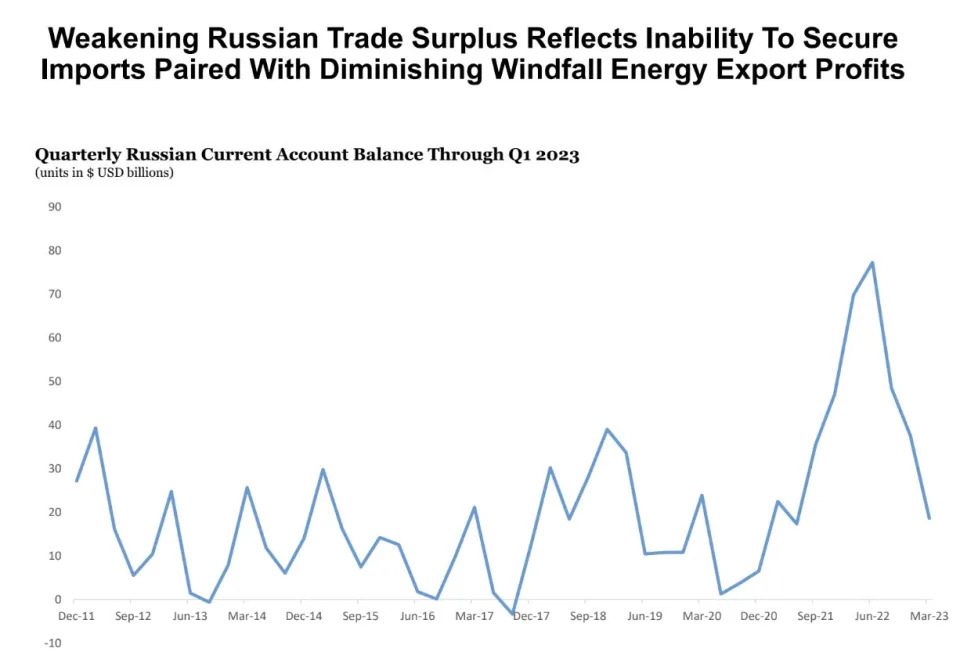
For the April to June quarter, the country posted a current-account surplus of $5.4 billion, marking a 93% plunge from a record $76.7 billion during the same stretch last year, according to the Russian central bank.

The fading current account surplus shows that Moscow has been unable to secure imports, and that its profits from energy exports are failing to prop up the economy like they did before.

Yale russia economy
Weakening Russian trade surplus illustrates inability to secure imports, and diminishing profits from windfall energy exports.Yale Chief Executive Leadership Institute

“The decline in the surplus of the balance of the external trade in goods in January – June 2023 compared to the comparable period of 2022 was caused by a decrease in both the physical volumes of export deliveries and the deterioration in the price situation for the basic Russian export commodities, energy commodities made the most significant contribution to the decline in the value of exports,” the Bank of Russia said in a statement.

Energy revenue crash

Russia’s Finance Ministry said in June that revenue from oil and gas taxes dropped 36% compared to a year ago, while profits from crude and petroleum products fell 31%.

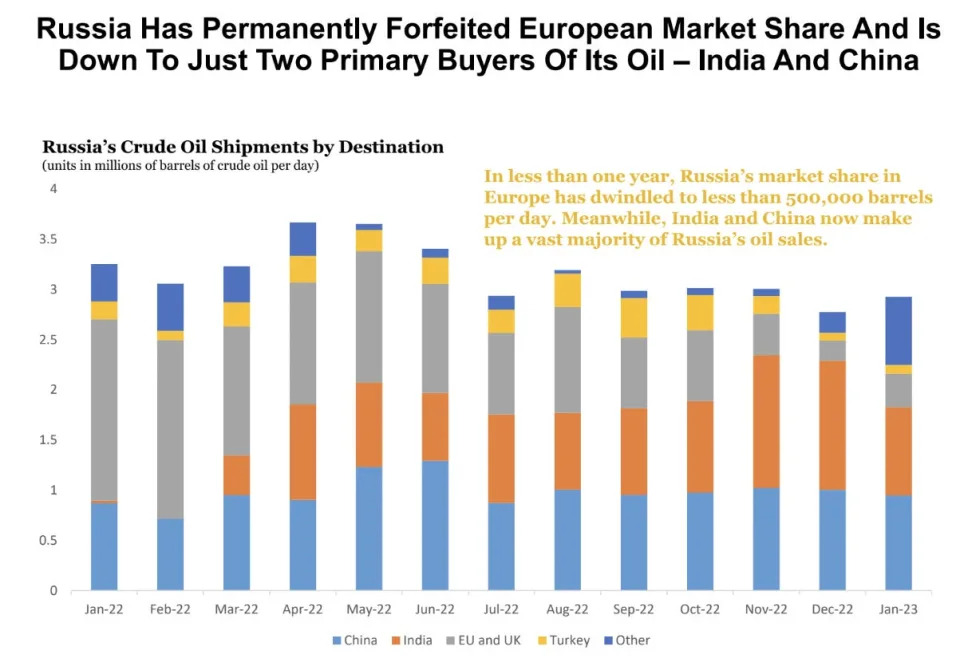
Before the war, Russia was responsible for almost 40% of the European Union’s natural gas imports, and a quarter of the bloc’s crude oil.

Those numbers have gone to almost zero since then, and even though Putin has turned to China and India as alternative buyers, Moscow has had to sell energy at steep discounts.

Yale Russia economy energy
Russia’s energy exports now go mostly to China and India.Yale Chief Executive Leadership Institute
Russian car sales have tumbled

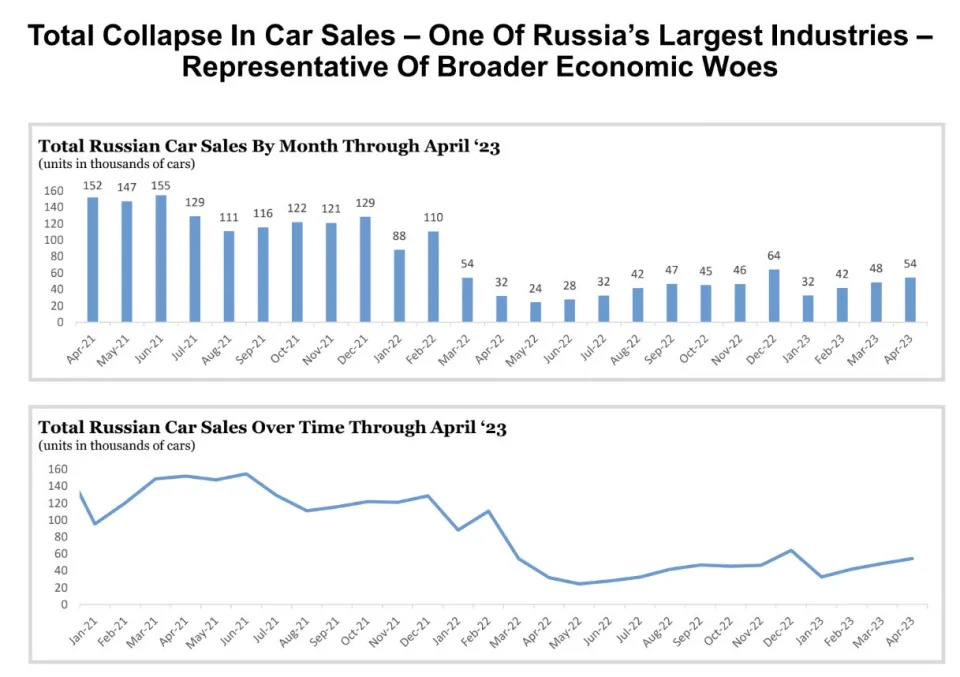
Before the invasion of Ukraine, roughly 100,000 vehicles were sold every single month across Russia, according to Yale research data shared with Insider.

Those sales have collapsed to about a quarter of that level, driven not only by soaring prices and sinking consumer sentiment, but also due to a lack of supply.

Yale collapse in russian economy car sales
Russia has seen a total collapse in car sales over the last year and a half.Yale Chief Executive Leadership Institute
Brain drain and emigration

Millions of Russians have emigrated since the start of the war in Ukraine, according to Yale data, with Uzbekistan alone taking in more than 400,000 fleeing citizens.

The flight of capital and talent out of Russia is illustrated in the surge of money transfers to neighboring countries that aren’t normally seen as financial hubs, according to Yale, such as Armenia, Georgia, and Kyrgyzstan.

“While there is no concrete measure of how much capital flight has taken place, proxy measures, such as the explosion of non-resident deposits in UAE bank accounts, suggests that Russians of means are taking their productive capital out of Russia at a dramatic clip,” Yale researcher Jeffrey Sonnenfeld said.

Death Valley visitors drawn to the hottest spot on Earth during ongoing US heat wave

Associated Press

Death Valley visitors drawn to the hottest spot on Earth during ongoing US heat wave

TY O’NEIL  – July 14, 2023

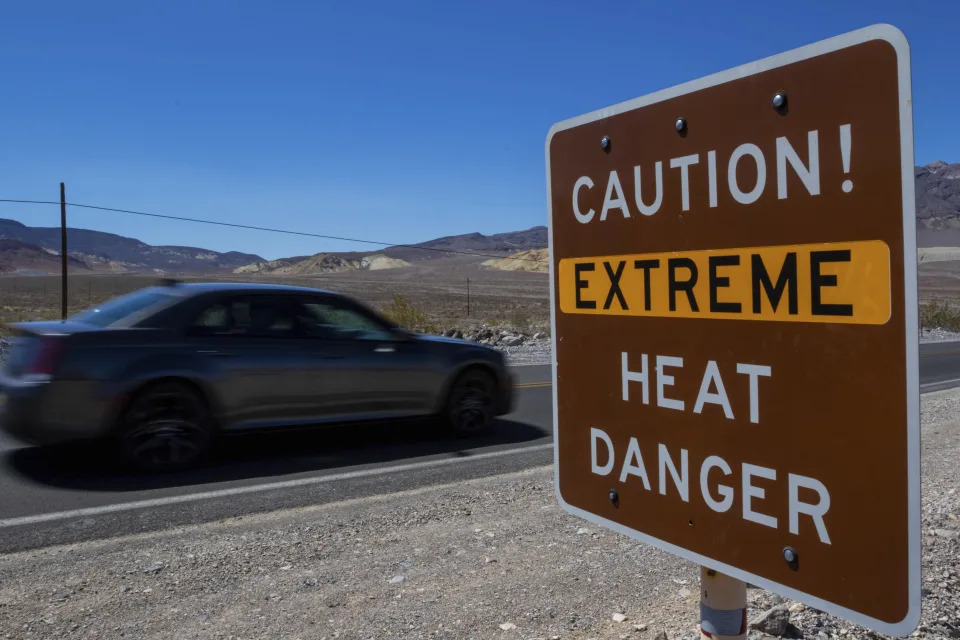
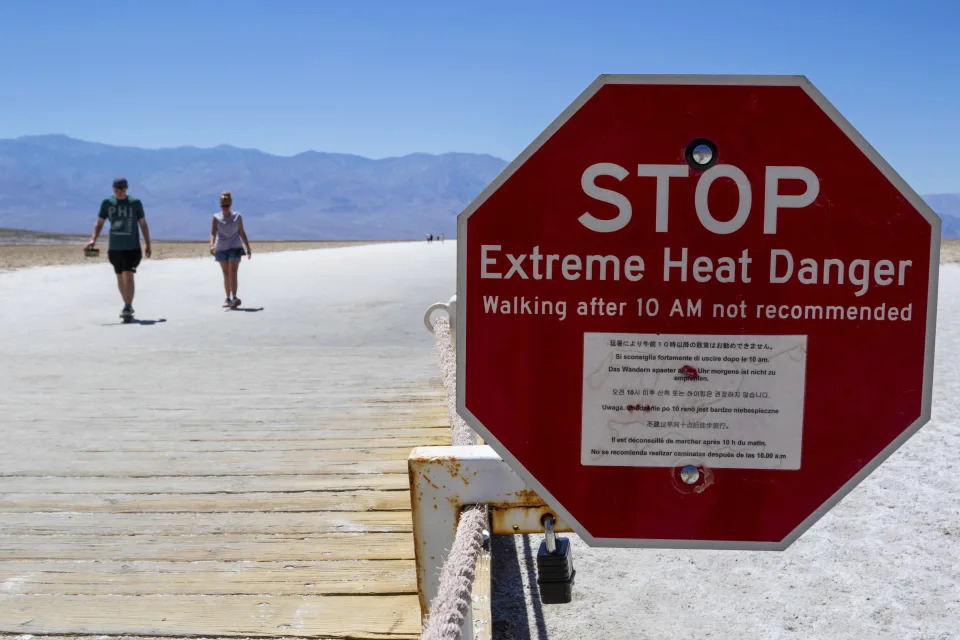
A sign stands warning of extreme heat Tuesday, July 11, 2023, in Death Valley National Park, Calif. July is the hottest month at the park with an average high of 116 degrees (46.5 Celsius). (AP Photo/Ty ONeil)
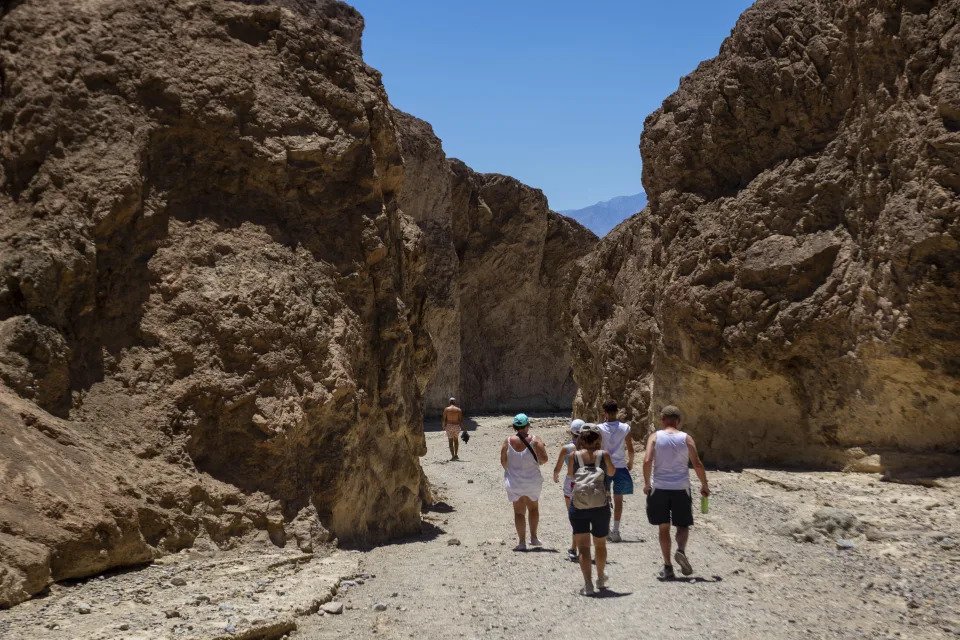
Hikers turn back to their vehicles in Golden Canyon on Tuesday, July 11, 2023, in Death Valley National Park, Calif. July is the hottest month at the park with an average high of 116 degrees (46.5 Celsius). (AP Photo/Ty ONeil)
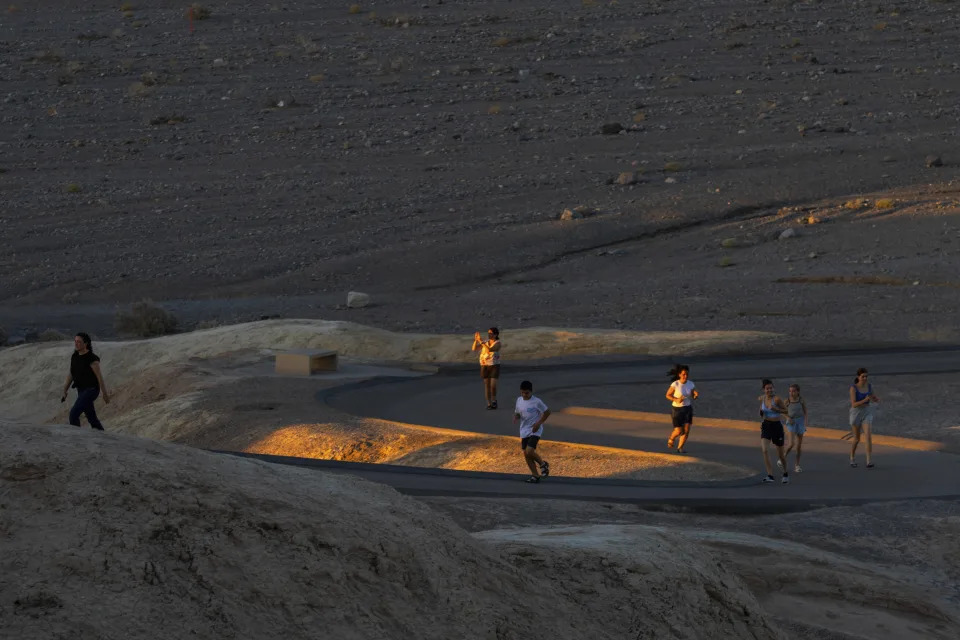
People run to get sunset photos at Zabriskie Point on Saturday, July 8, 2023, in Death Valley National Park, Calif. July is the hottest month at the park with an average high of 116 degrees (46.5 Celsius). (AP Photo/Ty ONeil)
A man explores the Mesquite Flat Sand Dunes on Tuesday, July 11, 2023, in Death Valley National Park, Calif. July is the hottest month at the park with an average high of 116 degrees (46.5 Celsius). (AP Photo/Ty ONeil)
A sign warns people of extreme heat in multiple languages on Tuesday, July 11, 2023, in Death Valley National Park, Calif. July is the hottest month at the park with an average high of 116 degrees (46.5 Celsius). (AP Photo/Ty ONeil)

DEATH VALLEY NATIONAL PARK, Calif. (AP) — As uninviting as it sounds, Death Valley National Park beckons.

Even as the already extreme temperatures are forecast to climb even higher, potentially topping records amid a major U.S. heat wave, tourists are arriving at this infamous desert landscape on the California-Nevada border.

Daniel Jusehus snapped a photo earlier this week of a famed thermometer outside the aptly named Furnace Creek Visitor Center after challenging himself to a run in the sweltering heat.

“I was really noticing, you know, I didn’t feel so hot, but my body was working really hard to cool myself,” said Jusehus, an active runner who was visiting from Germany. His photo showed the thermometer reading at 120 degrees Fahrenheit (48.8 degrees Celsius).

Most visitors at this time of year make it only a short distance to any site in the park — which bills itself as the lowest, hottest and driest place on Earth — before returning to the sanctuary of an air-conditioned vehicle.

This weekend, the temperatures could climb past 130 F (54.4 C), but that likely won’t deter some willing to brave the heat. Signs at hiking trails advise against venturing out after 10 a.m., though nighttime temperatures are still expected to be over 90 F (32.2 C). The hottest temperature recorded at Death Valley was 134 F (56.6 C) in July 1913, according to the National Park Service.

Other parks have long-standing warnings for hikers. At Grand Canyon National Park in Arizona, officials are cautioning people to stay off the trails for most of the day in the inner canyon, where temperatures can be 20 degrees hotter than the rim.

In west Texas, Big Bend National Park near the Rio Grande is expected to be at least 110 F (43.3 C). The National Weather Service has said it’s best to just stay off the trails in the afternoon.

The precautions vary across parks and landscapes, said Cynthia Hernandez, a park service spokesperson. Certain trails might be closed if conditions are too dangerous. Alerts and restrictions are posted on websites for individual parks, Hernandez said.

Preliminary information form the park service shows at least four people have died this year from heat-related causes across the 424 national park sites. That includes a 65-year-old man from San Diego who was found dead in his vehicle at Death Valley earlier this month, according to a news release.

Death Valley National Park emphasizes self-reliance over expectations of rescue. While rangers patrol park roads and can assist motorists in distress, there’s no guarantee lost tourists will get aid in time.

More than 1.1 million people annually visit the desert park, which sits over a portion of the California-Nevada border west of Las Vegas. At 5,346 square miles (13,848 square kilometers), it’s the largest national park in the Lower 48. About one-fifth of the visitors come in June, July and August.

Many are tempted to explore, even after the suggested cutoff times. Physical activity can make the heat even more unbearable and leave people feeling exhausted. Sunbaked rocks, sand and soil still radiate after sunset.

“It does feel like the sun has gone through your skin and is getting into your bones,” said park Ranger Nichole Andler.

Others mentioned feeling their eyes drying out from the hot wind sweeping through the valley.

“It’s very hot. I mean, especially when there’s a breeze, you would think that maybe that would give you some slight relief from the heat, but it just really does feel like an air blow dryer just going back in your face,” said Alessia Dempster, who was visiting from Edinburgh, Scotland.

Death Valley is a narrow, 282-foot (86-meter) basin that is below sea level but situated among high, steep mountain ranges, according to the park service’s website. The bone-dry air and meager plant coverage allows sunlight to heat up the desert surface. The rocks and the soil emit all that heat in turn, which then becomes trapped in the depths of the valley.

The park’s brownish hills feature signage saying “heat kills” and other messaging, such as a Stovepipe Wells sign warning travelers of the “Savage Summer Sun.”

Still, there are several awe-inspiring sites that draw tourists. Badwater Basin, made up of salt flats, is considered the lowest point in all of North America. The eye-opening 600-foot (183-meter) Ubehebe Crater dates back over 2,000 years. And Zabriskie Point is a prime sunrise viewing spot.

Eugen Chen from Taiwan called the park “beautiful” and an “iconic … very special place.”

Josh Miller, a visitor from Indianapolis who has been to 20 national parks so far, shared that sentiment.

“It’s hot, but the scenery is awesome,” he said. ___ Associated Press writer Terry Tang in Phoenix contributed to this story.