Why Are Americans Wary While the Economy Is Healthy? Look at Nevada.

The New York Times

Why Are Americans Wary While the Economy Is Healthy? Look at Nevada.

Peter S. Goodman – February 5, 2024

Nevada is dependent on a single industry — casino resorts and the hospitality trade — for roughly one-fourth of its jobs. (Bridget Bennett/The New York Times)

LAS VEGAS — Toni Irizarry recognizes that the economy has improved. Compared with the first wave of the pandemic, when Las Vegas went dark, and joblessness soared to levels not seen since the Great Depression, these are days of relative normalcy.

Irizarry, 64, oversees a cafe at the Orleans Hotel and Casino, a property just off the Las Vegas Strip that caters mostly to locals. Guests have returned, filling the blackjack and roulette tables amid the cacophony of jingling slot machines — the sound of money.

She started in the hospitality industry busing tables when she was only 16. Her paychecks have allowed her to purchase a home, raise three children and buy each of them their first car. But as she contemplates the future, she cannot shake a sense of foreboding.

The outlook of people like Irizarry could be crucial in determining who occupies the White House. Nevada is one of six battleground states that are likely to decide the outcome of November’s presidential election. Its economic centerpiece, Las Vegas, was constructed on dreams of easy money. That proved a winning proposition for generations of working people, yielding middle-class paychecks for bartenders, restaurant servers, casino dealers and maids. Yet over the last two decades, a series of shocks have eroded confidence.

First, a speculative bonanza in real estate went spectacularly wrong, turning the city into the epicenter of a national foreclosure crisis. The Great Recession inflicted steep layoffs on the hospitality industry, demolishing the notion that gambling was immune to downturns. Then in 2020, the pandemic turned Las Vegas into a ghost town.

“There is that sense of the unknown,” Irizarry said. “People are scared. They think, ‘If this could happen, which we never ever had before, what else could happen?’”

That the fate of the 2024 presidential election could hinge on economic sentiments is widely taken as a given among political operatives.

In the battleground states, 57% of registered voters identified the economy as the most important issue in a poll conducted in October by The New York Times and Siena College. More than half of all respondents described economic conditions as “poor” — a key reason that President Joe Biden was trailing his presumptive Republican challenger, former President Donald Trump, in five of the six states.

Such indications of worry appear to conflict with data points that reflect an unambiguous strengthening of the U.S. economy. Incomes have risen, unemployment remains low and consumer confidence is improving. Fears of recession have yielded to exultation over economic growth that registered 3.3% over the last three months of 2023. And the Super Bowl, coming to Las Vegas for the first time Sunday, will bring a short-term boost of as much as $700 million to the local economy.

Still, a sense of insecurity has seeped into the crevices of everyday experience. This feeling is especially palpable in Nevada, a state dependent on a single industry — casino resorts and the hospitality trade — for roughly one-fourth of its jobs.

In Nevada, 59% of those polled described the economy as “poor,” the highest margin among the six states. Seventeen percent of registered Democrats asserted intentions to vote for Trump.

The state’s unemployment rate is down sharply, registering 5.4% in November — a fraction of the 31% logged in April 2020 — even as it remains higher than any other state. Wages have grown, especially for more than 40,000 leisure and hospitality workers represented by a pair of local unions. The rate of inflation on a range of consumer goods has slowed markedly.

But those figures leave out key sources of distress that are playing out across the country and even globally, and whose origins are not confined to the four-year windows conventionally used to assess presidential administrations.

While prices for many goods have stopped rising, they remain higher than before the pandemic, especially for critical things like gasoline, groceries and rent.

Higher interest rates — the result of the Federal Reserve’s credit tightening to choke off inflation — have increased credit card burdens for those carrying balances. They have multiplied mortgage payments for homeowners whose interest payments float with broader rates.

Of special concern in Nevada is recognition that potentially lucrative pursuits like advanced manufacturing could take years to produce significant numbers of jobs.

For decades, Nevada’s leaders have sought to diminish the state’s dependence on casinos and tourism. Las Vegas is rapidly filling with warehouses as the metro area emerges as a hub for the distribution of products. Ventures centered on the transition to green energy are generating high-paying jobs, especially near Reno.

Nonetheless, Nevada remains heavily reliant on the willingness of people around the world to fly in, pack into resorts and convention centers, and scatter their dollars across casinos, restaurants and entertainment venues. Which makes the enterprise subject to abrupt changes of fortune. Which makes people nervous.

“We’re still very vulnerable to another recession,” said Andrew Woods, director of the Center for Business and Economic Research at the University of Nevada, Las Vegas. “If the U.S. economy decides to go off the deep end, we are not any more resilient than we were before.”

The Strains of High Prices

Much of the unhappiness in Nevada, as in the rest of the country, centers on high costs for everyday items along with housing.

Antonio Muñoz, a former police officer, owns 911 Taco Bar, a restaurant tucked inside a food court near the Strip. He laments how the price of chicken has increased to $3.50 a pound from $1.20 before the pandemic. A 5-gallon jug of cooking oil has risen to $60 from $25. He has been forced to increase wages to keep his five full-time workers.

Much of his business is dedicated to catering work. Large events have come back robustly, he said. The annual Consumer Electronics Show in early January produced a surge of orders for rib eye and shrimp tacos as technology companies hosted visitors in private suites. He was gearing up for the Super Bowl.

But smaller bookings — birthday parties in particular — diminished last year by one-fifth compared with 2022. He blames Russia’s ongoing war in Ukraine, conflict in the Middle East and acrimony over the U.S. election for making people nervous and tight with money.

He worries that worry itself could take down the economy.

“I feel like it’s teetering,” Muñoz said. “People seem to be waiting to see what happens.”

More Pay, Greater Security

One group is celebrating potent gains. After threatening to strike, tens of thousands of people represented by the Culinary Workers Union Local 226 and Bartenders Union Local 165 secured a contract settlement that includes raises of 32% over the next five years.

Union workers played a critical role in turning out voters for Biden four years ago, and their greater pay could motivate them to repeat that effort. And given the importance of their wages in fueling local spending, the new contracts are themselves a source of economic vibrancy.

Kimberly Dopler has worked as a cocktail server at Wynn’s Las Vegas for nearly 20 years. The job is physically exhausting and fraught with the pitfalls of tending to customers who are “drinking and gambling, and not in their right state of mind,” she said. Yet she navigates those risks for the resulting security.

“I get to go home with money in my pocket every day, and I can take my shoes off and relax,” she said.

The union contract has enhanced her sense that the economy is strong. “I see a lot of hiring happening at my job, hiring events throughout town,” Dopler said. “I feel like people have a good opportunity in this town to find work.”

Raymond Lujan, 61, a union steward and server at Edge Steakhouse, a restaurant inside the Westgate Las Vegas, was born and raised in the city. His mother worked as a cocktail server at the Stardust. His brother is a bellman at the Bellagio.

Before the pandemic, Lujan had never been out of work. When the restaurant where he worked closed, he drew on savings, but many of his co-workers live check to check.

He remains confident in a future centered on the hospitality industry.

“This is Vegas,” he said. “It’s still the destination capital of the world.”

‘It’s Still Hard’

Yet for working people who lack the protection of a union, Las Vegas remains something else: an economy subject to violent fluctuations.

Before the pandemic, Carlos Arias, 51, was earning more than $2,000 a week as an Uber driver. When the casinos shut down, he found work as a cook — first at Denny’s for $13.75 an hour, then at IHOP for 50 cents more.

Suddenly earning only one-fourth of his previous income, Arias and his partner, a manger at a McDonald’s, struggled to pay the $1,100 monthly rent on their one-bedroom apartment. They tapped credit cards to keep gas in their car. They cut grocery purchases to bare essentials like rice, beans and instant ramen.

They fell behind on the payments for their Cadillac van. One morning, it was gone, seized in repossession.

He found a new job as a cook at a Mexican restaurant for an extra $1 an hour, and then a second one at an eatery inside the Ellis Island casino. For a year, he worked both positions, rising at 4 a.m. for the early shift, and sometimes not getting home until after midnight.

He felt dizzy, his vision blurring. He could not tell if he was ill or merely exhausted, and he had no health insurance. When he nearly collapsed, he went to the hospital and was diagnosed with diabetes. The medicine the doctor prescribed cost more than $50 for a 30-day course — more than he could manage.

Early last year, he took a job at a restaurant in the Mandalay Bay Resort and Casino, for $19 an hour.

On paper, Arias presents as an example of an improving economy. He is earning more than during the worst of the pandemic. He has health insurance, and is taking medication for his diabetes.

But he is earning less than half what he did before the unraveling began.

“It’s still hard,” he said. “You go to the store and buy $100 worth of groceries and there’s nothing in the car.”


Ex-GOP Lawmaker Has Urgent 2024 Message For Former Trump Loyalists

HuffPost

Ex-GOP Lawmaker Has Urgent 2024 Message For Former Trump Loyalists

Josephine Harvey – February 5, 2024

Former Rep. Denver Riggleman  (R-Va.) says it’s time for more of Donald Trump’s former allies to throw their weight behind President Joe Biden.

On MSNBC Sunday, Riggleman said it’s “absolutely” important for those who no longer support Trump to publicly back Biden. As examples, he pointed to former Trump aide Anthony Scaramucci and former Rep. Adam Kinzinger (R-Ill.), both of whom have said they would vote for Biden in his likely rematch with Trump this year.

“This is a person that you don’t want anywhere near … the Oval Office again,” Riggleman told MSNBC’s Alex Witt of the quadruply-indicted former president. “This is an individual that is out of touch with reality, or pretends that he’s out of touch with reality, to actually ignite the base, or to try to make the base violent, or to do things outside of what normal behavior would be.”

Riggleman said that when he considers what Trump has done and what kind of people he has surrounded himself with, “there’s nobody else who I’d vote for but Joe Biden.”

The ex-congressman announced in 2022 that he had left the Republican Party over its devotion to Trump.

Numerous former Trump associates and officials have in recent months spoken out about the former president and warned about the dangers of a potential White House return, but some have stopped short of saying they’d vote for Biden.

Riggleman later shared a RawStory editor’s tweet about his comments, writing: “Yes. I said this.”

“I am done identifying with a party,” he wrote on X (formerly Twitter). “I am an American— and right now that means supporting Democratic institutions and our way of life no matter what.”

New US Senate bill to help Ukraine: Biden calls for it to be passed as soon as possible

Ukrayinska Pravda

New US Senate bill to help Ukraine: Biden calls for it to be passed as soon as possible

Ukrainska Pravda – February 4, 2024

US Flag. Photo: Getty Images

US President Joe Biden has urged senators to vote for a bipartisan national security agreement presented by the Senate, which provides US$60 billion in aid to Ukraine, as soon as possible.

Source: US Senate website; Biden’s statement

Details: The US$118 billion package comprises a policy of protecting US borders and providing assistance to Ukraine and Israel.

In particular, US$60.1 billion is earmarked to help Ukraine and more than US$14 billion to support Israel.

The bill also includes funding for humanitarian aid for operations in the Red Sea and Taiwan.

Biden said he “strongly” supports the bipartisan agreement unveiled on Sunday (4 February).

Quote from Biden: “Now we’ve reached an agreement on a bipartisan national security deal that includes the toughest and fairest set of border reforms in decades. I strongly support it…

The bipartisan national security agreement would also address two other important priorities. It allows the United States to continue our vital work, together with partners all around the world, to stand up for Ukraine’s freedom and support its ability to defend itself against Russia’s aggression.

As I have said before, if we don’t stop Putin’s appetite for power and control in Ukraine, he won’t limit himself to just Ukraine and the costs for America will rise.

This agreement also provides Israel what they need to protect their people and defend itself against Hamas terrorists. And it will provide life-saving humanitarian assistance for the Palestinian people…

I urge Congress to come together and swiftly pass this bipartisan agreement. Get it to my desk so I can sign it into law immediately.”

Previously: Mike Johnson, Speaker of the US House of Representatives, said on Saturday, 3 February, that the following week, the House will vote on a bill that will ensure Israel obtains US$17.6 billion of aid faster, without, however, making it conditional on also passing aid for Ukraine.

The US President Joe Biden’s administration has stressed that it does not support the bill to help Israel without aid to Ukraine, calling it a “cynical political manoeuvre” by Republicans.

Background:

  • During a press conference on 30 January, Mike Johnson denied that his position on the border security agreement with Mexico, which Republicans have linked to additional funding for Ukraine, was intended to help Donald Trump win the upcoming US presidential election.
  • Johnson previously said in a letter that the Senate bill on the border and aid to Ukraine, as well as other countries, will not be approved in the House of Representatives if reports of its terms are true.
  • Republican Representatives are demanding that the White House take decisive action to curb illegal immigration at the US-Mexico border.
  • Disagreement over what measures should be taken has meant that a supplemental funding package that includes US$61 billion for Ukraine has been stalled in Congress.
  • In early January, the White House said that the US has no money for further military aid for Ukraine until a new package by the US Congress is adopted.

US Senate unveils $118 billion bill on border security, aid for Ukraine, Israel

Reuters

US Senate unveils $118 billion bill on border security, aid for Ukraine, Israel

Richard Cowan and Costas Pitas – February 4, 2024

WASHINGTON (Reuters) -The U.S. Senate on Sunday unveiled a $118 billion bipartisan border security bill that would also provide aid to Ukraine and Israel, but it promptly slammed into opposition from the House of Representatives.

“I urge Congress to come together and swiftly pass this bipartisan agreement,” President Joe Biden said, also praising the migration measures in the bill, which took months to negotiate.

However, House of Representatives Speaker Mike Johnson declared it “dead on arrival” if it reaches his chamber.

“This bill is even worse than we expected, and won’t come close to ending the border catastrophe the president has created,” he said in a statement on X, formerly called Twitter.

The Democratic and Republican Senate backers of the wide-ranging U.S. border security and foreign military aid bill pledged to push ahead, despite opposition by Donald Trump as well.

Senate Majority Leader Chuck Schumer said he would take steps to hold an initial vote on the bill on Wednesday.

If the bill were to become law, it would mark the most significant changes in U.S. immigration and border security in decades.

Some progressive Democrats are angry the measure does nothing to provide a pathway to citizenship for the 11 million undocumented people who have lived in the U.S. for many years, including “Dreamer” immigrants who were brought in as children.

Independent Senator Kyrsten Sinema told reporters the legislation would secure the U.S. southern border, including by requiring the Department of Homeland Security to temporarily “shut down” the frontier to most migrants if there are an average of more than 5,000 crossing attempts per day over seven days.

Republican Senator James Lankford, one of the negotiators on the bill, said that the border likely would remain closed for at least three weeks as the numbers of arriving immigrants drop significantly.

In addition to $20.23 billion for border security, the bill included $60.06 billion to support Ukraine in its war with Russia, $14.1 billion in security assistance for Israel, $2.44 billion to U.S. Central Command and the conflict in the Red Sea, and $4.83 billion to support U.S. partners in the Indo-Pacific facing aggression from China, according to figures from Senator Patty Murray, who chairs the Senate’s Appropriation Committee.

An additional $10 billion would provide humanitarian assistance for civilians in conflict zones including in Ukraine, Gaza and the West Bank, although the bill includes a provision barring its funds from going to the U.N. agency for Palestinians, UNRWA. The Biden administration and other nations have paused funding to the agency over allegations that some of its staff were involved in Hamas’ Oct. 7 attacks in southern Israel.

“The priorities in this bill are too important to ignore and too vital to allow politics to get in the way,” Schumer said in a statement. “The United States and our allies are facing multiple, complex and, in places, coordinated challenges from adversaries who seek to disrupt democracy and expand authoritarian influence around the globe.”

The key overseas security provisions of the bill largely match what Biden requested from Congress in October, when he asked for additional funds for aid for Ukraine, Israel and Taiwan.

That request has been stalled by House Republicans’ insistence that it be tied to a shift in immigration policy.

With House Republicans divided over how to address the huge number of immigrant arrivals and whether to provide Ukraine with any more aid, Johnson on Saturday said he plans to hold a vote this week on a new bill providing $17.6 billion in military assistance to Israel. That measure has no new funding for Ukraine or for U.S. border security.

Meantime, Lankford said he would engage with Johnson in hopes of more House support for the Senate bill.

Schumer said the agreement would provide more frontline personnel and asylum officers and provide “faster and fair” immigration decisions. Lankford told reporters it would fund as many as 50,000 immigrant detention beds, up from the current 34,000.

The bill’s proponents said it would end the controversial “catch-and-release” practice that critics said contribute to high numbers of illegal immigrants arriving at the southern border. It would do so by speeding up the adjudication of asylum cases instead of quickly releasing apprehended migrants and allowing them to stay in the United States for years while they await hearings.

Mitch McConnell, the top Senate Republican, has supported the negotiations, saying Republicans would not get a better deal under a Republican White House.

“The Senate must carefully consider the opportunity in front of us and prepare to act,” McConnell said in a statement.

Schumer said in a news conference that he had never worked so closely with long-term Senate colleague McConnell as on the bill.

“At many occasions we thought the negotiations had fallen apart,” Schumer said.

RIGHT-WING OPPOSITION

Nonetheless, right-wing Republicans are skeptical of the new Senate bill.

“Here’s what the people pushing this ‘deal’ aren’t telling you: It accepts 5,000 illegal immigrants a day and gives automatic work permits to asylum recipients — a magnet for more illegal immigration,” House Majority Leader Steve Scalise said on X.

Other congressional Republicans have said Biden can enact many of the changes they want to immigration policy through executive action, though they had previously called for legislative action.

Immigration is the second largest concern for Americans, according to a Reuters/Ipsos poll published on Wednesday, and is a top issue for Republicans specifically. The U.S. Border Patrol arrested about 2 million migrants at the border in fiscal year 2023.

Trump, the frontrunner for the Republican nomination to challenge Biden in the November election, has campaigned heavily on opposition to immigration. House Republicans are also pushing ahead with an effort to impeach Biden’s top border official, Homeland Security Secretary Alejandro Mayorkas.

(Reporting by Richard Cowan and Costas Pitas; Additional reporting by Patricia Zengerle and Makini Brice; Writing by Simon Lewis; Editing by Scott Malone, Rosalba O’Brien, Lisa Shumaker and Himani Sarkar and Miral Fahmy)

Biden challenges House GOP to solve border crisis — or ‘keep playing politics’

Politico

Biden challenges House GOP to solve border crisis — or ‘keep playing politics’

Myah Ward and Jennifer Haberkorn – February 4, 2024

BLUE BELL, PENNSYLVANIA – JANUARY 5: U.S. President Joe Biden speaks during a campaign event at Montgomery County Community College January 5, 2024 in Blue Bell, Pennsylvania. In his first campaign event of the 2024 election season, Biden stated that democracy and fundamental freedoms are under threat if former U.S. President Donald Trump returns to the White House. (Photo by Drew Angerer/Getty Images)More

President Joe Biden urged Congress to pass the bipartisan border deal unveiled Sunday night by Senate negotiators, ramping up the pressure on House Republicans who have repeatedly cast doubt on the bipartisan effort.

“Working with my administration, the United States Senate has done the hard work it takes to reach a bipartisan agreement. Now, House Republicans have to decide. Do they want to solve the problem? Or do they want to keep playing politics with the border?” Biden said in a lengthy statement.

The president’s response came not long after senators released the long-awaited $118 billion deal that would unleash stricter border and immigration policies, while sending billions of dollars to Ukraine, Israel and Taiwan as well as the southern border. The bill’s introduction kicks off a sprint as the White House and negotiators work to sell the deal to Republicans and progressives before it heads for a procedural vote in the Senate scheduled for Wednesday.

The president said the agreement released Sunday includes some of the “toughest and fairest set of border reforms in decades,” and ones that he “strongly” supports. Biden asked Congress to pass the deal quickly — placing the fate of the deal in their hands. And he once again dared Republicans to reject the deal as it faces a make-or-break moment amid GOP fissures in both chambers.

“I’ve made my decision. I’m ready to solve the problem. I’m ready to secure the border. And so are the American people,” the president said. “I know we have our divisions at home but we cannot let partisan politics get in the way of our responsibilities as a great nation. I refuse to let that happen.”

The border has long been a challenging issue for the Biden White House. The president has seen record crossings since taking office in 2021, further straining a southern border already weighed down by irregular migration and an overwhelmed asylum processing system. Border Patrol agents reported a record 302,034 encounters with migrants over the southern border in December, according to figures released by U.S. Customs and Border Protection.

In addition, the fast-approaching 2024 election has piled on the pressure for Biden to take action on the border — to address the crisis but to also win the messaging battle on an issue Republicans frequently used to rally their base. Former President Donald Trump, Biden’s likely 2024 opponent, is sure to continue his efforts to combust a deal, adding another layer to efforts to sell the border legislation.

The legislation includes an authority that would effectively “close” the border if the number of migrant crossings reach a certain number over a certain period of time, although a limited number of people would still be allowed to apply for asylum at ports of entry.

Biden suggested publicly late last month that he’d be open to such an authority, vowing to “shut down the border” as soon as the bill was passed.

“I urge Congress to come together and swiftly pass this bipartisan agreement,” Biden said in Sunday night’s statement. “Get it to my desk so I can sign it into law immediately.”

Given the White House’s work with Senate Republicans on the legislation, Biden administration officials have focused their attention on Speaker Mike Johnson, casting him and House Republicans as the barrier to securing the border.

During the Senate talks, the Biden administration has tried to flip the long-held view — one borne out in public polling — that Republicans are better trusted on the issues of immigration and protecting the border. The administration argues the House GOP has blocked all of the president’s efforts to secure the border.

“Despite arguing for 6 straight years that presidents need new legal authority to secure the border, and despite claiming to agree with President Biden on the need for hiring more Border Patrol agents and deploying new fentanyl detection equipment, Speaker Johnson is now the chief impediment to all 3,” White House spokesperson Andrew Bates wrote in a strategy memo released last week.

Johnson’s camp has blamed Biden for reversing Trump-era border regulations that led to an uptick in migrants crossing the border.

“In a desperate attempt to shift blame for a crisis their policies have induced, they have argued it’s a funding problem,” wrote Johnson spokesperson Raj Shah in a memo last month. “Clearly, they have no facts to back up their claim.”

The bill raises “credible fear” standards for migrants; if they are able to pass the more challenging and faster screening, the migrants would be released after full adjudication of their cases and be allowed to work immediately. The legislation would also provide 50,000 visas a year — a mix of family and employment visas, and include the Fend Off Fentanyl Act and the Afghan Adjustment Act.

A major sticking point in talks was the president’s humanitarian parole authority, which the administration uses to accept up to 30,000 migrants from Cuba, Haiti, Nicaragua and Venezuela each month. The legislation would not affect this program, which has been central to the administration’s border management strategy, including an agreement with Mexico to also accept 30,000 migrants a month from those four countries.

But the administration would no longer be able to offer parole grants to incentivize migrants to use the online app CBP One, which would curtail the president’s authority to allow more undocumented immigrants into the country.

“This agreement on border security and immigration does not include everything we have fought for over the past three years — and we will continue to fight for these priorities — but it shows: we can make the border more secure while preserving legal immigration, consistent with our values as a nation,” Vice President Kamala Harris said in a statement.

Trump campaign pumps small-dollar donors for $55m in legal expenses, records show

Independent

Trump campaign pumps small-dollar donors for $55m in legal expenses, records show

Alex Woodward – February 1, 2024

Two political action committees supporting Donald Trump spent more than $55m on the former president’s legal bills in 2023, with more than half of that cash spent within the second half of the year.

Campaign finance reports filed by Trump-allied PACs on Wednesday show Mr Trump paid out millions of dollars to almost 50 firms over the last year.

Many of these firms represent the Republican Party’s likely nominee for president as he faces 91 criminal charges, a massive defamation verdict and a potentially business-crushing lawsuit.

His committees paid out nearly $30m in legal costs within the last six months, records show. By the end of the year, across all his supporting PACs, Mr Trump’s campaign had more than $70m on hand.

A massive chunk of that campaign cash came from small-dollar donors, whose contributions face a fine print that 90 cents of every dollar goes to campaign committees while 10 cents goes to his Save America PAC.

That committee, founded in the wake of his 2020 presidential election loss as the campaign waged failed legal battles to overturn the results, raised tens of millions of dollars on a spurious pledge to fight for his victory in court. It’s now effectively a bank account for his legal expenses, with many donors giving donations of less than $50 at a time.

Wednesday’s filings only scratch the surface of Mr Trump’s mounting legal expenses. Jury trials have not yet started, he is in the middle of several appeals involving at least two cases likely headed to the US Supreme Court, and he cannot legally touch PAC money to pay out civil suit judgments.

Staggering legal expenses

The campaign finance reports show Mr Trump’s campaigns paid legal bills to 46 firms last year, though eight of them earned the lion’s share of that $55m.

The firms of Chris Kise, who is defending Mr Trump in both his New York civil fraud trial and in the federal classified documents case involving his Mar-a-Lago resort, were paid nearly $5m last year. The firm of Clifford Robert, a Trump family attorney representing Donald Trump Jr and Eric Trump in the civil fraud case, was paid nearly $4m.

The firm of Alina Habba, who represented Mr Trump in the fraud case and in E Jean Carroll’s defamation suit, was also paid nearly $4m.

John Lauro and Todd Blanche, attorneys in the federal criminal case involving his efforts to overturn 2020 election results, were paid $2.5m and $1.9m, respectively.

Donald Trump’s attorney Alina Habba walks outside a federal courthouse in Manhattan on 26 January. (REUTERS)

Save America PAC, which started 2022 with $105m, was burning through cash for Mr Trump’s legal bills through the first half of last year. The organisation spent more than $40m on legal fees by July.

The group asked for a refund of a $60m donation to the Trump-connected MAGA Inc. That PAC refunded $30m to Save America in the second half of the year – an average of about $5m a month – in addition to $12.5m that it gave back to Save America in the first half of the year, records show.

In all, a PAC established to re-elect Mr Trump funneled $42.5m back into a fund that is now chiefly used for paying lawyers, a total that is nearly equivalent to super PAC spending on other campaign expenses like television advertising.

The FEC filings detail Mr Trump’s web of legal obstacles and fees to attorneys wrapped up in them. Filings show payments to the firm of John Sauer, his attorney leading an appeal of a federal judge’s decision that rejected Mr Trump’s claim of “presidential immunity” to evade prosecution in his election conspiracy case. The filings also show payments to the firm that represented former Trump-allied attorney Kenneth Chesebro in the Fulton County election interference case – before he pleaded guilty.

Pumping small-dollar donors to pay lawyers and legal fees

After Mr Trump’s mugshot was released last August in the Georgia RICO case, his campaign raised more than $4.2m in online donations – his largest single-day haul of 2023, records show.

Mr Trump’s campaign has largely been powered by an aggressive fundraising operation relying on a long list of potential contributors, with only 6 per cent of his campaign cash coming in from donors who hit the $6,600 limit.

Campaign messages routinely use his mugshot and frame his legal challenges as a political attack to cast him as a victim of a Democratic conspiracy against him. He continues to baselessly cast the consequences of his alleged actions as “election interference” under President Joe Biden, who is “weaponizing” the judicial system against him.

The House select committee investigating the events surrounding the attack on the US Capitol on 6 January 2021 reported that Mr Trump’s fundraising arms collected more than $100m in the first week after Election Day in 2020 alone.

His campaign and allies raised $250m from baseless claims that the 2020 presidential election was stolen from him, the committee found.

Donald Trump speaks to supporters in Nevada on 27 January. (REUTERS)

As his campaign pivoted to his criminal cases and lawsuits, fundraising messages remind supporters of his legal fights and courtroom appearances to tell his supporters that their contributions help “defend our movement” against “witch hunt” trials.

His mugshot appears on “signed” posters with the words “never surrender”, $47 T-shirts, $35 mugs, and Trump-branded Christmas wrapping paper.

Last week, a jury determined he owes more than $83m in damages to E Jean Carroll, whom he repeatedly smeared after a separate jury found him liable for sexual abuse and defamation.

The attorney general of New York also is seeking $370m from Mr Trump and his co-defendants in a separate civil case targeting his Trump Organization for fraud.

In a deposition last year, the former president described his cash stockpile as “substantially in excess” of $400m, while Bloomberg listed his liquid assets at roughly $600m, though the actual state of his financial affairs is unclear, and he won’t be able to tap PAC cash to pay civil damages.

Dave Aronberg, the state attorney in Florida’s Palm Beach County, home of Mr Trump’s Mar-a-Lago estate, explained to MSNBC on Monday that Mr Trump has to post a bond just to appeal the jury verdict in Ms Carroll’s case within 30 days of the decision, “so E Jean Carroll will get her money at some point”.

“He can try to get money from his supporters, but he’s got to tell them what it’s for … He can’t say, ‘Help me with my re-election fund’ and then divert the money to E Jean Carroll,” he said. “That would be a crime.”

Competing for megadonor cash with Haley

In the final months of 2023, Mr Trump’s campaigns took in roughly $19m – less than 60 per cent of Mr Biden’s $33m haul – while paying out more than $23m.

The president’s campaign ended 2032 with $46m cash on hand, records show. By the end of the year, Biden-supporting super PAC Future Forward had roughly the same amount in the bank as MAGA Inc – $24m to MAGA’s $23.3m.

Mr Biden also can tap funding from the Democratic National Committee, while Mr Trump will have to wait until he is the Republican party’s nominee before he can formally access the Republican National Committee’s reserves.

But the RNC had its worst fundraising year in a decade, and its worst year in 30 years in inflation-adjusted figures, according to FEC filings.

Last year, the RNC raised $87.2m, spent $93.5m, and had roughly $8m on hand by the end of the year.

Mr Trump, meanwhile, is competing with Nikki Haley for a pool of campaign cash from billionaire Republican megadonors that could keep Mr Trump’s PACs afloat.

Robert Bigelow, formerly Ron DeSantis’s largest donor, told Reuters on Tuesday that he gave Mr Trump $1m to support his legal fees and agreed to donate another $20m to a Trump-aligned super PAC for campaign purposes.

“I gave him $1m towards his legal fees a few weeks ago. I made a promise to give him $20m more, that will be to the super PAC,” he told the outlet.

MAGA would like Putin’s wannabe running America: Russia’s New Threats to Exiles: Seized Assets and Forced Returns

The New York Times

Russia’s New Threats to Exiles: Seized Assets and Forced Returns

Anton Troianovski – February 1, 2024

Fans watch as Bi-2, one of Russia’s most popular rock bands, performs at Chalet Berezka, a Russian restaurant and nightclub in Dubai, United Arab Emirates on March 1, 2023. (Andrea DiCenzo/The New York Times)

In Bangkok this week, members of an anti-war Russian-language rock group were fighting deportation to Russia, detained in what supporters described as a cramped, hot, 80-person immigration holding cell.

On Wednesday in Moscow, the lower house of Parliament passed a law that will allow the Russian government to seize the property of Russians living abroad who, in the words of the legislature’s chair, “besmirch our country.”

The two developments, though thousands of miles apart, reflected the same grim calculus by the Kremlin: Using new legislation and apparent diplomatic pressure on other countries, it is turning the screws on Russia’s sprawling anti-war diaspora.

“Historic Russia has risen up,” President Vladimir Putin said at a meeting with backers of his presidential campaign on Wednesday, reprising his contention that the time has come to cleanse Russian society of pro-Western elements. “All this scum that’s always present in any society is being slowly, slowly washed away.”

Under the law, any Russian, even those in exile, found to be engaged in “crimes against national security” — including criticizing the invasion of Ukraine — could have their assets confiscated. Putin is expected to sign the law, though it is not yet clear how widely or aggressively the Kremlin plans to use it.

But the law’s quick passage — it sailed through the rubber-stamp State Duma unanimously — is another signal that the Kremlin, having stamped out dissent at home, is increasingly turning its attention to criticism from abroad. Hundreds of thousands of Russians fled after the war began, including many celebrities who can still reach their fans through platforms like YouTube, which remains accessible inside Russia.

Among the first to feel this increasing pressure are popular performers who have drawn large audiences in places popular with Russian émigrés like Dubai, United Arab Emirates, and Southeast Asia. In recent weeks, Russian anti-war celebrities have accused Thailand and Indonesia of bending to Russian pressure to cancel their shows, while an anti-war rapper found himself banned from reentering the United Arab Emirates, his adopted home.

The most dramatic case unfolded after members of the rock group Bi-2, originally from Belarus and one of Russia’s most popular bands, were arrested in Thailand last week for an immigration violation. Their supporters said Russian officials spent days pushing Thailand to deport some of them to Russia, where the musicians could have faced prosecution for criticizing the war.

By Wednesday, the rockers had escaped that fate thanks to the intervention of Israeli and Australian diplomats, who arranged for all seven band members to be deported to Israel, according to the group’s lawyer, who requested anonymity for security reasons. (Four are citizens of Israel, and one of Australia.)

The extent of the Kremlin’s efforts to get the rockers sent to Russia was not clear, but on Tuesday, the group said in a statement that Thai authorities had canceled an earlier plan to deport some of them to Israel after Russian diplomats visited the immigration center where they were being held.

Analysts and human rights advocates consider the case a stark demonstration of the Kremlin’s increasingly aggressive efforts to punish Russians speaking out against Putin abroad — especially when they do so in non-Western countries that are interested in maintaining good relations with Moscow.

“This is a special operation,” said Dmitry Gudkov, an exiled Russian opposition politician who is close to Bi-2, referring to what he described as Russia’s efforts to get the band members sent to Russia. “Their task is to grab someone big outside the country to show that they can grab anyone, anywhere.”

The rock group’s brooding hits are part of the soundtrack of the early Putin era, and in later years the group was rubbing shoulders with the Russian elite at marquee events — performing, for example, at Putin’s annual economic conference in St. Petersburg in 2019. But by last year, Bi-2’s lead singer, Igor Bortnik, was writing that Putin’s Russia evoked “only disgust and squeamishness.”

Russia’s Foreign Ministry denied interfering in the Bi-2 case in Thailand, but it referred to the band members soon after their detention as “sponsors of terrorism.” A Russian lawmaker, Andrei Lugovoi, said the country was awaiting Bi-2’s deportation “with open arms” and predicted: “Soon they’ll be playing and singing on spoons and metal plates, tap dancing in front of their cellmates.”

(Lugovoi is no stranger to Russian intervention abroad, having been charged by Britain in 2007 with poisoning a Putin critic in London.)

Thailand, which has stuck to a largely neutral stance on the war in Ukraine and is a prime destination for Russian tourists, said it was following established procedure. Asked by a reporter on Wednesday about the potential deportation to Russia of Bi-2 band members, the country’s foreign minister, Parnpree Bahiddha-Nukara, said that if they are found to have “committed illegal acts,” then Thailand “has to follow the process.”

The band released a statement from its concert organizer, VPI Event, acknowledging that it had failed to obtain the right visas for the band’s Jan. 24 show on the Thai island of Phuket. But VPI asserted that Thai authorities’ decision to arrest the performers — rather than sanction the concert organizers — was unusually harsh.

“We are making every effort to free the performers, but we are facing unprecedented pressure at every stage,” the company’s statement said while the musicians were still behind bars, adding that shows in Thailand by two other Russian anti-war performers had been canceled in recent weeks. “The campaign to cancel concerts under pressure from the Russian Consulate began in December.”

Some pro-Kremlin figures have started praising Russia’s Ministry of Foreign Affairs for getting more aggressive in putting pressure on anti-war Russians abroad.

“The MFA has really gotten to work in this regard,” Sergei Markov, a pro-Kremlin political analyst who appears frequently on Russian state television, said in a phone interview. Russian diplomats, he added, have been “actively informing” foreign governments in recent months about Russians who have “gone over to the enemy’s side.”

Alisher Morgenshtern, a rapper who had criticized the war and moved to Dubai, said last Friday that the United Arab Emirates had banned him from reentering the country. Ruslan Bely, an anti-war comedian, had two shows in Thailand canceled in January.

Another Russian comedian who opposes the war, Maksim Galkin, last week announced a show in Bali, Indonesia, days after Russian state media reported that his two planned shows in Thailand had been canceled.

But last weekend, Galkin told his 9 million Instagram followers that the Bali show, too, was canceled. Indonesian authorities, he wrote, had turned him away at the border and told him they were doing so at the request of the Russian government.

“It’s funny,” Galkin wrote, that the Russian state was expending so much effort on “the maniacal persecution of dissenting artists abroad.”

The head of the Bali regional office of Indonesia’s Ministry of Law and Human Rights, Romi Yudianto, said he was not familiar with Galkin’s case but that Indonesia “has its own sovereignty” and the right to reject unwanted visitors.

But Markov described the pressure on anti-war performers, as well as the new law allowing the confiscation of the property of Russians criticizing the war, as part and parcel of the same government effort.

“This is a message to those who are against Putin,” but aren’t sure how loudly to voice their disapproval, Markov said. It is a reminder to them, he said, that if they do speak up, even outside Russia, “don’t think that you’ll be fine.”

Lawrence O’Donnell Sums Up Donald Trump’s Latest Move With A Shakespearean Burn

HuffPost

Lawrence O’Donnell Sums Up Donald Trump’s Latest Move With A Shakespearean Burn

Trump is “the most ignorant, least educated man in the history of the American presidency,” said the MSNBC anchor.

By Lee Moran – February 1, 2024

MSNBC’s Lawrence O’Donnell on Wednesday mocked Donald Trump’s search for a new lawyer, saying the former president has unwittingly found himself “in agreement” with famed British playwright William Shakespeare.

“Donald Trump doesn’t know that of course, because Donald Trump is the most ignorant, least educated man in the history of the American presidency, including all of those presidents who didn’t go to college and were self-educated,” said O’Donnell.

The “Last Word” anchor pointed to the legendary line from the Bard’s “Henry VI” in which character Dick The Butcher says, “The first thing we do, let’s kill all the lawyers.”

“In that play, Shakespeare was actually making the point that a cruel ruler cannot afford to have lawyers getting in his way. Shakespeare very much wanted his audience on the side of the lawyers,” noted O’Donnell.

Trump was now firmly “on the side of Dick The Butcher” as he appeared to give up on the legal team “who helped him get hit with an $83.3 million verdict in the E. Jean Carroll case last week,” O’Donnell said. Trump announced on his Truth Social platform that he is “in the process […] of interviewing various law firms to represent me in an appeal,” O’Donnell added.

Watch the video here:

Republican Senator Puts Trump On Blast With 1 Simple Piece Of Advice

HuffPost

Republican Senator Puts Trump On Blast With 1 Simple Piece Of Advice

Ben Blanchet – February 1, 2024

Sen. Bill Cassidy (R-La.) is calling on Donald Trump to not be “ignorant” after the former president ripped a bipartisan border security bill being negotiated in the Senate.

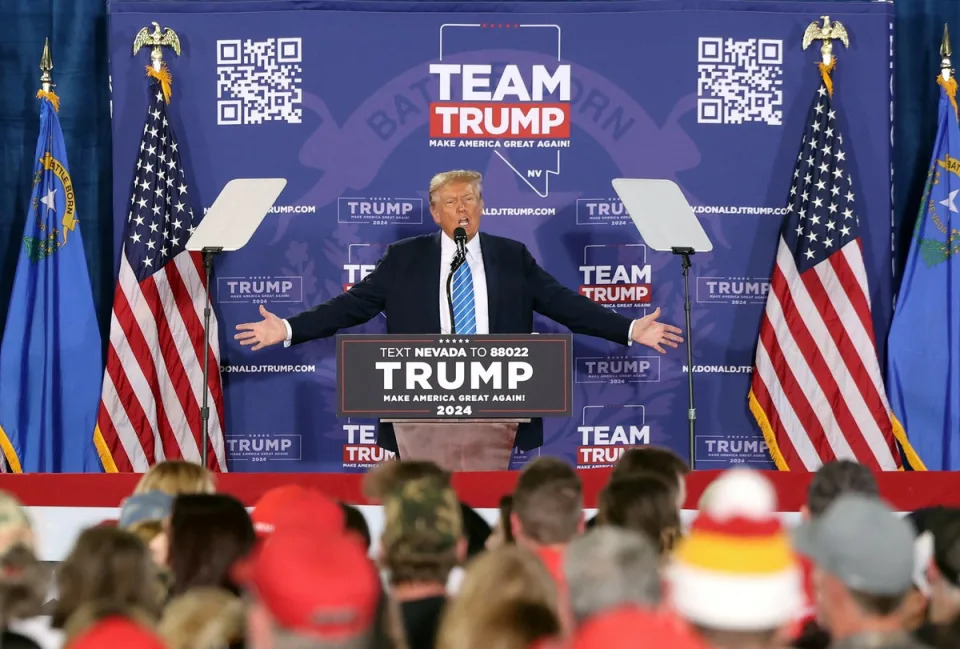
Trump, in a Nevada speech Saturday, said there was “zero chance” he’d support what he described as “this horrible open borders betrayal of America.”

“It’s not gonna happen. And I’ll fight it all the way. I noticed a lot of the senators are trying to say, respectfully, they’re blaming it on me. I say, that’s OK, please blame it on me. Please,” he said of efforts to tank the bill.

Cassidy, in an interview with CNN’s Manu Raju, questioned if Trump has access to the bill.

“Doesn’t seem that way,” Raju replied.

“It hasn’t been released, how does he know it’s a betrayal if he hasn’t read it?” Cassidy said, then offered the ex-president some free advice.

“I mean, don’t be ignorant,” he said. “Read the bill.”

Sen. James Lankford (R-Okla.), when asked about Trump’s characterization, said it’s “certainly not a betrayal.”

“We’ve got to be able to deal with issues in law. That’s how we actually deal with things in America,” said Lankford, the lead GOP negotiator.

The comments from the two senators arrive one day after House Speaker Mike Johnson (R-La.) told Raju it was “absurd” when asked if he was trying to kill a bipartisan border security bill to help Trump on his presidential campaign.

Former prosecutors: “Screw up” by Judge Cannon could lay groundwork for Jack Smith appeal

Salon

Former prosecutors: “Screw up” by Judge Cannon could lay groundwork for Jack Smith appeal

Tatyana Tandanpolie – February 1, 2024

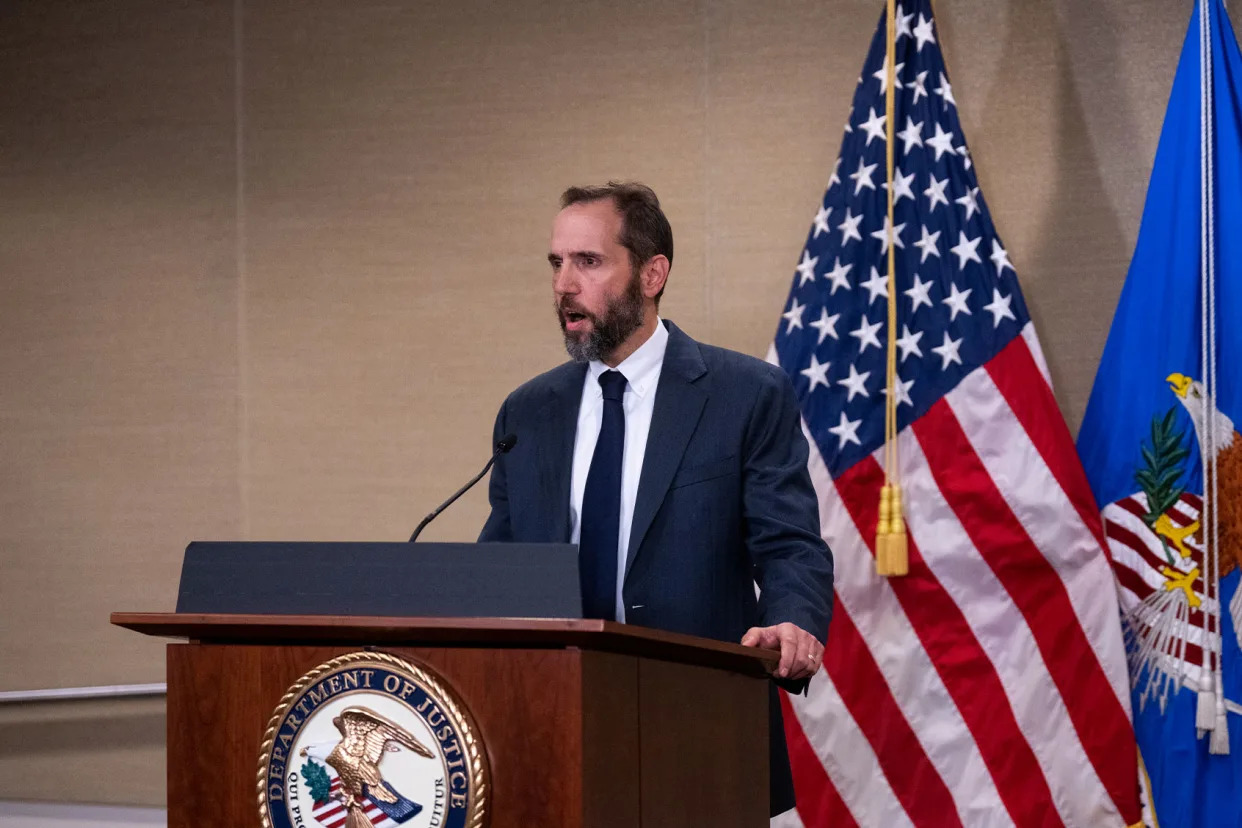
Jack Smith Bill Clark/CQ-Roll Call, Inc via Getty Images

U.S. District Judge Aileen Cannon‘s next move in Donald Trump’s federal classified documents case could determine whether the government will have to seek an appeal, former federal prosecutors argued following the Trump-appointee’s meeting with special counsel Jack Smith Wednesday to discuss which classified materials will be excluded from the trial.

Ex-U.S. Attorney Joyce Vance explained that given that the case is about illegal retention of classified materials and not the “nature of the classified information,” the proceedings pertaining to their presence in the trial under Section Four of the Classified Information and Procedures Act should have been “straightforward” as they are routine for a case like this.

Cannon’s schedule for the CIPA Section Four proceedings, for which she scheduled hearings for mid-February, has been unnecessarily drawn out, Vance argued Sunday, noting that Cannon could have held them earlier without delay. Following Wednesday’s meeting, Cannon should “follow that simple path forward” for these types of proceedings, Vance added during a Wednesday MSNBC appearance.

“Where we will see fireworks is if she does not,” the MSNBC legal analyst argued. “If she tries to let the Trump lawyers, for instance, look at this, then there will undoubtedly be an appeal. And of course, the real ball game is what gets put into trial in a courtroom, ultimately.

Former Mueller prosecutor Andrew Weissman agreed that if Cannon “screws this up, to be blunt, this is the kind of issue that I would imagine the government would take an appeal so that they could have the 11th Circuit hear it.”

Weissmann went on to detail the circumstances that would prompt the government to appeal, including if Cannon drastically delays the proceedings or if she rejects Smith’s requests for redactions or non-classified summaries to protect the sensitive intelligence.

“Nuclear secrets” or “military plans” the documents could contain are “the kind of data that of course the government would be saying ‘I do not want that to be revealed,” Weissmann told MSNBC.