Eating This Type of Diet Can Reduce Chronic Pain and Inflammation—and You Don’t Have to Give Up Pasta or Wine
Karla Walsh; Reviewed by Lisa Valente, M.S., RD
Getty Images / Anut21ng
Chronic inflammation has been linked to a whole host of health issues, including many of the leading causes of death in the U.S. (heart disease, Alzheimer’s disease and cancer, to name a few). So it’s no wonder scientists are constantly searching for the best anti-inflammatory foods and lifestyle habits—and anything related to the topic that might help us keep this internal inflammation at bay.
(By the way, not all inflammation is bad; short-term, site-specific inflammation is how we heal from cuts, bruises, burns and beyond. It’s the longer-lasting inflammation that happens near our organs that can do a number on our longevity and overall well-being.)
One of the most recent discoveries related to inflammation—and pain-related conditions: A traditional Western high-fat diet can increase the chances that an individual might suffer from chronic pain and inflammation.
Unlike our genes, this is something each of us can control. And changes in diet (start here with our anti-inflammatory meal plan!) “may significantly reduce or even reverse pain from conditions causing either inflammatory pain—such as arthritis, trauma or surgery—or neuropathic pain, such as diabetes,” the team of study authors from The University of Texas Health Science Center at San Antonio explain to UT Health San Antonio Newsroom.
Chronic pain is a major cause of disability. Lower-fat and lower-sugar diets are often recommended to manage diabetes, autoimmune disorders and cardiovascular diseases, but the role of dietary fats in relation to chronic pain has yet to be researched extensively.
For this study, the team tracked mice and humans to examine the role of polyunsaturated fatty acids in pain conditions. In both cases, a typical Western diet—one that’s high in omega-6 polyunsaturated fats in particular—was a significant risk factor for both inflammation and chronic pain. (ICYMI, we do need some omega-6s, but most Americans’ ratio of omega-3s to omega-6s is skewed too 6-strong.)
“Omega-6 fats, mainly found in foods with vegetable oils, have their benefits. But Western diets associated with obesity are characterized by much-higher levels of those acids in foods from corn chips to onion rings, than healthy omega-3 fats, which are found in fish and sources like flaxseed and walnuts,” the research team says in the UT Health San Antonio Newsroom recap.
In the standard American diet, many of the omega-6 fats consumed are by way of fast food, processed snacks and processed meats. Leaning into more omega-3 fats can drastically reduce chronic pain symptoms and chronic inflammation, the authors say. This should move the needle much more than cutting out carbs or alcohol; experts we speak to give both the thumbs up, in moderation, as part of an overall anti-inflammatory lifestyle.
Taking your omega-3 index is a great place to start so you know where your current levels stand. If you fall into this common Western diet pattern, stock up on these omega-3-rich foods and sample your way through our 38 best anti-inflammatory recipes. An easy way to make sure you’re getting plenty of omega-3s and other anti-inflammatory foods is to follow a Mediterranean-style diet. (On this healthy delicious eating plan, you don’t even have to give up pasta or wine. In fact, they’re encouraged in moderation!). Check out our Mediterranean diet meal plan for beginners to get started.
House Democrats propose government-run credit reporting system
Marissa Gamache, Reporter June 29, 2021
House lawmakers on Tuesday called for sweeping reforms to the credit reporting industry — with some Democrats going so far as proposing a nationally run system, saying the three major bureaus are failing Americans.
Three pieces of legislation were put forth for discussion, including the National Credit Reporting Agency Act that “would establish the Public Credit Registry (PCR) within the Consumer Financial Protection Bureau, creating a public option for consumers who choose to utilize it.”
“This is a system that fails people with perfect credit that may be victims of identity theft,” Chairwoman Maxine Waters said at the Financial Services Committee hearing. “This is a system that fails people who get caught in a debt trap because of predatory lending, and this is a system that fails people who don’t have the means to dispute errors that reporting agencies make.”
Chairwoman Maxine Waters, D-Calif., at a House Financial Services Committee meeting. (Photo:Getty)
The three major credit bureaus — Equifax, TransUnion, and Experian — compile and store financial data about a person’s debt obligations submitted by creditors into a credit report. That report can be used to determine if that person qualifies for a loan and at what terms. Landlords, employers, utilities, cell phone companies, and insurers also can use this information.
While ranking Republican committee member Patrick McHenry agreed that major reforms to the current “oligarchy” are needed, he doesn’t support a nationally run system.
“We should be promoting competition to create better opportunities for consumers,” McHenry said, “not allowing a single government entity to run the credit reporting process for all Americans.”
The United States capitol building in Washington DC on a summer day. (Photo: Getty)
The committee also heard testimony on how credit scores — which are calculated from the information found in credit reports — may disadvantage certain groups.
“Although credit scores never formally take race into account, they draw on data about personal borrowing and payment history that is shaped by generations of discriminatory public policies and corporate practices that limit access to wealth for Black and Latinx families,” Amy Traub, associate director of policy and research at Demos, testified at the hearing.
In a 2020 survey of 5,000 people by Credit Sesame, 54% of Black Americans and 41% of Hispanic Americans reported having a credit score below 640, while 37% of white Americans and 18% of Asian Americans reported the same.
The committee hearing comes after the Supreme Court ruling last week on a case involving TransUnion and credit reporting errors.
(Photo: Getty Creative)
In TransUnion vs. Sergio Ramirez, 8,185 individuals claimed that TransUnion failed to use proper measures to ensure their credit files were accurate. The court ruled in favor of 1,853 of the claimants whose inaccurate information was passed on to third parties, but denied the remaining claimants because they did demonstrate “concrete harm” and lacked standing to sue, according to court records.
Credit report errors are not uncommon, according to a recent study by Consumer Reports. One in 3 individuals who volunteered to check their credit report found at least one error, with 1 in 9 discovering inaccurate account information.
On Tuesday, Rep. Waters called for more accountability and alternatives to be offered.
“I encourage my colleagues to join me in reevaluating how we determine creditworthiness,” she said, “and learning how we can harness new technologies to build a fairer and equitable credit system.”
Yahoo Money sister site Cashay has a weekly newsletter.
‘Bringing back mask mandate is a good idea’: doctor on Delta variant
Seana Smith, Anchor June 29, 2021
The World Health Organization’s decision to encourage those who are fully vaccinated to wear masks as a result of the highly transmissible Delta variant is “a good idea,” according to University of Arizona College of Medicine-Phoenix’s Dr. Shad Marvasti.
“We don’t want to wait until after the fact and get caught with this thing already ahead of us when we know that masks work,” Marvasti told Yahoo Finance Live. “To put this in context, the Alpha variant, which originated out of the UK, was about 50% more infectious and transmissible. The Delta variant is 60% more infectious than that.”
The Delta variant, which was first identified in India, has now spread to more than 80 countries. The Centers for Disease Control and Prevention (CDC) officials warn it will likely become the dominant strain in the U.S. in a matter of weeks as infections attributable to the highly contagious variant spread rapidly nationwide. COVID-19 cases caused by the Delta variant currently account for about one-fifth of new coronavirus infections in the U.S., according to the CDC.
PERTH, AUSTRALIA – JUNE 29: Members of the public are seen wearing face masks in the CBD during Lockdown on June 29, 2021 in Perth, Australia. Lockdown restrictions have come into effect across the Perth and Peel regions for the next four days, following the confirmation of new community COVID-19 cases linked to the highly contagious Delta variant of the coronavirus. (Photo by Matt Jelonek/Getty Images)
“The CDC needs to act quickly, without waiting, to follow the WHO guidelines and ask everyone to put the masks back on so we can stay open, protect folks, and keep the economy going,” Marvasti said. “We’re already seeing preliminary numbers out of Israel where fully vaccinated people are getting sick.”
Preliminary findings by Israeli health officials found that about half of adults infected by the Delta variant in the country were fully vaccinated, the Wall Street Journal reported, and as it stands now, the Delta variant is likely causing about 90% of new infections in Israel.
Outbreaks of infections largely driven by the Delta variant have prompted governments from around the world to reimpose coronavirus-related restrictions. South Africa is imposing at least two weeks of lockdowns while about 10 million Australians are also under lockdown. Here in the U.S., Los Angeles County officials are urging all residents to wear masks in public indoor spaces, regardless of vaccination status.
“We have gotten into this false sense of security thinking it’s okay to take off masks,” warned Marvasti. “The best thing to do is to start putting the masks back on to prevent another surge from happening, and if you’re unvaccinated, now is the time to get vaccinated before this Delta variant comes for you.”
‘Two Americas’ may emerge as Delta variant spreads and vaccination rates drop
Edward Helmore
Photograph: Anita Beattie/AFP/Getty Images
With Covid vaccination penetration in the US likely to fall short of Joe Biden’s 70% by Fourth of July target, pandemic analysts are warning that vaccine incentives are losing traction and that “two Americas” may emerge as the aggressive Delta variant becomes the dominant US strain.
Efforts to boost vaccination rates have come through a variety of incentives, from free hamburgers to free beer, college scholarships and even million-dollar lottery prizes. But of the efforts to entice people to get their shots some have lost their initial impact, or failed to land effectively at all.
“It’s just not working,” Irwin Redlener at the Pandemic Resource and Response Initiative at Columbia University, told Politico. “People aren’t buying it. The incentives don’t seem to be working – whether it’s a doughnut, a car or a million dollars.”
In Ohio, a program offering five adults the chance to win $1m boosted vaccination rates 40% for over a week. A month later, the rate had dropped to below what it had been before the incentive was introduced, Politico found.
Oregon followed Ohio’s cash-prize lead but saw a less dramatic uptick. Preliminary data from a similar lottery in North Carolina, launched last week, suggests the incentive is also not boosting vaccination rates there.
Public officials are sounding alarms that the window between improving vaccination penetration and the threat from the more severe Delta variant, which accounts for about 10% of US cases, is beginning to close. The Delta variant appears to be much more contagious than the original strain of Covid-19 and has wreaked havoc in countries like India and the United Kingdom.
“I certainly don’t see things getting any better if we don’t increase our vaccination rate,” Scott Allen of the county health unit in Webster, Missouri, told Politico. The state has seen daily infections and hospitalizations to nearly double over the last two weeks.
Overall, new US Covid cases have plateaued to a daily average of around 15,000 for after falling off as the nation’s vaccination program ramped up. But the number of first-dose vaccinations has dropped to 360,000 from 2m in mid-April. A quarter of those are newly eligible 12- to 15-year-olds.
Separately, pandemic researchers are warning that a picture of “two Americas” is emerging – the vaccinated and unvaccinated – that in many ways might reflect red state and blue state political divides.
Only 52% of Republicans said they were partially or fully vaccinated, and 29% said they have no intention of getting a vaccine, according to a CBS News/YouGov poll. 77% of Democrats said they were already vaccinated, with just 5% responding that were resisting the vaccine.
“I call it two Covid nations,” Peter Hotez, a vaccine researcher at Baylor College of Medicine in Houston, told BuzzFeed News.
Bette Korber, a computational biologist at the Los Alamos National Laboratory in New Mexico, said she expected variant Delta to become the most common variant in the US within weeks. “It’s really moving quickly,” Korber told Buzzfeed.
On Friday, Joe Biden issued a plea to Americans who have not yet received a vaccine to do so as soon as possible.
“Even while we’re making incredible progress, it remains a serious and deadly threat,” Biden said in remarks from the White House, saying that the Delta variant leaves unvaccinated people “even more vulnerable than they were a month ago”.
“We’re heading into, God willing, the summer of joy, the summer of freedom,” Biden said. “On July 4, we are going to celebrate our independence from the virus as we celebrate our independence of our nation. We want everyone to be able to do that.”
We’d be fools not to ask if condo collapse is linked to Miami-Dade’s shoddy construction in the ’80s | Editorial
The Miami Herald Editorial Board
South Florida’s long and sordid history of shoddy building practices is hard to ignore in the wake of the Surfside building’s partial collapse.
We don’t know yet what caused the horrific failure on Thursday at the Champlain Towers South Condo in Surfside.
We are not suggesting that any corners were cut during construction, or that insufficient inspections or overdue maintenance played roles. It’s possible that climate change, nearby construction of another high-rise or reported “major structural damage” caused by improper pool-deck drainage affected the integrity of the building.
We are holding our elected officials accountable for a thorough, honest and urgent investigation into the causes of this still-unfolding tragedy to determine what caused it.
But we do know a lot about the way construction was done in South Florida in 1981, when this condo was erected.
Condominium construction was red-hot then, fueled in part by what would turn out to be a disastrous deregulation of the nation’s savings and loans associations. We know that building codes for single-family homes during that era were weak, and enforcement was lax, something that became terribly apparent when Hurricane Andrew roared through southern Miami-Dade County.
We know that, even though entire neighborhoods were flattened, the homes that stood up the best to the Category 5 storm’s winds turned out to be the ones where developers spent more money to build stronger homes.
And we know that the hardening of the building code, triggered by Andrew’s damage, was long overdue and likely has saved lives in the decades since.
So when we look the images of the destruction in Surfside, we’d be fools not to wonder whether slipshod construction and look-the-other-way enforcement of that era played a part. Could faulty construction have allowed salt water and sea spray to penetrate the concrete enough to doom the building? If that happened, who should have noticed? What should have been done?
Residents of condos across Florida and beyond are watching developments here with anxiety about their own safety. The ramifications of what happened in Surfside likely are to be enormous.
Now, even as search teams continue to recover the bodies of victims — and pray for signs of life in the horrific, pancaked wreckage — authorities and journalists have been looking for any warning signs. The most significant, so far, seems to be an engineer’s report in 2018 that raised some red flags, saying concrete slabs on the garage entrance and under the pool deck had deteriorated, and that lack of proper drainage had caused “major structural damage.”
The report didn’t indicate a threat of imminent disaster, and a month later, Surfside’s chief building official told residents the condominium was “in very good shape,” according to minutes from a November 2018 board meeting obtained by the Miami Herald. Additionally, the building had begun its scheduled 40-year review and roof repairs had started.
Mass tragedies like this one often lead to serious changes in regulations, like those after Hurricane Andrew. If we learn that this condominium collapse could have been prevented with new and better building codes, more frequent inspections or tougher requirements for condo maintenance or construction, this disaster must serve as yet another turning point in building safety in Florida.
That will cost money, a lot of it. Retrofitting old buildings and constructing new ones to higher standards costs more. But if — as we learned post-Andrew — cost-cutting is what led to this disaster, we’ll have no choice. We’ll need to pay up, and just be grateful that we’re around to pay the bill.
Pool contractor photographed damage in Florida building 36 hours before collapse
Haley Victory Smith
A pool contractor photographed damage to the Champlain Towers South condo building in Surfside, Florida, 36 hours before half of it collapsed.
The man, who asked not to be named in a Monday report published by the Miami Herald, visited the building to put a bid together for cosmetic changes to the pool and updates to its equipment.
The contractor said he observed “standing water all over” the underground parking garage.
“He thought it was waterproofing issues,” the contractor said of a building staff member who showed him around. “I thought to myself, ‘That’s not normal.'”
South Florida Urban Search and Rescue team look through rubble for survivors at the partially collapsed Champlain Towers South condo building in Surfside, Fla., Monday, June 28, 2021. (Matias J. Ocner/Miami Herald via AP)
The man said the deepest puddle of standing water he observed was located around parking space 78, which, according to the Florida outlet, is directly under the portion of the pool deck where engineer Frank Morabito said there was a “major error” in the spot’s original design in 2018. He noted the flaw was allowing water intrusion that was causing significant damage to the concrete slabs laid below.
The contractor said he did not photograph the water because he was there to observe the pool itself, not what was underneath it.
In the pool equipment room, located in the garage but away from space 78, the contractor snapped a photo of exposed and corroding rebar.
“I wonder if this was going on in other parts of the building and caused this collapse,” the contractor said.
“You can see extensive corrosion of the rebars at the bottom of the beam. That is very serious,” said Mohammad Ehsani, an engineer and concrete restoration expert. “If the condition of the beam in the pool guy’s photo is something that was also happening under the building, that is a really major concern.”
Ehsani warned it was possible not all of the beams in the building were similarly damaged, noting the harsh chemicals the pool equipment room could have been exposed to. But he said if the damage was more widespread, it “absolutely” could have contributed to the building’s collapse.
“In these buildings that are asymmetrical like this one, there is a possibility that if you have one part of the building that collapses, the building does some turning and twisting,” he added. “In this case, it is possible that a failure any place in this building could cause distortion to the frame of the building and could cause a collapse in any of the areas, not just adjacent [to the failure].”
Maxwell Marcucci, a representative for the Champlain Towers South condo association, declined to comment on what the pool contractor noticed when reached for the report.
More jobless workers sue their states for ending unemployment benefits early
Denitsa Tsekova, Reporter June 28, 2021
Workers in Indiana, Texas, and Maryland have filed lawsuits against their respective states for canceling pandemic-era unemployment benefits early, a growing movement that one expert said could be successful in some states.
Indiana was the first state where workers filed a lawsuit. On Friday, Marion Superior Court Judge John Hanley temporarily reinstated the federal unemployment benefits programs until a final ruling is made in the case.
“The decision by Judge Hanley was a breakthrough, as many states have similar state law provisions that could be brought up in court,” Andrew Stettner, an unemployment insurance expert and senior fellow at the Century Foundation, told Yahoo Money. “I expect more judges to be sympathetic to the facts in the cases.”
In Maryland, the Unemployed Workers Union on Thursday filed a class-action lawsuit against Gov. Larry Hogan’s order to end the federal programs on July 3.
“Our petition is that this order is illegal and a threat to the public welfare,” Alec Summerfield, an attorney representing the six jobless workers suing, said at a press conference on Thursday. “People are depending on these $300 even if it’s just for three months to carry them through to find a job and put food on the table.”
In Texas, a lawsuit was organized by two Facebook jobless workers groups with over 30,000 members. The temporary restraining order against Texas Gov. Greg Abbott filed by attorney David Sibley in Travis County District Court was denied on Friday, but the two groups intend to seek an injunction, according to reports.
Nearly 1 million Texas workers saw their benefits significantly reduced or cut down to zero after the state canceled the federal programs on Saturday. The state itself is losing $6.5 billion in benefits.
Texas Governor Greg Abbott attends a press conference where he signed Senate Bills 2 and 3 at the Capitol on June 8, 2021 in Austin, Texas. (Photo by Montinique Monroe/Getty Images)
Indiana, Texas, and Maryland are among the 26 states that eliminated or plan to eliminate certain expanded unemployment programs this month and early next month.
More than 4 million workers will see their benefits slashed by at least $1,200 a month, losing a total of $22.5 billion in potential benefits, according to estimates by the Century Foundation. Nearly 3 in 5 workers affected by the early expiration will be left with no benefits at all. The federal expiration is September 6.
The cut-off in benefits in those three states includes the extra $300 in weekly benefits, the Pandemic Unemployment Assistance (PUA) program for workers who don’t normally qualify for unemployment, and the Pandemic Emergency Unemployment Compensation (PEUC) program that provides extra weeks of benefits.
“Unemployed individuals made financial decisions based on a promised aid, and have been deeply harmed by the decision to cancel them,” Stettner said. “As the saying goes ‘there ought to be a law against that.’ And maybe the law is already against that.”
In Fashion, Regenerative Farming Isn’t an Impossible Solution
Maura Brannigan
Eco-label Christy Dawn spent two years bringing 24 acres of depleted farmland back to life. Now, the brand is sharing the roadmap of how it did it.
In fashion, buzzwords aren’t always a bad thing. By promoting pillars of environmentalism or ethical labor, fashion swings its own needle toward a more transparent, accountable and equitable industry — theoretically, at least. It’s in the application that buzzwords can get lost.
Unsurprisingly, Patagonia has already been at it for years: The intrepid outdoor retailer started piloting its own Regenerative Organic standard with cotton farmers in India way back when in 2017. Eventually, regeneration received the ultimate big-business co-sign from Kering in January, when the conglomerate co-founded a group called Regenerative Fund for Nature, providing grants to farmers and NGOs developing regenerative practices around the world.
From an ecological perspective, regenerative agriculture is deeply practical. The industrial farming practices that have long provided cotton, wool and hides for our clothing have also depleted the earth itself. By some accounts, the world could run out of topsoil in just 60 years, at which point, growing plush cotton for our jeans will be the very least of our concerns.
But regenerative farming is not an overnight fix. It takes years to not only rejuvenate exhausted farmland, but to rebuild a supply chain that amplifies local farmers and centers their ancestral methods. It’s an investment smaller businesses aren’t always able to make — especially if they don’t know where to begin.
Los Angeles-based eco-label Christy Dawn, which recently debuted a “Farm-to-Closet” regenerative collection of its own, has a better solution. What if, by making everything available online, they could offer a kind of roadmap for all brands, even those outside the fashion industry, to reference and maybe even implement?
Christy Dawn and Oshadi Collective’s regenerative cotton farm in Kanjikoil, Tamil Nadu, India.
“We don’t want to own it,” says Christy Peterson, the designer behind Christy Dawn. “In fact, it’s not even ours to own. This has been happening for years and years before us. We’re a small brand, but our goal is to share this with the world in hopes that others can join in.”
Within fashion, Christy Dawn and its earthy, Californian wares are often said to exemplify a “cottagecore” aesthetic that celebrates a harmonious existence with nature. Christy Dawn isn’t a cottagecore brand in the literal sense in that it exists outside the definition set by teenagers on the internet in the late 2010s. It does, however, embrace the movement’s most basic ideal of romanticizing a more sustainable way of life.
This is as true in the brand’s chicken-coop-chic design sensibility as in its production practices. Since its launch in 2014, Christy Dawn has steadily gained cult-esque recognition for its use of deadstock fabrics, which artisans in Downtown Los Angeles transform into dresses fit for romping through prairie grass. No two garments are exactly alike, an eccentricity of deadstock that the brand famously commemorates by numbering each piece.
By 2018, Christy Dawn was thriving. But it was around this time that Peterson and her husband, Aras Baskauskas, who serves as Christy Dawn’s CEO, started seeing things differently.
“While we grew as a company and as people, too, we realized how toxic the industry was,” Peterson says. “We also realized that by using deadstock fabric, we weren’t necessarily a part of the problem, but we also weren’t part of the solution.”
Peterson and Baskauskas took issue with the intention of the word “sustainability” itself, which Oxford English Dictionary defines as an “avoidance of the depletion of natural resources in order to maintain an ecological balance.” At this rate, is avoidance alone enough? Climate scientists, categorically, say no.
“I have two small boys, and I remember looking around and thinking, ‘I don’t want to sustain this. How will my boys survive? How will there be food or even people left on this planet if we keep sustaining?,'” she says.
Enter regenerative farming, which doesn’t simply maintain that ecological balance, but accelerates it. Rebuilding degraded soil biodiversity can improve the water cycle and even capture more carbon dioxide from the ambient air. If performed correctly, regeneration can literally reverse climate change. Peterson and Baskauskas grew obsessed.
“We buy regenerative food,” says Peterson. “Could we grow fiber for our clothing in a way that could draw carbon down from the atmosphere?”
Christy Dawn’s “Farm-to-Closet” collection.
To help answer this question, Peterson and Baskauskas turned to Rebecca Burgess, the executive director of sustainable non-profit organization Fibershed, and asked if she knew of anyone who may be interested in creating a regenerative farm alongside them. She didn’t, but in a twist of fate or kismet or whatever sparkly, otherworldly force you believe, the universe had other plans.
That same day, Oshadi Studio‘s Nishanth Chopra was listening to a podcast on which Burgess was a guest when he guessed her email address and sent her a note asking if she knew of any brands that could want to partner with him on a regenerative farm in India. “This was maybe five hours later,” Peterson says. “You know when you have an idea, something you just feel all over your body? It was one of those moments.”
Soon, Christy Dawn and Oshadi Studio came upon a plot of nutrient-devoid land in Kanjikoil, Tamil Nadu, India that had once served as a conventional farm. They leased four acres. (Today, that acreage has grown to 24, with plans to develop 35 more by the end of the year.)
Then came the hard part: bringing effectively dead land back to life.
Regenerative farming can be compared to organic farming in that both encourage synthetic- and pesticide-free alternatives. But where regeneration differs is in its focus on biodiversity: A healthy cocktail of microorganisms, insects, plants, animals and yes, even humans, can create such resilient crops that there’s no need for chemical intervention in the first place.
“The farmers used so many creative techniques passed down through the generations,” says Mairin Wilson, Christy Dawn’s director of regenerative practices. In one method, farmers take a cotton pouch full of rice and bury it beneath the oldest tree on the farm, where it sits for a week, after which farmers make a tea out of the rice to spray seedlings. “The oldest tree has the most biodiverse nutrients and abundant mycelial network, so the farmers like to share that abundance with the young cotton plants.”
Meanwhile, for the land, farmers brought in goats to eat the cotton plants and generate enough manure to fertilize the soil, also planting a leguminous cover crop, like indigo or sugar cane, to restore nitrogen, without which a plant cannot grow, metabolize or produce chlorophyll. And because nothing is wasted, Wilson explains, that same indigo is later used to dye the garments while the sugar cane provides sugar that farmers can put in their coffee.
Indigo is first used as a cover crop, then used to dye garments during the production process.
In February 2020, Peterson, Baskauskas and their sons arrived in Tamil Nadu to help harvest the farm’s first batch of cotton. But Peterson is clear: The farmers here are the true protagonists of this story.
“I like to look at this initiative as a story of relationships and intimacy, and being in the right relationship with all the stakeholders involved,” Peterson says. “This isn’t a story of saviorism.”
Fibershed (which partnered with Christy Dawn and Oshadi Studio on the project) strongly emphasizes the importance of regional textile districts, which is why Christy Dawn’s regenerative cotton is ginned, spun, woven and dyed all within six miles of the farm, by farmers who were paid a living wage and able to gain financial independence.
This spring, the brand was finally ready to release the fruits of its labor. Those 24 now-regenerated acres had been able to produce a significant yield of 6,500 dresses, the very first of Christy Dawn’s “Farm-to-Closet” collection. (The second drop arrived in early June, with a third due out July 9.)
Aesthetically, the capsule is nothing if not consistent: Shoppers are able to browse their choice of voluminous maxi dresses or smock-like frocks in a range of ditsy floral prints or rich, solid hues. Garments have been naturally dyed and/or block-printed using a host of regional flora, like wedelia flowers, madder and myrobalan, as well as that aforementioned indigo. The collection also incorporates peace silk, a cruelty-free alternative to regular silk used throughout India.
One day, Peterson aims to move away from deadstock entirely. “The goal is that eventually, we would just be a farm-to-closet company and only use the cotton that the earth provides for us,” she says. “Our projection is that in two years, we can have enough yield to sustain a whole year’s collection worth of clothing, but just from our farm.”
The impact would be considerable: Wilson estimates this initial yield sequestered 66 tons of carbon dioxide, per hectare, which rounds out to just about 22 pounds of carbon per dress.
The brand also has plans outside itself, because environmentally, one regenerative farm on a planet of dying soil is just a drop in a carbon-clogged bucket. Christy Dawn has published its progress on its website, and is open to forming a co-op with like-minded brands that share its values. Peterson warns interested parties, though: Regeneration isn’t like other buzzwords — it’s time-consuming and expensive, yes, yet the return is far greater than any investment, if the fashion industry decides to take the plunge.
“I know it’s an interesting thing that a fashion brand could be wanting to affect change while asking someone to buy a product,” says Peterson. “But we don’t even care if you buy a dress. This is just the vehicle through which we’re sharing a seed to be planted in you to create change. If we can do that while making dresses, then what a beautiful gift.”
Toyota stands out with contributions to anti-election Republicans
Dozens of corporate PACs have donated to anti-election Republicans, but “Toyota leads by a substantial margin.”
By Steve Benen June 28, 2021
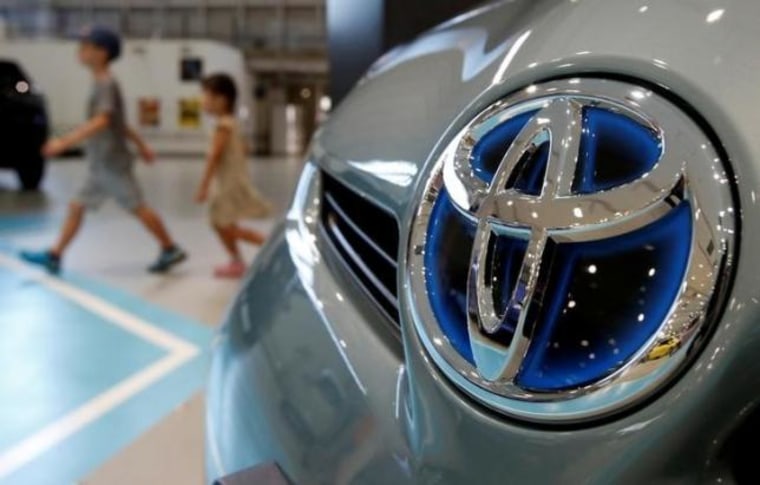
Visitors walk past a logo of Toyota Motor Corp on a Toyota Prius hybrid vehicle at the company’s showroom in Tokyo August 5, 2014. REUTERS/Yuya Shino/File Photo
Within a few days of the Jan. 6 attack on the Capitol, a handful of prominent companies said they would pause political contributions to congressional Republicans who voted to reject President Joe Biden’s victory. As regular readers may recall, many others soon followed — including Comcast, the parent company of NBCUniversal, which owns MSNBC (my employer).
The shift did not go unnoticed. Stuart Stevens, a longtime Republican strategist, told the New Yorker that Senate Minority Leader Mitch McConnell (R-Ky.), in particular, was “scared to death” of corporate America’s response to the insurrectionist violence.
The question, of course, was how long the pause would last.
In April, JetBlue was among the first to open its corporate wallet, making a contribution through the airline’s corporate political action committee to Rep. Nicole Malliotakis (R-N.Y.) — who, like most House Republicans, opposed certification of the results of the 2020 presidential election, even after the deadly insurrectionist attack. Soon after, major defense contractors also resumed support for the GOP’s anti-election wing.
But relying on data from Citizens for Responsibility and Ethics in Washington (CREW), Axios reported this morning that one company stands out as being especially generous toward Republicans who took a stand against their own country’s democracy.
Nearly three-dozen corporate PACs have donated at least $5,000 to Republicans who objected to certifying the 2020 election, yet Toyota leads by a substantial margin…. Toyota gave more than twice as much — and to nearly five times as many members of Congress — as the No. 2 company on the list, Cubic Corp., a San Diego-based defense contractor.
In a written statement, a spokesperson for the automaker said, “We do not believe it is appropriate to judge members of Congress solely based on their votes on the electoral certification.”
It’s a flawed defense. The bare minimum of public service in the United States should include respect for election results, and it’s a test these Republicans failed.
Toyota’s spokesperson added, however, that the company is being judicious: “Based on our thorough review, we decided against giving to some members who, through their statements and actions, undermine the legitimacy of our elections and institutions.”
That sounds like a step in the appropriate direction, though Toyota did not offer any specifics about the company’s “review” or who failed to meet the threshold.
We know, for example, that Rep. Andy Biggs (R-Ariz.), who reportedly helped organize the pre-riot “Stop the Steal” rally on Jan. 6, and who opposed Congressional Gold Medals to honor Capitol Police officers who protected the building during the pro-Trump riot, was among those who benefited from Toyota’s money.
Evidently, under Toyota’s “review,” the far-right Arizonan didn’t quite demonstrate an indifference toward “the legitimacy of our elections.”
It’s worth emphasizing for context that the amount of money at issue here is relatively modest: Toyota has donated $55,000 to 37 GOP objectors so far this year. To the typical American family, $55,000 is certainly a lot of money, but in the world of campaign financing, especially at the federal level, it’s a small drop in an enormous bucket.
But the more Toyota feels comfortable supporting anti-election Republicans, the more others are likely to follow, removing another layer of accountability for those who chose to defy democracy without remorse.
The West’s Devastating Drought Captured in Aerial Photography
Sarah Rogers
Bloomberg
This year, the Southwest United States has been experiencing gripping heat and unprecedented drought, a cycle of misery more intense than anything recorded in the 20-year history of the U.S. Drought Monitor. And the dynamic is predicted to only worsen throughout the summer. California reservoirs are 50 percent lower than they usually are this time of year, according to the AP, and large swaths of the country are set up for an exceptionally dangerous wildfire season.
Here, photos show the early devastation from a bird’s eye view.
Vehicles driving on the California 14 Highway as solar panels, part of an electricity generation plant, stand on June 18, 2021 in Kern County near Mojave, California. The California ISO extended a Flex Alert asking customers to conserve electricity amid concerns of power outages during the heat wave. Patrick T. Fallon/Getty
Houseboats whose owners chose to leave them in the lake, float at a water level nearly 200 feet below normal at the Lime Saddle Marina for Lake Oroville near Paradise, Calif., on Tuesday, June 8, 2021. San Francisco Chronicle/Hearst Newspapers via Getty
Boat docks at the Browns Ravine Cove sit on dry earth at Folsom Lake on May 10, 2021 in El Dorado Hills, California. Justin Sullivan/Getty
Low water levels are visible at Lake Oroville on June 01, 2021 in Oroville, California. As the extreme drought takes hold in California, water levels at reservoirs are falling fast. Lake Oroville is currently at 38 percent of capacity. Justin Sullivan/Getty
A car travels across Enterprise Bridge above Oroville Lake during low water levels in Oroville, California, U.S., on Tuesday, June 22, 2021. Bloomberg/Getty
Rows of almond trees sit on the ground during an orchard removal project on May 26, 2021 in Snelling, California. As the drought emergency takes hold in California, some farmers are having to remove crops that require excessive watering due to a shortage of water in the Central Valley. A Central Valley farmer had 600 acres of his almond orchard removed and shredded and now plans to replace the almonds with a crop the requires less water. Justin Sullivan/Getty
Grounds marked with previous water levels at Oroville Lake in Oroville, California, U.S., on Tuesday, June 22, 2021. Kyle Grillot/Bloomberg via Getty Images”
Mineral-stained rocks are shown at Echo Bay on June 21, 2021 in the Lake Mead National Recreation Area, Nevada. The U.S. Bureau of Reclamation reported that Lake Mead, North America’s largest artificial reservoir, dropped to just over 1,070 feet above sea level over the weekend, the lowest it’s been since being filled in 1937 after the construction of the Hoover Dam.
Ethan Miller/Getty
A closed boat ramp at Oroville Lake during low water levels in Oroville, California, U.S., on Tuesday, June 22, 2021. Kyle Grillot/Bloomberg via Getty
A tractor kicks up dust as it plows a dry field on May 26, 2021 in Chowchilla, California. As California enters an extreme drought emergency, water is starting to become scarce in California’s Central Valley, one of the most productive agricultural regions in the world.
Justin Sullivan/Getty
Steep banks surround boats on Oroville Lake during low water levels in Oroville, California, U.S., on Tuesday, June 22, 2021. Kyle Grillot/Bloomberg via Getty
Steep banks marked with previous water lines surround boats on Oroville Lake during low water levels in Oroville, California, U.S., on Tuesday, June 22, 2021. Kyle Grillot/Bloomberg via Getty
This undated file photo shows the dam at Elephant Butte Lake in Elephant Butte, N.M. Many New Mexico communities are behind the curve when it comes to investing in drinking water infrastructure as persistent drought threatens supplies, and the state’s fragmented funding process makes it hard to know what taxpayers are getting for their money, legislative analysts said Wednesday, June 23, 2021. Roberto E. Rosales/The Albuquerque Journal via AP
Low water levels are visible at Lake Oroville on April 27, 2021 in Oroville, California. Justin Sullivan/Getty
The floodgates of the completely dry Berenda Reservoir in Chowchilla, California, U.S., on Monday, June 21, 2021. Kyle Grillot/Bloomberg via Getty
“Steep banks surround a boat as it travels on Oroville Lake during low water levels in Oroville, California, U.S., on Tuesday, June 22, 2021. Almost three-fourths of the western U.S. is gripped by drought so severe that its off the charts of anything recorded in the 20-year history of the U.S. Drought Monitor. Photographer: Kyle Grillot/Bloomberg via Getty Images” Bloomberg





 Houseboats whose owners chose to leave them in the lake, float at a water level nearly 200 feet below normal at the Lime Saddle Marina for Lake Oroville near Paradise, Calif., on Tuesday, June 8, 2021. San Francisco Chronicle/Hearst Newspapers via Getty
 Boat docks at the Browns Ravine Cove sit on dry earth at Folsom Lake on May 10, 2021 in El Dorado Hills, California. Justin Sullivan/Getty


