What is Valley fever? Fungal infection from the Southwest may spread with climate change.
Adrianna Rodriguez, USA TODAY – February 1, 2023
The HBO series “The Last of Us” has brought awareness to the growing threat of fungal infections. While there’s no known fungus that turns humans into sporous zombies, health experts say one pathogen may become more prevalent due to climate change.
Valley fever is an infection caused by coccidioides, a fungus that generally prefers warm, arid climates and predominately lives in soil in the southwestern United States, according to the Centers for Disease Control and Prevention.
The CDC reported about 20,000 cases of Valley fever in 2019. Although most cases are mild, the fungus spreads in a fraction of patients causing severe disease and death.
Studies show variable weather caused by climate change could spread the fungus to other parts of the country, said Dr. Paris Salazar-Hamm, a researcher at the University of New Mexico School of Medicine.
A 2019 study found Valley fever endemicity could spread from 12 to 17 states and the number of cases could increase by 50% by 2100 in a “high warming scenario.”
“Fungal pathogens are a group that get vastly overlooked and Valley fever is an interesting model because it’s associated with the climate,” Salazar-Hamm said.
Is Valley fever a serious disease? What is the survival rate?
The fungal infection is endemic in the southwest, with most people experiencing mild to no symptoms, said Dr. Manish Butte, professor and division chief of immunology, allergy and rheumatology in the department of pediatrics at the University of California, Los Angeles.
But there is a small subset of people where the fungus “spreads rapidly and destructively throughout the body,” eating flesh for nutrition, he said.
“If it spreads to the brain or spinal cord, about 40% of the people die,” he said. This process can take up to two weeks from exposure. About 200 people die from Valley fever each year, the CDC reports.
It’s unclear why only a fraction of people exposed to the fungal spores develop severe disease but Butte’s research suggests it may have something to do with an individual’s immune system.
“We still find a number of patients where we don’t have a good clue for them, and that’s where immunologists like me try to get involved and try to understand from genetic tests,” he said.
Most acute infections can be treated with antifungal medications, most commonly fluconazole, Butte said, but the tricky part is knowing when to use it.
Fungal infections are difficult to catch through simple x-rays, he said, and the only diagnostic testing available is a blood test that detects antibodies.
Some clinicians mistake fungal infections for a viral or bacterial infections and use antibiotics to treat patients, Salazar-Hamm said.
“You wipe out the bacterial flora (with the antibiotic), allowing the fungal infection to grow and it makes it worse,” she said.
Antifungal drugs are also “intense,” Salazar-Hamm said, and may have bad side effects. The Mayo Clinic says some rare side effects include:
Fever
Headache
Hives, chills
Chest tightness
Fast heartbeat, among others
“Fungi are more closely related to humans than they are to bacteria,” she said. “Targets for fungal drugs have negative side effects for human cells.”
About 1% of patients where the fungus spreads throughout the body are also given another antifungal called AmBisome, but Butte said many patients still die. His research focuses on how immunomodulation – or manipulating the immune system – could help these select patients fight the fungus.
Is Valley fever high contagious?
Multiple people in a household can get the fungal disease by inhaling the spores airborne in their environment, but Valley fever is not “contagious” in that it cannot be passed from person to person.
Health and patient safety coverage at USA TODAY is made possible in part by a grant from the Masimo Foundation for Ethics, Innovation and Competition in Healthcare. The Masimo Foundation does not provide editorial input.
Florida rejected AP African American Studies. Here’s what’s actually being taught in the course
Marina Pitofsky, USA TODAY – February 1, 2023
The head of the College Board defended its new Advanced Placement course on African American studies, weeks after Florida said it would ban the class.
The College Board on Wednesday released its official – and revised–framework for the course, and CEO David Coleman told USA TODAY that “at the College Board, we don’t really look to the statements of political leaders.
“We look to the record of history.”
About a week earlier, on Jan. 24, a spokesperson for Republican Gov. Ron DeSantis claimed on Twitter that the College Board “will be revising the course for the entire nation” due to the governor’s “principled stand for education over identity politics.”
The new framework does address many of the concerns Florida raised, and those topics are not included, or they are included only as optional project topics. But Coleman was firm that the changes to the framework have been in the works for a year.
The course, which is 10 years in the making, already is being taught in 60 high schools. Next school year, it will be taught at approximately 500 high schools nationwide before being offered at any school interested in providing the course. It emerges at the same time as a racial reckoning in the United States and the debate over the teaching of critical race theory, a college-level concept about systemic racism.
“We hope that everyone will give (the course) a fresh look, a fresh read because we think that that people will be impressed with what they see there,” he said. “What they’ll find is an unflinching encounter with the facts and evidence of African American history and culture.”
Why is AP African American Studies in the spotlight?
Officials in Florida rejected the new AP course,arguing that the class for high school students does not comply with state law.
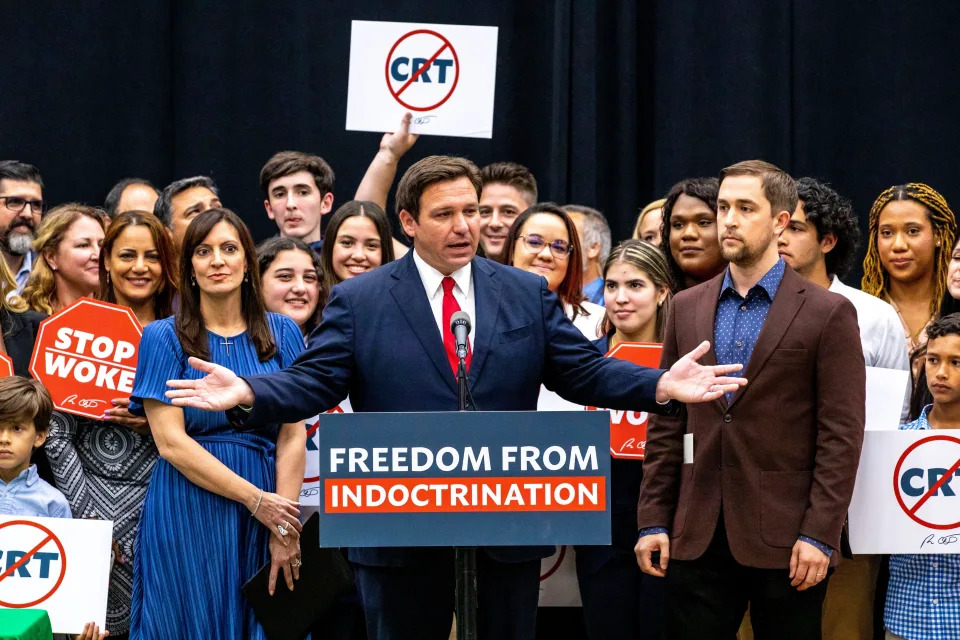
Florida Gov. Ron DeSantis addresses a crowd before publicly signing the Stop Woke bill in April 2022.
Florida education Commissioner Manny Diaz Jr. last month shared a list of concerns about the course, ranging from broad concepts to specific authors. DeSantis said the state rejected the course because it included the study of “queer theory” and movements that advocate for “abolishing prisons.”
The decision quickly drew criticism inside and outside of the state.
White House press secretary Karine Jean-Pierre called the move “incomprehensible,” responding to a question from USA TODAY “Let’s be clear. They didn’t block AP European history. They didn’t block our art history. They didn’t block our music history.”
And last week, civil rights attorney Ben Crump said if Florida officials continue to reject the course, legal action could follow.
What’s actually being taught in this class for teenagers? What can high school students expect to learn? USA TODAY analyzed the official framework for AP African American Studies.
What’s actually being taught in AP African American Studies
Brandi Waters, AP African American Studies’ senior director, told USA TODAY the class is “an exciting course for students because it helps them to see a fuller picture of the world around them.”
The course – which students can use to earn college credit depending on their scores on its exam and whether an institution accepts the class – is broken up into four units, each of which includes dozens of potential topics and assignments.
“So what (students are) really asking for when they asked for this class is the tools that the field of African American Studies gives them, which is this picture of how different communities are really interrelated,” Waters said, “a diversity of lived experience and feeling like they now have more lenses through which to view American life and how disparate communities in America are connected to the broader world.”
The framework also includes a research project for students, asking them to analyze a topic or theme from the field of African American Studies. The document stresses that the project topics can “be refined by local states and districts.”
Here’s how the class is laid out for educators and students:
Origins of the African Diaspora: This unit includes information on early African empires and kingdoms, before and during the transatlantic slave trade.
Freedom, Enslavement and Resistance: Students may learn about the slave trade, how slavery worked to “assault the bodies, minds and spirits of enslaved Africans and their descendants,” the abolition of slavery and more. It includes sources such as maps snowing the slave trade out of Africa, Frederick Douglass’ speech “What to the Slave is the Fourth of July” and other materials.
The Practice of Freedom: This section includes the period known as Reconstruction in America, as well as Jim Crow laws and other political, social and cultural movements. Students might explore the 13th, 14th and 15th amendments to the Constitution, writings from W.E.B. Du Bois and Booker T. Washington or the Supreme Court’s 1896 ruling in Plessy v. Ferguson, when the court ruled racial segregation was constitutional.
Movements and Debates: Students may learn about the Civil Rights Movement, housing discrimination against Black Americans, the Black Power Movement, feminist movements and “diversity within Black communities.” The course materials for the final unit include writings from Martin Luther King Jr., Malcolm X and other political figures, in addition to Maya Angelou, Toni Morrison and others.
The Florida Department of Education did not respond to a request for comment about the framework published Wednesday
Coleman noted that the process of “moving beyond the pilot materials” of the course has taken a year and involved consulting with about 300 professors. He also said no state has seen the framework before it was released on Wednesday.
Ex-colleague of chief justice’s wife makes ethics claim
January 31, 2023
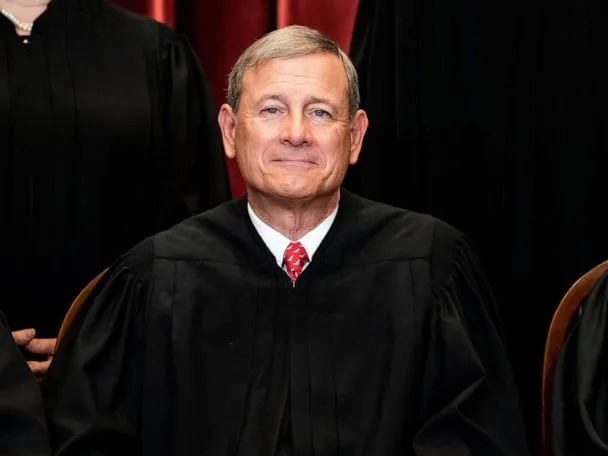
PHOTO: Chief Justice John Roberts sits during a group photo of the Justices at the Supreme Court in Washington, April 23, 2021. (Pool/AFP via Getty Images, FILE) Ex-colleague of chief justice’s wife makes ethics claim
A Boston attorney and former colleague of U.S. Chief Justice John Roberts‘ wife, Jane, has filed a complaint with Congress and the Justice Department alleging her work as a legal recruiter poses a conflict of interest at the Supreme Court.
The confidential complaint, first obtained and reported by The New York Times on Tuesday, suggests Jane Roberts’ past position as legal recruiter — helping high-profile firms hire top talent, some of whom later have business before the court — may present an ethical concern.
While she quit her job as a law partner when her husband was confirmed as chief justice in 2005, Jane Roberts made millions of dollars in commissions helping recruit for firms regularly involved in court business, according to the former colleague, Kendal Price, as reported by the Times.
“I do believe that litigants in U.S. courts, and especially the Supreme Court, deserve to know if their judges’ households are receiving six-figure payments from the law firms,” Price wrote, according to the Times.
Neither John nor Jane Roberts immediately responded to ABC News’ request for comment.
A spokeswoman for the Supreme Court did not respond either, though a spokesperson told the Times that the court’s members were “attentive to ethical constraints” and cited the federal judges’ code of conduct and related advisories, which specifically said a judge didn’t have to recuse themselves solely because their spouse had been a recruiter for a firm before the court.
ABC News has reached out to the Department of Justice and didn’t immediately receive a response.
The complaint, which the Times reported was sent in December, has not been independently reviewed by ABC News. But in a statement provided by his attorney, Price explained why he is coming forward years later.
“I made the disclosures at this time for two principal reasons. First, any potential influence on what cases are accepted by the Supreme Court is a serious matter that affects the justice system in the U.S., particularly if that influence is not publicly known,” Price said.
“Second, the national controversy and debate regarding the integrity of the Supreme Court demanded that I no longer keep silent about the information I possessed, regardless of the impact such disclosures might have upon me professionally and personally,” he added.
Jane Roberts is currently the managing partner at a Washington-based legal recruiting firm. She previously worked with Price at a separate firm in Maryland.
Price was fired from the firm in 2013, according to the Times, and later sued Jane Roberts and another executive.
Price is calling on lawmakers and Justice Department attorneys to investigate. However, the Supreme Court is not typically subject to outside ethics oversight and largely polices itself.
His complaint is the latest in a string of ethics allegations against sitting justices and their spouses, which have stoked longstanding calls for greater transparency and enforceable ethics rules at the Supreme Court.
Justice Clarence Thomas has faced calls to recuse himself on a number of issues and cases over the conservative political activism of his wife, Ginni. Justice Samuel Alito was recently accused by a former anti-abortion activist of leaking the outcome of a major case at a dinner with his wife.
Corruption rife across Latin America; Guatemala, Nicaragua reach all-time lows: report
Steven Grattan – January 31, 2023
FILE PHOTO: Demonstrators protest the alleged corruption in the government, in Guatemala City
SAO PAULO (Reuters) – Guatemala, Nicaragua and Cuba reached all-time lows on Transparency International’s corruption index released on Tuesday due to increased organized crime by public institutions, co-optation by political and economic elites and increased human rights abuses.
“Weak governments fail to stop criminal networks, social conflict, and violence, and some exacerbate threats to human rights by concentrating power in the name of tackling insecurity,” said Delia Ferreira Rubio, head of Transparency International, a Berlin-based anti-corruption group.
Transparency International’s annual Corruption Perceptions Index ranks countries by their perceived levels of public sector corruption on a scale of zero (highly corrupt) to 100 (very clean). The average for the Americas stands at 43.
In Latin America, Nicaragua and Venezuela are the lowest ranked as each struggles with public institutions infiltrated by criminal networks, the report notes.
The governments of Guatemala, Venezuela, Brazil, Cuba and Peru did not immediately reply to requests for comment on the report.
Guatemala has seen state institutions co-opted by political and economic elites and organized crime, the report said.
Over the past year, Guatemalan President Alejandro Giammattei has faced a growing chorus of critics claiming he has slammed the brakes on anti-corruption efforts, as well as forced some judges and prosecutors to flee the country, the main reasons for the country’s decline in the index.
Repression of the political opposition, human rights abuses and cracking down on freedom of speech is what lowered Nicaragua’s ranking, while Cuba has a historic low due to the “ongoing repression” and the “absolute lack of any kind of freedom in the country,” one of Transparency International’s researchers told Reuters.
The report adds that the combination of corruption, authoritarianism and an economic downturn proved “especially volatile” in Brazil where ex-President Jair Bolsonaro’s term was marked by dismantling anti-corruption efforts, the use of corrupt schemes to favor allies and amass support in Congress, as well as promoting disinformation.
Neighboring Uruguay scored best in the region with a ranking of 74, the same as Canada.
Transparency International pointed to years of instability in Peru with its cycle of different governments including last December’s ouster of then-President Pedro Castillo, himself a target of corruption investigations.
Weak law enforcement and high-level corruption have also allowed drug cartels to expand in the Caribbean, the report said.
“The only way forward is for leaders to prioritize decisive action against corruption to uproot its hold and enable governments to fulfill their first mandate: protecting the people,” Rubio said.
(Reporting by Steven Grattan; Editing by David Alire Garcia and Lisa Shumaker)
Op-Ed: L.A. ports can’t follow business as usual. Our shipping system is unsustainable
Christina Dunbar-Hester – January 30, 2023
The Port of Los Angeles, shown last August, is the busiest seaport in the Western Hemisphere. (Allen J. Schaben / Los Angeles Times)
Ports in the Los Angeles region entered national headlines as a supply chain crisis unfurled during the pandemic. After an initial near-halt to commerce and shipping in early 2020, some of us saw bluer skies and enjoyed cleaner air for a fleeting moment.
But by 2021, consumer purchasing skyrocketed and trade came roaring back. Though that might sound good for business, it’s a status quo in which the L.A.-Long Beach port complex is Southern California’s largest single source of pollution. If California wants to live up to its reputation as an environmental leader, port operations require more scrutiny — and change.
Though the ports were built to transport general goods and commodities, their fate has been particularly tied to fossil fuels. The rise of oil from the 1920s onward spurred their development to handle a large volume of petroleum. The wealth this generated was poured back into the ports themselves, intensifying the scale of trade. Combined, Los Angeles-Long Beach makes up the largest container port complex in the Western Hemisphere, through which goods — especially from Asia— reach warehouses, retail shelves, e-commerce fulfillment centers and ultimately consumers’ homes.
To preempt future disruptions, state and local officials and the Biden administration have moved to streamline and expand goods-handling in the last couple years. Biden announced that hours of port operation would be extended to keep cargo movement humming. The Port of Long Beach unveiled a new bridge built to allow larger ships’ passage (even as seas rise), and it received federal authorization to deepen its shipping channels. Local officials now fret about whether ports on the East Coast and the Gulf of Mexico will snatch away a significant share of cargo business because of disruptions in Southern California.
Economic concerns are understandable, especially since the ports are associated with thousands of jobs. But building bigger operations to move an ever-increasing volume of goods is short-sighted locally and globally. Massive ships create infrastructure demands at odds with our need to reduce carbon emissions, curb resource extraction and control environmental pollutants. Many shipped consumer goods are bound for landfills after only a very short period of use. Apparel, appliances, electronics and furniture have shorter lifespans than they did a few decades ago. The way we consume goods right now is simply not sustainable.
Meanwhile, officials and regulators have been sharply criticized for delaying measures to safeguard health for communities around the ports. As air quality activists note, cutting port emissions is urgently needed. Electrifying port and warehouse equipment is underway, but long-haul journeys, including ocean shipping itself and truck distribution, also need to transition off fossil fuel — cargo ship fuel is even dirtier than the diesel on which trucks run — and meet much lower emissions targets. San Pedro Bay’s port complex also traffics a large volume of fossil fuels in addition to consumer goods. Petroleum handling in the ports will need to be significantly diminished to meet the challenge of climate change.
The ports play a substantial role in the interlocking crises in our region, which require an expansive vision. After decades of improvement, air pollution is rising again, due to not only transportation and industrial emissions but also to bigger wildfires, which are the result of rising temperatures. Global shipping at scale also contributes to the erosion of Indigenous sovereignty by encouraging extractive practices that degrade land, which in turn drives global warming and a related biodiversity and extinction crisis.
How California tackles these threats will have effects far beyond our state. Gov. Gavin Newsom’s “30×30” plan — which made California the first state to commit to conserving 30% of its land by 2030 — will provide wildlife habitat that can help absorb carbon. Yet conservation cannot absolve California of its lethal industrial areas. We must approach even freight corridors as spaces for people and nature rather than “sacrifice zones” where toxic exposure is accepted as necessary for industrial activity.
As Angelenos, we should be planning for a future where the success of the ports and the region is not measured by year-over-year growth in goods movement. Indeed, a more livable future in this region might see the ports planning for fewer ships and fewer goods, handled more slowly and accompanied by good jobs in cleaner energy, environmental stewardship and remediation of contaminated sites.
A just energy transition will require that we examine every part of business as usual. That means reconsidering how we’ve managed the ports for the past century. We should be reimagining their role in a more democratic, far less fossil-fuel-dependent future.
Christina Dunbar-Hester is a communication professor at the Annenberg School for Communication and Journalism at USC, a current member of the Institute for Advanced Study and the author of “Oil Beach.”
Florida weighs allowing concealed carry guns without permit
Matt Dixon – January 30, 2023
Phil Sears/AP Photo
TALLAHASSEE, Fla. — Florida is set to become the 26th state to allow citizens to carry firearms without a permit under legislation outlined Monday by Republican House Speaker Paul Renner.
Conservatives and gun rights groups in Florida have long pushed to give Florida residents to ability to carry firearms with a permit, known by supporters as “constitutional carry,” but past legislation has routinely gotten bogged down. This year’s efforts are bolstered by Gov. Ron DeSantis, who has repeatedly said he would sign a permitless carry bill if lawmakers sent it to his desk.
As the 2023 legislative session approaches, though, the Renner-led House appears to be taking point on getting the bill through the Legislature.
“Florida led the nation in allowing for concealed carry, and that extends today as we remove the government permission slip to exercise a constitutional right,” Renner said Monday during a news conference, where he was flanked by a handful of county sheriffs.
Renner spearheaded the press conference, a signal it’s a clear top priority for the speaker, but the bill is being sponsored by state Rep.Chuck Brannan (R-Lake City) and state Sen. Jay Collins (R-Tampa). Lawmakers did not formally file a bill at the time of the news conference but are expected to by Monday afternoon.
Under the proposal, the state will no longer require individuals to get a permit from Florida to own a gun. The state also won’t mandate other provisions, including a training requirement needed to get a permit. Permits would still be an option for gun owners who want to get them, something needed to be able to legally carry a gun in states that do not have permitless carry.
The proposal does not address whether people will be allowed to openly carry firearms in public. Under current Florida law, gun owners are not allowed to carry guns in the open.
In 2021, Texas approved a similar “open carry” law that allows most gun owners 21 and over to carry a handgun in a holster without a permit. The Texas law allows citizens to carry the gun in the open or concealed.
Democrats blasted the bill that they say will flood the state with gun owners who are not properly trained. Shortly after Renner’s press conference, Democrats pledged to fight to defeat it during the 2023 session — but Republicans have supermajorities in both the House and Senate, giving them near unchecked power.
“We are united in opposition to this policy proposal,” said Rep. Christine Hunschofsky (D-Parkland), whose district includes the scene of the 2018 Marjory Stoneman Douglas High School mass school shooting that left 17 people dead.
Democrats also see the proposal as another in a long line of culture war-infused bills DeSantis will champion during the legislative session to further energize his conservative base as he prepares to run for president. In the past few week alone, DeSantis has asked lawmakers for a sweeping criminal justice bill packed with policies generally supported by conservatives, rejected an Advanced Placement course focused on African-American history, a move that has gotten him national criticism from those who think he is whitewashing American history and signaled he will push for legislation cracking down on teacher’s unions, which are the last bastion of reliable political support for Florida Democrats.
“This is another effort to appeal to his conservative base as he runs for president,” said state Rep. Anna Eskamani (D-Orlando).
DeSantis was not at the Tallahassee press conference, instead holding his own at the same time in Orlando focused on transportation budget requests.
CORRECTION: A previous version of this report misstated one of the cosponsors of the bill. State Rep. Chuck Brannan is co-sponsoring the bill.
Florida GOP leaders want to get rid of gun permits
Brendan Farrington – January 30, 2023
TALLAHASSEE, Fla. (AP) — Saying gun owners don’t need a government permission slip to protect their God-given rights, Florida’s House speaker proposed legislation Monday to eliminate concealed weapons permits, a move Democrats argue would make a state with a history of horrific mass shootings less safe.
Republican leaders, including Gov. Ron DeSantis, have expressed support for the idea, so the bill should not have a problem passing in a legislature with a GOP a super-majority.
“What we’re about here today is a universal right that applies to each and every man or woman regardless of race, gender, creed or background,” Speaker Paul Renner said at a news conference.
Democrats immediately responded that the proposal could lead to more gun violence and accidents. They said that the bill supporters call constitutional carry will allow people to buy guns with no training or background checks.
“Untrained carry is what it is,” said Democratic Rep. Christine Hunschofsky, who was mayor of Parkland when a former Marjory Stoneman Douglas High School student fatally shot 17 students and faculty. “You are not making our communities, our schools or any places safer with this.”
Renner said law-abiding gun owners will take safety seriously.
“Anybody that is a gun owner and uses guns knows that safety comes first,” Renner said. “That’s important, but it’s not required. So the permit and all aspects of that permit will go away.”
Manuel and Patricia Oliver became advocates for tighter gun regulations after losing their 17-year-old son Joaquin in the 2018 massacre at the Parkland high school. They said with more people carrying guns without restrictions, Florida will become a more dangerous state.
“How about a little paperwork, some norms, before we take that step. It’s not right and it’s not protecting (the carrier) from anything. It is actually putting in danger a lot of people,” Manuel Oliver said.
Brevard County Sheriff Wayne Ivey said people who want to do harm to others won’t be stopped by the permit requirement.
“Criminals don’t get a permit. Not one of them. They don’t care about obeying the law. Our law-abiding citizens have that immediate right, guarantee and freedom to protect themselves,” Ivey said.
About half the states allow people to carry a gun without a permit, a movement that has been growing particularly among conservative states.
Florida handgun owners would still have to conceal their weapons in public, though there has been discussion to allow gun owners to openly carry weapons.
Associated Press writer Terry Spencer in Fort Lauderdale, Florida, contributed to this report.
Absence from work at record high as Americans feel strain from Covid
Melody Schreiber – January 29, 2023
Photograph: Jae C Hong/AP
For many Americans it feels like everyone is out sick right now. But there is a good reason: work absences from illness are at an all-time annual high in the US and show few signs of relenting. And it’s not just acute illness and caregiving duties keeping workers away.
About 1.5 million Americans missed work because of sickness in December. Each month, more than a million people have called out sick for the past three years. About 7% of Americans currently have long Covid, which can affect productivity and ability to work, according to the Centers for Disease Control and Prevention (CDC).
The last time the absentee number dipped below a million Americans was in November 2019.
Last year, the trend accelerated rather than returning to normal. In 2022, workers had the most sickness-related absences of the pandemic, and the highest number since record-keeping began in 1976.
In 2022, the average was 1.58 million per month, for a total of 19 million absences for the year. The largest spike was in January 2022, when 3.6 million people were absent due to illness, about triple the pre-pandemic number for that month.
Parents and caregivers also saw the highest rates of childcare-related absences of the entire pandemic in October 2022 as illnesses surged amid relaxed precautions and lower vaccination rates among children.
Patterns in absenteeism correspond with rises and falls in the spread of Covid. But long Covid is probably contributing to sick leave rates as well.
One analysis in New York found that 71% of long Covid patients who filed for worker’s compensation still had symptoms requiring medical attention or were unable to work completely for at least six months. Two in five returned to work within two months, but still needed medical treatment. Nearly one in five (18%) of claimants with long Covid could not return to work for a year or longer after first getting sick. The majority were under the age of 60.
Workforce participation has dropped by about 500,000 people because of Covid, according to one study that looked over time at workers who were out sick for a week. But the actual number could be higher, because not all workers are able to take time off during their illnesses, Bach said.
“It’s likely that long Covid is keeping somewhere around 500,000 to a million full-time-equivalent workers out of work,” said Katie Bach, a nonresident senior fellow at the Brookings Institution.
Some affected by long Covid have reduced their hours, while others have left the workforce temporarily or permanently – a metric not captured by work absence data, but calculated in labor participation statistics.
Patients who are very sick with long Covid often “try to work for some amount of time and then eventually they drop out”, Bach said.
Between death and disability, the workforce has been reduced by as much as 2.6% during the pandemic, with 1bn days of work lost, McKinsey recently reported.
Those who stay in their jobs may need more sick leave than before because of new chronic illnesses.
“People who are on the less-sick end of long Covid, maybe they can keep working, but every now and then they might need a day or two off just because they have overdone it or something happened that triggered a symptom flare,” Bach said.
Nearly one in five Americans developed long Covid after their initial infection, with some 7.5% of all American adults currently experiencing long Covid, according to the CDC. The CDC began collecting data on how many people have long Covid in 2022.
Much more research still needs to be done on the causes of and treatments for long Covid, the researchers said. Some patients do eventually recover, for instance, but it’s not clear why or how long they will be sick.
“We don’t know how long it’s taking them to recover. There’s a lot of uncertainty there,” said Alice Burns, associate director of the program on Medicaid and the uninsured at the Kaiser Family Foundation.
The more immunity people have, from vaccines and recovery from prior cases, the less likely they are to get sick in the first place, which reduces the risk of developing long Covid. But it is still possible to have long Covid even after mild or asymptomatic infection.
All of this means the US may continue to see higher-than-normal workplace absences.
“Some people just really need flexibility from their employers,” Burns said. That can include telework, unscheduled leave, flexible schedules and reduced hours.
“The challenge with that is, those supports are a lot more likely to be available to workers who have office jobs, higher-paying jobs, who are pretty well-established in the labor market,” Burns said.
“Covid in general, and long Covid too, are more likely to affect people who are minorities, who have lower levels of education, [who have] likely lower levels of income. So there may be, for many people, a mismatch between the people who need some of these employment-related supports and the types of jobs they are in.”
Employers can adjust to this new normal by offering as many accommodations as possible, both for those suffering initial bouts of Covid infection and those experiencing longer-term symptoms, Bach said. Again, some of the jobs where people are most at risk might be the least accommodating – it’s usually easier for office workers to telecommute than it is for fast-food workers – but there are still steps employers can take.
“Companies have to get creative, like: can we offer more frequent breaks?” Bach said. “Can we as a society convince Medicare and Medicaid to reimburse a little bit more where companies are employing people with long Covid? What memory aids can we put together?”
If long Covid continues to affect 7% of the country, that’s 23 million people at any given time who may require accommodations under laws like the Americans with Disabilities Act.
“But there isn’t a lot of clarity about what is a reasonable accommodation” under the law when it comes to Covid and long Covid, Burns said.
While Covid has thrown the country into disarray in every realm, including work, it is also shining a more intense light on the ways chronic illness affects productivity and workforce participation – a change that disability and chronic illness activists say is long overdue, Bach pointed out.
“My hope is that it’s big enough that we can rethink how we research and treat these diseases, and how we approach workplace accommodation,” Bach said. “In a world where any of your workers could suddenly become disabled, I think you have to be more flexible.”
How Reagan Convinced Himself He Didn’t Sell Arms for Hostages
Philip Taubman – January 28, 2023
Photo Illustration by Erin O’Flynn/The Daily Beast/Getty Images
Shocking news about secret arms-for-hostage deals rocked Washington in late 1986. The first hint came with a White House announcement on November 2, that David Jacobsen, an American held hostage in Lebanon by Iranian-directed Islamic forces, had been released. As Secretary of State George Shultz read a draft White House statement about the development, he noted that it referred to freed “hostages,” with the “s” crossed out. That told him that the White House had expected Jacobsen would not be alone. Shultz suspected that the news meant that clandestine White House efforts to free captive Americans in the Middle East by sending arms via Israel to Iran might be responsible. He had first heard about the possibility in mid-1985.
Within a few weeks, the dimensions of the story expanded exponentially with word that some Iranian payments for American arms had been secretly diverted to the rebel Contra forces in Nicaragua that Washington hoped would topple the leftist Sandinista regime. The funding was in clear violation of a congressional cutoff of aid to the Contras. Overnight, the affair, quickly dubbed the Iran-Contra scandal, engulfed the White House.
Shultz realized that President Ronald Reagan faced an explosive crisis similar to Watergate that might upend his presidency. The fiasco staggered Shultz. It exposed his own failure to stop the arms-for-hostage dealing at several critical moments when he heard about pieces of it, objected to it but stopped short of forcefully intervening. He had deliberately kept his distance, telling the White House officials who managed the arms shipments to Iran that he did not want to know the details.
The scandal also forced Shultz to face up to Reagan’s weaknesses as president, for the affair, at its core, was a colossal blunder. As Shultz confronted the issue, he struggled mightily to remain loyal to Reagan while simultaneously protecting his own reputation and legacy. In doing so, he barely escaped indictment for obstruction of justice.
The sudden crisis had been a long time in the making, born of two international flashpoints that the Reagan administration struggled to manage: the Middle East and Central America. The U.S.-Iran skirmish opened on November 4, 1979, when a mob of young Iranians overran the American embassy in Teheran and seized fifty-two Americans as hostages. On January 20, 1981, after 444 days in captivity, the hostages were freed moments before Reagan was sworn in as president. In the years that followed, the Khomeini regime supported Shiite proxy groups in Lebanon and elsewhere in the Middle East that killed or kidnapped Americans.
Although Reagan administration policy clearly barred making concessions to hostage takers, Reagan yearned to free them. He also bought the untenable proposition that by selling arms to Iran he could establish a less adversarial relationship with the ayatollahs and turn Iran into a moderating Shiite influence in the region. Israel, for its part, offered to sell American arms in its arsenal to Iran to secure the release of hostages.
While the Middle Eastern plot was taking shape, the American officials who favored it—including CIA Director William Casey, National Security Adviser Bud McFarlane, and marine lieutenant colonel Oliver North, a National Security Council staff member—grew increasingly concerned about Soviet and Cuban inroads in Central America. When congressional Democrats cut off American support to paramilitary forces trying to overthrow the Nicaraguan government, these men first looked to Israel and South Africa as potential sources of money for the Contras. Over time, the Middle East and Central America vectors converged. The result was an elaborate plot in which Israel sold American weapons to Iran in exchange for hostages, and profits from the arms sales were funneled to the Contras. Reagan enthusiastically endorsed the arms sales but was not informed about the diversion of money to the Contras.
Shultz’s first inkling about irregular activity came in mid-April 1984 during administration debates about Central America policy and possible third-country aid to the Contras. Shultz wanted to maintain American assistance to the guerrilla forces, but not by funneling foreign money to them. He preferred to persuade Congress to extend American aid, if possible. When Casey suggested enlisting South Africa’s help in April 1984, Shultz was appalled, fearing covert foreign funding might lead to the impeachment of Reagan.
The arms-for-hostages operation came up formally in a July 13, 1985, McFarlane memo to Shultz. The national security adviser described an Israeli proposal to ship American arms to Iran to encourage a political dialogue and dislodge hostages from captivity. To get the dialogue started, Iran wanted one hundred American antitank missiles. Shultz told McFarlane to “make a tentative show of interest without commitment.” Shultz neither opposed nor supported the missile transfer—he did not address the question. He advised McFarlane to manage the initiative personally. Reflecting later on his response to McFarlane, Shultz said, “I was uneasy about my response, but I well knew the pressures from the president to follow up on any possibility of gaining the release of our hostages. I felt that Bud would in fact go ahead no matter what I said and that I was better off to stay in close touch with him and thereby retain some influence over what happened.”
Eight days later, McFarlane outlined the Israeli proposal at a White House meeting. Shultz, apparently reluctant to reiterate his earlier equivocation, objected to the arms transfer, arguing that it brazenly violated the administration’s firm stance against trading guns for hostages or making any concessions to terrorists. Defense Secretary Casper Weinberger agreed. The meeting ended inconclusively, but two days later Reagan told McFarlane to move ahead with the plan. On August 20, Israel shipped 96 antitank missiles to Iran, followed by another 408 two weeks later. One American hostage, Benjamin Weir, was soon freed. Upping the ante, Iran requested a shipment of more powerful weapons, medium-range surface-to-air HAWK missiles. When Israel could not deliver the larger weapons directly to Iran and efforts to ship them via a third country failed, Oliver North enlisted the help of the CIA.
Reagan enthusiastically supported the effort, acting on a humanitarian conviction that the United States should do everything possible to gain the release of the hostages. In doing so, he persuaded himself that the United States was not trading arms for hostages but instead was engaged in a noble attempt to save the lives of his countrymen..
Once news of the deal broke into the open in November 1986, Shultz’s attempts to dent the Reagan illusion grew frantic—and perilous for him. His challenge was threefold: convince Reagan that McFarlane, Vice Admiral John Poindexter (who had succeeded McFarlane as national security adviser), Casey, and North had misled him; end the arms-for-hostage strategy; and help Reagan survive the firestorm. Reagan did not want to hear that he had approved an arms-for-hostage strategy. On November 6, three days after the Lebanese newspaper report about the McFarlane mission to Teheran, Reagan declared that news coverage of the trip had “no foundation” and denied that the U.S. was exchanging arms with Iran for the release of hostages.
Shultz tried repeatedly to convince Reagan that his administration was trading arms for hostages and brazenly violating its own policies for dealing with terrorists. Reagan repeatedly rejected his appeals and grew increasingly impatient with Shultz. As the tension escalated, Shultz ruminated about his own failure to act more decisively in 1985 and 1986 as evidence of the operation caught his attention. “I felt I should have asked more, demanded more, done more, but I did not see how,” he recalled. “Did I have myself to blame for the aggrandizement of the NSC staff? I agonized. Ever since my first days as secretary of state, I had sought to make the national security adviser my channel to the White House and, on day-to-day matters, to the president.”
On one level, he was right. Secretaries of state cannot operate independent of the White House and the national security adviser. But on another level, Shultz was wrong. His willingness to rely on the White House national security staff after repeated setbacks caused by the incompetence and ideological rigidity of the staff does not make for a persuasive defense of his failure to act more decisively to stop the Iran-Contra affair before it reached critical mass.
Shultz’s assertion at the time that he was unaware of many incremental developments in the arms-for-hostage operation, a defense repeated in his memoirs, does not conform with detailed notes kept by Charles Hill, Shultz’s executive assistant. The memory lapse can be explained by the dizzying demands that descend daily on a secretary of state and Hill’s failure to capture all the relevant information about Shultz’s awareness of the Iran-Contra activities when he reviewed his notes for Shultz to help prepare Shultz’s congressional testimony. But Shultz’s selective memory also evoked Richard Nixon’s years-earlier warning to Reagan that Shultz had “a wonderful ability to, when things look iffy or are going wrong, he’ll contend he never heard about the issue and was never briefed and was not a part.”
Shultz’s defective memory, compounded by Hill’s handling of his notes, nearly proved disastrous when Independent Counsel Lawrence Walsh discovered that Shultz had withheld relevant information about the Iran-Contra affair in his 1987 congressional testimony, delivered under oath. Walsh weighed charging Shultz with obstruction of justice but ultimately found that “Shultz’s testimony was incorrect, but it could not be proven that it was willfully false.”
Shultz’s faith in Reagan was shaken by the scandal. The president’s refusal to acknowledge the reality of exchanging arms for hostages was dumbfounding. In a nationally televised address on November 13, 1986, Reagan said he had authorized a small shipment of arms to Iran but was not bartering arms for hostages. “We did not—repeat—did not trade weapons or anything else for hostages, nor will we.” After the speech, Shultz tried to make sense of Reagan’s blind spot. “The president’s speech convinced me that Ronald Reagan still truly did not believe that what had happened had, in fact, happened. To him the reality was different. I had seen him like this before on other issues. He would go over the ‘script’ of an event, past or present, in his mind, and once the script was mastered, that was the truth—no fact, no argument, no plea for reconsideration, could change his mind.”
On November 16, Shultz made a fateful appearance on the CBS News Sunday-morning interview program Face the Nation. When host Lesley Stahl repeatedly pressed Shultz to state whether any further arms shipments would be made to Iran, he replied, “Under the circumstances of Iran’s war with Iraq, its pursuit of terrorism, its association with those holding our hostages, I would certainly say, as far as I’m concerned, no.” Stahl then asked if Shultz was speaking for the entire administration. “No,” he answered. It was a stunning moment—the secretary of state acknowledging that he could not speak for the U.S. government.
He barely survived his candid answer. The White House announced that Shultz did speak for the administration and that Reagan had “no desire” and “no plans” to send further arms to Iran. Yet Reagan continued to defend the operation privately. Meanwhile, Poindexter and North kept working on plans for new arms shipments. Sensing that Shultz’s persistence was annoying Reagan, Casey urged the president to select a new secretary of state.
The same day Casey urged the president in writing to do so, he joined Bush, Shultz, Weinberger, Poindexter and others at the White House for a National Security Planning Group meeting with Reagan to hear from Attorney General Edwin Meese. Reagan had commissioned Meese to investigate the arms-for-hostage operation. Reagan brushed aside Shultz’s objections.
That evening, as Shultz lamented the latest developments, Poindexter, who had strongly defended the operation earlier in the day, called from the White House. His tone was entirely different—mild, even meek. The change in tone pleased but puzzled Shultz. Two days later he learned the reason behind the turnabout: Meese aides had discovered the secret payments to the Contras. When top officials gathered again at the White House, Meese told the group that between $10-30 million dollars had been sent to the Contras. Reagan had not approved the diversion or even known about it. As a result, Poindexter was out and North reassigned. On November 26, three weeks after the first news reports about the deals broke, Shultz and Reagan stilled the rancor that had agitated their relationship and agreed Shultz should stay on as secretary of state through the end of the Reagan presidency.
Philip Taubman is a lecturer at Stanford University’s Center for International Security and Cooperation. Before joining CISAC, Taubman worked at the New York Times as a reporter and editor for nearly 30 years. He is the author of The Partnership: Five Cold Warriors and Their Quest to Ban the Bomb (2012); Secret Empire: Eisenhower, the CIA, and the Hidden Story of America’s Space Espionage (2003); and In The Nation’s Service: The Life and Times of George P. Shultz (2023).
New Study Finds the Best Brain Exercises to Boost Memory
Korin Miller – January 28, 2023
New Study Finds the Best Brain Exercises to Boost Memory
Research has found exercise can have a positive impact on your memory and brain health.
A new study linked vigorous exercise to improved memory, planning, and organization.
Data suggests just 10 minutes a day can have a big impact.
Experts have known for years about the physical benefits of exercise, but research has been ongoing into how working out can impact your mind. Now, a new study reveals the best exercise for brain health—and it can help sharpen everything from your memory to your ability to get organized.
The study, which was published in the Journal of Epidemiology & Community Health, tracked data from nearly 4,500 people in the UK who had activity monitors strapped to their thighs for 24 hours a day over the course of a week. Researchers analyzed how their activity levels impacted their short-term memory, problem-solving skills, and ability to process things.
The study found that doing moderate and vigorous exercise and activities—even those that were done in under 10 minutes—were linked to much higher cognition scores than people who spent most of their time sitting, sleeping, or doing gentle activities. (Vigorous exercise generally includes things like running, swimming, biking up an incline, and dancing; moderate exercise includes brisk walking and anything that gets your heart beating faster.)
The researchers specifically found that people who did these workouts had better working memory (the small amount of information that can be held in your mind and used in the execution of cognitive tasks) and that the biggest impact was on executive processes like planning and organization.
On the flip side: People who spent more time sleeping, sitting, or only moved a little in place of doing moderate to vigorous exercise had a 1% to 2% drop in cognition.
“Efforts should be made to preserve moderate and vigorous physical activity time, or reinforce it in place of other behaviors,” the researchers wrote in the conclusion.
But the study wasn’t perfect—it used previously collected cohort data, so the researchers didn’t know extensive details of the participants’ health or their long-term cognitive health. The findings “may simply be that those individuals who move more tend to have higher cognition on average,” says lead study author John Mitchell, a doctoral training student in the Institute of Sport, Exercise & Health at University College London. But, he adds, the findings could also “imply that even minimal changes to our daily lives can have downstream consequences for our cognition.”
So, why might there be a link between exercise and a good memory? Here’s what you need to know.
Why might exercise sharpen your memory and thinking?
This isn’t the first study to find a link between exercise and enhanced cognition. In fact, the Centers for Disease Control and Prevention (CDC) specifically states online that physical activity can help improve your cognitive health, improving memory, emotional balance, and problem-solving.
Working out regularly can also lower your risk of cognitive decline and dementia. One scientific analysis of 128,925 people published in the journal Preventive Medicine in 2020 found that cognitive decline is almost twice as likely in adults who are inactive vs. their more active counterparts.
But, the “why” behind it all is “not entirely clear,” says Ryan Glatt, C.P.T., senior brain health coach and director of the FitBrain Program at Pacific Neuroscience Institute in Santa Monica, CA. However, Glatt says, previous research suggests that “it is possible that different levels of activity may affect brain blood flow and cognition.” Meaning, exercising at a harder clip can stimulate blood flow to your brain and enhance your ability to think well in the process.
“It could relate to a variety of factors related to brain growth and skeletal muscle,” says Steven K. Malin, Ph.D., associate professor in the Department of Kinesiology and Health at Rutgers Robert Wood Johnson Medical School. “Often, studies show the more aerobically fit individuals are, the more dense brain tissue is, suggesting better connectivity of tissue and health.”
Exercise also activates skeletal muscles (the muscles that connect to your bones) that are thought to release hormones that communicate with your brain to influence the health and function of your neurons, i.e. cells that act as information messengers, Malin says. “This could, in turn, promote growth and regeneration of brain cells that assist with memory and cognition,” he says.
Currently, the CDC recommends that most adults get at least 150 minutes a week of moderate-intensity exercise.
The best exercises for your memory
Overall, the CDC suggests doing the following to squeeze more exercise into your life to enhance your brain health:
Dance
Do squats or march in place while watching TV
Start a walking routine
Use the stairs
Walk your dog, if you have one (one study found that dog owners walk, on average, 22 minutes more every day than people who don’t own dogs)
However, the latest study suggests that more vigorous activities are really what’s best for your brain. The study didn’t pinpoint which exercises, in particular, are best—“when wearing an accelerometer, we do not know what sorts of activities individuals are doing,” Glatt points out. However, getting your heart rate up is key.
Malin’s advice: “Take breaks in sitting throughout the day by doing activity ‘snacks.’” That could mean doing a minute or two of jumping jacks, climbing stairs at a brisk pace, or doing air squats or push-ups to try to replace about six to 10 minutes of sedentary behavior a day. “Alternatively, trying to get walks in for about 10 minutes could go a long way,” he says.