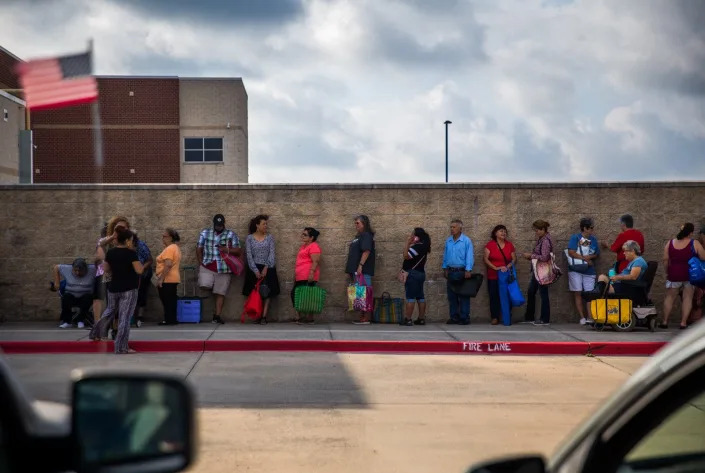
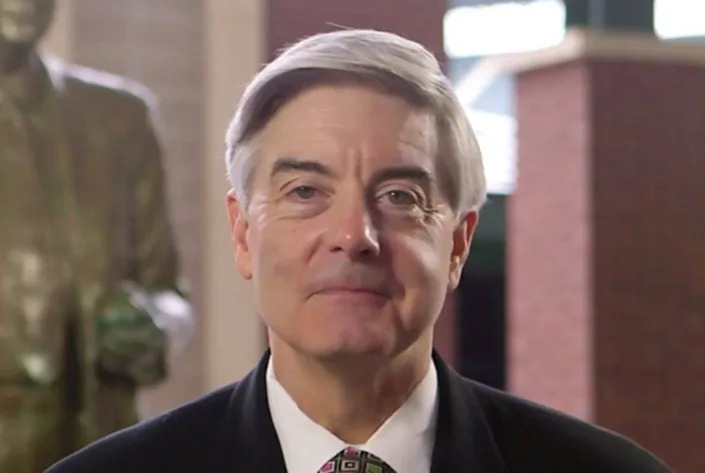
Texas is facing a housing crisis, a migrant crisis, a multi-year drought, and an epidemic of mass shootings. Ted Cruz, meanwhile, has opened an investigation into Bud Light.

Insider

Texas is facing a housing crisis, a migrant crisis, a multi-year drought, and an epidemic of mass shootings. Ted Cruz, meanwhile, has opened an investigation into Bud Light.

Katie Balevic – May 20, 2023
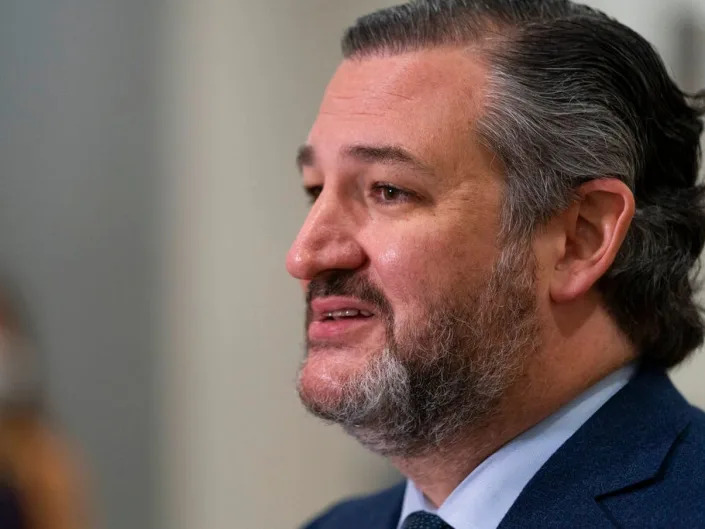
Texas is facing a housing crisis, a migrant crisis, a multi-year drought, and an epidemic of mass shootings. Ted Cruz, meanwhile, has opened an investigation into Bud Light.

Texas Sen. Ted Cruz opened an investigation into Bud Light’s partnership with trans influencer Dylan Mulvaney.

Meanwhile, Texas is grappling with a migration crisis and a severe housing crisis.

And also an epidemic of gun violence, extreme weather, and a multi-year drought.

Texas is facing a laundry list of crises: housing, immigration, and weather, among others.

So, naturally, Texas Sen. Ted Cruz is opening an investigation into Bud Light.

Social conservatives across the country continue to clutch their pearls over Bud Light’s partnership with influencer Dylan Mulvaney, a 26-year-old transgender activist who has shaken the far-right’s perception of reality by existing in the open.

The company’s partnership with Mulvaney led to right-wing calls for a boycott of Bud Light, which has impacted sales at its parent company, Anheuser-Busch. The latter reported a 23% drop in sales for the last week of April compared to the previous year, CBS News reported.

Together with Sen. Marsha Blackburn of Tennessee, Cruz sent a letter to the beer industry’s regulatory body, the Beer Institute, inquiring whether Anheuser-Busch’s partnership with Mulvaney “violates the Beer Institute’s guidelines prohibiting marketing to underage individuals.”

“The Beer Institute must examine whether your company violated the Beer Institute’s Advertising/Marketing Code and Buying Guidelines prohibiting marketing to individuals younger than the legal drinking age,” the letter said, claiming that “Mulvaney’s audience skews significantly younger than the legal drinking age.”

To avoid an investigation, Cruz and Blackburn offered Anheuser-Busch the option to “publicly sever its relationship with Dylan Mulvaney, publicly apologize to the American people for marketing alcoholic beverages to minors, and direct Dylan Mulvaney to remove any Anheuser-Busch content” from her social media platforms, they wrote in the letter.

The letter, which misgendered Mulvaney throughout, also seeks documents and information on how “Anheuser-Busch vets its partnerships and how Anheuser-Busch failed in assessing the propriety of a partnership with Dylan Mulvaney.”

Meanwhile, in Cruz’ home state of Texas:

Following the expiration of Title 42, the fates of thousands of immigrants are up in the air as politicians on both sides of the aisle play hot potato by busing them to different cities.

The state faces an urgent housing and affordability crisis. There are just 25 available rental units for every 100 low-income households, according to The Texas Tribune.

Texas is also grappling with a series of deadly extreme weather events. In 2022, at least 279 people in Texas died from extreme heat, and the year before that, 246 Texans died from a brutal winter freeze. And Texas farmers are bracing for another growing season beset by a multi-year drought.

Texas is also the epicenter of gun violence. It is the site of 5 of the 10 deadliest shootings in US history.

Beer marketing, however — thanks to Cruz — has all the attention of the state’s top leaders in Washington.


Texas is facing a housing crisis, a migrant crisis, a multi-year drought, and an epidemic of mass shootings. Ted Cruz, meanwhile, has opened an investigation into Bud Light.

Insider

Texas is facing a housing crisis, a migrant crisis, a multi-year drought, and an epidemic of mass shootings. Ted Cruz, meanwhile, has opened an investigation into Bud Light.

Katie Balevic – May 20, 2023

Texas is facing a housing crisis, a migrant crisis, a multi-year drought, and an epidemic of mass shootings. Ted Cruz, meanwhile, has opened an investigation into Bud Light.

Texas Sen. Ted Cruz opened an investigation into Bud Light’s partnership with trans influencer Dylan Mulvaney.

Meanwhile, Texas is grappling with a migration crisis and a severe housing crisis.

And also an epidemic of gun violence, extreme weather, and a multi-year drought.

Texas is facing a laundry list of crises: housing, immigration, and weather, among others.

So, naturally, Texas Sen. Ted Cruz is opening an investigation into Bud Light.

Social conservatives across the country continue to clutch their pearls over Bud Light’s partnership with influencer Dylan Mulvaney, a 26-year-old transgender activist who has shaken the far-right’s perception of reality by existing in the open.

The company’s partnership with Mulvaney led to right-wing calls for a boycott of Bud Light, which has impacted sales at its parent company, Anheuser-Busch. The latter reported a 23% drop in sales for the last week of April compared to the previous year, CBS News reported.

Together with Sen. Marsha Blackburn of Tennessee, Cruz sent a letter to the beer industry’s regulatory body, the Beer Institute, inquiring whether Anheuser-Busch’s partnership with Mulvaney “violates the Beer Institute’s guidelines prohibiting marketing to underage individuals.”

“The Beer Institute must examine whether your company violated the Beer Institute’s Advertising/Marketing Code and Buying Guidelines prohibiting marketing to individuals younger than the legal drinking age,” the letter said, claiming that “Mulvaney’s audience skews significantly younger than the legal drinking age.”

To avoid an investigation, Cruz and Blackburn offered Anheuser-Busch the option to “publicly sever its relationship with Dylan Mulvaney, publicly apologize to the American people for marketing alcoholic beverages to minors, and direct Dylan Mulvaney to remove any Anheuser-Busch content” from her social media platforms, they wrote in the letter.

The letter, which misgendered Mulvaney throughout, also seeks documents and information on how “Anheuser-Busch vets its partnerships and how Anheuser-Busch failed in assessing the propriety of a partnership with Dylan Mulvaney.”

Meanwhile, in Cruz’ home state of Texas:

Following the expiration of Title 42, the fates of thousands of immigrants are up in the air as politicians on both sides of the aisle play hot potato by busing them to different cities.

The state faces an urgent housing and affordability crisis. There are just 25 available rental units for every 100 low-income households, according to The Texas Tribune.

Texas is also grappling with a series of deadly extreme weather events. In 2022, at least 279 people in Texas died from extreme heat, and the year before that, 246 Texans died from a brutal winter freeze. And Texas farmers are bracing for another growing season beset by a multi-year drought.

Texas is also the epicenter of gun violence. It is the site of 5 of the 10 deadliest shootings in US history.

Beer marketing, however — thanks to Cruz — has all the attention of the state’s top leaders in Washington.

Psaki on debt ceiling talks: China probably ‘rooting for default’

The Hill

Psaki on debt ceiling talks: China probably ‘rooting for default’

Alex Gangitano – May 19, 2023

Former Biden White House press secretary Jen Psaki said Friday that China is probably “rooting for default” while talks in Washington over a debt ceiling compromise have been cut short.

“All of these world leaders and their teams are watching what’s happening in the United States. Is democracy going to last? Are they going to default? All of that makes the United States look weak on the world stage,” Psaki said on MSNBC.

“If you’re China, you’re probably — you’re rooting for default,” she added.

President Biden has also warned it could be a concern internationally if the U.S. were to default on its debt, arguing recently that world leaders have been wondering about the looming risk.

Director of National Intelligence Avril Haines said earlier this month Beijing and Moscow would use a potential default for propaganda purposes through “information operations” as evidence the U.S. political system is chaotic.

Psaki outlined the situation with the president in Japan for the Group of Seven (G-7) summit, relying on Republican negotiators and White House officials to keep working to avoid a default until he returns to Washington on Sunday.

“So for the president, this is about — he’s there to project strength; the United States is back at the table,” she said. “But these negotiations, this being tricky and unresolved at home, is not great. And that’s important for people, Republicans, Democrats to really understand.”

She also warned against being overly concerned by the top Republican lawmakers negotiating a debt ceiling compromise with the White House cutting the talks short. The Republicans left a meeting with White House officials Friday in the Capitol, saying the two sides were too far apart and that the White House is being unreasonable.

“Sometimes, there are pauses where it looks like everything is going to explode and not come back together, and it does,” she said.

The White House had expressed optimism as recently as late Thursday, saying there had been “steady progress” in debt limit talks, and officials said Friday the president’s team is “working hard towards a reasonable bipartisan solution.”

Additionally, Psaki said there “will be no doubt legal challenges if the president were to invoke the 14th Amendment” in response to a letter sent earlier this week from 11 senators to Biden suggesting he prepare to invoke the amendment.

The president said last week there have been discussions about whether the 14th Amendment can be invoked, but he acknowledged it would have to go to the courts.

We Don’t Have to Accept Antisocial Gun Behavior Just Because the Guy Says It’s a Political Protest

Esquire

We Don’t Have to Accept Antisocial Gun Behavior Just Because the Guy Says It’s a Political Protest

Jack Holmes – May 19, 2023

a supporter of us president donald trump keeps a hand on his gun during a
Antisocial Gun Behavior Is Not ProtestKEREM YUCEL – Getty Images

We may have reached the pinnacle of Both Sides journalism with some coverage out of Maryland, where Governor Wes Moore signed a package of new gun control bills into law this week restricting who can carry guns in public and where they can do it. The Supreme Court conservatives created a constitutional right to carry guns outside the home last summer when they struck down a 110-year-old New York gun law, a decision which also functionally threw out parts of Maryland’s legal regime on guns. Moore and his allies in the legislature are presumably trying to prevent their jurisdiction from becoming another gun anarchy state now that the number of residents allowed to carry a concealed firearm in public has tripled.

Gun rights groups don’t like this—they’re also suing to throw out Maryland’s assault weapons ban—and it seems neither did one resident in particular. Tolly Taylor of WBAL in Baltimore reported Thursday that “a man with an AR-15 has been showing up for weeks to a school bus drop off for local elementary school students.” He teased a piece on that night’s local news in which viewers would learn that “parents say their kids are afraid, the man says he’s protesting @GovWesMoore’s new gun control law. You’ll hear from both sides at 5+6pm.”

Image

Taylor may well just be trying to abide by coverage guidelines set by his boss(es), but in the process, this becomes really the apotheosis of the Both Sides affliction in the American press. There is no scenario in which some maladjusted creep who’s frightening children at an elementary school bus stop should be presented as just some guy with political opinions by the local news. This is antisocial behavior that should be ridiculed, including by normal people who own guns.

You wouldn’t ask some guy who menaced people on the subway with a knife for his thoughts on whether knife-menacing is cool and good, and make no mistake: this man is attempting to menace members of the public using a deadly weapon that’s capable of killing way more people in way less time. That this kind of weapon is a favorite of school shooters, and these are schoolchildren, only adds to the disgusting character of the events here. Carrying a gun like this in the public square is a way to constantly communicate the threat of deadly force to those around you. A gun like this exists for two purposes: to maim and kill, and to communicate the threat thereof. This loser could make the case that he has a right to carry a gun around via the standard political speech that normal people make use of on this and every other issue. He’s parading around a gun for a reason, the same reason that courts upheld the prerogative of local jurisdictions to restrict who can carry weapons in the public square for 700 years until the Supreme Court conservatives got involved.

This is a particularly eye-catching example of the wider phenomenon where, out of genuine belief in the principle of “objectivity” or fear they’ll be called “biased,” members of the mainstream press create a false equivalence between arguments and political opinions rooted in reality and those that are complete nonsense. Normally, the Both Sides phenomenon involves reporters—often some of the most well-informed, purportedly savvy people around—pretending to believe that bullshit has merit in order to present it as One Side of the Argument, and Who’s to Say Who’s Right? For about 20 years, Washington political scribes would present the Republican view on climate change—nuh uh, no, hoax—as just the other side of the coin to…the overwhelming scientific consensus on the matter.

people take part in a protest for
These folks could easily have demanded an end to pandemic lockdowns without guns. So why did they bring them to the statehouse steps? To communicate the threat of force if they do not get their way.JEFF KOWALSKY – Getty Images

Sometimes, reporters will lobotomize themselves for the period of time in which they’re working on a story. Anyone paying attention over the last decade has watched Republicans raise the debt ceiling without incident when a Republican is president. (Under the most recent one, they also added trillions to The National Debt to service a tax cut for rich people and corporations, part of a debt orgy under President Trump.) But when Republicans turn around and say the debt is a huge problem and we can’t raise the debt ceiling, Beltway reporters pretend they don’t remember anything that happened before—or even, at times, that raising the debt ceiling does not approve new spending. (It applies to paying off debts already accrued.) This goldfish-brain approach has been necessary for the last few decades because, while the Democratic Party has its manifest failures, the Republican Party no longer resides in reality. To present what they say in the full context of reality would involve losing the mask of Neutrality which is often conflated with Objectivity. The objective truth is that Republicans only care about the debt when they’re out of the White House, and they don’t even really care about it now. If they did, they would consider raising revenues as part of a debt deal. They’ve ruled that out.

What’s so unsettling about this Maryland incident, though, is that the adoption of a neutral stance legitimizes antisocial behavior and presents it as a fair form of “protest.” This guy does not have to point the gun at anyone for it to serve its purpose. This has been a steadily expanding problem throughout the country, as right-wingers show up heavily armed to statehouses in an explicit communication of the threat of deadly force if they do not get their way on matters of public policy. This is not normal political expression, just as breaking windows and vandalizing businesses is not a legitimate form of protest against police violence and racial injustice in our society. The fact is that certain things are out of bounds, and we’re really arguing over where the line should be. This guy’s conduct is on the far side of the line. He is leaving the realm of civil disagreement and discussion and entering a gray area where the potential for deadly violence is implied.

What we’re really reluctant to confront, however, is that there is a sizable faction in America who continually make explicit threats to engage in violence if the government—elected by the people to make public policy—makes public policy that they and their faction do not like. They brandish their weapons during these discussions, physically or rhetorically, and they’re never more aggressive than when anyone suggests that Thomas Jefferson did not envision an inalienable right to carry an AR-15 into Chipotle. It’s not hard to put all this together, particularly if you’re a reporter, but it’s scary to confront the fact that there’s a segment of the American population dedicated to the proliferation of deadly weapons—more guns, everywhere, all the time—and threatening to use the ones they already have if they don’t get their way. Easier, then, to stand to the side and offer the View From Nowhere, where every side has a case worth hearing.

The debt ceiling crisis is intentional | David Moon

Knox NThe debt ceiling crisis is intentional | David Moon

David Moon – May 19, 2023

The U.S. regularly faces a “debt ceiling crisis” because our elected officials would rather make a point than make a difference. Members of both parties relish this regular game of political chicken; otherwise they wouldn’t keep doing it. And the president could likely end it with a directive to the attorney general, just as a president unilaterally started this dangerous charade 43 years ago.

When the federal government threatens a shutdown, there are two issues at play: the debt ceiling and funding gaps. For more than 200 years they were never used to manufacture a “crisis” that politicians could then take credit for solving.

President Joe Biden and House Speaker Kevin McCarthy met May 16, attempting to reach agreement on raising the debt ceiling. The Treasury secretary says the country will run out of cash June 1.

After setting the first debt ceiling in 1936, Congress raised the limit only three years later. Since then, it has raised it another 82 times, just as it will eventually raise it an 83rd time in the next few weeks.

Each time the U.S. approached the statutory debt limit in the 1950s, Congress would simply approve a temporary waiver of the ceiling. That is, it voted to just ignore the law for a little while.

That changed in 1980 when, despite Democrats controlling both the House and Senate, President Jimmy Carter could not persuade Congress to pass an appropriations bill for the Federal Trade Commission. Carter’s attorney general, Benjamin Civiletti, then cited a provision in the 1884 Antideficiency Act as justification to overrule a longstanding opinion that federal agencies could continue operating during gaps in appropriation funding. Carter ordered the FTC shut down, furloughing about 1,600 federal employees, then threatened a complete government shutdown. Congress blinked and funded the FTC.

Politicians had discovered a new way to embarrass their opponents and achieve political goals. Since 1980, every potential funding gap or debt ceiling violation has provided an opportunity for politicians to boldly reveal their immaturity and short-sightedness.

In 1995 there was a debt limit situation that rivaled today’s political theater. The Treasury secretary canceled security auctions and dipped into government retirement funds for cash needs. A similar contrived crisis was miraculously resolved in 2002 using many of the same tactics and gimmicks as in 1995.

The U.S. will pay its bills, and since the federal government spends 30% more than it takes in, that requires borrowing money. (Other solutions theoretically include reducing spending, increasing taxes or selling assets to pay down debt.)

When the other party controls the White House, legislators always argue that the debt ceiling is a necessary tool to prevent out-of-control spending – except that there is no evidence that it does. Borrowing money tops the short list of things at which politicians excel. There is a much simpler way for Congress to prevent out-of-control spending: don’t pass appropriations bills that include out-of-control spending.

Lawrence O’Donnell Left Stunned By Revealing Response To Trump Pardon Allegation

HuffPost

Lawrence O’Donnell Left Stunned By Revealing Response To Trump Pardon Allegation

Ed Mazza – May 18, 2023

New Revolting Rudy Lawsuit

Lawrence O’Donnell took a closer look at one of the many serious allegations in a new lawsuit filed against Rudy Giuliani, the former New York mayor and longtime henchman to Donald Trump.

It’s the claim by Noelle Dunphy, a former aide now suing Giuliani for alleged sexual coercion and other claims, that he told her he could arrange for pardons from Trump for $2 million, with himself and the then-president splitting the money.

O’Donnell noted that Bill Barr, who served as attorney general to Trump, gave a rather lukewarm response when asked if he thought that was possible.

“I’m skeptical about that, I don’t think Rudy Giuliani would do that, I hope he wouldn’t, but I don’t know,” Barr said on Fox News.

O’Donnell was stunned.

“I don’t know?” he said. “William Barr knows Rudolph Giuliani well. William Barr knows Donald Trump well. And when asked if those two could have teamed up to sell $2 million pardons and split the money, William Barr’s answer is, ‘I don’t know.’”

O’Donnell said any attorney general not appointed by Trump or Richard Nixon would’ve given “a very, very strong answer.”

But Barr didn’t ― and O’Donnell found that extremely telling, as he explained on “The Last Word” on Wednesday night:

Florida passes bill to prevent billionaires like Elon Musk and Jeff Bezos being sued if their mega-rockets kill or injure people

Business Insider

Florida passes bill to prevent billionaires like Elon Musk and Jeff Bezos being sued if their mega-rockets kill or injure people

Marianne Guenot – May 17, 2023


How SpaceX, Blue Origin, and Virgin Galactic plan on taking you to space

The SpaceX Starship lifts off from the launchpad during a flight test from Starbase in Boca Chica, Texas, on April 20, 2023.
The SpaceX Starship lifts off in Boca Chica, Texas, on April 20, 2023.PATRICK T. FALLON/AFP via Getty Images
  • Florida passed a bill protecting space companies in case of injury or death of a crew member.
  • Passengers will have to sign a waiver stating they understand the risks before boarding a spaceship.
  • The bill comes as more billionaires are trying to make commercial space flight a reality.

Florida has signed a bill protecting the billionaire owners of space companies against civil lawsuits in case of the death or injury of a passenger or crew member.

Passengers will have to sign a waiver stating they understand the risks of spaceflight before boarding a spaceship, the bill states.

“Under Florida law, there is no liability for an injury to or death of a participant or crew in a spaceflight activity provided by a spaceflight entity if such injury or death results from the inherent risks of the spaceflight activity,” the bill states.

For private sector companies like Elon Musk’s SpaceX and Jeff Bezos’ Blue Origin, the bill “has the potential to limit the cost of litigation to businesses engaging in spaceflight activities,” a senate analysis of the bill said.

The bill extends protections to private space companies
Elon Musk
Elon Musk stands in front of a model of a rocket.(Photo by Hannibal Hanschke-Pool/Getty Images)

The Spaceflight Entity Liability bill, which was sent to Governor Ron DeSantis and passed the Florida Senate and House with little opposition, was adjusted to reflect “the evolution of spaceflight,” said Republican Sen. Tom Wright, the bill’s sponsor, per Florida Politics.

“Astronauts are no longer government astronauts. These are commercial crew,” said Republican Rep. Tyler Sirois at a March 9 hearing, per Florida Politics.

The new bill states that space flight remains “an extraordinarily dangerous condition” and people should take responsibility for the risks before boarding the rocket, the Senate bill analysis states.

The bill doesn’t protect the companies in case of “gross negligence”

Florida lawmakers have every motivation to protect the spaceflight industry, which contributes $17.7 billion in revenues to Florida’s economy, per Florida’s Aerospace and Spaceport Development Authority.

SpaceX and Blue Origin have their primary launch sites in Florida. Jeff Sharkey, a lobbyist representing SpaceX, also stood in support of the bill at a March 26 hearing, per Florida Politics.

Still, the bill doesn’t abrogate space companies from all responsibility. It states clearly that the company is still liable in case of gross negligence, if the company knew or should have known about dangerous conditions, or it intentionally tried to hurt or kill a crewmember.

Even in a case of negligence, the bill would be difficult to hold up in court, Mark Sundahl, director of the Global Space Law Center at Cleveland State University, told Gizmodo in an email.

The waiver, he said “assumes that there is ‘informed consent.’ It is questionable whether a passenger who is not familiar with the technology and history of spaceflight can truly be ‘informed’ as to the risks.”

More protections are needed as space tourism takes off
yusaku maezawa is seeing wearing a orange shirt, floating cross legged and waving in the International Space Station.
Japanese billionaire Yusaku Maezawa floats inside the International Space Station (ISS) as seen in this photo uploaded on December 9, 2021,Yusake Maezawa via Instagram/via REUTERS

The bill comes in the wake of a boom in space tourism led by private companies.

Multi-millionaire and billionaire civilians are hitching rides to low earth orbit and outer space.

“The fear is that the estate of ultra-wealthy passengers could bring massive claims for hundreds of millions of dollars in lost revenue due to the life of the passenger being cut short,” said Sundahl, per Gizmodo.

“The industry is still in its early days and such liability might stunt the industry,” he said.

These include billionaire Yusaku Maezawa, a Japanese fashion mogul who has already flown to the International Space Station and purchased all the seats on an upcoming SpaceX  Starship flight around the moon.

250,000 Florida residents kicked off Medicaid; more expected

Tampa Bay Times – St. Petersburg, Fla.

250,000 Florida residents kicked off Medicaid; more expected

Christopher O’Donnell, Tampa Bay Times – May 17, 2023

Health advocate groups are calling on Florida to halt a review of the eligibility of Medicaid recipients after close to 250,000 residents were terminated from the program during the past four weeks.

The Florida Department of Children and Families began a purge of the more than 5 million people from the state’s Medicaid rolls on April 18 as part of the winding down of the public health emergency that took effect May 11. Since then, state workers have reviewed more than 461,000 people, taking Medicaid benefits away from more than half.

About 80% of those terminated — roughly 205,000 — were disqualified because they failed to respond to requests for information needed to renew their eligibility, the state report shows. About 44,300 recipients were referred to other programs because they earn too much to be eligible.

The high number of so-called procedural terminations has alarmed health advocacy groups, who fear families, including children who are still eligible, will lose coverage because they were unaware of the requirement.

The Florida Policy Institute, an Orlando nonprofit group, was among groups who earlier this year warned of a “looming tidal wave of health coverage loss for children, parents, and young adults.” CEO Sadaf Knight on Wednesday said the state should pause the process and re-enroll those who have been removed until it has checked their eligibility.

“We have consistently urged the state and administration to do everything in its power to ensure no eligible child or parent was kicked off of health coverage because of bureaucratic inadequacies,” she said. “Now, the first reports confirm our fears about unnecessary losses in coverage. There is no excuse for the loss of health coverage for over 200,000 Floridians due to procedural ‘red tape.’”

The state’s Medicaid rolls swelled by nearly 1.8 million people since 2020, when the federal government paid states extra money to keep people covered during the pandemic, even if they were no longer eligible. Similar checks on recipients are being conducted in every state across the nation in accordance with instructions from the federal government.

The Department of Children and Families earlier this year released a plan to send renewal notices to recipients through emails and letters.

The plan states those who lose coverage will be referred to alternatives, including Florida KidCare, a government-sponsored health insurance program, and federally subsidized health centers that treat low-income patients. Hillsborough County also runs a health care program for low-income residents funded through a sales tax.

Hillsborough County received 877 new applications for its program in April. As of Wednesday, more than 1,060 people had applied this month, said spokesperson Todd Pratt.

“The federal pause on Medicaid redeterminations for the last three years has been unprecedented,” said Department Secretary Shevaun Harris in an April 18 memo to health care groups. “This change reflects a return to normal operations.”

Florida is one of only 10 states that have not taken advantage of a provision in the Affordable Care Act that rewards states for expanding Medicaid to more low-income residents.

Florida’s Medicaid program covers children ages 5 and younger in households that make $33,408 or less and older children whose parents make up to $31,795. But there is no coverage for parents who earn more than $7,000 a year, and adults with no children are ineligible no matter how little they earn. Only four states in the nation have stricter Medicaid eligibility, according to the Florida Policy Institute.

The Florida Health Justice Project is also calling for a halt to the state’s Medicaid review process. Eligible families with children who rely on Medicaid could fall through the cracks and be disqualified, said Alison Yager, the project’s executive director. She also questioned whether the state was following its plan to prioritize reviewing people who no longer qualified and those who have not used Medicaid services.

“It raises all kinds of questions about whether people are getting their correspondence or are having trouble getting through to (the Department of Children and Families),” she said. “People still don’t know this is happening.”

Many Texans must work for food stamps. But no work required for $92,000 payout.

Austin American – Statesman

Grumet: Many Texans must work for food stamps. But no work required for $92,000 payout.

Bridget Grumet, Austin American-Statesman – May 17, 2023

People in need wait to receive food from a mobile food pantry in Kyle. Texans who receive food stamps for their families must renew their status every six months.

If you’re on food stamps, you can be sure the state of Texas will check up on you. Every six months, in fact.

You have to fill out new forms proving that you’re still poor and working at least 30 hours a week (unless you’re over 60 or physically unable to work). You have to demonstrate that your car isn’t worth too much, and, in some cases, show your housing and health care costs.

Every six months.

Just to get help to buy food — up to $939 a month for a family of four.

I kept thinking about that as I read a stunning story last week about government spending on the other end of the spectrum. As my colleague Tony Plohetski reported, Victor Vandergriff resigned from his post as a Texas Department of Transportation commissioner in 2018 — but the state continued to pay him for five years, in payments totaling nearly $92,000.

No one was checking up on Vandergriff. He didn’t have to justify himself every six months. The paychecks kept flowing, even though he stopped doing a job that, in fairness, he had quit.

When it comes to social safety net programs, our state is so worried that people might get something they don’t deserve. Where is that concern when it comes to someone drawing a state paycheck they didn’t earn?

The focus has been on the “holdover” provision in state law that allowed this to happen. To ensure the government keeps operating, original language in the 1876 Texas Constitution says that state officials remain state officials until they are replaced by someone else. So even though Vandergriff resigned, he remained a transportation commissioner on paper — and on the payroll — until Gov. Greg Abbott named a replacement this March.

Victor Vandergriff resigned in 2018 as a Texas Department of Transportation Commissioner, but he continued to be paid for five years until his replacement was named.

In such a system, the onus is on the governor’s office to ensure that appointees who resign are replaced in a timely way. Abbott’s office didn’t respond to follow-up questions about why it took five years to name Vandergriff’s successor.

It’s worth noting that the governor’s office handles more than 1,500 appointments to various boards and commissions during each four-year term, and finding people with the right expertise and willingness to serve in these roles can take time.

Still, it’s striking to see that Texas’ systems are designed to provide grace periods and continued resources to those in power, while imposing rigid deadlines and an obstacle course of justifications for Texans in need.

The car conundrum

Consider the Supplemental Nutrition Assistance Program, or SNAP, more commonly known as food stamps.

Most food stamp recipients must prove they’re working. Getting to and from a job often requires a car. To get food stamps, though, your car can’t be worth more than $15,000 — a value that hasn’t been updated since 2001 to reflect inflation.

Heaven help you if you’re a two-car household: The second car can’t be worth more than $4,650, a value set in 1973.

“The wrinkle is, through the pandemic, when used car prices accelerated, it meant people’s existing vehicles became worth more,” Rachel Cooper, director of Health & Food Justice for Every Texan, told me. “So it also made it harder for (people) to qualify for SNAP.”

And some people actually lost their food stamps in the past couple of years because their used cars grew too much in value, she added.

Last month, the House passed a common-sense bill — House Bill 1287 — to provide a one-time adjustment to the allowable car value for food stamp recipients, and to create a process for considering future adjustments. The measure could be heard by the Senate Finance Committee this week.

Technically, it’s legislation about car values and benefits calculations. But really it’s about whether some Texans on the margins can qualify for the food their families need.

Difficult by design

Food stamps are just one example.

Consider Medicaid: Prior to the pandemic, some of the poorest kids in Texas routinely lost their health care coverage because the state used a flawed system to conduct random spot-checks for eligibility. New moms on Medicaid — nearly half of the women giving birth in Texas — lost their health coverage just two months after the baby arrived.

Federal COVID-era policies provided temporary relief, preventing anyone from losing health coverage during the pandemic. Lawmakers last session shifted Medicaid eligibility checks for kids to once every six months, and lawmakers this session are considering HB 12 to keep uninsured women on Medicaid for 12 months after they’ve given birth.

Meanwhile, as the pandemic-era protections lift, 2.7 million Texas women and children must once again prove to the state that they deserve health care coverage.

Applying for government assistance is notoriously tough. Nonprofits often have staffers dedicated to helping Texans navigate the bureaucratic maze, Cooper said.

The process is difficult by design.

“If you have a mentality that folks who need these programs are taking from everybody else, or somehow they’re not working, somehow they’re lazy, and now they’re abusing the system, then then you build a system to lock people out, to make it so that it’s only the desperate or the very well-resourced who make it through the gauntlet to get services,” Cooper said.

Contrast that with the ease with which Victor Vandergriff collected $92,000 from the state without doing a thing.

Vandergriff’s case might reflect one extreme example, but it still provides an instructive view. Our state systems are designed to maintain Texas government, to keep officials and their compensation in place.

Imagine if our systems were equally focused on maintaining Texans themselves, ensuring the most vulnerable can get the essentials they need.

Grumet is the Statesman’s Metro columnist. Her column, ATX in Context, contains her opinions. 

Grumet: Many Texans must work for food stamps. But no work required for $92,000 payout.

Austin American – Statesman

Grumet: Many Texans must work for food stamps. But no work required for $92,000 payout.

Bridget Grumet, Austin American-Statesman – May 17, 2023

People in need wait to receive food from a mobile food pantry in Kyle. Texans who receive food stamps for their families must renew their status every six months.

If you’re on food stamps, you can be sure the state of Texas will check up on you. Every six months, in fact.

You have to fill out new forms proving that you’re still poor and working at least 30 hours a week (unless you’re over 60 or physically unable to work). You have to demonstrate that your car isn’t worth too much, and, in some cases, show your housing and health care costs.

Every six months.

Just to get help to buy food — up to $939 a month for a family of four.

I kept thinking about that as I read a stunning story last week about government spending on the other end of the spectrum. As my colleague Tony Plohetski reported, Victor Vandergriff resigned from his post as a Texas Department of Transportation commissioner in 2018 — but the state continued to pay him for five years, in payments totaling nearly $92,000.

No one was checking up on Vandergriff. He didn’t have to justify himself every six months. The paychecks kept flowing, even though he stopped doing a job that, in fairness, he had quit.

When it comes to social safety net programs, our state is so worried that people might get something they don’t deserve. Where is that concern when it comes to someone drawing a state paycheck they didn’t earn?

The focus has been on the “holdover” provision in state law that allowed this to happen. To ensure the government keeps operating, original language in the 1876 Texas Constitution says that state officials remain state officials until they are replaced by someone else. So even though Vandergriff resigned, he remained a transportation commissioner on paper — and on the payroll — until Gov. Greg Abbott named a replacement this March.

Victor Vandergriff resigned in 2018 as a Texas Department of Transportation Commissioner, but he continued to be paid for five years until his replacement was named.

In such a system, the onus is on the governor’s office to ensure that appointees who resign are replaced in a timely way. Abbott’s office didn’t respond to follow-up questions about why it took five years to name Vandergriff’s successor.

It’s worth noting that the governor’s office handles more than 1,500 appointments to various boards and commissions during each four-year term, and finding people with the right expertise and willingness to serve in these roles can take time.

Still, it’s striking to see that Texas’ systems are designed to provide grace periods and continued resources to those in power, while imposing rigid deadlines and an obstacle course of justifications for Texans in need.

The car conundrum

Consider the Supplemental Nutrition Assistance Program, or SNAP, more commonly known as food stamps.

Most food stamp recipients must prove they’re working. Getting to and from a job often requires a car. To get food stamps, though, your car can’t be worth more than $15,000 — a value that hasn’t been updated since 2001 to reflect inflation.

Heaven help you if you’re a two-car household: The second car can’t be worth more than $4,650, a value set in 1973.

“The wrinkle is, through the pandemic, when used car prices accelerated, it meant people’s existing vehicles became worth more,” Rachel Cooper, director of Health & Food Justice for Every Texan, told me. “So it also made it harder for (people) to qualify for SNAP.”

And some people actually lost their food stamps in the past couple of years because their used cars grew too much in value, she added.

Last month, the House passed a common-sense bill — House Bill 1287 — to provide a one-time adjustment to the allowable car value for food stamp recipients, and to create a process for considering future adjustments. The measure could be heard by the Senate Finance Committee this week.

Technically, it’s legislation about car values and benefits calculations. But really it’s about whether some Texans on the margins can qualify for the food their families need.

Difficult by design

Food stamps are just one example.

Consider Medicaid: Prior to the pandemic, some of the poorest kids in Texas routinely lost their health care coverage because the state used a flawed system to conduct random spot-checks for eligibility. New moms on Medicaid — nearly half of the women giving birth in Texas — lost their health coverage just two months after the baby arrived.

Federal COVID-era policies provided temporary relief, preventing anyone from losing health coverage during the pandemic. Lawmakers last session shifted Medicaid eligibility checks for kids to once every six months, and lawmakers this session are considering HB 12 to keep uninsured women on Medicaid for 12 months after they’ve given birth.

Meanwhile, as the pandemic-era protections lift, 2.7 million Texas women and children must once again prove to the state that they deserve health care coverage.

Applying for government assistance is notoriously tough. Nonprofits often have staffers dedicated to helping Texans navigate the bureaucratic maze, Cooper said.

The process is difficult by design.

“If you have a mentality that folks who need these programs are taking from everybody else, or somehow they’re not working, somehow they’re lazy, and now they’re abusing the system, then then you build a system to lock people out, to make it so that it’s only the desperate or the very well-resourced who make it through the gauntlet to get services,” Cooper said.

Contrast that with the ease with which Victor Vandergriff collected $92,000 from the state without doing a thing.

Vandergriff’s case might reflect one extreme example, but it still provides an instructive view. Our state systems are designed to maintain Texas government, to keep officials and their compensation in place.

Imagine if our systems were equally focused on maintaining Texans themselves, ensuring the most vulnerable can get the essentials they need.

Grumet is the Statesman’s Metro columnist. Her column, ATX in Context, contains her opinions.