A Georgia elementary school removes assignment instructing students to write a letter as ‘an American settler’ to Andrew Jackson in favor of removing Indigenous people from their land
Katie Balevic January 26, 2022
President Andrew Jackson.
An assignment at a Georgia school about the Trail of Tears has been removed.
Fourth-graders were given a prompt to write in favor of “removing the Cherokee.”
The assignment also asked students to write from the point of view of a member of the Cherokee Nation.
A Georgia school gave fourth graders an assignment that prompted them to write from the point of view of an English colonizer in America and justify the removal of indigenous people from their land.
“Write a letter to President Andrew Jackson from the perspective of an American settler. Explain why you think removing the Cherokee will help the United States grow and prosper,” the writing prompt titled “The Trail of Tears” said, referencing one of the largest tribes of Indigenous peoples in the US.
Jackson, commander in chief from 1829 to 1837, signed the Indian Removal Act in 1830, authorizing – beyond his time in office – the violent forced displacement of approximately 100,000 Indigenous peoples amid the country’s westward expansion. Over 15,000 people from different tribal nations died on what came to be called the Trail of Tears, which has been largely categorized the ethnic cleansing and genocide of tens of thousands of Indigenous peoples.
While exact numbers are unknown, the National Park Service estimated that 4,000 Cherokees – or a fifth of their population – died on the Trail of Tears. One Choctaw leader referred to the journey as a “trail of tears and death.”
Jennifer Martin, a parent in Virginia, told Insider that she shared the assignment from a public charter school called the Georgia Cyber Academy after seeing someone post it in a private group among parents. She saw the prompt as an example of how the movement against critical race theory is “prioritizing the feelings of settlers and colonizers as more important than actual, real history.”
“If this sort of content could happen at a state-funded Georgia charter school, it could easily happen in any public school, and I think people should be aware of how quickly we’re devolving into this kind of atmosphere in American schools,” Martin said. “The truth of American history, and what happened to indigenous peoples and enslaved Africans and other people of color, shouldn’t be whitewashed.”
A portion of the writing prompt on the Trail of Tears by the Georgia Cyber Academy.
According to the Georgia Department of Education, in lesson plans that explain westward expansion in America, educators are to “describe the impact of westward expansion on American Indians; include the Trail of Tears, Battle of Little Bighorn and the forced relocation of American Indians to reservations.” Georgia Cyber Academy, a charter school, may not have to adhere to this guidance for social studies curriculum.
A spokesperson for Georgia Cyber Academy told Insider that the assignment has since been removed after school leadership “concluded this is not an appropriate question to be used in our classrooms.”
“While there is often a benefit in asking students to consider all perspectives in a social studies class – and it should be noted that the next question in the series asked students to also argue from the opposite perspective (screenshot attached) – we believe there are more appropriate ways to teach this subject,” the spokesperson said in an email.
The second portion of the assignment, shared by the school, asked students to write from the “perspective of a Cherokee Indian.”
“Explain why the Indian Removal Act is harmful to you and your family. Describe conditions on the Trail of Tears and their effects on your tribe,” the prompt said.
The Cherokee Nation of Oklahoma did not immediately respond to Insider’s request for comment.
300+ MBAs Sign Letter Calling On Business Roundtable To Defend U.S. Democracy
Kristy Bleizeffer – January 27, 2022
Rioters outside the US Capitol building on January 6, 2021. A letter signed by more than 300 MBAs calls on business leaders to protect American democracy: Wikipedia photo by Tyler Merbler.
A year after the January 6 insurrection on the U.S. Capitol, more than 300 MBAs from top business schools have signed an open letter calling on business leaders to take action to protect voting rights and America’s democratic institutions. The letter was sent to the Business Roundtable Wednesday evening (January 26), an organizer of the effort tells Poets&Quants.
“On the heels of the one year anniversary of the January 6th Insurrection against American democracy, we – the undersigned business students – have watched with concern as business leaders largely remain silent and sidestep accountability for defending the integrity of American democratic institutions. We believe more courageous, active leadership is required,” reads the letter, a copy of which was provided to P&Q.
The letter was penned by the Cross-MBA Democracy Task Force, a group of MBAs from five of the country’s top business schools: Wharton, Harvard Business School, Stanford Graduate School of Business and MIT Sloan School of Management. The 300 signatures so far are from MBAs representing more than 10 business schools and counting.
The front page of The New York Times on Jan. 7, 2021
“I don’t think it’s a stretch to say that a lot of America watched in horror as this insurrection, revolt, attack descended on the United States Capitol, leading to a number of people losing their lives,” says Matt Devine, an MBA2 at Stanford GSB and a member of the Cross-MBA Democracy Task Force.
“I think what was most notable was how quickly what felt like a very universal reaction from the American people changed and became quite polarized. It was almost like light hitting a prism, and people started looking at and interpreting the events in very self-serving ways.”
CALLING AMERICA’S TOP CEOS TO ACCOUNT
The Business Roundtable is a lobbyist association of CEOs from top U.S. companies “working to promote a thriving U.S. economy and expanded opportunity for all Americans through sound public policy,” according to its website. Members include Andy Jassy of Amazon, Tim Cook of Apple, Lynn Good of Duke Energy, and nearly 200 other chief executives.
The MBA task force letter includes three actions the signed business students want to see business leaders undertake:
Enabling employees to be civically engaged in this year’s elections.
Withholding financial support from elected officials in Congress and state capitols who deliberately undermine our democracy.
Leveraging their platforms and influence to support efforts that expand access to voting.
Poets&Quants interviewed Matt Devine, a writer of the letter and task force member, on Wednesday morning. Read the conversation on the next page. It has been edited for length and clarity.
NEXT PAGE: P&Q’s interview with Matt Devine, Stanford MBA, one of the letter’s authors of the letter and task force member.
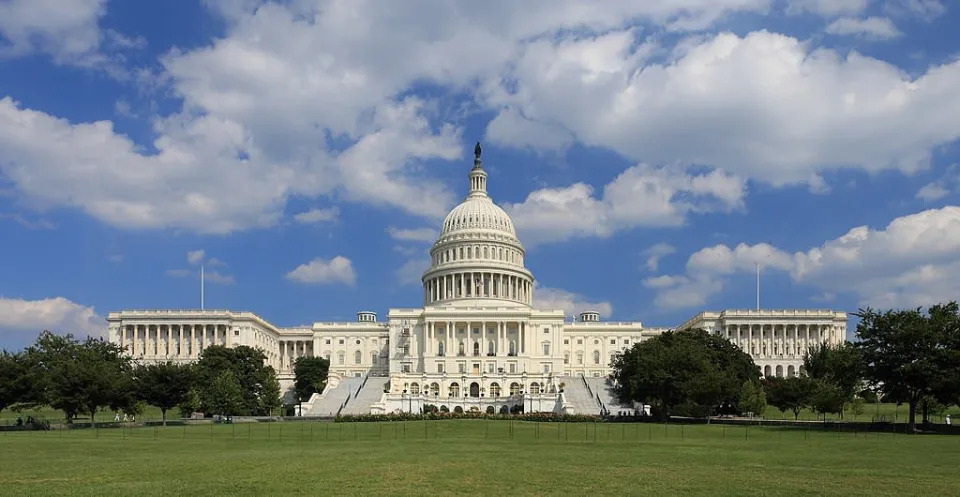
Westside view of the U.S. Capitol. Wikipedia Commons photo by Martin Falbisoner.
Read our conversation with Matt Devine below. It has been edited for length and clarity.
How did this effort get started?
There has been a group of students that, since the election in 2020, were organized around protecting voter integrity. It was basically just a group of interested students across some of the top MBA programs who were on a Whatsapp chain, talking about democracy as well as the ongoing political situation.
Then, in November this year, there was a smaller offshoot of the group that really felt that there was a voice that MBA students could have. We started seeing over the course of the last year, since the January 6 insurrection, that there were a number of business leaders who were speaking out and taking steps both to withhold campaign funding as well as issue press releases. We saw a lot of different, more extraordinary actions from the private sector, around a number of different issues, including racial justice.
Matt Devine, MBA ’22, is an author of the letter and member of the MBA democracy task force
We started thinking there might be a role for MBA students to model the sort of behavior that we would hope that business leaders in today’s environment would have. We also wanted to acknowledge that the reason that the private sector continues to be as successful as it is, is because of the integrity of the public sector and the trust and faith that people place in democratic institutions.
It started as just a small group of interested students, sharing ideas about what this would look like and what sort of action we could take. And obviously, this very short period of time of two years that we’re in our MBA programs, so we thought that a letter would be one of the better ways to (express our viewpoints) and also to gauge how many other students were thinking similarly. That coalesced around the three actions that are listed in the letter and in the preface of why we feel like this is the time to take tangible actions to support democratic institutions.
How did this idea spread to more than 10 business schools?
It started with one of my friends, Lucas Levine (Stanford GSB MBA ’22), who is a dual student at the GSB and the Harvard Kennedy School (HKS). He heard from students at Stanford GSB on the private side (of business) and from students at HKS, which obviously self-selects students who have different perspectives on the public sector.
Then it became just a group of people that we knew from different schools, either that we had met at conferences or in various virtual environments last year, who we thought would be interested in this question. So we reached out and asked who was interested in a more active role for the private sector and who would be down to put together an action from the MBA perspective. It coalesced to around 12 different students who were involved at various times. Some were involved in the ideation process, some were involved in the writing and then some were involved in gathering signatures. We had a couple representatives at every school.
Why did you pick the Business Roundtable as the recipient of the letter?
The Business Roundtable has shown an interest in the last couple years of taking a new approach to the way that the private sector and business leaders can have an impact. That is in terms of the workers that they hire, their supply chains, the way they think about the policies they implement. So not just shareholders and employees, but also people in their communities that they impact as well.
Most notably, I suppose, was their statement on climate change, as well as taking more proactive stances publicly against social issues. We felt that this was at least one of the largest targets and certainly one of the most public places to really get this word out there and maybe even find a lot of receptive ears from business leaders. They are the people who are hiring business students from these universities, and are hopefully finding people who support the actions that they’re currently taking. There is a momentum in business schools for this sort of activity and these sorts of actions.
Why do you think it’s important for businesses to speak out about issues that, in the past, might have been considered outside their lane?
I think there are a number of different reasons to do so. One, kind of underpinning it all, is that the reason that capitalism, at least in the United States, is such a persuasive voice in society writ large is because it’s protected by the public sector. There is a lot of trust in democratic institutions. Without a strong public sector, there can be, really, no private sector in the United States. It is one of the things, I think, that makes our country very unique. If people don’t have trust in these institutions, how does that impact the way we think about business, both in the United States and abroad? For a long time, we were able to take it for granted in a lot of ways.
I also think the expectations for business leaders has become greater in a number of different categories. We see that in terms of the actions around diversity and inclusion, providing working wages, supporting minimum wage workers and more. There’s just a more compelling narrative and a groundswell of support for businesses to provide services and independence to workers in all fields.
You said you have more than 300 signatures so far. Is that higher or lower than what you were hoping for?
I think it’s a little bit of both. I think there was some discussion that we were maybe not specific enough in the ask that we had and because of that we weren’t going to get very many signatures.
There were a number of people who felt that 300 was an excellent number to get in the short period of time that we put up for signatures which was about a week. And there were people who felt this is a great first step in what we hope becomes a larger coalition of business students speaking out about values they want to see represented.
There are some, like myself, who feel that 300 is not as many as we had hoped for. I’m in Stanford, and we have 900 students. This group now has 10 business schools. This is, I guess, one of the first efforts of its kind, but I would hope that there’d be more students who would be interested in putting their name to paper to represent what I personally think could be even a stronger statement and even more specific about the sort of actions that business leaders can and should consider.
This is also a new initiative. Students aren’t, maybe, used to the idea of putting their name on a piece of paper that could go public without knowing the sort of impact that it could have. This is a very new topic, for business leaders and for students who can’t quite imagine the sort of leadership role that they will have down the line. I think this is a new conversation, which is another goal of this letter and hopefully future actions as well: To get students talking about the role of the private sector and what we can do as business leaders in the scope of influence in our communities.
What was it about the January 6 anniversary that made you feel an action like this was required?
At first, you saw business leaders who very quickly put out a statement saying that they supported the 2020 election, that they did not believe that there was any sort of deception, and who they would donate to or not donate to based on who cast doubt on the election.
Slowly we’ve seen that change. We’ve seen a number of businesses who have put out press releases from their communications department as well as business leaders walk back some of those statements, or even interpret what seemed like black and white language to insert a little more gray area. As it’s become apparent that this isn’t something that the American people agree about what actually happened, what it meant, and what it could mean for democracy, there has been a lot of back tracking. That indecision and opportunism is why I think this is an important action.
This has been such a galvanizing event. Coming up on the one-year anniversary, we found it startling the number of commitments people had made but hadn’t followed through, and how much what they were willing to say publicly had changed. We felt it required a reassertion that this is still the time and this is still the place for a new sort of leadership.
What do you hope happens in response to your letter? What does success look like?
I don’t think we’re overly optimistic that that will see any change per se. What I do hope is that the students who signed this letter and who are part of this effort, continue to think about what tools they have as future business leaders and people being hired by these companies, what companies they are willing to accept jobs from, what sort of values they have, and what actions they can take within their place of business to push leaders to to really examine their influence. I really hope that students who have signed this letter can find other business leaders who feel similarly and have more conversations about what is possible when we act by ourselves and what’s possible when we act together.
What are the publicity plans? Obviously, it will have more impact the more people know about it.
We’ve created social assets for everyone to share on Instagram, Twitter, TikTok, etc., that include smaller excerpts from the letter itself, as well as some statistics on the number of students who have signed it. We’re hoping to make it very easy for students who have signed to tell people what it means to them.
We’re also reaching out to a couple of media outlets. Media may not be our primary way of getting this out. There were no aspirations of being on the front page of The New York Times or anything. We just want to put the letter out there to have this be a statement that that lives by itself.
The full letter to the Business Roundtable is printed below. Click here to see the more than 300 MBA signatures.
Thursday, January 27, 2022
To: Business Leaders of the United States
Re: Call to Action – Protect American Democracy
On the heels of the one year anniversary of the January 6th Insurrection against American democracy, we – the undersigned business students – have watched with concern as business leaders largely remain silent and sidestep accountability for defending the integrity of American democratic institutions. We believe more courageous, active leadership is required.
We stand in solidarity with those business leaders who had the courage to take action against ongoing efforts – allegations that undermine election integrity, restrictions on voting access, and donations to public officials who support these actions – that corrode our democratic process.
Business has a critical role in protecting our democracy. We envision and expect a future where our future employers and business partners take action to:
Enable your employees to be civically engaged in this year’s elections, such as by providing time off to vote, encouraging employees to volunteer as poll workers, and hosting voter registration drives.
Withhold financial support from elected officials in Congress and state capitols who deliberately undermine our democracy by bolstering unsubstantiated claims of fraud — this includes the 8 Senators and 139 members of Congress who objected to the Electoral vote count in 2021.
Leverage your platform and influence to support efforts that expand access to the ballot, at both the federal and state level, and to push back against voting restrictions as they are introduced in legislatures across the country. Following the anniversary of the January 6th Insurrection, we implore business leaders to take these simple actions. The future of the American (and global) economy at this moment lies with you.
Signed,
MBA Students for the Preservation & Protection of Democracy
Florida surgeon general favorably recommended after Democrats walk out of confirmation hearing
By Steve Contorno, CNN – January 26, 2022
Newly appointed state Surgeon General Dr. Joseph Ladapo speaks during a press conference at Neo City Academy in Kissimmee, Florida.
(CNN)A contentious confirmation hearing for Florida Surgeon General Dr. Joseph Ladapo ended abruptly Wednesday after Democrats walked out in protest, prompting Republicans to immediately vote to favorably recommend Ladapo. Democrats grew increasingly exasperated at Ladapo for his lengthy, circular responses that wouldn’t directly answer their questions about his background and the state’s response to the pandemic. Five times state Sen. Lauren Book asked Ladapo if vaccines worked against the coronavirus. Ladapo refused to say.
“Do the vaccines work against preventing Covid-19? Yes or no?” Book, a Democrat from Plantation, asked.
Ladapo responded: “Yes or no questions are not that easy to find in science.”
He later conceded that the vaccines have “relatively high effectiveness for the prevention of hospitalization.” US Centers for Disease Control and Prevention data shows that in November, unvaccinated adults had 15 times the risk of dying from Covid-19 compared with fully vaccinated adults. In the same month, unvaccinated adults had 68 times the risk of dying from Covid-19 compared with fully vaccinated adults who had received booster doses.
Ladapo, who was appearing before the state Senate Health Policy Committee, also declined to say if he regretted not wearing a mask when in the presence of state Sen. Tina Polsky, a Democrat. Polsky has been diagnosed with breast cancer and asked Ladapo to wear a mask during their meeting. He declined, earning a rebuke from state Senate President Wilton Simpson, a Republican.
He also would not answer questions about the decision by the state Department of Health to suspend Orange County’s top public health official. Dr. Raul Pino was placed on administrative leave after he sent an email criticizing his colleagues for the department’s low vaccination rate. Ladapo did not discuss details of the case, citing an ongoing investigation, but he assured the Senate panel Pino was “absolutely not placed on administrative leave for any reasons that were potentially political, or related to anything other than the policies that we have at the Department of Health.” Republican Gov. Ron DeSantis appointed Ladapo to be the state’s top doctor in September. Since then, Ladapo has helped lead the state Department of Health’s crackdown on mask mandates in schools and against vaccine mandates by private businesses. DeSantis plucked Ladapo from the David Geffen School of Medicine at UCLA where he worked with HIV patients and conducted research on cardiovascular diseases. By then, Ladapo had gained attention during the pandemic after penning a series of op-eds that challenged the consensus scientific opinion on vaccines, masks and mitigation strategies. In a piece he co-authored for the Wall Street Journal last June, Ladapo asserted that the “risks of a Covid-19 vaccine may outweigh the benefits for certain low-risk populations.” Several months later, he wrote for the Journal that vaccine mandates were an “unsustainable strategy designed to achieve an unattainable goal.” The three vaccines available in the United States are safe and effective at preventing severe Covid-19 illness and death. They were studied in large clinical trials that included thousands of people, and more than 210 million people in the United States have been fully vaccinated since the vaccines were authorized for emergency use by the US Food and Drug Administration. In December, rates of Covid-19-associated hospitalizations were 16 times higher in unvaccinated adults compared with fully vaccinated adults, according to the CDC. In the same month, Covid-19-related hospitalization rates were 49 times higher among unvaccinated people age 65 and older than in older adults who were fully vaccinated and boosted. Ladapo was also among a group of doctors that supported controversial and unproven Covid-19 therapies such as ivermectin and hydroxychloroquine. Ladapo replaced Dr. Scott Rivkees as Florida’s surgeon general. Rivkees exited after 18 months leading the state’s health department through the pandemic, mostly from behind the scenes. During an April 2020 meeting streamed on a state-operated channel, Rivkees acknowledged that Covid mitigation measures like social distancing were unlikely to subside until a vaccine was widely available. Rivkees was pulled from the meeting shortly after and was rarely seen in public again. Ladapo, though, has been a featured member of DeSantis’ coronavirus response team. He maintains an active Twitter account, regularly appears on conservative media and travels with DeSantis to announce the administration’s latest pandemic initiatives. When DeSantis signed a bill in Tampa that banned vaccine mandates, Ladapo was cheered wildly and stayed after DeSantis had exited to take pictures with supporters.In Florida, the surgeon general must be confirmed by the state Senate, though DeSantis can reappoint Ladapo if the full chamber declines to take up his nomination during the current legislative session. Ladapo told the Senate panel on Wednesday he earns between $440,000 annually from the University of Florida, where he teaches, through an intergovernmental agreement with the state. Ladapo recently told the Wall Street Journal that he resides in Tampa with his wife and three kids. Ladapo’s confirmation comes as Florida and the Biden administration continue to spar over the availability of certain monoclonal antibody treatments. The US Food and Drug Administration recently restricted the use of the drugs because they have not proven effective against the Omicron variant in lab studies. The CDC has said Omicron now makes up more than 99% of all coronavirus cases. Federal health officials have urged states to pivot to more proven treatments. But DeSantis and Ladapo have continued to insist that all monoclonal antibody treatments should be available to states. The makers of the affected treatments, Eli Lilly and Regeneron, have said they support the FDA decision. Asked about this position during Wednesday’s hearing, Ladapo justified it by saying that “laboratory data and patient clinical data don’t always match up perfectly.” He has not presented clinical data that these antibody therapies help patients with the Omicron variant. Ladapo, who has taken controversial stances on coronavirus mitigation measures like masks and vaccines, told state senators on Wednesday that he was committed to improving the health of Floridians by “applying scientific data, evidence-based strategy and a sensible approach to public health.” Democrats on the committee immediately raised questions about Ladapo’s credentials to run the state’s top public health agency. He worked as a physician and clinical researcher at UCLA, but not in public health. Ladapo insisted he has “dedicated my professional career to issues of important public health relevance” and noted his coursework at Harvard, where he graduated from medical school and earned an advanced degree in health policy. As the hearing continued, Democrats frequently cut off Ladapo’s long answers and accused him of not answering their questions. “What I hear is arrogance and polite avoidance,” state Sen. Janet Cruz of Tampa. “Can we just get straight answers so we can get more information? “At the 80-minute mark, Book, the Senate Democratic leader, said they weren’t getting adequate answers and would no longer participate in the hearing. She and her Democratic colleagues then walked out.
Republicans responded by immediately calling for a vote on Ladapo’s confirmation. He was recommended favorably by the Senate Health Policy Committee without any further questions, public input or debate. Democrats did not vote. This story has been updated with additional information.
DeSantis’ Demented Doc Is About To Get the Grilling He Deserves
Opinionby Michael Daly – January 26, 2022
Florida Gov. Ron DeSantis is a politician by profession, so he easily puts politics above all else, even when it concerns the fight against a virus that has killed 870,000 Americans, including 61,000 of his constituents.
DeSantis went so far as to say, “This indefensible edict takes treatment out of the hands of medical professionals and will cost some Americans their lives. There are real-world implications to Biden’s medical authoritarianism – Americans’ access to treatments is now subject to the whims of a failing president.”
But Dr. Joseph Ladapo, appointed by DeSantis appointed as the state’s surgeon general and now awaiting lawmakers’ confirmation to that post, is a physician. Ladapo therefore had the moral and professional responsibility to set people straight regarding the clinics that were opened by the health department he heads. He instead affirmed the governor’s fiction.
“The federal government has failed to adequately provide the United States with adequate outpatient treatment options for COVID-19,” Ladapo said. “Now, they are scrambling to cover up a failure to deliver on a promise to ‘shut down the virus.’”
The truth is that the treatment options being offered by the clinics had been rendered all but useless by the Omicron variant. The manufacturer of one of the two main monoclonal treatments acknowledged that in a statement on Tuesday.
“The original REGEN-COV antibody cocktail has been administered to millions of people, and we are extremely proud of the critical role this medicine has played during the pandemic. However, it does not work against #Omicron in lab tests, which tells us that unfortunately it is also not going to work in people infected with this variant,” a Regeneron spokesperson said. “According to the CDC, over 99% of COVID-19 cases in the U.S. are now caused by the Omicron variant, and thus we believe the FDA’s decision to amend the Emergency Use Authorization was appropriate at this time.”
Ladapo just ignored this inconvenient reality. He had at other times described reliance on vaccines and face coverings and testing as “the trifecta of stupidity.” And he gave no indication he would not simply further his reckless and irresponsible nonsense on Wednesday, when he is scheduled to appear at a confirmation hearing by the Health Policy Committee of the state Senate.
Early misgivings about his suitability arose during a “get acquainted” visit to the Senate after his appointment in October. The senators Ladapo visited included Democrat Tina Polsky, who has a sign on her door asking all who enter to wear a mask. He and two men with him strode inside and stood in the waiting area with their faces uncovered.
Polsky asked Ladapo to put on a mask. He suggested there were alternatives such as going outside.
“I said, ‘No, I would like to sit here in my office where I have chairs and a comfortable setting, but I would like you to wear a mask,’” she recalled to The Daily Beast.
Ladapo balked and seemed to seek a debate.
“But I wouldn’t engage in it,” she remembered, “And it just went on and on.”
Polsky had particular cause for concern. She had recently undergone surgery for breast cancer and was about to begin a regimen of radiation that would be disrupted if she tested positive for COVID-19
“I said. ‘I have a serious medical condition’’’ she remembered. “He said, ‘We can talk about that.’ I said, ‘No.’ I kept backing up into my aide’s office because I was so uncomfortable. I had my mask on, of course.’”
Ladapo continued to refuse.
“I didn’t talk to him about any substantive issues because he wouldn’t put on a mask so I could sit down and have a conversation with him about his credentials,” she remembered.
She realized that he was likely just to go on and on.
“I said, ‘You can leave now, if you’re not going to wear a mask. I know everything I need to know about you and your role as the top medical professional in the state,’” she recalled.
Ladapo departed.
“The real kicker was when he left, my other aide was outside and heard him say something like, ‘I love to rile up those liberals,’” Polsky told The Daily Beast.
When word of the encounter reached the press, DeSantis defended Ladapo, saying Polsky had just been playing politics. But the president of the state Senate, Wilton Simpson, is a gentleman as well as a Republican.
Simpson sent a memorandum to all the senators and their staff with the subject “Respect and Decorum in the Senate.” He reported that he had learned of an “interaction” in Polsky’s office “during which her request that visitors… wear a mask was not respected.”
“This incident is even more disappointing given the health challenges Senator Polsky is currently facing,” the memo said. “However, it should not take a cancer diagnosis for people to respect each other’s level of comfort with social interaction during a pandemic. What occurred in Senator Polsky’s office was unprofessional and will not be tolerated in the Senate.”
Ladapo said nothing until six days after the incident. He offered no apology.
“It is important to me to communicate clearly and effectively with people,” he tweeted. “I can’t do that when half of my face is covered.”
As there is no mandate in the senate, Ladapo would not be required to cover any of his face when he appeared before the Health Committee. The Democratic members include Sen. Janet Cruz, who promised she will “ask many questions” about Ladapo’s positions.
“In my opinion, he’s proven time and time again that data and science are not on the top of his mind when making decisions about the health and wellness of Florida,” she told The Daily Beast.
“So much misinformation is flying around, it’s important to have Florida’s top doc, if that’s what you want to call him, grounded in fact and not in extreme political rhetoric. His rhetoric does not line up with the reality,” she said, adding that “he takes this direction from a governor that feels the same way.”
Cruz noted that Ladapo attended Harvard, but wonders if this is proof that sometimes an Ivy League education does not stack up to “just plain common sense.”
“Or is it just a straight up opportunist who will say and do anything to advance his career?” she wondered. “I don’t know, but I’m disappointed. I’ve been disappointed by many of his comments.”
Cruz spoke of a friend whose 42-year-old nephew failed to get vaccinated and ended up critically ill with COVID in a small community hospital. The friend called to ask Cruz to help get him transferred to a hospital in Tampa that could better treat him.
“I said, ‘Yeah, let’s try,’” Cruz recalled.
But the nephew died before he could be moved. Cruz noted that the nephew’s wife had gotten vaccinated and was fine, but now a widow.
“That’s the kinda stuff that makes me nuts, when I have a Harvard-trained physician that will not recognize the power of the vaccine,” Cruz said.
Cruz noted that her husband is a retired nephrologist, a specialist who was sought out by other specialists with difficult cases.
“I watched him devote 50 years of his life to saving sick patients,” she said. “I’ve watched this man get up at four o’clock in the morning and try to go save someone… And then I see a physician who won’t stand up for a vaccine. I just can’t believe that someone could go to one of the finest medical institutions in the country and perhaps the world and deny the efficacy of a vaccine and the fact that it saves lives.”
Cruz is nonetheless all but certain the Health Policy Committee will approve Ladapo. He will then appear before the Ethics and Elections Committee, whose members include Polsky. The whole Senate will then vote on the appointment. And it seems likely the Senate will impugn its own dignity by approving Ladapo as Florida’s top doctor.
The ultimate question is whether he should be a doctor at all.
The Jan. 6 Committee Members Are Patriots Making Sure Treason is Fully Documented
Eleanor Clift January 26, 2022
Photo Illustration by Elizabeth Brockway/The Daily Beast/Getty
The Jan. 6 Committee took a lot of heat over how long it took to organize, and for its lack of support from Republicans. But compared to the stalemate between the two parties and the bickering among Democrats, the Jan. 6 Committee is a model of congressional collegiality among members with differing ideologies.
The committee members are not prolific leakers, and they don’t fight publicly over whether they should or shouldn’t issue subpoenas. They’re carefully building their messaging for next month’s public hearings by meticulously charting the events leading up to Jan. 6, as well as the extent to which Trump and his allies went to overturn the election (which included serious consideration of calling in the military to seize voting machines). The committee’s mandate is essentially: make treason uncool again.
The Supreme Court ruling on Trump having to turn over his internal deliberations and communications, coming from “his” judges, is a significant boost to a committee that knows how to run with what they’ve got.
“This is what grown-ups look like,” says Jack Pitney, a professor of politics at Claremont McKenna College. “You have Liz Cheney and Adam Kinzinger who have very conservative voting records, but they understand this is different, that it’s separate from their policy differences with the Democrats. And their loyalty to country and the institution trumps loyalty to party.”
Pitney is old enough to remember the House Judiciary hearings in 1974, when several high-profile Republicans supported the impeachment inquiry into President Richard Nixon. Among them was Maryland Republican Gov. Larry Hogan’s father, Rep. Lawrence Hogan.
“Even people who supported Nixon behaved as grown-ups,” says Pitney. “[GOP Rep.] Charles Wiggins saw himself as a de facto defense attorney [for Nixon], but when he saw the smoking gun tape, he said, that’s it.”
In the immediate aftermath of the Jan. 6 Capitol riot, Republicans recoiled from what President Trump had instigated. GOP Sen. Lindsey Graham said he was getting off the Trump train, and Senate Minority Leader Mitch McConnell put the blame squarely on Trump, saying, “The mob was fed lies.”
But that didn’t last. Trump still has the GOP base firmly in his grip.
“They had a moment of adulthood, but they quickly reverted to adolescence,” says Pitney. A former GOP staffer before he went into academia, he told me he doesn’t expect the committee’s final report to change the minds of hardcore Trump supporters in the electorate or on Capitol Hill, but it could produce evidence that changes the minds of less stalwart Trump defenders.
In other words, change is on the margins—and the margins matter in a country as divided as ours. An added benefit, says Pitney: “With an all grown-up committee, it will be difficult for Fox News to get a lot of usable clips.”
When the House in May 2021 voted on whether to create the committee, 35 Republicans joined Democrats to support it. Then it went to the Senate where GOP Minority Leader McConnell used the filibuster to kill the proposed committee. Only six Senate Republicans voted for it, which was four short of what was needed to overcome McConnell’s filibuster.
House Speaker Nancy Pelosi wasn’t going to let McConnell have the final word and squelch any inquiry into the Jan. 6 attack on the Capitol. She proceeded with a second vote on June 30 to authorize the Select Committee. Only two Republicans supported it, Cheney and Kinzinger.
In the formation of the committee, Pelosi tried to uphold the spirit of the 9/11 commission, offering five slots “in consultation” with the GOP. When House Minority Leader Kevin McCarthy named the MAGA-friendly Reps. Jim Jordan and Jim Banks, two known bomb-throwers hostile to the committee, Pelosi exercised her veto power. McCarthy then withdrew his other picks.
The Republicans will rue that decision because it left them without anyone on the inside to raise questions and cast doubt. Meanwhile the committee’s seven Democrats and two Republicans are performing competently and quietly building credibility for their eventual report.
“The credibility of the product you produce is very much dependent on the quality of the panel itself,” says John Lawrence, a former chief of staff to Speaker Pelosi. “You don’t want lone wolves or showboats,” he told The Daily Beast. “You need more of a judicial temperament rather than a legislative temperament.”
Pelosi chose each member wisely. The committee’s chair, Rep. Bennie Thompson, didn’t have a national profile before Pelosi tapped him for this assignment. But he has chaired or been the ranking member on the House Homeland Security Committee for the past 20 years.
“He’s somebody who has dealt with issues of classified material and what’s dangerous or damaging to national security. He wasn’t learning this stuff on the job. She wanted him there for that reason,” says Lawrence, whose forthcoming book, Arc of Power: Politics and Policy in the Pelosi era 2005-2010 will be out in November.
“This is a tough group of people,” Lawrence says of the Jan. 6 panel.
There are three lawyers among the Democrats, Reps. Zoe Lofgren, Adam Schiff, and Jamie Raskin; a Navy veteran in Rep. Elaine Luria; the vice-chair of the Democratic Caucus, Rep. Pete Aguilar of California; and Rep. Stephanie Murphy, a fiscal moderate, member of the Blue Dogs, who is not running for re-election.
Representing the Republicans are Vice-Chair Lynne Cheney—who was stripped of her leadership role for defying party orthodoxy and rejecting Trump’s Big Lie—and Rep. Adam Kinzinger—an Iraq and Afghanistan war veteran who also broke with his own party following Trump’s attempt to steal the 2020 election (Kinzinger is retiring after this term). They’ve got nothing to lose anymore, politically, so they’re prepared to follow the facts wherever they lead.
Former House Speaker Newt Gingrich on Sunday morning predicted on Fox News that if Republicans take control of Congress: “The wolves are gonna find out that they’re now sheep, and they’re the ones who—in fact, I think—face a real risk of jail for the kind of laws they’re breaking.” This is a direct threat of political retribution toward members of Congress.
Cheney tweeted in response: “A former Speaker of the House is threatening jail time for members of Congress who are investigating the violent January 6 attack on our Capitol and our Constitution. This is what it looks like when the rule of law unravels.”
This is no Benghazi Committee, the hapless GOP-led group that grilled former Secretary of State Hillary Clinton for 11 hours in 2015 to rough up her poll numbers but in the end found nothing they could actually pin on her.
The GOP’s decision to sit out the Jan. 6 Committee “will come back to bite them,” says Lawrence. “If they had someone on the inside, they could have slammed it as a Democratic witch hunt.” But Cheney and Kinzinger are still conservative Republicans. With them on the committee, there is no partisan out for the GOP.
And now the committee can do its patriotic duty and dig up as much truth as possible about what led to one of the worst assaults on our democracy.
Romney, other Trump critics to raise money for Liz Cheney re-election effort
January 26, 2022
FILE PHOTO: House Rules Committee meets over contempt charge against Mark Meadows at U.S. Capitol in Washington
(Reuters) – U.S. Senator Mitt Romney, a leading Republican critic of former President Donald Trump, will help raise money for Representative Liz Cheney, who is fighting for political survival after voting to impeach Trump and contesting his false stolen-election claims.
Romney is the featured guest at a March 14 fundraiser for Cheney at the home of Bobbie Kilberg, a well-connected Virginia Republican who lined up against Trump during his 2016 bid for the White House, according to an invitation seen by Reuters.
In addition to Romney, the list of attendees is comprised of an array of establishment Republican figures and Trump critics, including former congresswoman Barbara Comstock, former Homeland Security Secretary Michael Chertoff, lobbyist Charlie Black, and former Vice President Dick Cheney, Cheney’s father.
The event comes as Cheney gears up for a tough primary battle for Wyoming’s only congressional district in August against a lawyer, Harriet Hageman, endorsed by Trump. The race, which will almost certainly determine the general election winner in the deeply conservative state, is widely seen as a proxy for the former president’s grip over the Republican Party.
Cheney has been the target of Trump’s ire and sidelined by most Republicans after voting in January to impeach Trump on a charge that he incited an insurrection at the U.S. Capitol on Jan. 6, and helping lead an ongoing congressional committee investigating the attack. Last year Republicans voted to remove Cheney from her leadership position in the U.S. House of Representatives.
Cheney is not in financial trouble, having ended September with more than $3.6 million in the bank. But she faces a challenge for survival in Wyoming, where the activist base of her own party has moved against her. Over the weekend, Cheney won only six votes in a straw poll conducted by the Wyoming Republican State Central Committee, with Hageman securing 59.
Billionaire Peter Thiel and Donald Trump Jr. were scheduled to co-host a pair of fundraisers for Hageman on Wednesday, Politico reported last month. Hageman had roughly $245,000 in the bank as of September.
(Reporting by Nathan Layne in Wilton, Connecticut; editing by Jonathan Oatis)
The Death Of Dems’ Voting Rights Bill Is A Green Light For GOP State Legislatures
Travis Waldron January 26, 2022
A year ago, Arizona provided one of the earliest signals that Republicans planned to launch a nationwide attack on voting rights and the American election system: It was there, in the state that handed former President Donald Trump his narrowest defeat in the 2020 election, that voting rights activists first sounded the alarms about a “five-alarm fire” that would soon engulf nearly every other state with a Republican-controlled legislature.
They were right then, and now the alarms are ringing again. Republican lawmakers there have already introduced at least 20 bills that seek to roll back voting rights by targeting mail-in ballot programs, or that otherwise seek to turn GOP conspiracy theories about the 2020 election and widespread voter fraud into state law.
In a bizarre, if not totally unexpected, twist, their crusade received a boost last week from the state’s most prominent Democrat: Arizona Sen. Kyrsten Sinema’s decision to join 50 Republicans (and Democratic Sen. Joe Manchin of West Virginia) to effectively kill a sweeping package of federal voting rights and democracy reforms in the U.S. Senate has paved the way for yet another Republican onslaught against the most basic tenets of democracy.
The failure of the bill, and Sinema’s direct role in derailing a legislative push that might have thwarted many of the GOP’s new laws, has left Arizona Democrats both smarting at one of their own, and fearful that Republicans will only take even more aggressive action to curtail voting rights and exert more partisan control over elections in its wake.
“Disappointment is not strong enough of a word — I was disgusted by it,” Arizona state Sen. Martín Quezada, a Phoenix-area Democrat, said of Sinema’s vote. “Opportunities to actually make substantial change and to really change the status quo for the better … are so few and far between. And if you don’t embrace those opportunities and take advantage of that while you can, you could blow it for a generation of people that you serve.”
“The floodgates were already open, but now [Republicans] are empowered,” he said. “They know that there isn’t a political will to stop them. I would expect that their efforts are going to get more aggressive and more outrageous.”
Sen. Kyrsten Sinema (D-Ariz.) effectively killed Democrats’ priority voting legislation in January, when she made it clear that she wouldn’t support changes to the filibuster. (Photo: MANDEL NGAN via Getty Images)
Any new assaults will just build upon last year’s dedicated efforts to restrict voting rights. Republican lawmakers, fueled by lies that the 2020 election was stolen thanks to widespread voter fraud and other nefarious practices that didn’t actually occur, approved 34 laws curbing voting rights in 19 separate states last year.
Arizona Republicans were among the most aggressive, passing three bills that placed new restrictions on absentee voting or made it easier to purge voters from the state’s permanent early voting and broader registration lists. The Arizona state Senate GOP also authorized a conspiratorial “audit” of election results in Maricopa County, the state’s most populous, that found no evidence of fraud but nevertheless instilled in Republicans — and the party’s conservative base — that it had occurred in Arizona and elsewhere.
This year, Arizona lawmakers have proposed bills that would largely eliminate the use of ballot drop boxes, place new restrictions on the use of absentee ballots, and end the practice of conducting local elections entirely via mail-in ballot, which some Arizona localities to do save money and make voting easier during low-turnout contests. They have filed legislation that would create new criminal penalties related to ballot collection and handling, establish a statewide office to investigate voter fraud, and force election officials to hand-count ballots.
In the eyes of many Democrats, Sinema bears at least some responsibility for the coming deluge. The Arizona senator last week voted in favor of the Freedom To Vote-John Lewis Voting Rights Advancement Act, Democrats’ federal voting rights and democracy reform legislation that would have preempted many of the GOP’s new restrictive laws. But she refused to join 48 other Democrats to reform the Senate filibuster rule, which has blocked the legislation from becoming law.
The package, a Democratic priority nearly a decade in the making, would have established national voting rights standards and reestablished key provisions of the Voting Rights Act of 1965 that have been gutted by conservative Supreme Court majorities. There has been widespread fallout from the disappearance of those provisions, including a case decided last year that allowed Arizona to keep in place voting restrictions that will make it far more difficult for the state’s large Native American population to cast ballots.
The legislation would have thwarted GOP efforts to curtail voting rights, limited other Republican-backed efforts to potentially subvert future elections, and proved that national Democrats would not remain on the sidelines while Republicans waged an all-out assault on the country’s electoral system.
Sinema’s rigid refusal to reform the filibuster, a move that would’ve allowed Senate Democrats to pass the legislation with a simple majority, has cratered her popularity in Arizona, where a poll last week found that just 8% of Democratic voters approve of her job performance. Arizona Democrats formally censured Sinema on Saturday, and she seems increasingly likely to face a primary challenge in 2024. The state’s other Democratic senator, Mark Kelly, is already fundraising off of his vote for the filibuster change ahead of a reelection campaign this fall.
“She cares more about her political future than the power of the people to actually vote for who they want,” U.S. Rep. Ruben Gallego (D), who is openly considering a primary battle against Sinema, told HuffPost after the vote. “And if that means that she’s going to allow some Arizona voters to be disenfranchised, as long as it gets her crossover with Republicans, she’s willing to do that.”
More importantly, Gallego said, Sinema’s refusal to back the filibuster changes has left Arizona’s large Native American and Latino populations, which will face the brunt of the GOP’s prior efforts to limit voting rights, susceptible to further attacks.
“That’s the thing that I think makes a lot of us mad,” Gallego said. “It’s not just me. It makes a lot of us mad because we know the danger, we know what the Republicans are trying to do, and we know who they’re trying to target: It’s working-class Latinos, working-class people in general, and Native Americans ― some of the most vulnerable people in the state.”
Arizona’s Native American tribes, which helped drive Democrats’ success in the state in 2018 and 2020 elections, are particularly vulnerable to the Arizona GOP’s attempts to curb voting rights. The Supreme Court’s decision last year to uphold previously enacted restrictions on third-party ballot collection, along with the GOP’s other efforts to limit absentee voting, were already likely to hit tribal communities the hardest, thanks to their reliance on alternative voting methods because of their remote nature.
Any new restrictions on absentee voting, early voting and other methods will likely have a similar effect, tribal members say.
“Within the reservation, we have a lot of very remote communities,” said Allie Young, a voting rights activist and member of the Navajo Nation. “It’s already very difficult to get to the polls for our Native peoples, so these restrictions are certainly going to take away our right to vote.”
Other GOP proposals don’t necessarily go directly after voting rights. But they are rooted in the same conspiracies that drove the Cyber Ninjas “audit” that drew widespread condemnation from election observers last year, and could threaten both the integrity of Arizona’s elections and further erode voters’ confidence in them.
The proposal to require hand counts of ballots, for instance, is based on false GOP claims that voting machines switched valid votes from Trump to President Joe Biden in 2020. But as the Arizona Republic noted, studies have found that hand counts are more likely to introduce errors into vote counts than electronic machines.
Voting rights advocates have also warned that placing or strengthening criminal penalties on ballot collection and other practices is likely to have a chilling effect on organizations that seek to help voters cast ballots. And the effort to establish a state voter fraud investigative body will likely erode confidence in elections, rather than bolster it, by further parroting the idea that fraud is a major problem.
Contractors working for Cyber Ninjas examine and recount ballots from the 2020 general election on May 3, 2021, in Phoenix, Arizona. (Photo: The Washington Post via Getty Images)
Routine audits found no evidence of widespread fraud, and even dedicated efforts to proving it exists have found little to substantiate claims: There was only one instance of criminal voter fraud in Arizona’s 2020 election, according to a database maintained by the Heritage Foundation, a right-wing think tank that often pushes the idea that voter fraud is a significant risk to American elections.
The Cyber Ninjas “audit” similarly found no evidence of fraud, despite being explicitly designed to do so. It determined that Biden was the legitimate winner of the state’s election even considering the supposed irregularities the auditors claimed to find, all of which were dismissed by nonpartisan election experts as either blatant conspiracies or total misunderstanding of the state’s election laws and practices.
But the start of the 2022 legislative session in Arizona has confirmed that Republicans planned to use the audit as pretense to wage broader assaults on voting rights and elections.
“That was the intent of the audit all along,” Quezada said. “They knew that the audit wasn’t going to produce any evidence, but the intent behind it was to produce fake evidence and produce fake rationale for pushing this legislation.”
Republicans in other states are already following the path Arizona plotted a year ago: GOP lawmakers in Pennsylvania and Wisconsin have spent months seeking to perform similar “audits,” while calls for “forensic audits” of the sort Cyber Ninjas carried out are now standard campaign fare among conservatives seeking elected positions throughout the country.
Nationwide, Republican legislators have also already pre-filed at least 13 bills to further erode voting rights, while another 158 bills will carry over from 2021, according to the Brennan Center for Justice. And experts widely expect the number of bills targeting voting rights and elections to skyrocket as legislatures open their 2022 legislative sessions in the coming months.
Without federal legislation, Democrats and voting rights advocates will have no choice but to fight these battles on a state-by-state basis, in legislatures that are often hostile terrain. Democrats successfully expanded voting rights in nearly every legislature they controlled last year, but elsewhere, they will have to wait until November to try to win back majorities, which they could do in Arizona by flipping a single seat in each of the state House or Senate.
“We must defend democracy where it’s being attacked ― in the states,” said Simone Leiro, a spokeswoman for the States Project, a progressive group that focuses on state legislative races. “This is possible: In Arizona, just one seat in either the House or the Senate would end the radical right’s unchecked power. Now more than ever, if we want real action, we must focus on winning state chambers.”
But that won’t be easy. Arizona Republicans successfully used the state’s independent redistricting commission to draw legislative maps that favor the GOP and could protect the Republican majorities not just this year but throughout the next decade. More traditional forms of gerrymandering will likely safeguard GOP majorities in other key states.
And in Arizona and elsewhere, victories later this year for more radical Republican election skeptics who are seeking secretary of state roles and other key positions would only further intensify the party’s efforts to undermine democracy in the future.
“It is a dangerous situation,” Gallego said. “And it’s not a dangerous situation for Democrats. It’s a dangerous situation for democracy.”
Republican election bill would move Arizona one step closer to a dictatorship
Elvia Díaz, Arizona Republic January 26, 2022
Early voting would become a thing of the past if Rep. John Fillmore’s bill passes.
Some Arizona Republicans want the kind of democracy where they alone can change election results.
Laughable, right? It is not.
Republican Rep. John Fillmore is proposing legislation to kill early voting altogether, mandate a hand count of votes within 24 hours and give the Legislature the final say over results.
Under House Bill 2596, the only voters allowed to vote absentee would be those who are serving in the military overseas, visually impaired, hospitalized or out of state on Election Day.
More than a dozen state lawmakers have signed onto the legislation, the latest of a flood of proposals designed change voting.
This week, a Senate committee approved seven election-related bills by those who falsely claim the 2020 presidential election was rigged against Donald Trump.
But Fillmore’s proposal is the ultimate attempt to turn democracy into a de-facto dictatorship.
That’s what dictators do. They hold elections, but they make sure the results always go their way. In this case, the Republican-controlled Legislature would become Arizona’s dictator, deciding which vote results are acceptable and which are not.
Yes, it’s that crazy, and yes, Arizona is heading into a dictatorship if election bills like Fillmore’s become law.
Supreme Court Justice Stephen Breyer to step down, giving Biden a chance to make his mark
John Fritze, USA TODAY January 26, 2022
WASHINGTON –Supreme Court Justice Stephen Breyer is planning to step down by the end of this term after nearly three decades on the high court, a source with knowledge of his plans told USA TODAY on Wednesday, handing President Joe Biden his first opportunity to nominate a jurist whose influence could be felt for decades.
Breyer’s announcement, which several outlets citing unnamed sources said would occur at the end of the court’s term in the summer, will kick off a frenzied process of naming and confirming a successor, typically a months-long ordeal that in this case is expected to end with a groundbreaking nominee: Biden had promised during his presidential campaign to name a Black woman to the Supreme Court for the first time in American history.
“For virtually his entire adult life, including a quarter century on the U.S. Supreme Court, Stephen Breyer has served his country with the highest possible distinction,” Senate Majority Leader Chuck Schumer, D-N.Y., said in a statement. “He is, and always has been, a model jurist.”
Schumer said Breyer’s replacement would be confirmed “with all deliberate speed.”
Breyer did not respond to a request for comment through a court spokeswoman. White House spokeswoman Jen Psaki said in a tweet that the administration had “no additional details or information to share.” The news was first reported by NBC.
At 83, Breyer is the second-most senior associate justice and his retirement was encouraged by liberals who wanted to ensure Biden’s nominee would benefit from a Senate controlled by Democrats. Breyer generally sided with the liberal justices, so whoever replaces him won’t likely change the court’s current conservative leanings.
But Breyer’s departure will deprive the Supreme Court of its foremost proponent of a living Constitution, the notion that interpretation of the founding document can change with the times. Breyer has also been an outspoken defender of the notion that justices decide cases based on their judicial philosophy and not their politics.
Supreme Court Associate Justice Stephen Breyer participates in a panel at the Gewirz Student Center on the campus of Georgetown University Law Center in 2014.
Nominated by President Bill Clinton in 1994, Breyer is often described as a pragmatist, an optimist and an institutionalist who believed in giving deference to the legislative branch but who was skeptical of executive overreach. A prolific writer, Breyer authored significant majority opinions striking down anti-abortion laws in Nebraska and Louisiana and is also known for scathing dissents, including in several death penalty cases.
Breyer penned some of the court’s most notable opinions in the term that ended last summer. He wrote the majority opinion thwarting the latest challenge to the Affordable Care Act, concluding that the conservative states that sued over its mandate that most Americans obtain insurance did not have standing to sue. He also wrote the court’s opinion in a major First Amendment case, siding with a former student who was punished for a vulgar social media post aimed at her school.
Breyer wrote that it “might be tempting” to dismiss the student’s profanity-laced post as unworthy of the First Amendment’s protection.
“But sometimes,” he added, “it is necessary to protect the superfluous in order to preserve the necessary.”
Breyer, a California native and Harvard Law graduate, is the court’s most vocal opponent of the concept of “originalism” espoused by the late Justice Antonin Scalia –the idea that jurists interpret the Constitution based on its meaning at the time it was written. Breyer instead embraced the idea of a “living” document that allows courts to give a more dynamic reading when it’s not clear what the framers had in mind.
But Breyer is also viewed as a less doctrinaire liberal than Associate Justices Elena Kagan or Sonia Sotomayor – more willing to side with the court’s conservatives in certain law enforcement cases, for instance. In that sense, he was sometimes viewed as a conduit between the court’s liberal and conservative factions.
Biden is now expected to now begin the process of selecting a new Supreme Court justice as Democrats are still reeling from the impact former President Donald Trump had on the Federal judiciary – nominating three justices to the high court and more than 200 judges to lower courts. The Supreme Court’s current 6-3 tilt makes the court the most conservative it’s been since the 1930s, when it battled with President Franklin D. Roosevelt over his New Deal policies.
Because Biden’s nominee won’t affect that balance, the president may face an easier confirmation process. Senate Republicans did away with the filibuster for Supreme Court nominees in 2017, meaning Biden will now be able to get his nominee confirmed with a simple majority.
Some progressive groups pushed for Breyer to retire. Those groups were mindful of the late Justice Ruth Bader Ginsburg’s decision not to step down before Republicans won control of the Senate in 2014. But others noted Breyer, who once worked for the Senate Judiciary Committee, was well aware of the political dynamics.
Unlike Trump, who made his short list public before choosing a nominee, Biden has kept his leading candidates for the lifetime appointment to himself. Still, the president raised the idea of nominating a Black woman to the court ahead of the Feb. 29 primary in South Carolina last year. He won the state and turned his struggling campaign around.
Assuming Biden selects a nominee from the traditional pool – that is, current judges – and picks someone who can serve for decades before retiring, the choices are somewhat limited by a lack of racial diversity in courtrooms across the country. D.C. Circuit Judge Ketanji Brown Jackson, who President Barack Obama considered for the court in 2016, is widely considered a leading candidate this time around.
Leondra Kruger, a justice on the California Supreme Court who worked in the Justice Department for Obama and President George W. Bush, is also often mentioned as a possible candidate. Kruger, who worked in the Solicitor General’s office, argued a dozen cases at the Supreme Court.
Not only would Biden’s pledge bring the first Black woman to the Supreme Court, it would also put four women together there for the first time – along with Associate Justices Elena Kagan, Amy Coney Barrett and Sonia Sotomayor, an Obama appointee who is the court’s first Latina. It would also be the first time two African Americans serve simultaneously, with Biden’s nominee joining Associate Justice Clarence Thomas.
In part because Trump and Senate Republicans were in a rush to replace Ginsburg before the November election, Barrett’s confirmation took 27 days. The median number of days between a Supreme Court nomination and final action by the Senate is 68 days, according to the nonpartisan Congressional Research Service.
Brianne Gorod, chief counsel at Constitutional Accountability Center who clerked for Breyer in the 2008 term, described him as having a “profound and abiding belief that our Constitution sets up a system of government that should work for people.”
“He therefore cares deeply about the realities against which the court is deciding cases,” she said. Those concerns, she added, “are evident in many of the opinions he has written over the years.”
Poll: As Ukraine tensions escalate, 62% of Republicans say Putin is a ‘stronger leader’ than Biden
Andrew Romano, West Coast Correspondent January 25, 2022
With at least 100,000 Russian troops massing on the border of Ukraine, more than 6 in 10Republicans and GOP-leaning independents (62 percent) now say Russian President Vladimir Putin is “a stronger leader” than Joe Biden, according to a new Yahoo News/YouGov poll.
Fewer than half as many Republicans (25 percent) decline to take sides, saying neither leader is stronger than the other.
And just 4 percent of Republicans say Biden is stronger than Putin.
“Shame on them,” John Sipher, who worked in Moscow and ran Russia operations during his three decades in the CIA’s National Clandestine Service, told the Yahoo News “Skullduggery” podcast Tuesday when asked about the results. “Vladimir Putin hates the United States. He wants to do everything he can to weaken the United States around the world. He’s attacked our troops in Afghanistan. He’s undercut every foreign policy issue, [including] foreign policy issues that Republicans have supported for years around the world. He’s assassinating people around the world.”
Russian President Vladimir Putin and U.S. President Joe Biden. (Photo illustration: Yahoo News; photos: Alexey Nikolsky/ Sputnik/AFP via Getty Images, Andrew Harnik/AP)
The survey of 1,568 U.S. adults, which was conducted from Jan. 20 to 24 and includes 500 self-identified Republicans and Republican leaners, also found that the number of GOP respondents who believe Putin is stronger than Biden rises to 71 percent among those who name Fox News as their primary source of cable news — and falls to 54 percent among those who prefer other cable-news channels.
In recent weeks and months, Fox’s top primetime anchor, Tucker Carlson, has repeatedly favored Russia over Ukraine, asking onNov. 10 why the U.S. would “take Ukraine’s side and not Russia’s side” and arguing in December that Putin was justified in building up troops along the border.
Ukraine is “strategically irrelevant to the United States,” Carlson added Monday night. “No rational person could defend a war with Russia over Ukraine.”
The U.S. is not positioning itself for direct war if Russia invades, but it has warned of severe consequences for Moscow, including a punishing round of sanctions by both the U.S. and its allies. Many European states are alarmed by Russia’s strong-arming of its democratic neighbor, and they worry that such an invasion would be a prelude to more moves by Putin to expand his influence over former Soviet-bloc states.
A convoy of Russian armored vehicles on a highway in Crimea on Jan. 18. (AP)
As a report in the New York Times noted, “Putin is seeking to redraw the post-Cold War boundaries of Europe, establishing a broad, Russian-dominated security zone and drawing Ukraine back into Moscow’s orbit by force, if necessary.”
In March 2014, Russia invaded and annexed Crimea from Ukraine; since that year, Ukrainian forces in the eastern Donbass region have been mired in a war with Kremlin-backed rebels that has killed more than 13,000 people. As a result, Ukraine has moved closer to NATO, a development that Putin is now using as a pretext for escalating tensions.
Previous polls suggest that rank-and-file Republicans, who were once hawkish toward Russia, have increasingly adopted Trump and Carlson’s softer stance. In 2012, Republican presidential nominee Mitt Romney faced criticism from Democrats after he described Russia as America’s No. 1 geopolitical foe.
Tucker Carlson speaking at a conference in Esztergom, Hungary. (Janos Kummer/Getty Images)
As William Saletan recently pointed out in Slate, “In Gallup polls before 2016, Republicans generally viewed Russia less favorably than Democrats did. Now it’s the other way around.” Likewise, “Republicans used to be more likely than Democrats to view Russia as a critical threat and to emphasize containment of Russian power rather than ‘friendly cooperation.’” But “by 2017, those numbers had turned upside down: Only one in three Republicans described Russia’s military power as a critical threat, and most said the U.S. should focus on cooperation instead of limiting Russia’s power.”
Polls taken last June also showed that Putin enjoys a better net favorable rating among Republicans than Biden does, by anywhere from 16 to 22 percentage points.
According to U.S. intelligence, Putin’s intentions remain unclear — though he appears to have developed a war plan that includes an invasion force of 175,000 troops.
In turn, Biden has said that Russian invasion would be “the most consequential thing that’s happened in the world in terms of war and peace since World War II,” and the New York Times reported over the weekend that the administration is now “considering deploying several thousand U.S. troops, as well as warships and aircraft, to NATO allies in the Baltics and Eastern Europe.”
_________________
The Yahoo News survey was conducted by YouGov using a nationally representative sample of 1,568 U.S. adults interviewed online from Jan. 20 to 24, 2022. This sample was weighted according to gender, age, race and education based on the American Community Survey, conducted by the U.S. Bureau of the Census, as well as 2020 presidential vote (or nonvote) and voter registration status. Respondents were selected from YouGov’s opt-in panel to be representative of all U.S. adults. The margin of error is approximately 2.8 percent.




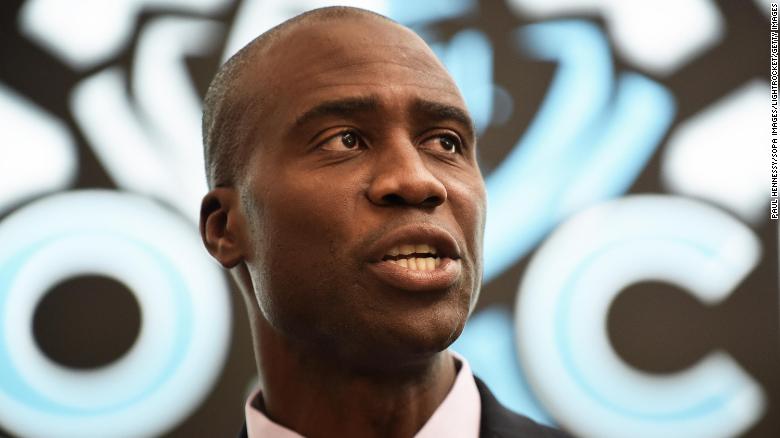 Newly appointed state Surgeon General Dr. Joseph Ladapo speaks during a press conference at Neo City Academy in Kissimmee, Florida.


