Contamination leaves New Mexico town with fewer than 20 days of clean water

The Hill

Contamination leaves New Mexico town with fewer than 20 days of clean water

Tyler Wornell – August 29, 2022

(NewsNation) — Contamination has left a northern New Mexico town with less than three weeks worth of clean water.

Wildfires that spread through the northern part of the state earlier this year tainted the water supply for the city of Las Vegas, forcing the town to distribute bottled water and cut consumption.

“We’re very fortunate in that the community has been very supportive through this crisis,” Mayor Louie Trujillo said Sunday on “NewsNation Prime.” “Everyone is doing a fantastic job in conserving the water that we do have.”

The city’s watershed was burned over in the Calf Canyon/Hermits Peak Fire, and now debris is running off into the Gallinas River. The current filtration system can’t handle the excess contaminants, leaving the city looking elsewhere for a clean water supply.

Residents have cut their usage by about 40% to 50% of typical levels, Trujillo said, and officials are investigating tapping into other nearby reservoirs, among other solutions.

“We’re relying now mostly on a temporary filtration system,” Trujillo said. He said there are fewer than 20 days worth of clean drinking water left.

Monsoon floods in Pakistan kill nearly 1,000 since mid-June

The cleanup effort could take up to 10 years, Trujillo has been told. It could mean having to completely replace the city’s water filtration system.

“We’re told that we’re in this for quite some time,” Trujillo said. “Now we will have to design and pay for a huge improvement or replacement of our filtration system.”

As climate change results in hotter temperatures, drier air and more frequent wildfires, the economic costs of natural disasters are rising. Flooding in Dallas last week resulted in an estimated $6 billion in damages.

Economist Rebecca Ryan said the insurance market is facing higher claims than its ever had. Additionally, the White House has estimated climate change will cost the U.S. $2 trillion each year by the end of the century.

“This is more than the value of Google,” Ryan said. “Sometimes those numbers don’t include things like loss of life … so I think that’s probably a pretty conservative number.”

Next year’s food crisis will be different from this year’s. Here’s how it could change — for the worse — in 2023.

Business Insider

Next year’s food crisis will be different from this year’s. Here’s how it could change — for the worse — in 2023.

Huileng Tan – August 28, 2022

Next year’s food crisis will be different from this year’s. Here’s how it could change — for the worse — in 2023.

The food crisis could worsen in 2023, with a supply squeeze overtaking logistical constraints as the key challenge.

The Ukraine war has disrupted sowing and other farm activities, which has affected yields.

Elsewhere, farmers are using less fertilizers due to high prices, which could depress harvests.

The pandemic, the war in Ukraine, and the ensuing supply-chain chaos have collectively driven up the prices of everything from wheat and sunflower oil to lemons and avocados.

While the supply-chain has been in a state of disruption since the COVID-19 pandemic started in 2020, the dislocations have been compounded by the war between Russia and Ukraine, both of which are major wheat exporters. This has contributed to food inflation that’s hitting the most vulnerable especially hard, according to Mercy Corps, a humanitarian organization that distributes aid to the needy globally.

“Skyrocketing food prices in 2022 have meant that the cash assistance we provide vulnerable families doesn’t go as far,” Tjada D’Oyen McKenna, the CEO of Mercy Corps, told Insider. “The main constraint to accessing food is decreased purchasing power coupled with increased food prices.”

Last month, Ukraine and Russia reached an agreement brokered by the United Nations and Turkey that allows Ukraine to restart grain exports out of the Black Sea. The move has offered some relief to global markets: The UN Food and Agriculture Organization Food Price Index — which tracks a basket of commonly trade commodities — fell for the fourth consecutive month in July after hitting a record high earlier in 2022.

But, the price declines are unlikely to trickle down to the consumers immediately.

“While many food prices have been decreasing in recent weeks, with some returning to prewar levels, markets will continue to be volatile and even if global prices come down, local markets may not see price adjustments for upwards of a year,” said McKenna.

And by then, we could see a new chapter in the food crisis that could push up prices again. Here’s how the food crisis could change — for the worse — in 2023.

This year, it’s a logistics problem. Next year, it could be a supply issue.

This year’s food crisis is mostly due to a logistics disruption tied to issues in shipping Ukrainian and Russian grains out of the countries. But next year, the food supply itself could be in peril — particularly in Ukraine.

Russia’s invasion of Ukraine, launched on February 24, threw a wrench into the annual farm cycle and disrupted the spring sowing season in April and May. Another sowing cycle takes place from September to November.

In July, Ukraine President Volodymyr Zelenskyy took to Twitter to warn that the country’s farm harvest could be halved this year due to the war. “Ukrainian harvest this year is under the threat to be twice less,” Zelenskyy tweeted.

In an August 17 report, consultancy firm McKinsey forecast a sharp drop in harvest volumes: It estimates Ukraine’s production of grains, such as wheat, will drop by 35% to 45% in the next harvesting season.

“The ongoing conflict is interfering with farmers’ ability to prepare fields, plant seeds, and protect and fertilize crops, which will likely result in even lower volumes next harvest season,” McKinsey wrote in the report about global food security amid the Ukraine war and impact from climate change.

Per McKinsey forecasts, Ukraine’s harvest will be 30 to 44 million tons below normal levels this year. This is due to fewer plantings on an acreage basis, reduced farmer cashflow as much of their last harvest can’t be shipped, and the possibility of grain left untended or unharvested, the consultancy firm said.

“In the next planting season, due to the war’s disruption of Ukrainian planting and harvesting and combined with less-than-optimal inputs into Russian, Brazilian, and other growing countries’ crops, supply will likely tighten,” wrote McKinsey. The consultancy interviewed local growers and reviewed local data for its report.

Soaring fertilizer prices and climate change add to supply shock

Russia accounted for almost one-fifth of 2021 fertilizer exports, but the war in Ukraine has caused severe disruption to the supply of crop nutrient. Prices of urea, a common nitrogen fertilizer, have more than doubled from a year ago, according to Bloomberg’s Green Markets service. As a result, farmers around the world are using less fertilizer.

“Fertilizer shortages and higher prices for fertilizers are also expected to reduce yields in countries that depend heavily on fertilizer imports, such as Brazil. This will likely further decrease the volume of grain on the world market,” McKinsey wrote in its report.

Mercy Corps has observed the same trend. “Farmers we work with in Guatemala have been unable to invest in the next production cycle either because they cannot afford to buy fertilizers and other inputs derived from oil, such as plastics for padding and pipes for irrigation systems, or because they cannot find agricultural inputs in the market,” said McKenna.

Given that the shocks to farming and supply come at a time of extreme climate conditions, including severe droughts in Europe and floods in Australia, McKinsey expects the next food crisis to be worse than those in 2007 to 2008, and from 2010 to 2011.

“The conflict in Ukraine is shaking important pillars of the global food system in an already precarious context,” the consultancy said.

Tips for harvesting and storing summer vegetables | Gardener State

Home News Tribune – My Central Jersey

Tips for harvesting and storing summer vegetables | Gardener State

William Errickson – August 28, 2022

This is an exciting time of the year to be a gardener as many summer vegetables are at peak ripeness and ready to harvest. There is nothing like slicing into a vine ripened Jersey tomato or enjoying an ear of sweet corn that was picked that day.

Whether you grow your own vegetables or purchase them from a local farmer, it is important to know when and how to pick vegetables at the right time, so they are at their highest quality. Once you have harvested your vegetables, or brought them home from the market, they must also be stored properly so they retain their freshness for as long as possible.

With these tips for picking and storing summer vegetables, you can be eating Jersey Fresh all throughout the harvest season.

Tomatoes
This photo of a table of cherry tomatoes of different colors, taken by Sarah Licata, a food blogger based in Merchantville in Camden County, was awarded the Grant Prize in the 2019 #FindJerseyFresh Challenge photo contest.

For the best flavor, tomatoes should be allowed to ripen on the vine. This means that their full color has developed before they are picked. While most of the time we are talking about a red tomato, there are also many varieties of tomatoes that are different colors such as yellow, orange, pink and even striped! Once the tomato has turned color, gently grasp the fruit (yes, a tomato is a fruit) and twist it away from the plant. Be careful not to damage the skin of the tomato when you are picking them or when you are bringing them home from the market because this can cause them to rot prematurely. Try not to stack too many ripe tomatoes on top of one another in your harvest basket either, as this can also damage them.

Tomatoes should not be refrigerated and store best at temperatures over 50degrees. Don’t wash tomatoes until you are ready to eat them and if you must store a tomato that has already been sliced, then you can put it in an airtight container and put it in the refrigerator. Remember, this is the only time that a tomato should go in the refrigerator as they will get soft, and their quality will decline rapidly.

Corn
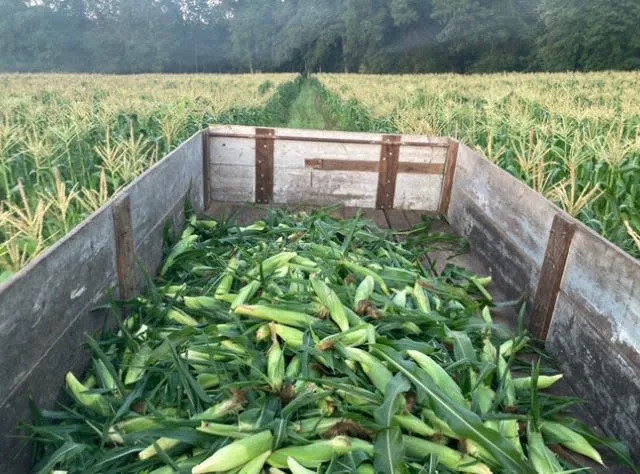
"If I filled this cart, I'd get about 60 burlap bags full. I don't think I ever picked that much in one day. Most we did was 50 bags." Fresh-picked sweet corn from the fields of Tom Sutton, a third-generation farmer in Burlington County, New Jersey.
“If I filled this cart, I’d get about 60 burlap bags full. I don’t think I ever picked that much in one day. Most we did was 50 bags.” Fresh-picked sweet corn from the fields of Tom Sutton, a third-generation farmer in Burlington County, New Jersey.

It can be tricky to choose the best and ripest ears of sweet corn. The silks at the top of the ear will turn brown and die back when the ear is mature and ready to harvest. If you wrap your hand around the ear, it should feel plump, and you should be able to feel the individual kernels through the outer husk. If you are picking sweet corn in the field and you have identified a fully ripened ear, grab the ear in your hand and twist it away from the plant in a downward motion. It should break off from the stalk easily and you will now be holding some of the best that Jersey has to offer.

More:Edison’s first community garden will help feed those in need

More:Exploring summer gardens in NJ and beyond | Gardener State

The husk should not be removed until you are ready to cook and eat sweet corn because it protects the kernels and prevents them from drying out. Corn can be stored in the refrigerator, but it will have the highest quality if it is eaten on the same day that it was picked. If corn is stored for too long, then the sugars in the kernels start to turn to starch and it will not be as sweet.

Melons

Cantaloupes and other melons must be allowed to ripen on the vine to develop their full sugar content and flavor profile, so it is important not to get impatient and attempt to harvest your melons before they are ready. The skin of a cantaloupe will turn from green to yellowish orange when they are ripe, and the fruit should slip easily off the vine. They will also smell sweet and fragrant like floral honey when they ripen, so don’t be afraid to use your nose. Ripe melons can be stored in the refrigerator for a short time but should be eaten within a week of harvest.

Watermelons will not necessarily slip off the vine the way that cantaloupes do, and they do not give off a heavy fragrance, but there are other clues that we can use to determine when they are ready. Look for ripe watermelons to have a yellow spot on the bottom, where the fruit was in contact with the ground. Those with a trained ear also say that if you tap on a ripe watermelon it should sound “hollow” when you put your ear up to it. Watermelons have a longer shelf life than other melons and should be refrigerated, especially after they are cut.

If you are looking for Jersey Fresh vegetables this harvest season, be sure to check out Cook’s Market every Friday from 11 a.m. to 3 p.m. at Rutgers Gardens, 130 Log Cabin Road in New Brunswick.

William Errickson is the Agriculture and Natural Resources Agent for Rutgers Cooperative Extension of Monmouth County.

Dried-Out Farms From China to Iowa Will Pressure Food Prices

Bloomberg

Dried-Out Farms From China to Iowa Will Pressure Food Prices

Kim Chipman and Tarso Veloso – August 28, 2022

(Bloomberg) — Drought is shrinking crops from the US Farm Belt to China’s Yangtze River basin, ratcheting up fears of global hunger and weighing on the outlook for inflation.

The latest warning flare comes out of the American Midwest, where some corn is so parched stalks are missing ears of grain and soybean pods are fewer and smaller than usual. The dismal report from the Pro Farmer Crop Tour has helped lift a gauge of grain prices back to the highest level since June.

The world is desperate to replenish grain reserves diminished by trade disruptions in the Black Sea and unfavorable weather in some of the largest growing regions. But an industry tour of US fields over the past week stunned market participants — who had been more optimistic — with reports of extensive crop damage due to brutal heat and a lack of water.

Meanwhile, drought is taking a toll in Europe, China and India, while the outlook for exports out of Ukraine, a major corn and vegetable oil shipper, is hard to predict amid Russia’s invasion.

“Even before this week’s news from the crop tour, I have been concerned that we would not see much stock rebuilding until 2023,” said Joe Glauber, a former chief economist at the US Department of Agriculture who now serves as a senior fellow at the International Food Policy Research Institute in Washington. The “opening of Ukraine ports is a welcome sign, but volumes remain far below normal levels.”

Read more: Smallest US Corn Crop Since 2019 Signals Higher Food Costs Ahead

Traders always watch weather forecasts closely but this year the vigilance has intensified — every bushel matters. While corn, wheat and soybean prices have cooled off from record or near-record highs seen earlier this year, futures remain highly volatile. Bad weather surprises from now until fall harvests are finished could send prices soaring again.

An index of grains and soybeans is trading almost 40% above the five-year average and the surge in crop prices has been a major contributor to global inflation. Already, food shortages helped lead to the downfall of Sri Lanka’s government earlier this year when the country ran out of hard currency needed to pay for imports.

The United Nations’ Food and Agriculture Organization’s index tracking food prices fell last month from June, though remains 13% higher from the same period last year.

In the US, corn is the most dominant crop and a lackluster harvest will have ripple effects across the global food supply chain, adding pressure on South America to produce bumper crops early next year. That’s especially the case if China, which is suffering its worst drought since the early 1960s, is forced to import more grains to feed its massive livestock herds and shore up domestic inventories.

After the recent crop tour, officials now estimate that US production will be 4% lower than the formal government forecast. The pinch follows drought-driven shortfalls of US winter wheat as well as soybeans in Brazil, the top grower.

The global farming outlook going into 2023 has market watchers worried. For the first time in more than 20 years, the world is facing a rare third consecutive year of the La Nina phenomenon, when the equatorial Pacific cools, causing a reaction from the atmosphere above it. This could have dire consequences for drought across the US as well as dryness across the vital crop regions of Brazil and Argentina.

And while it’s hard to link the weather in any given year to long-term climate patterns, analysts warn that global warming will be a growing drag on agricultural output in years to come.

READ: Drought Threatens China’s Harvest When World Can Least Afford It

For now, Europe is in the throes of a drought that appears to be the worst in at least 500 years, according to a preliminary analysis by experts from the European Union’s Joint Research Center. Several EU crops are being hit particularly hard, with the yield forecasts for corn 15% below the five-year average, the latest data show.

“With energy prices remaining elevated at least through this coming winter, any major shortfall in corn supplies will have devastating impact on food and feed sectors,” said Abdolreza Abbassian, a food market analyst and a former economist with the United Nations’ Food and Agriculture Organization.

In China, historic drought has hit regions along the Yangtze River and the Sichuan basin, hurting rice crops, the country’s top food grain.

India’s rice planting has shrunk 8% this season due to a lack of rainfall in some areas. The government is discussing curbs on exports of so-called broken rice, which is mainly used for animal feed or to produce ethanol in India. Top buyers include China, which uses it mostly to nourish its livestock, and some African countries, which import the grain for food.

India accounts for about 40% of global rice trade and is the world’s biggest shipper.

‘This Climate Thing’

In the US, Nebraska farmer Randy Huls, a participant in the crop tour, is staring down a smaller corn harvest this year due to lack of rain. In the longer term, he’s concerned how changing weather patterns might impact the farm he leaves behind.

“They are predicting the Corn Belt to move north,” said Huls, 71, who raises corn, soybeans, wheat and hogs in southern Nebraska. “We could be a lot drier yet and that’s this climate change thing they are talking about.

“I doubt in my lifetime I’ll see that, but I always wonder about my son and especially my grandsons,” he added. “What are they going to see?”

(Adds food-price index in eighth paragraph. A previous version of this story was corrected to fix a reference to the Black Sea in the third paragraph.)

Have we reached a tipping point on climate change?

New Hampshire Union Leader, Manchester

Have we reached a tipping point on climate change?

Shawne Wickham – August 28, 2022

Aug. 28—Ray Sprague doesn’t try to convince anyone that climate change is real. But the second-generation Plainfield farmer has seen the evidence during his own lifetime that, for him, ends any debate.

It’s not just that the fall frost now comes almost a month later than it used to.

“We’re not having winters,” he said.

Sure, New Hampshire still has cold weather, but the Upper Valley doesn’t get the “straight-through” snow it used to, Sprague said. “When we were kids, it was the end of November, early December until the stuff melted in March or April,” he said. “That doesn’t happen.”- ADVERTISEMENT -https://s.yimg.com/rq/darla/4-10-1/html/r-sf-flx.html

Sprague is not an old-timer; he’s 39.

For decades, scientists have been warning about the effects of climate change.

Lethal floods and wildfires. Drought and violent storms.

Crop failures and loss of habitat leading to food shortages and higher prices. Invasive insects and the new diseases they bring with them.

Rising tides that destroy coastal homes and contaminate drinking water. Warmer winters that threaten the ski industry on which New Hampshire’s tourist economy depends.

But those scholarly, data-driven reports about climate change largely have been ignored by a public busy with more pressing personal and pocketbook matters — and downright rejected by some who believe it’s a hoax.

Lately, however, that may be changing.

Time to change

Have we reached a tipping point?

“I hope we’re at the tipping point, because things need to change,” said Mary Stampone, New Hampshire’s state climatologist. “We still have time to do something about it.”

There’s some evidence. More of our neighbors are putting up solar panels, installing heat pumps and buying electric cars.

TV meteorologists now regularly report the connection between natural disasters and climate change.

American automakers have embraced the transition to electric vehicles — even the iconic Ford F150 and Chevy Silverado trucks soon will have electric versions. New Hampshire auto dealers say they can’t get enough vehicles to meet demand. And California regulators plan to ban gas-powered cars by 2035.

Meanwhile, a divided Congress recently passed the first significant climate-change legislation, which will provide consumer rebates and tax credits for energy-saving measures and spur investments in clean-energy infrastructure.

Public understanding and acceptance of climate change are more widespread today, and there’s a reason for that, said Stampone, an associate professor of geography at the University of New Hampshire.

“What climate scientists were predicting 20 years ago, we’re actually seeing happen now,” she said. “The storms are getting worse, we’re seeing more damage, and it’s hitting more people because we have ever more populated coastlines. More people are in the way of worse storms, so more people are being affected by it.

“That’s an unfortunate way people tend to change their minds,” Stampone said.

Effects already felt

Climate is not the same as weather — but they are linked, Stampone said.

“Climate is the system that drives day-to-day weather,” she explained. “Those larger-scale patterns manifest as short-term weather.”

In many places, the effects of climate change are already hitting people’s wallets, she said.

“There are places that you cannot get insurance,” she said. And in flood-prone areas, she said, “you pay through the roof.”

In seaside communities, Stampone said, “It’s starting to hit home.”

“Whole towns are dealing with this,” she said. “Property values are affected, taxes are affected, and it’s a spiral.”

Extreme weather is making the already difficult job of family farming even tougher, Plainfield’s Sprague said.

This year, he said, “We’re really dry. We’ve had less than 5 inches of rain since the beginning of June.”

And when it does rain, he said, it’s no longer the day-long soaking rains that crops need. Instead, he said, “If you’re going to pick up rain, it’s going to be fast and it’s going to be hard for it to soak in.”

Last year, it was just the opposite. “July a year ago, we had almost 20 inches of rain in a month.”

The volatility makes it difficult to plan, Sprague said. “Are we going to be super dry or are we going to have crazy, high-intensity storms, and lose crops to flooding in the middle of droughts?” he said.

At his family’s Edgewater Farm, they now plant some crops in “tunnels,” a sort of temporary greenhouse, to try to avoid the worst effects of severe weather.

The delayed frosts have extended the growing season for some crops, which is a plus. But certain pests and plant diseases are coming earlier than in the past, and some weeds are staying longer.

“It just feels like a gauntlet, getting through the seasons now,” Sprague said.

Awareness growing

Chris Mulleavey, president and chief executive officer at Hoyle, Tanner & Associates, Inc., said engineers don’t spend time debating climate change. “We’re practitioners, and we address whatever Mother Nature throws our way,” he said.

“Things are changing, which is what the climate does,” Mulleavey said. “So when we look into the future, certainly from an engineering perspective, our job is to protect the health and safety in the designs we make for the public.”

His engineering consulting firm has created a Resilience, Innovation, Sustainability, Economics and Renewables group — something that’s especially attractive to a new generation of engineers, Mulleavey said.

“I’m not sure if it’s a tipping point yet, but I think there’s certainly a larger awareness of it,” said Mulleavey, president of the state’s Board of Professional Engineers.

As an engineer, he said, “I find myself in the middle: Let’s work together to find solutions without this hysteria one way or another.”

Dan Weeks, co-owner and vice president of business development at ReVision Energy in Brentwood, said his company is “blessed to be very busy.”

ReVision, which installs solar panels, heat pumps, electric vehicle-chargers and batteries for storage, has grown from 130 employees five years ago to nearly 400 today, Weeks said. “And that’s been in response to growing demand,” he said.

Part of that is driven by the rising cost of electricity, he said. “The source of our power is still free, the sun,” Weeks said. “Which makes it easier and easier to compete with sources of energy that actually at this point in time cost more.”

But there’s another reason.

“We do hear increasingly from clients on both the residential and commercial side that they’re concerned about the state of our climate,” Weeks said. “They’ve got kids and grandkids, and it becomes clearer and clearer with every passing season.”

Weeks sees it himself. “Anybody who, like me, was fortunate enough to grow up here, the winters of today are nothing like the winters we knew growing up,” Weeks said. “You sort of feel it in your bones.”

Sam Evans-Brown, executive director of Clean Energy New Hampshire, said past energy transitions — wood to coal, then coal to oil — have taken at least 50 years. And that’s a good way to consider the transition from fossil fuels to renewable energy, he said.

“It’s a marathon, not a sprint, and there are going to be so many hurdles from here to a zero-carbon economy,” he said.

Years ago, people predicted that it would take a “horrendous disaster” to wake people up to the threat of climate change, Evans-Brown said. “What I’ve witnessed over the past 10 years is a litany of horrendous climate disasters, but folks have not woken up,” he said. “At least they haven’t woken up at the speed and scale we assumed they would.

“We are immensely adaptable creatures, and we are adapting to climate reality,” he said.

Workforce and supply chain challenges remain a barrier to full implementation, Evans-Brown said. But, he said, “The goal is once you’ve seen solar go up on the roof of your library, and watched them put in heat pumps to heat and cool it, more people will become educated about the quality of these technologies and start to adopt them in their own lives.”

Most consumers still make decisions based on their pocketbooks, he said. “So we have to make it so this stuff is affordable if we want to transform society,” he said.

When that happens, he said, “They’ll sell themselves on the economics; they’ll sell themselves on the public health benefits.”

A range of reactions

Lawrence Hamilton, a professor of sociology and a senior fellow at the Carsey School of Public Policy at the University of New Hampshire, has been asking the same question in surveys since 2010: Whether people believe that climate change is happening now, and whether it’s caused mainly by human activities or by natural forces. He also asks whether people think winters have gotten warmer compared to 30 or 40 years ago.

Hamilton has been watching for a tipping point, a seismic shift in public attitudes. He expected that might happen after major hurricanes, and then again after Pope Francis’s 2015 encyclical on the environment, which called climate change “one of the principal challenges facing humanity in our day.” Instead, he said, “The behavior we have seen is very gradual recognition.”

It’s “really slow compared with the actual pace of climate change,” he said.

Some of Hamilton’s research focuses on North Country residents, where 65% of those surveyed agree that “climate change is happening now, caused mainly by human activities.” Six in 10 respondents say winters in Northern New England are warmer than winters 30 or 40 years ago.

That’s not surprising; folks in northern regions have seen the changes firsthand, Hamilton said.

“Ski season ends earlier, ice-out is earlier,” he said. “A few degrees can be crossing that 32-degree mark, and can be the difference between liquid and frozen water. And that’s really visible.”

His surveys find that political identity influences both perceptions of winter weather and beliefs about climate change.

Climatologist Stampone said her students give her hope. “This is going to affect their lives,” she said. “We’re talking about their life span. So their passion for it and interest in it makes me very, very hopeful.”

“I just hope it’s not too late,” she said.

Her UNH colleague Hamilton, too, finds hope in the younger generation. But it’s not enough to sit back and wait for them to tackle the problem, he said.

“There’s something that I wish people understood better, which is that all these things cost money, but the cost of doing nothing will just be vastly higher,” he said.

“The future is now,” he said. “The future has come, and we don’t have a huge amount of time to prevent or slow down the unfortunate things that are going to happen.

“Every day we don’t act makes it harder to avoid bad consequences that are in some cases even disastrous.”

Despite the challenges, Plainfield farmer Sprague said he has no plans to quit. Farmers are adaptable, he said.

“They’re a pretty savvy group, and they’ll figure things out,” he said. “We’re in it for the long haul up here.”

It’s not worth trying to convince people who don’t accept that climate change is real, he said.

“I think there’s people, when the world’s on fire, they’ll find a reason not to believe in it,” he said. “I don’t know if it’s worth having that battle.”

Ukraine nuclear plant reconnected to grid; narrowly avoided disaster, Zelenskyy says

NBC News

Ukraine nuclear plant reconnected to grid; narrowly avoided disaster, Zelenskyy says

Yuliya Talmazan and Artem Grudinin – August 26, 2022

The world narrowly avoided a radiation disaster after a Russian-controlled nuclear plant was completely disconnected from Ukraine’s power grid, President Volodymyr Zelenskyy has warned.

The Zaporizhzhia nuclear power plant, Europe’s largest, was back on the grid and supplying electricity to Ukraine on Friday, officials said, a day after it was disconnected from the national power grid for the first time in its 40-year history.

Zelenskyy said in a late-night video address Thursday that after the last working line connecting it to Ukraine’s power grid was damaged by Russian shelling, it was only the plant’s safety systems kicking in with backup power that had averted catastrophe.

“The world must understand what a threat this is: If the diesel generators hadn’t turned on, if the automation and our staff had not reacted after the blackout, then we would now be forced to overcome the consequences of the radiation accident,” he said.

“Russia has put Ukraine and all Europeans in a situation one step away from a radiation disaster,” Zelenskyy added.

Russia blamed Ukraine for the incident. NBC News has not verified either side’s claims.

Earlier Friday, the country’s state nuclear company, Energoatom, said the plant itself was being safely powered through a repaired line from the power grid. There were no issues with the plant’s machinery or safety systems, it said.

It later announced that the plant was reconnected to Ukraine’s power grid and was producing electricity to meet the country’s needs. The agency hailed the plant’s staff as heroes who “tirelessly and firmly hold the nuclear and radiation safety of Ukraine and the whole of Europe on their shoulders.”

But authorities nonetheless began distributing iodine tablets to residents near the plant Friday in case of a radiation leak, amid mounting fears that the fighting around the complex could trigger a catastrophe, the Zaporizhzhia regional military administration confirmed to NBC News.

Russian-installed officials in the surrounding Zaporizhzhia region sought to play down the gravity of the situation. “There was just an emergency situation” that was handled by the plant’s safety systems, Alexander Volga, a Russian-installed official in the nearby town of Enerhodar, told the state news agency Tass on Friday.

Intense fighting around the site has spurred growing fears of a catastrophe. The two sides have traded blame for the attacks, with world leaders calling for a demilitarized zone around the nuclear complex while pushing for access for United Nations inspectors.

Any damage to the plant would be “suicide,” U.N. Secretary-General Antonio Guterres warned earlier this month.

“It was potentially a very, very dangerous situation,” said Hamish de Bretton-Gordon, who led the chemical, biological, radiological and nuclear defense forces known as CBRN in both the British army and NATO.

Cooling systems and other mechanisms that are essential to the safe operation of the reactors need power to run them, while emergency diesel generators are sometimes unreliable.

“The generators at Zaporizhzhia are in an unknown condition, thought to be not in great condition mainly because the Russians have occupied the site for six months, had not allowed inspectors in and maintenance has not been taking place as it should be,” de Bretton-Gordon said. “So we now have the safety mechanisms being run on generators, which we are not 100% certain are reliable.”

“Absolutely had those generators failed, we would then be in a serious position,” he added.

Nuclear experts have raised concerns before about the risk the fighting could pose to the plant’s reactors and the silos of nuclear waste around it.

Ukraine and its international allies, including the United States, have been urging Russia to hand over control of the plant. Moscow captured the site in March and has controlled it since, although Ukrainian engineers still operate it.

As the accusations flew about the plant, Belarus’ authoritarian leader President Alexander Lukashenko said Friday that the country’s warplanes have been modified to carry nuclear weapons in line with an agreement with ally Russia.

Lukashenko said the upgrade followed his June meeting with Russian President Vladimir Putin, who offered to make Belarusian combat aircraft nuclear-capable at Russian factories and to help train pilots.

“Do you think it was all blather?” Lukashenko said to reporters Friday. “All of it has been done.”

Forget Covid (and Monkeypox) the Las Vegas Strip Has a Bigger Problem

The Street

Forget Covid (and Monkeypox) the Las Vegas Strip Has a Bigger Problem

Daniel Kline – August 25, 2022

Explosive growth has been a huge positive for the Las Vegas Strip but there are some dark clouds ahead.

Growth comes with a cost, especially when that growth was not in the original plans.

Think of it like you would an old town, versus a new one. In high-growth parts of the country, builders have created something called a “master-planned community,” that’s a town or city planned out fully. This means that before builders put up a single house or erect the first shopping center, they build (or at least plan) the infrastructure needed for the community when it’s fully built.

You can’t easily go back and make roads wider or increase the capacity of the sewage treatment plant. It’s much more cost-effective to plan for what might be decades out than to sort of build as you go (which is pretty much how every major American city was built and explains why those cities have expensive problems ranging from housing to transportation, and well water).

Las Vegas, as you likely know, was essentially built in a desert and it’s highly unlikely that its founding fathers foresaw the megaresorts of today. That has led to a city that has some significant infrastructure problems that need to be addressed as Sin City continues to exponentially grow.

A Period of Triumph for Post-Pandemic Las Vegas

While covid hasn’t actually gone anywhere, Las Vegas has managed to put the impact of the pandemic (and a hopefully brief monkeypox scare) behind it. Caesars Entertainment, MGM Resorts International, and Wynn Resorts have all reported Las Vegas Strip results nearing or passing 2019 numbers even while the convention and international traveler business has not yet fully recovered.

It’s a hopeful time for Las Vegas which has led to a construction boom with multiple major casino projects, at least one, probably two NBA-ready arenas being built, and even talk of expanding the boundaries of the Las Vegas Strip itself.

That’s all encouraging news for operators including Caesars, MGM, and Wynn, but Alan Feldman, a distinguished fellow at UNLVs International Gaming Institute, believes there’s one major problem which could put the brakes on Las Vegas growth.

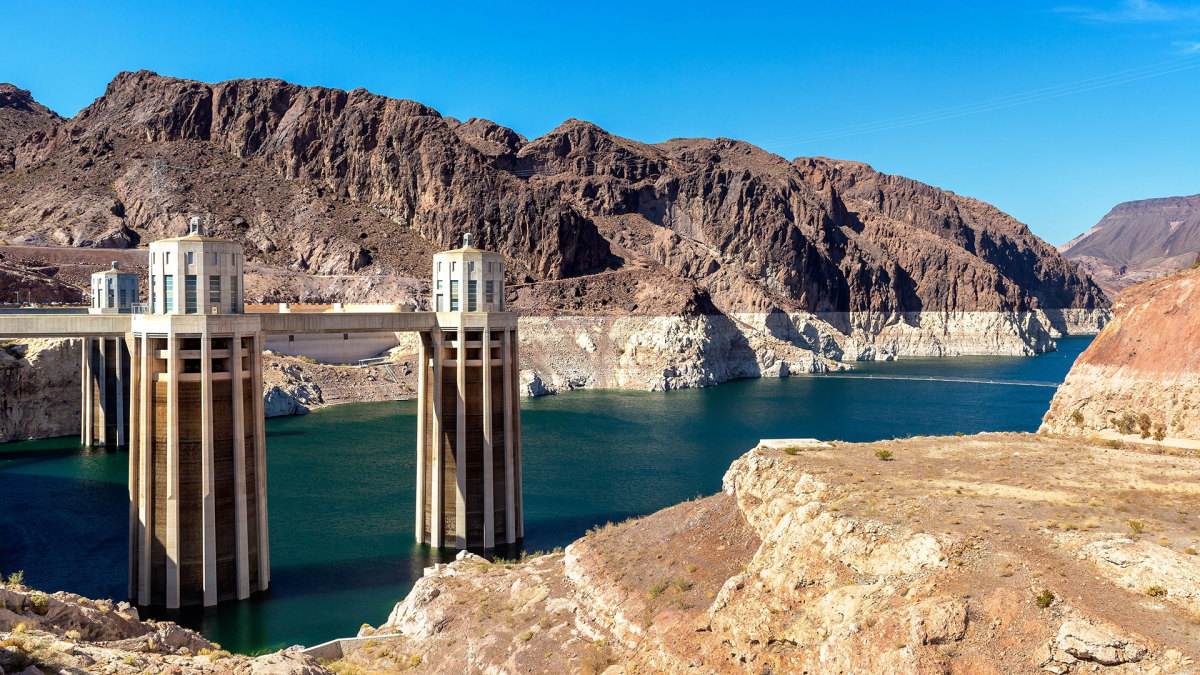
Lake-Mead -DB
Shutterstoc
Las Vegas Needs More Water

Feldman spoke at the NAIOP Southern Nevada (a commercial real estate group) breakfast meeting at the Orleans on Aug. 18. He warned that not having enough water could create major problems for Las Vegas — and certainly any new construction — going forward.

“This is a huge political discussion, but we’re going to need more water,” Feldman said during his presentation at the Orleans, the Las Vegas Sun reported. “I think, at some point, the federal government is going to have to step in and override some of the debate that’s been happening at the state and regional levels.”

Nevada draws water from the Colorado River which has essentially been providing more water than it actually has so the Department of Interior will be cutting Nevada’s allotment by 8%. The river flows into Lake Mead, a key water source for Las Vegas, which has seen its water levels drop.

Feldman believes there is a solution but does not think the city or even the state can handle the problem on their own.

“At some point in America’s future, we’re going to have to deal with desalination, I don’t see any way around that. That’s not something we’d want to see from the states. We’d want the federal government to step in on that,” he said.

Resorts only use about 5% of the region’s water allotment.

The World’s Rivers, Canals and Reservoirs Are Turning to Dust

Bloomberg

The World’s Rivers, Canals and Reservoirs Are Turning to Dust

Brian K Sullivan – August 25, 2022

(Bloomberg) — Rivers across the globe are disappearing.

From the US to Italy to China, waters have receded, leaving nothing but barren banks of silt and oozing, muddied sand. Canals are empty. Reservoirs have turned to dust.

The world is fully in the grip of accelerating climate change, and it has a profound economic impact. Losing waterways means a serious risk to shipping routes, agriculture, energy supplies — even drinking water.

Rivers that have been critical to commerce for centuries are now shriveled, threatening the global movement of chemicals, fuel, food and other commodities.

The Rhine — a pillar of the German, Dutch and Swiss economies — has been virtually impassable at times in recent weeks. The Danube, which winds its way 1,800 miles (roughly 2,900 kilometers) through central Europe to the Black Sea, is gummed up too. Trade on Europe’s rivers and canals contribute about $80 billion to the region’s economy just as a mode of transport.

In China, an extreme summer has taken a toll on Asia’s longest river, the Yangtze. Diminished water levels have hobbled electricity generation at many key hydropower plants. Mega cities including Shanghai are turning off lights to curb power use, and Tesla Inc. has warned of disruptions in the supply chain for its local plant. Toyota Motor Corp. and Contemporary Amperex Technology Co., the world’s top maker of batteries for electric vehicles, have shuttered factories.

Drought plaguing the Colorado River — a source of water for 40 million people between Denver and Los Angeles — has gotten so extreme that a second round of drastic water cuts are hitting Arizona, Nevada, and Mexico. The river and its tributaries irrigate about 4.5 million acres of land, generating about $1.4 trillion a year in agricultural and economic benefits.

The retreating waters of the US Southwest are exposing dead bodies and dinosaur footprints that had been submerged for perhaps millions of years.

Why Are Rivers Shrinking?

The reasons global waterways have dried to a trickle are complex. There’s the impact of the weather-roiling La Nina, prolonged drought in many regions and also simple bad luck. But the biggest driver underpinning the shift is climate change.

“It’s a combination of many factors leading to this particularly extreme event,” said Daniel Swain, a climatologist at the University of California Los Angeles. “But there is clearly a role for climate change, which made multiple underlying, record-breaking, and in some cases, record-shattering heat waves dramatically more likely.”

The Earth’s rising temperatures have meant mountain ranges are getting less snow, leaving less water to flow down to streams in summer during the melt, said Isla Simpson, a scientist at the National Center for Atmospheric Research in Boulder, Colorado.

Mountain snow is nature’s reservoir. When snowfalls dwindle, the source of many rivers — from the US to China to Europe to the Middle East— vanishes, said Swain of UCLA.

“The loss of snow and mountain glaciers in the Alps has been extraordinary this summer as well, shocking even seasoned climatologists and glaciologists,” Swain said.

Then there is La Nina, a cooling of the equatorial Pacific Ocean that upsets global weather patterns, bringing heavy rains to some areas and drought to others. The world is in its second straight La Nina, and the odds are rising 2023 will see another one.

“The ongoing and strong La Nina connects the droughts and low river flows in North America, Europe, Middle East and the southern hemisphere,” said Richard Seager, a research professor at Columbia University’s Lamont Doherty Earth Observatory.

The world’s hotter temperatures also mean that waterways are literally evaporating away.

Or as Seager puts it, the warming atmosphere “is sucking more moisture from the land surface.”

A deeper water shortage on Lake Mead is hardly the worst thing we’re facing

AZ Central – The Arizona Republic

A deeper water shortage on Lake Mead is hardly the worst thing we’re facing

Joanna Allhands, Arizona Republic – August 25, 2022

The federal Bureau of Reclamation has declared a deeper level of water shortage for Lake Mead, the nation’s largest reservoir.

But that was not the most consequential thing Reclamation announced – or, more accurately, skirted – on Aug. 16.

It’s also not the gargantuan cut that some media reports make it out to be.

If anything, we got off easy.

What did Reclamation declare?

A Tier 2a shortage is the deepest mandatory cut we have made to date, one that entails 592,000 acre-feet – 21% – of Arizona’s apportionment from Lake Mead. Nevada must cut 25,000 acre-feet (8%) and Mexico 104,000 acre-feet (7%).

These are significant amounts of water.

But considering that Arizona has already left 800,000 acre-feet of water in the lake this year – a combination of mandated cuts and voluntary, compensated conservation efforts – it’s not exactly a “drastic” cut, as one headline suggested.

Nor is it something new or unexpected. We’ve been planning for this for years.

Where were we before?
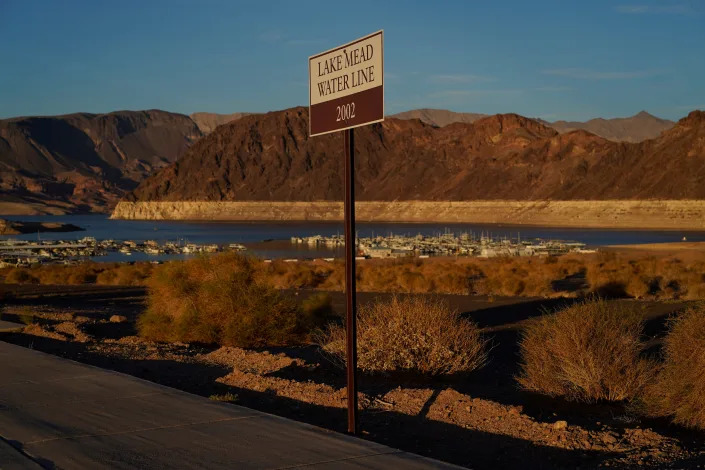
A sign marks Lake Mead's 2002 water level -- with the current shoreline far in the background -- on July 9, 2022, near Boulder City, Nev.
A sign marks Lake Mead’s 2002 water level — with the current shoreline far in the background — on July 9, 2022, near Boulder City, Nev.

Reclamation declared the first water shortage on Lake Mead last August – a Tier 1 shortage – which was created as part of a 2007 agreement that aimed to cut use when the lake hit certain low levels.

Arizona agreed to take the brunt of the cuts, and in a Tier 1 shortage, Arizona must trim 512,000 acre-feet of use. So, a Tier 2a ratchets that up for us by 80,000 acre-feet.

What’s in Lake Mead? 5 bodies, sunken boats and a ghost town – so far

These amounts of water stem from the 2019 Drought Contingency Plan, which ratcheted up cuts when it became clear the 2007 amounts weren’t enough. California agreed to take cuts for the first time as part of that plan, but not until the lake reaches deeper levels of shortage (a Tier 2b shortage, to be exact, but more on that in a second).

Arizona also passed an internal Drought Contingency Plan in 2019 to help lessen the pain of cuts within the state. Pinal farmers – those with the lowest priority rights – were given a bit of water in 2022, plus some funding to help drill wells and transport that water to fields. That hasn’t produced the amount or quality of water that farmers had hoped, but that’s another blog for another day.

How will a Tier 2a shortage play out?

When the Tier 2a shortage goes live in 2023, Pinal farmers will receive no water from the Central Arizona Project, which delivers water to users from Phoenix to Tucson. They must now fully rely on groundwater to survive.

Then again, Pinal farmers were already in line to lose all of their CAP water in 2023, even if we remained in a Tier 1 shortage.

A Tier 2a shortage also will wipe out the next higher priority pool of CAP water – the so-called Non-Indian Agricultural pool. Most of that water goes to central Arizona cities and tribes.

Then again, they won’t necessarily be up a (suddenly dry) creek because the 2019 in-state plan mitigates 75% of their losses. In the grand scheme of things, it could be a lot worse.

Why did we get off easy?

This chart shows the key water levels in Lake Mead, which is used to determine water deliveries for Arizona, Nevada and California.

Shortage declarations are tied to specific lake levels. But Reclamation decided to fudge that with a concept they call “operational neutrality.”

It stems from an emergency action this spring to help prop up Lake Powell. Reclamation kept 480,000 acre-feet in Lake Powell that should have flowed downstream to Lake Mead, then promised to pretend that water was in Lake Mead when determining shortage levels.

The lake has physically reached the threshold to be in a deeper – and more consequential – Tier 2b shortage, one that would ratchet up Arizona’s cuts to 640,000 acre-feet and would require California to cut for the first time, to the tune of 200,000 acre-feet initially.

That’s important because everyone that relies on Lake Mead would be making mandatory cuts, leaving larger, guaranteed amounts of water in the lake as it is rapidly tanking.

Relying on voluntary savings doesn’t always pan out, as we found this year with the 500-plus plan, a separate emergency action (notice that there are a lot of these?) to prop up Lake Mead. The goal was to pay people to leave 500,000 acre-feet in the lake each year, but users only volunteered a little more than half of that in 2022 – mostly from Arizona.

The benefits of those savings evaporated almost immediately once they hit the lake. Essentially, we spent millions on actions that did almost nothing for lake levels.

So, if anything, a Tier 2a shortage is an underreaction, and at a crucial moment when we need to be doing so much more.

Why is this the least of our worries?

We could make every cut we’ve already laid out, all the way down to a Tier 3 shortage, the deepest for which we’ve planned.

And Lake Mead would still be on a freefall to “dead pool” – the point where lake levels fall so low that water can no longer flow downstream through Hoover Dam to users in Arizona, California and Mexico.

Reclamation’s August 24-month study, which was released at the same time as the Tier 2a shortage declaration, projects the lake will fall below 1,000 feet of elevation in 2024 – more than 20 feet below the minimum protection level that Reclamation had hoped to maintain.

That’s why Reclamation said in June that the full Colorado River basin – all seven states that rely on the river – needed to cut an additional 2 million to 4 million acre-feet of water use in 2023.

Their modeling shows we need to cut at least 2.5 million acre-feet simply to maintain that minimum protection level on Lake Mead (and a similarly low protection level on Lake Powell, which also is tanking quickly).

And that’s on top of every water-saving action to which we’ve previously agreed.

So, what’s the takeaway?

We could carry out the cuts in a Tier 2a shortage, or a Tier 2b, or the deepest Tier 3, and it still wouldn’t be enough to keep Lake Mead on life support. We must cut way deeper than that in 2023 – and sustain those deep levels until at least 2026 – if we have any chance of saving it and Lake Powell.

And no, there is no plan yet to do so.

The states couldn’t agree by Reclamation’s mid-August deadline, and while Reclamation promised on Aug. 16 to keep working with states on as many voluntary measures as possible, it did not offer any firm deadlines, water amounts or what exactly it might mandate if states still can’t do enough to fill the giant chasm between supply and demand.

That’s the whole reason we’re in this mess. Despite all that we’ve done so far to trim use, we are still consuming far more water than the Colorado River produces.

A Tier 2a shortage, though painful and consequential, is not enough to solve this problem. Yet it’s unclear how or when we’re going to do enough to keep the lakes from dying.

That’s the problem.

‘There’s simply not enough water’: Colorado River cutbacks ripple across Arizona

AZ Central – The Arizona Republic

‘There’s simply not enough water’: Colorado River cutbacks ripple across Arizona

Debra Utacia Krol, Arizona Republic – August 23, 2022

A view of the Hoover Dam and the Colorado River.

Up and down the Colorado River last week, the state, local and tribal leaders in charge of water supplies for more than 40 million people waited to see if the federal government would impose deeper cuts to river allocations.

The Bureau of Reclamation had given states and tribes an Aug. 15 deadline to find ways to conserve 2 to 4 million more acre-feet of water to stabilize the drought-stricken river and its two largest reservoirs, Lake Mead and Lake Powell. Without such a plan, the bureau said, it would act.

The deadline passed with no agreement in place.

And on Tuesday, the government presented its 2023 water forecasts and said based on projected water levels at the two reservoirs, it would institute the next level of water reductions already agreed upon by the seven states and 30 federally recognized tribes within the Colorado River basin. The Drought Contingency Plan outlines specific steps Reclamation would take if the river flows continue to decline.

The next round of cuts to the three lower basin states and Mexico means that Arizona will have to do with 21% less water than in previous years. Nevada lost 8% of its delivery and Mexico’s allocation was reduced by 7%. The only lower basin state to be spared cuts is California, which holds senior rights to the river.

The bureau did not impose the deeper cuts as some had anticipated. Instead, Interior Department officials said talks would continue to come up with additional reductions as needed. The agency noted that the recently passed Inflation Reduction Act included $4 billion in money to address drought.

Few people were entirely satisfied with the government’s announcement, but one stakeholder went further than the others in expressing disappointment, introducing a new wrinkle in talks among the river’s water users.

The Gila River Indian Community said it would no longer voluntarily leave part of its Colorado River allocation in Lake Mead, an arrangement that helped Arizona meet the requirements of a regional agreement last year. Instead, tribal officials said in a statement Tuesday, Gila River would return to banking its water.

Tribes, agencies upset

In December 2021, the Gila River Indian Community and the Colorado River Indian Tribes signed onto an agreement to leave a combined 179,000 acre-feet of their river allotment in Lake Mead as a way to prop up the reservoir.

The agreement was part of a larger pact by several states and water districts to conserve 500,000 acre-feet per year in Lake Mead, where water levels were dropping rapidly. The pact was in addition to other conservation measures and was known as the 500+ plan.

The initiative was a pledge by the Interior Department as well as water agencies and tribes in the three Lower Basin states and stretched through 2023. The two tribes’ contributions made Arizona’s contribution to the effort possible.

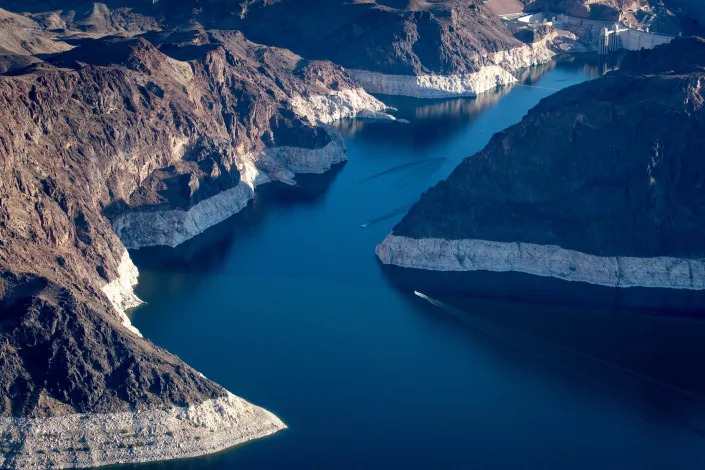
Hoover Dam (top right) and Lake Mead on May 11, 2021, on the Arizona and Nevada border. A high-water mark or bathtub ring is visible on the shoreline. Lake Mead is down 152 vertical feet.

The Arizona Department of Water Resources committed up to $40 million to the plan over its two-year period, while the Central Arizona Project, the Metropolitan Water District in California and the Southern Nevada Water Authority each ponied up $20 million. The federal government matched those contributions for a $200 million pool  to fund fallowing fields and other conservation measures.

But the failure to move forward on a longer term plan to firm up water supplies didn’t sit well with Gila River.

“The Community has been shocked and disappointed to see the complete lack of progress in reaching the kind of cooperative basin-wide plan necessary to save the Colorado River system,” said Gila River Governor Stephen Roe Lewis.

“We are aware that this approach will have a very significant impact on the ability of the State of Arizona to make any meaningful commitment to water reductions in the basin state discussions,” Lewis said, “but we cannot continue to put the interests of all others above our own when no other parties seem committed to the common goal of a cooperative basin-wide agreement.”

Lewis also praised the Southern Nevada Water Authority’s general manager, John Entsminger, for his plain speaking in an Aug. 15 letter to the Interior Department.

“What has been a slow-moving train wreck for twenty years is accelerating and our moment of reckoning is near.” Entsminger wrote. “The unreasonable expectations of water users, including the prices and drought profiteering proposals, only divide common goals and interests.”

Entsminger also outlined several steps the states, tribes and water agencies could take to minimize their use of Colorado River water, including agricultural efficiency enhancement, removing lawns, investing in water reuse, recycling and desalination programs and habitat restoration.

“We appreciate the support of Governor Lewis and the Gila River Indian Community for the recommended actions Nevada has put forth,” Entsminger said in an emailed statement. “Nevada stands ready to work with any partners who seek solutions based upon real world, equitable and sound scientific principles to the monumental challenges facing the Colorado River.”

In Arizona, officials looked for ways to repair the rift.

“The Gila River Indian Community has a been a big part of the positive actions Arizona has taken to protect Lake Mead in recent years,” the Central Arizona Project said in an emailed statement.

The agency praised the tribe for their work to develop the Drought Contingency Plan and in conserving water.

“We are understanding of the Community’s position that others need to be part of the Colorado River solution,” the CAP statement said. “We are hopeful that if a broader plan for taking action comes together that Arizona can support, the Community will choose to  participate along with other Arizona water users.”

The Arizona Department of Water Resources declined comment on the statement.

The Colorado River Indian Tribes said it would continue to make water available for conservation through 2023.

“The Colorado River Indian Tribes are also development a multiyear farming and fallowing plan that includes additional conservation measures to be implement during 2023 and for many years thereafter,” said CRIT Chairwoman Amelia Flores.

Colorado River: Deep cuts loom as water levels plunge. Who will feel the pain most?

Feds should act ‘to avoid catastrophe’

Other water agencies and elected officials said they would continue to work with Reclamation to develop a longer-term plan to stabilize the reservoirs and assure at least some water would continue to flow.

Phoenix officials said in an emailed statement that although their water customers would not be affected by the cuts, the lack of action by federal officials was “disappointing.” The city gave up 23% of its river allocation to stabilize Lake Mead and support Pinal County farmers who lost river water when the first round of cuts was announced a year ago, the statement said.

The city is acting to ensure water deliveries and reduce dependence on the Colorado, officials said. A $300 million pipeline will move water to North Phoenix, which currently relies on the Colorado River for water. Phoenix is also restoring ecosystems in the Salt River, which provides 60% of the city’s water, the statement said. And, the city is beefing up infrastructure.

Sen. Kyrsten Sinema, D-Ariz., said she would work with her newly-created water advisory council, state stakeholders and neighboring states to ensure a secure water future.

Sen. Kyrsten Sinema, D-Ariz., and Gov. Stephen Roe Lewis (Gila River Indian Community) talk during the Water Advisory Council meeting, Aug. 8, 2022, in the Hoover Dam Spillway House, 75 Hoover Dam Access Road, Boulder City, Nevada.

“Arizona’s future depends on the strength and resiliency of our water supply,” she said via a spokesperson. “As the West continues experiencing historic drought, Arizona has led the way identifying short and long term solutions while shouldering a disproportionate share of this crisis.”

Sinema said that $13 billion had been secured for drought resiliency funding over the past year through several bills including the most recent act, the Inflation Reduction Act, and other legislation.

Sen. Mark Kelly, D-Ariz., wrote the Interior Department last week calling for the agency to outline its options to implement mitigation actions to prevent “drastic consequences for Arizona and other Colorado Basin states.” If the reservoirs’ levels continue to drop, those consequences could include the loss of hydropower generation and even to deadpool conditions, where no water would flow out of Lake Mead.

“In 2022 alone, Arizona farmers, cities, and tribes have pledged resources to conserve over 800,000 acre-feet of water — an amount equal to nearly one-third of our state’s full allocation,” Kelly said in the letter. He added that Arizona has offered to put more “wet” water on the table to be conserved than other states.

At least one congressman also called for more action from the federal government.

“The Colorado River is in crisis, and talks among basin states to fairly spread the pain of much-needed cutbacks are going nowhere,” said Rep. Greg Stanton, D-Ariz.. “The federal government must play a stronger role. I’m urging the Administration to take immediate action to avoid catastrophe.”

Stanton said in a letter to President Joe Biden that the cuts announced Aug. 16 were already mandated by the Drought Contingency Plan, while in June, Reclamation Commissioner Camille Calimlim Touton said that unless another 2 to 4 million acre-feet were cut, the government would take action.

“Yesterday’s announcement proved that commitment hollow,” Stanton wrote.

One of the largest single water users on the river said it was ready to collaborate on further solutions. The Imperial Irrigation District in southern California manages an allocation of 3.1 million acre-feet, including pass through water, larger than Arizona’s entire Colorado River allocation of 2.8 million acre-feet.

Since 2003, the utility has conserved more than 7 million acre-feet of water according to an Aug. 16 statement. The district said it would work to conserve water and to help restore the Salton Sea, which has declined rapidly in recent years as the utility slashed agricultural runoff that fed the lake.

Lake levels: Report: Modify Glen Canyon Dam or risk losing the Colorado River in the Grand Canyon

‘We have to take it seriously’
A view of the Colorado River as it flows through the Colorado River Indian Tribes' Ahakhav Tribal Preserve in Parker on Nov. 13, 2021.
A view of the Colorado River as it flows through the Colorado River Indian Tribes’ Ahakhav Tribal Preserve in Parker on Nov. 13, 2021.

At least one water expert said he doesn’t believe the situation will improve in a year.

“The Colorado River is going to continue to decline,” said David Feldman, a professor at the University of California, Irvine and director of Water UCI, an institute that studies water problems facing the nation and the world.

He said many of the problems that have arisen from the plunging levels of Lake Mead and Lake Powell will be ongoing.

“So you have to start from the baseline that is simply not going to be any more surface water available from this point forward, at least not for the foreseeable future,” Feldman said. “The next steps, I believe, should be that each state should figure out a way to get user groups, local governments, water agencies, irrigation districts together in conversations about how they would negotiate targets for prescribed cutbacks based on water availability figures.”

Feldman said he understands Gila River’s stance.

“The drought did not cause the angst of tribal nations towards allocation agreements,” he said, but the drought has exacerbated it. “The tribes have been frustrated. The Navajo Nation, Hopi, others have been concerned for decades now about water allocation agreements on the Colorado and its tributaries.”

In depth: Tribes take a central role in water management as drought and climate change effects worsen

He also said the West is still not quite at the point to have a serious conversation about the future of water, “about our children and our children’s children.” Feldman said that if, as many forecasts predict, climate change is permanent and not just cyclical, water officials will need to plan far ahead.

“What are we going to do about the the water and the water needs and how are we going to plan to aggressively conserve?”

Strategies from recycling and reuse to landscaping all need to be on the table, he said, since outdoor irrigation accounts for one-third to one-half of urban water use. But just reducing urban outdoor use won’t be enough to address the shortages to come.

He also disputed some assertions that cities shouldn’t exist in arid lands. “The Mesopotamians did okay,” Feldman said, as well as the Huhugam in the Salt River Valley. Living in the desert, or having a lot of people, doesn’t by itself cause the problem, he said. “It’s how we live in that environment.”

Feldman pointed out that other arid parts of the world have done well, including Israel. “The Israelis have really become very savvy in the sense of not only developing the technologies, but then realizing there’s a market for it,” he said.

“We can live in a water scarce environment without sacrificing our quality of life,” Feldman said. “But we have to take it seriously.”

Debra Krol reports on Indigenous communities at the confluence of climate, culture and commerce in Arizona and the Intermountain West.

Coverage of Indigenous issues at the intersection of climate, culture and commerce is supported by the Catena Foundation.