‘Triple-dip’ La Niña is on the way. Here’s what it means for weather in the US
Doyle Rice, USA TODAY – September 9, 2022
La Niña just won’t go away.
Meteorologists say that for the third straight year, La Niña will persist throughout the winter in the Northern Hemisphere. This is the first “triple-dip” La Niña of the century, according to a recent update from the United Nations’ World Meteorological Organization.
This La Niña began in September 2020.
The La Niña climate pattern is a natural cycle marked by cooler-than-average ocean water in the central Pacific Ocean. It is one of the main drivers of weather in the United States and around the world, especially during late fall, winter and early spring.
It’s the opposite to the more well-known El Niño, which occurs when Pacific ocean water is warmer than average. While this would be the first “triple-dip” La Niña this century, it’s not unprecedented for the pattern to last more than nine months to a year, which is typical for a La Niña, according to ABC News.
A typical La Niña winter in the U.S. brings cold and snow to the Northwest and unusually dry conditions to most of the southern tier of the U.S., according to NOAA’s Climate Prediction Center. The Southeast and Mid-Atlantic also tend to see warmer-than-average temperatures during a La Niña winter.
Meanwhile, New England and the Upper Midwest into New York tend to see colder-than-average temperatures, the Weather Channel said.
Climate change also plays a role
However, the WMO said all naturally occurring climate events now take place in the context of human-induced climate change, which is increasing global temperatures, exacerbating extreme weather and climate, and impacting seasonal rainfall and temperature patterns.
“It is exceptional to have three consecutive years with a La Niña event,” said WMO Secretary-General Petteri Taalas in a news release. “Its cooling influence is temporarily slowing the rise in global temperatures – but it will not halt or reverse the long-term warming trend,” he added.
Where did the term La Niña come from?
Both La Niña and El Niño are Spanish language terms: La Niña means “little girl,” while El Niño means “little boy,” or “Christ child.” South American fishermen first noticed periods of unusually warm water in the Pacific Ocean in the 1600s, the National Oceanic and Atmospheric Administration said. The full name they used was “El Niño de Navidad” because El Niño typically peaks around December.
The entire natural climate cycle is officially known by climate scientists as El Niño – Southern Oscillation (ENSO), a see-saw dance of warmer and cooler seawater in the central Pacific Ocean.
During La Niña events, trade winds are even stronger than usual, pushing more warm water toward Asia, NOAA said. Off the west coast of the Americas, upwelling increases, bringing cold, nutrient-rich water to the surface.
Careers and climate change have Americans on the move: Here are the top 10 states people are leaving (and where they are going)
Serah Louis – September 8, 2022
Careers and climate change have Americans on the move: Here are the top 10 states people are leaving (and where they are going)
Americans are packing their bags (and ordering a moving truck) and leaving behind their home states — and flocking to new lodgings in other parts of the country.
Moving company United Van Lines released its 45th Annual National Movers Study in January, which provides data on the number of people who joined or left each state last year.
While work remains the No. 1 reason for leaving, with almost a third of movers exiting their state to pursue a new job opportunity or transfer — it’s a significant decrease from 2015, when over 60% of Americans cited work as their primary reason.
The United Van Lines study found that about 32% of movers were motivated to live closer to their families, a new migration trend that’s been influenced in part by the COVID-19 pandemic. Fast forward to this year, a Forbes study found that nearly a third of Americans surveyed cited climate change and worsening weather conditions as a reason to move in 2022.
Here are the states where Americans are packing up and leaving, followed by the ones they’re driving that moving van to.
10. Nebraska
Outbound moves: 55.7%
Nebraska made it to the top 10 for states Americans were fleeing last year — KMTV reports the Cornhusker State loses around 2,000 residents a year due to “brain drain.”
College-educated adults are moving out of Nebraska for better jobs and pay, and looking at larger cities with more to offer, according to David Drozd, research coordinator at UNO’s Center for Public Affairs.
Nearly 42% of movers pointed to work opportunities as their primary reason for departing the state.
Some people also find the weather a nuisance. “Our winters are very cold … What is worse than the cold itself is the wind. 20 degrees with a strong wind from the west can chill you to the bone. When it gets into the single digits with a strong wind, it is hard to deal with. I have had to jump start batteries in that kind of weather, and it is not fun,” writes Keith Rockefeller on Quora.
9. Ohio
@christiemitchell1104 / Twenty20
Outbound moves: 56.3%
Ohio didn’t change spots from last year’s ranking, remaining one of the states with the largest outflows.
A new job or job transfer is the number one reason for Ohio’s outbound moves, but 28% of Buckeye movers say it was retirement that prompted them to relocate elsewhere.
The state might boast a relatively low cost of living, but some say the erratic weather can be an issue.
“110 degrees in the summer with 90% humidity. Then a couple weeks of autumn weather. I missed the changing foliage. Then straight into frigid winter. We got what they called a polar vortex. It was -10 degrees for six weeks. I had seven feet of snow in my drive. Then a couple weeks of spring weather, and right back into the brutal summer,” recounts Quora user Curtis Williams, who says he used to reside in Elkhorn, Blair and Tekamah.
8. Louisiana
Outbound moves: 56.5%
Residents in the Pelican State are eager to escape the sweltering heat and low income opportunities.
An overwhelming majority of movers pointed to work as their primary reason for getting out of Louisiana — more than 30 percentage points higher than the second biggest motivator (family). And nearly half of movers were under the age of 45.
“Everyone I know has left. Low pay and not many opportunities especially if you aren’t aiming for oil field,” writes cain261 on Reddit.
7. Massachusetts
@eric_urquhart / Twenty20
Outbound moves: 57.6%
The Bay State might be renowned for its top educational institutions and charming coastal towns, but it’s also one of the least affordable states to live in the U.S.
The median home value lies upwards of $545,000, according to Zillow, and it’s even worse in cities like Boston.
Jobs, family and retirement were the top three reasons for movers abandoning Massachusetts.
“Gentrification is going on hardcore and causing rents to skyrocket even more. Kinda runs counter to the whole collegiate environment, as it’s hard for students to find affordable places to live,” writes Thomas Griffin on Quora.
6. Michigan
Outbound moves: 57.7%
Michigan is widely considered the center of the American automotive industry, but more residents are packing their bags and driving out of the state than into it.
Although the desire to be closer to family was the primary motivation for almost half the inbound movers, a third of outbound movers said they exited the Great Lake State for jobs.
Michigan also has one of the highest average auto insurance rates in the nation and residents say driving in the colder months can get particularly treacherous.
“The weather is miserable six months of the year. If you’re into winter sports, roads so icy that you fear for your life every time you get behind the wheel every winter, and constant grey dreary skies, then Michigan winters might be fine for you,” says one anonymous Quora user.
5. California
@TonyTheTigersSon / Twenty20
Outbound moves: 59.3%
California’s home to Disneyland, Hollywood and Silicon Valley — what’s not to love? — but the Golden State can lack luster for those who can’t afford it.
California’s quite expensive to live in, with the highest gasoline taxes in the nation, according to the American Petroleum Institute.
About 35% of movers also said they left the state to be closer to their family.
Quora user and resident Andrew T. Post claims overpopulation is a major problem in the state. “Housing prices are sky high. There’s too little housing and too many people — and too many regulations on the building of new housing. Traffic is insane, even in non-major cities.”
4. Connecticut
Outbound moves: 60.1%
The Nutmeg State is burdened by high taxes and expensive housing, and its residents simply cannot afford to stay.
About a third of outbound movers cite retirement as their primary motivation for leaving the state. Unlike most other states, all of your retirement income — including Social Security — gets taxed in Connecticut.
Residents contend with high property taxes as well. Others take issue with the weather.
“Winters are long, cold and usually quite snowy. Night time starts at 4:00 or so in the afternoon in the depths of winter. Go to work with your headlights on, and come home with them on again,” says resident David Dill on Quora.
3. New York
@itgnet / Twenty20
Outbound moves: 63.1%
The Empire State underwent an exodus during the COVID-19 pandemic with residents fleeing cramped, overcrowded apartments for more open, greener spaces.
New York slid down by one spot in 2021, however it still made the top three for outbound moves.
The top reason for movers exiting New York last year was to be closer to one’s family (29.4%), closely followed by retirement (29%).
“Most of New York State’s population can be found in the New York City area and, frankly, there’s no more room … The other population centers in New York are suffering from a combination of urban sprawl and a hollow industrial base. Buffalo, for example, has been losing population since 1950 and the growth of the metro area hasn’t kept pace,” says Steven Haddock on Quora.
2. Illinois
Outbound moves: 67.2%
Unlike New York, the Prairie State has plenty of rolling hills and open plains — and yet Americans are still fleeing Illinois in droves.
About 3 in 10 outbound movers left Illinois to be closer to their family. Around 28% each cited either retirement or jobs.
The state lacks job opportunities and reached an all-time high for resignations in August last year during the Great Resignation. To make matters worse, Kiplinger named it the least tax-friendly state for middle-class families in 2021.
Others say the climate can be off-putting as well. “I just can’t deal with winter or the humidity very well anymore. It used to only be the winter, but as I get older the humidity affects me more and more. We have 11 years until retirement and then we are moving to a cheaper, more temperate area,” says Sloth_grl on Reddit.
1. New Jersey
@p__nutbutter83 / Twenty20
Outbound moves: 70.5%
The Garden State holds the dubious distinction of holding the highest percentage of outbound moves — for the fourth year in a row.
About a third of movers said retirement was their main reason for relocating elsewhere.
New Jersey has some of the highest property taxes in the nation and the median home value is around $430,000, according to Zillow.
“It’s overpopulated, over-regulated and overtaxed. People also tend to hate it because almost every approach to the state drops you right in the middle of an industrial wasteland, and if you drive through it you only see the massively crowded highways,” writes emperorko on Reddit.
So those are the states people are fleeing the fastest. But where are all those people moving to?
The National Movers Study also contains data on the states Americans are flocking to as they seek better prospects and a more comfortable life for their families.
Keep reading as we check out the top states people are moving to.
10 (tie). District of Columbia
@motherspreciousgems / Twenty20
Inbound moves: 59.1%
Washington, D.C. might not technically be a state — but United Van Lines still includes it on its list every year.
D.C. moved up five spots from the previous year’s ranking, and while it’s considered pretty pricey to live in, the job market’s thriving and you can expect higher-than-average income as well, according to the U.S. Census Bureau.
Redditor Gumburcules says D.C. also trumps other big cities you might normally compare it to.
“It’s so much quieter and more relaxed than NY. It’s much more compact and convenient than LA. The weather is miles better than Chicago, and you’re not stuck in the middle of the country, which makes travel and weekend getaways a million times better.”
10 (tie). Rhode Island
Inbound moves: 59.1%
America’s tiniest state has been steadily moving up the ranks of United Van Lines’ national movers list in recent years, jumping into the top 10 for inbound moves in 2021.
Nearly 36% of those entering Rhode Island said the jobs convinced them to relocate to the state.
That said, it’s also one of the costliest states to live in the U.S. and half of all inbound movers reported an income of $150,000 or more.
“It’s basically the Shire in LOTR, everyone knows everyone, people are generally friendly with each other but distrusting of strangers, and generally the people that live here never leave or want to leave,” says Redditor draqsko.
9. Idaho
@codykliu / Twenty20
Inbound moves: 60.4%
The Gem State wasn’t quite as prized in 2021 as it has been in previous years, plunging from first to ninth place.
Contrary to popular belief, Idaho isn’t all farmland and potatoes — its IT job market in particular has been flourishing and the state’s Department of Labor also reported strong population and job growth last year.
The low cost of living and abundance of outdoor recreational opportunities can make Idaho attractive to Americans seeking a more affordable lifestyle and open spaces as well.
“There’s a lot of positives especially if you’re the outdoors type. Huge swaths of wilderness in the state, desert in the south with more mountainous terrain and forests in the central and northern parts of the state. Even in Boise (where traffic can get ‘bad’), an hour of driving will get you into the wilderness,” says stormy370 on Reddit.
8. Oregon
Inbound moves: 60.5%
Lush forests and blue rivers delineate the Beaver State — however, its natural beauty wasn’t enough to stop it from slipping down the list.
Oregon took third place in United Van Lines’ list for 2021 and before that it held at No. 2 for three years in a row.
A sizable chunk of inbound movers (44%) said they chose Oregon for work-related reasons and that’s unsurprising considering the state’s thriving tech industry. A number of high-tech businesses are clustered around the Silicon Forest area around Portland.
That said, the state’s high cost of living and ballooning homeless population have become an issue for many.
7. Tennessee
@jazzze_phe / Twenty20
Inbound moves: 62%
Tennessee is home to more than just Graceland and fried chicken — plenty of Americans love the state for its low cost of living and affordable homes.
The Volunteer State has fairly low property taxes and won’t tax your Social Security benefits or income. Just be prepared to deal with sky-high sales taxes when you do your shopping.
The climate can be hit-or-miss for some people, as Larry Gwinn writes on Quora.
“If you hate winter, then Tennessee is a great state for you. Tennessee’s winter is mild and short. But, its summer is long and very humid.”
6. Alabama
Inbound moves: 62.1%
Sweet Home Alabama certainly lives up to much of the hype, ranking sixth place on United Van Lines’ list.
Residents in the Yellowhammer State benefit from extremely low property taxes and cheap home values.
However, Alabama’s job market was the top reason for both people moving out and into the state. The unemployment rate is fairly low, but median household income in the state is lower than the national median.
“Travel is easy and cheap in one of the most ecologically diverse states, meaning there is a ton to see and do in nature without spending much. Lots of diverse small/medium cities to visit … Alabama is also a sick hub for great weekend trips. Nashville, New Orleans, Atlanta are all reasonable to go to on a Friday after work and enjoy the weekend in,” says jsm2008 on Reddit.
5. Florida
@Hanni / Twenty20
Inbound moves: 62.3%
Florida’s got a little bit of everything for everyone, whether you’re hitting up the local beaches and theme parks or just looking for the ideal spot to settle down in your golden years.
Retirees adore the state (retirement was the top reason for almost 39% of inbound movers) for its excellent climate and recreational opportunities, as well as its tax-friendliness. There’s no state income tax, and the sales and property taxes are pretty average compared to the rest of the country.
It’s not all sunshine and rainbows in the Sunshine State, however, according to AdrianArmbruster on Reddit.
“It’s definitely not going to be all vaporwave aesthetics and Miami Beach sunsets all the time. Definitely don’t go expecting that. The primary industry being tourism both raises prices and depresses wages. Anyone thinking of coming here with a penny to their name may want to keep that in mind.”
3 (tie). West Virginia
Inbound moves: 63%
Those country roads are taking plenty of Americans into West Virginia — the state jumped up eight spots to make it to third place for inbound moves in 2021.
Close to half of those entering the Mountain State cited jobs as their main motivator, but a whopping 72% said they exited the state for the same reason.
West Virginia grapples with one of the worst poverty rates in the country, particularly with the decline of its coal industry.
However, Redditor OMothmanWhereArtThou says, “The cost of living in West Virginia is really low and it has so much natural beauty. If you’re an outdoorsy person, you can find a lot to get into. If you’re a fan of living near very few people, that can be easily achieved in WV.”
3 (tie). South Carolina
@speakboston / Twenty20
Inbound moves: 63.3%
South Carolina boasts a warm climate, friendly residents and outdoor attractions like Myrtle Beach and the salt marshes.
Like in 2020, the top reason for moving to the Palmetto State was retirement, and almost 70% of the new residents last year were 55 or older.
South Carolina is well known for its golf courses, beaches and historic buildings — and it’s pretty tax-friendly for retirees as well.
“There are plenty of gorgeous towns around: Beaufort, Hilton Head, Myrtle Beach and Charleston. I would even say that Charleston is perhaps the most underrated city in the U.S. I don’t think you can find that sort of wonderful, unique and well-preserved southern British colonial architecture anywhere else in the U.S.,” writes TheWalkingKing on Reddit.
2. South Dakota
Inbound moves: 68.8%
The Mount Rushmore State is clearly more than just the massive granite carvings it gets its nickname from — drawing almost 70% of its movers last year.
In fact, the desire to be closer to family was the main motivator for those relocating to South Dakota.
The cost of living is lower-than-average, plus the state has no income tax and low sales taxes.
“Sioux Falls is consistently rated one of the best places in the U.S. to live. It’s got a gorgeous parks system and lively local music scene. As to the rural parts of the state, it’s incredibly beautiful, basically the lyrics to ‘America the Beautiful’: beautiful, spacious skies; amber waves of grain; purple mountains majestically rising above a fruited plain,” writes nemo_sum on Reddit.
1. Vermont
@eric_urquhart / Twenty20
Inbound moves: 74.3%
Despite being one of the least populated states in the nation, Vermont ranks No. 1 for the highest percentage of inbound moves in 2021.
Over 43% of inbound movers cited the jobs as their main reason for moving. The state has one of the lowest unemployment rates in the U.S., however it’s also considered quite expensive to run a business there, so it’s not ideal for launching a startup.
Redditor luxorange recommends the Green Mountain State for its natural beauty and recreational opportunities.
“It’s a really outdoorsy state. People are all about being outside, hiking, kayaking, biking, skiing. No matter where you live here, it is beautiful. The seasons are fun, it’s almost always a pretty drive, and the air is clean (seriously underrated feature of VT, how good the air smells).”
Rising seas fueled by climate change to swamp $34B in US real estate in just 30 years, analysis finds
Dinah Voyles Pulver, USA TODAY – September 8, 2022
Higher high tides, supercharged by rising sea levels, could flood all or parts of an estimated $34 billion worth of real estate along the nation’s coasts within just 30 years, a new report concludes.
Within the span of a 30-year mortgage, as many as 64,000 buildings and roughly 637,000 properties along the ocean and its connecting waterways could be at least partially below the tidal boundary level, the nonprofit Climate Central stated in a report released Thursday morning.
Seas are forecast to rise from 8 inches to 23 inches along the nation’s coasts by 2050, with the higher increases along the northern Gulf Coast and mid-Atlantic. As the oceans rise, every inch of additional water is expected to move farther inland making flood events worse and putting more properties at risk.
Tax dollars flowing into local governments will sink as rising water claims homes and land, lowering property values and sending a ripple effect through communities, said Don Bain, an engineer and Climate Central senior adviser.
The analysis concluded such losses could triple by 2100 in counties connected to the sea, depending on whether the world can rein in warming temperatures
The nonprofit looked at tax assessment data for 328 counties throughout the U.S. and tidal level property boundaries and elevation. Here’s what its analysis found:
Underwater
More than 48,000 properties could be entirely below the high tide lines by 2050, mostly in Louisiana, Florida and Texas.
Nearly 300,000 buildings could be at least partially under water by 2100. The value of buildings and properties below the high water level could rise to $108 billion, not including some 90 counties where the nonprofit couldn’t get tax assessor data.
Parishes under pressure
Parishes in low-lying Louisiana – where sinking ground compounds the effects of rising sea levels – are forecast to feel the brunt of the impacts. The analysis shows some 8.7% of the state’s total land area could be below water level by 2050.
Thirteen parishes rank in the top 20 among all counties and parishes for the most acres potentially below water level by 2050. More than half of the land in six parishes could be below water level by then, including Terrebonne, LaFourche, St. Charles, St. Mary, St. Bernard and St. John the Baptist.
A scattering of counties in five other states also could feel bigger impacts.
New Jersey’s Hudson County, across the Hudson River from Manhattan, is among those, with more than 15% of its total acreage below the predicted higher water levels. It leads all counties in the nation with an estimated value of land and buildings at risk: more than $2.4 billion.
Also among the top 20 counties with the most acres predicted below water level by 2050 are:
Middlesex, along the Chesapeake Bay in Virginia
Monroe, home of the Florida Keys
Jefferson, Texas, on the northern Gulf coast at Beaumont
Dare, Tyrell and Currituck counties along North Carolina’s Outer Banks and Albemarle Sound
Among the counties with the greatest property values at stake are:
Galveston, Texas, $2.37 billion
Honolulu, Hawaii, $2.3 billion
Washington, DC, $1.4 billion
Miami-Dade, Florida, $1.3 billion
Losing land
As much as 4.4 million acres could fall below the shoreline boundaries that mark the line between private property and public land by 2050, a number the report estimated would double by 2100. The majority of that land in 2050 – 3.8 million acres – lies in just four states: Louisiana, Florida, North Carolina and Texas.
“Your land is going to be taken from you by the rising seas,” Bain said. “Nobody’s talking about that.”
The analysis used the relevant tidal boundary for each state, whether it’s the mean low water line, the mean high water line or the mean higher high water line, then calculated the land within each property that could fall below that boundary as seas rise.
They calculated the exposed tax-assessed value for properties that could be newly affected by higher water and multiplied the value of each property by the fraction forecast to be below the line. They used an entire building’s value when any of the building is at or below the line.
The loss of taxable value could greatly impact the budgets of many towns and counties, said A.R. Siders, an assistant professor in the University of Delaware’s Disaster Research Center. “If a town has no other income and is relying solely on property tax values, that town is not sustainable.”
Risky business
Climate Central is among numerous groups working to better define the nation’s climate risk.
The need for such information is huge as mortgage lenders, insurers and others try to discern what the future holds and what it means for business, said Bain, adding it’s important to balance sheets for governments, individuals and corporations.
“Climate change impacts are real,” said Mark Rupp with the Georgetown Climate Center at Georgetown University. “They are happening now, and they are affecting even the business world.
“How many mortgage lenders want to be lending for home mortgages in flood-prone areas, if they don’t think that they’re going to get paid back?”
Rupp also pointed to the number of insurance carriers who have pulled out of the market in Florida or become insolvent. He said it’s critical for local governments to get support from state and federal governments to plan and prepare in advance.
Inspire not frighten
The report’s conclusions aren’t meant to frighten or discourage people, Bain said. He hopes they give people information to influence outcomes and push officials at every level of government to begin working together now to adopt needed laws and regulations.
“I’s not too late to make course corrections,” Bain said. “Solving this problem is important because it’s a choice between better outcomes and really bad outcomes.”
It’s important to educate and inform people about what they’re facing so they can do the rest, Bain said. “I think we can have a bright and prosperous future but only if we put our minds and shoulders to it, and are well-informed and get after it.”
Into the zone of death: 4 days spent deep in Idaho’s remote Yellowstone backcountry
Clark Corbin – September 7, 2022
The ranger warned us before we attempted to enter the “zone of death.”
Millions of people visit Yellowstone National Park each year, but one of the least visited parts of the park, the so-called zone of death, lies in Idaho.
It’s rugged and remote, with no roads, a place where the trail grows faint and grizzly bears or cascading waterfalls could be just around the corner. Nobody lives there, and almost nobody camps there overnight. There are even rumors that you can get away with murder there.
Most of Yellowstone is located in Wyoming, but small portions extend into Montana and Idaho.
The narrow slice of Yellowstone in Idaho is situated in the roadless southwest corner of the park. It sees few human visitors because of how far it is from the main park roads and because it is overshadowed by the more popular, Instagram-friendly waterfalls, rivers and geothermal features located relatively close by in the Wyoming section of Yellowstone.
It is truly one of the last wild places in the American West.
“Other than a few changes, improvements in trails and some of the backcountry cabins, most of which were built in late teens and early ‘20s, most of the backcountry is just the same way people would have seen the park 150 years ago when the park was established,” Yellowstone backcountry ranger Michael Curtis told the Idaho Capital Sun. “That is what is pretty unique. You can go and get a sense of what people saw 150 years ago and experience it and know that it is largely unchanged.”
Another ranger warned us that the Idaho section of Yellowstone we planned to access off the Robinson Creek Trail saw so little traffic that the trail grew faint and overgrown and could be hard to follow. Rangers even had a hard time finding the Robinson Creek backcountry campsite when they traveled that way to clear trails and inspect backcountry sites earlier in the spring.
It sounded perfect.
So earlier this month, I set out with Boise journalist Heath Druzin, host of the Extremely American Podcast, to leave the crowds behind and backpack deep into Yellowstone’s backcountry. We hoped to see a side of Yellowstone that few tourists see, and we planned to finish our trip with one night in the Idaho section of Yellowstone.
We took the hard way, backpacking a total of 52 miles in just under 72 hours.
Idaho Capital Sun reporter Clark Corbin navigates a crossing of the Bechler River in Yellowstone National Park.
Day 1, Wyoming: A gushing geyser and a long slog over the Continental Divide
There were a lot of logistics that went into planning our hike, which we staged as a sort of thru-hike rather than an out-and-back or looped trip. We mapped out our route and applied for the required backcountry permit and campsites months in advance. We practiced Leave No trace principles, including packing in and packing out everything we needed and used, especially our trash. We stashed one vehicle at our finish line, the Bechler Ranger Station near the Wyoming-Idaho border, the night before we started backpacking.
We drove the other vehicle into the West Entrance of Yellowstone National Park at West Yellowstone, Montana, early on our first morning. We stopped at Old Faithful but quickly jumped back in the car when we learned it wasn’t predicted to erupt for more than an hour. A couple miles later, we left our remaining vehicle at the Lone Star Trailhead, shouldered our 35- to 40-pound packs, holstered our bear spray and began walking south, saying goodbye to roads and motorized vehicles.
We followed the Firehole River for the first couple of miles, swatting away the first of thousands of mosquitoes that would feast upon us for the remainder of the trip.
After 45 minutes, we reached the Lone Star Geyser and encountered a small crowd of about 20 hikers waiting with anticipation.
The Lone Star Geyser is a 12-foot cone that erupts about once every three hours, according to Yellowstone National Park. By comparison, Old Faithful erupts about every 75 to 90 minutes.
Lone Star is just far enough from the road and takes just long between eruptions that it doesn’t draw near the crowds of Old Faithful, which regularly attracts hundreds of people to its viewing platform.
Our trip was already starting strong.
“You’re just in time,” a child yelled out as Druzin and I approached and Lone Star Geyser began churning and splashing, belching a melange of steam, sulfur and hot water from its geothermal cone.
Within 15 minutes of our arrival, Lone Star was in full eruption, blasting scalding hot water more than 45 feet into the air.
After photos and a snack, it was time to hit the trail and begin climbing toward the Continental Divide. The Continental Divide stretches from Alaska down through Mexico and beyond, a crest following high mountain ranges that separates the waters that flow to the Pacific Ocean from the waters that flow to the Gulf of Mexico. The Continental Divide frequently crosses trails and roads through Yellowstone National Park and can be thought of as an invisible line, where raindrops falling on one side will eventually flow to the Pacific Ocean and raindrops falling on the other side will eventually flow to the Gulf of Mexico, as Annie Carlson, a research coordinator for the Yellowstone Center for Resources previously wrote in the Sun.
We hiked uphill through the hottest part of the day on one of the hottest days of the summer, moving slowly under heavy packs, seemingly inching forward up to an elevation of about 8,600 feet before the trail leveled off and then quickly turned downhill.
By the time I reached our destination and first backcountry campsite, Gregg Fork, I was exhausted and my shoulders burned with a searing pain.
Neither of us ate a full dinner, but just before dark we slung our heaviest pack high up a tree to lighten our loads and set out on another exploratory hike. The extra mission brought our total mileage for the day to 20 miles, but it also led us to confirm the location of one of the true highlights of the trip, a backcountry hot spring nestled deep in a geothermal zone.
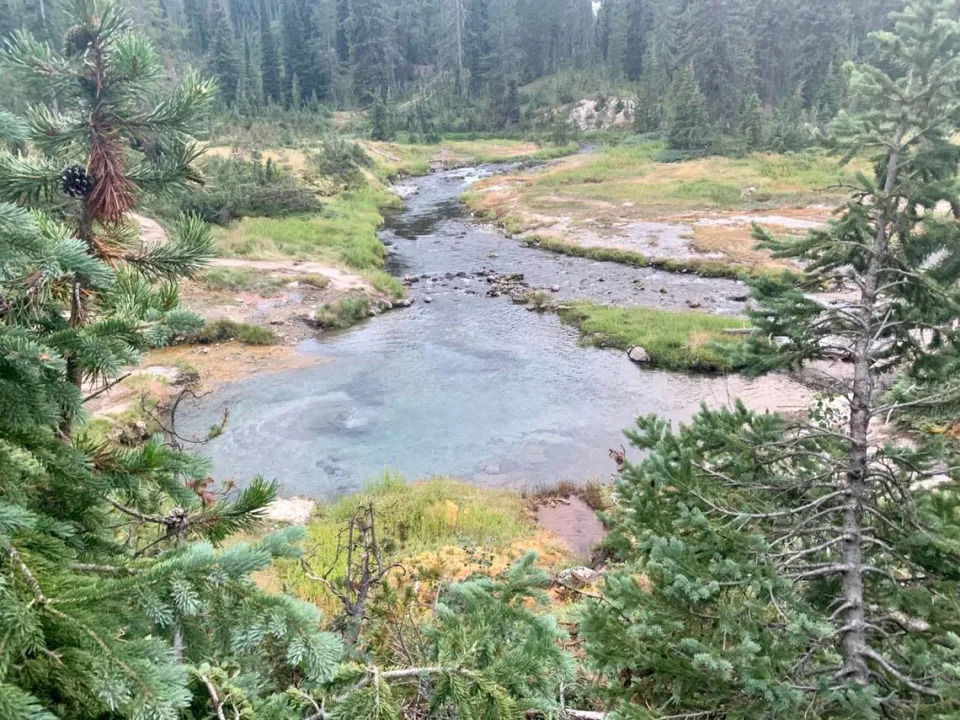
An influx of cold water from the connecting creek make it possible to enjoy a soak in Mr. Bubbles hot spring, which is located in Yellowstone National Park’s backcountry.
Day 2, Wyoming: A magical backcountry hot spring, big river crossings and an unrelenting thunderstorm
Even though the secret is out, there is no sign pointing the way to Mr. Bubbles hot springs, our first destination on our second day in Yellowstone’s backcountry.
At one point along the Bechler River Trail, there is a fork offering three different directions hikers can travel. A sign points to destinations in two different directions. Take the third option, an unsigned spur trail that looks like a spot to rest horses. Follow it for about half a mile and the steam from a geyser basin soon appears. Continue to follow the trail, stepping carefully over and across shallow pools and creeks of geothermal water until reaching Mr. Bubbles, a large swimming pool-sized hot spring where cold waters from a nearby creek mix with a bubbling geothermal feature that gives the hot spring its namesake.
Yellowstone prohibits bathing, soaking or swimming in water entirely of thermal origin, but the cold waters of the creek mixing with the hot geothermal water make it safe and legal to soak in Mr. Bubbles.
Our second day on the trail started off cloudy with much cooler temperatures and the threat of rain. We had fewer miles to cover, so we soaked lazily for about 90 minutes in Mr. Bubbles’ warm waters. As we waded waist-deep nearly up to the bubbling water at the center of the pool, we felt the ground at the bottom of the pool subtly rock and shift, almost as if a small earthquake was concentrated right under the hot spring.
As we soaked, steam rose from the much hotter nearby geothermal features and their orange prismatic pools. We felt as though we’d left civilization behind for the warm waters of an alien planet.
As tempting and relaxing as Mr. Bubbles was after a long first day in the backcountry, we knew we had to get moving. Our day’s agenda called for covering another 15 miles along The Bechler River Trail, a journey that we knew would include at least three river crossings.
We ended up getting a bonus river crossing.
The trail crosses rivers and creeks several times, but many of the crossings feature bridges, strategically placed logs that span the gaps or large stones arranged to enable a hiker to hop across and stay dry. Sometimes, there was no bridge, log or stone path, and we had to ford the river, wading across at what we hope is a relatively shallow spot.
The first crossing allowed us to ease into it. A footbridge over a modest creek had washed out. We took our boots off and slipped on river sandals and water shoes, respectively, unbuckled the straps on our packs for safety and waded gingerly across the 40-foot creek. It was barely knee-deep and not as cold as we were warned to expect following spring snowmelt and runoff.
We felt alive and rejuvenated as we crossed.
Our confidence continued to increase just as the weather turned bad and the river crossing became bigger and burlier. We navigated two more crossings of the Bechler River, crossing 60-foot sections of river where the water reached the top of our thighs.
Descending through the Bechler Canyon, thunderclaps began to boom and lighting flickered overhead as a cool rain started to fall. The canyon section of our hike was full of lush, leafy vegetation that absorbed all the rainwater and soaked us thoroughly as we hiked. We trudged through the unrelenting thunderstorm for almost four hours, quickly passing by scenic landmarks such as the 45-foot Iris Falls. With about five miles still to travel and lightning overhead, we lingered just long enough to snap a few photos of the waterfall and complain about how quickly our Gore-Tex boots became soaked and squishy.
Every hour we consulted our map, and every hour it seemed like we still had another three or four miles to go.
Finally, I smelled smoke and we came across a group of horses tied to a hitching post below some trees, just off the trail. Just around the corner we came across a camp of cowboys who were beginning a multi-day guided horseback trip through the Bechler Meadows.
“Lovely weather we’re having,” I called out in the most cheerful voice I could muster up.
“Care to join us and warm up for a bit?” one of the cowboys responded.
They had a huge, crackling fire roaring in their camp.
“Thanks! We’ll be right up,” Druzin said.
Standing beside the fire our pants and boots began to dry out and our spirits were buoyed. One of the men on the horseback trip identified himself as a Ukrainian minister, and told us of his unwavering belief in the goodness of people. When Russian forces invaded Ukraine in February, members of Russian churches immediately stepped up and donated hundreds of thousands of dollars to help Ukrainian people, the man said. No matter how bad things get, he told us, continue to have faith in people’s capacity to do good.
Sufficiently warm and full of a new optimism for life, we thanked our cowboy hosts, wished them luck on their adventure in Yellowstone and jumped back on the trail to finish the remainder of our day’s hike in the rain.
Our optimism continued unabated for about half an hour until we encountered the remaining members of the cowboy posse at our final river crossing of the day.
Starting out from the opposite river bank that we were standing on, two cowboys leading a team of pack animals crossed the river on horseback. Initially, the crossing looked smooth and easy, with the water never rising above the horses’ knees. But as they neared our side of the bank, the water became much deeper, rising above the horses’ knees and touching their bellies.
As soon as the first cowboy reached dry land, we exchanged greetings and he began to complain about being wet and cold.
“Not as wet as we’re about to be,” Druzin said, motioning to the river.
“You’re crossing here?” the cowboy said in disbelief.
All we could do was nod and say that our campsite was on the other side of the river. The cowboys left us behind, with the first cold, wet cowboy saying he would keep his ears open for any high-pitched screaming coming from this direction.
Great.
We were intimidated by the depth of the water and spent 20 minutes looking for a shallower spot to wade across. Druzin initially set out cautiously on a precarious log that was balanced a little too delicately over deeper, fast moving water. Druzin noticed the danger in time and backed slowly off the log.
With darkness about to settle in and our campsite, Lower Boundary Creek, situated on the far side of the river, we regrouped and headed back to the spot where the cold cowboys and their horses had just crossed. We hoisted our packs entirely over our head in an effort to keep our packs, tents, sleeping bags and remaining clothing dry and waded into the water. The water reached the top of our thighs and soaked our behinds, but it was calm and the riverbed wasn’t too slippery. Before we knew it, we had safely walked across.
It took a total of 16 miles to reach camp on our second day, and the mosquitoes set upon us immediately. I was cold and wet and knew my clothes and boots wouldn’t dry until the sun came out the next day. My sleeping pad was soaked and unusable for the night. My frustration and self pity didn’t subside until my second healthy pull off the whiskey in camp.
I perked up just before crawling into my tent, knowing that next day’s adventure would lead us into the zone of death.
What is the zone of death?
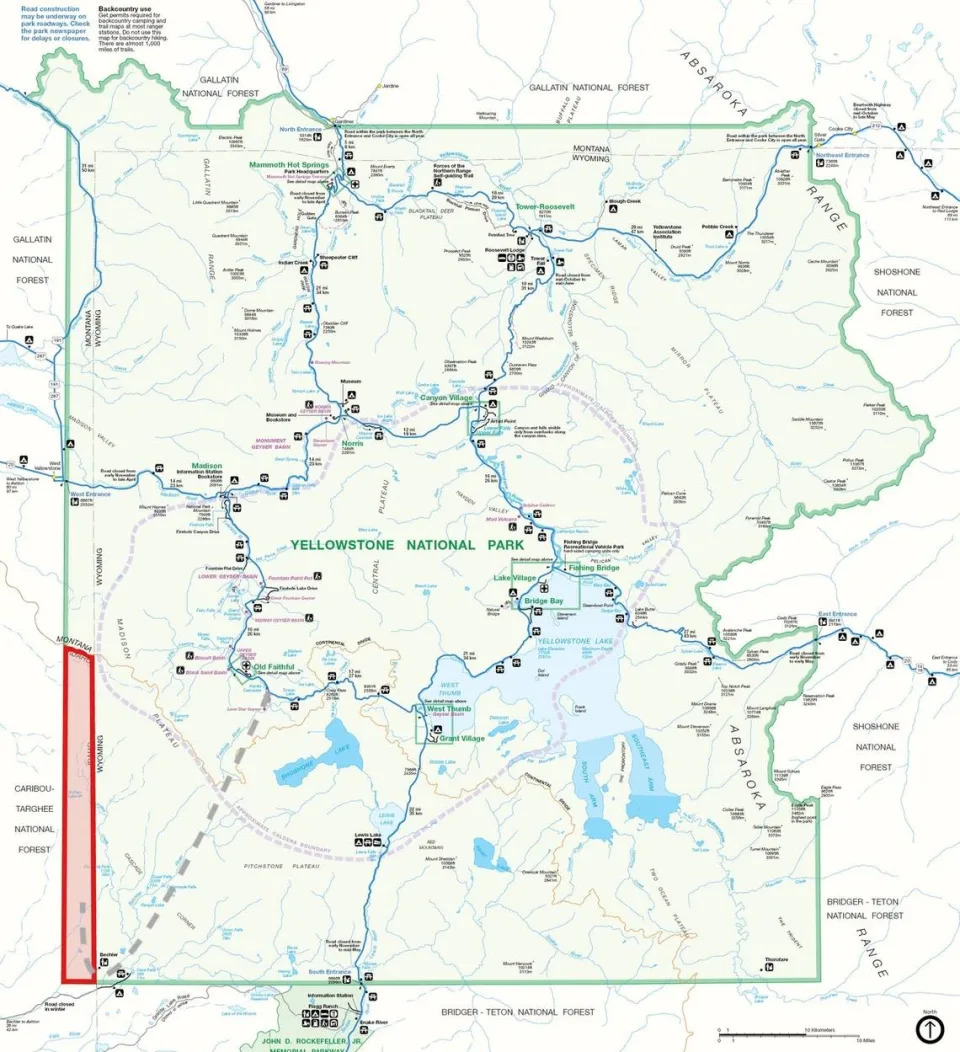
The zone of death (highlighted in red) is defined by the intersection of Yellowstone National Park (highlighted in green) with the state of Idaho, in the southwest corner of the park. The grey dotted line represents the approximate path followed for this article, starting south of Old Faithful, traveling toward the southwest. The trip covered 52 miles.
Michigan State University’s College of Law professor Brian C. Kalt wrote a 2005 research paper published in the Georgetown Law Journal called “The Perfect Crime,” which suggested Yellowstone’s zone of death might be a place “where one might commit felonies with impunity.” The idea behind the theory is that nobody lives in the roughly 50-mile section of Yellowstone that lies in Idaho. Therefore, prosecution for certain federal felonies could become tricky if a defendant evoked their Sixth Amendment right to be tried by a jury from the state and district where the crime occurred.
The Idaho Legislature even debated the issue and adopted House Joint Memorial 3, which calls on Congress to close the zone of death “loophole,” during the 2022 legislative session.
State Rep. Colin Nash, the Boise Democrat who sponsored House Joint Memorial 3, told the Sun last month that he has not heard any feedback or received a response from Idaho’s congressional delegation on the matter.
For their part, Yellowstone officials aren’t worried that there is a loophole to close.
“We don’t talk in theoretical terms,” Yellowstone spokeswoman Linda Veress told the Sun. “If a crime occurs there, we will treat it like a crime occurred anywhere else in the park.”
Veress and Curtis, the backcountry district ranger, said the United States government has exclusive jurisdiction in Yellowstone and the states don’t even get involved. Yellowstone has its own law enforcement rangers, and there is also an investigative services branch within the National Park Service that focuses on more complex crimes, Curtis said.
“All crimes that are either detected when we are out on patrol or get reported, we investigate through the law enforcement rangers assigned to the park,” Curtis said. “If they are felony-level cases, a lot of times those are investigated with the National Park Service.”
Once a potential crime is investigated, law enforcement rangers or agents with the investigative services branch of the National Park Service work with an assistant U.S. attorney. Curtis and Veress said they aren’t aware of any issues or concerns with the current practices.
Day 3, Idaho: Into the zone of death
After tearing down camp at Lower Boundary Creek and wiggling into my still-damp clothing and boots, we hit the Bechler Meadows Trail. We made a quick stop at the Bechler Ranger Station to switch reservations to the Little Robinson Creek backcountry site in the zone of death, hoping it would be easier to find than our original site the rangers warned us could be tricky to locate.
With the new permit in hand, we headed up Robinson Creek Trail, which also appears to be identified as the West Boundary Trail on some maps and trail signs.
It was immediately obvious we were stepping off the beaten path. Whereas the trail in the Bechler River and Bechler Meadows sections of Wyoming was clearly defined, cleared of debris and trodden with fresh footsteps, the Robinson Creek Trail was overgrown and lush. We had to engage in some bushwhacking and a series of little guessing games to continue to follow the trail.
If we didn’t have electronic and paper maps, the ranger’s warning and know for sure we were heading the right way, we would have turned around thinking we were about to get hopelessly lost or surprise some big animal.
“It was more of a suggestion than a trail,” Druzin said.
Few people visit the Idaho section of Yellowstone National Park.
There is no “welcome to Idaho” sign in this section of Yellowstone marking the entrance to the zone of death. Instead, we relied on GPS to figure out the boundary, deciding it was just before a large boulder situated just off the trail in a thick tangle of brush and vegetation.
We passed a huckleberry bush and ate handfuls of plump, purple huckleberries. At about that same spot, we encountered our first pile of soft, fresh bear scat.
We continued on, passing meadows the size of NFL stadiums and giant marshes covered in lily pads.
“It’s amazing,” Veress said. “People say the park is so crowded, but you don’t have to go far from the road to have solitude.”
We reached our campsite, Little Robinson Creek, by early afternoon on our third day in the Yellowstone backcountry. To avoid conflicts with bears and other wild critters, we hung all of our packs, trash and food high above the ground on trees and logs that had been specially arranged for storage at backcountry campsites.
The first thing we saw at Little Robinson Creek camp was a giant pile of soft, fresh bear scat located directly under the food storage poles.
Even though it looked like a ridiculous prank or a throwaway gag in a comedy movie, the bear scat was a fresh reminder that we were truly in the backcountry, visitors in this wild place.
“I don’t think this bear learned the lesson about not sh—— where you eat,” I joked to Druzin, partially to help alleviate my own anxiety.
Druzin grabbed his fly rod and fished for trout in Robinson Creek as I sat on the edge and let the water wash over my tired legs and feet.
We ate two dinners and finished even more whiskey that night.
I told Druzin that for as hard as different aspects of the first two days of the trip were, I didn’t want to leave Yellowstone.
This trip and this place were special.
We weren’t the only people to go to the zone of death. In fact, everybody who completes the Continental Divide Trail through-hike between Canada and Mexico (a journey that could take five months) enters the Idaho section of Yellowstone, rangers told me.
Later in the week we were there, a different crew on horseback had plans to travel through the Idaho section of Yellowstone, a ranger told us.
But for us, the whole time we were in the zone of death, we didn’t see another person. We were almost certainly the only people to sleep inside the zone of death the night we stayed and we may have been some of the only people to sleep in the Idaho section of Yellowstone National Park to that point in 2022. (The park was closed for about a week and a half in June following historic flooding and many of the river crossings outside of the zone of death that we forded on our journey are not passable until, generally, mid-July each year. A ranger at the Bechler Ranger Station told us very few people camp in the two Idaho campsites off Robinson Creek Trail, and she couldn’t remember offhand the last time someone stayed there.)
That last night in Yellowstone, I left the rainfly off my tent and stared up at the stars for a long, long time.
We were almost five miles from the Bechler Ranger Station, which meant we were almost five miles from the closest place that any other person could have conceivably been. We were even farther from any real roads or artificial lights.
Feeling that small in such a big wide open space put a smile on my face, and as my eyes grew heavy, shooting stars traced the night sky.
The next morning, we walked out of the zone of death in less than two hours without incident.
We shuttled ourselves back to the starting point of our hike, but not before stopping off for a greasy cheeseburger at the suggestion of a father from Clifton, Idaho, who was hiking with his wife and two children.
Even though we were two different people on two different journeys, I immediately felt at ease around the man and his family after he mentioned cheeseburgers and the reason he decided to go on his hike.
Years ago he started out on a simple day hike in the Bechler Meadows, where he said he encountered a sign showing that Old Faithful was about 30 miles away, just like I did. And just like I did, for years he dreamed about what lies beyond that sign — the possibilities and the adventures that would await in the Yellowstone backcountry.
How has climate change hit Boise? What 150 years of weather data tells us
Nicole Blanchard – September 7, 2022
Sarah A. Miller/smiller@idahostatesman.com
After a scorching August — the hottest ever recorded here — the effects of climate change may feel closer to Boise than ever. And according to local weather statistics, temperatures, precipitation and other environmental factors have shifted noticeably in the last few decades and the 150 years since record-keeping began.
National Weather Service data shows Idaho’s summers are becoming hotter, overnight low temperatures are warming, and the average number of days with temperatures over 100 degrees has more than doubled in the last 30 years.
“It’s a totally different climate than our parents and grandparents grew up in,” Jay Breidenbach, a meteorologist at the Weather Service Boise office, told the Idaho Statesman in a phone interview.
Boise heats up
Breidenbach said scientists tend to look at climate change in 30-year periods. That gives them enough data to detect trends while still measuring the shifts in a way the public can understand.
“It helps us see (climate change) relative to our lives,” Breidenbach told the Statesman.
Data from the last 30 years is telling. The National Weather Service has been keeping weather records in Boise since the 1870s, and records show many of the hottest summers in that period have happened in the past three decades. Every summer in the last decade would make the list of Boise’s 30 hottest summers since the 1870s, Breidenbach said.
This summer is Boise’s second-hottest on record, following last summer, when a record-breaking heat wave hit the Northwest. The average temperature this August was 81.9 degrees — more than 3 degrees hotter than the previous record of 78.7, which was set in 2001. Breidenbach said average temperatures are calculated by taking the sum of each day’s minimum and maximum temperature and dividing it by two.
Numbers from the National Weather Service’s earliest records showed even more temperature shifts. The average annual temperature has risen from 50.3 degrees in the late 1870s to 52.7 in recent years. Average minimum and maximum temperatures have also warmed, meaning Boise’s hottest temperatures are a few degrees hotter, and its coldest temperatures are also toastier.
Breidenbach said extreme hot weather is becoming more common in Boise.
“The number of days each summer with max temperature reaching or exceeding 100 degrees has risen from about six days in 1992 to about 13 days now,” he said in an email to the Statesman.
This summer, Boise reached 100 degrees or hotter 23 times.
Less snow, rain in Boise
Boise has also become drier over the years, data shows. Josh Smith, a meteorologist who focuses on climate change at the Weather Service Boise office, said the temperature and precipitation shifts are linked.
“There is a subtle but noticeable warming that’s affecting precipitation and snowfall,” Smith told the Statesman in a phone interview. “That is really important for our area. We get most of our water from snowfall.”
When record-keeping began, the National Weather Service recorded an average of 13.1 inches of precipitation per year in Boise. By 1992, that number had fallen to around 11.6 inches. In recent years, the average is about 11.2 inches of precipitation annually.
Idaho has been in the midst of a multiyear drought, with nearly 90% of the state experiencing some level of water shortage as of Tuesday, the U.S. Drought Monitor showed.
The drought is due in part to poor snowpack. Weather Service data shows an average of 24.4 inches of snow fell in Boise annually in the late 1800s, but that number has fallen to 18.2 inches of snow on average. Snow depth has also decreased over the years.
How accurate is Boise weather data?
Smith said some Boise residents question the accuracy of the National Weather Service data. The statistics are recorded at the agency’s office, which has changed location over the years.
But Smith said variability caused by change in location is accounted for in the agency’s data, and the office has been around long enough to establish some solid trends.
The meteorologists said the 150 years of data helped show the realities of a changing climate despite the occasional unusual snowstorm or record cold day. Breidenbach said record cold days do still happen, but with much less frequency than new high temperature records.
Smith said the key is to look at the trends.
“When you look at the data without any frame of reference, you could get lost in the variability of each year,” Smith said. “It’s important to look at a larger window of time.”
Climate Change Is Ravaging the Colorado River. There’s a Model to Avert the Worst.
Henry Fountain – September 5, 2022
Apricots from an orchard in the Roza Irrigation District, in Washington State on July 18, 2022. (Ruth Fremson/ The New York Times)
YAKIMA, Wash. — The water managers of the Yakima River basin in arid central Washington know what it’s like to fight over water, just like their counterparts along the Colorado River are fighting now. They know what it’s like to be desperate, while drought, climate change, population growth and agriculture shrink water supplies to crisis levels.
They understand the acrimony among the seven Colorado Basin states, unable to agree on a plan for deep cuts in water use that the federal government has demanded to stave off disaster.
But a decade ago, the water managers of the Yakima Basin tried something different. Tired of spending more time in courtrooms than at conference tables, and faced with studies showing the situation would only get worse, they hashed out a plan to manage the Yakima River and its tributaries for the next 30 years to ensure a stable supply of water.
The circumstances aren’t completely parallel, but some experts on Western water point to the Yakima plan as a model for the kind of cooperative effort that needs to happen on the Colorado right now.
“It’s going to require collaboration on an unprecedented level,” said Maurice Hall, vice president for climate resilient water systems at the Environmental Defense Fund. The Yakima Basin plan, he said, “is the most complete example of what we need that I have observed.”
Rep. Melanie Stansbury, D-N.M., who worked on the Yakima Basin and other water issues for years before being elected to Congress in 2021, said the plan “represents the best of a collaborative, science-based process.”
“It’s a successful model of bringing science and stakeholders to the table,” she said.
But it began out of a strong sense of desperation.
Climate change and recurring drought had wreaked havoc with the water supply for irrigation managers and farmers in the Yakima Basin, one of the most productive agricultural regions in the country. Conservationists were concerned that habitats were drying up, threatening species. Old dams built to store water had blocked the passage of fish, all but eliminating the trout and salmon that the Indigenous Yakama Nation had harvested for centuries. In droughts, water allocations to many farms were cut.
Years of court fights had left everyone dissatisfied, and a proposal in 2008 for a costly new dam and reservoir that favored some groups over others had not helped.
Ron Van Gundy, manager of the Roza Irrigation District at the southern end of the basin, went to see Phil Rigdon, director of the Yakama Nation’s natural resources division. The two had been battling for years, largely through lawyers. They both opposed the dam, but for different reasons.
“I was walking into a meeting,” Rigdon recalled in an interview. “And he said, ‘Hey Phil, can we talk?’ I started laughing and said, ‘I don’t know, can we? Our attorneys would probably freak out if we did.’”
The two met, and eventually other stakeholders joined them in developing a plan for better management of the river. After several years of give-and-take, the result was the Yakima Basin Integrated Plan, a blueprint for ensuring a reliable and resilient water supply for farmers, municipalities, natural habitats and fish, even in the face of continued warming and potentially more droughts.
A decade into the plan, there are tens of millions of dollars’ worth of projects up and down the river designed to achieve those goals, including canal lining and other improvements in irrigation efficiency, increasing reservoir storage and removing barriers to fish.
“It’s an amazing collaboration of all of these different agencies with all of these different interests, coming together and realizing that we can’t just focus on our agenda,” said Joe Blodgett, a fisheries project manager for the Yakama Nation.
Now, hundreds of miles to the south and east, there’s a similar sense of desperation among the users of the Colorado.
With the river’s two main reservoirs at all-time lows, the federal government is asking the seven states that use the Colorado to cut consumption next year by a staggering amount, up to one-third of the river’s normal annual flow. And beyond 2023, as climate change continues to take a toll on the river, painful long-term cuts in water use will be necessary.
All the reductions will have to be negotiated among states that, more often than not have been fiercely protective of their share of the river’s water. Those shares were originally negotiated during wetter times a century ago.
The states have negotiated some important agreements over the years, including one that prescribed cuts, based on water levels at Lake Mead on the lower Colorado, that were first implemented last year. But the demand for much larger reductions has put a spotlight on perennial tensions between the upper basin states of Colorado, Utah, New Mexico and Wyoming, who collectively use less than their allotted share, and the lower basin states of California, Nevada and Arizona, who use their full allotment or more.
The states missed a mid-August deadline to negotiate next year’s cuts. The federal government has effectively given them more time, but is threatening to step in and order the reductions.
The Yakima Basin is far smaller than the Colorado, with a population of 350,000 compared with the 40 million people who rely, to varying degrees, on the Colorado’s supply. While farmland in the basin is important (among other things, it produces about 75% of the country’s hops that impart a tang to countless beers and ales), agricultural production along the Colorado is much larger.
The Yakima River, itself a tributary of the Columbia, is only 210 miles long, one-seventh the Colorado’s length, and lies within a single state, not seven plus Mexico. Thirty Native tribes have rights to Colorado water, compared with just the Yakama Nation.
All of that makes some water managers on the Colorado doubt that the Yakima plan could be much of a model.
“The Colorado River is orders of magnitude more complex and difficult than the Yakima,” said Jim Lochhead, CEO of Denver Water, which supplies drinking water to the city and surrounding communities. “That makes it extremely difficult to sit down a group of stakeholders and agree on a grand solution.”
But those who are intimately familiar with the Yakima plan say the plan’s fundamental principle, of shared sacrifice and cooperation among groups that were often adversaries, can apply anywhere.
“Everyone can’t get everything that they want,” said Thomas Tebb, director of the Columbia River office of the state Department of Ecology. “But if they can get something, that’s really the basis of the plan.”
The Yakima River has a long history of overuse, dating to the early white settlers who arrived after a treaty was signed between the federal government and the Yakama Nation in 1855. The river and its tributaries were dammed and diverted, and irrigation systems were built. Water shortages quickly became an issue, especially in dry years, leading to decades of conflicts among users.
As on the Colorado, there were earlier efforts to ensure a stable supply, especially following droughts in the 1930s and ’40s. After another severe drought, in 1977, state and federal officials developed a “watershed enhancement” plan to try to improve fish passage.
But it wasn’t enough. For one thing, the droughts kept coming, said Urban Eberhart, who grew up on a farm in the basin and now manages the Kittitas Reclamation District in the northern part.
“Instead of just being one of these droughts, we started getting them back-to-back and then three in a row,” he said.
In 2010, the federal Bureau of Reclamation undertook a study of the basin, looking at how it would fare as the world continued to warm. The findings added impetus to the drive to develop a plan.
“What we went through from 1977 to 2009 was nothing in comparison to where we were headed,” Eberhart said. There was a growing sense that drastic action was needed. “We won’t recognize this economy or this ecosystem if we don’t act.”
With so much information to discuss, the meetings on the plan were intense and time consuming, Eberhart said. But that had a benefit: Pressed for time, participants started taking breaks and lunches together.
“Pretty soon, over time, all of us who were very suspicious of each other would talk, and that turned into friendship, trust and respect,” he said.
Rigdon said that now, as likely as not, a project gets widespread support, even from groups that might not see as much benefit from it. Although challenges remain, he said, “We’ve understood what the other side needs. And they’re no longer the other side.”
The fruits of those relationships can be seen throughout the basin, in projects that usually serve more than one purpose and benefit more than one group of stakeholders.
In the Yakama Nation’s irrigation district, canal work and dam improvements are saving water and improving fish habitat.
In his irrigation district, Eberhart has led successful efforts to use the canals to deliver water to long-dried-up streams, to restore fish.
There are several projects, under construction and proposed, to increase water storage to help make it through dry years. And in the city of Yakima itself, Nelson Dam, an old diversion dam on a tributary has been removed, replaced by an engineered channel that will allow passage of both fish and boats, redistribute sediment through the river system and reduce flooding, all while continuing to divert water for the city’s needs.
“It’s not doing one thing — do things that meet everybody’s criteria,” said George Brown, the city’s assistant public works director. “If you do that, everybody agrees.”
On the Gulf Coast, a Quiet Hurricane Season (So Far!) Brings Little Relief
Rick Rojas – September 5, 2022
Susie Fawvor in her family home, which has withstood every major hurricane since its construction in 1915, but was damaged in Hurricane Laura in 2020, in Grand Chenier, La., Sept. 3, 2022. (Emily Kask/The New York Times)
IOWA, La. — In a community still etched with the scars of past storms that charged in from the Gulf of Mexico, the congregants at St. Pius X begin each service this time of year by petitioning God with the same solemn appeal: Please, spare us.
“We live in the shadow of a danger over which we have no control,” they say, repeating the prayer at every Mass from the start of hurricane season in June through the end in November. “The Gulf, like a provoked and angry giant, can awaken from its seeming lethargy, overstep its conventional boundaries, invade our land, and spread chaos and disaster.”
But so far this year, there has been no invasion. Any chaos and disaster are the residuals of devastating hurricanes that pummeled this stretch of the Louisiana coast two years ago.
It has been a hurricane season without hurricanes. But the quiet, however appreciated, does not bring much comfort.
“Who knows what next week holds?” said the Rev. Jeffrey Starkovich, the pastor at St. Pius X, a Catholic parish in Ragley, Louisiana, an unincorporated community about 20 miles north of Lake Charles. “You can’t rest. You can’t be confident it’s going to stay quiet.”
Last month was the first August in 25 years without a named storm in the Atlantic Ocean. No hurricanes have made landfall this year in the United States. And though hurricane season spans six months, it is this time of year — from late August through October — when the season typically packs its most powerful punch.
A weather system named Danielle strengthened last week into a Category 1 storm, becoming the first hurricane of the season; it weakened briefly to a tropical storm before regaining hurricane status. Entering the week, Danielle cut a meandering path over the Atlantic and posed little threat to land.
In a part of the world where so many routines and rituals are shaped by the rhythms of hurricane season, the relative calm has done anything but inspire complacency. Instead, it has offered communities often in the path of hurricanes yet another vivid illustration of how capricious nature can be.
“We really don’t have any sighs of relief until hurricane season is completely over,” said Nic Hunter, the mayor of Lake Charles, a working class city in southwestern Louisiana still staggering its way back from a powerful pair of storms in 2020. “With all we’ve been through, I don’t think anyone wants to test fate.”
The very existence of this article and others like it is a source of considerable unease. Asked about hurricane season while she and a friend were outside working on a lawn mower last week, Ricki Lonidier pressed her finger to her lips and glared.
“Don’t speak it into existence!” her friend, Richelle Wiley, said.
But she knew their luck would last only so long. “We know it’s coming,” she said. “It’s inevitable.”
That evening, the humid air was thick with mosquitoes. She took it as a sign of brewing trouble.
Scientists still expect an “above normal” hurricane season this year, with 14 to 20 named storms in the Atlantic and up to 10 of those strengthening into hurricanes. Last year, there were 21 named storms. The year before that set a record with 30.
On the Gulf Coast, hurricanes are more than just weather events. Their names — Audrey, Katrina, Rita, Ike, Laura — become chronological reference points for marking history. Chain-link fences are often referred to as hurricane fences, and for several years, a newspaper on the Texas coast called its weekly entertainment guide “cat5,” for a Category 5 hurricane, because, well, why not?
Like clockwork, around June, hurricane-themed public service announcements start filling commercial breaks on TV and radio and appearing on highway signs. It is time to start stockpiling water, canned goods and batteries. It is time to use up the food in the freezer so you will not have to toss out too much when a storm surely will knock out power.
Then, the anxiety sets in.
“It’s kind of like the proverbial sword of Damocles — it hangs over your head,” said Bishop Glen John Provost of the Diocese of Lake Charles, who leads worshippers through a “Mass to Avert the Storms” every year at the beginning of hurricane season. “The apprehension grows from the unknown.”
But in recent years, along this slice of the Louisiana coast, the tumult and torment of a hurricane have become far less abstract. A changing climate has intensified the threat, and powerful storms are likely to become more frequent.
In 2020, Hurricane Laura made landfall in Cameron Parish, south of Lake Charles, as a Category 4 storm with 150 mph winds — one of the most powerful storms to strike Louisiana. Roughly six weeks later, Hurricane Delta hit, cutting a nearly identical path. “What wasn’t taken out by Laura was finished by Delta,” Curtis Prejean said last week as he sat on his back porch with his wife, Shirley.
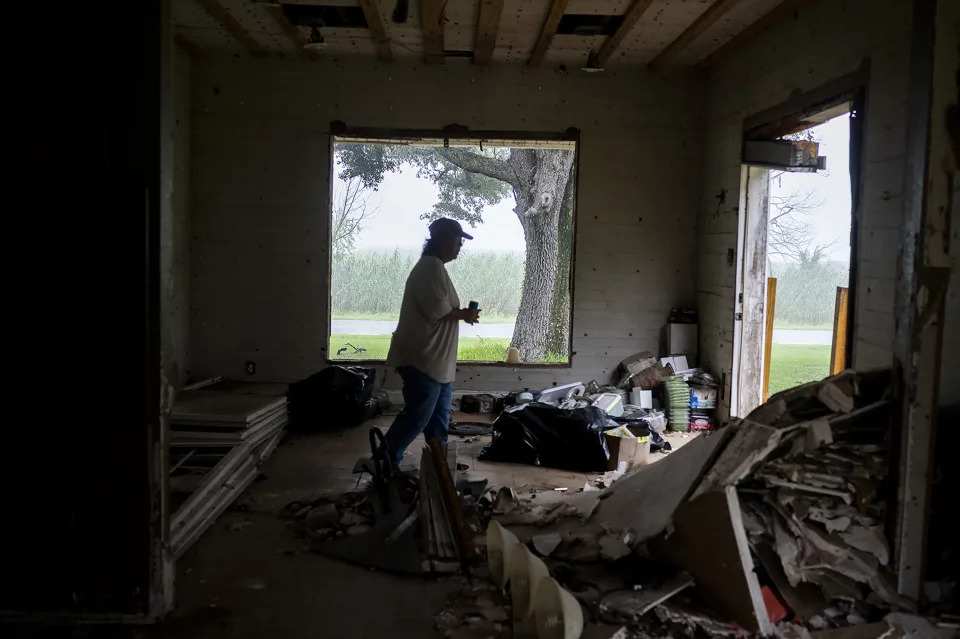
In the communities in and around Lake Charles, the recovery had been long and uneven. Curtis Prejean has a brother who has been living in a camper for two years. Wiley’s home had been stripped down to its studs inside and the outside was still battered. She is in a constant fight to fend off black mold.
The next storm could take what little some have left.
“We were talking about the hurricanes yesterday,” Wiley said, “and reality is stopping me, because I have nowhere to go. I’m about to be homeless.”
During one recent storm, the Prejeans put down a mattress pad in the hallway of the modest home where they have lived for 33 years and rode it out with two dogs and a cat. The house vibrated, and the noise was terrifying. “I told my husband we’re never doing that again,” Shirley Prejean said.
“I’m going to stay for a Cat. 1,” Curtis Prejean said. “A Cat. 2 …” He shrugged. That’s where he was unsure.
No matter the category, Curtis Goodwin — or as everyone knows him, Warrior War Dog — vowed to stay put. Blue tarps covered parts of his roof, and his exterior walls were still damaged. But he had fortified part of his house with the expectation that his family and dogs would pile inside.
“I’m going to stay right here, and I’m going to ride it out,” he said.
He knew what his cousin and her family had gone through when they left town in anticipation of Hurricane Laura. A few frightening hours at home were better than the weeks of frustration and turbulence that come with evacuating, he reasoned.
Katina Jackson, his cousin, was gone for several months. First, she fled her home in Lake Charles for San Antonio. On the way, the axle on her car broke. If it were not for a mechanic giving her a deal, her family would have been stranded. They stayed in hotels in San Antonio and Fort Worth, Texas, before going home.
The return of hurricane season dredged up all of that.
“It’s just going to be catastrophic again,” Jackson said outside her cousin’s house, helping her daughter take out her braids on a hot but otherwise pleasant evening. “I feel like it’s always quiet before the storm.”
A few minutes later, ominous clouds that had been lurking in the distance swarmed the neighborhood in darkness, and a surge of lightning ripped through the sky.
Scorching Temperatures Just Broke A World Record In California’s Death Valley
Ben Blanchet – September 3, 2022
Scorching Temperatures Just Broke A World Record In California’s Death Valley
Death Valley National Park in California scorched a world record for high temperatures on Thursday.
The park’s Furnace Creek thermometer hit 127 degrees this week, marking a world record for the hottest temperature ever recorded in September, CBS News reported.
The rainfall, the park’s second-highest single-day total since 1936, reportedly buried some 60 vehicles in debris and mud, and washed away boulders and trees in the park.
Thursday’s record temperatures may not last long, according to KABC-TV.- ADVERTISEMENT -https://s.yimg.com/rq/darla/4-10-1/html/r-sf-flx.html
The news station reported that the weekend’s temperatures look like they’ll peak on Monday or Tuesday.
While historic, Death Valley’s incredible heat this week is not expected to break the world’s highest-ever recorded temperature of 134 degrees, CBS News noted.
That temperature occurred on July 10, 1913, also in Death Valley. It was recorded during a heat wave that featured multiple consecutive days with temperatures of 129 degrees or above, according to the National Park Service.
Earlier this week, California Gov. Gavin Newsom (D) declared a state of emergency as high temperatures continued to rock the state’s energy grid, KTVU-TV reported.
The move will allow people in the state to temporarily increase their energy usage as demand grows.
“This is just the latest reminder of how real the climate crisis is, and how it is impacting the everyday lives of Californians,” Newsom said. “While we are taking steps to get us through the immediate crisis, this reinforces the need for urgent action to end our dependence on fossil fuels that are destroying our climate and making these heat waves hotter and more common.”
UPDATE: Mill Fire explodes to 3,921 acres with no containment, Mountain Fire at 600 acres
David Benda, Michele Chandler, Jessica Skropanic and Jenny Espino, Redding Record Searchlight
September 3, 2022
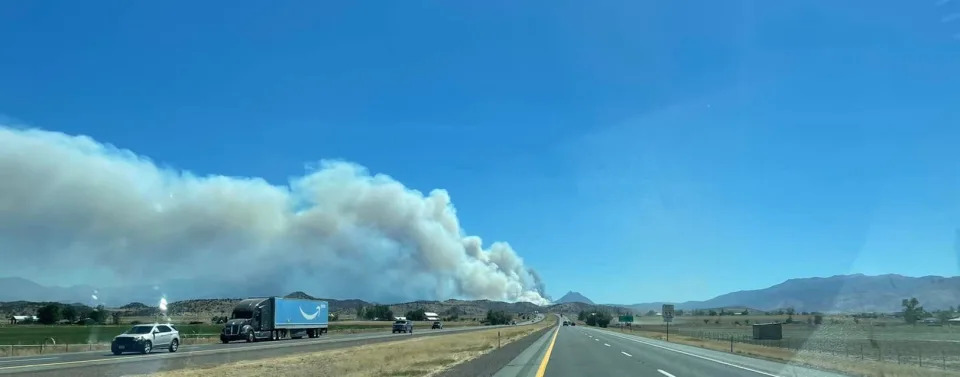
The fast-moving Mill Fire erupted on Friday near the area of the Roseburg Forest Products mill in Weed, a small city just over 50 miles from the Oregon border.
There were reports of burn victims and destroyed homes in a neighborhood. Thousands were forced to leave their homes in the communities of Weed, Lake Shastina and Edgewood.
We’ve made these updates free to readers as an important public service to our North State communities. If you are able, help local journalism thrive by subscribing to your local newspaper, and check back here for updates.
10:20 p.m.: Mill Fire still growing, with no containment
Cal Fire on Friday night said sensor aircraft estimated the size of the Mill Fire to be 3,921 acres, roughly 1,300 acres more than fire officials believed earlier in the evening.
The fire, first reported at 12:49 p.m. on Friday, broke out at Woodridge Court and Woodridge Way, near the area of the Roseburg Forest Products mill in Weed. The Cal Fire-Siskiyou Unit via Twitter said the cause of the fire is under investigation.
Evacuations in Weed, Lake Shastina and Edgewood remain in place and Highway 97 remains closed.
8:40 p.m.: Mountain Fire doubles in size, Mill Fire unstable, Sheriff’s Office said
The Mountain Fire grew to 600 acres, twice its size two hours ago, according to Cal Fire.
Both the Mill Fire and Mountain Fire remain uncontained, according to Cal Fire.
“This incident (Mill Fire) is rapidly changing and our staff and partners are doing everything they can to get everyone to safety,” the Siskiyou County Sheriff’s Office said.
The sheriff’s office posted information to help those unable to reach family and friends in evacuation areas. They can call 530-842-8746.
An evacuation shelter is in use at the Yreka Community Center at 810 North Main St. in Yreka.
For information on evacuation zones go to www.zonehaven.com.
8:15 p.m.: Help available for animals in fire evacuation zones
The Siskiyou County Sheriff’s Office is offering animal welfare checks for people who had to evacuate from Mill and Mountain fire areas without their pets or livestock.
Evacuees can go to the Siskiyou County website at bit.ly/3Qc9Hsf and fill out a form to request a welfare check.
6:50 p.m.: Mill Fire explodes Friday afternoon
The Mill Fire exploded in size to 2,580 acres — up from 900 acres at 3 p.m., according to Cal Fire.
There is no containment on the fire, burning north of Weed near Lake Shastina.
The blaze damaged and destroyed multiple structures, including homes, but Cal Fire has not yet released the total number of structures.
The cause of the fire remains under investigation, Cal Fire said.
6:30 p.m.: Mountain Fire grows to 300 acres
The Mountain Fire burned 300 acres of forest eight miles southeast of the small town of Gazelle, according to Cal Fire.
It is not contained, Cal Fire said.
The fire started before 4 p.m. near China Mountain Road, west of Interstate 5, north of Weed.
5:30 p.m.: Some tankers being sent to nearby Mountain Fire
While firefighters continue to battle the Mill Fire burning in the area of Weed and Lake Shastina, six air tankers are being diverted to a second fire that started about an hour ago in the area of Gazelle.
The Mountain Fire is burning in heavy brush on the west side of Interstate 5 north of Weed. Firefighters there have reported that no structures are threatened.
5 p.m.: Wind pushing fire over dry hot terrain
Firefighters continue to battle strong winds while they fight the Mill and Mountain fires.
Those conditions won’t change until Friday night, said Jay Stockton, meteorologist with the National Weather Service in Medford. Weather conditions are ripe for fires to continue spreading until 11 p.m.
Friday afternoon, strong southeast winds blew up to 24 mph, with 36 mph gusts, Stockton said. Temperatures reached 98 degrees in Weed and brush is incredibly dry: 5% humidity.
“That combination of windy and dry is what’s creates conditions for rapid fire growth,” he said.
A red flag warning is in effect until 11 p.m. Friday, at which time the winds should calm down, Stockton said. Temperatures should cool to the mid-50s, increasing moisture in the air.
All that could help firefighters get a better handle on the fires, he said.
4:14 p.m.: Power outage reported in Weed, Mount Shasta, Lucerne
About 8,300 residents in Weed and Mount Shasta in Siskiyou County and Lucerne in Lake County were hit by a power outage shortly before 1 p.m. on Friday, according to electric power company PacifiCorp.
A cause of the outage is under investigation, said company spokesman Brandon Zero. Crews have been dispatched to the area, he said.
A smoke plume from the Mill Fire rises over downtown Weed on Friday, Sept. 2, 2022.
3:55 p.m.: Fire threatening Carrick outside Weed
Firefighters are communicating to each that the fire is threatening to jump Highway 97 and burn into the small community of Carrick just outside Weed.
3:20 p.m.: Mill Fire balloons to 900 acres
The Mill Fire burning north of Weed toward Lake Shastina is now more than 900 acres, Cal Fire reports.
Firefighters are asking for all strike teams to come to the Jackson Ranch Road area. Earlier, the fire jumped Jackson Ranch Road and started burning into Lake Shastina.
Currently, there is no containment.
All zones east of Interstate 5 from Weed to county road A12, south of county road A12 from Grenada to Highway 97, west of Highway 97 from A12 to I-5, Cal Fire said.
There is an evacuation Shelter at the Karuk wellness center in Yreka at 1403 Kahtishraam.
Meanwhile, all remaining Weed High School students were bussed to Mt. Shasta High School for pick up, officials said.
2:50 p.m.: Fire burning into Lake Shastina
The Mill Fire has jumped Jackson Ranch Road and is burning into the community of Lake Shastina, which is north of Weed, crews battling the blaze report. Firefighters also have asked for at least five more strike teams to help fight the fire.
Meanwhile, a temporary evacuation center is being set up at the Siskiyou County Fairgrounds in Yreka, according to scanner reports.
2:45 p.m.: Mill Fire grows to 555 acres
The communities of Weed, Lake Shastina and Edgewood are under evacuation orders as of 2 p.m. Friday due to the Mill Fire, according to the Siskiyou County Sheriff Office’s Facebook page.
Residents in those areas are asked to leave immediately.
Use caution, as emergency vehicles are assisting with evacuations, structure protection and fire suppression efforts. For more information, call 2 1 1. Real-time evacuation zone statuses are available on aware.zonehaven.com.
The Mill Fire near Weed has grown to 555 acres since first being reported on Friday afternoon, officials said.
The wildfire broke out the same day that the area was under a red flag warning due to high temperatures, gusty winds and low humidity. The chance of rain in the area remains in the single digits through Tuesday.
The wind was blowing north at 20 mph in the Weed and Lake Shastina areas on Friday afternoon, according to Windfinder.com.
Southerly winds of about 20 mph, with gusts as high as 30 mph, could emerge through Friday night, according to the National Weather Service.
The Mill Fire as seen from Interstate 5. The fire started on Friday afternoon, Sept. 2, 2022.
Saturday’s forecast calls for sun with widespread haze and a high near 89. Calmer winds becoming northwest at between 5 to 8 mph are expected in the afternoon, according to the weather service.
Pacific Power had not reported any outages in greater Weed as of mid-afternoon on Friday.
1:55 p.m.: Students to stay on campus
Firefighters battling the Mill Fire are recommending not to release students at Weed High School. They are asking the students to stay on campus for now, according to scanner reports.
Meanwhile, mandatory evacuations are being called for all residents east of Interstate 5 to Jackson Ranch Road. Firefighters say the blaze has reached Jackson Ranch Road.
Also, all of Lake Shastina is under a mandatory evacuation order.
Evacuation warnings are in place along Highway 97 in the Mt. Shasta Vista neighborhood.
1:49 p.m.: Evacuations ordered
Evacuation orders have been issued in the community of Weed due to a fire that started Friday afternoon in the area of Roseburg Forest Products mill.
Highway 97 is closed from the junction of Highway 265 in Weed to south of Macdoel due the Mill Fire, the California Department of Transportation said.
Firefighters are also asking for Jackson Ranch Road to be closed so residents who are evacuating in that area have a clear route out of the neighborhood, according to emergency scanner reports.
The fire also has reached Hoy Road.
Firefighters report that traffic in the area is backed up due to all the evacuations.
At least one ambulance has been dispatched to treat a burn victim and a medical triage has been set up to treat other burn victims, scanner reports said.
Thousands flee, several hurt as Mill Fire scorches Weed, Lake Shastina in Northern California
Adam Beam – September 3, 2022
Thousands of people remained under evacuation orders Saturday after a wind-whipped wildfire raged through rural Northern California, injuring people and torching an unknown number of homes.
The fire that began Friday afternoon on or near a wood-products plant quickly blew into a neighborhood on the northern edge of Weed but then carried the flames away from the city of about 2,600.
Evacuees described heavy smoke and chunks of ash raining down.
Annie Peterson said she was sitting on the porch of her home near Roseburg Forest Products, which manufactures wood veneers, when “all of a sudden we heard a big boom and all that smoke was just rolling over toward us.”
Very quickly her home and about a dozen others were on fire. She said members of her church helped evacuate her and her son, who is immobile. She said the scene of smoke and flames looked like “the world was coming to an end.”
A house in the Lake Shastina Subdivision, northwest of Weed, burns up on Friday, Sept. 2, 2022. The Mill Fire erupted that afternoon in the area of the Roseburg Forest Products mill in Weed and raced out of control, forcing residents in that Northern California community, Lake Shastina and Edgewood to flee their homes.
Suzi Brady, a Cal Fire spokeswoman, said several people were injured.
Allison Hendrickson, spokeswoman for Dignity Health North State hospitals, said two people were brought to Mercy Medical Center Mount Shasta. One was in stable condition and the other was transferred to UC Davis Medical Center, which has a burn unit.
Rebecca Taylor, communications director for Roseburg Forest Products based in Springfield, Oregon, said it is unclear if the fire started near or on company property. A large empty building at the edge of company property burned she said. All employees were evacuated, and none have reported injuries, she said.
The blaze, dubbed the Mill Fire, was pushed by 35-mph winds, and quickly engulfed 4 square miles of ground.
The flames raced through tinder-dry grass, brush and timber. About 7,500 people in Weed and several nearby communities were under evacuation orders.
Dr. Deborah Higer, medical director at the Shasta View Nursing Center, said all 23 patients at the facility were evacuated, with 20 going to local hospitals and three staying at her own home, where hospital beds were set up.
Gov. Gavin Newsom declared a state of emergency for Siskyou County and said a federal grant had been received “to help ensure the availability of vital resources to suppress the fire.”
Cal Fire firefighters try to stop flames from the Mill Fire from spreading on a property in the Lake Shastina Subdivision northwest of Weed on Friday, Sept. 2, 2022. The Mill Fire erupted that afternoon in the area of the Roseburg Forest Products mill in Weed and raced out of control, forcing residents in that Northern California community, Lake Shastina and Edgewood to flee their homes.
At about the time the blaze started, power outages were reported that affected some 9,000 customers, and several thousand remained without electricity late into the night, according to an outage website for power company PacifiCorp, which said they were due to the wildfire.
It was the third large wildfire in as many days in California, which has been in the grip of a prolonged drought and is now sweltering under a heat wave that was expected to push temperatures past the 100-degree mark in many areas through Labor Day.
Thousands also were ordered to flee on Wednesday from a fire in Castaic north of Los Angeles and a blaze in eastern San Diego County near the Mexican border, where two people were severely burned and several homes were destroyed. Those blazes were 56% and 65% contained, respectively, and all evacuations had been lifted.
The heat taxed the state’s power grid as people tried to stay cool. For a fourth day, residents were asked to conserve power Saturday during late afternoon and evening hours.
The Mill Fire was burning about an hour’s drive from the Oregon state line. A few miles north of the blaze, a second fire erupted Friday near the community of Gazelle. The Mountain Fire has burned more than 2 square miles but no injuries or building damage was reported.
The whole region has faced repeated devastating wildfires in recent years. The Mill Fire was only about 30 miles southeast of where the McKinney Fire — the state’s deadliest of the year — erupted in late July. It killed four people and destroyed dozens of homes.
Olga Hood fled her Weed home on Friday as smoke was blowing over the next hill.
With the notorious gusts that tear through the town at the base of Mount Shasta, she didn’t wait for an evacuation order. She packed up her documents, medication and little else, said her granddaughter, Cynthia Jones.
“With the wind in Weed everything like that moves quickly. It’s bad,” her granddaughter, Cynthia Jones, said by phone from her home in Medford, Oregon. “It’s not uncommon to have 50 to 60 mph gusts on a normal day. I got blown into a creek as a kid.”
Hood’s home of nearly three decades was spared from a blaze last year and from the devastating Boles Fire that tore through town eight years ago, destroying more than 160 buildings, mostly homes.
Hood wept as she discussed the fire from a relative’s house in the hamlet of Granada, Jones said. She wasn’t able to gather photos that had been important to her late husband.
Scientists say climate change has made the West warmer and drier over the last three decades and will continue to make weather more extreme and wildfires more frequent and destructive. In the last five years, California has experienced the largest and most destructive fires in state history.
Associated Press reporters Olga R. Rodriguez and Janie Har in San Francisco and Stefanie Dazio and Brian Melley in Los Angeles contributed to this article.