Colon cancer is killing more younger men and women than ever, new report finds
Erika Edwards and Jessica Herzberg – January 17, 2024
Scroll back up to restore default view.
Colorectal cancer is the deadliest cancer for men under age 50 — and the second deadliest cancer among women in the same age group, behind breast cancer.
The incidence of colon cancer has been rising for at least the last two decades, when it was the fourth-leading cause of cancer death for both men and women under 50.
Among men and women of all ages, lung cancer remains the leading cause of cancer death. Prostate cancer is second for men, and breast cancer is second for women. Colorectal cancer is third, overall, for both sexes.
The diagnosis of late-stage colorectal cancer was a shock to Sierra Fuller, 33. (Courtesy Sierra Fuller )
Cancer is traditionally a disease among the elderly, although the percentage of new cases found in people 65 and older has fallen from 61% in 1995 to 58%. The decrease, attributed mainly to drops in prostate and smoking-related cancers, has occurred even though the proportion of people in that age group has grown from 13% to 17% in the general population.
In contrast, new diagnoses among adults ages 50 to 64 have increased since 1995, from 25% to 30%.
Rates of breast and endometrial cancer, as well as mouth and throat disease, have been on the rise. The report did not break down those diagnoses by age.
The findings reflect what cancer doctors have observed for years.
“For a couple of decades now, we have been noticing that the patients coming into our clinic seem to be younger and younger,” said Dr. Kimmie Ng, the director of the Young Onset Colorectal Cancer Center at Dana-Farber Cancer Institute in Boston. “What this report now cements for us is that these trends are real.” Ng was not involved with the new report.
Dr. William Dahut, the chief scientific officer at the American Cancer Society, said younger people tend to be diagnosed at later stages, when the cancer is more aggressive.
“So it’s not only having a colorectal cancer — it’s colorectal cancer that’s more difficult to treat, which is why we’re seeing these changes in mortality,” Dahut said.
The diagnosis of late-stage colorectal cancer was a shock to Sierra Fuller, 33, of Acton, Massachusetts, just outside Boston.
It was around Christmas 2021 when Fuller noticed blood in her stool when she went to the bathroom. With no family history of colon cancer, she figured the problem was most likely an annoying hemorrhoid.
Weeks later, the blood deposits worsened, and she started having abdominal pain.
Sierra Fuller and her husband. (Courtesy Sierra Fuller)
“It was a month from when I got the symptoms to when I sought help, and I realize that I was pushing it,” she said. Tests revealed she had stage 3b colorectal cancer. That usually means the cancer has started to spread through the colon and possibly to nearby lymph nodes, but not any farther, according to the American Cancer Society.
It was a blow to Fuller and her husband, who had just started talking about whether to try for a baby. They decided to freeze embryos before Fuller’s treatment protocol, which would include radiation, chemotherapy and surgery.
It is an example of how cancer uniquely affects young patients.
Sierra Fuller. (Courtesy Sierra Fuller)
“People younger than 65 are less likely to have health insurance and more likely to be juggling family and careers,” Dahut said in a news release announcing the new report. “Also, men and women diagnosed younger have a longer life expectancy in which to suffer treatment-related side effects, such as second cancers.”
Just over a year later, Fuller is cancer-free but must get regular scans and blood tests. She said that she feels good but that she is “always going to have that worry” that her cancer will return.
“If I have to go through this again, whatever that looks like, I’ll cross that bridge if it comes,” Fuller said.
Why is cancer rising in younger people?
Doctors do not know why cancer, especially colorectal cancer, is becoming more common in younger adults. Some hypothesize that increasing obesity rates, sedentary behavior and unhealthy diets could be playing roles.
“But honestly, the patients we’re seeing in clinic often do not fit that profile,” said Dr. Kimmie Ng, the director of the Young Onset Colorectal Cancer Center at Dana-Farber Cancer Institute in Boston. “A lot of them are triathletes and marathon runners. I mean, super healthy people.”
Ng suspects something in the environment may be behind the rise.
“What we suspect may be happening is that whatever combination of environmental factors is responsible for this, that it’s likely changing our microbiomes or our immune systems, leading us to become more susceptible to these cancers at a younger age,” Ng said.
How to protect against colorectal cancer
Colonoscopy screening is generally recommended starting at age 45. People with family histories of the illness may need to begin screening earlier.
A person whose parent was diagnosed with colon cancer at age 50, for example, would need to start screening at age 40, Dahut said.
However, only about a third of people diagnosed with colon cancer have some kind of family history or predisposition to the cancer.
Maintaining a healthy body weight and minimizing red meat in the diet may help reduce risk, Ng said.
Signs that could signal a problem, Ng said, include blood in the stool, abdominal pain, unintentional weight loss and changes in bowel habits.
“If it’s getting worse, if it’s not going away, you know, that’s when somebody really needs to start paying attention and talk to their primary care doctor about what’s happening,” she said.
Dallas Congresswoman Jasmine Crockett is going viral – just the way she wants it
Grace Yarrow – January 15, 2024
WASHINGTON — In summer 2021, about 50 Democrats from the Texas House arrived at the nation’s capital — absconding from Austin in a plot to block Republicans from passing a bill that would impose tighter restrictions on voting access.
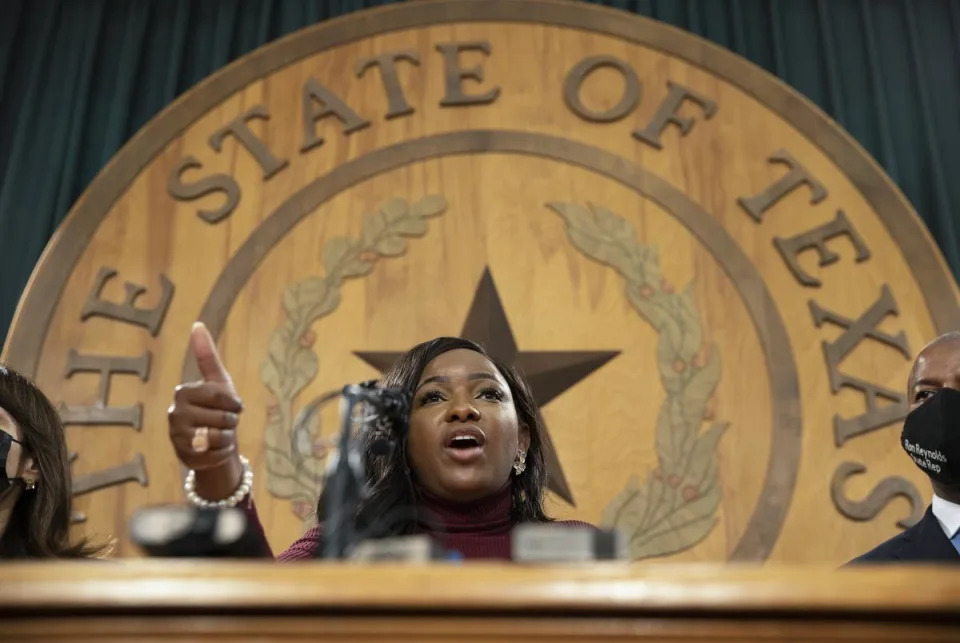
Buzzing with excitement, the lawmakers took their places in front of reporters, with senior members and leadership moving toward the center to field questions. But Jasmine Crockett — a freshman from Dallas — stepped away from the group to take a call. She held up her phone to film her own live interview with a TV station, the dome of the Capitol building peeking out behind her.
That interview would be one of many that Crockett would take while camped out in Washington to discuss the Democrats’ quorum break, in a move that would raise the little-known lawmaker’s profile as she became an unofficial spokesperson for the dramatic political spectacle.
“There were people in leadership from my understanding that were not a fan of a freshman being a bit of a face of some of this,” Crockett said in an interview with The Texas Tribune.
Nonetheless, she accepted as many interviews as she could fit into her schedule, carrying two phones and a laptop to handle the crush of inquiries she received.
“I did not expect the world to pay attention,” Crockett said.
But she wanted them to.
Crockett, 42, didn’t get into politics to wait her turn. While she says she may have ruffled some feathers among her caucus peers at the time, her decision to grab the spotlight catapulted her career and provided the foundation for her to run for Congress the following year.
Crockett, who was elected to Congress in 2022 after serving one term in the Texas House, is shown in her Washington office Jan. 4, 2023. Credit: Michael A. McCoy for The Texas Tribune
Now a freshman in the U.S. House representing the Dallas-based 30th Congressional District, Crockett is once again finding her voice, seeking out moments to go viral and trying to make a name for herself in a deeper pool filled with bigger fish.
Her unfiltered musings and barbs while in Congress have helped her amass one of the largest social media followings in the Texas delegation, with an online audience of nearly a quarter of a million people on both X and Instagram. Her online reach is bigger than every other Texas Democrat, with the exception of Rep. Joaquin Castro of San Antonio, who has served a decade longer than Crockett has. And she’s been crowdsourcing the name for a new podcast, she’s considering.
Crockett got her first taste of going viral during a September hearing of the House Oversight Committee, which garnered media attention because of the Republican impeachment inquiry into President Joe Biden. Crockett took aim at former President Donald Trump’s mishandling of classified documents, holding up printed photos from his indictment showing boxes of classified documents in the Mar-a-Lago bathroom.
“These are our national secrets, looks like, in the shitter to me,” Crockett said in a clip that was shared on Reddit and Tiktok. One fan edit of the moment set to music, created by a 16-year-old fan, raked in over 8 million views on TikTok.
Crockett spoke about the virality of the moment on CNN, saying younger Democrats are looking for their elected leaders to “push back” against GOP talking points. Actor Mark Hamill, of Luke Skywalker fame, reposted the video on X, supporting Crockett: “Omg is an understatement!”
U.S. Rep. Greg Casar of Austin, another freshman Democrat who sits beside Crockett in the Oversight Committee, said he often struggles to keep a straight face during Crockett’s speeches.
“She can speak so directly to people and bring humor to the table in a way that makes folks want to listen. And that’s what we need right now,” Casar said.
For her online followers, Crockett provides gleeful narration about the unfolding drama within the majority party, such as her updates on X about “SPEAKERGATE,” the fallout from the ousting of former Speaker Kevin McCarthy.
Recently, she’s chronicled on X the expulsion of New York Republican George Santos, who was booted from the House following a searing ethics report detailing misuses of campaign funds. “Maybe a cat fight if Santos spills tea during debate, today,” Crockett posted before the expulsion vote.
Her posts — often interspersed with popcorn or eyeball emojis — are told as though she’s recapping an episode of reality television to a friend: “Welcome to preschool … I mean our prestigious congress (darn autocorrect).”
Rep. Jamie Raskin, D-Maryland, the ranking member on the House Oversight Committee, said that Crockett’s unique voice has proved to be an effective communication tool and that her expertise as an attorney is often on display.
He described her style as a combination of a lawyer’s “sharp analysis and lucid exposition” and a “Texan’s folksy and intimate manner.”
“Always a fighter”
Gwen Crockett said her daughter was a sharp-witted speaker from a young age.
In high school, Crockett participated in speech competitions. While in a production of “Little Shop of Horrors” at Rhodes College, a professor took notice of Crockett’s talent for public speaking and invited her to participate in a mock trial organization, where she first found her legal voice.
“I think that’s when it hit her that she wanted to become a lawyer,” Gwen Crockett said.
While at Rhodes College, Crockett was one of only 18 Black students and received threatening, anonymous racist mail.
“That was the first time that I felt helpless and felt targeted as a Black person,” she said. Crockett was paired with a Black female lawyer to help investigate who was sending the threats in the mail. Crockett now calls that lawyer her “saving grace” and another factor in her decision to pursue a legal career.
Jasmine Crockett studied at the Texas Southern University Thurgood Marshall School of Law and the University of Houston Law Center. After law school, she moved to Texarkana to be a public defender and later opened her own civil rights and criminal defense law firm.
She said her time representing thousands of Texans in court has given her firsthand experience with inequities in the justice system. Adam Bazaldua, a Dallas City Council member, said Crockett is “always a fighter for the most vulnerable.”
Crockett represented thousands of Texans’ cases and handled high-profile lawsuits involving police brutality and other cases involving racial injustice. In 2020, as she campaigned for a seat in the state House, she took on the cases of protesters arrested in the aftermath of the murder of George Floyd in Minneapolis.
Then-state Rep. Jasmine Crockett, D-Dallas, holds a bag that reads, “Protect Black People” at a joint press conference with the Texas Legislative Black Caucus, the Virginia Legislative Black Caucus, the Legislative Black Caucus of Maryland and the Texas Legislature Democrats in Alexandria, Va. on July 16, 2021. Credit: Eric Lee
Activist Rachel Gonzales wrote Crockett’s phone number on her stomach when she protested an incident of police brutality in Texas outside the state Capitol in Austin.
“I knew that she would be the first person to show up and fight if needed,” Gonzales said.
During those protests, Crockett consistently posted information for constituents on social media, according to her former chief of staff, Karrol Rimal. Receiving hundreds of calls, Crockett organized other attorneys to help advocate for protesters.
“She never loses sight of the people,” Rimal said.
Crockett was elected to the Texas House in 2020, quickly becoming an outspoken figure in the Legislature. During her first legislative session, she filed 75 solo bills and co-authored another 110, three of which became law.
“Many freshmen, they just kind of sit there. They don’t say a whole lot because they’re trying to learn,” said former Texas Rep. Joe Deshotel, D-Beaumont. “But for her, the learning curve was very short. I mean, she jumped right in.”
Then-state Rep. Jasmine Crockett, D-Dallas, speaks at a Texas House Progressive Caucus at the Capitol on Sept. 20, 2021. Credit: Eddie Gaspar/The Texas Tribune
Those who worked with Crockett pointed to the quorum break trip as her breakout moment.
“I think there was maybe some jealousy. She got a lot of national attention. She really was a lightning rod,” said state Rep. Ron Reynolds, D-Missouri City, who sat next to Crockett in the state House.
Although the Democrats were ultimately unable to stop the Republican elections bill from becoming law, they boosted the national conversation around voter disenfranchisement.
Crockett touted her leadership in the quorum break when she campaigned for the U.S. House in 2022.
She now represents the seat that recently deceased Democrat Eddie Bernice Johnson had held since 1993. After announcing her retirement, Johnson quickly encouraged Crockett to run.
Crockett said she hoped to carry forward Johnson’s legacy.
“Around 9 am, my predecessor, who hand picked me to succeed her, passed away and all of a sudden, like many of my plans this year, my plan to end on a high note, came crashing down,” Crockett said in a post last Sunday on X where she also said she had just done a media hit on MSNBC. “I appreciate the calls and texts and just pray that she’s resting easy. When I’m feeling a lil lost, I’ll always lean in and see if I can hear your voice, Congresswoman.”
U.S. Rep. Eddie Bernice Johnson, D-Dallas, talks to Jasmine Crockett at Crockett’s election night watch party for a congressional seat in Dallas on May 24, 2022. Credit: Shelby Tauber for The Texas Tribune
“Pragmatic progressive”
Being outspoken and online naturally makes way for comparisons to Rep. Alexandria Ocasio-Cortez, a third-term representative who has attained near-celebrity status as the face of the progressive movement.
But Crockett, unlike Casar of Austin, is not a member of the “Squad,” a well-known group of congressional progressives who regularly garner national media attention and GOP condemnation.
Crockett draws a strong line between herself and those progressives. She says her “pragmatic progressive” policy goals make her more willing to work with the business community, in situations where members of the Squad may be less willing to compromise.
But Crockett said she and Ocasio-Cortez have a common goal of using social media to meet constituents “where they are.”
“I think some of us younger members are trying to better educate voters,” Crockett said.
Though she routinely tussles with the GOP — she called them “assholes” in a September interview and again in December — Crockett also says she knows the importance of finding common ground with colleagues across the aisle.
U.S. Rep. Jasmine Crockett, D-Dallas, walks through the U.S. Capitol on the second day the 118th Congress on Wednesday, Jan. 4, 2023 in Washington, D.C. Credit: Michael A. McCoy for The Texas Tribune
She’s found an unlikely ally in Republican Sen. John Cornyn, who Crockett calls her “best partner” in the Senate. The senior senator has promoted the STRIP Act, a bicameral and bipartisan bill that decriminalizes fentanyl testing strips. The bill is still awaiting committee action.
Cornyn said it was a “no-brainer” to collaborate with Crockett on legislation he said would benefit Texans.
“I think she’s been very approachable,” Cornyn said. “It’s not easy to get things done or bills passed in either of the two houses, especially if you don’t have a dance partner. So I offered to be her dance partner.”
Crockett introduced the companion legislation in the House with Rep. Lance Gooden of Terrell, who Crockett said is a trusted colleague and a dear friend.
“We argue and fight each time we are together, but we also hug and laugh equally as often,” Gooden said in a statement.
Crockett is running for reelection, and has drawn two primary challengers, Jarred Davis and Jrmar “JJ” Jefferson. But she said she has no intentions to stay in Congress long term.
She’ll spend the coming months campaigning both for herself and working to clinch a Democratic majority in the House due to her role as the caucus leadership representative from the freshman class, a fundraising position and an honor bestowed onto her by her freshman colleagues. She’s the first Black woman in that position, which she said adds even more pressure.
U.S. Rep. Jasmine Crockett, D-Dallas, casts her first vote on the House floor on the first day of the 118th Congress on Tuesday, Jan. 3, 2023 in Washington, D.C. Credit: Michael A. McCoy for The Texas Tribune
“I have to make sure this opportunity and door stays open for those that come behind me. Leadership in the Democratic caucus is about money. It’s a money game,” Crockett said.
Olivia Julianna, a 21-year-old Texan with over a million followers on social media, said Crockett’s rhetoric appeals to young people on social media, in contrast with other politicians’ “jargony” or “unattainable” speech.
The Gen Z political activist said Crockett regularly “steals the show” in Congress.
“That’s why people respect her so much, because she says what a lot of people are thinking, but they don’t have the platform to say,” Julianna said.
Disclosure: The University of Houston has been a financial supporter of The Texas Tribune, a nonprofit, nonpartisan news organization that is funded in part by donations from members, foundations and corporate sponsors. Financial supporters play no role in the Tribune’s journalism.
Why the World Is Betting Against American Democracy
Nahal Toosi – January 15, 2024
Liesa Johannssen/AP
When I asked the European ambassador to talk to me about America’s deepening partisan divide, I expected a polite brushoff at best. Foreign diplomats are usually loath to discuss domestic U.S. politics.
Instead, the ambassador unloaded for an hour, warning that America’s poisonous politics are hurting its security, its economy, its friends and its standing as a pillar of democracy and global stability.
The U.S. is a “fat buffalo trying to take a nap” as hungry wolves approach, the envoy mused. “I can hear those Champagne bottle corks popping in Moscow — like it’s Christmas every fucking day.”
As voters cast ballots in the Iowa caucuses Monday, many in the United States see this year’s presidential election as a test of American democracy. But, in a series of conversations with a dozen current and former diplomats, I sensed that to many of our friends abroad, the U.S. is already failing that test.
The diplomats are aghast that so many U.S. leaders let their zeal for partisan politics prevent the basic functions of government. It’s a major topic of conversations at their private dinners and gatherings. Many of those I talked to were granted anonymity to be as candid with me as they are with each other.
For example, one former Arab ambassador who was posted in the U.S. during both Republican and Democratic administrations told me American politics have become so unhealthy that he’d turn down a chance to return.
“I don’t know if in the coming years people will be looking at the United States as a model for democracy,” a second Arab diplomat warned.
Many of these conversations wouldn’t have happened a few months ago. There are rules, traditions and pragmatic concerns that discourage foreign diplomats from commenting on the internal politics of another country, even as they closely watch events such as the Iowa caucuses. (One rare exception: some spoke out on America’s astonishing 2016 election.)
But the contours of this year’s presidential campaign, a Congress that can barely choose a House speaker or keep the government open, and, perhaps above all, the U.S. debate on military aid for Ukraine have led some diplomats to drop their inhibitions. And while they were often hesitant to name one party as the bigger culprit, many of the examples they pointed to involved Republican members of Congress.
As they vented their frustrations, I felt as if I was hearing from a group of people wishing they could stage an intervention for a friend hitting rock bottom. Their concerns don’t stem from mere altruism; they’re worried because America’s state of being affects their countries, too.
“When the United States’ voice is not as strong, is not as balanced, is not as fair as it should be, then a problem is created for the world,” said Ronald Sanders, Antigua and Barbuda’s longtime ambassador in Washington.
Donald Trump’s name came up in my conversations, but not as often as you’d think.
Yes, I was told, a Trump win in 2024 would accelerate America’s polarization — but a Trump loss is unlikely to significantly slow or reverse the structural forces leading many of its politicians to treat compromise as a sin. The likelihood of a closely split House and Senate following the 2024 vote adds to the worries.
The diplomats focused much of their alarm on the U.S. debate over military aid to Ukraine — I was taken aback by how even some whose nations had little connection to Russia’s war raised the topic.
In particular, they criticized the decision to connect the issue of Ukrainian aid and Israeli aid to U.S. border security. Not only did the move tangle a foreign policy issue with a largely domestic one, but border security and immigration also are topics about which the partisan fever runs unusually high, making it harder to get a deal. Immigration issues in particular are a problem many U.S. lawmakers have little incentive to actually solve because it robs them of a rallying cry on the campaign trail.
So now, “Ukraine might not get aid, Israel might not get aid, because of pure polarization politics,” said Francisco Santos Calderón, a former Colombian ambassador to the United States.
Diplomats from many European countries are especially unhappy.
They remember how, when Russia launched its full-scale invasion of Ukraine, many Republicans downplayed concerns about the far-right fringe in their party that questioned what was then solid, bipartisan support. Now, as the debate over the aid unfolds, it seems the far-right is calling the shots.
There’s a growing sense among foreign diplomats that moral or national security arguments — about defending a country unjustly invaded, deterring Russia, preventing a bigger war in Europe and safeguarding democracy — don’t work on the American far-right.
Instead, some are stressing to U.S. lawmakers that funds for Ukraine are largely spent inside the United States, creating jobs and helping rebuild America’s defense industrial base (while having the side benefit of degrading the military of a major U.S. foe).
“If this doesn’t make sense to the politicians, then what will?” the European ambassador asked.
A former Eastern European ambassador to D.C. worried about how some GOP war critics cast the Ukraine crisis as President Joe Biden’s war when “in reality, the consideration should be to the national interests of the United States.”
Foreign diplomats also are watching in alarm as polarizing abortion politics have delayed the promotions of U.S. military officers and threaten to damage PEPFAR, an anti-AIDS program that has saved millions of lives in Africa. That there are questions about America’s commitment to NATO dumbfounds the diplomats I talked to. Then, there are the lengthy delays in Senate confirmations of U.S. ambassadors and other officials — a trend exacerbated by lawmakers from both parties.
“There was always a certain courtesy that the other party gave to let the president appoint a Cabinet. What if these courtesies don’t hold as they don’t seem to hold now?” a former Asian ambassador said. “It is very concerning.”
When Republicans and Democrats strike deals, they love to say it shows the system works. But simply having a fractious, lengthy and seemingly unnecessary debate about a topic of global security can damage the perception of the U.S. as a reliable partner.
“It is right that countries debate their foreign policy stances, but if all foreign policy issues become domestic political theater, it becomes increasingly challenging for America to effectively play its global role on issues that need long-term commitment and U.S. political capital — such as climate change, Chinese authoritarianism, peace in the Middle East and containing Russian gangsterism,” a third European diplomat warned.
The current and former diplomats said their countries are more reluctant to sign deals with Washington because of the partisan divide. There’s worry that a new administration will abandon past agreements purely to appease rowdy electoral bases and not for legitimate national security reasons. The fate of the Iran nuclear deal was one example some mentioned.
“Foreign relations is very much based on trust, and when you know that the person that is in front of you may not be there or might be followed by somebody that feels exactly the opposite way, what is your incentive to do long-term deals?” a former Latin American diplomat asked.
Still, there’s no ambassadorial movement to band together and draw up a petition or a letter urging greater U.S. unity or focus.
The diplomats’ countries don’t always have the same interests. Some have plenty of polarizing politics themselves. In other words, there will be no intervention.
Some of the diplomats stressed they admire America — some attended college here. They acknowledged they don’t have some magical solution to the forces deepening its political polarization, from gerrymandered congressional districts to a fractured media landscape.
They know the U.S. has had polarized moments in the past, from the mid-1800s to the Vietnam War, that affected its foreign policy.
But they’re worried today’s U.S. political divisions could have lasting impact on an increasingly interconnected world.
“The world does not have time for the U.S. to rebound back,” the former Asian ambassador said. “We’ve gone from a unipolar world that we’re familiar with from the 1990s into a multipolar world, but the key pole is still the United States. And if that key pole is not playing the role that we want the U.S. to do, you’ll see alternative forces coming up.”
Russia’s diplomats, meanwhile, are among those delighting in the U.S. chaos (and fanning it). The Eastern European ambassador said the Russians had long warned their counterparts not to trust or rely on Washington.
And now what do they say? “We told you so.”
So the world’s envoys are reconsidering how their governments can deal with this America for many years and presidents to come.
Some predicted that a Republican win in November would mean their countries would have to become more transactional in their relationship with the United States instead of counting on it as a partner who’ll be there no matter what. Embassies already are beefing up their contacts among Republicans in case they win back the White House.
“Most countries will be in defensive positions, because the asymmetry of power between them and the United States is such that there’s little proactively or offensively that you can do to impact that,” said Arturo Sarukhan, a former Mexican ambassador to the United States.
When I asked diplomats what advice they’d offer America’s politicians if they were free to do so, several said the same thing: Find a way to overcome your divisions, at least when it comes to issues that reverberate beyond U.S. borders.
“Please create a consensus and a long-term foreign policy,” said Santos, the former Colombian ambassador. “When you have consensus, you don’t let the internal issues create an international foreign policy crisis.”
Davos: Global crises set to dominate gathering of business leaders
Faisal Islam – Economics editor – January 15, 2024
A woman takes a picture in front of a screen displaying AI-generated artwork
Just a week ago, the expectation about the latest gathering of the World Economic Forum in Davos, Switzerland, was of a line being drawn under three years of pandemic, lockdown and Ukraine war energy shocks.
Inflation is falling, and 2024 was set to be the year that central banks start cutting interest rates, including here in the UK. In three years of different rolling, merging global crises, the world economy has been in the shadow of massive geopolitical shifts.
The events of the past few days shows that the “polycrisis” is far from over.
Perhaps the most telling development has been the ability of the Houthis to use relatively cheap drones and armaments to cause havoc with world trade. Air strikes on the Houthis in Yemen were carried out explicitly to keep the currents of trade and economic recovery flowing through the straits leading to the Suez Canal.
But oil prices jumped on Friday because the risk of a wider confrontation in the region has also gone up. In three months the crisis in Gaza has led to RAF jets attacking targets in Aden. What will be happening three months from now?
As it happens, this sort of fundamental diplomatic challenge is made for the World Economic Forum. Launched in 1971, and held every year in the Alpine ski resort of Davos, the conference puts together the world’s top business people and politicians, as well as key players from charity and academia.
Where else would the Israeli president, Saudi foreign minister and Qatari prime minister be present in the same space at the same time, alongside French President Emmanuel Macron, UK Foreign Secretary David Cameron, US Secretary of State Antony Blinken and Chinese Premier Li Qiang?
Expectations are low surrounding the grim situation in the Middle East, but this is the sort of place where constructive and unexpected conversations can take place discreetly.
There had been a whiff of decay about Davos since the pandemic. G7 leader appearances were getting rarer. Rishi Sunak hasn’t been and isn’t going this week. In a huge year for elections across the globe the US delegation this year is particularly thin. Republicans in particular view the event with some suspicion.
The Republican Party’s Ron DeSantis, a potential presidential candidate, last year called Davos a “threat to freedom” run by China. The Florida governor said any policies emerging from the forum were “dead on arrival” in his state. The view in Davos is that he thought that such rhetoric would play well in the presidential primaries which also start this week.
Ukraine’s President Volodymyr Zelensky is attending, and will be mindful of “Ukraine fatigue” reaching Washington DC and becoming prevalent in developing countries.
Security is always tight at the Davos gathering
For the UK, some in the business community appear ready to go beyond a curious interest in the Labour Party in this election year.
Chancellor Jeremy Hunt and shadow chancellor Rachel Reeves will be competing for the attention of UK business leaders and international investors.
If business investors are worried about Labour’s economic plans, for example for extra investment spending, the World Economic Forum is exactly where it may, or may not surface. I recall then-opposition leader David Cameron’s parade of meetings with world leaders, just before he became prime minister in 2010.
There has been a backlash against some of the corporate do-gooding typical of the event, especially the recent focus by investors on companies’ environmental and social policies.
Put brutally, the world of the past two years has seen massive returns for hydrocarbon extractors, carbon emitters and arms companies.
The optimism will come from a hope that disturbed geopolitics can somehow settle without a further energy shock.
Artificial intelligence will be everywhere, with the ChatGPT-creating Open AI boss Sam Altman being paraded to the world’s business and political leaders by Microsoft, which is now vying with Apple to be the world’s biggest company.
So at the start of a delicate year of disorder and uncertainty in global politics and diplomacy, and question marks about economic recovery from years of such crisis, it is difficult to imagine a better moment for a gathering like the World Economic Forum this week.
The task is to travel towards the light at the end of the tunnel. It will not be easy.
Davos Elite Size Up the Global Risks of Another Trump Presidency
Francine Lacqua – January 15, 2024
(Bloomberg) — Donald Trump is thousands of miles away from the Alpine Swiss town of Davos but talk of his possible return to the White House is on everyone’s lips even before the annual shindig of the global elite has kicked off.
On Monday, in the subzero temperatures of Iowa, he’s set to cement his status as the Republican frontrunner in the first GOP contest of the 2024 election. His crushing lead over rivals appears unsurmountable and polls show Trump and US President Joe Biden facing off and in a dead heat.
Last seen mingling with the Davos crowd in 2020, when he made a dramatic entrance by landing with a squadron of helicopters, Trump is the last US leader to have shown up at the World Economic Forum but has remained a popular topic of conversation for attendees ranging from CEOs, financiers and policymakers.
“You know, we’ve been there before, we survived it, so we’ll see what it means,” BlackRock Inc. Vice Chairman Philipp Hildebrand said in a Bloomberg Television interview. “Certainly from a European perspective, from a kind of globalist, Atlanticist perspective, it’s of course a great concern.”
The former Swiss National Bank president shared the assessment of European Central Bank President Christine Lagarde, who last week said in plain language unusual for a central banker that another term of Trump would clearly be a threat.
Former US Vice President Al Gore, of course, is no stranger to political shocks having come within a whisker of becoming president himself almost a quarter of a century ago. These days he’s better known for being a climate warrior but he shared some caveats about assuming Trump is an inevitability even as the Republican candidate.
“I don’t think that it’s a foregone conclusion,” he told Bloomberg Television in Davos. “I’ve been through the process, I’ve run four national campaigns over the years and seen it from that perspective. I’ve seen a lot of surprises over the years. Something tells me this may be a year of significant surprises. I hope it’s the case because I don’t want to see him re-nominated and re-elected.”
He even issued a warning about not overplaying the importance of the Iowa vote.
“I’m not sure they’re as significant as some believe, he said. “There have been so many examples – last time in 2016 Ted Cruz won the Iowa caucus, and then it mattered not a whit. We’ve seen others win the Iowa caucus on the Republican side and then disappear.”
–With assistance from Laura Millan and Zoe Schneeweiss.
Doctors Alarmed by Young People Getting Cancer at Unprecedented Rates
Noor Al-Sibai – January 14, 2024
People below the age of 50 are getting cancer more than ever before — and doctors are stumped as to why.
As the Wall Street Journal reports, the shocking 2020 death of beloved actor Chadwick Boseman, who died of colorectal cancer at only 43 years old, seemed to wake the public up to the growing trend that researchers had been warning about for a decade prior.
“Colorectal cancer was the canary in the coal mine,” mused cancer epidemiologist Timothy Rebbeck of the Dana-Farber Cancer Institute in Boston. Soon after, there was seemingly an explosion of all different types of cancers, many of which deal with or are near the gastrointestinal tract: appendix, pancreatic, stomach, and uterine.
As the WSJ points out, incidences of colorectal cancer in younger people have risen significantly in recent decades, with one in five new patients diagnosed with that type of cancer being below 50 in 2019, a rate that had doubled since the year 1995, per an analysis from the American Cancer Society last year.
“We are seeing more and more young people who don’t fit the classic teaching that cancer is a disease of aging,” Monique Gary, the medical director of the cancer program at Pennsylvania’s Grand View Health Center, told the WSJ.
One such youthful cancer patient is 27-year-old Meilin Keen, who had her stomach removed at the end of 2023 following a gastric cancer diagnosis. Keen told the newspaper that she had to postpone taking the bar exam because the brain fog from chemo made studying too hard, which effectively put her dreams of becoming a lawyer and moving to New York City on hold.
Though she’d struggled with stomach issues, including acid reflux and heartburn, since she was a teen, Keen was understandably taken aback to be diagnosed with cancer in her 20s.
“I didn’t really think that much about cancer until I got it,” she told the WSJ. “It messes with your identity.”
GI-based cancers like Keen’s seem to be occurring among youthful populations much more often than other types, and it remains unclear why. There’s been all kinds of educated speculation as to what may be going on there, from research into the amount of time young women spent watching TV growing up and many others that deal with nutrition, diet, and weight. One study even claimed to find a link between being born via caesarian section and developing young-onset colorectal cancer.
Regardless of the causes, doctors are having to deal with the onslaught of young cancer diagnoses. Just a few months after Boseman died in 2020, the American Cancer Society began recommending colon cancer screenings starting at age 45 — though for people like Keen, that’s still much too old to catch it.
“If we’re not understanding what it is now,” Dr. Kimmie Ng of Dana-Farber, told the WSJ, “there’s another whole generation that’s going to be dealing with this.”
Costco rotisserie chickens being prepared – Bloomberg/Getty Images
Costco boasts nearly 130 million members worldwide. The vast majority of these are found in the United States, but regardless of whether they’re shopping in the U.S. or abroad, customers turn to Costco for the same reason: the store’s shockingly low prices.
Bargains form the basis of Costco’s brand, and discounted products can be found everywhere in the store. Furthermore, some of the store’s most iconic products — such as the $4.99 rotisserie chicken or $1.50 hot dog and soda combo — have not experienced price increases for years. But while the prices of these products are widely and frequently celebrated, few customers are aware of the outsized social, environmental, and ethical costs associated with them.
In an effort to drive down prices and maximize profit, Costco has been linked with some rather unsavory business practices including rearing animals in horrible conditions, the use of illegal labor, and questionable product labeling. Although prices remain low, it appears that Costco’s well-loved bargains do not come cheap.
Costco’s Chickens Were Reared Inhumanely
Chickens at Costco farm – mercyforanimals/YouTube
Costco’s $4.99 rotisserie chicken is the store’s most celebrated product. In fact, the cheap chicken is so integral to the brand that Costco has spent $1 billion building an industry-leading chicken processing plant in Nebraska with the sole goal of streamlining its rotisserie chicken supply chain. That being said, a $4.99 chicken is never going to be far from controversy, and Costco’s rotisserie chicken has received its fair share of criticism in recent years.
The majority of these complaints stem from a 2021 investigation of a Costco-controlled poultry farm. Videos taken by nonprofit organization Mercy For Animals showed birds living in cramped, filthy conditions. Some were even suffering from open wounds. When confronted with the evidence, Costco claimed to the New York Times that much of the footage was unremarkable and also stated that the company adhered to standards laid out by trade associations (via CNN). Despite pressure, Costco has not followed the lead of many other food businesses and signed on to the Better Chicken Commitment, a welfare policy designed to improve the lives of industrially reared broiler chickens.
Following the Mercy For Animals investigation, two shareholders, represented by the litigation nonprofit Legal Impact for Chickens, launched a lawsuit against Costco. The lawsuit alleged that decisions made by Costco executives caused the company to neglect its livestock, meaning the fast-growing chickens were often unable to access food and water. The case was dismissed, but during the summer of 2023, Costco announced it was reviewing and investigating the issue. No actions have been reported.
Several Costco Products Have Been Linked With Child Labor
A Darigold plant – Ian Dewar Photography/Shutterstock
An article published by The New York Times at the end of 2023 alleged that numerous migrant children were and are working for the producers of various Costco products. According to the article, the vast majority of these children use forged documents to gain and keep employment. Lax checks and the huge workforces associated with many plants and factories mean that child workers are often missed by private auditors, while senior employees often turn a blind eye. What’s more, auditors rarely visit businesses during the night shift when child labor is most prevalent.
As part of its article, NYT interviewed Miguel Sanchez, a child migrant who works at Darigold, a milk supplier for Costco. In his interview, Sanchez detailed dangerous working conditions that resulted in him suffering from an injury. Other workers noted that minors were a common part of the workforce.
This is not the only instance of child labor linked with Costco. Underage workers have also been found to work in sanitation teams, cleaning slaughterhouses which supply Costco with meat. Packers Sanitation Services, the company that employed these minors, had over 100 underage workers on its payroll and was fined $1.5 million. In all these instances, Costco has said it was not aware of any child labor practices in its supply chain.
Customers’ Private Health Data Was Shared With Meta
Costco Pharmacy sign – Bloomberg/Getty Images
Costco boasts a pharmacy as part of its business. As with any pharmacy, Costco’s pharmacy frequently requires and receives customers’ private healthcare information, including their prescriptions and prior illnesses or conditions. This information is both private and sensitive, meaning it should be treated with the utmost care. Unfortunately, Costco has not always managed to do this.
According to The Seattle Times, a lawsuit raised against Costco in 2023 alleged that the company had shared millions of Americans’ medical information with Meta without customer consent. This was due to Costco’s improper use of Meta Pixel, a tracking code that is designed for use as a business tool. By having Meta Pixel active on the health care section of Costco’s website, any sensitive information that customers entered was automatically shared with Meta. Health-specific targeted ads were reported as a result of the illicit information sharing.
Meta itself has said that using Meta Pixel in this way is against company policy and claims that steps are taken to educate businesses on how to use Meta products properly. Costco has refused to comment on the issue, and the lawsuit is currently ongoing.
Terrible Conditions Were Reported At Costco’s Egg Suppliers
An egg-laying hen at a Costco farm – Direct Action Everywhere – DxE/YouTube
It’s not just Costco’s rotisserie chickens that have been victims of inhumane farming practices but the company’s egg-laying hens, too. Initially, calls to improve the chicken’s lifestyles centered upon the removal of battery cages from the company’s supply chain. These cages were shown to cause the birds immense suffering due to the chickens’ inability to move properly in such a small space. Celebrities such as Bill Maher and Brad Pitt called for the company to remove them in 2015, and Costco listened; 97% of Costco eggs were cage free by September 2022.
Unfortunately, the near complete removal of battery cages from Costco’s supply chain does not mean hens are reared in humane conditions. Videos recorded by a network of animal rights activists, Direct Action Everywhere, at a chicken farm that supplied eggs for Costco’s Kirkland brand showed appalling conditions. The barn the animals were kept in was filthy, and dead and rotting birds littered the floor. Many living chickens also bore injuries associated with the increased aggression the animals display in cage-free systems.
In a response to the video, reported by The Seattle Times, Costco said: “We have reinspected the barn and other operations of this supplier, and based on these inspections and prior audits, we are comfortable with the animal-welfare aspects of the operation.”
Costco Is Clamping Down On Membership Card Sharing
Costco member card being checked – View Press/Getty Images
Costco runs a membership model wherein customers must pay an annual fee to shop at its stores. In order to ensure that non-members do not slip into the shop — and benefit from its low prices — all members are given a card they must display when prompted by cashiers or other staff members. These cards usually feature a photograph of the member, ensuring one card cannot be used by numerous people. However, savvy shoppers have frequently used the self-checkout lanes to get away with using another person’s membership card.
Costco committed to closing this loophole during the summer of 2023 by requiring all customers to show their membership cards when using the self-service checkouts. While an unpopular policy for those who have benefited from this loophole, many members think it is only fair that such a policy gets put in place. After all, they pay for access to discounted goods, so why shouldn’t others?
Some Costco members are not in favor of the crackdown. Many of these individuals are tired of being forced to prove they are members time and again. As one Redditor put it, “I think people are getting more annoyed when they’re getting accused of card sharing and have to jump through hoops to prove that it’s them. It doesn’t help that the picture quality on Costco’s cards is cra***.”
The Company’s Advertising Practices Have Been Challenged
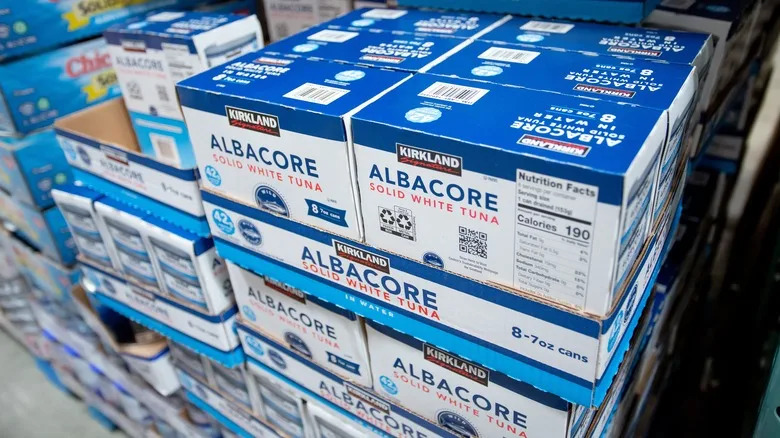
Costco canned tuna in boxes – The Image Party/Shutterstock
In 2023, it was announced that Costco was being taken to court over false and deceptive advertising and labeling practices. The product at the center of the lawsuit was Kirkland Signature White Albacore Tuna in Water. This product carried the “Dolphin Safe” label on its packaging. The plaintiff in the case, Melinda Wright, claimed that this label was directly misleading as the method in which tuna was caught is not dolphin safe.
The Dolphin Protection Consumer Information Act lays out specific criteria tuna products need to achieve to be labeled as dolphin safe. Due to Costco supplier’s use of potentially harmful longline fishing techniques to catch tuna, the Kirkland Signature White Albacore Tuna cannot be defined as dolphin safe according to the Dolphin Protection Consumer Information Act. This suggests that Wright, and other customers like her, were deliberately misled by Costco, which sought to play up the product’s environmental credentials.
This is not the first time Costco has been accused of mislabeling seafood. Also in 2023, the grocery store brand was forced to pay $33,000 AUD after it sold imported Canadian lobsters in its Australian stores, per 9News. In this instance, it was not how the lobsters were caught that was misrepresented but where. Although hailing from Canada, the crustaceans were erroneously labeled as being from Australian waters.
Costco Accepted Illegal Kickbacks From Drug Companies
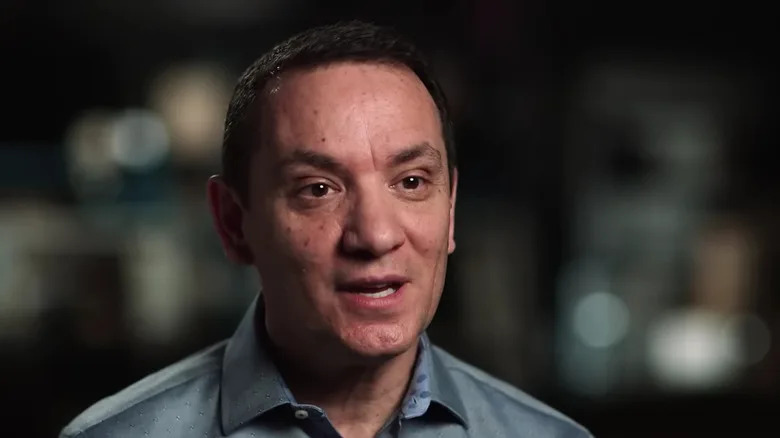
Tony Gagliese talking – The Fifth Estate/YouTube
Kickbacks, often known as rebates, are payments drug companies make to pharmacy chains. These payments are made to ensure the pharmacy will stock the company’s drugs. Kickbacks are legal in some parts of Canada but not in Ontario, which outlawed the practice during 2013 in an effort to lower drug prices. Despite the law, two senior pharmacy executives at Costco in Ontario — Joseph Hanna and Lawrence Varga — demanded kickbacks from drug salesmen several years after 2013.
Tony Gagliese, a salesman for drug company Ranbaxy, secretly recorded Costco pharmacy executives asking for kickbacks in 2018. The Ontario government subsequently launched an investigation into the brand’s illegal kickback practices. It found Costco had accepted over $7.2 million in illegal kickbacks. In an email to CBC, Hanna said: “I genuinely believed at the time Ranbaxy made the payments in question that they were permissible. Neither I, nor Costco, would ever knowingly accept a payment that was prohibited.”
Costco was fined the amount it illegally earnt in kickbacks, around $7.25 million according to CBC. Hanna and Varga were ordered to pay $50,000 each in fines and costs. Neither pharmacy executive was fired.
Costco Underwent An Eight-Year Lawsuit With Tiffany
People by Costco jewlery case – Bloomberg/Getty Images
Unlike many other grocery store brands, Costco often stocks an impressive range of jewelry. However, this aspect of the store took a hit when famous jewelry brand Tiffany and Co. launched a lawsuit against Costco on Valentine’s Day 2013. Once again, the lawsuit revolved around Costco’s advertising and labeling choices. In this instance, Costco used the name “Tiffany” to describe a range of diamond rings.
Costco defended this choice by stating that “Tiffany” was being used to describe the ring’s pronged setting and did not indicate any connection with the well-known jewelry brand. Tiffany and Co. begged to differ, alleging that Costco was deliberately misleading customers into believing the rings were made by or in association with the brand. Over 3,000 of the rings were sold.
In 2017, four years after the lawsuit was brought against Costco, a judge ruled that Costco had to pay Tiffany and Co. nearly $20 million in damages and punitive damages, per Reuters. Costco appealed the judgment and won. The two companies settled out of court in 2021, according to CNBC. No details regarding the settlement were released.
Multiple Employees Have Accused Costco Of Discrimination
Rae Ellis smiling – Bloomberg/Getty Images
Costco has a reputation for being a good place to work. Employee pay and benefits are among the highest in the sector, and the company’s employee turnover is very low. That being said, Costco has also been accused of taking various discriminatory actions against employees. The most infamous of these resulted in over 700 women launching a class-action lawsuit against Costco.
The lawsuit, led by plaintiff Rae Ellis, alleged that Costco discriminated against women when it came to filling managerial positions. The lawsuit was initiated in 2004. At this time women made up half of Costco’s entire workforce, yet only 13% of Costco store managers were female. The lawsuit was settled in 2013, according to Public Justice. As part of the deal, Costco committed to changing its promotion procedures. These changes are working; at the end of the 2022 fiscal year 37.5% of Costco managers were female.
Other lawsuits have accused Costco of disability discrimination. One such lawsuit was leveled against the company by Marisa Martinez. Martinez was the Mexico Buyer for Costco and was on a work trip to the country when she witnessed a car being held at gunpoint. Martinez developed anxiety after this event and did not feel able to travel to Mexico. In retaliation, Costco banned her from performing any other work-related travel and threatened to remove her from management if she did not travel to Mexico. In the ensuing court case, Costco was forced to pay Martinez $1.85 million in damages, per McGillivary Steele Elkin LLP.
Costco Was Found To Have Lax Pharmacy Controls
Employee working in Costco pharmacy – Bloomberg/Getty Images
In January 2017, it was announced that Costco would pay $11.75 million as a result of a number of its pharmacies improperly filling prescriptions. Lax controls were reported in multiple Costco pharmacies in locations including Washington, Michigan, and California. Among the alleged actions were the filling of incomplete prescriptions and the filling of prescriptions without valid Drug Enforcement Administration registration numbers.
After the settlement was reached, U.S. Attorney Eileen M. Decker released a statement. In it she said: “These are not just administrative or paperwork violations — Costco’s failure to have proper controls in place in its pharmacies likely played a role in prescription drugs reaching the black market.”
In an effort to ensure such violations do not occur again, Costco invested in a new pharmacy management system. The chain also adopted an auditing system that involved the use of external auditors.
Many Of Costco’s Steaks Are Mechanically Tenderized
Costco meat – ARTYOORAN/Shutterstock
The process of mechanically tenderizing meat involves tiny holes being punctured into the meat by needle-like blades before packaging and selling. This process helps break down some of the meat’s fibers, making the meat feel more tender when it is eaten.
While there is no disputing that mechanically tenderizing steaks works, the process has drawn some criticism as it increases the risk of foodborne illnesses being transferred by the meat. The United States Department of Agriculture highlights that mechanical tenderizing increases the risk of foodborne illnesses, as any pathogens or bacteria that happen to be located on the meat’s surface will be driven into the center of the meat during the puncturing process. This makes the pathogens harder to kill during cooking, increasing the chances that a contaminated piece of meat makes a customer ill.
One way to mitigate this risk is to cook the steaks more thoroughly, raising their internal temperature to 145 degrees Fahrenheit and holding it there for three minutes, or making sure the internal temperature reaches 160 degrees as Costco recommends. Thankfully, Costco indicates on a steak’s label whether it has been mechanically tenderized, giving customers the knowledge they need to prepare and consume their steaks safely.
Costco’s Gold Ingots Are Not A Great Investment
Gold bought from Costco – goldeagleprice/X, formerly known as Twitter
Costco made headlines throughout 2023 due to the popularity of an unlikely grocery store product: 1-ounce gold bars. Costco repeatedly sold out of the product, with CFO Richard Galanti indicating in a company earnings call that after restocking, the product sold out in a few hours. The ingots do not come cheap; Costco has been selling them at around $2,000, and some customers have likely seen them as a worthwhile investment.
Although gold is known to hold its value in times of uncertainty, those looking to make some money are probably better off looking elsewhere. George Milling-Stanley, chief gold strategist at State Street Global Advisors, explained the reason for this in an interview with Investopedia: “There’s a premium of up to 5% when you go to buy it, and there’s often a discount of up to 5% when you want to sell it […] gold’s really got to go up 10% before you actually break even.”
Despite being known as a discount wholesaler, Costco has not waived the costs associated with gold. The price of the company’s gold ingots has hovered between 5% and 7% above the market value. This ensures that it’s Costco, and not the buyers, that are benefiting from this transaction the most.
Many cities across the United States could become ghost towns by 2100
Adam Schrader – January 14, 2024
A man wears a protective face mask crossing a quiet West Side Highway in Manhattan during rush hour amid the onset of the coronavirus pandemic in April 2020. File Photo by John Angelillo/UPI
Jan. 14 (UPI) — Many cities across the United States could become ghost towns by 2100, according to new research published Thursday.
“Close to half of the nearly 30,000 cities in the United States will face some sort of population decline,” researchers from the University of Chicago in Illinois wrote in a journal article published in Nature Cities.
Major cities in the Northeast and Midwest are already slowly losing population. While cities in the South and West regions are experiencing a population increase, some major cities in Alabama, Georgia and Tennessee are slowly depopulating, the researchers found.
Cleveland, Buffalo, and Pittsburgh could see depopulation of 12 to 23 percent by 2100 while cities like Louisville, New Haven and Syracuse — not currently showing declines – likely could soon.
“You might see a lot of growth in Texas right now, but if you had looked at Michigan 100 years ago, you probably would have thought that Detroit would be the largest city in the U.S. now,” Sybil Derrible, one of the researchers, told Scientific American.
The study briefly looked at possible causes for these population changes, from the effects of an aging population to changes in the economy, wages and access to transportation — as well as things like climate change and similar factors.
“In the Northeast and Midwest, urban cities with lower median household income are more likely to experience depopulation over time,” the study authors wrote.
“Such trends could exacerbate socioeconomic challenges experienced by lower-income households in these regions, given that population decline can create affordability concerns with infrastructure services.”
Meanwhile, the research showed that urban cities with increasing populations in the South and West tend to have a higher reliance on vehicles. The study was conducted by a team originally commissioned by the Illinois Department of Transportation to analyze the challenges in the state over time.
“In the Midwest, urban cities with both low and high vehicle ownership, defined as percent population with two or more vehicles per household, are likely to gain population along with some suburban and periurban cities with low vehicle ownership,” the study authors wrote.
The study also looked at the effects of migration possibly curbing urban population decline in some area. Smaller cities like those on Long Island in New York and around Chicago currently experiencing population loss may still grow thanks to immigration.
“The number of depopulating cities in the Northeast and Midwest will be higher than in the South and West regions (although many cities in the North and Midwest will still grow),” the study reads. “In California, the southern coast may lose population, while the northern coast may gain population.”
Why a 100-year supply? How Arizona got its famous, yet arbitrarily numbered groundwater rule
Ray Stern, Arizona Republic – December 26, 2023
Arizona’s 100-year water supply requirement came into sharp focus this year when Gov. Katie Hobbs announced news of a potential shortfall.
It came up again recently when state Senate President Warren Petersen publicly discussed why the requirement is 100 years and not some other number.
Petersen, R-Gilbert, said the number is arbitrary during a meeting about the state’s financial health in November. Petersen denied he’s planning, or has heard of plans, for new legislation next year to change the number.
The longtime politician hailing from a family of homebuilders said in the aftermath of Hobbs’ announcement he wants the public to know Arizona has “plenty of water” to continue building homes. He stood by the position in a Dec. 13 interview on azcentral.com’s Gaggle podcast.
“Why is it 100 years?” he said on the podcast. “Why isn’t it 105 years — why isn’t it 95 years? California’s (rule) is 25 years … You don’t go to the gas station and buy 100 years of gas.”
What is the 100-year requirement?
The Indigenous Hohokam, forefathers of the Pima, Maricopa and other Native American tribes, thrived for centuries in what are now called the Phoenix and Pinal Active Management Areas.
These parts of the state are flush with surface water in certain areas, augmented by the Central Arizona Project canal that moves water from Colorado River reservoirs to communities including Tucson.
They also contain untold acre-feet of groundwater, which experts say is still being pumped out at unsustainable rates. An acre-foot of water is roughly enough to serve two to three households for a year.
The amount pumped from the Active Management Areas is regulated because of the Groundwater Management Act. The law, passed in 1980 by the Arizona Legislature and former Democratic Gov. Bruce Babbitt, is still praised as one of the most forward-thinking water laws in the country.
It requires developers of housing subdivisions in the Active Management Areas to prove a 100-year water supply actually exists on the land before they fire up the bulldozers.
One of its goals was to steer the state’s fast-growing development into the Active Management Areas that have more water than other parts of Arizona. It also helped ensure the CAP canal would receive help from federal officials, who required a check on groundwater pumping.
The requirement has two major provisions. The first is that metro Phoenix developers must either obtain an agreement to build homes from a city or another “designated assured water supply,” which includes some water companies. These water-distributing entities use surface water to replenish the groundwater they use.
Developers outside of major city areas, but still in Active Management Areas, must obtain a certificate from the state Department of Water Resources showing that a property has a 100-year water supply.
The act doesn’t affect rural Arizona or parts outside of the management areas. It also doesn’t generally affect industrial, agricultural or commercial sites that weren’t built as part of subdivided lands.
Is 100 years the right number?
Fraudulent land sales in Arizona led the state to pass a law in 1973 forcing developers to disclose if there’s an “adequate” water supply on land they sell. Arizona officials determined a few years later that “adequate” meant water “continuously available” for at least 100 years.
Critics at the time argued for 30 to 50 years, saying that would be more in line with the 30-year mortgage typically used in borrowing money to buy a home. A former land commissioner called the 100-year requirement “unrealistic, arbitrary and capricious.”
State officials ignored their concerns and stuck with 100 years. The number was soon codified in the 1980 Groundwater Management Act, which banned development in the Active Management Areas where at least a century’s worth of water could not be proven.
Kathy Ferris, a lawyer and one of the architects of the 1980 law, said that she and the late Jack DeBolske, former executive director of the League of Arizona Cities and Towns, pushed for the “adequate water supply” rule of “at least 100 years” to be included in their sweeping new law.
“We really didn’t discuss the number of years,” said Ferris, now a senior researcher for the Kyl Center for Water Policy at Arizona State University’s Morrison Institute.
Water expert Sarah Porter, executive director for the Kyl Center for Water Policy at Arizona State University’s Morrison Institute, agrees with Petersen that the number “100” isn’t validated scientifically. But she doesn’t think it should be lowered.
“In the minds of greatest water planners and industry leaders, 100 years was the right time frame,” Porter said. “New water-supply projects have very long timelines because of the vulnerability of cities and how devastating it could be for a city to have a serious water shortage.”
Considering the growth in Maricopa County over the past 40 years, “I’m very thankful it’s a 100-year timeline.”
If it were only 40 years, for example, it might be tougher to convince people that buying a home in metro Phoenix would still be a good investment decades from now, she said.
Arizona’s water supply is well-managed
Porter pointed out that in most Phoenix-area cities, the 100-year rule gets extended every 15 years.
For now, scientific modeling shows the system can go on almost indefinitely in these better-watered areas. Yet outlying parts of metro Phoenix that require a 100-year certificate for development don’t provide the same assurance.
In Petersen’s view, the 4% deficit means that some areas “only have a 96-year supply.”
If Arizona’s rule required only a 95-year supply, or 25-year supply like in California, “nobody would be talking about how Arizona is out of water,” Petersen said on the podcast.
Yet the problem is that “some areas would be hit harder than others, especially in Buckeye,” Ferris said. She added she believes Petersen is “in denial” about the water supply.
“We have a problem in some places. California has a problem in many places. There is not plenty of water for everyone to do just do as they please,” she said.
With climate change, drought and fights over dwindling levels of Colorado River water available for all of the states that use it, water researchers want to see more regulation, not less.
“In 1980, 100 years was a big lift,” Ferris said. “Now I definitely think it’s not long enough.”
A Record Number of Billion-Dollar Weather Disasters Hit the U.S. in 2023
Yale Environment 360 – December 20, 2023
Billion-dollar weather disasters in the U.S. by year. Climate Central
In 2023, the U.S. experienced a record 25 billion-dollar weather and climate disasters — three more than the previous record, set in 2020.
As greenhouse gases continue to accumulate in the atmosphere, extreme events — hurricanes, severe storms, heavy rainfall, flooding, wildfires, extreme heat, and drought — are becoming ever more frequent, intense, and dangerous. Between 1980 and 2022, the U.S averaged eight billion-dollar weather disasters each year, according to NOAA. Between 2018 and 2022, it recorded 18 such disasters on average. This year saw an unprecedented 25 billion-dollar disasters.
Not surprisingly, the average time between billion-dollar disasters has dramatically shrunk. In the 1980s, according to an analysis of government data by Climate Central, there was an average of 82 days between such disasters. Between 2018 and 2022, with more carbon in the atmosphere and more people and property in harm’s way, the lull between billion-dollar disasters dropped to an average of just 18 days. In the first eleven months of 2023, that lull was just 10 days.
Average number of days between billion-dollar disasters in the U.S. Climate Central
Today’s climate impacts reflect around 1.1 degrees C of global warming, said Climate Central, noting that impacts worsen with every bit of additional warming. But “if we commit to rapid and sustained cuts in carbon pollution, it could set younger generations on a path toward a far safer future with less warming and fewer risky extreme events.”