Experts say nuclear energy bill is proof of bipartisan consensus
Zack Budryk – August 1, 2024
The recent passage of major legislation to boost the deployment of nuclear reactors is evidence of a bipartisan consensus on nuclear power as an opportunity to keep pace with China on renewable energy, experts said Thursday at a panel discussion with The Hill.
The ADVANCE Act, which President Biden signed into law in July, passed the Senate 88-2. It directs the Nuclear Regulatory Commission to explore methods of quickening the licensing process for new nuclear technology, as well as streamlining the Energy Department’s technology export process.
The bipartisan vote on the legislation indicates “members of both parties are looking to build on decades of innovation and … create this new opportunity to build new gigawatt-scale clean energy facilities in the United States,” said Lesley Jantarasami, managing director of energy programs at the Bipartisan Policy Center
Jantarasami made the remarks at “The Nuclear Frontier: Securing America’s Energy Future,” which was hosted by The Hill and sponsored by The Nuclear Company. The discussion was moderated by Rafael Bernal, a staff writer at The Hill. Bob Cusack, The Hill’s editor in chief, moderated a separate conversation during the event.
“There’s a lot going on today in recognition of the fact that we are moving toward modernizing our economy, towards building a new energy economy that needs to be centered around clean energy and that nuclear is a foundational piece of that portfolio,” Jantarasami said.
Jantarasami added that widespread interest exists within industry and utilities in deploying new nuclear technology, but the process has been stymied by anxiety about the pressure of being “first out of the gate.”
Panelists also emphasized that there is not a binary choice between a more efficient licensing and approval process and cutting corners on safety. Former Deputy Energy Secretary Mark W. Menezes, president and CEO of the U.S. Energy Association, pointed to reforms at the Food and Drug Administration that reduced the approval timeline as an example of how a balance could be struck.
“This is not about cutting corners [or] creating a process that isn’t diligent,” Jantarasami added, saying there have been “misconceptions around speeding up a process and not doing as much due diligence—we can do both those things.”
Maria Korsnick, CEO at the Nuclear Energy Institute, added that it “isn’t the conversation we had in the 70s and 80s anymore,” when incidents like the Chernobyl disaster and the Three-Mile Island accident led to widespread fears around nuclear power.
Spain, France, Germany: Heatwaves sweep across Europe with devastating consequences
Angela Symons – August 1, 2024
Spain, France, Germany: Heatwaves sweep across Europe with devastating consequences
There’s no end in sight for Europe’s searingly hot summer, as heatwave warnings have been issued from Spain to Germany.
In Paris, too, Olympians have been forced to compete in searing heat – extremes that would have been “virtually impossible” without human-caused climate change, according to climatologist group World Weather Attribution (WWA).
Droughts and wildfires have broken out across the Mediterranean as a result of the hot weather, which looks set to continue throughout August and beyond in some parts.
Extreme heat currently claims more than 175,000 lives annually in Europe, with numbers set to soar, according to a report released by the World Health Organization (WHO) today.
Spain: Temperatures could surpass 43C
Yellow, orange and extreme red heatwave warnings have been issued by Spain’s Meteorological Agency (AEMET) as temperatures threaten to reach 43C in the southeast.
Sweltering highs are forecast across the country’s east coast, south and centre for the majority of August, reaching peak intensity on Thursday – with one in nine of AEMET’s weather stations reaching 40C or higher.
Baza in Grenada and northwest Murcia will be the hardest hit.
The temperature in Barcelona broke records on Tuesday, racing 40C – the hottest day the Catalan capital has seen in at least 110 years, when records began.
According to AEMET, temperatures are likely to be higher than normal until October across much of Spain.
Italy: Rome under maximum heat warning
Helicopters and fire engines tackled a large fire in north-west Rome on Wednesday as a heatwave gripped the Italian capital.
The city has been placed under a maximum heat warning, with temperatures in the high 30s expected on Thursday and Friday.
Florence, Bologna, Milan and Turin are among the other cities also under a red weather warning.
While the blaze on Monte Mario is now under control, Rome and the surrounding areas remain on high alert for wildfires.
The south of the country is facing persistent drought, with farmers in Sicily forced to slaughter or sell off livestock due to severe water shortages.
Germany: Heat warning issued as temperatures creep over 35C
It’s not only southern Europe facing the heat: German Weather Service DWD has issued a warning as parts of the country face 35C-plus temperatures.
Wednesday was expected to be the hottest day of the year – particularly southwest Germany, which will today be hit with thunderstorms and heavy rain as the warm air moves north.
Campaign groups have warned that the country is ill prepared for heatwaves, with Frankfurt’s Senckenberg Society for Nature Research urging the development of early warning systems as the threat of wildfires ramps up.
Environmental non-profit Deutsche Umwelthilfe, meanwhile, released a ‘heat check’ revealing that less than half of the 190 German cities analysed are adequately protecting their citizens against hot weather.
They say more unsealed surfaces and green spaces are needed in cities like Frankfurt and Stuttgart to make them liveable.
Temperatures in Paris reached 35C this week as the city continues to host the Olympic Games.
WWA has warned the high temperatures could impact athletes’ performance and lead to an increase in heat related illness.
Southeastern France is also facing extreme weather, with temperatures of up to 40C expected until at least 4 August. Orange heatwave warnings have been issued by weather service Météo-France in Corsica, Provence-Alpes-Cote d’Azur, Auvergne-Rhone-Alpes and the Occitanie region.
“Extreme heat events like July 2024 in the Mediterranean are no longer rare events,” says WWA. “Similar heatwaves affecting Greece, Italy, Spain, Portugal and Morocco are now expected to occur on average about once every 10 years in today’s climate.”
Mediterranean heatwave ‘virtually impossible’ without climate change: scientists
AFP – July 31, 2024
Scientists from the World Weather Attribution group say the heatwave that hit countries around the Mediterranean in July would have been up to 3.3 degrees Celsius cooler in a world without climate change (FADEL SENNA)
The punishing heat experienced around the Mediterranean in July would have been “virtually impossible” in a world without global warming, a group of climate scientists said Wednesday.
A deadly heatwave brought temperatures well above 40 degrees Celsius (104 Fahrenheit) to southern Europe and North Africa, where such extreme summer spells are becoming more frequent.
Scorching heat claimed more than 20 lives in a single day in Morocco, fanned wildfires in Greece and the Balkans, and strained athletes competing across France in the Summer Olympic Games.
World Weather Attribution, a network of scientists who have pioneered peer-reviewed methods for assessing the possible role of climate change in specific extreme events, said this case was clear.
“The extreme temperatures reached in July would have been virtually impossible if humans had not warmed the planet by burning fossil fuels,” according to the WWA report by five researchers.
The analysis looked at the average July temperature and focused on a region that included Morocco, Portugal, Spain, France, Italy and Greece.
Scientists used this and other climate data to assess how the heat in July compared to similar periods in a world before humanity began rapidly burning oil, coal and gas.
They concluded the heat recorded in Europe was up to 3.3C hotter because of climate change.
Beyond the Mediterranean, intense heat reached Paris this week where athletes competing in the Olympic Games withered as temperatures hit the mid-30s this week.
“Extremely hot July months are no longer rare events,” said Friederike Otto, a climate scientist at Imperial College London, a co-author of the study.
“In today’s climate… Julys with extreme heat can be expected about once a decade,” she said.
Scientists have long established that climate change is driving extreme weather and making heatwaves longer, hotter and more frequent.
This latest episode came in a month when global temperatures soared to their highest levels on record, with the four hottest days ever observed by scientists etched into the history books in July.
The past 13 months have been the warmest such period on record, exceeding a 1.5C limit that scientists say must be kept intact over the long term to avoid catastrophic climate change.
China reveals nuclear energy breakthrough with world’s first ‘meltdown-proof’ plant — here’s how it could change the future of nuclear power
Jeremiah Budin – July 30, 2024
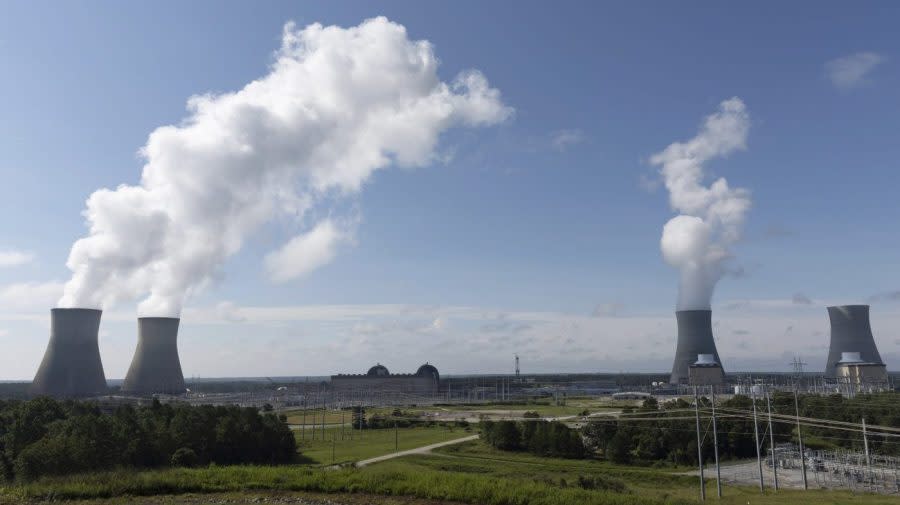
Researchers in China have developed the world’s first meltdown-proof nuclear power plant, The Independent reported.
Nuclear power is one clean alternative to dirty energy sources such as gas, oil, and coal — all of which produce massive amounts of planet-overheating air pollution. However, the development of more nuclear power plants has been hampered by public fear of catastrophic nuclear-plant meltdowns such as the widely known meltdowns at Chernobyl and Fukushima.
While disasters like these are rare, they are still a real concern, which makes China’s new meltdown-proof plant potentially exciting for the future of clean energy.
The researchers from Tsinghua University used several new methods to create the plant, which relies on a “pebble-bed reactor” to virtually eliminate the possibility of a meltdown. The reactor is cooled by helium instead of water and uses highly heat-resistant billiard-ball-sized graphite spheres filled with tiny uranium fuel particles in place of large fuel rods.
While the pebble-bed design cannot be retroactively applied to new nuclear power plants, it could serve as a blueprint for future plants, the scientists explained.
While wind and solar tend to garner more headlines as clean energy sources that can replace dirty energy, nuclear power also has an important role to play. One of the main challenges of replacing dirty energy lies in generating enough clean energy to meet demand, so diversifying and relying on a wider variety of sources makes a lot of sense.
In Wyoming, another nuclear power plant is being built on the site of a retired coal plant — that one also bills itself as being virtually meltdown-proof, by using liquid sodium as a coolant instead of water.
In addition, researchers have discovered a way to make nuclear power plants safer by getting water to boil off and evaporate at a lower temperature. Although nuclear power is already safer than many people believe, these discoveries and inventions are making it safer than ever for future generations.
New research suggests major change in China’s air pollution may have kick-started bizarre effects: ‘It will give us surprises’
Leo Collis – July 30, 2024
In the global battle against harmful air pollution, China is both a leader in production and reduction.
According to the 2023 Global Carbon Budget, shared by Our World in Data, the country was responsible for annual carbon dioxide pollution of over nine billion tons from coal in 2022. The next highest polluter, India, was responsible for two billion.
However, government controls on dirty fuel industries have resulted in a 70% reduction in aerosol emissions over the last 10 years, as Yale Environment 360 detailed.
It’s a slightly confusing state of affairs. What’s more confusing, though, is how that aerosol reduction has impacted ocean warming.
What’s happening?
According to analysis published by PNAS and shared by Yale Environment 360, improvements made in reducing air pollution by China have led to warming effects in the Pacific Ocean.
The decline in smog particles has offered less shading protection from the sun’s rays, which has increased the rate of ocean warming and set off a chain reaction of atmospheric events.
As Yale Environment 360 detailed, aerosols can deter around a third of the warming that’s caused by greenhouse gases — which are different from aerosols as they trap heat rather than shade it.
Why is ocean warming concerning?
Since 2013, the Pacific Ocean has been witnessing a warming event known as “The Blob,” which periodically increases water temperatures between California and Alaska by as much as seven degrees Fahrenheit.
This has led to toxic algal blooms, reductions of fish stocks, sea lion displacement, and the forcing of whales into shipping lanes in the hunt for food, among other issues, according to Yale Environment 360.
The analysis suggests that the aerosol reduction in China is at least partly responsible for “The Blob.” Despite these negative effects, cutting the production of aerosol is still an important factor in curbing overall air pollution.
“Aerosol reductions will perturb the climate system in ways we have not experienced before,” atmospheric scientist at Texas A&M University Yangyang Xu, who was not involved in the study, told Yale Environment 360. “It will give us surprises.”
What can be done about rising ocean temperatures?
As Fred Pearce of Yale Environment 360 noted: “To be clear, nobody — but nobody — suggests that we should stop the cleanup of aerosols. The death toll would just be too great.”
The World Health Organization says that outdoor air pollution was responsible for 4.2 million premature deaths worldwide in 2019, and aerosols are a key contributor to that statistic.
With that in mind, Michael Diamond from Florida State University, an expert on aerosols and climate, has suggested that reducing methane immediately would mitigate against the warming created in the absence of aerosols.
According to NASA, around 60% of the world’s methane pollution is caused by human activities. Agriculture, landfills, and burning dirty energy are among the leading producers of this harmful gas, which is 28 times more potent in terms of planet-warming potential than carbon dioxide.
So, cutting our consumption of meat and dairy, keeping as many items from heading to landfills as possible, and ramping up the production of electricity from renewable sources are essential to keep methane levels down. If we can do that, we can offset the unusual heating effects that cleaning up aerosols is having on our oceans without compromising human health.
Scientists make ‘incredibly worrying’ discovery after observing pattern in one of Earth’s largest ice fields: ‘We risk irreversible, complete removal of them’
Leslie Sattler – July 28, 2024
Alaska’s Juneau Icefield is melting at an alarming rate, doubling its pace of decline in recent decades.
This vast expanse of interconnected glaciers is shrinking faster than ever before, according to The New York Times, raising what it said scientists called “incredibly worrying” concerns about the future of our planet’s ice.
What’s happening?
The Juneau Icefield lost 1.4 cubic miles of ice annually between 2010 and 2020, according to a recent study published in the journal Nature Communications. That’s twice the rate of melting observed before 2010.
Since the late 18th century, this massive ice field has shed a quarter of its volume, with the most dramatic losses occurring in recent years.
Bethan Davies, who led the research, gave a stark statement to the New York Times: “If we reduce carbon, then we have more hope of retaining these wonderful ice masses. The more carbon we put in, the more we risk irreversible, complete removal of them.”
Why is the melting Juneau Icefield concerning?
The rapid melting of this Alaskan ice field is a clear sign that our planet is overheating.
Climate feedback loop: As ice melts, it exposes darker land beneath, which absorbs more heat and accelerates warming.
Fresh water supply: Glaciers act as natural reservoirs, providing fresh water for ecosystems and human communities.
Wildlife impact: Many species depend on these icy habitats for survival.
The changes in the Juneau Icefield serve as a stark reminder of the urgent need to address our planet’s overheating. By taking action now, we can help protect these vital ecosystems and the communities that depend on them.
What’s being done about the Juneau Icefield?
While the situation is serious, there’s still hope. Scientists, policymakers, and laypeople are working together to slow the melt.
For example, studies like this one help us understand the problem and develop targeted solutions. International efforts, such as the Paris Agreement, aim to limit planetary heating and protect vulnerable areas. And many communities are switching to renewable energy sources to reduce carbon pollution.
You can make a difference, too, with actions big and small. The most important thing you can do is get educated about topics like this and use your voice to help steer public sentiment and beyond, however you feel.
By making these small changes in our daily lives, we can contribute to a cooler future for our planet. Remember, every action counts when it comes to preserving our planet’s incredible ice fields and the vital role they play in our global ecosystem.
Firefighters get some help from cooler temperatures after California’s largest wildfire explodes
Nic Coury and Olga R. Rodriguez – July 27, 2024
Flames leap above fire vehicles as the Park Fire jumps Highway 36 near Paynes Creek in Tehama County, Calif., Friday, July 26, 2024. (AP Photo/Noah Berger)ASSOCIATED PRESSGrant Douglas pauses to drink water while evacuating as the Park Fire jumps Highway 36 near Paynes Creek in Tehama County, Calif., Friday, July 26, 2024. (AP Photo/Noah Berger)ASSOCIATED PRESSGrant Douglas pauses to drink water while evacuating as the Park Fire jumps Highway 36 near Paynes Creek in Tehama County, Calif., on Friday, July 26, 2024. (AP Photo/Noah Berger)ASSOCIATED PRESSDamage is seen after a wildfire in Jasper, Alberta, Friday July 26, 2024. (Amber Bracken/The Canadian Press via AP)A vehicle drives past the spreading River Fire Thursday, July 25, 2024, near Myrtle, Idaho, before U.S. Highway 12 was closed. Lightning strikes have sparked fast-moving wildfires in Idaho, prompting the evacuation of multiple communities. (August Frank/Lewiston Tribune via AP)Flames consume a vehicle as the Park Fire jburns in Tehama County, Calif., on Friday, July 26, 2024. (AP Photo/Noah Berger)Flames burn as the Park Fire jumps Highway 36 near Paynes Creek in Tehama County, Calif., on Friday, July 26, 2024. (AP Photo/Noah Berger)Flames consume structures as the Park Fire burns in Tehama County, Calif., on Friday, July 26, 2024. (AP Photo/Noah Berger)A resident turns around while trying to evacuate as the Park Fire jumps Highway 36 near Paynes Creek in Tehama County, Calif., on Friday, July 26, 2024. (AP Photo/Noah Berger)Flames leap above fire vehicles as the Park Fire jumps Highway 36 near Paynes Creek in Tehama County, Calif., Friday, July 26, 2024. (AP Photo/Noah Berger)
FOREST RANCH, Calif. (AP) — Thousands of firefighters battling a wildfire in northern California received some help from the weather Saturday, just hours after the blaze exploded in size, scorching an area greater than the size of Los Angeles. The blaze was one of several tearing through the western United States and Canada, fueled by wind and heat.
Cooler temperatures and an increase in humidity on Saturday could help slow the Park Fire, the largest blaze so far this year in California. The blaze’s intensity and dramatic spread led fire officials to make unwelcome comparisons to the monstrous Camp Fire. That fire burned out of control in nearby Paradise in 2018, killing 85 people and torching 11,000 homes.
And Paradise again was near the danger zone. The entire town was under an evacuation warning Saturday, one of several communities in Butte County. Evacuation orders were also issued in Plumas, Tehama and Shasta counties. An evacuation warning calls for people to prepare to evacuate and await instructions. An evacuation order means to leave immediately.
Temperatures are expected to be cooler than average through the middle of next week, but “that doesn’t mean that fires that are existing will go away,” said Marc Chenard, a meteorologist at the National Weather Service Weather Prediction Center in College Park, Maryland.
The blaze has scorched 540 square miles (1,409 square kilometers) as of Saturday with no containment. Los Angeles covers roughly 503 square miles (1,320 square kilometers). The blaze was moving north and east after igniting Wednesday, when authorities said a man pushed a burning car into a gully in Chico and then calmly blended in with others fleeing the scene.
Ronnie Dean Stout, 42, of Chico, was arrested early Thursday in connection with the blaze and held without bail pending a Monday arraignment, officials said. There was no reply to an email to the district attorney asking whether the suspect had legal representation or someone who could comment on his behalf.
Cal Fire incident commander Billy See said at a briefing on Saturday that the blaze had been advancing 8 square miles (21 square kilometers) per hour since its inception. But there was cautious optimism as weather conditions slowed the fire’s advance in some areas, and firefighters were able to plan and deploy additional personnel. Nearly 2,500 firefighters were battling the blaze, aided by 16 helicopters and numerous air tankers.
“Today we’ve got almost three times the personnel we had yesterday morning,” he said. “We still don’t have enough.”
He advised his crews to be aggressive, stay safe and take advantage of what likely are the best conditions they will experience in coming days.
Communities elsewhere in the U.S. West and Canada also were under siege Saturday from fast-moving flames.
More than 110 active fires covering 2,800 square miles (7,250 square kilometers) were burning in the U.S. on Friday, according to the National Interagency Fire Center. Some were caused by the weather, with climate change increasing the frequency of lightning strikes as the region endures record heat and bone-dry conditions.
In Chico, California, Carli Parker is one of hundreds who fled their homes as the Park Fire pushed close. Parker decided to leave her Forest Ranch residence with her family when the fire began burning across the street. She has previously been forced out of two homes by fire, and she said she had little hope that her residence would remain unscathed.
“I think I felt like I was in danger because the police had come to our house because we had signed up for early evacuation warnings, and they were running to their vehicle after telling us that we need to self-evacuate and they wouldn’t come back,” said Parker, a mother of five.
Amanda Brown, who lives in the same community where Stout was arrested, said she was stunned that someone would set a fire in a region where the memories of the devastation in Paradise are still fresh.
“That anyone could deliberately put our community through that again is incredibly cruel. I don’t understand it,” said the 61-year-old Brown, who’s about a mile (1.6 kilometers) from the fire but had not been ordered to evacuate.
Elsewhere, fire crews were making progress on another complex of fires burning in the Plumas National Forest near the California-Nevada line, said Forest Service spokesperson Adrienne Freeman. Traffic was backed up for miles near the border on a portion of the main highway linking Los Angeles and Las Vegas, as crews continued Saturday to battle a fire that started a day before when a truck carrying lithium-ion batteries crashed and turned onto its side.
The most damage so far has been to the Canadian Rockies’ Jasper National Park, where a fast-moving wildfire forced 25,000 people to flee and devastated the park’s namesake town, a World Heritage site. Authorities there said cool and wet weather was helping crews battle the wildfires. This comes after Parks Canada said 358 of the 1113 structures in the town of Jasper had been destroyed.
In eastern Washington state, crews late Friday stopped the forward progress of a fire near the community of Tyler that had destroyed three homes and five outbuildings, the Washington Department of Natural Resources said Saturday. The South Columbia Basin fire burned timber and grasses, and crews continued work on containment lines along the fire perimeter.
Two fires in eastern Oregon, including the Durkee and Cow Valley blazes, had burned about 660 square miles (1,709 square kilometers). Oregon Gov. Tina Kotek late Friday expressed condolences to the family of a pilot of a single-engine air tanker that had gone down in forested terrain while fighting a separate fire near the town of Seneca and the Malheur National Forest.
In Idaho, lightning strikes sparked fast-moving wildfires and the evacuation of multiple communities. The fires were burning on about 31 square miles (80 square kilometers) Friday afternoon. Juliaetta, about 27 miles (43 kilometers) southeast of the University of Idaho’s campus in Moscow, was evacuated Thursday just ahead of roaring fires, as were several other communities.
Rodriguez reported from San Francisco. Associated Press writers Rebecca Boone, John Antczak, Rio Yamat, David Sharp, Holly Ramer, Sarah Brumfield, Claire Rush, Terry Chea, Scott Sonner, Martha Bellisle and Amy Hanson contributed to this report.
California’s largest wildfire of the year has burned an area larger than the size of the city of Los Angeles,destroyed dozens of buildings and forced thousands of residents to flee their homes as wildfires wreak havoc in the Western United States.Meanwhile, homes and businesses in a popular Canadian resort town were incinerated as a wildfire continued to roar through the area. Here’s the latest:
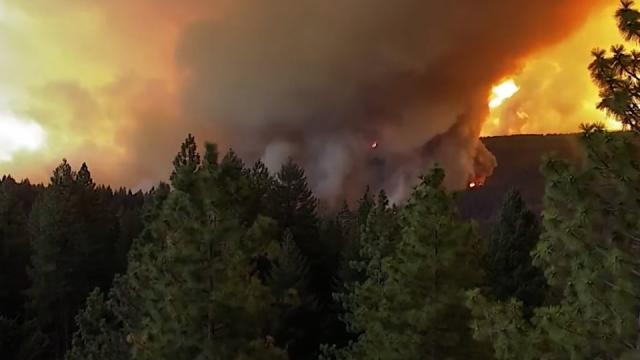
• California’s Park Fire now state’s 8th largest: As the Park Fire exploded across parts of Butte and Tehama counties, north of Sacramento, California, it scorched 134 buildings and threatened another 4,200. The fast moving blaze has burned more than 307,000 acres, or about 480 square miles, making it the eighth largest wildfire in recorded state history. More than 2,400 firefighters are working to slow the fire’s progress as it remains 0% contained, according to Cal Fire.
• California governor declares state of emergency: Gov. Gavin Newsom declared a state of emergency for both counties Friday. The state also secured a federal grant to ensure there are enough resources to fight the blaze. The fire is advancing at 4,000 to 5,000 acres per hour, Billy See, incident commander for Cal Fire, said Friday. With winds forecast to die down overnight and higher humidity moving into the area, See believes firefighters will have a better chance to slow the fire down.
• A man is accused of igniting Park Fire: A 42-year-old man, identified as Ronnie Dean Stout II, was arrested on suspicion of pushing a burning car 60 feet into a gully, “spreading flames that caused the Park Fire,” authorities said. The DA says the man was seen “calmly leaving the area by blending in with the other citizens who were in the area and fleeing the rapidly evolving fire.” Stout, who has not retained an attorney, will likely face an arson charge, the DA’s office told CNN.
• Pilot dies while fighting Oregon fire: A firefighting pilot was found dead in a single-engine air tanker on Friday after going missing the night before while working in the vicinity of the 219-square-mile Falls Fire burning in the Malheur National Forest, according to officials. The fire, which was 55% contained as of Saturday morning, is among a number of large wildfires burning across Oregon. The largest active wildfire in the state is the Durkee Fire, which has scorched about 451 square miles and was 27% contained as of Saturday morning.
• Fire wipes out many of a Canadian town’s buildings: A fast-moving wildfire sent thousands of visitors and residents fleeing the town of Jasper in Alberta, where flames devastated an estimated 30% of the town’s structures. Officials say the losses are significant, and Prime Minister Justin Trudeau has deployed federal support to help battle the blaze. Cool temperatures are expected to calm fire behavior, which will help the 154 firefighters in Jasper fight the blaze, Jasper National Park said on Facebook Friday night. High winds, however, could increase fire activity.
• 96 large wildfires burning nationwide: Triple-digit heat and dry conditions across the West this week have made conditions poor for firefighters actively fighting to contain the dozens of wildfires burning nationwide, including 37 in Oregon and 14 in California. “Elevated to critical fire weather conditions will persist through the weekend across the Western U.S. Isolated dry thunderstorms could lead to new fire starts over portions of the northern Rockies,” the National Weather Service said. Smoke from wildfires will also result in continued unhealthy air quality.
Sherry Alpers checks on her dogs at a center for Park Fire evacuees in Chico, California, on Friday. – Noah Berger/AP
Park Fire makes some California residents relive tragedy
The Park Fire, which began Wednesday in the Chico area, has forced about 4,000 people to evacuate in Butte County, where the state’s deadliest wildfire, the Camp Fire, killed more than 85 people and destroyed thousands of homes in 2018.
A heavy plume of smoke once again looms over the county as crews battle thick flames that are torching everything in their path. The Park Fire has left graveyards of burned cars and charred, hallowed out structures, video from the Chico area shows.
For Butte County residents, the advancing flames bring with them painful memories of the losses they endured from the Camp Fire six years ago.
One evacuee, Tim Ferguson, told CNN affiliate KOVR he had lost his father in the Camp Fire, and it’s painful thinking about having to experience more loss this time around.
“We’ve got our home, and we’ve been working on it a lot lately, fixing it up, and it’s just we’re at the verge of maybe losing all that,” Ferguson said.
Lauri Schwein, who lost her home in the Camp Fire, told CNN affiliate KCRA she’s on high alert. “I’m packing up, my dog, my cat,” she said. “All I can do is wait and watch.”
In the town of Paradise, the smoke is enough to bring back the horrors the Camp Fire unleashed when it incinerated much of the town.
“It was very impactful, every once in a while we smell smoke or see smoke like that, it does trigger us. It triggers the people here in Paradise. When you go through trauma, that’s what happens,” Ron Lassonde, the mayor of Paradise, told KCRA.
Paradise is under an evacuation warning, according to the town web site. “An EVACUATION WARNING means prepare to evacuate and await additional instructions, under a warning those who need additional time to evacuate should begin evacuating now,” officials cautioned.
The Park Fire is burning just three weeks after the Thomspon Fire in Butte County burned more than 3,700 acres, forced people from their homes, and destroyed more than two dozen structures, including houses.
Local officials cautioned it would take some time before people would be allowed back in their homes.
“We are no strangers to evacuations in Butte County,” said Butte County Sheriff Kory Honea at a news conference Friday. “We are constantly looking for the earliest opportunity to get people back in.”
The North Valley Animal Disaster Group has rescued 88 animals from the blaze as its members dealt with losses of their own. In 2018, the group managed to shelter over 4,000 animals during the Camp Fire.
“When you’ve been through a big fire and you’ve lost everything, sometimes the only thing you have left to give is to go help the animals,” Vice President Norm Rosene told CNN.
Triple-digit temperatures and high wind gusts have fueled the explosive growth of the Park Fire amid an active fire season in California. An estimated 626,600 acres have burned across the state so far in 2024, compared to 25,254 acres burned by this time last year, according to Cal Fire.
“It’s been nothing but challenging,” Cal Fire Captain Dan Collins told CNN. “If we see fires behave like this in July, they may behave even more radically come the fall when the fields are even drier.”
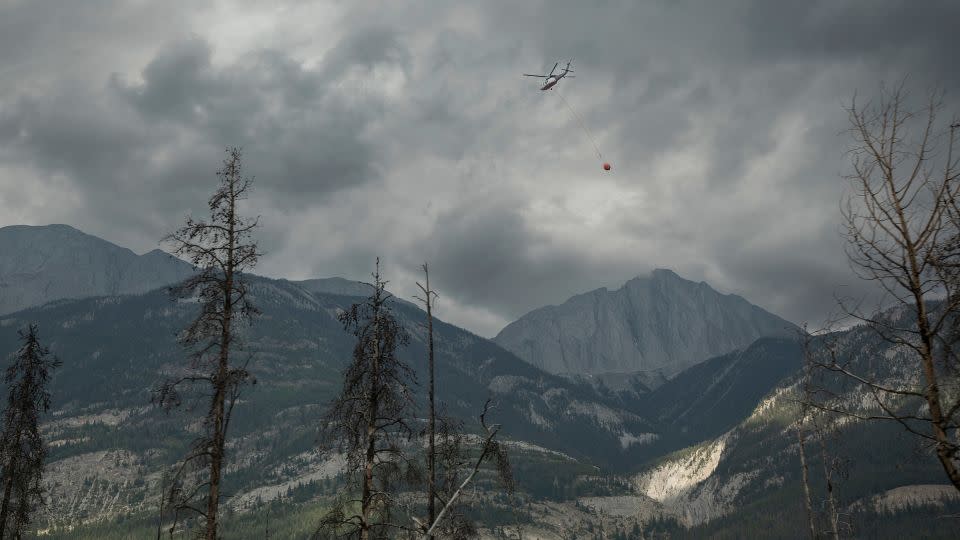
A helicopter buckets water onto smoldering fires outside of Jasper, Alberta, Canada, on Friday. Wildfires encroaching into the townsite of Jasper forced an evacuation of the national park. – Amber Bracken/The Canadian Press/AP
Lodge owner in Canadian tourist town sees business go up in flames
In Jasper, a popular tourist town in Alberta, 25,000 residents and visitors were forced to evacuate from a fast-moving blaze that has destroyed 30% of the town’s structures, officials said.
Two wildfires converged in the Jasper National Park area, becoming what authorities are referring to as the Jasper Wildfire Complex. It remains difficult to measure exactly how big the complex – which also includes a third nearby fire – is due to extreme fire behavior and thick smoke cover. Together, the fires have swallowed an estimated 89,000 acres, the Jasper National Park said.
An evacuation order remains in effect for Jasper and Jasper National Park, with the vast majority of evacuees being visitors, officials said. Along with about 4,100 residents – and thousands of seasonal workers – who live in the town, 2.48 million people visited Jasper National Park last year.
Out of a total of 1,113 structures in the town, 358 have been destroyed, according to a Facebook post from Jasper National Park.
The owner of Maligne Lodge in Jasper told CNN news partner CTV News that she was shocked when she saw a photo of the 98-room hotel up in flames. It had been in the family since 1961 after her father purchased the property, and she had been working there since she was a child.
“As soon as we’re given the go-ahead, we’ll be in there rebuilding our hotel,” Karyn Decore said.
Jasper Mayor Richard Ireland lost the home that his family had moved into around his second birthday, according to CTV News.
On a tour of the wreckage in Jasper, Ireland said that the loss of his home of 67 years “is shattering.”
“Now it’s memories of family and fire,” Ireland told CNN news partner CBC. “So many others are going to go through this same thing.”
But he said “when I stood back and looked, and saw what remains, I know that the community is still there.”
Wildfires are exploding across the West, especially in California, where the Park Fire has now grown to be the biggest in the state this year.
The largest of several wildfires in the state is the Park Fire, burning in Butte and Tehama counties, just north of Chico, which grew to over 348,370 acres on Saturday with 0% containment. At least 134 structures have been destroyed by the blaze, which has grown to be the 7th largest fire recorded in California history in only a few days.
California Gov. Gavin Newsom declared a State of Emergency for Butte and Tehama counties due to the Park Fire, as well as Plumas County, due to the Gold Complex Fire, which combined have burned more than 424,000 acres.
“We are using every available tool to protect lives and property as our fire and emergency response teams work around the clock to combat these challenging fires. Stay safe and remain alert for instructions from local authorities as dangerous fire weather conditions continue,” Newsom said in his statement.
Ronnie Dean Stout II, 42, has been arrested on suspicion of arson for starting the Park Fire after he allegedly pushed a burning car into a gully in Bidwell Park, near Chico, according to Butte County District Attorney Mike Ramsey.
There are more than over 2,400 personnel, six helicopters and 153 fire engines assigned just to the Park Fire.
The Lake Fire, in Santa Barbara County, is the second-largest burning in the state at the moment at over 38,000 acres, though it is 90% contained after sparking July 5.
Meanwhile, farther north, the Durkee Fire in Oregon had grown to over 288,000 acres on Friday morning with 20% containment, according to the Oregon/Washington Bureau of Land Management. It was sparked on July 17 by a lightning strike and has grown to the largest fire in the country this year.
More than 500 people fighting the fire, as rain fell overnight in the area, providing some relief for firefighters.
The pilot of a single-engine fire tanker carrying retardant was found dead on Friday in Grant County in eastern Oregon after the aircraft was reported missing, according to the Bureau of Land Management.
Smoke spreads across several western states
PHOTO: Wildfires burning in the West are creating unhealthy smoke conditions across several states. (ABC News)
The smoke from fires in Northern California and Oregon is spreading across several states, including Idaho, Montana and North Dakota, which will all see regions under “very heavy” smoke conditions — the second-worst level.
California’s Park Fire now among largest in state history as evacuation orders spread
Scott Sistek – July 27, 2024
https://s.yimg.com/rx/ev/builds/1.7.4/pframe.htmlScroll back up to restore default view.
CHICO, Calif. — The Park Fire burning in Northern California near Chico has now become one of the largest wildfires in state history as flames continue to grow, causing additional evacuations to now spread across four counties and taking aim at a community that is still reeling from a deadly wildfire just six years ago.
But some good news emerged for firefighters with the weather forecast as the weekend began without the triple-digit heat and Fire Weather Warnings of the past few days.
CAL Fire now estimates the Park Fire has burned nearly 350,000 acres as of midday Saturday, which ranks the fire as No. 7 on California’s list of most acreage burned by a fire. At least 134 homes and structures have been damaged or destroyed and another 4,200 are threatened, fire officials said. Over 50 community zones are now under evacuation warnings across 4 counties, spanning more than 4,400 people.
“Extreme fire behavior has occurred due to the slope and winds aligning, causing significant growth,” CAL Fire officials wrote in their Saturday morning update. “Damage inspection teams are working to identify structures that have been damaged or destroyed.”
So far, there are no reports of any deaths, but two people have been treated for minor injuries.
Vanessa Starling, who lives near the heavily damaged town of Cohasset, told FOX 2 Bay Area they could hear the sound as they evacuated their home.
“It was pretty crazy, there is one spot that had a little fire tornado going on. We could hear it, just this roaring sound, you can hear the fire roaring as we were leaving,” Starling said, worried about her family home. “We have property that’s been in our family since 1905.”
Late Friday night, the entire town of Paradise, California was placed under an evacuation warning, which means all residents should get ready to run if the fire gets closer.
“Fire behavior and predicted winds require all residents in Paradise to prepare to evacuate and await further information,” CAL Fire officials said.
It’s a particularly daunting reminder of wildfire dangers for this community that was devastated by the fast-moving Camp Fire in 2018 that left dozens dead as flames raced through town.
Additional evacuation shelters have opened in Red Bluff, Los Molinos, and the Butte County Fairgrounds in Gridley in addition to shelters in Chico.
Nearly 2,500 firefighters are dedicated to fighting the blaze as of Friday night, and California Gov. Gavin Newsome declared an emergency, allowing additional state resources to flow toward the fire.
The Park Fire began Wednesday as a bizarre care of arson, investigators said.
Witnesses spotted a man next to a car where a fire had started under the left wheel of what turned out to be the suspect’s mother’s vehicle, and watched it burn, according to Butte County District Attorney Mike Ramsey.
The man climbed into the vehicle for a few moments, then got out and pushed the flaming car down a 60-foot embankment into a gully, investigators said. The burning car eventually became engulfed, spreading flames into the nearby brush and eventually tearing through nearby neighborhoods.
The suspect was identified later that evening and arrested early Thursday morning. He’s being held in the Butte County Jail without bail, awaiting arraignment on Monday.
After days of fighting triple-digit heat and blustery winds that have triggered Fire Weather Warnings across much of Northern California, the weather pattern has finally shifted to give firefighters a temporary reprieve.
Cooler, ocean breezes have pushed inland, not only knocking temperatures down into the upper 80s and low 90s but increasing the humidity.
No weather alerts were in effect for Saturday and the pattern was expected to hold through the middle of the week. However, hotter weather and perhaps a return to triple digit heat was looming for later in the week.






 Scroll back up to restore default view.