50-year-old muscles just can’t grow big like they used to – the biology of how muscles change with age
Roger Fielding, Senior Scientist Team Lead Nutrition Exercise Physiology and Sarcopenia Team Jean Mayer USDA Human Nutrition Research Center on Aging, Professor of Medicine, Tufts University – February 19, 2023
There is perhaps no better way to see the absolute pinnacle of human athletic abilities than by watching the Olympics. But at the Olympics – and at almost all professional sporting events – you rarely see a competitor over 40 years old and almost never see a single athlete over 50. This is because with every additional year spent on Earth, bodies age and muscles don’t respond to exercise the same as they used to.
I lead a team of scientists who study the health benefits of exercise, strength training and diet in older people. We investigate how older people respond to exercise and try to understand the underlying biological mechanisms that cause muscles to increase in size and strength after resistance or strength training.
Old and young people build muscle in the same way. But as you age, many of the biological processes that turn exercise into muscle become less effective. This makes it harder for older people to build strength but also makes it that much more important for everyone to continue exercising as they age.
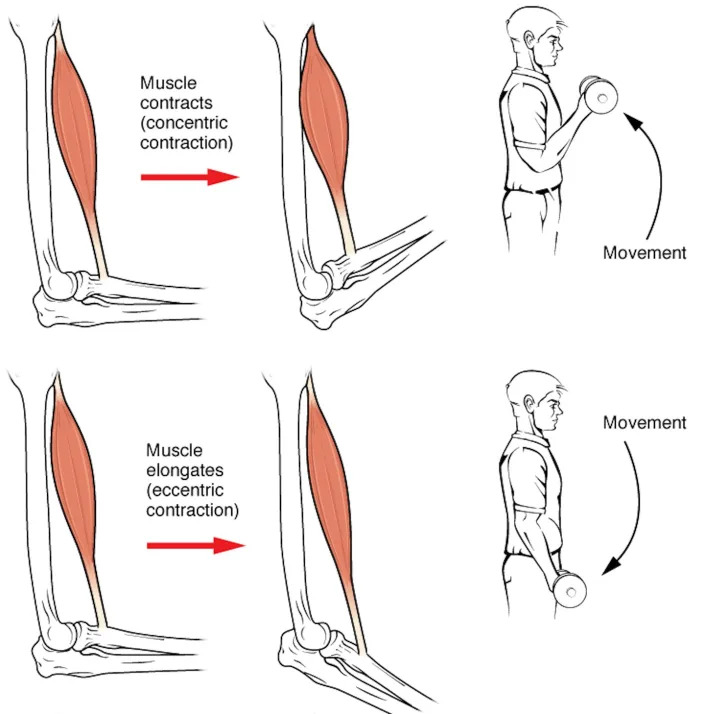
The exercise I study is the type that makes you stronger. Strength training includes exercises like pushups and situps, but also weightlifting and resistance training using bands or workout machines.
When you do strength training, over time, exercises that at first felt difficult become easier as your muscles increase in strength and size – a process called hypertrophy. Bigger muscles simply have larger muscle fibers and cells, and this allows you to lift heavier weights. As you keep working out, you can continue to increase the difficulty or weight of the exercises as your muscles get bigger and stronger.
It is easy to see that working out makes muscles bigger, but what is actually happening to the cells as muscles increase in strength and size in response to resistance training?
Any time you move your body, you are doing so by shortening and pulling with your muscles – a process called contraction. This is how muscles spend energy to generate force and produce movement. Every time you contract a muscle – especially when you have to work hard to do the contraction, like when lifting weights – the action causes changes to the levels of various chemicals in your muscles. In addition to the chemical changes, there are also specialized receptors on the surface of muscle cells that detect when you move a muscle, generate force or otherwise alter the biochemical machinery within a muscle.
In a healthy young person, when these chemical and mechanical sensory systems detect muscle movement, they turn on a number of specialized chemical pathways within the muscle. These pathways in turn trigger the production of more proteins that get incorporated into the muscle fibers and cause the muscle to increase in size.
These cellular pathways also turn on genes that code for specific proteins in cells that make up the muscles contracting machinery. This activation of gene expression is a longer-term process, with genes being turned on or off for several hours after a single session of resistance exercise.
The overall effect of these many exercise-induced changes is to cause your muscles to get bigger.
How older muscles change
While the basic biology of all people, young or old, is more or less the same, something is behind the lack of senior citizens in professional sports. So what changes in a person’s muscles as they age?
What my colleagues and I have found in our research is that in young muscle, a little bit of exercise produces a strong signal for the many processes that trigger muscle growth. In older people’s muscles, by comparison, the signal telling muscles to grow is much weaker for a given amount of exercise. These changes begin to occur when a person reaches around 50 years old and become more pronounced as time goes on.
In a recent study, we wanted to see if the changes in signaling were accompanied by any changes in which genes – and how many of them – respond to exercise. Using a technique that allowed us to measure changes in thousands of genes in response to resistance exercise, we found that when younger men exercise, there are changes in the expression of more than 150 genes. When we looked at older men, we found changes in the expression of only 42 genes. This difference in gene expression seems to explain, at least partly, the more visible variation between how young and old people respond to strength training.
Strength training can help maintain overall fitness and allow you to keep doing other things you love as you age. Peathegee Inc via Getty Images
While younger people may get stronger and build bigger muscles much faster than their older counterparts, older people still get incredibly valuable health benefits from exercise, including improved strength, physical function and reduced disability. So the next time you are sweating during a workout session, remember that you are building muscle strength that is vital to maintaining mobility and good health throughout a long life.
This article is republished from The Conversation, a nonprofit news site dedicated to sharing ideas from academic experts.
Donna St. George, Katherine Reynolds Lewis and Lindsey Bever, The Washington Post – February 17, 2023
When Sophie Nystuen created a website for teens who had experienced trauma, her idea was to give them space to write about the hurt they couldn’t share. The Brookline, Mass., 16-year-old received posts about drug use and suicide. But a majority wrote about sexual violence.
“Every time I’ve tried, my throat feels like it’s closing, my lungs forget how to breathe,” wrote one anonymous poster. “I was sexually assaulted.”
These expressions of inner crisis are just a glint of the startling data reported by federal researchers this week. Nearly 1 in 3 high school girls said they had considered suicide, a 60 percent rise in the past decade. Nearly 15 percent had been forced to have sex. About 6 in 10 girls were so persistently sad or hopeless they stopped regular activities.
The new report represents nothing short of a crisis in American girlhood. The findings have ramifications for a generation of young women who have endured an extraordinary level of sadness and sexual violence – and present uncharted territory for the health advocates, teachers, counselors and parents who are trying to help them.
The data comes from the Youth Risk Behavior Survey, conducted by the Centers for Disease Control and Prevention from a nationally representative sample of students in public and private high schools. “America’s teen girls are engulfed in a growing wave of sadness, violence and trauma,” the CDC said.
“It’s alarming,” Education Secretary Miguel Cardona said Thursday of the report. “But as a father of a 16-year-old and 19-year-old, I hear about it. It’s real. I think students know what’s going on. I think sometimes the adults are just now realizing how serious it is.”
But high school girls are speaking out, too, about stresses that started before the pandemic – growing up in a social media culture, with impossible beauty standards, online hate, academic pressure, economic difficulties, self doubt and sexual violence. The isolation and upheaval of covid made it tougher still.
When Caroline Zuba started cutting her arms in ninth grade, she felt trapped: by conflict at home, by the school work that felt increasingly meaningless, by the image her friends and teachers had of a bubbly, studious girl. Cutting replaced the emotional pain with a physical pain.
She confided in a trusted teacher, who brought in the school counselors and her mother. But Zuba’s depression worsened and, at age 15, she attempted suicide. That sparked the first of a series of hospitalizations over the summer and subsequent school year.
Now a 17-year-old junior at a public high school in Potomac, Md., Zuba relies on therapy, medication, exercise and coping strategies. She started a mental health club at her high school to support classmates also struggling with depression, anxiety and suicidal thoughts.
At the lowest point of her depression, she said, she kept many secrets from her friends, parents and teachers because she felt stuck in her role: a cheerful high achiever who had it all together.
“My mom’s like my best friend and there’s no way she would have ever expected it,” Zuba said. “Teens are really good at hiding it, which is really sad.”
While the teen mental health crisis was clear before the CDC report, the stark findings have jolted parents and the wider public.
“These are not normal numbers,” said Surgeon General Vivek H. Murthy. “When you grow up with this, I think the risk is thinking, ‘Well, this is just how it is.'”
The reasons girls are in crisis are likely complex, and may vary by race, ethnicity, class and culture. Harvard psychologist Richard Weissbourd points out that “girls are more likely to respond to pain in the world by internalizing conflict and stress and fear, and boys are more likely to translate those feelings into anger and aggression,” masking their depression.
Weissbourd added that girls also are socialized not to be aggressive and that in a male-dominated culture girls can be gaslit into thinking there is something wrong with them when problems or conflicts arise. “They can be prone to blaming themselves,” he said.
Jean Twenge, a psychology professor at San Diego State University and author of the book “iGen,” said that increases in most measures of poor mental health in the past decade were more pronounced for girls than boys.
She said part of the problem is that digital media has displaced the face-to-face time teens once had with friends, and that teens often don’t get enough sleep. Adding to those influences are the hours teens spend scrolling social media. For girls, she said, this often means “comparing your body and your life to others and feeling that you come up wanting.”
That’s not to say everything that people do on smartphones is problematic, Twenge said. “It’s just social media in general and internet use show the strongest correlations with depression,” she said.
Ben Handrich, a school counselor at South Salem High School in Salem, Ore., said teen girls often feel that “people are watching them – that no matter what they do, there’s this invisible audience judging their movements, their actions, the way they smile, the way they eat.”
Lisa Damour, a clinical psychologist and author of “The Emotional Lives of Teenagers,” said it’s important to note that the CDC data was collected in the fall of 2021, a time when many teens were anxious about returning to in-person school and wearing masks.
“Teenagers were miserable,” Damour said. “It absolutely confirms what we were looking at clinically at that time. We don’t know what the next wave of data will tell us.”
Damour noted that the CDC findings are distressing because today’s teens, in many ways, are in better physical health and more risk-averse than most previous generations.
“We’re raising the best-behaved generation of teenagers on record,” said Damour. “They drive with seat belts, they smoke less, they have less sex, they wear helmets. They do all these things that we did not do.”
And yet they are in crisis.
Many girls across the country describe teen cultures of casual slut-shaming, of peers greeting girls with sexist slurs such as “whore” or “ho,” based on what they wear or how they look.
In Los Angeles, Elida Mejia Elias says it’s a no-win situation. “If you’re skinny, they judge you for being skinny and if you’re fat, they judge you for being fat,” explains the 18-year-old, a senior.
In ninth grade, a friend of Mejia Elias’s sent a naked picture of herself to a boy she was dating, at his urging, and he spread it around to his friends. “Everyone was talking bad about her. They were calling her names, like ‘ho,'” said Mejia Elias. “That affected her mental health. She needed to get therapy.”
In Maryland, at her Bethesda public high school, 14-year old Tulip Kaya said that girls in her friend group hear whistles or “gross comments” about their breasts and are texted unsolicited penis pictures by boys at school. “If there’s anything slightly unique about you, you’re not going to have a fun time, and you will be targeted,” she said.
Social media can be overwhelming. “On Snapchat and TikTok, you see all these pretty girls with tiny waists and a big bottom. I know I’m only 14, but it makes me feel like there’s something wrong with myself,” Kaya said. “When I start to feel like that, I will delete the app for a little while.”
Girls interviewed by The Post expressed uncertainty and self-doubt over everything from what to wear, what to post or comment on social media, what it meant if someone wasn’t following them back on a social platform, and even in daily interactions. When in-person school resumed, during the fall of 2021 for many, routine encounters and moments felt weird after a year or more of separation from peers.
“Sometimes I don’t want to wear shorts because I don’t have the body type I had in middle school,” said Leilah Villegas, of Eastvale, Calif., who ran track before the pandemic. Now in 10th grade, she’s started running again but her changed body brings pangs of self-consciousness.
Aanika Arjumand, 16, from Gaithersburg, Md., who sits on her county’s Domestic Violence Coordinating Council, said she was not surprised by the increases in sexual violence.
“We deal with a lot of cases on like teen dating violence and kind of informing schools about teen dating violence because the health curriculum right now basically does not cover abuse or sexual violence as much as it should,” she said.
School itself can sometimes be physically unsafe, as happened with Harker, a 13-year old in Savannah, Ga., who spoke on the condition that her full name not be used because of the sensitivity of the issue.
At school, she received unwanted attention from a boy in sixth grade. He would whisper in her ears and grab her shoulders. Once, he seized her across her chest and did not release her until she screamed. A teacher was nearby, but she said the boy went unpunished and remained in her classes. The teen has resorted to learning at home.
“They didn’t believe me even though there were witnesses,” she said. “A boy in school can get away with something, but if I do one mess-up, I get called out for it.
At the Bronx High School of Science in New York, 17-year-old Najiha Uddin talks about a White beauty standard perpetuated in mainstream and social media, which she says girls of color can’t possibly meet. She and others describe status-oriented peers and media messages about shoes, clothes, styles and experiences that outstrip their families’ means.
For Montanna Norman, 18, a senior at a private high school in Washington during the fall of 2021, the killing of unarmed Black men by police was foremost in her mind after the murder of George Floyd. At the time she was the co-leader of her school’s Black Student Union. “The toll that that took on my mental health was a lot,” she said.
Some of her friends have contemplated, or attempted, suicide, Norman said. “You wish you could do more to help,” she said.
Garvey Mortley, a 14-year old in Bethesda, Md., who is Black, said she has been teased because of her hair and still feels microaggressions. “Racism can be a stressor for depression or a cause of depression because of the bullying that happens, not just Black kids but Asian kids and Hispanic kids who feel they are unwanted,” she said.
Students who are LGBTQ face some of the highest rates of depressive symptoms and sexual violence, including rape. In 2021, nearly 1 in 4 reported an attempt to take their life.
Rivka Vizcardo-Lichter, a student activist in Virginia, pointed out that high school is a time when many LGBTQ students are still figuring out who they are and solidifying their identity. “Even if you have an accepting environment around you, you are aware that there are millions of people who don’t want you to exist,” she said.
Some of the most alarming data collected by the CDC involved the rise in suicidal thoughts among teen girls – 24 percent of teen girls have made a plan for suicide while 13 percent have attempted it, almost twice the rate for boys.
Rich and Trinna Walker, from New Albany, Ind., searched for a therapist for their 13-year-old daughter Ella but struggled to find one in the overloaded mental health-care system during the pandemic. Once Ella finally started treatment, however, her demeanor seemed to improve, they said.
“I really felt like she was doing so much better,” Trinna Walker said. Ella had been asking her dad how she could earn extra money to buy a birthday gift for her sister. She told her mom she wanted doughnuts for breakfast.
“Then we woke up to a nightmare the next morning,” Trinna said.
Ella died by suicide on Jan. 22, 2022. Her parents said they wish someone would have alerted them to the warning signs. Unknown to them, Ella was being bullied, and she was devastated by a breakup, they said.
Now the couple is urging teens to speak up when their peers are in trouble. “It was like a bomb going off,” Rich Walker said. “It’s like it mortally wounded my wife and me and Ella’s two older sisters, and then it reverberated outwardly to her friends.”
Many of the girls interviewed for this story asked that adults listen to and believe girls, and stop dismissing their concerns as drama. “Adults don’t get all the pressure that teenage girls have to deal with, from appearance to the way they act to how smart they are, to the things they do,” said Villegas, the Eastvale 10th-grader. “It can be very overwhelming.”
Asma Tibta, a 10th-grader in Fairfax County, Va., said she is “close friends” with her mother, but doesn’t talk about mental health at home. “I haven’t told her too much. And I don’t plan to.”
In Savannah, Harker took a break from playing Roblox with her friend to be interviewed. Before heading back to the game, she had one request: “I want adults to believe young girls.”
The Washington Post’s Serena Marshall contributed to this report.
If you or someone you know needs help, visit 988lifeline.org or call or text the Suicide & Crisis Lifeline at 988.
A New Study Hints That 38% of Cognitive Decline Is Impacted By These Lifestyle Factors
Karla Walsh – February 14, 2023
an illustration of a person’s head with various symbols surrounding it
Getty Images
If you can still sing along to every boy band song of the early 2000s and can recite your childhood best friend’s phone number, you might be thinking you’ll never have to worry about memory challenges.
While it’s true that a minority of Americans are officially diagnosed with dementia or Alzheimer’s disease, it’s probably far more common than you might expect. According to an October 2022 study published in JAMA Neurology, 1 in 10 American seniors is currently living with dementia, and another 22% of those 65 and older experience mild cognitive impairment; one of the early signals that more serious cognitive challenges may be on the horizon. That’s about one-third of all individuals 65 and older.
Cognitive decline naturally occurs as we get older; it’s natural that our ability to remember details, understand, learn and think degrade slightly over time. But when it starts to impact the quality of daily life and the ability to lead a happy, healthy, secure life, that’s when a brain-related diagnosis might occur.
Family history certainly plays a role in the risk for dementia and other cognition-related conditions, and scientists have discovered a variety of habits can also move the needle. Things that have been previously shown to reduce the risk for cognitive complications later in life include:
But there still appears to be a gap in the understanding of all of the possible risk factors for cognitive decline, so researchers at Ohio State University and the University of Michigan decided to focus their recent efforts to help clear up the cognitive confusion…and potentially prevent cases of cognitive decline in the future.
According to a study published February 8 in the journal PLoS ONE, a handful of less-commonly-cited factors account for about 38% of the cognitive function variation at age 54: personal education level, parental education, household income and wealth, race, occupation and depression status.
What This Brain Health Study Found
For this study, lead author Hui Zheng, Ph.D., professor in the Department of Sociology at Ohio State University and his team crunched the numbers from more than 7,000 American adults born between 1931 and 1941 who had enrolled in the Health and Retirement Study. This cognition-related study includes participants’ health biometrics from 1996 to 2016, and also has details about lifestyle, such as exercise, smoking status, medical diagnoses and socioeconomic factors.
Dr. Zheng and his team used a statistical approach to try to estimate the role (if any) and the percentage each of their studied factors might impact neuropathology (aka diseases of the brian, such as cognitive decline). They found that early life conditions and adult diseases and behaviors played a fairly small role—about 5.6%. But teaming up to contribute a whopping 38% in risk level was a combo platter of socioeconomic status (including education level of both the person and their parents, income/wealth and occupation), race and mental health.
Prior to this study, doctors and scientists had mainly suggested that an individual’s choices and actions matter most in maintaining cognitive functioning. This study suggests that it’s time to turn some attention to social determinants of health, too.
This new brain health study found that education level, income, race and depression status, in tandem with healthy lifestyle habits, play a surprisingly large role in the potential development of dementia or Alzheimer’s disease.
You can’t isolate one habit or factor and deem it the cause of cognitive decline. Brain health is impacted substantially by personal well-being throughout the lifespan. This includes how secure one feels at home, whether or not they’re experiencing a mental health challenge like depression, thier level of financial freedom and how much they’ve been able to study to build up their “brain bank.”
All of this points to the importance of viewing brain health through the individual and the systemic lens. A community must be designed in a way to support economic and educational access, mental health resources, has safe places for physical activity, access to a wide variety of foods and the opportunity for social connection. Admittedly, this is a lofty and substantial prospect, and is much easier said than done. But with nearly one-third of all Americans over 65 affected by cognitive impairment, it certainly can’t hurt to start exploring ways to improve our current landscape.
‘There’s No Spring Break Here’: Florida’s Gulf Coast Fights to Rebound After Hurricane Ian
Shannon Sims – February 14, 2023
Al Marti, 80, watches the waves roll in on a Sanibel beach as work continues to rebuild the area’s infrastructure devastated by Hurricane Ian, on Sanibel Island, Fla., Feb. 9, 2023. (Scott McIntyre/The New York Times)
On Sept. 28, Hurricane Ian made landfall on Cayo Costa, a barrier island northwest of Cape Coral and Fort Myers, Florida, as a Category 4 storm with sustained winds of more than 150 mph. Killing 149 people in Florida, it was the state’s deadliest hurricane since 1935. More than four months later, the storm’s extraordinary power remains evident: In Fort Myers Beach, multistory oceanfront apartment buildings are still just piles of twisted steel and concrete rubble, and massive shrimping boats sit tilted and smashed together like toys in the corner of a tub.
The storm’s wrath extended up and down the west coast of Florida. But Sanibel Island, one of the area’s most popular vacation destinations, was hit especially hard. The fish-hook-shaped barrier island, some 12 miles long and 3 miles across at its widest, was devastated. Even the causeway that connects it to the mainland was partly destroyed.
On a recent afternoon, sitting at a table outside the Sanibel Grill, which roof and water damage kept closed for months, the mayor of Sanibel, Holly Smith, 61, was blunt. “There’s no spring break here,” she said. “As far as the recovery of tourism, we have a long way to go.”
Smith said that during the storm, the island had “a complete washover” — the 12-foot storm surge covered everything.
Beth Sharer, 66, a homeowner on the island, said when she went back to her ravaged condo, she couldn’t find the high-water mark that flooding usually leaves. “And then I realized there wasn’t one: The water was higher than the entire apartment,” she said.
When Smith visited the island with Gov. Ron DeSantis in the days after the storm, the area looked like a war zone, she said. “It was like ‘Mad Max,’ with dirt across the roads.”
Fears of Becoming a ‘New Miami’
Before the hurricane, Sanibel and Captiva, a smaller island connected to the north of Sanibel by a short bridge, offered an estimated 2,800 lodging units, including hotel rooms and short-term rentals, according to the Sanibel & Captiva Islands Chamber of Commerce. Today there are just 155 available, the chamber said. “We’ve changed our communication strategy from promoting the island to helping manage guest expectations for the next 12 months,” said John Lai, CEO of the chamber, which is now encouraging visitors to sign up for “voluntourism” options like helping to clear trails at the nature reserve or clean debris from the beaches.
By comparison, Fort Myers Beach had 2,384 hotel rooms before the storm, according to the Lee County government. In the wake of the storm, none of those rooms were open. As of this month, 360 of those rooms were available — just 15% of prehurricane inventory.
Before the hurricane, JPS Vacation Rentals, a local agency, had 32 properties available in Fort Myers Beach, said Heidi Jungwirth, the owner. Seven of those remain standing, but all were damaged, and none are currently rentable, she said. She has turned her office into a distribution center for donations. Distinctive Beach Rentals, which used to be the largest vacation management company in Fort Myers Beach, with 400 properties, saw 380 of those units “wiped out,” said Tom Holevas, the area manager, adding that the company has now pivoted to offering more inland rentals.
At the Lighthouse Resort’s Tiki Bar & Grill, where today the bathroom doors are shower curtains and the kitchen consists of a grill behind the outdoor bar, Betsy Anderson, 50, expressed concern about the area’s future. She owns an apartment in Cape Coral, just inland from the beach, that she rents via Airbnb. She said she had several guests cancel after the storm because the beaches were closed, and she is currently renting to a couple fixing up their own flooded house on Sanibel.
She worries that the storm will accelerate change. “We don’t think it can come back,” she said, referring to the area’s laid-back character and “old Florida” style. “Now people are saying big investors are going to come in with big money and turn this into the new Miami.”
Reviving an Economic Lifeline
On Sanibel, the push to rebuild began early, in part because the island draws so many visitors from across the country to its famous shelling beaches. A temporary causeway opened less than two weeks after the storm, allowing a convoy of electrical companies’ cherry picker trucks to reach the island. On Oct. 19, the bridges — one lane in each direction, with reduced speed limits — were opened to residents. For the rest of 2022, piece by piece, the area started to come back online.
“This place is on a lot of people’s bucket lists,” said Smith, alluding to visitors who “just want a shell from Sanibel.” But it will be at least a year before the island can accommodate tourists in any numbers, she said.
It doesn’t help that the island’s beaches are currently suffering from Florida’s persistent red tide, which is caused by a higher-than-normal level of microscopic algae that produce toxins in the water, turning it a rusty brown color and killing fish. The tide can significantly affect visitors’ experiences, aggravating respiratory problems, leaving beaches littered with rotting sea life and discouraging time spent near the water.
Still, residents and businesses are trudging toward getting tourists — their economic lifeline — back to the shore.
In just the past month, the first hotel rooms reopened for visitors at Sanibel’s Island Inn and the ’Tween Waters Resort & Spa on Captiva Island.
Some restaurants that were only lightly damaged have reopened quickly. Others are now operating out of food trucks. Some shops are back open, too, and many outdoor activities are once again available: renting kayaks and stand-up paddleboards or chartering fishing boats.
In early February, the first wedding since the storm was held at ’Tween Waters; the Bailey-Matthews National Shell Museum reopened with limited hours; and the doomsday-ish electronic sign that met visitors as they came off the bridge into Sanibel — “ALL SANIBEL BEACHES CLOSED” — was turned off, as the first beaches were officially reopened to the public. There is a sense on the island now that the wheels of tourism are finally beginning to turn.
Still, many hotels, restaurants and businesses that cater to tourists are a long way from reopening their doors. Some, like Sanibel Inn, are essentially starting from scratch, their buildings in ruins.
That’s why businesses are handing visitors the most useful item a tourist can pick up in Sanibel today: a printed list of what’s open, where and when.
‘It Breaks Your Heart’
For now, a visit to the area is more a pledge of support than a vacation.
On a sunny day in early February, Lisa Taussig of Overland Park, Kansas, and Christy, her adult daughter, were among the few tourists on the beach in front of the Island Inn, where they were staying. They come to the island about three times a year, Taussig said, and this year is no different. “After the storm passed, we just said, ‘You know what? We’re going to come down here and support Sanibel,’” she said.
“You feel welcome here,” she added, before turning and gesturing to the series of plywood-covered, battered condo buildings behind her. “Now it feels isolated, and there aren’t the lush trees that are usually here.
“It breaks your heart,” she said.
In Fort Myers Beach, residents still pick up their mail at a trailer. Glass, nails and unidentifiable twisted debris remain scattered along the ground. Around town, many flags, bumper stickers and T-shirts are emblazoned with “FMB STRONG.”
On a recent Saturday, a tiny spot called the Beach Bar was packed with a crowd of locals who looked storm-weary but exuded an ornery refusal to retreat. Even before the storm, the bar’s physical structure — right off Estero Boulevard, the beach strip that’s historically packed with visitors cruising in top-down vehicles — didn’t amount to much: It was a two-story, open-air wooden building facing the water. Now only the concrete slab remains.
But that hasn’t stopped the regulars. The crowd showed up with beach chairs and coolers, which they set up on the concrete. “They’re operating right now with a trailer, two outhouses and a band,” said Randy Deutsch, 72, from Chicago, who said he’d been coming to the bar since 1972.
“Our concept didn’t change,” said Matt Faller, the manager. “Cold beer, live music, toes in the sand.”
New Jersey student ends her life after months of bullying, video of school hallway beating circulates online
Sarah Rumpf – February 9, 2023
This story may contains details that are disturbing. If you or someone you know is having thoughts of suicide, please contact the National Suicide Prevention Lifeline at 988.
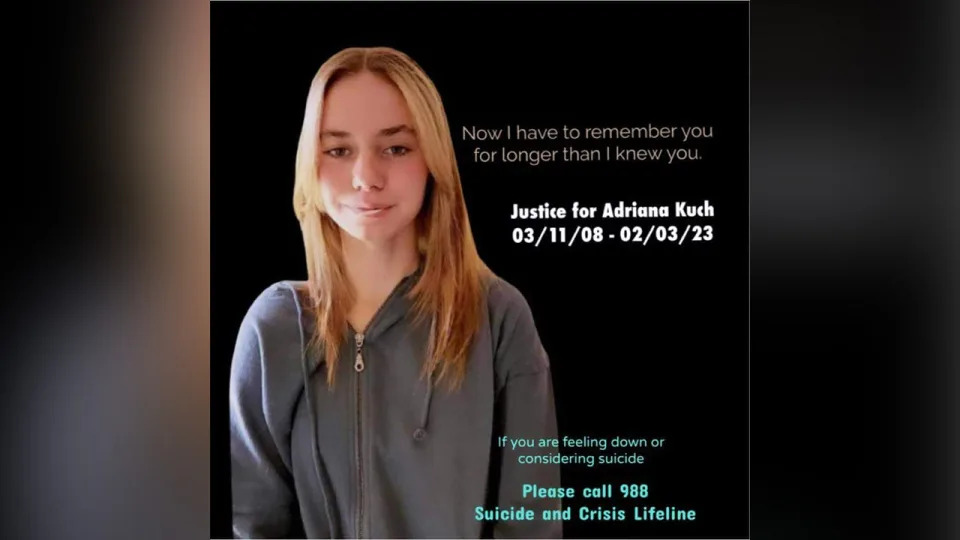
A 14-year-old girl from New Jersey ended her life after a disturbing video of girls viciously beating her up in the high school’s hallway circulated online. Now, her distraught father is promising to remember her legacy by bringing awareness of a broken school system he says overlooked extensive school bullying.
Adriana Kuch, a student at Central Regional High School, was found dead on Feb. 3 at her home two days after the shocking video surfaced.
Adriana Kuch is remembered as “a beautiful girl who was happy, funny, stubborn, and strong.”
The disturbing video shows Adriana and her boyfriend walking down the hallway of the local public high school when a student walks up and starts walloping her in the face with a water bottle. Adriana falls to the ground, where she is repeatedly kicked and punched by a group of students. Cheering is heard from the student who took the shocking video.
About 30 seconds into the attack, two school workers interrupted the ambush.
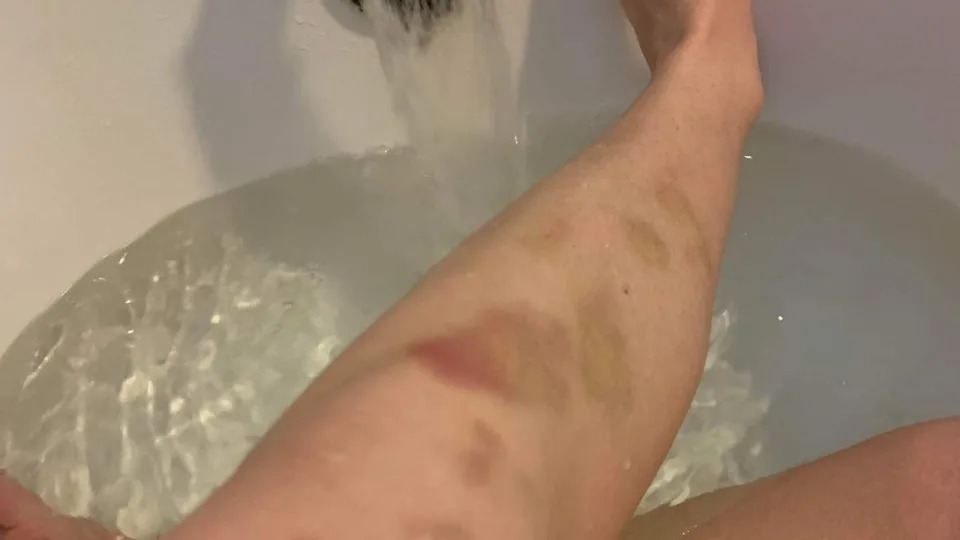
Following the attack on Feb.1, Adriana sustained severe bruising on her legs and face. Michael Kush, Adriana’s father, was shocked after hearing about the bullying incident. He told Fox News Digital that he took his 14-year-old teen to the local police station to file a report about the incident. The Berkeley Township Police Department did not immediately respond to Fox News Digital’s request for comment.
The father also said his daughter showed him videos of people taunting her and threatening her on TikTok, Instagram, and Snapchat following the attack. Adriana reportedly faced months of bullying from fellow classmates at the local high school.
Adriana Kuch’s face was bloodied and bruised following an ambush that occurred in the school’s hallways on Feb. 1.Adriana’s Kuch’s bruised legs after she was bullied at the local high school.
Despite reaching out to school faculty, Michael shared that, “no action was taken by anyone,” following the incident. Just two days later, family members found Adriana deceased in her New Jersey home.
Michael shared with Fox News Digital that he is taking legal action against the school.
“I’m livid,” Michael shared with Fox News Digital. “I blame the girls and the school and the cops. I want everyone to know what happened to her, I want justice, as much attention, so they can’t ignore it.”
Michael shared that he believes his daughter would be alive if the school and police had taken immediate action.
“If the school contacted the police, filed a report, and conducted an investigation, these videos could have been discovered immediately.” Michael shared.
On Feb. 5, Central Regional High School sent out a note to the student body sharing the “tragic passing” of a district student. The school also provided information on available counseling and crisis professionals, stating “please know that you are never alone in the world and there is always support during bad times to help change things for the better.”
Central Regional High School did not immediately respond to Fox News Digital.
Adriana Kush’s father is seeking justice after
However, Michael shared that Adriana is not the first student at Central Regional High School who has faced extensive physical abuse and cyberbullying on school grounds. On his public Facebook page, Michael shared videos from other parents whose children have faced bullying without school administration stepping in.
“The more I continue to see, the more I want to fight for all kids against schools like this.” Michael said. “Complete incompetence from top to bottom.”
As of Thursday evening, three students who were involved in the video incident were charged with third-degree felony assault and a fourth with disorderly conduct. All four students involved in the attack have been expelled from the local high school.
Sue Bird made 10 times as much money playing basketball in Russia and said it helped make her a millionaire
Cork Gaines – February 5, 2023
Sue Bird played professionally in Russia for 11 years.Bob Martin /Sports Illustrated via Getty Images
The WNBA legend Sue Bird spent 10 seasons playing in Russia to supplement her income.
Bird told “60 Minutes” that she made 10 times her first WNBA salary, which was under $60,000 a year.
Bird also said it was a wild time that included her team’s owner being murdered.
After Brittney Griner spent nearly 10 months jailed in Russia on drug-smuggling accusations, a fellow basketball star, Sue Bird, explained why she spent 11 years playing professionally in Russia for an owner who was once convicted of being a KGB spy.
Bird told “60 Minutes” that despite being the first pick in the 2002 WNBA draft, she made less than $60,000 a year early in her career. While she plays only stateside now, as she enters her 21st season, she spent a large part of her career playing overseas to supplement her income, as many WNBA players have.- ADVERTISEMENT -https://s.yimg.com/rq/darla/4-10-1/html/r-sf-flx.html
Bird said that after playing in Europe for two seasons, the Russian billionaire Shabtai Kalmanovich recruited her to Spartak Moscow of the EuroLeague.
She told CBS about the recruitment: “He was like, ‘You know, I have a ton of money. And, you know, some people like to gamble. Some people like to buy cars. I like women’s basketball. That’s where I want to spend my money.'”
CBS reported that Kalmanovich paid Bird 10 times what she made in the WNBA. When asked if the money was life-changing, Bird said it was.
“Absolutely,” she said. “Like, I’m a millionaire because of it.”
The Russian billionaire Shabtai Kalmanovich with some of his players on Spartak Moscow, including Bird (far right).Joe Klamar/AFP via Getty Images
A 2019 episode of ESPN’s “30 for 30” described how Kalmanovich spoiled his players, and the perks went beyond salaries.
“Everything literally was first class,” Bird told ESPN. “We’re staying at the best hotels. We go to Paris. We’re in, like, the bomb hotel in Paris.”
Diana Taurasi, her teammate, said they were also provided a “mini-mansion” with a pool and a spa. Kalmanovich even gave the American players his credit card to go on shopping sprees, they said, telling the women to “get whatever you want.”
“So you know automatically, like, ‘OK, can we spend $500? Can we spend a thousand?'” Taurasi told ESPN. “And, you know, you get nervous, you have this adrenaline, where you’re like, ‘Should I get this Louis Vuitton bag that’s $3,000, which I would never buy? Yes, I will, and I’ll get two of them — one for me and one for Jessika Taurasi,” she said, referring to her sister.
Taurasi continued, “We get in the car, and I mean we have what, like, 25, 30 bags. I feel like we robbed a bank.”
CBS described Kalmanovich as “a former KGB spy and businessman with a record of operating outside the law.” He was also assassinated while Bird played for the team.
A BBC report said Kalmanovich spent five years in prison in Israel, convicted of being a KGB spy. After being released, he made his fortune in the African diamond trade.
This story was originally published in 2022 and has been updated.
Donald Trump and golf: Fancy resorts, A-List partners, cheating at highest level
Tom D’Angelo, Palm Beach Post – February 3, 2023
Donald Trump has a long (creative) history with golf. He owns fancy resorts and lavish courses around the world. He has played with the biggest names. And he’s received endorsements from some of the most well-known golfers in the world. Even besides himself.
But above all, the former president’s dubious claims on the course have become legendary, and were the subject of a 2019 book by sportswriter Rick Reilly: Commander in Cheat.
“Trump doesn’t just cheat at golf,” Riley wrote. “He throws it, boots it, and moves it. He lies about his lies. He fudges and foozles and fluffs. At Winged Foot, where Trump is a member, the caddies got so used to seeing him kick his ball back onto the fairway they came up with a nickname for him: ‘Pele.’”
President Donald Trump tweeted this photo after golfing with local golf legends Jack Nicklaus and Tiger Woods on Saturday, Feb. 2, 2019
Just ask members of Trump International West Palm Beach who arrived for the final round of their Senior Club Championship on Jan. 22 only to find Trump’s name at the top of the leaderboard … when he didn’t play the first round.
But he did play a round earlier that week, claimed he had a good day and decided to use that score for the first round of the Senior Club Championship. He then called it a “great honor” to have won the tournament on social media, adding, “he was hitting the ball long and straight.”
Those who know him certainly were not surprised.
Here is some of the history Trump, who lives in Palm Beach, has with golf:
Courses around the world
Trumpgolf.com lists 18 courses under the heading ‘Our Properties’, including 12 in the United States. Of those, three are in Florida: Jupiter, West Palm Beach, Doral.
Those courses have hosted many PGA and LPGA events, but Trump’s relationship with the PGA Tour soured in 2016 when the tour moved the World Golf Championship out of Trump National Doral and to Mexico City after losing its sponsor, Cadillac.
This angered Trump for so many reasons. His attitude toward Mexico was made clear as he prepared to run for president when he said of the country: “They are not our friend, believe me. They’re bringing drugs. They’re bringing crime. They’re rapists. And some, I assume, are good people.”
That continued when learning the tour was dropping Doral for Mexico City. “They’re moving it to Mexico City which, by the way, I hope they have kidnapping insurance.”
That relationship fractured even more when the PGA of America took a major away from one of Trump’s courses four days after Trump supporters rioted at the United States Capitol. The organization moved the 2022 PGA Championship from Trump’s course in Bedminster, N.J., to Southern Hills in Tulsa, Okla.
All of this led to Trump’s support for LIV Golf, the startup league headed by Palm Beach Gardens’ Greg Norman and financed by the Saudis. LIV has become a rival of the PGA Tour and three LIV events this year will be held at Trump properties.
The old switcheroo
Ted Virtue, founder and CEO of MidOcean Partners, a New York-based alternative asset management firm, won the club championship at West Palm Beach when Trump was president. At the time, Trump was in Singapore and missed the event.
Here is the story Reilly told and also was reported in Golf.com.
Trump sees Virtue on the back nine of the course one day and tells him he didn’t really win the club championship, “because I was out of town.” So he tells Virtue they will start there and play to see who the real champion is. Virtue has no choice.
“Apparently, they get to a hole with a big pond in front of the green,” Reilly said. “Both Ted and his son hit the ball on the green, but Trump hits his in the water. By the time they get to the hole, though, Trump is lining up the son’s ball. Only now it’s his ball and the caddie has switched it.
“The son is like, ‘That’s my ball!’ But Trump’s caddie goes, ‘No, this is the president’s ball; your ball went in the water.’ … Trump makes that putt, and wins one up.”
Where’d that ball come from?
Trump was playing in a charity event at a prestigious South Florida course when he was part of a foursome that included an NFL quarterback and professional golfer, according to a participant who was at the event.
On a par-3 that was playing more than 200 yards, no one hit the green, including Trump, whose tee shot clearly was short.
Two of the golfers flew the green, the balls landing in a gully. As they walked back up the hill to check out the pin placement, they noticed a ball sitting feet from the hole.
Trump tells them it was his ball and they must have not seen his tee shot land on the green.
Trump and Dallas Mavericks owner Mark Cuban had a legendary feud in 2013, with Trump attacking Cuban’s team and, of course, his golf.
By the end of a two day meltdown, and after Trump said he won yet another club championship at West Palm Beach, Trump pulled out the big guns:
“I’ve won 18 Club Championships including this weekend. @mcuban swings like a little girl with no power or talent. Mark’s a loser.”
Trump now has claimed to have won more than 20 club championships. Reilly once said the best player at that level he knows had won eight.
Reilly said in the Vox interview Trump told him whenever he opens a new golf course he plays the first club championship by himself and declares that the champion and puts his name on the wall.
“But it’s usually just him and Melania in the cart and nobody else,” Reilly said. “He just makes it up.”
Tiger tale
Soon after he became president Trump set up a foursome with Brad Faxon, Tiger Woods and Dustin Johnson. Trump and Faxon were partners.
Trump was allowed to hit from closer tees and was allowed to subtract a stroke on the eight hardest holes. On one hole, Trump hits his tee shot into the water and tells Faxon to throw him a ball. “They weren’t looking,” he said. His second tee shot goes into the water. So he drops where he should have after his first water ball, hits what was his fifth shot. After making what actually was a seven, the players were asked their scores.
When Trump was told Tiger made a three, he says he made “four for a three (with the stroke).”
‘Tough luck’
Trump invited football announcers/analysts Mike Tirico, Jon Gruden and Ron Jaworski to one of his courses. He chose Gruden as his partner.
Tirico hit a 3-wood about 230 yards onto the green on one hole. When he arrived the ball was in a bunker about 50 feet from the pin.
“Tough break,” Trump said.
Tirico later was told by Trump’s caddie that his shot was about 10 feet from the hole and Trump threw it into the bunker.
“He can really strike the ball,” Els said. “He makes good contact. He’s got a good swing. Like any amateur, you got to do the short game practice. I keep talking to him about his chipping. He’s a pretty good putter. Back in his day, he had to be a 4- or 5-handicap. Today, he’s probably a 10, 12.”
If you praise Trump’s game, it’s definitely not fake news.
Trump has played with the best of the best. Jack Nicklaus, Els, Woods, Johnson, Rory McIlroy, Bryson DeChambeau, Brooks Koepka among them.
“President Trump plays pretty well, not bad at all,” Nicklaus said in 2020.
Koepka played nine holes with Trump last year in the Pro-Am at Doral before the LIV event. When asked about Trump’s game he gave a lukewarm endorsement.
“I think he’s actually a pretty good putter,” Koepka said. “He had a lot of good putts today that just didn’t go in.”
Trump stopped several times to chat between holes during the Pro-Am at Doral. “Where are the golf writers?” he said at one point. “What do you think? Trump is pretty good, isn’t he?”
Later, when he was asked what he thought about his game, Trump said: “I hit it straight, I hit good drives, I hit good irons.”
Tom D’Angelo is the senior sports columnist for The Palm Beach Post.
Valley fever could be spreading across the U.S. Here are the symptoms and what you need to know
L’Oreal Thompson Payton – January 31, 2023
Kateryna Kon—Science Photo Library/Getty Images
Valley fever, a fungal infection most notably found in the Southwestern United States, is now likely to spread east, throughout the Great Plains and even north to the Canadian border because of climate change, according to a study in GeoHealth.
“As the temperatures warm up, and the western half of the U.S. stays quite dry, our desert-like soils will kind of expand and these drier conditions could allow coccidioides to live in new places,” Morgan Gorris, who led the GeoHealth study while at the University of California, Irvine, told Today.com.
As the infection continues to be diagnosed outside the Southwest, here’s what you need to know about valley fever.
What is valley fever?
Valley fever, which commonly occurs in the Southwest due to the region’s hot, dry soil, is an infection caused by inhaling microscopic spores of the fungus coccidioides. About 20,000 cases of valley fever were reported in 2019, according to the Centers for Disease Control and Prevention, and 97% of cases were reported in Arizona and California. Rates are usually highest among people 60 years of age and older.
While most people who breathe in the spores don’t get sick, those who do typically feel better on their own within weeks or months; however, some will require antifungal medication.
What are the symptoms of valley fever?
Symptoms of valley fever may appear anywhere from one to three weeks after breathing in the fungal spores and typically last for a few weeks to a few months. About 5% to 10% of people who get valley fever will develop serious or long-term lung problems. Symptoms include:
Fatigue
Cough
Fever
Shortness of breath
Headache
Night sweats
Muscle aches or joint pain
Rash on upper body or legs
How is valley fever diagnosed?
Valley fever is most commonly diagnosed through a blood test; however, health care providers may also run imaging tests, such as chest X-rays or CT scans, to check for valley fever pneumonia.
Who is most likely to get valley fever?
People who are at higher risk for becoming severely ill, such as those with weakened immune systems, pregnant people, people with diabetes, and Black or Filipino people, are advised to avoid breathing in large amounts of dust if they live in or are traveling to places where valley fever is common.
Is valley fever contagious?
No. “The fungus that causes valley fever, coccidioides, can’t spread from the lungs between people or between people and animals,” according to the CDC. “However, in extremely rare instances, a wound infection with coccidioides can spread valley fever to someone else, or the infection can be spread through an organ transplant with an infected organ.”
How can I prevent valley fever?
While it’s nearly impossible to avoid breathing in the fungus coccidioides in places where it’s common, the CDC recommends avoiding spending time in dusty places as much as possible, especially for people who are at higher risk. You can also:
Wear a face mask, such as a N95 respirator
Stay inside during dust storms
Avoid outdoor activities, such as yard work and gardening, that require close contact with dirt or dust
Use air filtration systems while indoors
Clean skin injuries with soap and water
Take preventive antifungal medication as recommended by your doctor
Is there a cure or vaccine for valley fever?
Not yet. According to the CDC, scientists have been working on a vaccine to prevent valley fever since the 1960s. However, researchers at the University of Arizona College of Medicine in Tucson have created a two-dose vaccine that’s been proved effective in dogs.
“I’m really quite hopeful,” Dr. John Galgiani, director of the Valley Fever Center for Excellence at the University of Arizona College of Medicine, told Today. “In my view, right now, we do have a candidate that deserves to be evaluated and I think will probably be effective, and we’ll be using it.”
Startup aims to convert invasive zebra mussels in Lake Michigan into a renewable product
Alex Garner – January 25, 2023
Zebra mussels are an invasive species in the US.
PLYMOUTH, Wisc.— AntiMussel hopes to mitigate trillions of invasive zebra mussels infiltrating the Great Lakes by harvesting them for use in paper and pharmaceutical products.
The Plymouth, Wisc.-based startup, which has raised nearly $20,000 in funding and placed second at county and regional pitch competitions, will launch a pilot program this spring to remove the mollusk from Lake Michigan.
In a 250-square-meter and 80-foot-deep area, AntiMussel will connect a suction to the lake floor and transport them to shore. Wind speed and water temperature data will also be collected.
AntiMussel hopes to use the abundance of zebra mussels as a renewable resource for calcium carbonate, which is typically processed from limestone into varying products like Tums, white melamine paint and plastic.
Ideally, the company wants to create a renewable calcium carbonate product with a corporate partner.
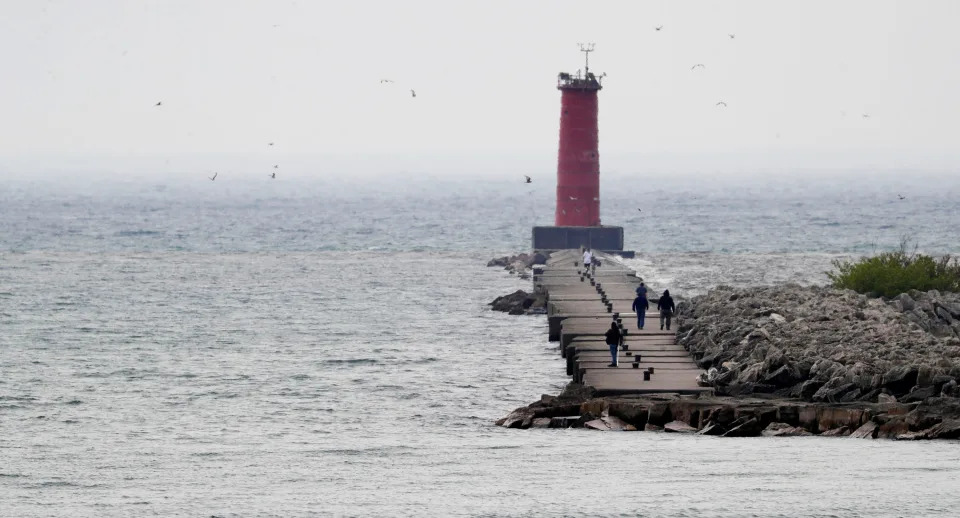
A view of the Sheboygan lighthouse as seen, Tuesday, May 31, 2022, in Sheboygan, Wis. A search for a man who was last seen near a break wall on Lake Michigan will continue today, according to the Sheboygan Fire Department
“I want to skip that 6 to 8 million years of geology that it takes to make limestone and instead remove the mussels from the lake where we don’t want them, process them, and we end up with a ground calcium carbonate material that is exactly what is being sold on the market now,” Tyler Rezachek, AntiMussel founder and U.S. veteran, said.
Participating in the pitch competitions helped Rezachek connect with University of Wisconsin-Milwaukee professors, who will take him along on a research boat this spring to study zebra mussels, too.
“I was really kind of an entrepreneur in search of a problem,” Rezachek said about starting AntiMussel. “And zebra mussels (have) been something that I’ve heard about my whole life but never heard anything else about other than how to stop them from spreading.”
Zebra mussels were likely brought to the Great Lakes from Europe and Asia via ship ballast water in the 1980s. Since then, they’ve completely invaded the region and have riddled waterways feeding into the Mississippi River and western states Texas and California, according to the U.S. Geological Survey.
They negatively impact ecosystems in several ways, like outcompeting and incapacitating native mussel and other aquatic species.
Additionally, a female zebra mussel can release up to 1 million eggs per year once reaching reproductive age of two, according to the National Parks Service.
Not much can be done to remove them once a large population has invaded a lake or river.
“At this point, they’re so well established that I could have boats out there sucking zebra mussels all day every day and probably never put a dent in the population,” he said.
Today, an estimated 300 to 750 trillion zebra mussels are in the Great Lakes.
Zebra mussels can also overwhelm commercial, agricultural, forestry and aquaculture industries in the state, according to the Wisconsin Department of Natural Resources.
They also burden taxpayers.
According to some estimates, broad removal and resulting increases in water bills can cost taxpayers up to $1.5 billion a year.
Rezachek said only 3% of the costs is dedicated to preventing further spread.
According to Rezachek, efforts to get rid of zebra mussels center on taking them off infrastructure, like applying chemicals or pressure washing, rather than completely removing them from the water.
“None of those solutions stop mussels from reproducing or remove the resulting shell,” he said. “They just push them away.”
A young woman checks over her cell phone while getting some beach time in at Deland Park, Saturday, July 9, 2022, in Sheboygan, Wis.
The remaining shells wash onto beaches.
“We can’t walk on a lot of beaches on Lake Michigan now because they’re covered in mussel shells, and they’re razor sharp and they’ll cut your feet and your dog’s feet,” Rezachek said. “And they’re just going to keep collecting there, and the waves just keep pushing them on the beaches. So, unless we remove those in mass, we can never make beaches reusable for people again.”
Heavily infested water bodies like Lake Michigan are beyond the point for a complete elimination of zebra mussels, but there is still hope for smaller lakes.
While AntiMussel will focus on the Great Lakes, it also hopes to conduct customer surveys to see if landowners across the state need zebra mussel clean-ups on private beaches or in lakes.
“The smaller lakes that maybe only have a few thousand mussels in them, they’re not lost,” Rezachek said. “We can get those back and eliminate the mussels there, but then we have to stop them from getting there.”
To help prevent the spread, the National Parks Service suggests boaters drain boats, motors and livewells (circulating tank) before leaving an area of water, wash boats and trailers, and let them dry for at least five days before taking the boat out again because zebra mussels, dependent on water currents and transportation, can infest boat motors and livewells.
What Happens To Your Body When You Cut Out Carbs? A Dietitian Tells Us.
Georgia Dodd – January 12, 2023
High-carb foods have always been a no-no when it comes to weight loss. You may have been advised to avoid carbs in your diet as much as possible, but health experts stress that this is not necessarily true. Foods high in carbohydrates are a crucial part of any healthy diet. Carbohydrates provide the body with glucose, which is then converted into energy used to support your body and physical activity. We spoke with Dana Ellis Hunnes, PhD, a senior clinical dietitian at UCLA medical center, assistant professor at UCLA Fielding School of Public Health, and author of Recipe For Survival, and Jamie Nadeau, a registered dietitian and nutritionist. Read on to learn more!
What do carbs do for your body and what you’ll notice without it
It’s no secret carbs are one of the most delicious food groups. But there are some carbs, like pasta, bread, and potato chips (which can lead to inflammation!), that are actually very bad for your health. They can lead to chronic inflammation, gut issues, weight gain, and more.
“Carbs, short for carbohydrates, are long chains of carbon-containing molecules, a.k.a. sugars that are found in plant foods,” Hunnes explains. “When we consume and digest these plant foods, including grains, fruits, vegetables, (and dairy) we break them down into more simple, sugars, known as glucose, fructose, and galactose (dairy). Our bodies use these sugars to fuel our cells.”
“Carbohydrates are one of the macronutrients (there are three of them: carbohydrates, proteins, and fats). Macronutrients are where we get all of our energy (calories) from. Carbohydrates break down to their simplest form, sugar, to give your body energy,” Nadeau agrees.
While not all carbs are bad for you, there is one specific type of carbohydrate that you should cut out of your diet if you want to lose weight: refined carbs. “Carbohydrates are found in fruits, vegetables, grains, and legumes. Foods have different amounts of carbohydrates,” Nadeau notes. “For example, broccoli has fewer carbohydrates than potatoes. You’ll also find carbohydrates in added sugars like table sugar, honey, agave nectar, coconut sugar, and typical “sweets” like cookies, cakes, and candy. Our bodies also “handle” certain types of carbs differently. For example, you’ll get a bigger blood sugar spike from candy compared to beans.”
Just because some carbohydrates stall weight loss, that doesn’t mean you should never eat carbs again. It’s just not healthy, because, Hunnes says, “our muscle cells and our brain cells live off of glucose. If we do not have glucose in our body, we start to break down muscle and fat and turn them into alternate fuel sources that are not as efficient at being used.” There’s no need to cut carbs out of your diet completely. You need healthy carbs, like fruits, vegetables, and whole grains, in your diet to maintain your energy.
“Carbohydrates, especially high fiber carbohydrates like whole grains, legumes, and fruits are full of health-boosting nutrients that are great for our health,” Nadeau agrees. Instead of cutting out carbs, I recommend being mindful of the ones that you’re choosing regularly. Choosing high fiber carbohydrates helps to stabilize blood sugar and helps to make your meal more satisfying.” Good to know!
Well, there you have it! Both experts emphasize that completely removing all carbohydrates from your diet is not only impossible but also extremely unhealthy. Instead, try and cut out refined carbohydrates, like potato chips, that only harm your body. This can reduce inflammation, improve gut health, and promote an overall healthier body!