U.S. mends fences with El Salvador’s Bukele as China lurks

Reuters

U.S. mends fences with El Salvador’s Bukele as China lurks

Diego Oré, Sarah Kinosian and Nelson Renteria – February 6, 2024

U.S. papers over differences with El Salvador's Bukele with China waiting in the wings

U.S. papers over differences with El Salvador’s Bukele with China waiting in the wings

SAN SALVADOR (Reuters) – When El Salvador President Nayib Bukele published a private WhatsApp conversation with the top U.S. diplomat in the Central American country two years ago, he was sending a message of his own: I will not take orders from the United States.

U.S. officials had for months been protesting Bukele’s support for moves like dismissing judges and bucking constitutional term limits – measures they said endangered the country’s young democracy.

Jean Manes, the chargé d’affaires whose messages intervening on behalf of a detained former mayor were unmasked, left the country. She said the bilateral relationship between the erstwhile allies was “on pause,” citing attacks on the U.S. by Bukele’s “paid media machine.”

Two years later, the United States is publicly cozying up to Bukele, a populist anti-establishment renegade who on Sunday romped to re-election in a landslide – even as it continues to emphasize concerns over the erosion of human rights and democracy.

Now, more than ever, the U.S. needs Central American nations like El Salvador to curb migration to the southern border. It is also striving to offset growing Chinese influence in Latin America.

In October, the State Department’s top Latin America diplomat, Brian Nichols, visited El Salvador and posed for photos with Bukele. He sought to “give a message that democracy is the most important form of government,” the U.S. embassy said at the time.

And on Monday, U.S. Secretary of State Antony Blinken congratulated Bukele on his win, saying the United States would prioritize “good governance” and “fair trials and human rights in El Salvador” as part of its plan to tackle the causes of migration.

Three U.S. State Department officials Reuters spoke to said they have moved more critical diplomacy behind closed doors, a tactic they have found effective given Bukele’s rebellious style and rebukes of perceived foreign meddling.

Bukele has since toned down the kind of inflammatory comments that marked his spat with Manes.

He has also grown savvy at milking the regional tug-of-war for influence between the United States and China.

“(Bukele) has used the approach to China as a negotiating card,” said Ana Maria Mendez, of the Washington Office on Latin America. “(He) threatens or challenges U.S. foreign policy by engaging with China.”

RAPPROCHEMENT

The more reserved public U.S. stance may be a tacit acknowledgement that Bukele’s success in smashing gang violence has led to a decline in migration, officials from both countries said.

Salvadorans fleeing violence and poverty have migrated to the U.S. for decades, hitting record levels in 2021. Following the gang crackdown that began in March 2022, the number of Salvadorans reaching the U.S. southern border fell, dipping 36% from 2022 to 2023, according to U.S. Customs and Border Protection.

Bukele has also implemented measures such as hefty taxes on flights from 57 largely African countries to dampen onward U.S. migration.

Bukele will be conscious of the need to stay on good terms with El Salvador’s largest trading partner and benefactor. The U.S. disbursed $629 million in aid between when Bukele took office in 2019 and 2022 – more than went to Honduras, a country with almost double the population, according to USAID.

The U.S. officials said they recognize Salvadorans support the gang crackdown, but that they are pushing Bukele to wind it down.

Under a “state of exception” stretching nearly two years, Bukele’s government has detained over 75,000 Salvadorans – 1.1% of the country’s population. Rights groups have documented 150 deaths in prison, while Salvadorans have lost their rights to due process.

“We recognize the profound challenge El Salvador faced curbing gang violence,” a U.S. State Department spokesperson said in an email. “(But) the state of exception must be an exception.”

WAITING IN THE WINGS

At the same time, there are growing ties between China and El Salvador.

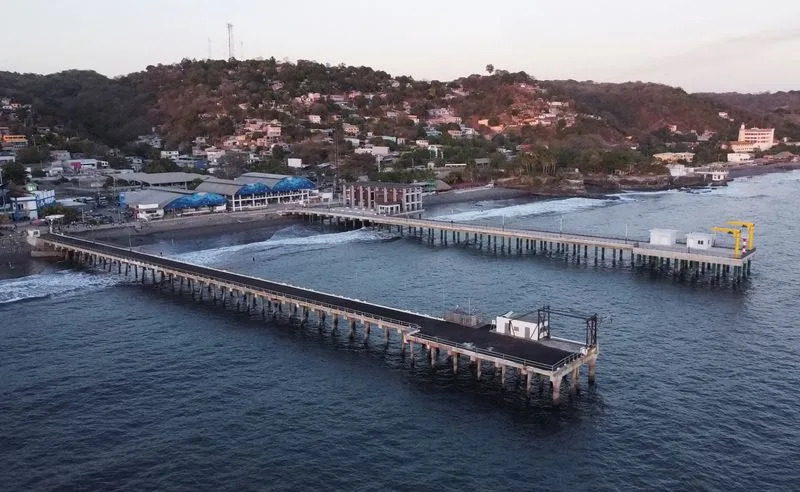
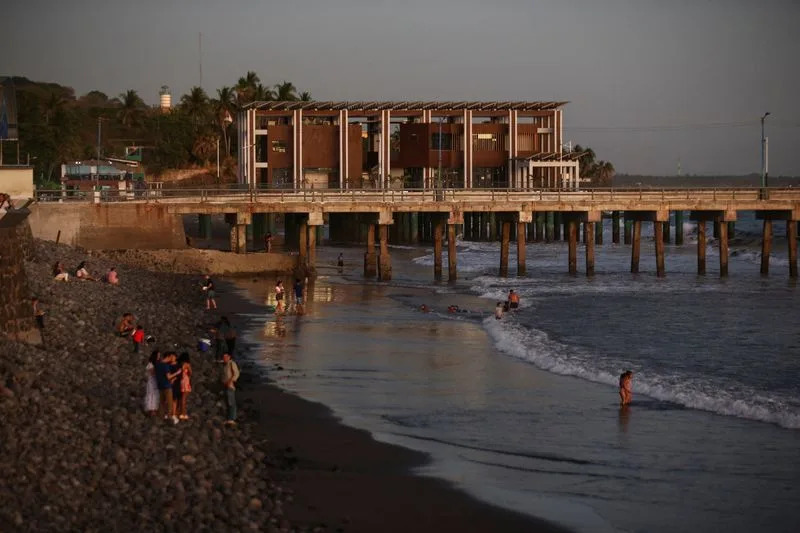
In recent years, China has spent $500 million in infrastructure projects that include a state-of-the-art sports stadium, a tourist pier and water purification plants.

A futuristic library near the capital’s main square flies a giant Chinese flag and was inaugurated with a drone display of Bukele’s face.

“El Salvador will look to work as closely with China as possible in the coming years. China is an economic partner that is willing to look the other way on human rights and other issues,” said Margaret Myers, from Washington-based think tank Inter-American Dialogue.

China’s embassy in San Salvador was quick to congratulate Bukele and his party “for the historic victory in these elections” this week.

Although of limited commercial importance in itself, El Salvador offers China a foothold in Central America, and in 2018 broke relations with Taiwan in favor of China.

Bukele’s government must walk a careful line, though. In mid-2023 it stopped negotiating a 5G deal with Chinese telecoms provider Huawei, which has been the subject of U.S. sanctions, and now is working with Washington in “to achieve a secure nationwide 5G service using trusted vendors,” said a U.S. State Department spokesperson .

“El Salvador wants to do trade with everyone,” Bukele said during his victory speech on Sunday night. “What we are not going to be is your lackeys.”

(This story has been corrected to rectify the year that El Salvador broke relations with Taiwan in paragraph 24)

(Reporting by Diego Ore in Mexico City and Nelson Renteria and Sarah Kinosian in San Salvador; Editing by Christian Plumb and Rosalba O’Brien)

Democracy is losing support in the world and in the US. Just look at El Salvador | Opinion

Miami Herald – Opinion

Democracy is losing support in the world and in the US. Just look at El Salvador | Opinion

Andres Oppenheimer – February 6, 2024

The landslide re-election of popular authoritarian President Nayib Bukele in El Salvador’s Feb. 4 elections seems to confirm a global trend toward the loss of support for democracy. It seems to be happening everywhere, including in the United States.

Bukele announced on election night that he won by more than 85% of the vote, and 58 of 60 seats in the Salvadoran congress. That will give him near-absolute power during a second, five-year term.

The Salvadoran Constitution prohibits two consecutive terms, but Bukele packed the Supreme Court with loyalists and changed the rule to be able to run for re-election. Pre-election polls showed that he has a 90% popularity rate, more than any other president in the region, thanks to his effective campaign against the violent drug gangs that used to terrorize his country.

“This will be the first time where one party rules a country in a completely democratic system,” Bukele said on election night. “The entire opposition has been pulverized.”

But the big question is whether there can be democracy without an opposition. In a growing number of countries, voters don’t seem to be losing sleep over this issue.

Elected authoritarian leaders have won or are poised to win elections in India, Turkey and several other countries, despite concerns about their abuses of power. In Mexico, President Andres Manuel Lopez Obrador on Monday presented a bill to change the Constitution in ways that would weaken controls on the government.

In the United States, former President Donald Trump is likely to be nominated as the Republican candidate and could win the November elections, despite his support for the Jan. 6, 2021, failed insurrection that tried to overturn the 2020 election results. He recently stated that “I’d be a dictator on day one.”

An alarming new Gallup poll shows that only 28% of U.S. adults are satisfied with the way democracy is working in the country, down from 60% in the mid-1980s.

In Latin America, a poll in 17 countries conducted by Latinobarómetro found that only 48% of Latin Americans agree with the idea that, “Democracy is preferable to any other form of government,” down from 63% in 2010. High crime rates, corruption and stagnant economies have driven up support for messianic leaders, the study says.

Salvadorans truly appreciate Bukele’s decision to build mega-prisons, and to put more than 75,000 presumed gang members behind bars. Although violent crime rates had begun to fall since 2015, they have plummeted since he took office in 2019, turning El Salvador from one of the most violent to one of the most peaceful countries in Latin America.

Problem is, many of those in prison were arrested without fair trials under a state of emergency imposed by Bukele’s government in early 2022. Many young Salvadorans were arrested by police just for having tattoos, without evidence that they belong to any drug gang.

El Salvador’s security forces have committed “widespread human rights violations, including arbitrary arrests, enforced disappearances and torture, “ the Human Rights Watch advocacy group says.

And the current peace may not last long. Bukele has made deals with drug lords to stop the violence, but the drug gangs are still alive, critics say. Bukele’s mega-prisons, rather than eliminating violent crime, may become training grounds for new and more powerful drug gangs, security experts say. The best-known Salvadoran gangs were born in the jails of Los Angeles, they say.

Bukele has now become a hero to many people in Latin America’s crime-ridden countries. But the fact that he governs at his whim should raise alarm bells everywhere. Latin America has given plenty of examples that power corrupts, and absolute power corrupts absolutely.

Virtually all Latin American dictatorships have ended badly. If Bukele keeps holding absolute power and bragging about having “pulverized” the opposition, I don’t think that his government will be an exception to the rule.

Don’t miss the “Oppenheimer Presenta” TV show on Sundays at 9 pm E.T. on CNN en Español. Blog: andresoppenheimer.com

‘Morning Joe’ Shreds Mike Johnson for Border Bill Shutdown Effort: ‘Worshipping at the Feet’ of Trump | Video

The Wrap

Morning Joe’ Shreds Mike Johnson for Border Bill Shutdown Effort: ‘Worshipping at the Feet’ of Trump | Video

Andi Ortiz – February 5, 2024

Morning Joe” host Joe Scarborough laid into House Speaker Mike Johnson on Monday morning, after Johnson made it clear that he won’t be supporting a bipartisan bill aiming to improve border security. According to the MSNBC host, Johnson is simply “worshipping at the feet of Donald Trump” at this point.

On Sunday, after the text of the bipartisan bill was released — clocking in at 370 pages — Johnson posted on X, still popularly referred to as Twitter, that he’d “seen enough” and that the bill was “even worse than we expected.”

“That’s just a lie. And I’d love to know what bible he’s looking at when he says he lives by the Bible,” Scarborough said disgustedly. “Because it’s bizarre that this guy is worshipping at the feet of Donald Trump. [He] basically does whatever Donald Trump tells him to do, and was, of course, the chief sponsor of the Big Lie in the House of Representatives.”

Indeed, Republican presidential candidate Donald Trump has been vocally against the deal, encouraging Republicans to reject it and making false statements about its contents.

“This is the toughest border bill in a generation,” Scarborough said. “If you’d have read any of that to us a year or two ago, we would all say ‘Oh, yeah, that’s the Republican wishlist.’”

He added, “And now, just because Mike is being told by Donald not to pass this bill … we have a situation where they want to keep the border open, because it’s bad for America, and they believe what’s bad for America is good for Donald Trump.”

You can watch the full discussion from “Morning Joe” in the video above.

Lankford defends border bill amid GOP criticism: ‘Don’t just go off of Facebook’

The Hill

Lankford defends border bill amid GOP criticism: ‘Don’t just go off of Facebook’

Alexander Bolton – February 5, 2024

Lankford defends border bill amid GOP criticism: ‘Don’t just go off of Facebook’

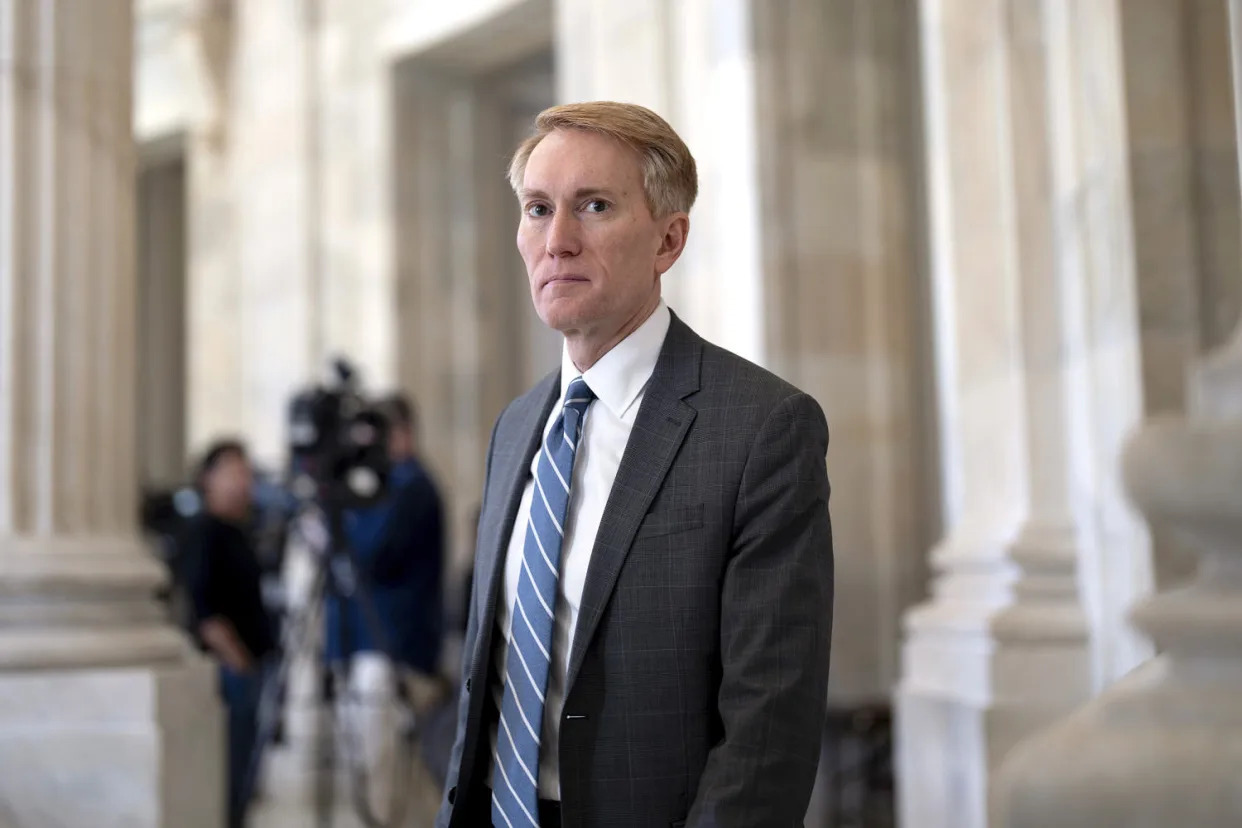
Sen. James Lankford (Okla.), the lead GOP architect of the bipartisan Senate border security deal, pushed back on Republican critics, including Speaker Mike Johnson (R-La.), for rushing to condemn the legislation.

Lankford during an appearance on “Fox & Friends” also responded to the scathing criticism of the legislation by Sen. Mike Lee (R-Utah), who panned the proposal Sunday as the “Border Capitulation Bill” and more bluntly as a “crap-sandwich of a border bill.”

Lankford noted that Lee had previously insisted on giving senators at least three weeks to review the 370-page bill but is expressing opposition after having less than a day to study it.

“He needs three weeks to be able to read it, but he’s already opposed to it. So again, people have to be able to read it and go through it themselves. Don’t just go off of Facebook post somewhere on what the bill says,” Lankford said.

Lankford, who spent four months negotiating the legislation and said it “blew up” his Thanksgiving, Christmas and New Year’s holidays, said it’s “unfortunate” that the Speaker has declared the Senate bill is “even worse than expected” and “dead on arrival” in the House.

The Oklahoma senator lamented Johnson’s condemnation of the bill without taking more time to digest reforms such as raising the standard of migrants seeking asylum, eliminating the backlog at immigration courts and granting the president new power to expel migrants and shut down the border.

“Unfortunate that he would step out and be able to see that right away, before, obviously, he has had a chance to be able to read it as well, and to be able to go through it,” he said of Johnson’s declaration that the bill has no chance of passing the House.

Lankford said Republicans need to make a decision about whether they want to enact some meaningful border security reforms into law or to let the border crisis continue unabated and allow an average of 10,000 people to steam into the country each day, many of them unvetted.

“The key aspect of this, again, is are we, as Republicans, going to have press conferences and complain the border’s bad and then intentionally leave it open after the worst month in American history in December?” Lankford argued.

“Now we’ve got to actually determine, are we going to just complain about things? Are we going to actually … change as many things as we can if we have the shot?” he said.

Lankford has told reporters that under the bill, once the daily average of migrants encountered at the border reaches 5,000, President Biden will be forced to shut down the border until the Department of Homeland Security regains operational control.

And he has dismissed talk among some GOP lawmakers that passing a bipartisan border deal will protect Biden from attacks over his immigration record.

“I’ve had some Republicans say, ‘Well, this will make Joe Biden whole [on immigration].’ I don’t think anyone is going to see Joe Biden as the border security president. I just don’t think there’s any chance of that. Because what we’ve seen the last three years is an open border like our country’s never experienced. So I don’t think when we pass this bill everybody’s going to suddenly think he’s the savior of the closed border,” Lankford told reporters last week.

Trump says border bill ‘very bad’ for Lankford’s career

The Hill

Trump says border bill ‘very bad’ for Lankford’s career

Sarah Fortinsky – February 5, 2024

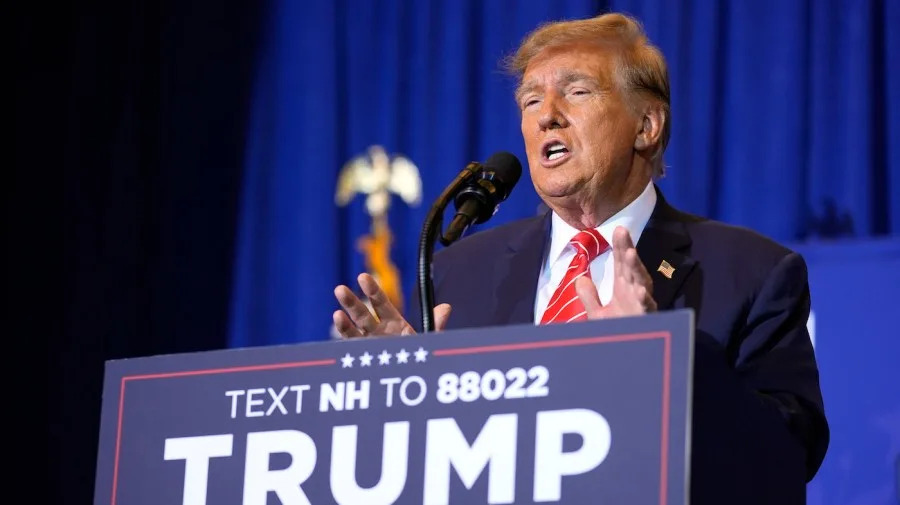
Former President Trump on Monday railed against the bipartisan border agreement and took aim at Sen. James Lankford (R-Okla.), a key negotiator, for his role in brokering the deal.

In an interview on “The Dan Bongino Show,” Trump denied endorsing Lankford’s candidacy in 2022 — despite doing so publicly — and did not rule out endorsing a primary opponent when Lankford is up for reelection in 2028.

“I think this is a very bad bill for his career, especially in Oklahoma,” Trump said about Lankford when asked whether he would back a primary challenge to the senator.

“I won in Oklahoma,” Trump said. “I know those people. They’re great people. They’re not going to be happy about this. Nobody’s going to be happy about this, but the people in Oklahoma are, these are serious MAGA, these are serious people. They are not going to be happy about this, Dan, when they see this. This is crazy. This is lunacy, this bill.”

Senate negotiators unveiled the 370-page national security legislation Sunday evening after months of negotiations. The bill includes funding for Ukraine, Israel and other foreign policy priorities, as well as significant changes aimed at tightening enforcement at the U.S.-Mexico border.

The border component includes provisions to raise standards for asylum screening and to process claims faster, ends the practice known as “catch and release” and provides the administration with new emergency authority to close the border to most migrants when crossings reach a set threshold. It also seeks to make it easier for migrants to get work authorization and eliminate the immigration court backlog.

The bill has faced significant pushback from progressives and Trump allies in Congress, and House Republican leaders have said it would be dead on arrival in the lower chamber. Still, the Senate plans to take the first procedural vote on the legislation this week.

Ahead of the bill text’s release, Trump had attacked the prospect of the legislation, branding it as a political victory for Democrats ahead of the 2024 election — a message he repeated in Monday’s interview.

“This is a gift to Democrats, and this, sort of, is a shifting of the worst border in history onto the shoulders of Republicans. That’s really what they want. They want this for the presidential election, so they can now blame the Republicans for the worst border in history,” Trump said.

Lankford has fiercely defended the bill and said that if Trump returned to the White House, it would give him the tools to manage the border. He also lamented Speaker Mike Johnson’s (R-La.) rush to disavow the legislation before even having a chance to read it.

“The key aspect of this, again, is, are we, as Republicans, going to have press conferences and complain the border’s bad and then intentionally leave it open after the worst month in American history in December?” Lankford said in a Monday interview on “Fox & Friends.”

“Now we’ve got to actually determine, are we going to just complain about things? Are we going to actually … change as many things as we can if we have the shot?” he added.

“I’ve had some Republicans say, ‘Well, this will make Joe Biden whole [on immigration].’ I don’t think anyone is going to see Joe Biden as the border security president. I just don’t think there’s any chance of that. Because what we’ve seen the last three years is an open border like our country’s never experienced. So I don’t think when we pass this bill everybody’s going to suddenly think he’s the savior of the closed border,” Lankford told reporters last week.

Trump falsely claims he didn’t endorse border bill co-author James Lankford

NBC News

Trump falsely claims he didn’t endorse border bill co-author James Lankford

Kyla Guilfoil – February 6, 2024

Former President Donald Trump falsely claimed in an interview Monday that he did not endorse Sen. James Lankford, R-Okla., for re-election in 2022.

“Just to correct the record, I did not endorse Sen. Lankford. I didn’t do it. He ran, and I did not endorse him,” Trump told right-wing radio host Dan Bongino in an interview after the host noted the former president previously endorsed the Oklahoma Republican.

But in a Sept. 27, 2022, statement, Trump gave Lankford his “Complete and Total Endorsement!”

“Sometimes we didn’t exactly agree on everything, but we do now,” Trump said in a statement ahead of the midterm elections. “He is a very good man with a fabulous wife and family, loves the great State of Oklahoma, and is working very hard on trying to Save our Country from the disaster that it is in.”

Trump also praised Lankford’s commitment to improving border security.

“James Lankford is Strong on the Border, Tough on Crime, and Very Smart on the Economy,” Trump’s statement said.

Trump’s false claim on Monday about not previously endorsing Lankford came after the Oklahoma senator helped negotiate a bipartisan border security bill in Congress that the former president is trying to quash.

The bill aims to address record-high border crossings with a series of provisions that would include language to tighten an asylum system that has been overwhelmed with migrants. The bill also includes aid for Israel, Ukraine and Taiwan.

Trump has demanded Republicans reject the legislation, claiming it would be a “gift” to Democrats and Biden.

In his interview Monday, Trump bashed Lankford’s support of the new border bill, adding that it would hurt the senator’s support in his home state.

“This is a very bad bill for his career and especially in Oklahoma,” Trump said. “I know those people. They’re great people. They’re not going to be happy about this.”

Lankford is not up for re-election until 2028. He has served in the Senate since 2015 and previously served in the House from 2011 to 2015.

Trump keeps his flight route open to Putin’s backyard: Trump calls border bill ‘a Death Wish’ for Republican Party: ‘Don’t be STUPID!!!’

The Hill

Trump calls border bill ‘a Death Wish’ for Republican Party: ‘Don’t be STUPID!!!’

Brett Samuels February 5, 2024

Trump calls border bill ‘a Death Wish’ for Republican Party: ‘Don’t be STUPID!!!’

Former President Trump excoriated a bipartisan border security bill put forward by senators, calling it a “Death Wish” for the GOP on Monday, hours after it was released.

“Only a fool, or a Radical Left Democrat, would vote for this horrendous Border Bill, which only gives Shutdown Authority after 5000 Encounters a day, when we already have the right to CLOSE THE BORDER NOW, which must be done,” Trump wrote on Truth Social of the legislation, which was crafted in part by conservative Sen. James Lankford (R-Okla.).

“This Bill is a great gift to the Democrats, and a Death Wish for The Republican Party. It takes the HORRIBLE JOB the Democrats have done on Immigration and the Border, absolves them, and puts it all squarely on the shoulders of Republicans,” Trump continued. “Don’t be STUPID!!! We need a separate Border and Immigration bill. It should not be tied to foreign aid in any way, shape or form!”

Trump’s opposition further complicates the path forward for the legislation, which was already facing pushback from Republicans in the House.

The legislation unveiled Sunday night included $20 billion for border security. It would give the federal government temporary authority to expel migrants when the average number of daily crossings exceeds a set threshold, end “catch and release,” raise standards for asylum screenings and seek to process claims quicker, among other provisions.

The bill also includes national security funding in the form of $60 billion for Ukraine, $14.1 billion for Israel, aid for Indo-Pacific allies.

Republicans had insisted that any aid for Ukraine be paired with legislation to address the southern border, but Trump’s post Monday indicated any Ukraine funding may be a non-starter.

Speaker Mike Johnson (R-La.) slammed the border deal Sunday, writing that it is “even worse than we expected” and declaring it “dead on arrival” in the House.

Democrats have for weeks argued Trump has pushed back against the prospect of any compromise on the border because the former president believes it would be a political win for President Biden. Trump has repeatedly hammered Biden over the flow of migrants at the southern border, and polling has shown voters trust Trump more on immigration and the border.

“Puts him in a box”: Experts say immunity ruling may have doomed Trump’s Supreme Court appeal

Salon

“Puts him in a box”: Experts say immunity ruling may have doomed Trump’s Supreme Court appeal

Tatyana Tandanpolie – February 6, 2024

Donald Trump Photo illustration by Salon/Getty Images

A federal appeals court’s unanimous rejection of former President Donald Trump’s immunity bid has laid the groundwork for it to be upheld if appealed to the Supreme Court, legal experts say. The three-judge panel of the U.S. Circuit Court of Appeals in Washington, D.C. on Tuesday issued a 57-page opinion finding that Trump does not have blanket protection from prosecution for all acts he committed while in office. The opinion came four weeks after the circuit court heard the case in early January, and Trump is expected to appeal it to the Supreme Court.

“There was a lot of speculation over whether the four-week delay meant there was some division among the judges,” George Washington University law professor Randall Eliason wrote on X/Twitter. “But this per curiam (joined by all 3, with no judge identified as the author) opinion presents a unified holding that offers the best chance to be quickly upheld.”

The D.C. Circuit’s decision is “not surprising,” according to former federal prosecutor Renato Mariotti, who noted the “rather silly arguments” made by Trump’s team in the appeal. “I wouldn’t be surprised if the Supreme Court declines to take this case up, letting this ruling stand,” Mariotti added.

Former U.S. Attorney Harry Litman noted that the appeals court gave Trump until Feb. 12 to seek to extend the pause in his D.C. proceedings. “That’s very quick and puts him in a box having to find a stay before then,” Litman tweeted. “Given thoroughness and unanimity of opinion, we will have lost only about six weeks should the Supreme Court deny the stay application, which we should look to it to do by around February 19. If it takes the case, mandate doesn’t return to Chutkan until early July,” he added.

Steve Vladeck, a University of Texas law professor, argued that the appeals court’s decision leaves the high court with two options to further address Trump’s immunity question. The Supreme Court can either deny the former president’s forthcoming request to pause the federal election interference case’s proceedings and “clear the way for the prosecution to proceed quickly; or it can grant the stay—and expedite its review of the merits of today’s ruling, with a decision by June,” Vladeck explained. He said he expects the court to decide on a stay application by late next week or early the week of February 19.

“[W]e should know a *lot* more about the timing of the next steps sometime in the next two weeks,” he postedadding: “And for those asking if Trump can seek en banc review, technically he can, but it won’t help to keep the lower-court proceedings on hold. The only way to do that is to go to #SCOTUS by next Monday.”

Former acting Solicitor General Neal Katyal predicted that the Supreme Court would not take up Trump’s appeal.

“Of course, anything can happen and it takes 4 of the 9 Justices to vote to hear a case,” he wrote. “But Trump’s argument is so weak and the Court of Appeals decision so thorough and well done, I can see SCOTUS voting not to hear it.”

How two sentences in the Constitution rose from obscurity to ensnare Donald Trump

Asociated Press

How two sentences in the Constitution rose from obscurity to ensnare Donald Trump

Nicholas Riccardi – February 4, 2024

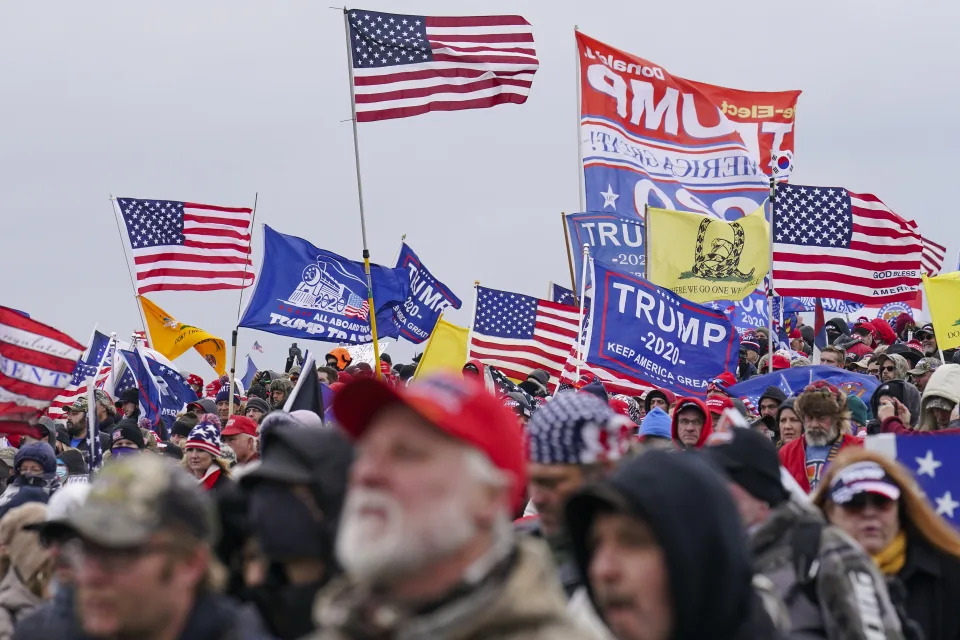
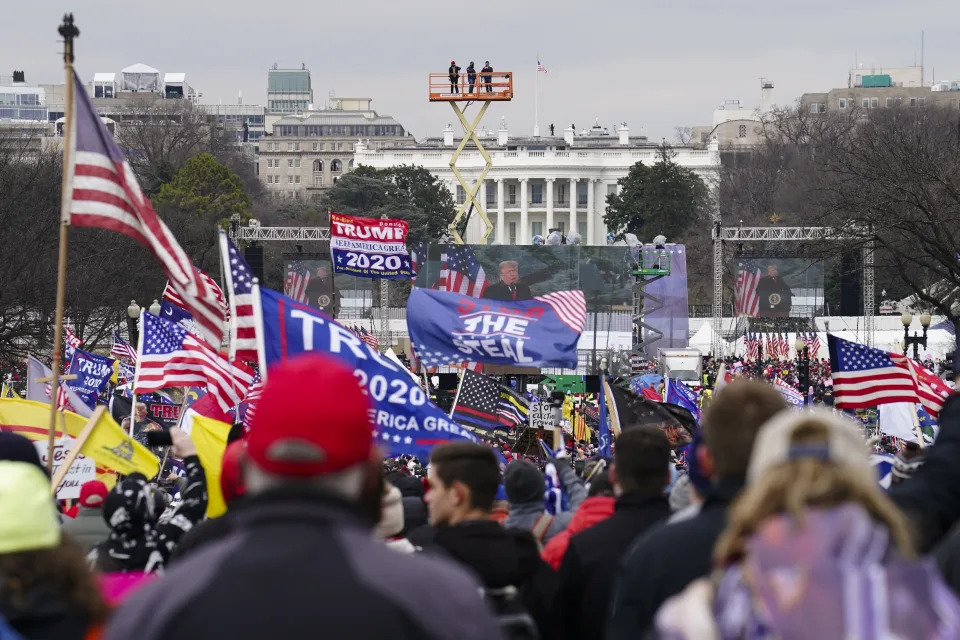
FILE - Trump supporters participate in a rally in Washington, Jan. 6, 2021, that some blame for fueling the attack on the U.S. Capitol. On Thursday, Feb. 8, the nation's highest court is scheduled to hear arguments in a case involving Section 3 of the 14th Amendment, which prohibits those who “engaged in insurrection or rebellion” from holding office. The case arises from a decision in Colorado, where that state's Supreme Court ruled that Trump violated Section 3 of the 14th Amendment and should be banned from ballot. (AP Photo/John Minchillo, File)
Trump supporters participate in a rally in Washington, Jan. 6, 2021, that some blame for fueling the attack on the U.S. Capitol. On Thursday, Feb. 8, the nation’s highest court is scheduled to hear arguments in a case involving Section 3 of the 14th Amendment, which prohibits those who “engaged in insurrection or rebellion” from holding office. The case arises from a decision in Colorado, where that state’s Supreme Court ruled that Trump violated Section 3 of the 14th Amendment and should be banned from ballot. (AP Photo/John Minchillo, File)
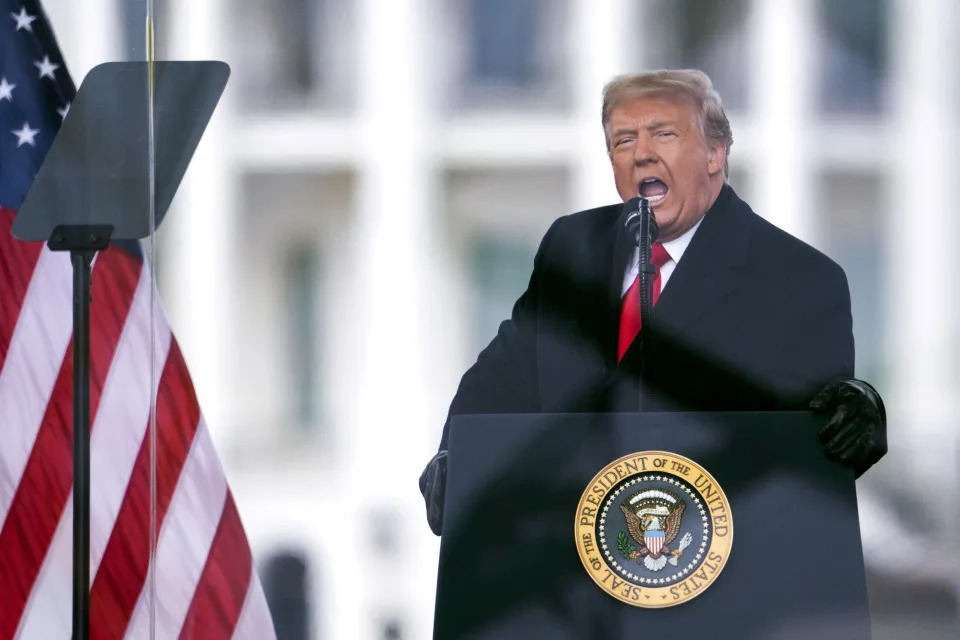
FILE - Then-President Donald Trump speaks during a rally protesting the Elector College certification of Joe Biden's win in the 2020 presidential race, in Washington on Jan. 6, 2021. On Thursday, Feb. 8, 2024, the nation's highest court is scheduled to hear arguments for a case involving Section 3 of the 14th Amendment, prohibiting those who “engaged in insurrection or rebellion” from holding office. The case arises from a decision in Colorado, where that state's Supreme Court ruled that Trump violated Section 3 and should be banned from ballot. (AP Photo/Evan Vucci, File)
Then-President Donald Trump speaks during a rally protesting the Elector College certification of Joe Biden’s win in the 2020 presidential race, in Washington on Jan. 6, 2021. On Thursday, Feb. 8, 2024, the nation’s highest court is scheduled to hear arguments for a case involving Section 3 of the 14th Amendment, prohibiting those who “engaged in insurrection or rebellion” from holding office. The case arises from a decision in Colorado, where that state’s Supreme Court ruled that Trump violated Section 3 and should be banned from ballot. (AP Photo/Evan Vucci, File)
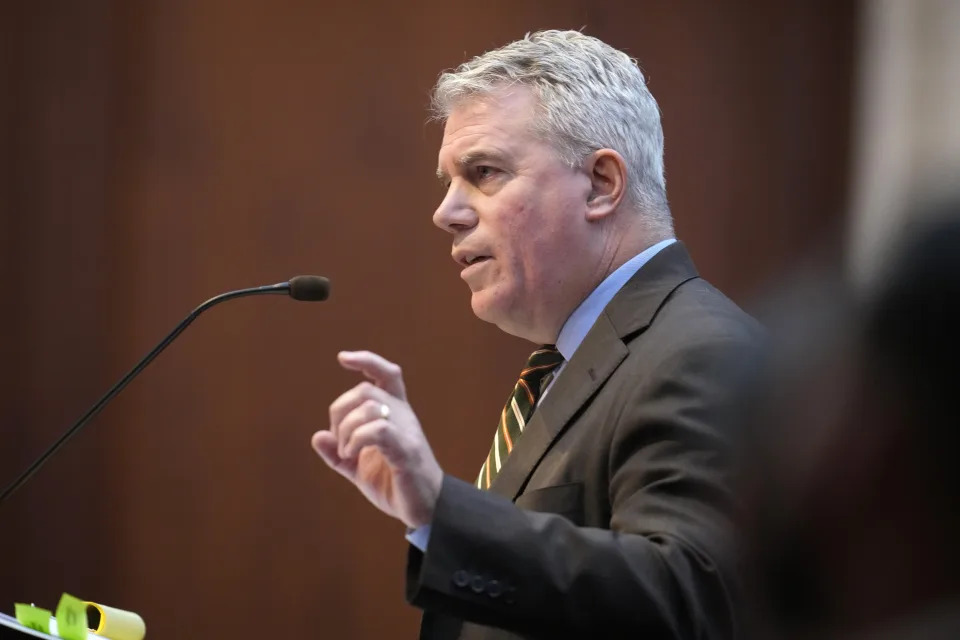
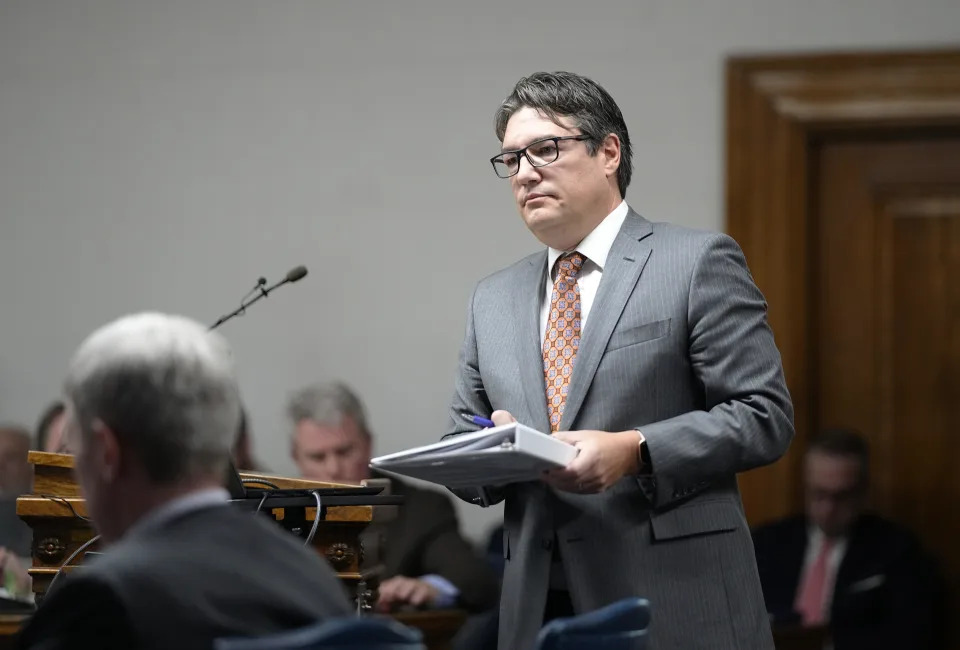
FILE - Attorney Scott Gessler speaks during a hearing before the Colorado Supreme Court for a lawsuit to keep former President Donald Trump off the state ballot, on Dec. 6, 2023, in Denver. On Thursday, Feb. 8, 2024, the nation's highest court is scheduled to hear arguments in a case that arises from the state Supreme Court's decision that Trump violated Section 3 of the 14th Amendment and should be banned from ballot.(AP Photo/David Zalubowski, Pool, File)
 Attorney Scott Gessler speaks during a hearing before the Colorado Supreme Court for a lawsuit to keep former President Donald Trump off the state ballot, on Dec. 6, 2023, in Denver. On Thursday, Feb. 8, 2024, the nation’s highest court is scheduled to hear arguments in a case that arises from the state Supreme Court’s decision that Trump violated Section 3 of the 14th Amendment and should be banned from ballot.(AP Photo/David Zalubowski, Pool, File)
FILE - Trump supporters participate in a rally in Washington, Jan. 6, 2021, that some blame for fueling the attack on the U.S. Capitol. On Thursday, Feb. 8, the nation's highest court is scheduled to hear arguments in a case involving Section 3 of the 14th Amendment, which prohibits those who “engaged in insurrection or rebellion” from holding office. The case arises from a decision in Colorado, where that state's Supreme Court ruled that Trump violated Section 3 of the 14th Amendment and should be banned from ballot. (AP Photo/John Minchillo, File)
Trump supporters participate in a rally in Washington, Jan. 6, 2021, that some blame for fueling the attack on the U.S. Capitol. On Thursday, Feb. 8, the nation’s highest court is scheduled to hear arguments in a case involving Section 3 of the 14th Amendment, which prohibits those who “engaged in insurrection or rebellion” from holding office. The case arises from a decision in Colorado, where that state’s Supreme Court ruled that Trump violated Section 3 of the 14th Amendment and should be banned from ballot. (AP Photo/John Minchillo, File)
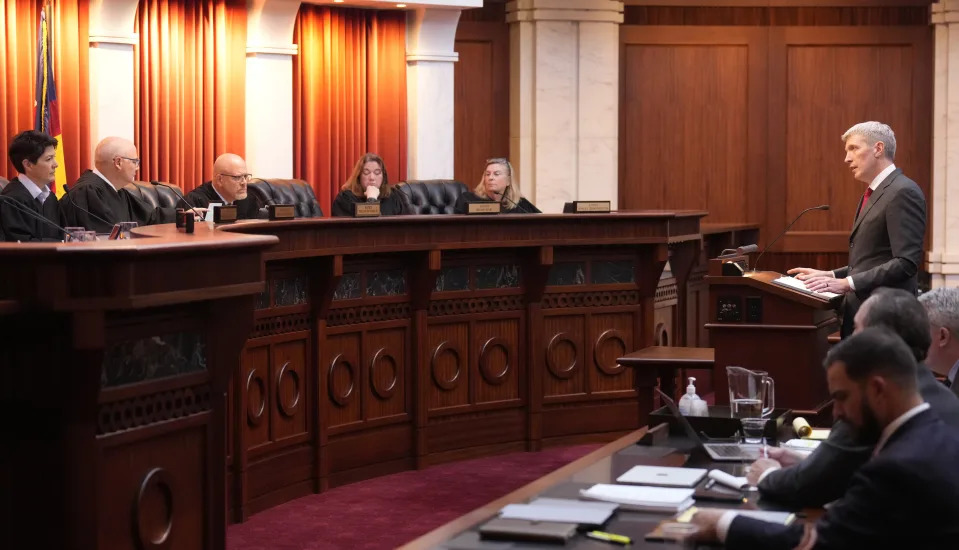
FILE - Attorney Eric Olson, far right, argues before the Colorado Supreme Court for a lawsuit to keep former President Donald Trump off the state ballot on Dec. 6, 2023, in Denver. On Thursday, Feb. 8, 2024, the nation's highest court is scheduled to hear arguments in a case that arises from the state Supreme Court's decision that Trump violated Section 3 of the 14th Amendment and should be banned from ballot. (AP Photo/David Zalubowski, Pool, File)
Attorney Eric Olson, far right, argues before the Colorado Supreme Court for a lawsuit to keep former President Donald Trump off the state ballot on Dec. 6, 2023, in Denver. On Thursday, Feb. 8, 2024, the nation’s highest court is scheduled to hear arguments in a case that arises from the state Supreme Court’s decision that Trump violated Section 3 of the 14th Amendment and should be banned from ballot. (AP Photo/David Zalubowski, Pool, File)
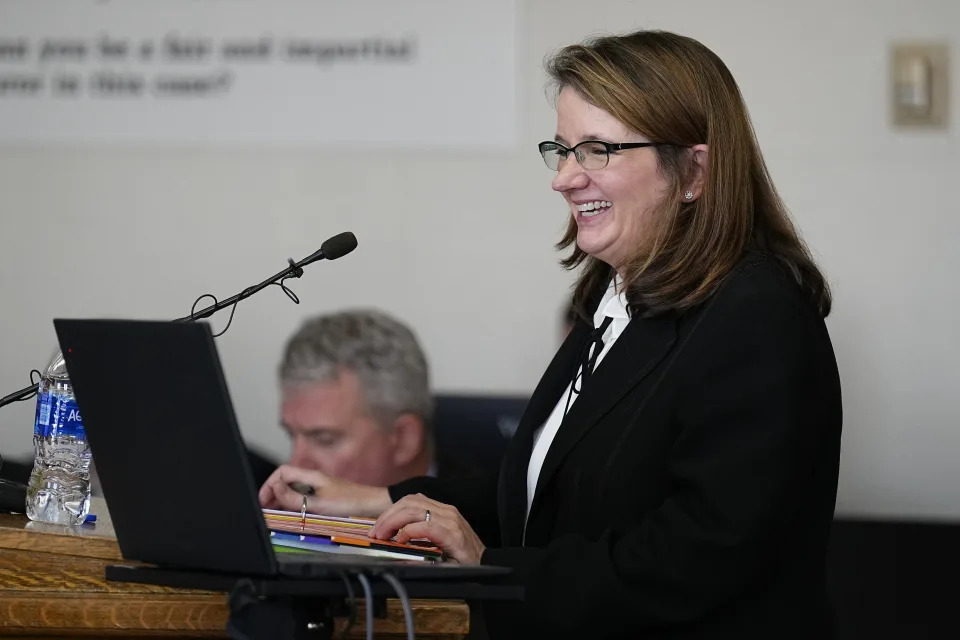
FILE - Attorney Martha Tierney smiles during a hearing for a lawsuit to keep former President Donald Trump off the Colorado ballot in court Oct. 30, 2023, in Denver. On Thursday, Feb. 8, 2024, the nation's highest court is scheduled to hear arguments in a case that arises from the state Supreme Court's decision that Trump violated Section 3 and should be banned from ballot. (AP Photo/Jack Dempsey, Pool, File)
Attorney Martha Tierney smiles during a hearing for a lawsuit to keep former President Donald Trump off the Colorado ballot in court Oct. 30, 2023, in Denver. On Thursday, Feb. 8, 2024, the nation’s highest court is scheduled to hear arguments in a case that arises from the state Supreme Court’s decision that Trump violated Section 3 and should be banned from ballot. (AP Photo/Jack Dempsey, Pool, File)
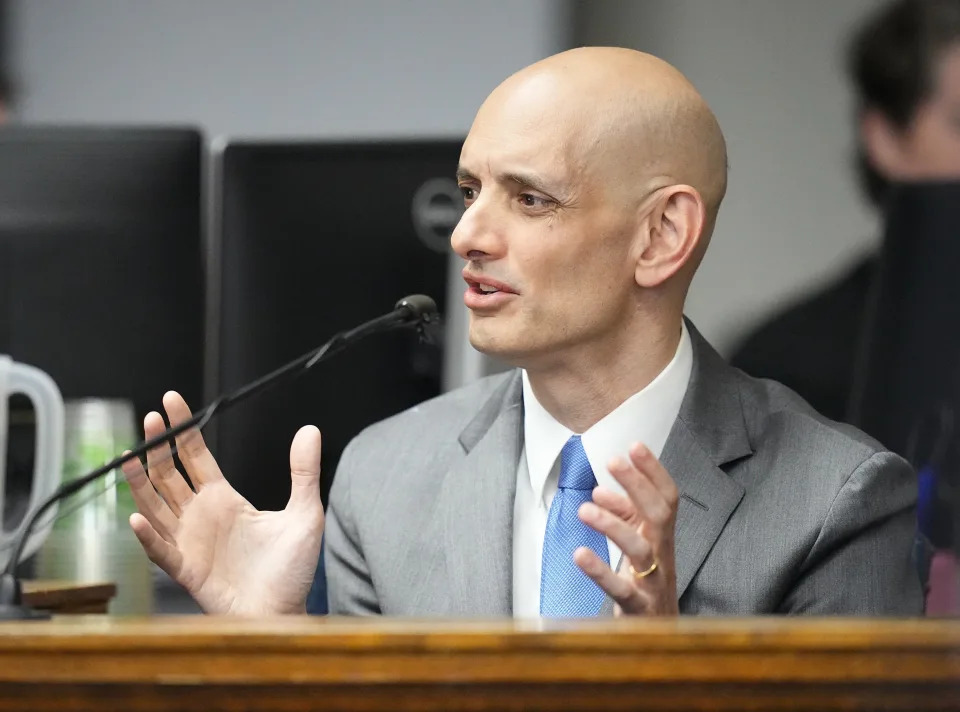
FILE - Gerard Magliocca, a professor at Indiana University's Robert H. McKinney School of Law, testifies during a hearing for a lawsuit to keep former President Donald Trump off the Colorado ballot, Nov. 1, 2023, in Denver. During the coronavirus pandemic, Magliocca began to research the history of two rarely noticed sentences tucked in the middle of the 14th Amendment. (AP Photo/Jack Dempsey, Pool, File)
 Gerard Magliocca, a professor at Indiana University’s Robert H. McKinney School of Law, testifies during a hearing for a lawsuit to keep former President Donald Trump off the Colorado ballot, Nov. 1, 2023, in Denver. During the coronavirus pandemic, Magliocca began to research the history of two rarely noticed sentences tucked in the middle of the 14th Amendment. (AP Photo/Jack Dempsey, Pool, File)
FILE - Trump supporters participate in a rally in Washington, Jan. 6, 2021, that some blame for fueling the attack on the U.S. Capitol. On Thursday, Feb. 8, the nation's highest court is scheduled to hear arguments in a case involving Section 3 of the 14th Amendment, which prohibits those who “engaged in insurrection or rebellion” from holding office. The case arises from a decision in Colorado, where that state's Supreme Court ruled that Trump violated Section 3 of the 14th Amendment and should be banned from ballot. (AP Photo/John Minchillo, File)
Trump supporters participate in a rally in Washington, Jan. 6, 2021, that some blame for fueling the attack on the U.S. Capitol. On Thursday, Feb. 8, the nation’s highest court is scheduled to hear arguments in a case involving Section 3 of the 14th Amendment, which prohibits those who “engaged in insurrection or rebellion” from holding office. The case arises from a decision in Colorado, where that state’s Supreme Court ruled that Trump violated Section 3 of the 14th Amendment and should be banned from ballot. (AP Photo/John Minchillo, File)
FILE - Sean Grimsley, attorney for the petitioners, delivers closing arguments during a hearing for a lawsuit to keep former President Donald Trump off the Colorado ballot in district court, Nov. 15, 2023, in Denver. On Thursday, Feb. 8, 2024, the nation's highest court is scheduled to hear arguments in a case that arises from the state Supreme Court's decision that Trump violated Section 3 of the 14th Amendment and should be banned from ballot. (AP Photo/Jack Dempsey, Pool, File)
Sean Grimsley, attorney for the petitioners, delivers closing arguments during a hearing for a lawsuit to keep former President Donald Trump off the Colorado ballot in district court, Nov. 15, 2023, in Denver. On Thursday, Feb. 8, 2024, the nation’s highest court is scheduled to hear arguments in a case that arises from the state Supreme Court’s decision that Trump violated Section 3 of the 14th Amendment and should be banned from ballot. (AP Photo/Jack Dempsey, Pool, File)
FILE - Gerard Magliocca, a professor at Indiana University's Robert H. McKinney School of Law, testifies during a hearing for a lawsuit to keep former President Donald Trump off the Colorado ballot, Nov. 1, 2023, in Denver. During the coronavirus pandemic, Magliocca began to research the history of two rarely noticed sentences tucked in the middle of the 14th Amendment. (AP Photo/Jack Dempsey, Pool, File)
Gerard Magliocca, a professor at Indiana University’s Robert H. McKinney School of Law, testifies during a hearing for a lawsuit to keep former President Donald Trump off the Colorado ballot, Nov. 1, 2023, in Denver. During the coronavirus pandemic, Magliocca began to research the history of two rarely noticed sentences tucked in the middle of the 14th Amendment. (AP Photo/Jack Dempsey, Pool, File)

DENVER (AP) — In the summer of 2020, Gerard Magliocca, like many during the coronavirus pandemic, found himself stuck inside with time on his hands.

A law professor at Indiana University, Magliocca figured he would research the history of two long-neglected sentences in the Constitution’s 14th Amendment. Dating to the period just after the Civil War, they prohibit those who “engaged in insurrection or rebellion” from holding office.

On Jan. 6, 2021, after then-President Donald Trump‘s supporters stormed the U.S. Capitol to try to block certification of his loss to Joe Biden, Magliocca watched as Republicans such as Sens. Mitch McConnell and Mitt Romney described the attack as an “insurrection.”

That night, Magliocca composed a quick post on a legal blog: “Section Three of the Fourteenth Amendment,” he wrote, “might apply to President Trump.”

Just over four years later, the U.S. Supreme Court will have to determine whether it does. On Thursday, the nation’s highest court is scheduled to hear arguments over whether Trump can remain on the ballot in Colorado, where the state’s Supreme Court ruled that he violated Section 3.

It’s the first time the Supreme Court has heard a case on Section 3, which was used to keep former Confederates from holding government offices after the amendment’s 1868 adoption. It fell into disuse after Congress granted an amnesty to most ex-rebels in 1872.

Before the attack on the Capitol, even many constitutional lawyers rarely thought about Section 3. It hadn’t been used in court for more than 100 years. Its revival is due to an unlikely combination of Democrats and Republicans, liberals and conservatives, all rediscovering 111 words in the nation’s foundational legal document that have now become a threat to the former president’s attempt to return to office.

In the days after Jan. 6, thanks to scholars such as Magliocca, Section 3 started its slow emergence from obscurity.

Free Speech For People, a Massachusetts-based liberal nonprofit, sent letters to top election officials in all 50 states in June 2021, warning them not to place Trump on the ballot should he run again in 2024.

The group didn’t hear back from any of them.

“People were just treating it as something that was not serious,” recalled John Bonifaz, the group’s co-founder.

In January 2022, Free Speech For People filed a complaint in North Carolina to disqualify Republican Rep. Madison Cawthorn under Section 3. Cawthorn lost his primary, mooting the case.

That same month, the group Citizens for Responsibility and Ethics, also known as CREW, decided to test Section 3 in court.

“It wasn’t just Trump we were focused on,” chief counsel Donald Sherman said in an interview. “One thing we’ve been very careful about is we don’t think it’s appropriate to pursue outside or longshot cases.”

On Sept. 6, 2022, a New Mexico judge ordered Couy Griffin, a rural New Mexico county commissioner convicted of illegally entering the Capitol on Jan. 6, removed from his position after CREW filed against him. It was the first time in more than 100 years an official had been removed under Section 3. Griffin has appealed to the Supreme Court.

Trump announced his campaign for president two months later.

Both Free Speech For People and CREW began scouring state ballot laws, looking for places that allowed the rapid contesting of a candidacy. CREW settled on Colorado.

Sherman and another CREW attorney, Nikhel Sus, contacted Martha Tierney, a veteran election lawyer who also served as general counsel of the state Democratic Party.

Tierney wasn’t acting as the Democratic Party’s lawyer, but CREW wanted to balance its team. Sherman contacted Mario Nicolais, a former Republican election lawyer who had left the party over Trump.

Nicolais’ first interaction with Sherman was a direct message about the case on X, the social media platform previously known as Twitter. Nicolais thought it could be from a crank.

“Is this for real or is this from somebody just angry at the president?” Nicolais recalled wondering.

On Sept. 6, 2023 — one year from the disqualification of Griffin — their 105-page complaint was filed in district court in Denver.

Trump hired former Colorado Secretary of State Scott Gessler to represent him. The Denver judge who got CREW’s complaint, Sarah Block Wallace, said she was obligated to hold a hearing under state election law.

During the five-day hearing, two officers who defended the Capitol testified, along with a University of California professor who was an expert in right-wing extremism, two Trump aides and several other witnesses. One was Magliocca, who laid out the history of Section 3.

Trump’s attorneys were pessimistic, expecting Wallace, who had a history of donating to Democrats, to rule against them. Trump spokesman Jason Miller addressed reporters outside court, complaining that the plaintiffs had intentionally filed in a liberal jurisdiction in a blue state.

Wallace issued her decision on Nov. 17. She found that Trump had “engaged in insurrection” but ruled that — contrary to Magliocca’s testimony — it wasn’t certain that the authors of the 14th Amendment meant it to apply to the president. Section 3 refers to “elector of President and Vice President,” but not the office itself.

Wallace was hesitant to become the first judge in history to bar a top presidential contender unless the law was crystal clear.

“It was a loss that only a lawyer could love,” Sus recalled.

CREW was just a legal sliver away from victory. It just needed the Colorado Supreme Court to uphold all of Wallace’s ruling besides the technicality of whether the president was covered.

The seven justices of the state’s high court — all appointed by Democrats from a pool chosen by a nonpartisan panel — peppered both sides with pointed questions at oral argument three weeks later.

Neither side left feeling certain of victory.

On Dec. 19, the court announced it would issue its decision that afternoon — ruling 4-3 that Trump was disqualified. The decision was put on hold, pending the outcome of the case that will be argued Thursday.

Veterans group spending $45M on Biden, Democrats

The Hill

Veterans group spending $45M on Biden, Democrats

Elizabeth Crisp – February 5, 2024

A progressive political action committee that typically supports veterans’ issues and Democratic-leaning veterans running for office plans to pump $45 million into the effort to reelect President Biden this fall and bolster other Democrats on the ballot.

A spokesperson for VoteVets confirmed the plans to The Hill after The New York Times first reported the effort.

A $15 million push aimed at courting veterans and active-duty military families in the presidential battleground states will be the centerpiece, according to the group.

VoteVets also identified these races among the group’s priorities: Incumbent Democratic senators in Montana, Nevada, Pennsylvania and Ohio; Democratic Reps. Ruben Gallego (Ariz.) and Elissa Slotkin (Mich.), who are running for Senate; and Rep. Andy Kim (N.J.), who is challenging embattled Sen. Bob Menendez (D-N.J.).

Former President Trump, seen as the front-runner for the GOP presidential nomination, has enjoyed robust support among military members in the past, but his edge slipped from the 2016 election to the 2020 cycle.

VoteVets co-founder and chairman Jon Soltz told The Times in an interview that Trump’s vocal support for people who carried out the Jan. 6, 2021 attack on the Capitol and past remarks against military officials and soldiers will be highlighted in the ads.

“There’s political ramifications to all this,” he said. “There’s no other way to explain the disrespect to Gold Star families and the erratic behavior and the attacks on our law enforcement at the Capitol — these are values things.”

The group unveiled part of its plan with a 60-second spot in Pennsylvania last month that highlights remarks attributed to Trump referring to veterans as “losers” and “suckers” and features Gold Star families responding.

VoteVets has in the past shown that it’s messaging beyond military families with its efforts.

In Georgia’s 2022 Senate race, the group released an ad accusing Republican candidate and former football star Herschel Walker of defrauding the government at the expense of veterans. Walker ultimately lost to Democratic Sen. Raphael Warnock.