MEXICO CITY — Thousands of demonstrators cloaked in pink marched through cities in Mexico and abroad on Sunday in what they called a “march for democracy” targeting the country’s ruling party in advance of the country’s June 2 elections.
The demonstrations called by Mexico’s opposition parties advocated for free and fair elections in the Latin American nation and railed against corruption the same day presidential front-runner Claudia Sheinbaum officially registered as a candidate for ruling party Morena.
Sheinbaum is largely seen as a continuation candidate of Mexico’s highly popular populist leader Andrés Manuel López Obrador. He’s adored by many voters who say he bucked the country’s elite parties from power in 2018 and represents the working class.
But the 70-year-old president has also been accused of making moves that endanger the country’s democracy. Last year, the leader slashed funding for the country’s electoral agency, the National Electoral Institute, and weakened oversight of campaign spending, something INE’s head said could “wind up poisoning democracy itself.” The agency’s color, pink, has been used as a symbol by demonstrators.
López Obrador has also attacked journalists in hours-long press briefings, has frequently attacked Mexico’s judiciary and claimed judges are part of a conservative conspiracy against his administration.
In Mexico City on Sunday, thousands of people dressed in pink flocked to the the city’s main plaza roaring “get López out.” Others carried signs reading “the power of the people is greater than the people in power.”
Among the opposition organizations marching were National Civic Front, Yes for Mexico, Citizen Power, Civil Society Mexico, UNE Mexico and United for Mexico.
“Democracy doesn’t solve lack of water, it doesn’t solve hunger, it doesn’t solve a lot of things. But without democracy you can’t solve anything,” said Enrique de la Madrid Cordero, a prominent politician from the Institutional Revolutionary Party, or PRI, in a video posted to social media calling for people to join the protests.
The PRI held uninterrupted power in Mexico for more than 70 years.
Marches were organized in a hundred cities across the country, and in other cities in the United States and Spain.
Still, the president remains highly popular and his ally Sheinbaum appears set to coast easily into the presidency. She leads polls by a whopping 64% over her closest competition, Xóchitl Gálvez, who has polled at 31% of the votes.
López Obrador railed against the protests during is Friday morning press briefing, questioning whether the organizers cared about democracy.
“They are calling the demonstration to defend corruption, they are looking for the return of the corrupt, although they say they care about democracy,” he said.
Presidential greatness is rarely fixed in stone – changing attitudes on racial injustice and leadership qualities lead to dramatic shifts
George R. Goethals, University of Richmond – February 18, 2024
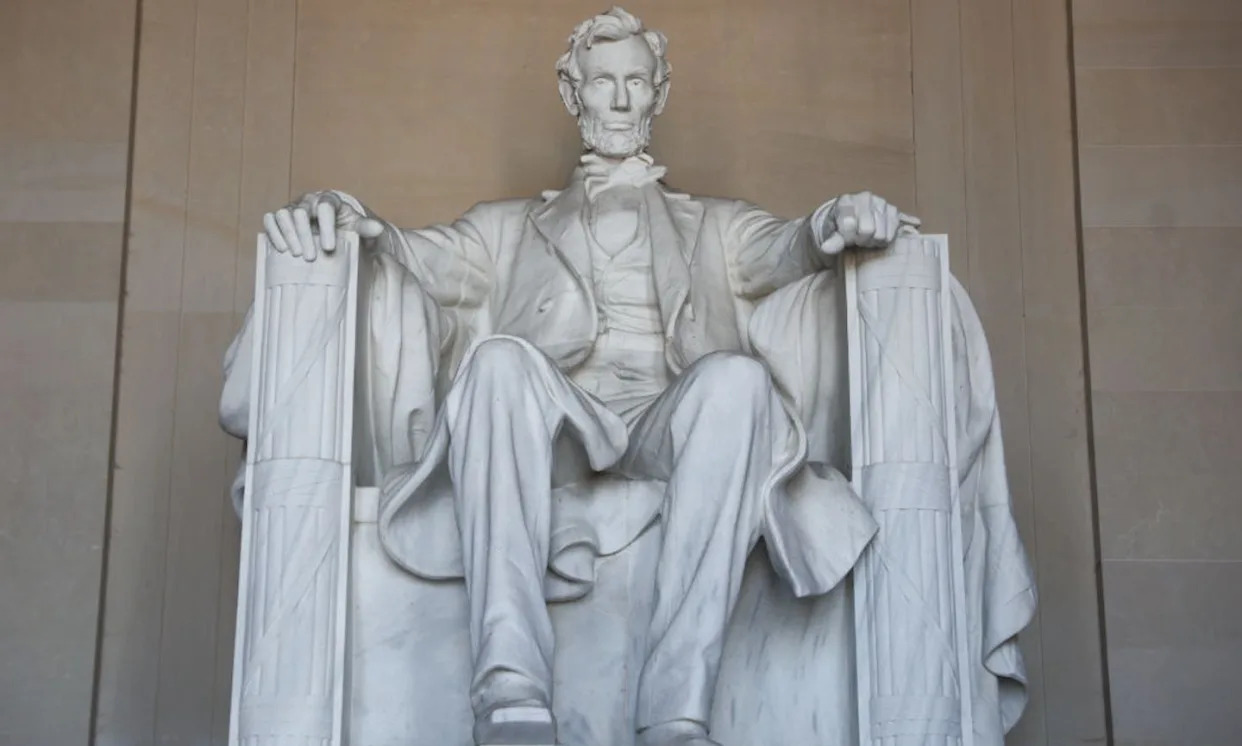
A statue of Abraham Lincoln, the 16th president of the United States, sits in the Lincoln Memorial in Washington. Historians consistently have given Lincoln, the Great Emancipator, their highest rating because of his leadership during the Civil War. Jakub Porzycki/NurPhoto via Getty Images
Every American president has landed in the history books. And historians’ assessments of their performance have been generally consistent over time. But some presidents’ rankings have changed as the nation – and historians themselves – reassessed the country’s values and priorities.
At the other end of the ranking, Presidents Ulysses S. Grant and Warren Harding were labeled “failure.”
There have been numerous surveys ranking presidents since then, including a 1962 survey by Arthur Schlesinger Jr., which showed Jackson dropping into a “near great” category.
Changing views shift rankings
While the surveys point to Americans’ evolving social attitudes, with implications for our electoral politics and governance, they don’t always ask historians the same questions. Some simply ask them to rank presidents. Others ask them to also judge specific aspects of leadership, such as economic policy or international diplomacy.
Despite the relative stability of the ratings across surveys – especially at the top, where Lincoln, Washington and Roosevelt consistently hold sway – there have been some dramatic changes. C-SPAN’s four surveys on presidential leadership, for example, show some shifts in historians’ ranking of presidents over time.
Since 2000, the cable network has polled prominent historians every time there has been a change in administrations. So, C-SPAN conducted surveys in 2009, 2017 and 2021 as well.
The surveys offer not only an overall ranking of presidents, but also rankings in each of the following 10 categories: public persuasion, crisis leadership, economic management, moral authority, international relations, administrative skills, relations with Congress, vision and agenda setting, pursuance of equal justice for all, and performance within the context of the times.
While Lincoln has ranked at the top of each survey, the two presidents who served right before him – Franklin Pierce and James Buchanan, both sympathetic to slavery – and his immediate successor, white supremacist Andrew Johnson, have consistently ranked at the bottom. Donald Trump debuted in C-SPAN’s 2021 survey near the bottom. He was ranked 41st of 45 presidents.
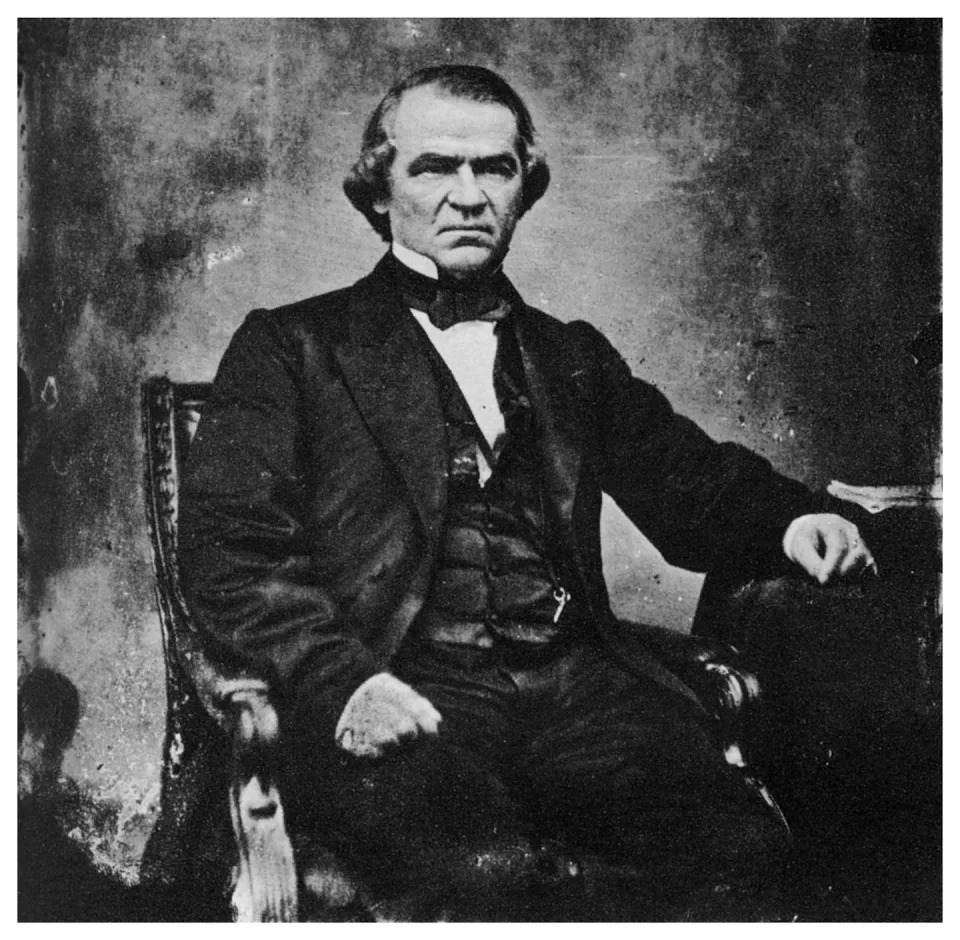
Andrew Johnson was Abraham Lincoln’s vice president and successor. As president, he vetoed legislation designed to help African Americans during Reconstruction. The Print Collector/ Hulton Archive via Getty Images
What is a good leader?
As a social psychologist and leadership scholar at the University of Richmond’s Jepson School of Leadership Studies, with long-standing interests in presidential leadership, I believe these surveys can be best understood in terms of psychologist Dean Keith Simonton’s model of evaluating presidents.
He maintains that historians generally view leaders, including presidents, positively to the extent that they fit a deeply ingrained image of someone who is strong, active and good. And that image comes to mind when they think of attributes and events linked to a president that suggest he was a good leader. Examples include how long he served, whether he was a war hero and whether he was assassinated, and in that sense, was a martyr.
On the other hand, historians also easily recall scandals, such as Richard Nixon’s Watergate and Harding’s Teapot Dome. These detract from these presidents’ “good” image, as evidenced by Nixon’s and Harding’s rankings of 31st and 37th, respectively, in C-SPAN’s 2021 survey.
Race matters
In recent years, presidents’ positions on race and racism have been important factors in historians’ evaluations of their records. For example, Wilson’s rather startling efforts to segregate federal offices and the military are becoming more widely known as scholars explore that aspect of his presidency.
His actions in that regard may overshadow his international idealism, which favored morality over materialism and has been viewed positively. He is no longer considered one of our “great” presidents. In Schlesinger Sr.’s 1948 survey, he ranked fourth of 29 presidents. But in 2021, historians ranked him 13th of 45 for C-SPAN.
Jackson dropped the most in C-SPAN’s surveys, from 13th in 2000 to 22nd in 2021. His commitment to Indian removal from Southern and Midwestern states, not unique for the time, and the resulting Trail of Tears – the forced and violent relocation of Native Americans from their homelands – are important topics in today’s political discussions.
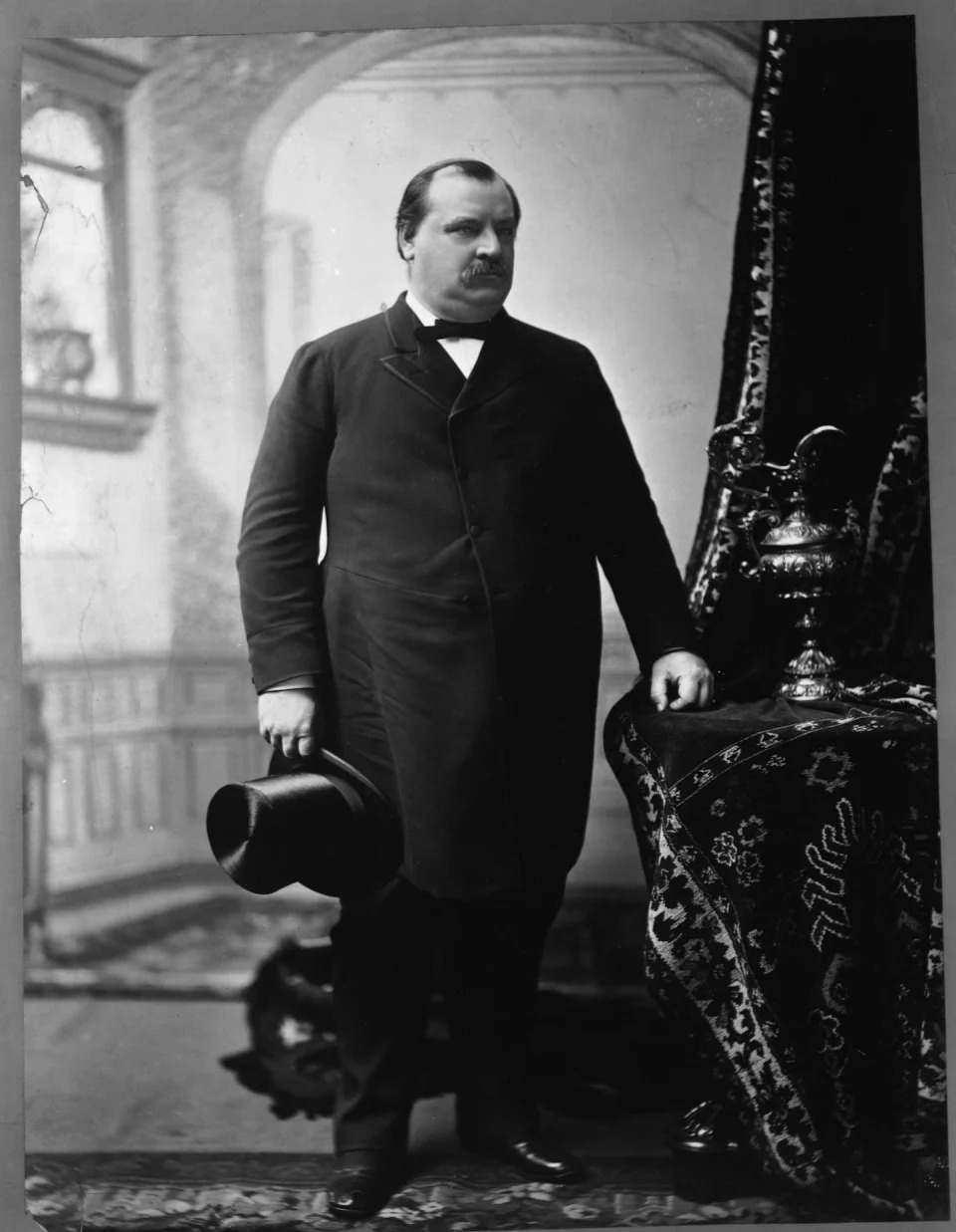
President Grover Cleveland, in office from 1885 to 1889 and 1893 to 1897, opposed efforts to integrate schools or give African Americans, whom he considered inferior to white people, voting rights. Library of Congress/Corbis/VCG via Getty Images
Several other presidents who lost ground, including James Polk, Zachary Taylor, Rutherford B. Hayes and Grover Cleveland, were associated with efforts to extend slavery or with failure to protect African Americans following Reconstruction.
Then there is the case of Grant. Ranked at the bottom as a failure in the mid-20th century, he had the largest ranking change of any president in the C-SPAN surveys. He jumped 13 places from 33rd in 2000 to 20th in 2021. He had already moved up from second-to-last place in the 1948 and 1962 Schlesinger surveys to somewhere in the bottom quartile in 2000, to a position in 2021 where more presidents ranked worse than he did.
The 2021 C-SPAN survey ranks Grant sixth on “pursued equal justice for all,” behind only Lincoln, Lyndon Johnson, Barack Obama, Harry Truman and Jimmy Carter. Given the centrality of equal justice, which may overshadow whatever connection Grant may have had to scandals in his administration, such as Crédit Mobilier and the Whiskey Ring, Grant rises in historians’ overall evaluation.
Moral authority
This all suggests historians have quite simple ways of evaluating presidents. We have an image of the ideal leader. Just a few pieces of information relating to that ideal make a big difference in whether we view presidents as fitting or not fitting that image. This is particularly true of our perception of how good they were. Presidents’ moral commitments speak loudly to whether or not we view them as good.
Interestingly, on the quality of “moral authority” in the C-SPAN surveys from 2000 to 2021, Grant’s ranking rose 14 rungs, from 31st to 17th, even more than it did on “pursued equal justice for all,” where it rose 12 rungs, from 18th to sixth. Wilson and Jackson dropped 13 and 18 places, respectively, on “moral authority.”
Clearly, moral judgments loom large in historians’ assessments of presidential leadership.
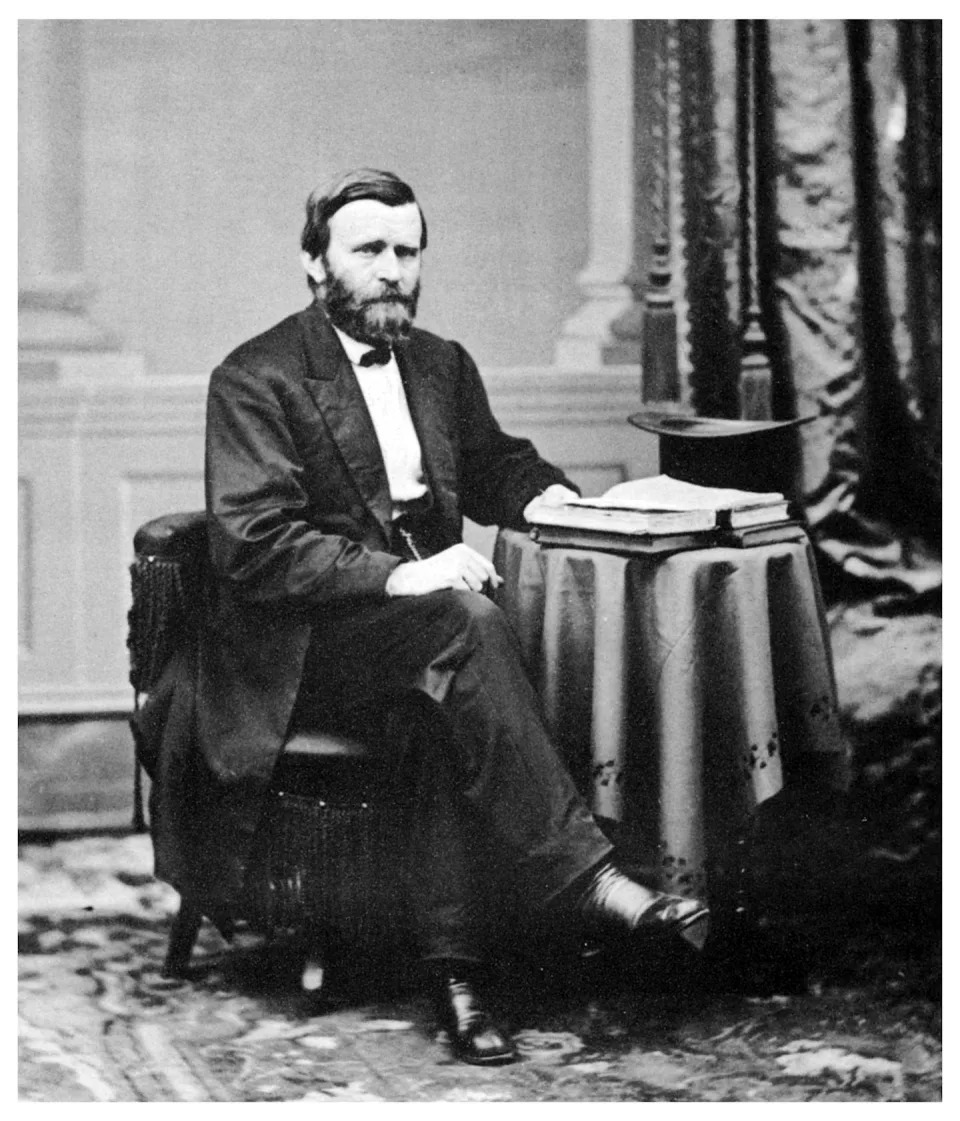
Ulysses S. Grant, once ranked poorly by historians, now gets high marks. His advocacy for African American voting rights stands out among his efforts for the freedmen during Reconstruction. Print Collector/Hulton Archive via Getty Images
New presidential rankings place Obama in top 10, Reagan and Trump below Biden
Michael Lee – February 18, 2024
New presidential rankings place Obama in top 10, Reagan and Trump below Biden
A new ranking of presidents by a group of self-styled experts determined that Abraham Lincoln is America’s greatest president, while Donald Trump ranks last.
Lincoln topped the list of presidents in the 2024 Presidential Greatness Project expert survey for the third time, following his top spot in the rankings in the 2015 and 2018 versions of the survey.
According to a release from the Presidential Greatness Project, which touts itself as the “foremost organization of social science experts in presidential politics,” the 154 respondents to the survey included “current and recent members of the Presidents & Executive Politics Section of the American Political Science Association…as well as scholars who have recently published peer-reviewed academic research in key related scholarly journals or academic presses.”
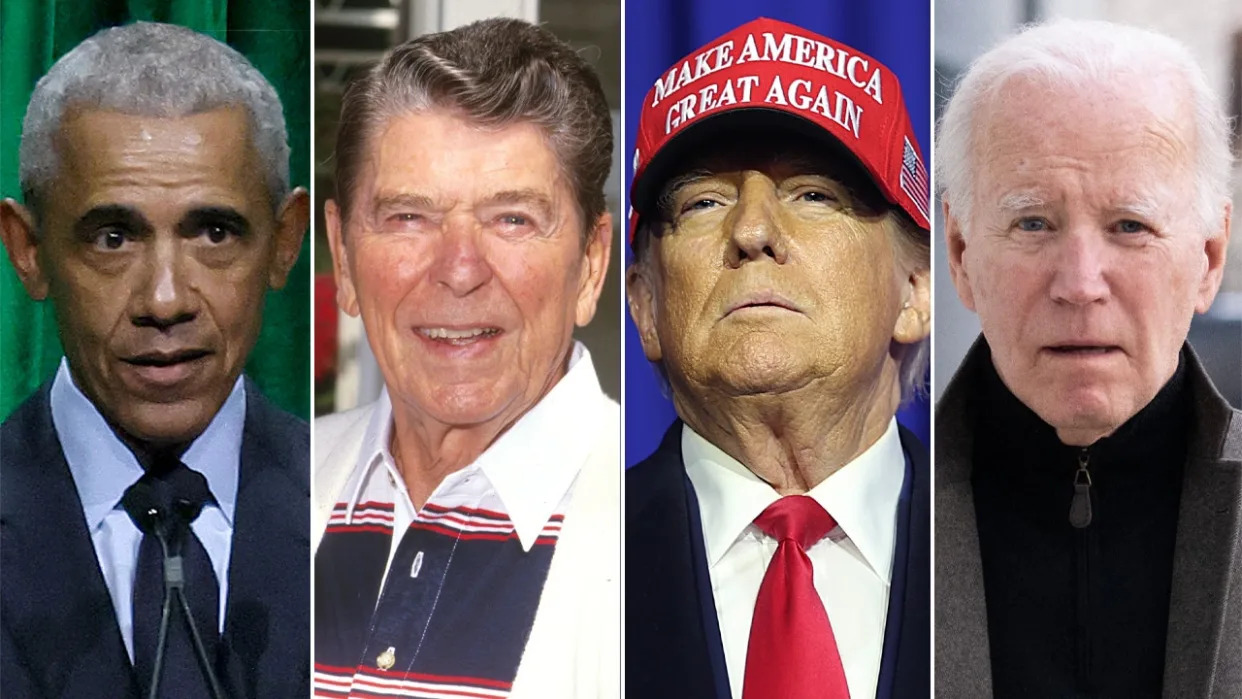
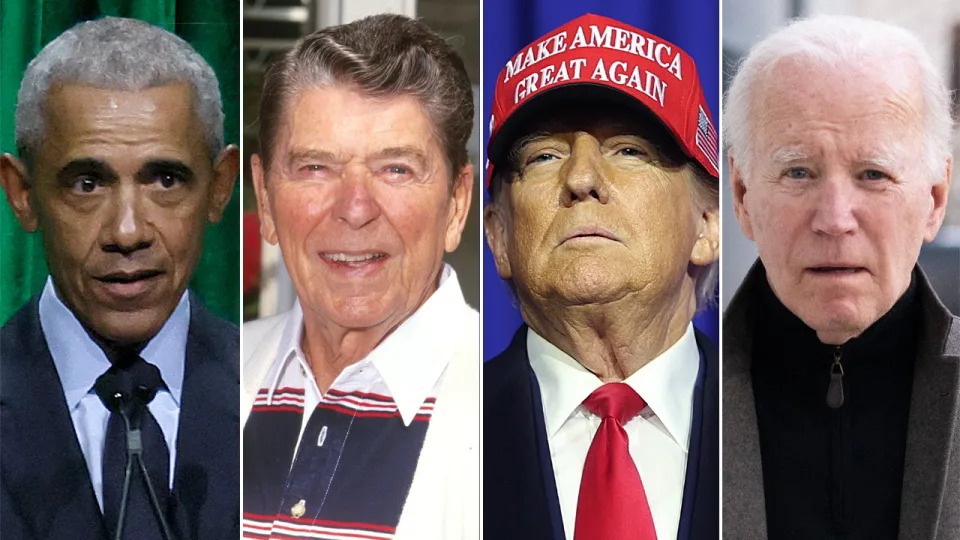
Former Presidents Barack Obama, Ronald Reagan and Donald Trump, and President Biden
The respondents were asked to rank presidents on a scale of 0-100, with 0 being a failure, 50 being average and 100 being great. Rounding out the top five in the rankings were Franklin Delano Roosevelt at number two, George Washington at three, Theodore Roosevelt at four, and Thomas Jefferson at five.
Trump was ranked in last place in the survey, being ranked worse than James Buchanan at 44, Andrew Johnson at 43, Franklin Peirce at 42, and William Henry Harrison at 41.
Respondents were also tracked by their political affiliation and ideology, which the release argues did not “tend to make a major difference overall” in the rankings, though there were some outliers, mainly with recent presidents.
Abraham Lincoln topped the list of presidents once again.
Ronald Reagan, George W. Bush and Trump were more likely to be ranked higher by conservatives or Republicans, with Reagan being ranked an average of 5th by Republicans respondents, Bush 19th and Trump 41st. Among Democrat respondents, Reagan was rated an average of 18th, Bush 33rd and Trump 45th.
A similar partisan divide was noticeable for Barack Obama and President Biden, who ranked an average of 6th and 13th, respectively, among Democrat respondents, and 15th and 30th by Republicans. Bill Clinton, a Democrat, was ranked higher by Republican respondents (10th) than he was by Democrats (12th).
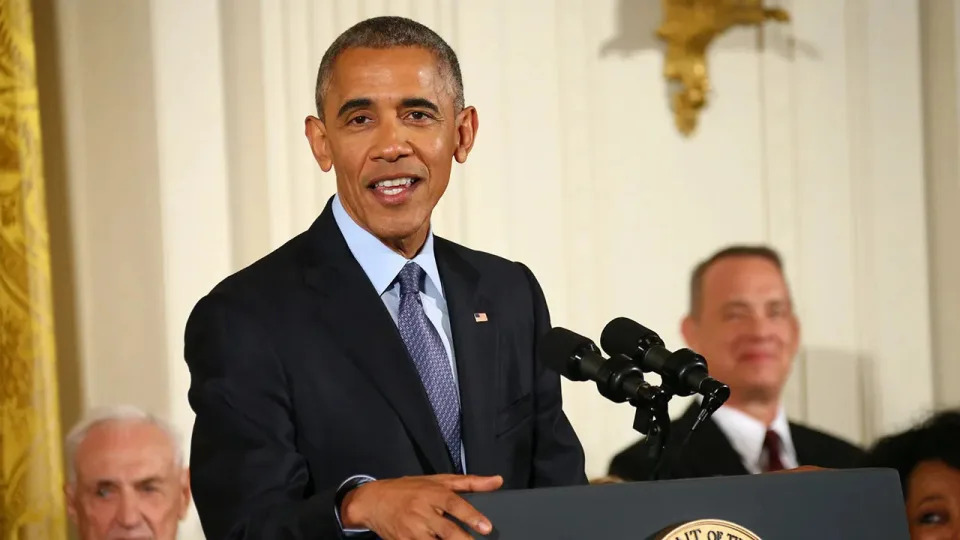
President Obama
The divide resulted in an overall ranking of 7th for Obama, 12th for Clinton, 14th for Biden, 16th for Reagan and 32nd for Bush.
Tucker Carlson’s Lesson in the Perils of Giving Airtime to an Autocrat
Jim Rutenberg and Michael M. Grynbaum – February 17, 2024
In this photo released by Sputnik news agency on Friday, Feb. 9, 2024, Russian President Vladimir Putin, right, gestures as he speaks during an interview with former Fox News host Tucker Carlson at the Kremlin in Moscow, Russia, Tuesday, Feb. 6, 2024. (Gavriil Grigorov, Sputnik, Kremlin Pool Photo via AP) (ASSOCIATED PRESS)
Tucker Carlson left Moscow more than a week ago, riding high from an interview with President Vladimir Putin of Russia that returned him to the spotlight after his abrupt cancellation by Fox News last spring.
But the interview with the wartime autocrat, mocked in various corners of the political media world for its soft touch, continues to have a long and tortured afterlife — becoming a trending topic all over again Friday after Putin’s most vocal domestic opponent, Alexei Navalny, turned up dead in a Russian prison.
“This is what Putin’s Russia is, @TuckerCarlson,” Liz Cheney, a former Republican congresswoman from Wyoming, wrote on X after the news of Navalny’s death broke Friday. “And you are Putin’s useful idiot.”
Naomi Biden, President Joe Biden’s granddaughter, also weighed in, pointing to a video that Carlson had recently posted in which he contrasted the supposed splendors of Russia under Putin’s leadership with the “filth and crime” of the United States. “Has anything aged so poorly, so quickly before?” Naomi Biden wrote on X, formerly known as Twitter.
In a statement to The New York Times on Friday, Carlson said: “It’s horrifying what happened to Navalny. The whole thing is barbaric and awful. No decent person would defend it.”
The comment represented a notable change in tone from earlier this week, when he appeared to offer a blase opinion regarding Russia’s treatment of Navalny, who was first imprisoned three years ago on charges of corruption and “extremism” that the United States called baseless.
Asked at a conference in Dubai, United Arab Emirates, on Monday why he had not questioned Putin about Russia’s free speech crackdown, Navalny’s jailing or suspected political assassinations, Carlson said those were “the things that every other American media outlet talks about.” (Carlson was, in fact, the first Western media figure to interview Putin in more than two years.)
But, Carlson said then, “leadership requires killing people — sorry, that’s why I wouldn’t want to be a leader” — comments that came under still more criticism after Navalny’s death.
Carlson said in a statement Friday that his remarks about leadership “had zero” to do with Navalny. “I wasn’t referring to him, which is obvious in context. I’m totally opposed to killing.”
Although Carlson did press Putin during the interview on Russia’s detention of Wall Street Journal correspondent Evan Gershkovich, he sat silent for long stretches as Putin conducted a history lecture that provided a one-sided and often false narrative about Ukraine.
Carlson’s fans and supporters on X portrayed criticism of his interview as sour grapes from mainstream journalists who did not get to interview Putin themselves.
But on Wednesday, a new pundit joined the chorus of those who said Carlson had gone too easily on Putin — Putin himself.
Speaking with a state television host, Putin said he was disappointed that Carlson had not asked “so-called sharp questions” because he wanted the opportunity to “respond sharply” in his own answers.
“He turned out to be patient and listened to my lengthy dialogues, especially those related to history, and didn’t give me reason to do what I was ready for,” Putin said. “So, frankly, I didn’t get complete satisfaction from this interview.”
Justin Wells, one of Carlson’s top producers, responded Friday that viewers should “judge for themselves.”
Putin’s mockery of Carlson came as the former Fox host was basking in the aftermath of his interview by offering a steady stream of praise for Russia and Putin, whose leadership he has extolled as superior to Biden’s.
On Wednesday, Carlson posted a short video recorded at a Russian grocery store, saying its selection and prices offered an example of Russia’s superiority over the United States, which he described as rife with “filth and crime and inflation.”
“Coming to a Russian grocery store, the heart of evil, and seeing what things cost and how people live, it will radicalize you against our leaders,” he said in the video. “That’s how I feel, anyway — radicalized.”
The video drew a bipartisan rebuke: from Naomi Biden and, before her, Sen. Thom Tillis, R-N.C.
As a polemicist who has long dabbled in pro-Russia narratives and now relies on subscriptions from those drawn to just such content, Carlson operates in a sphere where the criticism he has received this week could be a catalyst for still more support.
“He’s just measured by an entirely different yardstick,” said Nicole Hemmer, an associate professor of history at Vanderbilt University who studies conservative media. “Tucker under attack is great for Tucker.”
The last images of Alexei Navalny alive show him behind bars. He is a bit gaunt. His hair is shorter,missing its old sheen. Yet his eyes are the same as ever: They light up. In the video shot on Thursday, he jokes with a judge and a policeman. I’m running out of money, he says, a well-compensated judge should lend me some. His captors laugh. For a prisoner stuck in a camp above the Arctic Circle, he looks good — a strong man in whom you see the faintest of glimmers of optimism about his own and Russia’s future.
The other image that I dwelled on Friday shows Navalny and Boris Nemtsov. These two were the most prominent leaders of an inspired protest movement in the spring of 2012 that imagined a different kind of future for Russia. Borya is whispering impishly in Navalny’s ear, making him laugh. Both are handsome, tall, vigorous. The kind of men who turn heads.
Nemtsov was gunned down in February of 2015, at the foot of the Kremlin, a year into Vladimir Putin’s initial military assault on Ukraine. He was a youthful 55. Navalny died — no, let’s be honest here, was killed — on Friday, barely a week shy of the two-year anniversary of Putin’s large-scale invasion of Ukraine. He was 47.
They say authoritarians who survive have a talent for identifying and eliminating the greatest threats to themselves. To paraphrase Kremlin chump Tucker Carlson, Putin is a very talented man. He chose his prey well. In his time, Nemtsov was seen as a credible alternative — a reforming governor from Nizhny Novgorod who came to Moscow under the previous Russian leader, Boris Yeltsin. The taint of the chaos of the 1990s stuck to him; he was associated with the pain of the changes that had to be made and others that were avoided by Yeltsin, and that hindered him in the early 2000s. But Borya had different talents — a feel for people and retail politics and convictions — that Putin lacks.
By 2012, Navalny emerged as the most captivating face of the Russian opposition. He had dabbled in nationalist politics. Then he figured out he could use the Internet for well-documented crusades against corruption that made his name. He coined the phrase “crooks and thieves” to describe Putin and his coterie, and it stuck. It did feel like an opening, if ever so slight, existed in 2012. The regime was disliked, was wobbling. Nemtsov and Navalny had the middle classes of Moscow and St. Petersburg on their side. The political threat from them was direct. Especially for the last decade from Navalny. He knew how to use the media, he showed how to stand up to the regime with courage, and he was willing to make the sacrifices to one day try to lead Russia on another path.
Yet these men challenged Putin in other ways he must have keenly felt. There was the youthfulness and energy. Nemtsov was born seven years after Putin but acted and looked as if he came from another generation; Navalny was the next generation. They had a sense of humor and color to their faces. They were optimistic. They didn’t seem cynical. They had nice hair, too, atop imposing frames. Did that hurt the balding Putin’s ego — so sensitive that, as the joke that happened to be a fact went, he found the one man in Dmitry Medvedev who’s shorter than himself to stand in as president in 2008-12 when Putin was term-limited out of that office.
I note Nemtsov and Navalny’s evident masculinity since that trait is so important to Putin and his admirers abroad. No one besides his dog, the saying goes, knows what Putin really thinks. But you can imagine these men must have stirred more than Machiavellian insecurities in Putin. No pictures of the bare-chested Vlad on horseback comes close to the magnetism of the image I was looking at Friday.
Equally stark is the generational contrast. Putin and his people are old and look it. Dull and gray, they fit right in a group picture of the Soviet politburo circa 1982. You can note the same dynamic in play with Volodymyr Zelenskyy, the 46-year-old president of Ukraine. He and his people, almost all in their forties or younger, came of age after the USSR collapsed. They look ahead. The boomer Putin mourns its passing.
I last saw Nemtsov in June of 2013 in Washington. Sitting on a panel next to me, he kept whispering in my ear. A quick joke. Once a compliment. He was warm, playful. His people were and remain immensely loyal to him. Including the writer and activist Vladimir Kara-Murza, who has survived two poisoning attempts and currently sits in a Russian penal colony, another of Putin’s political prisoners.
I got to know Navalny better in March of 2012. Protesters were in the streets. The coming presidential election was a sham. He promised defiance. “The Kremlin should understand these tens of thousands of people will never leave the streets,” he told me. “We will never consider Putin as a president with legitimacy.” More than the words, Navalny left a physical impression on you. He had presence and a relaxed kind of intensity. Then 35, he usuallywore jeans and an open shirt.
On election night, I went to an event thrown by the opposition and remember standing with Navalny and Garry Kasparov, the chess grandmaster and opposition leader. Navalny’s confidence from a few days before had dimmed. He and Kasparov saw the staged election was a victory for Putin; the regime would counter-strike with force. They were right. Kasparov left Russia for good the next year. Navalny was charged with bogus embezzlement charges in July, the first of many that kept him in and out of prison over the next 12 years — except for the long spell in a hospital following a nearly fatal poisoning attempt courtesy of the Russian secret services.
In another country, Borya and Alyosha — the diminutives by which they were known to many — might have had their happy endings. They were the dashing princes, Putin the toad. But this story takes place in the land of the Tsars. Here the Tsar murders at will. His people are numbed to it — some bravely laid flowers Friday night at an impromptu memorial in Moscow, but we know too how this will end. Alyosha will be a memory, as is Borya. How will it end for Putin? The recent leader he resembles most, Stalin, died angry, ashen-faced and ailing, but in his own bed. It took over thirty years for any glimmers of optimism to emerge in Russia, in the 1980s with Gorbachev’s glasnost, openness, and the experiment with democracy in the 1990s, to be snuffed out with Putin’s ascendance in 2000. That’s not a happy thought. There aren’t any about Russia these days.
What Alexey Navalny wanted people to know “if they decide to kill me”
Tucker Reals – February 17, 2024
What Alexey Navalny wanted people to know “if they decide to kill me”
“You’re not allowed to give up.” That was the central message Russian opposition leader Alexey Navalny wanted to stress to his supporters in the event of his death. He said it in an Oscar-winning 2022 documentary about his life by Canadian director Daniel Roher, in which Navalny spoke about his political ideals and surviving a purported poisoning attack.
“If they decide to kill me, it means that we are incredibly strong,” said the anti-corruption campaigner who arguably turned into President Vladimir Putin‘s most potent political challenger. “We need to utilize this power to not give up, to remember we are a huge power that is being oppressed by these bad dudes.”
Russian prison authorities said Friday that Navalny had died after going for a walk, feeling suddenly unwell and then collapsing. The Office of the Federal Penitentiary Service of Russia for the Yamalo-Nenets Autonomous District said medics at the IK-3 penal colony in Russia’s far north were unable to revive him.
Navalny’s own team said they couldn’t verify the information about his death on Friday, but the following day they confirmed it, saying he was “murdered.” U.S. Vice President Kamala Harris unequivocally placed the blame on Putin’s government.
“This is of course terrible news, which we are working to confirm,” Harris said at the Munich Security Conference in Germany. “My prayers are with his family, including his wife Yulia, who is with us today, and, if confirmed, this would be a further sign of Putin’s brutality. Whatever story they tell, let us be clear: Russia is responsible.”
Yulia Navalnaya, Navalny’s wife, spoke on stage at the Munich conference after Harris.
“You’ve probably all already seen the terrible news coming today. I thought for a long time whether I should come out here or fly straight to my children. But then I thought, ‘What would Alexey do in my place?’ And I’m sure he would be here. He would be on this stage.”
She made it clear that she didn’t trust any information coming from Russian government officials.
“They always lie. But if this is true, I want Putin, everyone around him, Putin’s friends, his government, to know that they will bear responsibility for what they did to our country, to my family and to my husband, and this day will come very soon,” Navalnaya said. “I want to call on the entire world community, everyone in this room, people all over the world, to unite together and defeat this evil, to defeat the terrifying regime that is now in Russia.”
Yulia Navalnaya, wife of Russian opposition leader Alexey Navalny, attends the Munich Security Conference (MSC) in Germany hours after Russian prison authorities said her husband had died at a remote penal colony in northern Russia, Feb. 16, 2024. / Credit: KAI PFAFFENBACH/REUTERS
Russia has been condemned globally for its invasion of neighboring Ukraine, which sparked a grueling war set to enter its third year on Feb. 24. Navalny was a fierce critic of what he called the “stupid war” launched by “madman” Putin.
In a cruel twist, Putin and his political allies — who have run Russia for decades — have used the war as a pretext to enact harsh new laws in the name of national security, dramatically curbing free speech. Laws put on the books over the last several years have given the government power to lock up anyone who criticizes Russia’s military or its actions in Ukraine.
It’s all part of a wider crackdown on dissent that reached a crescendo after pro-Navalny protests swept across the nation following the opposition leader’s 2021 arrest, and then took on new dimensions amid the Ukraine war.
Hundreds of politicians, opposition activists, journalists and civil society figures — including some of Navalny’s own top aides — are in prison or have fled Russia into exile.
Street protests in Russia are illegal without prior permission, which officials don’t grant to anyone known to oppose the government.
The Ukraine and Gaza conflicts are dominating talks among leaders at the Munich Security Conference (Tobias SCHWARZ)
A lack of long-range missiles and artillery shells is limiting Ukraine’s fightback against Russia, President Volodymyr Zelensky told a defence conference on Saturday, making a fresh appeal for more weapons.
Later in the day, delegates at the conference also discussed the situation in Gaza, with some holding out slim hopes of a lasting solution to end the Israel-Hamas war.
Zelensky’s call at the gathering of 180 leaders and defence chiefs at the Munich Security Conference comes at a critical juncture, with Ukraine’s troops forced to withdraw from the frontline city of Avdiivka to avoid being encircled.
“Ukrainians have proven that we can force Russia to retreat,” he said, adding that “our actions are limited only by the sufficiency and length of the range of our strength… (the) Avdiivka situation proves this.
“Keeping Ukraine in artificial deficits of weapons, particularly in deficits of artillery and long-range capabilities, allows Putin to adapt to the current intensity of the war.”
With the war about to enter its third year, Ukraine is under mounting pressure over the ammunition shortfall.
The long-term future of Western aid is also in doubt, with a possible $60-billion package of military aid held up in Washington since last year because of wrangling in Congress.
Seeking to allay fears over US stamina in helping Ukraine, Vice President Kamala Harris said after talks with Zelensky that her country would not allow political brinksmanship to stand in the way of support to Kyiv.
“As it relates to our support for Ukraine, we must be unwavering and we cannot play political games,” she said.
Zelensky said he believed in the “wise decision” of the US Congress and expressed gratitude for Joe Biden’s “full support” following a telephone call with the US president.
In a White House statement, Biden blamed congressional inaction for Ukrainian soldiers having to ration ammunition and contend with dwindling supplies before their withdrawal from Avdiivka
– Israel-Hamas war in focus –
On top of the war in Ukraine, the conflict between Israel and Hamas has added to the concerns for the delegates gathered in Munich.
Speaking at the conference, Qatar’s Prime Minister Mohammed bin Abdulrahman Al-Thani provided a gloomy assessment of talks to seek a ceasefire in the more than four-month-old Gaza conflict.
“The pattern in the last few days is not really very promising,” said Al-Thani, whose country has played a key mediation role.
“Time is not in our favour”, he warned, with the Muslim holy month of Ramadan set to begin on March 10.
Failure to reach a deal could lead to a wider escalation in the region, he warned, as hundreds of thousands of Gazans faced a dire humanitarian situation.
Some 1.4 million are squeezed into the southern city of Rafah, close to the border with Egypt, as Israel prepares a new incursion in the area.
The Gaza war began with Hamas’s unprecedented October 7 attack which resulted in the deaths of about 1,160 people in Israel, mostly civilians, according to an AFP tally of Israeli official figures.
Militants also took about 250 people hostage, 130 of whom are still in Gaza, including 30 who are presumed dead, according to Israeli figures.
Israel’s retaliatory assault on Gaza has killed at least 28,858 people, mostly women and children, according to the territory’s Hamas-run health ministry.
The foreign ministers of Egypt and Saudi Arabia also underlined in Munich the catastrophic situation facing civilians in Gaza.
Diplomats seeking an end to the conflict said however that there may be a unique chance to end the cycle of violence in the next months.
– ‘Extraordinary opportunity’ –
Earlier in the day, US Secretary of State Antony Blinken said Israel had an “extraordinary opportunity” to normalise relations with almost every Arab nation, if the Gaza conflict came to an end.
Blinken, who has travelled several times to the Middle East since the war erupted, had been in talks with key figures in the region to seek a truce deal and “an enduring end” to the Israel-Hamas war.
There was however an “imperative to proceed to a Palestinian state — one that also ensures the security of Israel”, Blinken said in Munich.
Israeli President Isaac Herzog, who held talks with Blinken, urged Saudi Arabia to normalise ties with his country, saying that would be a win against Hamas.
Stopping efforts at normalisation that had been progressing before the war was among Hamas’s aims when it launched its October 7 attack, he said.
“That is why moving on with Saudi Arabia will clearly be a victory over what Hamas did,” he added.
EU promises 2 million artillery shells to Ukraine every year
Ukrainska Pravda – February 17, 2024
Soldiers. Photo: Ukraine’s Armed Forces
European Commissioner for Budget and Administration Johannes Hahn believes that the European Union will be able to produce up to two million artillery shells for Ukraine every year from 2025.
Details: Hahn said, “we would already be able to supply 500,200 artillery rounds” as early as March 2024, when the EU promised to deliver a million shells to Ukraine.
“By the end of the year, we will have such large production capacities that we will be able to produce two million artillery shells from next year,” he added.
Hahn admitted that the EU has failed to fulfil the promise of supplying a million shells to Ukraine due to problems connected with production.
“Ammunition has always been produced only according to demand. That is why we have cut back many production capacities in the past and now we have to build them up again,” he explained.
Background:
In early January, the European Commission expressed confidence that the EU would be able to produce one million rounds of ammunition for Ukraine by spring, despite the fact that the process has stalled.
But in fact, the European Union admitted that they would only be able to supply Ukraine with just over 500,000 artillery shells by March, rather than the promised million.
EU defence ministers had agreed at a meeting in Brussels that they would fulfil their promise to supply Ukraine with a million artillery rounds, albeit later than they had planned last year.
Ukraine’s Zelenskyy warns of an ‘artificial deficit’ of weapons after withdrawal from Avdiivka
Geir Moulson and Kerstin Sopke – February 17, 2024
Ukrainian President Volodymyr Zelenskyy delivers a speech at the Munich Security Conference at the Bayerischer Hof Hotel in Munich, Germany, Saturday, Feb. 17, 2024. The 60th Munich Security Conference (MSC) is taking place from Feb. 16 to Feb. 18, 2024. (AP Photo/Matthias Schrader)Ukrainian President Volodymyr Zelenskyy, left, and U.S. Vice President Kamala Harris pose at the end of a joint press conference at the Munich Security Conference (MSC) in Munich, Germany, Saturday Feb. 17, 2024. (Tobias Schwarz/Pool via AP)Ukrainian President Volodymyr Zelenskyy, left, and U.S. Vice President Kamala Harris, right, meet for talks at the Munich Security Conference (MSC) in Munich, Germany, Saturday Feb. 17, 2024. (Tobias Schwarz/Pool via AP)Ukrainian President Volodymyr Zelenskyy delivers a speech at the Munich Security Conference at the Bayerischer Hof Hotel in Munich, Germany, Saturday, Feb. 17, 2024. The 60th Munich Security Conference (MSC) is taking place from Feb. 16 to Feb. 18, 2024. (AP Photo/Matthias Schrader)Ukrainian President Volodymyr Zelenskyy, left, and U.S. Vice President Kamala Harris hold a joint press conference at the Munich Security Conference (MSC) in Munich, Germany, Saturday Feb. 17, 2024. (Tobias Schwarz/Pool via AP)
MUNICH (AP) — Ukrainian President Volodymyr Zelenskyy warned allies Saturday that an “artificial deficit” of arms for his country risks giving Russia breathing space, highlighting the need for artillery and long-range weapons after his military chief said he was withdrawing troops from the eastern city of Avdiivka.
Zelenskyy spoke to the Munich Security Conference, an annual gathering of security and foreign policy officials. Ukraine is back on the defensive against Russia in the nearly 2-year-old war, hindered by low ammunition supplies and a shortage of personnel.
“Ukrainians have proven that we can force Russia to retreat,” he said. “We can get our land back, and (Russian President Vladimir) Putin can lose, and this has already happened more than once on the battlefield.”
“Our actions are limited only by … our strength,” he added, pointing to the situation in Avdiivka. Ukrainian commander Col. Gen. Oleksandr Syrskyi said early Saturday that he was withdrawing troops from the city, where outnumbered Ukrainian defenders battled a Russian assault for four months, to avoid encirclement and save soldiers’ lives.
Russia said later its forces took complete control Saturday of the city in eastern Ukraine.
“Dear friends, unfortunately keeping Ukraine in the artificial deficit of weapons, particularly in deficit of artillery and long-range capabilities, allows Putin to adapt to the current intensity of the war,” Zelenskyy said. “The self-weakening of democracy over time undermines our joint results.”
The president said that the troop withdrawal was “a correct decision” and emphasized the priority of saving soldiers. He suggested that Russia has achieved little, adding that it has been attacking Avdiivka “with all the power that they had” since October and lost thousands of soldiers — “that’s what Russia has achieved. It’s a depletion of their army.”
“We’re just waiting for weapons that we’re short of,” he added, pointing to a lack of long-range weapons. “That’s why our weapon today is our soldiers, our people.”
Speaking alongside European and other officials later Saturday, Ukrainian Foreign Minister Dmytro Kuleba said that “all of us need much, much more artillery ammunition” and stressed that production must be ramped up. He said that “drones became a real part of the game; they will solve some problems, but they will not replace artillery ammunition.”
Zelenskyy on Friday went to Berlin and Paris, where he signed long-term bilateral security agreements with Germany and France, following a similar agreement with Britain last month.
Ukraine’s European allies are appealing to the U.S. Congress to approve a package that includes aid for Ukraine — $60 billion that would go largely to U.S. defense entities to manufacture missiles, munitions and other military hardware for the battlefields in Ukraine. The package faces resistance from House Republicans.
Asked whether it would be a good idea to invite former U.S. president and 2024 presidential hopeful Donald Trump to Kyiv, Zelenskyy replied: “I invited him publicly, but it depends on his wishes.”
“If … he will come, I’m ready even to go with him to the front line,” he added.
U.S. Vice President Kamala Harris said after meeting Zelenskyy later Saturday in Munich that “it is in the strategic interest of the United States to continue our support.”
“History shows us: If we allow an aggressor like Putin to take land with impunity, they keep going. The other would-be aggressors then become emboldened,” Harris said. She added that “we must be unwavering and we cannot play political games.”
Standing next to Harris, Zelenskyy told reporters that the aid package stuck in Congress “is vital.” It would provide a step forward for Ukraine, and “moving forward is much, much better than stagnation on the battlefield,” he said, stressing that Kyiv is counting on the U.S. to remain a “strategic partner.”
Also at the conference, NATO Secretary-General Jens Stoltenberg said Congress’ delay has meant the flow of U.S. weapons and ammunition dropped, with a direct impact on the front line.
“Every week we wait means that there will be more people killed on the front line in Ukraine,” he said.
Estonian Prime Minister Kaja Kallas, whose country directly borders Russia, pointed to the history of the 1930s.
“If America isolates itself, it eventually is going to cost you more,” she said, warning that if “aggression pays off somewhere, it serves as an invitation to use it elsewhere, jeopardizing global security.”
German Chancellor Olaf Scholz, whose country is Ukraine’s second-biggest military supplier after the U.S., renewed his call for other European countries to step up with more deliveries, and pointed to America’s military aid since the war began.
“A comparable effort must be the least that every European country also does,” he said.
Taliban decrees on clothing and male guardians leave Afghan women scared to go out alone, says UN
Associated Press – February 17, 2024
FILE – Afghan women wait to receive food rations distributed by a humanitarian aid group, in Kabul, Afghanistan, on May 23, 2023. Afghan women feel scared or unsafe leaving their home alone because of Taliban decrees and enforcement campaigns on clothing and male guardians, according to a report from the U.N. mission in Afghanistan. (AP Photo/Ebrahim Noroozi, File) (ASSOCIATED PRESS)More
ISLAMABAD (AP) — Afghan women feel scared or unsafe leaving their homes alone because of Taliban decrees and enforcement campaigns on clothing and male guardians, according to a report from the U.N. mission in Afghanistan.
The report, issued Friday, comes days before a U.N-convened meeting in the Qatari capital is set to start, with member states and special envoys to Afghanistan due to discuss engagement with the Taliban and the country’s crises, including the human rights situation.
The Taliban — which took over Afghanistan in 2021 during the final weeks of U.S. and NATO withdrawal from the country — have barred women from most areas of public life and stopped girls from going to school beyond the sixth grade as part of harsh measures they imposed despite initial promises of a more moderate rule.
They are also restricting women’s access to work, travel and health care if they are unmarried or don’t have a male guardian, and arresting those who don’t comply with the Taliban’s interpretation of hijab, or Islamic headscarf.
The U.N. mission’s report, published Friday, said the decrees are being enforced through arrest, harassment and intimidation. Women said they increasingly fear going to public spaces owing to the threat of arrest and the “long-lasting stigma and shame” associated with being taken into police custody.
Over half of the women interviewed for the report felt unsafe leaving the house without a male guardian, or mahram. Risks to their security and their anxiety levels worsened whenever a new decree was announced specifically targeting them, the report said.
Women who went out with a mahram felt safer but noted the stress from depending on another person to accompany them. Some said their male guardians chided them for “wasting time” if they wanted to visit certain shops or stray from a route limited to performing basic necessary tasks.
This undercut chances to “enjoy even micro-moments of stimulation or leisure” outside the home, said the report.
Some women said that male relatives were also afraid and reluctant to leave the home with female relatives, as this would expose them to Taliban harassment.
A spokesman from the Vice and Virtue Ministry, the Taliban’s morality police that enforces such decrees, said it was “nonsense and untrue” that women are scared to go to the shops.
“There is no problem for those sisters (women) who have observed hijab,” said Abdul Ghafar Farooq. “As women are naturally weaker than men, then Shariah (Islamic law) has called mahrams essential when traveling with them for the sake of their dignity and respect.”
He said harassing women was against the law.
Heather Barr, from Human Rights Watch, told the Associated Press that Afghan women’s fear of leaving home unaccompanied was “damning and devastating” but not surprising.
It seemed to be a specific goal of the Taliban to frighten women and girls out of leaving their homes, Barr said.
“This begs the question of what on earth this discussion is in Doha, with the U.N. hosting special envoys,” she said. “We need to be asking why the focus of this meeting and every meeting isn’t about this crisis that is unprecedented for women around the world.”
The Taliban are not attending the Doha meeting, their chief spokesman Zabihullah Mujahid said in a voice note to the AP on Saturday night.
A Foreign Ministry statement said participation would only be beneficial if the Islamic Emirate of Afghanistan, as the Taliban call their administration, are the sole and official representative for the country at the talks.
The U.N. envoy for Afghanistan last year warned the Taliban that international recognition as the country’s legitimate government will remain “nearly impossible” unless they lift the restrictions on women.