
Trump Wishes He Could Destroy Obama’s Legacy. He Hasn’t. And Won’t.

New York Magazine

The Daily Intellegencer

Trump Wishes He Could Destroy Obama’s Legacy. He Hasn’t. And Won’t.

By Jonathan Chait           May 21, 2018
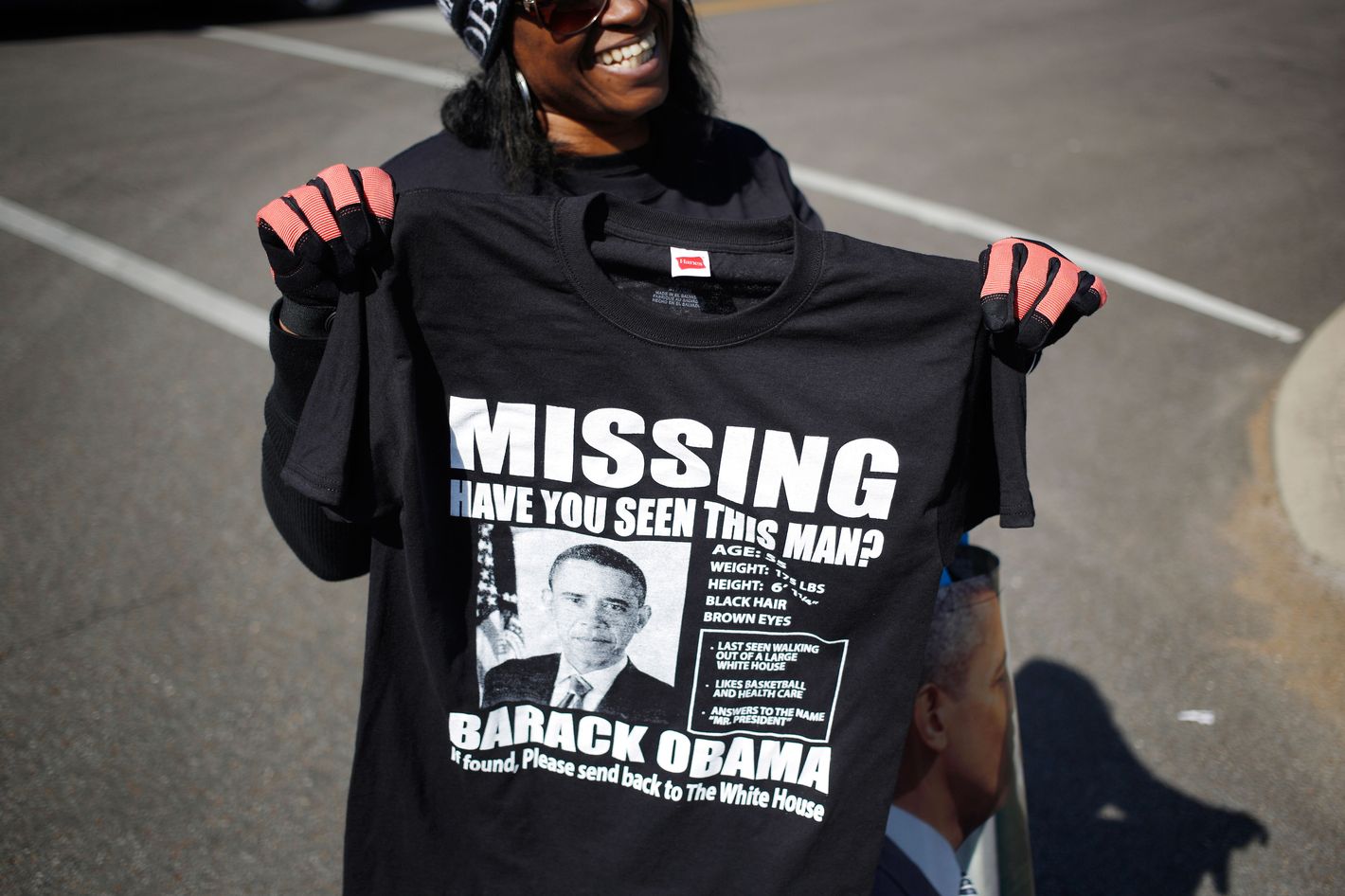
There has never been an American president so consumed with envy at his predecessor as Donald Trump. Consequently, there has never been a president whose legacy has been scrutinized in quite the same way as Barack Obama. That Trump would erase Obama’s achievements has served as a fantasy for Obama’s enemies on the right and the left (the latter, imagining that his shallow compromises could give way to True Socialism) and as a source of anxiety for his supporters. It has been asserted repeatedly as fact, most recently by my colleague Andrew Sullivan, who laments, “Obama’s Legacy Has Already Been Destroyed.”)

Obviously Trump has undone some of Obama’s work. But I think this conclusion makes three mistakes about Obama’s legacy: It understates its breadth, its depth, and conceptualizes the whole idea of a legacy in the wrong way.

Begin with breadth. The reason I wrote a book is that very few people, even people who follow politics closely or professionally, have been able to hold in their heads just how much Obama accomplished. Andrew is not alone in missing large swaths in his accounting. One of the most important elements of Obama’s legacy — indeed, at the time it was frequently said it would be the entire Obama legacy — was his response to the greatest financial crisis in 75 years. The stimulus, the stress tests that re-solidified the banking sector, and the auto bailout all collectively saved the economy from a second Great Depression. And all these measures passed in the face of total and frequently hysterical opposition from the entire Republican Party, along with many Democrats.

During the Obama administration, the recovery was widely slagged. It’s become clear that impression was in large part due to political messaging. Liberals complained about the recovery in order to make the case for even more robust stimulus than the historically large measures Obama enacted; conservatives dismissed the recovery for obvious partisan reasons. But the economy has not grown any faster under Trump. Trump’s greatest success has been to claim credit for the same growth rate and to rebrand it as “prosperity.” In so doing, he has, paradoxically, demonstrated his predecessor’s unappreciated policy success.

Andrew neglects to credit that achievement, which obviously cannot be rolled back. He likewise overlooks the education reforms spurred by Race to the Top, and the financial regulations created by Dodd-Frank. (Republicans have always pledged to repeal Dodd-Frank, but the most they could manage was a minor bill nicking slightly around its edges.) The opening to Cuba is another foreign policy achievement Trump has not touched.

Second, there is the question of depth. Andrew is correct that Trump is rolling back Obama’s achievements on climate and health care, but he overestimates the extent of this response. The $80-billion green energy investments in the stimulus stood up a massive expansion in green tech, from wind to solar to electric cars and more energy-efficient appliances. The plummeting cost of green energy gave world leaders the economic space to craft the first international climate accord.

Trump can’t unspend the green energy subsidies. He’s trying to undo Obama’s regulations, but courts are checking him, and market forces have stymied Trump’s desire to revive dirty energy, which continues to decline. The emissions targets reached in the first Paris accord were not ambitious enough, and were meant to set the table for continuous ratchets. Trump has thrown sand in the gears by pulling out of the accord. But while he has impeded progress, he has not stopped it, let alone restored the status quo ante. Political support for the Paris goals remains firm globally, and the economic basis for the developing world to follow a green energy path — rather than the dirty energy model the West followed — continues to brighten. Trump has been a speed bump on a path he cannot fundamentally alter.

The same basic story holds true on health care. The Affordable Care Act contained two basic changes: cost reforms, to reduce the trajectory of health care inflation, and coverage expansion. Trump’s first Health and Human Services Director, Tom Price, was a wealthy doctor and a fanatic for undoing Obama’s cost reforms. Price had to resign for his unrestrained greed, and his successor, Alex Acosta, has left those reforms in place.

The coverage expansion has proven more contentious. About half the coverage expansion occurred through Medicaid, which Trump tried, and failed, to roll back. (Andrew neglects to mention this, too.) The other half, the new individual exchanges, is more tenuous. Trump has sabotaged several aspects of the law, creating premium spikes that will harm many state exchanges and make insurance unaffordable for many customers who now have it. On the other hand, it seems unlikely that Trump will make the exchanges “unstable and unaffordable” for all. Many customers have their premiums subsidized 100 percent, which insulates them from price increases — the government is on the hook — and provides a customer base that ensures the exchanges won’t go into a full actuarial death spiral, in which only the sickest people apply. Again, Trump’s intervention is highly damaging, but not the death blow he has proclaimed (and that Andrew credits him for carrying out).

Nor is this the end of the story. Had the ACA never been passed, Trump could have kept the pre-ACA status quo at no political cost. Instead his party has absorbed massive political damage merely to achieve a partial rollback, with more damage to follow when the premium increases they engineered set in. Obama overcame the Herculean obstacle of finding 60 Senate votes to regulate health insurance. No Democrat will have to do that again. The next coverage expansion, shoring up and extending Obamacare, will start at a higher base and aim for a higher level, with less to stop it.

Finally, I take issue with the historical myopia with which Andrew approaches the whole question. In this, he is again hardly alone. Presidents are normally measured by what they accomplished, rather than how their successors managed their legacy. That the South created a feudal system of quasi-slavery after Reconstruction is not usually counted against Abraham Lincoln’s achievements in abolishing slavery. Modern Republican presidents have neutered enforcement of labor law, but you don’t usually encounter that fact when you read about how Franklin Roosevelt established the National Labor Relations Board.

It may be fair to consider the durability of legacy achievements. But in this bitter partisan age, they will inevitably swing back and forth. A still photo of the Obama legacy under Trump, as if the political clock has stopped forever, is the opposite of a long-term approach. Will Trump’s vision of health care have prevailed over Obama’s, 50 years from now? His ideas about democracy and tolerance? Will textbooks afford Trump more reverence than Obama? That story remains to be written by us all. But I suspect it will not be the one the angry, jealous old man in the Oval Office hopes for.

What All Parents Need to Know About Pesticides in Produce

EcoWatch

What All Parents Need to Know About Pesticides in Produce

Environmental Working Group

By Robert Coleman      May 20, 2018

Every spring the Environmental Working Group (EWG) releases our Shopper’s Guide to Pesticides in Produce™. The guide can be used by anyone trying to avoid pesticides, but it’s especially important for parents to limit their children’s exposures to these toxic chemicals.

The idea is simple: Parents can buy organic versions of the items on the Dirty Dozen™ list of produce with the most pesticide residues to limit the amount of pesticides their kids ingest. On the flip side, families can save money by buying conventional versions of the items on the Clean Fifteen™ list of produce with the least pesticide residues.

Pesticides on Produce: The Dirty Dozen and Clean Fifteen

What should you be buying organic? Read more: ecowatch.com/ewg-2018-shoppers-guidevia Environmental Working Group

Posted by EcoWatch on Friday, May 18, 2018

This year marks the 25th anniversary of a landmark study by the National Academy of Sciences that warned children’s exposure to toxic pesticides through food could harm their health. The study is just as important today. Although many toxic pesticides have been removed from the marketplace, we now also know much more about how pesticide intake negatively affects kids’ developing bodies.

The American Academy of Pediatrics, which represents tens of thousands of children’s doctors, recommends the Shopper’s Guide to pediatricians when consulting with parents about reducing pesticide exposures in their children’s diets. Here’s some key information that every parent or expecting parent should know:

Children eat many more fruits and vegetables relative to their body weights than adults do, which can increase their pesticide exposures. This is especially true if they’re eating conventionally grown produce that lands on our Dirty Dozen list.

Several long-term studies of U.S. children, in both farming and urban communities, found exposure to organophosphate pesticides caused subtle but lasting damages to their brains and nervous systems. But last year, the Environmental Protection Agency cancelled a scheduled ban of a dangerous organophosphate called chlorpyrifos.

Non-organic strawberries have topped the Dirty Dozen list for the third year running. This year, EWG found conventionally grown strawberries contained an average of 7.8 different pesticides per sample, almost four times the average of all other produce. According to the University of Illinois Extension, over 53 percent of 7- to 9-year-olds picked strawberries as their favorite fruit. And 94 percent of U.S. households consume strawberries.

Seventy-six percent of conventionally grown spinach samples in this year’s guide contained permethrin, a pyrethroid insecticide.

Conventional apples and pears remained on the Dirty Dozen this year. Some samples of these fruits contained pesticides that have been banned in Europe.

A 2015 peer-reviewed study found that pesticide levels in children dropped dramatically within days of adopting an organic diet.

Click here to get a PDF copy of the guide.

EWG is committed to providing parents with vital information on children’s exposures to environmental contaminants. Stay tuned in to EWG’s work, in particular their Children’s Health Initiative, for the latest breaking news and analysis.

RELATED ARTICLES AROUND THE WEB

Children | Pesticide Action Network

Protecting Children from Pesticides: Information for Parents

Climate Change Could Undo Global Children’s Health Gains, Study

Every Parent Concerned About Their Kids’ Health Should Read This

trump said opioid pushers should get the death penalty

The Other 98%

May 17, 2018

Meet America’s biggest opioid pushers.

Meet America's Biggest Drug Dealers

Meet America's biggest opioid pushers.

Posted by The Other 98% on Thursday, May 17, 2018

Elizabeth Warren is the first U.S. senator to pledge never to take money from the NRA

NowThis Politics

May 18, 2018

‘It’s time we strip the NRA of its stranglehold over our children’s lives.’ — Elizabeth Warren is the first U.S. senator to pledge never to take money from the NRA

Elizabeth Warren Pledges Never To Take Money From The NRA

'It's time we strip the NRA of its stranglehold over our children's lives.' — Elizabeth Warren is the first U.S. senator to pledge never to take money from the NRA

Posted by NowThis Politics on Friday, May 18, 2018

Maybe the reason Trump keeps saying he wants to be president for life is because he wants to be president for life.

Bill Maher 

May 19, 2018

Maybe the reason Trump keeps saying he wants to be president for life is because he wants to be president for life.

President for Life

Maybe the reason Trump keeps saying he wants to be president for life is because he wants to be president for life.

Posted by Bill Maher on Friday, May 18, 2018

Jim Carrey’s Political Paintings

Occupy Democrats

Jim Carrey just stunned the world with a series of paintings slamming Trump and his spineless cronies… who knew Carrey was so multi-talented??

Video by Occupy Democrats; like our page for more!

Jim Carrey Changes Course and DESTROYS Trump with Art

Jim Carrey just stunned the world with a series of paintings slamming Trump and his spineless cronies… who knew Carrey was so multi-talented??Video by Occupy Democrats; like our page for more!

Posted by Occupy Democrats on Monday, March 19, 2018

Trump will never lower drug prices because he’s in Big Pharma’s pocket.

Social Security Works

May 19, 2018

Stay updated, LIKE @Social Security Works

Trump will never lower drug prices because he’s in Big Pharma’s pocket.

Big Pharma Owns Donald Trump

Stay updated, LIKE @Social Security WorksTrump will never lower drug prices because he's in Big Pharma's pocket.

Posted by Social Security Works on Friday, May 18, 2018

trump’s assaults on the rule of law

NowThis Politics

April 2018

When the President of the United States calls due process ‘an attack on our country,’ you should be outraged

Mad About Trump's FBI and Mueller Rhetoric? Not Nearly Mad Enough

When the President of the United States calls due process 'an attack on our country,' you should be outraged

Posted by NowThis Politics on Tuesday, April 10, 2018

The Definitive Guide to Trump’s Scandals

The Trumpster Fire by HuffPost posted a new episode on  Facebook Watch.

April 2018

We compiled every. single. scandal. from Trump’s presidency so far. No one ever knew there could be this much scandal!

The Definitive Guide to Trump's Scandals: 2017-18

We compiled every. single. scandal. from Trump’s presidency so far. No one ever knew there could be this much scandal!

Posted by The Trumpster Fire by HuffPost on Wednesday, April 4, 2018

Critics accuse Pruitt of doing ‘bidding of powerful lobbyists’ with EPA chemical safety rollback

ThinkProgress

Critics accuse Pruitt of doing ‘bidding of powerful lobbyists’ with EPA chemical safety rollback

Obama’s EPA issued this Chemical Disaster Rule in response to the fertilizer explosion in Texas.

Mark Hand         May 18, 2018

Search and rescue workers comb through what remains of a 50-unit apartment building the day after an explosion at the West Fertilizer C. destroyed the building April 18, 2013 in West, Texas. Credit:Chip Somodevilla/Getty Images

The Environmental Protection Agency (EPA) wants to roll back an Obama-era rule meant to reduce the risks of chemical disasters at more than 10,000 facilities across the nation. The Chemical Disaster Rule, issued a week before President Trump took office, was the EPA’s central response to the 2013 fertilizer plant explosion in West, Texas, which killed 15 people.

The Obama-era rule amended the EPA’s outdated risk management program in response to data showing thousands of fires, explosions, and other chemical releases that the existing framework had failed to prevent. But on Thursday, EPA Administrator Scott Pruitt introduced a proposal to rescind the measures, saying it would save the industry tens of millions of dollars a year.

“The rule proposes to reduce unnecessary regulatory burdens, address the concerns of stakeholders and emergency responders on the ground, and save Americans roughly $88 million a year,” Pruitt said in a statement.

In the Thursday news release announcing the planned rollback of the safety regulations, the EPA included statements from chemical industry officials thanking Pruitt for saving them from the cost of updating their operations.

The EPA’s Chemical Disaster Rule, as proposed by the Obama administration “would have imposed significant new costs on industry without identifying or quantifying the safety benefits to be achieved through new requirements,” National Association of Chemical Distributors President Eric Byer said in a statement.

On May 17, 2018, EPA administrator Scott Pruitt signed the risk management program reconsideration proposed rule at EPA headquarters in Washington, D.C. Trade unions and public safety advocates condemned Pruitt’s efforts to weaken chemical plant safety rules. Credit/EPA

There are about 150 major industrial chemical accidents each year in the United States, according to the BlueGreen Alliance, a group composed of labor unions and environmental organizations. At least one-in-three schoolchildren attend a school in the vulnerability zone of a hazardous facility.

On August 1, 2013, President Obama issued executive order, Improving Chemical Facility Safety and Security, following several catastrophic chemical facility incidents, including the disaster in West, Texas. The focus of the executive order was to reduce risks associated with hazardous chemicals to owners and operators, workers, and communities by enhancing the safety and security of chemical facilities.

The Obama rule included requiring more analysis of safety technology, third-party audits, incident investigation analyses, and stricter emergency preparedness requirements for facilities such as petroleum refineries, large chemical manufacturers, wastewater treatment systems, chemical and petroleum terminals, and agricultural chemical distributors.

But the EPA received a petition from a coalition of chemical and energy industry groups, including the American Chemistry Council and American Petroleum Institute, to delay and reconsider the Obama-era amendments. Last year, Pruitt issued a delay of the rule in response to the industry requests.

Pruitt’s proposed rule change would “reduce unnecessary regulatory burdens while maintaining consistency” with the Occupational Safety and Health Administration’s safety standards, the EPA said.

The decision to rollback the safety standards was condemned by trade unions and public safety advocates. The United Steelworkers accused the administrator of doing “the bidding of powerful industry lobbyists by rescinding important requirements to prevent and respond to catastrophic chemical incidents at industrial facilities.”

Trump puts public, workers at risk as he tries again to eliminate nation’s chemical safety agency

The EPA risk management program “is a crucial tool that the Obama administration rightly decided to modernize” after numerous incidents, the union said Thursday in a statement. The United Steelworkers pointed to the deadly explosion in West, Texas, and earlier incidents at United Steelworkers-represented facilities in Anacortes, Washington and Richmond, California.

The proposed rule will be available for public comment for 60 days after it is published in the Federal Register. A public hearing on the rule is scheduled for June 14 at EPA headquarters in Washington.

“Trump’s EPA revealed a shocking, but unfortunately not surprising, plan to delete ‘all accident prevention program provisions’ of the Chemical Disaster Rule that President Obama’s EPA issued based on robust evidence of harm to workers, first-responders, and fence-line communities,” Emma Cheuse, an attorney with Earthjustice, said Thursday in a statement.

The people living and working near oil refineries and chemical manufacturers, who face repeated toxic releases and fires like the dozens of serious incidents documented in recent months, are disproportionately people of color and low-income people, Cheuse said.

Scott Pruitt embraces industry-backed chemical approval process under the guise of public safety 

Pruitt’s EPA wants to rescind amendments related to safer technology and alternatives analyses, third-party audits, incident investigations, and information availability. The agency is also proposing to modify amendments relating to local emergency coordination and emergency exercises, and to change the compliance dates for these provisions.

In response to Pruitt’s plans to weaken the rule, Environmental Working Group (EWG) President Ken Cook said EPA administrators are supposed to push for safeguards to protect workers and residents from deadly catastrophes. The EWG is a nonprofit group that works to protect human health and the environment.

“But this is Scott Pruitt,” Cook said Thursday in a statement. “There apparently is no favor he won’t do for the chemical industry. Repealing safety measures at industry’s behest is just all in a day’s work.”