Russia vs Ukraine: the biggest war of the fake news era

Reuters

Russia vs Ukraine: the biggest war of the fake news era

Max Hunder – July 31, 2024

KHARKIV, Ukraine (Reuters) – In early April, some residents of Kharkiv received a series of chilling text messages from government officials telling them to flee the city before Russian forces surrounded it.

“Due to the threat of enemy encirclement, we urge the civilian population of Kharkiv leave the city by April 22,” said one alert, which bore the logo of the State Emergencies Service of Ukraine and mapped out safe escape routes on a slick infographic.

It was fake. Volodymyr Tymoshko knew immediately. He’s the police chief of Kharkiv region and would have been one of the first to find out about any official evacuation plans.

“Residents started getting these notifications en masse,” the 50-year-old told Reuters as he shared a screenshot of the alert, sent as Russian troops were massing at the border 30 km away.

“This is a psychological operation, it triggers panic. What would an average citizen think when they receive such a message?”

Disinformation and propaganda, long mainstays of war, have been digitally supercharged in the battle for Ukraine, the biggest conflict the world has seen since the advent of smartphones and social media.

Tymoshko said he received about 10 similar messages via SMS and Telegram messenger in April and early May, the weeks leading up to Russia’s offensive in northeastern Ukraine that began on May 10 and opened up a new front in the war.

A Ukrainian security official, who requested anonymity to discuss sensitive matters, said the Russians frequently sent large numbers of text messages from devices attached to an Orlan-10 long-range reconnaissance drone which can penetrate dozens of kilometres into Ukrainian airspace.

The devices, known as Leer-3 systems, imitate cellular base stations that phones automatically connect to in search of coverage, he added.

The phone barrage was accompanied by a social media blitz as Russian troops advanced on Kharkiv, according Andriy Kovalenko, head of Ukraine’s Centre for Countering Disinformation (CCD), a branch of the national security council.

The average number of social media posts classed as disinformation about the war by Ukrainian authorities spiked to over 2,500 a day when the Kharkiv offensive began in May, up from 200 a day in March, data compiled by the CCD shows.

The CCD chief told Reuters that Ukrainian intelligence had assessed that disinformation campaigns were primarily carried out by Russia’s FSB security service and military intelligence agency, commonly known as the GRU.

Russia’s foreign ministry and the FSB didn’t respond to a request for comment on the Ukrainian assertions, while Reuters was unable to contact the GRU.

Moscow has accused Ukraine and the West of unleashing a sophisticated information war against Russia, using the West’s major media, public relations and technology assets to sow false and biased narratives about Russia and the war.

The Ukrainian security official acknowledged his country used online campaigns in an attempt to boost anti-war sentiment among Russia’s population, although he characterised this effort as “strategic communications” to spread accurate information about the conflict.

BOTS AND MICROTARGETING

Reuters interviewed nine people with knowledge of the information and disinformation war being waged in parallel with battlefield operations, including Ukrainian officials, disinformation trackers and security analysts.

The Ukrainian security official who requested anonymity said that since the full-scale invasion of 2022, intelligence agencies had shut down 86 Russian bot farms located in Ukraine which controlled a collective 3 million social media accounts with an estimated audience reach of 12 million people.

Such facilities are rooms filled with banks of specialised computing equipment that can register hundreds of fake accounts daily on social media networks to pump out false information, the official added, citing one farm that was found by security services in the city of Vinnytsia in central Ukraine last year.

Kovalenko said that at present, the most significant sources of online Russian disinformation were TikTok in Ukraine and Telegram in Europe. Both are widely used in Ukraine.

He said that earlier this year, TikTok had shut down about 30 of the 90 accounts that Ukraine had flagged as Russia-affiliated disinformation spreaders, adding that new accounts often popped up to replace those taken down.

TikTok told Reuters its guidelines prohibited false or misleading content, adding that it had closed down 13 covert influence networks operating from Russia in recent years.

“We prohibit and constantly work to disrupt attempts to engage in covert influence operations by manipulating our platform and/or harmfully misleading our community,” a spokesperson said.

Disinformation networks are groups of accounts controlled by the same entity, and often used to push a coordinated narrative.

Telegram said it was developing a tool to add verified information to posts.

“It is Telegram’s belief that the best way to combat misinformation is not with censorship but with easy access to verified information,” a spokesperson added.

Kharkiv Mayor Ihor Terekhov told Reuters that the Russians were trying to sow panic and distrust, citing an example of social media posts claiming the main road to Kyiv was being resurfaced so that the mayor could flee faster when the Russians came – something he dismissed as a lie.

“They are trying to frighten the population so that people feel uncomfortable and leave the city,” he said in an interview in Kharkiv in late May.

By that time, the frontlines of the conflict in the northeast had stabilised about 20 km from the edge of the city after the Russian offensive had initially gained territory to the north before being blunted by Ukrainian reinforcements.

Maria Avdeeva, a Kharkiv-based security analyst who focuses on Russian disinformation, showed Reuters an infographic map, bearing Ukraine’s state emblem of a trident, posted on Facebook in early April – around the same time as police chief Tymoshko was sent a different evacuation map in a direct Telegram message.

Unperturbed by a loud explosion from a glide bomb a few kilometres away, she explained how the map and accompanying text included fake road closures and claims that missile strikes were expected in specified areas around the city soon.

Microtargeting – which analyses people’s online data to target particular individuals and audiences with specific messages, much like targeted advertising – is complicating the CCD’s task of tracking influence campaigns and countering false narratives, Kovalenko said.

“This activity is notably very tactical,” said John Hultquist, chief analyst at U.S. cybersecurity firm Mandiant, referring to Russian disinformation campaigns in Ukraine.

“We’ve seen targeting all the way down to the Ukrainian soldiers in the trenches.”

AIRSTRIKE TAKES OUT TV TOWER

Ukrainians are particularly vulnerable to digital disinformation; more than three-quarters of the population get their news from social media, far more than any other source of information, according to a study commissioned by USAid in 2023.

That is considerably higher than in any of the 24 European countries surveyed by a 2024 Reuters Institute for the Study of Journalism report, which averaged a rate of 44%.

In late April, as Moscow’s forces massed on the border near Kharkiv, a Russian airstrike took out Kharkiv’s main television tower, hindering the city’s access to information.

Dramatic footage obtained by Reuters showed the main mast of the television tower breaking off and falling to the ground.

While the Kharkiv offensive led to a significant spike in disinformation activity, there have been similar Russian campaigns over the course of the war, according to the people interviewed.

The head of the CCD highlighted a Russian campaign in October 2023 aimed at driving home the idea that Ukraine was facing a tough winter and defeat in the war.

Osavul, a Ukrainian disinformation tracking company, showed Reuters its data for this campaign, which it called “black winter”. It counted 914 messages posted by 549 actors which collectively received nearly 25 million views.

Nonetheless, according to Kovalenko, the sheer scale and frequency of Russian influence operations meant Ukrainians were becoming more suspicious of the information they receive, blunting their impact.

The disinformation push during Russia’s initial advance towards Kharkiv at the start of the invasion in 2022 – when they got much closer to the city – contributed to the panic and shock that led to hundreds of thousands of residents fleeing, several officials and experts said.

This time around, only a small number left Kharkiv, even though the amount of disinformation messaging aimed at the city was double the level in March 2022, according to CCD data.

Despite the near-daily missiles and bombs falling on the city – attacks that intensified this May – 1.3 million people remain, according to Kharkiv Mayor Terekhov, roughly the same as before Russia’s latest military incursion in the region.

The comparative lack of panic also reflects Ukrainians’ increasing familiarity with living under attack.

Reuters spoke to nearly two dozen Kharkiv residents in the second half of May, when the city was being hit by several bombs or missiles a day.

Most said they felt no desire to leave and shrugged off the danger, saying they had become used to it. Several said they had stopped following the news.

“This is a psychological mechanism, we get used to danger,” Kharkiv-based psychologist Iryna Markevych said.

In late May, Reuters correspondents dived to the ground for cover when they heard the whistle of a guided bomb piercing the air. Seemingly unfazed, mothers with pushchairs continued to stroll through the park and people bathed at a public fountain.

Yulia Oleshko, 55, a nanny pushing a buggy in a central Kharkiv park, said the best way to get through the nightmare was to simply focus on getting on with everyday life.

“Yesterday I was thinking: walking around Kharkiv is walking around a minefield … but I try not to dwell on these thoughts of fear, otherwise one might fall into depression,” she said.

“We abstract ourselves, otherwise we won’t survive.”

(Reporting by Max Hunder; Editing by Mike Collett-White and Pravin Char)

As Republicans Attack Harris on Immigration, Here’s What Her Record Shows

The New York Times

As Republicans Attack Harris on Immigration, Here’s What Her Record Shows

Zolan Kanno-Youngs and Jazmine Ulloa – July 31, 2024

Robert Rivas, speaker of the California Assembly, in Hollister, Calif., on July 25, 2024, who is backing Vice President Kamala HarrisÕs presidential campaign even though in 2021 he helped draft a statement that opposed her comments on immigration.(Nic Coury/The New York Times)

WASHINGTON — As they seek effective attack lines against Vice President Kamala Harris, Republicans are focusing on her role in the Biden administration’s border and immigration policies, seeking to blame her for the surge of migrants into the United States over the past several years.

A review of her involvement in the issue shows a more nuanced record.

President Joe Biden did not assign her the job title of “border czar” or the responsibility of overseeing the enforcement policies at the U.S.-Mexico border, as the Trump campaign suggested Tuesday in its first ad against her. But she did have a prominent role in trying to ensure that a record surge of global migration did not become worse.

After the number of migrants crossing the southern border hit record levels at times during the administration’s first three years, crossings have now dropped to their lowest levels since Biden and Harris took office.

Her early efforts at handling her role and the administration’s policies were widely panned, even by some Democrats, as clumsy and counterproductive, especially in displaying defensiveness over why she had not visited the border. Some of her allies felt she had been handed a no-win portfolio.

Early in the administration, Harris was given a role that came to be defined as a combination of chief fundraiser and conduit between business leaders and the economies of Guatemala, Honduras and El Salvador. Her attempt to convince companies across the world to invest in Central America and create jobs for would-be migrants had some success, according to immigration experts and current and former government officials.

But those successes only underlined the scale of the gulf in economic opportunity between the United States and Central America, and how policies to narrow that gulf could take years or even generations to show results.

Rather than develop ways to turn away or detain migrants at the U.S.-Mexico border, Harris’ work included encouraging a Japan-based auto parts plant, Yazaki, to build a $10 million plant in a western Guatemalan region that sees high rates of migration and pushing a Swiss-based coffee company to increase procurement by more than $100 million in a region rich with coffee beans.

She convened leaders from dozens of companies, helping to raise more than $5 billion in private and public funds.

“Not a huge amount, but it ain’t chicken feed and that links to jobs,” said Mark Schneider, who worked with Latin American and Caribbean nations as a senior official at the U.S. Agency for International Development during the Clinton administration.

Jonathan Fantini-Porter, the chief executive of the Partnership for Central America, the public-private partnership Harris helped lead, said the money had led to 30,000 jobs, with another 60,000 on the way as factories are constructed.

She also pushed Central American governments to work with the United States to create a program where refugees could apply for protection within the region.

Still, some of Harris’ critics said her focus on the “Northern Triangle” countries of Guatemala, Honduras and El Salvador was a mistake.

Most migrants crossing the U.S.-Mexico border during the Obama and Trump administrations did come from those countries. But as migration from that region stabilized during the Biden administration, it exploded from countries such as Haiti, Venezuela and Cuba.

The Northern Triangle countries accounted for roughly 500,700 of the 2.5 million crossings at the southwest border in the fiscal year of 2023, a 36% drop from the 2021 fiscal year, according to the Wilson Center.

“They didn’t care to do a good diagnosis of the issue, and they have just focused on a very small part of the topic,” said Guadalupe Correa-Cabrera, a political science professor at George Mason University who has studied Latin American relations and their impact on migration. Correa-Cabrera said Harris had “failed completely” in her mission by following an outdated approach to tackling the root causes of migration.

Biden had a similar portfolio to Harris’ when he was vice president. He was in charge of addressing the economic problems in Central America by rallying hundreds of millions of dollars of aid for a region where the United States has a complicated legacy.

After helping fuel violent civil wars in the 1980s, the United States retreated before seeing peace reforms through, a move that partly set the stage for the corrupt politicians and criminal groups who would exploit the countries’ lack of economic opportunities, overwhelm regional police forces and eventually spur hundreds of thousands of migrants — many of them unaccompanied minors — to make the dangerous trek north.

But U.S. foreign aid initiatives have not always worked to deter migration. Over the years, some investments have been mismanaged and prioritized training programs over actual jobs that would keep would-be migrants in their home countries. Former President Donald Trump froze the foreign aid programs in 2019.

When Biden gave Harris the assignment to look into the root causes of migration, some of her allies worried she was being set up to fail. During her first trip to Guatemala City in 2021, she faced outrage from progressives and immigration advocates when she delivered a blunt message to migrants: “Do not come.”

Republicans criticized her when she brushed aside questions about why she had not yet visited the border.

“I’ve never been to Europe,” Harris said during an NBC News interview with Lester Holt. “I don’t understand the point you’re making.”

Her staffers aggressively sought to distance the vice president from the rising number of crossings at the border — a top concern for voters of both parties.

Rep. Henry Cuellar, D-Texas, who worked with Biden when he had the assignment as vice president, said her task was inherently connected to the record numbers of crossings at the border, even though he agreed she was not a “border czar” in charge of enforcement.

“I think she was supposed to be looking at the diplomatic root issues,” said Cuellar, who signed a resolution proposed by House Republicans criticizing Harris’ work on migration. “But again, you can’t talk about what happens in Central America without coming to the border itself. The focus is the border.”

“I think she did try to distance herself from that,” Cuellar added.

Ricardo Zúñiga, who served as State Department’s special envoy for Honduras, Guatemala and El Salvador, said Harris was essential in bringing together Latin American and American business leaders to drive investment in Central America.

Less than a week into her role, Zúñiga recalled, Harris sat with members of the national security team and economists from the Treasury Department. After a round of introductions, she quickly got into probing the personalities of the Latin American leaders with whom she would be interacting.

Zúñiga said he later watched her put the information she had collected into practice. In Mexico City, she connected with Mexican President Andrés Manuel López Obrador by expressing interest in the artwork at his presidential palace.

In Guatemala, she took a much more direct approach to President Alejandro Giammattei. She warned him last year about attempts to disrupt the handover of power of the newly elected president, Bernardo Arévalo, while also pushing him to help form programs that migrants could use to apply for refuge in the United States closer to their home countries.

“She was curious and asked many questions,” Zúñiga said. “She very quickly realized that we weren’t going to solve 500 years of problematic history in a single term.”

On Tuesday, Harris tried to hit back against Trump’s attacks. During a campaign rally in Georgia, she highlighted his effort to tank legislation that had bipartisan support that would have curbed illegal immigration. “Donald Trump,” she said, “has been talking a big game about securing our border. But he does not walk the walk.”

Wisconsin Republicans ask voters to take away governor’s power to spend federal money

Associated Press

Wisconsin Republicans ask voters to take away governor’s power to spend federal money

Scott Bauer – July 28, 2024

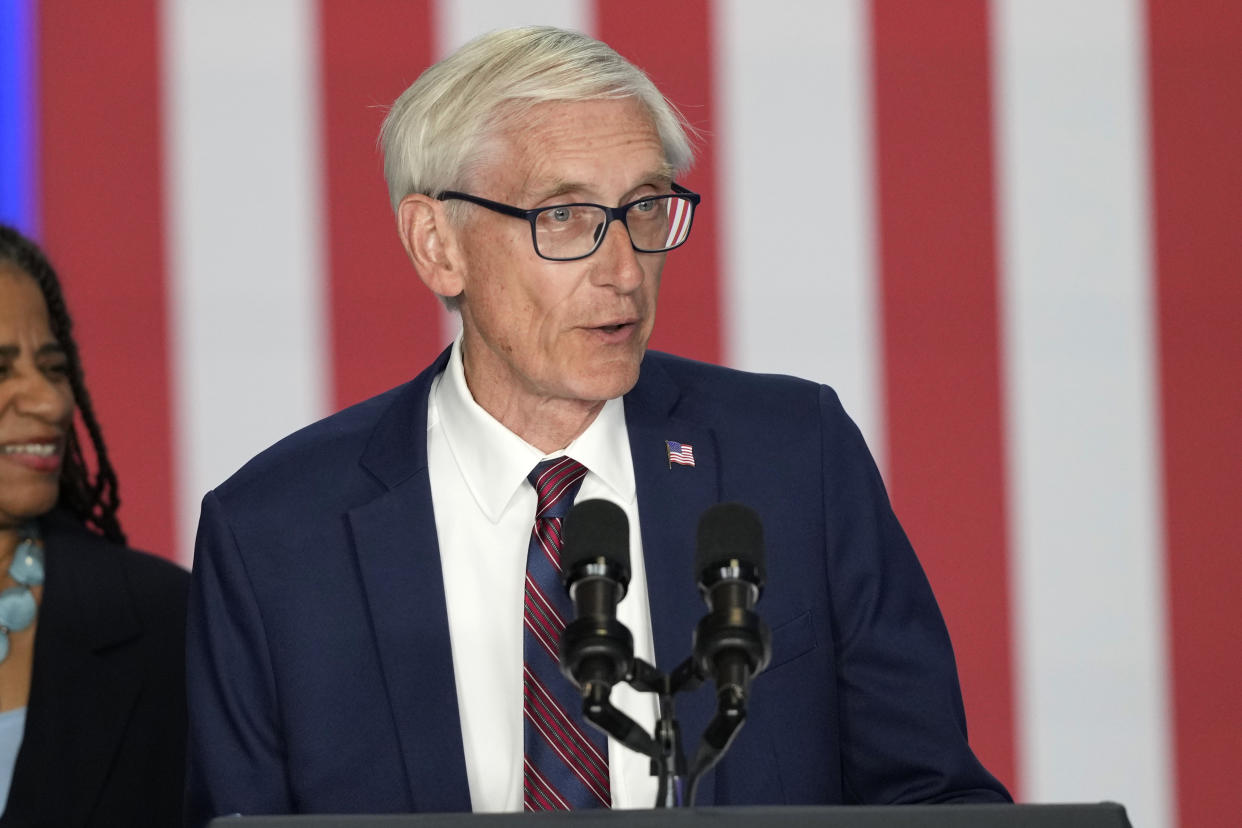
Wisconsin Gov. Tony Evers speaks before President Joe Biden at a campaign rally at Sherman Middle School in Madison, Wis., Friday, July 5, 2024. (AP Photo/Morry Gash)

Wisconsin Republicans are asking voters to take away the governor’s power to unilaterally spend federal money, a reaction to the billions of dollars that flowed into the state during the COVID-19 pandemic.

Democratic Gov. Tony Evers was free to spend most of that money as he pleased, directing most of it toward small businesses and economic development, angering Republicans who argued the Legislature should have oversight.

That’s what would happen under a pair of related constitutional amendments up for voter approval in the Aug. 13 primary election. The changes would apply to Evers and all future governors and cover any federal money to the state that comes without specific spending requirements, often in response to disasters or other emergencies.

Democrats and other opponents are mobilizing against the amendments, calling them a legislative power grab that would hamstring governors’ ability to quickly respond to a future natural disaster, economic crisis or health emergency.

If the amendments pass, Wisconsin’s government “will become even more dysfunctional,” said Julie Keown-Bomar, executive director of Wisconsin Farmers Union.

“Wisconsinites are so weary of riding the partisan crazy train, but it is crucial that we show up at the polls and vote ‘no’ on these changes as they will only make us go further off the rails,” she said in a statement.

But Republicans and other backers say it’s a necessary check on the governor’s current power, which they say is too broad.

The changes increase “accountability, efficiency, and transparency,” Republican state Sen. Howard Marklein, a co-sponsor of the initiative, said at a legislative hearing.

The two questions, which were proposed as a single amendment and then separated on the ballot, passed the GOP-controlled Legislature twice as required by law. Voter approval is needed before they would be added to the state constitution. The governor has no veto power over constitutional amendments.

Early, in-person absentee voting for the Aug. 13 election begins Tuesday across the state and goes through Aug. 11. Locations and times for early voting vary.

Wisconsin Republicans have increasingly turned to voters to approve constitutional amendments as a way to get around Evers’ vetoes. Midway through his second term, Evers has vetoed more bills than any governor in Wisconsin history.

In April, voters approved amendments to bar the use of private money to run elections and reaffirm that only election officials can work the polls. In November, an amendment on the ballot seeks to clarify that only U.S. citizens can vote in local elections.

Republicans put this question on the August primary ballot, the first time a constitutional amendment has been placed in that election where turnout is much lower than in November.

The effort to curb the governor’s spending power also comes amid ongoing fights between Republicans and Evers over the extent of legislative authority. Evers in July won a case in the Wisconsin Supreme Court that challenged the power the GOP-controlled Legislature’s budget committee had over conservation program spending.

Wisconsin governors were given the power to decide how to spend federal money by the Legislature in 1931, during the Great Depression, according to a report from the Legislative Reference Bureau.

“Times have changed and the influx of federal dollars calls for a different approach,” Republican Rep. Robert Wittke, who sponsored the amendment, said at a public hearing.

It was a power that was questioned during the Great Recession in 2008, another time when the state received a large influx of federal aid.

But calls for change intensified during the COVID-19 pandemic when the federal government handed Wisconsin $5.7 billion in aid between March 2020 and June 2022 in federal coronavirus relief. Only $1.1 billion came with restrictions on how it could be spent.

Most of the money was used for small business and local government recovery grants, buying emergency health supplies and paying health care providers to offset the costs of the pandemic.

Republicans pushed for more oversight, but Evers vetoed a GOP bill in 2021 that would have required the governor to submit a plan to the Legislature’s budget committee for approval.

Republican increased the pressure for change following the release of a nonpartisan audit in 2022 that found Evers wasn’t transparent about how he decided where to direct the money.

One amendment specifies the Legislature can’t delegate its power to decide how money is spent. The second prohibits the governor from spending federal money without legislative approval.

If approved, the Legislature could pass rules governing how federal money would be handled. That would give them the ability to change the rules based on who is serving as governor or the purpose of the federal money.

For example, the Legislature could allow governors to spend disaster relief money with no approval, but require that other money go before lawmakers first.

Opposing the measures are voting rights groups, the Wisconsin Democratic Party and a host of other liberal organizations, including those who fought to overturn Republican-drawn legislative maps, the League of Women Voters of Wisconsin and Wisconsin Faith Voices for Justice.

Wisconsin Manufacturers and Commerce, the state’s largest business lobbying group, and the Badger Institute, a conservative think tank, were the only groups that registered in support in the Legislature.

The election has been totally upended. Here’s what the polls show.

Politico

The election has been totally upended. Here’s what the polls show.

Steven Shepard – July 27, 2024

The polls are in after a chaotic few weeks in the 2024 presidential election, and they point to a newly hyper-competitive race.

Vice President Kamala Harris’ elevation has jolted the race and blunted the momentum former President Donald Trump could have seen coming out of the Republican convention and the assassination attempt that preceded it. Though polling showed Trump building a lead over President Joe Biden following their debate last month, that advantage has mostly evaporated against Harris in the fresh round of surveys conducted since she became the all-but-certain Democratic nominee.

The new polling shows just how much the landscape has shifted since Biden dropped out last Sunday. For months, the contest appeared set, and Biden’s modest deficit going into the debate threatened to decline further. That’s now changed.

Trump still maintains a slim edge over Harris — but the race is now close, which was not the case for the Biden-vs.-Trump contest after the debate. Just this week, new polls from The New York Times/Siena College (Trump +1 over Harris), The Wall Street Journal (Trump +2) and CNN (Trump +3) all represent tightening from 6-point Trump leads in all three polls following the debate.

Looking only at the horserace, it’s difficult to evaluate whether opinions of Trump shifted after the assassination attempt, or whether he received a bounce out of the GOP convention and his selection of Sen. JD Vance (R-Ohio) as his running mate

But look deeper, and one can see some signs that Trump is viewed differently now than he was before the assassination attempt. Similarly, the crosstabs show how Harris has closed the gap with the Republican nominee, performing stronger with traditionally Democratic groups among whom Biden had lagged badly.

Here are five takeaways from the latest numbers:

Harris has started to rebuild a more traditional Democratic coalition

A switch in the Democratic candidate has rippled through the electorate and, at least initially, restored traditional demographic patterns.

Even before his debate debacle, Biden had struggled to keep key elements of the Democratic base in the fold: Support had eroded significantly among young voters, Black voters, Latino voters and other reliable supporters of Democratic candidates in the past, including Biden in 2020.

Harris has brought some of those voters back into the fold. In the New York Times/Siena poll, for example, she is running stronger than Biden has all year among young voters and voters of color while mostly keeping pace with Biden among older and white voters, where his numbers had been more durable.

That doesn’t mean Trump’s gains have entirely disappeared in a matter of days now that he’s running against a 59-year-old woman of color instead of an 81-year-old white man. Harris is still short of Biden’s 2020 numbers among young voters and voters of color, and the former president is still running well ahead of his 2016 and 2020 numbers among those groups.

Harris has more paths to 270 electoral votes than Biden did

As she shifts the electorate, Harris is creating more potential pathways to the White House.

For Biden, the election was looking like Rust Belt or bust. But Harris’ stronger numbers among Black and Latino voters could translate to better prospects in some of the Sun Belt states where he had fallen well behind Trump: Arizona, Georgia, Nevada and North Carolina.

Biden’s campaign was still actively contesting those states, but his deficits in public polling had been significant even before the debate. There’s very little polling so far in the Sun Belt swing states, but the changes taking place in the national polling suggest Harris could put those states back into play.

Biden was still in the ballgame, at least before the debate, in the “Blue Wall” states that were competitive and decisive in both 2016 and 2020. And a set of new Fox News polls out Friday show Harris and Trump neck-and-neck in MichiganPennsylvania and Wisconsin.

And polls in states with similar demographic profiles also suggest Harris is inching closer to Biden’s winning 2020 numbers — and not toward the devastating, landslide loss that some Democrats had feared if Biden had stayed in the race after the debate. A Fox News poll in Minnesota showed Harris 6 points ahead of Trump, similar to Biden’s 7-point win. Two polls in New Hampshire this week gave the vice president leads that essentially matched Biden four years ago. Trump allies had argued in recent weeks that those states were among a slew of blue-leaning states that had been put in play.

Harris seems to be shutting that down. She has work to do to catch up to Trump, but she already has more options than Biden did.

Trump is more popular than at any point in the last four years

While Harris’ takeover of the news cycle may have blunted any Trump bump in the horserace polling after the assassination attempt and last week’s convention, there’s still evidence of one in the former president’s favorability ratings.

In poll after poll, Trump has notched favorable ratings at or near his highest ever recorded.

It’s not a terribly high bar: Even when he won the 2016 election, more voters have consistently said they view Trump unfavorably than view him favorably — he’s had some electoral success despite his image. Trump’s still underwater, but his image rating is a lot closer to 50-50 than it has been at virtually any time in his political career.

In the Wall Street Journal poll, his favorable/unfavorable rating was 47 percent/50 percent. That’s a significant shift: In nine previous polls dating back to November 2021, the percentage of voters with an unfavorable opinion of Trump had always been at least 10 points higher than the percentage who viewed him favorably.

Some of Trump’s numbers in the early weeks of the pandemic rival his current standing. But by this time four years ago, his image had declined. And in all that’s happened since then, it hadn’t recovered — until now.

Biden’s retirement is wildly popular

In this era of polarization, it’s hard to imagine that Biden and his 39-percent approval rating could do anything that would be almost unanimously popular.

But his decision to pull the plug on his moribund campaign is well received across the political spectrum.

More than three-in-four likely voters in the New York Times/Siena poll said they were enthusiastic or satisfied that Biden had dropped out. The numbers were similar in the Fox News state polls, including in Pennsylvania, where 78 percent of voters said they approved of Biden dropping out.

Biden’s decision is earning bipartisan praise: Large majorities of Democrats, Republicans and independents support him stepping aside. But, ironically, it’s Democratic voters who are more enthusiastic about it. Significantly more Democratic voters than GOP voters in the Fox News Pennsylvania poll, 86 percent versus 69 percent, approve of Biden dropping out, despite Republicans’ general antipathy toward the president.

RFK Jr. is in freefall

With Trump’s post-convention bounce, Democrats’ candidate switch and his own missteps, independent candidate Robert F. Kennedy Jr.’s numbers are dropping like a rock.

In the New York Times/Siena poll, Kennedy was at 5 percent, down from 8 percent right after the Biden-Trump debate. He’s at 4 percent in the Wall Street Journal poll, down from 7 percent in the previous poll.

Kennedy cried foul last month when he fell short of CNN’s criteria for a debate invitation: He earned 15 percent in three polls (needing four) and was well shy of the cable network’s threshold for ballot access (Kennedy argued it was unfair, since many states don’t certify independent candidates until later in the year).

And now, even as he’s gotten on the ballot in more states, it appears that the polling threshold for the next debate will be his undoing. He needs to earn 15 percent in four qualifying polls from Aug. 1-Sept. 3 to be able to compete in the ABC News debate on Sept. 10, and he’s nowhere near that right now.

Kennedy and various third-party candidates have been courting the significant share of voters who viewed both Biden and Trump unfavorably. But these so-called double haters are increasingly rare now, thanks to improved views of Trump and Harris’ stronger image than Biden.

Those developments might not last: Trump could fall back to his consistently poor image, and Harris’ honeymoon with the public could be short-lived, especially in the face of nascent Republican attacks.

But, for now, more voters like at least one of the candidates, and fewer say they’ll be holding their noses in November. After months of careening toward a dismal rematch of 2020, the election has been abruptly upended, and there is a lot more uncertainty about its trajectory from here. Right now, at the outset of the Harris-Trump contest, it looks like a close race.

Russia’s Putin vows ‘mirror measures’ in response to U.S. missiles in Germany

Associated Press

Russia’s Putin vows ‘mirror measures’ in response to U.S. missiles in Germany

The Associated Press – July 28, 2024

Russian President Vladimir Putin greets sailors prior to the main naval parade marking Russian Navy Day in St. Petersburg, Russia, on Sunday, July 28, 2024. (Vyacheslav Prokofyev, Sputnik, Kremlin Pool Photo via AP)
Russian President Vladimir Putin, center, Russian Defense Minister Andrei Belousov, second left, and Russian Navy Commander-in-Chief Admiral Alexander Moiseyev, left, arrive to watch the main naval parade marking Russian Navy Day in St. Petersburg, Russia, on Sunday, July 28, 2024. (AP Photo/Dmitri Lovetsky, Pool)
Russian President Vladimir Putin, center, Russian Defense Minister Andrei Belousov, second right, and Russian Navy Commander-in-Chief Admiral Alexander Moiseyev, right, greet sailors prior to the main naval parade marking Russian Navy Day in St. Petersburg, Russia, on Sunday, July 28, 2024. (Vyacheslav Prokofyev, Sputnik, Kremlin Pool Photo via AP)

Russia may deploy new strike weapons in response to the planned U.S. stationing of longer-range and hypersonic missiles in Germany, Russian President Vladimir Putin said on Sunday.

Speaking at a naval parade in St Petersburg, Putin vowed “mirror measures” after the U.S. earlier this month announced that it will start deploying the weapons in 2026, to affirm its commitment to NATO and European defense following Moscow’s all-out invasion of Ukraine in February 2022.

“If the U.S. implements such plans, we will consider ourselves free from the previously imposed unilateral moratorium on the deployment of intermediate and shorter-range strike weapons, including increasing the capability of the coastal forces of our navy,” Putin said. He added that Moscow’s development of suitable systems is “in its final stage.”

Both Washington and Moscow have in recent weeks signaled readiness to deploy intermediate-range ground-based weapons that were banned for decades under a 1987 U.S.-Soviet treaty. The U.S. pulled out of the agreement in 2019, accusing Moscow of conducting missile tests that violated it.

The allegations, which Russia denied, came as tensions mounted between Moscow and the West in the wake of the downing of a Malaysian airliner carrying 298 people over war-torn eastern Ukraine. Two Russians and a pro-Moscow Ukrainian were ultimately convicted over their role in the attack.

Washington and Berlin said in a joint statement this month that the U.S. weapons to be placed in Germany would ultimately include SM-6 missiles, Tomahawk cruise missiles, and “developmental hypersonic weapons”, including those with a significantly longer range than the ones currently deployed across Europe.

Most of Russia’s missile systems are capable of carrying either conventional or nuclear warheads. Russia’s deputy foreign minister, Sergei Ryabkov, said last week that the Kremlin did not rule out new deployments of nuclear missiles in response to the U.S. move.

Ryabkov added that defending Kaliningrad, Russia’s heavily militarized exclave wedged between NATO members Poland and Lithuania, was of particular concern.

Putin warns the United States of Cold War-style missile crisis

Reuters

Putin warns the United States of Cold War-style missile crisis

Guy Faulconbridge and Dmitry Antonov – July 28, 2024

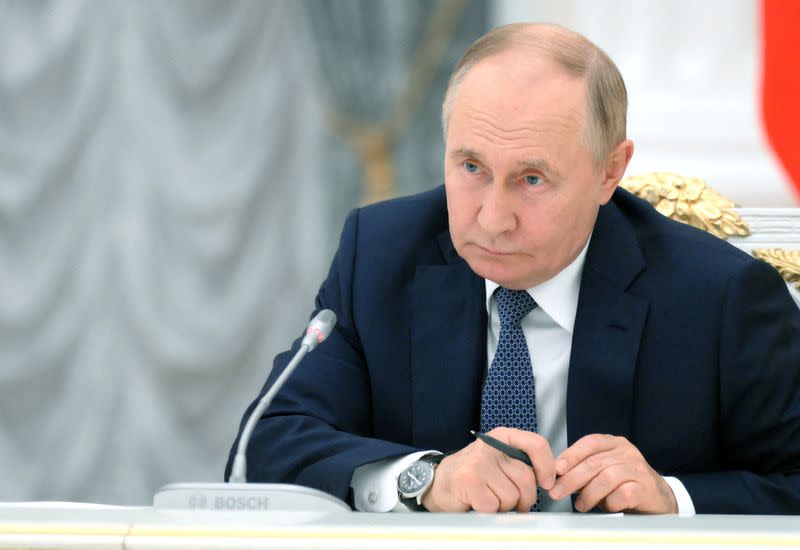
Russian President Putin chairs a meeting in Moscow

MOSCOW (Reuters) -Russian President Vladimir Putin on Sunday warned the United States that if Washington deployed long-range missiles in Germany then Russia would station similar missiles in striking distance of the West.

The United States said on July 10 that it would start deploying long-range missiles in Germany from 2026 in preparation for a longer-term deployment that will include SM-6, Tomahawk cruise missiles and developmental hypersonic weapons.

In a speech to sailors from Russia, China, Algeria and India to mark Russian navy day in the former imperial capital of St Petersburg, Putin warned the United States that it risked triggering a Cold War-style missile crisis with the move.

“The flight time to targets on our territory of such missiles, which in the future may be equipped with nuclear warheads, will be about 10 minutes,” Putin said.

“We will take mirror measures to deploy, taking into account the actions of the United States, its satellites in Europe and in other regions of the world.”

Putin, who sent his army into Ukraine in 2022, casts the war as part of a historic struggle with the West, which he says humiliated Russia after Soviet Union fell in 1991 by encroaching on what he considers Moscow’s sphere of influence.

Ukraine and the West say Putin is engaged in an imperial-style land grab. They have vowed to defeat Russia, which currently controls about 18% of Ukraine, including Crimea, and parts of four regions in eastern Ukraine.

Russia says the lands, once part of the Russian empire, are now again part of Russia and that they will never be given back.

COLD WAR?

Russian and U.S. diplomats say their diplomatic relations are worse even that during the 1962 Cuban Missile Crisis, and both Moscow and Washington have urged de-escalation while both have made steps towards escalation.

Putin said that the United States was stoking tensions and had transferred Typhon missile systems to Denmark and the Philippines, and compared the U.S. plans to the NATO decision to deploy Pershing II launchers in Western Europe in 1979.

The Soviet leadership, including General Secretary Yuri Andropov, feared Pershing II deployments were part of an elaborate U.S.-led plan to decapitate the Soviet Union by taking out its political and military leadership.

“This situation is reminiscent of the events of the Cold War related to the deployment of American medium–range Pershing missiles in Europe,” Putin said.

The Pershing II, designed to deliver a variable yield nuclear warhead, was deployed to West Germany in 1983.

In 1983, the ailing Andropov and the KGB interpreted a series of U.S. moves including the Pershing II deployment and a major NATO exercise as signs the West was about to launch a pre-emptive strike on the Soviet Union.

Putin repeated an earlier warning that Russia could resume production of intermediate and shorter range nuclear-capable missiles and then consider where to deploy them after the United States brought similar missiles to Europe and Asia.

(Writing by Guy Faulconbridge; editing by David Evans)

Donald Trump Tells Christians They ‘Won’t Have to Vote Anymore’ if He’s Elected to Another Term

People

Donald Trump Tells Christians They ‘Won’t Have to Vote Anymore’ if He’s Elected to Another Term

Charlotte Phillipp – July 27, 2024

Kamala Harris’ campaign team later called the former president’s comments a “vow to end democracy”

<p>Joe Raedle/Getty</p> Donald Trump speaks during a Turning Point USA Believers Summit conference at the Palm Beach Convention Center on July 26, 2024.
Joe Raedle/GettyDonald Trump speaks during a Turning Point USA Believers Summit conference at the Palm Beach Convention Center on July 26, 2024.

Former President Donald Trump made waves after urging his Christian followers to vote for him in the upcoming presidential election “just this time” — and saying that they “won’t have to do it anymore” if he wins.

During an event on Friday, July 26, hosted by the conservative Christian organization Turning Point Action, Trump, 78, addressed the crowd and implied that if he were to be voted in, “everything” would be “fixed,” according to multiple sources, including Rolling Stone and The Hill.

“Christians, get out and vote, just this time,” Trump said as the crowd in West Palm Beach, Fla., cheered, per the outlets.

Related: Donald Trump Didn’t Always Oppose Kamala Harris. He Helped Get Her Reelected as Calif. Attorney General in 2014

“You won’t have to do it anymore,” he said. “Four more years, you know what, it will be fixed, it will be fine. You won’t have to vote anymore, my beautiful Christians.”

<p>Brandon Bell/Getty</p> President Donald Trump speaks to attendees during his campaign rally on July 24, 2024 in Charlotte, N.C.
Brandon Bell/GettyPresident Donald Trump speaks to attendees during his campaign rally on July 24, 2024 in Charlotte, N.C.

“I love you Christians. I’m a Christian. I love you, get out, you gotta get out and vote. In four years, you don’t have to vote again, we’ll have it fixed so good you’re not going to have to vote,” Trump continued.

At the same event, Trump also claimed that he would “once again appoint rock-solid conservative judges who will protect religious liberty,” per Rolling Stone.

Related: What Is Project 2025? Inside the Far-Right Plan Threatening Everything from the Word ‘Gender’ to Public Education

In a statement shared by Vice President Kamala Harris‘ campaign team on Saturday concerning what they called “Trump’s vow to end democracy,” Harris for President spokesperson James Singer said: “When Vice President Harris says this election is about freedom, she means it.”

“Our democracy is under assault by criminal Donald Trump: After the last election Trump lost, he sent a mob to overturn the results,” Singer continued.

“This campaign, he has promised violence if he loses, the end of our elections if he wins, and the termination of the Constitution to empower him to be a dictator to enact his dangerous Project 2025 agenda on America,” he added.

<p>Ting Shen/Bloomberg via Getty</p> Kamala Harris
Ting Shen/Bloomberg via GettyKamala Harris

Many Democrats have criticized Trump’s rhetoric around the 2020 election, and specifically his claims of voter fraud, after he was defeated by President Joe Biden, as well as the recent Supreme Court decision allowing for presidential immunity for any official acts taken during their time in the White House.

Biden, 81, previously cited the Jan. 6, 2021 Capitol riot as one reason that the ruling set a “dangerous” precedent because the power of the presidential office “will no longer be constrained by the law.”

Oregon fire is the largest burning in the US. Thunderstorms and high winds are exacerbating it

Associated Press

Oregon fire is the largest burning in the US. Thunderstorms and high winds are exacerbating it

Rebecca Boone – July 24, 2024

In this image provided by the Oregon Department of Transportation, the Durkee fire burns in the background as it nears Interstate 84 near Huntington, Ore., early Tuesday, July 23, 2024. (Oregon Department of Transportation via AP)
In this image provided by the Oregon Department of Transportation, the Durkee fire burns in the background as it nears Interstate 84 near Huntington, Ore., early Sunday, July 21, 2024. (Oregon Department of Transportation via AP)

BOISE, Idaho (AP) — Powerful winds and hundreds of lightning strikes from thunderstorms rattled eastern Oregon and Idaho Wednesday afternoon, cutting power and stoking fires, including one in Oregon that is already the largest active blaze in the nation.

The Durkee Fire, burning near the Oregon-Idaho border about 130 miles (209 kilometers) west of Boise, Idaho, caused the closure of a stretch of Interstate 84 again Wednesday. Amid rapidly forming storms in the afternoon, the blaze crossed the interstate near the town of Huntington, home to about 500 people. It also merged with the Cow Valley Fire, another large blaze that had been burning nearby, Gov. Tina Kotek said.

“The wildfires in Eastern Oregon have scaled up quickly,” Kotek said in a news release Wednesday evening, calling it a dynamic situation. “We are facing strong erratic winds over the region that could impact all fires. Rain is not getting through. Some communities do not have power.”

She said she had deployed the National Guard to the region.

The nearly 420-square-mile (1,088-square-kilometer) blaze had prompted the evacuation of Huntington on Sunday, and on Wednesday city officials posted on Facebook that people remaining in town, especially those with “major health issues,” needed to leave their homes because of wildfire smoke and the lack of power. City officials also said Wednesday that gas service to residents had been shut off until the evacuation orders are lifted.

The fire approached Alison Oszman’s home in Rye Valley, a small ranching area north of Huntington, last week, but they were able to protect their property with the help of Bureau of Land Management firefighters and neighbors, using small tanker trucks and shovels. They used a small dozer to keep it away from the house, she said.

Since their property was burned and safe, her neighbor moved his horses and cattle over as the fire moved toward his ranch, she said. On Wednesday night, Oszman went to check his property and found that the fire came down a steep hillside and threatened his home.

“I went and parked our truck out in the field just in case those big trees by his house caught fire,” she said. “I was making sure sparks didn’t land in the dirt or the dry grass. But as the fire passed his house, it started raining.” The rain helped the firefighters get on top of the blaze.

“It was pretty scary but everything seemed to fall into place,” she said. “Everybody helped everybody. It was actually pretty amazing for how crummy it really was.”

The National Weather Service in Boise said the storms were capable of producing wind gusts up to 70 mph with blowing dust reducing visibility. A storm about 44 miles (71 kilometers) northwest of Huntington near Baker City on Wednesday afternoon had recorded a wind gust of 66 mph (106 kph), the weather service said.

Wind, lightning and heavy rain fell that could cause flash flooding and debris flows in recently burned areas, authorities said. Flash flood warnings were issued for Huntington and in a nearby burn scar area.

A flash flood warning was issued for the Cow Valley burn scar in Eastern Oregon at about 8 p.m. Wednesday and was expected to last until 10:30 p.m., said Les Colin, a meteorologist with the National Weather Service in Boise, Idaho. A strong thunderstorm moved into a burned area that is especially susceptible to flooding, he said. No homes are in the area but Interstate 84 runs close by.

The Oregon State Fire Marshal’s office also mobilized nearly 500 firefighters to help protect communities that could be threatened by wildfires on Wednesday.

The major electricity utility in the region, Idaho Power, warned customers to prepare for possible outages, and by late Wednesday afternoon, nearly 7,000 customers were without electricity, the utility said. The utility also cut power to customers in the Boise foothills and other nearby areas, citing extreme weather and wildfire risk.

More than 60 significant fires are burning in Oregon and Washington alone, and Oregon has been plagued with hundreds of lightning strikes from thunderstorms in recent days that have started new blazes in bone-dry vegetation.

A fire in southern California also was moving fast and threatening homes.

Evacuation orders were in effect Wednesday night in San Diego County after a wildfire began to spread fast near the San Diego and Riverside county line. Fire officials say the Grove Fire is spreading southeast through steep and challenging terrain. The fire grew to 1.3 square mile (3.4 square kilometers) within a few hours but was 5% contained just before 8 p.m., Cal Fire said on the social media platform X.

The smoke from the Durkee Fire in Oregon was choking the air in Boise and beyond. An air quality warning was in effect for the entire region on Wednesday.

Patrick Nauman, the owner of Weiser Classic Candy in the small town of Weiser, Idaho, near the Oregon border, said driving into town Wednesday morning was “like driving into a fog bank, because it’s so thick and low to the road.”

Nauman’s shop is on the main intersection in town and is typically a popular spot to stop for lunch or a sugar fix, but customer traffic has dropped by half in the past few days as thick smoke and triple-digit temperatures dogged the region.

“Yesterday you could smell it, taste it, it just kind of hung in the back of your throat,” Nauman said of the smoke.

Mike Cantin, a meteorologist with the National Weather Service in Boise, said cooler air moving into the region Wednesday evening could stoke the Durkee and other fires. A red flag warning was in effect, and the area has been suffering through a heat wave, including many days over 100 degrees Fahrenheit (38 degrees Celsius).

“With these winds showing up today, every little spark could get out of hand very easily. It could be a really hazardous situation very fast,” Cantin said. “Don’t light anything on fire, and be very careful around grass.”

___

Associated Press writer Lisa Baumann contributed from Bellingham, Washington and Martha Bellisle contributed from Seattle.

Monday was the hottest day ever on Earth. Here are the heat illness symptoms you should watch for.

Yahoo! Life

Monday was the hottest day ever on Earth. Here are the heat illness symptoms you should watch for.

What’s the difference between heat exhaustion and heat stroke?

Korin Miller, Freelance health reporter – July 24, 2024

Photo illustration of a sweating person drinking from a water bottle.
Your guide to staying cool, avoiding heat-related illness and more. (Photo illustration: Yahoo News; photos: Getty Images)

Monday, July 22 broke the record for the hottest day ever recorded on Earth, and extreme heat also already claimed dozens of lives this summer.

It’s easy to forget about the risk of heat exhaustion or sunstroke when you’re enjoying a pool party or hanging out at the beach, but these serious conditions can and do happen. Ahead, three emergency room physicians answer questions about how to stay safe when it’s scorching out — from being able to identify symptoms to the most effective ways to keep cool.

Why should I care about heat illness now?

Summer is when temperatures are the highest in the U.S. As temperatures soared last year, so did ER visits for heat illness. A study from the Centers for Disease Control and Prevention published in April found that there were nearly 120,000 heat-related emergency room visits in 2023, and 90% of them happened between May and September.The most ER visits happened in Arkansas, Louisiana, New Mexico, Oklahoma and Texas, with males and adults between the ages of 18 and 64 having the highest rates of ER visits for heat illness.

Heat is also the deadliest form of extreme weather, the National Weather Service warns. Hot weather kills 1,220 people annually, according to the CDC. And tolls are rising each year, amid climate change. Last year was the hottest in human history, and a record-breaking 2,303 people died from heat exposure, the Department of Health and Human Services estimates.

“With hotter summer months rapidly approaching, it’s important to plan ahead to protect yourself and others from heat illness,” Dr. Marc Taub, an emergency physician and medical director of emergency services at MemorialCare Saddleback Medical Center in Laguna Hills, Calif., tells Yahoo Life. “It’s especially important to take precautions for those who are more vulnerable to the heat, such as children, older adults, pregnant persons, those who work outdoors, people without ready access to cool areas and fluids and people with underlying health conditions.”

What exactly is heat illness?

Heat illness (also known as heat-related illness) is an umbrella term used to describe several conditions that can happen to your body when temperatures rise.

Heat illness generally refers to these conditions:

  • Heat cramps: These can be the first sign of heat illness, and usually involve painful muscle cramps that can happen in the legs and abdomen, per the National Weather Service (NWS).
  • Heat rash: This is skin irritation that can happen when you sweat a lot on hot, humid days, the Centers for Disease Control and Prevention says.
  • Heat exhaustion: Heat exhaustion is the body’s response to an excessive loss of water and salt that usually happens from sweating a lot, according to the CDC. It can cause heavy sweating, fatigue and dizziness, along with other symptoms.
  • Heat stroke: Also known as sunstroke, this is the most serious heat illness, the CDC says. It happens when the body can no longer control its temperature. The sweating mechanism fails, and the body is no longer able to cool down. Body temperature can also get to 106 degrees or higher within 10 to 15 minutes, according to the CDC. Heat stroke can lead to permanent disability or death.

Read more: What does a heat rash look like? How to identify and treat it

What are the symptoms?

Symptoms of heat illness vary depending on the type you experience. Here’s a breakdown, according to the CDC:

Heat cramps
  • Muscle cramps in the abdomen, arms or legs
  • Pain in the abdomen, arms or legs
  • Spasms in the abdomen, arms or legs
Heat rash
  • Red clusters of pimples or small blisters
  • Pimples or blisters that show up on the neck, upper chest, groin, under the breasts and in elbow creases
Heat exhaustion
  • Headache
  • Nausea
  • Dizziness
  • Weakness
  • Irritability
  • Thirst
  • Heavy sweating
  • Elevated body temperature
  • Urinating less than usual
Heat stroke
  • Confusion, altered mental status, slurred speech
  • Loss of consciousness
  • Hot, dry skin or excessive sweating
  • Seizures
  • Very high body temperature
How dangerous is heat illness?

It depends on the type of heat illness you have. Heat rash and heat cramps are “generally uncomfortable if you are healthy,” Dr. Lewis Nelson, chair of emergency medicine at Rutgers New Jersey Medical School, tells Yahoo Life. However, they are not usually serious.

But anyone can experience heat exhaustion and heat stroke — the latter of which is life-threatening, he points out.

“With heat stroke, you can develop organ problems, kidney failure, heart problems and stroke-like symptoms,” Dr. Eric Adkins, emergency medicine physician at The Ohio State University Wexner Medical Center, tells Yahoo Life. “You can die from heat stroke.”

I am having symptoms. What should I do?

Doctors recommend getting out of the heat ASAP if you don’t feel well. “The most important intervention if you feel sick in the heat is to move to a cooler area,” Nelson says. “This may be as simple as moving out of the sun or going indoors.”

Using a fan can speed up the evaporation of sweat and help you cool down, but Nelson points out that it’s “not very efficient” at higher temperatures. In fact, the Environmental Protection Agency recommends that people don’t use fans when the heat index temperature, which is a combination of the temperature and humidity, is above 99 degrees Fahrenheit.

“Making sure you are adequately hydrated is critical and replacing the lost sweat with water, plus electrolytes will help avoid a fall in your blood sodium level,” Nelson says.

It’s also a good idea to take off extra clothes and put on wet towels, if you have them nearby, to help cool you down, Adkins says. Spraying water on your body can also help, according to Taub.

If someone is showing symptoms of heat stroke, call 911 immediately. The NWS also urges getting “immediate medical attention” if heat cramps last for more than an hour, the person vomits or if heat exhaustion symptoms get worse or last for more than an hour.

How can I stay informed about heat risks?

The CDC just launched a Heat & Health Tracker to make it easier to know what’s happening with heat in your area. The tracker offers local heat and health information, including rates of emergency room visits for heat illness where you live. The CDC also notes which medications might make you more vulnerable to the effects of heat, and how to store them safely when temperatures rise.

“Keep track of daily weather forecasts and local heat alerts,” Taub says. “Good sources of information on current and forecasted weather include local news channels and weather websites.” He also suggests checking out Heat.gov for up-to-date information and forecasts.

My car is always sizzling in the summer. How can I keep myself cool?

Car temperatures can skyrocket, and research has found that interior temperatures can hit 116 degrees and seats can get up to 123 degrees.

“Getting into a hot car for a brief period of time is generally safe, but opening the windows or turning on the air conditioning should help moderate the temperature,” Nelson says. “The inside of a car, especially in the sun, can reach unsafe temperatures if not cooled, so do not keep children or pets in closed cars, even if out of the sun.”

Adkins recommends parking in the shade when you can. A sun shade in your car can help to deflect heat away from the interior as well, Taub says. If your car doesn’t have air conditioning and it’s extremely hot outside, Adkins suggests taking public transportation if it’s available.

What are the most effective ways to stay cool?

If you feel yourself getting hot, there are a few things you can do to cool off in the moment.

Drinking plenty of water is an obvious choice, but Adkins also recommends keeping an eye on the color of your urine. “If it looks more pale yellow, you’re hydrated,” he says. “If it’s dark yellow, orange or brown, that’s a primary sign of dehydration.”

Using fans, including portable fans, when the heat index is below 99 degrees can be helpful, along with misting yourself with cool water, Nelson says. Putting cool, wet cloths on your wrists, neck and ankles can help keep your temperature down, too, Adkins says.

Is there anything else I can do?

Doctors say there are a few other moves you can make to keep yourself cool on hot days. A big one is avoiding being outside on the hottest times of the day — typically between 10 a.m. and 2 p.m. — if you’re able, Adkins says.

Nelson also suggests carrying around a bottle of water with you to make sure you’re staying well hydrated. Carrying a portable fan in your bag and using it when you need to cool off can also be helpful, according to Adkins.

If you want to really plan ahead, Adkins recommends planting trees on your property to create shade for the future.

Overall, doctors stress the importance of being aware of the heat in your area and taking steps to keep yourself cool. “Exposure to excess heat can be serious — and it’s important to take it seriously,” Adkins says.

This article was originally published on May 22, 2024 and has been updated.

Trump Tries to Flip the Script on Democracy After Biden’s Withdrawal Democracy After Biden’s Withdrawal

The New York Times

Trump Tries to Flip the Script on Democracy After Biden’s Withdrawal

Nick Corasaniti and Jim Rutenberg – July 23, 2024

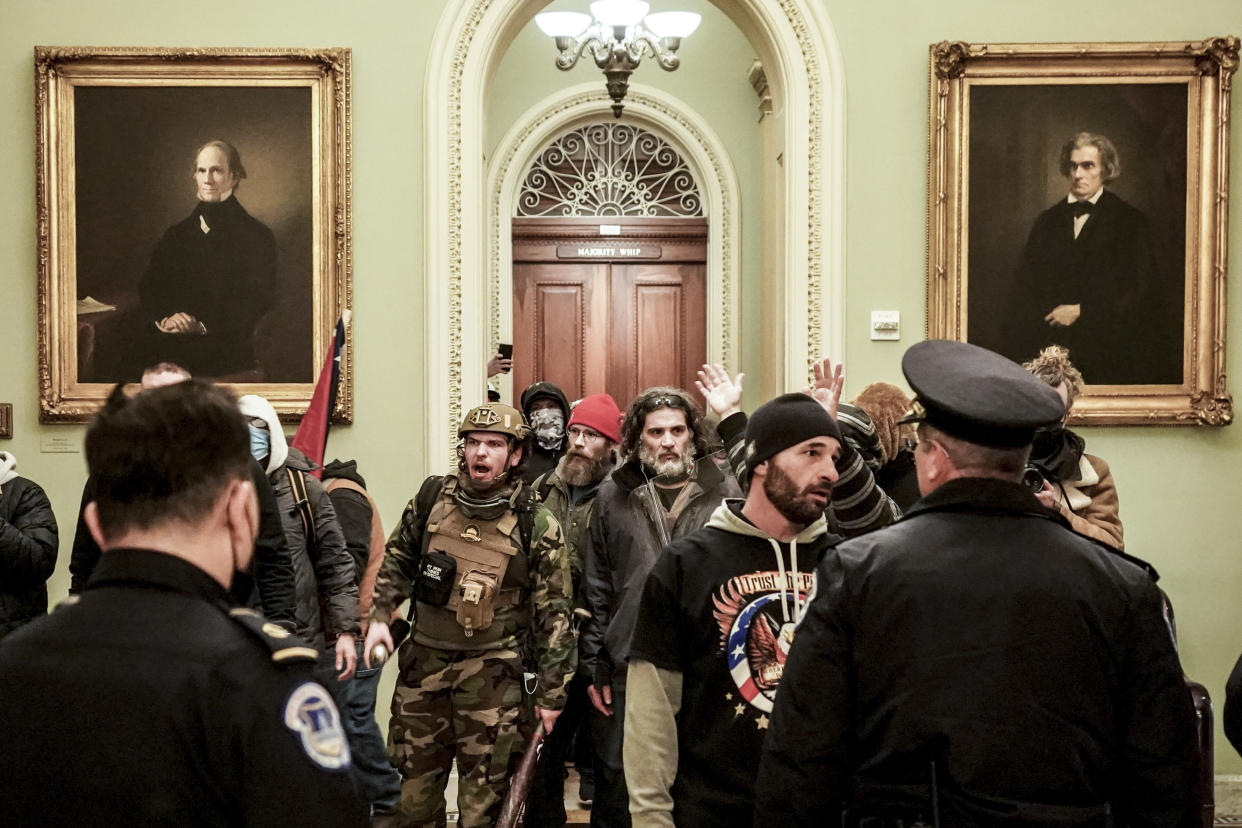
Supporters of former President Donald Trump outside the Senate chamber during the Jan. 6 riot at the Capitol in Washington, Jan. 6, 2021. (Erin Schaff/The New York Times)

Ever since rioters stormed the Capitol on Jan. 6, 2021, the Democratic Party has sought to claim the mantle of democracy, painting Donald Trump and his allies as extremists willing to deny the will of voters to cling to power.

Now, after President Joe Biden dropped his reelection bid and Democrats swiftly aligned behind Vice President Kamala Harris as a replacement, Republicans are trying to flip the argument.

In a series of statements and social media posts, Republicans have argued that Democrats, by pressuring Biden to quit, have “disenfranchised” the 14 million people who voted for him in the party primaries.

The accusation isn’t based on any party rule or supposed legal violation. Instead, it is the Republicans’ latest attempt to muddy the waters on an issue that helped Democrats win key races two years ago. Since Trump’s attempt to overturn his defeat in 2020, which led to the Jan. 6 riot and criminal charges against the former president, Democrats have cast Republicans as a threat to democratic norms.

They have used images from the Jan. 6 riot in attack ads and mobilized Democratic voters against Republican-backed legislation restricting voting. The issue was especially potent for Democratic governors and secretaries of state in critical swing states, who won every election for statewide office except for governor in Nevada and Georgia in 2022.

On Monday, Trump tried a new tactic to neutralize that threat, zeroing in on the “stolen” nomination claim. “They stole the race from Biden after he won it in the primaries — A First!” Trump posted on his social media site. “These people are the real THREAT TO DEMOCRACY!”

The two most senior Republican congressional leaders — House Speaker Mike Johnson of Louisiana and Sen. Mitch McConnell of Kentucky — echoed the claim.

“Having invalidated the votes of more than 14 million Americans who selected Joe Biden to be the Democrat nominee for president, the self-proclaimed ‘party of democracy,’ has proven exactly the opposite,” Johnson said. McConnell, the Republican minority leader in the Senate, said Democrats were “trying to upend the expressed will” of primary voters.

There is nothing in Biden’s withdrawal or his endorsement of Harris that appears to violate any party or election rules. Under party rules, when a candidate withdraws after the primary elections but before officially securing the nomination, delegates are free to vote for another candidate of their choosing. Republican Party rules outline a similar process.

Democrats and voting rights experts dismissed the criticism as a specious, and argued that Republicans lacked credibility on the subject.

On Monday, Alex Floyd, a spokesperson for the Democratic National Committee, said it was Trump who was trafficking in “anti-democratic rhetoric as part of his campaign,” adding that the former president “himself inspired a violent insurrection on Jan. 6, 2021.”

He said that Democrats were “committed to an open process” to select Biden’s successor on the ticket. That process includes a vote by the party’s nearly 4,000 delegates. Other Democrats noted that the 14 million people who voted for Biden certainly did so knowing he was on a ticket with Harris, the current front-runner.

Civil rights groups and democracy activists did not appear to share the Trump campaign’s concerns about Democratic disenfranchisement. Polling from this summer showed a majority of Democrats wanted Biden to step aside.

“I don’t think this is anti-democratic in the slightest,” said David Becker, director for the Center for Election Innovation and Research, a nonpartisan nonprofit organization. Becker noted that Trump sought to throw out millions of votes in the states where he contested his defeat, as part of his attempt to hold on to power after losing the 2020 election.

It’s unclear whether Republicans’ attacks about the “stolen” Democratic primary will land with swing voters. But Trump has been trying to reframe the political debate over democracy for years, with some signs of success. He has cast the Jan. 6 rioters as patriots and accused Democratic prosecutors of using indictments to interfere with the election.

A recent Washington Post poll found that voters in six battleground states were more likely to trust Trump than Biden to handle threats to democracy. The survey found 61% of voters in those states listed “threats to democracy” as extremely important to their vote. The only issue rating higher was the economy.

“I am the only one saving democracy for the people in our country,” Trump said as he accepted his party’s nomination last week.

Trump and his allies also sought to use the attempt on Trump’s life at his July 13 rally in Pennsylvania to portray him as a “defender” of democracy.

They have painted the shooting as an anti-democratic attempt to remove Trump from the race. (Virtually nothing is known about the motives of his shooter, Thomas Matthew Crooks.)

In making the argument that Biden’s exit from the race disenfranchised millions of primary voters, Trump and his party picked up a theme the president’s campaign had also emphasized. When Biden was resisting calls to drop out, he and his surrogates often pointed to those votes to defend his decision to stay in the race.

“We had a Democratic nominating process where the voters spoke clearly,” Biden had told MSNBC hosts Joe Scarborough and Mika Brzezinski. “I won 14 million of those votes.”

The Republican attempts to seize on that argument as their own, democracy activists say, is part of a broader, yearslong effort to erode trust in the electoral process.

“I see this all as just a continued effort to try to cast doubt on our elections, to try to undermine pro-democracy candidates,” said Joanna Lydgate, CEO of the States United Democracy Center.