Republicans can win the next elections through gerrymandering alone

Republicans can win the next elections through gerrymandering alone

<span>Photograph: Saul Loeb/AFP/Getty Images</span>
Photograph: Saul Loeb/AFP/Getty Images


In Washington, the real insiders know that the true outrages are what’s perfectly legal and that it’s simply a gaffe when someone accidentally blurts out something honest.

And so it barely made a ripple last week when a Texas congressman (and Donald Trump’s former White House physician) said aloud what’s supposed to be kept to a backroom whisper: Republicans intend to retake the US House of Representatives in 2022 through gerrymandering.

“We have redistricting coming up and the Republicans control most of that process in most of the states around the country,” Representative Ronny Jackson told a conference of religious conservatives. “That alone should get us the majority back.”

He’s right. Republicans won’t have to win more votes next year to claim the US House.

In fact, everyone could vote the exact same way for Congress next year as they did in 2020 – when Democratic candidates nationwide won more than 4.7m votes than Republicans and narrowly held the chamber – but under the new maps that will be in place, the Republican party would take control.

How is this possible? The Republican party only needs to win five seats to wrench the speaker’s gavel from Nancy Pelosi. They could draw themselves a dozen – or more – through gerrymandering alone. Republicans could create at least two additional red seats in Texas and North Carolina, and another certain two in Georgia and Florida. Then could nab another in Kansas, Kentucky, Tennessee and New Hampshire.

They won’t need to embrace policies favored by a majority of Americans. All they need to do is rework maps to their favor in states where they hold complete control of the decennial redistricting that follows the census – some of which they have held since they gerrymandered them 10 years ago. Now they can double down on the undeserved majorities that they have seized and dominate another decade.

If Republicans aggressively maximize every advantage and crash through any of the usual guardrails – and they have given every indication that they will – there’s little Democrats can do. And after a 2019 US supreme court decision declared partisan gerrymandering a non-justiciable political issue, the federal courts will be powerless as well.

It’s one of the many time bombs that threatens representative democracy and American traditions of majority rule. It’s a sign of how much power they have – and how aggressively they intend to wield it – that Republicans aren’t even bothering to deny that they intend to implode it.

“We control redistricting,” boasted Stephen Stepanek, New Hampshire’s Republican state party chair. “I can stand here today and guarantee you that we will send a conservative Republican to Washington as a congressperson in 2022.”

In Kansas, Susan Wagle, the Republican party state senate president, campaigned on a promise to draw a gerrymandered map that “takes out” the only Democrat in the state’s congressional delegation. “We can do that,” Wagle boasted. “I guarantee you that we can draw four Republican congressional maps.”

Texas Republicans will look to reinforce a map that has held back demographic trends favoring Democrats over the last decade by, among other things, dividing liberal Austin into five pieces and attaching them to rural conservative counties in order to dilute Democratic votes. Texas will also have two additional seats next decade due largely to Latino population growth; in 2011, when similar growth created four new seats for Texas, Republicans managed to draw three for themselves.

North Carolina Republicans crafted a reliable 10-3 Republican delegation throughout the last decade. When the state supreme court declared the congressional map unconstitutional in 2019, it forced the creation of a fairer map in time for 2020. Democrats immediately gained two seats. But the state GOP will control the entire process once again this cycle, so those two seats will likely change side – and Republicans could find a way to draw themselves the seat the state gained after reapportionment.

Two Atlanta-area Democrats are in danger of being gerrymandered out of office by Republicans. The single Democratic member from Kentucky, and one of just two from Tennessee, are in jeopardy if Republicans choose to crack Louisville and Nashville, respectively, and scatter the urban areas across multiple districts. Florida Republicans ignored state constitution provisions against partisan gerrymandering in 2011 and created what a state court called a conspiracy to mount a secret, shadow redistricting process. It took the court until the 2016 election to unwind those ill-gotten GOP gains, however, which provides little incentive not to do the same thing once more. This time, a more conservative state supreme court might even allow those gains to stand.

Might Democrats try the same thing? Democrats might look to squeeze a couple seats from New York and one additional seat from Illinois and possibly Maryland. But that’s scarcely enough to counter the overall GOP edge. In Colorado, Oregon and Virginia, states controlled entirely by Democrats, the party has either created an independent redistricting commission or made a deal to give Republicans a seat at the table. Commissions also draw the lines in other Democratic strongholds like California, Washington and New Jersey. There are no seats to gain in overwhelmingly blue states like Massachusetts, New Mexico and Connecticut.

In many ways, the Republican edge is left over from 2010, when the party remade American politics with a plan called Redmap – short for the Redistricting Majority Project – that aimed to capture swing-state legislatures in places like North Carolina, Pennsylvania, Ohio, Wisconsin, Michigan and Florida, among others. They’ve never handed them back. Now Redmap enters its second decade of dominance – just as the lawmakers it put into office continue rewriting swing-state election laws to benefit Republicans, under the unfounded pretext of “voter fraud” that did not occur during 2020.

Republicans already benefit from a structural advantage in the electoral college and the US Senate. Presidents that lost the popular vote have appointed five conservative justices to the US supreme court. Now get ready for a drunken bacchanalia of partisan gerrymandering that could make “hot vax summer” look like a chaste Victorian celebration.

Meanwhile, this is how a democracy withers and disappears – slowly, legally, and in plain sight.

  • David Daley is the author of Ratf**ked: Why Your Vote Doesn’t Count and Unrigged: How Americans Are battling Back to Save Democracy. He is a senior fellow at FairVote

New Michael Wolff book reports Trump’s confusion during Capitol attack

New Michael Wolff book reports Trump’s confusion during Capitol attack

Donald Trump told supporters he would march on the Capitol with them on 6 January – then abandoned them after a tense exchange with his chief of staff, according to the first excerpt from Landslide, Michael Wolff’s third Trump White House exposé.

The extract was published by New York magazine. Wolff’s first Trump book, Fire and Fury, blew up a news cycle and created a whole new genre of salacious political books in January 2018, when the Guardian revealed news of its contents.

That book was a huge bestseller. A sequel, Siege, also contained bombshells but fared less well. Wolff’s third Trump book is among a slew due this summer.

On 6 January, Congress met to confirm results of an election Trump lost conclusively to Joe Biden. Trump spoke to supporters outside the White House, telling them: “We’re going to walk down [to the Capitol to protest] – and I’ll be there with you.”

According to Wolff, the chief of staff, Mark Meadows, was reportedly approached by concerned Secret Service agents, who he told: “No. There’s no way we are going to the Capitol.”

Wolff, one of a number of authors to have interviewed Trump since he left power, writes that the chief of staff then approached Trump, who seemed unsure what Meadows was talking about.

“You said you were going to march with them to the Capitol,” Meadows reportedly said. “How would we do that? We can’t organize that. We can’t.”

“I didn’t mean it literally,” Trump reportedly replied.

Trump is also reported to have expressed “puzzlement” about the supporters who broke into the Capitol in a riot which led to five deaths and Trump’s second impeachment, for inciting an insurrection.

Wolff says Trump was confused by “who these people were with their low-rent ‘trailer camp’ bearing and their ‘get-ups’, once joking that he should have invested in a chain of tattoo parlors and shaking his head about ‘the great unwashed’.”

Trump and his family watched the attack on television at the White House.

As reported by Wolff, the exchange between Trump and Meadows sheds light on how the would-be insurrectionists were abandoned.

The White House, Wolff writes, soon realised Mike Pence had “concluded that he was not able to reject votes unilaterally or, in effect, to do anything else, beyond playing his ceremonial role, that the president might want him to do”.

Trump aide Jason Miller is portrayed as saying “Oh, shit” and alerting the president’s lawyer and chief cheerleader for his lie about electoral fraud, Rudy Giuliani.

Wolff writes that the former New York mayor was “drinking heavily and in a constant state of excitation, often almost incoherent in his agitation and mania”.

Related: ‘Republicans are defunding the police’: Fox News anchor stumps congressman

As the riot escalated – soon after Trump issued a tweet attacking the vice-president – aides reportedly pressed the president to command his followers to stand down.

Ivanka Trump, the president’s daughter and adviser, reportedly saw the assault on the Capitol as “an optics issue”. After an hour or so, Wolff writes, Trump “seemed to begin the transition from seeing the mob as people protesting the election – defending him so he would defend them – to seeing them as ‘not our people’”.

In a further exchange, Trump reportedly asked Meadows: “How bad is this? This looks terrible. This is really bad. Who are these people? These aren’t our people, these idiots with these outfits. They look like Democrats.”

Trump reportedly added: “We didn’t tell people to do something like this. We told people to be peaceful. I even said ‘peaceful’ and ‘patriotic’ in my speech!”

Russian snipers are picking off Ukrainian soldiers

Russian snipers are picking off Ukrainian soldiers

HRANITNE VILLAGE, Ukraine front line — Ukrainian soldiers are taught to drop in their trench position and stay down for at least 15 minutes if a sniper’s bullet misses them. The hope is the sniper will believe them dead. But elite Russian snipers usually don’t miss.

In a hand-dug trench a half-mile from the front line in the restive Donbas region on eastern Ukraine, bright green grass grows and red poppies flower just inches above the heads of Ukrainian soldiers manning their position.

The nearby village of Hranitne is like many in post-industrial eastern Ukraine. A showy, Soviet-era rectangular City Hall, an abandoned agricultural factory converted to a military installation, and a central plaza with a stepped platform where a statue of Lenin once stood.

But this village is different.

Schoolchildren cross a military checkpoint from occupied territory to Ukrainian-controlled territory so they can continue attending the same school. Young soldiers walk the streets. Many of them volunteered from wealthier western Ukraine to fight Russian officers and commandos and their own Ukrainian brethren who have taken sides with Vladimir Putin in yet another protracted conflict spurred by the Russian president.

The war between Ukraine and Russian-backed separatists in the semi-states known as the Donetsk and Luhansk People’s Republics is largely contained to a no man’s land in empty fields on the outskirts of small villages like this. Tree lines are where the opposing sides establish their positions, digging trenches to store weapons and provisions and to hide armored vehicles, should they be necessary.

In this low-intensity conflict, most soldiers are dying from sniper fire.

“At night, you see nothing,” said a Ukrainian soldier who gave his name as Unit Commander “Marhanets” to the Washington Examiner for operational security.

“Right now, there is no sniper at this position, but they are there. We received a warning because their intelligence position is nearby,” Marhanets said, a green face mask pulled up just below his eyes to conceal his identity.

All day, every day, he and the other dozen or so troops in his unit take turns peering through periscope binoculars positioned just below camo netting and fixed on the enemy front line.

They used to watch the enemy dig trenches until spring rains came and the grass grew taller. Now, they stare at a tree line across the field, looking for movement.

The view of the enemy frontline in the so-called Donetsk People’s Republic through periscope binoculars near Hranitne village, eastern Ukraine June 6, 2021. Photo by Abraham Mahshie/Washington Examiner

Marhanets knows two comrades hit by sniper fire. One died. One survived. The one who survived is still in the hospital, paralyzed from the neck down.

In the underground network of sandbag positions and lookout spots, any peek above ground level is potentially lethal.

“There’s a little window where you look up, and the sniper hits exactly where you look,” he said.

In 2015, shortly after the conflict broke out, Marhanets was on the front line with no night-vision goggles or thermal vision technology.

“We were in a position at the north, and on the radio, we captured a signal, that’s how we knew a diversion group was moving towards our direction,” he said. “But what can you do? You cannot make your eyes see better, you cannot make your ears hear better. You are just sitting and waiting, and there’s nothing you can do to know when they will arrive. And when you have this vision, it really helps to see the situation.”

Russian snipers with night-vision technology can see Ukrainian movements and kill the soldiers one by one. Enemy intelligence groups known as “sabotage groups” can walk right up to a position, shielded by darkness, and kill soldiers directly in the trench.

Then, American assistance began to arrive.

It included sniper rifles, thermal optics, laser rangefinders, optical detection systems, and electronic warfare systems.

“There’s actually a very dangerous situation in eastern Ukraine in terms of the sniper attacks that we see on Ukrainian forces,” Deputy Assistant Secretary of Defense for Russia, Ukraine, and Eurasia Laura Cooper told the Washington Examiner in a May Pentagon interview.

“There’s also a number of other systems that we’re providing that are effective and fill critical requirements for the Ukrainian armed forces. That includes sniper rifles, counter-artillery radars, grenade launchers,” she added, noting that nonlethal assistance includes military medical equipment and armored Humvees. “I want to also be clear that this isn’t something we invent in Washington. This is something that responds to what the Ukrainian armed forces themselves have identified.”

Ukrainian Foreign Minister Dmytro Kuleba underscored the importance of the American support in a meeting with the Washington Examiner in Kyiv.

“Almost every week, we lose soldiers in the east, and almost every day, some young Ukrainian man enlists in the Ukrainian army willing to defend it,” Kuleba said.

“All of us have friends or relatives or someone who has been affected by the war, either as an internally displaced person or as a soldier or as a civilian. I mean, this is part of our life,” he said. “We know that no one is going to fight this war for us. We’re going to fight it, but it’s much easier to fight and prevail when you have reliable friends next to you, standing by you and behind you. And that’s the role of the United States of America.”

Ukrainian Foreign Minister Dymtro Kuleba in an interview with the Washington Examiner in Kyiv June 3, 2021 described his country’s hopes for a comprehensive defense agreement with the United States. Photo courtesy Ukrainian Foreign Ministry

In late March, Russia built up 100,000 troops on the border of eastern Ukraine, threatening another invasion and escalation in the conflict. Ukrainian President Volodymyr Zelensky visited front-line positions, calling for international assistance and a path to entry into NATO.

Leaders of NATO, the European Union, and President Joe Biden condemned the Russian move.

The U.S. spoke of support for a path to eventual NATO entry, but needed reforms would have to come first. Secretly, the National Security Council prepared a $100 million contingency aid package, the NSC confirmed to the Washington Examiner.

“In addition to the $275 million that has already been authorized for aid to Ukraine this fiscal year, as has been reported, a $100 million contingency package was prepared given escalating tensions on Ukraine’s border in April 2021,” a U.S. official said. “That contingency package is prepared for whenever it is needed.”

U.S. assistance to Ukraine since Russia’s invasion of Crimea in 2014 has totaled $2.5 billion.

Ukrainian soldiers walk near a frontline position in the ongoing war with Russian-backed separatists in eastern Ukraine June 6, 2021 Photo by Abraham Mahshie/ Washington Examiner

Kuleba said absent NATO entry, his country seeks a broader defense agreement with the U.S.

“Ukraine exists in a security void. We are not members of NATO. We do not have a single security guarantee agreement,” he said.

“If NATO membership is not an immediate answer, then a defense partnership with the United States could be an answer,” he suggested. “We are buying the military equipment from you. You are giving us some of the equipment, but what we need is an agreement that would kind of certify that relationship that would bring it to the next level.”

Kuleba said his government envisions tying up disparate programs so that U.S. departments from the State Department to USAID to the Defense Department are working in concert to secure Ukraine’s democracy against Russian aggression.

Meanwhile, 600 miles from the capital, over muddy tracks on gently rolling hills outside an otherwise peaceful village, young Ukrainian soldiers forfeit rotations back home to serve repeat tours on the front line.

Here, they live in a sort of primitive brotherhood but with the sophisticated tools they need to survive.

“Right now, many people die from snipers,” Marhanets said. “When there is a ceasefire, when there is no heavy artillery working, then snipers are working.”

Sea level rise due to climate change eyed as contributing factor in Miami-area building collapse

Sea level rise due to climate change eyed as contributing factor in Miami-area building collapse

David Knowles, Senior Editor                            June 25, 2021


As the search for survivors of the collapse of a 12-story beachfront condominium in Surfside, Fla., continued on Friday, building experts began looking at the possibility that sea level rise caused by climate change may have contributed to the disaster that has left at least 4 people dead and 159 missing.

From a geological standpoint, the base of South Florida’s barrier islands is porous limestone. As the oceans encroach on land due to sea level rise and the worsening of so-called king tides, groundwater is pushed up through the limestone, causing flooding. That brackish water, which regularly inundates underground parking garages in South Florida, can potentially lead to the deterioration of building foundations over time.

“Sea level rise does cause potential corrosion and if that was happening, it’s possible it could not handle the weight of the building,” Zhong-Ren Peng, professor and Director of University of Florida’s International Center for Adaptation Planning and Design, told the Palm Beach Post. “I think this could be a wakeup call for coastal developments.”

While it is too early to say whether climate change is to blame for the collapse of the 40-year-old Champlain Towers South, or if it also threatens thousands of similar structures along Florida’s coastline, sea-levels rose by 3.9 inches between 2000 and 2017 in nearby Key West, according to a 2019 report by the Southeast Regional Climate Change Compact.

SURFSIDE, FLORIDA - JUNE 25: Maria Fernanda Martinez and Mariana Cordeiro (L-R) look on as search and rescue operations continue at the site of the partially collapsed 12-story Champlain Towers South condo building on June 25, 2021 in Surfside, Florida. Over one hundred people are being reported as missing as search-and-rescue effort continues with rescue crews from across Miami-Dade and Broward counties. (Photo by Joe Raedle/Getty Images)
Search and rescue operations continue at the Champlain Towers South condo building on June 25, 2021 in Surfside, Florida. (Photo by Joe Raedle/Getty Images)


Future projections are much more dire.

“Just using the U.S. government projections, we could be at 11 to over 13 feet [of sea level rise] by the end of century,” Harold Wanless, director of the University of Miami’s geological sciences department and a leading expert on sea level rise, told Yahoo News. “There’s only 3 percent of Miami-Dade County that’s greater than 12 feet above sea level.”

The Champlain Towers South, which had been built on reclaimed wetlands, was found in to have sunk by roughly two millimeters between 1993 and 1999, the Washington Post reported.

“It appears to be something very localized to one building, so I would think the problem was more likely to be related to the building itself,” Shimon Wdowinski, a professor at Florida International University’s department of earth and environment, told the Post.

Though federal and state investigators will attempt to pinpoint the cause of the collapse, rising seas and flooding from king tides will certainly be examined as a possible contributing factor.

But even if climate change is ruled out as significant contributor to this particular instance of structural failure, there is no avoiding the fact that if seas continue to rise, the habitability of much of South Florida will be put in question.

“People have to understand how serious this is going to be quickly, in the next two or three decades,” Wanless said. “We’re just seeing the beginning of this accelerated ice melt.”

Plastic Bottlers Are Lying About Recycling

Plastic Bottlers Are Lying About Recycling

By Edward Humes                        June 25, 2021

Photo by kwangmoozaa/iStock.

“100% recyclable”? In your dreams, Coca-Cola.

Too bad it’s not true.

On the contrary, the product Americans use at a rate of 3,400 every second—100 billion a year—is far more likely to end up in rivers, oceans, roadsides, landfills, and incinerators than inside any sort of recycled product.

On June 16, federal lawsuits were filed by the Sierra Club and a group of California consumers against major bottled water manufacturers Coca-Cola, Niagara, and BlueTriton (a subsidiary of global giant Nestlé). The suits allege that these companies’ labeling and marketing claims about the full recyclability of their beverage bottles are not just a little off, but blatantly false and a violation of consumer and environmental protection laws. They accuse the three global beverage titans of unfair business practices, false advertising, consumer fraud, and violations of state environmental marketing claims laws and Federal Trade Commission regulations.

The plaintiffs argue that these companies must be compelled to admit that their claims of recyclability are false and to end them.

Calling the recycling labels “a misinformation campaign,” Sierra Club executive director Michael Brune said, “These major plastic bottle manufacturers have known for decades that their products aren’t truly recyclable, and the public deserves to know the truth.”

That truth, according to the lawsuits and the studies they cite, is that the US recycling system is currently unable to recycle even a quarter of those supposed 100 percent recyclable bottles and lacks the capacity to recycle more than 12 percent of the bottle caps. Even the portion that does get recycled is never “100 percent recyclable”—about 28 percent is lost to processing or contamination and ends up in landfills.

In a final irony, the polypropylene plastic film labels on which the “100 percent recyclable” claims are printed on the bottles are themselves completely unrecyclable.

FTC Green Guide regulations state that a company can claim that a plastic bottle is recyclable only if recycling facilities for that type of plastic are available to at least 60 percent of the consumers or communities where the product is sold. Under 60 percent, and all recycling claims have to be qualified on the label—such as saying, for example, “This product is recyclable only in the few communities that have appropriate recycling facilities.”

“By that standard, these companies’ ‘100% recyclable’ claims are completely false,” said Sierra Club attorney Marie McCrary of San Francisco law firm Gutride Safier LLP. She said the suits are part of a larger campaign to educate consumers and businesses about recycling myths and the true impact of single-use plastic products on the environment. Accurate information stripped of green-washing claims, she says, can create demand for—and incentives to bring to market—truly recyclable and sustainable products and materials.

“As long as there are companies making 100 percent recyclability claims that are false, consumers can’t make an educated decision in the marketplace, and businesses lack an incentive to create an actually recyclable product,” she said.

A Coca-Cola representative said the company did not comment on active litigation, and spokespeople for BlueTriton and Niagara did not respond.

The brands specifically called out in the suits for allegedly deceptive recycling labels include Dasani, Arrowhead, Poland Springs, Ozarka, and Deer Park (in both lawsuits), and Niagara, Costco Kirkland, Save Mart Sunny Select, and Save Mart Market Essentials (in just the consumer class action lawsuit).

Lauren Cullum, Sierra Club California’s Sacramento-based policy advocate, said the suits are part of a broader effort to pick up lost ground after the ambitious California Circular Economy and Plastic Pollution Reduction Act stalled in the legislature in 2020. That act would have reinvented recycling in the state and created a system of producer responsibility, in which manufacturers of wasteful products such as plastic water bottles would have to bear the dollar cost of environmental damage and cleanup—an extension of the “polluter pays” concept in the state that already exists for the oil and gas industry.

Cullum says the costs to California cities to clean up single-use product litter on beaches, parks, and streets is massive: nearly a half billion dollars statewide, according to 2017 data compiled by the Natural Resources Defense Council. Los Angeles alone pays over $36 million a year, equivalent to $9.50 for every man, woman, and child in the city. Long Beach’s per resident cost is $28, and the city of Commerce, with a population of 12,000, pays $890,000 a year for litter cleanup, a whopping $69 for each citizen.

“Government and ratepayers are being swamped,” Cullum said.

Many of the goals of the circular economy and plastic pollution legislation have been resurrected as a citizen voter initiative, which will be on the November 2022 election ballot. Cullum sees the twin lawsuits as a means not only of holding global brands accountable for misinformation about recyclability, but also raising awareness about the need for new laws that rein in plastic pollution and lead to more sustainable products and materials.

“The end goal with all this is to get further and further away from relying on any type of single-use products,” Cullum said. “Any steps in that direction are what we need.”

“People want to make consumer choices that are good for the environment,” says Hoiyin Ip, Sierra Club California zero waste committee co-chair. “If they know the truth, I believe they will change those choices, just as they did with grocery bags. If they are confused or given false information, they end up making choices they might otherwise avoid.”

Judith Enck, a former EPA regional administrator who now leads the Vermont-based Beyond Plastics project, said the lawsuits pull the curtain back on the “abysmal failure” of plastics recycling and the beverage companies’ attempts to market their way out of taking responsibility for the damage their products cause. She puts the goal of the lawsuits in the bluntest of terms:

“We need companies to stop lying.”

Dry weather? Chop, drop and roll with it

Dry weather? Chop, drop and roll with it


Southeast Minnesota is officially in a drought.

Historically, June is the region’s wettest month, with an average of about 1.3 inches of rain per week, according to the National Weather Service in La Crosse.

With one week left in June, Rochester had seen less than an inch of rain all month.

The rain late in the week likely won’t make up for the accumulated deficit of moisture, but it will help, meteorologists said.

The dry spell reaches back to October, when, after the growing season, rain and snow replenishes soil moisture. Since that recharge cycle in October, Rochester has seen 13.77 inches of precipitation, which is 7.32 inches below normal of 21.09 inches through the third week of June, said Jeff Boyne, meteorologist with the NWS in La Crosse.

Boyne writes the drought reports available on the NWS website.

Despite some rain, he said the drought report won’t likely change much. Heavier rain northeast of Rochester into Wabasha County might change the drought status of that small area.

“It was still a good rain,” he said. “It keeps us from deteriorating any more.”

For a region that has gotten wetter on average, this dry pattern is uncommon. This is the first widespread drought in the region since 2012-13, Boyne said.

The early June heat wave has also put stress on plants as their demand for moisture goes up.

Heidi Kass, member of the Backyard Bounty Urban Homesteaders, said she has been watering her gardens more than she has in the past.

The easiest measure gardeners can take to protect plants from the drought would be to use mulch to help keep moisture in the soil. Regular mulch, straw, and grass clippings can help. Kass puts newspaper around her tomatoes to prevent soil from blighting the tomato plants’ leaves. (Soil-borne diseases can blight tomato plant leaves when uncovered soil is splashed onto them by rain or watering.)

She tops the newspaper with straw, which has helped her plants retain moisture through the drought. Using mulch is a good technique regardless of how much or little rain we get.

“Drought is a hard thing to plan for,” Kass said. “You can’t exactly plant your garden in the spring for a drought.”

One useful technique is to use weeds as a sort of mulch. When pulling up weeds, leave them between your plants. They will add nutrients and help retain a bit of moisture, while no longer robbing your plants of moisture and nutrients. Kass calls it “chop and drop.” Some plants are better for this technique than others. Using plants that root easily like creeping Charlie can backfire badly and create bigger problems than dry soil.

Another tip is to let your water run through your hose a bit before watering. Hot water in the hose could hurt your plants. Check your rain barrel if the water is low and it sits in the sun — the water inside could also be too warm to use.

For people sowing seeds this year for landscaping, lawns, rain gardens or prairies, if those seeds have germinated, keep them moist. However, it might have been dry enough that late-spring seeds might still be dormant.

Germinated seeds that weren’t watered might not have made it. Try planting again in the fall to germinate seeds but not let tender seedlings grow to die off in the winter. The timing — and watering — can be tricky to get right.

For now, keep what you have watered and watch the forecast. Boyne said forecast models show dry weather will persist through early July.

John Molseed is a tree-hugging Minnesota transplant making his way through his state parks passport. This column is a space for stories of people doing their part (and more) to keep Minnesota green. Send questions, comments and suggestions to life@postbulletin.com.

‘Historic Moment’: ‘Ecocide’ Definition Unveiled By International Lawyers

DeSmog

‘Historic Moment’: ‘Ecocide’ Definition Unveiled By International Lawyers
If adopted, the draft law would mean individuals could be prosecuted in the International Criminal Court for causing ‘widespread or long-term damage to the environment’.
By Theodore Whyte                           
 
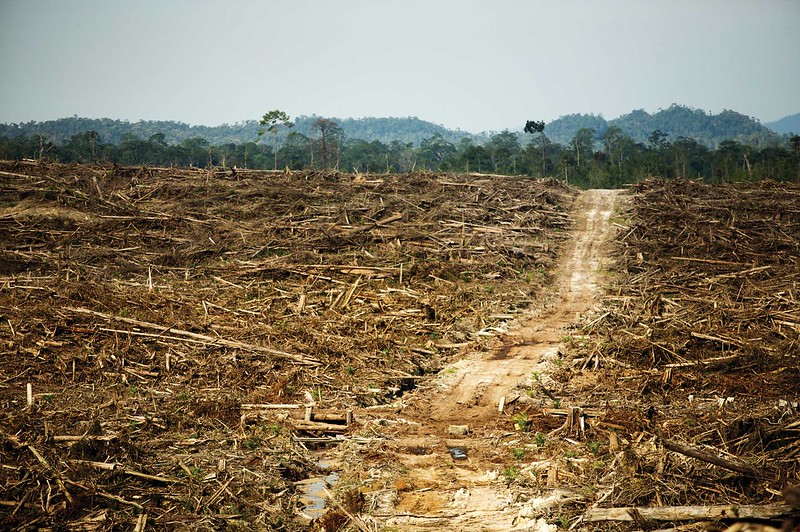
Deforestation in West Kalimantan, Borneo. Credit: David Gilbert / RAN (Creative Commons via Flickr)

A team of international lawyers has unveiled a definition of “ecocide” that, if adopted, would treat environmental destruction on a par with crimes against humanity.

After six months of deliberation, a panel of experts yesterday published the core text of a legal document that would criminalize “ecocide” if taken on by the International Criminal Court (ICC).

“This is an historic moment,” said Jojo Mehta, chair of the Stop Ecocide Foundation which commissioned the team of lawyers. “This expert panel came together in direct response to a growing political appetite for real answers to the climate and ecological crisis.”

Balancing Act

In the draft law, the panel of 12 lawyers defined ecocide as “unlawful or wanton acts committed with knowledge that there is a substantial likelihood of severe and either widespread or long-term damage to the environment being caused by those acts”.

If ratified by signatory states, ecocide would become the fifth international crime investigated and prosecuted by the ICC, alongside genocide, war crimes, crimes against humanity and the crime of aggression.

During a webinar marking the release of the document, panel co-chair Philippe Sands QC said the proposed definition would “cause us to think about our place in the world differently and it causes us to imagine the possibility that the law could be used to protect the global environment at a time of real challenge”.

“None of our international laws protect the environment as an end in itself and that’s what the crime of ecocide does,” Sands added.

Mehta described the draft law as a “necessary guardrail that could help steer our civilization back into a safe operating space”.

“Without some kind of enforceable legal parameter addressing the root causes of these crises, it’s hard to see how the Paris targets and the UNSDGs [United Nations Sustainable Development Goals] can possibly be reached,” she said.

The panel said that the idea of “unlawful or wanton” acts would allow judges and prosecutors to balance consideration of these elements. This idea of balance could be vital to the law’s success if it is to be agreed to by the states that subscribe to the ICC, according to co-chair Sands, who said it avoids “setting the bar too low and frightening states who we need to adopt the definition, or setting the bar so high that it becomes effectively useless in practice”.

A team of lawyers published its proposed definition of ‘ecocide’ on June 22, 2021. Credit: Stop Ecocide Foundation.
Defining ‘Ecocide’

Mehta acknowledged that ecocide legislation was likely to meet resistance from some richer nations, as it would inevitably force changes in corporate practice, “by making severe and reckless damage to nature illegal, and therefore unlicensable and uninsurable”.

This would close the door on “the old polluting ways”, she said. At the same time, Mehta argued, adopting ecocide legislation may be economically beneficial for stimulating innovation in green industries.

Sands said that oil spills, deforestation, and the authorization of new coal fired power stations could all potentially be considered ecocide under the definition.

However, specific acts such as these were left out of the final document, Mr Sands said, as doing so could run the risk of unintentionally omitting certain practices from the definition.

“This is not about catching every single horror that occurs in relation to the environment, but those horrors that cross a threshold and are of international concern,” he said, adding that it would be up to prosecutors and judges to form a view on whether a particular act is ecocide.

The campaign to criminalise ecocide, a term which was first coined in the 1970s, faces a number of further obstacles, with the entire process expected to take at least four years.

As a next step, any of the ICC’s 123 member states can propose the core text as an amendment to the Rome Statute treaty, before the annual assembly holds a vote on whether it can be considered for future enactment. It will then have to be approved by two thirds of the member states to go ahead, ahead of it being adopted by individual members into national jurisdiction.

A Former NRA President Was Tricked Into Speaking At A Fake High School Graduation

BuzzFeed

A Former NRA President Was Tricked Into Speaking At A Fake High School Graduation

Instead, the 3,044 empty seats represented the students who did not graduate this year because they were killed by gun violence.

Amber Jamieson, BuzzFeed Reporter,                 June 23, 2021

Hundreds of empty white fold-out chairs
Change the Red

3,044 chairs placed in a stadium in Las Vegas to represent those seniors who didn’t graduate because they were killed by gun violence

In a speech to the James Madison Academy 2021 graduating class, David Keene, a former NRA president and current board member of the gun rights group, called on the teens to fight those looking to implement tighter gun restrictions.

“I’d be willing to bet that many of you will be among those who stand up and prevent those from proceeding,” he said, to a Las Vegas stadium of thousands of socially distanced chairs on June 4.

“An overwhelming majority of you will go on to college, while others may decide their dream dictates a different route to success,” said Keene. “My advice to you is simple enough: follow your dream and make it a reality.”

Except, they can’t. The students aren’t real. James Madison Academy doesn’t exist.

Without realizing it, Keene was actually addressing his comments to thousands of empty chairs set up to represent the estimated 3,044 kids who should have graduated high school this year and instead were killed by gun violence.

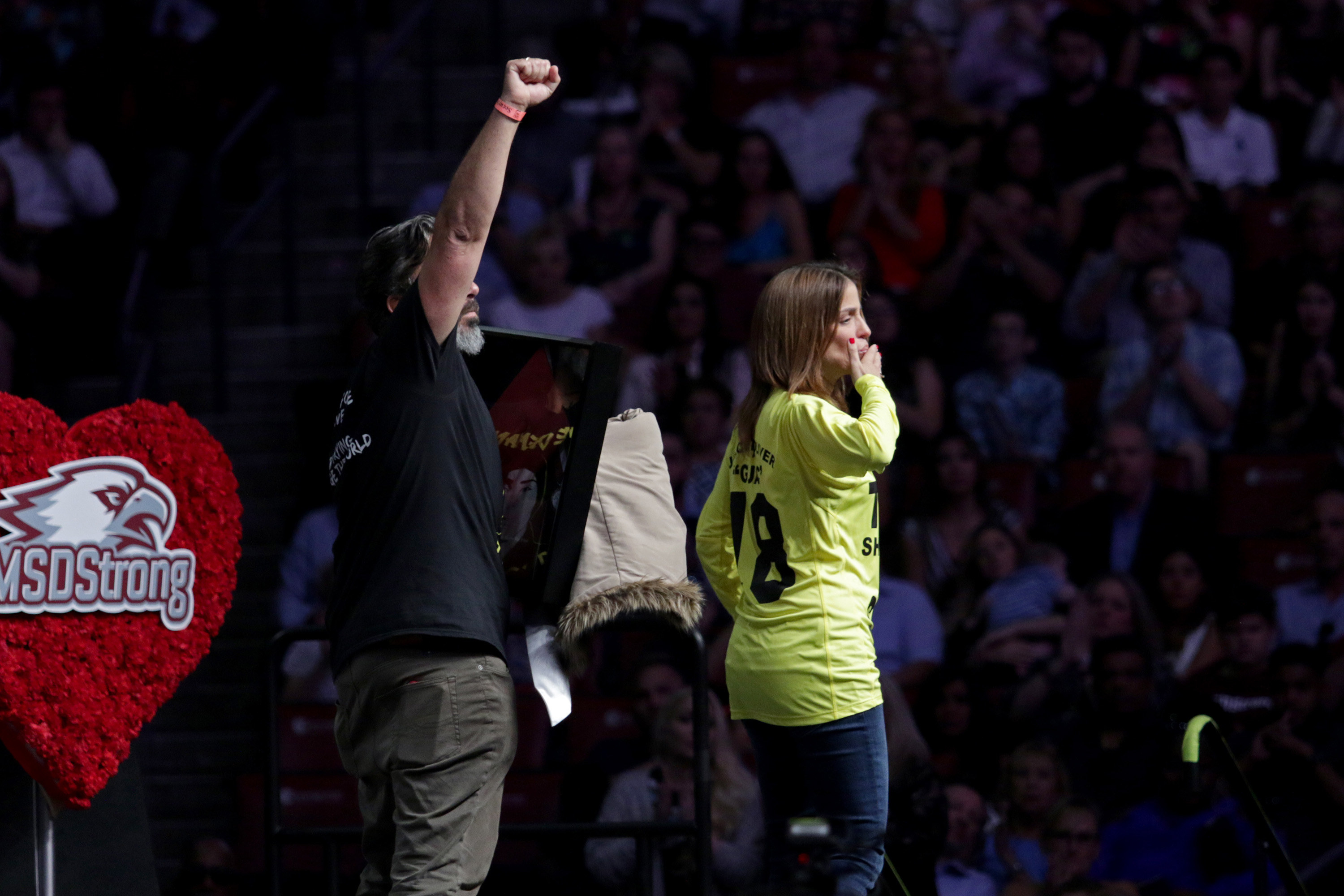
Change the Ref, an organization founded by Manuel and Patricia Oliver, whose son Joaquin “Guac” was killed in 2018 at Marjory Stoneman Douglas High School in Parkland, held a fake high school graduation for what they call “The Lost Class” of students.

They invited Keene and John Lott, an author and gun rights activist, to give remarks to a high school graduating class and filmed what they were told was a rehearsal in a stadium of empty chairs.

“Ironically, had the men conducted a proper background check on the school, they would have seen that the school is fake,” a Change the Ref spokesperson said in a press release.

Keene in a cap and gown is addressing a crowd in front of a Class of 2021 sign
Change the Ref

David Keene addressing the stadium

After filming, Keene and Lott were told the graduation was canceled and were not informed before the videos were released on Wednesday that the event was fake.

“You’re telling me the whole thing was a setup?” said Lott, when he responded to BuzzFeed News’ request for comment. “No, I didn’t know that.”

The stunt was designed to highlight how powerful gun advocates speak. “These two guys are part of the problem,” Manuel Oliver told BuzzFeed News. “We need to call them out, we need to show everyone — this is how they process the logic behind the gun industry.”

“We need to show we’re brave and we’re not afraid of these guys,” Oliver said. “We’ve already felt the worst possible situation. There’s no threat that can make me feel different.”

In videos released on Wednesday, Lott and Keene’s graduation speeches — in which they call for gun rights protections and talk about James Madison, the Founding Father who proposed the Second Amendment — are interspersed with audio from 911 calls about school shootings and the sound of gunfire.

Both Keene and Lott traveled to Vegas and were excited to speak, said Oliver, who did not meet either of them to make sure the stunt did not get disrupted by anyone recognizing him. Advertising agency Leo Burnett and production company Hungry Man helped create the event.

Lott said he was disappointed about the way the video was edited — he does support background checks but believes the current system mainly prevents law-abiding Black and Latino people from buying guns and should be adjusted.

“You want to stop dangerous people from getting guns, but you don’t want to stop the people who are potential victims from getting guns?” he asked.

Lott said he’d driven down from Montana for the speech, which took 13 hours, and showed emails where he’d been promised that he would receive $495, the equivalent of a plane ticket, but was never paid back. In the original email inviting him, Lott was told he was to be given the “Keeper of the Constitution” award.

Originally Lott wanted to give more general life advice in his commencement speech but had been encouraged to speak about James Madison and background checks. After the rehearsal, he was told the ceremony was canceled because of a credible threat of violence and after discussion with police. A week later, Lott tried to call the person who’d been in contact with him and the number was disconnected.

“Unfortunately, the fact they lied to me many times is kind of illustrated by the way they edited and chopped up the video that’s there,” Lott said. “Is that the way we want to have political debate in the country? Where people lie and creatively edit what people say?”

James Madison Academy isn’t a real school (a Google cache shows that a website was created to help ensure the stunt’s success). But the experience of thousands of families who’ve lost children to gun violence enduring graduations in recent months is very real, Oliver said.

“We lost Joaquin three months before his graduation. We know exactly the feeling of being there and receiving the diploma without your kid being there,” Oliver said. “Because we understand that, we know there are a lot of people going through that same experience right now.”

Sun Sentinel / Tribune News Service via Getty Images

Joaquin Oliver’s mother, Patricia, and father, Manuel, walk offstage after receiving their son’s diploma, which was awarded posthumously, during a graduation ceremony on Sunday, June 3, 2018, in Sunrise, Florida.

Oliver entwines his activism for gun violence prevention with art. To celebrate what would have been his son’s 21st birthday on Aug. 4, he is hosting Guacathon, a 21-hour festival of performances and exercise.

Gun violence is the leading cause of death for American middle and high school students. The 3,044 number was estimated by compiling firearm deaths by age since 2003 and matching it to student age.

“Never for a minute doubt that you can achieve that dream,” Keene said in his rehearsed speech to the seniors.

The contrast of knowing the students they are addressing are dead makes the comments appear deeply sarcastic, Oliver said.

“It shows them [as] weak,” he told BuzzFeed News. “But this is not about bragging about doing this to the former president of the NRA. No, this is about pushing our reps to move on with universal background check laws.”

UPDATE

This story has been updated with comments from John Lott.

Amber Jamieson is a reporter for BuzzFeed News and is based in New York.

California’s Drought Is So Bad That Almond Farmers Are Ripping Out Trees

California’s Drought Is So Bad That Almond Farmers Are Ripping Out Trees


(Bloomberg) — Christine Gemperle is about to do what almond farmers fear the most: rip out her trees early.

Water is so scarce on her orchard in California’s Central Valley that she’s been forced to let a third of her acreage go dry. In the irrigated areas, the lush, supple trees are dewy in the early morning, providing some relief from the extreme heat. Walking over to the dry side, you can actually feel the temperature start to go up as you’re surrounded by the brittle, lifeless branches that look like they could crumble into dust.

“Farming’s very risky,” said Gemperle, who will undertake the arduous process of pulling out all her trees on the orchard this fall, replacing them with younger ones that don’t need as much moisture. It’s a tough decision. Almond trees are typically a 25-year investment, and if it weren’t for the drought, these trees could’ve made it through at least another growing season, if not two. Now, they’ll be ground up into mulch.

“I don’t think a lot of people understand just how risky this business is, and it’s a risk that’s associated with something you can’t control at all: The weather,” she said.

It’s a stark reminder of the devastating toll that the drought gripping the West will take on U.S. agriculture, bringing with it the risk of food inflation. Dairy farms are sending cows to slaughter as they run short of feed and water. Fields are sitting bare, because it’s too costly to irrigate the rows of cauliflower, strawberries and lettuce that usually flourish in abundance. Meanwhile, fieldworkers are being put into life-threatening conditions as the brutal temperatures increase the risk of heat stroke and dehydration.

The famed farming valleys of California were once romanticized as an Eden for the Joad family escaping the Oklahoma dust bowl in John Steinbeck’s “Grapes of Wrath.” The state’s more than 69,000 farms and ranches supply over a third of U.S. vegetables and two-thirds of its fruit. The annual almond harvest accounts for about 80% of global production. But after years of what seems like permanent dryness, some growers are starting to wonder if Steinbeck’s story will start playing out in reverse, with unstoppable drought posing an existential threat to the future of agriculture in the state.

“Are we going to be able to farm here?,” asks Sara Tashker, who’s worked at Green Gulch Farm just outside of San Francisco for almost 20 years. This is the first time she’s ever seen the reservoirs the farm depends on to water its lettuce, broccoli, cauliflower and cabbage, not fill with winter rain.

With so little water, there was no way around planting less, so total acreage got cut by about 25% from last year. And the crops are getting put into the ground closer together, in about half the typical amount of space. It’s an attempt to make the root structure denser and keep moisture in the soil. The limited spacing means fieldworkers are having to cultivate by hand, instead of using tractors. But in the midst of an early heat wave, Tashker can’t help but wonder if the new methods will be enough.

“Is there going to be enough water? Are we going to be able to adapt? Is it going to be too dangerous to live in these fire ecosystems? Is this just going to become too expensive?,” she said.

Of course, this isn’t just a California problem. Climate change is here and it’s wreaking havoc on food production across the world. This year in Brazil, the world’s biggest exporter of coffee, sugar and orange juice, the rainy season came and went with very little rain. Water reserves are running so low that farmers are worried they’ll run out of supplies that are needed to keep crops alive over the next several months, the typical dry period. In recent years, drought has plagued wheat growers in Europe and livestock producers in Australia, while torrential downpours flooded rice fields and stands of palm oil trees in Vietnam, Malaysia and Indonesia.

All told, about 21% of growth for agricultural output has been lost since the 1960s because of climate change, according to research led by Cornell University and published in the journal Nature Climate Change.

Meanwhile, this year’s production problems come at a time when the world is already saddled with the highest global grocery costs in about a decade and hunger is on the rise. Extreme weather is combining with the economic shocks of Covid-19 and political conflicts to leave 34 million people on the brink of famine, United Nations’ World Food Programme has warned.

For California, “over time, unless something changes in regard to weather patterns, ultimately it’s gonna be fewer, probably larger farming operations controlling most of the water,” said Curt Covington, senior director of institutional credit AgAmerica Lending LLC, one of the largest non-bank agricultural lenders in the U.S.

“And the price of those commodities would typically increase,” he said.

California gets the vast majority of its precipitation during the winter months, when the state’s mountains get blanketed with snow and rain fills the reservoirs that farms and hydropower plants depend on. This past winter, the moisture never came. From May 2020 to April 2021, the state posted its driest-ever 12-month period.

Meteorologists have a saying: Drought begets drought. When land is dry, the sun’s energy is focused on heating the air instead of evaporating water. That raises temperatures, which leads to more dryness, which allows drought to spread even further. That’s why the brutally parched conditions of this year could spell additional trouble down the road, especially if next winter isn’t a wet one.

“It’s been a couple of years of pretty solid drying, and so the whole region out there, from a fruit and vegetable perspective, is at risk,” said Drew Lerner, president of World Weather Inc. in Kansas.“ A lot of pressure is going to be put on for better rainfall during the winter next year, in order to prevent a larger crisis.”

California’s drought could have significant impacts on both the production and price of crops, according to analysis by Gro Intelligence. Tree crops, like almonds, avocados and citrus, are particularly vulnerable to dry conditions. It’s still too early to say with any certainty how much prices could increase, but avocados might be providing an early warning sign — they’re already up about 10% from last year. That could mean that prices for nuts and even products like almond milk could increase down the road if harvests continue to be constrained.

Meanwhile, almond farmer Gemperle is ready to invest $250,000 on a “Cadillac” water system that will more efficiently irrigate about 92 acres of her orchard. Between that and the younger trees getting planted, she sees an opportunity for water savings on her farm, at least for a few seasons.

Still, it’s unclear when she’ll recoup the cost of the new water system, especially if almond prices stay low. A massive crop last year has kept the market well supplied.

Farming “has never been riskier,” Gemperle said in an email.

“But farmers are tough, they are survivors and they don’t like to give up. They can’t, farming defines them, it’s in their blood.”

This Louisiana Town Is A Bleak Forecast Of America’s Future Climate Crisis

This Louisiana Town Is A Bleak Forecast Of America’s Future Climate Crisis

Bridget Boudreaux didn’t know she was saying goodbye to her father last August when an ambulance took him away from her sweltering, hurricane-battered home near Lake Charles, Louisiana. The 72-year-old died alone after medics rushed him from a hospital to nursing homes, trying to find a facility that still had power after Hurricane Laura hit. But Boudreaux’s grief didn’t end there: It took her family another seven months to finally bury her father, as one disaster after another pummeled the riverbank city where she grew up.

With its 150-mile-per-hour sustained winds, Laura was the worst storm to hit the state in a century. Then, in October, Hurricane Delta rammed into Lake Charles as a Category 2 storm. Hurricane Zeta hit later that month. These were followed by a brutal ice storm that froze pipes and wrecked houses in February of this year. In May, historic rains flooded the area with upwards of 19 inches of water in a single day. Now, as the 2021 hurricane season gets underway, Boudreaux’s three-bedroom home — still askew on its foundation, with holes in its roof — is one of thousands in Lake Charles still waiting for a recovery that never happened.

“Right when you think you’re catching your breath, boom,” Boudreaux told BuzzFeed News. “You are constantly getting hit with these natural disasters, and sometimes it feels like you’re living in Revelations.”

Lake Charles exposes a grim, rarely discussed reality of climate change: Back-to-back or overlapping disasters, also known as compounding disasters, are becoming more frequent. And the US government’s largely hands-off approach to disaster recovery means the most vulnerable cities — those already struggling with aging infrastructure, housing shortages, pollution problems, segregation, and poverty — can’t cope.

Far from being an outlier, Lake Charles’s plight is “actually more of a window into the future,” said Jeff Schlegelmilch, director of Columbia University’s National Center for Disaster Preparedness.

Lingering heaps of debris render the city vulnerable to more flooding from future rains and storms.

And the city is close to its breaking point. People are exhausted, stressed, and hurting, and many cannot afford to change their circumstances. The crushing housing crisis has left families like Boudreaux’s living in unsafe conditions in their broken, mold-infested homes or in tents. Others have moved away. And lingering heaps of debris render the city vulnerable to more flooding from future rains and storms.

“There is a lot of PTSD in this community from what we have gone through,” Lake Charles Mayor Nic Hunter told BuzzFeed News. “In the past 25 years, Lake Charles had been through 11 federally declared disasters; five of those occurred just in the past year. We can debate what is causing it. But something is happening. You don’t have to be a scientist or a genius to see that.”

As the planet warms and people continue to build homes and businesses in high-risk areas, disasters have become more destructive, more frequent, and more costly. In 2020, the US experienced the most billion-dollar disasters on record. And it’s often low-income families and communities of color that are most impacted and get the least amount of support to build back.

Of the more than 56,000 homes statewide that were damaged by Laura, most were in Calcasieu Parish, home to Lake Charles. It’s one of the most segregated residential communities in the US, and its Black residents have among the highest rates of poverty and unemployment in the country. Against the backdrop of the COVID-19 pandemic, with many Black communities already clustered near the chemical plants and refineries spewing toxic emissions along the state’s Gulf Coast, the compounding disasters in Lake Charles epitomize how climate change disproportionately impacts those already most at risk.

“Lake Charles will be the poster child for climate racism,” said Kathy Egland, a climate rights activist who chairs the NAACP’s Environmental and Climate Justice Committee.

The parish now faces not only digging itself out of billions in damages, but also strengthening local defenses against future disasters. Though it has already received hundreds of millions from the Federal Emergency Management Agency (FEMA), the state’s request for an extra $3 billion from Congress — an unusual boost reserved for the nation’s worst disasters — remains in limbo.

“Lake Charles will be the poster child for climate racism.”

“What we are trying to do right now is use a water gun to put out a brush fire,” said Hunter, who has been begging leaders in Washington, DC, for help for months. Although President Joe Biden recently visited his city and met with him in person, the mayor is still waiting for the White House and Congress to push through the billions in additional disaster relief.

“We are languishing because of politics,” Hunter said.

The White House and the offices of Louisiana’s two senators have publicly come out in support of extra funding in the past month. But when asked about the holdup, none of them commented.

As the 2021 Atlantic hurricane season gets into full swing, Lake Charles residents worry that another major storm could mean they won’t ever fully recover.

“We are praying that we get a break this year so we can get on our feet and stay standing for a minute,” Boudreaux said. “If we get hit again, we will lose everything.”

More than nine months after Hurricane Laura’s devastating blow to Lake Charles, many of the city’s streets are still lined with homes covered by blue tarps.

“It’s startling, gut-wrenching to see how many people are living under blue tarps. It’s everywhere you look,” said Gary LeBlanc, cofounder of the nonprofit Mercy Chefs, which has provided food in disaster response situations for more than a decade. The group has visited Lake Charles multiple times over the past year. “We’ve been in places that had [Category 5 hurricane] damage, and we’ve never seen this many blue tarps a year after a storm.”

Chastity Bishop is one of those people. After a freak fire in her attic burned a hole in her roof last July, the 41-year-old, her fiancé, and her 9-year-old daughter moved to a rental on the southeastern side of town. When Hurricane Laura tore through the city, it caused severe wind and water damage in both structures. The rest of the year came with even more destruction: In October, Hurricane Delta flooded their rental home, and in February, the historic winter storm froze and burst its pipes. Then, as sheets of rain hit Lake Charles on May 17, Bishop watched in disbelief as water rose from the sidewalk to her porch to the windows before hitting her waist and submerging the house. Her fiancé helped rescue stranded residents, loading them into boats floating down the street, before they made it to higher ground a few miles away.

“It’s hard to explain the smell of flood — you have to live it to understand it.”

After the floods receded, Bishop’s family did everything they could to dry out the house with fans and dehumidifiers. But two weeks later, she and her daughter got sick from the mold. They had to evacuate so that the landlord could rip out all the flooring and walls.

“It’s hard to explain the smell of flood — you have to live it to understand it,” said Bishop, who grew up in Lake Charles. “And in these situations, you either live in a molded house or you come up with some money or find some family to live with.”

The family was able to shell out $1,500 to stay in hotels for a week before running out of money and moving back to their original home, where they’re living in their garage while they fix their tattered roof. They’ve set up a porta-potty, a gas grill, a microwave, and a mini fridge and are sharing a mattress. To bathe, they heat water on a burner. It’s tough, but there are much worse situations around them: Many people are still camping out in their yards and on their patios.

“People who didn’t need help for hurricanes need help now after floods, and no one is really helping,” Bishop said. “You are seeing people just quit, give up. People who are just trying to retire, who had all these plans, what do they do?”

It’s been hard for officials to tally the number of damaged structures or displaced residents in Lake Charles because the numbers keep shifting with each new disaster. Hunter estimates that Laura impacted 95% of the city’s homes and businesses and that 1,000 buildings still remain unoccupied just from that one hurricane. Hurricane Delta and the May floods then battered and rendered another 2,000 houses in the city unlivable.

“What we’re seeing is that the recovery cycle is continuing to get interrupted by disasters, so you can never quite get back up to that previous baseline,” said Columbia’s Schlegelmilch.

The main issue is supply. Building materials are so scarce and expensive that people are driving nearly 150 miles to Houston just to buy lumber. The direst scarcity is housing. Residents in ruined homes, as well as workers who are being hired to fix them, can’t find affordable places to live.

The housing situation “is a serious crisis,” said Tarek Polite, the director of human services for Calcasieu Parish, who is also in charge of recovery support for housing. “The supply that is left has become extremely expensive. Unfortunately, 50% of our low-income housing was damaged, and many apartment complexes are still fighting with insurance companies for payouts.”

“I have over 80 pictures of the damage,” Washington said. “You can’t tell me I can live there.

Lake Charles was already on the brink of an affordable housing shortage before the August hurricane struck, thanks to an industrial boom and an influx of chemical and energy plant workers, Polite explained. The result, he said, is a “new class of homeless individuals” who are toughing it out until they get money from the federal government.

Since Laura hit Lake Charles, the city has lost an estimated 6.7% of its population, according to Mark Tizano, the city’s community development director, though he said the real number is probably much higher. “People are living with relatives, gone out of town, anywhere they can lay their heads,” Tizano said.

For a small percentage of those who stayed, FEMA has helped fill the housing gap. As of mid-June, nearly 2,100 people statewide who were displaced after Laura and Delta were living in federally provided temporary housing.

But that’s not nearly enough, local officials say, and they don’t understand why the city has yet to receive more housing support from the federal government. “This is the first time we’ve seen this type of displacement after storms,” Tizano said. Months after Hurricane Rita slammed into Lake Charles in 2005, he added, “we were already quickly underway with a program to help people with housing.”

Monica Washington says she’s one of the lucky ones. After Laura’s intense winds tore open her condo, Washington, her 32-year-old daughter, and their two dogs and cat spent nearly a year hopping between hotels and sleeping crammed together in their car. She ended up spending about $21,700 on hotel bills, depleting her savings. Finally, they got a break on May 13 when FEMA placed them in one of the coveted temporary housing trailers outside of town.

It took months of back-and-forth with FEMA, and a formal request from Rep. Clay Higgins, to prove her family qualified for temporary housing. “I have over 80 pictures of the damage,” Washington said. “You can’t tell me I can live there. There’s no power.”

There wasn’t much to move into the trailer. Most of what they own has been destroyed, including Washington’s grandmother’s silverware and her daughter’s baby pictures. “Everything we own fits in one drawer,” she said. “Everything I have worked for my entire life, gone.”

To keep supporting her family, Washington, 58, will have to come out of retirement. She’s still fighting with her condo’s rental insurance for a payout and repeatedly emailing and calling FEMA about getting additional aid. “I can feel the anger building up when I think about what that storm did to us,” she said.

A big reason the country’s disaster response system is dysfunctional, experts say, is because the federal government’s role is limited. While FEMA is the country’s expert on emergency response, officials are adamant that their job is only to advise and support state and local governments as they rebuild, not take the lead. Local governments are usually the ones in charge of disaster response and finances.

But if it weren’t for nonprofit and volunteer organizations, many Americans, especially those with low incomes, would not make it through a disaster. These groups are on the ground first and often stay for months, filling a crucial void for survivors by providing food, healthcare, and other support, such as helping people navigate the confusing FEMA claims process.

“The issue with how the US approaches recovery is that it is highly reliant on people using their own resources to pay for their own recovery,” said Samantha Montano, an assistant professor in emergency management at Massachusetts Maritime Academy.

Insurance is “usually your best bet” to get enough money to rebuild your home, Montano explained. But, she later added, “there can be all kinds of problems actually getting payouts from insurance.”

Since many residents in Lake Charles were uninsured or renting their homes, they are responsible for trying to rebuild their lives using whatever savings they might have. And for those who did have insurance and have applied for assistance from FEMA, there is often a sizable gap between the reimbursement they receive and what it will cost to actually repair their homes.

FEMA also runs the nation’s flood insurance program, a broken system that has racked up billions in debt. Louisianans submitted more than 3,600 flood insurance claims for the three hurricanes combined, resulting in more than $120 million in funds paid by early June. More than 3,200 claims have already been filed in the aftermath of the May storms, roughly half of them coming from Calcasieu Parish, according to FEMA.

But most flood insurance policies do not repay people for hotels, food, or other costs incurred because their home was uninhabitable, meaning they have to pay those thousands of dollars on their own.

And it’s often people of color and those with low incomes who “get aid last,” said LeBlanc from Mercy Chefs. This heartbreaking reality has grown more widespread as climate change–fueled weather events have intensified in the last decade.

After 2020’s historic spate of disasters, a federal advisory panel published a scathing report that found FEMA’s disaster relief programs perpetually shortchange low-income communities and people of color while providing “an additional boost to wealthy homeowners.”

FEMA did not respond to questions from BuzzFeed News about Lake Charles’ slow recovery. “The people of Lake Charles, Calcasieu Parish and all of [Southwest] Louisiana have been through a difficult time,” Debra Young, a FEMA spokesperson, told BuzzFeed News in an email. Young added that FEMA has been a constant presence in the area and will “continue to work in Lake Charles to assist survivors by providing grants, loans and housing to those who are eligible.”

While Lake Charles is an extreme example, there are more than 50 towns and cities across the country currently dealing with compounding disasters, according to Mustafa Santiago Ali, vice president of environmental justice, climate, and community revitalization at the National Wildlife Federation.

“People don’t talk about it because they are Black, brown, and Indigenous people,” Ali said. “They are unseen and unheard.” He attributed the problem in part to decades of discriminatory housing policies, such as redlining, that forced people of color into floodplains and other disaster-prone areas.

“Many people ask, ‘Well, why don’t they just leave?’” said Egland, the NAACP climate justice chair. “They can’t. People who are economically challenged don’t have the luxury of choice; they’re bound by their situation.”

Egland, who lives in Gulfport, Mississippi, and survived Hurricane Katrina, said the ripples of climate racism are extensive and long-lasting. One event can impact food supply, agriculture, housing, access to healthcare, and education for years afterward, setting struggling communities even further back.

“You can get hit one time and maintain hope,” said LeBlanc. “You can get hit twice and still have hope and a promise for a new day. But getting hit a fourth time, a fifth time…people get to a place emotionally where it’s hard to find a bright spot. They’ve used them all up.”

For officials in Lake Charles and at the state level, getting Washington to provide enough financial aid and housing support to lift the community out of the shadow of these disasters feels impossible.

Last November, Louisiana Gov. John Bel Edwards sent a letter to former president Donald Trump asking for support, including asking Congress to approve nearly $3 billion to help rebuild homes and create more affordable rental housing. Without this funding, he wrote, “many neighborhoods and communities will not be able to recover.”

“The most disaster-stricken city in the most disastrous year in recent memory.”

The Trump administration did not fulfill his request. He then made a fresh appeal to Biden, writing to him in January to ask Congress to approve the money. The Biden administration appeared to take notice.

“When someone inevitably writes the book of what it was like to live through the past year, they might want to begin the story in Lake Charles,” said Treasury Secretary Janet Yellen following a roundtable with Hunter after the winter storm in late February. Lake Charles, she said, might have the unfortunate distinction of being “the most disaster-stricken city in the most disastrous year in recent memory.”

President Biden visited the city on May 6, using the Calcasieu River Bridge as a backdrop to announce his $2 trillion national infrastructure proposal, which could eventually help Lake Charles and places like it. He also announced $1 billion in additional funding for FEMA specifically to help communities prepare for future disasters. But weeks after his visit, there’s still no word on whether more recovery funds will be given to Lake Charles and the surrounding region.

For Mayor Hunter, the experience has left him feeling like his city is a “pawn” in a nonsensical political battle.

“Washington, DC, is failing American citizens in southwest Louisiana,” he said. “I have a problem with the narrative that it’s everyone else’s problem.”

As the days continue to tick by, bringing the area deeper into hurricane season, Boudreaux and other residents hope their funds and resilience will stretch until more help arrives. If she had a choice, Boudreaux would leave or buy a home, she doesn’t want to leave her family, her hometown. Her children and grandchildren are here. So she’ll continue to do what she and others in Lake Charles have gotten too good at doing: wait.

“We are good people, we work, we pay our bills, we live in a decent home, we go to church and do right by others,” she said. “Just seems everything is against us.”