California Marine Nicole Gee, 23, who cradled baby at Kabul airport, killed in Afghanistan attack
Bill Keveney, USA TODAY
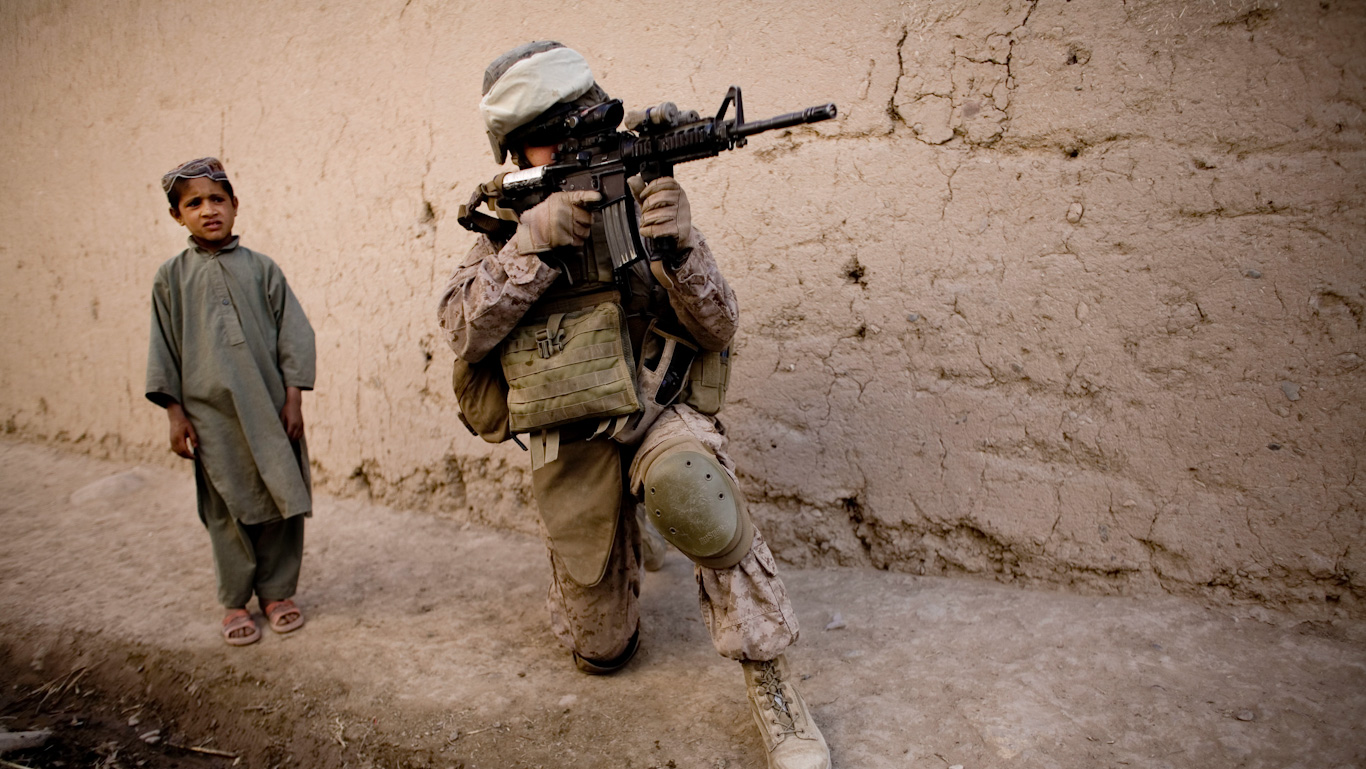
Marine Sgt. Nicole Gee celebrated the joy of service just days before she was one of 13 U.S. service members killed in Thursday’s suicide bombing attack near Hamid Karzai International Airport in Kabul, Afghanistan.
A week ago, Gee, 23, posted a photo on Instagram that showed her holding a baby at that airport. She added a simple, profound comment: “I love my job.” The same photo was posted by the Department of Defense on Aug. 21.
Gee, from Sacramento, California, served as a maintenance technician with the 24th Marine Expeditionary Unit from Camp Lejeune in North Carolina. On her Instagram page, she described herself as a “positive mental attitude advocate.” The locations listed on her page include California, North Carolina and “somewhere overseas.”
Another photo on Gee’s Instagram page shows her earlier in the week, on duty with her rifle next to a line of people waiting to board a transport plane. She described her assignment as “escorting evacuees onto the bird.”
Marine Sgt. Nicole Gee, seen holding a baby at Kabul’s airport, was one of the 13 U.S. service members killed in the Aug. 26 bombing in Afghanistan.
Other recent Instagram photos show Gee with friends in Spain, where they shared a toast, and Greece. Other pictures show the Marine riding a camel in Saudi Arabia and receiving her promotion to sergeant.
“Never would have imagined having my Sergeant promotion meritoriously in Kuwait,” she wrote of the promotion in a post shared three weeks ago.
A Facebook post by the city of Roseville, California, which calls Gee “a hometown hero,” says she graduated in 2016 from the city’s Oakmont High School and enlisted in the Marines a year later. It says her husband, Jarod Gee, also is an Oakmont graduate and a Marine.
Gee was remembered by Sgt. Mallory Harrison, a fellow Marine who roomed with her for more than three years, in a Facebook post accompanied by more than a dozen photos.
“Her car is parked in our lot. It’s so mundane. Simple. But it’s there,” she began the post. “My very best friend, my person, my sister forever. My other half. We were boots together, Corporals together, & then Sergeants together. Roommates for over 3 years now, from the barracks at MOS school to our house here. We’ve been attached at the hip from the beginning.
“I can’t quite describe the feeling I get when I force myself to come back to reality & think about how I’m never going to see her again. How her last breath was taken doing what she loved — helping people — at HKIA in Afghanistan. Then there was an explosion. And just like that, she’s gone.”
She said the war stories told by older Iraq and Afghanistan veterans are “not so distant anymore.”
Harrison concluded: “My best friend. 23 years old. Gone. I find peace knowing that she left this world doing what she loved. She was a Marine’s Marine. She cared about people. She loved fiercely. She was a light in this dark world. She was my person. … Til Valhalla, Sergeant Nicole Gee. I can’t wait to see you & your Momma up there. I love you forever & ever.”
In 2010, I was in Washington and arranged to interview the mastermind of Afghanistan’s modern era of suffering, Zbigniew Brzezinski. I quoted to him his autobiography in which he admitted that his grand scheme for drawing the Soviets into Afghanistan had created “a few stirred up Muslims”.
“Do you have any regrets?” I asked. “Regrets! Regrets! What regrets?”
As a tsunami of crocodile tears engulfs Western politicians, history is suppressed. More than a generation ago, Afghanistan won its freedom, which the United States, Britain and their “allies” destroyed.
In 1978, a liberation movement led by the People’s Democratic Party of Afghanistan (PDPA) overthrew the dictatorship of Mohammad Dawd, the cousin of King Zahir Shar. It was an immensely popular revolution that took the British and Americans by surprise.
Foreign journalists in Kabul, reported the New York Times, were surprised to find that “nearly every Afghan they interviewed said [they were] delighted with the coup”. The Wall Street Journal reported that “150,000 persons … marched to honor the new flag …the participants appeared genuinely enthusiastic.”
The Washington Post reported that “Afghan loyalty to the government can scarcely be questioned”. Secular, modernist and, to a considerable degree, socialist, the government declared a program of visionary reforms that included equal rights for women and minorities. Political prisoners were freed and police files publicly burned.
Under the monarchy, life expectancy was thirty-five; one in three children died in infancy. Ninety per cent of the population was illiterate. The new government introduced free medical care. A mass literacy campaign was launched.
For women, the gains had no precedent; by the late 1980s, half the university students were women, and women made up 40 per cent of Afghanistan’s doctors, 70 per cent of its teachers and 30 per cent of its civil servants.
So radical were the changes that they remain vivid in the memories of those who benefited. Saira Noorani, a female surgeon who fled Afghanistan in 2001, recalled:
“Every girl could go to high school and university. We could go where we wanted and wear what we liked … We used to go to cafes and the cinema to see the latest Indian films on a Friday … it all started to go wrong when the mujahedin started winning … these were the people the West supported.”
For the United States, the problem with the PDPA government was that it was supported by the Soviet Union. Yet it was never the “puppet” derided in the West, neither was the coup against the monarchy “Soviet-backed”, as the American and British press claimed at the time.
President Jimmy Carter’s Secretary of State, Cyrus Vance, later wrote in his memoirs: “We had no evidence of any Soviet complicity in the coup.”
In the same administration was Zbigniew Brzezinski, Carter’s National Security Adviser, a Polish émigré and fanatical anti-communist and moral extremist whose enduring influence on American presidents expired only with his death in 2017.
On 3 July 1979, unknown to the American people and Congress, Carter authorized a $500 million “covert action” program to overthrow Afghanistan’s first secular, progressive government. This was code-named by the CIA Operation Cyclone.
The $500 million bought, bribed and armed a group of tribal and religious zealots known as the mujahedin. In his semi-official history, Washington Post reporter Bob Woodward wrote that the CIA spent $70 million on bribes alone. He describes a meeting between a CIA agent known as “Gary” and a warlord called Amniat-Melli:
“Gary placed a bundle of cash on the table: $500,000 in one-foot stacks of $100 bills. He believed it would be more impressive than the usual $200,000, the best way to say we’re here, we’re serious, here’s money, we know you need it … Gary would soon ask CIA headquarters for and receive $10 million in cash.”
Recruited from all over the Muslim world, America’s secret army was trained in camps in Pakistan run by Pakistani intelligence, the CIA and Britain’s MI6. Others were recruited at an Islamic College in Brooklyn, New York – within sight of the doomed Twin Towers. One of the recruits was a Saudi engineer called Osama bin Laden.
The aim was to spread Islamic fundamentalism in Central Asia and destabilize and eventually destroy the Soviet Union.
In August, 1979, the US Embassy in Kabul reported that “the United States’ larger interests … would be served by the demise of the PDPA government, despite whatever setbacks this might mean for future social and economic reforms in Afghanistan.”
Read again the words above I have italicized. It is not often that such cynical intent is spelt out as clearly. The US was saying that a genuinely progressive Afghan government and the rights of Afghan women could go to hell.
Six months later, the Soviets made their fatal move into Afghanistan in response to the American-created jihadist threat on their doorstep. Armed with CIA-supplied Stinger missiles and celebrated as “freedom fighters” by Margaret Thatcher, the mujahedin eventually drove the Red Army out of Afghanistan.
Calling themselves the Northern Alliance, the mujahedin were dominated by warlords who controlled the heroin trade and terrorized rural women. The Taliban were an ultra-puritanical faction, whose mullahs wore black and punished banditry, rape and murder but banished women from public life.
In the 1980s, I made contact with the Revolutionary Association of the Women of Afghanistan, known as RAWA, which had tried to alert the world to the suffering of Afghan women. During the Taliban time they concealed cameras beneath their burqas to film evidence of atrocities, and did the same to expose the brutality of the Western-backed mujahedin. “Marina” of RAWA told me, “We took the videotape to all the main media groups, but they didn’t want to know ….”
In1996, the enlightened PDPA government was overrun. The Prime Minister, Mohammad Najibullah, had gone to the United Nations to appeal to for help. On his return, he was hanged from a street light.
“I confess that [countries] are pieces on a chessboard,” said Lord Curzon in 1898, “upon which is being played out a great game for the domination of the world.”
The Viceroy of India was referring in particular to Afghanistan. A century later, Prime Minister Tony Blair used slightly different words.
“This is a moment to seize,” he said following 9/11. “The Kaleidoscope has been shaken. The pieces are in flux. Soon they will settle again. Before they do, let us re-order this world around us.”
On Afghanistan, he added this: “We will not walk away [but ensure] some way out of the poverty that is your miserable existence.”
Blair echoed his mentor, President George W. Bush, who spoke to the victims of his bombs from the Oval Office: “The oppressed people of Afghanistan will know the generosity of America. As we strike military targets, we will also drop food, medicine and supplies to the starving and suffering … “
Almost every word was false. Their declarations of concern were cruel illusions for an imperial savagery “we” in the West rarely recognize as such.
In 2001, Afghanistan was stricken and depended on emergency relief convoys from Pakistan. As the journalist Jonathan Steele reported, the invasion indirectly caused the deaths of some 20,000 people as supplies to drought victims stopped and people fled their homes.
Eighteen months later, I found unexploded American cluster bombs in the rubble of Kabul which were often mistaken for yellow relief packages dropped from the air. They blew the limbs off foraging, hungry children.
In the village of Bibi Maru, I watched a woman called Orifa kneel at the graves of her husband, Gul Ahmed, a carpet weaver, and seven other members of her family, including six children, and two children who were killed next door.
An American F-16 aircraft had come out of a clear blue sky and dropped a Mk82 500-pound bomb on Orifa’s mud, stone and straw house. Orifa was away at the time. When she returned, she gathered the body parts.
Months later, a group of Americans came from Kabul and gave her an envelope with fifteen notes: a total of 15 dollars. “Two dollars for each of my family killed,” she said.
The invasion of Afghanistan was a fraud. In the wake of 9/11, the Taliban sought to distant themselves from Osama bin Laden. They were, in many respects, an American client with which the administration of Bill Clinton had done a series of secret deals to allow the building of a $3 billion natural gas pipeline by a US oil company consortium.
In high secrecy, Taliban leaders had been invited to the US and entertained by the CEO of the Unocal company in his Texas mansion and by the CIA at its headquarters in Virginia. One of the deal-makers was Dick Cheney, later George W. Bush’s Vice-President.
In 2010, I was in Washington and arranged to interview the mastermind of Afghanistan’s modern era of suffering, Zbigniew Brzezinski. I quoted to him his autobiography in which he admitted that his grand scheme for drawing the Soviets into Afghanistan had created “a few stirred up Muslims”.
“Do you have any regrets?” I asked.
“Regrets! Regrets! What regrets?”
When we watch the current scenes of panic at Kabul airport, and listen to journalists and generals in distant TV studios bewailing the withdrawal of “our protection”, isn’t it time to heed the truth of the past so that all this suffering never happens again?
John Pilger’s 2003 film, Breaking the Silence, is available to view
COVID and wildfires gave us an education instead of a vacation. We’ll never be the same.
Jill Lawrence, USA TODAY
Smoke from the Caldor Fire in California covers Lake Tahoe in the Incline, Nev., area on Aug. 24, 2021.
The last time we tried for a two-week vacation, in 1993, a Hurricane Emily evacuation forced us to leave after six days. Nearly three decades later, we decided to try again. We left early this time, too, after close encounters with COVID-19 and wildfires.
This is not a first-world rant against the inconvenience of climate change and a virus we can’t seem to beat. Rather, it’s a look at lessons learned and not learned – about the folly of betting against nature, science and, in particular, the frightening fires that seem remote on the East Coast but often dictate life in the West. It’s about the friction between a husband and wife with different tolerances for masking, crowds and indoor vs. outdoor dining, as they traveled through a patchwork of pandemic regulations in three states.
And it’s about a family that keeps trying against the odds to celebrate, together in person, two birthdays four days apart in August – prime hurricane and wildfire season and, in 2020 and 2021, prime COVID season as well.
Smoke and COVID on Day One
We should have known from the start that the trip was going to be problematic. The weather app on my phone showed a solid gray sky in Seattle, our first destination, and the forecast was “Smoke.” Those were firsts in my East Coast experience. Friends had arranged a dinner out on our first night. But the restaurant had a COVID outbreak and was closed all three nights we were there.
Our next adventure was a road trip down the Oregon coast, staying in five towns over five nights. We were in Cannon Beach four days after Gov. Kate Brown reinstated a mask mandate for indoor gatherings. There were posters on store doors all over town announcing the mandate. And, in what could be interpreted as simple fact or passive aggression, they offered Brown’s office number and told people with questions to call her.
“Any questions please call Oregon Governor Kate Brown’s office”: Mask mandate signs on store doors in Bandon, Ore., on Aug. 18, 2021.
Each town brought new reasons to study COVID responses. In Newport, a motel clerk was behind plastic but not masked (fine with me, but not my husband). In Fortuna, motel clerks were masked and so was our waiter at a brewery where we ate outdoors. The inevitable happened at a Bandon bakery, as we waited with a dozen others to order or pick up breakfast: An unmasked young man walked in, an employee offered him a mask, he looked annoyed and he stalked back out the door.
Our first stop in California was Crescent City in Del Norte County, the hottest COVID hotspot on the West Coast. We picked a table far from other diners in a large airy restaurant, and my husband noted to our waiter that he was unmasked. The adorable teenager offered to wear one, but he also reminded us of what we had forgotten: We were no longer in Oregon, so there was no mandate.
Halfway through our meal, we heard an older server tell our waiter that a party of 14 was expected in 15 minutes. Unnerved by the prospect of 14 unmasked strangers at tables the staff was pushing together right next to ours, we gulped a few last bites, paid up and fled.
A second try for Lake Tahoe
Lake Tahoe has been on my bucket list for years, thanks to raves from friends and family. Last year we rented a house there, but COVID forced us to cancel. This year we rented the same house and crossed our fingers. But as we started a 6.5-hour drive, the fire danger snapped into focus. We saw smoke haze for most of the trip. In the parking lot of a Tahoe City supermarket, we slapped on our COVID masks to filter out the smoky air. At the rental house, two big cinders flew by my face as I stepped onto the driveway. Welcome to Tahoe.
Sun through smoke at 11 a.m. PT in Tahoe City, Calif., on Aug. 23, 2021.
I immediately started following @CAL_FIRE on Twitter and checking several times a day on the Caldor Fire, which had destroyed nearly 500 homes and commercial buildings: 98,000 acres and 0% contained. 106,000 and 5% contained. The air quality was hazardous. Then very unhealthy. Then back to hazardous. We had lists of best walks, hikes and places to see sunsets, but we couldn’t go outside. Government agencies advised everyone to stay inside and limit activities. The haze was so thick that there was nothing to see, anyway.
The saving grace was that our sons were coming. One of them was flying into Reno, Nevada, on Aug. 23, the day before his birthday. But wildfire smoke diverted the flight to San Francisco, and then it was canceled. He returned home to Los Angeles the same night. His older brother, driving from Salt Lake City, had been waiting in Reno to pick him up. He continued on to Tahoe alone.
Lake Tahoe’s Emerald Bay is shrouded in smoke from the Caldor Fire, near South Lake Tahoe, Calif., on Aug. 24, 2021.
When the Tahoe air improved to simply “unhealthy,” my first reaction was wow, that’s great. My second was, it’s actually not great when “unhealthy” seems great. “I don’t think it’s healthy to be here,” I told my husband late Monday night. We ended up leaving two days early, on Wednesday. Our Reno-Denver flight was canceled early that morning for visibility reasons, but the airline rebooked us. We walked in our front door in Washington, D.C., about 2 a.m.
Our decision was prescient. By last Tuesday, as it advanced toward Tahoe and closed Reno schools, the Caldor Fire was the No. 1 priority for national firefighting resources. On Wednesday, as we drove away, Tahoe City and South Lake Tahoe had the worst air pollution in the nation. By Thursday, Tahoe basin evacuations had started and tourists were being asked to stay home. By Friday, the fire had grown to 225 square miles and weather conditions were getting worse. On Saturday, a fire that began 70 miles from Lake Tahoe on Aug. 14 was about 8 miles away.
John Martin and Jill Lawrence at Redwood National Park in northern California on Aug. 21, 2021.
This was not quite the trip we had planned. We did reunite with friends in Seattle, and the Oregon coast did live up to its spectacular billing, as did the redwoods. As far as I know, we avoided catching plague from chipmunks at Lake Tahoe. And so far, we are coronavirus-free. But our Pacific Northwest sojourn was not so much an escape as an immersion in two clear and present dangers: COVID and climate change.
The active life we’ve avoided for so long at home exposed us to more COVID risk on the road and more diverse views on how and whether to reduce risk. The challenges of figuring out appropriate restrictions and precautions were never more clear. As for climate change, as an East Coast lifer, I am familiar with its role in making hurricanes more destructive, but until now I could only imagine its impact in the increasingly dry and hot West. This firsthand experience with drought and fire made the climate crisis real and urgent, and our strange, sobering “vacation” unforgettable.
The death squads had just executed Maryknoll nuns, bullets to the back of the head.
It was the Reagan-sponsored war on “communists” in El Salvador, Nicaragua and Afghanistan.
Ed Asner, an actor who wasn’t particularly political, agreed to attend a press conference denouncing the killing of the nuns.
Within short order, his network canceled Lou Grant, the number one show on American TV, in fact, #1 worldwide.
Ed once told me he could’ve kissed the network’s ass, promised to be a good on-stage puppet, an off-stage mute, and save his career which was now on the new Black List.
But he couldn’t. Couldn’t stay silent. Instead, Ed grew louder.
And unstoppable. At dinner this week, Ed told me he was preparing to open in three new one-act plays.
But my wife didn’t think so. She said, “This is the last time we’ll see Ed, isn’t it?”
I wish she weren’t always right.
I remember when we were about to film Ed in The Best Democracy Money Can Buy. I deliberately hadn’t revealed his lines to him, nor his costume: a ridiculous Santa suit.
Ed was a good sport about it. And a “one-take” wonder. But, we needed several takes, a bit too long for his 80-something’s bladder. So, rather than halt the production, he said, “The heck with it!”, let go, then simply dropped his soaking pants and continued the shoot in his boxers.
So, that’s how we shot the next scene: Ed Asner in a top hat and underpants. Absolutely brilliant. Take a look.
For inspiration at the shoot, Ed asked our Executive Producer Leni Badpenny if he could think of her naked. Hey, he only said what every guy thinks. Her response was to sit on his somewhat damp lap. (By the way, he was thrilled when he learned we married.)
Ed Asner and Leni Badpenny at The Best Democracy Money Can Buy premiere 2016
Asner was an actor of great talent because he was a man of great feeling. He would allow nothing to get between his emotions and the words he would express. It was true fearlessness, a courage and inner power that came through even in a sitcom or in a Santa suit.
There’s no guessing where it came from. A working class Jewish kid from Kansas City, child of the Depression and the incipient Holocaust which most Americans, Left and Right, were happy to ignore, and a fierce union man from early on. Ed only became an actor, he told me, because he lost his job in the steel mills.
Before I got the call that Ed was gone, it was already a lousy morning.
I was deeply upset about the people of Afghanistan whom we’d just abandoned to the Islamists executioners, the very killers Reagan had unleashed alongside the death squads of El Salvador.
And, frankly, I’ve been afraid that I’d be shunned by progressive friends and editors who are breaking out the party hats to celebrate the end of the “forever war.”
But I just can’t join the party. Should I say something? Death squads, Nazis, Taliban. Which victims am I allowed to speak for?
I’m an operational atheist.
I can’t turn to the Lord for advice.
But I can ask, What would Lou Grant do?
You’ll have my answer this week.
Alev ha-shalom, my friend.
Producer David Ambrose (left), Ed Asner (center), Greg Palast (right)
at The Best Democracy Money Can Buy premiere 2016
As Colorado River Basin states confront water shortages, it’s time to focus on reducing demand
Robert Glennon, Regents Professor and Morris K. Udall Professor of Law & Public Policy, University of Arizona
Water flows into a canal that feeds farms in Casa Grande, Ariz.AP Photo/Darryl Webb
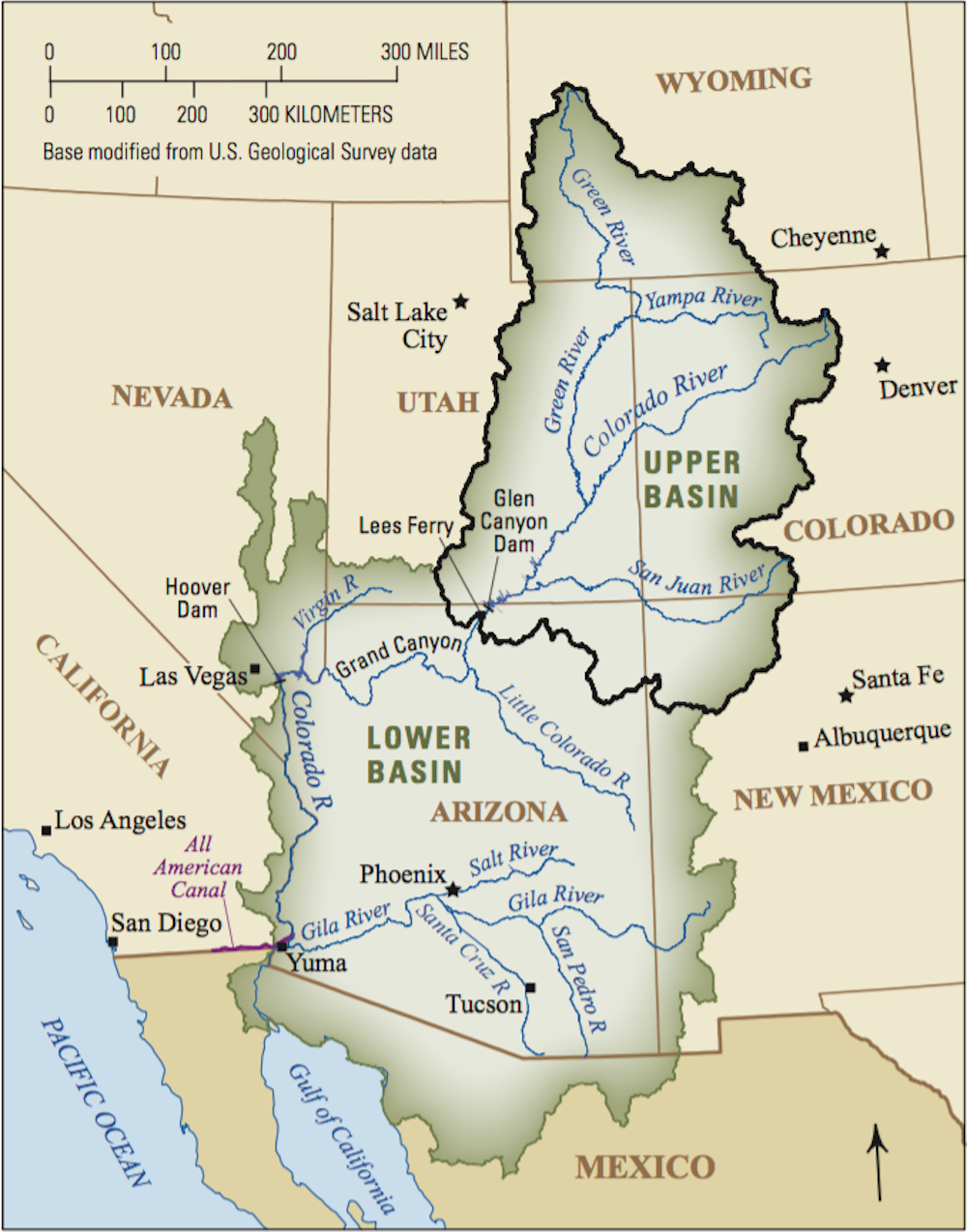
The U.S. government announced its first-ever water shortage declaration for the Colorado River on Aug. 16, 2021, triggering future cuts in the amount of water states will be allowed to draw from the river. The Tier 1 shortage declaration followed the U.S. Bureau of Reclamation’s forecast that the water in Lake Mead – the largest reservoir in the U.S., located on the Arizona-Nevada border – will drop below an elevation of 1,075 feet above sea level, leaving less than 40% of its capacity, by the end of 2021.
The declaration means that in January 2022 the agency will reduce water deliveries to the Lower Colorado River Basin states of Arizona and Nevada and to Mexico, but not to California – yet.
Map of Colorado River Basin.
Arizona will lose the most water: 512,000 acre-feet, nearly a fifth of its total Colorado River allocation of 2.8 million acre-feet. Nevada will lose 21,000 and Mexico 80,000. An acre-foot is enough water to cover an acre of land, which is roughly the area of a football field, to a depth of one foot – about 326,000 gallons.
Central Arizona farmers are the big losers in this first round of cuts. The cities are protected because they enjoy the highest priority in Arizona for water delivered through the Central Arizona Project, a 330-mile canal from the Colorado River. From my experience analyzing Western water policy, I expect that this declaration won’t halt growth in the affected states – but growth can no longer be uncontrolled. Increasing water supply is no longer a viable option, so states must turn to reducing demand.
Conservation remains the low-hanging fruit. Water reuse – treating wastewater and using it again, including for drinking – is also viable. A third option is using pricing and trading to encourage the reallocation of water from lower-value to higher-value uses.
Interstate collaboration
The Colorado River Basin states have formally negotiated who can use how much water from the Colorado River since they first inked the Colorado River Compact in 1922. In 2007 they negotiated interim shortage guidelines that specified how much each state would reduce its use depending on the elevation of Lake Mead. A series of subsequent agreements included Mexico, increased the scale of reductions and authorized the secretary of the Interior, ultimately, to impose truly draconian cuts.
California does not take a cut until the level in Lake Mead drops even lower. But that could happen as soon as 2023. The water level is dropping partly because of the Western drought but also because of the shape of Lake Mead, which was created by damming Boulder Canyon in 1936.
Like most Western river canyons, Boulder Canyon is wide at the rim and narrow at its base, like a martini glass. As its water elevation drops, each remaining foot in the lake holds less water.
Lake Mead feeds Hoover Dam, one of the largest hydroelectric generating facilities in the country. The plant produces electricity by moving water through turbines. When Lake Mead is high, Hoover Dam’s generating capacity is more than 2,000 megawatts, which produces enough electricity to supply some 450,000 average households in Nevada, Arizona and California.
But the plant has lost 25% of its capacity as Lake Mead has dropped. If the water level declines below about 950 feet, the dam won’t be able to generate power.
Sending water south
The Upper Basin states – Colorado, Wyoming, Utah and New Mexico – will also suffer.
That’s because the Colorado River Compact obligates the Bureau of Reclamation to release an annual average of 8.23 million acre-feet from Lake Powell, the nation’s second-largest reservoir, which extends from southern Utah into northern Arizona.
The Bureau of Reclamation predicted in mid-July that runoff into Lake Powell for 2021 will total just 3.23 million acre-feet, or 30% of average. To make up for this shortfall, the bureau will release more water from three Upper Basin reservoirs: Flaming Gorge in Utah, Blue Mesa in Colorado and Navajo on the Colorado-New Mexico border.
The ultimate problem facing the Colorado River Basin states is simple. There are more water rights on paper than there is water in the river. And that’s before considering the impact of climate change and evaporation loss from Lakes Mead and Powell.
The urgency of the Tier 1 shortage declaration has generated wild-eyed proposals to import water from far-flung places. In May 2021, the Arizona legislature passed a bipartisan resolution calling on Congress to study a pipeline from the Mississippi River that would augment the Colorado River. Space does not permit me to elaborate all the obstacles to this idea, but here’s a big one: the Rocky Mountains.
Similarly, the city of St. George in southwest Utah has proposed building a 140-mile pipeline from Lake Powell to augment its supply. St. George has some of the highest water consumption and lowest water prices in the country.
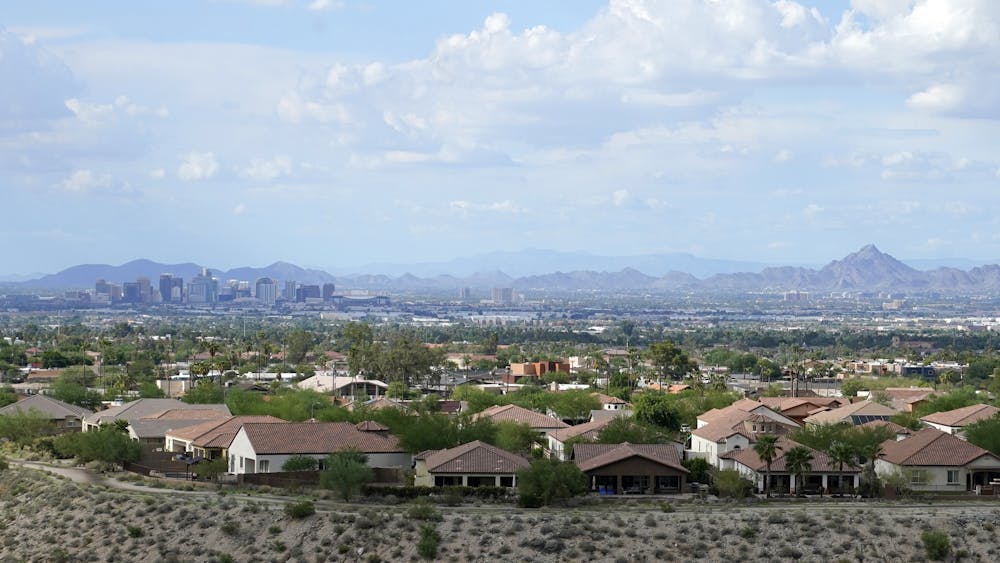
Downtown Phoenix with suburban homes in foreground.
The gospel of growth still motivates some cities. Buckeye, Arizona, on the west side of Phoenix, has a planning area of 642 square miles, which is larger than Phoenix. The city has approved 27 housing developments that officials project will increase its population by 800,000 people by 2040. Yet its water supply depends on unsustainable groundwater pumping.
Other communities have faced reality. In early 2021 Oakley, Utah, east of Salt Lake City, imposed a construction moratorium on new homes, sending shivers up the spines of developers across the West.
Enabling farmers to be more efficient
The Tier 1 declaration gives states and local communities reason to remove barriers to transferring water. Market forces are playing an increasingly critical role in water management in the West. Many new demands for water are coming from voluntary transfers between willing sellers and desperate buyers.
Water markets threaten rural communities because farmers cannot hope to compete with cities in a free market for water. Nor should they have to. Water remains a public resource. I believe the states need a process to ensure that transfers are consistent with the public interest – one that protects the long-term viability of rural communities.
As the West enters an era of water reallocation, most of the water will come from farmers, who consume more than 70% of the region’s water. Cities, developers and industry need only a tiny fraction of that amount for the indefinite future.
What if municipal and industrial interests created a fund to help farmers install more efficient irrigation systems instead of simply flooding fields, a low-tech approach that wastes a lot of water? If farmers could reduce their water consumption by 5%, that water would be available to cities and businesses. Farmers would continue to grow as much food as before, thus protecting the stability of rural communities. This could be a win-win solution to the West’s water crisis.
Many California farmers have water cut off, but a lucky few are immune to drought rules
Ari Plachta
Kim Gallagher in one of her rice fields in Knights Landing. (Max Whittaker / For The Times)
Driving between her northern Central Valley rice fields with the family dog in tow, fifth-generation farmer Kim Gallagher points out the window to shorebirds, egrets and avocets fluttering across a thousand-acre sea of green flooded in six inches of water.
“People say agriculture uses so much water, but if you knew who lived in these areas and if you saw the animals taking advantage of it, you’d think there’s a lot more going on here,” Gallagher said. “This is where you’re going to find a Great Blue Heron. If you don’t want that type of bird then we shouldn’t be growing rice.”
The nearly 500,000 acres of sushi rice grown in the Sacramento Valley each year serve as the wetland habitat for thousands of migrating birds along the Pacific Coast. Yet the crop also uses more water than most, and about half of the product is exported to countries including Japan and South Korea.
Since the 1920s, farmers have grown rice in the Sacramento Valley, where old hands fly crop duster planes and rice emblems mark the county buildings. Now, due to decades-old agreements with the federal government, rice farmers like Gallagher are going relatively unscathed by unprecedented emergency water cuts to farmers this month as others fallow fields, wells go dry and low water levels imperil Chinook salmon, the native cold-water fish that play critical ecological roles and support a billion-dollar fishing industry.
A handful of districts supplying farmers including Gallagher are receiving nearly 2 million acre feet of water this drought year, enough to supply the city of Los Angeles for roughly four years. Their seniority is a function of the state’s complicated water rights system, which some experts say is ripe for reform as extreme drought magnifies the inequities within it.
Developed in the 19th century by miners who used water to blast gold out of the Sierra foothills, California water rights are based on a concept known as “first in time, first in right.”
An irrigation canal that feeds rice fields in Knights Landing. (Max Whittaker / For The Times)
The principle, which remains central to state water law today, roughly translates to “first come, first served” to a quantity of water from a natural source. During drought, rights are curtailed by state regulators from newest to oldest to protect water for residential use and human health and safety essentials.
Most farmers across the state who rely on the Central Valley Project, the nearly two dozen dams and hundreds of canals that make up the federal water allocation system, are getting 5% or less of their usual water supply this year.
The state water board’s most recent emergency order barred thousands of farmers, landowners and others from diverting water from the massive Sacramento-San Joaquin Delta watershed that stretches from Fresno to the Oregon border, forcing many to turn to groundwater pumping.
Some of them with rights claims predating 1914, the year California enacted its water rights law, say the State Water Resources Control Board lacks authority to curtail them and sued over the issue during the last punishing drought.
Meanwhile, districts like Gallagher’s that have contracts with the water project based on those rights, called the Sacramento and San Joaquin River Settlement Contractors, have never been cut off by more than 25% — even in the driest years.
The fish screen at the Glenn Colusa Irrigation District pumping station in Orland, which supplies water to rice farmers like Kim Gallagher. (Max Whittaker / For The Times)
The largest of this group is Glenn-Colusa Irrigation District, 260 square miles of land best known for rice growing. Its multistory pump station sits on a bend in the Sacramento River near where, in 1883, future state legislator Will S. Green nailed a paper notice to an oak tree claiming millions of gallons per minute of the river’s natural flow.
When the federal government was building the Central Valley Project in the 1940s, irrigators such as Glenn-Colusa sued, settling after nearly 20 years of negotiations for contracts to stored water from Shasta Lake, the state’s largest man-made reservoir.
Regardless of conditions, federal officials operating Shasta Dam are now obliged to fulfill those contracts to rice farmers and others along the San Joaquin River, with the expectation that there will be legal action if they don’t.
‘An unprecedented year’
Built by the federal government in the 1940s in the wake of the Great Depression, Shasta Lake is the cornerstone of the Central Valley Project.
Shasta Dam is operated by the federal Bureau of Reclamation, which is responsible for distributing water to farms and communities while protecting the watershed’s fish and wildlife. (Max Whittaker / For The Times)
The dam is operated by the federal Bureau of Reclamation, which is responsible for distributing water to farms and communities while protecting the watershed’s fish and wildlife. Although the two obligations are equal in the eyes of the law, they often conflict when there’s not enough water to go around.
Over the years, the impact of the perennial tug-of-war between competing interests has been felt in the increasing die-off of Chinook salmon, one of California’s most iconic fish species.
In April, just as rice farmers in the Sacramento Valley received water to flood their fields, record evaporation of snowpack on the Sierra Nevada mountains meant some 800,000 acre feet of water didn’t melt into reservoirs as expected.
Soon after, the State Water Resources Control Board told the Bureau of Reclamation that it violated requirements to keep water flowing through the watershed, in part by allocating too much to agriculture and failing to adequately prepare for drought after a dry 2020.
The bureau had initially aimed to preserve enough cold water in the reservoir to keep nearly half of this year’s young winter-run Chinook class alive. By July, it said those initial cold storage benchmarks could no longer be met and now expects a death rate of 80%.
According to Bureau of Reclamation Regional Director Ernest Conant, providing water to settlement contractors like Glenn-Colusa impacts storage levels. But predictions changed because of unexpectedly high rates of depletion downriver — evaporation and potentially unlawful diversions directly from waterways that are difficult to track.
“We started this year with a higher storage level than in previous critical years, certainly higher than 2015,” Conant said. “So, I mean, I think we have prudently planned. This is just an unprecedented year.”
Conant said the agency plans to take a critical look at the way it approaches weather forecasting as water managers throughout the West face record snowpack evaporation. This week, federal officials declared the first-ever shortage from the Colorado River as its largest reservoir, Arizona’s Lake Mead, fell to record lows.
‘An indicator from the ocean to the rivers’
The Centimudi boat ramp on a receded Shasta Lake with Shasta Dam in the background. (Max Whittaker / For The Times)
Shasta Lake is currently at 29% capacity and falling. And without enough cold water in the reservoir, state officials are warning of a near complete loss of young Chinook salmon in warm waters of the Sacramento River, which runs from the Klamath mountains out to the San Francisco Bay.
Fall-run Chinook salmon, which aren’t endangered but support California’s commercial salmon fishing industry, stand to be adversely affected by drought conditions as well, with the potential for lasting effects on future populations that could raise retail prices in the long run.
Jordan Traverso, a spokesperson for the California Department of Fish and Wildlife, said that the mortality of adult endangered salmon that hadn’t had the chance to spawn was more than 20% higher than average this year due to dry river conditions and high water temperatures.
“The greater challenge for winter-run Chinook salmon in 2021 is ensuring that suitable water temperatures can be maintained in the Sacramento River for the developing eggs and embryos that must remain in the gravel before hatching,” she said in an email.
The winter-run Chinook salmon native to the Sacramento River are born in freshwater rivers, journey to sea and live in the Pacific for two to three years before coming back as adults to spawn the next generation.
The fish historically swam high into the mountains to spawn in cold water, but since the construction of Shasta Dam, they have adapted to breed in front of it.
Cold water releases into the Sacramento River are meant to preserve water temperatures at or below 56 degrees, keeping eggs and young salmon from dying in the warm river. Dwindling cold water in the reservoir means less is available for the fish.
“Winter-run Chinook is a species that’s teetering on the verge of extinction, so losing a whole year class really does not help,” said Andrew Rypel, a fish ecologist at UC Davis.
In the 1960s, adult spawning classes were more than 100,000 large, he said. Now that number is 10,000 in a good year.
Winnemem Wintu tribal chief Caleen Sisk on the shore of a receded Shasta Lake. (Max Whittaker / For The Times)
Unlike rice farmers who benefit from a water rights system that prioritizes seniority, the ancestors of Winnemem Wintu tribe leader Caleen Sisk, who fished Chinook out of the same river for thousands of years, were dispossessed by it.
Construction of Shasta Dam flooded the tribe’s lands, blocking access to ritual sites and breaking what the tribe sees as a covenant with the fish that once swam miles up their native McLoud River into the mountains.
Salmon are a critical part of the ecosystem, transferring nutrients from the sea to freshwater habitats along their journey, said Sisk, but she fears that message falls mostly on deaf ears among government agencies tasked with managing water.
“Can we do without salmon? Some people think we can. We believe we can’t,” she said. “They’re an indicator from the ocean to the rivers. It’s like miners going down into the mines without a canary. They can do it, but there’s gonna be a whole lot more problems.”
A photo of the Winnemem Wintu tribe in the 1890s whose tribal land was flooded by the Shasta Dam. (Caleen Sisk)
History repeating
A similar chain of events played out in California’s punishing 2014 drought, when only 5% of the year’s juvenile Chinook survived after the Bureau of Reclamation cited inaccurate computer models for underestimating the amount of cold water storage needed.
“We’re repeating that disaster and it’s very frustrating to watch,” said Doug Obegi, an attorney with the Natural Resources Defense Council in San Francisco.
“Drought makes the challenges much harder, but we have contracts that promise so much water that you have to drain the reservoirs to be able to meet them in a year like this,” he said, pointing to the Bureau of Reclamation’s legal obligations to districts including those that serve Sacramento Valley rice farmers.
If water rights can’t be fulfilled during drought years without letting close to an entire class of endangered Chinook die, Obegi thinks those districts’ contracts need to be reconsidered.
But Glenn-Colusa Irrigation District General Manager Thad Bettner said growers shouldn’t be forced to conserve unless urban areas are doing the same. Measures such as voluntary reductions, which he said the district implemented this year, or selling more water down south by fallowing fields, could help avoid disaster in the next drought.
“This is the water rights system that we inherited from our forefathers. All people say is ‘Well, maybe it’s not working.’ But it’s like, then what do you want to change it to?” Bettner said. “Until we have that sort of conversation, I think this is a system we know we can make work.”
Kim Gallagher stands in a rice field she’s fallowed due to a lack of water in Knights Landing. (Max Whittaker / For The Times)
Asked whether flooding fields like hers could have played a role in depleting the cold water pool for salmon, Gallagher said the answer is above her pay grade. She had hoped that letting one of her rice fields fallow and selling the water down south later in the season was doing her part to maintain storage.
“I don’t know how it could be my fault, and I don’t know how it could be [the bureau’s] fault. I just think we don’t have a system that’s working well in a drought year and we’re just doing our best to try and make it through,” she said.
Settlement contractors are one part of the legal battle over the state’s authority to regulate California’s longest-standing water users that makes its water rights system “wholly unsuited to the modern state and even more wholly unsuited to a region facing climate change,” said Michael Hanemann, environmental economist and former UC Berkeley professor.
After studying water rights for 30 years, he said the big question is whether the state can legislate structural changes to the system and extend the authority of regulating agencies to the most senior rights.
The state water board is currently “muddling through” with emergency regulations similar to those that Gov. Jerry Brown empowered the state water board to enact for the first time in 2014, Hanemann said.
“Up to now, legislation that was far reaching enough to change the system could never pass because the vested interests were too powerful,” Hanemann said. “All of this is good, but it’s not doing much without passing legislation.”
Mississippi’s governor says people in the state are less scared of COVID-19 because they ‘believe in eternal life’
Tom Porter
Mississippi Republican Gov. Tate Reeves delivers a televised address prior to signing a bill retiring the last state flag with the Confederate battle emblem during a ceremony at the Governor’s Mansion in Jackson, Mississippi, on June 30, 2020. ROGELIO V. SOLIS/POOL/AFP via Getty Images.
Mississippi Gov. Tate Reeves said people in the state are “less scared” of COVID-19.
“When you believe that living on this earth is but a blip on the screen, then you don’t have to be so scared of things,” he said.
Health services are struggling under a wave of new infections in the state.
Mississippi Governor Tate Reeves, in remarks Saturday, said that people in the state were “less scared” of COVID-19 because they believe in “eternal life,” as new infections reach record levels and hospitalizations spike.
Reeves made the remarks to a gathering of state Republicans at a fundraiser last Thursday in Eads, reported the Daily Memphian.
“I’m often asked by some of my friends on the other side of the aisle about COVID … and why does it seem like folks in Mississippi and maybe in the Mid-South are a little less scared, shall we say,” Reeves said.
“When you believe in eternal life – when you believe that living on this earth is but a blip on the screen, then you don’t have to be so scared of things,” he said.
Reeves went on to say, “God also tells us to take necessary precautions. And we all have opportunities and abilities to do that and we should all do that. I encourage everyone to do so.”
Mississippi has recorded more new COVID-19 cases per capita than any other state, with around 127 new cases per 100,000, according to an analysis of data by The New York Times.
Reeves, throughout the pandemic, has criticized measures to slow the spread of the disease introduced by public health officials and has declined to issue a mask mandate at schools, where the disease is spreading rapidly.
In July, after the CDC issued new guidance for those fully vaccinated to wear a mask indoors to help reduce transmission, Reeves told supporters the measure was part of a political plot.
“It reeks of political panic so as to appear they are in control,” Reeves told supporters, reported the Associated Press.
A program that pays farmers not to farm isn’t saving the planet
Tatyana Monnay
President Joe Biden wants to combat climate change by paying more farmers not to farm. But he’s already finding it’s hard to make that work.
His Agriculture Department is far behind its goal for enrolling new land in one program that has that goal, with participation being the lowest it’s been in more than three decades.
Even though the USDA this summer more than doubled key incentive payments for the program that encourages farmers and ranchers to leave land idle, high commodity prices are keeping it more worthwhile for growers to raise crops.
On top of that, the plan, known as the Conservation Reserve Program, takes land out of production for only 10 to 15 years — so those acres could release carbon into the atmosphere if the land is planted again and thus cancel out its environmental benefit.
The slow pace of enrollment and the temporary nature of the program raise questions about whether it will ever contribute significantly to efforts to reduce carbon emissions. It also shows how difficult it is for government programs to voluntarily draw in the farm industry to combat pollution.
“I guess my bottom line is, it’s not a great climate solution,” said agriculture and environment consultant Ferd Hoefner, who was the founding policy director for the nonprofit National Sustainable Agriculture Coalition.
Zach Ducheneaux, administrator of USDA’s Farm Service Agency, which oversees the conservation program, acknowledges that participation this year has been lower than hoped for, but he is still optimistic that the additional money the administration is providing will spur more landowners to join.
“Our position at the Farm Service Agency is that we have to start to talk about working lands and conservation in the same breath,” Ducheneaux said in an interview.
The added incentives the USDA has introduced “definitely made the program more attractive than it was last year,” said Cristel Zoebisch, policy specialist at the National Sustainable Agriculture Coalition.
But she noted that high commodity prices this year could be more lucrative than any additional money the Biden administration is offering. “It’s a trend that we’ve seen time and time again that whenever commodity prices are good, CRP enrollments go down,” Zoebisch said.
Even last week, when the USDA announced the low enrollment, it touted the added benefits to the environment from the program. By participating in the decades-old initiative, USDA noted that farmers agree to undertake conservation measures such as planting trees or grass that prevent soil erosion, improve water quality or provide habitat for wildlife. In exchange, FSA pays farmers rent for the 10 to 15 years the land is enrolled and shares in the costs of making the conservation changes.
But it’s not clear how USDA measures whether the program is a good conservation effort. Ducheneaux said that the department relies on independent analysis from universities and environmental nonprofits to help quantify the program’s success.
USDA asserts the program has prevented more than 12 million tons of carbon dioxide from entering the atmosphere. Still, that’s a pittance compared with how much of the greenhouse gas the USDA said the ag industry releases each year (698 million metric tons in 2018).
Environmentalists praise certain aspects of the program, which doles out about $2 billion each year to farmers and ranchers. For instance, they have commended other conservation benefits that come from sign-ups, such as improved water quality.
Currently, there are nearly 21 million acres of farmland enrolled in CRP, but the program can enroll up to 25 million acres this year. Ducheneaux attributed the lower enrollment to the fact the program had been cut and ignored for years, even in times when commodity prices were suffering and farmers could have benefited from the added revenue.
“As it was being implemented in the past, folks weren’t being drawn to it,” Ducheneaux said. “The incentives clearly weren’t enough to get folks to even step out of the volatile commodity markets and engage in these conservation practices.”
The program also has supporters including many members of Congress and powerful ag interests that prefer voluntary incentives over mandatory regulations to slash emissions.
Rep. Cheri Bustos (D-Ill.), a House Agriculture Committee member, is among them and noted that CRP isn’t the only tool the Biden administration will use to fight climate change.
“This is a complex problem, and we have got to basically be able to look at what we’re going to be able to do together,” Bustos said. “Bring farmers to the table and figure out how we’re gonna have the most comprehensive approach possible.”
Bustos, who has 10,000 family farms in her Northwest Illinois district, also said she hoped the added financial incentives the administration has introduced will draw in more farmers.
“We can be part of the solution. We want to be part of the solution,” Bustos said. “But we’ve got to connect all those dots as far as being financially healthy, and being able to make a living and helping the environment.”
The American Farm Bureau Federation, the large farm lobby, also backs CRP, because it can help farmers and ranchers stay profitable.
Regions battling wildfires, extreme temperatures and drought such as the Pacific Northwest and the broader Western U.S. might have higher rates of enrollment this year, said Shelby Myers, an economist at the Farm Bureau.
Environmental groups, like the Theodore Roosevelt Conservation Partnership, are also backing the administration’s efforts to attract more farmers to the program.
But some conservationists are worried that FSA will take land that scores low on the environmental benefits index to meet the goal of enrolling more acres, simply to prove that the program fares better under Biden than it did under former President Donald Trump.
The quality of land enrolled in the program is a constant worry, Zoebisch said. She added that taking in land that scores low would be a waste of taxpayer dollars.
“There’s definitely a benefit to having certain parts of agricultural fields taken out of production and protected with permanent grasses and cover,” Zoebisch said. “But we also don’t want to be just allowing any land into the CRP general sign-up. We want it to be of high environmental benefit.”
13 U.S. service members killed in Kabul attack: Pentagon
A “complex attack” involving at least two explosions outside the airport in Kabul on Thursday killed 13 U.S. service members and injured at least 15 others, the Pentagon said.
The attack also killed and wounded a number of Afghan civilians. An Afghan official told Associated Press that at least 60 Afghans were killed and 143 others were injured in the attack.
“Let me be clear: While we’re saddened by the loss of life, both U.S. and Afghan [lives], we’re continuing to execute the mission,” Marine Gen. Frank McKenzie, commander of U.S. Central Command, said at a press briefing on Thursday.
McKenzie confirmed earlier reports that a suicide bomb exploded outside one of the main gates at Hamid Karzai International Airport. He said another bomb went off in the vicinity of the Baron Hotel, which is near the airport and is often frequented by Americans in Kabul.
Smoke rises from an explosion outside the airport in Kabul on Thursday. (Wali Sabawoon/AP)
McKenzie also confirmed that ISIS-K, an affiliate of the Islamic State terrorist group in Afghanistan, is believed to be responsible for the attacks. He said U.S. officials believe it is the group’s “desire to continue those attacks, and we expect those attacks to continue.” ISIS-K is also an enemy of the Taliban.
Asked whether the U.S. would take military action against those responsible, McKenzie said, “Yes. If we can find who is associated with this, we will go after them.”
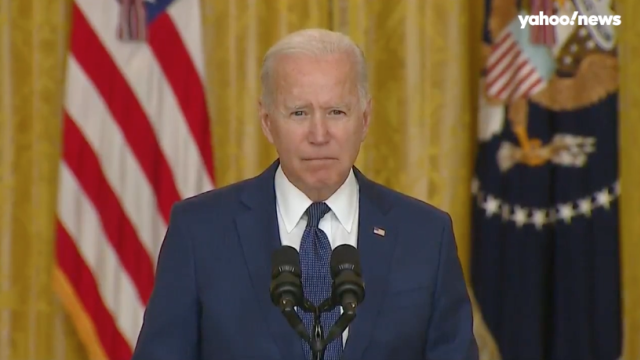
On Thursday evening, President Biden, speaking somberly from the White House, vowed to “hunt down” those who carried out the attack.
“We will not forgive, we will not forget, we will hunt you down and make you pay,” he said.
Biden added that officials “have some reason to believe we know who [the ISIS-K leaders] are, and we will find ways of our choosing, without large military operations, to get them.”
Yahoo News
The Hamid Karzai airport has been the site of a massive airlift operation by the U.S. military to evacuate tens of thousands of Americans, at-risk Afghans and citizens of allied nations out of Afghanistan following the Taliban’s takeover of the country less than two weeks ago.
McKenzie told reporters that the suicide bomber likely made it past Taliban checkpoint outside the airport and was being screened by U.S. Marines for entry at the gate when the attack occurred, highlighting the threats to U.S. troops who are facilitating the airlift.
“We don’t want to let somebody on an airplane with a bomb,” McKenzie said. “Ultimately, Americans have got to be endangered to do these searches, there’s really no other way to do it.”
McKenzie said he doesn’t think there’s any reason to believe the Taliban intentionally let the attack happen.
“Clearly, if they were able to get up to the Marines at the entry point of the base, there’s a failure somewhere,” he said. Still, McKenzie said, U.S. officials have asked Taliban leaders for help providing additional security around the airport, given threats of another possible attack.
“They have a practical reason for wanting us to get out of here by Aug. 31,” McKenzie said of the Taliban, who, he said, want to reclaim control of the Kabul airfield. “As long as we kept our common purpose aligned, they’ve been useful to work with.”
Biden to ISIS-K: ‘We will hunt you down and make you pay’
President Biden addressed the nation Thursday evening following two bombing attacks outside the Kabul airport that killed 12 U.S. service members and dozens of Afghans. Biden blamed Islamic State Khorasan, or ISIS-K, for the attack and vowed to avenge those deaths.
Biden reiterated this point on Thursday, saying that “no one trusts” the Taliban, but that U.S. officials are counting on the group’s “self-interest.”
“It’s not a matter of trust,” Biden said, “it is a matter of mutual self-interest.”
The U.S. has been racing to evacuate as many people from Afghanistan as possible before Aug. 31, when the last American troops are scheduled to withdraw from the country. Earlier this week, Biden confirmed that he intends to stick with that withdrawal deadline, despite calls to extend it. He cited the growing threat that ISIS-K poses to U.S. troops on the ground in Kabul.
“Every day we’re on the ground is another day we know ISIS-K is seeking to target the airport,” Biden said Tuesday. “The sooner we can finish, the better.”
As of Wednesday, Secretary of State Antony Blinken said that more than 4,500 American citizens and their immediate family members had been evacuated from Afghanistan, and that up to 1,500 others were still waiting to leave.
At the Pentagon on Thursday, McKenzie said that before the attack, 104,000 people had been airlifted out of the Kabul airport.
Medical staff bring an injured man on a stretcher for treatment after the explosions on Thursday. (Wakil Koshar/AFP via Getty Images)
What if it’s too late to save our planet without geoengineering?
Moira Donegan
Photograph: Phil Noble/Reuters
The realities of climate change are front-page news every day. Temperature records are being smashed. Wildfires are raging. There is no sign of things going back to “normal”. If anything, they will only get worse.
Last year, when the planet was convulsing with the arrival of a pandemic, we pinned our hopes on technology – in the form of an mRNA vaccine – getting us out of our crisis. The vaccine was a technological intervention, injected into the arms of billions of people. Could we (should we?) look to technological solutions to our climate crisis, too?
This is the question posed by Holly Jean Buck in her 2019 book After Geoengineering: Climate Tragedy, Repair, and Restoration. Zooming with me from Buffalo, New York, where she’s a professor of environment at the University of Buffalo, Buck is blunt in her assessment. The pace of climate change, and the insufficiency of humanity’s current response, have effectively already made the choice for us: mankind will have to engage in some kind of “geoengineering” – an umbrella term for various methods of intentional, planetary-scale climate intervention – whether we like it or not.
Geoengineering refers to any number of ways that humans can change our climate through interventions. The two main types of geoengineering are carbon engineering, which aims to suck carbon out of the atmosphere, and solar engineering, which aims to reflect solar energy away from Earth.
“We’re in a climate crisis,” she tells me. “Mitigation isn’t going fast enough. Adaptation needs far more support than it’s getting. It’s clear that we need to remove some amount of carbon from the atmosphere.”
How much? “Hundreds of billions of gigatons,” Buck says. “We have emitted so much, and now we have so much legacy carbon. The challenge isn’t just cutting emissions.” The second challenge is “removing the carbon that’s up there. It’s this massive cleanup operation that we need to undertake this century.”
The idea of deliberately altering the climate can be frightening and distasteful, including to many environmentalists. But Buck argues that climate engineering is coming whether we like it or not. “If people on the environmental left – people who care about climate change – just reject all of these approaches out of hand, then we lose the ability to shape them, which would be a grave mistake,” she says.
The simplest form of geoengineering is the kind of carbon removal many of us learned about in school: planting trees. “Land-based solutions are really important, especially in the next decade or so, because they can be implemented quickly – and we know how to plant forests,” Buck says. She points to other kinds of land-based climate interventions that show promise. Changing agricultural practices can be used to store more carbon in the dirt. Other strategies include storing carbon in wetlands, ocean iron fertilization, or different approaches involving rock weathering.
But land-based solutions, though a helpful beginning, probably won’t be enough, Buck says. To plant enough trees to soak up enough carbon to sufficiently cool our planet, we would have to fundamentally change the way we use land in ways that would make our economy and many of our lives unrecognizable. And there are other risks to relying too heavily on land-based techniques.
“A lot of land-based approaches are vulnerable to climate change itself,” Buck explains. “You don’t want a wildfire to wipe out these removals that you’ve been banking on, right?” Massive reforestation efforts could go up in smoke.
But land-based solutions are not the only option. Carbon removal can also be accomplished with industrial technologies. Buck points to a carbon mitigation strategy called geological carbon capture, which is already widely used to reduce the emissions of heavily polluting industries. “You could outfit, well, scrubbers basically, on a factory, and these collect carbon dioxide. Then you inject [the carbon] underground, into a cavern, and keep it there, under the rock, for a very long time. You keep monitoring it, to make sure it stays where you want it to be.”
There are risks to injecting large amounts of carbon into rock; Buck laments the under-regulated “wild west atmosphere” of fracking, which caused earthquakes in some parts of the US. But scientists have learned from that experience, and technologies exist to keep underground carbon in place. And new techniques may make geological carbon capture safer. “There’s a lot of new research about how to get carbon dioxide to turn into rock quicker once you inject it” underground, Buck says.
This is a carbon mitigation technique that has proved efficient in reducing emissions at an industrial scale, and it has been in use for decades, meaning that the safety and science of the technique are well understood. Buck’s hope is that this technology could advance and be used not just for mitigating carbon emissions, but for removing carbon.
“It becomes carbon removal” – as opposed to mitigation – “if you’re removing the carbon just from the ambient air,” Buck says. There are now machines that can “scrub” carbon out of the air; the carbon can then be transported and stored underground. Without these machines, the technique can also be used to create bioenergy, which involves “producing biomass” – say, a very carbon-dense type of plant – “and combusting it at a power plant, and separating out the carbon and storing it underground again”.
This strategy – using a spectrum of carbon-engineering techniques to inject carbon deep beneath rock – is the most effective and safest, Buck believes. But unless humanity gets its act together soon, we may forced to entertain much riskier climate mitigation strategies. “If we don’t remove carbon, and decarbonize, and reform how we use land, and rework our transportation systems, and change industrial systems fast enough,” Buck says, “then there’s the possibility that people will pitch the idea of solar geoengineering.”
Solar geoengineering is a kind of climate mitigation – thus far theoretical – that involves “blocking a fraction of incoming sunlight and sending it back out into space, which has a cooling effect”. Most solar-engineering techniques involve using special planes to inject gas into the stratosphere. The gas particles would reflect sunlight away, changing both the quantity and the quality of sunlight that reaches earth.
This kind of geoengineering would certainly cool the planet, at least for a while. But it would not solve the fundamental problem of too much carbon in the atmosphere. “It doesn’t get to the root,” says Buck. “It doesn’t remove emissions. It’s just a blanket of intentional pollution that cools things down.”
And solar geoengineering might create other problems, Buck says. What would a different kind of sunlight do to humankind, or to other living creatures? What would it do to agriculture, and our food supply? We don’t know. Would there be food shortages? Would the sky still be blue? We don’t have those answers, and solar geoengineering remains a risky proposition until we do.
How optimistic is Buck that humanity will attain a livable future without having to resort to solar geoengineering? More than I expected. The vision that she articulates is ambitious. It would require international cooperation and vast overhauls of infrastructure. It would also mean that the United States and other capitalist countries would have to reorient themselves to a more centrally planned economy, devoted less to maximizing growth than to minimizing carbon. It would mean overcoming vast political differences and competing incentives the world over in order to unite in global common cause.
But Buck thinks that the incentives for cooperation in the existential climate intervention project are great enough to ensure at least some success.
“I do think that if people share a common goal, they might disagree about how to reach that goal, but maybe just having the common goal is enough,” she says.
The greatest cleanup operation of history – the cleanup of carbon in our atmosphere – may well happen within our lifetimes. And, if Buck is right, there is no better time to start it than right now.




 Ed Asner and Leni Badpenny at The Best Democracy Money Can Buy premiere 2016
 Producer David Ambrose (left), Ed Asner (center), Greg Palast (right)