How to make air conditioning less of an environmental nightmare

How to make air conditioning less of an environmental nightmare

<span>Photograph: AKP Photos/Alamy</span>
Photograph: AKP Photos/Alamy


At first glance, the 32 panels on top of a grocery store in Stockton, Calfornia look like solar panels. But this installation is designed not to harness the sun, but to defy it. Coated with a film technology that reflects radiation from the sun, the panels – and whatever lies beneath them – can drop to 15F (8C) below the ambient temperature, even in the middle of the day, with no electricity required.

Related: Floating wind turbines could open up vast ocean tracts for renewable power

It is “a fundamentally different way of achieving cooling and harnessing an untapped renewable resource”, said George Keiser, chief operating officer of SkyCool, the company behind the panels. “We’re using the sky as this enormous heat sink,” said Keiser, sending excess heat from the surface of the Earth, through the atmosphere and into outer space.

At the grocery store, the panels are used to cool water running behind them, which is then piped into the condensers that run the store’s refrigerators. That lowers the temperature of the refrigerants inside, increasing efficiency and reducing yearly energy consumption by 15%.

SkyCool’s technology has also been installed on bus shelters in Tempe, Arizona, to keep commuters cool as they wait.

“The long-term goal is to see if we can come up with ways to use either the films or the panels to replace an air conditioner,” said Eli Goldstein, the startup’s co-founder and chief executive.

Extremely hot weather kills about 700 people in the US each year – more than hurricanes and floods combined – and an estimated 356,000 around the world.

Air conditioning is the most obvious immediate response to the dangerous warming of the planet. It’s also making it worse.

Air conditioners use more electricity than any other appliance in the home. They consume 10% of global electricity (together with electric fans) and leak potent planet-warming gases into the atmosphere. On the hottest day of the year in some parts of the US and the Middle East, 70% of peak residential electricity demand is for cooling spaces.

As global temperatures rise and heatwaves become more common and more deadly, the demand for air conditioners is increasing, especially in emerging economies such as India, China and Indonesia.

The International Energy Agency (IEA) estimates that global demand for space cooling will more than triple by 2050. The growing cooling demand is “one of the most critical energy issues of our time”, according to the IEA’s 2018 report, which concludes that to keep people cool without spiraling energy demand, the answer “first and foremost” is to improve the efficiency of air conditioners.

But that’s not all it will take. To temper the effects of dangerous heat without heating up the world even more will require a spectrum of solutions, from more efficient ACs to shadier streets, to new technologies that fundamentally change the way we stay cool.

Solving the air conditioner conundrum

Most ACs are relatively cheap and extremely inefficient. The energy performance standards the machines are required to meet don’t come close to maximizing their potential, said Iain Campbell, senior fellow at the sustainability nonprofit Rocky Mountain Institute, and 95% don’t exceed the bare minimum.

Another big problem with air conditioners is that they leak hydrofluorocarbon refrigerants (HFCs), powerful planet-warming gases and a major contributor to global heating, into the atmosphere. The most commonly used – R-410A – is more than 2,000 times more potent than carbon dioxide.

As the machines work, the refrigerant travels in tubes between areas of low and high pressure, turning into a gas as it absorbs heat from inside and releases the heat outside as it condenses back into a liquid. In its gas form, HFCs can seep out through joints in the piping (a typical residential unit might lose 10% of its refrigerant each year) or can be released entirely if an air conditioner is thrown away without being properly drained.

In 2018, the Rocky Mountain Institute launched the Global Cooling prize, offering a $1m prize for new residential cooling technology that is five times more efficient and less polluting than today’s standard machines, costs no more than twice as much for consumers and can be installed in existing homes.

The two winning prototypes, announced in April and produced by two of the world’s largest cooling manufacturers – Daikin and Gree – work fundamentally the same way as today’s air conditioners, but are engineered with better sensing and controls and are configured to use more environmentally friendly refrigerants than those found in standard residential AC units. They have also added features, such as engineering to remove excess moisture from the air to make it easier to cool (it takes more energy to heat humid air).

The winners say they will bring their designs to market by 2025. But until policymakers in the US and abroad raise the floor on efficiency standards for AC units, said Campbell, there’s no clear way for consumers to discern the difference between these new machines and those that are less efficient and have a far greater climate impact.

Mechanical engineer Vince Romanin realized that few consumers research air conditioner efficiencies or specific refrigerants before buying, which is why he markets his AC technology on user experience, rather than environmental credentials.

“There are about 50 million people in the US with a window AC, and almost all of them hate them,” said Romanin, CEO of Gradient. Configured to straddle the window sill, with the noisy bits outside and the tech housed below the window, Gradient’s machine is not “loud and ugly”, said Romanin, and it doesn’t block your view.

Gradient uses a lower-emissions refrigerant packed in factory-sealed, leak-proof tubing. Coming to market next year, it’s two appliances in one: the heat pump system that replaces hot air with cool in the summer works in reverse to make it a space heater in the winter.

Campbell is excited about the potential of new materials to push cooling technology even further. Cooling prize finalist Transaera is developing a “novel sponge-like” material that could improve air conditioners’ efficiency by passively sucking moisture out of the air. But until governments impose standards that rate ACs on how efficiently they reduce humidity, Campbell said, manufacturers lack incentive to include the tech in their products.

Irish clean tech company Exergyn is among those developing systems that replace harmful, leaky refrigerants with solid materials that contract and relax as they absorb and release heat. Solid state refrigerants have “significant promise”, Campbell said, but they need more testing to prove they can last as long.

Design for heat

Better air conditioners alone can’t solve the growing heat crisis, but they’re an important part of the puzzle, said Campbell, especially for the growing urban populations around the world.

There are many other things you’d ideally do first, he said. That includes designing buildings that use less energy, have better ventilation and are better insulated from heat.

“If you want to cool people, you have to provide shade, period,” said V Kelly Turner, assistant professor of urban planning at UCLA’s Luskin School of Public Affairs. Whether that’s in the form of trees or canopies, people’s bodies need to be protected from the direct heat of the sun.

There’s also the indirect effect of the sun heating physical surfaces, such as streets and buildings. In cities, where the urban heat island effect can raise the temperature by as much as 20F (12C), the simple act of painting roofs white can reflect enough sunlight to reduce the heat by a few degrees.

A dozen US cities require or encourage light-colored roofs on new construction, and in August dark roofs were banned in the south-west suburbs of Sydney, Australia, where new rules mandate that every backyard must have a tree.

It’s necessary to tackle the fundamental problems that make cities hotter, said Turner. But “we will need some air conditioning because [without it], you can’t get your core temperature cool enough if you’re exposed to really extreme heat”. That’s especially important, she stressed, for vulnerable people, including outdoor agricultural and construction laborers, children, elderly people and low-income renters, who need not only access to cooling centers on the hottest days, but air conditioning in their homes. (Most places in the US, she said, have laws limiting how cold an apartment can be, but none that prevent landlords from letting homes get dangerously hot.)

People at a cooling center at Kellogg middle school in Portland, Oregon.
People at a cooling center at Kellogg middle school in Portland, Oregon. Photograph: Michael Hanson/AFP/Getty Images


The Cooling prize targets air conditioning – that last, necessary element. “If your living space is a very small apartment in a mid-rise tower and you have six members of the family living there and the temperature in the summer is peaking out at about 120F, 130F, you’re not gonna say: ‘Well I need to insulate my apartment, or I need to put some shading in,’” said Campbell. “You’re thinking, ‘I need a damn conditioner so we can all sleep at night.’”

People are going to keep buying air conditioners, he said, so we need to offer them better, safer, cleaner devices – and policymakers must impose regulations that take less efficient options off the table: “We can do better than this. And we’re doing a disservice to our citizenry when we let them buy something that is so expensive to operate, and so polluting that cooling is actually adding to the warming of the planet.”
Owners of flooded cars are likely to find their insurance doesn’t cover the damage

Owners of flooded cars are likely to find their insurance doesn’t cover the damage

Residents across the country are still mopping up from the remnants of Hurricane Ida, which hit the Gulf Coast before sweeping up into the Northeast, leaving parts of New York City and its suburbs under water this past week.

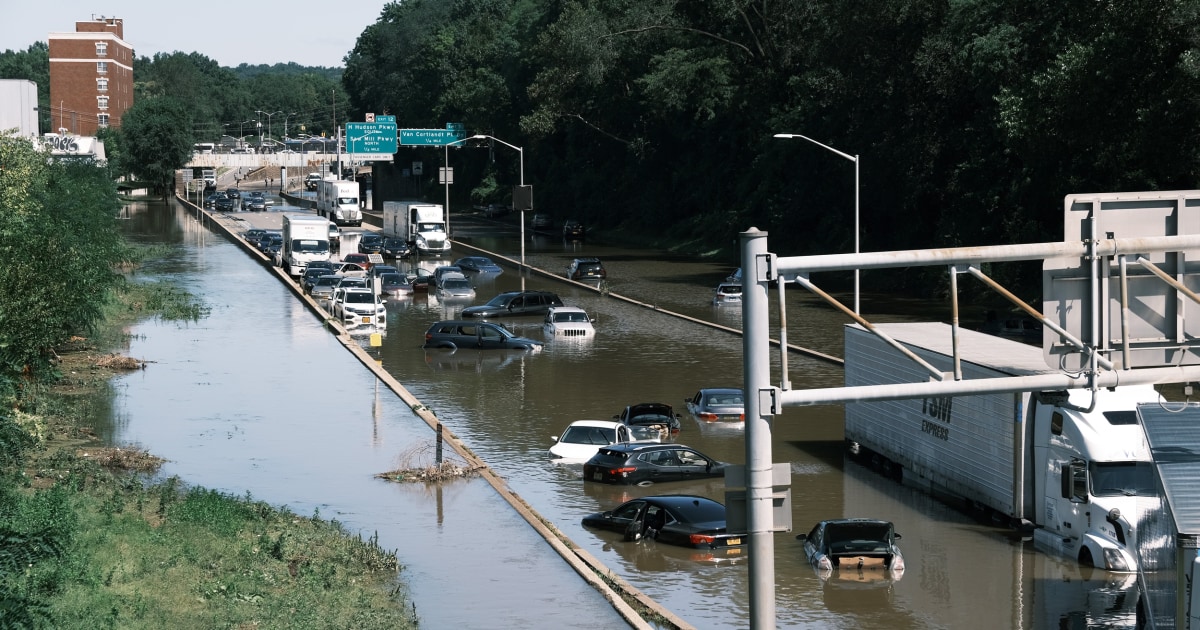
Dozens were killed, many after being trapped in their cars by flood waters. News and social media from across the New York-New Jersey region show cars that were abandoned along major highways as well as neighborhood streets.

The flooding from Ida caps a summer season that has left many parts of the country waterlogged. That, in turn, has created major headaches for car owners — and car buyers. Thousands of vehicles have been seriously damaged or completely ruined. But many owners soon could find that, despite carrying insurance, they are out of luck when it comes to recouping their losses.

In the months to come, meanwhile, some of those flood-damaged vehicles may show back up on the used vehicle market through an appropriately named scam known as “title washing.” Someone buying one of those vehicles could be in for a number of headaches.

When a vehicle is submerged, it is subject to developing all sorts of issues, starting with mold. Body panels and other components can rust. Water can damage engines. And then there are all the electronic circuits that control everything from power windows to a car’s safety and infotainment systems. They can suffer intermittent or complete failures.

“A car that’s been in a flood, with the engine emerged for any length of time, will never be the same,” said Carl Sullivan, a veteran inspector for California-based AiM Mobile Inspections.

Drying out a car as quickly as possible, especially if it’s been submerged in salt water, is critical, Sullivan and other experts stress. They also warn drivers not to immediately try to start up a vehicle after a flood, especially one where water might have gotten into the engine. That could lead to a catastrophic failure known as hydrolock. Instead, find a repair shop trained in dealing with water damage and have the vehicle towed in.

Motorists should take detailed pictures that can help support an insurance claim. Unfortunately, many owners discover too late that their coverage doesn’t include flooding.

“If you want to be covered for flood damage of your car you’re going to need comprehensive coverage which takes in acts of god such as hail damage or flood damage,” said Mark Fitzpatrick, an analyst with website MoneyGeek.

If your vehicle is new and still covered by a loan or lease, Fitzpatrick noted, you likely carry comprehensive insurance, as it’s normally required as a part of your agreement. But older vehicles that have been paid off, he added, often have just the more minimal insurance coverage most states require. In that case, repairs — or even the replacement of the entire vehicle — may have to come out of pocket.

For those looking forward, industry data show comprehensive coverage typically adds between $400 and $500 annually to your insurance bill, though a variety of factors can influence the figure, including where you live, the cost of the vehicle and your driving record.

Vehicle owners aren’t the only ones who need to worry about flood-damaged vehicles, however. And that warning is especially important at a time when inventories of new and used cars are in especially short supply.

Legally, any vehicle damaged or declared totaled due to flooding should have that clearly marked on its title. Most of them will either be scrapped and recycled or they may be broken down for parts. In some cases, owners may try to dry out a vehicle and then sell it, without alerting the buyer that it had been in a flood, according to the National Insurance Crime Bureau.

There are also plenty of scam artists, the NICB notes, who make a living out of acquiring flooded vehicles at bargain prices. The cars are cleaned up, then taken out of state where the VIN (the unique Vehicle Identification Number) is switched and the car is retitled with no indication it has been damaged.

Purchase one of these vehicles and you might not immediately notice any problems but, over time, the smell of mold could become apparent, corrosion might develop, or lights and electrical circuits could start giving you trouble.

“Water-damaged vehicles can be transported anywhere for resale, and often continue to appear in the marketplace for many months following major floods,” AAA spokesperson Ellen Edmonds said in a statement.

The travel and road service recommends motorists acquire a vehicle history from companies like CarFax before purchasing a used car, truck or crossover. It should reveal if the vehicle has been flood damaged. Many buyers also take a vehicle to a mechanic to be checked out.

Because of ongoing shortages of semiconductor chips, new vehicle production has plunged and dealers are short of inventory this year. That’s sending many customers over to the used car market which, in turn, has driven up prices for previously owned vehicles to record levels. For some scam artists — as well as owners who don’t have insurance on their vehicles — the temptation to resell flood-damaged cars could prove more tempting than ever this year.

Overlapping Disasters Expose Harsh Climate Reality: The U.S. Is Not Ready

Overlapping Disasters Expose Harsh Climate Reality: The U.S. Is Not Ready

An MTA bus stuck in a flooded underpass on Queens Blvd. in New York, in the early morning hours of Thursday, Sept. 2, 2021. (Dakota Santiago/The New York Times)


NEW YORK — In Louisiana and Mississippi, nearly 1 million people lack electricity and drinking water after a hurricane obliterated power lines. In California, wildfire menaces Lake Tahoe, forcing tens of thousands to flee. In Tennessee, flash floods killed at least 20; hundreds more perished in a heat wave in the Northwest. And in New York City, 7 inches of rain fell in just hours Wednesday, drowning people in their basements.

Disasters cascading across the country this summer have exposed a harsh reality: The United States is not ready for the extreme weather that is now becoming frequent as a result of a warming planet.

“These events tell us we’re not prepared,” said Alice Hill, who oversaw planning for climate risks on the National Security Council during the Obama administration. “We have built our cities, our communities, to a climate that no longer exists.”

In remarks Thursday, President Joe Biden acknowledged the challenge ahead.

“And to the country, the past few days of Hurricane Ida and the wildfires in the West and the unprecedented flash floods in New York and New Jersey is yet another reminder that these extreme storms and the climate crisis are here,” said Biden, who noted that a $1 trillion infrastructure bill pending in Congress includes some money to gird communities against disasters. “We need to do — be better prepared. We need to act.”

The country faces two separate but interlaced problems, according to climate and resilience experts.

First, governments have not spent enough time and money to brace for climate shocks that have long been predicted: everything from maintaining and fortifying electrical lines and stormwater systems to clearing forests of undergrowth in order to reduce the ferocity of wildfires.

“We’re feeling all the effects of that deferred maintenance,” said Kristina Dahl, a senior climate scientist at the Union of Concerned Scientists.

But there’s a second, more sobering lesson: There are limits to how much the country, and the world, can adapt. And if nations don’t do more to cut greenhouse gas emissions that are driving climate change, they may soon run up against the outer edges of resilience.

“If we already can’t cope with where we are, then there’s little hope that it’s going to improve in a warming climate,” Dahl said.

The country’s vulnerability in the face of extreme weather was punctuated by the downpour that flooded the country’s largest city. New York City has invested billions of dollars in storm protection since Hurricane Sandy in 2012 — investments that seemed to do little to blunt the impact of the deluge.

Rain poured down in furious torrents, turning the subway system into a kind of flume ride. Central Park recorded 7.19 inches of rain, nearly double the previous record set in 1927 for the same date, according to the National Weather Service, which issued the city’s first-ever flash flood emergency alert.

Before the storm, city and state officials activated preparation plans — clearing drains, erecting flood barriers in the subway and other sensitive areas, and warning the public. But the rainfall dumped more water, and faster, than what the city had factored into its new stormwater maps as an “extreme” flood event.

The pattern of damage reflects the relationship between climate exposure and racial inequality: Impacts were more apparent in low-income communities of color, which, because of historic inequalities, are more prone to flooding, receive less maintenance from city services, and frequently experience lax housing code enforcement.

Most of those killed in New York City drowned when floodwaters rushed into their basement apartments. Many such apartments do not meet safety requirements but have proliferated as affordable housing for the working poor and immigrants living in the city illegally, who may fear complaining to authorities about safety violations.

In one case, Tara Ramskriet, 43, and her son Nick, 22, drowned when water filled their basement apartment in the Hollis section of Queens so quickly that family members could not pull them out against the flow, and a wall collapsed, trapping them inside.

Neighbors were outraged, saying it took fatalities to bring city inspectors to the scene.

“This happens all the time,” said Jennifer Mooklal, 33, who lives across the street from the Ramskriets. “Even if it’s just rain, our basement gets flooded. We’ve been dealing with this problem for years and have been asking the city, but no one is listening to us.”

Damage from extreme weather, and threats to human life, will only increase as the planet warms. For every 1.8 degrees Fahrenheit of global warming, the atmosphere holds about 7% more moisture, scientists have found. That means much heavier rainfall when storms do occur.

Across the continental United States, the heaviest downpours have become more frequent and severe, according to the federal government’s National Climate Assessment. The Northeast has seen 50% more rainfall during the heaviest storms compared with the first half of the 20th century.

New York City is particularly vulnerable to flooding. Three-fourths of the city is covered by impervious surfaces like asphalt, which means runoff is channeled into streets and sewers rather than being absorbed by the ground.

And the city’s century-old subway system was not designed for a warming climate. Even on dry days, a network of pumps pours out 14 million gallons of water from its tunnels and stations. Heavy rains can overwhelm the system, as they did on Wednesday.

The Metropolitan Transportation Authority has invested $2.6 billion in resiliency projects since Hurricane Sandy inundated the city’s subways in 2012, including fortifying 3,500 subway vents, staircases and elevator shafts against flooding. Still, this week’s flash floods showed that the system remains vulnerable.

One reason is that city and federal officials focused on protecting against the kind of coastal storm surge that Sandy wrought, according to Amy Chester, managing director of Rebuild by Design, a nonprofit group that works on climate resilience.

But in the case of Hurricane Ida, the main threat was rainwater flowing downhill, not storm surge pushing in from the coast. So much water fell that it overwhelmed storm drains, overflowed riverbanks and poured into basements, from the hilly parts of Manhattan’s Washington Heights to the inland flats of Jamaica in Queens.

The investments that protect against storm surge differ from those that guard against extreme rain, Chester said.

Coping with severe rainfall means more places to absorb and hold water, whether with so-called green solutions like parks, or traditional structures like underground retention tanks. And it means increasing the capacity of the sewer system to handle a greater volume of water.

Because New York has mostly been spared the type of severe rainfall that occurred Wednesday, officials have made it less of a priority.

Other countries have heeded the warnings of climate scientists and acted.

In the Netherlands, where much of the country lies below sea level, the government strengthened flood design standards and in 2007 created a program called Room for the River, which in essence authorized the wholesale redesign and rebuilding of dozens of vulnerable watersheds around cities like Amsterdam and Rotterdam. The goal was to prepare for the sort of one-in-10,000-year floods that Dutch scientists were warning might become more frequent.

In that country, government water boards have the ultimate authority over land use. If they determine an area is needed for flood protection, its residents must move.

Specific taxes are dedicated to water management. There is no National Flood Insurance Program for residents in flood zones in the Netherlands because, the Dutch argue, the government’s job is to protect people from floods, not help homeowners rebuild in areas vulnerable to damage.

Among other things, Room for the River created dozens of new parks, enhancing underserved neighborhoods, resettling populations living in flood zones into new homes out of harm’s way, and girding the nation’s economy in the process.

In the United States, efforts to protect U.S. cities from damage by severe storms and rising seas have been plodding. There are many reasons, including government reluctance to impose on private property, a legacy of racial and economic injustice, and a system of governance and regulation that often moves far slower than the hastening pace of climate change.

Jainey Bavishi, director of New York City’s Mayor’s Office of Resiliency, said the city has spent more than $20 billion on resilience since Sandy, and that work also includes some protections against extreme rainfall in addition to storm surge.

The city is about to break ground on a stormwater retention system in Queens. And various other programs have been created to soak up more rainfall: incentives to cover roofs and traffic medians with grass, rain gardens and other more permeable surfaces to slow down and absorb rainwater.

The city’s Department of Environmental Protection, which handles drainage and sewage, has been quietly working on upgrades for the system, improving and widening the catchment basins under storm grates, designing new systems to separate stormwater runoff from sewage, and even rushing out before storms to unclog drains.

But stormwater upgrades for the entire city amount to a massive, multiyear and multibillion-dollar project. It hasn’t attracted federal attention and support, particularly under former President Donald Trump when climate change preparation was not a priority. So far, officials have upgraded the stormwater capacity of just a fraction of the city.

The rules that govern federal disaster money have also complicated the city’s efforts to deal with extreme rain. Of the $20 billion that New York City has spent on resilience since Sandy, $15 billion came from the federal government, and much of that money had to be linked to Sandy, which meant focusing on storm surge and sea-level rise, Bavishi said.

“We know that intense precipitation is a risk,” she said. “Last night’s storm underscored that cities need access to proactive federal funding to get this work done.”

Even with the right projects designed and funding in hand, climate change is outpacing the speed at which American communities can fortify themselves.

“It’s happening faster than we’ve anticipated,” said Dahl of the Union of Concerned Scientists, who is 43. “I didn’t expect all of this to happen at this point in my lifetime.”

© 2021 The New York Times Company

Madison Cawthorn: behold the rotten fruit of extreme Republican gerrymandering

Madison Cawthorn: behold the rotten fruit of extreme Republican gerrymandering

<span>Photograph: Brandon Bell/Getty Images</span>
Photograph: Brandon Bell/Getty Images


The congressman from North Carolina brandished a gun as he addressed a Macon county Republican event last weekend. “We all need to be storing up some ammunition,” Madison Cawthorn warned the crowd, as he embraced the big lie about the 2020 presidential race and insisted that “we all know it was a stolen election”.

Related: The Guardian view on the Texas abortion ban: this is not the end | Editorial

Then, chillingly, Cawthorn conjured a second civil war being fought over his fraudulent claims. “If our election systems continue to be rigged and continue to be stolen, then it’s going to lead to one place,” Cawthorn said, “and that’s bloodshed … As much as I am willing to defend our liberty at all costs, there’s nothing I would dread doing more than having to pick up arms against a fellow American.”

We awaken every day to pillars of liberal democracy torn down, wrecked norms and ruined institutions, fresh assaults on foundational freedoms from state legislatures and runaway courts, political leaders bathed in the hateful stew of rightwing media and racing to bend a knee before an authoritarian leader who himself bowed before dictators and cared so little for his voters that he offered them bleach during a pandemic.

The roots of this fearful moment run deep: a constitutional system unprepared for a political party willing to play constitutional hardball; a Democratic party that neglected local elections while Republicans invested in a decades-long effort to capture state legislatures and the courts; winner-takes-all districts that break toward extremes under severe polarization; a nation that has never been willing to embrace multiracial democracy.

But there’s a simpler reason that Cawthorn can spew such an abhorrent incitement to violence. His extremism was created intentionally by aggressive partisan gerrymandering. Cawthorn and many of the other demagogues and conspiracy theorists who have hijacked the Republican party owe their seats to the noncompetitive districts Republicans drew themselves a decade ago. Without gerrymandering, Cawthorn would just be another loudmouth Twitter troll pumped full of Newsmax nuttiness. With it, he’s issuing a call to arms as a prominent member of an elite Washington club of 435.

The road to political power for Cawthorn, who has been accused of multiple instances of inappropriate sexual behavior and even lying about the car wreck that left him paralyzed, began not long after the 2010 elections. He has denied those allegations. That year, Republicans spent more than $1m on a dark-money, negative-ad driven effort to win control of North Carolina’s house and senate just in time to dominate redistricting. When they won, a determined Republican party focused on drawing a congressional map that would turn this moderate state inside-out – producing 10 reliable Republican seats and just three Democratic districts.

The key to the entire map? Asheville, the largest city in western North Carolina, an enclave of vegan restaurants and independent bookstores surrounded by conservative mountain towns. With Asheville as its core, the 11th district had long been a swing seat, see-sawing between a Republican from 2000 through 2004 and a Democrat during 2006, 2008 and 2010 as this area, like so many others, rallied behind the Iraq war and then shifted Democratic as the war and economy soured. Republicans needed to win the 11th to assure a 10-3 map. So they drew the district line straight through Asheville, neatly attaching half of the city to a larger number of rural, conservative towns, and diluting the Democratic vote across two districts they could never hope to win.

In a district like this, the Republican primary was now the only race that mattered; the Democratic incumbent saw the writing on the wall and promptly announced his retirement. A small-town businessman who had dabbled in meteorology, a local sandwich shop and real estate read the angry base of this new district perfectly. His name was Mark Meadows, and you can watch on YouTube the moment when he first tasted power. Meadows’s closest Republican competitor dissembled when a Tea Party audience asked about pursuing an investigation into Barack Obama’s citizenship. Meadows pounced with a quick, direct answer: “Yes.” As the crowd roared, Meadows gives a tiny smirk. “You know what?” he added. “We’ll send him back home to Kenya or wherever it is.”

When Meadows led an Obamacare rebellion that forced a government shutdown in October 2013, Karl Rove called the insurgent Republican members his redistricting strategy helped create a “suicide caucus”. The New Yorker took a look at the districts they represented, and discovered a kind of America in reverse – whiter, more rural, more conservative, at a time when demographic trends were headed the other direction. These districts became 2% whiter ahead of 2012. They were 75% white, on average, compared with 63% elsewhere. The Republican party engineered themselves a fantasia: Obama defeated Mitt Romney by four percentage points nationwide. But not in “suicide caucus” nation. There, Obama went down to a stunning 23-point defeat.

That’s what Cawthorn inherited when Meadows left Congress for a seat at Trump’s side as White House chief of staff: a district Republicans cannot lose, where red meat and outrage are all that matters, demographics and representativeness be damned. Cawthorn learned his lessons well. Generate outrage, generate attention, generate big dollars fundraising off the hate.

The census numbers released last month show a nation that continues on its path to diversity. But can a multiracial nation become a multiracial democracy? Not if we continue to redistrict in this toxic fashion. The connection between gerrymandering and polarization is a complicated one; they act as accelerants on each other. Yet there’s no denying this: Cawthorn and his ilk would not be in office without it. There is a huge difference between the kind of candidate who won this very seat a decade ago, and the two extremists who have held it for the last decade. And when we lose swing seats and bridge builders to those who urge Americans to stockpile weapons and ammunition, we have lost an important part of ourselves.

As the 2021 redistricting cycle gets underway, and the maps that will define our politics for the next 10 years are crafted in state capitals nationwide, Cawthorn’s dark vision hangs in the balance. If lawmakers continue to draw tilted maps that maximize the number of seats their party wins, at the cost of representative results in otherwise competitive states, they will continue to produce districts easily captured by ultra-radical zealots like Cawthorn. They will continue to incentivize elected officials to cater only to the militant base that drives party primaries. And we could break, once and for all, under the strain of this existential test.

  • David Daley is the author of the national bestseller Ratf**ked: Why Your Vote Doesn’t Count and Unrigged: How Americans Are Battling Back to Save Democracy

GOP Senate campaign heats up after report tying Budd to bankruptcy that hurt farmers

GOP Senate campaign heats up after report tying Budd to bankruptcy that hurt farmers


The race for the Republican nomination for a U.S. Senate seat in North Carolina heated up in recent days after a Washington Post story detailed how farmers lost millions of dollars in the bankruptcy of a company led in part by the family of Rep. Ted Budd.

Budd, whose candidacy won former president Donald Trump’s endorsement in June, has faced sharp criticism from his competitors after the story published on Tuesday. Both former Gov. Pat McCrory and former Rep. Mark Walker, who are also vying for the nomination, jumped at the chance to accuse Budd of being a “D.C. insider” who swindled farmers.

AgriBioTech, based in Henderson, Nev., was a “full-service seed company” specializing in forage and turfgrass that also researched and developed seed varieties and processing plants, according to a company news release.

Budd was not an officer of the company, but was a shareholder. His father, Richard Budd, took over as chief executive in 1999 and served as chairman of the board, according to federal securities filings.

Budd was also one of 11 people who signed a loan to AgriBioTech to try and save the faltering company less than a year before the company declared bankruptcy, his campaign acknowledged. AgriBioTech repaid the loan with interest, but more than 1,200 farmers in 39 states went unpaid for more than $50 million of products.

Following AgriBioTech’s bankruptcy filing in 2000, a lawsuit filed in Nevada claimed that Richard Budd transferred millions of dollars out of the company to his family, including Ted Budd, before paying back farmers for their products. In a settlement reached in 2005, the Budds agreed to pay about $6 million to the farmers without admitting wrongdoing, according to a report by the Las Vegas Sun at the time.

“I wish my efforts to save ABT had been successful, but they were not,” Richard Budd said in a statement provided by his son’s campaign. “I did my best, but in this case, my best was not enough to save the company.”

Congress responded by creating a $35 million no-interest loan fund to help the affected farmers.

In an interview this week with the Winston-Salem news channel WXII, Ted Budd said he “never had any involvement” with the company. His campaign spokesman, Jonathan Felts, said in a statement that farmers’ accusations of fraudulent transfers were “untrue allegations which is, sadly, a typical tactic in these sorts of lawsuits.”

“Ted’s got the Trump endorsement and has the momentum to win this race,” Felts said. “Some reporters suffer from Trump Derangement Syndrome and will say or do anything if they think it might hurt President Trump’s political popularity.”

McCrory, Walker’s response

All three of the leading Republican candidates have tried to paint themselves as outsiders in Washington, and both Walker and McCrory are using the Post’s story as a way to kick the legs off Budd’s efforts.

“Do we really need another Washington politician like this representing North Carolina in the United States Senate?” McCrory wrote on Twitter.

Walker wrote on Facebook that the report was “unsettling but confirms the Budd record: follow big money and you always find Ted Budd.”

“Unfortunately, this is not the end of the story, but the opening chapter of Budd putting money over principle,” Walker added. “You cannot expect to serve North Carolina in the U.S. Senate with this lack of judgment and refusal to answer questions.”

State of the campaigns

The U.S. Senate race in North Carolina will play a pivotal role in determining which party will control the chamber after the 2022 midterm elections. The primary is scheduled for March 8.

So far, Budd has cashed in on his Trump endorsement by raising $700,000 in the second quarter. He also loaned his own campaign $250,000, and came into the race with an extra $1.1 million in cash from his House races. McCrory raised $1.24 million in the second quarter, and Walker has raised more than $1.25 million since he declared his candidacy in December.

It is unclear what impact Budd’s connection to AgriBioTech will have on the race.

Jordan Shaw, a campaign advisor to McCrory, wrote on Twitter that Budd is “going to need a better answer” than denying connection to the company.

California firefighters ‘stretched to limit’ as devastating blazes become the norm

California firefighters ‘stretched to limit’ as devastating blazes become the norm

<span>Photograph: Noah Berger/AP</span>
Photograph: Noah Berger/AP


Before the ravenous Caldor fire laid siege to South Lake Tahoe, California’s top firefighting priority lay just to the north, where the Dixie fire scorched more land than any other single fire in state history. Together, the two behemoths have already blackened more than 1m acres (4,000 sq km) along the Sierra Nevada range. And fire season in the American west is just heating up.

The climate crisis has helped create extreme fire emergencies, with huge, rapid-moving blazes tearing through a hot, parched landscape at lightning speed. Fires have hopped granite summits firefighters had hoped would slow their spread. Blazes have displayed erratic burn behavior, making their movements hard to predict.

The extreme conditions raise fresh questions about the ability of the country’s firefighting forces to control an emergency that has grown exponentially bigger year after year.

Roughly 27,000 firefighters have been deployed across the west this summer, according to officials. Local crews have received support from federal agencies, firefighters from other states, soldiers and national guardsmen.

There is no official or expert estimate for how many firefighters are needed, but it is clear their numbers have fallen short. More than 8,200 first responders battled to stop California’s Dixie and Caldor fires. They were armed with dozens of helicopters, hundreds of dozers and a multitude of equipment. While there have been wins and important progress made, neither fire has been contained.

Once-in-a-career blazes become routine

For the first time in its history, California’s fire agency, Cal Fire, in the 2020-2021 fiscal year was on track to spend more than $3bn fighting wildfires, according to a report from the California legislative analyst’s office released last autumn.

Since 2012, fire suppression costs in the state have risen sharply each year. With more resources needed to battle the blazes, there have been fewer available for preventing them. Firefighters are seeing the effects of a system under pressure on the ground.

Over the last six years, the work of fire crews has changed drastically as the frequency, quantity, and size of the fires have gotten worse, according to Tony Martinez, a Cal Fire captain who has worked with the agency for 28 years.

Once-in-a-career blazes of years past had become the norm, Martinez said.

In the past months, fire crews have been repeatedly reassigned, moving from one fire to the next as new ignitions take place. Difficult decisions have had to be made. Protecting human life is always the top priority followed by saving structures, and sometimes that has meant ceding acreage in mountains and forests.

Firefighters Stephanie Lockhart and Dustin Peters of North Tahoe Fire break up smoldering areas after the Caldor fire moved through the area, in South Lake Tahoe, California, on Wednesday.
Firefighters Stephanie Lockhart and Dustin Peters of North Tahoe Fire break up smoldering areas after the Caldor fire moved through the area, in South Lake Tahoe, California, on Wednesday. Photograph: Fred Greaves/Reuters


“Firefighting resources are scarce,” said Isaac Sanchez, a battalion chief of communications with Cal Fire. “But we still have a responsibility to attack the new fire or respond to the new 911 phone call.”

During last year’s record-breaking fire season, when more than 4.2m acres across California burned, Cal Fire reported that the scarcity of fire crews was one of the greatest challenges faced by incident commanders. “The lack of crews became a significant operational liability,” officials wrote in a siege report on the harrowing year. “The mutual aid system in California was stretched to its limits as fires burned up and down the state.

“The destruction of watersheds, communities, lives and livelihoods was profound,” the report continued. “In the short term, air quality across much of the state was abysmal. In some areas, the sun was blotted out by smoke, making mid-summer temperatures feel akin to the dead of winter.”

Related: ‘We do it together’: how a Lake Tahoe community prepared to flee the Caldor fire

Burns this year are outpacing last year’s devastating season. In addition to 15 large blazes in California, firefighters are battling 86 others across the US.

A strain on firefighters’ health

The state of California has increased funding and expanded its hiring in recent years. Cal Fire added close to 3,000 temporary firefighters to its ranks last year and in March this year the governor approved $80.74m to add 1,399 mostly seasonal firefighter positions using emergency fund authorization. The state’s budget this year also includes $1bn to be spent over several years for wildfire prevention.

In addition, local firefighting crews have been reinforced by teams from out of state, the national guard and other state and local agencies. But firefighters still feel strained.

Martinez thinks Cal Fire is still understaffed. “The result of that falls on the shoulders of the firefighters on the ground.”

Sanchez said he thought current crew levels in California could manage the firefight ahead, and that crews and officials had prepared for the scale of the challenge. “But there are times when no matter what you do, depending on the conditions out there, fires are going to establish themselves and grow into the disasters we see now,” he said.

He added: “If I had it my way, of course I would have 10 times as many resources as we do now. But these are the number of resources,” Sanchez said. “They are finite.”

Sanchez said that the fatigue and emotional struggles among fire crews were real. He said he felt the same way. “The overall strain on wellbeing and energy levels is cumulative,” Sanchez continued. “It adds up and is certainly affecting folks as we speak.”

Contributing to the crunch is the Covid crisis. A 16-member Cal Fire strike team fighting the Caldor Fire had to be sidelined for two weeks, after the virus started spreading through its ranks.

Staff shortages on the federal level, too, are adding strain. US Forest Service (USFS) records showed that only half of fire engines were fully staffed at the start of the season. Martinez said the federal shortage put further strain on resources within California agencies. “We were warned before fire season started that the Forest Service has major shortages and people are quitting at higher rates than us,” he said.

A firefighter battles the Dixie fire as it jumps Highway 395 in Lassen County, California, last month.
A firefighter battles the Dixie fire as it jumps Highway 395 in Lassen County, California, last month. Photograph: Noah Berger/AP


“They told us that we are going to have more of a commitment because of their lack of resources,” he added. “It compounds.”

Internal USFS documents, reported on by the Pew Charitable Trusts non-profit newsroom Stateline, noted that a third of agency engines were understaffed. Staff positions went unfilled as low pay and low morale pushed more federal firefighters into other lines of work, the news report concluded. “The agency sought to fill 781 vacant permanent positions in California during spring hiring this year, according to the data. But it ended the hiring period with 725 vacancies. That’s a net gain of just 56 employees,” Stateline reported in July.

“During years of extreme drought and prolonged fire activity across the country, resources are stretched to their limits,” Babete Anderson, national press officer for the USFS, told the Guardian in a statement. “The firefighter staffing shortage is mainly caused by limited candidate pools and competition with state and private fire organizations in California that pay two to three times the base pay of federal firefighters.” The federal government, she added, had recently taken steps to support wildland firefighters while improving recruitment and retention efforts.

The federal government has made moves to increase firefighter pay, a step advocacy groups have called a good start. Last month, the USFS announced pay increases were coming and that firefighters wouldn’t make less than $15 an hour from 30 June to 31 December this year. The infrastructure package passed by Congress earlier this year also included $600m to raise wages by 50% and shift 1,000 seasonal positions to permanent.

According to Grassroots Wildland Firefighters, an organization of active and retired federal wildland firefighters, those pay increases aren’t sufficient. The increases falls “woefully short”, said Kelly Martin, the organization’s president, given “the extreme risk and consequences that firefighters face on the fireline”.

“Recruitment is very difficult because of the low wages and people can’t find housing,” Martin said. “We are seeing shortages – they just cannot fully staff to what is needed in a year like this.”

Organizations like Grassroots point out that the government still doesn’t recognize many federal workers battling wildfires as emergency responders; instead, it considers them forestry technicians, range technicians, miscellaneous administrators and resource specialists. The classification can mean those workers miss out on services and resources. The part-time nature of their employment also affects retirement and other benefits.

“We are at a turning point in the climate change battle and the demands on federal wildland firefighters at the frontline have become a year-round request,” the group wrote on its website. “The federal government has failed to keep pace with this changing dynamic and firefighters are left with increased mental illnesses, increased rates of cardiovascular and respiratory diseases, and pay that falls below minimum wages in many parts of the country.”

While staff shortages have made fighting fires harder, Martin emphasized that real investment was needed on the prevention side. Extreme fires will continue outpacing efforts to fight them, if more isn’t done to cull the dense, dry vegetation that fuels them.

“What we really have to think about is how we embrace and manage fire,” she said. “We have a dual need. We have to protect life and property but we have another need to put more good fire on the landscape and that’s where we are really short with resources, both from a fiscal and human capital standpoint.”

Oil Industry Launches Lobbying Blitz as Congress Targets Fossil Fuel Subsidies

DeSmog

Oil Industry Launches Lobbying Blitz as Congress Targets Fossil Fuel Subsidies

A lobbying group representing large fracking companies is pressing Democrats to keep in place billions of dollars of subsidies that drillers receive.
By Nick Cunningham                 
 

U.S. Capitol Rotunda. Credit: U.S. Government. (U.S. Government work)

The oil industry has embarked on a lobbying blitz in an effort to derail any attempts by Congress to repeal fossil fuel subsidies as part of a much broader assault by corporate interests on the $3.5 trillion budget package that Democrats are currently drafting.

In particular, the oil industry is worried about the potential loss of one specific subsidy that they receive: the intangible drilling cost (IDC) deduction. This allows companies to deduct from their taxes the costs of drilling new wells.

The industry’s fear follows a letter sent to Democratic leadership on August 30, by Rep. Carolyn Maloney (D-NY), the Chair of the House Oversight and Reform Committee, and Rep. Ro Khanna (D-CA), who chairs the subcommittee on Environment.

The letter, signed by 50 other Democrats from the House of Representatives, specifically calls for the removal of the IDC deduction as part of the budget reconciliation process underway. The tax giveaway is worth billions of dollars each year, and makes up a large portion of the $20.5 billion that Democrats are targeting.

“Fossil fuel subsidies have been embedded in our tax code for over a hundred years, enriching oil and gas companies and their lobbying firms at the expense of our planet. It comes as no surprise to see Big Oil currently working overtime to protect these benefits,” Congressman Ro Khanna’s office told DeSmog in a statement. “What’s different now is that we have a real chance to end the worst of these subsidies in the Build Back Better Act and I’m committed to working with my colleagues in Congress to do so.”

A methane flare burning at an oil and gas site with various tanks and pipes in the Permian Basin
A methane flare at an oil and gas site in the Permian Basin of West Texas. Credit: Justin Hamel ©2020
The American Exploration and Production Council

Among those lobbying is a relatively obscure industry lobby group, the American Exploration and Production Council (AXPC), which is heavily pushing Congress to keep the IDC in place. AXPC is a collection of some of the largest fracking companies in the U.S., including ConocoPhillips, Chesapeake Energy, EOG Resources, Occidental Petroleum, Pioneer Natural Resources, EQT, and ExxonMobil subsidiary XTO Energy.

AXPC’s website is sparse, but has a heavy focus on the intangible drilling cost deduction, which appears to be one of only a few policy issues on which the industry front group is lobbying. According to The Hill, AXPC is “rounding up support from moderate Democrats from fracking-heavy states such as Texas, Pennsylvania and Ohio to ensure the deduction survives.”

AXPC warns that eliminating the IDC deduction would result in job losses, and frames its potential elimination as “increased taxes.”

AXPC also says that without the intangible drilling cost deduction, the number of wells drilled would decline by 25 percent. Whether or not those figures are accurate, it is true that federal largesse does prop up otherwise unprofitable drilling to some extent.

A recent paper published in the peer-reviewed journal Environmental Research Letters in July found that the IDC deduction can boost the returns of an oil drilling project by as much as 11 percentage points. For projects that were already profitable to begin with, the subsidy simply pads corporate profits. For projects on the margins, the subsidy results in extra drilling.

AXPC also argues that some methane regulations and fees would “empower” Russia and Iran due to higher costs on American producers. Methane is an extremely powerful greenhouse gas, and leaks from a range of oil and gas infrastructure in both the U.S. and around the world.

Ties to Republican Politics and Industry

The industry lobby group AXPC is led by Anne Bradbury, who previously worked in the House of Representatives for two former Republican Speakers of the House of Representatives – House Speaker Paul Ryan (R-WI) and House Speaker John Boehner (R-OH). Liz Bowman, AXPC’s vice president for communications, previously worked at the oil trade group American Petroleum Institute, and also in the public affairs office of the U.S. Environmental Protection Agency during the Trump administration. The handful of other staffers working at AXPC also have extensive backgrounds in both Republican politics and the oil and gas industry.

According to Greenpeace, the oil companies that make up AXPC have long enjoyed federal subsidies, receiving at least $92 billion combined since 1998, while also racking up more than $700 million in fines for environmental and other violations.

Meanwhile, those companies also doled out $188 million in executive pay in 2020, a year in which many of them tapped federal bailout money in the CARES Act, aid meant to prop up the economy during the pandemic. And even as the oil companies received huge sums for pandemic relief, they also laid off workers.

Last year, Bailout Watch, a watchdog group, singled out Diamondback Energy and EOG Resources in its “Hall of Shame” for their particularly egregious behavior of taking federal bailout money while boosting pay to executives and shareholders. Both are members of AXPC.

AXPC did not respond to a list of questions from DeSmog.

The Stakes Are ‘Turbocharged

As climate scientists continue to warn with increasing alarm, the world needs to phase out fossil fuel production and consumption as fast as possible. The International Energy Agency also warned earlier this year that new oil and gas projects are not compatible with global climate targets.

“[T]he fact that [the IDC] subsidy still exists at all, when the U.S. and the world need to be phasing down oil and gas consumption and production, indicates that removing it would be a prudent step, both for fiscal reasons as well as for climate reasons,” Pete Erickson, climate policy director at the Stockholm Environment Institute, and a coauthor of the Environmental Research Letters study, told DeSmog.

Any subsidy for fossil fuels is counterproductive and the IDC is the single most lucrative federal subsidy that the oil industry receives, according to Erickson.

The Democrats have slim majorities in both the House and the Senate, and will need virtually all of their members to vote in lockstep to successfully repeal fossil fuel subsidies. Oil lobbying outfits like AXPC only need to peel off a handful of Democrats in order to keep the federal spigot open.

“The legislative stakes are being turbocharged by ecological breakdown,” John Noel, a senior campaigner with Greenpeace, told DeSmog. Wildfires continue to ravage California. Much of Louisiana is without power after Hurricane Ida. And New York, Philadelphia, and other parts of the northeast just suffered catastrophic flooding. All of those disasters unfolded within days of each other, and come after several months of global climate-fueled catastrophes, ranging from floods in China and Germany, to wildfires in Siberia.

Louisiana National Guard rescue people in LaPlace, Louisiana in the aftermath of Hurricane Ida. The National Guard. (CC BY 2.0).


As climate disasters like these continue to mount, it is creating “a visceral rage at the fossil fuel industry because it’s common knowledge now that they are the stakeholders that are standing in the way of rapid progress and they have delayed action in order to preserve their short-term profits,” Noel said. “They’re losing their grip on the narrative. When they do finally lose their grip totally, the backlash is going to be intense and it’s going to be swift.”

Noel pointed to the federal support for fracking, adding: “If there was ever a moment in the history of fossil fuel production to close these tax loopholes it would be right now.”

UPDATE (09/03/2021): On Friday, AXPC responded to DeSmog, stating that it does in fact support methane regulations. “AXPC is not opposed to methane regulations, we support methane regulations that balance driving down emissions with domestic production. We support methane regulations that: encourage innovation, allow for new technologies, quantify the costs/benefits of new requirements for existing facilities, avoids duplication, and properly implements the Clean Air Act,” Liz Bowman, a spokesperson for AXPC, said in a statement.

John Bolton Blames Trump for the Mess in Afghanistan, ‘Trump Negotiators Delegitimized the Afghan Government!’


POLITICS – NEWS ANALYSIS

CNN – Political Flare

John Bolton Blames Trump for the Mess in Afghanistan, ‘Trump Negotiators Delegitimized the Afghan Government!’


Under no circumstances is one supposed to feel sorry for the United States president. It is very acceptable, however, to acknowledge that the president faced a “no-win” situation. Once an army spends twenty years occupying a central Asian country known for its extremism, keeping it stable, and then announces it is getting out, it is going to be extremely messy and John Bolton understands this because he understands war. He is always looking for a way to get into one.

But on CNN today, Bolton laid blame right on Donald Trump’s high heeled feet: From Mediaite

Bolton said he believed President Joe Biden and former President Donald Trump “actually see the exactly same way” insofar as they both wanted “to get out” of Afghanistan. “Now there’s finger pointing, Biden saying we’re stuck with the Trump deal, Trump saying well, they could have done it differently,” Bolton said.

“Look, the basic mistake that’s playing out here is that Trump negotiated this deal only with the Taliban,” he added. “There are a lot of mistakes in the deal itself. But the fundamental problem of dealing with this terr*rist organization is that the Trump negotiators delegitimized the Afghan government. The government we set up. The government with which all the many flaws had at least some democratic legitimacy, of which Taliban had none.”

Power outage in New Orleans: Is Ida or Entergy to blame?

Greg Palast – Investigative Journalism

Power outage in New Orleans: Is Ida or Entergy to blame?

By Greg Palast                             


In the 1980’s, I lead an investigation of Entergy, which runs the Louisiana power system My conclusion? “Entergy is a racketeering enterprise parading as a power company.”

After Katrina, I investigated their failure to get the lights back on in over a year.

This past week, Entergy lost 2000 miles of high-voltage line, which doesn’t happen in Bangladesh after a typhoon.

Entergy of Little Rock Arkansas, became a protected political juggernaut, even taking over the electricity system of London, after its lawyer Hillary Clinton somehow obtained influence with the White House.

Below is an excerpt on Entergy from my book Armed Madhouse:

In 1986, I was hired by the City of New Orleans to check out suspicious doings by a corporation called “Entergy.” I flew in to meet City Councilman Brod Bagert, who is also New Orleans’s top trial lawyer and its most accomplished poet.

I called Bagert four months after the flood. Nearly half the city is still in the dark. The electric company, New Orleans Public Service, “NOPSI,” is owned by a holding company, Entergy, the company Bagert and I investigated in 1986.

Here’s what we found. In 1986, the New Orleans company was going broke because of the eye-popping cost of buying wholesale power — four times normal — from a company called Middle South Energy, charges they were passing right on to their captive customers in the city. Middle South is 100% owned and controlled by, you’ve guessed it, Entergy. But these were the days of government regulation, and government ordered an end to the shell game. Then came deregulation and the siphoning restarted with a vengeance. Busy shuffling loot from pocket to pocket, Entergy had neither the concern nor funds to harden their system against a hurricane.

But from the looks of it, and my own review of their accounts, their plan in case of the long-expected flood came down to “turn off the lights and declare their subsidiary bankrupt,” which they did three weeks after the hurricane. Negligent damage liabilities and rebuilding obligations were thrown into the Dumpster of the bankruptcy courts, and the holding company walked away.

But don’t worry, Entergy the holding company is doing quite well, posting a big 24% leap in earnings for the third quarter, a profit it attributes to “weather.” So who’s to blame for losing New Orleans?

Reports of environmental problems caused by Hurricane Ida begin to trickle in

The Times-Picayune – NOLA

Reports of environmental problems caused by Hurricane Ida begin to trickle in

Department of Environmental Quality to inspect industrial sites over next few weeks

Mark Schleifstein, Staff Writer        August 31, 2021

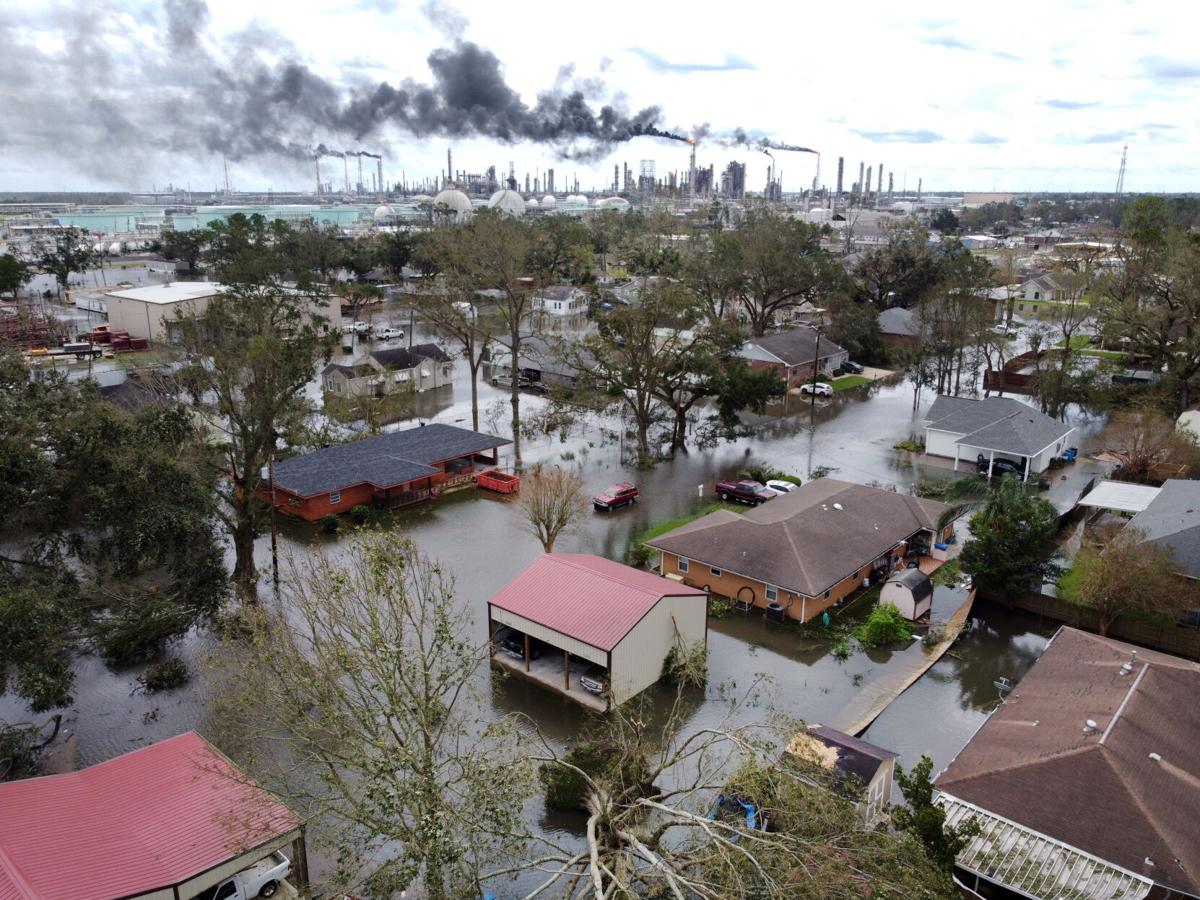
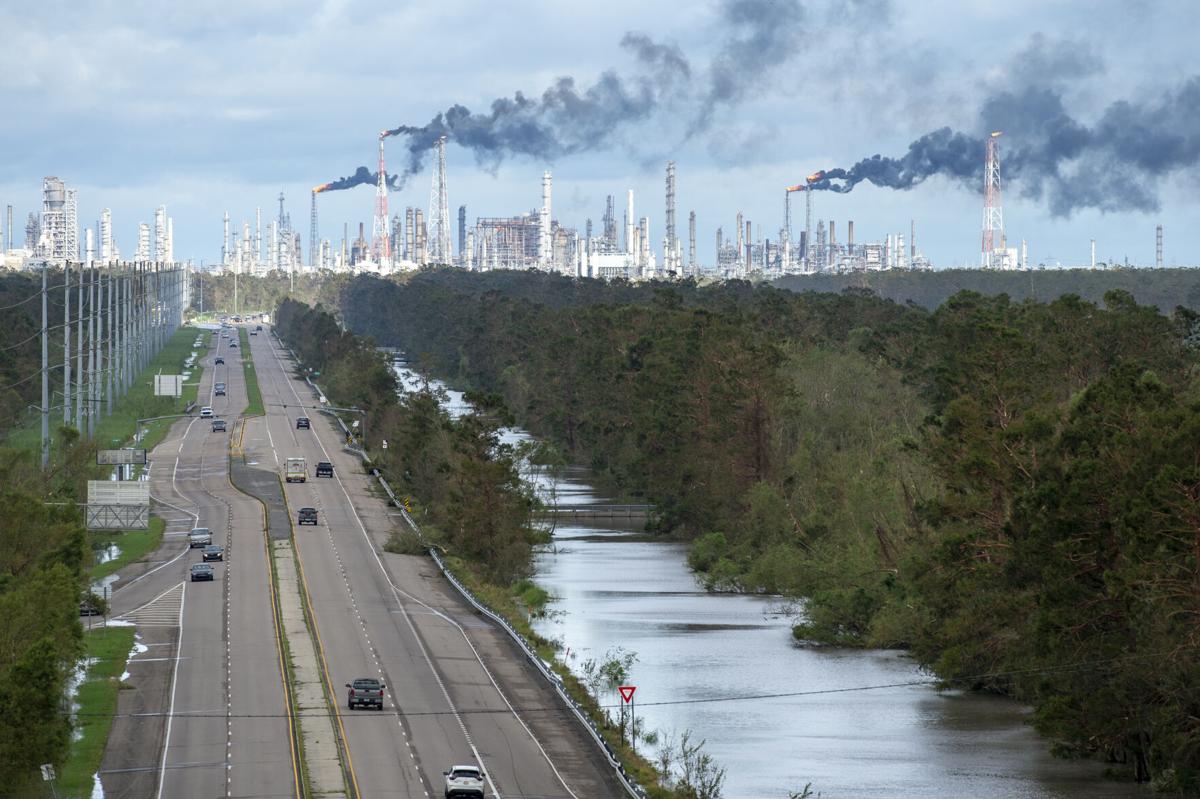
Information about potential environmental threats caused by Hurricane Ida have been slow in coming, but initial reports to the Coast Guard’s National Response Center and the state Department of Environmental Quality confirm there were releases of crude oil, fuel oils and a variety of chemicals in numerous locations in southeastern Louisiana on the day before and the day of the storm.

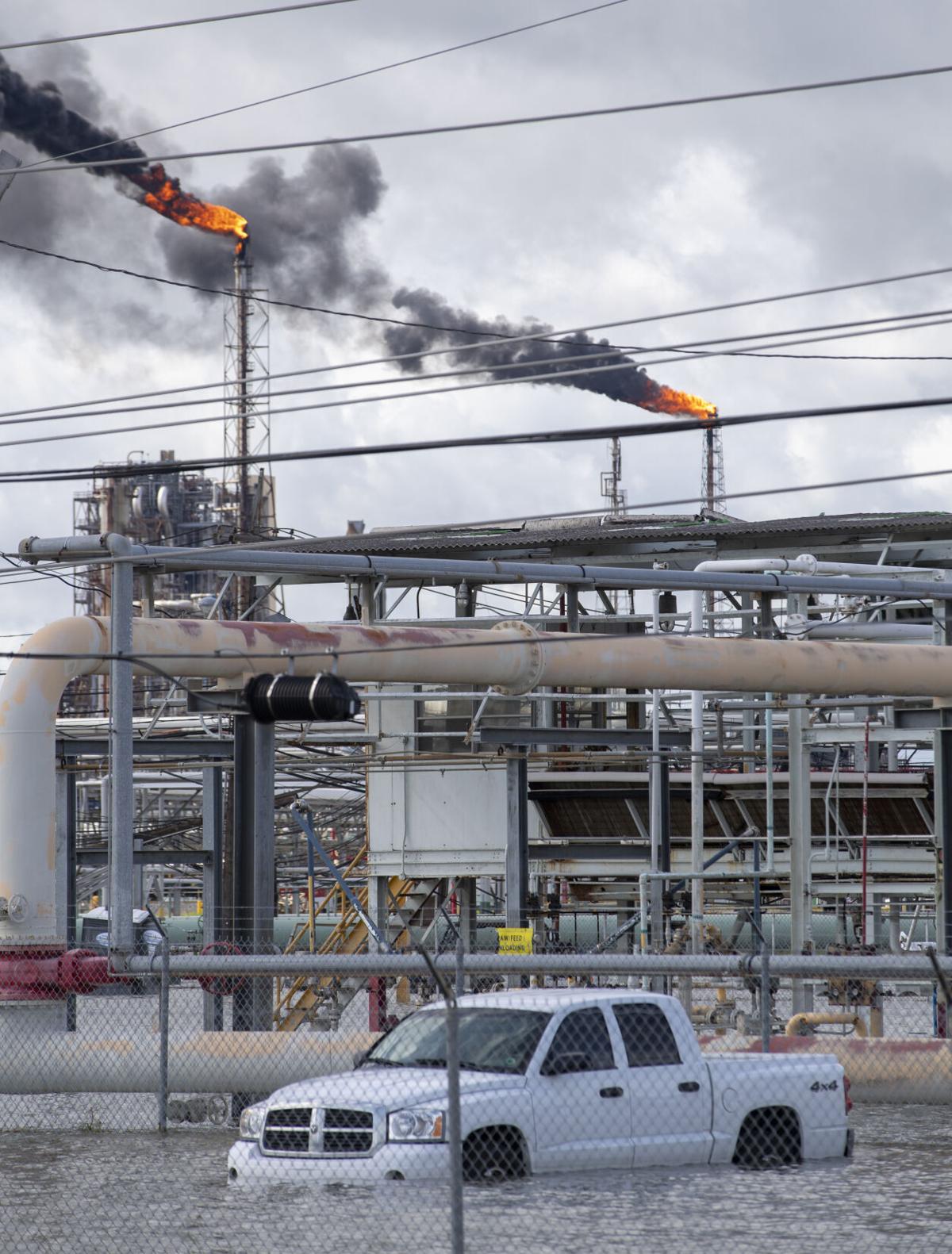
The information that’s available is not complete or comprehensive, consisting of initial call-in or emailed reports by company officials or others to the two agencies. They include releases of different chemicals by refineries and chemical plants when flares were extinguished by Ida’s winds, as well as the possible release of sewage and wastewater in numerous locations in Jefferson Parish when power was lost, knocking out 95% of the parish pump stations that move waste through underground pipes.

The state environmental agency has already begun more detailed inspections of all facilities within Ida’s path to identify concerns, with that information likely to be made public over the next few weeks.

On Tuesday, the National Response Center had reports on 11 incidents that occurred in Louisiana on Saturday, the day before Ida hit, through the end of Sunday.

The state Department of Environmental Quality listed 35 incidents that had been reported to them on Sunday and Monday, some of which were also reported to the Coast Guard.

The Saturday incidents reported by the Coast Guard:

  • The release of an unknown amount of hydrogen at the Shell Norco facility during a unit’s shutdown in advance of Ida.
  • An unknown amount of ammonia was released from a process safety valve at Cornerstone Chemical in Waggaman. The valve was restored to stop the leak.

On Sunday, the Coast Guard reported several incidents involving ships:

  • A vessel slipped from its moorings at Golden Meadow and was adrift with a tug boat connected to it. Neither were leaking oil.
  • A stray vessel struck another vessel in its berth at Danos Shipyard in Morgan City, and a sheen was noticed in the water nearby.
  • In Port Fourchon, where Ida made landfall at 11:55 a.m., a floating dry dock at Bollinger Fourchon broke free and breached the hull of another vessel, possibly breaching a tank aboard the vessel and resulting in the discharge of some fuel oil. The breach occurred above the water line of the hit vessel.

It also reported a number of releases at refineries, petrochemical plants and pipelines:

  • ETC Texas Pipelines reported the release of two barrels of condensate onto the ground near the intersection of La. 151 and Virgil Road in Minden, La., the result of a corroded pipe.
  • Koch Nitrogen in Hahnville reported the release of 58 pounds of ammonia through a flare during a power outage caused by Ida. The release was halted, and plant officials said they were working to restore power at the plant. No information about the amount of nitrogen released was available
  • CF Industries in Donaldsonville reported that the pilots on the flares of two storage tanks were extinguished, while control valves were partially open, allowing the release of ammonia. “Conditions from Hurricane Ida are ongoing and a crew is unable to secure the release,” the company reported. The amount of ammonia released was unknown.
  • Phillips 66 Pipeline LLC reported two leaks on two separate pipelines, RV 26 and RV 32, due to conditions during Ida, resulting in the release of propylene and isobutane into the atmosphere. “It is unknown if there is waterway impact at this time,” the company reported. The releases were near Paradis and Louisiana 3127 in St. Charles Parish.
  • Mosaic Fertilizer reported ammonia vapor released inside its St. James facility after a flare blew out during Ida.
  • Shintech Louisiana, in Plaquemine, reported the release of an unknown amount of ethylene dichloride from a storage tank into the air “due to power consistency/Hurricane Ida.”

The DEQ list includes the Phillips 66 Pipeline, Mosaic and Shintech reports, and many other reports of incidents at refineries, chemical plants, pipelines, vessels and other government and business sites, including one made by the Entergy Waterford 3 nuclear power plant. The information reported by DEQ was less detailed than that made public by the Coast Guard.

  • Jefferson Parish Sewer Department reported wastewater and rainwater were released due to loss of power that caused 95% of the lift stations that move waste through pipes to fail. The releases were in various locations throughout the parish.
  • Waterford 3 in Hahnville reported an unusual event due to the loss of power running to the station from offsite. There was no release of radiation or other materials resulting from that power loss.
  • Chalmette Refining reported the release of sulphur dioxide from a flare due to loss of power.
  • The Dow-Union Carbide plant in Hahnville reported flaring of products and byproducts due to loss of power.
  • ExxonMobil in Baton Rouge reported releases of nitrogen oxide, nitrate, sulphur dioxide and hydrogen sulfide due to an upset caused by Ida.
  • Hudson Marine/Orion Reederei reported that a vessel ran aground at Magnolia Landing in St. James Parish. No release was reported.
  • Energy Transfer Partners/Lone Star NGL in Geismar reported a loss of power that caused its flare to produce black smoke. What was actually released was unknown
  • Marquette Transportation on the Mississippi River near LaPlace reported fuel coming from the cargo vessel Golden L.
  • Kirby Inland Marine on the river in St. Charles Parish, reported the release of pygas in a discharge from a tank of the barge M/V Kirby 28046.
  • Cornerstone Chemical reported the release of sulphur dioxide and sulphur trioxide. “Molten sulfur tank may have been struck by lightning or other ignition source,” the report said.
  • Phillips 66 Alliance Refinery in Belle Chasse reported a release of mainly stormwater after the refinery was flooded when a levee was overtopped. Officials hope to open floodgates to reduce water within the leveed area to lessen the flooding impact.
  • The Valero St. Charles refinery in Norco reported damage to a gasoline tank and a release of gasoline.
  • Entergy’s Little Gypsy Plant in Montz reported an unknown amount of asbestos blown off the ground.
  • ECM Maritime/Hokoku Marine reported that one of its vessels in the Mississippi River ran aground in St. Charles Parish, and there was potential for release of fuel oil.
  • Marathon Pipeline’s St. James Tank Farm reported crude oil discharged onto an aboveground storage tank and then onto the ground and into surface water.
  • Hudson Marine reported that tugs broke free from the Bonnet Carre Anchorage at Norco and struck a vessel. There is the potential for a release.
  • Tennessee Gas Pipeline reported that a nipple on a pipeline near Golden Meadow was damaged, releasing natural gas.
  • Gallagher Marine/Safety Sailing Ship Management reported that the bulk cargo ship L/T Ocean Star was aground in the Mississippi River in St. Charles Parish and there was potential for the release of oil.
  • The Coast Guard reported that there was an unidentified barge sunk in the Mississippi River in St. Charles Parish, posing the threat of a release of an unknown amount of oil.
  • Clean Gulf reported oil sheen in the Gulf of Mexico a few miles off Port Fourchon from an unknown source.
  • Shell Pipeline reported damage to piping at a pipeline booster facility near Golden Meadow that was leaking crude oil.