Republicans seize on train derailment to go after Buttigieg

The Washington Post

Republicans seize on train derailment to go after Buttigieg

Yasmeen Abutaleb, Ian Duncan and Justine McDaniel – March 1, 2023

Transportation Secretary Pete Buttigieg and other federal officials examine a burned Norfolk Southern rail car in East Palestine, Ohio. (Allie Vugrincic/AP)

Republicans are seizing on the train derailment in East Palestine, Ohio, to ramp up their attacks against Transportation Secretary Pete Buttigieg, saying he is promoting his own agenda at the expense of families who are grappling with a toxic chemical accident in their backyard.

The Transportation Department does not have primary responsibility for the cleanup, and Buttigieg and his supporters are firing back, suggesting the GOP has other motives for its focus on him. The secretary, who sought the presidency in 2020, has taken the unusual step of responding directly to some of his critics, including Sen. Marco Rubio (R-Fla.), former president Donald Trump and Senate Minority Leader Mitch McConnell (R-Ky.).

The result is an unusually personal and, on occasion, vitriolic back-and-forth involving a transportation secretary who is also a rising star in his party, potential candidate for higher office and prominent gay official – far from the usual technocratic and logistical debates that surround the Transportation Department.

“I’ve never heard this level of criticism against another secretary, ever, and I’ve been following this a long time,” said Ray LaHood, a former Republican congressman who served as transportation secretary under President Barack Obama. “I’ve never seen it like this before. This is pure politics.”

Buttigieg has faced GOP criticism before, notably during supply chain disruptions early in Biden’s presidency and the failure of a federal aviation safety system in January. But people close to the transportation secretary say the attacks on him since the derailment have risen to a new level, noting that the Environmental Protection Agency, which is in charge of the response to the derailment, has taken far less heat.

Though part of a broader GOP criticism of the administration’s response to the derailment, the attacks on Buttigieg have in some cases been strikingly personal. Rubio tweeted that Buttigieg is “an incompetent who is focused solely on his fantasies about his political future & needs to be fired.” McConnell said on the Senate floor that Buttigieg is “more interested in pursuing press coverage for woke initiatives and climate nonsense than in attending to the basic elements of his day job.”

Some critics suggest Buttigieg should have been on the scene earlier – he visited East Palestine on Feb. 23, almost three weeks after the accident – but many of the accusations lack specificity, instead taking the secretary to task largely for his broader positions on issues such as the climate.

Buttigieg is one of the Biden administration’s most visible messengers, a deft debater who, unlike many Democrats, is often willing to appear on Fox News and other conservative outlets to advocate the White House’s priorities. A surprise star of the 2020 Democratic primaries, he moved last year from deep-red Indiana to the bluer state of Michigan, fueling speculation about further political ambitions.

Jeffrey Shane, a senior Transportation Department official during the presidency of George W. Bush, said that is one reason Buttigieg is receiving this level of attention. “Because his last act was running for president, Secretary Buttigieg is an unusually high-profile person to have the DOT job,” Shane said. “That visibility, together with genuine challenges in transportation and a toxic atmosphere in Washington, have combined to make this a difficult time.”

The White House argues that the administration implemented a by-the-book response to the train derailment, quickly dispatching federal experts from numerous agencies. The derailment itself did not harm or kill anyone, but some of the rail cars were carrying hazardous chemicals that leaked and burned in a massive fire.

Three days after the crash, officials decided to release vinyl chloride from five rail cars to prevent them from exploding, a controversial decision that spewed more chemicals into the air and yielded photos of an ominous-looking black plume looming over East Palestine.

The Transportation Department, while concerned with the conditions leading to the crash, did not have a central role in the response. The department did send experts to help the National Transportation Safety Board investigate, and the head of the Federal Railroad Administration, part of the Transportation Department, has also visited the scene.

Buttigieg has conceded that he should have spoken out sooner to convey his concern about the accident and the people in the area. “That’s a lesson learned for me,” he told CBS News.

While the Transportation Department is weighing new safety rules in the accident’s aftermath, it is the EPA that is the lead federal agency on the ground, monitoring toxins and overseeing the cleanup effort by Norfolk Southern, the company that operated the train. Still, Republicans have not gone after EPA Administrator Michael Regan or other federal officials in the same way they have targeted Buttigieg.

Some conservatives have tried making a broader argument – that Biden and his team do not care about East Palestine because it is a Republican, rural, largely White town. “Is it because these are not their voters?” Fox News host Tucker Carlson asked Sen. J.D. Vance (R-Ohio), who agreed.

Others have taken it further, taking the opportunity to wrap Buttigieg’s sexual orientation into their criticism. Donald Trump Jr., the former president’s son, said late last month that Buttigieg got his job solely because Democrats wanted to give a role to “the gay guy.” Long before the derailment, some Republicans mocked Buttigieg’s decision to take paternity leave after his twins were born and to bring his husband, Chasten, with him on a military jet.

That has led to allegations that the post-derailment criticism stems in part from homophobia.

“Whether it’s sickening attacks on his family or disrespecting a community’s pain with failed attempts at exploitation as a political prop, nothing saps credibility like following debunked smears with even more debunked smears,” deputy White House press secretary Andrew Bates said in a statement.

In East Palestine last month, former New York mayor Rudy Giuliani cited Buttigieg’s paternity leave as he criticized him for purportedly taking too long to visit the town. Giuliani, a Trump ally, referred to his own experience leading New York at the time of the Sept. 11, 2001, terrorist attacks.

“One of the main rules in investigating a murder is: Every day you miss is one more day inactive,” Giuliani said in an interview. “It’s quite obvious that this mayor, who accomplished nothing as the mayor of a tiny town not much bigger than a New York City apartment building, seems to have no expertise.” Buttigieg was mayor of South Bend, Ind., when he launched his presidential bid in 2019.

Buttigieg has hit back directly against many of the attacks, an unusual approach for top officials, who often seek to remain above the fray. He has coupled that with invitations to his critics to help craft new rail safety guidelines, arguing that Republicans are at fault for blocking previous safety rules related to railways and chemical spills.

He accused Rubio of sending out a letter two years ago that was drafted by railway lobbyists. The senator responded that Buttigieg was “m.i.a. on the derailment” and was lying about the letter.

Buttigieg retorted: “The facts don’t lie. The 2021 letter you signed was obviously drafted by railroad industry lobbyists. It supports waivers that would reduce visual track inspections. Now: will you vote to help us toughen rail safety accountability and fines, or not?”

After McConnell’s floor speech accusing Buttigieg of pursuing “woke initiatives” and “climate nonsense,” Buttigieg cited a bridge in Kentucky that had benefited from the bipartisan infrastructure law, which the Transportation Department is helping implement.

“Respectfully, the Brent Spence Bridge we’re funding in Kentucky is hardly a ‘woke initiative.’ Fighting climate change isn’t ‘nonsense,'” Buttigieg tweeted. “And Leader McConnell could be enormously helpful by joining us in standing up to the railroad industry lobby to make hazardous trains safer.”

Republicans on the House Oversight Committee, meanwhile, said they were opening an investigation of the derailment and sent a letter seeking records from Buttigieg. “You ignored the catastrophe for over a week,” the letter said, accusing Transportation Department leadership of “apathy in the face of this emergency.”

Rep. Jamie B. Raskin (D-Md.) and other Democrats fired back that the letter “failed to ask a single legitimate question” about the cause of the derailment.

“If Committee Republicans are serious about uncovering the truth, it must do so by conducting thorough, fact-based oversight, which includes seeking answers from Norfolk Southern about its potentially harmful policies and ongoing efforts to influence federal railroad safety measures,” they wrote.

Biden administration officials note that the United States experiences about 1,000 derailments a year. They say they responded almost instantly to this one.

EPA personnel arrived at the crash site in the middle of the night on Feb. 4, a few hours after the train derailed, and began monitoring the air and water. The next morning, the NTSB, an independent agency, announced its investigation and was set to meet with local officials; the agency held two news briefings in East Palestine in the first three days of the crisis.

Ohio Gov. Mike DeWine, a Republican, has praised the administration’s response, telling reporters on Feb. 14 that Biden had offered federal help but that he had not taken the president up on it because the situation was under control.

As media attention on the derailment exploded that week, DeWine moved to secure more aid, and the administration sent teams from the Centers for Disease Control and Prevention, the Department of Health and Human Services and the Federal Emergency Management Agency.

In the past, transportation secretaries have sometimes visited disaster scenes, most often after incidents involving fatalities. In those cases, they have often waited several days to avoid causing a distraction and impeding the on-the-ground response.

Federico Peña, transportation secretary under President Bill Clinton, said he went to several accident scenes, adding that seeing the trauma firsthand enabled him to better push for improved safety measures.

Both Peña and LaHood also used disasters as springboards for efforts to overhaul transportation safety regulations, a playbook Buttigieg now seems to be using. Some Republicans, despite their criticism of his performance, have signaled a willingness to take part in such a push.

On Wednesday, Vance and Rubio sponsored bipartisan legislation that would advance many of the rail safety initiatives supported by the Transportation Department.

The Washington Post’s Meryl Kornfield contributed to this report.

‘Trans people go to dances and find joy and are whole’: A mom’s viral photos of her daughter send a powerful message

Yahoo! Life

‘Trans people go to dances and find joy and are whole’: A mom’s viral photos of her daughter send a powerful message

Beth Greenfield, Senior Editor – February 28, 2023

Jaime Bruesehoff recently shared side-by-side photos of her daughter Rebekah
Jaime Bruesehoff recently shared side-by-side photos of her daughter Rebekah, one at age 10 and one at 16, to show that trans people “find joy and are whole people.” (Photo: Twitter/Jaime Brusehoff)

Rebekah Bruesehoff may only be 16 years old, but she’s spent almost half her life publicly fighting for her rights as a transgender person.

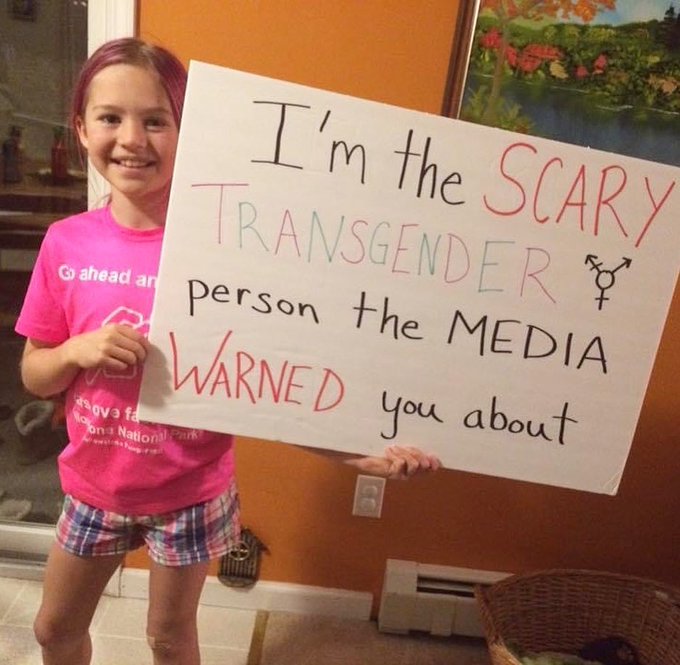
It’s why her supportive, activist mom Jamie took a moment this week to tweet a joyous photo of Rebekah in a green gown and holding white flowers, primped and ready to attend a high school dance — an update to one that went viral in 2017, of Rebekah at a rally holding a sign that read, cheekily, “I’m the scary transgender person the media warned you about.” That image appears alongside the new one.

“There’s this juxtaposition,” Jamie tells Yahoo Life, referring both to the two photos and her daughter’s life. “The photo from six years ago popped up in my memories, and I was struck: It feels so long ago and like it was just yesterday.” When the photo came up, she says, she was at a nail salon with Rebekah, who was getting a manicure before her sophomore cotillion. Sharing both photos, Jamie explains, felt like an opportunity to show a more well-rounded view of her teen, who plays field hockey and loves musical theater.

Image
Image

“She’s spent six years fighting publicly — but she’s also just a teen going to a fun dance,” she says. “That’s so much of what the Twitter thread was about… that trans people go to dances and find joy and are whole people, and that trans people are more than just their fights for rights and for life.”

The original photo of Rebekah, then 10, holding the sign inspired by a story she had found online, was snapped just before a protest in Jersey City, N.J., over the Trump administration rescinding federal support for transgender students. The tween was asked to speak in front of the crowd of 200, which she agreed to, and then her mom posted the image to Facebook, where it “went crazy viral.”

Looking back now, says Jamie, “It’s certainly not what any of us had planned. But what was really powerful was to see her use her voice and say, ‘I deserve a safe school.’ But even more impactful for her was she heard the voices of the other people… trans kids who were not supported, trans adults… it was the first time, at 10 years old, that she realized how good she had it and how much work we had to do.”

That idea, of work left to do, is especially important now, says Jaime on Twitter: “In ways, things are worse than I could have imagined 6 years ago… and yet she continues to resist with advocacy, speaking and education. She resists with her joy, she resists by growing into this beautiful young woman that so many wish she wouldn’t have the chance to become.”

She’s referring to the unprecedented number of anti-trans and anti-gay bills popping up across the country: Just two months into 2023, LGBTQ-rights organization the Human Rights Campaign (HRC) is tracking 340 anti-LGBTQ bills introduced at state levels, 150 of which would specifically restrict the rights of transgender people, 90 of which would prevent trans youth from being able to access gender-affirming medical care; two have become law, in Utah and South Dakota.

“Things are pretty awful right now,” Jaime tells Yahoo Life. “We live in New Jersey … so there’s some privilege and some level of safety that comes with that — and also, you’re not safe anywhere, we know that. My heart breaks for all transgender young people. Their identities are being used as a political football.”

Because Rebekah is an athlete — and luckily having a “really positive experience” on her hockey team — her family “really jumped into” having public conversations supporting transgender athletes, only to see “attacks on health care getting worse by the day,” she says, adding “it’s become very clear” that the anti-trans fight “is not about protecting children. It never has been. It’s about political power and removing transgender people from public life.

“https://www.instagram.com/p/Cm45juJuVbN/embed/captioned?cr=1&v=12

But even in New Jersey, where there are some protections in place — like state’s LGBTQ-inclusive school curriculum and the Babs Siperstien Law, which allows people to change their gender identity on their birth certificate without “proof of surgery” — there’s no way to fully escape the national rhetoric.

“What people don’t understand is that young people are impacted by these messages … They are seeing what’s happening, watching their identity be banned from public conversations in schools,” she says. “People, even in states like New Jersey and New York, know what’s going on. And for a young person to see their identity being debated on every front? That’s exhausting.”

Luckily, the mom notes of her daughter, “Rebekah is a big joy-as-resistance kind of person. She focuses on the positive, has friends, loves to laugh. It’s how she, I think, sustains herself.” She also recognizes her relative privilege: “She’s white, she exists within the gender expectations people have for girls and she has supportive parents who have been behind her and who have resources.”

Rebekah’s glowing spirit, her mom says, has powerfully influenced the entire family — including her “super-supportive” brothers, ages 8 and 13, and her father, a Lutheran pastor who, Jaime says, “preaches the gospel … that calls for us to work towards justice.” She adds that “he preaches the message of inclusion and of celebration of LGBTQ+ people.

“https://www.instagram.com/p/Cncd4buOitt/embed/captioned?cr=1&v=12

But it’s Jamie, who identifies as “queer” and uses “she/they” pronouns (including on her website and social media profiles), who might be most influenced by her teen’s courage.

“I’m bisexual,” she tells Yahoo Life. “I came out more publicly in 2018. I think there was some part of doing this work, of advocating for my daughter to show up in all her authenticity, that started to feel inauthentic for me not to share.” As for her use of she/they, which is new as of about a year, Jamie adds, it’s one way she is “continuing to break down those boxes of gender, and understand myself in the fullness of who I am. ‘They’ feels really great.

“https://www.instagram.com/p/Cnr4xxlOcRJ/embed/captioned?cr=1&v=12

Jamie, who has written a book due out in September — Raising Kids Beyond the Binary: Celebrating God’s Transgender and Gender-Diverse Children, meant to fill a gap wherein there is no guidance about raising “gender expansive kids in faith, when we know it’s people of faith who are doing the most harm” — adds that coming out has been powerful.

“I think with me sharing my identity as a bisexual person and my identity not as nonbinary, but as someone who feels constrained by the gender binary, and I think watching Rebekah live her life as who she knows herself to be and the positive impact it’s had,” she says, “I know that showing up as ourself changes the world.”

As climate change alters Michigan forests, some work to see if and how the woods can adapt

Detroit Free Press

As climate change alters Michigan forests, some work to see if and how the woods can adapt

Keith Matheny, Detroit Free Press – February 27, 2023

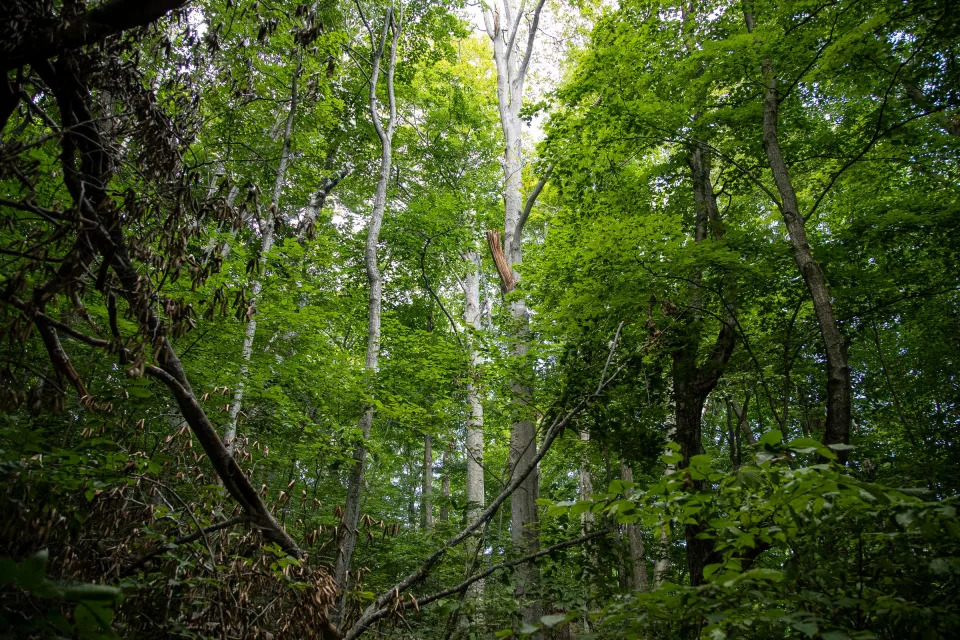
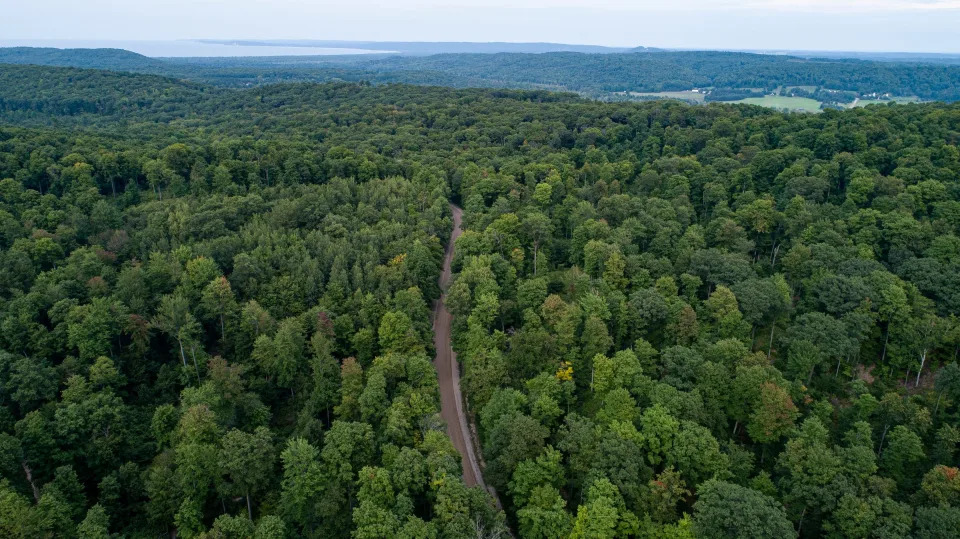
It’s as integral a part of Michigan’s fabric as its lakes and rivers: more than 20 million acres of forest land − the hickory and oak trees of southern Michigan giving way to forests of sugar maple, birch and evergreens that surround northbound travelers.

But a warming climate is harming and transforming the woods, with further, even more dramatic impacts projected by near the end of the century.

Michigan has perhaps the most exceptional forest makeup in North America, as boundaries of multiple forest types converge here: The vast boreal forest, its cold-hardy conifer trees stretching far into Canada, dips into the Upper Peninsula and northern Michigan. A diverse mixed zone then gives way to the great Eastern Broadleaf Forest across the central and southern Lower Peninsula, dominated by beech, maple, oak and hickory trees. Even the grassland prairies of the Plains states extend into far southwest Michigan.

It’s the changes happening first at these border zones that give Michigan a front-row seat to climate change impacts on the forest the rest of the 21st century.

Climate change invites invasive weeds, bugs

Evidence of the warming climate has already been observed. Michigan’s average annual temperature is about 2 to 3 degrees Fahrenheit warmer now than it was in 1950; and the Great Lakes region is warming faster than the rest of the United States, temperature data shows. Scientists point to greenhouse gas emissions from human fossil fuel-burning as the leading driver of the warming.

Climate change carries a host of stresses for the woods. Milder winters are leading to earlier, longer growing seasons, often better news for invasive, undesirable shrubs and weeds than for desired tree species. Less-frigid winters also improve invasive insects’ survival, fueling a northward migration of problems such as emerald ash borer, hemlock wooly adelgid and beech bark disease, which is caused by an interaction between an insect and fungus. And the hotter, drier conditions many scientists predict in coming decades will leave the tree species dominating the far north struggling to adapt.

“We expect to see species range shifts − species at the southern edge of their ranges, those boreal-associated species like black spruce, quaking aspen and white birch, may lose suitable habitat in the state,” said Ryan Toot, a watershed forestry specialist with the U.S. Forest Service based in St. Paul, Minnesota.

That’s messing with one of Michigan’s most golden of gooses. The forest products industry provides 96,000 jobs and contributes $20 billion annually to Michigan’s economy, according to the Michigan Department of Natural Resources. The north woods are a vital part of hunting, fishing and other tourism that brings in more than $20 billion more.

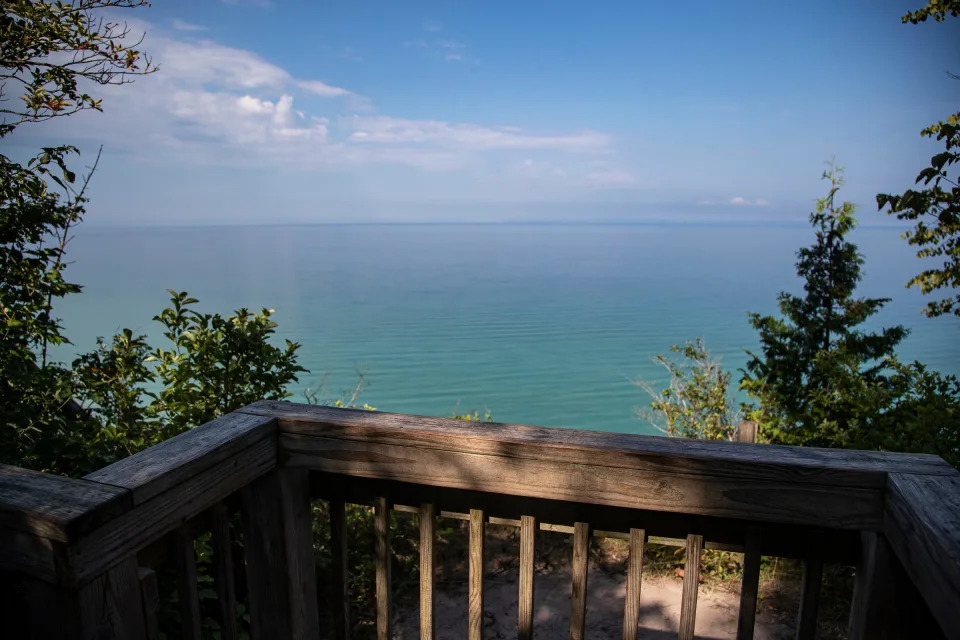
A view of Lake Michigan at the Clay Cliffs Natural Area in Leland on Wednesday, Aug. 24, 2022.
(Photo: Junfu Han, Detroit Free Press)
A view of Lake Michigan at the Clay Cliffs Natural Area in Leland on Wednesday, Aug. 24, 2022. (Photo: Junfu Han, Detroit Free Press)

University of Michigan forestry ecologist Peter Reich this month published the findings of a five-year study exposing seedling trees of the boreal and mixed hardwoods forest in northeastern Minnesota to increased temperatures and decreased summer rainfall — mimicking the projected warming and conditions under two different scenarios, one where considerable effort is made to reduce greenhouse gas emissions driving climate change; another with more business-as-usual emissions. They found even the more modest emissions scenarios had a devastating effect on the young trees.

“The prognosis for the forest is not great,” said Reich, director of the University of Michigan’s Institute for Global Change Biology.

“It may be we are at a tipping point beyond which these northern species just can’t hack it. Nature is really resilient, but we are pushing it really far, maybe up to its boundaries.”

More:Climate change is already hurting Michigan’s cherry, apple crops — and it could get worse

More:Great Lakes heat waves are already causing chaos for fish — with worst to come

‘A uniquely long-term experiment’

Reich has been experimenting in the boreal forest in northeastern Minnesota for 14 years, trying to better understand how oncoming climate change is going to influence the forest in the transition zone where colder and more temperate tree species converge.

“We see that many of these spruce and fir forests are doing poorly,” he said. “But temperature is changing, precipitation is changing, fire regimes are changing. There are more insects, we’ve changed management, there is rising CO2, there is changing ozone pollution — it’s hard to know which one of those is driving the change when you just observe forests.”

So Reich and his research team set out to control particular variables. They installed heat lamps and underground warming cables in outdoor plots, exposing nine species of seedlings to increased temperatures over the ambient weather: boreal species, including white spruce, balsam fir, jack pine and paper birch; and more temperate species, including white pine, red oak, burr oak, sugar maple and red maple.

Two levels of potential 21st-century climate warming were used: roughly 1.6 degrees Celsius (about 2.9 degrees Fahrenheit) and roughly 3.1 C (about 5.6 F) above ambient temperatures.

“Unfortunately, you’re going to get to either one (of those temperature increases) in any scenario that’s realistic,” Reich said.

“You can think of it as what we are going to get to in 40 or 50 years if we slow down climate change, versus if we don’t.”

On some seedling plots, the researchers also captured some of the summer rains, preventing the water from reaching the young trees’ roots, to simulate drier conditions that could be coming with later-century warming. Control plots were also planted, allowing seedlings of the same tree species to experience natural conditions.

The findings surprised Reich and his team. Even the more modest levels of warming had a big impact.

“Even the spruce and fir, which are the most boreal of the species, we thought they would do a little bit more poorly with 1.5 degrees Celsius warming — maybe 5% or 10% slower growth and 5% or 10% more mortality,” he said. “But fir in particular had 30% to 40% poorer growth and survival. Quite a dramatic change with what’s not really a very big temperature change.”

While more southerly tree species might one day expand their ranges northward to exploit where boreal species are failing, that’s not likely to be an orderly transition.

“What’s going to fill the gap are shrubs — either native shrubs or invasive shrubs, the buckthorns and honeysuckles of the world, expanding north,” Reich said.

“You might end up with a forest zone that for the next 50, 100, 150 years is kind of trashy — is neither economically nor ecologically what we want.

“You’re not going to get any two-by-fours out of buckthorn.”

The ‘climate change help desk’ for foresters

The U.S. Forest Service has been thinking about climate change’s impacts on the woods longer than most.  It founded the Northern Institute of Applied Climate Science in 2009, a collaborative effort among the service, universities, conservation organizations, the forest industry and landowners to develop adaptation strategies for the changing landscape.

“NIACS is like the climate change help desk, or a climate change phone-a-friend service, for land managers of all kinds, all across the Midwest and Northeast,” said Stephen Handler, a climate change specialist for NIACS based at the Forest Service’s Northern Research Station in Houghton.

“When we started at NIACS with this interest of educating people about climate change impacts and thinking about how to adapt, we were in front of a lot of critical audiences. And now, more often, it’s more like folks are drawing us in.  Saying ‘We are ready to talk about this. We recognize things are shifting and we need to be agile and keep up with the change.’ “

The group provides the best, most recent available science to whoever asks: the timber industry, state natural resources agencies, parks managers, private landowners. It includes regional evaluations of which tree species are expected to adapt poorly to climate change, which are expected to do better and perhaps expand their ranges, and those in the middle. Through checklists, interested parties can conduct their own vulnerability assessments.

“They are making the choices for themselves, which we think is the appropriate way to go,” he said. “Because every land manager is going to have a different appetite for risk and a different set of values.”

Family and small private landowners account for about 54% of forest land ownership in Michigan. How climate change’s impacts on the woods are responded to is largely in the hands of individuals, families, companies and communities.

“You’re going to have a pretty diverse set of choices being made across the landscape − preservation in some areas, encouraging change in other areas, a lot of places in the middle,” Handler said. “That could be a strength.”

Is assisted migration part of the answer?

A great debate among those who care about the climate-changed forest is how much attention and effort should be spent on trying to maintain what exists in an area now and how much should be devoted to preparation for what may better fit future conditions.

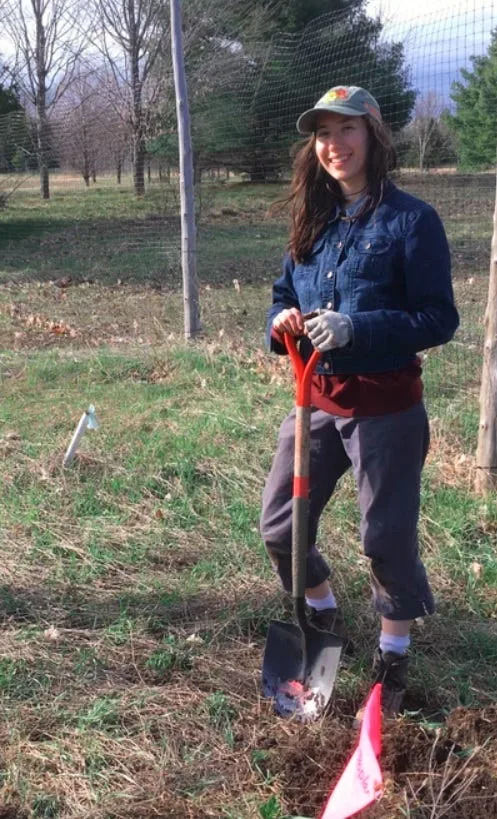
NIACS climate adaptation specialist Madeline Baroli, founder of the Assisted Tree Range Expansion Project, pauses during planting in northwest Lower Michigan in the spring of 2020.

Madeline Baroli has her boots on the ground and her hands dirty, conducting a big experiment across northwest Lower Michigan to help clarify the answer. Baroli, a NIACS climate adaptation specialist, also founded the Assisted Tree Range Expansion Project, a community science experiment that started in 2020 from her postgraduate work with the Leelanau, Grand Traverse and Benzie county conservation districts.

“Really, it’s all about supporting the resilience of our forests by planting and monitoring certain select tree species that are projected to have future suitable habitat in this region,” she said.

The nuances can get controversial. In some parts of the country, transplants introducing new tree types generated backlash. Others are experimenting with the concept of assisted population migration — taking existing tree species in northern Michigan, such as white pine, but introducing the genetics of trees of that species grown in, say, Ohio or Kentucky, trees more adapted to a warmer climate.

Baroli’s focus, instead, is on what scientists call assisted range expansion, taking trees already in Michigan but whose range stops only partway up the Lower Peninsula, and planting them farther north.

“So we’re really just expanding that bubble, that range a little farther, to match what the projections from the U.S. Forest Service Climate Change Tree Atlas have modeled,” she said.

More:$10.3 billion investment to upgrade Midwest, Michigan power grid for renewable energy

The six trees selected for the initial plantings were selected using those models and through conversations with local professional foresters and other natural resources professionals, she said. The first trees chosen for the project were shagbark hickory, tulip trees, sassafras, black tupelo, hackberry and swamp white oak.

Baroli noted that the trees already have some presence Up North, and would potentially be more established there were it not for the fragmentation of their range by highways and agriculture in the southern and mid-Lower Peninsula.

“That’s where I feel we really sort of owe it to the forest to lend a helping hand − because we’ve also altered the landscape in such a way that it limits natural range expansion,” she said.

The first plantings were in the spring of 2020 − just as COVID-19 began to disrupt life.

“We were doing our tree sale, selling the seedlings and trying to get the word out there,” she said. “Luckily, everybody was migrating online, and looking for socially distant things to do. So we really had a pretty successful first two seasons.”

Over 2020 and 2021, more than 2,000 trees were planted by individuals, community groups and families. Baroli did not yet have figures for plantings from this spring.

People are asked to report over time how the trees’ growth progresses.

“What I hope, what’s really important, is just keeping forests as forests,” Baroli said. “At the end of the day, we aren’t really in control of exactly what a forest is going to look like or be − we can’t be. The idea is to reduce that fragmentation … ensure the forests themselves have a chance to adapt, on their own with our help.”

Deer, disease amplifying tree threats

Visitors to the Leelanau Conservancy’s Palmer Woods, a natural area of more than 1,000 acres, have seen something different in recent years: Young trees with protective tubes around their trunks and a large, 35-acre portion of the preserve surrounded by a large wire fence.

It’s all efforts to curb what’s one of the biggest killers of young trees in the region: deer munching on them.

“A lot of the seedlings don’t really have the chance to get to the adult stage,” said Becky Hill, director of natural areas and preserves for the conservancy. “In some of the forests where we have heavy (deer) browsing, you see a lot of adult trees and a lot of seedlings, but not a lot of in-between trees.”

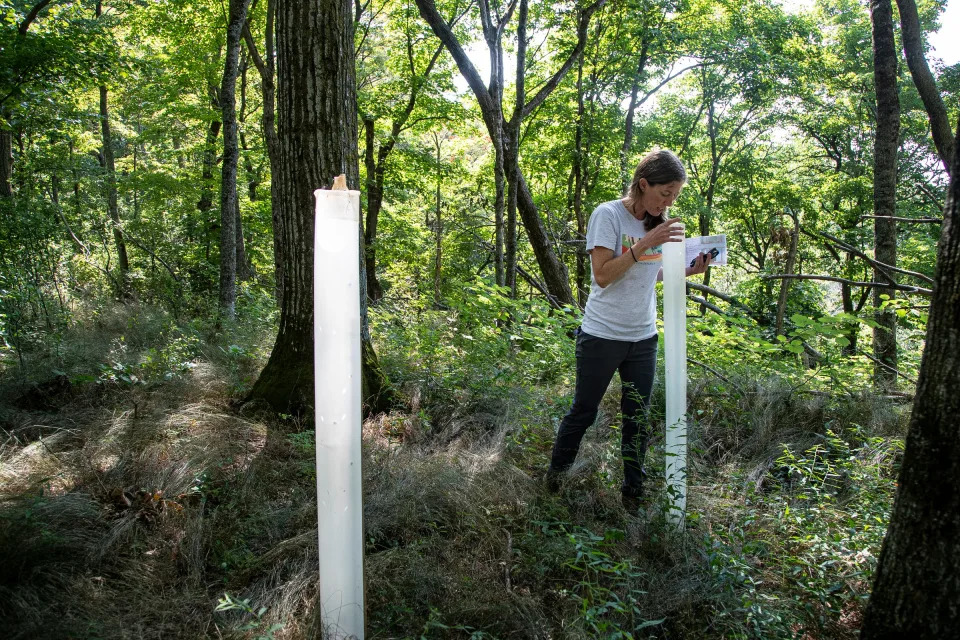
Becky Hill, Leelanau Conservancy's Director of Natural Areas and Preserves checks on the growth of a sassafras tree in a protective tube at the Whaleback Natural Area in Leland on Wednesday, August 24, 2022. The Conservancy planted around 200 trees this past spring.
Becky Hill, Leelanau Conservancy’s Director of Natural Areas and Preserves checks on the growth of a sassafras tree in a protective tube at the Whaleback Natural Area in Leland on Wednesday, August 24, 2022. The Conservancy planted around 200 trees this past spring.

It’s a problem expected to worsen as the region further warms. Milder winters will allow more deer to survive, breed and then feed on the young trees.

“Foresters have a really keen eye on how that next generation of trees is coming in,” Baroli said. “Young trees are more sensitive to things than older trees. First off, the deer love them; they are great deer food. And we have a huge deer population.

“If they are eating those young trees, those young trees aren’t growing up into a future forest. And then if you just have older trees dying off, it’s a problem.”

Beech trees might be nearly doomed

Another pest devastating trees in the region is beech bark disease. A tiny insect called a scale wounds the tree by piercing its bark with sharp mouth parts and sucking out sap. A type of fungus can then enter and infect the tree, weakening it over years until mature trees, almost hollowed out, snap dead.

Milder winters predicted in future warming scenarios will allow more of the insects to survive and infect trees.

“It’s pretty much devasted the population of beech; we are expecting 99% (beech tree) die-off,” Baroli said.

A dead beech tree in the center at the Clay Cliffs Natural Area in Leland on Wednesday, August 24, 2022.
White fuzzy scale insects on the trunk of a beech tree at the Clay Cliffs Natural Area in Leland on Wednesday, August 24, 2022.

Emerald ash borer is similarly killing millions of ash trees across Michigan.

The Leelanau Conservancy is using the unfortunate circumstance to adopt some of the NIACS’s recommended population migration trees prepared for a warmer climate.

“When we have a die-off where a lot of beech and ash have died, suddenly in our forest we might have a sunny opening,” Hill said. “There are certain species that really need more sunshine to get established − cherries, oaks, other types of species that thrive in those conditions. If we can help get them established, that succession of growth will happen over time.”

The conservancy also hopes to use new tree planting to combat the invasive autumn olive, a shrub “that just takes over fields to the point where you see these autumn olive forests,” she said.

“We’re hoping to get some species growing in there, to get established and maybe help shade out some of the invasive shrubs while creating good wildlife habitat.”

The changing climate is bringing ecological changes “so rapidly,” Hill said.

“It just feels like it’s harder,” she said. “You see the decline of bird species, insects, they are having a hard time keeping up with all of these drastic changes.”

The Michigan forest of 2100 − what will it look like?

Reich envisions a significantly transformed northern Michigan woods by century’s end.

“My hunch is by 2100, we’ll lose most of the spruce and fir,” he said. “We might lose some of the white cedar. The forests will be scrubbier and more open. They may still have a mix of species but will be less diverse … a few areas that are sandier and drier may even convert to grasslands.”

Those changes will have unpredictable impacts on animal habitat, the state’s timber industry and how people can use the forests for recreation.

And it may become a negative feedback loop, accelerating and worsening climate change.  Forests take carbon out of the atmosphere and store it in soils and roots and their wood.

Leelanau Conservancy's Palmer Woods Forest Reserve in Maple City on Wednesday, Aug. 24, 2022.
Leelanau Conservancy’s Palmer Woods Forest Reserve in Maple City on Wednesday, Aug. 24, 2022.

Peat forests, the wet fens prevalent in the Upper Peninsula, make up only 3% of the globe’s forest land but store 30% of soil carbon. A square meter of U.P. or Canadian peatland holds five times the carbon as a square meter of Amazon rainforest.

In a 2020 U.S. Forest Service study similar to Reich’s, peatlands were exposed to controlled, increased temperatures. The results showed the warming causes peatlands to release carbon faster than anticipated, converting them from carbon-storers to carbon-emitters.

“It could be a double-whammy; instead of helping slow climate change, they would be accelerating it,” Reich said.

Tree planting and assisted migration approaches can have some local benefits. But those are ultimately just Band-Aids, he said.

“In order to maintain the economic value of our forests, we do need to manage them to try to make them as resilient as possible in the face of these changes,” he said. “But there are real limits to how much we can do. There are vast forests out there — we don’t have the personnel or the money to try to thin all of the forests and replant them.

“We really need to work at the root cause of this problem, which is climate change.”

‘Extremely dangerous’: Spike in illegal crossings at Canada-Vermont border has feds sounding alarm

USA Today

‘Extremely dangerous’: Spike in illegal crossings at Canada-Vermont border has feds sounding alarm

April Barton, Burlington Free Press February 27, 2023

President Joe Biden urges migrants to not come to US-Mexico border: ‘Stay where you are’

President Joe Biden unveiled new steps aimed at stemming historic migration as he plans to visit El Paso, Texas.

BURLINGTON, Vt. — Migrants passing into the U.S. by illegal means via Swanton, Vermont have escalated massively in recent months.

Between October and January, apprehensions and encounters at the Canadian border have jumped nearly 850% compared to the same four months a year ago, according to U.S. Customs and Border Protection’s Swanton sector.

During the month of January there were 367 encounters, more than the past 12 years of January totals combined, said Ryan Brissette in a press release for the Swanton border patrol.

The number of border patrol encounters in Swanton started to climb in July 2022. During the seven-month window through January 2023, there have been 2,070 instances of illegal crossings. In that same period, there were 258 the year prior and 225 the year before that.

Northern and Southern borders see uptick in rescues

The uptick is causing problems for officials, especially considering dangerously cold temperatures that have put border crossers’ and border control agents’ lives at risk. Brissette noted -4 degree temperatures and “life-saving aid” that was provided during encounters in Newport, Vermont, and Burke, New York.

More: Arizona will keep sending migrants where ‘they actually need to go’

“It cannot be stressed enough: not only is it unlawful to circumvent legal means of entry into the United States, but it is extremely dangerous, particularly in adverse weather conditions, which our Swanton Sector has in incredible abundance,” Swanton Sector Chief Patrol Agent Robert N. Garcia said in a press release.

The southern border has also seen an increase in rescues, as the U.S. places a renewed emphasis on rescuing migrants and historically high numbers of immigrants seek asylum at U.S. borders.

The numbers at the southern border, the nation’s busiest corridor, show a sharp increase in border rescues, according to data released this month from U.S. Customs and Border Protection, the agency overseeing Border Patrol:

  • 5,336 migrants rescued at southern border in fiscal year 2020.
  • 12,857 migrants rescued at southern border in fiscal year 2021.
  • 22,014 migrants rescued at southern border in fiscal year 2022, which ended in September.

In fiscal 2021, agents at the southern border tallied 568 migrant deaths, the highest ever recorded.

Most of the deaths (219) were attributed to “environmental exposure-heat” as people trek through blazing terrain in Arizona and Texas. Agents also counted 86 deaths as “water-related” as migrants try to cross canals or the swift-moving Rio Grande, which divides the U.S. and Mexico.

Immigration advocates and experts believe the border death toll is much higher, and the federal system for death data long failed to include many border deaths.

The Wall: ‘Mass disaster’ grows at the U.S.-Mexico border, but Washington doesn’t seem to care

Who is crossing the Vermont-Canadian border

There are no clear-cut answers as to why people are crossing as the circumstances differ for each person or group, said Steven Bansbach, a public affairs officer for U.S. Customs and Border Protection. Many are being dropped off near the border by car and then proceeding across land on foot, he said.

https://flo.uri.sh/visualisation/12838349/embed

Among the border crossers are family groups that include infants and children who are particularly vulnerable to the cold. Bansbach said many are crossing at night while cold and sleep deprived, all of which can be disorienting.

Border patrol usually detains, arrests and sends those apprehended back to where they came from, according to Bansbach.

Fact check: False claim that those in country illegally can become police officers in California

More: Rescues of asylum-seekers soar as Border Patrol ramps up efforts and more migrants arrive

Looking at the countries of origin of encounters involving the border patrol in Swanton, a vast majority are from Mexico. Among the 1,513 encounters from October through January, 945 originated from Mexico.

“They may be trying to find a path of least resistance to enter into the U.S.,” Bansbach surmised. “And they may know there’s a conundrum at the southwest border and so they may find that the northern border they may sneak across to have a better advantage.”

The U.S.’s southern border has been a point of contention, from border walls, to the separation of children and parents, to immigrants being caught up in political brinkmanship being shipped from southern states to northern ones, in some cases dropped off on a political opponent’s doorstep.

Contributing: Rick Jervis, USA Today

In a California Town, Farmworkers Start From Scratch After Surprise Flood

The New York Times

In a California Town, Farmworkers Start From Scratch After Surprise Flood

Soumya Karlamangla and Viviana Hinojos – February 26, 2023

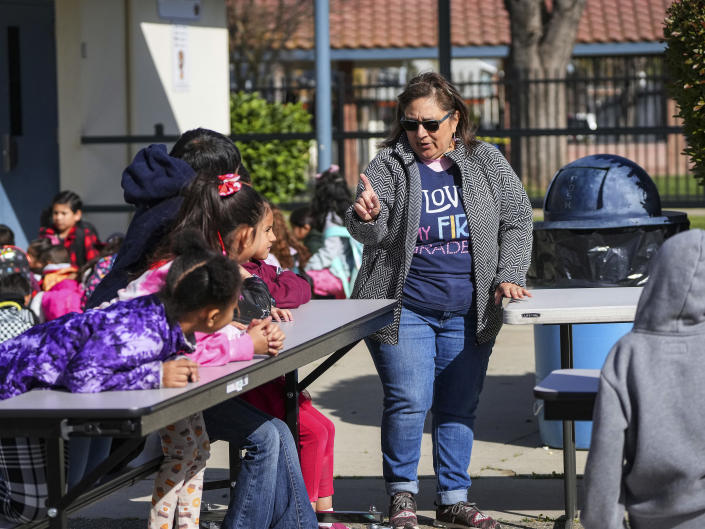
A teacher holds class on a playground at Planada Elementary School because classrooms in the building were flooded, in Planada, Calif. on Feb. 14, 2023. (Jim Wilson/The New York Times)

PLANADA, Calif. — Until the floodwaters came, until they rushed in and destroyed nearly everything, the little white house had been Cecilia Birrueta’s dream.

She and her husband bought the two-bedroom fixer-upper 13 years ago, their reward for decades of working minimum-wage jobs, first cleaning houses in Los Angeles and now milking cows and harvesting pistachios in California’s Central Valley.

The couple replaced the weathered wooden floors, installed a new stove and kitchen sink, and repainted the living room walls a warm burgundy. Here, they raised their three children, the oldest now at the University of California, Davis. They enjoyed tomatoes, peaches and figs from neighbors who worked on the nearby farms.

Birrueta and her husband felt content. Until last month. Until the floodwaters came.

A brutal set of atmospheric rivers in California unleashed a disaster in Planada, an agricultural community of 4,000 residents in the flatlands about an hour west of Yosemite National Park. During one storm in early January, a creek just outside of town burst through old farm levees and sent muddy water gushing into the streets.

For several days, the entire town looked like a lagoon. Weeks after record-breaking storms wreaked havoc across California and killed at least 21 people, some of the hardest-hit communities are still struggling to recover.

The flood ruined the two cars owned by Birrueta and her family and destroyed most of their clothes. The walls with the burgundy paint that she had carefully picked out had rotted through. Their house may need to be demolished.

Birrueta, her husband and their 14-year-old son and 10-year-old daughter had to move into a camp that typically houses migrant farmworkers, who arrive each spring with few belongings and the hope of building a life like the Birruetas had. There, 41 families from Planada are staying in long beige cabins and relying on space heaters for warmth because the camps lack furnaces.

“We came as immigrants, we started with nothing,” said Birrueta, 40, who was born in Mexico. “We bought a place of our own that we thought would be safe for our kids, and then we lost it. We lost everything.”

Nine miles east of Merced in California’s agricultural heartland, Planada’s wide streets are dotted with bungalows and lead to a central park shaded by towering spruce and elm trees. Less than 2 square miles, Planada was created in 1911 to be an idyllic, planned farming community — its name means “plain” in Spanish, a nod to its fertile, low-lying lands — but was eventually abandoned by its Los Angeles developers.

The quiet town, surrounded by almond orchards and cornfields, has since become a desirable place for farmworkers to settle with their families. When California farmworkers marched through Planada last summer on their way to the state Capitol in Sacramento, hundreds of children lined the streets to cheer them on.

The recent floods dealt a painful blow to a community in which more than one-third of households are impoverished. Planada is more than 90% Latino and overwhelmingly Spanish-speaking. Roughly one-fourth of the residents are estimated to be immigrants living in the country illegally, making them ineligible for some forms of disaster relief.

Agricultural workers in California are often on the front lines of catastrophes. They worked during the early, uncertain days of the COVID-19 pandemic, have endured record heat waves and toiled in the smoke-choked air that gets trapped in the Central Valley during wildfires.

During the recent floods, tens of thousands of farmworkers most likely lost wages because of water damage to California’s crops, compounding their already precarious financial situations, said Antonio De Loera-Brust, a spokesperson for the United Farm Workers of America.

“The very workers who put food on our table are getting hot meals from the Salvation Army,” said De Loera-Brust. “Whether California is on fire or underwater, the farmworkers are always losing.”

On a recent morning in Planada, huge piles of furniture were stacked more than 6 feet high along the curb, as if standing guard in front of each home. Once cherished possessions had become trash: A child’s tricycle. A green velvet armchair. An engraved wooden crib.

When Birrueta returned to her home after evacuating Jan. 9, it had a sour smell inside, she said. A floral rug in her daughter’s room that had once been white and blue appeared black after being caked in mud. The girl rushed to grab her soaked toys, some of them recent Christmas gifts. Birrueta had to wrest them from her hands. They threw away her pink wooden dollhouse, a Build-a-Bear she called Rambo, her beloved collection of Dr. Seuss books.

“I don’t really know how to talk to my kids about it,” Birrueta said, choking up.

Birrueta applied for relief from the Federal Emergency Management Agency but has yet to hear back. Although Planada is in a flood zone, most homeowners said they couldn’t afford to pay thousands of dollars for flood insurance. Besides, they said, so many years of severe heat and drought made wildfires seem a much greater concern than a deluge.

Maria Figueroa, a FEMA spokesperson, said the agency would provide, at most, $41,000 per flooded household. The funds are intended to jump-start recovery, not cover a full rebuild. “We’re not an insurance agency,” she said.

In 1910, Los Angeles real estate developer J. Harvey McCarthy decided Planada would be his “city beautiful,” a model community and an automobile stop along the road to Yosemite. “The town will be laid out similar to Paris,” The San Luis Obispo Daily Telegram reported at the time.

An infusion of money brought Planada a bank, hotel, school, church and its own newspaper, the Planada Enterprise, by the next year. But McCarthy eventually abandoned the community when he ran out of funds, leaving its settlers to pick up the pieces.

One thing wasn’t mentioned in advertisements for Planada: the floods. On Feb. 3, 1911, The Merced County Sun reported that during a 48-hour downpour, a creek overflowed its banks and that Planada was “under water.”

More than a century later, Maria Soto, 73, was sleeping when her grandson, who lives in the house behind hers, banged on her door around 2 a.m. A family member was driving a pickup truck through Planada to rescue their relatives, dozens of whom lived there.

Soto clambered onto the truck bed, and her feet dangled in the rising waters as they fled. When the engine stalled momentarily, she was frightened but didn’t tell anyone else that she didn’t know how to swim.

At her low-slung, peach-colored home, with an overgrown avocado tree out front and wind chimes hanging from the eaves, water breached the roof and poured down the walls.

Black patches of mold have begun to spread inside, so she is living at her daughter’s house next door while trying to scrape together money on her fixed income for the repairs.

“This is where I raised my children, and it’s always been dry,” said Soto, who in the late 1970s moved to Planada with her husband, who picked lettuce. “We weren’t prepared. No one was prepared.”

Disasters only exacerbate the health dangers that farmworkers face. Mold in flooded homes, for example, can prompt symptoms of asthma and chronic obstructive pulmonary disease, which are more common in low-income communities. Farmworkers often battle pesticide exposure and, even in good times, can only afford substandard housing.

“A small community like Planada, that has so many low-wage workers, you can only imagine the extent to which these problems were already existing,” said Edward Flores, an associate professor of sociology at University of California Merced and who co-wrote a new study revealing California farmworkers’ poor living conditions.

The flood’s impacts extend beyond inundated homes. Planada Elementary School lost 4,000 books as well as student desks, beanbag chairs and rugs. Hundreds of students had to be relocated to a nearby middle school.

“We were doing a really good job recovering from COVID,” said José L. González, superintendent of the Planada Elementary School District. “This just feels like we’re cut off at the knees again.”

Another major storm arrived this past week in California, bringing rain and snow, but Planada residents have been spared from further disaster.

Birrueta used to tuck sentimental items into suitcases that she stored in her son’s closet. Old photographs of relatives in Mexico, including of her father, who recently died. Socks she crocheted for her children when they were newborns. Pictures of her oldest daughter’s birthday celebrations, from an era before iPhones.

The floodwaters drenched those suitcases and everything inside. Still, Birrueta said she was grateful because her family safely escaped the floods and that they have a roof over their heads, albeit temporarily. Families can stay in the migrant camps until March 15, after which the county may provide other lodging.

Birrueta and her husband plan to rebuild their home in Planada.

“We started with nothing,” she said. “So in a way, we know how to start over again.”

Rail Industry Pushes Sensors Over Brakes After Ohio Train Crash

Bloomberg

Rail Industry Pushes Sensors Over Brakes After Ohio Train Crash

Thomas Black – February 26, 2023

(Bloomberg) — The train derailment that spilled toxic chemicals into a small Ohio town has revived a long-running debate about railroad safety — and some industry players think they have just the thing to resolve it.

The Feb. 3 crash of the Norfolk Southern Corp. train in East Palestine, Ohio, has renewed a push for railroads to adopt electronic brakes that could help prevent a malfunctioning train from endangering people and property. Electronically controlled pneumatic, or ECP, brakes have been touted for their capacity to bring trains to a halt in shorter distances and prevent dangerous pileups.

The Biden administration has blamed industry stonewalling for blocking regulations that would have mandated use of the systems on some trains — even though it isn’t clear that ECP brakes would’ve done much to mitigate an accident similar to the one in Ohio, and the proposed rules wouldn’t have applied to the train that crashed.

The railroad industry has found itself in a tight spot as the political furor around the accident grows, with former President Donald Trump turning up in East Palestine, and the derailment becoming a talking point on cable news and Capitol Hill. The episode has aggravated fears about the safety of sending chemicals and other hazardous materials over the rails, and raised the specter of new regulation at a time when railroads are coping with restive workers and annoyed customers.

Installing ECP brakes that the Biden administration and safety advocates favor would be expensive and cumbersome for a business beset by complaints about delays and lackluster service. The brakes need to be installed on each car to work properly — a daunting prospect for an industry with some 1.5 million cars on the tracks and little idle capacity.

A coalition that includes railcar makers, shippers and two large railroads say they have a different idea. They want to place sensors on railcars that could flag faulty equipment immediately to a train’s crew and others monitoring remotely. The system is being tested on 400 railcars and could be available commercially by the end of this year, according to the group, which calls itself RailPulse.

Such sensors could potentially catch problems like the overheated wheel bearing that likely caused the East Palestine wreck. Electronically controlled brakes, on the other hand, may not have even done much to mitigate the derailment if they were installed, based on a 2017 study by the National Academy of Sciences.

Notably, a sensor apparatus also would likely be much less expensive for the industry to put into place. RailPulse says its system would cost about $400 to $900 per railcar.

Smart Railcars

The use of remote sensing technology on the railroads isn’t entirely new. Currently, sensors known as wayside heat detectors placed along the tracks screen train cars for defects — and they sniffed out the trouble in Ohio. Wayside detectors were voluntarily adopted by railroads to reduce accidents; Norfolk Southern said it has nearly 1,000 of them.

According to a preliminary report by the National Safety Transportation Board, Norfolk Southern’s wayside detectors in Ohio were working, but caught the overheated wheel too late. The NTSB found that a wayside detector about 20 miles before the crash site measured the wheel bearing at 103 degrees Fahrenheit above ambient temperature — hot, but below a level that calls for the crew to stop and take a look.

However, the next detector, just ahead of the crash site, recorded a wheel temperature at 253 degrees above, a critical level. The sensor sounded an alarm, but it was too late. The wheel failed and caused 38 of the train’s 149 railcars to careen off the rails.

Sensors mounted directly on railcars could diagnose the issue sooner and buy critical time, backers say. Railcars will likely have multiple sensors in the near future that can detect anything from open doors to signs that equipment is in danger of failing, said David Shannon, general manager of RailPulse.

“Our objective is to make railcars smart,” Shannon said.

The group’s pilot program, which is testing five types of sensors, will be on 1,000 railcars by this summer, he said, and should be ready for real-world use by the end of this year. RailPulse plans to provide a subscription service to transmit the data to the cloud, and is counting on manufacturers to design the sensors the industry needs.

ECP Debate

Norfolk Southern was on the forefront of testing ECP brakes before the US Department of Transportation decided to require them on high hazard flammable trains in 2015. The company opposed the mandate because of cost, the brakes’ reliability and the inability to mix locomotives and railcars that didn’t have the system.

One of the biggest drawbacks of ECP brakes is that all the railcars on a train must have them or the system doesn’t work, making it impossible to phase in gradually. The rule followed a spate of derailments by trains shuttling crude oil from fracking hotspots where there were no pipelines to refineries.

As part of an infrastructure bill in 2015, Congress required the transportation department to justify the need for ECP braking. The National Academy of Sciences was ordered to examine computer modeling the department used to support its position that they had a significant safety advantage over conventional brakes.

After tests at a Norfolk Southern rail yard in Conway, Pennsylvania, and the New York Air Brake Facility in Watertown, New York, the academy said in a 2017 report that the department’s efforts to validate its modeling “do not instill sufficient confidence in DOT’s comparison of the estimated emergency performance of ECP braking systems” with other systems. That paved the way for the Trump administration to rescind the mandate.

In a Feb. 19 letter to Norfolk Southern Chief Executive Officer Alan Shaw, Transportation Secretary Pete Buttigieg faulted the industry for opposing ECP brakes. “Rather than support these efforts to improve rail safety, Norfolk Southern and other rail companies spend millions of dollars in the courts and lobbying members of Congress to oppose common-sense safety regulation,” Buttigieg wrote.

However, others in the federal government have pushed back on the idea that the ECP mandate would have prevented the Ohio crash.

“Some are saying the ECP (electronically controlled pneumatic) brake rule, if implemented, would’ve prevented this derailment. FALSE,” NTSB Chairman Jennifer Homendy said in a Feb. 16 tweet. She went on to explain why the Norfolk Southern train wasn’t designated as high hazard flammable. “This means even if the rule had gone into effect, this train wouldn’t have had ECP brakes.”

Uphill Battle

The prospect that regulators would swiftly put the electronic-braking rules in place following the Ohio crash is remote. To reinstate the mandate would be an uphill battle, a senior White House official acknowledged during a Feb. 17 briefing. The rulemaking process takes years and it would be difficult to pull off after Congress weighed in against the technology.

Similarly, persuading the entire railroad industry to go along with RailPulse’s sensors could be a tall order.

Workers are wary of new safety technologies that the industry touts, especially if they are aimed at replacing human inspections, said Mark Wallace, vice president of the Brotherhood of Locomotive Engineers and Trainmen. For the past five years, the railroads’ first priority has been profit, not safety, Wallace said. Operating profit margin for North American railroads increased to 39% last year from 34% in 2017.

“If you’re going to implement the technology, then you have to maintain the technology and you have to have somebody in place to make sure that it’s working properly,” he said.

Additionally, railcars are mostly owned by shippers and by leasing companies. Shippers are pushing to be able to track their freight cars just as they can for trailers on trucks, the railroads’ main competitor for freight. Some large railroads, including CSX Corp. and BNSF Railway, aren’t part of the coalition.

Putin’s energy war has flopped (so far)

Yahoo! Finance

Putin’s energy war has flopped (so far)

Rick Newman, Senior Columnist – February 24, 2023

When Russia invaded Ukraine a year ago, President Vladimir Putin had a lot more in his war plan than tanks and missiles. Putin also planned an energy war in parallel with his military war on the ground in Ukraine.

Putin’s military war has gone badly, his army decimated after failing to seize Ukraine, as planned. Putin’s energy war has failed, too. Neither war is over, but the many nations now allied against Russia have done a remarkable job blunting Putin’s most potent economic weapon.

Putin clearly anticipated sanctions against his country in response to the 2022 invasion. He also thought he could counter those sanctions using Russian energy, which Europe in particular was dependent on. Russia is the world’s third-largest oil and natural gas producer, and at the time of the invasion, it was Europe’s top source of gas, needed to produce electricity.

At first, Putin’s energy war worked as planned. Sanctions imposed by the United States and other nations largely exempted Russian energy, to protect consumers from price spikes. But the unpredictable nature of those sanctions, plus instability caused by the war itself, generated a “fear premium” in energy markets that pushed prices up. Oil prices spiked from about $90 before the invasion to nearly $125 four months later.

U.S. gasoline prices hit $5 per gallon last June, damaging President Biden’s popularity and making inflation a bigger everyday concern for Americans than the war in Ukraine. Natural gas prices rose by far more than oil and gasoline. Russia started reducing gas flows to Europe last June, then completely shut the main gas pipeline to Europe in September.

https://flo.uri.sh/story/1836372/embed?auto=1

By late August, European natural gas prices were four times higher than before the war. Wintertime rationing seemed likely, along with a recession caused by sporadic business shutdowns and painful energy inflation. Gas prices surged in the United States as well, though not by as much in Europe, given that gas is not as transportable as oil, generating regional price differences.

Soaring energy prices were exactly the kind of pain Putin planned for nations opposing his war. His hope was that high energy prices among Ukraine’s allies would wreck their economies, undermining public support for sanctions and for aid to Ukraine.

https://flo.uri.sh/visualisation/12840951/embed?auto=1

The full-blown energy crisis Putin tried to create never materialized, however. Prices tell the story. Oil, gasoline and natural gas prices are now lower than they were before Putin invaded, as the chart above shows. Russia is still a crucial source of energy, but the nations it tried to bring to heel have reconfigured their energy supply chains with speed and skill nobody foresaw a year ago.

“The last year may be remembered as the twilight for Russian energy leverage,” Richard Morningstar, founding chairman of the Atlantic Council Global Energy Center, wrote in a January report. “Moscow’s energy strategy is not working, and its ability to wield energy chaos as a geopolitical weapon is waning.”

Several concerted actions by Ukraine’s allies parried Putin’s energy offensive. In the United States, President Biden released an unprecedented amount of oil from the strategic reserve, with other countries releasing smaller amounts. Though not huge relative to total oil supply, those releases seem to have reassured markets and brought price relief at the margins.

TOPSHOT - Workers repair high-voltage power lines cut by recent missile strikes near Odessa on December 7, 2022, amid the Russian invasion of Ukraine. - A new barrage of Russian strikes on December 5, left several Ukrainian cities without power, including the eastern city of Sumy and the southern city of Mykolaiv, according to officials. In Odessa, the water services operator said
TOPSHOT – Workers repair high-voltage power lines cut by recent missile strikes near Odessa on December 7, 2022, amid the Russian invasion of Ukraine. – A new barrage of Russian strikes on December 5, left several Ukrainian cities without power, including the eastern city of Sumy and the southern city of Mykolaiv, according to officials. In Odessa, the water services operator said “there is no water supply anywhere” and officials in the central city of Kryvyi Rig said “parts of the city are cut off from electricity, several boiler and pumping stations are disconnected.” (Photo by OLEKSANDR GIMANOV / AFP) (Photo by OLEKSANDR GIMANOV/AFP via Getty Images)

Putin himself blinked. He could have slowed or stopped Russian oil sales, which would undoubtedly have sent prices soaring, given that Russia produces about 10% of the world’s oil. But he never did. Oil sales are Russia’s biggest source of revenue, and Putin desperately needs that funding to pay for a war that is far costlier than he anticipated. Russian oil production has actually remained stable for most of the past year, which is helping Putin keep the war going but also keeping global prices under control.

Europe also dramatically revamped its natural-gas supply chains, with the portion of gas coming from Russia dropping from 40% to less than 10%. And much of that gas goes to Turkey and Balkan nations not fully participating in sanctions. Gas shipped on tankers from the United States and Qatar backfilled much of the supply lost from Russia. Some European power plants also switched from gas to coal, which boosted carbon emissions, but is also likely temporary.

The United States and other large nations have also developed novel ways to begin sanctioning Russian energy while keeping supplies on the market and prices low. In December, a U.S.-led group of large nations imposed a price cap of $60 per barrel on Russian oil. Barrels from Russia generally sell for less than that, since global prices have been around $80 and the market demands a discount for the risk and complexity of purchasing from Russia. But this “buyers cartel” can lower the price and pinch Russia harder.

On February 5, another set of price caps went into effect for Russian petroleum products such as diesel fuel. Putin has vowed to withhold oil from any buyer participating in the price-cap regime, but so far nothing has changed.

Putin may still have some ammunition in reserve. “Given that Washington has strongly signaled an aversion to higher oil prices, and has gone to quite extraordinary lengths to keep a lid on them, there remains an elevated risk that Putin will seek to exploit this pain point in 2023,” Helima Croft, head of global commodity strategy at RBC Capital Markets, wrote in the January Atlantic Council report. “We may be entering a particularly precarious phase in the conflict. Putin may endeavor to demonstrate that he is not a spent force.”

One concern is Russian sabotage of energy facilities in regions where it has some influence, similar to the mysterious explosions that ruptured two undersea gas pipelines running from Russia to Germany last September. Russia has links to mercenary groups in oil-producing nations such as Iraq, Algeria, and Libya, and direct involvement in some energy facilities operated by former Soviet Republics. Some analysts think a surprise slowdown in production from two fields in Kazakhstan last April may have been a dress rehearsal for future Russian sabotage.

Russia has also announced an oil production cut of 500,000 barrels per day—about 4.5% of its total output—starting in March. Since other tactics haven’t worked, Putin may be testing new ways to gain an edge, similar to Russian troops trying to adapt and survive on Ukraine’s bloody battlefields. What Putin hasn’t accounted for is the ability of his adversaries to adapt, too.

Rick Newman is a senior columnist for Yahoo Finance.

People Boycott Popular Beer After Producer Breaks Promise to Pull Out of Russia

The Street

People Boycott Popular Beer After Producer Breaks Promise to Pull Out of Russia

It’s not a good look.

Colette Bennett – February 24, 2023

People Boycott Popular Beer After Producer Breaks Promise to Pull Out of Russia

More than 10,000 people are spending their Friday morning on Twitter calling for a boycott of Dutch beer company Heineken.

A tweet featuring an incendiary fan-made image first used the hashtag on Feb. 23, which transformed Heineken’s signature green bottle into pointed bullets and stated “proud supporter of Russian genocide.”

Image

The post also stated: “Heineken launched no less than 61 new products on the #Russian market last year after promising to stop investing there because of the war in #Ukraine.”

Heineken in March 2022 had vowed to pull its business from Russia after the country invaded Ukraine. But an investigative report from Netherlands-based website Follow the Money states that the company’s reports showed its Russian arm “launched 61 new products ‘in record time’ and sold 720,000 hectoliters more beer and soft drinks.”

Heineken was quick to respond to the controversy in a formal statement: “We’re working hard to transfer our business to a viable buyer in very challenging circumstances and we expect at a significant financial loss to the company, amounting to around €300M. 

“In the meantime, our local colleagues at Heineken Russia are doing what they can to keep the business going, after fully delisting the Heineken® brand, to avoid nationalisation and ensure their livelihoods are not at risk.”

Ukrainian soldiers with life-changing war injuries posed for portraits saying they are ‘living monuments’ of a brutal war

Insider

Ukrainian soldiers with life-changing war injuries posed for portraits saying they are ‘living monuments’ of a brutal war

Mia Jankowicz – February 24, 2023

A photo by Marta Syrko of Ukrainian soldier Sasha, whose lower legs were amputated. Sasha, lying on his side and propped up by one elbow, is naked except for a strip of cream cloth over his loin, and looks down. He is muscular, has multiple tattoos and is bathed in a pearly, blue-and-cream light.
Oleksandr lost both his lower legs to a Russian missile.Marta Syrko
  • Ukrainian photographer Marta Syrko has asked war-injured soldiers to sit for her.
  • Oleksandr, who lost his lower legs, said he wanted to show that injured bodies can be powerful.
  • The pictures, both stark and tender, are a reminder of the human cost of Putin’s war.

Last summer, 26-year-old Oleksandr was resting in a trench.

Exactly six months earlier, he had been working as a barista while he trained in graphic design. But after Russia invaded, he became a leader in a mortar batallion.

He was exhausted. The safest place to rest would have been under tree cover along with his squad, but there was no more room there. So he drifted off in the trench.

The next thing he knew he was buried in soil, his legs in excruciating pain. After his friends had scrabbled through the earth, they laid him on his front, not wanting him to glimpse his legs.

It was August 24, Ukraine’s independence day, and Ukrainians suspected Russia would seek grim trophies.

Oleksandr’s lower legs were later amputated.

He told Insider he accepted his injuries “from the first moment” the missile hit him. (He spoke to Insider through an interpreter.)

So when photographer Marta Syrko asked Oleksandr to sit for her, he felt he could send a message with his body: among other things, to show the world the carnage Putin is inflicting and the cost of defending his country.

‘We need an artist, not just a photographer’

One of Syrko’s main subjects is bodies. A skim through her Instagram feed shows the human form in all its glory, from an advertising-perfect washboard stomach to the soft millefeuille creases of her grandmother’s skin.

After Russia’s invasion, however, more and more people were returning to her hometown of Lviv with life-changing wounds.

So she approached a rehabilitation clinic near the city to ask if any of the soldiers — whose bodies had been radically transformed by war — would let her take portraits of them.

Four men agreed, three of whom lost limbs and one who received serious burns.

A black-and-white photo by Marta Syrko of Sergiy, Ukrainian soldier who lost his left lower leg. He is sitting up in a chair, mostly unclothed with tattoos on his torso, and his prosthesis visible. He looks down at a baby swaddled in a white cloth that partially covers him. Part of the foreground is blurred.
Serhii agreed to become one of Syrko’s “Heroes.”Marta Syrko

Among the soldiers was Serhii, pictured above cradling his second child, who had his leg torn off in the shockwave of a blast near Izyum, in Kharkhiv Oblast.

Another, Stanislav, also lost a leg last summer, in Bakhmut — one of the most fiercely contested cities in the entirety of Russia’s bloody war.

Syrko said she was inspired by the classical statues she saw in museums like the Louvre.

Foundational for Western art history, they, too, through wear and tear, are often missing limbs.

A photo by Marta Syrko, of Ilya, Ukrainian soldier who was badly burned. A top-down view shows his bare white legs, one bent sideways at the knee, and his lower arms, both partially burned. He wears a red cloth and sits on a grey floor with dark blue paint marks.
Illya Pylypenko received severe burns in a tank.Marta Syrko

Later, Neopalymi, a charity devoted to treating and rehabilitating people with severe burns, approached Syrko with a request. They asked her to photograph Illya Pylypenko, a soldier who had burns on much of his body after his tank caught fire.

Syrko’s unflinching photos of Pylypenko show how his face, in particular, was transformed.

A photo portrait by artist Marta Syrko of Ukrainian soldier Ilya, who was badly burned. Ilya is seen topless in a three-quarter view, chin in hand, looking ahead. Skin on his hand and arm, and much of his face, is badly damaged with red-colored burns on his otherwise white skin.

Neopalymi, a burns rehabilitation center, asked Syrko to photograph Illya Pylypenko.Marta Syrko

Maksym Turkevych, Neopalymi’s CEO, told Insider in an email that the project needed “an artist, not just a photographer.”

‘We don’t know what to say. How to behave.’

Syrko’s work has many fans, but she said she’s had occasional comments from people who say she’s exploiting disabled people through her work.

Asked about this, Syrko — who is able-bodied — said her aim is to make a real and complex discussion happen.

“It’s a hard question for Ukrainians now, because we don’t know how to act near them,” she said. “We don’t know what to say, how to behave. And so that’s why we have to discuss it.”

A photo by Marta Syrko of Stanislav, Ukrainian soldier whose right lower leg was amputated. He is seen bathed in golden light through wet glass, wearing a cloth round his waist, sitting on the floor. One knee is up, while his amputated leg rests on the ground. Stanlislav rests his forehead on his arm, propped on his raised knee.
Stanislav also lost his lower leg.Marta Syrko

For Oleksandr, the decision to become a “monument” for Syrko’s photos, as he put it, was a deliberate choice that he embraced.

He liked Syrko’s thinking about statues, saying in an Instagram post that people like him are “living monuments, who have been close-up witnesses to war.”

A closely-cropped black-and-white-photograph by Ukrainian photographer Marta Syrko, showing soldier Serhii and his son. Serhii is seated and unclothed except for long bands of white cloth, under which his tattoos can be seen. He looks down at his baby son in his arms. In the lower half of the picture, his prosthetic lower leg is visible.
Serhii, pictured here with his son, lost part of his leg near Izyum.Marta Syrko

But public attitudes can be disappointing, even though he was injured defending their homeland, he said. People “look away, and they break into lively talk when ‘monuments’ walk past.”

Society, he said, stops seeing these bodies as beautiful.

“I wanted to become something that would inspire others like me to feel that people are looking at them not with shame, but with exaltation!” he wrote.

This was Neopalymi’s goal, too. “The main reason for us to do it is to show the society that there is a beauty in it, and that they should not be scared or disgusted by this,” said Turkevych, the CEO.

A photo by Marta Syrko of Ilya, Ukrainian soldier who was burned in combat. A closely-cropped overhead view of his hand, red with burn marks, as well as part of his thigh, other hand, and a swathe of red cloth.
Syrko’s unflinching images of Illya show the effects of his burns.Marta Syrko

With a 122,000-strong Instagram following, Syrko said she had conversations with her subjects about the exposure the pictures could bring.

“I told them that they are probably going to be a little bit popular,” she said. And so they turned out to be — her pictures have been shared by the Ukrainian Ministry of Foreign Affairs’ Twitter account, and by newspaper Ukrainska Pravda.

Oleksandr told Insider, laughing, about his surprise when he arrived at the studio and realized that Syrko wanted him to pose nearly nude.

But he quickly got comfortable. “Marta’s the kind of person with whom you can feel comfortable and free,” he said.

Rebuilding an accessible Ukraine

Oleksandr spoke to Insider from the US, where thanks to a partnership with Ukrainian organization Without Restrictions, he has been undergoing intensive rehabilitation.

There, he’s learning to walk and run on high-tech prostheses. But for some weeks before he flew out, he was using a wheelchair.

A photo by Marta Syrko of Stanislav, Ukrainian soldier whose right lower leg was amputated. He appears to have been photographed through gauzy white fabric, seated on the floor with his right knee up, arm resting on it. Mostly unclothed, his waist is wrapped in white fabric.
Syrko photographed Stanislav in her contemplative artistic style.Marta Syrko

While the Ukrainian government has not confirmed exact numbers of casualties, the number of people with life-changing injuries — whether civilian or soldiers — is likely to make accessibility a key concern for the country’s future.

It’s a realization echoed by disability organizations supporting relief efforts in Ukraine, who at a joint conference last year issued the Riga Declaration, a document calling for the country’s rebuilding to employ universal design principles.

“A lot of cities are in a rebuilding phase,” Syrko said, envisioning a new, post-war Ukraine. “We can start to build it from zero — why can’t we do it correctly?”

Republicans pushing a plan to remove you (yes, you too) from Arizona’s voter rolls

AZ Central – The Arizona Republic – Opinion

Republicans pushing a plan to remove you (yes, you too) from Arizona’s voter rolls

Laurie Roberts, Arizona Republic – February 24, 2023

Voters wait in line at a polling station at Mesa Community College in Mesa, Ariz. on Election Day.

In August, the attorney general of Arizona wrapped up his investigation into the Cyber Ninjas’ claim that hundreds of dead voters cast ballots in the 2020 election.

To the surprise of absolutely no one, braindead or alive, Attorney General Mark Brnovich concluded that the Senate’s vaunted auditors didn’t know what they were talking about. There was no vast graveyard full of dead voters determined to deny Donald Trump his due.

Not even so much as a small crypt of conspiracy.

So naturally, there’s a bill in the Arizona Legislature to take care of this nonexistent problem … by cancelling your voter registration.

I am not making this up.

Senate Bill 1566 would wipe Arizona’s voter rolls clean every 10 years, requiring millions of Arizonans to re-register to vote.

It is but one of the dozens of kooky bills born of MAGA zealots and their absolute refusal to consider the fact that maybe they are losing statewide races because their candidates just aren’t acceptable to a statewide electorate.

Both the Senate and House election committees are chaired by election deniers.

The chairwoman of the Senate Elections Committee is Sen. Wendy Rogers of Flagstaff, who wanted to decertify the 2020 election and regularly calls for the arrest of elections officials. After being tapped by Senate President Warren Petersen to run point on election bills this year, Rogers vowed to engineer a do-over of Maricopa County’s 2022 election, though it seems more like a fundraising gimmick than an actual plan.

The chairwoman of the House Municipal Oversight and Elections Committee is Rep. Jacqueline Parker of Mesa, who, like Rogers, was a co-sponsor of then-Rep. Mark Finchem’s 2022 proposal to decertify Arizona’s 2020 presidential election. Her panel is packed with election deniers.

Every week, we are treated to veritable buffet of bad bills designed to fix problems that exist only in their fevered imaginations.

There’s a bill to do away with early ballots, the voting method of choice by 8 in 10 voters.

There’s a bill to ban ballot tabulators, never mind that hand counts are considered less accurate and more expensive. Or that a hand count of up to 70 races on 3 million or more ballots is likely to last until Christmas.

There‘s a bill to ban unmonitored ballot drop boxes out of some undocumented fear that Eeyore is lurking about and another to return to voting in precincts, never mind it leads to more voters being disenfranchised when they show up to the wrong place to vote.

There’s a bill that would require elections officials to post online the name, year of birth and address of every voter and another that would allow representatives of the Republican and Democratic parties to challenge your signature on an early ballot.

Then there is SB 1566, requiring you to reregister every 10 years if you want to continue exercising your constitutional right to vote.

In pushing the bill, Sen. Sonny Borrelli, R-Lake Havasu City, noted that he decided to look into the issue after the Attorney General’s Office spent “thousands of hours” investigating claims of dead voters.

“So I had my audit team go through voter registrations on dead voters and bounced that against the people that voted,” he recently told the Senate Elections Committee. “They looked at 30 ballot envelopes. Within 45 minutes they found 17 people that somehow voted after they died.”

Fifty-six percent? Clearly, our elections are being determined by those whose forwarding address lies somewhere near the Pearly Gates … or perhaps a good ways south of there.

Curiously, Borrelli didn’t mention the findings of the Attorney General’s Office after all those hours of investigation.

The ninjas, as part of their five-month audit of Maricopa County’s election, reported that 282 dead voters cast ballots in the November 2020 election. The AG’s Office then said it spent hundreds of hours investigating those claims.

The conclusion: 281 of those 282 voters were alive and kicking when they cast ballots.

Our agents investigated all individuals that Cyber Ninas reported as dead, and many were very surprised to learn they were allegedly deceased,” Attorney General Brnovich wrote in an August letter to then-Senate President Karen Fann.

AG investigators also checked out four other reports of up to 6,500 supposedly dead people who either cast ballots or were on the voter registration rolls. They came up with “only a handful of potential cases,” all of them isolated instances.

Yet another conspiracy gone kaput – consigned to the graveyard of crazy to rest in peace alongside Sharpies, green buttons, bamboo ballots, hacked machinery and all the other supposedly nefarious ways in which Arizona’s 2020 election was stolen from Donald Trump.

Only to rise again in the Senate Elections Committee, and to heck with federal law.

The National Voter Registration Act outlines how and when a person’s name can be removed from the voter rolls, for example if he or she requests it or moves or dies.

The act also requires states to make “a reasonable effort to remove ineligible persons by reason of the person’s death, or a change in the residence of the registrant outside of the jurisdiction.”

I’m guessing a wholesale wipeout of every Arizonan’s registration every 10 years might be considered a tad, I don’t know, unreasonable?

“It violates federal law,” Jen Marson, of the Arizona Association of Counties, warned the committee. “It’s totally in conflict with NVRA.”

Even some Republicans were queasy about the proposal. Sen. T.J. Shope, R-Coolidge said he doesn’t view the bill as legitimate. Sens. Ken Bennett, R-Prescott, and John Kavanagh, R-Fountain Hills, agreed.

Then all three voted yes and the bill passed on a party line 5-3 vote.

Voters may not be dead but when it comes to the state Capitol, common sense is a goner.

Support local journalism: Subscribe to azcentral.com today.