Trump’s Electoral College Edge Seems to Be Fading

The New York Times

Trump’s Electoral College Edge Seems to Be Fading

Nate Cohn – September 11, 2023

SEPTEMBER 6th 2023: A New York federal judge rules that former president Donald Trump is liable for defamation in the second E. Jean Carroll case and must go to trial to determine damages. – AUGUST 7th 2023: A New York judge dismisses a defamation countersuit brought by Donald Trump against columnist E. Jean Carroll. – JULY 19th 2023: A New York judge denies the request from former President Donald Trump for a new trial in the E. Jean Carroll sexual abuse, rape and defamation civil case. – MAY 9th 2023: A New York federal jury finds former President Donald Trump liable for sexual abuse and defamation in civil lawsuit and awards $5 million in damages to accuser E. Jean Carroll. – MAY 1st 2023: A New York judge has denied the request from Donald Trump’s legal team for a mistrial in the rape and defamation lawsuit brought columnist E. Jean Carroll. – NOVEMBER 24th 2022: Ex-magazine columnist E. Jean Carroll files a new lawsuit against former President Donald Trump for battery and defamation under the provisions of a new New York State law that allows adults alleging sexual assault to bring claims years after the attack. – SEPTEMBER 20th 2022: Former President Donald Trump to face a new lawsuit alleging sexual assault to be filed by columnist E. Jean Carroll who claims Trump raped her in the 1990s. – File Photo by: zz/Dennis Van Tine/STAR MAX/IPx 2015 6/16/15 Donald Trump announces his 2016 candidacy for President of The United States of America on June 16, 2015 at Trump Tower in New York City. (NYC) (zz/Dennis Van Tine/STAR MAX/IPx)More

The early polls show Donald Trump and President Joe Biden tied nationwide. Does that mean Trump has a clear advantage in the battleground states that decide the Electoral College?

It’s a reasonable question, and one I see quite often. In his first two presidential campaigns, Trump fared far better in the battleground states than he did nationwide, allowing him to win the presidency while losing the national vote in 2016 and nearly doing it again in 2020.

But there’s a case that his Electoral College advantage has faded. In the midterm elections last fall, Democrats fared about the same in the crucial battleground states as they did nationwide. And over the last year, state polls and a compilation of New York Times/Siena College surveys have shown Biden running as well or better in the battlegrounds as nationwide, with the results by state broadly mirroring the midterms.

The patterns in recent polling and election results are consistent with the trends in national surveys, which suggest that the demographic foundations of Trump’s Electoral College advantage might be fading. He’s faring unusually well among nonwhite voters, who represent a larger share of the electorate in noncompetitive than competitive states. As a consequence, Trump’s gains have probably done more to improve his standing in the national vote than in relatively white Northern states likeliest to decide the presidency, like Pennsylvania and Wisconsin.

Midterm results typically don’t tell us much about the next general election. Polls taken 15 to 27 months out don’t necessarily augur much, either. But the possibility that Republicans’ Electoral College advantage is diminished is nonetheless worth taking seriously. It appears driven by forces that might persist until the next election, like Biden’s weakness among nonwhite voters and the growing importance of issues — abortion, crime, democracy and education — that play differently for blue and purple state voters.

Of course, there is more than a year to go. Biden may regain traction among nonwhite voters or lose ground among white voters, which could reestablish Trump’s Electoral College edge. Perhaps his Electoral College edge could grow even larger than it was in 2020, as some Democrats warned after that election.

But at this point, another large Trump Electoral College advantage cannot be assumed. At the very least, tied national polls today don’t mean Trump leads in the states likeliest to decide the presidency.

There are three basic pieces of evidence suggesting that Trump’s key advantage might be diminished today: the midterms, the Times/Siena polls and state polls.

The Midterms

The 2022 midterms were a surprise. Republicans won the national vote, just as the polls anticipated. With Republicans usually faring better in the battlegrounds in recent cycles, a national popular vote advantage might have been expected to yield a “red wave.”

But Democrats held their ground in the battleground states, allowing them to retain the Senate and nearly hold the House. Nationally, Republican House candidates won the most votes by about 2 percentage points (after adjusting for uncontested races). The margin was almost identical in the presidential battlegrounds, like Arizona, Pennsylvania and Wisconsin, where Republican House candidates also won by 2 points.

The shrinking gap between the key battleground states and the national popular vote wasn’t just because of Democratic resilience in the battlegrounds. It was also because Republicans showed their greatest strengths in noncompetitive states like California and New York as well as across much of the South, including newly noncompetitive Florida. Democratic weakness in these states was just enough to cost them control of the House of Representatives, but did even more to suppress Democratic tallies in the national popular vote, helping erase the gap between their strength in the battlegrounds and the national vote.

Does the House popular vote tell us much about the Electoral College two years later? Possibly, though not necessarily. The 2018 midterm results showed House Republicans running well in key battleground states, foreshadowing Trump’s expanded Electoral College advantage two years later. Republican strength by state in the House mirrored the presidential race in 2020 as well. Perhaps it should be expected to foreshadow the presidential vote by state again.

But today, it’s harder than it was at this time in the last cycle to connect voter attitudes about the House with presidential preference. One major issue: the House results weren’t highly correlated with Biden’s approval rating. In contrast, the tight relationship between the House vote and Trump’s approval rating back in 2018 made it reasonable to believe the distribution of the House vote told us something about his strength heading into 2020.

The midterms are an important clue, but additional data is probably needed to connect what happened last November to what might happen next November.

Times/Siena Polls

Times/Siena polling over the last year offers additional evidence of such a connection.

Overall, Trump has gained in the places where Republicans fared well in the midterms, while Biden is holding up well in the states where Democrats fared well in the midterms, based on a compilation of 4,369 respondents to Times/Siena polls.

On average, Biden continues to match his 2020 performance in the states where Democrats fared better than average in the midterms, a group that includes every major battleground state. Instead, all of his weakness in Times/Siena national polling is concentrated in the states where Democrats fared worse than average last November.

In the sample of 774 respondents in the battleground states, Biden leads Trump, 47-43, compared with a 46-44 lead among all registered voters nationwide. On the other hand, Biden leads by 17 points, 50-33, in a sample of 781 respondents in California and New York — the two blue states that primarily cost Democrats the House last November — down from a 27-point margin for Biden in 2020.

In general, I am loath to look at geographic subsamples in our polling; results by state are just so sensitive. For this analysis, it makes a huge difference whether Biden is tied in the battlegrounds or up 5 points.

But in this particular case, the specific findings are part of the broader pattern supported by larger samples. Splitting our sample into two groups, we have over 2,000 respondents in states where Republicans did well and states where Democrats held up. The trends in both groups align with those of the midterms, and, while the sample is small, the pattern also appears to filter down to the crucial battlegrounds.

State Polls

There aren’t too many polls of the key battleground states at this early stage. But the available survey data doesn’t show any sign of an Electoral College advantage for Trump, either.

Over the last year, Biden leads by 1.3 points in national polls, while he leads by at least 1 point in the average of polls taken in Michigan, Pennsylvania and Wisconsin — three states that would probably be enough to reelect him.

In contrast, Biden won the national vote by 4.5 points in 2020 while winning Wisconsin by just 0.6 points. The key measure of Electoral College strength, relative to the national vote, is the difference between the national vote and the “tipping-point state” — the state that pushes a candidate over the Electoral College threshold. That difference was roughly 3.8 percentage points in Republicans’ favor in 2020 and 2.9 points in 2016, with Wisconsin the tipping-point state in each case. In the state polling today, that gap is essentially nonexistent.

On the other end of the competitiveness spectrum is New York, one of the most solidly blue states in the country. Biden will surely win the state, but he may not do as well there as he did in 2020. He holds a 48-35 lead in eight polls over the last year, including a 47-34 lead in a Siena College poll last month. For what it’s worth, you can add a 49-36 margin in the Times/Siena compilation of 256 respondents in New York.

In one sense, New York was the worst state in the nation for House Democrats in 2022, based on their mere 9-point aggregate House win compared with iden’s 23-point win in the state in the 2020 presidential election. The state numbers today look as reminiscent of the midterms as the last presidential election. Results like these in blue states will hurt Biden in the national polls and popular vote, but won’t do anything to hurt his chances in the Electoral College.

The New Issues

Together, the midterms, the state polling and the Times/Siena polls offer three serious if imperfect data points suggesting Trump isn’t faring much better in the battleground states compared with nationwide, at least for now.

But why? Broadly speaking, there are two major theories: the issues and demographics.

First, the issues. In the aftermath of the midterms, Democratic strength in key battleground states appeared attributable to specific issues on the ballot, like abortion, crime and democracy. This helped explain some aspects of the election, including the failures of anti-abortion referendums and stop-the-steal candidates — and perhaps New York Democrats.

It’s possible these new issues are helping to shift the electoral map heading into 2024 as well. New issues that have emerged since 2020 — abortion rights, trans rights, education, the “woke” left and crime — are primarily state and local issues where blue, red and purple state voters inhabit different political realities, with plausible consequences for electoral politics.

Moderate voters in a blue state — say around Portland, Oregon — have no need to fear whether their state’s conservatives will enact new restrictions on transgender rights or abortion rights, but they might wonder whether the left has gone too far pursuing equity in public schools. They might increasingly harbor doubts about progressive attitudes on drugs, the homeless and crime, as visible drug use among the homeless in Portland becomes national news.

But moderate voters in a purple state — say those who live around Grand Rapids, Michigan — might have a different set of concerns. The “woke” left could be a very distant worry, if they understand what it is at all. They’ve probably never heard of the gender unicorn. Their city’s crime, homelessness and drug problems don’t make national news.

What does make national news is the conduct of their state’s Republican Party, which not only tried to ban abortion last fall but also embraced the stop-the-steal movement. The “threat to democracy” is not an abstraction for Biden voters here: It was their votes that Trump and his allies tried to toss out.

This is a plausible explanation, if one that’s hard to put to the test. The apparent relationship between the midterms and presidential polling is perhaps the best piece of evidence, if we stipulate that the pattern in the midterms was indeed explained by the varying salience of these state and local issues.

Shifts Among Demographic Groups

Trump’s Electoral College advantage was built on demographics: He made huge gains among white voters without a college degree in 2016, a group that was overrepresented in the key Northern battleground states. It let him squeak by in states like Wisconsin, Michigan and Pennsylvania, even as his weakness among college-educated voters cost him votes — and ultimately the popular vote — in the Sun Belt and along the coasts.

The polls so far this cycle suggest that the demographic foundations of Trump’s advantage in the Electoral College might be eroding. Biden is relatively resilient among white voters, who are generally overrepresented in the battleground states. Trump, meanwhile, shows surprising strength among nonwhite voters, who are generally underrepresented in the most critical battleground states. As a consequence, Trump’s gains among nonwhite voters nationwide would tend to do more to improve his standing in the national vote than in the battleground states.

Overall, 83% of voters in Wisconsin, Michigan and Pennsylvania were white in the 2020 election, according to Times estimates, compared with 69% of voters elsewhere in the nation. Or put differently: If Biden struggled among nonwhite voters, it would do a lot more damage to his standing outside of these three states than it would in the states that make up his likeliest path to 270 electoral votes.

Is this enough to explain Trump’s diminished advantage? It could explain most of it. If we adjusted Times estimates of the results by racial group in 2020 to match the latest Times/Siena polls, Trump’s relative advantage in the Electoral College would fall by three-quarters, to a single point.

In this demographic scenario, Biden would sweep Wisconsin, Pennsylvania and Michigan. He would lose Arizona, Georgia and Nevada, just like in the state polls conducted so far. It would be a narrow Biden win if everything else went as expected: He would earn 270 electoral votes, exactly the number needed to win.

There’s also a chance that maybe, just maybe, Democrats might defy these unfavorable national demographic trends in states like Arizona and Georgia. After all, these two states lurched leftward in 2020, even though nonwhite voters shifted to the right nationally in that election as well. Clearly, other state-specific trends canceled out Trump’s gains among nonwhite voters: White voters moved more toward the left than elsewhere in the country; the nonwhite share of the electorate grew more than it did elsewhere; and Democratic support among nonwhite voters appeared relatively sturdy, for good measure.

If those state-specific trends prevail over the national ones again, perhaps Biden can hope to get the best of both worlds: good results in the Northern battlegrounds, thanks to his national strength among white voters, with resilience in the blue-trending Sun Belt states where idiosyncratic factors might cancel out unfavorable national demographic trends.

With more than a year to go, none of this is remotely assured to last until the election. But at least for now, a tied race in the national polls doesn’t necessarily mean that Mr. Trump has a big lead in the Electoral College.

New tool reveals swaths of American coastline are expected to be underwater by 2050: ‘Time is slipping away’

The Cool Down

New tool reveals swaths of American coastline are expected to be underwater by 2050: ‘Time is slipping away’

Brittany Davies – September 11, 2023

If you ask Climate Central — which has a coastal risk screening tool that shows an area’s risk for rising sea levels and flooding over the coming decades — Texas’s coastline is in trouble.

The new map-based tool compiles research into viewable projections for water levels, land elevation, and other factors in localized areas across the U.S. to assess their potential risk.

The predictive technology indicates that, under some scenarios, many of Texas’s coastal areas, such as much of Galveston Island, Beaumont, and the barrier islands, will be underwater during floods by 2050.

What’s happening?

Coastal areas face threats from rising sea levels caused by melting ice caps and warming oceans, as well as flooding from storms intensified by changing temperatures. The Environmental Protection Agency (EPA) estimates more than 128 million people live in coastal communities, many of which will be severely impacted by the effects of higher tides and dangerous storms.

CNN reports that coastal flooding could cost the global economy $14.2 trillion in damages, not including loss of life and well-being, by the end of the century. The loss of land due to sea level rise is also detrimental to the entire ecosystem, disrupting important wetlands and freshwater supplies.

Why is this concerning?

The coastal risk screening tool provides startling insight into how many areas will likely be affected by rising tides and floods, especially if nothing is done to mitigate Earth’s rapidly rising temperatures. As 2050 quickly approaches, time is slipping away to prepare and protect communities and ecosystems from the rising waters.

Planning, approving, and implementing new infrastructure and other major projects to keep communities safe can take years to complete. Because the wheels of bureaucracy turn slowly, cities need to start planning now before they find themselves in too deep.

What’s being done to reduce the risk?

Many of the most vulnerable regions are densely populated and people are already dealing with personal and economic damages from intensified flooding. While some may be able to move or make changes to their homes and communities to prepare for rising waters, not everyone has the means or desire to make these changes.

Several actions may be taken by individuals, organizations, municipalities, and the government to reduce the impacts of coastal flooding. The first step is understanding where the vulnerabilities are, indicates Peter Girard of Climate Central. Protecting existing wetlands and utilizing nature-based solutions such as living shorelines or sand dunes can lessen the impacts of flooding, storm surges, and erosion.

Community developers are encouraged to consider those most vulnerable when implementing coastal resiliency strategies such as shifting populations or building flood walls. Individuals living in flood zones should learn about the risks and obtain insurance protection if available.

18 times US presidents told lies, from secret affairs to health issues to reasons for going to war

Insider

18 times US presidents told lies, from secret affairs to health issues to reasons for going to war

James Pasley – September 8, 2023

donald trump tongue
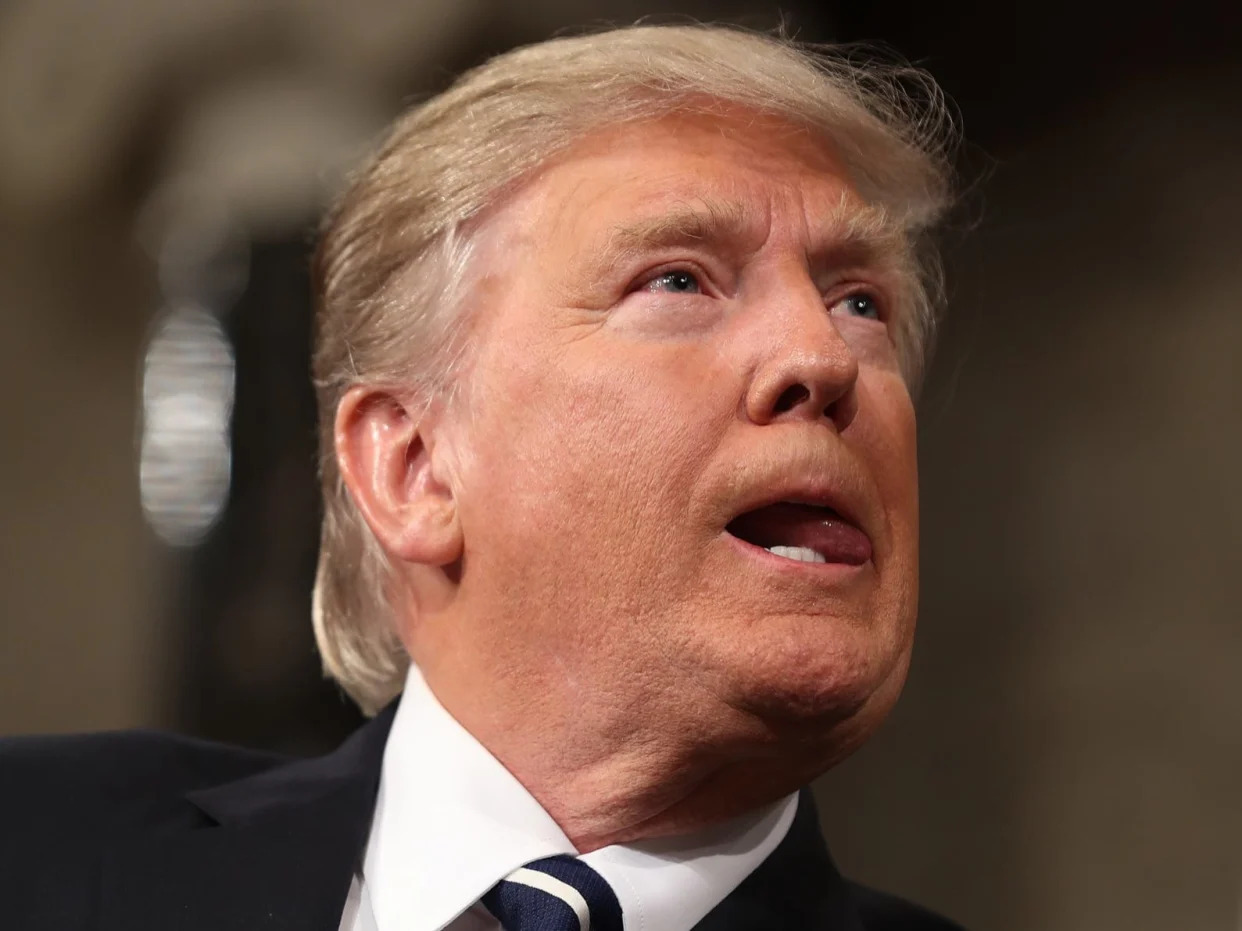
US President Donald J. Trump delivers his first address to a joint session of Congress from the floor of the House of Representatives in Washington, United States on February 28, 2017. Traditionally the first address to a joint session of Congress by a newly-elected president is not referred to as a State of the Union.Jim Lo Scalzo/EPA/Pool/Anadolu Agency/Getty Images
  • Every US president has told a lie — from war and taxes to health conditions and extramarital affairs.
  • When Dwight D. Eisenhower was caught lying by Russia, he said it was his greatest regret in office.
  • President Donald Trump made more than 30,000 false or misleading statements while in office.

“This is what we will say publicly but now, let’s talk about what we will actually do,” President Richard Nixon wrote in a memo about secret bombings in Cambodia in 1970.

“Every president has not only lied at some time, but needs to lie to be effective,” Ed Uravic, who wrote “Lying Cheating Scum,” told CNN.

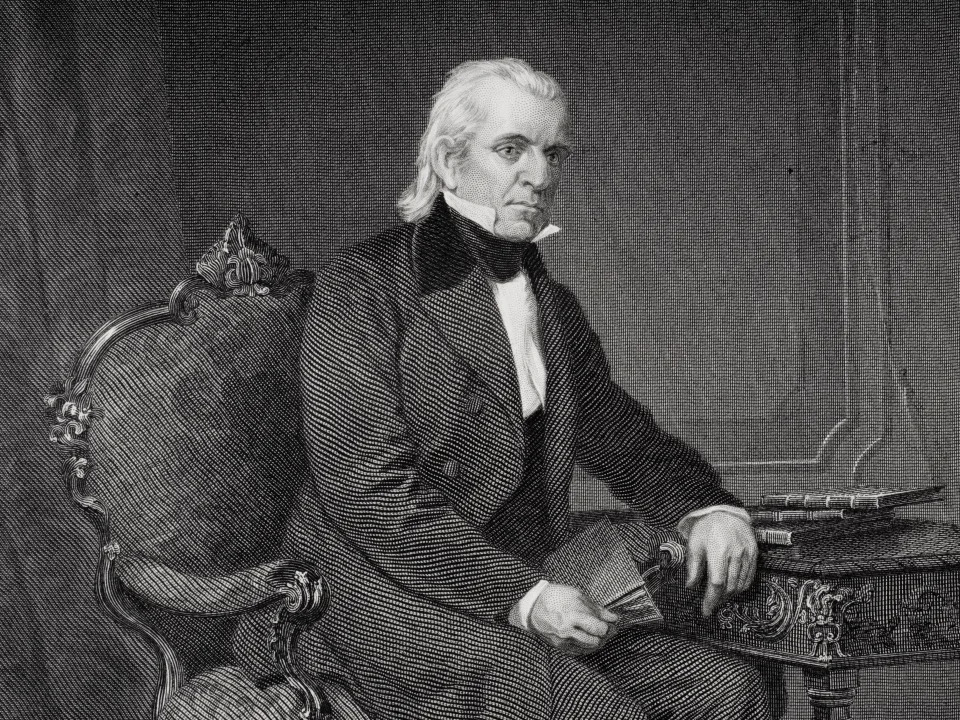
From President James Polk lying to invade Mexico in 1846 to then-presidential candidate George H.W. Bush famously promising no new taxes, here are some of the most famous lies US presidents have ever made.

In the 1840s, President James Polk told Congress that Mexico had invaded the US.

james polk
Former President James Polk.Universal History Archive/Getty Image

This was a lie. In actual fact, his administration had ordered US soldiers to occupy an area in Mexico near the Texan border in 1846. Then when Mexican forces attacked the US soldiers, Polk claimed it was an attack against the US.

The result of this lie was the Mexican-American war.

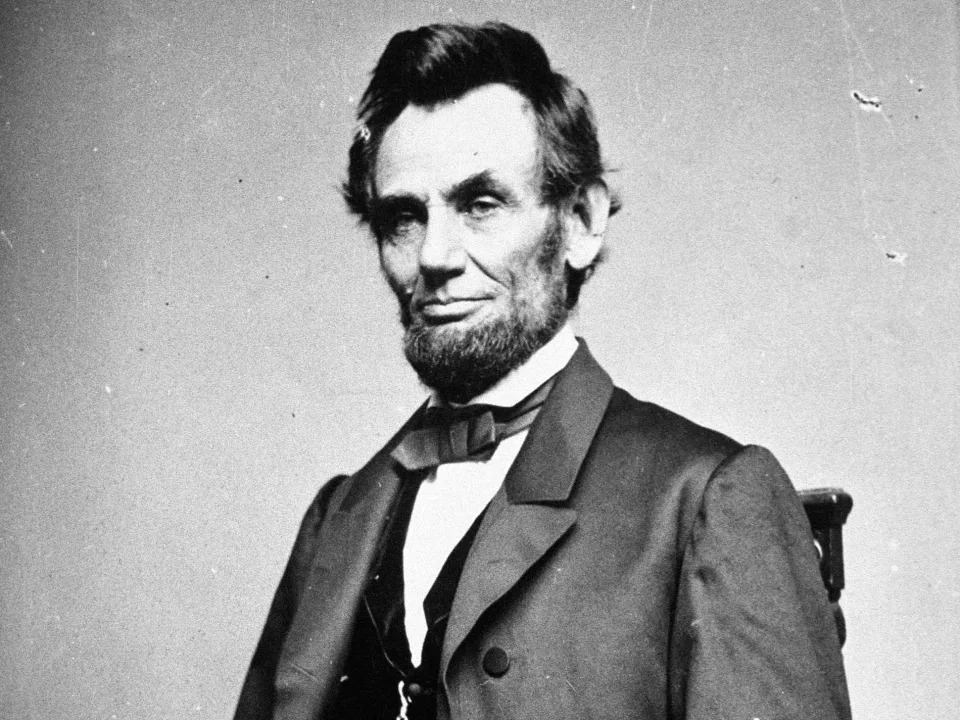
In 1865, President Abraham Lincoln, also known as “Honest Abe,” might not have lied, but he wasn’t always truthful.

Abraham Lincoln
Former President Abraham Lincoln.Getty Images / Staff

In response to rumors that he was about to meet with Confederate representatives in Washington, he told the House that no representatives were on their way to Washington, The Washington Post reported.

He wasn’t lying — they were on their way to Virginia, where he would later meet them. He didn’t tell the whole truth at the time because he didn’t want his meeting to impact the passing of the 13th Amendment.

Political theory professor Meg Mott told The Conversation his use of truth when dealing with the Confederacy was “devious.”

In 1898, President William McKinley declared Spain had attacked a US warship called the USS Maine in Cuba, killing 355 sailors.

William Mckinley
Former President William McKinley.Library of Congress

But reportedly, he had no evidence of this.

The actual cause of the sinking has never been conclusively proven.

Although reluctant to go to war with Spain, his insistence that the Spanish were behind the attack led to war, per the Columbus Dispatch.

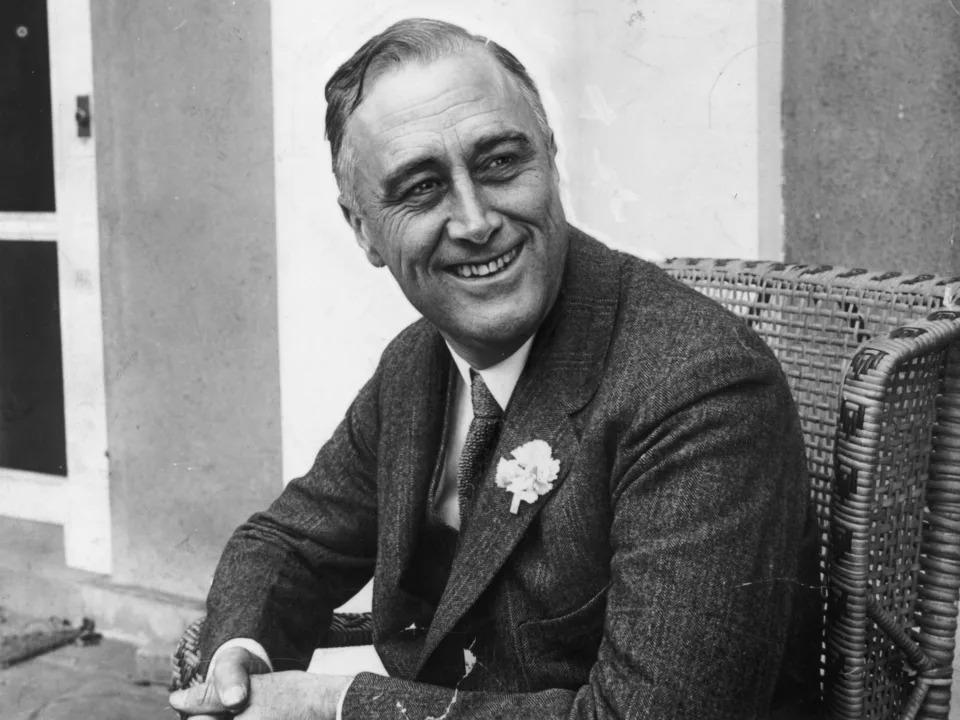
In 1940, during World War II, President Franklin D. Roosevelt promised the nation that “your boys are not going to be sent into any foreign wars.”

Franklin D. Roosevelt
Former President Franklin D. Roosevelt.Hulton Archive/Getty

But Roosevelt was already preparing to enter the war. His declaration was an election promise — one he would not keep — made during his campaign against Wendell Willkie.

After his speech, his speechwriter, Sam Rosenman, asked him why he hadn’t said the final part of the speech, which was, “Except in case of attack.”.

Roosevelt responded, “If we’re attacked, it’s no longer a foreign war.”

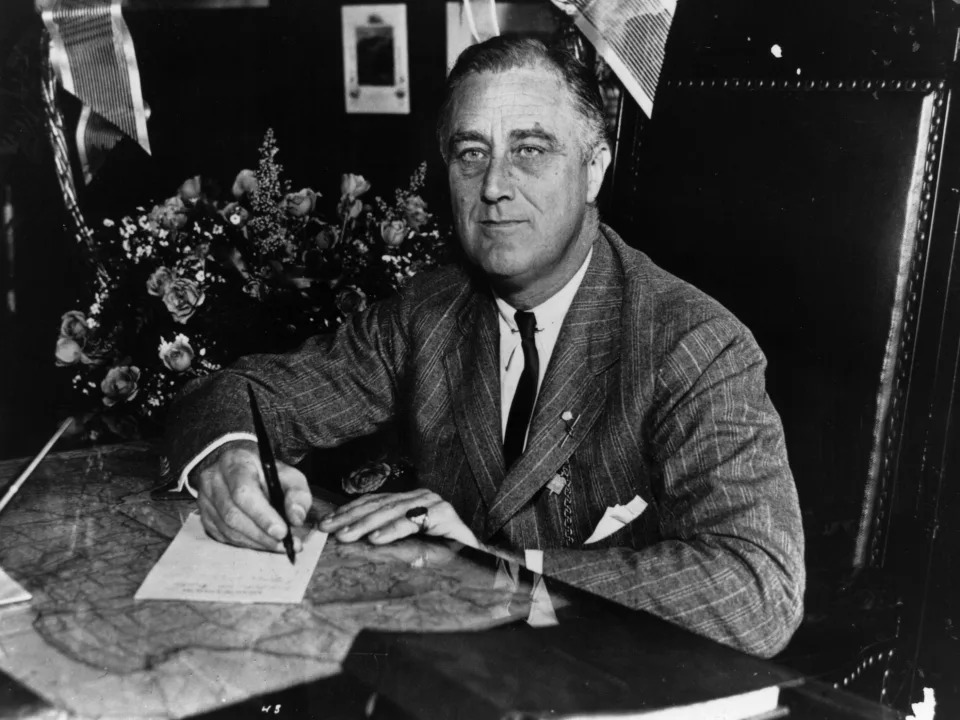
The following year, in 1941, Roosevelt lied again. This time, he said a German submarine had attacked a US ship called the Greer without provocation.

president franklin d roosevelt
Former President Franklin D. Roosevelt.Keystone Features/Getty Images

In actuality, the Greer had been protecting British ships crossing the Atlantic Ocean and had been following that German submarine and letting the British know its path.

Roosevelt used the attack as a provocation to prepare the US for entering World War II.

In August 1945, the Truman administration issued a press release after the first atomic bomb was dropped on Hiroshima, describing it as “an important military base.”

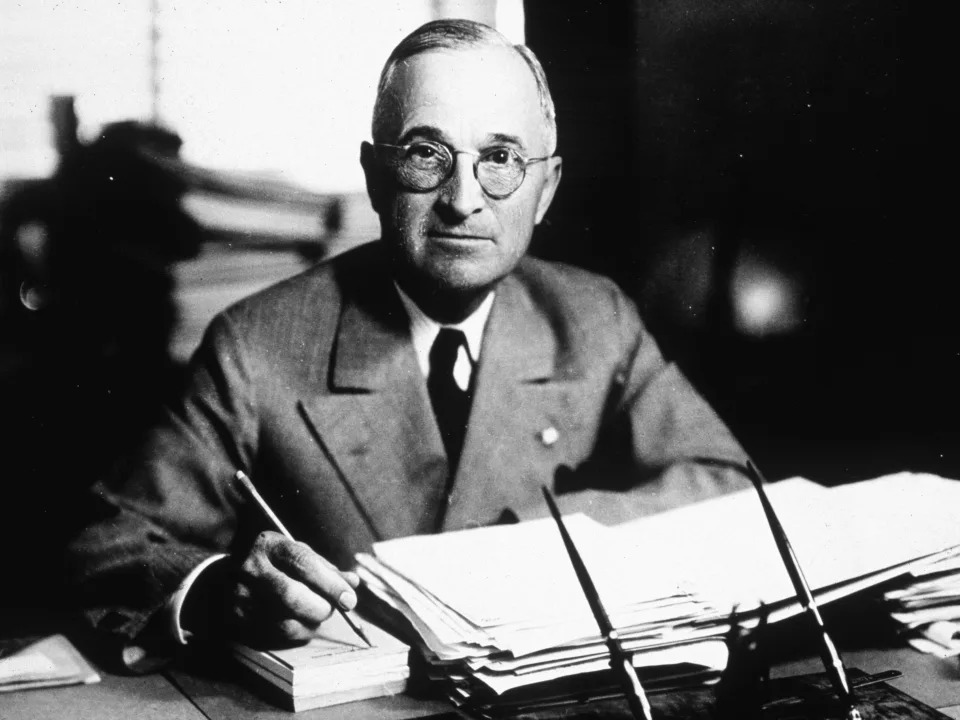
President Harry Truman in 1945.
Former President Harry Truman in 1945.MPI/Getty

Hiroshima was home to 350,000 people, although it did have a military base in the city.

About 10,000 soldiers were killed in the blast, but most of the 125,000 people who died were civilians.

In 1960, President Dwight Eisenhower dismissed claims that the US had flown spy planes over Russia after one of its planes was shot down.

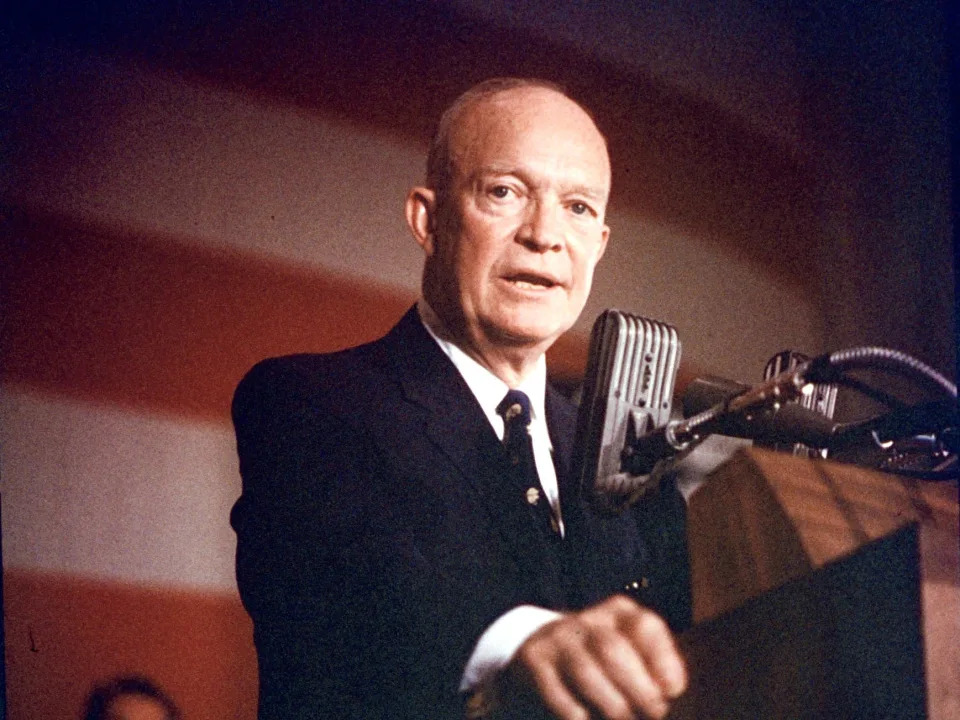
Dwight D. Eisenhower
Former President Dwight Eisenhower.Getty Images

Thinking the pilot was killed, he approved a number of statements that said it was a weather plane. But when Russia announced it had one of the pilots named Gary Powers in custody, he had to admit he had been lying.

He called it the biggest regret of his life.

“I didn’t realize how high a price we were going to pay for that lie,” he said.

On October 20, 1962, President John F. Kennedy told America he had a cold.

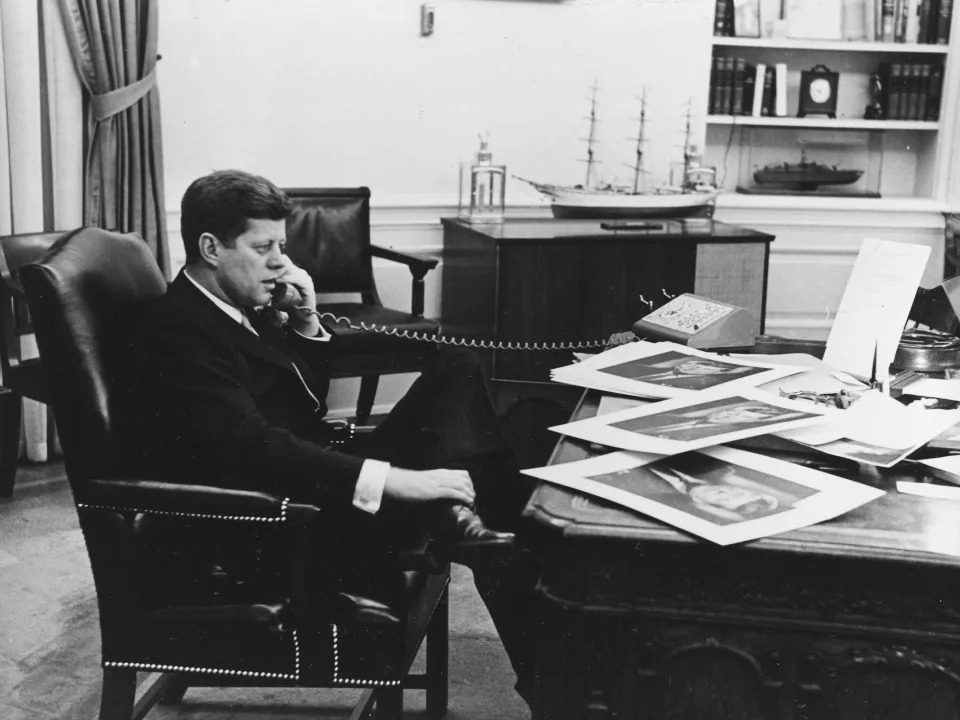
President John F. Kennedy in the Oval Office signing copies of his official portrait in 1961.
Former President John F. Kennedy in the Oval Office signing copies of his official portrait in 1961.Henry Burroughs/AP

The truth was he was dealing with a crisis. Intelligence agents had found that the Soviets were creating a missile base in Cuba.

To ensure the public didn’t panic, Kennedy told the press he had to leave Chicago where he was campaigning because he had a fever. In reality, he had to attend a meeting back at the White House to decide whether to invade Cuba.

He also claimed that the Russians had more nuclear weapons than the US.

Though he lied about having an illness, Kennedy lied about not having another one. In 1960, he said he had “never” had Addison’s disease.

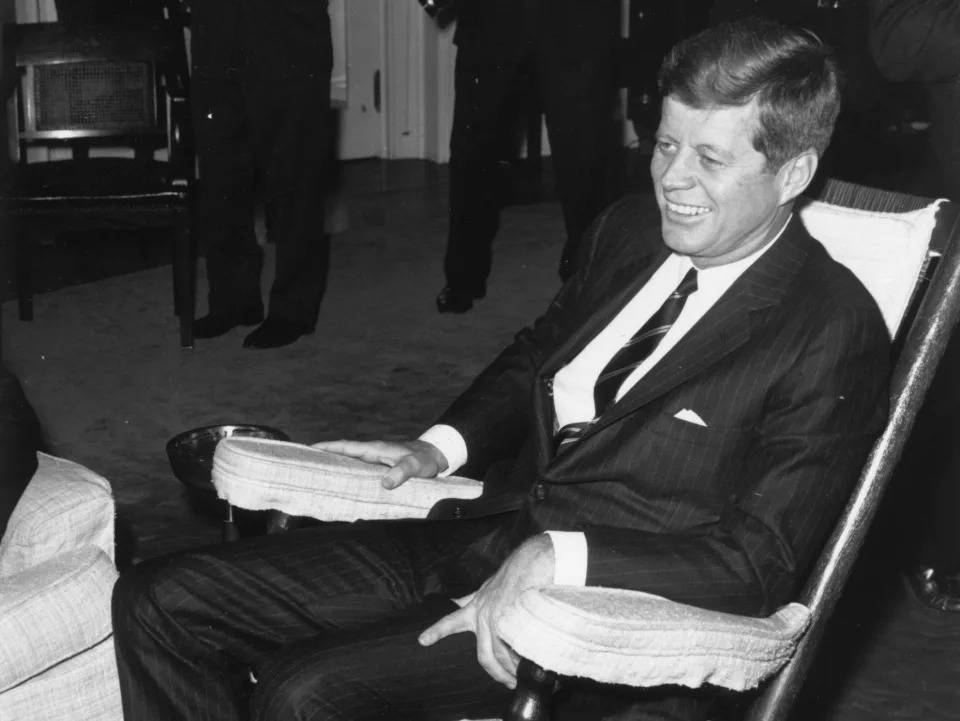
John F. Kennedy poses for photographers in his favorite rocking chair in the White House in 1963.
Former President John F. Kennedy in the White House in 1963.Keystone/Getty Images

Despite scientists later confirming he had the disease, in his primary campaign against Lyndon B. Johnson, he called himself “the healthiest candidate for President in the country.”

Kennedy wasn’t the only president who lied about his health. Numerous presidents — including Chester Arthur, Grover Cleveland, Woodrow Wilson, Calvin Coolidge, Franklin D. Roosevelt, and Dwight D. Eisenhower — lied about their health at some point.

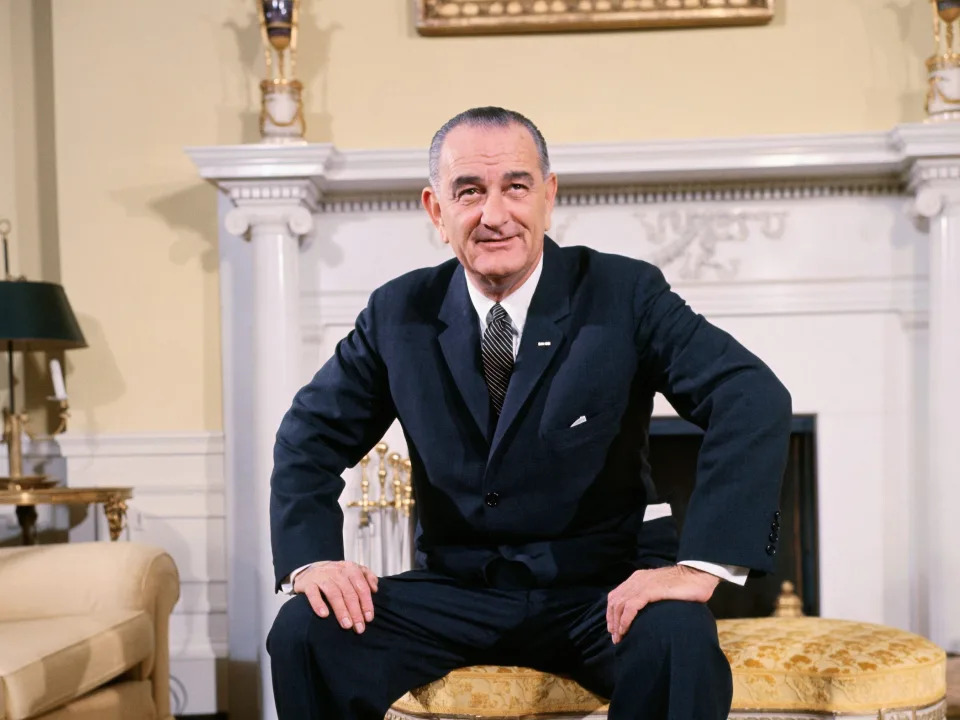
In 1964, President Lyndon B. Johnson said in a televised speech, “We still seek no wider war.”

President Lyndon B. Johnson in the Oval Sitting Room of the family quarters of the White House in Washington, DC.
Former President Lyndon B. Johnson in the Oval Sitting Room of the family quarters of the White House.Bettmann/Getty Images

This was in reference to the Gulf of Tonkin incident, in which North Vietnamese patrol boats had reportedly attacked US ships in the Gulf of Tonkin.

In the same speech, he declared, “Aggression by terror against the peaceful villagers of South Vietnam has now been joined by open aggression on the high seas against the United States of America.”

Johnson’s administration claimed that the US ships were out on routine patrols, but they were actually on a secret mission in North Vietnamese territory. The attacks were used to increase the US’s presence in Vietnam.

Johnson’s lies didn’t end there either. He went on to withhold information from the public and Congress about how much was spent on the Vietnam War and how badly the war effort was going.

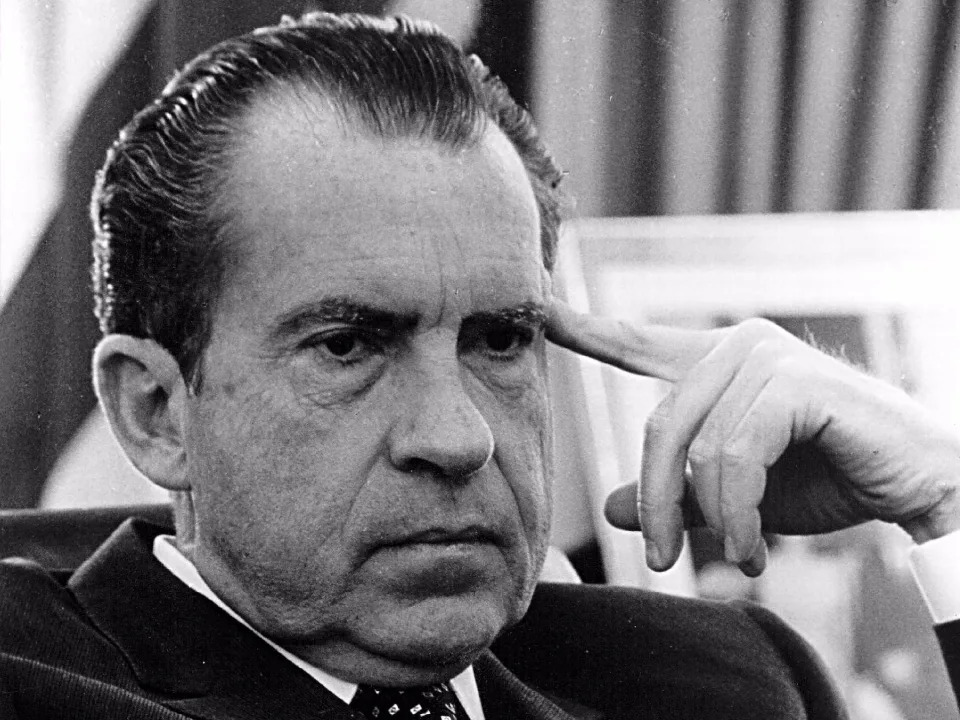
In 1970, President Richard Nixon lied to the country about a US covert bombing campaign in Cambodia.

Richard Nixon
Former President Richard Nixon.Getty Images

After the bombings were made public, Nixon let people believe the attacks on Cambodia were over.

He advised his staff to tell the public that the soldiers were providing support for local soldiers when, in fact, the attacks continued.

In a memo, Nixon wrote, “This is what we will say publicly but now, let’s talk about what we will actually do.”

In 1974, Nixon declared, “I’m not a crook” after being accused of obstructing justice and lying during the Watergate scandal.

President Richard Nixon speaking at a podium in 1969.
Former President Richard Nixon in 1969.Bettmann/Getty Images

He claimed he was not involved in the scandal, but an investigation found evidence that he was. He later resigned as president instead of potentially being impeached.

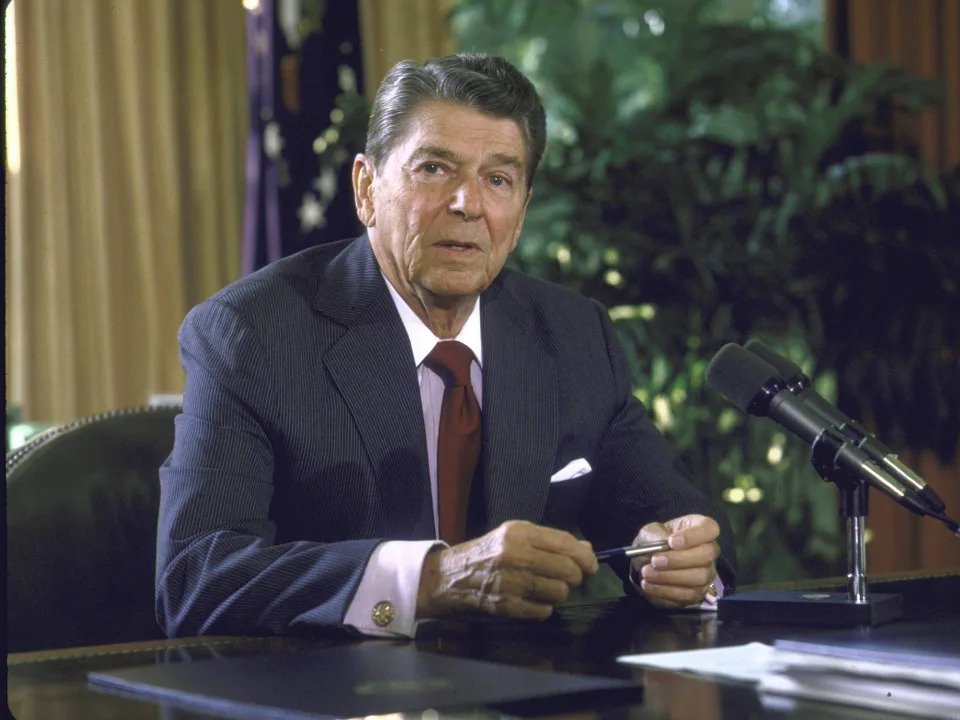
In 1986, President Ronald Reagan promised the nation: “We did not — repeat, did not — trade weapons or anything else for hostages, nor will we.”

United States President Ronald W. Reagan in the Oval Office in 1985.
Former President Ronald W. Reagan in the Oval Office in 1985.Diana Walker/Getty Images

This was during the Iran-Contra Affair, where the US government secretly traded weapons with Iran in exchange for the release of US hostages being held by terrorists in Lebanon.

The government then used the money from the weapons to fund anti-communist groups in Nicaragua.

Despite Reagan’s promise, it later turned out the US had in fact traded arms for hostages.

He later said, “My heart and my best intentions still tell me that’s true, but the facts and the evidence tell me it is not.”

In 1988, then-Republican presidential nominee George H.W. Bush said, “Read my lips: No new taxes.”

george hw bush
Former President George H.W. Bush.Diana Walker/Time Life Pictures/Getty Images

His whole statement was: “My opponent won’t rule out raising taxes. But I will. And the Congress will push me to raise taxes, and I’ll say no. And they’ll push, and I’ll say no, and they’ll push again, and I’ll say, to them, ‘Read my lips: no new taxes.'”

At the time, the six words were seen as a successful political slogan.

But Bush was later forced to raise taxes during negotiations with a Senate and House controlled by Democrats. After he did so, The New York Post went with a headline that said: “Read my lips: I lied.”

His U-turn on taxes was widely seen as one of the reasons he did not get re-elected for a second term.

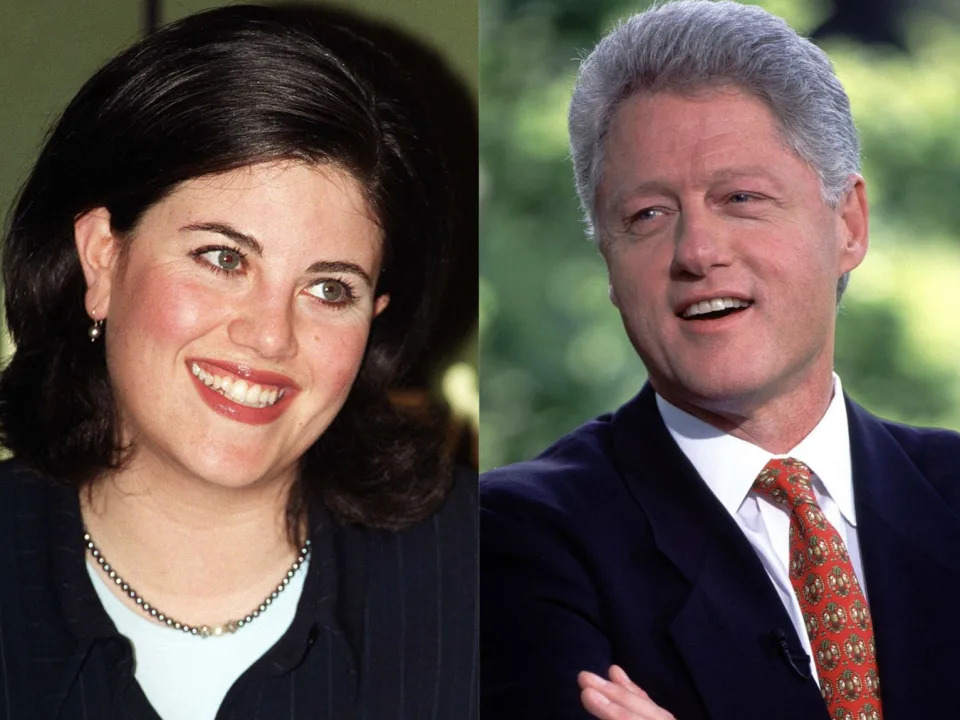
In 1998, President Bill Clinton said before a federal grand jury, “I did not have sexual relations with that woman,” referring to his intern Monica Lewinsky, with whom he did, in fact, have an affair.

Monica Lewinsky and former President Bill Clinton.
Monica Lewinsky and former President Bill Clinton.Fiona Hanson – PA Images/PA Images via Getty Images. Jeff Overs/BBC News & Current Affairs via Getty Images.

Clinton was impeached for lying under oath, but he was acquitted by the Senate.

It was thought to be the first time a president was caught lying about their sex life because it was the first time a president had ever really been asked about it.

In 2003, two months after the US invaded Iraq, President George W. Bush claimed to have found weapons of mass destruction to justify the war.

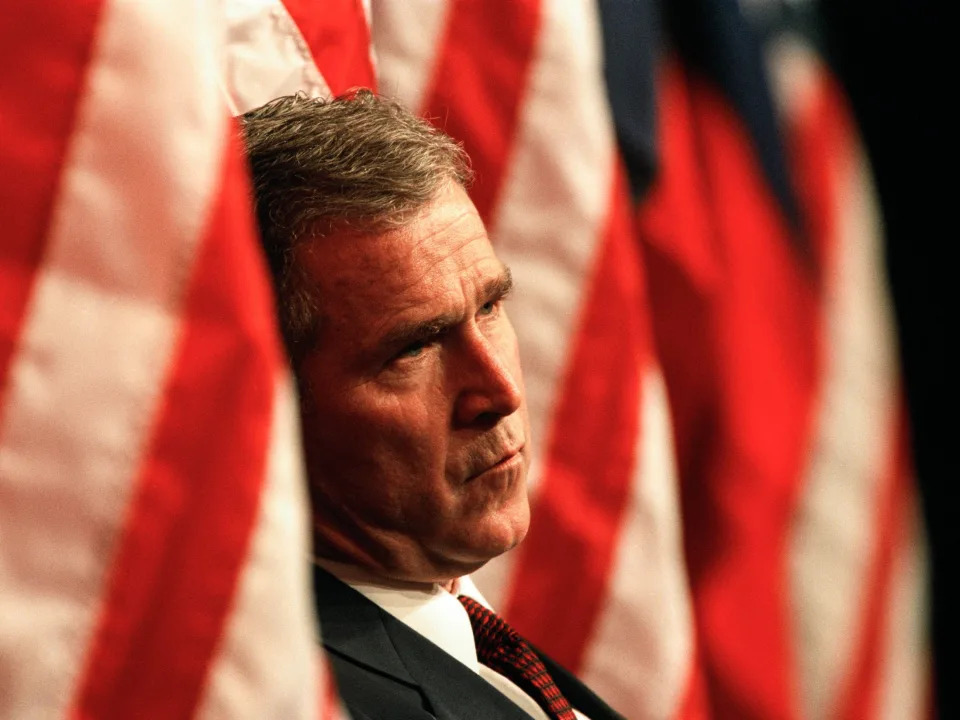
Then-Texas Gov. George W. Bush standing between American flags in 1999.
Then-Texas Gov. George W. Bush in 1999.David Hume Kennerly/Getty Images

“We found the weapons of mass destruction,” he said. “For those who say we haven’t found the banned manufacturing devices or banned weapons, they’re wrong; we found them.”

But they hadn’t found anything.

Bush later said, “We do not know whether or not [Iraq] has a nuclear weapon.”

However, then-CIA Director George Tenet later testified that Bush was advised there were no nuclear weapons and it would be unlikely that the country could even make one until 2007.

In 2008, when President Barack Obama was pushing through his new Affordable Care Act, Obamacare, he promised people wouldn’t need to change their plans if they didn’t want to.

Former President Barack Obama in 2017.
Former President Barack Obama in 2017.Stephane Cardinale – Corbis/Corbis via Getty Images

“If you like your plan, you can keep it,” Obama said. But it wasn’t true.

In the end, millions of people had to change their plans. He also didn’t just say it once, but around 37 times, Politico reported.

“I am sorry that they are finding themselves in this situation based on assurances they got from me,” he said in 2013.

President Donald Trump made more than 30,000 false or misleading statements while in office.

Donald Trump
Former President Donald Trump speaks to supporters during a political rally on July 29, 2023 in Erie, Pennsylvania.Jeff Swensen/Getty Images

This averaged out at about 21 false claims a day, The Washington Post reported.

Some of Trump’s lies included his claim that the pandemic was “totally under control,” the altering of a weather map with a Sharpie after he wrongly said Alabama was at risk from Hurricane Dorian, or his claim that Rep Ilhan Omar supported al Qaeda.

He also falsely claimed the election was stolen from him.

Some workers who rebuild homes after hurricanes are afraid to go to Florida. They blame a law DeSantis championed

CNN

Some workers who rebuild homes after hurricanes are afraid to go to Florida. They blame a law DeSantis championed

Catherine E. Shoichet, CNN – September 7, 2023

Immigrant workers from across the US raced to Florida to help rebuild after Hurricane Ian devastated the region.

But now, nearly a year later and days after another major hurricane hit, some of those workers say this time they’re staying home.

Saket Soni, whose nonprofit Resilience Force advocates for thousands of disaster response workers, says there’s one clear reason behind the shift: Florida’s new immigration law, which Gov. Ron DeSantis has championed.

In a survey Resilience Force conducted over several months this summer, Soni says more than half of the nonprofit organization’s roughly 2,000 members said they would not travel to Florida to help with hurricane recovery efforts because of the law. And in the aftermath of Hurricane Idalia, he says, many remain concerned.

“They felt very fearful,” says Soni, the organization’s executive director. “No amount of money would be worth it if it meant they would be incarcerated or deported.”

Normally, Soni says Resilience Force workers wouldn’t think twice before heading to a disaster zone.

The group is made up largely of immigrants, many of whom are undocumented, Soni says. And much like migrant workers who follow harvest seasons and travel from farm to farm, they crisscross the US to help clean up and rebuild when disaster strikes. Soni says many of them see the skills they’ve honed over years of responding to major storms as a calling, in addition to a means of supporting their families.

“Sadly,” he says, “you have all of these workers sitting in Houston and in New Orleans, coming to our offices, asking us, is there a chance this law will be repealed? Is there any chance they could go?”

DeSantis touted the law as ‘ambitious.’ Immigrant rights advocates call it ‘draconian’

CNN has reached out to DeSantis’ office for comment. In May, the Florida governor and aspiring GOP presidential candidate signed what he touted as “the most ambitious anti-illegal immigration laws in the country.” The measure – also known as SB1718 – went into effect on July 1. It includes provisions that:

– Make it a third-degree felony to “knowingly and willfully” transport someone who’s undocumented into the state

– Require business with at least 25 workers to use E-Verify, a federal program that checks workers’ immigration status

– Invalidate driver’s licenses issued to unauthorized immigrants in other states

– Require certain hospitals in Florida to ask patients about their immigration status

At a press conference after he signed the bill, DeSantis described its passage as a “great victory.”

“In Florida, we want businesses to hire citizens and legal immigrants. But we want them to follow the law and not (hire) illegal immigrants, and that’s not that hard to do,” he said. “And once we get that kind of as a norm in our society, I think we’re going to be a lot better off.”

Supporters of the law have said stopping undocumented immigrants from coming to the state and pushing out those who already live in Florida is part of their aim.

Critics call the law “draconian” and argue that it’s hurting the state’s economy and putting immigrant communities on edge.

“People are living in fear,” says Adriana Rivera, communications director of the Florida Immigrant Coalition.

Before it went into effect, the law spurred a travel advisory from one of the most prominent Latino advocacy groups in the United States. And immigrant advocates warn that concerns over the law have already caused some workers in key industries like agriculture and construction to leave Florida.

“This law is particularly problematic because it really doesn’t benefit anyone. This law was created to demonize the state’s immigrant communities that have been so critical in building our state and growing our economy,” says Samuel Vilchez Santiago, Florida state director for the American Business Immigration Coalition.

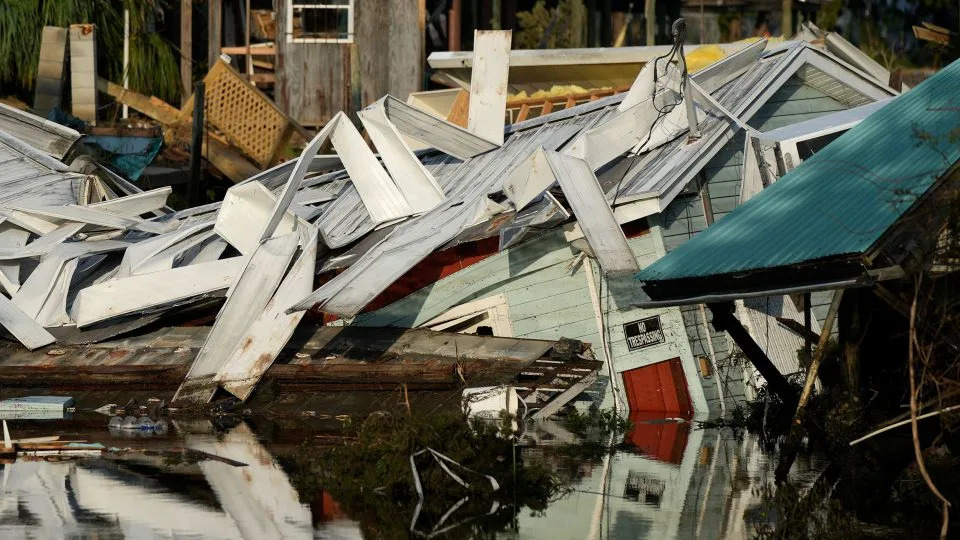
An unstilted home that came off its blocks sits partially submerged in a canal in Horseshoe Beach, Florida, on September 1, two days after Hurricane Idalia hit. - Rebecca Blackwell/AP
An unstilted home that came off its blocks sits partially submerged in a canal in Horseshoe Beach, Florida, on September 1, two days after Hurricane Idalia hit. – Rebecca Blackwell/AP

CNN teams reporting in Florida since Idalia hit haven’t observed any worker shortages.

But in recent months, Vilchez says he’s received multiple reports from managers who’ve showed up to construction sites expecting to see workers and instead found the worksites abandoned.

Soni, Resilience Force’s executive director, says he watched a similar scene unfold a week after the law passed.

“I remember being there one afternoon and talking to a worker at lunchtime. … And he, quite literally, while he was talking to me was packing his tools into his pickup truck and leaving with his crew.”

It was an early sign, Soni says, of harms caused by the immigration law.

“It’s really undermining the ability of Floridians to recover after a hurricane,” he says. “It’s upending the possibility of homes being rebuilt.”

‘I can’t lose my family just to earn a few more dollars’

For Josue, a 23-year-old from Honduras who lives in Texas and works in home remodeling, it’s been hard to watch news reports from Florida showing Hurricane Idalia’s aftermath.

“I feel powerless, seeing how all these people need help,” he says.

Josue, who asked to be identified only by his first name because he’s undocumented, says he knows how hard it is for families to clean up and move forward after disaster strikes.

“We’ve had hurricanes like this hit Honduras, and people have helped us,” he says. “And that’s one reason I want to help. We do it with all our hearts. We do it because we are all equal.”

Last year, he spent months in the Fort Myers area rebuilding homes “from top to bottom” – some still swamped with floodwaters, some with roofs ripped off.

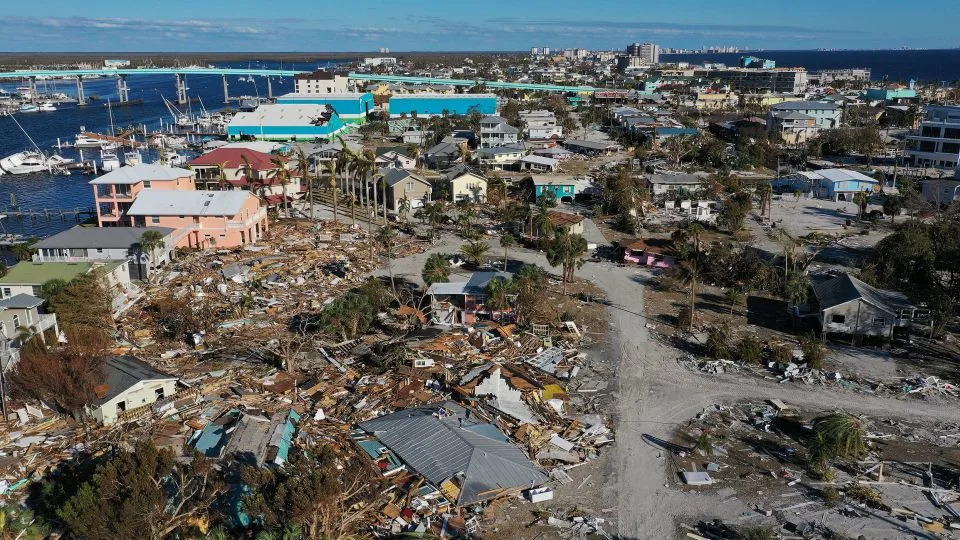
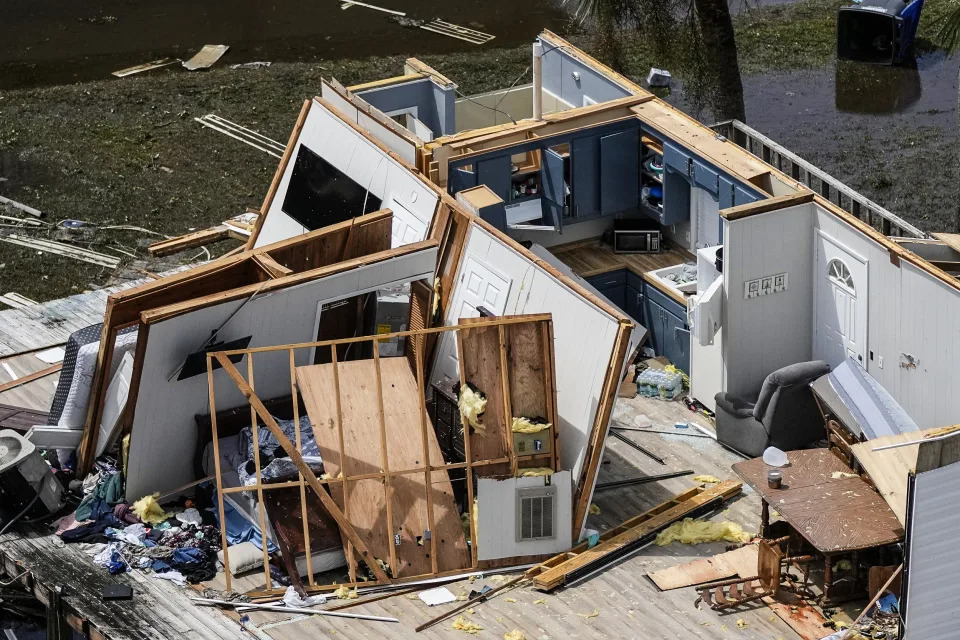
In this aerial view, destruction left in the wake of Hurricane Ian is shown in Fort Myers Beach, Florida, on October 2, 2022. - Win McNamee/Getty Images
In this aerial view, destruction left in the wake of Hurricane Ian is shown in Fort Myers Beach, Florida, on October 2, 2022. – Win McNamee/Getty Images

This year, he says he doesn’t feel safe returning to the state.

Neither does 30-year-old Javier, who lives in New Orleans and also asked to be identified only by his first name because he’s undocumented.

After a few months remodeling homes in Fort Myers after Hurricane Ian last year, Javier says he sensed the atmosphere in the community shifting. Rumors swirled of undocumented workers getting arrested. He fled to Louisiana after hearing that more raids were imminent.

“If it was like that then, imagine how it would be now, with this law,” he says.

He thinks of the many family members he’s supporting, like his 12-year-old daughter in Honduras, who wants to be a surgeon when she grows up. And he thinks of his two sons living in Louisiana.

“I can’t lose my freedom,” he says. “I can’t lose my family just to earn a few more dollars.”

He’s worried about damage from this hurricane – and the next one

Officials are still surveying the damage Hurricane Idalia left behind when the Category 3 storm made landfall last week in Florida’s Big Bend region.

So far, despite the storm’s intensity, experts say the damage appears to be less extensive than other major hurricanes, partly because Idalia made landfall in a less populated region.

Hurricane Idalia caused between $12 billion and $20 billion in damage and lost output, according to a preliminary cost estimate from Moody’s Analytics. Hurricane Ian caused an estimated $112.9 billion of total damage, according to the National Hurricane Center.

Saket Soni, executive director of Resilience Force, speaks to workers in a parking lot in LaPlace, Louisiana, on February 07, 2022. - Josh Brasted/Getty Images
Saket Soni, executive director of Resilience Force, speaks to workers in a parking lot in LaPlace, Louisiana, on February 07, 2022. – Josh Brasted/Getty Images

Even though the damage from this storm isn’t as extensive, Soni says his contacts in the state still report that significant help is needed.

“There’s pretty major devastation in rural areas. There’s a lot of fallen trees. There’s a lot of homeowners in rural areas trying to clean their yards, and an older population of homeowners that needs the help,” Soni says.

While worker shortages in the wake of Idalia haven’t been reported, Soni says that’s a very real possibility if another major storm strikes the state this hurricane season, which ends November 30.

Forecasters are currently eying Hurricane Lee in the Atlantic, although they say it’s too soon to know whether the storm will strike the mainland US.

“Thankfully this recent hurricane, Idalia, did not hit a major city, but the next hurricane could hit the day after tomorrow,” Soni says. “It could come for Jacksonville or Tampa or Tallahassee. And at that point the governor would have a massive rebuilding effort on his hands, and no workers to fuel it. That’s really the situation that I’m concerned about.”

That, too, would be a disaster, Soni says – but one that he says is man-made, and avoidable.

CNN’s Matt Egan, Gloria Pazmino, Bill Kirkos, Carlos Suarez, Denise Royal, Isabel Rosales, Laura Robinson and Elisabeth Buchwald contributed to this report.

Trump: ‘I’m Allowed to Do Whatever I Want’ With Classified Info

Rolling Stone

Trump: ‘I’m Allowed to Do Whatever I Want’ With Classified Info

Peter Wade – September 6, 2023

Donald Trump said he “absolutely” plans to testify in the federal government’s case against him regarding classified documents he removed from the White House. “I’m allowed to do whatever I want … I’m allowed to do everything I did,” the former president told conservative podcast host Hugh Hewitt.

In an interview on “The Hugh Hewitt Show” that dropped Wednesday, the host asked Trump, “Did you direct anyone to move the boxes, Mr. President? Did you tell anyone to move the boxes?” referring to the boxes of more than 300 classified documents the federal government seized last year from Trump’s Mar-a-Lago estate.

“I don’t talk about anything. You know why? Because I’m allowed to do whatever I want. I come under the Presidential Records Act,” Trump replied, while also taking a quick detour to bash Hewitt. “I’m not telling you. You know, every time I talk to you, ‘Oh, I have a breaking story.’ You don’t have any story. I come under the Presidential Records Act. I’m allowed to do everything I did.”

Trump has long been misrepresenting what is allowed under the Presidential Records Act.

The law states: “Upon the conclusion of a President’s term of office, or if a President serves consecutive terms upon the conclusion of the last term, the Archivist of the United States shall assume responsibility for the custody, control, and preservation of, and access to, the Presidential records of that President.” There is an allowance for presidents to keep records that are of “a purely private or nonpublic character” and unrelated to presidential duties, but many of the documents Trump was found to possess came from government agencies, such as the C.I.A. and Department of Defense. Trump even bragged on tape post-presidency about holding on to plans for war with Iran.

When Hewitt asked Trump if he would testify in his own defense at the trial in the documents case, the former president said, “That, I would do. That, I look forward to, because that’s just like Russia, Russia, Russia. That’s all the fake information from Russia, Russia, Russia. Remember when the dossier came out and everyone said, ‘Oh, that’s so terrible, that’s so terrible,’ and then it turned out to be it was a political report put out by Hillary Clinton and the DNC. They paid millions for it. They gave it to Christopher Steele. They paid millions and millions of dollars for it, and it was all fake. It was all fake.”

“So I look forward, I look forward to testifying. At trial, I’ll testify,” Trump added. Of course, Trump loves to talk a big game, and we likely won’t know if he will actually testify until next year. The classified documents trial is set to begin in May 2024.

Hewitt followed up by asking, “If you do [testify] and they ask you on the stand, did you order anyone to move boxes, how will you answer?”

“I’m not answering that question for you,” Trump said, “but I’m totally covered under the law.”

In addition to discussing his legal troubles, Hewitt asked Trump for his thoughts on an unrelated topic: Prince Harry and Meghan Markle. “I know that they don’t like me,” Trump said. “I said that I don’t think they are very appropriate what they’re saying, what they’re doing, and I didn’t like the way she dealt with the queen.”

Mike Huckabee Hints at Violence if Trump Loses in 2024: Will Be Last Election ‘Decided by Ballots Rather Than Bullets’ (Video)

THe Wrap

Mike Huckabee Hints at Violence if Trump Loses in 2024: Will Be Last Election ‘Decided by Ballots Rather Than Bullets’ (Video)

Dessi Gomez – September 6, 2023

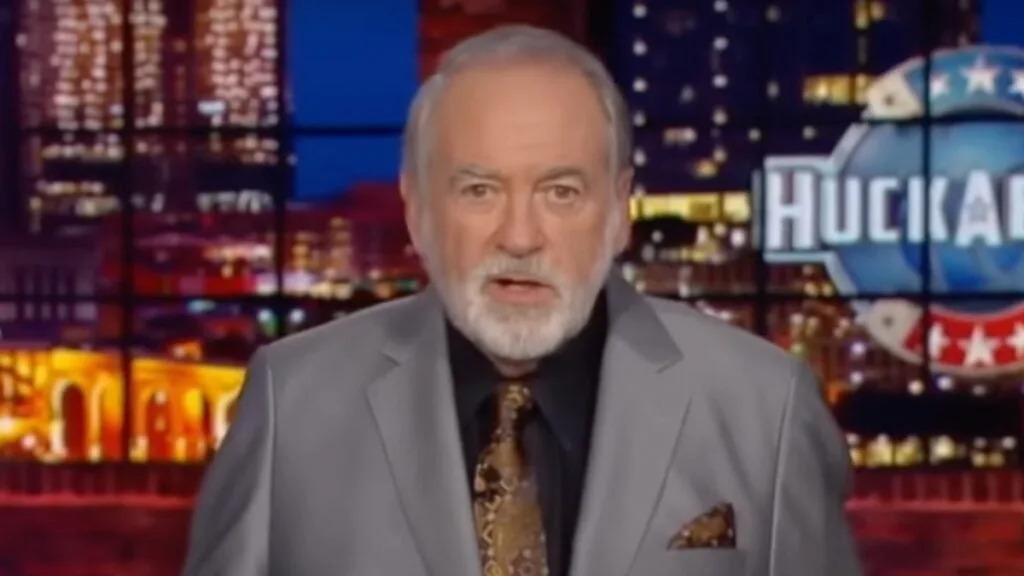
Former Arkansas Gov. Mike Huckabee warned on the latest episode of his “Huckabee” program on the Trinity Broadcasting Network that the 2024 election may be the last decided by “ballots rather than bullets” if former President Donald Trump does not win.

Huckabee, himself a failed presidential candidate, began the segment by accusing President Joe Biden with enacting similar policing tactics seen in “third-world dictatorships” to silent his primary political opponent.

“Do you know how political opponents to those in power are dealt with in third-world dictatorships, banana republics and communist regimes?” Huckabee asked during his monologue of Saturday night’s episode. “The people in power use their police agencies to arrest their opponents for made-up crimes in an attempt to discredit them, bankrupt them, imprison them, exile them or all of the above.”

For Huckabee, the multiple indictments against Trump fall under the “made-up crimes” category. Trump became the first American president to be indicted in March with charges relating to 2016 hush money payments made to adult film actress Stormy Daniels. And he has faced three indictments since then, most recently a series of charges out of Fulton County, Georgia, relating to alleged efforts to overturn the state’s 2020 election results.

While it’s unfounded by fact, Huckabee said he believes that Trump’s legal woes surrounding alleged hush-money payments, conspiracies to defraud the United States, mishandling of classified documents and more are a direct result of Biden trying to silence his political opponent.

“If you are not paying attention, you may not realize that Joe Biden is using exactly those tactics to make sure that Donald Trump is not his opponent in 2024,” Huckabee said.

“This kind of thuggery at tax payer expense isn’t supposed to happen in the United States,” he continued. “No, we’re supposed to be a nation of laws and not a nation of powerful people. But the Biden administration is in full meltdown mode to hide the money laundering, influence peddling and outright bribery that Joe, his son Hunter and their associates have been conducting for well over a decade that has enriched them to the tune of tens of millions of dollars.”

And that’s where the former politician intimated of violence to come if the legal actions against Trump are to cost him the 2024 presidential election.

“Here’s the problem: If these tactics end up working to keep Trump from winning or even running in 2024, it is going to be the last American election that will be decided by ballots rather than bullets,” he said.

Watch Huckabee’s full opening monologue in the video above.

Exxon Mobil Predicts Climate Efforts Will Fail

Futurism

Exxon Mobil Predicts Climate Efforts Will Fail

Maggie Harrison – September 1, 2023

Pexximist Mobil

According to Exxon Mobil, oil giant and one of the more prominent architects of our planet’s fossil fuel-laden doom, humanity is likely to fail its climate goals of halting a global temperature rise of two degrees Celsius by 2050.

As The Wall Street Journal reports, Exxon published its grim prediction in a Monday climate report, effectively arguing that while global climate change efforts have made some progress — CO2 emissions caused by world fossil fuel consumption, the company posits, will fall by 25 billion metric tons by 2050, which will mark a 26 percent decrease from this decade’s “peak of 34 billion,” according to the WSJ — it simply won’t be enough to curb that dreaded two-degree global temperature uptick.

“An energy transition is underway,” reads the Exxon report, according to Reuters, “but it is not yet happening at the scale or on the timetable required to achieve society’s net-zero ambitions.”

Very bleak! And yet, according to the WSJ, Exxon also, in the very same report, argued that fossil fuels are conveniently still necessary to power worldwide economic growth.

“Fossil fuels remain the most effective way,” said the oil producer, “to produce the massive amounts of energy needed to create and support the manufacturing, commercial transportation, and industrial sectors that drive modern economies.”

Great. Thanks for nothing.

Cigarette Marketing

We really can’t stress enough how ludicrous it is to receive such dismal climate projections from Exxon specifically. To back up for a second: in 2015, an investigation revealed that executives at Exxon were made aware of the threat of greenhouse gas-caused climate change back in 1977, long before the public knew anything about it. They chose to ignore the risk, even spending millions to launch a long series of climate misinformation campaigns. Today, as the WSJ notes, the company is currently embroiled in a number of lawsuits related to climate deception.

That’s all to say that this latest report feels much like the cigarette lobby publishing a memo declaring that people are still dying from lung cancer, before turning around and explaining why cigarettes are still super useful and necessary long-term for social progress, actually. (Indeed, there are a lot of similarities between the cigarette lobby and oil giants.) And in June of this year, it’s worth noting, Exxon and Chevron shareholders rejected a series of proposals aimed to further limit emissions.

To Exxon’s credit, it’s probably right. The Earth is in a very bad place — and as long as Exxon’s still making upwards of $56 billion in oil sales annually, hitting our 2050 emissions targets is unlikely.

Florida’s insurance industry is in flux as Idalia cleanup begins

NBC News

Florida’s insurance industry is in flux as Idalia cleanup begins

Rob Wile, Gabe Gutierrez, Phil McCausland and Melissa Chan September 1, 2023 Growing concerns over Florida’s insurance rates after Hurricane IdaliaScroll back up to restore default view.
CEDAR KEY, Fla. — As cleanup begins in the aftermath of Hurricane Idalia, the storm has served as a stark reminder that Florida’s insurance industry remains in flux.

Idalia made landfall in Florida’s Big Bend just before 8 a.m. Wednesday as a Category 3 hurricane. It killed at least three people in Florida before it battered Georgia and other states on the East Coast as a downgraded tropical storm.

Idalia moved offshore Thursday morning, leaving around 330,000 customers without power in Florida, Georgia and South Carolina.

Powerful storms have regularly pummeled Florida’s coastal communities in recent years. The hurricanes have brought high winds, lashing rains and deadly storm surge. Idalia brought much of the same, and it has forced many homeowners to turn to their insurance policies in hope that repairing their homes and replacing their belongings might be covered.

But many of those homeowners face uncertainty amid the upheaval that has emerged in Florida’s insurance industry in recent years.

Image: Buddy Ellison, left, and his father Dan look through debris scattered across their property in Horseshoe Beach, Fla., on Aug. 31, 2023, one day after the passage of Hurricane Idalia.  (Rebecca Blackwell / AP)
Image: Buddy Ellison, left, and his father Dan look through debris scattered across their property in Horseshoe Beach, Fla., on Aug. 31, 2023, one day after the passage of Hurricane Idalia. (Rebecca Blackwell / AP)

A thinning insurance market that is beset by more regular hurricanes has caused insurance policy costs to skyrocket. An average home premium in Florida is about $6,000 per year, according to the Insurance Information Institute, an industry trade organization. The U.S. average is about $1,700.

The state’s insurance industry is preparing to lose four insurers since last year — among them: Farmers Insurance, Bankers Insurance and Lexington Insurance. Farmers Insurance announced just last month that it intends to leave Florida, affecting about 100,000 policy holders, and that it would not be writing new policies.

Still, it appears Florida is better-positioned to handle insurance claims than it was last year after the state’s insurers acquired adequate levels of reinsurance — a reimbursement system that insulates insurers from very high claims.

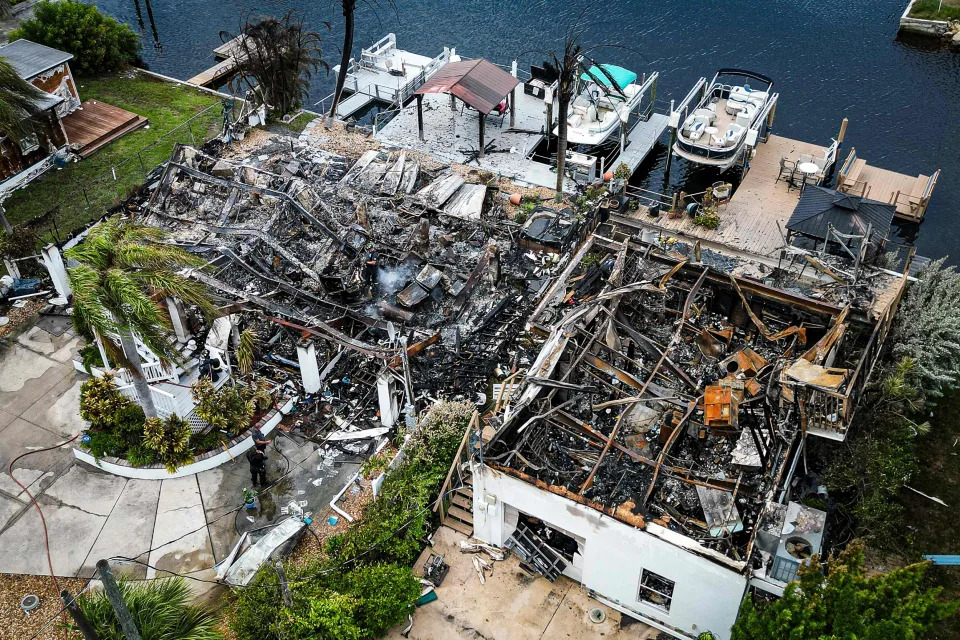
Image: Burned rubble where a house stood after a power transformer explosion in the community of Signal Cove in Hudson, Fla., on Aug. 30, 2023, after Hurricane Idalia made landfall. (Miguel J. Rodriguez Carrillo / AFP - Getty Images)
Image: Burned rubble where a house stood after a power transformer explosion in the community of Signal Cove in Hudson, Fla., on Aug. 30, 2023, after Hurricane Idalia made landfall. (Miguel J. Rodriguez Carrillo / AFP – Getty Images)

“With all the weather and hurricane events that have come through, the reinsurance market has hardened on the Florida insurance companies,” said Chris Draghi, who specializes in the state’s insurance market as an associate director at AM Best, a global credit agency. “That’s led to material increases and reinsurance costs, which, of course, then strain bottom line results to afford the same level of protections as in the past.”

That could mean that, as the costs for insurers rise further, Floridians’ premiums will be affected.

Gregory Buck, the president and owner of National Risk Experts Insurance, based in Florida, said that his company’s premiums last year were four times the national average but that those prices are largely based on reinsurers. He expects rates to increase further.

“If you look at year on year for the last three to five years, you’re probably talking about between 100 and 300% (in insurance cost increases) depending on where you are and obviously the age and the construction of the homes themselves” Buck said by email. “But absolutely, we are looking at more increases.”

Image: The remains of a destroyed home built atop a platform on piles are seen in Keaton Beach, Fla., during a flight provided by mediccorps.org, following the passage of Hurricane Idalia, on  Aug. 30, 2023. (Rebecca Blackwell / AP)
Image: The remains of a destroyed home built atop a platform on piles are seen in Keaton Beach, Fla., during a flight provided by mediccorps.org, following the passage of Hurricane Idalia, on Aug. 30, 2023. (Rebecca Blackwell / AP)

Homeowners in the state said they expect the cost to jump once again, which has led some to consider going without insurance because of the price.

Aimee Firestine stood outside her hotel, the Faraway Inn, in Cedar Key as she said her homeowners insurance rate doubled last year. She said it has left her “thinking about whether you can keep paying for that.”

“That’s one of the issues in Florida is Mother Nature does what it wants and we have to just rebuild and hope insurance can help us out with it,” Firestine said.

The cost of insurance policies could be a major contributing reason that as many as 15% of Florida homeowners are living without property insurance. That is the highest percentage in the country, according to the Insurance Information Institute.

In Florida, 16 severe storms or hurricanes since 2020 have caused $100 billion to $200 billion in damage. That has pushed many in the state to turn to Citizens Property Insurance Corp., the state-backed insurer of last resort, which has quickly become Florida’s fastest-growing insurer.

The company now has more than 1.4 million policies, centered largely in southeast Florida, up precipitously from 500,000 in 2019. It now covers roughly 1 in 8 Florida households.

It is a reflection of how private insurers have left the state as the storms walloping Florida grow in number and strength, said Amy Bach, the executive director of United Policyholders, a nonprofit consumer advocacy group. Because the agency is a state-run entity, it could also have an effect on taxpayer dollars.

“As they retreat and government is having an increasing role, that basically translates into taxpayers,” Bach said. “So really, we’re talking about a huge shift in risk-bearing from the private sector to the public, and it’s a big deal.”

Four new insurance companies will join the Florida market next year after legislative reforms designed to promote market stability were passed and signed into law, which could help address the problem. It is unclear, however, what market share the companies might be able to soak up or what their rates might be.

Image: A flooded house is seen in Crystal River, Fla., on Aug. 31, 2023, after Hurricane Idalia made landfall. (Chandan Khanna / AFP - Getty Images)
Image: A flooded house is seen in Crystal River, Fla., on Aug. 31, 2023, after Hurricane Idalia made landfall. (Chandan Khanna / AFP – Getty Images)

Aggravating the problem, 82% of Floridians do not have flood insurance, which is typically operated by the National Flood Insurance Program, a federal program run by the Federal Emergency Management Agency. Congress created the program in 1968 because of a similar issue — the lack of private insurers in flood-prone areas.

Analysts and experts said few people purchase flood insurance because many do not realize that most homeowners or hurricane policies do not cover flooding, even though hurricanes are a key threat to Florida’s low-lying areas.

Hundreds of thousands of Florida homes lie in flood-risk areas that are not designated as such by the federal government, leaving many homeowners vulnerable to massive out-of-pocket costs for damage after hurricanes.

More than 785,000 properties in the state face flood hazards but are not recognized as high risks in FEMA’s flood maps, according to data from the First Street Foundation, a nonprofit research group.

The First Street Foundation said that it factors in heavy rainfall, the impact of small waterways’ flooding and climate change and that it updates its models annually, while FEMA does not. On its website, FEMA said it “consistently releases new flood maps and data, giving communities across America access to helpful, authoritative data that they can use to make decisions about flood risk.”

Meanwhile, Mark Friedlander, a spokesman for the Insurance Information Institute, said Florida has major flood events year-round.

“We’re going to see very significant flood losses from the hurricane this week, and only a small percentage of homeowners have that coverage,” he said.

In Taylor County, where Idalia made landfall, for example, only 5.4% of homeowners have flood insurance, Friedlander said. The county, in the Big Bend area of Florida, is home to about 21,000 people, according to the latest census data.

“That entire community is under water,” Friedlander said.

Gabe Gutierrez reported from Cedar Key. Phil McCausland and Melissa Chan reported from New York City.

State election officials prepare for efforts to disqualify Trump under 14th Amendment

Good Morning America

State election officials prepare for efforts to disqualify Trump under 14th Amendment

Isabella Murray and Hannah Demissie September 1, 2023

State election officials prepare for efforts to disqualify Trump under 14th Amendment

Efforts to keep former President Donald Trump off the 2024 ballot under the 14th Amendment are gaining momentum as election officials in key states are preparing for or starting to respond to legal challenges to Trump’s candidacy.

The argument to disqualify Trump from appearing on primary or general election ballots in 2024 boils down to Section 3 of the U.S. Constitution’s 14th Amendment, which states that an elected official is not eligible to assume public office if that person “engaged in insurrection or rebellion against” the United States, or had “given aid or comfort to the enemies thereof,” unless they are granted amnesty by a two-thirds vote of Congress.

Several advocacy groups have said that Trump’s actions on Jan. 6, 2021, fit that criteria — that he directly engaged in an insurrection. The legal theory has been pursued, unsuccessfully, against a few other elected Republicans; arguing their actions around Jan. 6 and support for overturning the 2020 election results amounted to the disqualifying behavior.

Trump has denied any involvement in the attack on the Capitol.

“Joe Biden, Democrats, and Never Trumpers are scared to death because they see polls showing President Trump winning in the general election,” Trump campaign spokesperson Steven Chung told ABC News in a statement. “The people who are pursuing this absurd conspiracy theory and political attack on President Trump are stretching the law beyond recognition much like the political prosecutors in New York, Georgia, and DC. There is no legal basis for this effort … “

The push to disqualify Trump under this constitutional clause gained more traction when two members of the conservative Federalist Society, William Baude and Michael Stokes Paulsen, recently supported the idea in the pages of the Pennsylvania Law Review. Following the Baude and Paulsen article, retired conservative federal appeals judge J. Michael Luttig and Harvard Law Professor Emeritus Laurence Tribe made the same argument in The Atlantic.

PHOTO: Former US President and 2024 presidential hopeful Donald Trump speaks during a campaign rally at Windham High School in Windham, New Hampshire, on Aug. 8, 2023. (Joseph Prezioso/AFP via Getty Images, FILE)

MORE: 14th Amendment, Section 3: A new legal battle against Trump takes shape

Now, threats of filings against Trump under this clause are gaining steam in a number of states, including New Hampshire and Arizona and in Michigan, a lawsuit to disqualify Trump was filed on Monday. Secretaries of state say they have started to take steps to prepare for the possibility of administering elections without the current GOP front-runner.

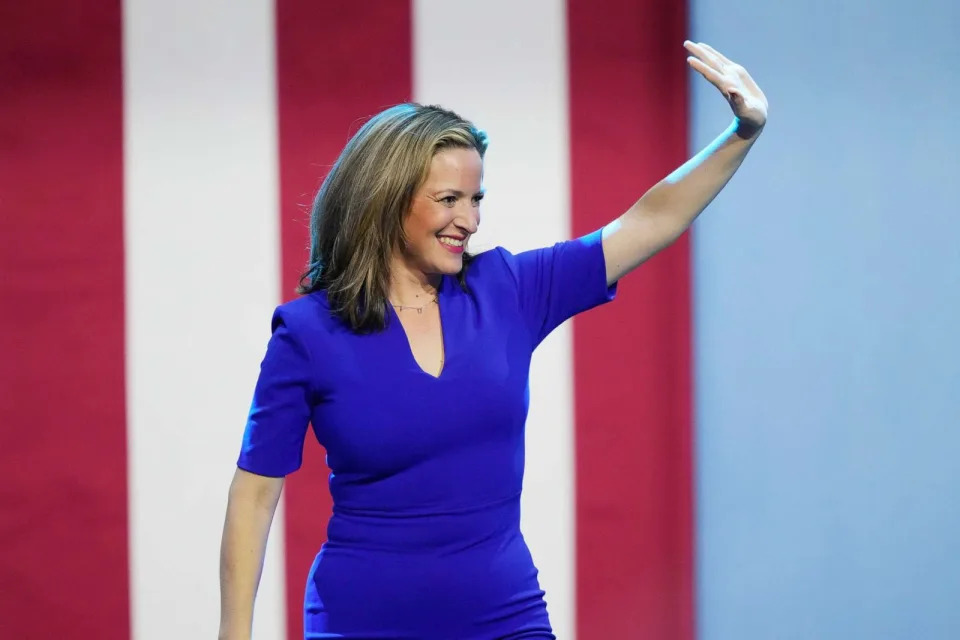
In an interview with ABC News, Michigan Secretary of State Jocelyn Benson, a Democrat, said that she and other secretaries of state from Pennsylvania, Georgia, Nevada, New Hampshire and Maine started having conversations over a year ago about preparing for the legal challenges to Trump’s candidacy.

“I’m talking every day with colleagues about this, we’re all recognizing that our decisions that we make may in some cases be the first but won’t be the last and there may be multiple decision points throughout the course of the election cycle,” Benson said. “So, I think the public needs to be prepared for this to be an ongoing issue that is it has several resolution points and evolutions points throughout the cycle.”

But as conversations grow around the use of the 14th Amendment provision, some legal scholars and election officials are increasingly concerned about the practicality of the emerging lawsuits.

“The most difficult aspects of the litigation that the challenges to Trump’s eligibility will generate probably aren’t so much substantive as they are procedural,” Tribe wrote in an email to ABC News, noting that there is a lack of clarity about who has standing to bring the challenges.

“You can be sure that many secretaries of state, advised by many legal experts from across the ideological spectrum, are now studying the details of the legislative regimes in place in their respective states for dealing with challenges to the eligibility of candidates aspiring to become president,” he continued.

New Hampshire secretary of state conferring with attorney general

Bryant “Corky” Messner, a lawyer who lives in New Hampshire and was previously endorsed by Trump during his 2020 Senate run in the state, announced last week that he had begun the steps to challenge Trump’s eligibility to appear on the New Hampshire primary ballot.

New Hampshire’s Secretary of State Office confirmed to ABC News that Messner met with Secretary of State David Scanlan, a Republican, last Friday to discuss Section 3 of the 14th Amendment.

PHOTO: New Hampshire Secretary of State, David M. Scanlan, following a public meeting with the New Hampshire Special Committee on Voter Confidence, Sept. 6, 2022. (John Tully/The Washington Post via Getty Images, FILE)

MORE: Trump’s 2024 bid hit with immediate challenge from group behind ‘disqualification clause’ lawsuits

The Secretary of State office also confirmed that it was flooded with calls from supporters of Trump on Monday, after conservative activist and host Charlie Kirk claimed that the state was trying to keep Trump off the ballot.

That office, and the attorney general’s, then released a joint statement clarifying that they have not taken any actions to prevent Trump from appearing on the primary ballot.

“Neither the Secretary of State’s Office nor the Attorney General’s Office has taken any position regarding the potential applicability of Section Three of the Fourteenth Amendment to the United States Constitution to the upcoming presidential election cycle,” their statement reads.

The statement also said that Scanlan has asked the state’s attorney general to advise his office “regarding the meaning of Section Three of the Fourteenth Amendment to the United States Constitution and the provision’s potential applicability to the upcoming presidential election cycle.”

Michigan fields its first 14th Amendment lawsuit

Robert Davis — widely known in Michigan as a citizen activist who serially sues state politicians — on Monday filed a lawsuit that urges Secretary of State Benson to declare Trump is ineligible to run for office.

Davis asked Benson to make a decision on Trump’s candidacy within 14 days.

Asked by ABC News her thoughts on Davis’ lawsuit, Benson said her focus is on upholding the law and acknowledged her state’s position as a battleground will influence public narrative nation wide surrounding the issue.

“My commitment is to making sure that even in this very unprecedented uncharted territory we find ourselves in that we at all times proceed according to the law, both substantively and procedurally.”

PHOTO: Michigan Secretary of State Jocelyn Benson, attends an Election Night party, on Nov. 8, 2022, in Detroit. (Carlos Osorio/AP, FILE)

MORE: Should certain politicians be subject to disqualification under the Constitution’s ban on ‘insurrectionists’?

Benson had said during an interview on a Michigan Information and Research Service News podcast that it was too soon to decide on whether Trump will appear on Michigan’s ballot.

“I have said for, really since 2020, that this presidential cycle in 2024, is, I believe, in many ways going to be the grand finale of all the bumps and the challenges we’ve seen and endured since the 2020 election cycle, maybe even 2016.”

Arizona’s secretary of state gathering clarification from legal counsel

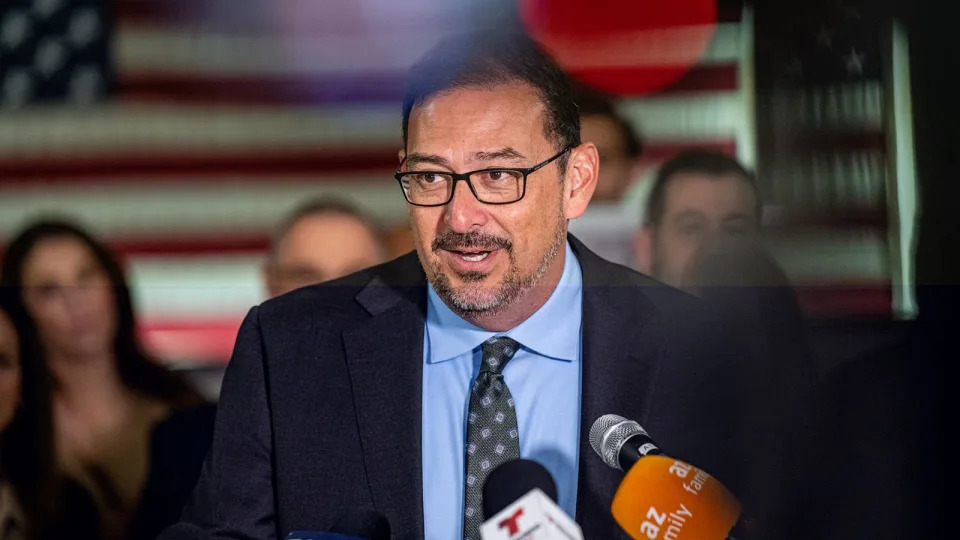
In Arizona, Secretary of State Adrian Fontes, a Democrat, said that he was planning for the possibility of challenges to Trump’s ballot eligibility but does not himself have the authority to explicitly bar Trump from appearing on the ballot.

Last year, the Arizona Supreme Court ruled that there would be no way for his office to enforce the disqualification clause, only Congress would have the right to do so — a ruling Fontes called “dead wrong.”

“If that was the case, then no constitutional qualifier applies. So, a 23-year-old born in Poland, for example, who never became a citizen, could run for president in Arizona,” Fontes told ABC News.

Fontes said he doesn’t know of any specific individual or groups who have organized to file a lawsuit challenging Trump’s eligibility, but his office has gotten phone calls and notes objecting to the former president potentially appearing on the ballot.

For now, he’s “deciding on how to decide” how to proceed with who exactly appears on the 2024 ballot and gathering clarification from legal counsel.

PHOTO: Adrian Fontes, newly elected Arizona Secretary of State, gives a victory speech in Phoenix, Ariz., Nov. 14, 2022. (Jon Cherry/Getty Images, FILE)

“I cannot imagine a scenario where … a secretary of state allows Mr. Trump to be on the ballot and does not get sued. I can also not imagine a scenario where Mr. Trump is disallowed and does not get sued. I mean, this is this is this is where we are now. So I believe that we will be sued no matter what. I’ve still got to do my due diligence to get the job done,” Fontes said.

Fontes noted that he’s preparing so far in advance because he’s concerned about the toll these challenges and potential countersuits might pose to the voting process and election workers, especially in a state like Arizona, which has dealt with tedious and sometimes dangerous challenges surrounding election results over the past few cycles.

“Away from the political considerations This is an administrative issue. This is a ministerial point in time that cannot be avoided,” Fontes said. “We don’t have the luxury of waiting until next November. And anybody who’s misunderstanding the calendar and what it means to run an election has to sort of disabuse themselves of the notion that we have the comfort of time moving into this decision.”

“This is an active conversation. It is a national conversation. And I expect that we will end up eventually standing in front of nine judges in Washington, DC and they will decide,” he added.

Tribe, the Harvard law professor emeritus, also told ABC News that he expects the issue to reach the U.S. Supreme Court.

“Donald Trump could indeed be on the primary ballot in some states and not in others, although it is entirely possible that whichever state’s situation is first to reach adjudication in a state trial court when a secretary of state either sues or is sued with respect to Trump’s inclusion or exclusion from the ballot will quickly climb the judicial ladder to a Supreme Court adjudication that could then set a uniform rule for subsequent state primaries,” Tribe wrote in an email to ABC News.

“The Supreme Court would need to get involved soon after one or more states have received authoritative directions from a state or federal court,” he said, noting that the case was “likely to move on an expedited schedule in light of the need to avoid confusion and uncertainty.”

Ohio’s secretary of state: ‘A fringe legal theory’

In Ohio, another state where threats of the challenge have circulated, Secretary of State Frank LaRose’s office said in a statement that his office was “not aware of any litigation in Ohio” related to what they called a “fringe legal theory.”

There appear to be no attempts by LaRose, a Republican, to prepare for the possibility of any lawsuits challenging Trump’s eligibility.

“We do not anticipate being told to deny ballot access to any candidate who complies with Ohio law,” his office continued.

ABC News’ Kelsey Walsh and Laura Gersony contributed to this report.

Trump and His Co-Defendants in Georgia Are Already at Odds

The New York Times

Trump and His Co-Defendants in Georgia Are Already at Odds

Richard Fausset and Danny Hakim – August 27, 2023

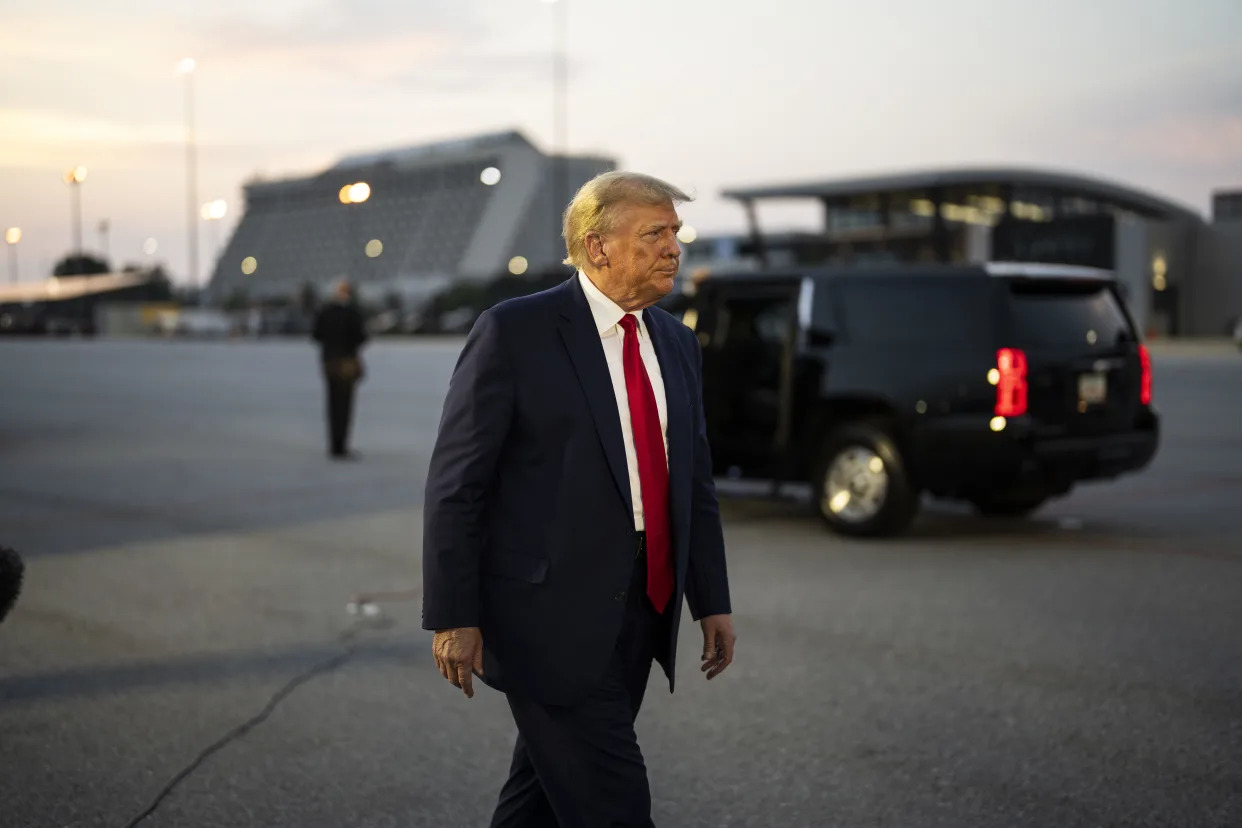
Former President Donald Trump at the airport in Atlanta, after being booked at the Fulton County Jail where he and 18 allies were charged in Georgia election meddling, on Thursday, Aug. 24, 2023. (Doug Mills/The New York Times)

Even as former President Donald Trump and his 18 co-defendants in the Georgia election interference case turned themselves in one by one at an Atlanta jail this past week, their lawyers began working to change how the case will play out.

They are already at odds over when they will have their day in court, but also, crucially, where. Should enough of them succeed, the case could split into several smaller cases, perhaps overseen by different judges in different courtrooms, running on different timelines.

Five defendants have already sought to move the state case to federal court, citing their ties to the federal government. The first one to file — Mark Meadows, Trump’s chief of staff during the 2020 election — will make the argument for removal Monday, in a hearing before a federal judge in Atlanta.

Federal officials charged with state crimes can move their cases to federal court if they can convince a judge that they are being charged for actions connected to their official duties, among other things.

In the Georgia case, the question of whether to change the venue — a legal maneuver known as removal — matters because it would affect the composition of a jury. If the case stays in Fulton County, the jury will come from a bastion of Democratic politics where Trump was trounced in 2020. If the case is removed to federal court, the jury will be drawn from a 10-county region of Georgia that is more suburban and rural — and somewhat more Trump-friendly. Because it takes only one not-guilty vote to hang a jury, this modest advantage could prove to be a very big deal.

The coming fights over the proper venue for the case are only one strand of a complicated tangle of efforts being launched by a gaggle of defense lawyers now representing Trump and the 18 others named in the 98-page racketeering indictment. This past week, the lawyers clogged both state and federal court dockets with motions that will also determine when the case begins.

Already, one defendant’s case is splitting off as a result. Kenneth Chesebro, a lawyer who advised Trump after the 2020 election, has asked for a speedy trial, and the presiding state judge has agreed to it. His trial is now set to begin Oct. 23. Another defendant, Sidney Powell, filed a similar motion Friday, and a third, John Eastman, also plans to invoke his right to an early trial, according to one of his lawyers.

Soon after Chesebro set in motion the possibility of an October trial, Trump, obviously uncomfortable with the idea of going to court so soon, informed the court that he intended to sever his case from the rest of the defendants. Ordering separate trials for defendants in a large racketeering indictment can occur for any number of reasons, and the judge, Scott McAfee, has made clear the early trial date applied only to Chesebro.

Trump’s move came as no surprise. As the leading candidate for the Republican presidential nomination, he is in no hurry to see the Georgia matter, or the other three criminal cases against him, go to trial. In the separate federal election interference case Trump faces in Washington, D.C., his lawyers have asked that the trial start safely beyond the November 2024 general election — in April 2026.

In Georgia, the possibility that even a portion of the sprawling case may go to trial in October remains up in the air. The removal efforts have much to do with that.

There is a possibility that if one of the five defendants seeking removal is successful, then all 19 will be forced into federal court. Many legal scholars have noted that the question is unsettled.

“We are heading for uncharted territory at this point, and nobody knows for sure what is in this novel frontier,” Donald Samuel, a veteran Atlanta defense attorney who represents one of the defendants in the Trump case, Ray Smith III, wrote in an email. “Maybe a trip to the Supreme Court.”

The dizzying legal gamesmanship reflects the unique nature of a case that has swept up a former president, a number of relatively obscure Georgia Republican activists, a former publicist for Kanye West and lawyer-defendants of varying prominence. All bring their own agendas, financial concerns and opinions about their chances at trial.

And, of course, one of them seeks to regain the title of leader of the free world.

Some of the defendants seeking a speedy trial may believe that the case against them is weak. They may also hope to catch prosecutors unprepared, although in this case, Fani Willis, the district attorney, has been investigating for 2 1/2 years and has had plenty of time to get ready.

Another reason that some may desire a speedy trial is money.

Willis had originally sought to start a trial in March, but even that seemed ambitious given the complexity of the case. Harvey Silverglate, Eastman’s lawyer, said he could imagine a scenario in which a verdict might not come for three years.

“And Eastman is not a wealthy man,” he said.

Silverglate added that his client “doesn’t have the contributors” that Trump has. “We are going to seek a severance and a speedy trial. If we have a severance, the trial will take three weeks,” he predicted.

How long would a regular racketeering trial take? Brian Tevis, an Atlanta lawyer who negotiated the bond agreement for Rudy Giuliani, Trump’s former personal lawyer, said that “the defense side would probably want potentially a year or so to catch up.”

“You have to realize that the state had a two-year head start,” he said. “They know what they have. No one else knows what they have. No discovery has been turned over. We haven’t even had arraignment yet.”

In addition to Meadows, Jeffrey Clark, a former Justice Department official, is already seeking removal, as is David Shafer, former head of the Georgia Republican Party; Shawn Still, a Georgia state senator; and Cathy Latham, former chair of the Republican Party in Coffee County, Georgia. Trump is almost certain to follow, having already tried and failed to have a state criminal case against him in New York moved to federal court.

The indictment charges Meadows with racketeering and “solicitation of violation of oath by public officer” for his participation in the Jan. 2, 2021, call in which Trump told the Georgia secretary of state that he wanted to “find” enough votes to win Georgia. The indictment also describes other efforts by Meadows that prosecutors say were part of the illegal scheme to overturn the 2020 election.

Meadows’ lawyers argue that all of the actions in question were what “one would expect” of a White House chief of staff — “arranging Oval Office meetings, contacting state officials on the president’s behalf, visiting a state government building and setting up a phone call for the president” — and that removal is therefore justified.

Prosecutors contend that Meadows was, in fact, engaging in political activity that was not part of a chief of staff’s job.

The issue is likely to be at the heart of Trump’s removal effort as well: In calling the secretary of state and other Georgia officials after he lost the election, was he working on his own behalf, or in his capacity as president, to ensure that the election had run properly?

Anthony Michael Kreis, an assistant law professor at Georgia State University, said the indictment may contain an Easter egg that could spoil Trump’s argument that he was intervening in the Georgia election as part of his duty as a federal official.

The indictment says that the election-reversal scheme lasted through September 2021, when Trump wrote a letter to Georgia’s secretary of state asking him to take steps to decertify the election.

Trump, by that point, had been out of federal office for months.

“By showing the racketeering enterprise continued well beyond his time in office,” Kreis said in a text message, “it undercuts any argument that Trump was acting in a governmental capacity to ensure the election was free, fair and accurate.”