Thank you, Justice Ginsburg.

Image may contain: 1 person, sitting and indoor

Sheryl Sandberg, Chief Operating Officer at Facebook.
“Women belong in all places where decisions are being made.”
When Ruth Bader Ginsburg graduated from Columbia Law School in 1959, she was first in her class – and she couldn’t find a job. So she did what brilliant, ambitious women have done throughout history when the doors of power slammed in their faces: she found another way.
Thousands of state and federal laws treated women like second-class citizens. Ruth Bader Ginsburg said, I will change that, even if I have to do it one case at a time.
She argued and won FIVE landmark gender equality cases before the Supreme Court. So many women have been able to pursue our dreams and exercise our rights as equal citizens because of her.
As a Supreme Court justice, she went even further. LGBTQ equality. Voting rights. The rights and dignity of immigrants. Access to healthcare. Protecting the environment. She was principled, passionate – and she fought to the end.
I don’t know what my life would look like without Ruth Bader Ginsburg fighting for me and all women. More than anything else, tonight, I am grateful.
Thank you, Justice Ginsburg.
Democrat’s  War Room
Image may contain: 1 person, sitting, shoes and indoor
Bruce Lindner
When the announcement came that Ruth Bader Ginsburg had passed away yesterday, my iPad went berserk. Over a hundred Facebook friends sent me private messages within the first few minutes. They ran the gamut from “We’re so screwed now,” to “It’s all over for America,” to “It was nice while it lasted.” I read the first few and decided that I needed a few hours of space, lest I lose a few friends. So I played some music. I still haven’t even read most of them, and probably won’t for a few days. I have little appetite for negativity.
.
Ruth Bader Ginsburg led a life of constantly swimming upstream. Everything from institutionalized sexism, misogyny, ignorance, bigotry, anti-Semitism, and for her final curtain, five bouts with various types of cancer. FIVE.
.
Throughout it all, never did she throw up her hands and say; “That’s it, I’m so screwed.” or “My life was nice while it lasted.” To the contrary, she never, EVER complained. Instead, she fought. Because she knew the ultimate beneficiaries of her battles weren’t just herself. They were us.
.
I realize these are depressing times, and I confess that I get depressed too. But I have ZERO tolerance for defeatism. Do *NOT* message me to tell me how bleak your world is. What makes you think I want to hear it?
.
If RBG showed us anything, it’s that defeatism is for the meek. And the meek are the lambs that conservatives eat for breakfast, lunch and dinner.
.
Don’t be meek. Be like RBG. Be STRONG. She was all of 5’1” tall, and maybe 110 pounds soaking wet. Yet never in her eighty-seven years did she say to herself or anybody else; “It’s pointless to fight on.”
.
Now is the time for Democrats to assume the role of the wolf. No more lambs. And Goddamnit, don’t you DARE message me with your “woe is me” attitude.
.
Be like Ruth. If for no one else’s sake, do it for our daughters.
.
Image may contain: 12 people, text that says 'R.B.G.'

Doctors alarmed by surge in hospital visits as toxic smoke engulfs west coast

The Guardian – Health

Doctors alarmed by surge in hospital visits as toxic smoke engulfs west coast

Erin McCormick in Berkeley, California   
<span>Photograph: Philip Pacheco/Getty Images</span>
Photograph: Philip Pacheco/Getty Image


A month after hundreds of wildfires started spewing toxic smoke along the west coast, doctors are seeing the alarming health effects of air pollution.

In northern California’s Stanford Health Care system, hospital admissions have jumped by 12% in recent weeks, including a stunning 43% increase in cerebrovascular conditions such as strokes. In Oregon, health officials reported nearly one out of 10 people visiting the emergency room had asthma-like conditions due to the smoke. And in San Francisco, doctors had to cancel their clinics for recovering Covid-19 patients, because the air was so unhealthy that just getting to their appointments could make patients more sick.

Related: What is California’s wildfire smoke doing to our health? Scientists paint a bleak picture

A growing body of scientific evidence paints a dire picture of the effects of wildfire smoke on the human body. Experts told the Guardian earlier this month that the smoke can have an almost immediate effect on people’s health, causing asthma, heart attacks, kidney problems and even mental health issues to surge.

Now, as the west coast reckons with an unprecedented stretch of hazardous air, scientists and health experts are growing even more concerned about the immediate and long-term consequences of continuous exposure to the harmful pollution.

In the Bay Area, despite firefighters gaining control of the nearest blazes started by lightning strikes in August, smoky conditions have persisted, turning the sky orange and keeping people inside their homes.

“We’re on the 30th consecutive day of our ‘Spare the Air’ alerts,” said Kristina Chu of the Bay Area air quality management district on Wednesday. “That’s an all-time record,” she explained; the previous longest was 14 days.

<span class="element-image__caption">A pedestrian walks past the Willamette Bridge and downtown Portland, Oregon, on Wednesday.</span> <span class="element-image__credit">Photograph: Don Ryan/AP</span>A pedestrian walks past the Willamette Bridge and downtown Portland, Oregon, on Wednesday. Photograph: Don Ryan/AP

After a month steeped in orange-brown air filled with dangerous tiny particles emitted by the wildfires, patients with pre-existing lung or heart conditions were at particular risk for hospitalization or even premature death, health officials in California said.

“We’ve now had a month of severe exposure to smoke and the levels have been very high,” said Dr Mary Prunicki, director of research for Stanford’s Sean N Parker Center for Allergy & Asthma Research.

At Stanford’s health centers, doctors told the Guardian they had seen a troubling rise in overall hospitalizations, as well as an increase in specific conditions.

Bibek Paudel, a postdoctoral researcher at Stanford’s asthma clinic, has been following the rise in hospitalizations. In the first two weeks after smoke pollution permeated the Bay Area’s air, he calculated an extra 500 people had been admitted to Stanford’s hospitals compared with what would normally be expected – 12% more than the two weeks before the fires. After three weeks of bad air, he could detect an 14% increase in the number of heart patients hospitalized, an 18% percent increase in kidney conditions and a 17% increase in asthma hospitalizations.

Fine particles go to the bottom of your lungs, then can cross over to the bloodstream and go anywhere in your body

Mary Prunicki, Stanford doctor

“The smoke and the number of intense fires has gone up and up,” he said, noting that the California fire season has just begun. “I expect it will go up even more.”

The most alarming finding was the 43% increase in strokes and other cerebrovascular hospitalizations, which could be related to inflammation brought on by the pollution, the researchers said.

The research also shows a 15% increase in hospitalizations for substance abuse disorders and a small uptick in other mental health hospital intakes.

“People were already dealing with the stress of Covid-19,” said Prunicki. “And I read that there has been an increase in alcohol use. This just may be a tipping point.”

Prunicki said researchers were just beginning to understand the many detrimental effects that the smoke ingredients, known as particulate matter 2.5, have on the body.

“Fine particles [in the smoke] go to the bottom of your lungs, then can cross over to the bloodstream and go anywhere in your body,” said Prunicki. She co-authored an earlier study that showed even healthy teenagers see an increase in the markers of inflammation in their bloodstreams during periods of wildfire smoke exposure.

“I don’t know that we have it figured out on a cellular level, but we see dysregulation and we know that pollution is causing inflammatory changes throughout your body,” she said.

Scientists are still working to understand the long-term effects of wildfire smoke exposures, but studies of firefighters have shown they face a higher rate of cancer than the general public, despite being otherwise healthier than the average person.

In Oregon, residents were facing air pollution so severe that the air quality index readings were “literally off the charts”, according to Gabriela Goldfarb, a spokesperson for the Oregon health authority, which has been monitoring an increase in people seeking emergency treatment for asthma symptoms. While any air quality index over 300 is considered “hazardous”, numerous communities bordering the wildfires near Salem and the Portland suburbs have experienced readings of over 500, she said.

<span class="element-image__caption">Smoke from wildfires fills the sky over Pasadena, California, on 12 September.</span> <span class="element-image__credit">Photograph: John Antczak/AP</span>Smoke from wildfires fills the sky over Pasadena, California, on 12 September. Photograph: John Antczak/AP

Goldfarb says the health authority has spent years studying how to combat the health toll of more frequent wildfires, which have been intensified by the climate crisis. Its recommendations have included proposals to distribute air purifiers to low income families and renters. But this year, legislation to do that was put on hold when the Oregon legislature disbanded early due to the pandemic. Now, she said, it is hard to recommend safe alternatives for the public, other than staying home – and people facing evacuation don’t even have that option.

“Traditionally people could go to their public library or a local shopping center to escape the smoke. But those aren’t available this year because of Covid,” she said.

Dr Neeta Thakur, a University of California, San Francisco, pulmonologist who heads both the chest clinic and the clinic for recovering Covid-19 patients at San Francisco general hospital, said the smoke pollution had presented a catch-22 for those concerned about the risks of the coronavirus.

She said one of her lung patients called the hospital complaining of breathing problems and was told to come immediately to the emergency room. But the patient, an older person, waited, fearing exposure to coronavirus. Two days later, the patient’s lung problems became so severe that they had to be brought in by ambulance and intubated in the ICU, she said.

“There was definitely a delay in seeking care because of fear of the pandemic,” said Thakur, noting that the patient was recovering at home.

“We could see more of this,” added Thakur, who has had to cancel recent clinics for people recovering from Covid and asthma patients because of the poor air quality. “Trying to navigate these two health crises and tell people what to do is very difficult.”

She said residents of low income communities bore the brunt of the health risks because of poor-quality housing.

“I can go inside and get clear air,” she said. “But when you live in poor-quality housing, the bad air outside can come inside.”

On Thursday, air quality experts predicted west coast residents would finally get a break as offshore winds blew the clouds of smoke inland, spreading them all the way to the east coast.

Still, “we do not feel we’re in the clear for this fire season yet,” said Goldfarb. She predicted rain storms might bring lightning and the prospect of more fires to Oregon; California air quality officials noted that the state might not see rain until November and smoke pollution could return as early as this weekend.

“If there are people who need to leave the house and get some fresh air, we recommend they do it now,” said Chu, of the Bay Area air quality district. “It’s a new normal that we’re getting used to.”

As smoke lifts on California’s coast, it lingers in Central Valley, where farm-workers have no refuge

Yahoo News – U.S.

As smoke lifts on California’s coast, it lingers in Central Valley, where farm-workers have no refuge

David Knowles, Editor      September 17, 2020

Scientists say satellite images show smoke from U.S. wildfires reaching Europe.
Hazardous smoke from wildfires across the West is presenting the latest danger for the men and women who pick America’s fruit and vegetable crops in a year when record heat and the coronavirus pandemic have already put their lives at risk.


On Thursday, while air quality improved in the San Francisco Bay Area, throughout much of California’s Central Valley it remained classified as “unhealthy” or worse. Under those conditions, residents are advised to stay indoors — but farm-workers don’t have that option.

“To be out in the fields, it’s like you can’t breathe,” Herman Hernandez, director of the California Farm-worker Foundation, told NPR.

The United Farm Workers, the nation’s largest farm-workers’ union, has been highlighting the poor working conditions caused by wildfires like the Basin Complex Fire, which has burned more than 162,000 acres near Big Sur, Calif.

The state requires employers to provide particle respirators or face masks when the air quality index reaches the “unhealthy” level of 151 parts per million, but thanks in part to the coronavirus pandemic, personal protective equipment is in short supply and many farm-workers have been going without it.

Oregon has no such mask regulations, but on Sept. 11 the state’s Occupational Safety and Health Administration sent a letter to employers urging them to halt outdoor work when the air quality index exceeds 151 and to allow “workers with underlying health conditions to stay at home.”

On Monday, the air quality index in Oregon topped 500 in many parts of the state, Oregon’s Department of Environmental Quality said, prompting prompting Gov. Kate Brown to order the National Guard to distribute 250,000 Chinese-made KN95 masks to farm-workers and tribal communities, the Oregonian reported.

“Governor Brown’s goal is to make sure agricultural workers are protected from the health impacts of hazardous air quality, which is why she directed Oregon OSHA to issue guidance to employers last week,” Charles Boyle, a spokesman for the governor, told the Oregonian.

Farm laborers in California work in smoky conditions. (Courtesy of United Farm Workers)


The short-term health effects of breathing wildfire smoke include chest pain, headaches, sore throat, fatigue, asthma attacks and an elevated heart rate. The longer-term effects haven’t been studied yet.

“Smoke from wildfires contains chemicals, gases and fine particles that can harm health,” California’s Department of Industrial Relations says on its website. “The greatest hazard comes from breathing fine particles in the air, which can reduce lung function, worsen asthma and other existing heart and lung conditions, and cause coughing, wheezing and difficulty breathing.”

As in California, the majority of farm-workers in Oregon are Hispanic, a population that has been hit especially hard by the coronavirus.

“This makes this important and sizable population of our workforce potentially more vulnerable to the adverse effects of combined wildfire smoke and COVID-19 risks,” Dean Sidelinger, state epidemiologist at the Oregon Health Authority, said in a press release.

Since the wildfires began in Oregon, OSHA has filed 425 complaints on behalf of workers that allege working conditions in the fields are unsafe.

A farm in Colton, Ore., is engulfed by polluted air from the wildfires. (Stanton Sharpe/SOPA Images/LightRocket via Getty Images)


In May, California allocated $125 million in aid to undocumented immigrants, many of whom work in the state picking the nation’s crops.

“Whether it’s wildfire, pandemic, drought or storm, farm-workers are out in the field,” Lucas Zucker, policy and communications director for the Central Coast Alliance United for a Sustainable Economy, told the Guardian. “It’s largely an immigrant workforce, many undocumented. Many are from indigenous communities from southern Mexico who face even greater barriers to accessing services and reporting labor issues.”

According to the United States Department of Agriculture, 57 percent of farm-workers employed in the U.S. are Hispanic and of Mexican origin. The average total yearly income for farm-workers working full time is between $15,000 and $17,499, according to a report published by the U.S. Department of Labor.

In recent months, farm-workers have faced an unprecedented number of health risks, including the coronavirus pandemic and record-breaking heat across much of the West.

July survey conducted by the California Institute for Rural Studies found that agricultural workers in Monterey County were infected with COVID-19 at rates three times that of the population at large, National Geographic reported.

California, which has more scorched acreage this year than in any year in recorded history, is little more than halfway through what is now regarded as “fire season.” That means farm-workers in the Golden State will likely be dealing with smoke for months to come.

Gas Companies Are Abandoning Their Wells, Leaving Them to Leak Methane Forever

Bloomberg – U.S.

Gas Companies Are Abandoning Their Wells, Leaving Them to Leak Methane Forever

Mya Frazier               


(Bloomberg) — The story of gas well No. 095-20708 begins on Nov. 10, 1984, when a drill bit broke the Earth’s surface 4 miles north of Rio Vista, Calif. Wells don’t have birthdays, so this was its “spud date.”

The drill chewed through the dirt at a rate of 80 ½ feet per hour, reaching 846 feet below ground that first day. By Thanksgiving it had gotten a mile down, finally stopping 49 days later, having laid 2.2 miles of steel pipe and cement on its way to the “pay zone,” an underground field containing millions of dollars’ worth of natural gas.

The drilling rig arrived two months later, in early January. While 1985 started out as a good year for gas, by its close, more than half the nation’s oil and gas wells had shut down. How much money the Amerada Hess Corp., which bankrolled the dig, managed to pump out of gas well No. 095-20708 before that bust isn’t known. By 1990 the company, now called simply Hess Corp., gave up and sold it. Over the next decade or so, four more companies would seek the riches promised at the bottom of the well, seemingly with little success. In 2001 a state inspector visited the site. “Looks like it’s dying,” he wrote.

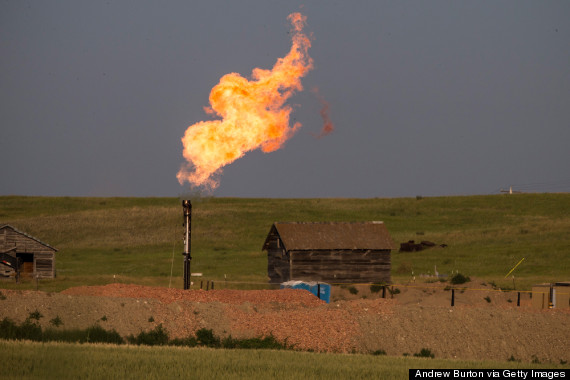
Gas wells never really die, though. Over the years, the miles of steel piping and cement corrode, creating pathways for noxious gases to reach the surface. The most worrisome of these is methane, the main component of natural gas. If carbon dioxide is a bullet, methane is a bomb. Odorless and invisible, it captures 86 times more heat than CO₂ over two decades and at least 25 times more over a century. Drilling has released this potent greenhouse gas, once sequestered in the deep pockets and grooves of the Earth, into the atmosphere, where it’s wreaking more havoc than humans can keep up with.

Well No. 095-20708 is also known as A.H.C. Church No. 11, referring both to Hess and to Bernard Church, who like so many in California’s Sacramento River Delta sold his farmland but retained the mineral rights in the hope that they’d make his family rich. The Church well is a relic, but it’s not rare. It’s one of more than 3.2 million deserted oil and gas wells in the U.S. and one of an estimated 29 million globally, according to Reuters. There’s no regulatory requirement to monitor methane emissions from inactive wells, and until recently, scientists didn’t even consider wells in their estimates of greenhouse gas emissions. With the pandemic depressing demand for fossil fuels and renewable energy development booming, why should owners idle or plug their wells when they can simply walk away?

In the past five years, 207 oil and gas businesses have failed. As natural gas prices crater, the fiscal burden on states forced to plug wells could skyrocket; according to Rystad Energy AS, an industry analytics company, 190 more companies could file for bankruptcy by the end of 2022. Many oil and gas companies are idling their wells by capping them in the hope prices will rise again. But capping lasts only about two decades, and it does nothing to prevent tens of thousands of low-producing wells from becoming orphaned, meaning “there is no associated person or company with any financial connection to and responsibility for the well,” according to California’s Geologic Energy Management Division.

“It’s cheaper to idle them than to clean them up,” says Joshua Macey, an assistant professor of law at the University of Chicago, who’s spent years studying fossil fuel bankruptcies. “Once prices increase, they could be profitable to operate again. It gives them a strong reason to not do cleanup now. It’s not orphaned yet, although for all intents and purposes it is.”

The life cycle of the Church well exemplifies this systemic indifference. Hess’s liability ended when it sold more than 30 years ago; the last company to acquire the lease, Pacific Petroleum Technology, which took over in 2003, managed to evade financial responsibility entirely as the well’s cement and steel piping began to corrode. Letters from state regulators demanding that the company declare its plans for the well went unanswered. In November 2007 the state issued a civil penalty of $500 over Pacific’s failures to file monthly production reports on the well. Instead of paying, Pacific requested a hearing, at which a representative testified that there was still $10 million worth of natural gas waiting to be pumped and promised the company would secure funds, make necessary repairs, and start producing again. The state was unconvinced and demanded Pacific plug the well. Another decade passed. The company never pumped a single cubic foot of gas and made no effort to plug the well. (Representatives of Pacific couldn’t be reached for comment.)

If Church were the only neglected well, it would be inconsequential. But these artifacts of the fossil fuel age are ubiquitous, obscured in backyards and beneath office buildings, under parking lots and shopping malls, even near day-care centers and schools in populous cities such as Los Angeles, where at least 1,000 deserted wells lie unplugged. In Colorado an entire neighborhood was built on top of a former oil and gas field that had been left off of construction maps. In 2017 two people died in a fiery explosion while replacing a basement water heater.

These kinds of headline-grabbing episodes are anomalies, but all this leaking methane also has dire environmental consequences, and the situation is likely only to get worse as more companies fail. “The oil and gas industry will not go out with a bang,” Macey adds, “but with a whimper.” As it does, the wells it orphans will become wards of the state.

Days before the 33rd anniversary of Church’s spud date, in November 2017, Eric Lebel, a researcher with the School of Earth, Energy & Environmental Sciences at Stanford, arrived at the wellhead. The rusted 10-foot structure—a “Christmas tree,” as it’s called in the industry—loomed over him.

While Lebel knew the well’s depth, it was still hard for him to envision its scale. “If you don’t see it, you don’t think about it,” he says later. “What’s underground is impossible to imagine.” The Earth’s interior has been unfathomably scarred by hydrocarbon infrastructure, he says. For almost two centuries, since the drilling of the first gas well in 1821, the fossil fuel industry has treated the planet like a giant pincushion. The first U.S. gas well in Fredonia, N.Y., extended only 27 feet underground, but drilling since has gone ever deeper. Ten-thousand-foot wells like Church are common today.

Now imagine each of those pins in the global pincushion is a straw inside a straw. In Church’s case, the outer straw is 7.625 inches in diameter and made of steel, encased in cement; inside is a 2.375-inch-wide steel tube. The deeper the well, the more the heat and pressure rise. At Church’s deepest point, 10,968 feet, the temperature likely exceeds 200F. The weight of the Earth exerts more and more pressure as the well goes deeper—reaching about 5 tons per square inch at the bottom. That’s the equivalent of four 2,500-pound cars on your thumb. All of this puts a huge amount of stress on that underground infrastructure. As it breaks down, eventually it begins to leak.

Astonishingly, no one had even bothered to ask how much until the past decade. In 2011, Mary Kang was a Ph.D. student at Princeton modeling how CO₂ might escape from underground storage vessels after being captured and buried. She looked for similar models on methane and came up with nothing; some of the industry sources she spoke with were confident that it wasn’t much—and that even if it was, technology existed that could fix it. “It’s one thing to assume,” Kang remembers thinking to herself. “It’s another thing to go get empirical data.”

Kang went to Pennsylvania, where boom and bust cycles over the years have left a half-million gas wells deserted. Of the 19 she measured, three turned out to be high emitters, meaning they released three times more methane into the atmosphere than other wells in the sample. “There were no measurements of emissions coming out of these wells,” she says. “People knew these wells existed, they just thought what was coming out was negligible or zero.” By scaling up her findings, Kang was able to estimate that in 2011, deserted wells were responsible for somewhere from 4% to 7% of all man-made methane emissions from Pennsylvania.

Those findings inspired Lebel and other researchers in the U.S. and worldwide to start taking direct methane measurements. The industry responded by ignoring them and fought fiercely against the Obama administration’s efforts to start regulating methane emissions. (A 2016 rule requiring operators to measure methane releases at active wells and invest in technology to prevent leaks was summarily overturned by the Trump administration at the beginning of August.)

Meanwhile, scientists trudged on. So far researchers have measured emissions at almost 1,000 of the 3.2 million deserted wells in the U.S. In 2016, Kang published another study of 88 abandoned well sites in Pennsylvania, 90% of which leaked methane.

Internationally, researchers tracked increasingly bad news. German scientists discovered methane bubbles in the seabed around orphaned wells in the North Sea. Taking direct measurements of 43 wells, they found significant leaks in 28. In Alberta, researchers estimated methane leaks in almost 5% of the province’s 315,000 oil and gas wells. In the U.K., researchers found “fugitive emissions of methane” in 30% of 102 wells studied. Such findings are both a threat and an opportunity, says Lebel, who considers abandoned wells the easiest first step to cutting methane emissions globally. That’s what brought him to Church in the first place.

According to his field logs, Lebel spent his first hour on site building a secure air chamber using a Coleman canopy tent draped in tarps, which he held in place with sandbags. Inside the tent, fans effectively created a convection oven of rapidly circulating air. As he worked, a farmer who leases the land wandered over. Be careful, he warned Lebel. Sometimes fire comes out of that well. Just yesterday he’d seen a plume of flames erupt from it, he said.

At 3:41 p.m., using an instrument that resembles a desktop computer with an abundance of ports, Lebel took his first methane measurement. “We knew right away it was a major leaker,” he recalls. It exceeded the instrument’s threshold of 50 parts per million almost immediately. Lebel collected air samples in tiny glass vials to take back to his lab. The analysis was damning: Two hundred and fifty grams of methane were flowing out of the well each hour. A rough calculation shows that over a decade and a half the Church well had likely emitted somewhere around 32.7 metric tons of methane, enough to melt a sizable iceberg.

Despite the flurry of recent research, the full scale of the emissions problem remains unknown. “We really don’t have a handle on it yet,” says Anthony Ingraffea, a professor of civil and environmental engineering at Cornell who’s studied methane leaks from active oil and gas wells for decades. “We’ve poked millions of holes thousands of feet into Mother Earth to get her goods, and now we are expecting her to forgive us?”

There’s no easy way to bring up the thousands of feet of steel and cement required to carry gas out of a well as deep as A.H.C. Church 11. That means the only way to keep the well from leaking is to fill it up. Plugging a well costs $20,000 to $145,000, according to estimates by the U.S. Government Accountability Office. For modern shale wells, the cost can run as high as $300,000.

On a Wednesday morning near the end of June 2018, a crew of workers from the Paul Graham Drilling & Service Co., hired by the state of California after Pacific Petroleum failed to respond to years of notices, arrived at the well site. As they would on any job, they first dropped a “string,” a lengthy metal cable, into the well; in ideal circumstances, it’d be a straight shot to the bottom. But not that day.

Well records indicate that a “packer,” a ring-shaped device used to create a seal between the outer and inner straws of gas wells, had been installed about 7,000 feet down. It would have to come out first, or they wouldn’t be able to get the cement all the way to the bottom. When they tried to pull out the packer, the string broke.

The tiny packer, just 2.5 inches wide, stayed stuck for weeks. As the crew tried to get it out, tubing inside the well broke—“structurally compromised due to corrosion,” they told California’s Department of Conservation in the work log they submitted. They were forced to go “fishing,” using specialized tools to retrieve the tubing, piece by broken piece. But the packer was still in there. Eventually they used even more specialized tools to grind it away.

It wasn’t until July 26, almost a month after workers arrived at the Church site, that they were able to start “running mud,” the industry term for pumping cement into the outer straw. This straw had been purposely perforated to allow oil and gas to flow from the pay zone into the well. The plugging cement is supposed to accumulate upwards as more gets pumped in. But if it leaks off into that porous pay zone, no matter how much mud the team runs, it simply disappears. Unless the cement and other sealants reached every nook and cranny, the site might continue to leak.

Thankfully, Church filled easily, requiring 36,500 pounds of cement. The unforeseen difficulties added $171,388 to Paul Graham’s original estimate, raising the total bill to $294,943, more than double the crew’s $123,555 bid. (Neither the cleanup company nor the state representatives who oversaw the work responded to interview requests.) Ingraffea examined the myriad work orders from the job and called it a “well from hell.”

By late August, almost two months after they arrived at the Church site, the crew had cut off the Christmas tree and welded a half-inch-thick steel plate to the top of the wellhead. It had taken nine days longer to fill the well than it had to drill it in the first place. Looking across the landscape today, it’s as though Church never existed.

The atmospheric evidence, of course, shows otherwise.

The cost to plug just California’s deserted wells—an estimated 5,500—could reach $550 million, according to a report released earlier this year. While not an insignificant price tag, the real shock would come if the industry collapses and walks away for good. In that doomsday scenario, the costs to plug and decommission 107,000 active and idled wells could run to $9 billion. And yet so far in 2020, California has approved 1,679 new drilling permits.

“We make the same mistake over and over again,” says Rob Jackson, a professor of Earth system science at Stanford who oversees Lebel’s work. “Companies go bankrupt, and taxpayers pay the bills.”

Congressional efforts to create a well-plugging program for cleanup are stalled. Meanwhile, oil and gas companies have made trillions of dollars in profits over the past century and a half while enjoying relative impunity. On federal lands, where oil and gas companies actively drill, bond levels haven’t been adjusted for inflation since 1951, when they were set at $10,000 for a single well and $150,000 for however many wells a single operator controls nationwide. In California a company drilling 10,000 feet or more needs only $40,000.

Even spending all the billions of dollars required to plug the world’s millions of deserted wells won’t stave off environmental catastrophe. The vast heat and pressure of the Earth’s subsurface—the same forces that crushed dinosaur bones into hydrocarbons in the first place—mean that no plugging job lasts forever. Scientists and engineers debate how long cement can survive in the harsh environment of the Earth’s interior. Estimates typically fall from 50 to 100 years, a long enough time horizon that even some of today’s biggest oil and gas companies may no longer exist, but short enough to be uncomfortably within the realm of human comprehension. No regulations require states or federal agencies to measure emissions after wells are plugged.

While little is being done to prevent methane from creating catastrophic warming, less is being done to prevent water contamination. Researcher Kang, now an assistant professor of civil engineering at McGill University, worked as a groundwater monitoring consultant before getting her Ph.D. In 2016 she published a paper with Jackson showing that California’s Central Valley, where a quarter of the nation’s food is produced, has close to three times the volume of fresh groundwater as previously thought. Such good news came with an urgent caveat: Nineteen percent of the state’s wells came close to these aquifers. “It’s definitely a threat and something that needs protection,” Kang says. “There’s so much we don’t know.”

What we do know is scary enough. “The cement will deteriorate,” says Dominic DiGiulio, a senior research scientist for PSE Healthy Energy, an Oakland, Calif.-based public policy institute, who worked for the Environmental Protection Agency for more than three decades in subsurface hydrology. “It’s not going to last forever, or even for very long.” A.H.C. Church lies in the Solano Subbasin, part of the Sacramento Valley Groundwater Basin. Almost 30% of the region’s water comes from subsurface sources, according to a 2017 report from the Northern California Water Association. “Given sustained droughts, groundwater resources are going to be very important in the coming decades,” DiGiulio says. “California is going to need these resources.”

Among the hundreds of pages of records chronicling the well’s spud, activity, and plugging, the one consistent name was Bernard Church. One afternoon this summer, I called the phone number listed on the most recent document, from a 2004 inspection, and reached his wife, Beverly Church. She now lives in Walnut Creek, Calif., about 40 miles southwest of the well site, and she told me her husband had died nine years earlier.

He and their family never became rich. Holders of mineral rights can lease them back to oil and gas companies and receive royalties on what their wells produce. But because so little had been pumped from Church, none of the 20 or so family members who eventually held a stake wound up with much. “We didn’t make any money off of it,” Beverly says.

That’s not an uncommon outcome, explains Kassie Siegel, director of the Climate Law Institute at the nonprofit Center for Biological Diversity. “Every once in a while someone might” get rich, she says. “But it’s not a thing. Big Oil is getting rich. For individual, ordinary people, it’s all risk and no reward.”

For more articles like this, please visit us at bloomberg.com

McEnany has the wrong answer on Trump’s secret health care plan

MSNBC – MaddowBlog

McEnany has the wrong answer on Trump’s secret health care plan

Asked about health care policy, McEnany said those seeking meaningful answers should “come work here at the White House.”
By Steve Benen      September 17, 2020
Image: White House Press Secretary McEnany holds the daily press briefing at the White House in Washington

White House Press Secretary Kayleigh McEnany at the daily press briefing at the White House on Aug. 4, 2020.Jonathan Ernst / Reuters file

Donald Trump has spent literally telling Americans he has a terrific health care plan, which will deliver better results at a lower cost, that’s nearly ready for its release. At a town-hall event on Tuesday, the president went so far as to boast, “I have it all ready. I have it all ready…. I have it all ready.”

But there’s still no plan, no blueprint, no outline, no bill, and no reason to believe anything the Republican has to say on the subject.

At a Capitol Hill hearing yesterday, Sen. Dick Durbin (D-Ill.) asked several leading Trump administration officials, each of whom work directly in the health care field, whether they had any idea what the White House’s health care plan entails. Federal testing czar Brett Giroir, Robert Kadlec, assistant secretary for preparedness and response at HHS, and CDC Director Robert Redfield all answered the same way: they had no idea.

Soon after, during a press briefing, White House Press Secretary Kayleigh McEnany fielded some questions about this elusive plan and who’s working on its creation. The former Trump campaign aide didn’t seem to appreciate the line of inquiry.

“I’m not going to give you a readout of what our healthcare plan looks like and who’s working on it. If you want to know, come work here at the White House…. As I told you, our Domestic Policy Council and others in the White House are working on a healthcare plan, the President’s vision for the next five years — and if you want more, come join us here.”

Part of the problem with such a posture is that journalists aren’t the only ones who want to know about Trump’s secret health care plan. There’s an election coming up, and millions of American families need to know what kind of health security — or lack thereof — they’ll have in the coming years.

They can’t all get jobs in the White House, just to understand what the president’s secret plan may or may not entail.

But the other part of the problem is that McEnany and Team Trump may be losing sight of why White House press briefings exist.

Decades ago, the White House fielded the same questions from different reporters about basic daily developments: What’s the president’s opinion about x? What does the president intend to do about y? Is the president prepared to support z? And so on.

In 2020, however, press briefings are … different. Kayleigh McEnany introduces propaganda videos. She calls on representatives of fringe websites to ask politically satisfying “questions.” She heckles actual journalists. She shows a clip of House Speaker Nancy Pelosi at a hair salon — and plays in a loop, over and over again.

But ask the president’s principal spokesperson a question about health care policy, and the answer is simple: those seeking meaningful answers should “come work here at the White House.”

ABC News’ Jonathan Karl, a former president of the White House Correspondents’ Association, recently made the case that White House press secretaries should hold regular briefings, “but not like this.”

AG Bill Barr’s election deceptions go from bad to worse

MSNBC – MaddowBlog

AG Bill Barr’s election deceptions go from bad to worse

Attorney General Bill Barr didn’t have credibility to spare, which makes it all the more unfortunate that he keeps making matters worse for himself.
By Steve Benen      September 16, 2020
Image: William Barr

Attorney General William Barr appears before the House Oversight Committee on Capitol Hill in Washington, on July 28, 2020.Matt McClain / The Washington Post via AP file

Attorney General William Barr sat down with CNN’s Wolf Blitzer two weeks ago, and fielded a series of questions about voting access. It didn’t go well: the Republican struggled with a question about whether North Carolinians can vote twice; he used deceptive rhetoric about Russian election interference; and he told a voter-fraud tale that was so ridiculous that even his own Justice Department had to concede it wasn’t true.

Between this unfortunate display and the attorney general’s penchant for peddling demonstrable falsehoods, common sense suggests Barr should probably exercise greater caution when discussing the elections.

And yet, Barr spoke to the Chicago Tribune‘s John Kass last week and jst kept going.

“There’s no more secret vote with mail-in vote. A secret vote prevents selling and buying votes. So now we’re back in the business of selling and buying votes. Capricious distribution of ballots means (ballot) harvesting, undue influence, outright coercion, paying off a postman, here’s a few hundred dollars, give me some of your ballots,” the attorney general said.

This isn’t just wrong; it’s bizarre. The idea that postal balloting is an invasion of one’s privacy has been fact-checked and discredited. The idea that “we’re back in the business of selling and buying votes” is belied by the fact that several states have relied on mail-in voting for years without incident.

Indeed, let’s not forget that many members of Team Trump have voted by mail — including Bill Barr himself — without any concerns about systemic corruption.

But it was especially bizarre to see the attorney general describe a made-up scenario in which nefarious forces pay bribes to U.S. Postal Service employees as part of an elaborate fraud scheme. For the nation’s chief law-enforcement official to concoct and peddle such a tale — without a shred of evidence or substantiation — is as irresponsible as it is bonkers.

University of Kentucky law professor Josh Douglas, an expert in election law, described Barr’s rhetoric as “wild, fanciful, and completely false lies,” adding, “This is beyond unprofessional.”

And yet, Barr couldn’t seem to help himself. “Someone will say the president just won Nevada. ‘Oh, wait a minute! We just discovered 100,000 ballots! Every vote will be counted!'” the Republican added in the interview with Kass, describing an imagined scenario. “Yeah, but we don’t know where these freaking votes came from.”

None of this reflects reality in any way. Barr is describing a corrupt dynamic that doesn’t exist.

The attorney general proceeded to again take aim at Americans he doesn’t like. “You know liberals project,” Barr added. “All this bulls— about how the president is going to stay in office and seize power? I’ve never heard of any of that crap. I mean, I’m the attorney general. I would think I would have heard about it. They are projecting. They are creating an incendiary situation where there will be loss of confidence in the vote.”

Ah, yes, of course. As Donald Trump wages a months-long effort to undermine public confidence in his own country’s electoral system, it’s “liberals” who are trying to create a situation in which “there will be loss of confidence in the vote.”

Barr didn’t have credibility to spare, which makes it all the more unfortunate that he keeps making matters worse for himself.

Trump may end up at Rikers Island by the end of 2023 if he loses re-election

Salon – Politics

Trump may end up at Rikers Island by the end of 2023 if he loses re-election: legal experts

Travis Gettys, Salon                         
Donald Trump
Donald Trump.  Donald Trump Getty Images


If President Donald Trump loses re-election, he could find himself the first ex-president to be charged with a crime.

More than a dozen investigations are already under way against Trump and his associates, so his potential legal exposure is “breathtaking,” according to New York Magazine columnist Jeff Wise.

“You might think, given all the crimes Trump has bragged about committing during his time in office, that the primary path to prosecuting him would involve the U.S. Justice Department,” Wise wrote. “If Joe Biden is sworn in as president in January, his attorney general will inherit a mountain of criminal evidence against Trump accumulated by Robert Mueller and a host of inspectors general and congressional oversight committees. After the DOJ’s incoming leadership is briefed on any sensitive matters contained in the evidence, federal prosecutors will move forward with their investigations of Trump.”

Trump could try to pardon himself on his way out of the White House, which would certainly complicate matters, but Wise believes that Manhattan district attorney Cyrus Vance Jr. would likely charge the president with falsifying business records and tax fraud.

“To build a fraud case against Trump, Vance subpoenaed his financial records,” Wise wrote. “But those records alone won’t be enough: To secure a conviction, Vance will need to convince a jury not only that Trump cheated on his taxes but that he intended to do so.”

Unfortunately for the president, his former attorney Michael Cohen and longtime accountant Allen Weisselberg have already signaled they’re willing to cooperate with prosecutors and both would have strong evidence to prove Trump’s intent.

“Once indicted, Trump would be arraigned at New York Criminal Court, a towering Art Deco building at 100 Centre Street,” Wise wrote. “Since a former president with a Secret Service detail can hardly slip away unnoticed, he would likely not be required to post bail or forfeit his passport while awaiting trial. His legal team, of course, would do everything it could to draw out the proceedings.”

Accounting for those legal delays, experts told Wise that Trump would likely go on trial by 2023 and last no longer than a few months, and the president’s own supporters have already been persuaded to convict former campaign chairman Paul Manafort.

“Trump’s conviction would seal the greatest downfall in American politics since Richard Nixon,” Wise wrote. “Unlike his associates who were sentenced to prison on federal charges, Trump would not be eligible for a presidential pardon or commutation, even from himself. And while his lawyers would file every appeal they can think of, none of it would spare Trump the indignity of imprisonment.”

“Unlike the federal court system, which often allows prisoners to remain free during the appeals process, state courts tend to waste no time in carrying out punishment,” he added. “After someone is sentenced in New York City, their next stop is Rikers Island. Once there, as Trump awaited transfer to a state prison, the man who’d treated the presidency like a piggy bank would receive yet another handout at the public expense: a toothbrush and toothpaste, bedding, a towel, and a green plastic cup.”

BP Says the Era of Oil-Demand Growth Is Over

Bloomberg – Business

BP Says the Era of Oil-Demand Growth Is Over

Rakteem Katakey                            

(Bloomberg) — BP Plc said the relentless growth of oil demand is over, becoming the first super-major to call the end of an era many thought would last another decade or more.

Oil consumption may never return to levels seen before the coronavirus crisis took hold, BP said in a report on Monday. Even its most bullish scenario sees demand no better than “broadly flat” for the next two decades as the energy transition shifts the world away from fossil fuels.

BP is making a profound break from orthodoxy. From the bosses of corporate energy giants to ministers from OPEC states, senior figures from the industry have insisted that oil consumption will see decades of growth. Time and again, they have described it as the only commodity that can satisfy the demands of an increasing global population and expanding middle class.

The U.K. giant is describing a different future, where oil’s supremacy is challenged, and ultimately fades. That explains why BP has taken the boldest steps so far among peers to align its business with the goals of the Paris climate accord. Just six months after taking the top job, Chief Executive Officer Bernard Looney said in August he’d shrink oil and gas output by 40% over the next decade and spend as much as $5 billion a year building one of the world’s largest renewable-power businesses.

That’s because he suspects oil use may already have peaked as a result of the pandemic, stricter government policies and changes in consumer behavior. BP’s energy outlook shows consumption slumping 50% by 2050 in one scenario, and by almost 80% in another. In a “business-as-usual” situation, demand would recover but then flatline near 100 million barrels a day for the next 20 years.

Read: BP Walks Away From the Oil Super-major Model It Helped Create

BP isn’t the only big oil company adapting its business to the energy transition. Royal Dutch Shell Plc, Total SE and others in Europe have announced similar pivots toward cleaner operations as customers, governments and investors increasingly call for change.

Three Possible Futures

BP’s report comes ahead of three days of online briefings starting Monday on its clean-energy and climate strategy. The study considers three scenarios, which aren’t predictions but nevertheless cover a wide range of possible outcomes over the next 30 years and form the basis of the new strategy Looney announced in August.

The “Rapid” approach sees new policy measures leading to a significant increase in carbon prices. The “Net Zero” course reinforces Rapid with big shifts in societal behavior, while the “Business-as-usual” projection assumes that government policies, technology and social preferences continue to evolve as they have in the recent past.

See also: New EU Climate Plan Brings End of the Combustion Engine Closer

In the first two scenarios, oil demand falls as a result of the coronavirus, the report shows. “It subsequently recovers but never back to pre-Covid levels,” according to Spencer Dale, BP’s chief economist. “It brings forward the point at which oil demand peaks to 2019.”

That contrasts with what many others are forecasting. Russell Hardy, chief executive officer of trading giant Vitol Group, said on Monday that oil demand is poised for 10 years of growth before a steady decline. He predicts consumption will return to pre-virus levels by the end of next year.

BP’s outlook last year contained a scenario called “More energy,” which had oil demand growing steadily to about 130 million barrels a day in 2040. There’s no such scenario this time.

“Demand for oil falls over the next 30 years,” BP said in the report. “The scale and pace of this decline is driven by the increasing efficiency and electrification of road transportation.”

Covid Impact

The pandemic shattered oil consumption this year as countries locked down to prevent infections from spreading. While demand has since improved, and crude prices with it, the public health crisis is still raging in many parts of the world and the outlook remains uncertain in the absence of a vaccine.

The impact, including lasting behavioral changes like increased working from home, will affect economic activity and prosperity in the developing world, and ultimately demand for liquid fuels, according to BP. That means it won’t be able to offset already falling consumption in developed countries.

Demand for liquid fuels is seen falling to less than 55 million barrels a day by 2050 in BP’s Rapid scenario, and to around 30 million a day in Net Zero. The drop is mostly in developed economies and in China. In India, other parts of Asia and Africa, demand remains broadly flat in the first scenario but slips below 2018 levels from the mid-2030’s in the second.

Other points in the energy outlook:

The Rapid scenario has carbon emissions from energy use falling by around 70% by 2050, while they drop by more than 95% in Net Zero. Business-as-usual sees them peaking in the mid-2020’s.Demand for all primary energy — the raw materials from which energy is derived — increases by about 10% in Rapid and Net Zero in the period, and by around 25% in the third scenario.In Rapid, non-fossil fuels account for the majority of global energy from the early 2040’s.Growth in China’s energy demand slows sharply relative to past trends, reaching a peak in the early 2030’s in all three scenarios.Renewable energy — excluding hydro — increases more than 10-fold in both Rapid and Net Zero, with its share in primary energy rising from 5% in 2018 to more than 40% by 2050 in Rapid and almost 60% in Net Zero.Natural gas consumption is seen broadly unchanged to 2050 in Rapid and around 35% higher in business-as-usual. Demand falls by about 40% by 2050 in Net Zero.

(Updates with BP briefings in the seventh paragraph, Vitol CEO comments in the 10th.)

For more articles like this, please visit us at bloomberg.com

Oregon Wildfires Are Decimating Homes Near Me And I’m Terrified About What’s Next

HuffPost

Oregon Wildfires Are Decimating Homes Near Me And I’m Terrified About What’s Next

Emily Halnon      September 13, 2020
Water continues to flow from a pipe amid the charred remains of homes and businesses after the passage of the Santiam fire in Gates, Oregon, on Sept. 10. (Photo: KATHRYN ELSESSER via Getty Images)

It’s been hard for me to sleep this week ― because there’s been a steady storm of evacuation notices at all hours of the day and night, as catastrophic wildfires ravage Oregon. Hundreds of thousands of people have been ordered to leave their homes ― or to get ready to ― including neighborhoods in the town next to mine.

I spend my midnight hours refreshing the sheriff’s page for the latest evacuation map and scrolling through the unending stream of heart-wrenching news ― haunted by the images of charred homes and ashen ghost towns that were decimated by the fires just up the river from us.

I lie awake listening for the jarring alarm of an official emergency alert, notifying us of the newest parts of our county that need to leave their homes immediately.

“Make sure your cell phone is turned way up at night,” my firefighting friend advised me when I asked her if I should start packing a bag myself, as I watched the evacuation zones spread across the county map like spilled paint ― sometimes going from green to red in less than two hours.

“And, yes, it wouldn’t be a bad idea to have a bag ready,” she said.

Her advice was guided by the reality that things can rapidly change with the current fire situation across the West. Climate change has ushered in hotter and drier conditions that have turned our forests into a tinderbox and extended our fire seasons into the fall months. The lush vegetation that coats the ground has browned from the lack of rain and the scorching heat, and water-starved grass crunches beneath your feet. The land is primed and ready to ignite into a roaring fire.

A rogue spark or a downed power line that hits the crisp earth can quickly escalate into an uncontrollable and devastating blaze ― something that’s happened all over the state in the last week ― fueled by hot and furious winds from the east. Oregon went from a few small fires to 1 million acres actively burning ― a swath of land larger than Rhode Island steamrolled by uncontainable wildfires in a matter of days.

So, I decided to pack a go bag full of the necessities I would need if the blaze continued to grow toward us ― or if a new one started in the forested hills of our neighborhood. I grabbed extra clothes, dog food for my pandemic puppy, a sleeping bag, and my handful of prescriptions. And I made sure my car’s gas tank was full, in case we got stuck in evacuation traffic or unexpectedly rerouted by fire ― new blazes have been shutting down major highways and sections of the interstate all week.

Where we would go with our packed bags and full tank of gas is punctuated with a question mark, as I’m sure it has been for the thousands of displaced families who have already been forced to abandon their homes.

In this aerial view from a drone, homes destroyed by wildfire are seen on Sept. 12 in Talent, Oregon. Hundreds of homes in Talent and nearby towns have been lost due to wildfire. (Photo: David Ryder via Getty Images)

A thick plume of toxic smoke is choking most of the state right now ― and the entire West Coast. You can barely see the end of our street through the heavy haze, and ash has been falling from the sky like gray rain, coating our house and everything outside of it with a thick layer of ominous soot.

When I open the door to let my puppy out to pee, I am walloped with the smell of a smoldering campfire. It lingers in my hair and all over my clothes when I duck back inside my house. I’ve barely stepped outside in the last four days because the air is so toxic ― some of the most hazardous air in the world is smothering Oregon.

We’ve tried to seal ourselves off from it, but it seeps into the slender crack beneath our front door. My eyes sting with dryness, my head pounds, and my throat burns like I smoked a pack of cigarettes for breakfast. The homemade air filter that we run all day and night is coated in an alarming amount of dark debris.

During other fire seasons, we’ve escaped the heavy smoke that settles over the valley by fleeing to the coast or a higher town for fresh air. But clean air and blue skies are an elusive thing in Oregon right now. The air quality map advertises hazardous skies from Mexico to Canada. You’d have to drive for hundreds of miles to find refuge from the wildfires.

So, I don’t really know where we’d go, but we’re packed just in case we have to.

I also packed a bag of my most sentimental items because that’s what I would really want to save from a fire ― the things that I would be gutted to lose forever ― including cherished belongings of my late mother, years of journals and handwritten cards, and the coffee mug from my first trail race in Oregon. As I delicately placed everything into a huge duffel, I was grateful for the luxury of time to pack these irreplaceable things, something many people in my community did not have as they woke up to emergency responders banging on their door in the middle of the night telling them to go! Go! Go!

As I moved methodically through my house, deciding what to take and what to leave, I imagined losing it all in a fleeting moment ― a horrendous reality that I’d never really considered until this week. I’m sure many of the Oregonians who have seen their lives upended and their homes scorched by these fires probably felt the same way.

As I delicately placed everything into a huge duffel, I was grateful for the luxury of time to pack these irreplaceable things, something many people in my community did not have as they woke up to emergency responders banging on their door in the middle of the night telling them to go! Go! Go!

It struck me how fragile so much of life is: our homes, our health, our loved ones, our earth, our own lives. We can lose just about anything or anyone without much notice at all. It’s something that’s always been true, but feels persistently more threatening in a year defined by so much loss, so many devastating disasters, and so many blazing red flags that the climate crisis is getting worse and worse all over the world.

I glance out the window at the blood orange sun burning behind the chalky sky. It’s an apocalyptic landscape. I wonder when we will see blue skies again. When we will be able to take a deep breath and not worry about the damage to our lungs.

I think foolishly of my last run through the wilderness around Oregon’s Mount Jefferson, a mountain north of us that’s currently engulfed in flames. On that day, a storm obscured the views of its most scenic spots, where alpine meadows spill into sweeping views of the glaciated volcano.

“It’s OK, it’s not like it’s going anywhere,” I told my friend, as we darted through the rain and clouds. “I’ll see it next time.”

Now we’re inhaling shards of the trees that once dotted that iconic landscape.

Some of life’s fragility is out of our control ― a painful and cruel reality that sits especially heavy in a year when I’ve lost two family members to cancer.

But, some of the huge losses that we’re experiencing right now are things we can influence. The climate crisis that’s fueling the wildfire devastation across the west is one of them.

It’s likely that Oregon is going to see more casualties caused by these wildfires than ever before, and a historic number of homes, structures, and miles of wilderness scorched by these destructive blazes. It’s also likely that these losses will just get worse in Oregon ― and across the entire West ― if we choose to let our climate crisis continue to spiral out of control instead of doing something about it.

Oregon residents evacuate north along highway Highway 213 on Sept. 9 near Oregon City, Oregon. Multiple wildfires grew by hundreds of thousands of acres Thursday, prompting large-scale evacuations throughout the state. (Photo: Nathan Howard via Getty Images)

This is not my first fire season in Oregon, but it is the first time that I’ve legitimately feared losing my home. The first time that I’ve texted several friends and neighbors asking them if they are packed and ready to flee. The first time I’ve studied evacuation maps and wind patterns and fire acreage during a sleepless night. And it’s the first time that I’ve cried over wildfire news coverage ― over entire towns wiped out and stories of people who didn’t make it out in time. The grief of the widespread loss across Oregon knocks me over like an angry linebacker.

It’s gutting that so many people have already suffered so much destruction. I feel lucky that all I’ve had to do is pack a bag and take shallower breaths all week, but the massive losses happening all around Oregon have fueled my fear for future fire seasons ― for my friends and community, for land and people across the west. It’s terrifying to imagine what it would look like for things to get much worse.

But I know things will get worse without aggressive climate action. I know more go bags will get packed. More homes will be decimated. More wilderness will be singed. And more lives will be unnecessarily lost ― unless we do something to stop it.

Emily Halnon lives and writes in Eugene, Oregon. She spends as much time as humanly possible exploring the trails of the Pacific Northwest and she recently set the fastest known time for running the 460-mile Oregon stretch of the Pacific Crest Trail. She’s published essays in The Guardian, Salon, and Ravishly.