New Michael Wolff book reports Trump’s confusion during Capitol attack
Edward Helmore in New York
Donald Trump told supporters he would march on the Capitol with them on 6 January – then abandoned them after a tense exchange with his chief of staff, according to the first excerpt from Landslide, Michael Wolff’s third Trump White House exposé.
The extract was published by New York magazine. Wolff’s first Trump book, Fire and Fury, blew up a news cycle and created a whole new genre of salacious political books in January 2018, when the Guardian revealed news of its contents.
That book was a huge bestseller. A sequel, Siege, also contained bombshells but fared less well. Wolff’s third Trump book is among a slew due this summer.
On 6 January, Congress met to confirm results of an election Trump lost conclusively to Joe Biden. Trump spoke to supporters outside the White House, telling them: “We’re going to walk down [to the Capitol to protest] – and I’ll be there with you.”
According to Wolff, the chief of staff, Mark Meadows, was reportedly approached by concerned Secret Service agents, who he told: “No. There’s no way we are going to the Capitol.”
Wolff, one of a number of authors to have interviewed Trump since he left power, writes that the chief of staff then approached Trump, who seemed unsure what Meadows was talking about.
“You said you were going to march with them to the Capitol,” Meadows reportedly said. “How would we do that? We can’t organize that. We can’t.”
“I didn’t mean it literally,” Trump reportedly replied.
Trump is also reported to have expressed “puzzlement” about the supporters who broke into the Capitol in a riot which led to five deaths and Trump’s second impeachment, for inciting an insurrection.
Wolff says Trump was confused by “who these people were with their low-rent ‘trailer camp’ bearing and their ‘get-ups’, once joking that he should have invested in a chain of tattoo parlors and shaking his head about ‘the great unwashed’.”
Trump and his family watched the attack on television at the White House.
As reported by Wolff, the exchange between Trump and Meadows sheds light on how the would-be insurrectionists were abandoned.
The White House, Wolff writes, soon realised Mike Pence had “concluded that he was not able to reject votes unilaterally or, in effect, to do anything else, beyond playing his ceremonial role, that the president might want him to do”.
Trump aide Jason Miller is portrayed as saying “Oh, shit” and alerting the president’s lawyer and chief cheerleader for his lie about electoral fraud, Rudy Giuliani.
Wolff writes that the former New York mayor was “drinking heavily and in a constant state of excitation, often almost incoherent in his agitation and mania”.
As the riot escalated – soon after Trump issued a tweet attacking the vice-president – aides reportedly pressed the president to command his followers to stand down.
Ivanka Trump, the president’s daughter and adviser, reportedly saw the assault on the Capitol as “an optics issue”. After an hour or so, Wolff writes, Trump “seemed to begin the transition from seeing the mob as people protesting the election – defending him so he would defend them – to seeing them as ‘not our people’”.
In a further exchange, Trump reportedly asked Meadows: “How bad is this? This looks terrible. This is really bad. Who are these people? These aren’t our people, these idiots with these outfits. They look like Democrats.”
Trump reportedly added: “We didn’t tell people to do something like this. We told people to be peaceful. I even said ‘peaceful’ and ‘patriotic’ in my speech!”
Russian snipers are picking off Ukrainian soldiers
Abraham Mahshie
HRANITNE VILLAGE, Ukraine front line — Ukrainian soldiers are taught to drop in their trench position and stay down for at least 15 minutes if a sniper’s bullet misses them. The hope is the sniper will believe them dead. But elite Russian snipers usually don’t miss.
In a hand-dug trench a half-mile from the front line in the restive Donbas region on eastern Ukraine, bright green grass grows and red poppies flower just inches above the heads of Ukrainian soldiers manning their position.
The nearby village of Hranitne is like many in post-industrial eastern Ukraine. A showy, Soviet-era rectangular City Hall, an abandoned agricultural factory converted to a military installation, and a central plaza with a stepped platform where a statue of Lenin once stood.
But this village is different.
Schoolchildren cross a military checkpoint from occupied territory to Ukrainian-controlled territory so they can continue attending the same school. Young soldiers walk the streets. Many of them volunteered from wealthier western Ukraine to fight Russian officers and commandos and their own Ukrainian brethren who have taken sides with Vladimir Putin in yet another protracted conflict spurred by the Russian president.
The war between Ukraine and Russian-backed separatists in the semi-states known as the Donetsk and Luhansk People’s Republics is largely contained to a no man’s land in empty fields on the outskirts of small villages like this. Tree lines are where the opposing sides establish their positions, digging trenches to store weapons and provisions and to hide armored vehicles, should they be necessary.
In this low-intensity conflict, most soldiers are dying from sniper fire.
“At night, you see nothing,” said a Ukrainian soldier who gave his name as Unit Commander “Marhanets” to the Washington Examiner for operational security.
“Right now, there is no sniper at this position, but they are there. We received a warning because their intelligence position is nearby,” Marhanets said, a green face mask pulled up just below his eyes to conceal his identity.
All day, every day, he and the other dozen or so troops in his unit take turns peering through periscope binoculars positioned just below camo netting and fixed on the enemy front line.
They used to watch the enemy dig trenches until spring rains came and the grass grew taller. Now, they stare at a tree line across the field, looking for movement.
The view of the enemy frontline in the so-called Donetsk People’s Republic through periscope binoculars near Hranitne village, eastern Ukraine June 6, 2021. Photo by Abraham Mahshie/Washington Examiner
Marhanets knows two comrades hit by sniper fire. One died. One survived. The one who survived is still in the hospital, paralyzed from the neck down.
In the underground network of sandbag positions and lookout spots, any peek above ground level is potentially lethal.
“There’s a little window where you look up, and the sniper hits exactly where you look,” he said.
In 2015, shortly after the conflict broke out, Marhanets was on the front line with no night-vision goggles or thermal vision technology.
“We were in a position at the north, and on the radio, we captured a signal, that’s how we knew a diversion group was moving towards our direction,” he said. “But what can you do? You cannot make your eyes see better, you cannot make your ears hear better. You are just sitting and waiting, and there’s nothing you can do to know when they will arrive. And when you have this vision, it really helps to see the situation.”
Russian snipers with night-vision technology can see Ukrainian movements and kill the soldiers one by one. Enemy intelligence groups known as “sabotage groups” can walk right up to a position, shielded by darkness, and kill soldiers directly in the trench.
Then, American assistance began to arrive.
It included sniper rifles, thermal optics, laser rangefinders, optical detection systems, and electronic warfare systems.
“There’s actually a very dangerous situation in eastern Ukraine in terms of the sniper attacks that we see on Ukrainian forces,” Deputy Assistant Secretary of Defense for Russia, Ukraine, and Eurasia Laura Cooper told the Washington Examiner in a May Pentagon interview.
“There’s also a number of other systems that we’re providing that are effective and fill critical requirements for the Ukrainian armed forces. That includes sniper rifles, counter-artillery radars, grenade launchers,” she added, noting that nonlethal assistance includes military medical equipment and armored Humvees. “I want to also be clear that this isn’t something we invent in Washington. This is something that responds to what the Ukrainian armed forces themselves have identified.”
Ukrainian Foreign Minister Dmytro Kuleba underscored the importance of the American support in a meeting with the Washington Examiner in Kyiv.
“Almost every week, we lose soldiers in the east, and almost every day, some young Ukrainian man enlists in the Ukrainian army willing to defend it,” Kuleba said.
“All of us have friends or relatives or someone who has been affected by the war, either as an internally displaced person or as a soldier or as a civilian. I mean, this is part of our life,” he said. “We know that no one is going to fight this war for us. We’re going to fight it, but it’s much easier to fight and prevail when you have reliable friends next to you, standing by you and behind you. And that’s the role of the United States of America.”
Ukrainian Foreign Minister Dymtro Kuleba in an interview with the Washington Examiner in Kyiv June 3, 2021 described his country’s hopes for a comprehensive defense agreement with the United States. Photo courtesy Ukrainian Foreign Ministry
In late March, Russia built up 100,000 troops on the border of eastern Ukraine, threatening another invasion and escalation in the conflict. Ukrainian President Volodymyr Zelensky visited front-line positions, calling for international assistance and a path to entry into NATO.
Leaders of NATO, the European Union, and President Joe Biden condemned the Russian move.
The U.S. spoke of support for a path to eventual NATO entry, but needed reforms would have to come first. Secretly, the National Security Council prepared a $100 million contingency aid package, the NSC confirmed to the Washington Examiner.
“In addition to the $275 million that has already been authorized for aid to Ukraine this fiscal year, as has been reported, a $100 million contingency package was prepared given escalating tensions on Ukraine’s border in April 2021,” a U.S. official said. “That contingency package is prepared for whenever it is needed.”
U.S. assistance to Ukraine since Russia’s invasion of Crimea in 2014 has totaled $2.5 billion.
Ukrainian soldiers walk near a frontline position in the ongoing war with Russian-backed separatists in eastern Ukraine June 6, 2021 Photo by Abraham Mahshie/ Washington Examiner
Kuleba said absent NATO entry, his country seeks a broader defense agreement with the U.S.
“Ukraine exists in a security void. We are not members of NATO. We do not have a single security guarantee agreement,” he said.
“If NATO membership is not an immediate answer, then a defense partnership with the United States could be an answer,” he suggested. “We are buying the military equipment from you. You are giving us some of the equipment, but what we need is an agreement that would kind of certify that relationship that would bring it to the next level.”
Kuleba said his government envisions tying up disparate programs so that U.S. departments from the State Department to USAID to the Defense Department are working in concert to secure Ukraine’s democracy against Russian aggression.
Meanwhile, 600 miles from the capital, over muddy tracks on gently rolling hills outside an otherwise peaceful village, young Ukrainian soldiers forfeit rotations back home to serve repeat tours on the front line.
Here, they live in a sort of primitive brotherhood but with the sophisticated tools they need to survive.
“Right now, many people die from snipers,” Marhanets said. “When there is a ceasefire, when there is no heavy artillery working, then snipers are working.”
This man spent last year flushing hundreds of toilets. The new fear as the pandemic wanes: Legionnaires’ disease
Elizabeth Weise, USA TODAY
LAS VEGAS – Michael Hurtado spent the past year of the pandemic flushing toilets. Once a week. Hundreds of toilets. Thousands of times.
“Every week, we go through the entire property and flush every toilet, run every hand sink, turn on every shower. You start at one end of the floor, and by the time you get back, you can turn them off,” he said.
Hurtado is the lead engineer for the Ahern Hotel, right off the Las Vegas strip. It’s officially been closed during the pandemic, and Hurtado had the job of keeping the building systems safe despite the lack of guests.
“It easily takes 60 hours a week every single week for my team,” he said.
Keeping water moving is necessary to protect shut-down buildings against pathogens that can build up in their miles of pipes.
The one that keeps safety experts up at night is Legionella pneumophila, the bacteria that causes 95% of Legionnaires’ disease cases. It kills at least 1,000 Americans a year, according to the Centers for Disease Control and Prevention.
“It’s almost certain that we’re going to be at risk for more Legionnaires’ disease cases after the shutdown,” said Michele Swanson, a professor of microbiology at the University of Michigan and an expert on Legionella.
The bacteria occurs naturally in ponds and streams and most often becomes a problem when it sits in stagnant, lukewarm, unchlorinated water and multiplies, said Swanson, a member of a National Academies of Sciences committee that wrote a report in 2020 on the management of Legionella in water systems.
Those are exactly the conditions that can occur in the pipes of a closed building. The hot water cools to prime Legionella growing temperatures. Chlorine from the municipal water treatment system doesn’t last long in stagnant pipes, said Chris Nancrede of Nancrede Engineering, an Indianapolis company that specializes in Legionella control systems and services.
“Without new water flowing through the hot water system to push out the old, it can dissipate rapidly,” he said.
Empty rooms and clean pipes
Water management companies said they’re getting double and triple the usual number of calls as buildings get ready to reopen.
“Calls have been through the roof,” said Brian Waymire, CEO of IWC Innovations in Greenwood, Indiana. His staff has treated hotels, corporate buildings, health care facilities, sports arenas and residential buildings in 45 states.
One of those calls was from the Ahern, which is working with IWC to create a water management plan before the hotel’s planned third-quarter opening.
If there’s been one silver lining of COVID-19, it’s that people are thinking of biosafety in ways they hadn’t, said Keith Wright, the Ahern’s general manager.
“People are coming to Las Vegas to have fun, not to get sick. We’re here to make sure that doesn’t happen,” he said.
Wright, Hurtado and the IWC team spent a day last month taking water samples from taps throughout the hotel, recording temperatures from hot water spigots and tracking the water system in the eight-story, 200-room hotel and conference center.
That included crawling around bedroom-sized air conditioning units, inspecting boilers the size of bathrooms and climbing multistory cooling towers.
What they found impressed them. “This place is so clean, you could eat off the floor,” said Bill Pearson, the company’s chief science officer. Even the stainless steel on the pipes coming out of the cooling units gleamed.
Legionella pneumophila (stained red) can survive and replicate within the lungs’ white blood cells (DNA stained blue and cytoskeletal network stained green) and cause Legionnaires’ disease.
Hard to catch but deadly
Legionnaires’ disease is rare but deadly, and a single case can scar the reputation of a building for years.
The main avenue for infection is breathing in Legionella-contaminated water mist. Symptoms include cough, shortness of breath, muscle aches, headache and fever.
The CDC estimated less than 5% of people are likely to become ill if exposed. The greatest risk is to older people, smokers and those with compromised immune systems.
Of those who fall ill, 10% will die.
To guard against a flare in cases, the CDC issued guidance last year on how to safely reopen buildings after prolonged shutdowns.
Not even the nation’s premier health agency was safe. In August, several Atlanta office buildings where the CDC leased space had to be closed after Legionella was found in water systems.
In San Francisco, the Public Utilities Commission was so worried by the number of large buildings where water consumption was down 50% to 70%, it sent out guidance to 952 of them on how to safely flush pipes when they opened again.
Though water engineers have to worry about Legionnaires’ disease everywhere, the general public shouldn’t, said Richard Miller, a longtime Legionella researcher at the University of Louisville, who runs a consulting business.
Legionnaires’ disease is not contagious, and people can’t get it from drinking water. It can be contracted only by inhaling the bacteria.
“If you drink water that’s got Legionella in it, there’s no disease because your stomach acid kills it off,” Pearson said.
The biggest danger zone is health care facilities, because they have vulnerable populations. The CDC estimated 25% of Legionnaire’s disease cases acquired in health care settings were fatal.
For the general public, hotel showers are where most cases start.
“Taking a bath is not as big an issue. It’s the shower at the hotel,” Miller said. “Office buildings aren’t nearly the same risk because you don’t stay the night.”
Other sources of infection are decorative fountains, hot tubs and cooling towers that are part of large-scale air conditioning systems. In 2015, a single cooling tower in a New York City building was responsible for an outbreak that sickened 138 people and killed 16, some of whom lived blocks away.
Remediation
Well-maintained water systems with properly followed water management plans generally don’t have problems, experts said.
“Basically, keep the hot water hot, the cold water cold and everything moving,” said Mark LeChevallier, who led research programs for 32 years at American Water, a multistate utility.
When things go wrong, the most common remedy is to inject high levels of chlorine into a building’s water system and let it sit for up to 12 hours.
It’s not a simple fix. A building’s entire water system must be shut down, which requires signs posted at every water source and staff to enforce it.
“Then when it’s done, you have to open every tap, turn on every shower and flush every toilet until the chlorine is back down to less than 4 parts per million. You can’t miss anything,” said Pearson, who has overseen hundreds of such cleanings.
The cost is $10,000 to $25,000 for a typical building, he said, but it can go much higher.
“That’s why buildings need to get water management plans; it’s a lot cheaper than having to remediate,” he said.
Eventually, buildings might be engineered to make Legionella impossible, but that’s a long-term goal, Nancrede said.
“The whole field of Legionella detection and control is very young. We’re in a constant state of learning,” he said.
The newest ideas include filters to catch bacteria, ultraviolet light to disinfect the water stream, pipes resistant to biofilm formation and designing buildings so the bacteria can’t grow.
“We’re starting to talk about engineering Legionella out of systems, so no chemicals are needed,” Nancrede said. “But then you need to talk about how many feet per second the water is moving and what size the pipes are, so you have a certain velocity.”
For now, the best offense is a good defense.
“You don’t want to make people sick, and you don’t want to kill people,” Nancrede said. “It’s not a razzle-dazzle thing, you just need to plan.”
Sea level rise due to climate change eyed as contributing factor in Miami-area building collapse
David Knowles, Senior Editor June 25, 2021
As the search for survivors of the collapse of a 12-story beachfront condominium in Surfside, Fla., continued on Friday, building experts began looking at the possibility that sea level rise caused by climate change may have contributed to the disaster that has left at least 4 people dead and 159 missing.
From a geological standpoint, the base of South Florida’s barrier islands is porous limestone. As the oceans encroach on land due to sea level rise and the worsening of so-called king tides, groundwater is pushed up through the limestone, causing flooding. That brackish water, which regularly inundates underground parking garages in South Florida, can potentially lead to the deterioration of building foundations over time.
“Sea level rise does cause potential corrosion and if that was happening, it’s possible it could not handle the weight of the building,” Zhong-Ren Peng, professor and Director of University of Florida’s International Center for Adaptation Planning and Design, told the Palm Beach Post. “I think this could be a wakeup call for coastal developments.”
While it is too early to say whether climate change is to blame for the collapse of the 40-year-old Champlain Towers South, or if it also threatens thousands of similar structures along Florida’s coastline, sea-levels rose by 3.9 inches between 2000 and 2017 in nearby Key West, according to a 2019 report by the Southeast Regional Climate Change Compact.
Search and rescue operations continue at the Champlain Towers South condo building on June 25, 2021 in Surfside, Florida. (Photo by Joe Raedle/Getty Images)
Future projections are much more dire.
“Just using the U.S. government projections, we could be at 11 to over 13 feet [of sea level rise] by the end of century,” Harold Wanless, director of the University of Miami’s geological sciences department and a leading expert on sea level rise, told Yahoo News. “There’s only 3 percent of Miami-Dade County that’s greater than 12 feet above sea level.”
The Champlain Towers South, which had been built on reclaimed wetlands, was found in to have sunk by roughly two millimeters between 1993 and 1999, the Washington Post reported.
“It appears to be something very localized to one building, so I would think the problem was more likely to be related to the building itself,” Shimon Wdowinski, a professor at Florida International University’s department of earth and environment, told the Post.
Though federal and state investigators will attempt to pinpoint the cause of the collapse, rising seas and flooding from king tides will certainly be examined as a possible contributing factor.
But even if climate change is ruled out as significant contributor to this particular instance of structural failure, there is no avoiding the fact that if seas continue to rise, the habitability of much of South Florida will be put in question.
“People have to understand how serious this is going to be quickly, in the next two or three decades,” Wanless said. “We’re just seeing the beginning of this accelerated ice melt.”
What a wonderful thing it is to purchase an ice-cold bottle of water from a major global brand and see these comforting words of guilt-free consumption right there on the label: “100% recyclable.” Makes the drink go down so much easier, doesn’t it?
Too bad it’s not true.
On the contrary, the product Americans use at a rate of 3,400 every second—100 billion a year—is far more likely to end up in rivers, oceans, roadsides, landfills, and incinerators than inside any sort of recycled product.
On June 16, federal lawsuits were filed by the Sierra Club and a group of California consumers against major bottled water manufacturers Coca-Cola, Niagara, and BlueTriton (a subsidiary of global giant Nestlé). The suits allege that these companies’ labeling and marketing claims about the full recyclability of their beverage bottles are not just a little off, but blatantly false and a violation of consumer and environmental protection laws. They accuse the three global beverage titans of unfair business practices, false advertising, consumer fraud, and violations of state environmental marketing claims laws and Federal Trade Commission regulations.
The plaintiffs argue that these companies must be compelled to admit that their claims of recyclability are false and to end them.
Calling the recycling labels “a misinformation campaign,” Sierra Club executive director Michael Brune said, “These major plastic bottle manufacturers have known for decades that their products aren’t truly recyclable, and the public deserves to know the truth.”
That truth, according to the lawsuits and the studies they cite, is that the US recycling system is currently unable to recycle even a quarter of those supposed 100 percent recyclable bottles and lacks the capacity to recycle more than 12 percent of the bottle caps. Even the portion that does get recycled is never “100 percent recyclable”—about 28 percent is lost to processing or contamination and ends up in landfills.
In a final irony, the polypropylene plastic film labels on which the “100 percent recyclable” claims are printed on the bottles are themselves completely unrecyclable.
FTC Green Guide regulations state that a company can claim that a plastic bottle is recyclable only if recycling facilities for that type of plastic are available to at least 60 percent of the consumers or communities where the product is sold. Under 60 percent, and all recycling claims have to be qualified on the label—such as saying, for example, “This product is recyclable only in the few communities that have appropriate recycling facilities.”
“By that standard, these companies’ ‘100% recyclable’ claims are completely false,” said Sierra Club attorney Marie McCrary of San Francisco law firm Gutride Safier LLP. She said the suits are part of a larger campaign to educate consumers and businesses about recycling myths and the true impact of single-use plastic products on the environment. Accurate information stripped of green-washing claims, she says, can create demand for—and incentives to bring to market—truly recyclable and sustainable products and materials.
“As long as there are companies making 100 percent recyclability claims that are false, consumers can’t make an educated decision in the marketplace, and businesses lack an incentive to create an actually recyclable product,” she said.
A Coca-Cola representative said the company did not comment on active litigation, and spokespeople for BlueTriton and Niagara did not respond.
The brands specifically called out in the suits for allegedly deceptive recycling labels include Dasani, Arrowhead, Poland Springs, Ozarka, and Deer Park (in both lawsuits), and Niagara, Costco Kirkland, Save Mart Sunny Select, and Save Mart Market Essentials (in just the consumer class action lawsuit).
Lauren Cullum, Sierra Club California’s Sacramento-based policy advocate, said the suits are part of a broader effort to pick up lost ground after the ambitious California Circular Economy and Plastic Pollution Reduction Act stalled in the legislature in 2020. That act would have reinvented recycling in the state and created a system of producer responsibility, in which manufacturers of wasteful products such as plastic water bottles would have to bear the dollar cost of environmental damage and cleanup—an extension of the “polluter pays” concept in the state that already exists for the oil and gas industry.
Cullum says the costs to California cities to clean up single-use product litter on beaches, parks, and streets is massive: nearly a half billion dollars statewide, according to 2017 data compiled by the Natural Resources Defense Council. Los Angeles alone pays over $36 million a year, equivalent to $9.50 for every man, woman, and child in the city. Long Beach’s per resident cost is $28, and the city of Commerce, with a population of 12,000, pays $890,000 a year for litter cleanup, a whopping $69 for each citizen.
“Government and ratepayers are being swamped,” Cullum said.
Many of the goals of the circular economy and plastic pollution legislation have been resurrected as a citizen voter initiative, which will be on the November 2022 election ballot. Cullum sees the twin lawsuits as a means not only of holding global brands accountable for misinformation about recyclability, but also raising awareness about the need for new laws that rein in plastic pollution and lead to more sustainable products and materials.
“The end goal with all this is to get further and further away from relying on any type of single-use products,” Cullum said. “Any steps in that direction are what we need.”
“People want to make consumer choices that are good for the environment,” says Hoiyin Ip, Sierra Club California zero waste committee co-chair. “If they know the truth, I believe they will change those choices, just as they did with grocery bags. If they are confused or given false information, they end up making choices they might otherwise avoid.”
Judith Enck, a former EPA regional administrator who now leads the Vermont-based Beyond Plastics project, said the lawsuits pull the curtain back on the “abysmal failure” of plastics recycling and the beverage companies’ attempts to market their way out of taking responsibility for the damage their products cause. She puts the goal of the lawsuits in the bluntest of terms:
Historically, June is the region’s wettest month, with an average of about 1.3 inches of rain per week, according to the National Weather Service in La Crosse.
With one week left in June, Rochester had seen less than an inch of rain all month.
The rain late in the week likely won’t make up for the accumulated deficit of moisture, but it will help, meteorologists said.
The dry spell reaches back to October, when, after the growing season, rain and snow replenishes soil moisture. Since that recharge cycle in October, Rochester has seen 13.77 inches of precipitation, which is 7.32 inches below normal of 21.09 inches through the third week of June, said Jeff Boyne, meteorologist with the NWS in La Crosse.
Boyne writes the drought reports available on the NWS website.
Despite some rain, he said the drought report won’t likely change much. Heavier rain northeast of Rochester into Wabasha County might change the drought status of that small area.
“It was still a good rain,” he said. “It keeps us from deteriorating any more.”
For a region that has gotten wetter on average, this dry pattern is uncommon. This is the first widespread drought in the region since 2012-13, Boyne said.
The early June heat wave has also put stress on plants as their demand for moisture goes up.
Heidi Kass, member of the Backyard Bounty Urban Homesteaders, said she has been watering her gardens more than she has in the past.
The easiest measure gardeners can take to protect plants from the drought would be to use mulch to help keep moisture in the soil. Regular mulch, straw, and grass clippings can help. Kass puts newspaper around her tomatoes to prevent soil from blighting the tomato plants’ leaves. (Soil-borne diseases can blight tomato plant leaves when uncovered soil is splashed onto them by rain or watering.)
She tops the newspaper with straw, which has helped her plants retain moisture through the drought. Using mulch is a good technique regardless of how much or little rain we get.
“Drought is a hard thing to plan for,” Kass said. “You can’t exactly plant your garden in the spring for a drought.”
One useful technique is to use weeds as a sort of mulch. When pulling up weeds, leave them between your plants. They will add nutrients and help retain a bit of moisture, while no longer robbing your plants of moisture and nutrients. Kass calls it “chop and drop.” Some plants are better for this technique than others. Using plants that root easily like creeping Charlie can backfire badly and create bigger problems than dry soil.
Another tip is to let your water run through your hose a bit before watering. Hot water in the hose could hurt your plants. Check your rain barrel if the water is low and it sits in the sun — the water inside could also be too warm to use.
For people sowing seeds this year for landscaping, lawns, rain gardens or prairies, if those seeds have germinated, keep them moist. However, it might have been dry enough that late-spring seeds might still be dormant.
Germinated seeds that weren’t watered might not have made it. Try planting again in the fall to germinate seeds but not let tender seedlings grow to die off in the winter. The timing — and watering — can be tricky to get right.
For now, keep what you have watered and watch the forecast. Boyne said forecast models show dry weather will persist through early July.
John Molseed is a tree-hugging Minnesota transplant making his way through his state parks passport. This column is a space for stories of people doing their part (and more) to keep Minnesota green. Send questions, comments and suggestions to life@postbulletin.com.
Could the drug you take for insomnia, depression or bladder problems put you at greater risk for mental decline, or even dementia?
For the past decade, a growing number of studies have raised red flags about a common class of medications — called anticholinergics — that are frequently used by older adults.
These drugs, available both over the counter and by prescription, are used for a wide range of disorders, from hay fever and sleep problems to overactive bladder and Parkinson’s disease.
Find out which sleep medications may affect your memory. Check out this Staying Sharp story on whether these drugs are bad for your brain.
There’s a long list of medications included in the anticholinergic group — one estimate put it at 600 drugs — but some of the most common ones are old-school antihistamines like Benadryl (diphenhydramine); sleep aid drugs like Nytol and Tylenol PM, which contain diphenhydramine; certain antidepressants like Paxil (paroxetine) and Elavil (amitriptyline); and overactive bladder meds like oxybutynin (Ditropan XL and Oxytrol).
Anticholinergic drugs work by blocking a natural chemical in the brain, called acetylcholine, which helps different types of cells communicate with each other. It’s important for heart rate and certain muscle contractions, and it’s also vital for memory and learning, which is why taking these drugs may interfere with thinking ability.
Recent studies now indicate that regularly taking more than one anticholinergic drug, or taking a high dose for a long period, is linked to a higher likelihood of dementia in older adults.
And a new study finds that these drugs have a greater effect in those who are already at increased risk for Alzheimer’s.
The rodents gnawed away at circuitry and ceiling panels in Wellington Correctional Center, and have prompted a ten-day evacuation of 200 staff and 420 inmates to other prisons, Peter Severin, the Corrective Services commissioner, told ABC News.
“The health, safety, and wellbeing of staff and inmates is our number one priority, so it’s important for us to act now to carry out the vital remediation work,” he said.
The prison staff must quickly clear out dead and decaying mice from walls and ceilings or risk a mite infestation afterward, he added.
The state’s prison authority said the center’s operations would be reduced for four months while it is being restored, according to the BBC.
New South Wales, in particular, has suffered from the largest influx of mice in what has been described as a “biblical plague” in eastern Australia.
According to ABC News, millions of mice have poured into farming estates, ravaged grain stocks, invaded schools and homes, and spread disease with excrement and carcasses.
As the Wellington Correctional Center re-stabilizes itself, the prison will look into ways to safeguard its grounds from future mice plagues, said ABC News.
‘Historic Moment’: ‘Ecocide’ Definition Unveiled By International Lawyers
If adopted, the draft law would mean individuals could be prosecuted in the International Criminal Court for causing ‘widespread or long-term damage to the environment’.
By Theodore Whyte
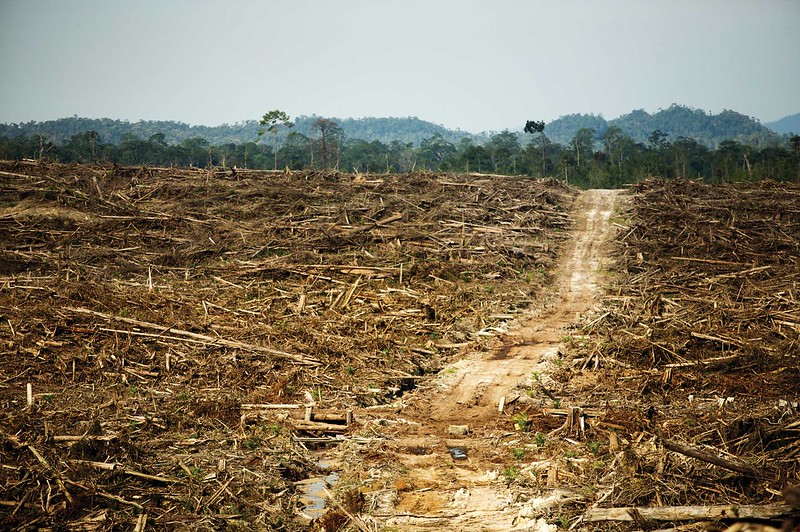
Deforestation in West Kalimantan, Borneo. Credit: David Gilbert / RAN (Creative Commons via Flickr)
A team of international lawyers has unveiled a definition of “ecocide” that, if adopted, would treat environmental destruction on a par with crimes against humanity.
After six months of deliberation, a panel of experts yesterday published the core text of a legal document that would criminalize “ecocide” if taken on by the International Criminal Court (ICC).
“This is an historic moment,” said Jojo Mehta, chair of the Stop Ecocide Foundation which commissioned the team of lawyers. “This expert panel came together in direct response to a growing political appetite for real answers to the climate and ecological crisis.”
Balancing Act
In the draft law, the panel of 12 lawyers defined ecocide as “unlawful or wanton acts committed with knowledge that there is a substantial likelihood of severe and either widespread or long-term damage to the environment being caused by those acts”.
If ratified by signatory states, ecocide would become the fifth international crime investigated and prosecuted by the ICC, alongside genocide, war crimes, crimes against humanity and the crime of aggression.
During a webinar marking the release of the document, panel co-chair Philippe Sands QC said the proposed definition would “cause us to think about our place in the world differently and it causes us to imagine the possibility that the law could be used to protect the global environment at a time of real challenge”.
“None of our international laws protect the environment as an end in itself and that’s what the crime of ecocide does,” Sands added.
Mehta described the draft law as a “necessary guardrail that could help steer our civilization back into a safe operating space”.
“Without some kind of enforceable legal parameter addressing the root causes of these crises, it’s hard to see how the Paris targets and the UNSDGs [United Nations Sustainable Development Goals] can possibly be reached,” she said.
The panel said that the idea of “unlawful or wanton” acts would allow judges and prosecutors to balance consideration of these elements. This idea of balance could be vital to the law’s success if it is to be agreed to by the states that subscribe to the ICC, according to co-chair Sands, who said it avoids “setting the bar too low and frightening states who we need to adopt the definition, or setting the bar so high that it becomes effectively useless in practice”.
A team of lawyers published its proposed definition of ‘ecocide’ on June 22, 2021. Credit: Stop Ecocide Foundation.
Defining ‘Ecocide’
Mehta acknowledged that ecocide legislation was likely to meet resistance from some richer nations, as it would inevitably force changes in corporate practice, “by making severe and reckless damage to nature illegal, and therefore unlicensable and uninsurable”.
This would close the door on “the old polluting ways”, she said. At the same time, Mehta argued, adopting ecocide legislation may be economically beneficial for stimulating innovation in green industries.
Sands said that oil spills, deforestation, and the authorization of new coal fired power stations could all potentially be considered ecocide under the definition.
However, specific acts such as these were left out of the final document, Mr Sands said, as doing so could run the risk of unintentionally omitting certain practices from the definition.
“This is not about catching every single horror that occurs in relation to the environment, but those horrors that cross a threshold and are of international concern,” he said, adding that it would be up to prosecutors and judges to form a view on whether a particular act is ecocide.
The campaign to criminalise ecocide, a term which was first coined in the 1970s, faces a number of further obstacles, with the entire process expected to take at least four years.
As a next step, any of the ICC’s 123 member states can propose the core text as an amendment to the Rome Statute treaty, before the annual assembly holds a vote on whether it can be considered for future enactment. It will then have to be approved by two thirds of the member states to go ahead, ahead of it being adopted by individual members into national jurisdiction.
Drought intensifies across Minnesota, with 75% of state critically dry
Nick Woltman, Pioneer Press, St. Paul, Minn.
Drought conditions have spread to nearly 75 percent of Minnesota, including most of the Twin Cities, according to figures released Thursday by the National Oceanic and Atmospheric Administration.
Although all of Ramsey County remains characterized as abnormally dry — the lowest level on the NOAA’s five-stage drought scale — the other six metro counties are at least partially a step higher in the moderate drought stage, the NOAA’s National Integrated Drought Information System reported.
The NIDIS says 74.8 percent of Minnesota is now in moderate or severe drought conditions, an increase over last week’s estimate of 55.7 percent.
The heavy rain that fell across much of the state last weekend — including nearly three-quarters an inch in the Twin Cities — did little to offset the effects of the unusually dry spring we’ve seen this year.
The lack of precipitation has combined with record high temperatures through the first half of June to put most of Minnesota in moderate to very high fire danger, according to the Department of Natural Resources. Most counties north of the Twin Cities have some sort of burning restrictions in place.
The DNR reported last week that more than 1,350 wildland fires have burned about 34,000 acres in the state since March.
Soil moisture is inadequate in about 65 percent of Minnesota, putting stress on the state’s corn and soybean crops, according to NOAA.
Drought conditions have also caused drops in the water levels of the Mississippi and St. Croix rivers. The St. Croix at Stillwater is near its lowest recorded level, which was set in 1988, NOAA said.
NOAA expects temperatures to trend below normal next week and average precipitation levels are expected. The National Weather Service forecasts a 40 percent chance of thunderstorms in the metro Saturday and Sunday.