The report tracks what it calls “prolific Russian influence actors” that last summer began focusing on disparaging the 2024 Olympic Games and French President Emmanuel Macron, including by posting a bogus documentary featuring a deepfake of actor Tom Cruise.
“These ongoing Russian influence operations have two central objectives: to denigrate the reputation of the [International Olympic Committee] on the world stage; and to create the expectation of violence breaking out in Paris during the 2024 Summer Olympic Games,” the report says.
“Russia has a decades-long history of undermining the Olympics, but for the Paris Games, we’ve observed this old playbook has been updated with new generative AI tactics, “ said Clint Watts, a former FBI agent who directed the study. “They want to scare spectators from attending the Games for fear of physical violence breaking out.”
Most recently, the Russian campaign has sought to capitalize on the Israel-Hamas war by impersonating militants and fabricating threats against Israelis who attending the 2024 Games, the report found. Some images referenced the attacks at the 1972 Munich Olympics, where an affiliate of the Palestine Liberation Organization killed 11 members of the Israeli Olympic team and a West German police officer.
Munich Olympics 1972 Hostage Crisis (Russel McPhedran / Fairfax Media via Getty Images file)
The fake documentary, posted online last summer, was titled “Olympics Has Fallen,” a play on the 2013 movie “Olympus Has Fallen.” Designed to resemble a Netflix production, it used AI-generated audio resembling Cruise’s voice to imply his participation, the report says, and even attached sham five-star reviews from The New York Times, The Washington Post and the BBC.
YouTube took it down at the behest of the International Olympic Committee, but it remains available on Telegram, Microsoft says.
“The International Olympic Committee (IOC) has recently been faced with a number of fake news posts targeting the IOC,” the committee said in a statement last fall, citing “an entire documentary produced with defamatory content, a fake narrative and false information, using an AI-generated voice of a world-renowned Hollywood actor.”
Tom Cruise in
The Russian campaign also put out videos designed to look like news reports that suggested intelligence about credible threats of violence at the Paris Games, Microsoft found.
One video that purported to be a report from media outlet Euronews in Brussels falsely claimed that Parisians were buying property insurance in anticipation of terrorism.
In another spoofed news clip impersonating French broadcaster France 24, the Russian campaign falsely claimed that 24% of purchased tickets for Olympic events had been returned due to fears of terrorism.
A third Russian effort consisted of a fake video news release from the CIA and France’s main intelligence agency warning potential attendees to stay away from the 2024 Olympics due to the alleged risk of a terror attack.
Microsoft says Russia, like the Soviet Union before it, has a long history of attacking the Olympics.
“If they cannot participate in or win the Games, then they seek to undercut, defame, and degrade the international competition in the minds of participants, spectators, and global audiences,” the report says. “The Soviet Union boycotted the 1984 Summer Games held in Los Angeles and sought to influence other countries to do the same.”
At the time, according to Microsoft, U.S. officials linked Soviet actors to a campaign that covertly distributed leaflets to Olympic committees in countries including Zimbabwe, Sri Lanka and South Korea, claiming that nonwhite competitors would be targeted by American extremists if they went to Los Angeles.
In 2017, the IOC banned Russia from the 2018 Winter Games after finding widespread use of performance-enhancing drugs by Russian athletes.
But the current ban is over the war in Ukraine. The committee decided that qualifying athletes from Russia and close ally Belarus may compete in the 2024 Summer Games only as “individual neutral athletes,” prohibited from flying their national flags.
Microsoft said the online influence campaign picked up shortly afterward.
The Russian Embassy did not immediately respond to a request for comment.
Sheinbaum Makes History as First Woman Elected to Lead Mexico
Natalie Kitroeff – June 3, 2024
A young girl with the name of Claudia Sheinbaum, a climate scientist and former mayor of Mexico City, on her face attends Sheinbuam’s election night event in Mexico City, on Sunday, June 2, 2024. (Fred Ramos/The New York Times)
MEXICO CITY — Claudia Sheinbaum, a climate scientist and former mayor of Mexico City, won her nation’s elections Sunday in a landslide victory that brought a double milestone: She became the first woman, and the first Jewish person, to be elected president of Mexico.
Early results indicated that Sheinbaum, 61, prevailed in what the authorities called the largest election in Mexico’s history, with the highest number of voters taking part and the most seats up for grabs.
It was a landmark vote that saw not one, but two, women vying to lead one of the hemisphere’s biggest nations. And it will put a Jewish leader at the helm of one of the world’s largest predominantly Catholic countries.
Sheinbaum, a leftist, campaigned on a vow to continue the legacy of Mexico’s current president and her mentor, Andrés Manuel López Obrador, which delighted their party’s base — and raised alarm among detractors. The election was seen by many as a referendum on his leadership, and her victory was a clear vote of confidence in López Obrador and the party he started.
López Obrador has completely reshaped Mexican politics. During his tenure, millions of Mexicans were lifted out of poverty and the minimum wage doubled. But he has also been a deeply polarizing president, criticized for failing to control rampant cartel violence, for hobbling the nation’s health system and for persistently undercutting democratic institutions.
Still, López Obrador remains widely popular and his enduring appeal propelled his chosen successor. And for all the challenges facing the country, the opposition was unable to persuade Mexicans that their candidate was a better option.
“We love her, we want her to work like Obrador,” Gloria Maria Rodríguez, 78, from Tabasco, said of Sheinbaum. “We want a president like Obrador.”
Sheinbaum won with at least 58% of the vote, according to preliminary results, while her closest competitor, Xóchitl Gálvez, an entrepreneur and former senator on a ticket with a coalition of opposition parties, had at least 26.6%.
If early returns hold, Sheinbaum will have captured a broader share of the vote than any candidate in decades.
Speaking to supporters early Monday, Sheinbaum vowed to work on behalf of all Mexicans, reaffirmed her party’s commitment to democracy and celebrated her groundbreaking ascension to the nation’s highest office.
“For the first time in 200 years of the republic, I will become the first female president of Mexico,” she said. “And as I have said on other occasions, I do not arrive alone. We all arrived, with our heroines who gave us our homeland, with our ancestors, our mothers, our daughters and our granddaughters.”
Sheinbaum said she received calls from Gálvez and the third-place candidate, Jorge Álvarez Máynez, to congratulate her on the victory. Shortly after Sheinbaum’s speech, Gálvez told supporters that the early returns were “not favorable to my candidacy,” and “irreversible,” noting that she had just communicated with Sheinbaum.
Gálvez had said in an interview days before the vote Sunday that “an anti-system vote” against López Obrador could help propel her to victory. In reality, it appeared that many Mexicans still associate the parties backing her with a system they see as inept and corrupt.
“Xóchitl Gálvez has been unable to represent change because the parties backing her embody the establishment,” said Carlos Bravo Regidor, a political analyst based in Mexico City. “Most Mexicans want a continuity of the change brought by López Obrador.”
Many voters seemed to endorse Sheinbaum as an agent of institutionalizing the changes brought about by her mentor. “We need to bring about more change to the country,” said Evelyn Román, 21, a chemical engineering student in Mexico City who supports Sheinbaum. “We did notice the progress in these six years.”
Sheinbaum’s experience is ample: She has a doctorate in energy engineering, participated in a United Nations panel of climate scientists awarded a Nobel Peace Prize and governed the capital, one of the largest cities in the hemisphere.
Known as a demanding boss with a reserved demeanor, Sheinbaum has risen through the ranks by aligning herself completely with López Obrador, who built an entire political party around his outsize personality. During the campaign, she backed many of his most contentious policies, including a slate of constitutional changes that critics say would severely undermine democratic checks and balances.
As a result, the president-elect battled the perception among many Mexicans that she will be little more than a pawn of her mentor.
“There’s this idea, because a lot of columnists say it, that I don’t have a personality,” Sheinbaum complained to reporters earlier this year. “That President Andrés Manuel López Obrador tells me what to do, that when I get to the presidency, he’s going to be calling me on the phone every day.”
Even with the broad mandate voters granted her, she faces significant challenges when she takes office in October.
López Obrador benefited “from the invincible popularity that comes from being a very charismatic leader — something that Claudia is not,” said Paula Sofía Vásquez, a political analyst based in Mexico City.
Cartel violence continues to torment the country, displacing people en masse and fueling one of the deadliest campaign cycles in recent Mexican history, with more than 36 people vying for public office killed since last summer.
Carlos Ortiz, 57, a municipal official working for the Iztapalapa borough in Mexico City, said that such bloodshed compelled him to vote against Sheinbaum.
“I want everything to change,” Ortiz said, recalling the dozens of aspirants for public office killed in recent months. “I don’t want a country on fire anymore.”
López Obrador has directed government attention to addressing the drivers of crime instead of waging war on the criminal groups, a strategy he called “hugs not bullets.” Homicides declined modestly but remain near record levels, and reports of missing people have spiked. Insecurity was a top concern for voters.
Sheinbaum has said she would continue his focus on social causes of the violence, while also working to lower rates of impunity and building up the national guard.
On the economy, the opportunities are clear: Mexico is now the largest trading partner of the United States, benefiting from a recent shift in manufacturing away from China. The currency is so strong it’s been labeled the “super peso.”
But there are also problems simmering. The federal deficit ballooned to around 6% this year, and Pemex, the national oil company, is operating under a mountain of debt, straining public finances.
“The fiscal risk we’re facing at the moment is something we haven’t seen for decades,” said Mariana Campos, director of Mexico Evaluates, a public policy research group.
It’s unclear how Sheinbaum would make good on a range of campaign promises — from building public schools and new health clinics to expanding social welfare programs — given the current state of public finances.
“The problem I see is that a lot of proposals are oriented toward spending and there is nowhere to get the money from,” said Vásquez.
Another challenge involves the broad new responsibilities granted to the armed forces, which have been tasked with running ports and airports, running an airline, and building a railroad through the Mayan jungle. Sheinbaum has said “there is no militarization” of the country, while suggesting she’s open to reevaluating the military’s involvement in public enterprises.
Beyond the domestic strains, Sheinbaum’s destiny will be intertwined with the outcome of the presidential election in the United States.
A reelection victory for President Joe Biden would provide continuity, but a return of Donald Trump to the White House would likely be far less predictable. Trump’s plans to round up people living in the country illegally on a vast scale and deport them to their home countries could target millions of Mexicans living in the United States. He has already threatened to slap 100% tariffs on Chinese cars made in Mexico.
Then there’s the festering issue of fentanyl, which cartels produce in Mexico using chemicals imported from China, the U.S. government says. Trump has suggested taking military action to combat the fentanyl trade.
Sheinbaum has said Mexico would have “good relations” with either Trump or Biden as president, and her campaign team has said it will continue to work to contain flows of migrants.
But handling such pressure from Washington, even in the form of incendiary campaign rhetoric, could prove complicated.
Voters expressed faith in Sheinbaum’s ability to deal with such challenges. Daniela Mendoza, 40, a psychologist who lives in Villahermosa, in Tabasco state, said she had long supported López Obrador, including during his previously unsuccessful bids to win the presidency.
Pleased with his social welfare programs, Mendoza voted for Sheinbaum.
“Claudia follows that line, perhaps with better ideas,” Mendoza said. “And having the first woman president in the country is an accomplishment.”
Don’t look up. South Korean authorities warned residents along the border with North Korea that an “air raid” was underway. But it wasn’t rockets that were incoming. Rather: floating overhead were more than 150 balloons carrying trash and what’s believed to be feces.
An emergency disaster text alert was sent across cities on Tuesday night, according to South Korean newspaper Hankyoreh, ordering residents to “refrain from outdoor activities and report [objects] to military bases when identified,” along with the message in English: “Air raid preliminary warning.”
The incursion comes days after North Korea warned it would retaliate against anti-Pyongyang leaflets sent over by activists in South Korea earlier this month.
South Korean news agency Yonhap reported that South Korea’s military detected the balloons flying and falling in various locations across the country from Tuesday evening to Wednesday morning local time, going as far as South Gyeongsang, a province more than 180 miles from the demilitarized zone border between the two countries.
The balloons appeared to carry trash—like plastic bottles, batteries, shoe parts, and even feces—a South Korea Joint Chiefs of Staff official said. The military is working with police to collect the materials for analysis, local paper Chosun Ilbo reported, and has advised residents not to come into contact with the droppings and instead report them to authorities.
This photo provided by South Korea Defense Ministry, shows trash from a balloon presumably sent by North Korea, in Seoul, South Korea, Wednesday, May 29, 2024. South Korea Presidential Office—AP
“Tit-for-tat action will be also taken against frequent scattering of leaflets and other rubbish by [South Korea] near border areas,” North Korea’s vice minister of national defense said on Sunday. “Mounds of wastepaper and filth will soon be scattered over the border areas and the interior of [South Korea] and it will directly experience how much effort is required to remove them.”
South Korea’s military condemned the act, saying on Wednesday that the balloons “clearly violate international law and seriously threaten our people’s safety.”
It’s not the first time North Korea has flown in garbage through balloons: in 2016, it sent what were initially feared to be biochemical substances but eventually turned out to be cigarette butts and used toilet paper.
North Korean defectors and activists in South Korea have also flown balloons the other way with propaganda payloads for years, in hopes of convincing North Korean residents to stand up against Kim Jong-un’s totalitarian regime. Pyongyang has long bridled against the practice, which it has labeled “psychological warfare.”
Park Sang-hak, center, a refugee from North Korea who runs the group Fighters for a Free North Korea, and South Korean activists prepare to release balloons bearing leaflets during an anti-North Korea rally near the border village of Panmunjom in Paju, South Korea, on April 15, 2011.Lee Jin-man—AP
Earlier this month, a group of North Korean defectors sent about 20 large balloons carrying some 300,000 leaflets criticizing Kim. The balloons also reportedly carried about 2,000 USB sticks containing K-pop content, including songs from members of Korean boyband sensation BTS. (Kim has called South Korean K-pop a “vicious cancer.”)
As tensions escalate between North and South Korea, experts emphasize that this kind of exchange of balloons remains far preferable to missiles. Peter Ward, a research fellow at the Sejong Institute, told Reuters: “These kinds of grey zone tactics are more difficult to counter and hold less risk of uncontrollable military escalation, even if they’re horrid for the civilians who are ultimately targeted.”
North Korean trash balloons are dumping ‘filth’ on South Korea
Jessie Yeung and Yoonjung Seo – May 29, 2024
North Korean trash balloons are dumping ‘filth’ on South Korea South Korea’s Joint Chiefs of StaffSouth Korean authorities said the balloons, which landed in several locations, were filled with “filth and garbage.” – South Korea’s Joint Chiefs of StaffThe deflated balloon that carried the North Korean trash bags. Balloons have previously been used by South Korean activists to send materials across the border. – South Korea’s Joint Chiefs of Staff
North Korea has adopted a new strategy to contend with its southern neighbor: sending floating bags of trash containing “filth” across the border, carried by massive balloons.
The South Korean military began noticing “large amounts of balloons” arriving from the North starting Tuesday night, detecting more than 150 as of Wednesday morning, according to the country’s Joint Chiefs of Staff (JCS).
Photos released by the JCS show plastic bags carried by two giant balloons, with some broken packages spilling scraps of plastic, sheets of paper, and what appears to be dirt onto roads and sidewalks.
The balloons so far contain “filth and garbage” and are being analyzed by government agencies, said the JCS, adding that the military was cooperating with the United Nations Command.
South Korean authorities said the balloons, which landed in several locations, were filled with “filth and garbage.” – South Korea’s Joint Chiefs of Staff
“North Korea’s actions clearly violate international law and seriously threaten the safety of our citizens,” it added. “All responsibility arising from the North Korean balloons lies entirely with North Korea, and we sternly warn North Korea to immediately stop its inhumane and low-level actions.”
Local governments also sent messages to residents in the northern Gyeonggi and Gangwon provinces to warn of the “unidentified objects,” and advised against outdoor activities. The packages risk damaging residential areas, airports and highways, said the JCS.
The move, according to North Korean state media KCNA, was to retaliate against South Korean activists who often send materials to the North – including propaganda leaflets, food, medicine, radios and USB sticks containing South Korean news and television dramas, all prohibited in the isolated totalitarian dictatorship.
Campaigners in the South, including defectors from North Korea, have long sent these materials through balloons, drones, and bottles floating down the cross-border river – even after South Korea’s parliament banned such actions in 2020.
“Scattering leaflets by use of balloons is a dangerous provocation that can be utilized for a specific military purpose,” said Kim Kang Il, North Korea’s Vice Minister of National Defense, KCNA reported on Sunday.
He accused South Korea of using “psychological warfare” by scattering “various dirty things” near border areas, declaring that the North would take “tit for tat action.”
The deflated balloon that carried the North Korean trash bags. Balloons have previously been used by South Korean activists to send materials across the border. – South Korea’s Joint Chiefs of Staff
“Mounds of wastepaper and filth will soon be scattered over the border areas and the interior of (South Korea) and it will directly experience how much effort is required to remove them,” Kim said, according to KCNA. “When our national sovereignty, security and interests are violated, we will take action immediately.”
Kim also decried joint US-South Korea military drills, which have increased in recent years as tensions have risen in the Korean peninsula.
The 2020 law that prohibited sending leaflets also restricted loudspeaker propaganda broadcasts, which the South’s military once championed as part of psychological warfare against the North until it withdrew the equipment following a 2018 summit between the two Koreas.
But even after parliament passed the ban, activists told Reuters they planned to continue – including the defector Park Sang-hak, who had been sending materials back to his homeland for 15 years, vowing to continue in an effort to give North Koreans a rare glimpse of the outside world.
Earlier this month, Park’s organization Fighters for a Free North Korea said in a statement it had sent 20 balloons toward North Korea, containing 300,000 leaflets that condemned Kim Jong Un and 2,000 USB sticks containing K-pop and music videos.
“In order to appeal and urge the North Korean people to rise up and put an end to Kim Jong Un … the group is sending the leaflets to the compatriots in North Korea,” the organization said in a statement.
For decades, North Korea has been almost completely closed off from the rest of the world, with tight control over what information gets in or out. Foreign materials including movies and books are banned, with only a few state-sanctioned exceptions; those caught with foreign contraband often face severe punishment, defectors say.
Earlier this year a South Korean research group has released rare footage that it claimed showed North Korean teenagers sentenced to hard labor for watching and distributing K-dramas.
Restrictions softened somewhat in recent decades as North Korea’s relationship with China expanded. Tentative steps to open up allowed some South Korean elements, including parts of its pop culture, to seep into the hermit nation – especially in 2017 and 2018, when relations thawed between the two countries.
But the situation in North Korea deteriorated in the following years and diplomatic talks fell apart – prompting strict rules to snap back into place in the North.
North Korea Accused of Launching Floating Poop Balloon Attack
Dan Ladden-Hall – May 29, 2024
Yonhap via Reuters
South Korea’s military on Wednesday accused North Korea of floating balloons loaded with trash and manure across the border and immediately demanded that Pyongyang halt its “inhumane and vulgar” operation.
More than 260 balloons have already been detected in South Korea since the operation began on Tuesday night, South Korea’s Joint Chiefs of Staff said. Images released by the military appear to show the balloons carrying plastic bags—one of which had the word “excrement” written on the side, according to Reuters.
A JCS official told the Seoul-based Yonhap News Agency that the balloons—all of which have fallen to the ground—carried trash, including bits of shoes, plastic bottles, and manure.
No damage or injuries have been reported so far in connection with the balloons, but the military has deployed bomb disposal units and other experts to collect them. Residents have been warned against touching the objects.
“These acts by North Korea clearly violate international law and seriously threaten our people’s safety,” the JCS said, adding a stern warning to “North Korea to immediately stop its inhumane and vulgar act.”
The balloons started arriving days after Kim Kang Il, North Korea’s vice defense minister, slammed propaganda leaflets criticizing the Pyongyang regime that North Korean defectors in the South have been attaching to balloons and sending northward for years.
The minister on Sunday accused Seoul of “despicable psychological warfare” by “scattering leaflets and various dirty things near border areas” and vowed to deliver “tit-for-tat action” in response.
“Mounds of wastepaper and filth will soon be scattered over the border areas and the interior of [South Korea] and it will directly experience how much effort is required to remove them,” he said.
Putin Hints at Bombing Other ‘Densely Populated’ Nations
Allison Quinn – May 28, 2024
Getty Images
Russia’s Vladimir Putin lashed out Tuesday at European countries that are considering giving permission to Ukraine to use their weapons for strikes on Russian territory.
Speaking in Tashkent during a two-day visit to Uzbekistan, Putin warned of “serious consequences” if Western weapons are allowed in attacks on Russian soil.
“In Europe, especially in small countries, they should realize what they are playing with. They should remember that they are countries with small, densely populated territories… This is a factor they should keep in mind before talking about striking Russia,” he said.
His comments came as more and more European leaders expressed support for Ukraine taking the war to Russian territory at a meeting of defense ministers on Tuesday.
EU foreign policy chief Josep Borrell said it is “perfectly possible” for Ukraine to strike targets inside Russia and there is “no contradiction” with the laws of war. “You have to balance the risk of escalation and the need for Ukrainians to defend,” he said, according to Agence France-Presse. Dutch Defense Minister Kajsa Ollongren said the Netherlands would not stop Ukraine from attacking targets on Russian territory, and that she hoped “other countries that have different positions will change that.”
Hanno Pevkur, the defense minister of Estonia, said, “It cannot be normal that Russia is attacking from very deep into Ukrainian territory and the Ukrainians are fighting with one hand behind their back.”
NATO chief Jens Stoltenberg called on NATO officials to reconsider prohibiting Ukraine from using Western-supplied weapons to strike “legitimate targets” outside the country earlier this week. The Biden administration has repeatedly cautioned against Ukraine using American-made weapons to strike inside Russia, though officials are now reportedly debating whether to change that policy.
Climate change caused 26 extra days of extreme heat in last year: report
AFP – May 28, 2024
Heat is the leading cause of climate-related death (Nhac NGUYEN)
The world experienced an average of 26 more days of extreme heat over the last 12 months that would probably not have occurred without climate change, a report said on Tuesday.
Heat is the leading cause of climate-related death and the report further points to the role of global warming in increasing the frequency and intensity of extreme weather around the world.
For this study, scientists used the years 1991 to 2020 to determine what temperatures counted as within the top 10 percent for each country over that period.
Next, they looked at the 12 months to May 15, 2024, to establish how many days over that period experienced temperatures within — or beyond — the previous range.
Then, using peer-reviewed methods, they examined the influence of climate change on each of these excessively hot days.
They concluded that “human-caused climate change added — on average, across all places in the world — 26 more days of extreme heat than there would have been without it”.
The report was published by the Red Cross Red Crescent Climate Centre, the World Weather Attribution scientific network and the nonprofit research organisation Climate Central.
2023 was the hottest year on record, according to the European Union’s climate monitor, Copernicus.
Already this year, extreme heatwaves have afflicted swathes of the globe from Mexico to Pakistan.
The report said that in the last 12 months some 6.3 billion people — roughly 80 percent of the global population — experienced at least 31 days of what is classed as extreme heat.
In total, 76 extreme heatwaves were registered in 90 different countries on every continent except Antarctica.
Five of the most affected nations were in Latin America.
The report said that without the influence of climate change, Suriname would have recorded an estimated 24 extreme heat days instead of 182; Ecuador 10 not 180; Guyana 33 not 174, El Salvador 15 not 163; and Panama 12 not 149.
“(Extreme heat) is known to have killed tens of thousands of people over the last 12 months but the real number is likely in the hundreds of thousands or even millions,” the Red Cross said in a statement.
“Flooding and hurricanes may capture the headlines but the impacts of extreme heat are equally deadly,” said Jagan Chapagain, secretary general of the International Federation of the Red Cross.
Temperatures in Pakistan cross 52 degrees Celsius — that’s more than 125°F
Reuters – May 28, 2024
Temperatures rose above 52 degrees Celsius (125.6 degrees Fahrenheit) in Pakistan’s southern province of Sindh, the highest reading of the summer and close to the country’s record high amid an ongoing heat wave, the met office said on Monday.
Extreme temperatures throughout Asia over the past month were made worse most likely as a result of human-driven climate change, a team of international scientists have said.
In Mohenjo Daro, a town in Sindh known for archaeological sites that date back to the Indus Valley Civilization built in 2500 BC, temperatures rose as high as 52.2 C (126 F) over the last 24 hours, a senior official of the Pakistan Meteorological Department, Shahid Abbas told Reuters.
The reading is the highest of the summer so far, and approached the town’s and country’s record highs of 53.5 C (128.3 F) and 54 C (129.2 F) respectively.
Mohenjo Daro is a small town that experiences extremely hot summers and mild winters, and low rainfall, but its limited markets, including bakeries, tea shops, mechanics, electronic repair shops, and fruit and vegetable sellers, are usually bustling with customers.
But with the current heat wave, shops are seeing almost no footfall.
A vendor selling ice, slices a piece from an ice block for a customer at his shop on a hot summer noon in in Karachi on May 27, 2024. – Rizwan Tabassum/AFP/Getty Images
“The customers are not coming to the restaurant because of extreme heat. I sit idle at the restaurant with these tables and chairs and without any customers,” Wajid Ali, 32, who owns a tea stall in the town.
“I take baths several times a day which gives me a little relief. Also there is no power. The heat has made us very uneasy.”
Close to Ali’s shop is an electronic repairs shop run by Abdul Khaliq, 30, who was sat working with the shop’s shutter half down to shield him from the sun. Khaliq also complained about the heat affecting business.
Local doctor Mushtaq Ahmed added that the locals have adjusted to living in the extreme weather conditions and prefer staying indoors or near water.
“Pakistan is the fifth most vulnerable country to the impact of climate change. We have witnessed above normal rains, floods,” Rubina Khursheed Alam, the prime minister’s coordinator on climate, said at a news conference on Friday adding that the government is running awareness campaigns due to the heat waves.
The highest temperature recorded in Pakistan was in 2017 when temperatures rose to 54 C (129.2 F) in the city of Turbat, located in the Southwestern province of Balochistan. This was the second hottest in Asia and fourth highest in the world, said Sardar Sarfaraz, Chief Meteorologist at the Pakistan Meteorological Department
The heat wave will subside in Mohenjo Daro and surrounding areas, but another spell is expected to hit other areas in Sindh, including the capital, Karachi — Pakistan’s largest city.
2 Yale researchers are pulling back the curtain on Russia’s sanctions-stricken economy — and it’s landed them on a list of Putin’s enemies
Jennifer Sor – May 25, 2024
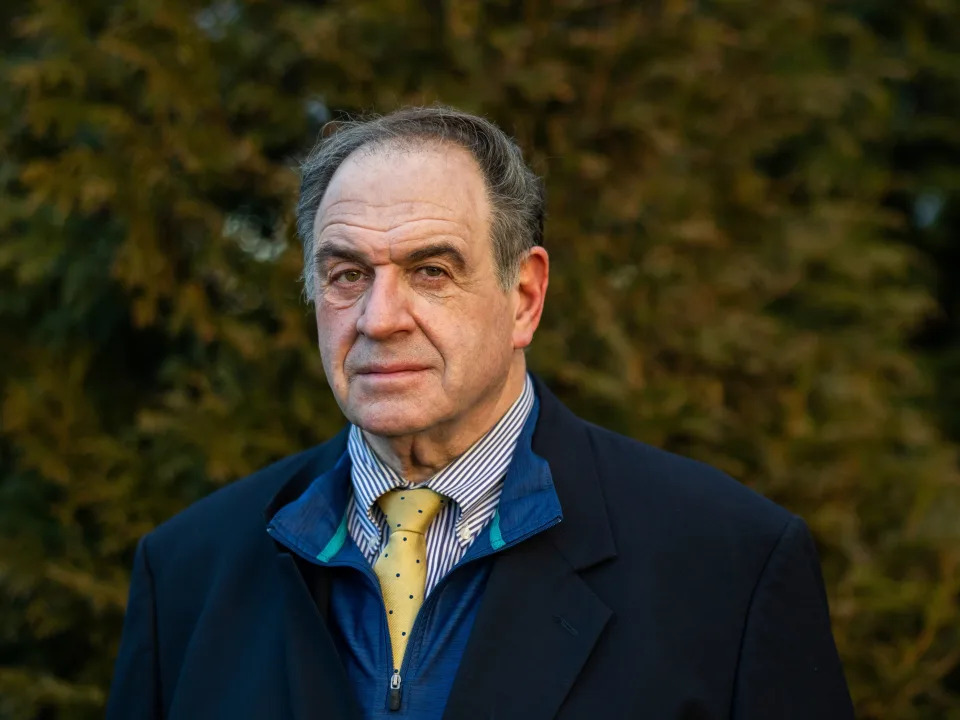
Jeffery Sonnenfeld and Steven Tian have landed themselves on a list of sanctioned individuals for their work shining a light on Russia’s economic situation.Mikhail Klimentyev/Sputnik AFP
Jeffrey Sonnenfeld and Steven Tian, two Yale researchers, have issued dire predictions for Russia’s economy.
Their work has landed them on a list of sanctioned individuals in Russia.
In their view, the country’s economy is in shambles, and Putin could end up losing support of the people.
Jeffrey Sonnenfeld and Steven Tian, two researchers at the Yale School of Management, have been targeted for their views on Russia’s economy since the war in Ukraine began.
Over the last few years, they’ve found themselves on Vladimir Putin’s watch list for stating what they see as a simple truth: the Russian economy is in trouble, and there’s only so much cherry-picking of the data that can obscure that fact.
Moscow has fiercely defended its vision of a prospering economy, but the evidence speaks for itself, Sonnenfeld and Tian say. Soaring prices and ailing consumer sentiment have hit key sectors in Russia’s economy, and Moscow is paying a huge cost to keep its war machine running.
The nation is in such dire straits that citizens could even start turning on Putin later this year, they predicted, assuming the West continues to supply military and financial aid to Ukraine.
“We can list for you what Putin has concealed – suddenly – the past three years. If his economy was performing at the level he claims, he’d provide the data ad not hide those facts,” Sonnenfeld told Business Insider in an interview. “Putin survives only by cannibalizing Russian businesses – throwing the living room furniture into the furnace to keep the fire burning.”
Jeffrey SonnenfeldCourtesy of Jeffrey Sonnenfeld
The researchers, who met as a professor-student pair at Yale, have received a lot of criticism for their work on Russia, much of it in the form of hate mail and threatening phone calls.
“I’ve had a lot of threats on the phone, and my home has been vandalized,” Sonnenfeld told BI last summer. “Now we have so many security cameras I can’t even have my shirt tails untucked, let alone walk around in my shorts at home.”
Both are barred from entering Russia and were put on the nation’s sanctioned US citizens list in 2022.
Still, neither of them regrets their work.
“We’re pretty excited about it,” they said of their research. “Any of the threats only motivate us to work down much harder.”
Putin’s top critics
Sonnenfeld, 70, and Tian, 25, didn’t plan on getting their names added to a list of Putin’s critics.
Neither are technically economists, but they began researching Russia’s economy while compiling a list of companies that exited or scaled back their operations in Russia in the wake of the invasion of Ukraine.
That list went viral online, and was instrumental in getting more than 1,000 companies to scale back their business in the country, the Yale School of Management says on its website.
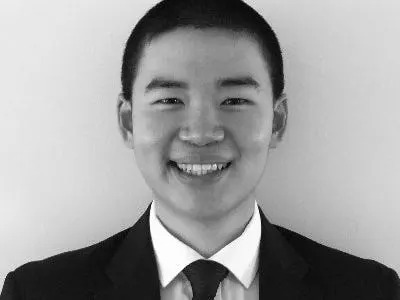
Steven Tian headshot
Steven TianCourtesy of Steven Tian
At that time, Tian and Sonnenfeld began noticing cracks forming in Russia’s economy. Putin has claimed Russia is becoming the new “growth hub” of the world, and the IMF says Russia’s economy is on track to grow over 3% this year, more than any other OECD economy, including the US. But that doesn’t square with data Sonnenfeld and Tian are seeing, with some pockets of the country’s economy in dire shape.
Among their biggest predictions is that the situation in Russia is so bad that the country could eventually turn on Putin, with a shift in the domestic temperament coming as soon as the November US presidential election this year.
That’s because if Biden is re-elected, the US will likely continue supplying aid to Ukraine, forcing Russia to continue spending money and lives to keep waging war on Ukraine.
“Putin has no grand strategy other than to hope Trump wins and cuts a favorable deal with Russia,” Tian said. “Russia is in for a world of economic pain for a long time to come.”
Positive forecasts on Russia’s economy are based on a lack of visibility, Sonnenfeld and Tian say.
The pair began working together when Tian was an undergraduate at Yale, chasing Sonnenfeld around lecture halls. Eventually, Sonnenfeld became Tian’s advisor and has mentored Tian for over eight years.
The two researchers are still working on ways to urge the West to tighten and enforce sanctions on Russia. They also continue to update their list of companies that have exited the country in the hope that it will encourage more firms to do the same.
Colleagues describe Sonnenfeld as opinionated but generous and charismatic. Tian, meanwhile, has a near-photographic memory and is a highly analytical thinker, colleagues mentioned.
“Steven does a lot of the analytic heavy lifting, and I do the flamboyant color,” Sonnenfeld said of their work together.
People who have worked with them also say the pair is extremely passionate about their work, and both are often known to answer emails at all hours of the night and early morning.
“We don’t believe in regular sleep patterns,” Sonnenfeld added. “Actually, we know it’s very important, but sometimes when there’s a sense of urgency, we do seriously dive into the crisis du jour. We just don’t like bullies, whether or not it’s Putin or some other bravado.”
Iran hangs two women as surge in executions intensifies: NGO
Stuart Williams – May 18, 2024
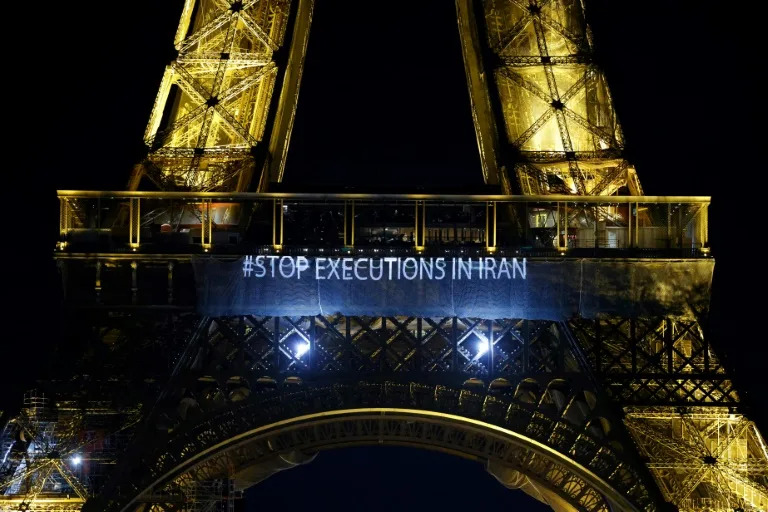
Activists are worried by the surge in executions in Iran (Ludovic MARIN)
Iran on Saturday hanged at least seven people, including two women, while a member of its Jewish minority is at imminent risk of execution as the Islamic republic further intensified its use of capital punishment, an NGO said.
Parvin Mousavi, 53, a mother of two grown-up children, was hanged in Urmia prison in northwestern Iran along with five men convicted in various drug-related cases, the Norway-based Iran Human Rights (IHR) said in a statement.
In Nishapur in eastern Iran, a 27-year-old woman named Fatemeh Abdullahi was hanged on charges of murdering her husband, who was also her cousin, it said.
IHR says it has tallied at least 223 executions this year, with at least 50 so far in May alone. A new surge began following the end of Persian New Year and Ramadan holidays in April, with 115 people including six women hanged since then, it said.
Iran carries out more recorded executions of women than any other country. Activists say many such convicts are victims of forced or abusive marriages.
Iran last year carried out more hangings than in any year since 2015, according to NGOs, which accuse the Islamic republic of using capital punishment as a means to instil fear in the wake of protests that erupted in autumn 2022.
“The silence of the international community is unacceptable,” IHR director Mahmood Amiry-Moghaddam told AFP.
“Those executed belong to the poor and marginalised groups of Iranian society and didn’t have fair trials with due process.”
– ‘Killing machine’ –
IHR said Mousavi had been in prison for four years. It cited a source as saying she had been paid the equivalent of 15 euros to carry a package she had been told contained medicine but was in fact five kilos of morphine.
“They are the low-cost victims of the Islamic republic’s killing machine, which aims at instilling fear among people to prevent new protests,” added Amiry-Moghaddam.
The group meanwhile said a member of Iran’s Jewish community, which has drastically reduced in numbers in recent years but is still the largest in the Middle East outside Israel, was at imminent risk of execution over a murder charge.
Arvin Ghahremani, 20, was convicted of murder during a street fight when he was 18 and is scheduled to be executed in the western city of Kermanshah on Monday, it said, adding it had received an audio message from his mother Sonia Saadati asking for his life to be spared.
His family is seeking to ask the family of the victim to forgo the execution in line with Iran’s Islamic law of retribution, or qesas.
Also at risk of execution is Kamran Sheikheh, the last surviving member of a group of seven Iranian Kurdish men who were first arrested between early December 2009 and late January 2010 and later sentenced to death for “corruption on earth” over alleged membership of extremist groups, it said.
Six men convicted in the same case have been executed in the last months almost one-and-a-half decades after their initial arrest, the last being Khosro Besharat who was hanged in Ghezel Hesar prison outside Tehran this week.
There has been an international outcry meanwhile over the death sentence handed out last month to Iranian rapper Toomaj Salehi, seen by activists as retaliation for his music backing the 2022 protests. His lawyers are appealing the verdict.