Some people just love criminals: Timothy Mellon, Secretive Donor, Gives $50 Million to Pro-Trump Group

Timothy Mellon, Secretive Donor, Gives $50 Million to Pro-Trump Group

The cash from Mr. Mellon, a reclusive billionaire who has also been a major donor to a super PAC supporting Robert F. Kennedy Jr., is among the largest single disclosed gifts ever.

By Shane Goldmacher and Theodore Schleifer – June 20, 2024

Former President Donald J. Trump, speaking on a stage behind a lectern and in a blue suit and yellow tie, facing left.
Former President Donald J. Trump and his allies have been working to close the financial gap with President Biden. Credit…Ash Ponders for The New York Times

Timothy Mellon, a reclusive heir to a Gilded Age fortune, donated $50 million to a super PAC supporting Donald J. Trump the day after the former president was convicted of 34 felonies, according to new federal filings, an enormous gift that is among the largest single disclosed contributions ever.

The donation’s impact on the 2024 race is expected to be felt almost immediately. Within days of the contribution, the pro-Trump super PAC, Make America Great Again Inc., said in a memo that it would begin reserving $100 million in advertising through Labor Day.

The group had only $34.5 million on hand at the end of April, and Mr. Mellon’s contribution accounted for much of the nearly $70 million that the super PAC raised in May. On Wednesday and Thursday, the super PAC began reserving $30 million in ads to air in Georgia and Pennsylvania around the Fourth of July holiday.

Mr. Mellon is now the first donor to give $100 million in disclosed federal contributions in this year’s election. He was already the single largest contributor to super PACs supporting both Mr. Trump and Robert F. Kennedy Jr., who is running as an independent. Mr. Mellon has previously given $25 million to both.

Democrats have sought to portray Mr. Kennedy as a spoiler supported by Republicans, in part by emphasizing Mr. Mellon’s dual contributions and seemingly split loyalties. The pro-Kennedy super PAC has distributed quotations from the hard-to-reach Mr. Mellon, and for a blurb that appears on the cover of Mr. Mellon’s upcoming book, Mr. Kennedy called the billionaire a “maverick entrepreneur.”

It is not clear what Mr. Mellon’s mega-donation means for his support of Mr. Kennedy going forward. He has so far toggled between giving to support both candidates. His most recent donation to Mr. Kennedy’s super PAC was a $5 million contribution in April.

But Mr. Mellon’s $50 million gift will significantly help pro-Trump forces narrow the financial advantage that President Biden and his allies have enjoyed so far. Miriam Adelson, the casino billionaire and widow of Sheldon G. Adelson, who died in 2021, has also made plans to fund a pro-Trump super PAC with at least as much money as the $90 million that her family gave in the 2020 campaign, although much of the cash has yet to arrive.

Richard and Elizabeth Uihlein, the Illinois couple who are among the G.O.P.’s largest donors, each gave $5 million to the Trump super PAC in May. The billionaire energy executive Kelcy Warren also gave $5 million.

But outside groups supporting Mr. Biden have already announced more than $1 billion in planned spending, anchored by a reserved $250 million in advertising from the leading pro-Biden super PAC, Future Forward.

Individual donations as large as $50 million are rare in American campaigns. Other gifts of a similar size have come from candidates who self-funded their campaigns, from couples who technically split their mammoth contributions or from donors who have paid in installments over time.

Until now, Make America Great Again Inc., which serves as the leading pro-Trump super PAC, has had only modest fund-raising success, relying largely on Republican donors who have personal connections to the former president.

In the first few months of 2024, the group raised between $7.4 million and $14.4 million a month. MAGA Inc. was originally seeded with $60 million by Mr. Trump’s political action committee — which is prohibited from spending to support his candidacy — before he declared his run for president. But in a highly unusual transaction, Mr. Trump later asked for a refund of the $60 million he had given months earlier, so MAGA Inc. has now returned that amount to the PAC, Save America, which is helping pay his legal bills.

Mr. Mellon, who had previously put $25 million into the group over the last 12 months, now accounts for nearly half of what the group has raised in total.

Mr. Mellon has long avoided the publicity that typically surrounds a donor this significant. After bursting onto the Republican fund-raising scene at the dawn of the Trump administration, he quickly developed a reputation as an unusual, quirky figure.

Despite his famous last name — he is the grandson of former Treasury Secretary Andrew Mellon and a member of the wealthy Mellon family — Republican fund-raisers had largely not heard of him before he made a $10 million donation to a G.O.P. super PAC in mid-2018. That gift was the first of nine eight-figure checks that he would cut to major Republican groups.

He would go on to hire political counsel to guide him in Washington, although he lives primarily in Wyoming these days. Few recipients of his money have even met him.

The $50 million check to support Mr. Trump is matched only by a different donation Mr. Mellon made on behalf of another tough-on-immigration political project: the private construction of a border wall in Texas. In August 2021, Mr. Mellon donated $53 million worth of stock to help pay for the wall, a priority of Gov. Greg Abbott of Texas.

Mr. Mellon, who did not respond to requests for comment on Thursday, appears to be growing more comfortable with the scrutiny of his influence. Next month, he is slated to publish a book, “panam.captain,” about his work turning around Pan Am Systems, a collection of companies that includes rail, aviation and marketing firms.

Mr. Mellon originally self-published an autobiography, but it was taken off-line in 2016 after some incendiary passages became public, including a line that Black people were “even more belligerent” after social programs were expanded in the 1960s and ’70s.

Mr. Mellon also wrote that social safety net programs amounted to “slavery redux.”

“For delivering their votes in the Federal Elections, they are awarded with yet more and more freebies: food stamps, cellphones, WIC payments, Obamacare, and on, and on,” Mr. Mellon wrote, according to The Washington Post.

The new book, “panam.captain,” will be released by Skyhorse Publishing. Its president is Tony Lyons, who co-founded the pro-Kennedy super PAC, American Values 2024.

In a rare interview with Bloomberg in 2020, Mr. Mellon praised what he saw as Mr. Trump’s follow-through: “He’s done the things he promised to, or tried to do the things he’s promised to,” he said.

Extreme heat kills hundreds, millions more sweltering worldwide as summer begins

Reuters

Extreme heat kills hundreds, millions more sweltering worldwide as summer begins

Gloria Dickie – June 20, 2024

LONDON (Reuters) -Deadly heatwaves are scorching cities on four continents as the Northern Hemisphere marks the first day of summer, a sign that climate change may again help to fuel record-breaking heat that could surpass last summer as the warmest in 2,000 years.

Record temperatures in recent days are suspected to have caused hundreds, if not thousands, of deaths across Asia and Europe.

In Saudi Arabia, nearly two million Muslim pilgrims are finishing the haj at the Grand Mosque in Mecca this week. But hundreds have died during the journey amid temperatures above 51 degrees Celsius (124 degrees Fahrenheit), according to reports from foreign authorities.

Egyptian medical and security sources told Reuters on Thursday that at least 530 Egyptians had died while participating – up from 307 reported as of yesterday. Another 40 remain missing.

Countries around the Mediterranean have also endured another week of blistering high temperatures that have contributed to forest fires from Portugal to Greece and along the northern coast of Africa in Algeria, according to the U.S. National Oceanic and Atmospheric Administration’s Earth Observatory.

In Serbia, meteorologists forecast temperatures of around 40 C (104 F) this week as winds from North Africa propelled a hot front across the Balkans. Health authorities declared a red weather alert and advised people not to venture outdoors.

Belgrade’s emergency service said its doctors intervened 109 times overnight to treat people with heart and chronic health conditions.

In neighbouring Montenegro, where health authorities also warned people to stay in the shade until late afternoon, tens of thousands of tourists sought refreshment on the beaches along its Adriatic coast.

Europe this year has been contending with a spate of dead and missing tourists amid dangerous heat. A 55-year-old American was found dead on the Greek island of Mathraki, police said on Monday – the third such tourist death in a week.

A broad swath of the eastern U.S. was also wilting for a fourth consecutive day under a heat dome, a phenomenon that occurs when a strong, high-pressure system traps hot air over a region, preventing cool air from getting in and causing ground temperatures to remain high.

New York City opened emergency cooling centres in libraries, senior centers and other facilities. While the city’s schools were operating normally, a number of districts in the surrounding suburbs sent students home early to avoid the heat.

Meteorological authorities also issued an excessive heat warning for parts of the U.S. state of Arizona, including Phoenix, on Thursday, with temperatures expected to reach 45.5 C (114 F).

In the nearby state of New Mexico, a pair of fast-moving wildfires abetted by the blistering heat have killed two people, burned more than 23,000 acres and destroyed 500 homes, according to authorities. Heavy rains could help temper the blazes, but thunderstorms on Thursday were also causing flash flooding and complicating firefighting efforts.

All told, nearly 100 million Americans were under extreme heat advisories, watches and warnings on Thursday, according to the federal government’s National Integrated Heat Health Information System.

The brutal temperatures should begin easing in New England on Friday, the weather service said, but New York and the mid-Atlantic states will continue to endure near-record heat into the weekend.

COUNTING THE DEAD

India’s summer period lasts from March to May, when monsoons begin slowly sweeping across the country and breaking the heat.

But New Delhi on Wednesday registered its warmest night in at least 55 years, with India’s Safdarjung Observatory reporting a temperature of 35.2 C (95.4 F) at 1 a.m.

Temperatures normally drop at night, but scientists say climate change is causing nighttime temperatures to rise. In many parts of the world, nights are warming faster than days, according to a 2020 study by the University of Exeter.

New Delhi has clocked 38 consecutive days with maximum temperatures at or above 40 C (104 F) since May 14, according to weather department data.

An official at the Indian health ministry said on Wednesday there were more than 40,000 suspected heatstroke cases and at least 110 confirmed deaths between March 1 and June 18, when northwest and eastern India recorded twice the usual number of heatwave days in one of the country’s longest such spells.

Gaining accurate death tolls from heatwaves, however, is difficult. Most health authorities do not attribute deaths to heat, but rather the illnesses exacerbated by high temperatures, such as cardiovascular issues. Authorities therefore undercount heat-related deaths by a significant margin – typically overlooking thousands if not tens of thousands of deaths.

RECORD WARM TEMPERATURES

The heatwaves are occurring against a backdrop of 12 consecutive months that have ranked as the warmest on record in year-on-year comparisons, according to the European Union’s climate change monitoring service.

The World Meteorological Organization says there is an 86% percent chance that one of the next five years will eclipse 2023 to become the warmest on record.

While overall global temperatures have risen by nearly 1.3 C (2.3 F) above pre-industrial levels, climate change is fuelling more extreme temperature peaks – making heatwaves more common, more intense and longer-lasting.

On average globally, a heatwave that would have occurred once in 10 years in the pre-industrial climate will now occur 2.8 times over 10 years, and it will be 1.2 C warmer, according to an international team of scientists with the World Weather Attribution (WWA) group.

Scientists say heatwaves will continue to intensify if the world continues to unleash climate-warming emissions from the burning of fossil fuels.

If the world hits 2 C (3.6 F) of global warming, heatwaves would on average occur 5.6 times in 10 years and be 2.6 C (4.7 F) hotter, according to the WWA.

(Reporting by Gloria Dickie in London; additional reporting by Aleksandar Vasovic in Belgrade, Pesha Magid in Riyadh, Shivam Patel in Delhi, Ahmed Mohamed Hassan in Cairo, Ali Withers in Copenhagen and Joseph Ax in New York; editing by Mark Heinrich and Josie Kao)

Putin Has Tainted Russian Greatness

By Serge Schemann – June 20, 2024

Crowds of people pack the Red Square in Moscow. One person waves a huge flag with Vladimir Putin’s face on it.
Credit…Maxim Shipenkov/EPA, via Shutterstock

Serge Schmemann is a member of the editorial board and the author of a book about Russia, “Echoes of a Native Land.”Want to stay updated on what’s happening in Russia? Sign up for Your Places: Global Update, and we’ll send our latest coverage to your inbox.

Many years ago, in the 1980s, I went to Brighton Beach, then in its heyday as a district of newly arrived Soviet Jews, to celebrate the first year (there would not be many more) of the lively local Russian-language weekly, The New American. It was a grand event, rich in humor and tinged with nostalgia. I asked a middle-aged partygoer for his thoughts on his lost homeland, and his reply has stayed with me: “I hate Russia, for forcing me to leave her.”

It was an apt summary of what waves of émigrés from Russia and the Soviet Union since the early 20th century have felt: a sorrowful sense of loss for a motherland — what Russians call “toska po rodine” — coupled with resentment at the autocratic powers that forced them out. My grandparents were among the “White” Russians who fled the Revolution and moved to Paris in the 1920s. A second wave of emigrants left in World War II. The third, Soviet Jews, started leaving in the 1970s. Vladimir Putin has now created another wave of people fleeing Russia, and many of them may still believe, as my forebears did, that they will one day return to the homeland.

Most probably will not.

It’s hard to say precisely where Russian exiles stand, politically or in their sense of attachment to Russia. The waves of emigrants differ widely one from another, and in the United States, they have not behaved like immigrants from Italy, China or Poland who formed hyphenated-American communities and organizations that have persisted over generations. Russian immigrants to America have, by comparison, melded quickly into the general population. Brighton Beach is one of the few places with any Russian flavor in the United States.

Still, the prevailing attitude I’ve encountered among Russian émigrés is the love-hate expressed by my interlocutor in Brighton Beach. It’s the love of an extraordinary culture, a deep attachment to the expanse of steppes and taiga, along with contempt for the chronic misrule, adventurism, imperial illusions and corruption of the leaders.

At least, that was the attitude before Feb. 24, 2022, when Mr. Putin ordered the full-scale invasion of Ukraine. Now, I more often encounter, and feel, a new attitude: shame.Sign up for the Opinion Today newsletter  Get expert analysis of the news and a guide to the big ideas shaping the world every weekday morning. Get it sent to your inbox.

The émigrés I grew up with, and those I came to know in America and as a reporter in Israel, rarely felt troubled by the sins of their motherland. Why would they? There were no politics in the usual sense in the Russia they came from, no sense among the vast majority of the population that they had any say in what their self-perpetuating leaders did for them or to them from behind the Kremlin ramparts. The Gulag was not their doing; their Russia was the culture, the scramble for scarce goods, the anecdotes told around vodka in steamy kitchens, the shashlik by a lazy river. Most Russians concentrated on protecting their lives from “them,” as people in the Soviet Union would refer to the leadership and its secret police, a finger pointed to the ceiling, and to survive. Or leave.

The Russian invasion of Ukraine — so cruel, so pointless, so devastating — has changed all this, at least for those not mesmerized by Mr. Putin’s recidivist claptrap. It’s hard not to feel shame at the evidence of Russians killing and raping people who did them no wrong, people who share so much of their history and culture.

And it has become difficult to feel pride in all the things that Russians can genuinely boast about — the great books, the Bolshoi, the hockey stars, the spirituality — when Mr. Putin is dispatching waves of boys to kill and die for his false version of Russia’s manifest destiny and his personal grievances against the West.

This is not necessarily a logical reaction. Tolstoy or Tchaikovsky are not to blame for Mariupol. And most Russians are not directly complicit in Mr. Putin’s malice. But Mr. Putin rose to power pledging to restore greatness to Russia, and the key to that is the desire among ordinary Russians to feel, again, a sense of belonging to a globally respected power. Russians may have been too caught up in Mr. Putin’s chimera to recognize that the seizure of Crimea or the incursions into Donetsk and Luhansk were a precursor of much worse.

When the Russian tanks began their grim parade toward Kyiv on Feb. 24, 2022, Russians, too, were in shock. “We, the Russians living inside and outside of the country, will have to bear the shame of this situation for years to come,” wrote Anastasia Piatakhina Giré, a psychotherapist in Paris, shortly after the invasion. She grew up in the Soviet Union, and many of her patients are displaced Russians. “We can do very little to turn down the volume of this feeling, no matter how many Ukrainian flags we display on our social media feeds or either publicly or privately in our daily lives.”

A year later, another expatriate, Anastasia Edel, the author of “Russia: Putin’s Playground: Empire, Revolution and the New Tsar,” wrote a syndicated column about trying to come to grips with the shame and confusion: “As someone who was shaped by Russian and Soviet literature, I have been made to feel like an unwilling partner to Russian crimes. That is why, since last February, I have abandoned any pretense of being a cultural envoy. I have been an envoy of nothing — just another immigrant who came to America in search of a better life.”

That is the tragic irony of Mr. Putin’s war. His attempt to “restore Russian greatness” through violence and hatred has tainted Russia’s real greatness for years to come, just as his attempt to quash Ukrainian nationhood has steeled its foundations. We know from the Germans’ postwar history that restoring a battered national identity is a project of decades, maybe more.

In the end, Tolstoy and Tchaikovsky will survive, as did Goethe and Bach, and Ukraine will be rebuilt and incorporated more closely in the West. But for Russians and those of us who identify even a little bit as Russian, something elemental has been destroyed, and a lot of painful soul-searching lies ahead.

More on Putin’s Russia:

Paula Erizanu: My Country Knows What Happens When You Do a Deal With Russia – April 23, 2024

Serge Schmemann: In Death, Navalny Is Even More Dangerous to Putin’s Lies – Feb. 17, 2024

Serge Schmemann: Things in Russia Aren’t as Bad as the Bad Old Soviet Days. ‘They’re Worse.’ – May 8, 2023

Serge Schmemann joined The Times in 1980 and worked as the bureau chief in Moscow, Bonn and Jerusalem and at the United Nations. He was editorial page editor of The International Herald Tribune in Paris from 2003 to 2013. 

What Donald Trump Talks About When He Talks About ‘Donald Trump’

John McWhorter – June 20, 2024

Credit…Illustration by Pablo Delcan; Photographs by Jim Watson, and Nicholas Kamm, via Getty Images

The first debate of the 2024 presidential campaign, scheduled to take place next week, offers voters a chance to scrutinize the candidates’ political views and personal demeanor. For linguists, however, it also offers a rare side-by-side comparison of the way the candidates speak. You don’t have to follow politics to know that Joe Biden and Donald Trump have extraordinarily different verbal styles. Of the two, Biden’s is the less interesting, linguistically speaking, because it’s the more conventional. Trump’s, on the other hand — no matter what you think of his ideas — is fascinating. It’s sui generis.

Still, it’s possible to draw connections between Trump’s verbal mannerisms and other speech patterns in the world at large. The one that’s been on my mind this week is his habit of referring to himself by name, such as, “You wouldn’t even be hearing about the word ‘immigration’ if it wasn’t for Donald Trump.” In reference to making Barack Obama present his birth certificate: “Trump was able to get them to give something.” Also, “Nobody respects women more than Donald Trump” and “Eighteen angry Democrats that hate President Trump, they hate him with a passion.”

This may seem to suggest, variously, a Tarzanian linguistic tendency, a desire to market himself as a brand or just a plain old inflated ego. But the truth is more interesting because there is more to first-person pronouns — i.e., the “I” and “me” that we normally use instead of our own names — than simply ways of referring to the self. And there are many reasons that a person might seek to avoid these words, even in informal speech. There’s even a name for that tendency: illeism.

Sidestepping these pronouns can be a way to deflect attention from one’s self, to avoid seeming self-absorbed. In Mandarin, one might use the term “little person” rather than “I,” as if humbling oneself both linguistically and physically. The Anglophone version of this is the colloquial way we can refer to ourselves in the third person: “Who just got a raise? This guy!,” while pointing to oneself, is perhaps a little less blunt than simply saying, “I just got a raise!” “This girl needs to get home” can feel like a more gracious way of taking one’s leave than “I need to get home.” Creating an exterior third-person perspective frames the departure as a scene someone else is acting out.

Swapping in one’s own name can be trickier. People mocked LeBron James for using the third person to explain why he joined the Miami Heat: “One thing I didn’t want to do was make an emotional decision,” he said. “I wanted to do what was best for LeBron James and what LeBron James was going to do to make him happy.” This sounded obnoxiously regal to many, but it’s just as possible to see it as the opposite. Referring to himself from afar encouraged us to imagine a scene that he was in, to foster some kind of understanding of his decision.

Psychologists even encourage us to try thinking of ourselves as “you” or “he/she/they” in order to imagine how others see us. It’s another way of reminding yourself, “It’s not all about me.”

None of which explains Trump. When it comes to the former president, it is always, of course, all about him. To understand Trump’s aversion to first-person singular pronouns, we need to look to their other — and in some ways opposite — resonance.

In his research on pronouns, the psychologist James Pennebaker has demonstrated that Anglophones say (and write) “I” or “me” with starkly different frequencies depending on the speakers’ intentions and mental states, so much so that one can use the pronouns’ frequency to deduce a person’s truthfulness, contentment and certainty. Specifically, using “I” and “me” entails a certain self-exposure, and thus vulnerability. People who are depressed use those pronouns more than those who are happy. People who are proclaiming their innocence use them a lot, too, as do people who are engaging in deception. At George W. Bush’s press conferences, for example, he used “I” more when publicly claiming that the U.S. government was avoiding war while the administration was actually making plans to initiate what became the Iraq war. On the other hand, while Obama has been accused of fondness for “I,” in actuality he used it less than most presidents in modern history — a reflection, perhaps, of his cooler emotional temperature.

Compared with the vulnerability of “I” and “me,” Trump’s self-reference sounds like a kind of verbal armor. “Eighteen angry Democrats that hate President Trump, they hate him with a passion” has a mic-drop feel, in contrast to “Eighteen angry Democrats that hate me, they hate me with a passion,” which sounds wounded. “You wouldn’t even be hearing about the word ‘immigration’ if it wasn’t for me” sounds like someone struggling to get the recognition that is deserved, compared with the more defiant “You wouldn’t even be hearing about the word ‘immigration’ if it wasn’t for Donald Trump.”

Thus Trump’s tic is, of all things, a rhetorical technique, of a piece with his incontinent use of adjectives of praise — as in the “beautiful” wall he was going to build (how pretty was it really going to be?) and the “perfect” phone call he had with the president of Ukraine — as well as his habit of idly intensifying adjectives with a “very” or two, and his trademark manual gesture of pushing his hands apart as if sidelining objections.

If you watch the debates, it might be useful to perform a bit of on-the-fly translation. Every time he refers to himself as “Donald Trump,” recast it for yourself as “I” or “me.” Notice the difference? Translating his words into their essence, stripping Trumpese of its charismatic distractions, is a useful window into what — or in this case, who — he actually is.

John McWhorter is an associate professor of linguistics at Columbia University. He is the author of “Nine Nasty Words: English in the Gutter: Then, Now and Forever” and, most recently, “Woke Racism: How a New Religion Has Betrayed Black America.”

Why some scientists think extreme heat could be the reason people keep disappearing in Greece

CNN

Why some scientists think extreme heat could be the reason people keep disappearing in Greece

Laura Paddison, CNN – June 19, 2024

It was a shock when Michael Mosley, a doctor and well-known TV presenter in the UK, was found dead earlier this month after hiking in scorching temperatures on the Greek island of Symi.

But it is now one of a series of tourist deaths and disappearances in Greece as the country endures a powerful, early summer heat wave with temperatures pushing above 40 degrees Celsius (104 degrees Fahrenheit).

On Saturday, a Dutch tourist was found dead on the island of Samos. The following day, the body of an American tourist was found on Mathraki, a small island west of Corfu. Albert Calibet, another American tourist, has been missing since he set out for a hike on June 11 on Amorgos. And two French women disappeared on Sikinos after going for a walk.

The bodies of those who died still need to be examined to establish the precise cause of death, but authorities are warning people not to underestimate the impacts of the searing temperatures.

“There is a common pattern,” Petros Vassilakis, the police spokesman for the Southern Aegean, told Reuters, “they all went for a hike amid high temperatures.”

Some scientists say what’s happening in Greece offers a warning sign about the impacts of extreme heat on the body, and in particular the brain, potentially causing confusion, affecting people’s decision-making abilities and even their perception of risk.

As climate change fuels longer and more severe heat waves, scientists are trying to unravel how our brains will cope.

The brain is ‘the master switch’

Research has traditionally focused on the impact of extreme heat on muscles, skin, the lungs and the heart, but “the brain, for me, is the key to it all,” said Damian Bailey, a physiology and biochemistry professor at the University of South Wales. It’s the “master switch” for the body, he told CNN.

It’s in the brain that body temperature is regulated. The hypothalamus, a small diamond-shape structure, acts as a thermostat. It performs a delicate dance to keep the body’s internal temperature at or very close to 37 degrees Celsius (98.6 Fahrenheit). When it’s hot, the hypothalamus activates the sweat glands and widens blood vessels to cool the body down.

But the brain functions well within a narrow range of temperatures and even small changes can affect it. Many people will be familiar with a feeling of slowness and laziness on a warm summer’s day.

But as heat increases, it can have serious effects, including lowering the fluids in the body and decreasing blood flow to the brain, Bailey said. He compares the brain to a Hummer — it needs vast resources to function.

Tests he has run on research participants in an environmental chamber, where he cranked temperatures up from 21 to 40 degrees Celsius (around 70 to 104 Fahrenheit), showed a drop in blood flow to the brain by about 9% to 10%.

“That is a big deal in terms of not getting enough fuel into an engine which is running at high end all of the time,” Bailey said.

Jeff Nerby, with Arrow-Crete Construction, on a hot and humid day while working in Milwaukee, Wisconsin on June 17, 2024. - Mike De Sisti/The Milwaukee Journal Sentinel/USA Today Network/Reuters
Jeff Nerby, with Arrow-Crete Construction, on a hot and humid day while working in Milwaukee, Wisconsin on June 17, 2024. – Mike De Sisti/The Milwaukee Journal Sentinel/USA Today Network/Reuters

And it has an impact. Extreme heat can disrupt typical brain activity, said Kim Meidenbauer, a neuroscientist at Washington State University. The brain networks that usually allow people to think clearly, to reason, to remember, and to construct and formulate ideas, can get “thrown out of whack,” she told CNN.

It gets harder to make complex decisions, such as which path to take on a hike — a decision that sounds simple but requires weighing multiple different factors.

There’s also evidence to suggest people are more likely to make risky decisions and engage in impulsive behavior when they’re exposed to heat, she added.

An altered perception of risk coupled with impaired cognitive function can have very serious consequences. “You’re not just talking about potentially getting a little bit too warm and maybe having a sunburn,” she said. “You’re talking about potentially life-threatening (situations), like making poor decisions, having your judgement clouded.”

Scientists are only just beginning to unravel the range of impacts heat has on the brain, not just in terms of decision-making but mood, emotions and mental health.

“Our understanding is really pretty minimal,” Meidenbauer said. “It’s a major unknown at this point.”

Who is vulnerable?

Some people are more vulnerable to heat than others. Older people, especially those over 65, are more at risk, because their bodies don’t always thermoregulate as well. The people who have gone missing in Greece were all in their mid-50s and older.

Very young children and pregnant women also face elevated risk, as do those with pre-existing conditions, including mental health conditions.

But heat can be dangerous for anyone.

In 2016, a team of scientists followed 44 college students during a heat wave in Boston and found those without air conditioning experienced significant declines in cognitive performance.

“No one is immune to the health effects of heat,” said Jose Guillermo Cedeño Laurent, one of the research authors and an assistant professor at the Rutgers School of Public Health. “Our brain is an exquisitely sensitive organ,” he said.

Someone who is very fit understands the dangers and carries plenty of water is still gambling if they decide to go on a hike in very high temperatures, Bailey said.

“You make wrong decisions and it can cost you your life.”

How to protect yourself

There are behavioral things people can do to protect themselves and lower risk, experts say.

These include not exercising during the hottest parts of the day, instead going in the coolest parts of the day and seeking shade when possible. Wearing loose clothing and applying ice packs to the head and neck can also help.

Drinking water is vital and not just when you feel very thirsty, Bailey said. It’s important not to get to a point where the body is losing fluids faster than it can take them on. Experts also recommend electrolyte drinks, which can help replace some of the fluids lost through sweating.

Ethan Hickman takes a break from unloading a trailer of fireworks in Weldon Spring, Missouri, on June 17, 2024. - Jeff Roberson/AP
Ethan Hickman takes a break from unloading a trailer of fireworks in Weldon Spring, Missouri, on June 17, 2024. – Jeff Roberson/AP

Use location-sharing apps, said Meidenbauer. “Make sure someone knows where you are.”

Over the long term, regular exercise is important — providing it’s not outside during the hottest parts of the day — as it can help the body thermoregulate. “The fitter you are the more resilient you are to these climatic environmental stresses,” Bailey said.

It will take time to unravel the exact causes of death of those who lost their lives in Greece but there is a lesson that can still be taken away from the tragedies, Bailey said.

“No matter how intelligent or how fit you might think you are … if you’re going out in 40 degrees celsius plus temperatures, even if you’re well prepared, you’re running the gauntlet.”

CNN’s Stephanie Halasz and Issy Ronald contributed to this report.

Earth’s rotating inner core is starting to slow down — and it could alter the length of our days

Live Science

Earth’s rotating inner core is starting to slow down — and it could alter the length of our days

Harry Baker – June 19, 2024

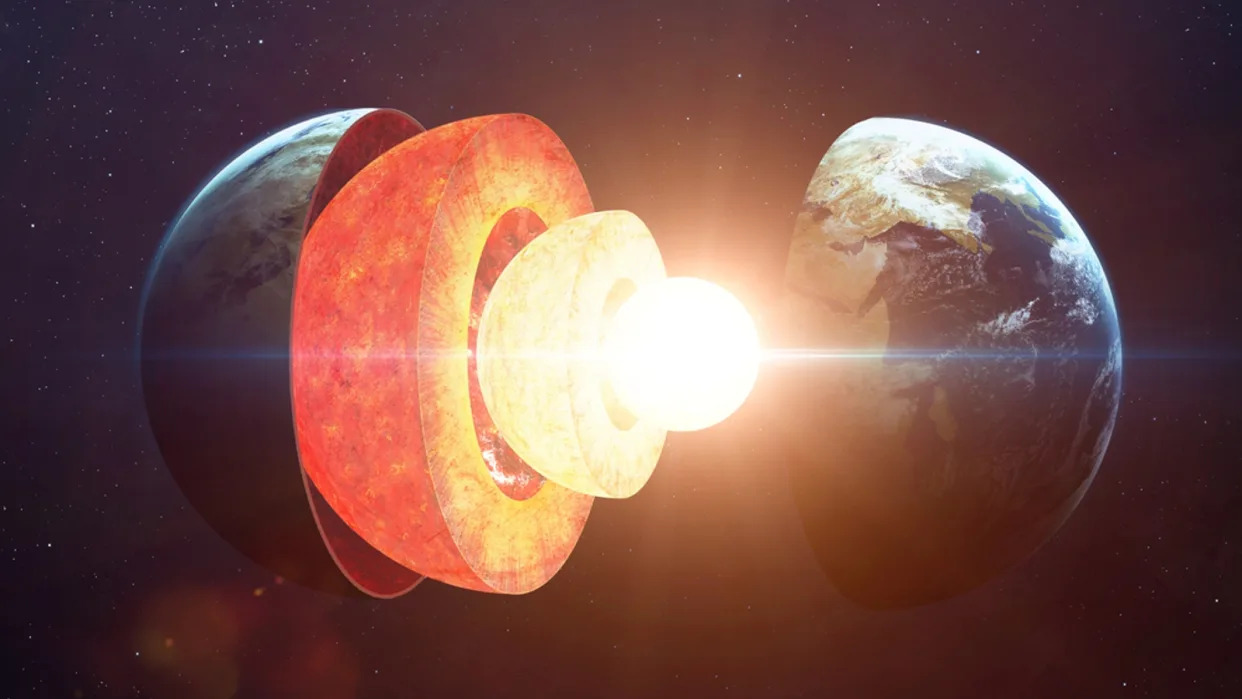
 The Earth's layers arranged like a Russian nesting doll in outer space.
Credit: Shutterstock

The heart of our planet has been spinning unusually slowly for the past 14 years, new research confirms. And if this mysterious trend continues, it could potentially lengthen Earth’s days — though the effects would likely be imperceptible to us.

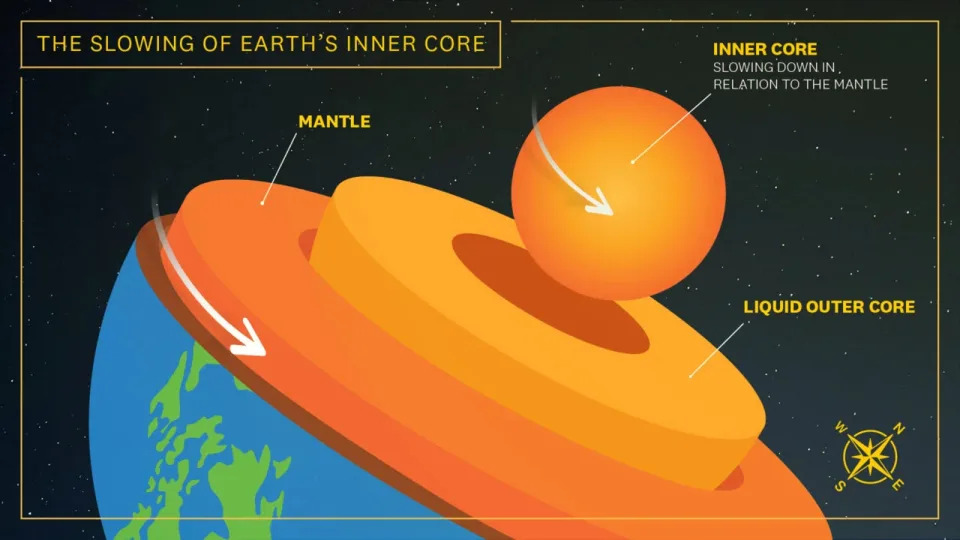
Earth’s inner core is a roughly moon-size chunk of solid iron and nickel that lies more than 3,000 miles (4,800 kilometers) below our feet. It is surrounded by the outer core — a superhot layer of molten metals similar to those in the inner core — which is surrounded by a more solid sea of molten rock, known as the mantle, and the crust. Although the entire planet rotates, the inner core can spin at a slightly different speed as the mantle and crust due to the viscosity of the outer core.

Since scientists started mapping Earth’s inner layers with detailed seismic activity records around 40 years ago, the inner core has rotated slightly faster than the mantle and the crust. But in a new study, published June 12 in the journal Nature, researchers found that since 2010, the inner core has been slowing down and is now rotating a bit more slowly than our planet’s outer layers.

“When I first saw the seismograms that hinted at this change, I was stumped,” John Vidale, a seismologist at the University of Southern California, Dornsife, said in a statement. “But when we found two dozen more observations signaling the same pattern, the result was inescapable.”

If the inner core’s rotation continues to decelerate, its gravitational pull could eventually cause the outer layers of our planet to spin a little more slowly, altering the length of our days the researchers wrote.

However, any potential change would be on the order of thousandths of a second, which would be “very hard to notice,” Vidale said. As a result, we would likely not have to change our clocks or calendars to adjust for this difference, especially if it were only a temporary change.

Related: ‘New hidden world’ discovered in Earth’s inner core

A diagram showing how the inner core can rotate compared to the mantle and crust

This is not the first time scientists have suggested that Earth’s inner core is slowing down. This phenomenon, known as “backtracking,” has been debated for around a decade but has been very hard to prove.

In the new study, researchers analyzed data from more than 100 repeating earthquakes — seismic events that occur repeatedly at the same location — along a tectonic plate boundary in the South Sandwich Islands in the South Atlantic Ocean between 1991 and 2023.

Each earthquake allowed scientists to map the core’s position relative to the mantle and by comparing these measurements, the team was able to see how the inner core’s rotation rate changed over time.

The new study is the “most convincing” evidence so far that backtracking has been happening, Vidale said.

It is currently unclear why the inner core is backtracking, but it is likely caused by either “the churning of the liquid iron outer core that surrounds it” or “gravitational tugs from the dense regions of the overlying rocky mantle,” the researchers wrote.

It is also unclear how frequent backtracking is. It is possible that the inner core’s spin is constantly accelerating and decelerating, but these changes likely happen over decades or longer. Therefore, longer data sets are needed to infer anything about long-term trends.

related stories

Mysterious new substance possibly discovered inside Earth’s core

Rare primordial gas may be leaking out of Earth’s core

Ancient ocean floor surrounds Earth’s core, seismic imaging reveals

The inner core remains one of the most mysterious of Earth’s hidden layers. But in recent years, new technologies are allowing researchers to learn more about the inner core, including that it is slightly lopsided, that it is softer than expected, that it potentially wobbles off Earth’s axis and that it has a separate innermost core.

The study authors will continue to analyze seismic data to learn more about the heart of our planet and how it changes over time.

“The dance of the inner core might be even more lively than we know,” Vidale said.

Extreme heat, wildfires and climate change are causing Canadians to feel heightened sense of eco anxiety: ‘How are we going to live?’

Yahoo! Style

Extreme heat, wildfires and climate change are causing Canadians to feel heightened sense of eco anxiety: ‘How are we going to live?’

Climate anxiety, ecological grief and solastalgia are terms used to describe the emotional distress caused by environmental changes.

Pia Araneta – June 19, 2024

This article is for informational purposes only and is not a substitute for professional medical advice, diagnosis or treatment. Contact a qualified medical professional before engaging in any physical activity, or making any changes to your diet, medication or lifestyle.

FORT NELSON, BRITISH COLUMBIA, CANADA - MAY 14: Smoke rises after fire erupts in Western Canada on May 14, 2024. Wildfires in Western Canada prompted thousands to flee their homes, while 66,000 were on standby to evacuate as a fast-moving blaze threatened another community Saturday. A growing wildfire moved relentlessly toward Fort Nelson, British Columbia (B.C.), resulting in officials ordering more than 3,000 to leave their homes in Fort Nelson and nearby Fort Nelson First Nation.Within five hours, the fire had grown to 8 square kilometers. (3 square miles) from a modest half square kilometer.Tinder dry conditions and flames fanned by powerful winds caused the wildfire to spread and prompted the evacuation order, which was issued at 7.30 p.m. (Photo by Cheyenne Berreault/Anadolu via Getty Images) climate fears
As wildfires continue to burn across the country, Canadians are sharing their climate fears. (Photo by Cheyenne Berreault/Anadolu via Getty Images)

Annie Malik, a 33-year-old living in London, Ont., often feels anxious or overwhelmed by the environmental state of the planet: Heatwaves in Pakistan — where she’s from — heat warnings and record-breaking temperatures in the summer coupled with mild winters in Canada and air pollution from wildfires that are becoming more common during the summer months.

“What is going to happen to the world? If the planet is inhabitable, how are we going to live?” said Malik.

Her family still resides in Pakistan, where air conditioning units are a luxury amid soaring temperatures and a spike in heat-related illnesses.

“There’s no way I can go back during the summers because I can’t handle the heat…People are dying every day in the summer,” said Malik, adding that she worries for her family.

Annie Malik, a 33-year-old living in London, Ont. said her biggest worry around climate change is her family in Pakistan. She can no longer visit during the hot summer months and she thinks about her family's survival. (Image provided by Annie Malik)
Annie Malik, a 33-year-old living in London, Ont. said her biggest worry around climate change is her family in Pakistan. She can no longer visit during the hot summer months and she thinks about her family’s survival. (Image provided by Annie Malik)

Malik’s sentiments are echoed by many Canadians who are feeling eco-anxious, or emotional from the effects of climate change, especially since last year’s record-breaking wildfires. According to a 2023 survey by Unite For Change, 75 per cent of Canadians are experiencing anxiety about climate change and its impacts.

If the planet is inhabitable, how are we going to live?Annie Malik

Yahoo Canada recently spoke to Canadians about their eco-anxiety, as well as a mental health expert on how to cope.


What is climate anxiety?

Climate anxietyecological grief and solastalgia are all similar terms to describe the emotional distress caused by environmental changes. The American Psychological Association defines it as “a chronic fear of environmental doom” and recognizes it as a legitimate increasing mental health concern.

Cree Lambeck, clinical director at Cherry Tree Counselling, offers eco-counselling services and said some clients can present with both physical and mental health symptoms from ecological issues. For example, someone might struggle with asthma and breathing issues from air pollution. “Other times a person can feel stress or really powerless around climate change,” said Lambeck.


What are the signs & symptoms of climate anxiety?

According to the Mental Health Commission of Canada, symptoms of eco-anxiety can include:

  • Feelings of depression, anxiety or panic
  • Grief and sadness over the loss of natural environments
  • Existential dread
  • Guilt related to your carbon footprint
  • Anger or frustration toward government officials
  • Obsessive thoughts about the climate

How to cope with climate anxiety

Heather Mak is a 42-year-old from Toronto who said she’s felt eco-anxious for well over a decade, which “can feel overwhelming.”

Mak transitioned out of a marketing career into the sustainability field, hoping she could take control of some of her anxieties. She’s currently in corporate sustainability, working with large businesses on environmental and social issues, and she runs a nonprofit called Diversity in Sustainability.

Heather Mak is a 42-year-old living in Toronto and she changed careers from marketing to sustainability. Mak said taking action in her work helps her cope with her eco-anxiety, but a side effect is that she can get burnt out from ongoing crises. (Image provided by Heather Mak)

“How I try to deal with it is by taking action,” she said. “But then again, when you start working in this field, it’s almost like you can never sleep — because the scope of the issue just keeps getting bigger.”

How I try to deal with it is by taking action. Heather Mak

Last year, Mak heard about the Climate Psychology Alliance and started seeing a climate-aware psychologist to help her process some of her feelings from eco-anxiety, as well as burnout from her work.

As recommended by her psychologist, Mak tries to immerse herself in nature as much as possible to keep herself grounded. “There’s also groups called climate cafes,” said Mak. “I think just chatting with others who are going through the same thing really helps.”

Other times, Mak will channel her energy into writing letters to elected officials.


Set boundaries and concrete strategies: Expert

At Cherry Tree Counselling, Lambeck offers clients “walk and talk ecotherapy.” The sessions can be in-person or over the phone and both the therapist and client will chat outdoors.

Lambeck said many people access eco-counselling services, from adolescents to seniors. “People can experience [climate anxiety] throughout their lifespan and it can present in different ways — like with parenting,” said Lambeck. Some research has found that young adults are even hesitant to have kids due to climate change. “There’s a lot of existential worry associated with global crises.”

It’s important to take breaks and set those boundaries and practice self-care and find social support in those times.Cree Lambeck, clinical director at Cherry Tree Counselling

Considering environmental issues can impact many prongs in someone’s life, like family planning or lifestyle choices, Lambeck said she tries to offer clients practical tools and concrete strategies that might help tackle some of the turmoil. For instance, she might help target some ways a person can reduce their carbon footprint, identify some of their core values, or try to find opportunities or sustainable initiatives the person might be able to participate in.

“For some people, this can help provide a sense of empowerment or control if they’re feeling helpless. Engaging in meaning-focused coping and finding purpose,” Lambeck said.

Another strategy is to focus on boundary setting or limit the exposure of distressing news. “What is the balance between staying informed or excess consumption?” Lambeck said. Images of burning forests, oil spills and floods are plentiful and distressing and can exacerbate our eco-anxiety. “So it’s important to take breaks and set those boundaries and practice self-care and find social support in those times,” she adds.

Recycling Is Broken. Should I Even Bother?

Every little bit helps. But doing it wrong can actually make matters worse.

By Winston Choi – Schagrin – June 17, 2024

A colorful illustration of two hands holding a jumble of household items including a can, a magazine, a wine bottle and a shampoo bottle. The background is hot pink and the items are framed by a green “chasing arrows” recycling symbol.
Credit…Naomi Anderson – Subryan

Recycling can have big environmental benefits. For one thing, it keeps unwanted objects out of landfills or incinerators, where they can produce potent greenhouse gasses and potentially hazardous pollutants.

Even more important, recycling allows us to extract fewer resources. The amount of energy required to recycle aluminum, for example, is less than 5 percent of the energy needed to mine new ore from the ground. Similarly, the more paper we recycle, the fewer trees we cut down.

But recycling rates in the United States have remained stubbornly flat for years. And, in some cases, they’re dismal. Just 10 percent of plastics are actually recycled. Meanwhile, hundreds of thousands of tons of recyclable waste are exported, often to developing countries.

It’s no wonder a lot of readers have asked us whether individual efforts make any difference at all. To answer that question, it helps to understand how the system works and how people use it.

The way the system is set up, recycling is a business. And our recyclables — metals, paper, and plastics — are commodities.

When you throw something into the blue bin, whether it’s recyclable or not, it gets carted off to a sorting plant where it runs along a conveyor belt and gets grouped with similar items. Then, the recyclable stuff is bundled. The process is labor-intensive.

One of the biggest challenges is that companies don’t want their material contaminated with things they don’t recycle or can’t recycle. The more random stuff that goes into a sorting plant, the more work facilities need to do to weed it out. And that increases costs.

Once that’s done, if the plant can find a buyer at a price that makes sense, the bundles will be shipped off to a recycling plant. Sometimes a local one, and sometimes one as far away as Africa or Southeast Asia. If they can’t, everything goes into a landfill or gets incinerated.

Recycling metals makes a lot of sense from an economic perspective, for the reasons outlined above. It’s just a lot cheaper than scraping ore from the ground. And, metals like aluminum can be endlessly recycled.

It also makes environmental sense. Mining contaminates soil and waterways. Recycling aluminum cans requires just a small fraction of the energy and water that mining does.

And recycling paper helps keep forests intact. Paper packaging accounts for around 10 percent of global logging, according to the forest conservation group Canopy. We save water, energy and greenhouse gas emissions when we recycle compared with products made from new pulp.

With glass and plastics, however, things start to get complicated.

Although intact glass is endlessly recyclable (the process has been around since Roman times) it often gets crushed or damaged on its way to sorting facilities, lowering its quality and sometimes rendering it unusable.

And “plastics” is an umbrella term for a seemingly endless number of different compounds with different chemicals and additives that can determine every attribute from color to stiffness.

That’s a problem for recyclers. Different kinds of plastic can’t be melted down together, so they have to be painstakingly, and expensively, sorted by color and composition.

Also: Plastics, if recycled at all, are usually “downcycled” into garden furniture or plastic fiber for insulation, after which it’s no longer recyclable. Recycling plastics again and again isn’t usually possible.

The result is that manufacturers often opt for new plastic, made from the plentiful byproducts of oil and gas, because it’s cheaper and easier.

One way to improve recycling is to regulate what can be sold in the first place. Almost three dozen countries in Africa have banned single-use plastics. And 170 countries have pledged to “significantly reduce” the use of plastics by 2030.

Another way is with technology, said Cody Marshall, the chief system optimization officer at The Recycling Partnership, a national nonprofit organization. More sorting plants are adopting better optical scanners that can detect a greater variety of plastics. (That technology is improving, but it’s still imperfect.)

When you do buy things, consider whether you can recycle the packaging. When choosing drinks, metal containers are generally better than plastics. When you shop online, you can sometimes ask for less packaging, as with Amazon’s “frustration-free” option. And remember the first two Rs: reduce and reuse.

Although these are small things you can do, the reality is that recycling’s challenges are systemic.

So, is it worth the effort?

In theory, every item you recycle can keep resources in the ground, avoid greenhouse gases and help keep the environment healthy. And that’s all good.

“The value is in displacing virgin materials,” said Reid Lifset, a research scholar at Yale’s School of the Environment.

But here’s the critical part: Don’t wish-cycle.

Follow the instructions provided by your local hauler. If you throw in stuff they don’t want, the effort needed to weed it out makes it less likely that anything will get recycled at all.

The EPA Grossly Underestimated How Many Carcinogens are Polluting This Louisiana Region’s Air, Study Says

Futurism

The EPA Grossly Underestimated How Many Carcinogens are Polluting This Louisiana Region’s Air, Study Says

Maggie Harrison Dupré – June 15, 2024

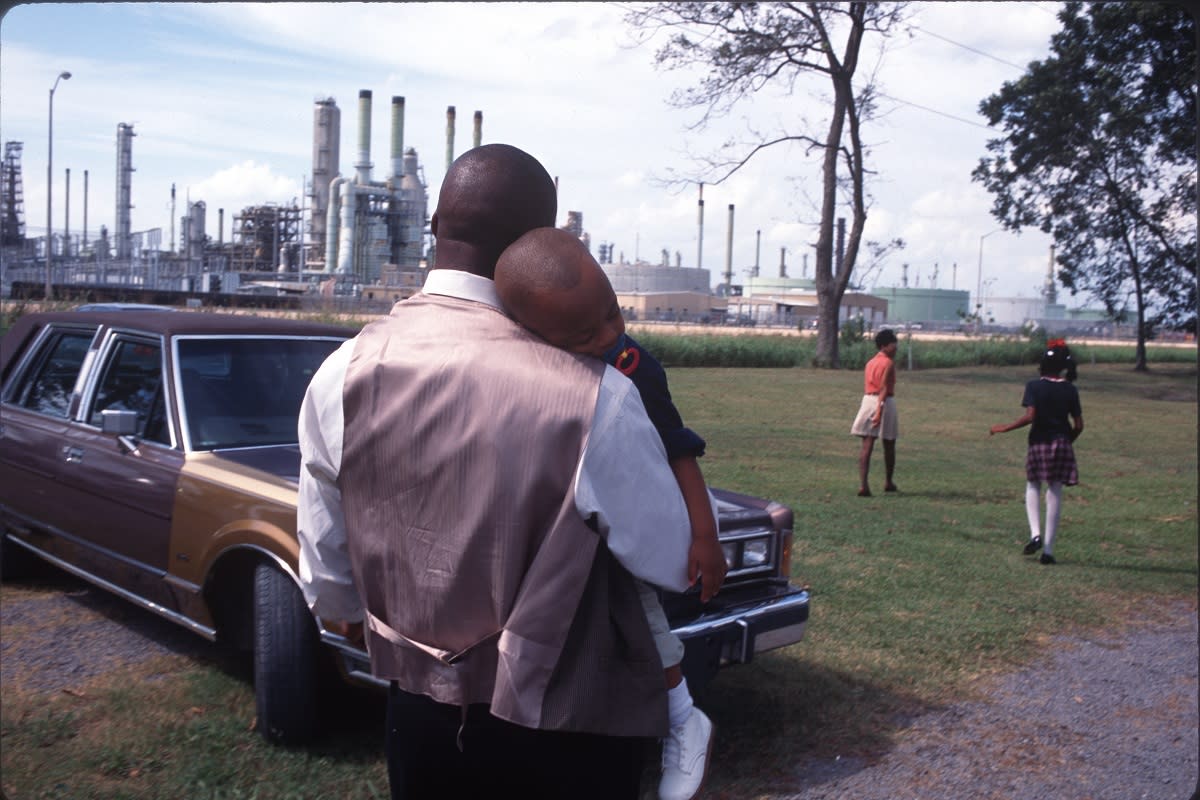
A chemical plant-smattered stretch of Louisiana between New Orleans and Baton Rouge is already known as “Cancer Alley” due to disproportionately high levels of illnesses related to chemicals released by the area’s many manufacturing facilities. Now, according to a new study from researchers at Johns Hopkins University, the stretch of land — which, again, is already called Cancer Alley — is even worse off than scientists already thought.

The study, published this week in the journal Environmental Science & Technology, examined the rates of a toxic gas called ethylene oxide in the air covering the Louisiana region. Ethylene oxide is a known and potent carcinogen linked to lymphomas, breast cancer, and other health and life-threatening illnesses, and was banned in the European Union back in the early 1990s. But ethylene oxide is used to manufacture other chemicals, and though the Environmental Protection Agency (EPA) recognizes its toxicity, chemical plants in Louisiana’s Cancer Alley stretch continue to use the poisonous gas in their production processes — and as a result, leak ethylene oxide into the air.

And yet, though it’s long been known that the plants leak the poisonous gas, this new Johns Hopkins research finds that the EPA has been grossly underestimating exactly how much ethylene oxide is actually in Cancer Alley’s air. According to these new findings, the area’s average ethylene oxide level is double what previous EPA models suggested — and well beyond levels considered safe for area inhabitants.

“We expected to see ethylene oxide in this area,” said study senior author Peter DeCarlo, an associate professor at the university’s Department of Environmental Health and Engineering, in a statement. “But we didn’t expect the levels that we saw, and they certainly were much, much higher than EPA’s estimated levels.”

As explained in the study, any level of airborne ethylene oxide above 11 parts per trillion (PPT) is considered dangerous for long-term exposure (which, we should note, isn’t really that much, and speaks to how toxic the gas is.) Horrifyingly, the researchers found ethylene oxide levels above 11 PPT in three-quarters of the overall area they studied, with average levels for affected areas hovering around 31 PPT.

“We saw concentrations hitting 40 parts per billion,” said DeCarlo, “which is more a thousand times higher than the accepted risk for lifetime exposure.”

The findings are staggering. And as the researchers note, those who live and work in the area have never — until now — had access to this kind of detailed, accurate data about ethylene oxide figures. And it’s important to note that Cancer Alley’s Black residents are disproportionately likely to develop petrochemical industry-related illness, and that the EPA has openly accused Louisiana lawmakers of engaging in environmental racism.

“There is just no available data, no actual measurements of ethylene oxide in air, to inform [plant] workers and people who live nearby what their actual risk is based on their exposure to this chemical,” DeCarlo added.

As Grist reports, the EPA — which very much needs to update its modeling data — moved this year to install heavier regulations on ethylene oxide use and emissions. And though that’s certainly a necessary step, experts have continued to warn that the agency and other regulating bodies have been very slow to take it.

“The fossil fuel and petrochemical industry has created a ‘sacrifice zone’ in Louisiana,” Antonia Juhasz, a senior researcher on fossil fuels at Human Rights Watch, said earlier this year after the global nonprofit released a devastating report about the health consequences of Cancer Alley’s rampant chemical and fossil fuel pollution. “The failure of state and federal authorities to properly regulate the industry has dire consequences for residents of Cancer Alley.”

Indeed, mitigating future exposure through strict regulations is essential. But so, too, is supporting the people and communities currently living ethylene oxide’s harms.

“These monitors are good,” Rise St. James founder Sharon Lavigne, whose community action group opposes petrochemical expansion, told Grist of the Johns Hopkins report. “But in the meantime, people are dying.”

How the US supreme court could be a key election issue: ‘They’ve grown too powerful’

The Guardian

How the US supreme court could be a key election issue: ‘They’ve grown too powerful’

David Smith in Washington – June 15, 2024

<span>Activists call for the passage of a binding code of ethics for Supreme Court justices in front of the supreme court in Washington DC on 30 October 2023.</span><span>Photograph: Shawn Thew/EPA-EFE</span>
Activists call for the passage of a binding code of ethics for Supreme Court justices in front of the supreme court in Washington DC on 30 October 2023.Photograph: Shawn Thew/EPA-EFE

“Look at me, look at me,” said Martha-Ann Alito. “I’m German, from Germany. My heritage is German. You come after me, I’m gonna give it back to you.”

It was a bizarre outburst from the wife of a justice on America’s highest court. Secretly recorded by a liberal activist, Martha-Ann Alito complained about a neighbour’s gay pride flag and expressed a desire to fly a Sacred Heart of Jesus flag in protest.

This, along with audio clips of Justice Samuel Alito himself and a stream of ethics violations, have deepened public concerns that the supreme court is playing by its own rules. The Democratic representative Jamie Raskin has described a “national clamour over this crisis of legitimacy” at the court.

A poll last month for the progressive advocacy organisation Stand Up America suggests that the supreme court will now play a crucial role in voters’ choices in the 2024 electionNearly three in four voters said the selection and confirmation of justices will be an important consideration for them in voting for both president and senator in November.

Reed Galen, a co-founder of the Lincoln Project, a pro-democracy group, said: “The idea that these guys act as if they are kings ruling from above, to me, should absolutely be an issue. It was always Republicans who said we hate unelected judges legislating from the bench and we hate judicial activism. That’s all this stuff is.”

Public trust in the court is at an all-time low amid concerns over bias and corruption. Alito has rejected demands that he recuse himself from a case considering presidential immunity after flags similar to those carried by 6 January 2021 rioters flew over his homes in Virginia and New Jersey. Justice Clarence Thomas has ignored calls to step aside because of the role his wife, Ginni, played in supporting efforts to overturn Donald Trump’s loss to Joe Biden in 2020.

Ethical standards have been under scrutiny following revelations that some justices failed to report luxury trips, including on private jets, and property deals. Last week Thomas, who has come under criticism for failing to disclose gifts from the businessman and Republican donor Harlan Crow, revised his 2019 form to acknowledge he accepted “food and lodging” at a Bali hotel and at a California club.

These controversies have been compounded by historic and hugely divisive decisions. The fall of Roe v Wade, ending the nationwide right to abortion after half a century, was seen by many Democrats as a gamechanger in terms of people making a connection between the court and their everyday lives.

Even though debate among members of Congress would lead you to believe that court reform is a polarising issue, it really isn’t

Maggie Jo Buchanan, managing director of Demand Justice

There are further signs of the debate moving beyond the Washington bubble. Last week, the editorial board of the Chicago Sun-Times newspaper argued that, since the court’s own ethics code proved toothless, Congress should enact legislation that holds supreme court justices to higher ethical standards. The paper called for the local senator Dick Durbin of Illinois, who is chair of the Senate judiciary committee, to hold a hearing on the issue.

Maggie Jo Buchanan, managing director of the pressure group Demand Justice, said: “It’s important to keep in mind that, even though debate among members of Congress would lead you to believe that court reform is a polarising issue, it really isn’t. For years we have seen broad bipartisan support for basic supreme court reforms such as ethics.

“A broad bipartisan consensus exists that they’ve grown too powerful, that they have too much power over laws and regulations. That’s shared among nearly three-fourths of Americans, including 80% of independents, so the demand is there and this isn’t something where it’s Democrats versus Republicans in the sense of real people. The American people want change and want to check the judiciary.”

Congressional Democrats have introduced various bills including one to create an independent ethics office and internal investigations counsel within the supreme court. Broader progressive ideas include expanding the number of seats on the court or limiting the justices to 18-year terms rather than lifetime appointments.

But such efforts have been repeatedly thwarted by Republicans, who over decades impressed on their base the importance of the court, ultimately leading to a 6-3 conservative majority including three Trump appointees.

This week Senate Republicans blocked the ​​Supreme Court Ethics, Recusal, and Transparency Act, legislation that would require the court to adopt a binding code of conduct for all justices, establish procedures to investigate complaints of judicial misconduct and adopt rules to disclose gifts, travel and income received by them that are at least as rigorous as congressional disclosure rules.

In response, Christina Harvey, executive director of Stand Up America, said its “nearly 2 million members are fired up and ready to continue advocating for supreme court reform – in Congress and at the ballot box”.

But Galen of the Lincoln Project worries that Democrats lack the necessary aggression to capitalise on the issue. “[Senate majority leader Chuck] Schumer and Durbin are not change agents. They consider themselves institutionalists and they continue to call themselves thatThey’re in a place where they can’t possibly conceive of something like that. Democrats are just afraid of their own shadow.”

That principle might apply to the US president himself. The 81-year-old, who served in the Senate for 36 years, is reluctant to call out justices by name or call for sweeping reforms of the court, although he is making its decision to end the constitutional right to abortion a centrepiece of his campaign.

Ed Fallone, an associate law professor at Marquette University Law School said: “I don’t know that Joe Biden is the politician to try and benefit from this issue. Biden has always presented himself as an institutionalist and more of a centrist than many segments of the Democratic party.

“There’s a real risk here for Biden because, if he does try to get political advantage from the public’s growing concern about the supreme court, it seems to conflict with his message that we should all respect the court system and the judicial system and the Trump prosecutions and the various legal problems of former Trump advisers. It seems difficult to reconcile telling the public to respect the judicial system with also embracing the idea that the very top of the system is flawed and needs reform.”

Fallone added: “You will see other Democrats seize on this issue and start to push it, in particular those who are are going to try to energise the left side of the base, maybe not necessarily for this election, but maybe anticipating Biden might lose and starting already to look ahead to the following election.”

Other argue that, competing for voter attention with the cost of living, immigration and other issues, the supreme court will ultimately fade into background noise.

Henry Olsen, a senior fellow at the Ethics and Public Policy Center think-tank in Washington DC, said: “The middle of the country, the independents and the swing voters do not care about the supreme court, and I don’t think any effort by Democrats or the media bringing up these things about Alito or Thomas is going to register or motivate those people. It motivates partisans. It doesn’t motivate swing voters on either side.”