China rushes to swap Western tech with domestic options as U.S. cracks down

Reuters

China rushes to swap Western tech with domestic options as U.S. cracks down

Reuters – October 25, 2023

FILE PHOTO: Servers are seen inside Huawei's factory campus in Dongguan, Guangdong province
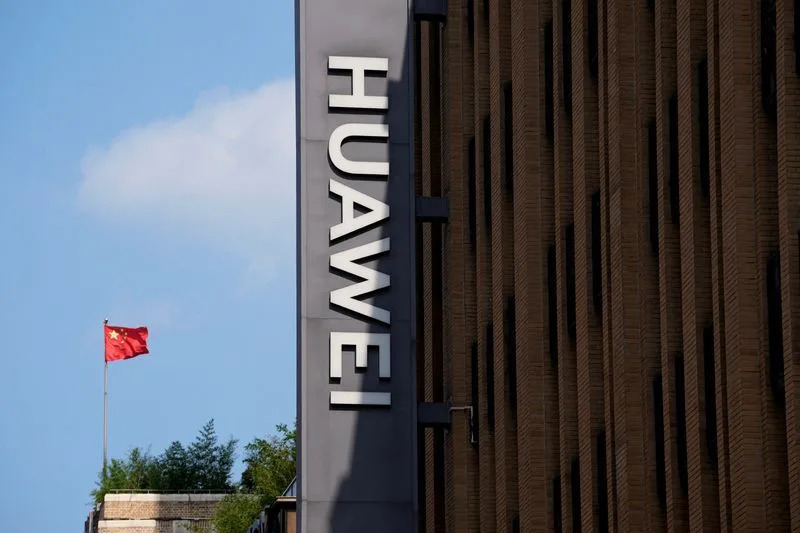
FILE PHOTO: Huawei store in Shanghai

Servers are seen inside Huawei’s factory campus in Dongguan, Guangdong province

BEIJING (Reuters) – China has stepped up spending to replace Western-made technology with domestic alternatives as Washington tightens curbs on high-tech exports to its rival, according to government tenders, research documents and four people familiar with the matter.

Reuters is reporting for the first time details of tenders from the government, military and state-linked entities, which show an acceleration in domestic substitution since last year.

China has spent heavily on replacing computer equipment, and the telecom and financial sectors are probably the next target, said two people familiar with the industries. State-backed researchers also identified digital payments as particularly vulnerable to possible Western hacking, according to a review of their work, making a push to indigenize such technology likely.

The number of tenders from state-owned enterprises (SOEs), government and military bodies to nationalize equipment doubled to 235 from 119 in the 12 months after September 2022, according to a finance ministry database seen by Reuters.

In the same period, the value of awarded projects listed on the database totaled 156.9 million yuan, or more than triple the previous year.

While the database represents only a fraction of tender bids nationwide, it is the largest collection of state tenders publicly available and mirrors third-party data. China spent 1.4 trillion yuan ($191 billion) replacing foreign hardware and software in 2022, marking a year-on-year increase of 16.2%, according to IT research firm First New Voice.

But Beijing’s lack of advanced chip-manufacturing capabilities prevents it from completely substituting products with alternatives that are entirely locally made, analysts say.

Previous domestic substitution efforts stalled because China did not have the “technical chops to pull off localization until now, and to a certain extent they still kind of don’t,” said Kendra Schaefer, head of tech policy research at Beijing-based consultancy Trivium China.

FEAR OF DEPENDENCE

SOEs were instructed last year to replace office software systems with domestic products by 2027, the first time such specific deadlines were imposed, according to five brokerage firms that cited a September 2022 order from China’s state asset regulator. Reuters could not independently verify the order.

Domestic replacement projects this year have targeted markedly sensitive infrastructure, the tenders show.

One partially redacted tender for a “certain government department in Gansu province” assigned 4.4 million yuan to replace an intelligence-gathering system’s equipment, without providing specifics.

People’s Liberation Army units in the northeastern city of Harbin and Xiamen in the south last December meanwhile issued tenders to replace foreign-made computers.

Tech researchers such as Mo Jianlei of the Chinese Academy of Sciences, the country’s largest state-run research organization, said the Chinese government was increasingly concerned about Western equipment being hacked by foreign powers.

The state asset regulator did not return a request for comment.

Over the past year, state-linked researchers also called on Beijing to strengthen anti-hacking defences in its financial infrastructure due to geopolitical concerns.

One March research paper highlighted the dependence of China’s UnionPay credit card system on U.S software firm BMC for settlements.

“Beware of security vulnerabilities in hardware and software set by the U.S. side … build a financial security ‘firewall’,” the researchers wrote.

BMC declined to comment.

An article published this year in the journal Cyberspace Security by researchers from the state-run China Telecommunications Corporation concluded the country was overdependent on chips made by U.S. giant Qualcomm for back-end management, as well as on the iOS and Android systems.

“(They) are all firmly controlled by American companies,” the researchers wrote.

As China has not signed World Trade Organization clauses governing public procurement, the substitution effort does not appear to violate international accords, according to the U.S. Treasury. The U.S. has implemented similar rules barring Chinese companies from public sector bids.

Qualcomm, Google and Apple did not immediately return requests for comment.

WINNERS AND LOSERS

China’s effort to build an independent computing system dates back to at least its 2006 five-year plan for science and technology development, which listed the semiconductor and software systems sectors as national priorities.

This effort spawned state-owned companies that are increasingly winning major contracts. Two firms awarded the Harbin tenders were subsidiaries of China Electronics Corporation and China Electronics Technology Group Corporation – both heavily targeted by U.S. sanctions.

The state regulator’s 2022 order pushed SOEs away from U.S. companies such as Microsoft and Adobe, according to an employee of a Beijing-based firm that develops domestic office-processing software

China Tobacco, for example, in July began switching some subsidiaries from Microsoft Windows to Huawei’s EulerOS, according to an employee of a software vendor that services the state-owned manufacturer.

The people spoke on condition of anonymity because they were not authorized to discuss clients and competitors.

For years, Western tech companies have shared their source code and entered into partnerships with domestic firms to address Beijing’s concerns, but prominent computer scientists such as Ni Guangnan of the Chinese Academy of Engineering have said such measures are not sufficient for China’s security needs.

China Tobacco, Microsoft and Adobe did not respond to requests for comment.

In September, Reuters and other outlets reported that some employees of central government agencies were banned from using iPhones at work.

“In certain sectors, customers … are opting for domestic suppliers, with foreign suppliers frequently facing informal barriers,” the European Union Chamber of Commerce in Beijing said in response to Reuters questions.

In a 2023 American Chamber of Commerce (AmCham) in Shanghai report, 89% of the organization’s tech business members named procurement practices favoring domestic competitors as a regulatory obstacle. It was the highest percentage of any sector.

AmCham Shanghai President Eric Zheng acknowledged China’s national security concerns but said he hoped “normal procurement procedures will not be politicized so that US companies can compete fairly and pursue commercial opportunities … to benefit both countries.”

The U.S. Department of Commerce, China Electronics Corporation and China Electronics Technology Group Corporation did not return requests for comment.

HUAWEI PRIZED

Chinese tech conglomerate Huawei has emerged as the leading firm in this replacement cycle, according to three people familiar with China’s enterprise tech industry, who spoke on condition of anonymity given the sensitivity of the issue.

In 2022, Huawei’s enterprise business, which includes software and cloud computing operations, reported 133 billion yuan in sales, up 30% on the previous year.

One of the people said privately-held Huawei was seen as more nimble than state-owned groups in rolling out products and executing projects.

The other two sources highlighted Huawei’s broad product suite – spanning chips to software – as an advantage.

Clients also prize Huawei for its ability to process data on internal company servers and external cloud networks, as well as its wide offering of cybersecurity products, according to the employee of a China Tobacco tech supplier.

Huawei declined to comment.

The replacement drive has re-drawn entire sub-sectors of the software industry. The combined China market share held by five major foreign makers of database management systems – the majority of which are American – dropped from 57.3% in 2018 to 27.3% by the end of 2022, according to industry group IDC.

Despite heavy spending on domestic substitution, however, foreign firms are still dominant suppliers for banking and telecoms database management. Non-Chinese companies held 90% of market share for banking database systems at the end of 2022, according to EqualOcean, a tech consultancy.

Financial institutions are generally reluctant to switch database systems despite government pressure, said one of the industry sources, adding that they have higher stability requirements than many other sectors and local players cannot yet match their needs.

Even for personal computers, banks that switch from an international brand to China’s dominant supplier Lenovo would still be reliant on critical chip components provided by Western firms, one of the industry sources said.

($1 = 7.3165 Chinese yuan)

(Reporting by Beijing newsroom; Editing by Brenda Goh and Katerina Ang)

How Walgreens, CVS and Rite Aid tried to take over healthcare — and failed

Los Angeles Times

Column: How Walgreens, CVS and Rite Aid tried to take over healthcare — and failed

Michael Hiltzik – October 25, 2023

CVS Pharmacy in Ramona is offering drive-through COVID-19 tests throughout the week by appointments.
Think this will be your new healthcare provider? Not so fast. (Julie Gallant)

There was a time, in the misty, rose-hued past, when the three big drugstore chains look poised to take over the American healthcare system.

Drug retailer CVS and health insurer Aetna announced a $69-billion merger. Walgreens made a $5.2-billion investment in primary care provider VillageMD and took a $330-million stake in home care provider CareCentrix, giving it control of both firms. Rite Aid wasn’t as aggressive, but still built up its national footprint to 5,000 stores before cutting back to about 2,100.

The companies talked about evolving into one-stop medical providers so that “patients discharged from the hospital … will be able to stop at a health hub location to access services such as medication evaluations, home monitoring and use of durable medical equipment, as needed” (according to the merger announcement by CVS and Aetna).

We’re rightsizing the footprint and getting our expenses in the right place. We don’t see the growth coming fast enough in certain markets.

Walgreens executive John Driscoll admits the company’s healthcare ventures have been disappointing

The American Hospital Assn. issued an alarming report listing CVS and Walgreens among companies that had grabbed market share in “primary care, concierge medicine, virtual care, in-home medical services and elsewhere.”

It seemed that this trend might continue, as the pharmacy chains exploited their networks of stores on virtually every American corner.

That wasn’t so long ago. The CVS/Aetna merger was in 2017. Walgreens took over VillageMD in 2021 and CareCentrix just last year.

Now, however, their dream of playing a central role in a restructured nationwide healthcare system seems to be fading.

The pharmacy chains have discovered that taking a larger role in the healthcare system than simply dispensing prescriptions and selling over-the-counter notions is more complicated and costlier than they expected.

“It has taken us longer than anticipated to realize the cost synergies across the combined assets,” John P. Driscoll, the head of Walgreens’ U.S. Healthcare division, told investment analysts at the company’s fourth-quarter earnings conference call on Oct. 12.

He said VillageMD would be focusing on “our highest opportunity markets” — evidently affluent urban areas — by shutting down in five markets and closing 60 VillageMD clinics over the coming year.

Read more: Column: A spineless Walgreens bows down to antiabortion crusaders

“We’re rightsizing the footprint and getting our expenses in the right place,” he said. “We don’t see the growth coming fast enough in certain markets.”

At CVS, executives paint the effort to remake the company into an integrated healthcare provider as very much a work in progress.

“If you think about what’s happening in America relative to healthcare,” Chief Executive Karen Sue Lynch told investment analysts at a Morgan Stanley healthcare conference in September, “it’s … very hard for people to access care.”

She said the company’s goal is “to make sure that people have seamless connected experiences across the spectrum of healthcare. And I would argue that the businesses that we’re creating will enhance the value of consumer experience.”

The tendency of the American healthcare system to confound promises and expectations was underscored in 2021. That’s when billionaires Warren Buffett, Jeff Bezos and Jamie Dimon had to admit that their plan to solve the system’s problems, as if by sheer star power — well, to be fair, through “technology solutions” — had been obliterated.

The trio had announced their venture in 2018 to a blast of worldwide fanfare. If they couldn’t succeed, it was said, no one could. The idea was that there was some magic bullet for reducing healthcare costs that had evaded everyone for years, but that they could discover.

Less than three years later, they had been subjected to a ritual mortification. Their joint venture, christened Haven, shut down. For all their efforts, primary care had not become easier for millions of Americans to access, insurance benefits were as opaque and arcane as ever, and prescription drug pricing was still a public scandal.

The drug chains’ expansion strategies have exposed them to complexities in American healthcare — political controversies, Medicare regulations, issues of prescription drug pricing — that they had not faced in the their core businesses and have led to a string of unpleasant surprises.

Read more: Column: CVS and Aetna say their huge merger will be great for consumers. Here’s why you should be skeptical

Walgreens became embroiled in abortion politics in March, when it said it would not distribute or ship a drug used for medication abortions in at least 21 red states, including at least four where abortions were still legal.

The company made the announcement after a group of red state attorneys general threatened it with unspecified “consequences” for shipping the drug, mifepristone, the long-assumed legality of which had been challenged in federal court.

Walgreens’ national footprint made it vulnerable to the threat — and to a backlash from blue states such as California, where Gov. Gavin Newsom said he would stop the state from doing business with the company, or any other “that cowers to the extremists and puts women’s lives at risk.”

CVS ran into the buzzsaw of Medicare politics in August, when a New York state judge blocked the transfer of 250,000 Medicare patients to Aetna’s Medicare Advantage plan. The transfer was part of a contract worth $15 billion to Aetna over five years. Medicare Advantage plans provide more benefits to enrollees than traditional Medicare but have come under fire for costing the government too much for too scanty patient gains.

The company also disclosed a potential hit of $800 million to $1 billion in its 2024 operating income from a downgrade by government authorities in its Medicare quality rankings, known as “star ratings.”

The move of CVS into the pharmacy benefit manager business through its $24-billion acquisition of the Caremark PBM in 2007 also may not have worked out as it expected.

Read more: Column: How ‘price-cutting’ middlemen are making crucial drugs vastly more expensive

PBMs originated as middlemen to help health insurance plans process prescription claims, steer doctors and hospitals to the cheapest drug alternatives, and allow insurers to combine their customer bases for greater leverage in negotiations with drug manufacturers. Eventually they got blamed for driving up drug costs by extracting their own profits without producing sufficient discounts for their clients.

In August, Blue Shield of California rattled Caremark by cutting most of its ties with the PBM and turning over most of its responsibilities to four competitors, in a strategy aimed at cutting its prescription costs, which come to more than $600 billion annually, by as much as $500 million a year.

That was the second blow to Caremark in a year; in November managed care insurer Centene said it was turning pharmacy benefits for its 20 million enrollees over to Express Scripts starting next year, on a $35-billion contract.

The Blue Shield announcement drove the CVS stock price down by about 9%, a reaction that CEO Lynch called “overblown” at the Morgan Stanley conference. She also cast doubt on Blue Shield’s assertion that the PBM change would save it $500 million. “We’re not earning that kind of money on that account,” she said.

As for Rite Aid, that chain has problems all its own. The firm filed for bankruptcy protection on Oct. 16, citing a crushing debt load and excessive rent for underperforming stores. The company subsequently announced plans to close 154 stores, including 31 in California.

Rite Aid is also facing a federal lawsuit for allegedly filling unlawful prescriptions, mostly for opioids. It isn’t alone in being accused of complicity in the opioid crisis: In a 2022 legal settlement with state attorneys general, CVS agreed to pay as much as $4.9 billion over 10 years, Walgreens up to $5.52 billion over 15 years, and Walmart, which has become a major competitor in the pharmacy business, up to $2.74 billion within six years.

At this moment, it’s clear that pharmacy services remain overwhelmingly the drivers of revenue and profit for the drugstore chains. At CVS last year, pharmacy services and other retail sales provided $14 billion in operating profit on $275.8 billion in revenue, versus $6 billion in operating profit on $91.4 billion in revenue from healthcare benefits.

At Walgreens, retail pharmacy sales provided $3.7 billion in operating profit on $110.3 billion in revenue in the fiscal year ended Aug. 31, 2023, while U.S. healthcare generated a loss of $556 million on $6.6 billion in revenue.

One other factor stands between the drugstore chains and their ambitions to cast a wider net over American healthcare: The presence of well-heeled rivals with ideas of their own. Walmart, the nation’s largest retailer, offers customers low-priced prescriptions and telehealth services, and has been opening walk-in clinics around the country.

Then there’s Amazon, which may have felt burned by the failure of Haven, but acquired concierge care provider One Medical in February for $3.9 billion and offers its Amazon Prime members access to scores of generic medicines for a monthly fee.

The drugstore chains aren’t signaling that they’re giving up on their long-term goals — but warn investors that they may incur losses for years before the long term becomes the here and now.

They and their rivals in retailing and clinical services may well change the course of American healthcare in the future, but it should not be forgotten that they’re all fundamentally in it for the money. Their promises of cheaper, more efficient and more effective healthcare for the average American should be treated with the all-purpose medicine of a healthy skepticism.

Amazon Injuries More Widespread Than Thought, Study Says

Bloomberg

Amazon Injuries More Widespread Than Thought, Study Says

Matt Day – October 25, 2023

In this article

(Bloomberg) — More than two-thirds of Amazon.com Inc. US warehouse workers surveyed by researchers reported that they took unpaid time off to recover from pain or exhaustion sustained on the job.

The new national study, published Wednesday by the University of Illinois Chicago’s Center for Urban Economic Development, found that 69% of workers surveyed stayed home without pay to recover, including 34% who did so three or more times.

The data suggest “injury and pain at Amazon are far more widespread” than previously known, said Beth Gutelius, research director at the center and a leading expert on logistics and warehouse work.

The report is based on a 98-question online survey that gathered responses from 1,484 warehouse workers in 451 facilities across 42 states, the researchers said. It was conducted between April and August and measured the percentage of workers who took time off during the previous month. Amazon employs hundreds of thousands of warehouse workers in the US.

Researchers found their subjects using ads on Meta Platforms Inc. apps, targeting people who listed Amazon as their employer or lived in areas where the company operates. The project received funding from the Ford Foundation, Oxfam America and the pro-labor nonprofit National Employment Law Project.

Amazon spokesperson Maureen Lynch Vogel said the report was “not a ‘study’ — it’s a survey done on social media, by groups with an ulterior motive.” She recommended that people read the safety data Amazon submits each year to the Occupational Safety and Health Administration, “which shows that rates in our buildings have improved significantly, and we’re slightly above the average in some areas and slightly below the average in others.”

Lynch Vogel acknowledged there is work to be done but that worker safety is a top priority and that Amazon continues to invest in safety throughout its operations.

The report, the broadest academic survey of Amazon workers to date, adds to the growing scrutiny of the company’s sprawling logistics operation. Amazon is the second-largest private-sector employer behind Walmart Inc., and employs about 29% of the country’s warehousing workers, the researchers estimate. That gives the company outsize influence over the industry’s working conditions and compensation.

Critics say Amazon pushes employees to work too hard and too quickly, leading to avoidable injuries. Workplace safety regulators in Amazon’s home state of Washington allege a direct connection between employee monitoring and discipline and musculoskeletal disorders suffered by its workers. The federal Occupational Safety and Health Administration, meanwhile, has cited Amazon for exposing workers to ergonomic risks at several facilities across the country.

Amazon says the regulators’ allegations are inaccurate and is challenging them, including during weeks of hearings held recently on the Washington state citations. The company says its investments in worker safety, including a push to automate repetitive and arduous tasks, are helping reduce the injury rate.

Gutelius and co-author Sanjay Pinto say 63% of workers acknowledged that Amazon has made safety a high priority. But many suffer injuries anyway, and workers who say they have trouble keeping up are more likely to be hurt on the job, according to Gutelius.

“The harder it is for a worker to maintain the pace of work, the more likely it is that they are injured,” she said.

Employees also suffered work-related mental health issues. More than half of those surveyed reported feeling burned out. The portion of workers reporting burnout increases with job tenure, the researchers say.

The researchers excluded results that didn’t take the questions seriously or appeared to feign employment with Amazon. Managers and drivers were also excluded. Responses were weighted to align demographically with Amazon’s own published statistics on the racial and gender breakdowns of its workforce.

Overall, 41% of workers reported being injured while working at an Amazon warehouse. The share rises to 51% for people who have worked at the company for more than three years.

“They are taking some steps, but tinkering around the margins isn’t going to work,” Pinto said of Amazon’s attempts to reduce injuries within its ranks. “There’s something fundamental about the system that needs to change.”

(Updates with Amazon comment, details on project funders, starting in the fifth paragraph. A previous version of this story was corrected to remove Princeton as a study funder in penultimate paragraph.)

Florida attorney general moves to silence voters once again

South Florida Sun Sentinel – Opinion

Editorial: Fla. attorney general moves to silence voters once again

Sun Sentinel Editorial Board – October 24, 2023

Joe Raedle/Getty Images North America/TNS

Attorney General Ashley Moody won’t be satisfied with simply banning abortion in Florida, at which she appears close to success. She also intends to prevent voters from doing anything about it.

Moody has notified the Florida Supreme Court that she will ask it to rule against placing a constitutional initiative guaranteeing abortion rights on the November 2024 ballot.

The drive has collected signatures from more than 400,000 voters toward a required goal of nearly 900,000. Sponsors and supporters have spent more than $9.7 million in anticipation of Florida Supreme Court rulings that would effectively abolish abortion in Florida.

The initiative would change the constitution to say that “No law shall prohibit, penalize, delay, or restrict abortion before viability or when necessary to protect the patient’s health, as determined by the patient’s healthcare providers.” It would not affect an existing provision dealing with parental notification.

A focus on ‘viability’

Moody telegraphed her strategy in an opinion essay to Florida newspapers, arguing that the language of the ballot summary and the amendment is ambiguous and would mislead voters.

“As any mother knows, ‘viability’ has two meanings when it comes to pregnancy,” Moody wrote.

Some women, according to Moody, relate viability to the risk of miscarriage, while others take it to mean when a fetus can survive outside the womb.

She wrote that the American College of Obstetricians and Gynecologists, which supports abortion rights, “notes the two medical definitions.”

What’s misleading is Moody’s misrepresentation of where the American College actually stands on that definition. There is nothing misleading about the term viability so long as doctors are defining it — and they are the only ones who should.

The full definition

This is precisely how doctors define it: “Viability is the capacity of the fetus to survive outside the mother’s uterus. Whether or not this capacity exists is a medical determination, may vary with each pregnancy, and is a matter for the judgment of the responsible attending physician.” (Emphasis added).

Moody did not quote that.

Most commonly, viability is calculated at 23 or 24 weeks of gestation. It is not, and never should be, a matter for meddling or ambitious politicians like Moody.

Moody has consistently been on the wrong side of a woman’s right to her own body. In a pending case being watched nationally, she has urged the court to repeal its historic 1989 decision that Florida’s constitutional right of privacy protects abortion rights.

Were the court to do that, it would effectively limit privacy protection to the release of public records — a faint shred of how the court defined it in 1989.

The court, then and now

“Florida’s privacy provision is clearly implicated in a woman’s decision of whether or not to continue her pregnancy,” Justice Leander Shaw wrote at the time. “We can conceive of few more personal or private decisions concerning one’s body that one can make in the course of a lifetime.”

Restricting the provision, as Moody and the Legislature want the court to do, would expose almost any personal conduct to political control, from end-of-life decisions to the availability of contraception. Parental rights could, and likely would, be subject to unlimited interference by the state.

The pending case involves the constitutionality of Florida’s current ban on abortions past 15 weeks, but a law the Legislature passed this spring automatically caps the procedure at six weeks, a time when many women don’t know they are pregnant, if the court upholds the 15-week ban.

In what appears to be a clear breach of judicial ethics, Justice Charles Canady has been participating in the case despite the interest of his wife, state Rep. Jennifer Canady, R-Lakeland, as a co-sponsor of the six-week abortion ban, which passed as SB 300.

Moody and the Legislature are contemptuous of how the voters spoke nine years ago on a ballot proposal by lawmakers that would have expressly overruled the 1989 precedent. It would have narrowed privacy rights to those determined by the U.S. Supreme Court under the federal constitution. The vote was 4.3 million against and 3.5 million in favor. Had it passed, there would be no privacy rights in Florida because of the high court’s subsequent decision repealing Roe v. Wade.

Hostility toward voters

Moody’s quibbling over “viability” is in line with her hostility to giving voters a voice on other controversial citizen-sponsored amendments. She opposes those dealing with marijuana. Even after Parkland, she sided with the gun lobby in persuading the court to not allow a statewide vote on banning assault weapons.

The attorney general is required to petition the court to rule on proposed initiatives when they hit a threshold of verified signatures. The abortion question qualified with 222,881. Moody is not required to oppose them. It is difficult to conceive of any dealing with abortion rights, marijuana legalization or guns to which she would not manufacture an objection.

The job of Florida attorney general has long been called “the people’s lawyer.” Moody is not.

The Sun Sentinel Editorial Board consists of Editorial Page Editor Steve Bousquet, Deputy Editorial Page Editor Dan Sweeney, editorial writer Martin Dyckman and Editor-in-Chief Julie Anderson. Editorials are the opinion of the Board and written by one of its members or a designee. To contact us, email at letters@sun-sentinel.com.

Climate scientists warn Earth systems heading for ‘dangerous instability’

ABC News

Climate scientists warn Earth systems heading for ‘dangerous instability’

Daniel Manzo – October 24, 2023

Climate scientists warn Earth systems heading for ‘dangerous instability’

Forecasts about the negative effects of human-caused climate change are not uncommon, but new research published Tuesday makes even more dire claims, declaring that “life on planet Earth is under siege” and that “we are pushing our planetary systems into dangerous instability.”

The study, titled “The 2023 State of the Climate Report: Entering Uncharted Territory” and published in the journal Bioscience, points to specific climate events in 2023 to support its findings, including exceptional heat waves across the globe, historic and record-breaking warm ocean temperatures, and unprecedented low levels of sea ice surrounding Antarctica.

The 12 international scientists who created the report indicated that in so far in 2023, there have been 38 days with global average temperatures more than 1.5 degrees Celsius above pre-industrial levels. The U.S. National Oceanic and Atmospheric Administration and Europe’s Copernicus Climate Change Service earlier this month indicated that 2023 will likely go on record as the hottest year ever recorded.

MORE: July set to be Earth’s hottest recorded month

What’s more, the highest average Earth surface temperature ever recorded was in July, according to the report, which also notes that may be the highest surface temperate the Earth has experienced in the last 100,000 years.

The research team, which included scientists from the United States, Australia, Germany, Brazil, the United Kingdom, China, and the Netherlands, says that anthropogenic global heating – meaning global heating caused or amplified by humans – is the key driver in recent extreme climate events. The team also took into account that some of these events are complex and are at least partially driven by non-human factors, including water vapor effects from an underwater volcano, as well as dust from Africa, and the El Niño global climate pattern.

PHOTO: In this July 13, 2023, file photo, a man wipes his face as he walks under misters in downtown Phoenix. (Matt York/AP, FILE)

The researchers also point to “minimal progress” by humanity to stop the impacts of anthropogenic climate change. “Although the consumption of renewable energy (solar and wind) grew a robust 17% between 2021 and 2022, it remains roughly 15 times lower than fossil fuel energy consumption,” the report states.

“Without actions that address the root problem of humanity taking more from the Earth than it can safely give, we’re on our way to the potential partial collapse of natural and socioeconomic systems and a world with unbearable heat and shortages of food and fresh water,” declares report co-lead author William Ripple, from the Oregon State University College of Forestry.

MORE: The Power of Water

“Life on our planet is clearly under siege,” said Ripple.

The authors says action must be taken now to avert further extreme climate impacts: “[T]o mitigate these past emissions and stop global warming, efforts must be directed toward eliminating emissions from fossil fuels and land-use change and increasing carbon sequestration with nature-based climate solutions.”

Time Is Up’: Scientists Warn Earth Has Entered ‘Uncharted Climate Territory’

HuffPost

‘Time Is Up’: Scientists Warn Earth Has Entered ‘Uncharted Climate Territory’

Chris D’Angelo – October 24, 2023

If Earth were a human, it would already be in the emergency room.

An international team of scientists on Tuesday issued a new assessment of planetary health that says the world has entered “uncharted climate territory” and that “life on planet Earth is under siege.”

The report, published in the journal BioScience, found that 20 of 35 identified “vital signs” of the planet — from human population and greenhouse gas emissions to sea level rise and ocean acidity — have reached record extremes. 

The analysis, authored by a dozen expert scientists, is as much a desperate warning as an urgent call for action.

“For several decades, scientists have consistently warned of a future marked by extreme climatic conditions because of escalating global temperatures caused by ongoing human activities that release harmful greenhouse gasses into the atmosphere,” the report states. “Unfortunately, time is up. We are seeing the manifestation of those predictions as an alarming and unprecedented succession of climate records are broken, causing profoundly distressing scenes of suffering to unfold. We are entering an unfamiliar domain regarding our climate crisis, a situation no one has ever witnessed firsthand in the history of humanity.”

This year has truly been one of extremes — unprecedented heat waves, record-shattering land and sea surface temperatures, record-low Antarctic sea ice extent, and a Canadian wildfire season that has so far torched over 45 million acres, more than 2.5 times the previous record.

A forest fire rages in British Columbia, Canada, in July.

A forest fire rages in British Columbia, Canada, in July.

Tuesday’s stunning, unfiltered assessment comes as many scientists are still trying to make sense of the climate anomalies documented in recent months. 

“The truth is that we are shocked by the ferocity of the extreme weather events in 2023,” the report reads. “We are afraid of the uncharted territory that we have now entered.”

The changes have been so rapid that they’ve “surprised scientists and caused concern about the dangers of extreme weather, risky climate feedback loops, and the approach of damaging tipping points sooner than expected,” the report states. And they occurred against a backdrop of what the authors described as “minimal progress by humanity in combating climate change.”

Human activity, primarily the world’s addiction to fossil fuels, is the main driver of planetary warming and the extreme weather events causing devastation around the globe. Despite a steady drumbeat of warnings from the world’s scientific community, global carbon emissions are forecast to hit an all-time high in 2023. In just a single year, from 2021 to 2022, global fossil fuel subsidies more than doubled, from $531 billion to $1.01 trillion, which the report’s authors linked to rising energy costs stemming from Russia’s invasion of Ukraine.

A gas flare from a Shell Chemical LP petroleum refinery illuminates the sky in Norco, Louisiana.

A gas flare from a Shell Chemical LP petroleum refinery illuminates the sky in Norco, Louisiana.

The paper warns that “massive suffering due to climate change is already here” and highlights several deadly, climate-fueled disasters over the past year, including extreme heat waves in Asia, catastrophic wildfires on the Hawaiian island of Maui, and devastating flooding in Libya. By the end of the century, between 3 billion and 6 billion people — as much as half of the planet’s population — could “find themselves confined beyond the livable region,” according to the analysis.

“Without actions that address the root problem of humanity taking more from the Earth than it can safely give, we’re on our way to the potential collapse of natural and socioeconomic systems and a world with unbearable heat and shortages of food and freshwater,” Christopher Wolf, a lead author of the paper, said in a statement.

The report advocates for much more than minimizing planet-warming greenhouse gasses, calling specifically for reducing overconsumption of the world’s resources, phasing out fossil fuel subsidies, increasing forest protection, shifting toward plant-based diets and transforming the global economy to “prioritize human well-being and to provide for a more equitable distribution of resources.” Additionally, it urges humanity to “stabilize and gradually decrease the human population with gender justice through voluntary family planning and by supporting women’s and girls’ education and rights, which reduces fertility rates and raises the standard of living.”

The recommendations go beyond the normal scope of climate science, but underscore how serious the researchers believe the crisis to be.

“Rather than focusing only on carbon reduction and climate change, addressing the underlying issue of ecological overshoot will give us our best shot at surviving these challenges in the long run,” the authors conclude. “This is our moment to make a profound difference for all life on Earth, and we must embrace it with unwavering courage and determination to create a legacy of change that will stand the test of time.”

Negligent builders and developers might be responsible for hidden peril underneath Florida: ‘Some shady folks still used them’

The Cool Down

Negligent builders and developers might be responsible for hidden peril underneath Florida: ‘Some shady folks still used them’

Rick Kazmer – October 23, 2023

Recently released government data about the Sunshine State could provide a new moniker for Florida — the Lead Pipe State.

That’s because the Environmental Protection Agency (EPA) has found that Florida has more lead pipes in its water systems  — 1.16 million of them — than any other state, according to the Tampa Bay Times.

Florida highlights a national problem, as some 9.2 million lead pipes carry drinking water to households around the country, the Times reports. It’s a concern that has lingered for decades with severe health implications.

As a result, the government plans to pump billions of dollars into lead-pipe-heavy states to tackle the problem.

“Every community deserves access to safe, clean drinking water,” EPA administrator Michael Regan told the Tampa Bay Times.

Why are lead pipes dangerous? 

Drinking water contaminated with lead can cause heart problems, lower IQ rates among children, and anemia, among a list of other serious health problems, according to the EPA.

Lead was spotlighted in 2014 during the Flint, Michigan, water crisis. Lead leached into the water supply, causing severe health problems for the community.

Why are lead pipes still a concern? 

Craig Pittman has been following the lead pipe story for Florida Phoenix, a nonprofit news site. In a recent column, he said that the building and development industry is partially to blame for lingering lead concerns.

Despite increased regulations during the decades, he wrote, lead solder, flux, and pipes were still being used. The government ramped up regulations on lead pipes in 1986.

“Even after lead pipes were banned … some shady folks still used them, figuring they wouldn’t get caught because the evidence was literally buried out of sight. Meanwhile, a lot of lead pipes were already in use all around the country,” Pittman wrote.

He talked to civil engineer Alison Adams, who works for the utility company Tampa Bay Water. Adams said the lead is often found after the public utility hookup, because it’s in the materials the builders used.

“Lead pipes were used in the building industry, not in public water supply,” she said. “A utility’s responsibility ends at the meter to a home. Lead pipes were used between the meter and in homes or businesses, including schools, as a matter of construction.”

What’s being done about lead in the water? 

The EPA highlighted the lead problem as part of a survey of 3,500 water systems around the country. The Times reported that about $625 billion is needed to upgrade the systems.

President Joe Biden has promised $15 billion to clear out all of the nation’s lead pipes, according to the Times.

It’s a lofty goal that will target states with the most lead. After Florida, Illinois, Ohio, Pennsylvania, and New York have the most lead pipes, the Times reports.

How can I test for lead at home? 

The EPA has a guide that outlines how to test your service line for lead. It includes details on the different faucets and fixtures that commonly contain the heavy metal.

Join our free newsletter for cool news and actionable info that makes it easy to help yourself while helping the planet.

Large portion of Americans doubt democracy and view violence as acceptable, poll finds

Miami Herald

Large portion of Americans doubt democracy and view violence as acceptable, poll finds

Brendan Rascius – October 18, 2023

J. David Ake/AP

A large portion of Americans on both sides of the aisle favor getting rid of democracy and imposing violence on their political opponents, among other authoritarian measures, according to a new poll.

Thirty-one percent of Donald Trump supporters and 24% of President Joe Biden supporters said democracy is “no longer viable” and an alternative system should be tried, according to an October poll from the University of Virginia’s Center for Politics.

The poll surveyed 2,008 registered voters from Aug. 25 to Sept. 11 and has a margin of error of plus or minus 2.2 percentage points.

Other key findings:

  • When asked whether it is acceptable to employ violence to stop political opponents from attaining their goals, 41% of Biden supporters and 38% of Trump supporters said yes.
  • 30% of Trump supporters and 25% of Biden supporters said elections should be suspended in times of crisis.
  • 41% of Trump supporters and 30% of Biden supporters said they favor either conservative or liberal states seceding from the union.
  • Nearly half of Biden supporters, 47%, and 35% of Trump supporters said the government should restrict the expression of views “considered discriminatory or offensive.”

The polling comes as Trump, the leading contender for the GOP nomination, continues to claim without evidence that the 2020 election was rigged against him.

The results, which signal a desire for an authoritarian crackdown, come at a time when public trust in government is at a near-record low, according to the Pew Research Center. In a 2023 poll, only 16% of Americans said they trusted the government to do what is right at least most of the time.

The poll reveals “really troubling findings about democracy and the potential for violence,” Rick Hasen, the director of UCLA’s Safeguarding Democracy Project, said on X.

Premiums for family health insurance at work jump to nearly $24,000 this year

CNN

Premiums for family health insurance at work jump to nearly $24,000 this year

Tami Luhby, CNN – October 18, 2023

Natalia Gdovskaia/Moment RF/Getty Images

Workers and their employers are paying a lot more for job-based health insurance this year.

The annual cost of family health insurance coverage at work soared to an average of nearly $24,000 this year, according to KFF’s Employer Health Benefits Survey, released Wednesday. That’s up 7% from last year.

Employees are shelling out an average of $6,575 for their share of the premium, up almost $500, or close to 8%, from last year, the annual survey found. Their companies are footing the rest of the bill.

“We have a huge premium increase this year. There’s just no other way to cut it,” said Matthew Rae, who co-authored the survey. “There are lots of affordability challenges for employer coverage.”

For single coverage, the average annual premium rose to $8,435, also up 7% from last year. Workers are picking up just over $1,400 of the tab, about $75 more than last year.

Though large, the jump in premiums is roughly in line with the rise in wages and inflation since 2022, as well as over the past five years, according to KFF. This is different from in the early 2000s, when premiums were soaring by double digits, but inflation and wage growth were relatively muted.

The tight job market has prompted companies to avoid watering down their health insurance coverage since it can be a recruiting and retention tool.

Deductibles remained essentially flat this year, which may reflect employers’ concerns about how much workers have to shell out when they need medical care, KFF said. The average annual deductible is roughly $1,735 among workers who have a deductible for single coverage.

“Employers want to keep offering good benefits to keep good people,” said Rae.

Still, workers should prepare for premiums to take a bigger bite out of their paychecks in coming years. Nearly a quarter of companies said they will increase employees’ premium contributions in the next two years, KFF found.

Higher costs at smaller firms

Workers at smaller firms typically pay much more for coverage than their peers at companies with at least 200 workers.

KDC Mailing & Bindery had to contend with an overall premium increase of about 13% for this year, said Steve Van Loon, director of operations at the Tempe, Arizona, firm, which has 42 workers.

The company, which only started offering health benefits in 2019 to be more competitive, raised workers’ premiums by 3% but had to hike its prices by as much as 5% to help it afford the increased cost. KDC covered the rest.

Next year, the company likely won’t be able to be as generous to its staff, Van Loon said.

“Our profit margins do not allow us to absorb these costs,” he said. “We would be out of business.”

Limits on abortion coverage

Large employers with workers in more than one state may face challenges in offering abortion coverage after the Supreme Court’s 2022 decision that ended the federal constitutional right to an abortion. Multiple states have adopted laws that prohibit or restrict abortion access.

One in 10 large firms with at least 200 employees said their largest plan does not cover legal abortions, KFF found. Another 18% said they only cover abortion under limited circumstances, such as rape, incest or health or life endangerment.

Nearly a third of large firms said they cover abortion in most or all circumstances, while 40% said they were unsure of their coverage policy, possibly because it was in flux or they were unaware of the details.

After the Supreme Court ruling, several companies said they would offer financial assistance to employees who had to travel to others states for abortions. Some 7% of large employers -— and 19% of companies with at least 5,000 workers — provide or plan to provide such reimbursement.

KFF did not ask these questions on abortion in prior surveys.

The cost of all these things is prohibitive’: Florida may no longer be the prized retirement haven it once was

Moneywise

‘The cost of all these things is prohibitive’: Florida may no longer be the prized retirement haven it once was — here are 3 major reasons why you shouldn’t bask in the Sunshine State

Serah Louis – October 17, 2023

'The cost of all these things is prohibitive': Florida may no longer be the prized retirement haven it once was — here are 3 major reasons why you shouldn't bask in the Sunshine State
‘The cost of all these things is prohibitive’: Florida may no longer be the prized retirement haven it once was — here are 3 major reasons why you shouldn’t bask in the Sunshine State

Folks entering retirement and searching for the ideal place to settle down and relax in their golden years often look toward Florida. The state doesn’t tax income and boasts sunny weather along with gorgeous white beaches. It also offers plenty of amenities like golf, fishing and even bird-watching.

But surprise, surprise, Florida isn’t the top place to retire, ranking eighth in a Bankrate study published in August.

Despite ranking highly for its agreeable climate, the state fell behind when it came to affordability, crime and health care — all crucial factors as you plan where to live as you age.

Here are three big costs that might make you second guess picking the Sunshine State to settle for retirement.

Housing

Some retirees, especially those living on limited incomes, are being priced out of Florida, which has seen a surge in housing demand within the last few years.

It’s even surpassed New York as the second-most-valuable real estate market in the country, according to Zillow.

In the meanwhile, other states like Iowa — which secured the top spot in the Bankrate study — come with much cheaper home prices. The average home in Iowa is valued at around $212,000, while in Florida it’s around $393,000, according to Zillow.

Residents of the Sunshine State have been tackling rising property taxes as well, especially in coveted retirement communities, since they’re measured based on real estate value.

Dominic Calabro, president and CEO of tax research institute Florida TaxWatch, recently told WFSU News this system is becoming unsustainable.

“At some point, we’re going to make Florida a place where you’re like, ‘Oh, it’s wonderful, but, the cost of food, the cost of housing, the cost of all these things is prohibitive and difficult for people of average means, let alone low-income means,” he said.

Insurance

Florida might be renowned for its warm weather — but it’s also prone to its fair share of hurricanes, tropical storms, flooding and other disasters, which can cause property damage and consequently insurance premiums to skyrocket.

“The average home premium in Florida is about $6,000,” Mark Friedlander, spokesperson for the Insurance Information Institute, told WPLG Local 10 in June. “That is nearly four times the U.S. average of $1,700.”

Half a dozen home insurers went insolvent in the state in 2022, while Farmers Insurance made headlines this summer for pulling out as well, affecting 100,000 policyholders. Insurers have blamed their woes on extreme weather, as well as legal system abuse and fraudulent claims.

Health care

For many Americans, access to affordable, quality health care is extremely important as you age — but it can often depend on where you live.

Florida workers pay some of the highest health-care costs in the country, according to a study from the Commonwealth Fund that tracked data from 2010 to 2020.

The average total cost of premiums and potential spending on deductibles across single and family insurance policies hit a high of $9,284 in the Sunshine State, or over 16% of the median household income, in 2020.

Along with 10 other states, Florida officials have also rejected expanding Medicaid under the Affordable Care Act, which offers states extra matching funds if they open up the program to those with low incomes.