Half of US tenants can’t afford to pay their rent. Here’s what’s ahead
Anna Bahney, CNN – January 30, 2024
Gabby Jones/Bloomberg/Getty Images
Half of renters in the United States have found themselves paying more than they can afford, following years of surging rents. But an increase in the construction of multiple-unit buildings has boosted the supply of apartments, which is slowly beginning to rein in runaway rents.
Nationally, rents declined annually in December for the eighth straight month, according to Realtor.com’s monthly report. The median asking rent was $1,713, which was down $4 from November and down $63 from the July 2022 peak.
However, median rent is still $309 higher than the same time in 2019, before the pandemic. That’s a 22% increase.
And people have been feeling it. In some places, rents aren’t dropping at all. Rent is just increasing at a slower pace.
Still, even if rents aren’t dropping like a rock, they aren’t expected to be skyrocketing in the same way this year.
This may come as some relief to the 22.4 million households who, according to Harvard University’s Joint Center for Housing Studies, pay more than a third of their income in rent.
Paying anything above the standard 30% threshold is commonly considered a cost burden.
What’s more, 12 million of those renters are severely cost burdened, which means they are spending more than half their income on housing.
The report reveals several disturbing records, including the record-high number of renters in housing they cannot afford and a record-high number of people who are homeless, said Chris Herbert, managing director of the Harvard Joint Center for Housing Studies.
In addition, the report found that evictions are rising as pandemic protections have expired and a record-high number of income-eligible renters can’t get assistance as rental support falls short.
Rents are cooling off but affordability remains untenable
“Rental conditions are softening, but affordability conditions are worse than ever before,” said Whitney Airgood-Obrycki, senior research associate at the Harvard center, who presented some of the report’s findings.
Following changes in housing needs during the pandemic and an already existing low supply of multifamily housing in some markets, rents surged in 2021 and 2022. But that has changed in 2023 thanks to increased supply, the report showed.
Rent growth peaked at a record breaking 15% annually in the first quarter of 2022, before starting to slow. By the end of 2023, rents were growing by just 0.4% annually.
Even cities with the most intractable rents are seeing some cooling.
In November rents dropped in Manhattan for the first time in 27 months. The median rent fell to $4,000, down 4.6% from October and down 2.3% from the year before, according to a report from the brokerage firm Douglas Elliman and Miller Samuel Real Estate Appraisers and Consultants.
“We’re seeing supply and demand switch places in real time,” said Anthemos Georgiades, chief executive of Zumper, an online rental marketplace. “Pandemic-fueled migrations have slowed just as new multifamily buildings are coming online in many markets.”
He added that winter is a slow time for renters to move, which is driving demand even lower right now.
“Renters have more leverage right now than anytime in recent memory,” Georgiades said.
New supply helps, but may not last long
Multifamily building has been booming at a pace not seen in decades.
About 436,000 multifamily units were completed in the third quarter of last year, on a seasonally adjusted basis, which was the highest level since 1988, and up about a third from pre-pandemic levels, according to the Harvard report.
And there are more in the pipeline.
The number of multifamily units under construction peaked in July at over 1 million, the highest level on record, according to the US Census Bureau. While the number has stayed at a historically higher level since then, it has been ticking down on a seasonally adjusted annualized basis.
Builders are facing higher costs due to interest rates on their loans, material costs and land costs, and are already pulling back on building. As a result, the National Association of Home Builders forecasts that multifamily construction will decrease by about 20% next year.
While the increase in new construction and available apartments has been a boon to the market, there may not be new units coming at the same pace in the future. That’s despite large demand from Baby Boomers and Millennials, and also Gen Z aging into apartment renting.
Without continued new supply in addition to enhanced rental support, the Harvard report concludes affordability will remain a critical concern for many renters.
‘Smoking gun proof’: fossil fuel industry knew of climate danger as early as 1954, documents show
Oliver Milman – January 30, 2024
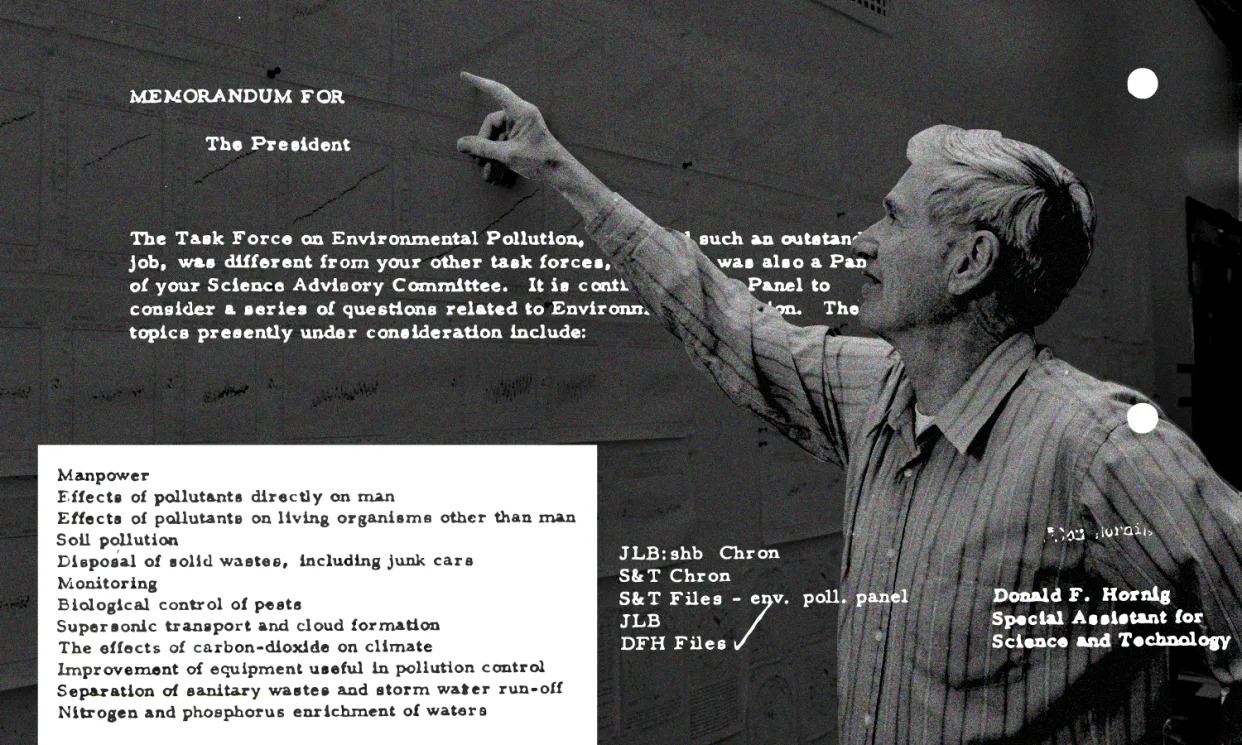
Composite: The Guardian/Special Collections & Archives, UC San Diego/Lyndon B Johnson Library
The fossil fuel industry funded some of the world’s most foundational climate science as early as 1954, newly unearthed documents have shown, including the early research of Charles Keeling, famous for the so-called “Keeling curve” that has charted the upward march of the Earth’s carbon dioxide levels.
A coalition of oil and car manufacturing interests provided $13,814 (about $158,000 in today’s money) in December 1954 to fund Keeling’s earliest work in measuring CO2 levels across the western US, the documents reveal.
Keeling would go on to establish the continuous measurement of global CO2 at the Mauna Loa Observatory in Hawaii. This “Keeling curve” has tracked the steady increase of the atmospheric carbon that drives the climate crisis and has been hailed as one of the most important scientific works of modern times.
The fossil fuel interests backed a group, known as the Air Pollution Foundation, that issued funding to Keeling to measure CO2 alongside a related effort to research the smog that regularly blighted Los Angeles at the time. This is earlier than any previously known climate research funded by oil companies.
In the research proposal for the money – uncovered by Rebecca John, a researcher at the Climate Investigations Center, and published by the climate website DeSmog – Keeling’s research director, Samuel Epstein, wrote about a new carbon isotope analysis that could identify “changes in the atmosphere” caused by the burning of coal and petroleum.
“The possible consequences of a changing concentration of the CO2 in the atmosphere with reference to climate, rates of photosynthesis, and rates of equilibration with carbonate of the oceans may ultimately prove of considerable significance to civilization,” Epstein, a researcher at the California Institute of Technology (or Caltech), wrote to the group in November 1954.
Experts say the documents show the fossil fuel industry had intimate involvement in the inception of modern climate science, along with its warnings of the severe harm climate change will wreak, only to then publicly deny this science for decades and fund ongoing efforts to delay action on the climate crisis.
“They contain smoking gun proof that by at least 1954, the fossil fuel industry was on notice about the potential for its products to disrupt Earth’s climate on a scale significant to human civilization,” said Geoffrey Supran, an expert in historic climate disinformation at the University of Miami.
“These findings are a startling confirmation that big oil has had its finger on the pulse of academic climate science for 70 years – for twice my lifetime – and a reminder that it continues to do so to this day. They make a mockery of the oil industry’s denial of basic climate science decades later.”
Previous investigations of public and private records have found that major oil companies spent decades conducting their own research into the consequences of burning their product, often to an uncannily accurate degree – a study last year found that Exxon scientists made “breathtakingly” accurate predictions of global heating in the 1970s and 1980s.
The newly discovered documents now show the industry knew of CO2’s potential climate impact as early as 1954 via, strikingly, the work of Keeling, then a 26-year-old Caltech researcher conducting formative work measuring CO2 levels across California and the waters of the Pacific ocean. There is no suggestion that oil and gas funding distorted his research in any way.
The findings of this work would lead the US scientist to further experiments upon the Mauna Loa volcano in Hawaii that were to provide a continual status report of the world’s dangerously-rising carbon dioxide composition.
Keeling died in 2005 but his seminal work lives on. Currently, the Earth’s atmospheric CO2 level is 422 parts per million, which is nearly a third higher than the first reading taken in 1958, and a 50% jump on pre-industrial levels.
A total of 18 automotive companies, including Ford, Chrysler and General Motors, gave money to the foundation. Other entities, including banks and retailers, also contributed funding.
Separately, a 1959 memo identifies the American Petroleum Institute (API), the US’s leading oil and gas lobbying body, and the Western Oil and Gas Association, now known as the Western States Petroleum Association, as “major contributors to the funds of the Air Pollution Foundation”. It’s not clear exactly when API started funding the foundation but it had a representative on a research committee from mid-1955 onwards.
A policy statement of the Air Pollution Foundation from 1955 calls the problem of air pollution, which is caused by the emissions of cars, trucks and industrial facilities, “one of the most serious confronting urban areas in California and elsewhere” and that the issue will be addressed via “diligent and honest fact finding, by wise and effective action”.
The unearthed documents come from the Caltech archives, the US National Archives, the University of California at San Diego and Los Angeles newspapers from the 1950s, and represent what may be the first instance of the fossil fuel industry being informed of the potentially dire consequences of its business model.
The oil and gas industry was initially concerned with research related to smog and other direct air pollutants before branching out into related climate change impacts, according to Carroll Muffett, chief executive of the Center for International Environmental Law.
“You just come back to the oil and gas industry again and again, they were omnipresent in this space,” he said. “The industry was not just on notice but deeply aware of the potential climate implications of its products for going on 70 years.”
Muffett said the documents add further impetus to efforts in various jurisdictions to hold oil and gas firms legally liable for the damages caused by the climate crisis.
“These documents talk about CO2 emissions having planetary implications, meaning this industry understood extraordinarily early on that fossil fuel combustion was profound on a planetary scale,” he said.
“There is overwhelming evidence the oil and gas industry has been misleading the public and regulators around the climate risks of their product for 70 years. Trusting them to be part of the solutions is foolhardy. We’ve now moved into an era of accountability.”
API and Ralph Keeling, Charles’s son who is also a scientist, were contacted for comment about the documents but did not respond.
Iconic lake once known for its crystal-clear waters is on the verge of extinction: ‘The damage done … cannot be compensated’
Jeremiah Budin – January 30, 2024
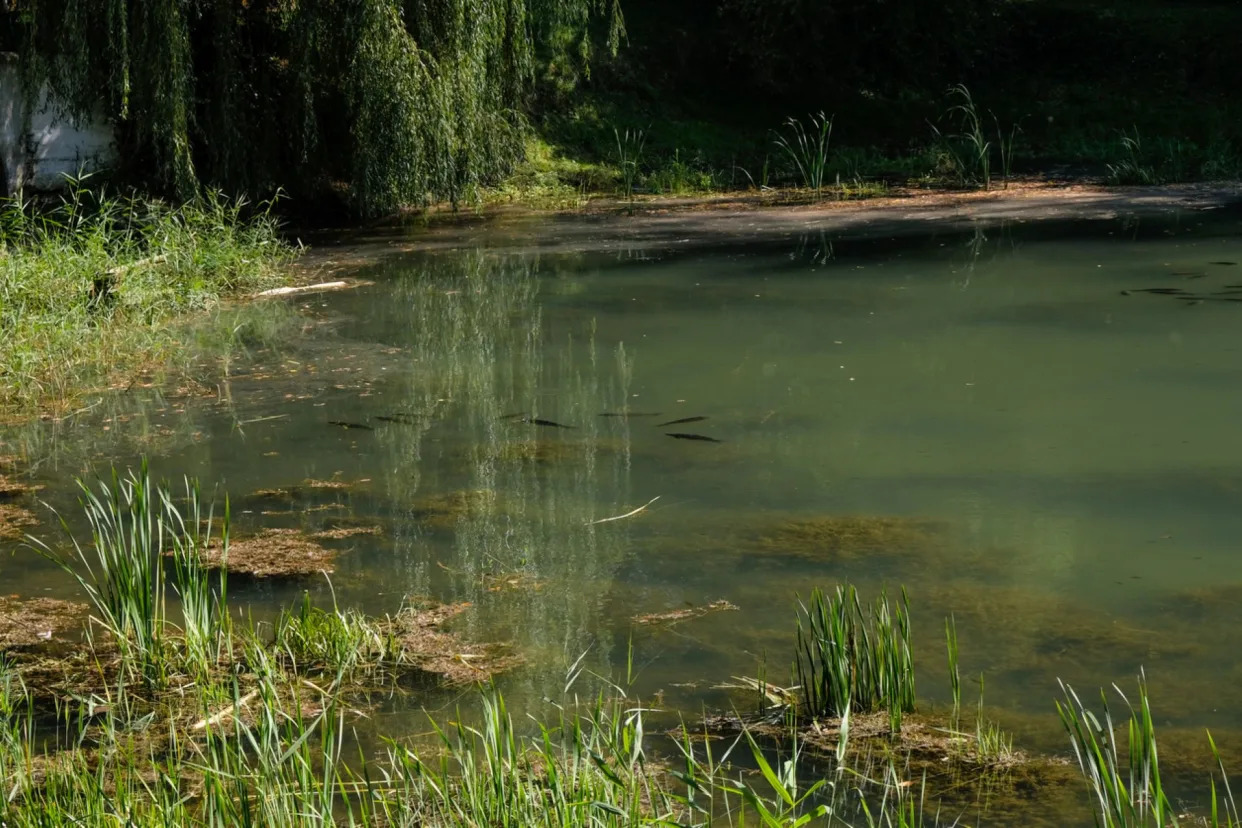
Anchar Lake, located in the Kashmir region, is on the verge of disappearing entirely, despite calls for action from environmentalists that have been going unheeded for more than a decade.
What is happening?
Once a major tourist destination, Anchar Lake has fallen victim to the same forces that have negatively impacted so many bodies of water and parts of nature throughout the world — pollution, overdevelopment, and governments that prioritize protecting profits over the environment.
“The lake was once a beautiful tourist attraction, but over the past many years, it has turned into a polluted wasteland,” one nearby resident told Rising Kashmir.
Why is this concerning?
A century ago, the lake encompassed 7.5 square miles. Today, it has been reduced to 2.6 square miles, with more than half of that area comprised of marshland. Contributing factors include unregulated development around the area that has pushed silt and sediment into the lake.
Improper sewage and drainage systems have filtered waste into the lake, making its waters toxic and inhospitable to the bird and fish species that once thrived there.
“The lake is under tremendous anthropogenic pressures, which have resulted in deterioration of its water quality. The entire liquid and solid wastes generated on the peripheral areas situated at higher contours where people live find its way into the lake. Even the agricultural waste of the above area is disposed of in it,” Ajaz Rasool, an environmentalist and hydraulic engineer, told Greater Kashmir.
What is being done about it?
Greater Kashmir laid out several steps that need to be taken to ensure that Anchar Lake does not become extinct, which would be devastating for local wildlife that has already seen its habitat harmed dramatically.
These steps include officially making the conservation of the lake the responsibility of the Lake Conservation and Management Authority, erecting fences around the area to prevent further development and encroachment, plugging drains that filter waste into the lake, and rebuilding the sewage system.
“It is the responsibility of the Government and people to join hands to restore the glory of Anchar, as both are responsible for its deterioration. Damage done to the environment is irreparable and cannot be compensated in any form,” the piece concluded.
Join our free newsletter for cool news and cool tips that make it easy to help yourself while helping the planet.
Trump Was Accused of Calling Fallen US Soldiers ‘Suckers’ and ‘Losers.’ We Examined the Evidence
Nur Ibrahim – January 30, 2024
Liam Enea/Wikimedia Commons
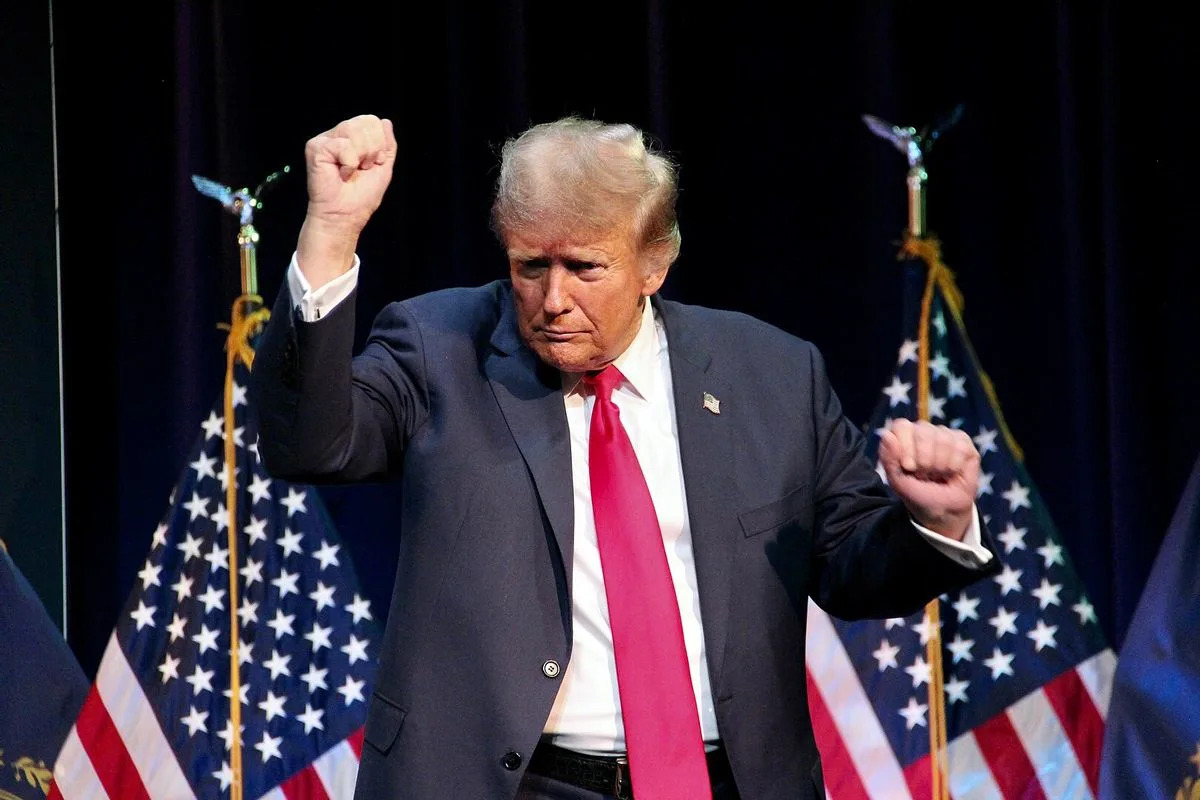
In January 2024, U.S. President Joe Bidencalled former President Donald Trump a “loser,” resurrecting a years-old accusation against Trump that allegedly revealed his true opinion of U.S. military service members. According to alleged eyewitnesses, Trump had called veterans and fallen U.S. soldiers “suckers” and “losers.”
At about the same time, a liberal veterans group launched an advertisement targeting Trump over those alleged past comments. In the ad, a mother who lost her son to war said, “My son is not a loser.”
Trump and his allies have denied the accusation since it first emerged in 2020, shortly before the election between Trump and Biden. Whether performative or authentic, Trump’s apparent support for soldiers in the U.S. military, both active and veteran members, has been part of his presidential campaigns.
Following a story by The Atlantic, a number of reputable news outlets reported on the alleged comments in 2020, relying entirely on anonymous sources from his administration.
However, there appeared to be no evidence of an audio or video recording of the remarks in question, nor was there any documentation, such as transcripts or presidential notes, to independently confirm or deny the alleged quotes’ authenticity. Moreover, since Snopes did not witness the in-question comments firsthand, we can’t say for certain whether Trump called fallen soldiers “suckers” and “losers.”
We reached out to Trump’s representatives to see if they had any supplemental evidence to help substantiate their denial, as well as for a response to renewed attention on the comments in 2023. We will update this story when, or if, we receive a response.
How the Accusations Emerged
Citing anonymous officials from the administration, the 2020 article by The Atlantic, titled, “Trump: Americans Who Died in War Are ‘Losers’ and ‘Suckers’,” unpacked Trump’s trip to Paris in 2018 when he allegedly did not want to visit a cemetery of American war dead. The visit was cancelled.
Trump did not want to visit the Aisne-Marne American Cemetery — which is home to the graves of Americans who fought and died in World War I — for two reasons, according to The Atlantic: He feared the rain would dishevel his hair, and “because he did not believe it important to honor American war dead, according to four people with firsthand knowledge of the discussion that day.” The Atlantic continued (emphasis ours):
Trump rejected the idea of the visit because he feared his hair would become disheveled in the rain, and because he did not believe it important to honor American war dead, according to four people with firsthand knowledge of the discussion that day. In a conversation with senior staff members on the morning of the scheduled visit, Trump said, “Why should I go to that cemetery? It’s filled with losers.” In a separate conversation on the same trip, Trump referred to the more than 1,800 marines who lost their lives at Belleau Wood as “suckers” for getting killed.
Shortly after the publication of The Atlantic report, one unnamed senior official with the U.S. Department of Defense and one senior U.S. Marine Corps officer confirmed the 2018 cemetery remarks from the above report in interviews with The Associated Press (AP). According to the AP, the official had firsthand knowledge of Trump’s remarks, and the officer had been told about them.
Trump Allies Deny the Claims
The White House blamed the canceled cemetery visit on poor weather. Responding to The Atlantic’s reporting, Trump said the accusation was “a disgraceful situation” by a “terrible magazine.”
Trump strongly denied calling fallen soldiers “losers” and “suckers.” Speaking to reporters on Sept. 3, 2020, upon returning from a campaign rally to Washington, D.C., just after the report came out, Trump said: “I would be willing to swear on anything that I never said that about our fallen heroes. There is nobody that respects them more. No animal — nobody — what animal would say such a thing?”
Just days later, Zach Fuentes, a former White House aide who left the administration in early 2019 and was with the president on the Paris trip and presumably near him during the in-question conversations about the cemetery visit, stood up for Trump in an interview with Breitbart.
Referring to Gen. John Kelly, who was with Trump during the trip as his chief of staff, he said, “I did not hear POTUS call anyone losers when I told him about the weather. Honestly, do you think General Kelly would have stood by and let ANYONE call fallen Marines losers?”
Reporting on Fuentes’ interview with Breitbart, The Washington Post noted that the phrase “I did not hear…” is not the same as “it didn’t happen.” Furthermore, there was no evidence of Kelly being around Trump to hear the alleged comments.
Trump’s former national security adviser John Bolton, who said he was on the trip, also issued a denial to Fox News, days after the article came out, saying it was “simply false.”
Then-U.S. Secretary of State Mike Pompeo also denied the claims in an interview with Fox News in September 2020. He said, “I was with him for a good part of that trip, if I’m thinking about this visit and the timing right, and I never heard him use the words that are described in that article. Just, I never saw it.”
How the Claims Resurfaced in 2023
On Oct. 2, 2023, Biden’s official account on X resurfaced the accusation, saying Trump once allegedly “referred to American service members as ‘suckers’ and ‘losers.'” The post (displayed above) included video footage of Biden speaking at a September 2023 event to honor the late U.S. Sen. John McCain, who was a military veteran and prisoner of war. (In that speech, Biden referenced the 2020 story by The Atlantic.)
The day after Biden’s post on X, Kelly repeated the claim, as well. Speaking to CNN story, he said (emphasis, ours):
What can I add that has not already been said? A person that thinks those who defend their country in uniform, or are shot down or seriously wounded in combat, or spend years being tortured as POWs are all ‘suckers’ because ‘there is nothing in it for them.‘ A person that did not want to be seen in the presence of military amputees because ‘it doesn’t look good for me.’ A person who demonstrated open contempt for a Gold Star family – for all Gold Star families – on TV during the 2016 campaign, and rants that our most precious heroes who gave their lives in America’s defense are ‘losers’ and wouldn’t visit their graves in France.
In other words, Kelly, who was with Trump in Paris, confirmed that Trump did call American troops “losers” and “suckers,” though it was unclear whether he witnessed the comments firsthand or heard about them from someone else, or from news reports. (The 2020 Atlantic story detailed a separate incident of Trump visiting the grave of Kelly’s son who was killed in action in Afghanistan, for which Kelly was supposedly present. In that case, Trump allegedly asked of military personnel who volunteered to join the service, “What was in it for them?”)
Responding to the CNN interview, a Trump official issued a statement to CNN, saying, “John Kelly has totally clowned himself with these debunked stories he’s made up because he didn’t serve his president well while working as chief of staff.”
In addition to the alleged statements about service members generally, Trump has publicly insulted McCain, in particular, by calling him “not a war hero,” and “I like people who weren’t captured,” according to footage on C-SPAN. Also, for The Atlantic story, anonymous sources said he called former President George H.W. Bush a “loser” for getting shot down by the Japanese while a Navy pilot during World War II.
In sum, the claim stemmed from a story by The Atlantic, which relied on anonymous, second-hand reports of Trump’s alleged words; there was no independent footage or documented proof to substantiate the in-question comments; and Trump vehemently denies that he once called service members “losers” and “suckers.” While it was certainly possible that he said those things, Snopes was unable to independently verify the claim.
Sources:
Baker, Peter, and Maggie Haberman. “Trump Faces Uproar Over Reported Remarks Disparaging Fallen Soldiers.” The New York Times, 4 Sept. 2020. NYTimes.com, https://www.nytimes.com/2020/09/04/us/politics/trump-veterans-losers.html. Accessed 4 Oct. 2023.
Blake, Aaron. “Analysis | What Trump Officials Really Say — and Don’t Say — in Denying That He Disparaged Fallen Troops.” Washington Post, 8 Sept. 2020. www.washingtonpost.com, https://www.washingtonpost.com/politics/2020/09/08/trump-officials-military-disparagement-denials/. Accessed 4 Oct. 2023.
Goldberg, Jeffrey. “Trump: Americans Who Died in War Are ‘Losers’ and ‘Suckers.'” The Atlantic, 3 Sept. 2020, https://www.theatlantic.com/politics/archive/2020/09/trump-americans-who-died-at-war-are-losers-and-suckers/615997/. Accessed 4 Oct. 2023.
Mason, Jeff, et al. “Biden Warns Trump, ‘MAGA’ Movement Threaten American Democracy.” Reuters, 29 Sept. 2023. www.reuters.com, https://www.reuters.com/world/us/biden-warn-threat-democracy-trump-honor-mccain-2023-09-28/. Accessed 4 Oct. 2023.
“Report: Trump Disparaged US War Dead as ‘Losers,’ ‘Suckers.'” AP News, 4 Sept. 2020, https://apnews.com/article/election-2020-ap-top-news-politics-b823f2c285641a4a09a96a0b195636ed. Accessed 4 Oct. 2023.
Tapper, Jake. “Exclusive: John Kelly Goes on the Record to Confirm Several Disturbing Stories about Trump | CNN Politics.” CNN, 2 Oct. 2023, https://www.cnn.com/2023/10/02/politics/john-kelly-donald-trump-us-service-members-veterans/index.html. Accessed 4 Oct. 2023.
“Trump: “He’s a War Hero Because He Was Captured. I like People That Weren’t Captured.”” C-SPAN. www.youtube.com, https://www.youtube.com/watch?v=541Cg2Jnb8s. Accessed 4 Oct. 2023.
In Biden’s pledge to ‘shut down’ border, a stunning political shift
Analysis by Zachary B. Wolf, CNN – January 29, 2024
President Joe Biden’s evolution on the key election issue of immigration entered a new phase when he promised to “shut down the border right now” if given new powers by Congress.
The deeper policy context of the comments, delivered at a campaign event in South Carolina Saturday and in a statement from the White House on Friday, is that Biden wants to resuscitate a bipartisan deal to pair new border powers with additional military aid for Ukraine and Israel.
But the Trump-like rhetoric from the Democratic president – and the fact that Democrats are not even talking about a pathway to legal status for undocumented immigrants currently in the country – is also an important political admission as immigration-focused Donald Trump zeroes in on the Republican presidential nomination and the border crisis reverberates through the country and into Washington, DC.
Biden is willing to offer concessions so he can make deals, and Trump wants to keep this as a campaign issue.
Trump wants to kill bipartisan deal
“As the leader of our party, there is zero chance I will support this horrible, open-borders betrayal of America,” Trump said in Nevada on Saturday, although future Republican presidents would also benefit from the new power Biden is seeking.
Trump doesn’t think the president needs new power to shut the border. He has promised that, if elected, he will act as “dictator for one day” to do it, and he’s actively working against the bipartisan effort even though parts of it are straight out of his policy playbook.
“The reality is that this includes many provisions that when Donald Trump was president, he hoped would be made into law,” said CNN’s Lauren Fox, appearing Monday on “Inside Politics.” These Trump-friendly priorities, she said, include making it much more difficult for migrants to seek asylum in the US and increasing the speed at which asylum cases can be processed in immigration courts.
Biden’s acknowledgment
CNN’s Priscilla Alvarez, a White House reporter who is also an expert on the issue of immigration, documents Biden’s shift.
“Biden took office pledging to restore asylum and manage the border in a ‘humane’ way,” Alvarez writes. “But his administration has faced the harsh realities and challenges at the US-Mexico border amid record migration across the Western Hemisphere — making it a political vulnerability seized on by Republicans.”
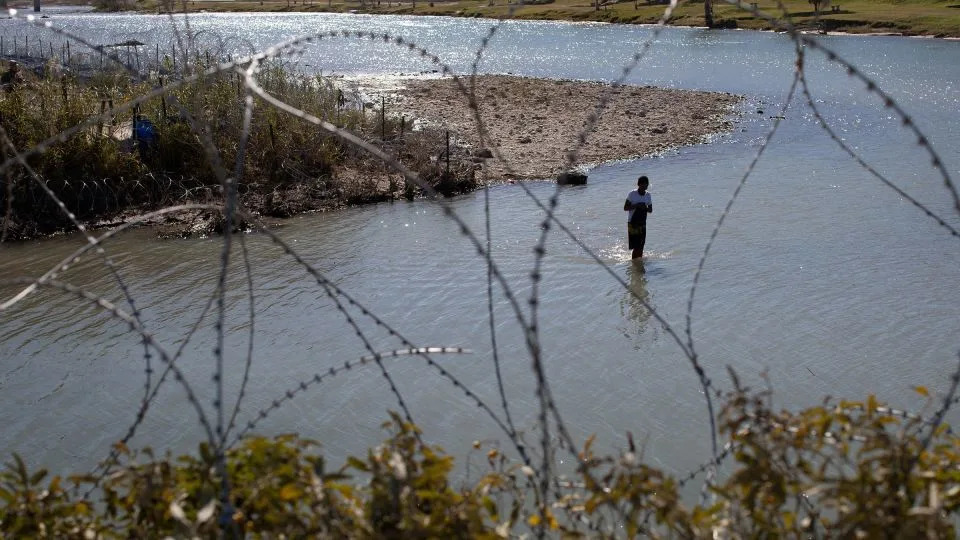
A man crosses the Rio Grande River from Mexico to collect clothing and other items left on the Texas banks of Shelby Park at the US-Mexico border in Eagle Pass, Texas, on January 12, 2024. – Kaylee Greenlee Beal/Reuters
Permanent power for the president
The new permanent power pushed by Biden and Senate negotiators is in line with temporary, Covid-era restrictions originally put in place during Trump’s administration, but which lapsed last year on Biden’s watch.
Following Trump’s lead, rather than work with the president to secure the border, House Republicans have rejected even the idea of a Senate compromise and are gearing up to impeach Biden’s secretary of Homeland Security, Alejandro Mayorkas, for not applying current law to turn away more people at the border.
Still no deal in writing
The framing of this issue may end up being more important than the policy itself. The bipartisan group of senators has not released text for their compromise, but they insist it does exist.
“We do have a bipartisan deal. We’re finishing the text right now,” Sen. Chris Murphy, the Connecticut Democrat who is a key negotiator on the deal, said on CNN’s “State of the Union” on Sunday.
“The question is whether Republicans are going to listen to Donald Trump, who wants to preserve chaos at the border because he thinks that it’s a winning political issue for him,” said Murphy, adding the proposal would give the president, Republican or Democrat, permanent new emergency powers.
What we know
While the text of the bill has not been finalized, Biden ticked off the major points during that appearance in South Carolina:
“It includes an additional 1,300 Border Patrols — we need more agents on the border;
375 immigration judges to judge whether or not someone can come or not come and be fair about it;
1,600 asylum officers;
and over 100 cutting-edge inspection machines to help detect and stop fentanyl coming in.”
GOP negotiator censured by his own party
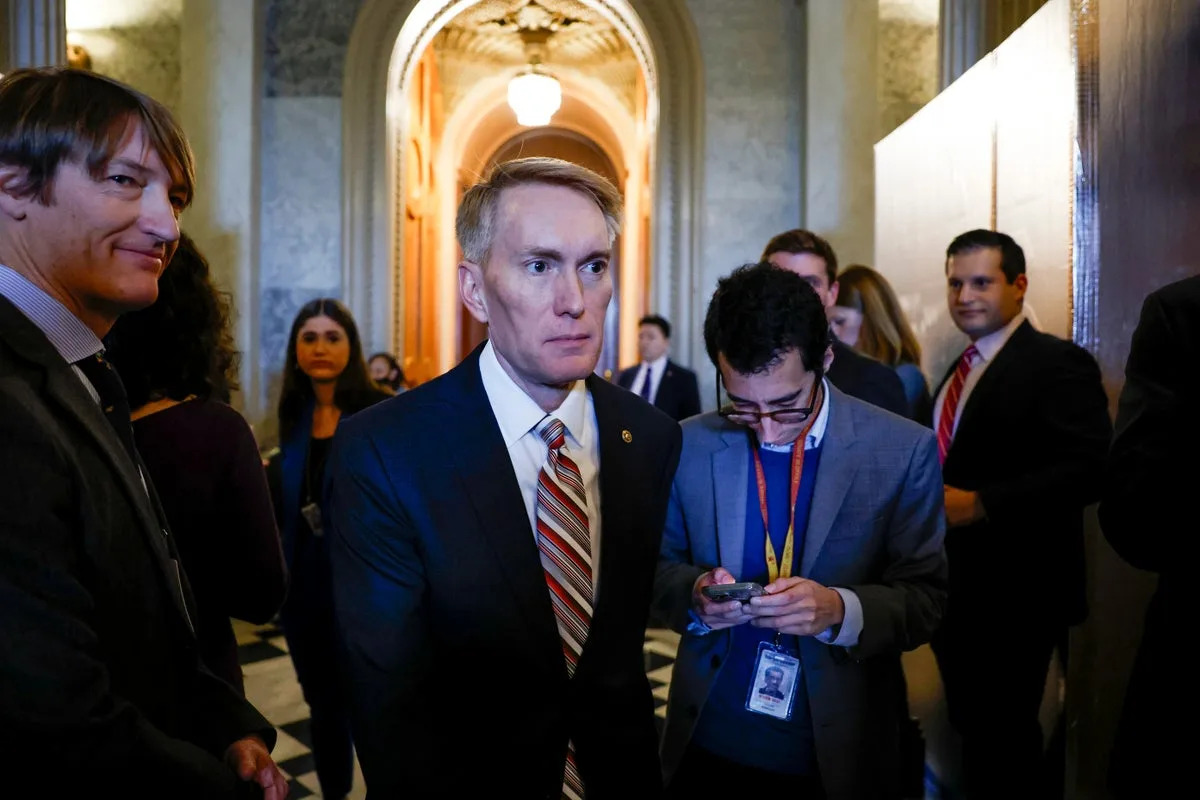
Sen. James Lankford of Oklahoma, the top Republican negotiator, is already facing blowback even though the deal has not been publicly released.
The Oklahoma Republican Party voted over the weekend to censure Lankford and demanded that he abandon the bipartisan talks.
Appearing on “Fox News Sunday,” Lankford was pressed about the new authority for Biden, which would be triggered if there’s an average of 5,000 migrant crossings per day over the course of a full week. Lankford said this would not normalize 5,000 migrant crossings per day. And for context, border officials were dealing with more than 10,000 crossings per day for most of December.
“This is set up for if you have a rush of people coming at the border, the border closes down – no one gets in,” he said. “This is not someone standing at the border with a little clicker, saying, ‘I’m going to let one more in, we’re at 4,999 and then it has to stop.’ It is a shutdown of the border, and everyone actually gets turned around.”
Democrats waiting for details too
Rank-and-file Democrats would surely be frustrated with such a compromise, which does not address their long-term immigration priorities, like giving permanent legal status to the children of undocumented immigrants who were raised in the US or paving a pathway to citizenship for undocumented immigrants who have built lives and paid taxes in the US.
“We have milestones and we have a path to get there, but we were never going to get a path to citizenship in this bill,” former House Speaker Nancy Pelosi told CNN’s Dana Bash on Sunday.
Frustration in US cities
Meanwhile, mayors of Democratic cities continue to raise the alarm about an untenable wave of migrants bused north from border states and draining their infrastructure.
The public view of the current immigration situation has shifted
Nearly half – 45% of Americans in a CBS News poll released early this month – said the situation at the border is a crisis.
And a strong majority of the public – 63% now compared with 55% in September – said the Biden administration should be tougher on immigrants crossing at the border. More than two-thirds, 68%, said they disapproved of Biden’s handling of the border, although that does not translate into support for Republicans. Sixty-five percent of Americans said they disapproved of congressional Republicans’ handling of the issue.
Americans are still broadly supportive of immigration, however. In a Gallup poll released last July, 68% said the overall effect of immigration was a good thing for the US, compared with just 27% who said it was a bad thing.
After publication, White House spokesperson Angelo Fernandez Hernandez provided this statement:
“The American people overwhelmingly agree with what President Biden underlined in his Day One reform plan: that our immigration system is broken and we have an imperative to secure the border and treat migrants with dignity,” Fernandez Hernandez said in an email. “After opposing the record border security funding President Biden has delivered every year of his administration, House Republicans are blocking the border security resources President Biden is fighting for in order to hire more Border Patrol officers and invest in cutting edge technology to detect fentanyl.”
Republicans tried to hammer Biden on immigration. But they turned into a circular firing squad
Eric Garcia – January 29, 2024
(Getty Images)
President Joe Biden might finally be running out of patience with Republicans when it comes to negotiations surrounding an agreement to restrict immigration in exchange for aid to Ukraine.
After weeks of negotiations, Republicans hit a snag last week as former president Donald Trump came out swinging against any agreement. That forced Senate GOP leadership to recalibrate. On top of that, House Speaker Mike Johnson — who leads a far more rabidly anti-immigrant and anti-Ukraine conference than Mitch McConnell leads in the Senate — wrote in a letter to colleagues that the agreement “would have been dead on arrival in the House anyway.”
On Friday evening, Biden released a statement saying that the proposed legislation would give him the ability to “shut down the border when it becomes overwhelmed” and that he would invoke the authority the day he signs the bill into law.
Of course, being able to “shut down the border” is an amorphous term and the definition of shutting it down lies in the eye of the beholder. Nevertheless, Biden wants to have some kind of agreement not only because he wants to free up dollars to help Ukraine defend itself against Russia: A Harvard CAPS-Harris poll from last week showed that more voters consider immigration their top policy concern than the economy.
Republicans have battered Biden on the border ever since he took office, essentially flipping the dynamic after Donald Trump faced numerous negative headlines about family separation and the infamous Mexican border wall. Texas Governor Greg Abbott has even bused migrants to cities with Democratic mayors. That particular move led New York’s mayor Eric Adams to openly criticize Biden.
But Republicans might have gotten high on their own supply when it comes to immigration. As Inside Washingtonexplained last week, Republicans delaying passing an immigration bill to allow Trump to benefit makes it hard for them to argue that the influx of migrants is a crisis that requires immediate addressing. If passing a bill can wait 12 months, then it’s hardly urgent.
Right-wing opposition to the immigration legislation also means that Republicans are turning against each other.
On Sunday, Fox News host Shannon Bream asked Senator James Lankford, the chief Republican negotiator, why he would give Biden the “cover of this deal” which she said would allow people into the United States. Lankford responded by saying four months ago, Republicans united to say they would demand changes in policy “and now it’s interesting a few months later, when we’re finally getting to the end, they’re like, just kidding. We actually don’t want a change in law because of a presidential election year.”
Lankford, a hardline conservative from Oklahoma, has staked much of his credibility on the legislation. So he’s understandably frustrated to see opposition. And shortly after making his case, Senator Rick Scott of Florida, a Trump ally, said on the same Fox program that Lankford was on a “suicide mission.” That also gives Scott the added benefit of knifing Senate Minority Leader Mitch McConnell, with whom he has a tenuous relationship.
Republicans likely had a chance to pass the legislation before Trump returned to his role of being the de facto nominee. But his victories in Iowa and New Hampshire — as well as the coalescing of the GOP around him — has meant that they have to defer to what he dictates.
The ultimate sign that Republicans might be overconfident is their plan to impeach Homeland Security Secretary Alejandro Mayorkas. Why? It’s not entirely clear. But what is apparent is that Johnson, who is a little more than three months into the job, has chosen to appeal to the most far-right factions of his conference.
Holding a series of sideshow hearings for a secretary most people have never heard of will do little to shed light on whether laws are being enforced at the border. But it will allow figures like committee member Marjorie Taylor Greene to pontificate and get more television air time. Indeed, Greene came out strongly against the bipartisan bill in the Senate, despite the fact no text exists.
It appears that Biden is attempting to create a foil to the feud. By saying he would willingly close the border if given the means to do so, he wants to put the pressure on Republicans to pass the bill. If not, he hopes to hammer them for not giving him the power to curb immigration into the US.
New satellite images catch world’s worst polluters red-handed: ‘Now we really know exactly where it’s coming from’
Leslie Sattler – January 26, 2024
The world’s 1,300 largest methane-polluting sites have been identified from space, thanks to an endeavor by environmental intelligence company Kayrros.
The identification of these methane leaks is an urgent call to action but also a great opportunity.
Thanks to Kayrros’ satellite surveillance, the exact sources of potent planet-warming pollution are finally exposed. “Previously, we could measure the amount of methane in the atmosphere, but now we really know exactly where it’s coming from,” Antoine Rostand, co-founder of Kayrros, told Sky News.
Pursuing the where, what, and why of these polluting leaks has led Kayrros to gas wells, pipelines, coal mines, and waste sites in countries like Turkmenistan (home to the single largest oil and gas source), India, Russia, Australia, and the United States, as Sky News has reported.
With the “who” and “where” made clear, targeted reduction is finally possible.
Methane is a greenhouse gas, meaning its presence in the atmosphere can alter Earth’s temperature, according to the Environmental Protection Agency. Methane only lingers in the atmosphere for about a decade, but it has an intense effect during that time (per NASA), so fixing methane leaks is immediately impactful.
Simultaneously, plugged leaks can significantly slow near-term temperature rises while improving air quality and public health.
Researchers at universities like MIT are also hard at work developing ways to capture escaped methane from the atmosphere.
The U.S. recently implemented national methane monitoring and repair policies, which are expected to eliminate 58 million tons of toxic gas over 15 years — a decisive climate victory.
Additionally, over 150 world governments have joined the Global Methane Pledge to cut methane output by 30% by 2030. If realized, the Pledge could quickly curb rising temperatures and prevent over 250,000 heat-related deaths annually (as projected by the World Health Organization).
With exact methane leak sources now in plain view from space, the path to a cooler future is illuminated.
In the meantime, Kayrros plans to continue its monitoring — and to share its findings with the world.
“Open-access climate data has a huge role to play in the climate crisis by holding governments and businesses to account,” Rostand said, as reported by InsideEcology.
“We intend to increase access to climate data and increase the basic knowledge and understanding of the harm methane does and of the failure of many governments and organizations to report their emissions of it accurately.”
Many parts of the world are experiencing a rapid depletion in the subterranean reserves of water that billions of people rely on for drinking, irrigation and other uses, according to new research that analyzed millions of groundwater level measurements from 170,000 wells in more than 40 countries.
It’s the first study to piece together what’s happening to groundwater levels at a global scale, according to the researchers involved, and will help scientists better understand what impact humans are having on this valuable underground resource, either through overuse or indirectly by changes in rainfall linked to climate change.
Groundwater, contained within cracks and pores in permeable bodies of rock known as aquifers, is a lifeline for people especially in parts of the world where rainfall and surface water are scarce, such as northwest India and the southwest United States.
Reductions in groundwater can make it harder for people to access freshwater to drink or to irrigate crops and can result in land subsidence.
“This study was driven by curiosity. We wanted to better understand the state of global groundwater by wrangling millions of groundwater level measurements,” said co-lead author Debra Perrone, an associate professor in University of California’s Santa Barbara’s Environmental Studies Program, in a news release on the study that published in the journal Nature on Wednesday.
The authors found that groundwater levels declined between 2000 and 2022 in 71% of the 1,693 aquifer systems included in the research, with groundwater levels declining more than 0.1 meter a year in 36%, or 617, of them.
The Ascoy-Soplamo Aquifer in Spain had the fastest rate of decline in the data they compiled — a median decline of 2.95 meters per year, said study coauthor Scott Jasechko, an associate professor at the Bren School of Environmental Science and Management at University of California Santa Barbara.
Several aquifer systems in Iran were among those with the fastest rate of groundwater decline, he added.
The team wasn’t able to gather data from much of Africa, South America and southeast Asia because of a lack of monitoring, but Jasechko said the study included the countries where most global groundwater pumping takes place.
Declines not universal
The study also highlighted some success stories in Bangkok, Arizona and New Mexico, where groundwater has begun to recover after interventions to better regulate water use or redirect water to replenish depleted aquifers.
“I was impressed by the clever strategies that have been put into action to address groundwater depletion in several places, though these ‘good news’ stories are very rare,” Jasechko said via email.
To understand whether the declines seen in the 21st century were accelerating, the team also accessed data for groundwater levels for 1980 to 2000 for 542 of the aquifers in the study.
They found that declines in groundwater levels sped up in the first two decades of the 21st century for 30% of those aquifers, outpacing the declines recorded between 1980 and 2000.
“These cases of accelerating groundwater-level declines are more than twice as prevalent as one would expect from random fluctuations in the absence of any systematic trends in either time period,” the study noted.
Donald John MacAllister, a hydrologist at the British Geological Survey who wasn’t involved in the research, said it was a really “impressive” set of data, despite some gaps.
“I think it’s fair to say this global compilation of groundwater data hasn’t been done, certainly on this scale, at least to my knowledge before,” he said.
“Groundwater is an incredibly important resource but one of the challenges is… because we can’t see it, it’s out of mind for most people. Our challenge is to constantly bang the drum for policymakers — that we have this resource that we have to look after, and that we can use to build resilience and adapt to climate change.”
Is the border deal falling apart because of Donald Trump? Sen. Mitt Romney thinks so
Gitanjali Poonia – January 25, 2024
Migrants walk along the highway through Arriaga, Chiapas state in southern Mexico, on Monday, Jan. 8, 2024, during their journey north toward the U.S. border. | Edgar H. Clemente, Associated Press
Senate Minority Leader Mitch McConnell, R-Ky., said in a private GOP meeting Wednesday that his conference is in “a quandary” with the proposed supplemental funding that links foreign aid to Ukraine and Israel with border security.
Neither House Republicans nor former President Donald Trump, who is the likely GOP presidential nominee after his wins in Iowa and New Hampshire, back the border reforms negotiated in the last few months. McConnell’s suggested solution? Split up the two funding agendas.
Related
But this proposition has fueled infighting among Republicans who want stricter border reform versus those who want to stick to the $1.66 trillion deal congressional leaders shook hands on earlier in January. Sen. Mitt Romney falls in the latter camp.
What did Romney say about Trump and the border deal?
After the closed-door meeting, Romney, a Utah Republican, blamed Trump for dividing Republicans.
“I think the border is a very important issue for Donald Trump. And the fact that he would communicate to Republican senators and congresspeople that he doesn’t want us to solve the border problem because he wants to blame Biden for it is really appalling,” he told reporters, as posted on X by CNN’s Manu Raju.
“But the reality is that we have a crisis at the border, the American people are suffering as a result of what’s happening at the border,” he said, adding, that Trump’s strategy is to allow the Republicans to “save that problem,” and let him “take credit for solving it later.”
Sen. Thom Tillis, R-N.C., told Politico that this issue is “all about politics and not having the courage to respectfully disagree with President Trump.”
“I didn’t come here to have a president as a boss or a candidate as a boss,” he added.
Will Trump not support the border deal?
House Speaker Mike Johnson, R-La., in an interview with Fox News on Wednesday night, said he and Trump have been talking about the deal “pretty frequently,” and “it doesn’t sound good at the outset.”
Meanwhile, Trump in a post on Truth Social Wednesday did not hold back. He said he is against the package “unless we get EVERYTHING needed to shut down the INVASION,” while giving Johnson a shout-out for only making “a deal that is PERFECT ON THE BORDER.”
Senate Republican Policy Committee Chair Joni Ernst, R-Iowa, reportedly appealed to his backers, asking those who endorsed Trump to ask him to not slash the deal, per The Hill.
But more conservative lawmakers, like Utah Sen. Mike Lee, point fingers at McConnell, and not Trump, for agreeing to the deal in the first place when all it did was “sharply divide Republicans while uniting Democrats.”
Arizona GOP Chair Jeff DeWit resigns after release of Kari Lake audio
Madison Selcho – January 24, 2024
In this Nov. 15, 2016, file photo, Arizona State Treasurer Jeff DeWit steps into an elevator at Trump Tower in New York. Jeff DeWit resigned as Arizona GOP Chair after release of Kari Lake audio. | Carolyn Kaster, Associated Press
Arizona Republican Party Chairman Jeff DeWit announced his resignation following the release of audio of DeWit trying to persuade Kari Lake to take a step back from politics.
The leaked audio recording, obtained by the Daily Mail, allegedly reveals DeWit trying to convince Lake to stay out of the Arizona Senate race.
He announced his decision to resign Wednesday in a press release that stated, “This morning, I was determined to fight for my position. However, a few hours ago, I received an ultimatum from Lake’s team: resign today or face the release of a new, more damaging recording.”
DeWit continued, saying he is “unsure” of what the other audio recording may contain, but “considering our numerous past open conversations as friends, I have decided not to take the risk.”
The press release issued by DeWit said further, “I am resigning as Lake requested, in the hope that she will honor her commitment to cease her attacks, allowing me to return to the business sector — a field I find much more logical and prefer over politics.”
The Deseret News has not been able to verify the authenticity of the audio recording allegedly leaked to the Daily Mail.
Why is Kari Lake calling for Jeff DeWit’s resignation?
The Independent reported that in the audio at the center of his resignation DeWit tells Lake that GOP leaders wondered if anyone could find “any companies out there or something that could just put her on the payroll to keep her out” of the 2024 race.
The Daily Mail also shared the audio recording, where DeWit says to Lake, “There are very powerful people who want to keep you out.”
DeWit is also heard saying, “So the ask I got today from back east was: ‘Is there any companies out there or something that could just put her on the payroll to keep her out?’”
Lake’s response is heard as, “This is about defeating Trump and I think that’s a bad, bad thing for our country.”
Later in the audio recording, DeWit says, “Just say, is there a number at which …”
Lake then appears to cut in, saying, “I can be bought? That’s what it’s about.”
DeWit continues, “You can take a pause for a couple of years. You can go right back to what you’re doing.”
Lake allegedly responds by saying she wouldn’t do it for a billion dollars and emphasizes, “This is not about money, it’s about our country.”
The Hill reported that in response to the audio recording surfacing, on Tuesday Lake called on DeWit to resign.
“He’s gotta resign. We can’t have somebody who is corrupt and compromised running the Republican Party,” Lake told a reporter at former President Donald Trump’s New Hampshire primary victory party.