Voters can’t tell between the arsonist and the fireman
Mark Gongloff, Bloomberg Opinion -The Tribune Content Agency May 02, 2024
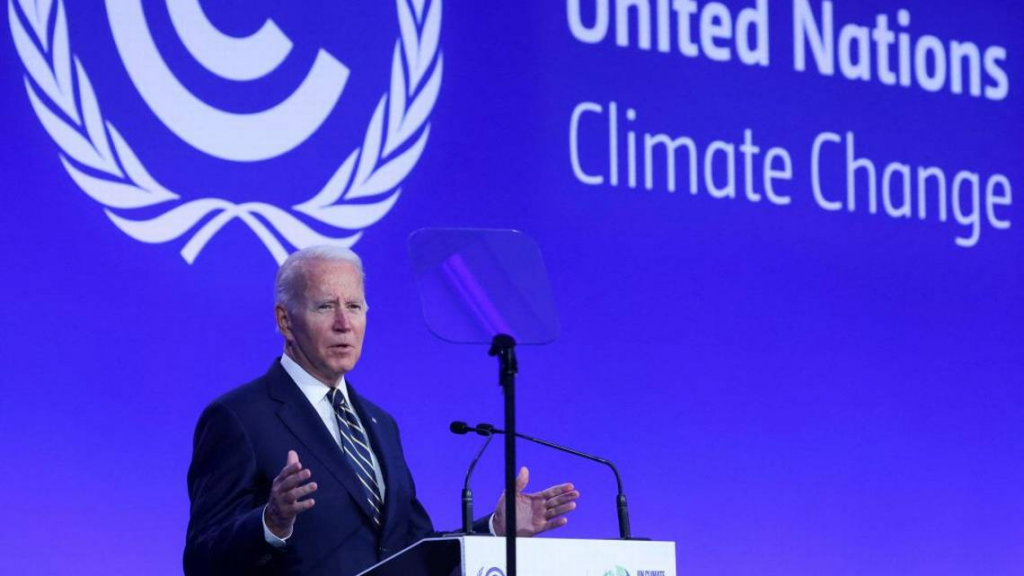
US President Joe Biden presents his national statement as part of the World Leaders’ Summit of the COP26 UN Climate Change Conference in Glasgow, Scotland on Nov. 1, 2021. (Yves Herman/Pool/AFP via Getty Images/TNS) YVES HERMAN/POOL/AFP TNS
If you were shopping for toaster ovens and your choice was between one that posed a 1% chance of setting your house on fire and a competing one that would not only 100% set your house on fire but proudly guaranteed it right on the box, then you would probably go with the 1% model.
U.S. voters face a similar choice this November when it comes to which presidential candidate will set the climate on fire. But they don’t seem to realize how much of a no-brainer that choice truly is.
President Joe Biden may not have a spotless climate record, but he has done much more to ensure a livable environment for future generations than any of his predecessors. Donald Trump, on the other hand, not only has history’s worst climate record, but he has announced, loudly and often, that his second term would be far, far worse.
Voters haven’t received the message, according to poll after poll. The latest is from CBS News, which found that 49% of Americans have heard little or nothing about what Biden has done for the climate. More alarmingly, most Americans think neither Biden’s second-term policies nor Trump’s would make any difference to the climate. That is dangerous nonsense.
The list of what Biden has already done is long and substantial, and it goes beyond the Inflation Reduction Act, easily the biggest climate bill in history. He also passed a bipartisan infrastructure bill and the Chips and Science Act, both with significant investments in the renewable-energy transition. He rejoined the Paris accord to limit long-term warming to 2 degrees Celsius, tightened emissions standards for power plants and cars and limited oil and gas drilling and liquefied natural gas exports. To name just a few things.
Biden has frustrated environmentalists at times with compromises such as approving the Willow drilling project in Alaska and pulling some regulatory punches on emissions and corporate disclosures. But he has done these things mostly in the name of getting reelected – which may sound cynical, until you consider the person who will be elected if Biden is not.
During his first term, Trump ditched the Paris accord and loosened regulatory fetters on the fossil-fuel and other polluting industries at the worst possible moment, just as the global concentration of atmospheric carbon was reaching dangerous levels. A Trump restoration would again come at a key point, just when scientists say the window to avoid the worst effects of a chaotic climate is slamming shut.
And Trump’s advisers are vowing to wreck progress even more aggressively in a second term. The Heritage Foundation’s Project 2025 lays out an agenda for Trump II that includes leaving the Paris accord again; undoing Biden’s efforts to regulate pollution; repealing the IRA or at least neutralizing it by closing the Energy Department loan office; throwing the entire country open to oil and gas exploration; and dismantling the climate-tracking National Oceanographic and Atmospheric Administration. To name just a few things.
A second Trump term would add 4 billion extra tons of carbon to the atmosphere, according to an analysis by Carbon Brief, a nonprofit advocacy group. That’s about two-thirds of what the U.S. produces in an entire year and matches the combined annual emissions of the European Union and Japan. The global clean-energy transition has built up anti-Trump defenses in the past four years, as my Bloomberg Opinion colleague Liam Denning and I have written. But make no mistake about it: A second Trump presidency would be a disaster.
So the whole planet needs Biden to do a much better job of communicating the stark contrast between him and Trump. The first step will be overcoming the mistaken sense among his voting base that he has failed them with his compromises.
“The key voters that put Biden in office in the first place – young people, people of color, women in the suburbs – were very concerned about climate,” Anthony Leiserowitz, director of the Yale Program on Climate Change Communication, told me in an interview. “Some of these same demographics think he’s done nothing or worse because of the Willow decision.”
Seven out of 10 Biden voters in 2020 said climate was important to their vote, according to a Pew Research Center poll. Nearly a fifth of Biden voters consider it their top priority, according to an Economist/YouGov poll. If he wants these voters back at the polls in November, then Biden must convince them early and often that staying home and giving Trump the White House would make all their worst fears come true.
The trick is that Biden may also need to win swing voters, most of whom don’t care as much about the environment and may fear (incorrectly) that there’s a trade-off between fighting global warming and growing the economy. That’s one reason Biden and his advisers spend so much time trumpeting the jobs the IRA and other climate actions create.
The good news is that the politics of this issue have shifted drastically in recent years. As evidence, Biden made his climate promises sharper for the general election campaign than during the Democratic primaries in 2020, Leiserowitz notes. Most Americans now think global warming is real and human-made and support Biden’s policies when they hear about them.
But we can’t wait for the battleship of public opinion to complete its U-turn. We don’t have another four years to waste.
This column does not necessarily reflect the opinion of the editorial board or Bloomberg LP and its owners. Mark Gongloff is a Bloomberg Opinion editor and columnist covering climate change. He previously worked for Fortune.com, the Huffington Post and the Wall Street Journal.
Law Firm Defending Trump Seeks to Withdraw From a Long-Running Case
Ken BensingerUpdated Wed, May 1, 2024 at 8:08 AM CDT·4 min read4.4k
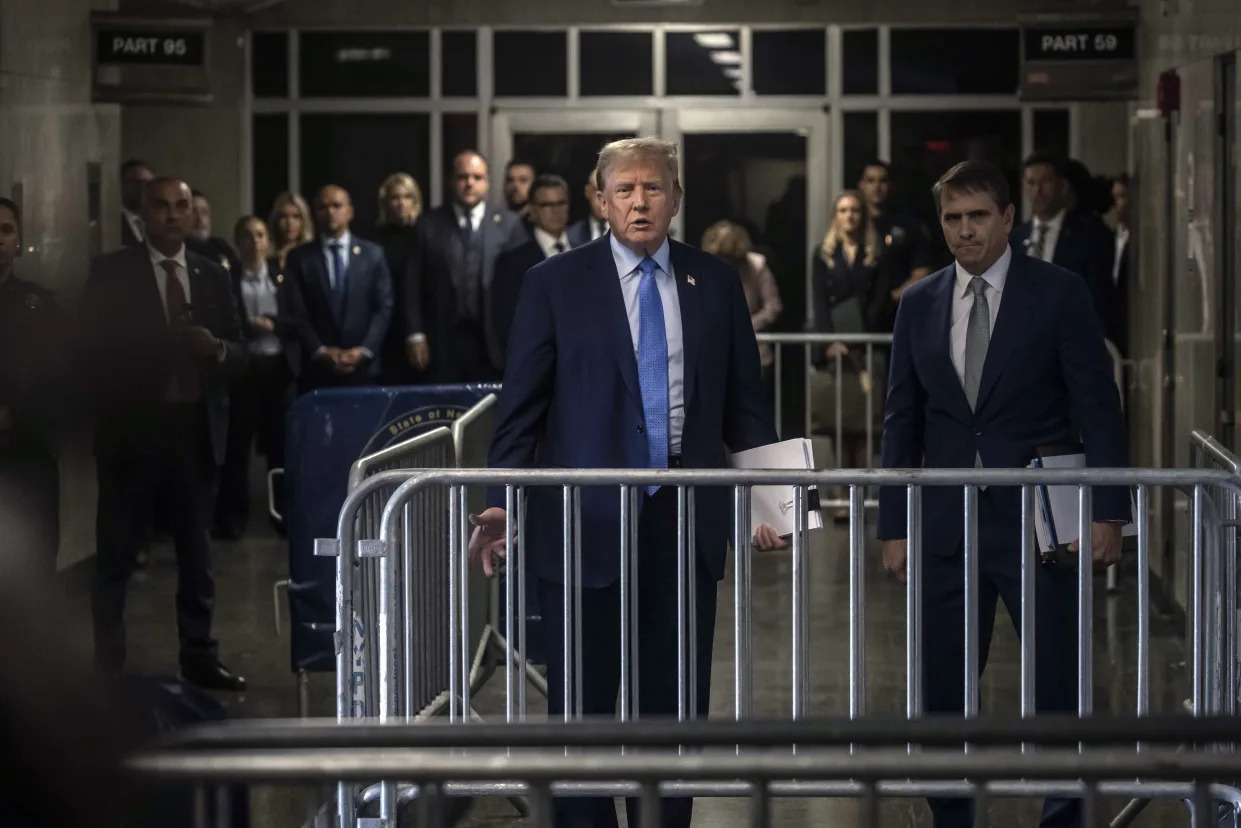
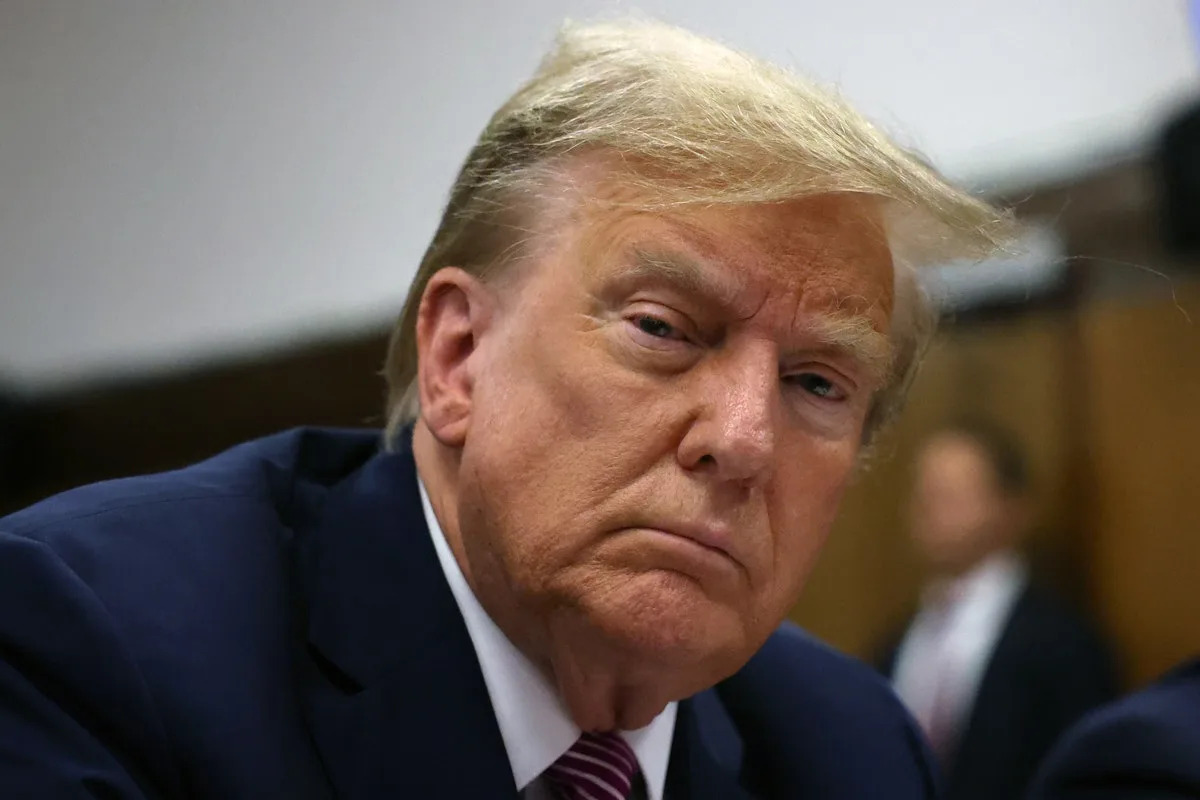
Former President Donald Trump during his criminal trial on Friday, April 26, 2024, in New York.
A law firm that has long defended Donald Trump’s campaign and businesses from employment lawsuits has abruptly asked to withdraw from a years long case over what it calls an “irreparable breakdown in the attorney-client relationship.”
The firm — LaRocca, Hornik, Greenberg, Rosen, Kittridge, Carlin and McPartland — has represented Trump’s political operation in numerous suits dating to his first presidential run, helping secure several settlements and dismissals and billing nearly $3 million in the process.
But late Friday, it asked a federal magistrate judge to allow it to withdraw from a suit filed by a former campaign surrogate, A.J. Delgado, who says she was sidelined by the campaign in 2016 after revealing she was pregnant. The timing of the motion was notable, just two days after the same federal court had ordered the campaign to turn over in discovery all complaints of sexual harassment and gender or pregnancy discrimination from the 2016 and 2020 campaigns — materials that the defendants have long resisted handing over.
In the request, filed in federal court in Manhattan, the lead lawyer, Jared Blumetti, did not provide any details about the dispute, asking permission to “explain” the matter privately with the judge. Blumetti did not respond to a request for comment.
The apparent rupture with a long-trusted firm comes at a busy time, legally speaking, for the former president.
He is in the third week of a criminal trial in a 2016 campaign sex scandal cover-up case involving porn actor Stormy Daniels, and is facing additional criminal charges in Georgia as well as in two separate sets of federal indictments. Last week, the Supreme Court heard arguments about whether Trump is absolutely immune from criminal charges for actions he took while in the White House. And he is appealing judgments totaling more than $500 million in two civil verdicts from last year.
It was not immediately clear whether LaRocca Hornik, which has its offices inside 40 Wall St., a building in downtown Manhattan that is owned by Trump, intends to cut all ties with him. But such a break would hardly be new. In January, one of Trump’s defense lawyers, Joe Tacopina, said he would no longer represent him. Last year, at least four of his other lawyers, representing him in a variety of civil and criminal cases, stepped aside.
Delgado, who is representing herself in the matter, objected to the withdrawal in a filing Monday, arguing it should not be allowed until the discovery process has been completed and calling the request a “scheme to avoid compliance.”
Magistrate Judge Katharine H. Parker said that LaRocca Hornik would have to continue to represent the campaign for the time being and that she would schedule a conference with the law firm and the campaign to discuss the matter.
The firm has represented Trump’s business interests for at least a decade, defending Trump Model Management in a wage case filed in 2014, for example. It also represented the campaign in both of Trump’s previous runs for the White House and was paid $1.8 million between September 2016 and December 2020, Federal Election Commission records show. Since then, the former president’s super political action committee, Make America Great Again Inc., has paid LaRocca Hornik an additional $990,000, including a payment of $15,103.90 as recently as March 25.
In addition to the case filed by Delgado, the firm is still representing the campaign in a sexual discrimination and abuse lawsuit filed by Jessica Denson, a former Hispanic outreach coordinator for the 2016 campaign. The most recent filing in that suit, in a New York state court, was made April 16 and makes no mention of a desire to end the legal relationship.
Last year, the firm helped the Trump campaign negotiate a $450,000 settlement in a separate lawsuit filed by Denson that challenged the validity of nondisclosure agreements that campaign workers were obliged to sign during the 2016 race.
And in 2022, it helped negotiate a settlement in a suit brought by protesters who claimed that Trump’s bodyguard Keith Schiller had in 2015 ripped up a sign that read “Trump: Make America Racist Again” and then hit one of them in the head.
Delgado brought her suit against the campaign, as well as against former advisers Reince Priebus and Sean Spicer, in 2019, claiming sex and pregnancy discrimination.
While working for the campaign, she became pregnant by her supervisor, Jason Miller, a senior communications adviser and spokesperson. When she revealed her pregnancy shortly after the 2016 election, her complaint said, she was relieved of most of her duties and “immediately and inexplicably stopped receiving emails and other communications.”
As part of the litigation, she has been seeking all other complaints of gender discrimination involving the campaign.
By Eric Cortellessa, Palm Beach FLA. – April 30 2024
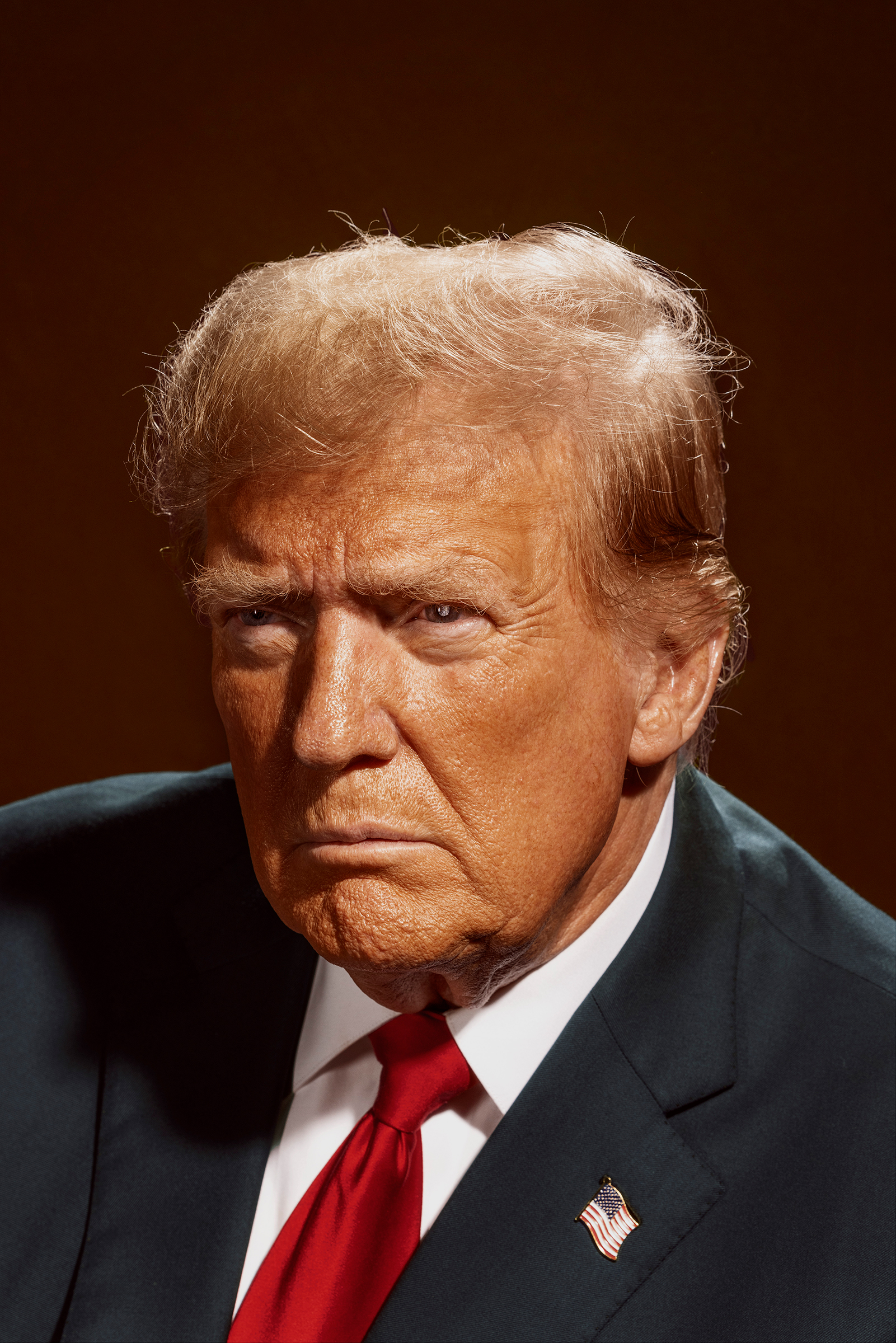
The former President, at Mar-a-Lago on April 12, is rallying the right at home and seeking common cause with autocratic leaders abroad.Photograph by Philip Montgomery for TIME
Donald Trump thinks he’s identified a crucial mistake of his first term: He was too nice.
We’ve been talking for more than an hour on April 12 at his fever-dream palace in Palm Beach. Aides lurk around the perimeter of a gilded dining room overlooking the manicured lawn. When one nudges me to wrap up the interview, I bring up the many former Cabinet officials who refuse to endorse Trump this time. Some have publicly warned that he poses a danger to the Republic. Why should voters trust you, I ask, when some of the people who observed you most closely do not?
As always, Trump punches back, denigrating his former top advisers. But beneath the typical torrent of invective, there is a larger lesson he has taken away. “I let them quit because I have a heart. I don’t want to embarrass anybody,” Trump says. “I don’t think I’ll do that again. From now on, I’ll fire.”
Six months from the 2024 presidential election, Trump is better positioned to win the White House than at any point in either of his previous campaigns. He leads Joe Biden by slim margins in most polls, including in several of the seven swing states likely to determine the outcome. But I had not come to ask about the election, the disgrace that followed the last one, or how he has become the first former—and perhaps future—American President to face a criminal trial. I wanted to know what Trump would do if he wins a second term, to hear his vision for the nation, in his own words.
Photograph by Philip Montgomery for TIME
What emerged in two interviews with Trump, and conversations with more than a dozen of his closest advisers and confidants, were the outlines of an imperial presidency that would reshape America and its role in the world. To carry out a deportation operation designed to remove more than 11 million people from the country, Trump told me, he would be willing to build migrant detention camps and deploy the U.S. military, both at the border and inland. He would let red states monitor women’s pregnancies and prosecute those who violate abortion bans. He would, at his personal discretion, withhold funds appropriated by Congress, according to top advisers. He would be willing to fire a U.S. Attorney who doesn’t carry out his order to prosecute someone, breaking with a tradition of independent law enforcement that dates from America’s founding. He is weighing pardons for every one of his supporters accused of attacking the U.S. Capitol on Jan. 6, 2021, more than 800 of whom have pleaded guilty or been convicted by a jury. He might not come to the aid of an attacked ally in Europe or Asia if he felt that country wasn’t paying enough for its own defense. He would gut the U.S. civil service, deploy the National Guard to American cities as he sees fit, close the White House pandemic-preparedness office, and staff his Administration with acolytes who back his false assertion that the 2020 election was stolen.
Trump remains the same guy, with the same goals and grievances. But in person, if anything, he appears more assertive and confident. “When I first got to Washington, I knew very few people,” he says. “I had to rely on people.” Now he is in charge. The arranged marriage with the timorous Republican Party stalwarts is over; the old guard is vanquished, and the people who remain are his people. Trump would enter a second term backed by a slew of policy shops staffed by loyalists who have drawn up detailed plans in service of his agenda, which would concentrate the powers of the state in the hands of a man whose appetite for power appears all but insatiable. “I don’t think it’s a big mystery what his agenda would be,” says his close adviser Kellyanne Conway. “But I think people will be surprised at the alacrity with which he will take action.”
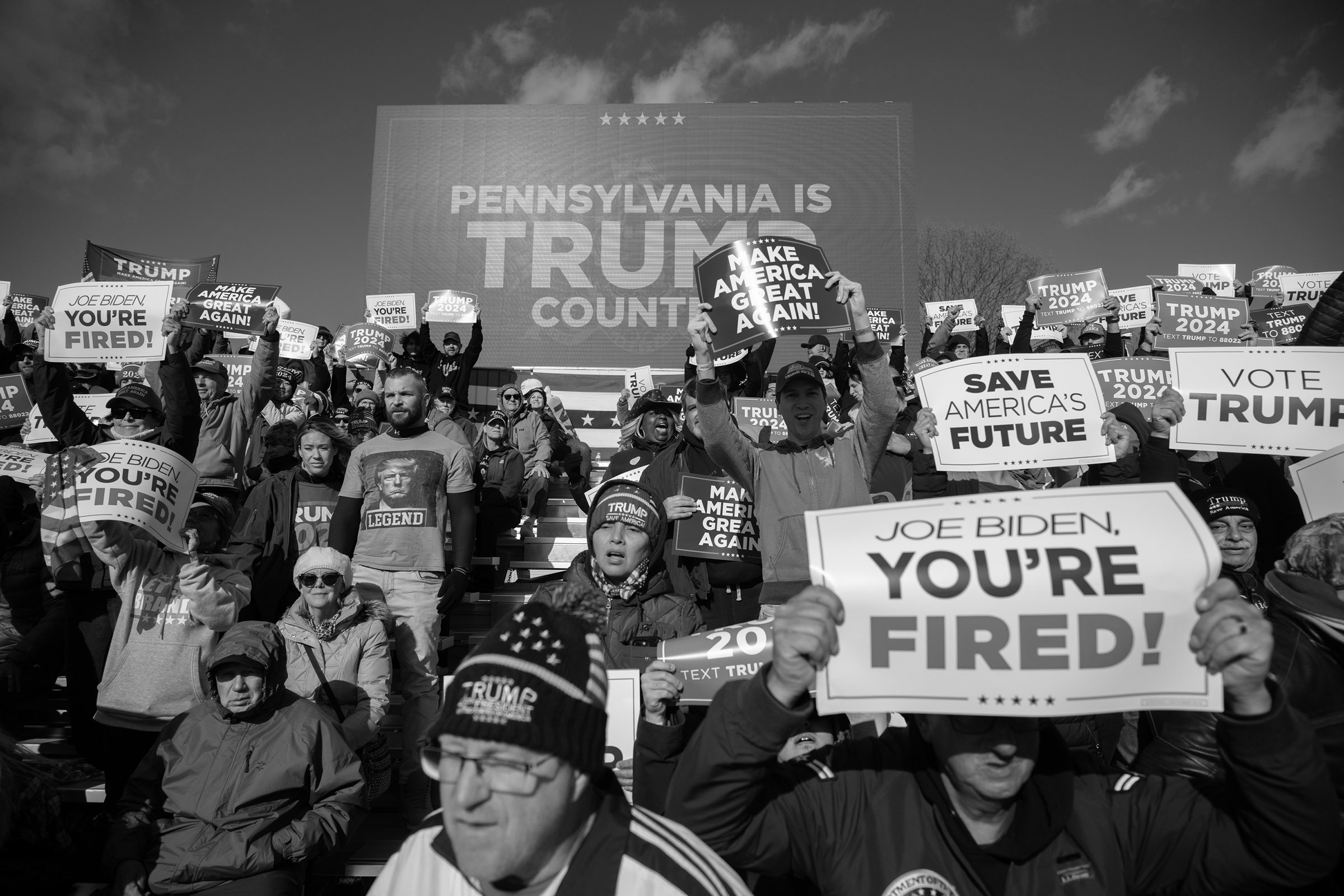
The crowd at a Trump campaign rally in Schnecksville, Penn., on April 13.Victor J. Blue for TIME
The courts, the Constitution, and a Congress of unknown composition would all have a say in whether Trump’s objectives come to pass. The machinery of Washington has a range of defenses: leaks to a free press, whistle-blower protections, the oversight of inspectors general. The same deficiencies of temperament and judgment that hindered him in the past remain present. If he wins, Trump would be a lame duck—contrary to the suggestions of some supporters, he tells TIME he would not seek to overturn or ignore the Constitution’s prohibition on a third term. Public opinion would also be a powerful check. Amid a popular outcry, Trump was forced to scale back some of his most draconian first-term initiatives, including the policy of separating migrant families. As George Orwell wrote in 1945, the ability of governments to carry out their designs “depends on the general temper in the country.”
Every election is billed as a national turning point. This time that rings true. To supporters, the prospect of Trump 2.0, unconstrained and backed by a disciplined movement of true believers, offers revolutionary promise. To much of the rest of the nation and the world, it represents an alarming risk. A second Trump term could bring “the end of our democracy,” says presidential historian Douglas Brinkley, “and the birth of a new kind of authoritarian presidential order.”
Trump steps onto the patio at Mar-a-Lago near dusk. The well-heeled crowd eating Wagyu steaks and grilled branzino pauses to applaud as he takes his seat. On this gorgeous evening, the club is a MAGA mecca. Billionaire donor Steve Wynn is here. So is Speaker of the House Mike Johnson, who is dining with the former President after a joint press conference proposing legislation to prevent noncitizens from voting. Their voting in federal elections is already illegal, and extremely rare, but remains a Trumpian fixation that the embattled Speaker appeared happy to co-sign in exchange for the political cover that standing with Trump provides.
At the moment, though, Trump’s attention is elsewhere. With an index finger, he swipes through an iPad on the table to curate the restaurant’s soundtrack. The playlist veers from Sinead O’Connor to James Brown to The Phantom of the Opera. And there’s a uniquely Trump choice: a rendition of “The Star-Spangled Banner” sung by a choir of defendants imprisoned for attacking the U.S. Capitol on Jan. 6, interspersed with a recording of Trump reciting the Pledge of Allegiance. This has become a staple of his rallies, converting the ultimate symbol of national unity into a weapon of factional devotion.
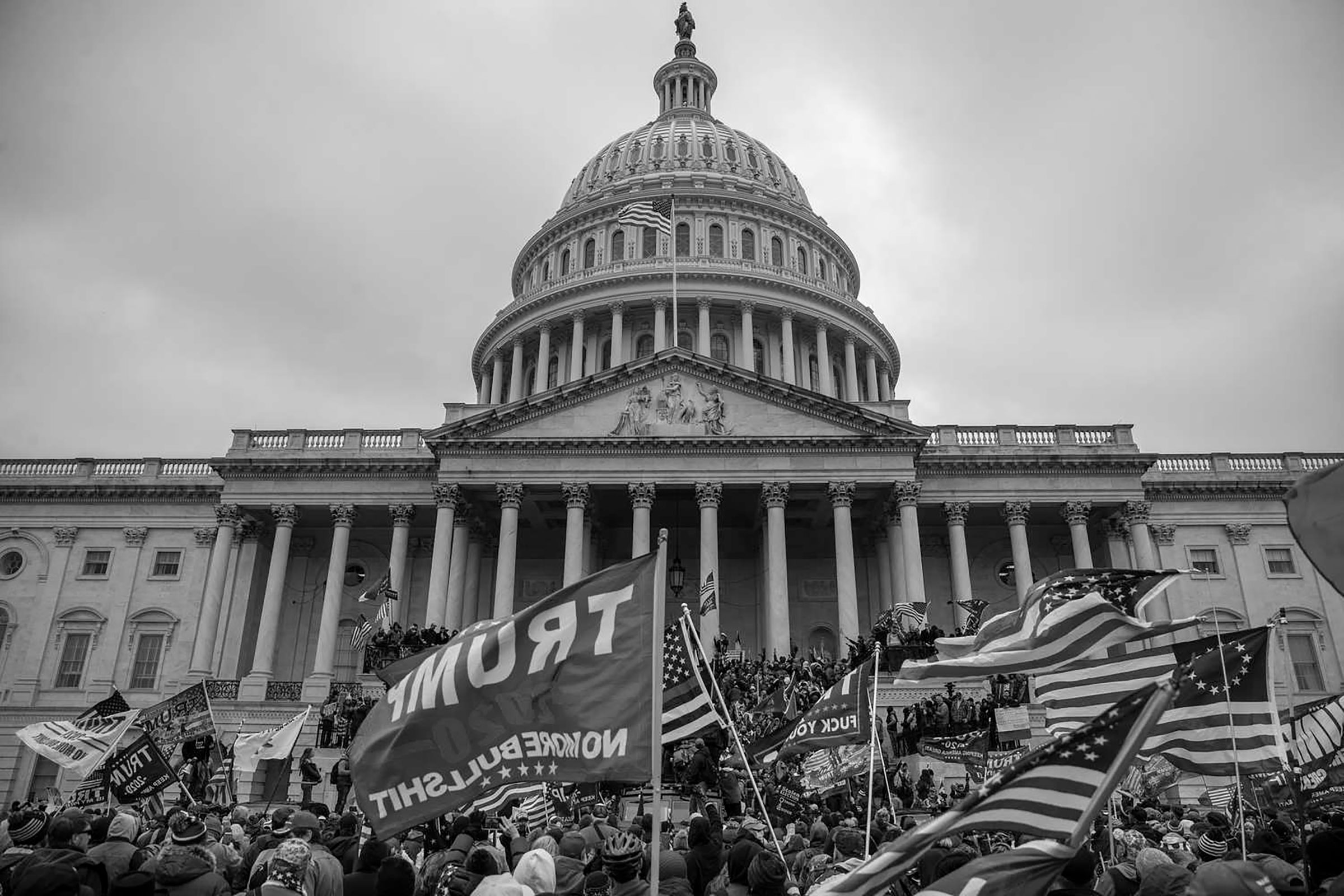
The spectacle picks up where his first term left off. The events of Jan. 6, during which a pro-Trump mob attacked the center of American democracy in an effort to subvert the peaceful transfer of power, was a profound stain on his legacy. Trump has sought to recast an insurrectionist riot as an act of patriotism. “I call them the J-6 patriots,” he says. When I ask whether he would consider pardoning every one of them, he says, “Yes, absolutely.” As Trump faces dozens of felony charges, including for election interference, conspiracy to defraud the United States, willful retention of national-security secrets, and falsifying business records to conceal hush-money payments, he has tried to turn legal peril into a badge of honor.
The Jan. 6, 2021 attack on the U.S. Capitol is a profound stain on Trump’s legacy, one that he has sought to recast as an act of patriotism.Victor J. Blue
In a second term, Trump’s influence on American democracy would extend far beyond pardoning powers. Allies are laying the groundwork to restructure the presidency in line with a doctrine called the unitary executive theory, which holds that many of the constraints imposed on the White House by legislators and the courts should be swept away in favor of a more powerful Commander in Chief.
Nowhere would that power be more momentous than at the Department of Justice. Since the nation’s earliest days, Presidents have generally kept a respectful distance from Senate-confirmed law-enforcement officials to avoid exploiting for personal ends their enormous ability to curtail Americans’ freedoms. But Trump, burned in his first term by multiple investigations directed by his own appointees, is ever more vocal about imposing his will directly on the department and its far-flung investigators and prosecutors.
In our Mar-a-Lago interview, Trump says he might fire U.S. Attorneys who refuse his orders to prosecute someone: “It would depend on the situation.” He’s told supporters he would seek retribution against his enemies in a second term. Would that include Fani Willis, the Atlanta-area district attorney who charged him with election interference, or Alvin Bragg, the Manhattan DA in the Stormy Daniels case, who Trump has previously said should be prosecuted? Trump demurs but offers no promises. “No, I don’t want to do that,” he says, before adding, “We’re gonna look at a lot of things. What they’ve done is a terrible thing.”
Trump has also vowed to appoint a “real special prosecutor” to go after Biden. “I wouldn’t want to hurt Biden,” he tells me. “I have too much respect for the office.” Seconds later, though, he suggests Biden’s fate may be tied to an upcoming Supreme Court ruling on whether Presidents can face criminal prosecution for acts committed in office. “If they said that a President doesn’t get immunity,” says Trump, “then Biden, I am sure, will be prosecuted for all of his crimes.” (Biden has not been charged with any, and a House Republican effort to impeach him has failed to unearth evidence of any crimes or misdemeanors, high or low.)
Such moves would be potentially catastrophic for the credibility of American law enforcement, scholars and former Justice Department leaders from both parties say. “If he ordered an improper prosecution, I would expect any respectable U.S. Attorney to say no,” says Michael McConnell, a former U.S. appellate judge appointed by President George W. Bush. “If the President fired the U.S. Attorney, it would be an enormous firestorm.” McConnell, now a Stanford law professor, says the dismissal could have a cascading effect similar to the Saturday Night Massacre, when President Richard Nixon ordered top DOJ officials to remove the special counsel investigating Watergate. Presidents have the constitutional right to fire U.S. Attorneys, and typically replace their predecessors’ appointees upon taking office. But discharging one specifically for refusing a President’s order would be all but unprecedented.
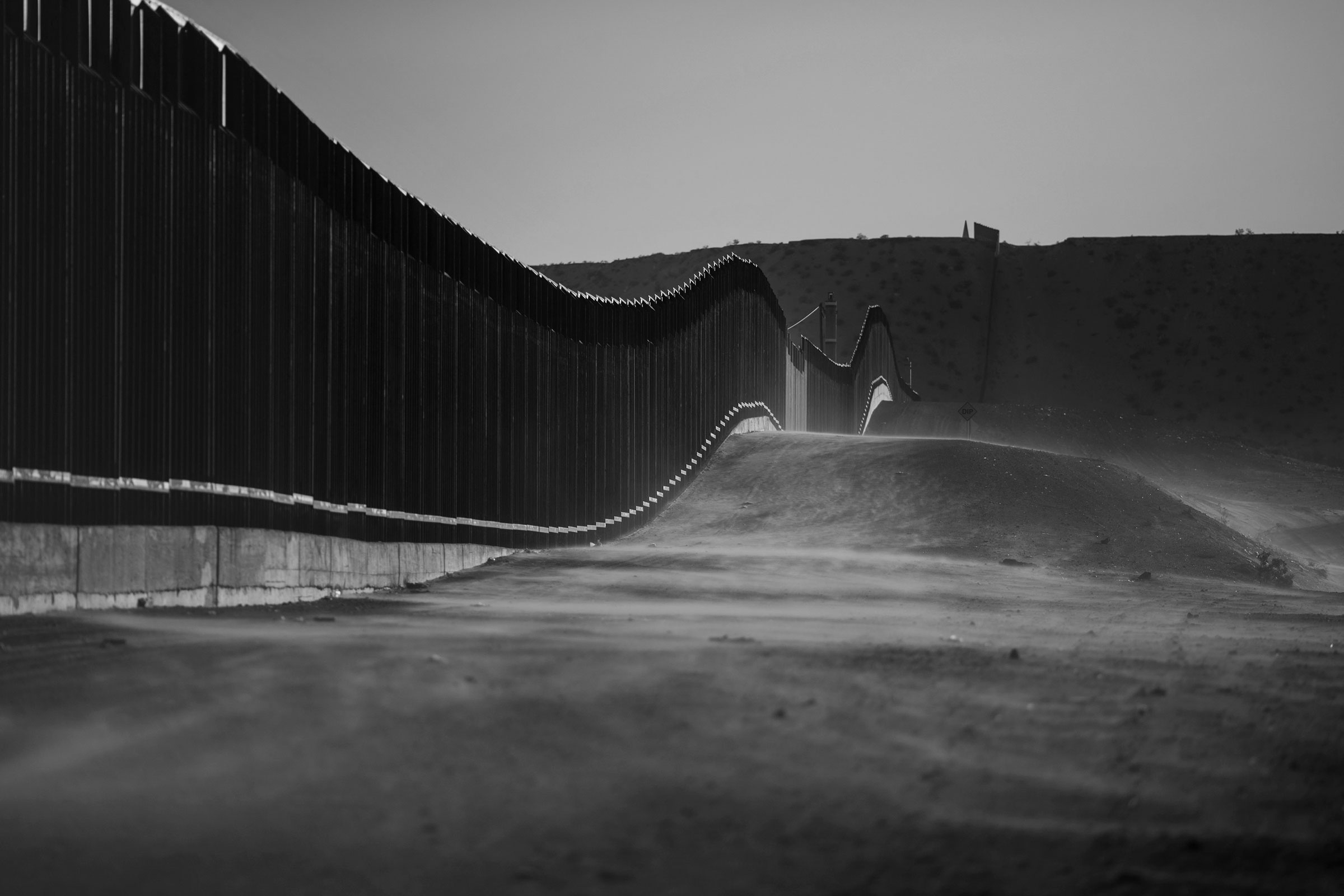
The U.S. border fence in Sunland Park, N.M..Victor J. Blue
Trump’s radical designs for presidential power would be felt throughout the country. A main focus is the southern border. Trump says he plans to sign orders to reinstall many of the same policies from his first term, such as the Remain in Mexico program, which requires that non-Mexican asylum seekers be sent south of the border until their court dates, and Title 42, which allows border officials to expel migrants without letting them apply for asylum. Advisers say he plans to cite record border crossings and fentanyl- and child-trafficking as justification for reimposing the emergency measures. He would direct federal funding to resume construction of the border wall, likely by allocating money from the military budget without congressional approval. The capstone of this program, advisers say, would be a massive deportation operation that would target millions of people. Trump made similar pledges in his first term, but says he plans to be more aggressive in a second. “People need to be deported,” says Tom Homan, a top Trump adviser and former acting head of Immigration and Customs Enforcement. “No one should be off the table.”
For an operation of that scale, Trump says he would rely mostly on the National Guard to round up and remove undocumented migrants throughout the country. “If they weren’t able to, then I’d use [other parts of] the military,” he says. When I ask if that means he would override the Posse Comitatus Act—an 1878 law that prohibits the use of military force on civilians—Trump seems unmoved by the weight of the statute. “Well, these aren’t civilians,” he says. “These are people that aren’t legally in our country.” He would also seek help from local police and says he would deny funding for jurisdictions that decline to adopt his policies. “There’s a possibility that some won’t want to participate,” Trump says, “and they won’t partake in the riches.”
As President, Trump nominated three Supreme Court Justices who voted to overturn Roe v. Wade, and he claims credit for his role in ending a constitutional right to an abortion. At the same time, he has sought to defuse a potent campaign issue for the Democrats by saying he wouldn’t sign a federal ban. In our interview at Mar-a-Lago, he declines to commit to vetoing any additional federal restrictions if they came to his desk. More than 20 states now have full or partial abortion bans, and Trump says those policies should be left to the states to do what they want, including monitoring women’s pregnancies. “I think they might do that,” he says. When I ask whether he would be comfortable with states prosecuting women for having abortions beyond the point the laws permit, he says, “It’s irrelevant whether I’m comfortable or not. It’s totally irrelevant, because the states are going to make those decisions.” President Biden has said he would fight state anti-abortion measures in court and with regulation.
Trump’s allies don’t plan to be passive on abortion if he returns to power. The Heritage Foundation has called for enforcement of a 19th century statute that would outlaw the mailing of abortion pills. The Republican Study Committee (RSC), which includes more than 80% of the House GOP conference, included in its 2025 budget proposal the Life at Conception Act, which says the right to life extends to “the moment of fertilization.” I ask Trump if he would veto that bill if it came to his desk. “I don’t have to do anything about vetoes,” Trump says, “because we now have it back in the states.”
Presidents typically have a narrow window to pass major legislation. Trump’s team is eyeing two bills to kick off a second term: a border-security and immigration package, and an extension of his 2017 tax cuts. Many of the latter’s provisions expire early in 2025: the tax cuts on individual income brackets, 100% business expensing, the doubling of the estate-tax deduction. Trump is planning to intensify his protectionist agenda, telling me he’s considering a tariff of more than 10% on all imports, and perhaps even a 100% tariff on some Chinese goods. Trump says the tariffs will liberate the U.S. economy from being at the mercy of foreign manufacturing and spur an industrial renaissance in the U.S. When I point out that independent analysts estimate Trump’s first term tariffs on thousands of products, including steel and aluminum, solar panels, and washing machines, may have cost the U.S. $316 billion and more than 300,000 jobs, by one account, he dismisses these experts out of hand. His advisers argue that the average yearly inflation rate in his first term—under 2%—is evidence that his tariffs won’t raise prices.
Since leaving office, Trump has tried to engineer a caucus of the compliant, clearing primary fields in Senate and House races. His hope is that GOP majorities replete with MAGA diehards could rubber-stamp his legislative agenda and nominees. Representative Jim Banks of Indiana, a former RSC chairman and the GOP nominee for the state’s open Senate seat, recalls an August 2022 RSC planning meeting with Trump at his residence in Bedminster, N.J. As the group arrived, Banks recalls, news broke that Mar-a-Lago had been raided by the FBI. Banks was sure the meeting would be canceled. Moments later, Trump walked through the doors, defiant and pledging to run again. “I need allies there when I’m elected,” Banks recalls Trump saying. The difference in a second Trump term, Banks says now, “is he’s going to have the backup in Congress that he didn’t have before.”
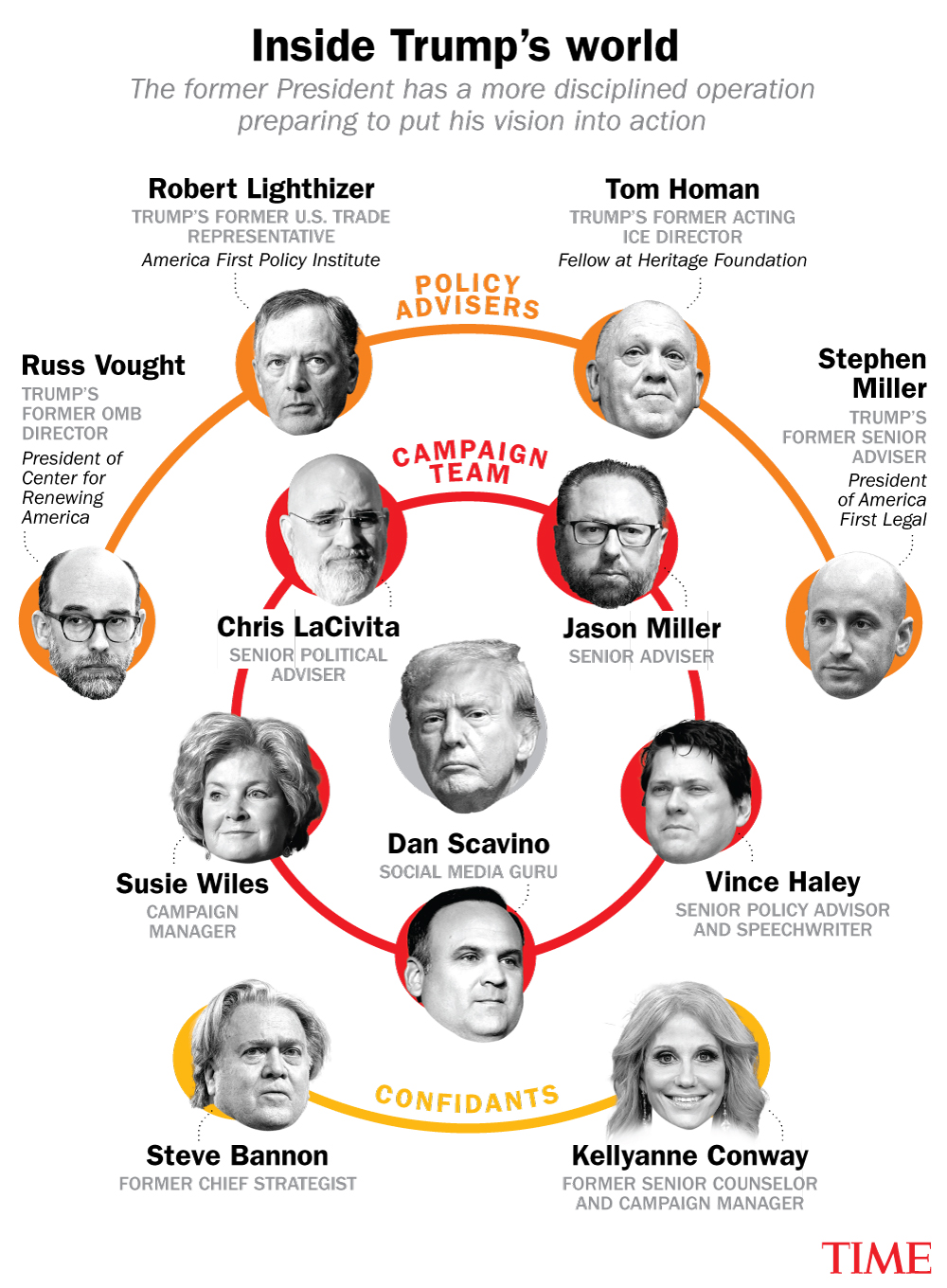
Haley, Scavino, Wiles: AP (3); Bannon, Conway, Homan, LaCivita, Lighthizer, J. Miller, S. Miller, Trump, Vought: Getty Images (9)
Trump’s intention to remake America’s relations abroad may be just as consequential. Since its founding, the U.S. has sought to build and sustain alliances based on the shared values of political and economic freedom. Trump takes a much more transactional approach to international relations than his predecessors, expressing disdain for what he views as free-riding friends and appreciation for authoritarian leaders like President Xi Jinping of China, Prime Minister Viktor Orban of Hungary, or former President Jair Bolsonaro of Brazil.
That’s one reason America’s traditional allies were horrified when Trump recently said at a campaign rally that Russia could “do whatever the hell they want” to a NATO country he believes doesn’t spend enough on collective defense. That wasn’t idle bluster, Trump tells me. “If you’re not going to pay, then you’re on your own,” he says. Trump has long said the alliance is ripping the U.S. off. Former NATO Secretary-General Jens Stoltenberg credited Trump’s first-term threat to pull out of the alliance with spurring other members to add more than $100 billion to their defense budgets.
But an insecure NATO is as likely to accrue to Russia’s benefit as it is to America’s. President Vladimir Putin’s 2022 invasion of Ukraine looks to many in Europe and the U.S. like a test of his broader vision to reconstruct the Soviet empire. Under Biden and a bipartisan Congress, the U.S. has sent more than $100 billion to Ukraine to defend itself. It’s unlikely Trump would extend the same support to Kyiv. After Orban visited Mar-a-Lago in March, he said Trump “wouldn’t give a penny” to Ukraine. “I wouldn’t give unless Europe starts equalizing,” Trump hedges in our interview. “If Europe is not going to pay, why should we pay? They’re much more greatly affected. We have an ocean in between us. They don’t.” (E.U. nations have given more than $100 billion in aid to Ukraine as well.)
Trump has historically been reluctant to criticize or confront Putin. He sided with the Russian autocrat over his own intelligence community when it asserted that Russia interfered in the 2016 election. Even now, Trump uses Putin as a foil for his own political purposes. When I asked Trump why he has not called for the release of Wall Street Journal reporter Evan Gershkovich, who has been unjustly held on spurious charges in a Moscow prison for a year, Trump says, “I guess because I have so many other things I’m working on.” Gershkovich should be freed, he adds, but he doubts it will happen before the election. “The reporter should be released and he will be released,” Trump tells me. “I don’t know if he’s going to be released under Biden. I would get him released.”
America’s Asian allies, like its European ones, may be on their own under Trump. Taiwan’s Foreign Minister recently said aid to Ukraine was critical in deterring Xi from invading the island. Communist China’s leaders “have to understand that things like that can’t come easy,” Trump says, but he declines to say whether he would come to Taiwan’s defense.
Trump is less cryptic on current U.S. troop deployments in Asia. If South Korea doesn’t pay more to support U.S. troops there to deter Kim Jong Un’s increasingly belligerent regime to the north, Trump suggests the U.S. could withdraw its forces. “We have 40,000 troops that are in a precarious position,” he tells TIME. (The number is actually 28,500.) “Which doesn’t make any sense. Why would we defend somebody? And we’re talking about a very wealthy country.”
Transactional isolationism may be the main strain of Trump’s foreign policy, but there are limits. Trump says he would join Israel’s side in a confrontation with Iran. “If they attack Israel, yes, we would be there,” he tells me. He says he has come around to the now widespread belief in Israel that a Palestinian state existing side by side in peace is increasingly unlikely. “There was a time when I thought two-state could work,” he says. “Now I think two-state is going to be very, very tough.”
Yet even his support for Israel is not absolute. He’s criticized Israel’s handling of its war against Hamas, which has killed more than 30,000 Palestinians in Gaza, and has called for the nation to “get it over with.” When I ask whether he would consider withholding U.S. military aid to Israel to push it toward winding down the war, he doesn’t say yes, but he doesn’t rule it out, either. He is sharply critical of Israeli Prime Minister Benjamin Netanyahu, once a close ally. “I had a bad experience with Bibi,” Trump says. In his telling, a January 2020 U.S. operation to assassinate a top Iranian general was supposed to be a joint attack until Netanyahu backed out at the last moment. “That was something I never forgot,” he says. He blames Netanyahu for failing to prevent the Oct. 7 attack, when Hamas militants infiltrated southern Israel and killed nearly 1,200 people amid acts of brutality including burning entire families alive and raping women and girls. “It happened on his watch,” Trump says.
On the second day of Trump’s New York trial on April 17, I stand behind the packed counter of the Sanaa Convenience Store on 139th Street and Broadway, waiting for Trump to drop in for a postcourt campaign stop. He chose the bodega for its history. In 2022, one of the store’s clerks fatally stabbed a customer who attacked him. Bragg, the Manhattan DA, charged the clerk with second-degree murder. (The charges were later dropped amid public outrage over video footage that appeared to show the clerk acting in self-defense.) A baseball bat behind the counter alludes to lingering security concerns. When Trump arrives, he asks the store’s co-owner, Maad Ahmed, a Yemeni immigrant, about safety. “You should be allowed to have a gun,” Trump tells Ahmed. “If you had a gun, you’d never get robbed.”
On the campaign trail, Trump uses crime as a cudgel, painting urban America as a savage hell-scape even though violent crime has declined in recent years, with homicides sinking 6% in 2022 and 13% in 2023, according to the FBI. When I point this out, Trump tells me he thinks the data, which is collected by state and local police departments, is rigged. “It’s a lie,” he says. He has pledged to send the National Guard into cities struggling with crime in a second term—possibly without the request of governors—and plans to approve Justice Department grants only to cities that adopt his preferred policing methods like stop-and-frisk.
To critics, Trump’s preoccupation with crime is a racial dog whistle. In polls, large numbers of his supporters have expressed the view that antiwhite racism now represents a greater problem in the U.S. than the systemic racism that has long afflicted Black Americans. When I ask if he agrees, Trump does not dispute this position. “There is a definite antiwhite feeling in the country,” he tells TIME, “and that can’t be allowed either.” In a second term, advisers say, a Trump Administration would rescind Biden’s Executive Orders designed to boost diversity and racial equity.
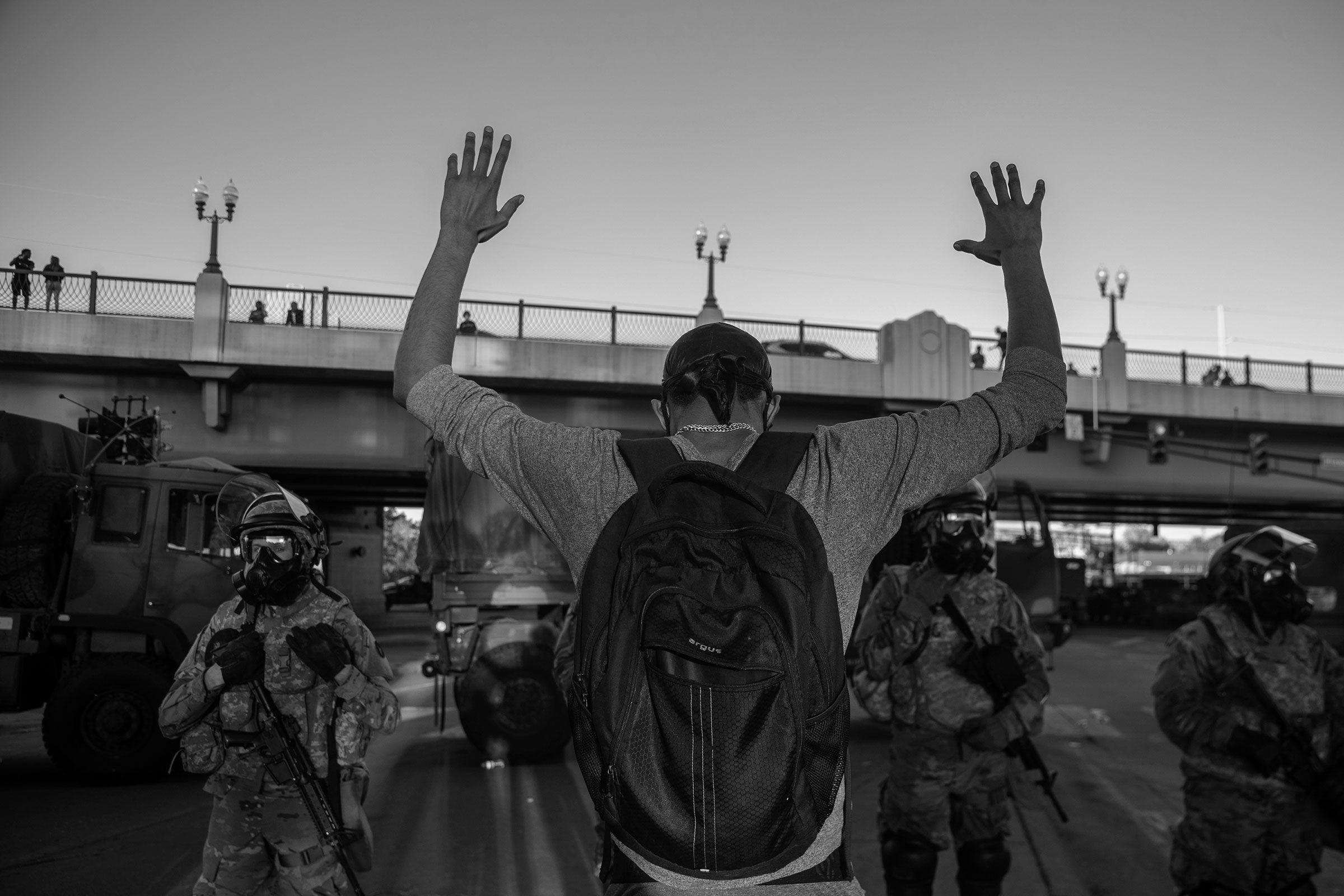
A protester confronts members of the Minnesota National Guard after the murder of George Floyd.Victor J. Blue
Trump’s ability to campaign for the White House in the midst of an unprecedented criminal trial is the product of a more professional campaign operation that has avoided the infighting that plagued past versions. “He has a very disciplined team around him,” says Representative Elise Stefanik of New York. “That is an indicator of how disciplined and focused a second term will be.” That control now extends to the party writ large. In 2016, the GOP establishment, having failed to derail Trump’s campaign, surrounded him with staff who sought to temper him. Today the party’s permanent class have either devoted themselves to the gospel of MAGA or given up. Trump has cleaned house at the Republican National Committee, installing handpicked leaders—including his daughter-in-law—who have reportedly imposed loyalty tests on prospective job applicants, asking whether they believe the false assertion that the 2020 election was stolen. (The RNC has denied there is a litmus test.) Trump tells me he would have trouble hiring anyone who admits Biden won: “I wouldn’t feel good about it.”
Policy groups are creating a government-in-waiting full of true believers. The Heritage Foundation’s Project 2025 has drawn up plans for legislation and Executive Orders as it trains prospective personnel for a second Trump term. The Center for Renewing America, led by Russell Vought, Trump’s former director of the Office of Management and Budget, is dedicated to disempowering the so-called administrative state, the collection of bureaucrats with the power to control everything from drug-safety determinations to the contents of school lunches. The America First Policy Institute is a research haven of pro-Trump right-wing populists. America First Legal, led by Trump’s immigration adviser Stephen Miller, is mounting court battles against the Biden Administration.
The goal of these groups is to put Trump’s vision into action on day one. “The President never had a policy process that was designed to give him what he actually wanted and campaigned on,” says Vought. “[We are] sorting through the legal authorities, the mechanics, and providing the momentum for a future Administration.” That includes a litany of boundary-pushing right-wing policies, including slashing Department of Justice funding and cutting climate and environmental regulations.
Trump’s campaign says he would be the final decision-maker on which policies suggested by these organizations would get implemented. But at the least, these advisers could form the front lines of a planned march against what Trump dubs the Deep State, marrying bureaucratic savvy to their leader’s anti-bureaucratic zeal. One weapon in Trump’s second-term “War on Washington” is a wonky one: restoring the power of impoundment, which allowed Presidents to withhold congressionally appropriated funds. Impoundment was a favorite maneuver of Nixon, who used his authority to freeze funding for subsidized housing and the Environmental Protection Agency. Trump and his allies plan to challenge a 1974 law that prohibits use of the measure, according to campaign policy advisers.
Another inside move is the enforcement of Schedule F, which allows the President to fire nonpolitical government officials and which Trump says he would embrace. “You have some people that are protected that shouldn’t be protected,” he says. A senior U.S. judge offers an example of how consequential such a move could be. Suppose there’s another pandemic, and President Trump wants to push the use of an untested drug, much as he did with hydroxychloroquine during COVID-19. Under Schedule F, if the drug’s medical reviewer at the Food and Drug Administration refuses to sign off on its use, Trump could fire them, and anyone else who doesn’t approve it. The Trump team says the President needs the power to hold bureaucrats accountable to voters. “The mere mention of Schedule F,” says Vought, “ensures that the bureaucracy moves in your direction.”
It can be hard at times to discern Trump’s true intentions. In his interviews with TIME, he often sidestepped questions or answered them in contradictory ways. There’s no telling how his ego and self-destructive behavior might hinder his objectives. And for all his norm-breaking, there are lines he says he won’t cross. When asked if he would comply with all orders upheld by the Supreme Court, Trump says he would.
But his policy preoccupations are clear and consistent. If Trump is able to carry out a fraction of his goals, the impact could prove as transformative as any presidency in more than a century. “He’s in full war mode,” says his former adviser and occasional confidant Stephen Bannon. Trump’s sense of the state of the country is “quite apocalyptic,” Bannon says. “That’s where Trump’s heart is. That’s where his obsession is.”
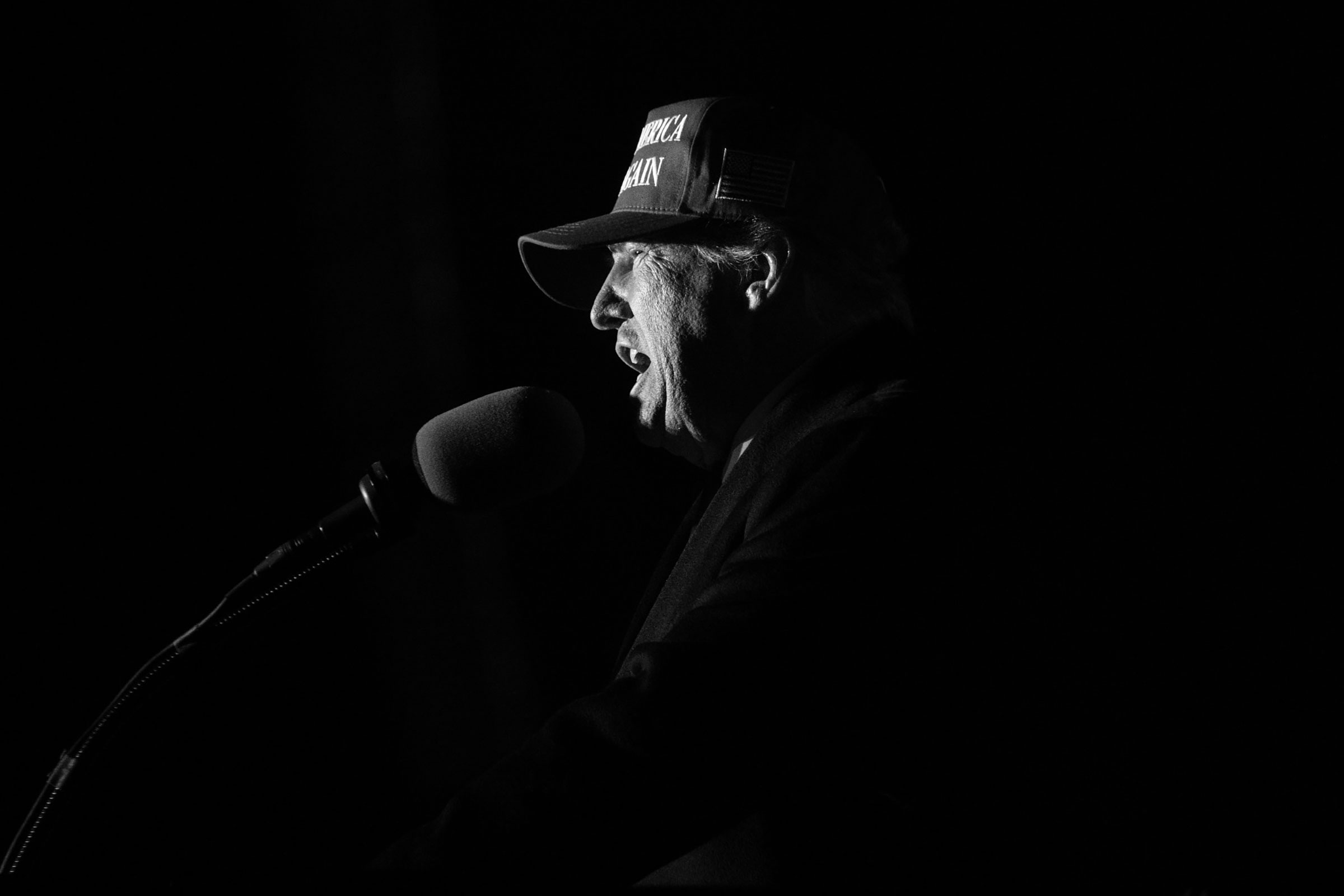
Trump speaks at his last rally ahead of his criminal trial in Schnecksville, Penn., on April 13.Victor J. Blue for TIME
These obsessions could once again push the nation to the brink of crisis. Trump does not dismiss the possibility of political violence around the election. “If we don’t win, you know, it depends,” he tells TIME. “It always depends on the fairness of the election.” When I ask what he meant when he baselessly claimed on Truth Social that a stolen election “allows for the termination of all rules, regulations and articles, even those found in the Constitution,” Trump responded by denying he had said it. He then complained about the “Biden-inspired” court case he faces in New York and suggested that the “fascists” in America’s government were its greatest threat. “I think the enemy from within, in many cases, is much more dangerous for our country than the outside enemies of China, Russia, and various others,” he tells me.
Toward the end of our conversation at Mar-a-Lago, I ask Trump to explain another troubling comment he made: that he wants to be dictator for a day. It came during a Fox News town hall with Sean Hannity, who gave Trump an opportunity to allay concerns that he would abuse power in office or seek retribution against political opponents. Trump said he would not be a dictator—“except for day one,” he added. “I want to close the border, and I want to drill, drill, drill.”
Trump says that the remark “was said in fun, in jest, sarcastically.” He compares it to an infamous moment from the 2016 campaign, when he encouraged the Russians to hack and leak Hillary Clinton’s emails. In Trump’s mind, the media sensationalized those remarks too. But the Russians weren’t joking: among many other efforts to influence the core exercise of American democracy that year, they hacked the Democratic National Committee’s servers and disseminated its emails through WikiLeaks.
Whether or not he was kidding about bringing a tyrannical end to our 248-year experiment in democracy, I ask him, Don’t you see why many Americans see such talk of dictatorship as contrary to our most cherished principles? Trump says no. Quite the opposite, he insists. “I think a lot of people like it.” —With reporting by Leslie Dickstein, Simmone Shah, and Julia Zorthian
Trump Reveals Exactly Who He’d Go After in a Second Term
Hafiz Rashid – April 30, 2024
Donald Trump has made no secret of his plans to take revenge if he makes his way back to the White House.
In a new interview with Time magazine, Trump said he would consider firing U.S. attorneys who refuse to follow his orders on prosecution of others.
“It depends on the situation, honestly,” he said, undermining the idea of independent law enforcement.
When asked if he would prosecute Fani Willis or Alvin Bragg, the Atlanta-area and Manhattan district attorneys who are currently prosecuting him, he also wouldn’t outright reject the idea.
Well you said Alvin Bragg should be prosecuted. Would you instruct your attorney general to prosecute him?
Trump: When did I say Alvin Bragg should be prosecuted?
It was at a rally.
Trump: I don’t think I said that, no.
I can pull it up.
Trump: No.
And when it came to Biden, Trump again made clear he’s open to the idea of prosecution.
After initially saying he “wouldn’t want to hurt Biden,” Trump seconds later said it all depends on the Supreme Court’s immunity ruling. “If they said that a president doesn’t get immunity,” said Trump, “then Biden, I am sure, will be prosecuted for all of his crimes.”
Trump also revived the idea of enforcing Schedule F, which allows the president to fire nonpolitical government officials. This would allow him to fire civil servants who refuse to carry out his orders.
“You have some people that are protected that shouldn’t be protected,” he said.
It’s no secret that Trump and many of his far-right allies want to purge the government of civil servants who aren’t loyal to their agenda. Famously, Trump adviser Steven Bannon said he wanted to dismantle the administrative state. President Biden has taken steps to bolster and strengthen the administrative state, which would be in clear jeopardy if Trump is reelected.
In the rest of the Time interview, Trump was at times contradictory but also said that he would consider pardoning every single one of the January 6 rioters and take steps to deport millions of undocumented immigrants via detention camps and the U.S. military. In any case, if he wins reelection, it’s safe to say that the U.S. government would be upended, with Trump using all of the legal means at his disposal. Those who want to preserve democracy as we know it would have a tall order on their hands.
More than 30 years ago, the economists Rudiger Dornbusch (one of my mentors) and Sebastian Edwards wrote a classic paper on what they called “macroeconomic populism.” Their motivating examples were inflationary outbreaks under left-wing regimes in Latin America, but it seemed clear that the key issue wasn’t left-wing governance per se; it was, instead, what happens when governments engage in magical thinking. Indeed, even at the time they could have included the experience of the military dictatorship that ruled Argentina from 1976 to 1983, which killed or “disappeared” thousands of leftists but also pursued irresponsible economic policies that led to a balance-of-payments crisis and soaring inflation.
Modern examples of the syndrome include leftist governments like that of Venezuela, but also right-wing nationalist governments like that of Recep Tayyip Erdogan of Turkey, who insisted that he could fight inflation by cutting interest rates.
Will the United States be next?
I wish people would stop calling Donald Trump a populist. He has, after all, never demonstrated any inclination to help working Americans, and his economic policies really didn’t help — his 2017 tax cut, in particular, was a giveaway to the wealthy. But his behavior during the Covid-19 pandemic showed that he’s as addicted to magical thinking and denial of reality as any petty strongman or dictator, which makes it all too likely that he might preside over the type of problems that result when policies are based on quack economics.
Now, destructive economic policy isn’t the thing that alarms me the most about Trump’s potential return to power. Prospects for retaliation against his political opponents, huge detention camps for undocumented immigrants and more loom much larger in my mind. Still, it does seem worth noting that even as Republicans denounce President Biden for the inflation that occurred on his watch, Trump’s advisers have been floating policy ideas that could be far more inflationary than anything that has happened so far.
It’s true that inflation surged in 2021 and 2022 before subsiding, and there’s a vigorous debate about how much of a role Biden’s economic policies played. I’m skeptical, among other things because inflation in the United States since the beginning of the Covid pandemic has closely tracked with that of other advanced economies. What’s notable, however, is what the Biden administration didn’t do when the Federal Reserve began raising interest rates to fight inflation. There was a clear risk that rate hikes would cause a politically disastrous recession, although this hasn’t happened so far. But Biden and company didn’t pressure the Fed to hold off; they respected the Fed’s independence, letting it do what it thought was necessary to bring inflation under control.
Does anyone imagine that Trump — who in 2019 insisted that the Fed should cut interest rates to zero or below — would have exercised comparable restraint?
As a number of observers have noted, some of Trump’s policy proposals would surely raise inflation. An immigration crackdown would undermine one of the key factors that have allowed America to combine solid economic growth with falling inflation. Proposals for a wave of new tariffs would raise consumer prices — and the odds are that Trump would raise tariffs well beyond the 10 percent rate he’s been floating if it didn’t significantly reduce U.S. trade deficits, which it wouldn’t.
What’s really worrisome, however, are indications that a future Trump regime would manipulate monetary policy in pursuit of short-run political advantage, justifying its actions with crank economic doctrines.
The Federal Reserve is a quasi-independent institution, not because of any sacrosanct constitutional principle, but because nations have found that in practice it’s important to limit partisan influence over interest rates and money creation. But in recent weeks there have been reports that Trump advisers want to take away much of the Fed’s independence, presumably so that Trump could juice the economy and the stock market the way he wanted to in 2019.
There are also reports that Trump advisers, obsessed with the trade deficit, want to devalue the dollar, which would indeed help exports but would also be clearly inflationary — raising import prices and overheating a U.S. economy that is already running hot. (In fact, our economic strength is probably the main reason the dollar has been rising.)
And even as they talk about weakening the dollar, Trump advisers are reportedly discussing punishing other countries that reduce their use of the greenback — which seems both contradictory and to involve a delusional view of how much economic power even America possesses.
The details of these bad ideas are probably less important than the mind-set they reveal, one that rejects hard-learned lessons from the past and buys into economic fantasies.
And how would Trump respond if things went wrong? Remember, he suggested we look into fighting Covid by injecting disinfectant. Why expect him to be any less inclined to magical thinking in dealing with, say, a new surge in inflation?
Again, macroeconomic policy isn’t my biggest worry about what could happen if Trump returns to power. But it’s definitely a worry.
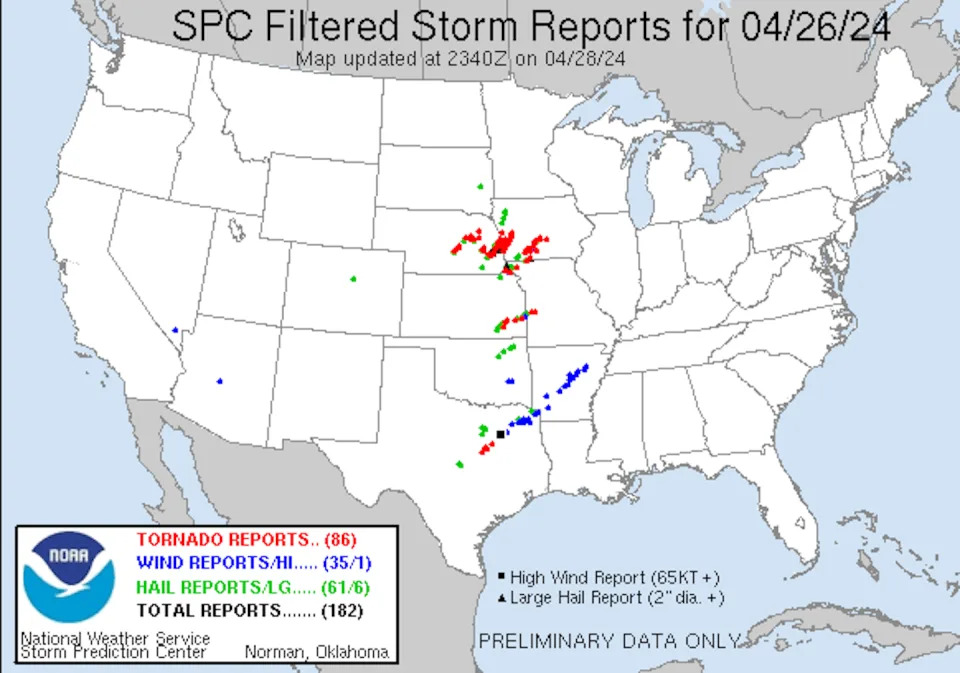
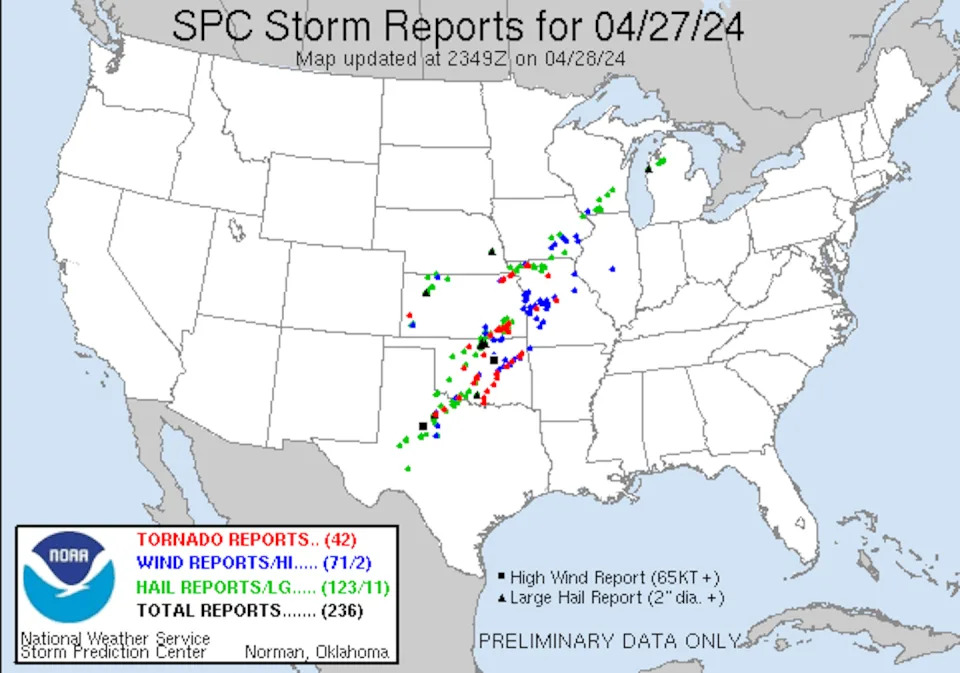
Spring is tornado season in the U.S., but the tornadoes in Nebraska and Iowa were quite a bit farther north and east of what would be typical for tornadoes in late April, when tornado activity is more common in Oklahoma and Texas.
The outbreak did fit another pattern for severe weather events, however, that occur as the atmosphere transitions out of El Niño. And this is exactly what was happening in late April.
I study tornadoes and the conditions under which they form. Here’s how these storm systems develop and what El Niño has to do with it.
Preliminary reports of tornadoes and hail during severe storms on April 26, 2024, collected by the National Oceanic and Atmospheric Administration’s Storm Prediction Center. NOAAPreliminary reports of tornadoes and hail on April 27, 2024, collected by the Storm Prediction Center. NOAA.
The right conditions for a tornado
Two basic conditions are required to produce the rotating supercell thunderstorms that are capable of generating tornadoes:
Warm moist surface conditions and cold air above.
Winds that change in both speed and direction as you move up in the atmosphere, known as vertical wind shear.
Picture a kid who has a helium balloon at a party and releases it – the balloon floats upward. Like that helium balloon, the warm moist air is less dense than the surrounding colder air, so it rises, accelerating upward. This upward motion releases heat, moisture and energy, and causes thunderstorms to develop.
As with many severe weather outbreaks that occur in the U.S., the atmosphere became primed for storms as warm moist air at the surface was being transported northward from the Gulf of Mexico by a series of surface low-pressure systems.
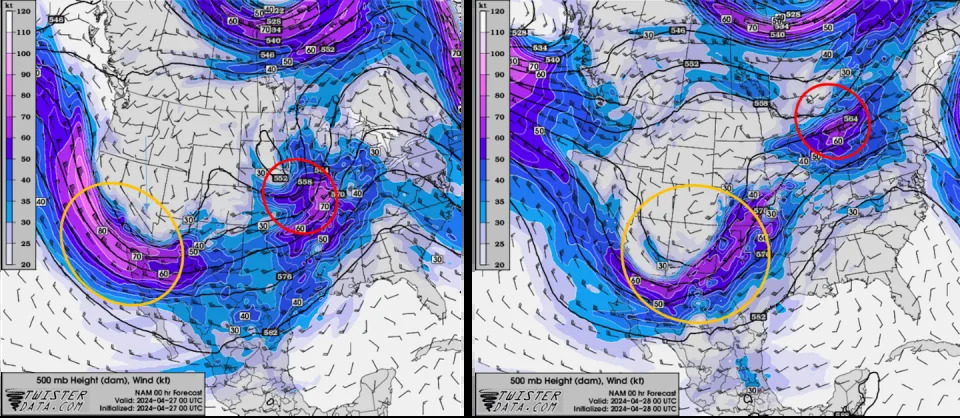
Higher up, about halfway between the ground and where airplanes fly, atmospheric waves within and below the jet stream were transporting cold air through the middle part of the atmosphere. These waves, formally called Rossby waves and commonly referred to as troughs and ridges, also enhanced vertical wind shear.
A small atmospheric wave that moved through the Central Plains and Midwest on April 26, helped trigger the tornadoes in Nebraska and Iowa, including a large, destructive tornado in the suburbs of Omaha, Nebraska, and in the town of Minden, Iowa, about 30 miles away.
The following day, a bigger wave moved through Oklahoma, where tornadoes damaged several small towns that evening.
The two images show the short-wave trough, circled in red, and the longer wave, circled in orange, traveling behind it. On the left is April 26, with the short-wave trough moving through Nebraska. On the right, the longer wave is affecting Oklahoma and Kansas on April 27. TwisterData.com
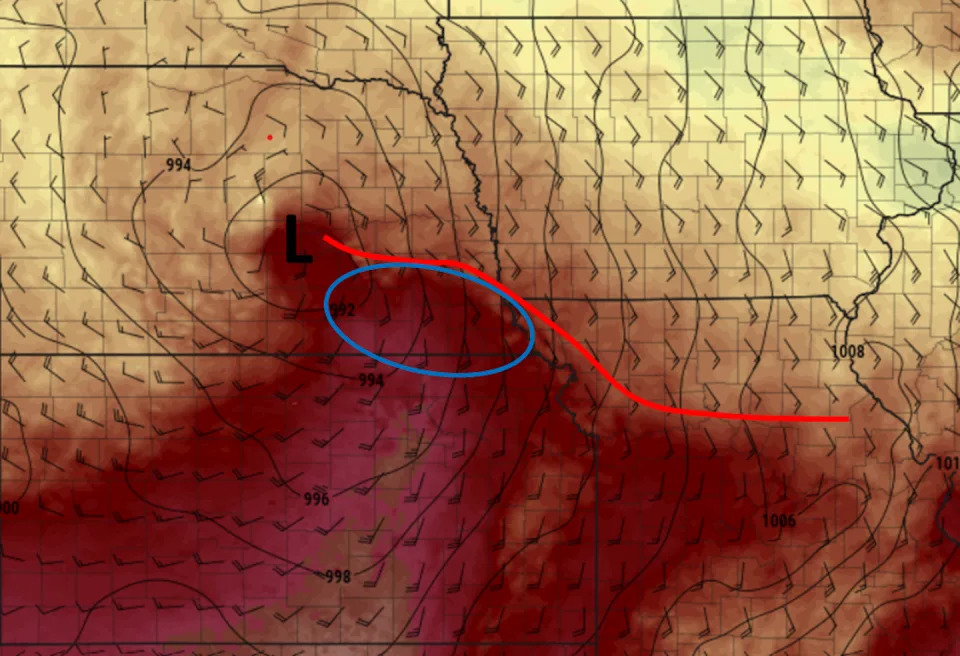
What was especially important was how close these parameters were to the center of the surface low-pressure system and a warm front that extended just to the east of it. The tornado-producing storms were able to tap into that instability and draw on the strong vertical wind shear generated in the vicinity of the warm front.
Surface temperatures (colors), winds (barbs indicating direction the wind was blowing from), surface pressure (solid black contours) indicating the location of the low pressure system (L), the warm front (red line) and the region of favorable conditions (blue circle) on the evening of April, 26, 2024. Pivotal Weather
When El Niño decays, the atmospheric waves change and can become wavier, so they have a greater amplitude. That tends to enhance conditions needed for tornadoes.
The U.S. often sees more frequent tornadoes when the climate is transitioning out of El Niño. The strong El Niño of 2023-24 was decaying in April 2024, and forecasters expect it to be gone by summer.
Weather experts are getting better at predicting tornado conditions. It is not uncommon now to know days in advance of the actual event that an elevated threat exists. Forecasters have high-resolution weather models that can anticipate storms at an appropriate spatial scale to provide a sense of the likely organization of the storms and come close to the location.
The better we understand these storms’ attributes, the better those forecasts and warnings can become.
This article is republished from The Conversation, a nonprofit, independent news organization bringing you facts and trustworthy analysis to help you make sense of our complex world. It was written by: Jana Lesak Houser, The Ohio State University
An El Niño-less summer is coming. Here’s what that could mean for the US
Mary Gilbert, CNN Meteorologist – April 29, 2024
It may be spring, but it’s not too soon to look ahead to summer weather, especially when El Niño – a player in last year’s especially brutal summer – is rapidly weakening and will all but vanish by the time the season kicks into gear.
El Niño’s disappearing act doesn’t mean relief from the heat. Not when the world is heating up due to human-driven climate change. In fact, forecasters think it could mean the opposite.
What this summer’s weather could look like
El Niño is a natural climate pattern marked by warmer than average ocean temperatures in the equatorial Pacific. When the water gets cooler than average, it’s a La Niña. Either phase can have an effect on weather around the globe.
By June, forecasters expect those ocean temperatures to hover close to normal, marking a so-called neutral phase, before La Niña builds in early summer, according to NOAA’s Climate Prediction Center.
But the strength of El Niño or La Niña’s influence on US weather isn’t uniform and varies greatly based on the strength of the phenomena and the season itself.
The influence of El Niño or La Niña on US weather isn’t as clear-cut in the summer as it is in the winter, especially during a transition between the two phases, said Michelle L’Heureux, a climate scientist with the Climate Prediction Center.
Temperature differences between the tropics and North America are more extreme in the winter, L’Heureux explained. This allows the jet stream to become quite strong and influential, reliably sending storms into certain parts of the US.
In the summer, the difference in temperature between the two regions isn’t as significant and the obvious influence on US weather wanes.
But we can look back at what happened during similar summers to get a glimpse of what could come this summer.
In short: It’s not cool.
The summer of 2016 was one of the hottest on record for the Lower 48. La Niña conditions were in place by midsummer and followed a very strong El Niño winter.
Summer 2020 followed a similar script: La Niña conditions formed midsummer after a weak El Niño winter but still produced one of the hottest summers on record and the most active hurricane season on record.
Then there’s the fact that these climate phenomena are playing out in a warming world, raising the ceiling on the extreme heat potential.
“This obviously isn’t our grandmother’s transition out of El Niño – we’re in a much warmer world so the impacts will be different,” L’Heureux, said. “We’re seeing the consequences of climate change.”
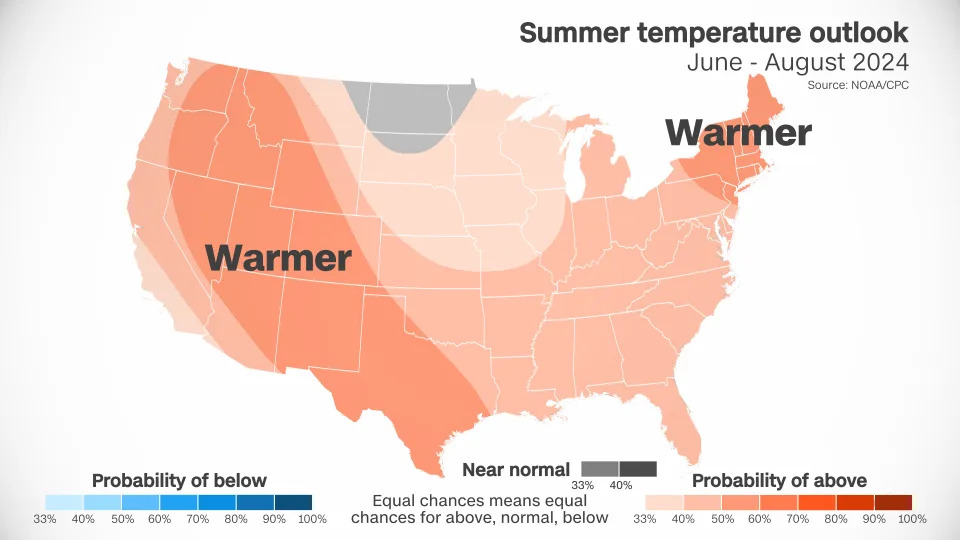
Current summer temperature outlooks for the US are certainly bringing the heat.
CNN Weather
Above-average temperatures are forecast over nearly every square mile of the Lower 48. Only portions of the Dakotas, Minnesota and Montana have an equal chance of encountering near normal, above- or below-normal temperatures.
A huge portion of the West is likely to have warmer conditions than normal. This forecast tracks with decades of climate trends, according to L’Heureux.
Summers have warmed more in the West than in any other region of the US since the early 1990s, according to data from NOAA. Phoenix is a prime example. The city’s average July temperature last year was an unheard-of 102.7 degrees, making it the hottest month on record for any US city. It was also the deadliest year on record for heat in Maricopa County, where Phoenix is located.
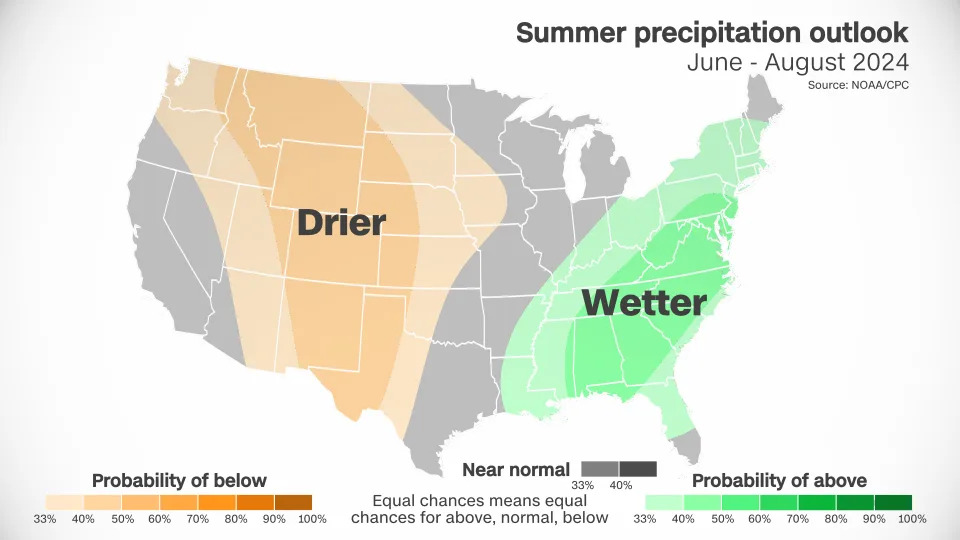
Forecasts also show a worrying precipitation trend for parts of the West.
CNN Weather
Large sections of the West and the central US are likely to be drier than normal. This dryness, combined with above-normal heat, which only amplifies the dryness, could be a recipe for new or worsening drought.
Wetter than normal conditions are in the forecast from the Gulf Coast to the Northeast. Stormy weather could be a consistent companion for much of the East – but whether it comes from typical rain and thunderstorms or tropical activity won’t be known for months.
A warming world generates more fuel for more tropical activity and stronger storms. La Niña tends to produce favorable atmospheric conditions to allow storms to form and hold together in the Atlantic.
“We anticipate a well above-average probability for major hurricanes making landfall along the continental United States coastline and in the Caribbean,” the group said in a news release.
Which foods have the most plastics? You may be surprised
Sandee LaMotte, CNN – April 22, 2024
“How much plastic will you have for dinner, sir? And you, ma’am?” While that may seem like a line from a satirical skit on Saturday Night Live, research is showing it’s much too close to reality.
Ninety percent of animal and vegetable protein samples tested positive for microplastics, teeny polymer fragments that can range from less than 0.2 inch (5 millimeters) down to 1/25,000th of an inch (1 micrometer), according to a February 2024 study. Anything smaller than 1 micrometer is a nanoplastic that must be measured in billionths of a meter.
Even vegetarians can’t escape, according to a 2021 study. If the plastic is small enough, fruits and vegetables can absorb microplastics through their root systems and transfer those chemical bits to the plant’s stems, leaves, seeds and fruit.
Salt can be packed with plastic. A 2023 study found coarse Himalayan pink salt mined from the ground had the most microplastics, followed by black salt and marine salt. Sugar is also “an important route of human exposure to these micropollutants,” according to a 2022 study.
Even tea bags, many of which are made of plastic, can release enormous amounts of plastic. Researchers at McGill University in Quebec, Canada found brewing a single plastic teabag released about 11.6 billion microplastic and 3.1 billion nanoplastic particles into the water.
Rice is also a culprit. A University of Queensland study found that for every 100 grams (1/2 cup) of rice people eat, they consume three to four milligrams of plastic — the number jumps to 13 milligrams per serving for instant rice. (You can reduce plastic contamination by up to 40% by washing rice, researchers said. That also helps reduce arsenic, which can be high in rice.)
Let’s not forget bottled water. One liter of water — the equivalent of two standard-size bottled waters — contained an average of 240,000 plastic particles from seven types of plastics, including nanoplastics, according to a March 2024 study.
“All of those chemicals are used in the manufacturing of plastic, so if a plastic makes its way into us, it’s carrying those chemicals with it,” Sherri “Sam” Mason, director of sustainability at Penn State Behrend in Erie, Pennsylvania, told CNN in a prior interview.
“And because the temperature of the body is higher than the outside, those chemicals are going to migrate out of that plastic and end up in our body,” Mason said.
“Those chemicals can be carried to your liver and your kidney and your brain and even make their way across the placental boundary and end up in an unborn child,” she said.
“There currently is no scientific consensus on the potential health impacts of nano- and microplastic particles. Therefore, media reports based on assumptions and conjecture do nothing more than unnecessarily scare the public,” a spokesperson for the International Bottled Water Association, an industry association, told CNN previously.
All types of proteins contained microplastics
In the February study, which was published in Environmental Research, researchers looked at over a dozen commonly consumed proteins, including beef, breaded and other types of shrimp, chicken breasts and nuggets, pork, seafood, tofu and several plant-based meat alternatives, such as nuggets, plant crumbles similar to ground beef and plant-based fish sticks.
Breaded shrimp contained the most tiny plastics by far, at well over an average of 300 microplastic pieces per serving. Plant-based nuggets came in second, at under 100 pieces per serving, followed by chicken nuggets, pollock fish sticks, minimally processed White Gulf shrimp, fresh caught Key West pink shrimp and a plant-based fish-like stick.
The least contaminated proteins were chicken breasts, followed by pork loin chops and tofu.
After comparing the results to consumer consumption data, researchers estimated the average exposure of American adults to microplastics could range between 11,000 and 29,000 particles a year, with a maximum estimated exposure of 3.8 million microplastics per year.
Fruits and vegetables tested high in plastics
The oceans are filled with plastics, and a number of studies have captured how those are ending up in the seafood we eat. However, fewer studies have looked at vegetables and land animal proteins, such as cattle and hogs, according to an August 2020 study.
The study, published in Environmental Science, found between 52,050 and 233,000 plastic particles under 10 micrometers — each micrometer is about the diameter of a rain drop — in a variety of fruits and vegetables.
Apples and carrots were the most contaminated fruit and vegetable, respectively, with over 100,000 microplastics per gram. The smallest particles were found in carrots, while the largest pieces of plastic were found in lettuce, which was also the least contaminated vegetable.
Plastics are everywhere
There are a staggering number of plastics in the world, today, according to a recent analysis — 16,000 plastic chemicals, with at least 4,200 of those considered to be “highly hazardous” to human health and the environment.
As these chemicals break down in the environment, they can turn into microplastics and then nanoplastics, particles so small science struggled for decades to see them.
A recent study that utilized brand new technology found the number of nanoplastics in three popular brands of water sold in the United States to be in between 110,000 and 370,000 per liter, if not higher. A liter is the equivalent of about two 16 ounce bottled waters. (The authors declined to mention which brands of bottled water they studied.)
Prior research using older technology had identified only about 300 nanoplastics in bottled water, along with bigger microplastics.
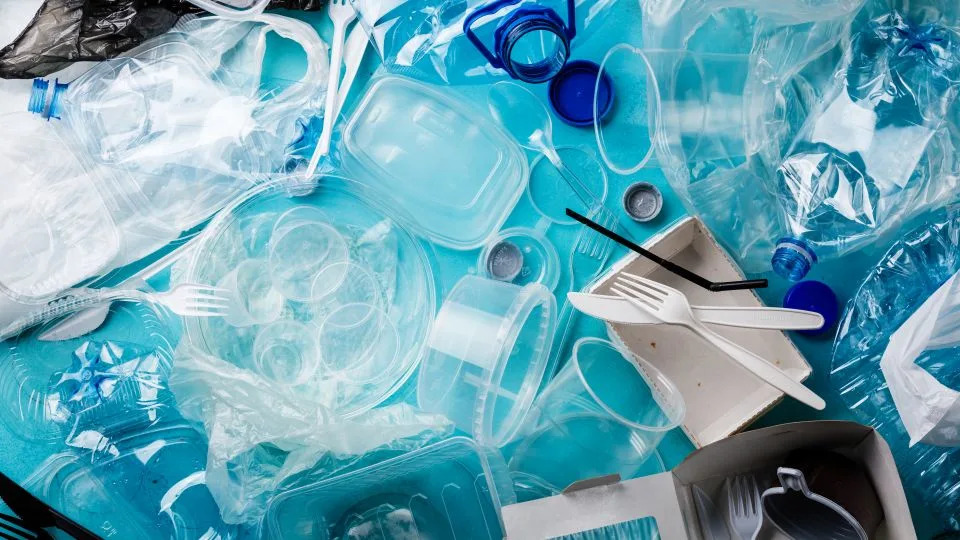
At least 16,000 plastic chemicals exist with least 4,200 of those considered to be “highly hazardous” to human health and the environment, a study found. – Lisovskaya/iStockphoto/Getty Images
Ways to reduce plastic
The levels of contamination found in bottled water reinforce long-held expert advice to drink tap water from glass or stainless steel containers to reduce exposure, Mason said. That advice extends to other foods and drinks packaged in plastic as well, she added.
“People don’t think of plastics as shedding but they do,” she said. “In almost the samewaywe’re constantly shedding skin cells, plastics are constantly shedding little bits that break off, such as when you open that plastic container for your store-bought salad or a cheese that’s wrapped in plastic.”
While science learns more about the plastics we consume, there are things people can do to reduce their exposure, according to experts.
· Try to avoid eating anything that has been stored in a plastic container. Look for food stored in glass, enamel or foil.
· Wear clothing made from natural fabrics and buy consumer products made from natural materials.
· Don’t microwave in plastic. Instead, heat food on the stove or by microwaving in glass.
· If you can, eat as much fresh food as possible, and limit purchase of processed and ultraprocessed foods wrapped in plastic.
Farmers warn food aisles will soon be empty because of crushing conditions: ‘We are not in a good position’
Nick Paschal – April 28, 2024
The United Kingdom is facing dire food shortages, forcing prices to skyrocket, and experts predict this is only the beginning.
What’s happening?
According to a report by The Guardian, extreme weather is wreaking havoc on crops across the region. England experienced more rainfall during the past 18 months than it has over any 18-month period since record-keeping began in 1836.
Because the rain hasn’t stopped, many farmers have been unable to get crops such as potatoes, carrots, and wheat into the ground. “Usually, you get rain but there will be pockets of dry weather for two or three weeks at a time to do the planting. That simply hasn’t happened,” farmer Tom Allen-Stevens told The Guardian.
Farmers have also planted fewer potatoes, opting for less weather-dependent and financially secure crops. At the same time, many of the potatoes that have been planted are rotting in the ground.
“There is a concern that we won’t ever have the volumes [of potatoes] we had in the past in the future,” British Growers Association CEO Jack Ward told The Guardian. “We are not in a good position and it is 100% not sustainable,” Ward added.
Why is it important?
English farmers aren’t alone — people are struggling to grow crops worldwide because of extreme weather.
Dry weather in Brazil and heavy rain in Vietnam have farmers concerned about pepper production. Severe drought in Spain and record-breaking rain and snowfall in California have made it difficult for farmers to cultivate olives for olive oil. El Niño and rising temperatures cut Peru’s blueberry yield in half last year. Everyone’s favorite drinks — coffee, beer, and wine — have all been impacted by extreme weather.
According to an ABC News report, the strain on the agriculture industry will likely continue to cause food prices to soar.
If these were just isolated events, farmers could more easily adapt — bad growing seasons are nothing new. The problem is that rising temperatures are directly linked to the increasing amount of gases such as carbon dioxide and methane in the atmosphere.
Since the start of the Industrial Revolution, humans have burned dirty energy sources such as coal, oil, and gas, which release a significant amount of those gases. Our climate is changing so drastically that the 10 warmest years since 1850 have all occurred in the last decade.
“As climate change worsens, the threat to our food supply chains — both at home and overseas — will grow,” Energy and Climate Intelligence Unit analyst Amber Sawyer told The Guardian.
What can we do about it?
“Fortunately, we know many ways we can make the food system more resilient while reducing food emissions. The biggest opportunity in high-income nations is a reduction in meat consumption and exploration of more plants in our diets,” said Dr. Paul Behrens, an associate professor of environmental change at Leiden University in the Netherlands.
If we replace a quarter of our meat consumption with vegetables, we could cut around 100 million tons of air pollution yearly. It may seem strange to suggest eating more vegetables with the decline in crop production. However, reducing the land and water used for animal agriculture and diverting those resources to growing more produce would drastically help the declining food supply.
Growing our own food is also a great way to reduce our reliance on store-bought produce, and it can save you hundreds of dollars a year at the grocery store.
Drought devastates crops in southern Africa: ‘The grain I have is only enough for the next two months’
Timothy McGill – April 27, 2024
The Africa hunger crisis, exacerbated by a climate change–amplified El Niño, is reaching a critical point. A recent Reuters report paints a grim picture, revealing that southern Africa is grappling with its most severe drought in several years.
What’s happening?
Earth saw a record $63 billion in damages from weather disasters in 2023. Many of those disasters were made worse by El Niño. Reuters cited a study from October last year that “even suggested that climate change may now be as significant a factor in triggering El Niño conditions as natural causes like sun rays.” An El Niño is an unusual warming of the eastern Pacific Ocean along and near the equator.
This year’s extreme drought has devastated crops, and now millions are hungry in southern Africa. World Vision calls it a “severe food crisis” that is “driving millions of people into a heightened risk of hunger and starvation.”
The peak of farming season in southern Africa is from October to March. Several weather disasters have struck the region since the end of 2023’s season. Tropical storm Freddy destroyed homes in Blantyre, the capital of Malawi, on March 14, 2023. This March, tropical storm Filipo brought devastating floods to Maputo, the capital of Mozambique.
Drought is impacting this part of the world, with increasing global temperatures exacerbating the problem. The lack of rainfall has decimated maize crops in southern Africa. An estimated 24 million people are impacted by hunger and malnutrition. The soil is normally suitable for maize farming.
Seventy percent of southern Africa’s maize comes from South Africa. The ongoing drought has led to a 15% drop in the country’s maize production for 2023-24 compared to 2022-23.
“The grain I have is only enough for the next two months. It is going to be hunger from here on,” farmer Mandisireyi Mbirinyu told Reuters.
What is being done?
African countries have been forced to come up with innovative ways to deal with drought. Some of these approaches include reusing rainwater, preserving humidity in fields, and promoting effective and inclusive consultation. The United Nations Sustainable Development Group suggests several ways that communities can end desertification, including “combatting soil erosion and restoring coastal ecosystems, leveraging innovation, technology, partnerships and private finance, and supporting the livelihoods of people displaced by drought.”